


People notice a front yard’s pathways and edging right away, since they frame how you approach the house from the street.
I’ve reworked my own front layout before, and clean structures like repeating plant shapes make the space feel intentional without needing weekly trims.
Refined designs work best when the planting beds have a solid backbone that matures evenly over the years.
Symmetry up front pulls everything together.
A handful of these setups adapt well to real yards, worth sketching out for your own spot.
Winding Brick Paths Through Garden Beds
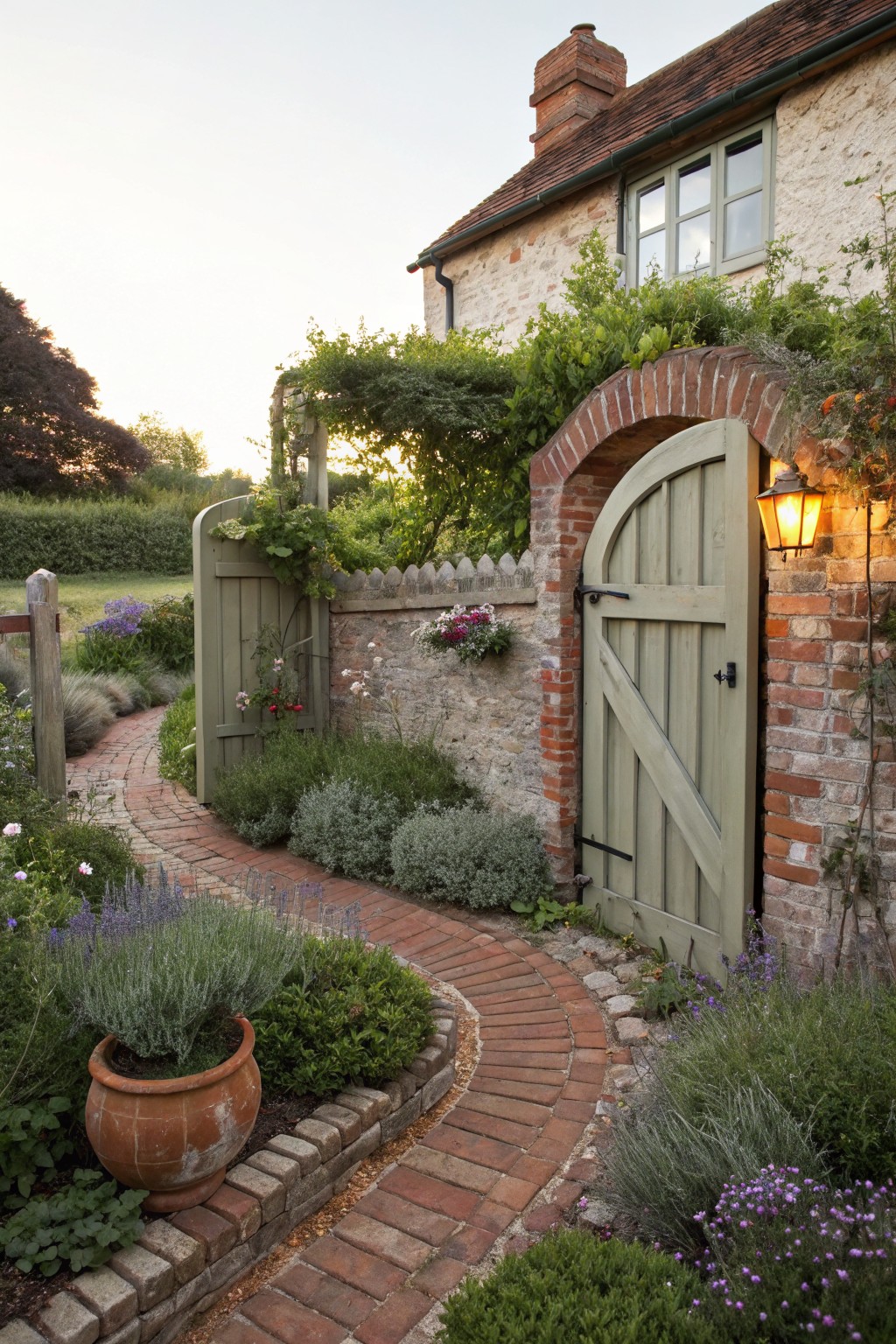
A winding brick path like this one pulls you right into the garden. It curves gently along borders packed with lavender, low shrubs, and flowers, ending at a simple arched gate. The red bricks give a clean, sturdy feel that ties into the stone walls without overpowering the soft plants around it. It’s polished but easygoing. Makes the front yard feel put-together and welcoming.
Try this in smaller front gardens where you want to slow people down a bit as they walk up. It suits older homes or cottages best, especially with some height from the gate. Lay the bricks in a gravel base for drainage, and stick to low edging plants so the path doesn’t get lost. One thing… skip super straight lines if you can. The curve adds that extra charm.
Stepping Stone Path Through Gravel and Grasses

One clean way to guide visitors to your front door is a simple stepping stone path set right into a gravel bed. Large square pavers spaced just far enough apart create that natural walking rhythm, while the gravel and tough grasses around them keep things low fuss. A slim water channel runs alongside here, bubbling quietly for a bit of calm without extra work.
This works best in front yards with modern or coastal homes, especially where you want drought-tolerant plants that handle dry spells. Lay the stones first to match your stride, fill gaps with pea gravel for good drainage, and pick grasses that won’t flop over the path. Skip it if your yard floods, since gravel shifts easy.
Boxwood Spheres Along a Curved Drive

Rows of round boxwood topiaries line this gravel driveway, creating a neat rhythm that guides you right to the front door. The spheres sit tight against brick walls and garden beds, keeping everything crisp and under control. It’s a simple way to make a front yard feel formal yet easy on the eyes.
You can pull this off with boxwoods planted in a gentle curve or straight run, spaced about three feet apart. They work great for homes with some architecture to match, like brick or stone facades. Prune twice a year to hold the shape… low fuss for big polish.
Brick Pathway Edged with Boxwood Hedges

One clean way to guide visitors right to your front door is a straight brick path edged in low boxwood hedges. Those neat green borders keep everything looking sharp and contained. Paired with brick pillars that hold simple uplights, it sets up a welcoming walk without any fuss. The formal feel comes from the repetition. Boxwoods stay tidy most of the year. They frame the path nicely against the lawn.
This setup works best on smaller front yards where you want order without big plants taking over. Plant the hedges about knee-high so they don’t block the view of your entry. Use bricks in a herringbone pattern if you like a bit of texture underfoot. Watch for full sun spots though. Boxwoods can yellow in too much shade. It’s a low-key choice for traditional or colonial style homes.
Curved Stone Path with Gravel Edges

A curved path like this one uses wide stone slabs set right into a gravel bed. It pulls your eye smoothly toward the front door without feeling too rigid. The pebbles give it a soft edge that fits dry yards nicely, and it keeps things looking neat even if plants grow around it.
You can lay this out in most front yards to guide folks up to the entry steps. Pair the path with a few big terracotta pots for scale, like the ones flanking the stairs here. It suits warmer spots with that stucco house feel… low upkeep too, since gravel handles drought well.
Winding Gravel Path Lined with Grasses

A simple gravel path that curves gently through the front yard can make your entry feel more welcoming and natural. Here, tall ornamental grasses sway along the edges, mixed with clumps of lavender and pink coneflowers. Boulders add some weight without much upkeep. It pulls the house into the landscape instead of fighting it.
This works best on larger lots or properties with open fields nearby. Pick native grasses like switchgrass or little bluestem for easy care. Line the path with low lanterns for evening light. Skip fussy plants that need constant trimming. It suits homes that want a relaxed look with clean lines.
Reflecting Pool with Black Pebble Surround

A rectangular reflecting pool like this pulls the yard together with its clean lines and calm water surface. The black frame sets it off nicely, and the ring of dark pebbles around the edge keeps everything looking sharp and contained. A few structured plants and stepping stones fill in without overwhelming the space.
This works well in front yards that need a quiet focal point, especially on smaller lots. Go for shallow water to make maintenance easy, and pair the gravel with slate tiles for paths that won’t shift over time. It suits modern homes or any spot aiming for that polished Zen feel… just keep the pebbles topped up now and then.
Tiered Stone Retaining Walls for Sloped Yards

Sloped front yards can feel tricky to work with. But tiered stone retaining walls like these turn the challenge into something clean and structured. They hold back the soil in neat layers, while built-in stairs make a smooth path up to the house. Low plants tucked into the beds add color without overwhelming the lines, and simple lanterns light the way at dusk.
This setup works best on hillsides where you want easy access without steep climbs. Pair it with a stone house for a matched look, or use it to soften a plain facade. Stick to drought-tolerant shrubs and spring bulbs in the planters to keep maintenance low. Just make sure the walls are sturdy enough for your soil type.
Symmetrical Boxwood Parterres with a Central Fountain
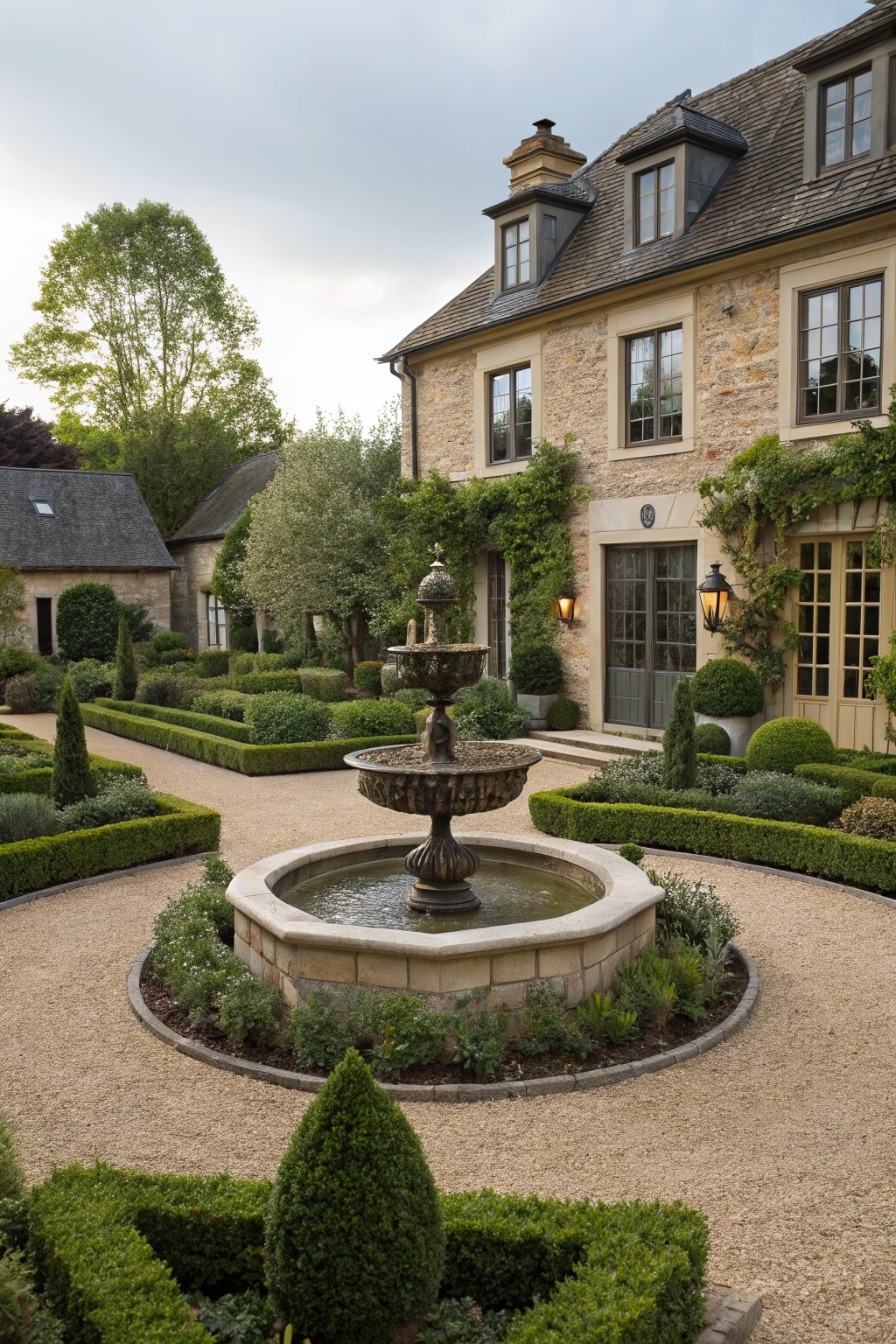
A tidy layout like this one puts a classic tiered fountain right in the middle of clipped boxwood hedges. The gravel paths wind through in straight lines, keeping everything neat and balanced. It pulls the eye straight to the house entry without any fuss, and that formal feel makes the whole front yard look put-together.
You can pull this off in smaller front courtyards or along a driveway where space is tight. Pick low-growing boxwoods for easy trimming, and go with light gravel to match stone homes. Just keep the beds mulched to cut down on weeds… it stays sharp year-round if you stay on top of the pruning.
Terraced Stone Steps for Sloped Yards
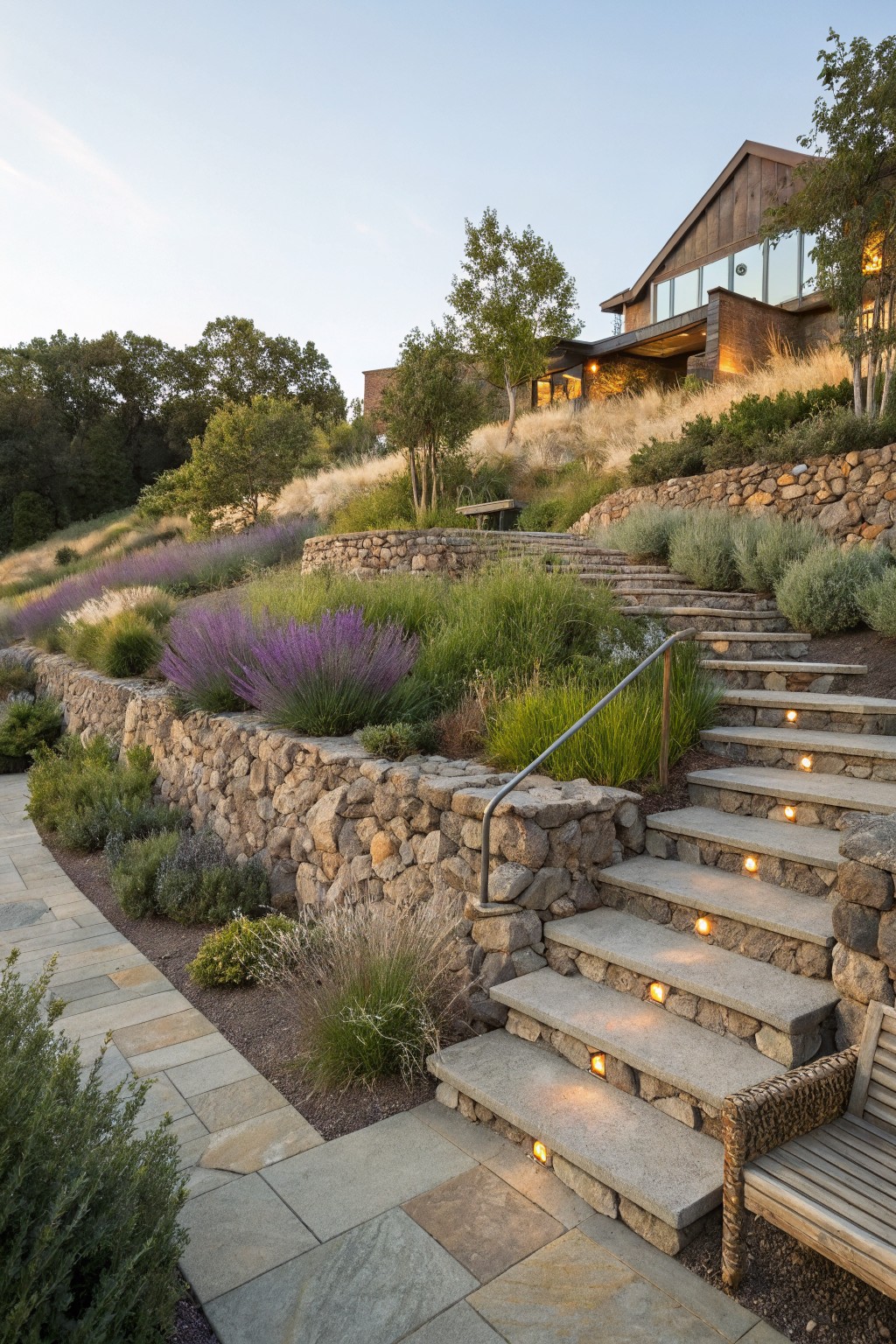
Sloped front yards can feel tricky to work with. But wide stone steps like these, set into sturdy retaining walls, turn the challenge into something practical and good-looking. The steps have built-in lights that glow at dusk, and they’re edged with tough plants like lavender and grasses that hug the stone without spilling over. It makes climbing up feel easy and keeps the slope from looking wild.
This setup works best on hills where you need good access to the house entrance. Use local stone for the walls and steps to blend right in, and pick drought-tolerant plants that won’t need much water or upkeep. Skip fussy flowers here. Go for wider treads on the steps so they’re comfortable to walk, especially if it’s your main path.
Meandering Stone Path Through Flower Beds
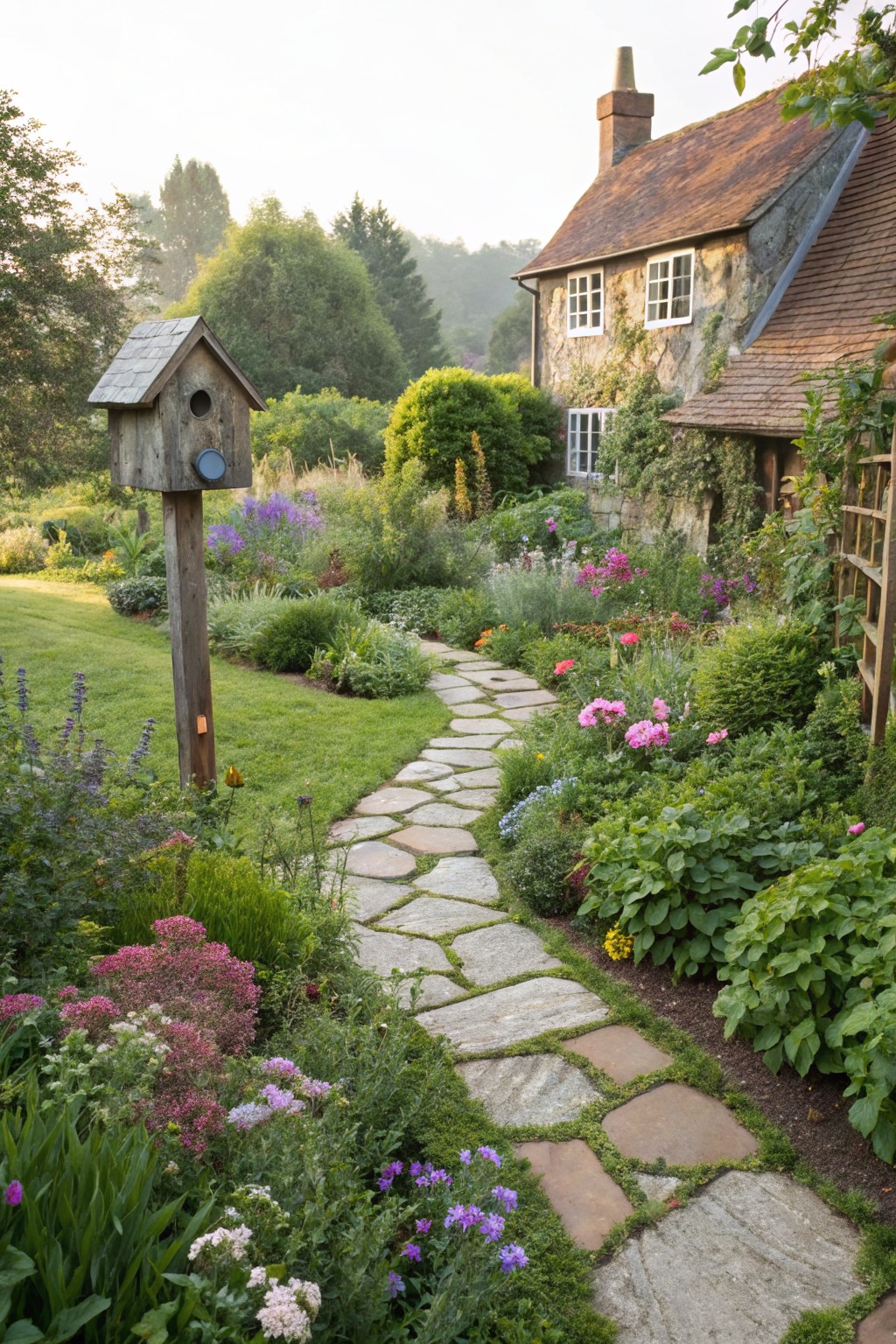
A simple winding path made of irregular stone slabs works wonders for front yard appeal. It guides you gently toward the house without feeling too formal, while letting colorful perennials and shrubs frame the way. That soft curve and the way plants lean in… it just pulls the garden together nicely.
This idea shines in cottage-style homes or any spot with good sun for flowers. Space the stones loosely with grass or gravel between them for drainage, then plant low-growers like lavender along the edges. It stays neat with minimal trimming and suits sloped yards too, as long as you level the path well.
Terraced Retaining Walls for Sloped Yards

Sloped front yards can feel like a challenge, but terraced wooden retaining walls fix that neat and simple. These walls stack up the hill into flat levels, each one holding soil and plants right in the wood boxes. Low lights tucked along the edges keep paths clear after dark, and it all leads your eye up to the house without looking messy.
This works best on moderate slopes where you want low upkeep and some planting room. Go with rough-sawn cedar that weathers to gray, add gravel between pavers for the walkway, and keep plants tough like grasses or sedums. Suits craftsman homes or modern spots in the Pacific Northwest… just check local codes for wall heights over three feet.
Linear Paver Path Set in Gravel
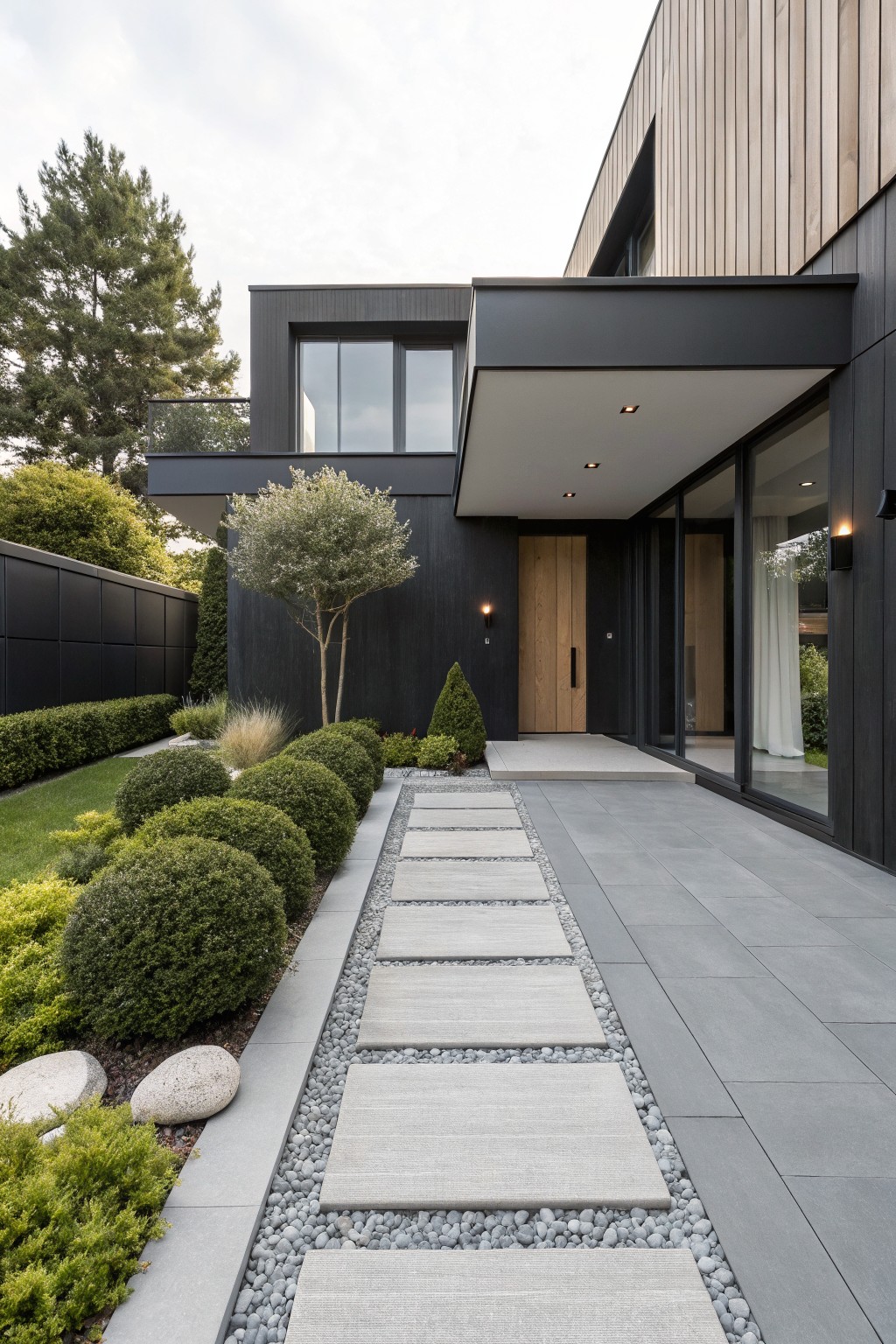
One straightforward way to handle a front walkway is to lay big rectangular pavers right into a bed of smooth gravel. It keeps things open and simple, especially when you line the edges with round boxwood shrubs. This setup pulls your eye straight to the door without much fuss, and the gravel fills in any gaps nicely so weeds stay down.
It fits best with modern houses that have clean lines, like dark siding paired with a wood door. Just make sure the gravel drains well, or it can shift over time. Space the pavers wide enough for two people to walk side by side, and keep the shrubs trimmed low for that polished feel.
Curved Brick Path with Stone Wall

A simple curved brick path running alongside a low stone retaining wall makes for an easy way to draw people up to the front door. The gentle curve keeps things from feeling rigid, while the wall adds just enough height to frame the yard without overwhelming it. Boxwoods tucked along the edge stay neat and low, tying the path right into the house siding.
This works well on traditional homes or any place with a bit of grade change in the front yard. Line the path with lanterns for light at night, and keep the shrubs trimmed back so the entry stays visible. It’s low fuss once planted, and the brick holds up year round.
Circular Path Around a Front Yard Fountain
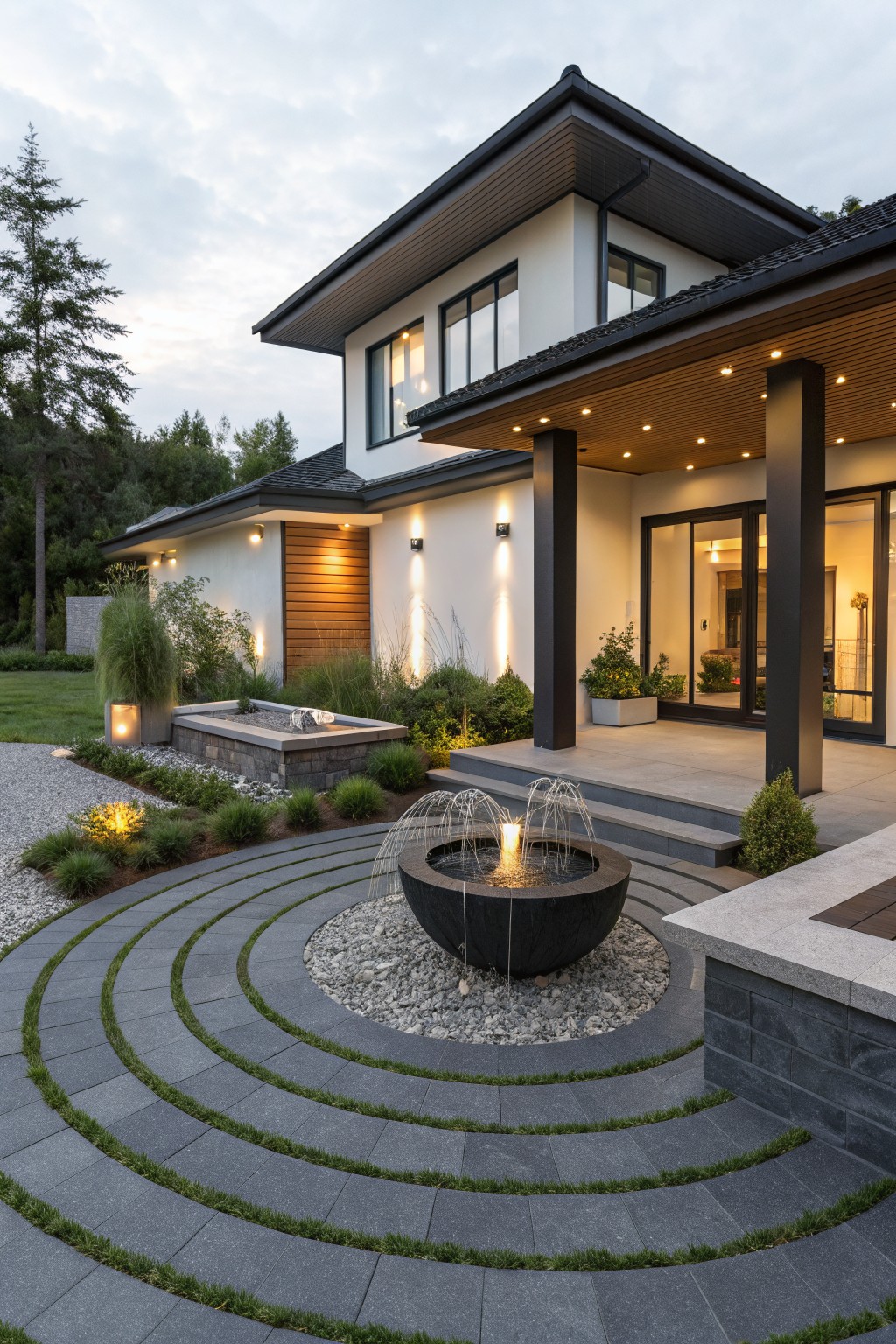
A circular path sets up a smooth walk to the front door, and putting a fountain right in the center makes it special. Here dark stone pavers with grass strips in between form clean rings around a black bowl fountain that sends water shooting up lightly. It gives the yard some calm movement and frames the entry steps nicely without taking over.
This setup suits homes with modern lines and a patch of front lawn. Lay it out on level ground near the house, edge it with low grasses or shrubs, and skip too many flowers so the shape stays clear. It’s fairly easy to keep up once the stones are in.
Simple Stepping Stone Entry Paths
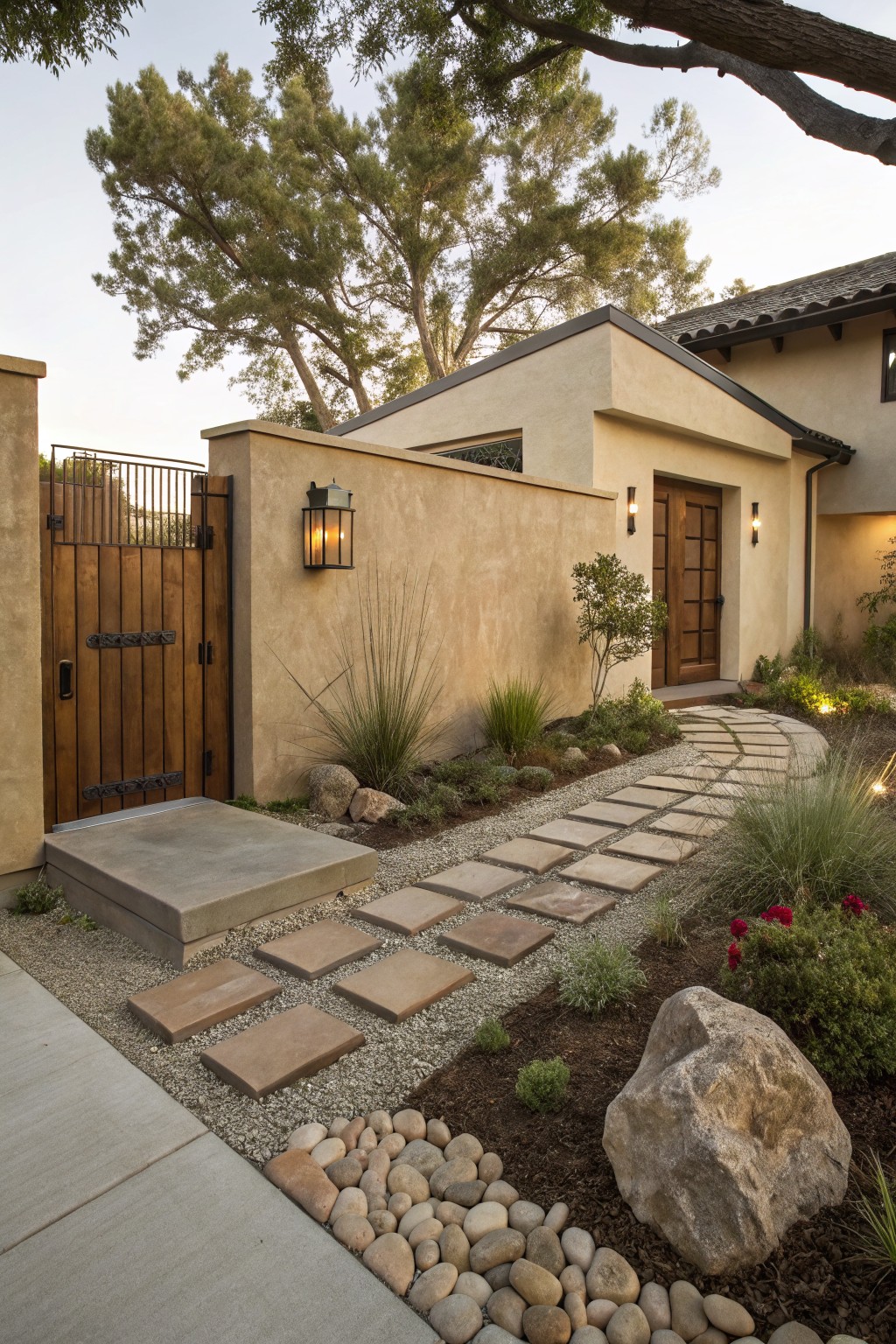
One straightforward way to guide people to your front door is with large stepping stones laid right into gravel. It feels polished without the fuss of a full sidewalk. In this setup, the tan pavers curve gently through mulch and low grasses, past a boulder or two, up to the gate. Keeps the yard open and easy on the eyes.
These paths suit dry yards or spots where you want low upkeep. Pick stones big enough for your feet, space them about two feet apart. Flank with tough plants like feather grass that stay tidy. Works best with simple house walls… just avoid crowding the steps.
Tiered Raised Planters Shape Front Entries

Raised concrete planters stacked in tiers work well to organize a front yard and draw attention right to the door. You see them here filled with tidy boxwoods and low grasses, edged with gravel for easy upkeep. The setup feels structured but not fussy, and the built-in lights add a nice glow at night without extra fixtures.
Try this on a sloped lot or narrow entry where you want definition without much mowing. Concrete holds up year-round, and evergreens like boxwoods keep the shape even in winter. Just scale the tiers to your steps, and skip flowers if you want that clean look to last.
Fire Pit Right at the Front Entry

A fire pit like this one sits smack in the middle of the front yard hardscape. It’s set into the pavers with a simple pebble surround and a bronze bowl holding the flames. What makes it work so well is how it turns the entry area into something more than just a path to the door. It gives a spot to pause, warm up on cool evenings, and makes the whole front feel lived-in without much fuss.
You can pull this off on sloped lots by tying it into stone steps and low retaining walls. Keep the plants around it low and tidy, like lavender and grasses, so nothing blocks the view. It suits homes with a bit of Mediterranean or rustic style, but watch the scale. too big and it overwhelms the walkway.
Boxwood Hedges Along the Entry Path
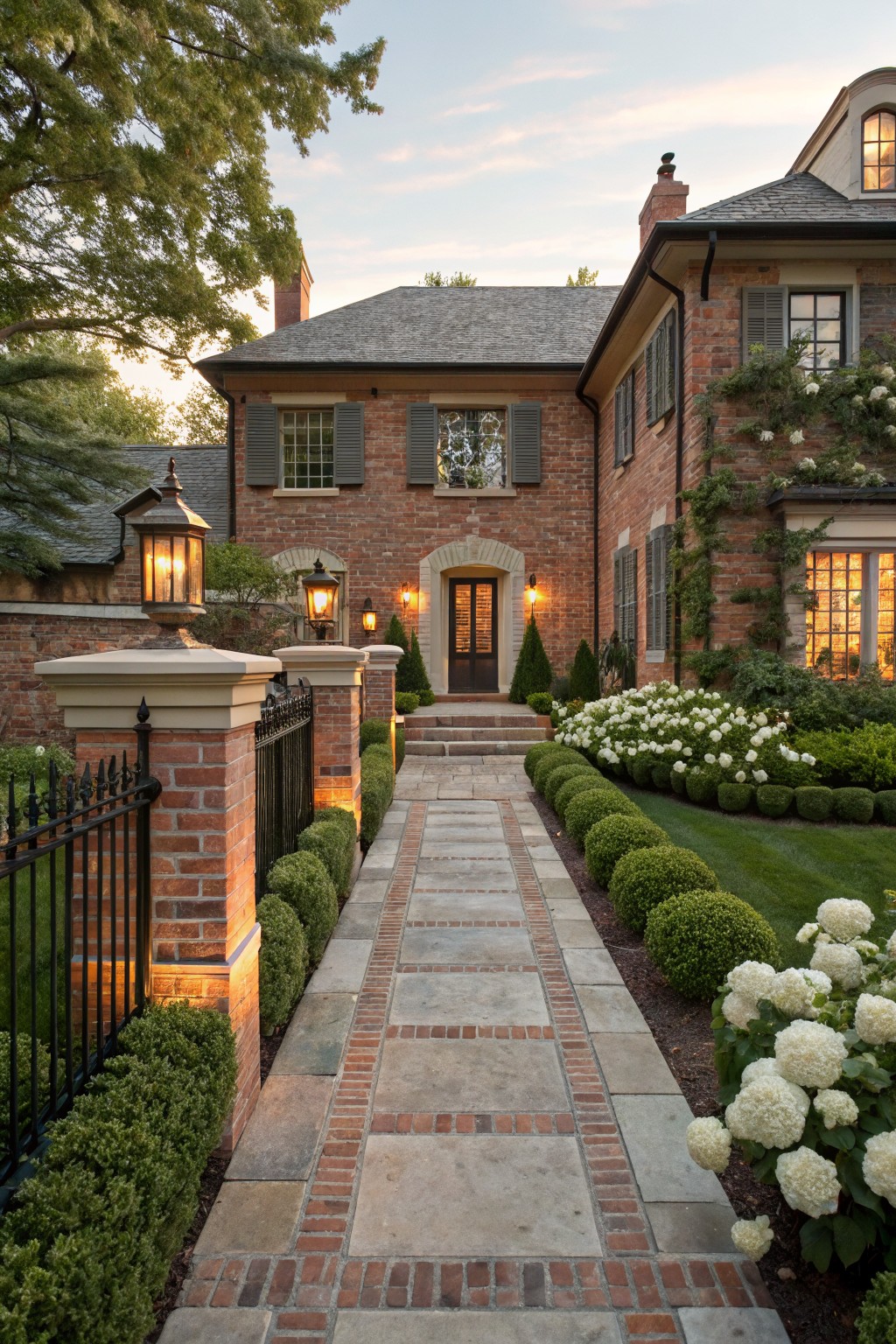
One clean way to polish up your front yard is lining the walkway with low boxwood hedges. They run straight along both sides here, clipped neat and tight, framing that stone path with its brick accents. It makes the whole approach feel orderly and put together, especially with the iron fence and pillars marking the way.
This works best for homes with a classic brick facade or traditional lines. Plant the boxwoods about two feet high so they stay simple to trim. Add white blooms nearby for contrast, but skip anything too wild. Keeps the look sharp year round… just right for welcoming guests without much upkeep.
Stepping Stones in a Gravel Walkway

A simple path made with large concrete stepping stones set right into gravel mulch keeps things open and easy to walk. It cuts down on solid pavement while still guiding you straight to the door. The loose gravel fills the gaps nicely, and drought plants like agaves fit right in without much fuss.
This works best in sunny, dry front yards where you want low upkeep. Lay the stones wide enough apart so feet land flat, maybe two feet or so. Skip it if your soil holds water, since gravel drains fast. Suits modern homes with clean lines.
Winding Stone Path Through Boxwood Borders
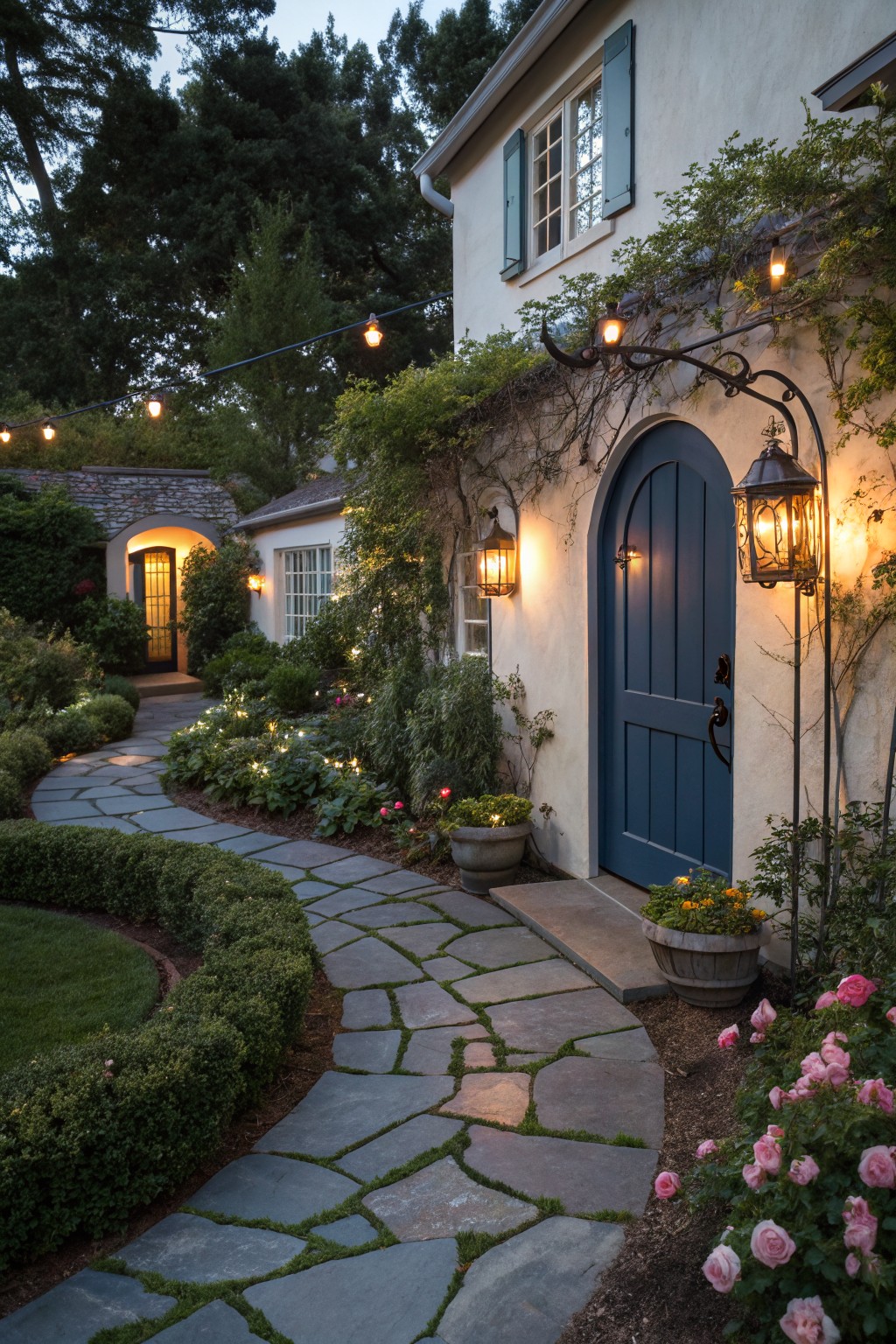
A simple winding path made from irregular flagstone slabs cuts a clean line through the front yard. Low boxwood hedges form neat curves around it, with pink roses and other plants tucked in along the edges. This setup pulls your eye right to the door in a natural way. It keeps things polished without feeling too fussy.
Try this in a yard with enough room for some gentle turns. Boxwoods give steady green structure all year. Add flowers that bloom at different times for steady color. It suits older homes or ones with a bit of character. Just keep the path wide enough to walk comfortably.
Boxwood Topiaries Along a Gravel Path
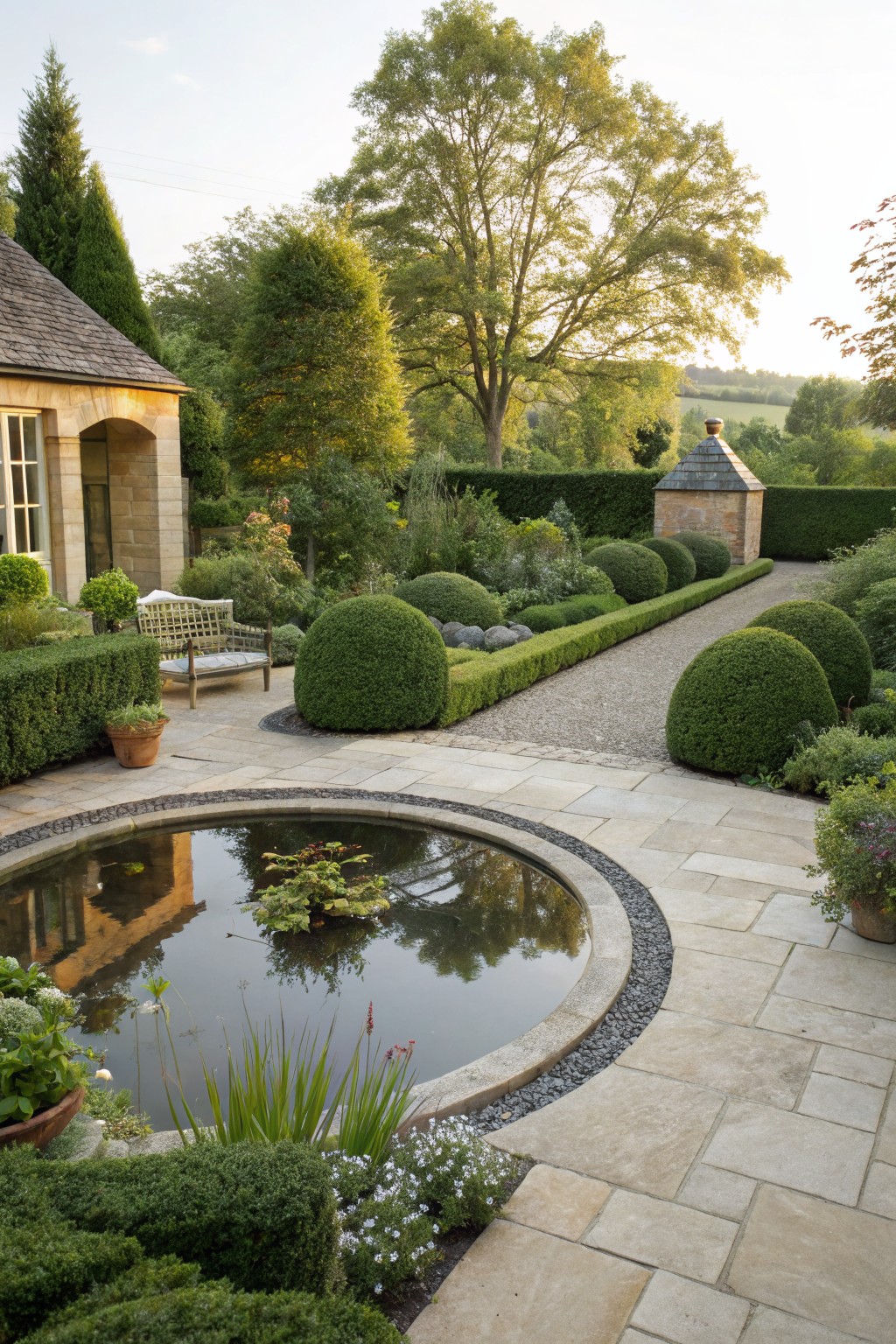
One clean way to shape up a front yard is lining a simple gravel path with rounded boxwood topiaries. These clipped spheres, set in rows or curves, add structure without overwhelming the space. Here they frame a spot near a small stone pond, keeping everything neat and balanced. The look stays sharp through seasons, since boxwoods hold their form well.
Try this in a side or front garden where you need definition between lawn and beds. Space the plants evenly, maybe two feet apart for a hedge effect, and edge with stone to match. It suits traditional homes best, or anywhere flat ground meets a walkway. Just trim once a year to keep the polish.
Frequently Asked Questions
Q: How do I pick plants that keep their shape without constant trimming?
A: Stick with evergreens like boxwood or dwarf yaupon holly. They grow tight and tidy on their own. Give them full sun and water deeply once a week at first.
Q: What’s a simple way to edge my lawn for that crisp look?
A: Grab a half-moon edger and cut a straight line along borders every couple weeks. Slice just an inch deep and sweep away the clippings right away. It takes minutes but makes everything pop.
Q: Can these polished ideas work in a tiny front yard?
A: Yes, scale down with a few container trees and gravel paths. Layer low groundcovers under them to fill space without crowding.
Q: How do I add subtle lighting that fits the clean vibe?
A: Bolt low-voltage spots to pathways or under shrubs. Run wires along the ground and bury them lightly. They glow soft at night… no glare.
