

That fence line running along your front yard often catches the eye first from the street, either blending seamlessly or sticking out awkwardly against the house.
I once planted a mix of low shrubs and perennials there to soften ours, and it completely changed how the whole yard read over time.
The key lies in thoughtful layering, from ground-hugging edging plants up to taller ones that hug the fence without overwhelming it.
Good layouts create natural pathways that draw you in, rather than just filling space.
Some of these ideas stand out for how they’d hold up in real yards, worth sketching out for your own setup.
Climbing Roses Over a Picket Fence

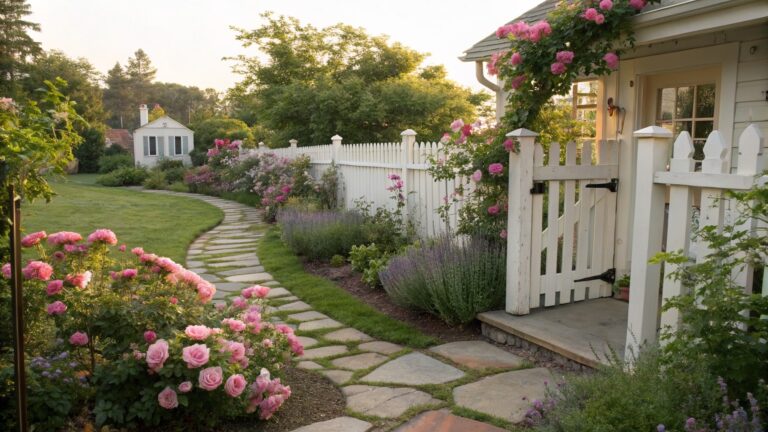
Nothing beats the simple charm of letting climbing roses spill over a white picket fence. In this front yard setup, the pink blooms drape right across the top, softening those straight lines and adding a burst of color that feels welcoming. It turns a plain fence into the star of the garden border, especially with a stone path running alongside.
This works well in cottage-style yards or anywhere you want low-key curb appeal along the fence line. Pick a sturdy climber like a floribunda rose, train the canes over the fence posts, and fill in below with tough plants like lavender. Keep it pruned once a year. It suits sunny spots best, and established plants need little fuss after that.
Tall Grasses Along a Slat Fence
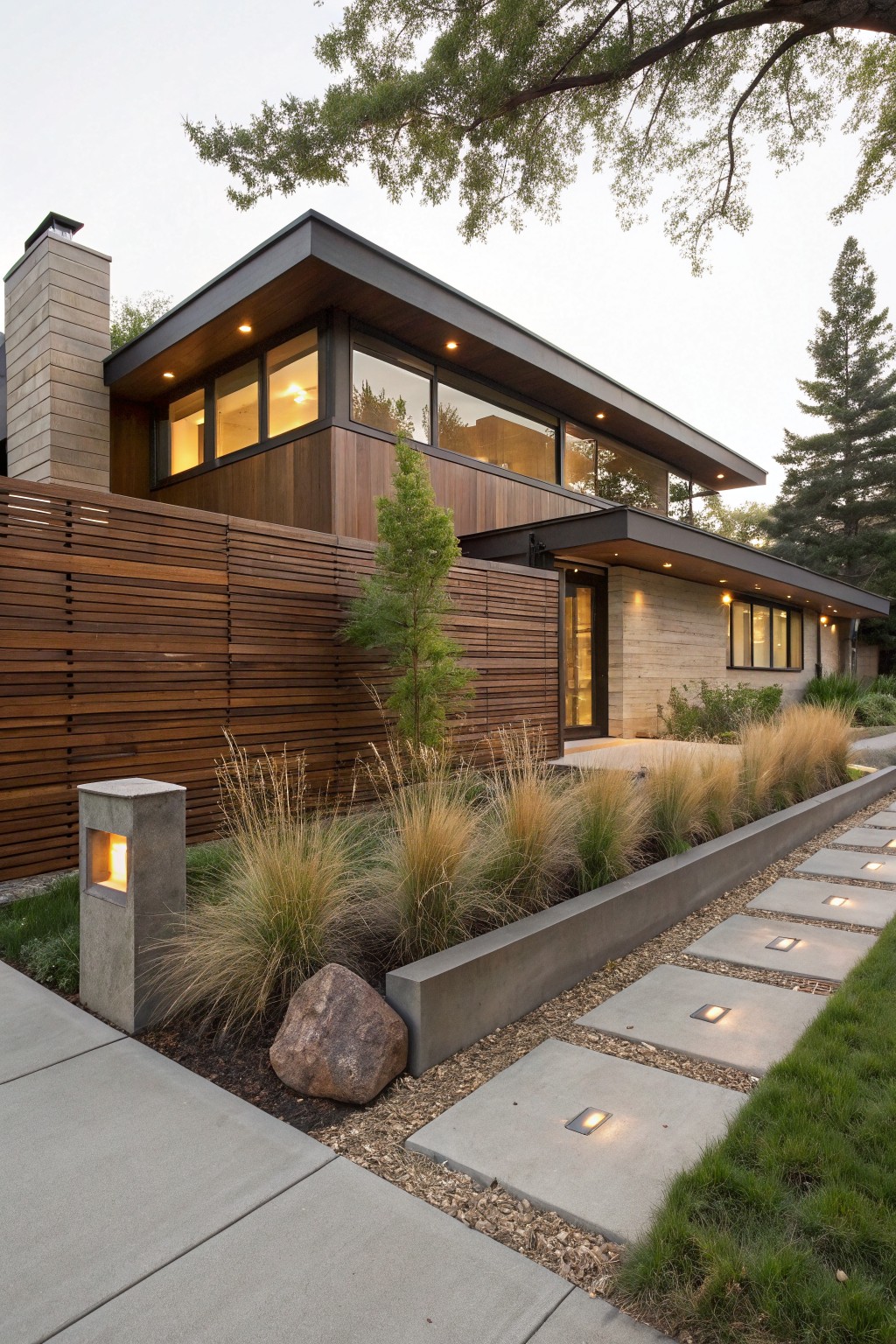
One easy way to landscape along a fence line is to plant tall ornamental grasses right up against it. They fill the space without much fuss and add movement on windy days. Here, the grasses sit in a simple concrete-edged bed next to a slatted wood fence, which keeps things private but lets some light through. It softens the fence and guides you toward the house entry.
This setup works great for front yards where you want low upkeep and a modern look. Plant drought-tolerant varieties like pampas or feather reed grass in a straight or gently curving line. Add stepping stones through gravel for access, and it suits most homes from midcentury to new builds. Just make sure the fence height matches your grasses so nothing looks skimpy.
Raised Beds Along a Walled Path
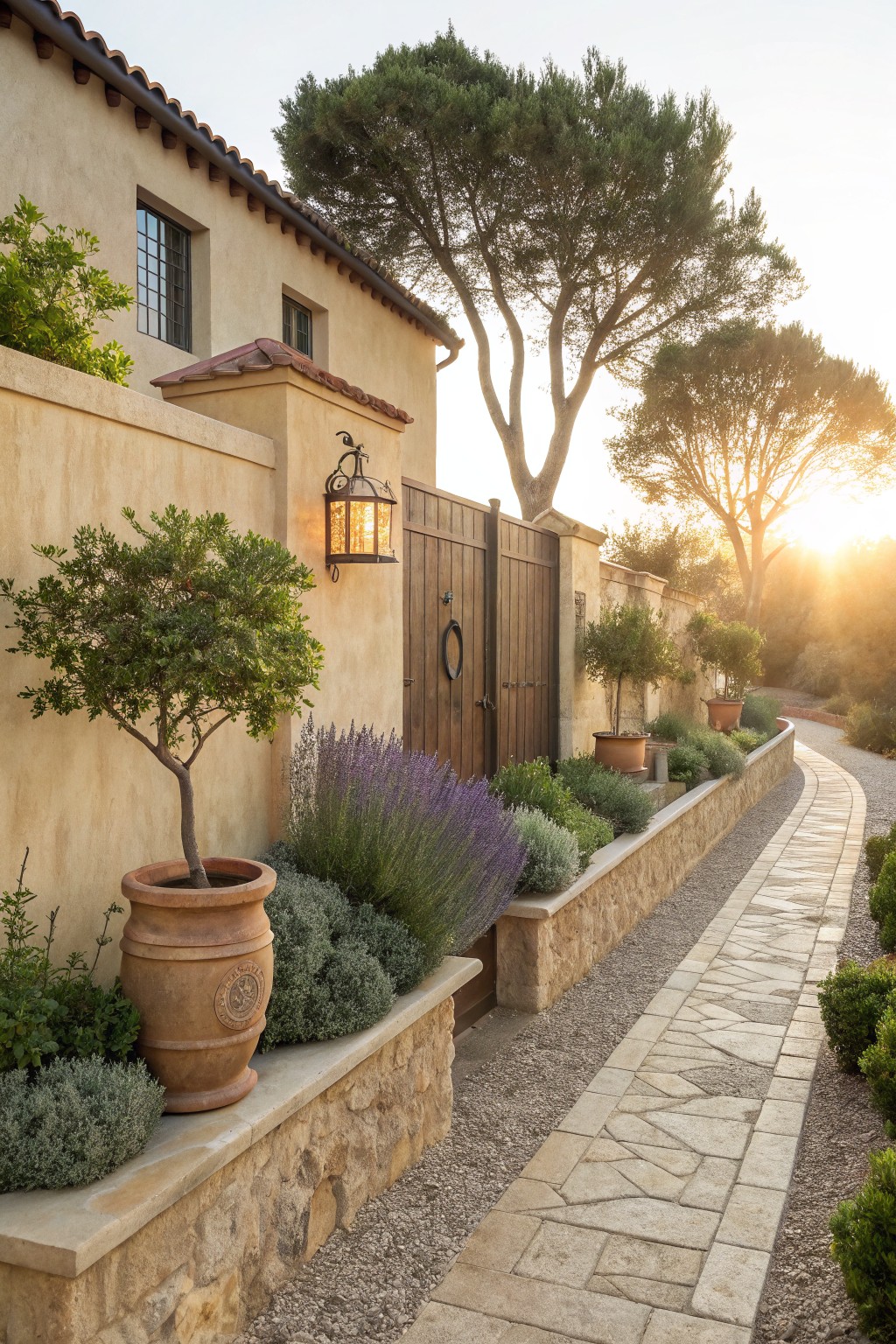
A straightforward landscaping idea along a fence or wall is to build low raised beds right up against it. Fill them with clumps of lavender and soft gray shrubs that hug the stone edge. Tuck in one or two big terracotta pots with small olive trees for a bit more height. The result is a tidy border that draws the eye without taking up much room.
This kind of setup suits sunny front yards in mild climates. Pair it with a simple stone or gravel path for foot traffic to the gate. Stick to tough, low-water plants so it looks good most of the year. Just keep the beds from getting too tall near the walk.
Bench Nook Along a Fence Line Path
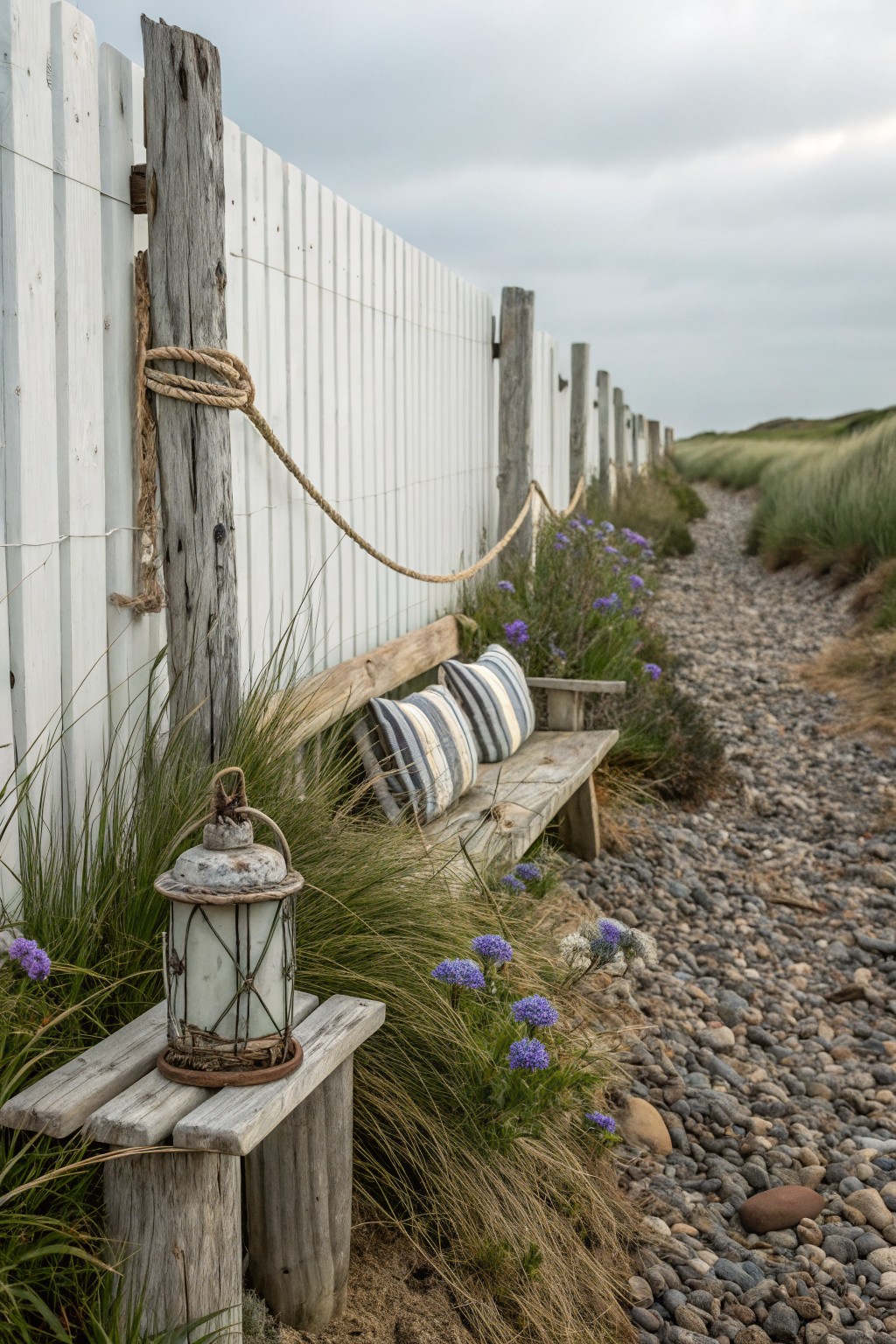
A weathered wooden bench sits tight against a white fence, stacked with a couple of striped cushions and a lantern on a stump beside it. Grasses and low purple flowers fill the narrow bed, with a gravel path running alongside. It’s a quiet spot to pause on a walk, especially nice where space is tight along the fence. The plants give it some life without crowding.
This works best in front yards with a straight fence and path, like coastal spots or cottage setups. Pick a simple bench that matches the wood tones, add cushions you can swap out for seasons, and use drought-tolerant grasses for low upkeep. Skip anything too fancy, it stays better that way.
Succulents Along the Fence Line
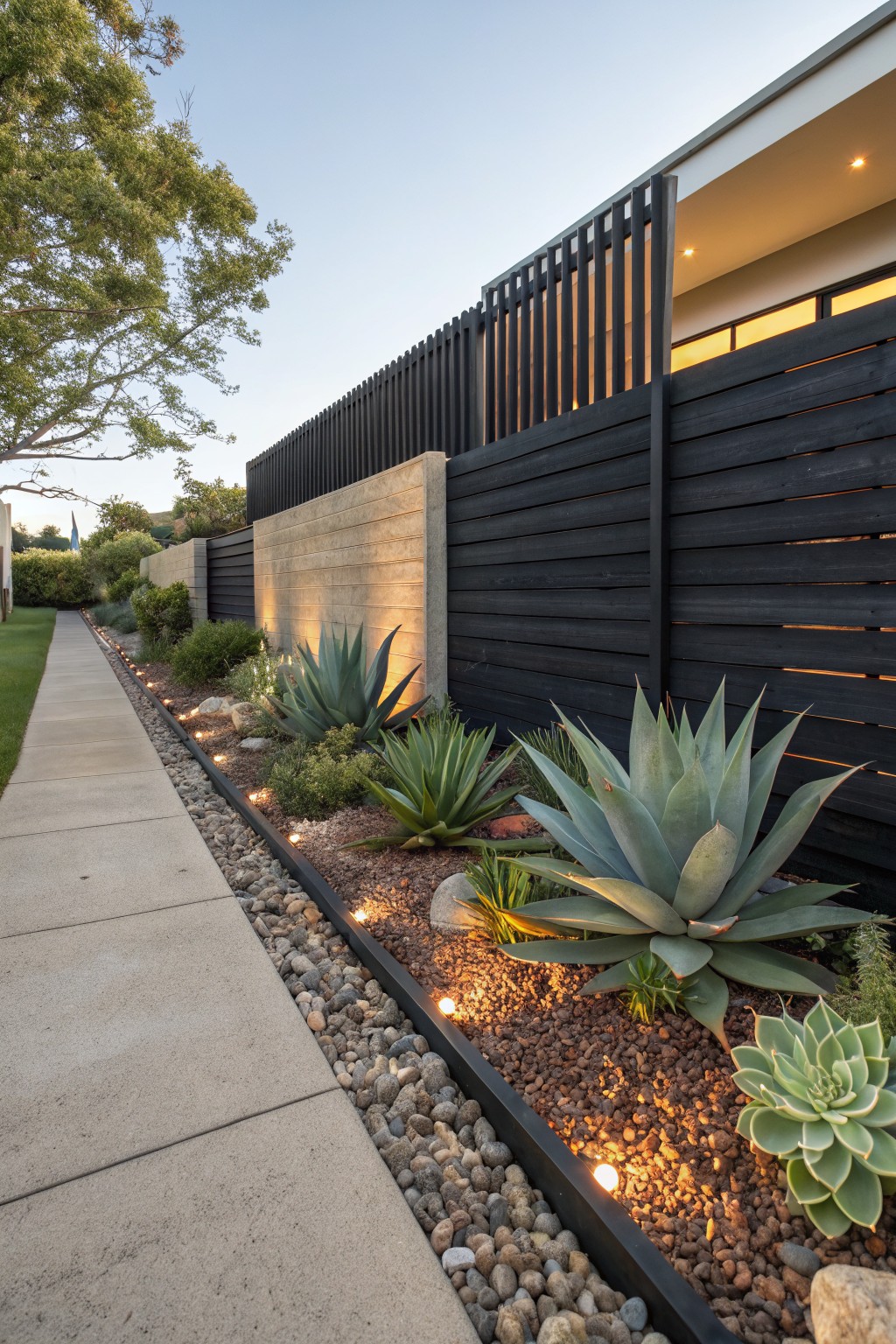
Big agaves and smaller succulents planted tight against a dark fence make a strong border garden. The gravel mulch fills in around them neatly, and low lights tucked into the edging add a soft glow come evening. It’s clean and bold without needing constant care.
This works best in full sun where drought-tolerant plants thrive. Run it along any straight fence in a front yard, maybe next to a walkway. Skip it if your spot stays shady, since these plants need that dry heat to look their best.
Lush Borders Along a Picket Fence

One simple way to dress up a fence line is with tall flowers and perennials planted right along the base. Think foxgloves reaching up pink and purple spikes, mixed with roses and low bushes. It turns a plain boundary into a soft edge that feels full and lived-in, especially with a path running beside it.
This works best in a front yard where you want cottage charm without much fuss. Pick sturdy bloomers that come back each year, space them so they lean toward the fence but not over it. Keep the path clear of roots. Suits older homes or any spot with sun. Just trim back in spring… easy enough.
Rock-Edged Perennial Beds Along a Fence
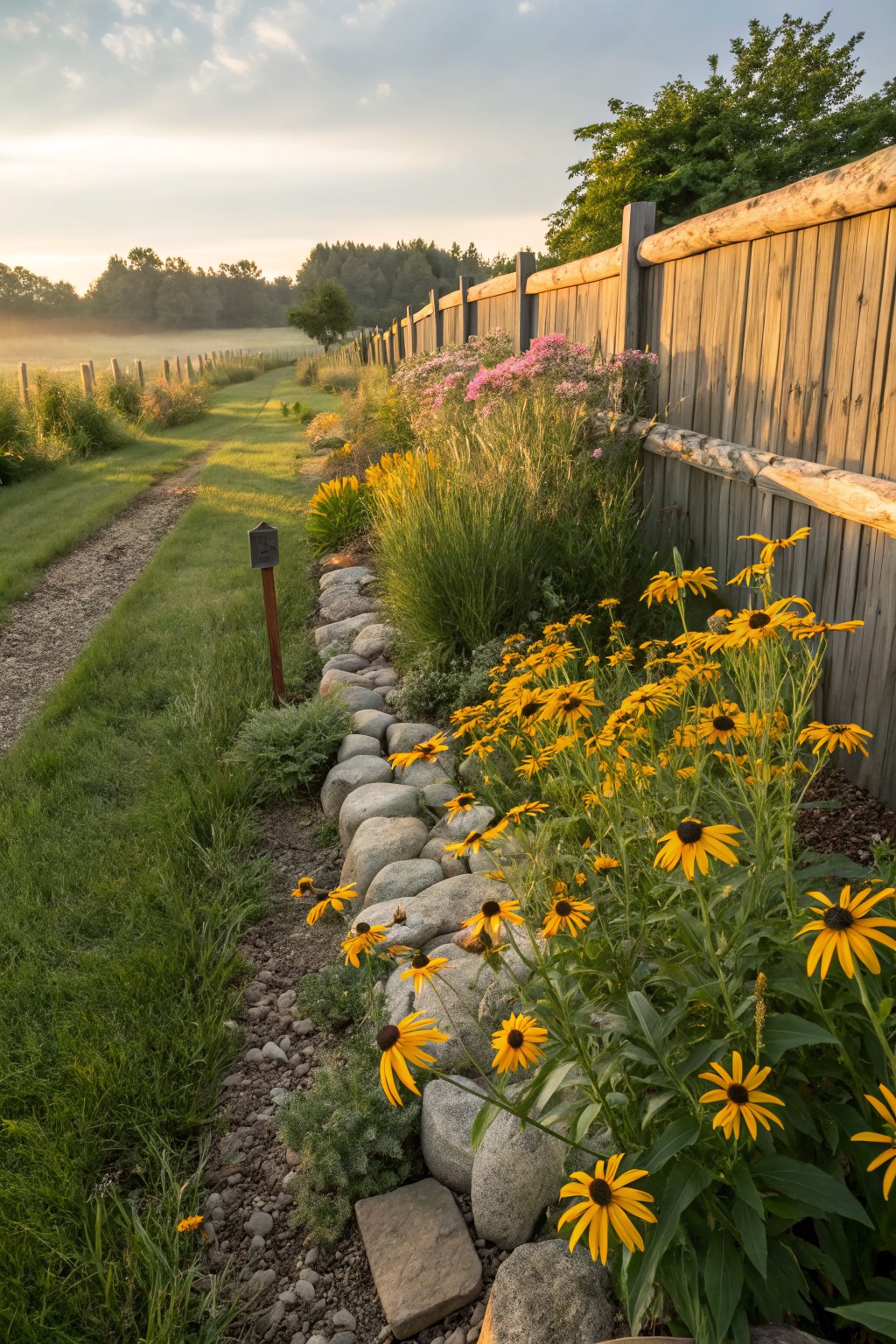
A simple way to dress up a fence line is to tuck in flower beds edged with stacked rocks. Those rough stones hold back the soil while letting plants spill over a bit. Yellow black-eyed Susans stand tall here against the wood, mixed with grasses for easy movement and color that lasts into fall.
This setup fits front yards with decent sun and average soil. Pick perennials that spread without fuss, like coneflowers or rudbeckia. Add a gravel path next to it for access. It keeps things neat but natural… just watch for rabbits nibbling the blooms.
Perennial Border Along a Rustic Fence

One simple way to dress up a fence line is with a mix of tall grasses and colorful perennials like pink coneflowers. The grasses stand tall behind the flowers, giving the border some height and movement. It turns a plain fence into something that feels more like a garden edge, especially with a gravel path running alongside.
This works best in a sunny front yard where you want low upkeep. Put the grasses against the fence first, then layer in the flowers toward the path. It’s forgiving for beginners… just pick natives that match your soil. Avoid overcrowding at the start so everything has room to fill in over time.
Winding Stone Path Along a Fence Line
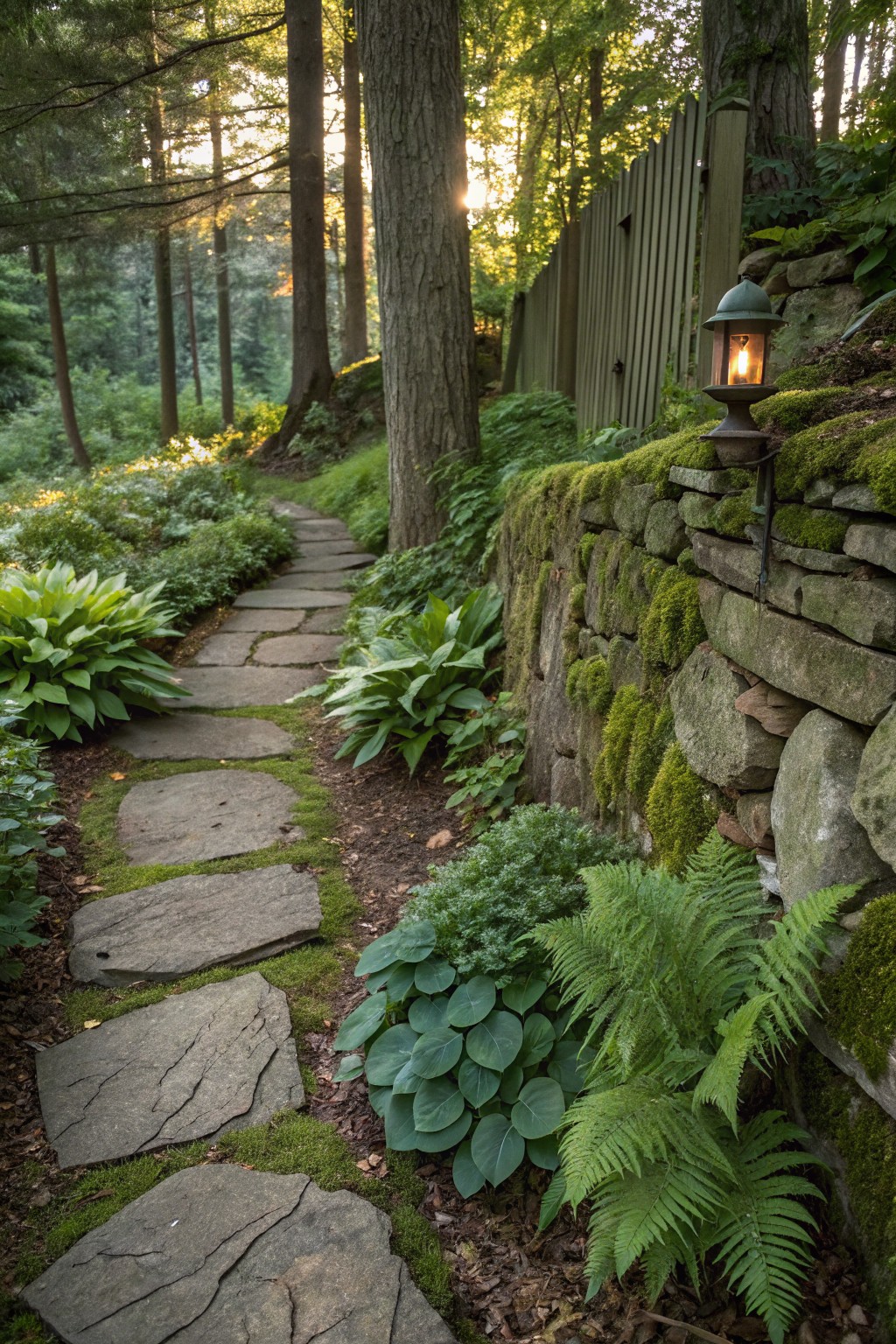
A simple winding path made from irregular stone slabs works great along a fence. It gives a natural feel to the yard without looking too planned out. Here, hostas and ferns fill in the edges nicely, and moss on the nearby stone wall adds that aged look people like in older gardens.
You can use this in shady spots near the front fence where grass struggles. Pick flat stones that fit together loosely, then plant low growers like ferns or hostas around them. It suits homes with wooded yards best. Just keep the path clear of too much overgrowth so it stays walkable.
Winding Stone Path Along the Fence
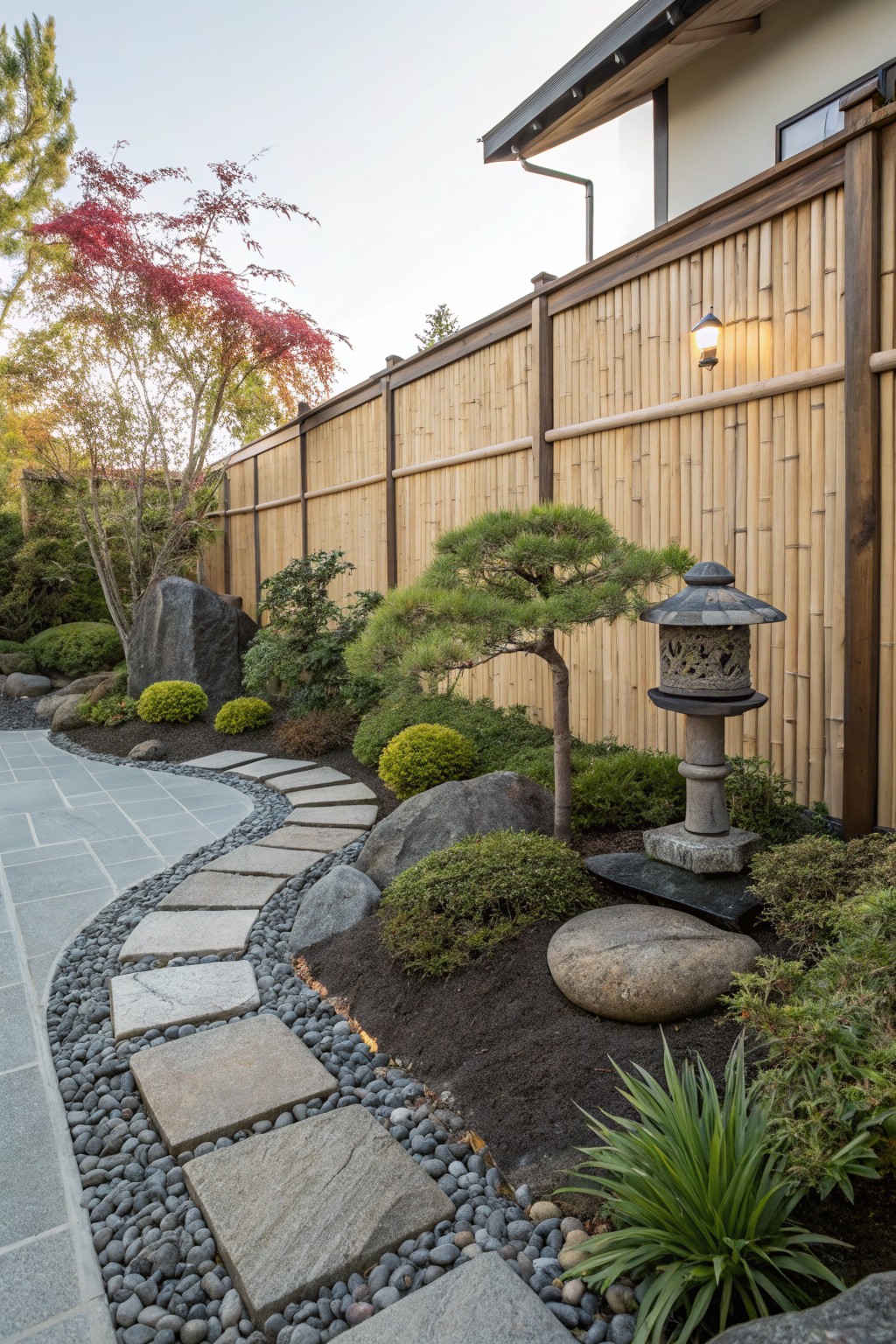
A simple curved path made from large flagstone pavers runs right along the fence line here. It’s edged with black gravel and a few big boulders, which keeps everything neat and guides you through the space. That gentle bend makes the yard feel longer and more interesting than a straight shot would.
You can pull this off in skinny front yards or side areas where fence lines eat up room. Pair it with tough plants like dwarf pines or boxwoods that won’t crowd the path. Skip it if your soil shifts a lot, since loose stones can trip you up over time.
Brick Path with Stone and Plant Edges
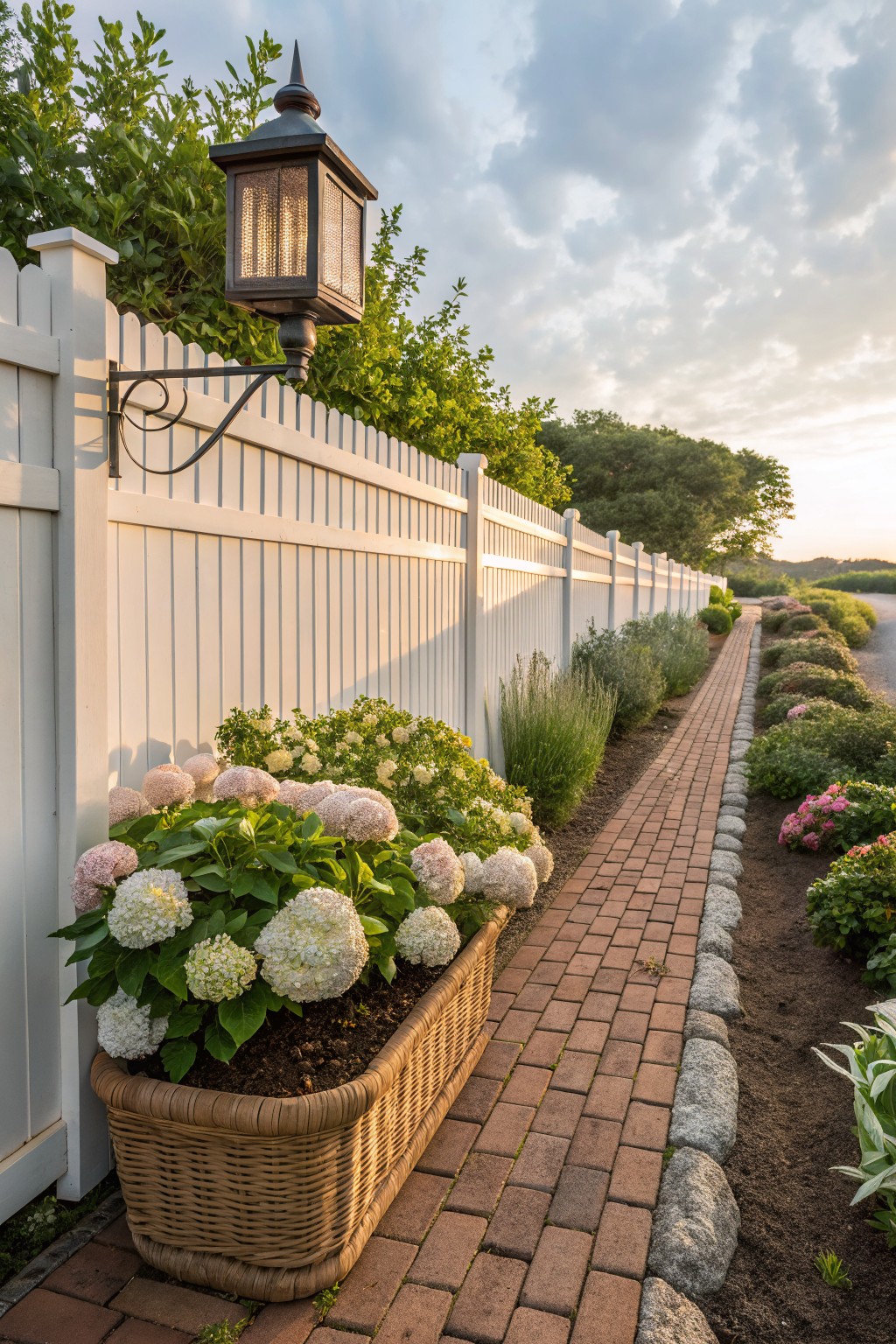
A narrow brick walkway like this runs right along the fence line. It’s edged with rugged stones and tucked with low shrubs, grasses, and perennials that fill in without overwhelming. That big woven basket overflowing with white hydrangeas gives it a cozy focal point. The whole thing softens the fence and draws the eye down the path nicely.
This works best in front yards where space is tight but you want some structure. Pair low growers like lavender or sedum with the stones to keep it easy to maintain. It suits picket fences especially, making the yard feel put-together without much fuss. Skip tall plants here, or they’ll crowd the walk.
Stone Steps Edged with Lavender
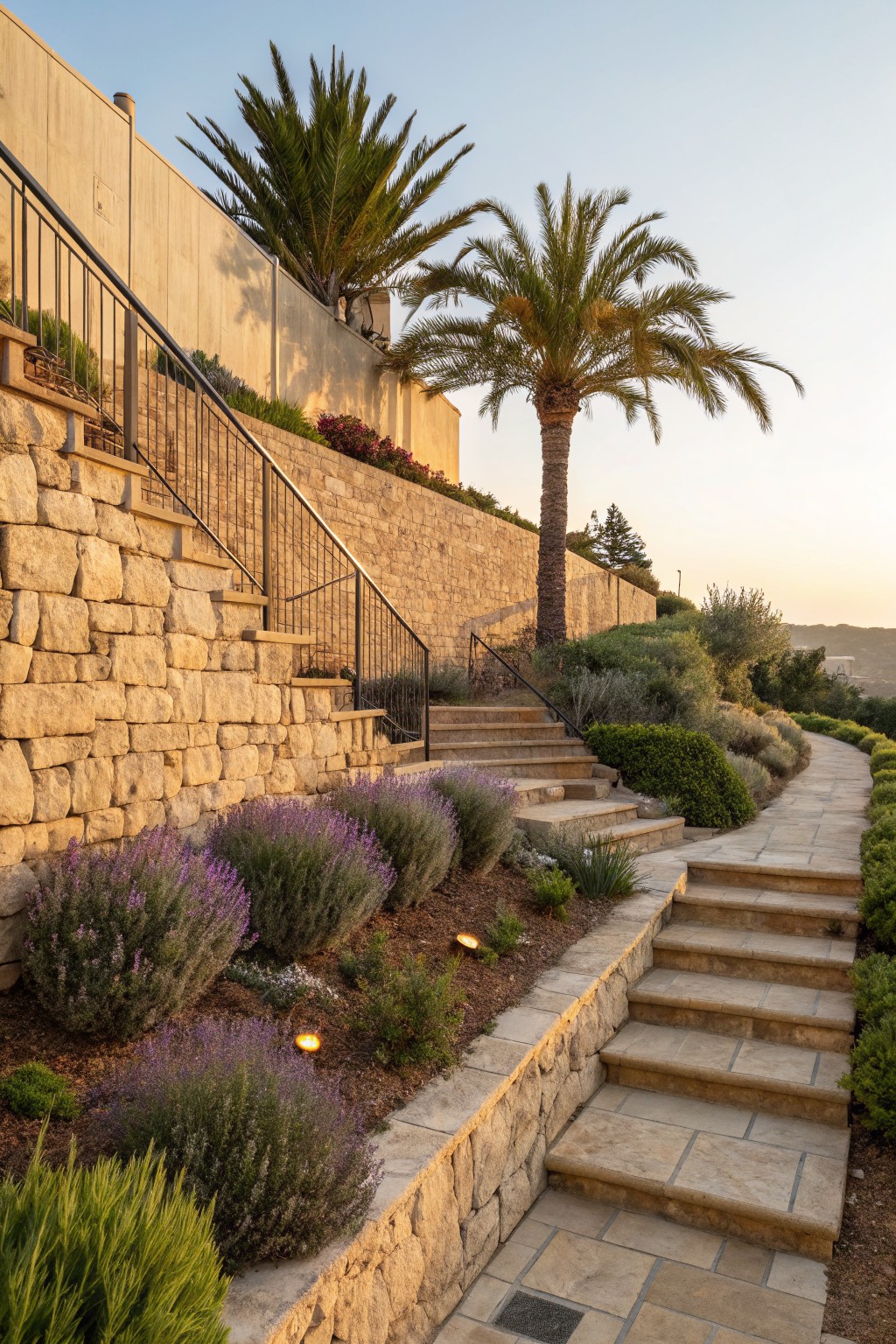
Simple stone steps like these make a sloped yard feel welcoming and easy to navigate. Lining them with low lavender bushes softens the retaining wall and adds color without much fuss. The purple blooms stand out nicely against the beige stone, and it keeps things looking tidy year round.
This works best along fence lines or walls in sunny front yards. Plant lavender close to the edges for that border effect, mix in a few green shrubs for texture. It’s low maintenance, perfect for dry areas, but make sure the soil drains well or the plants might struggle.
Tropical Pathway Along a Bamboo Fence Line
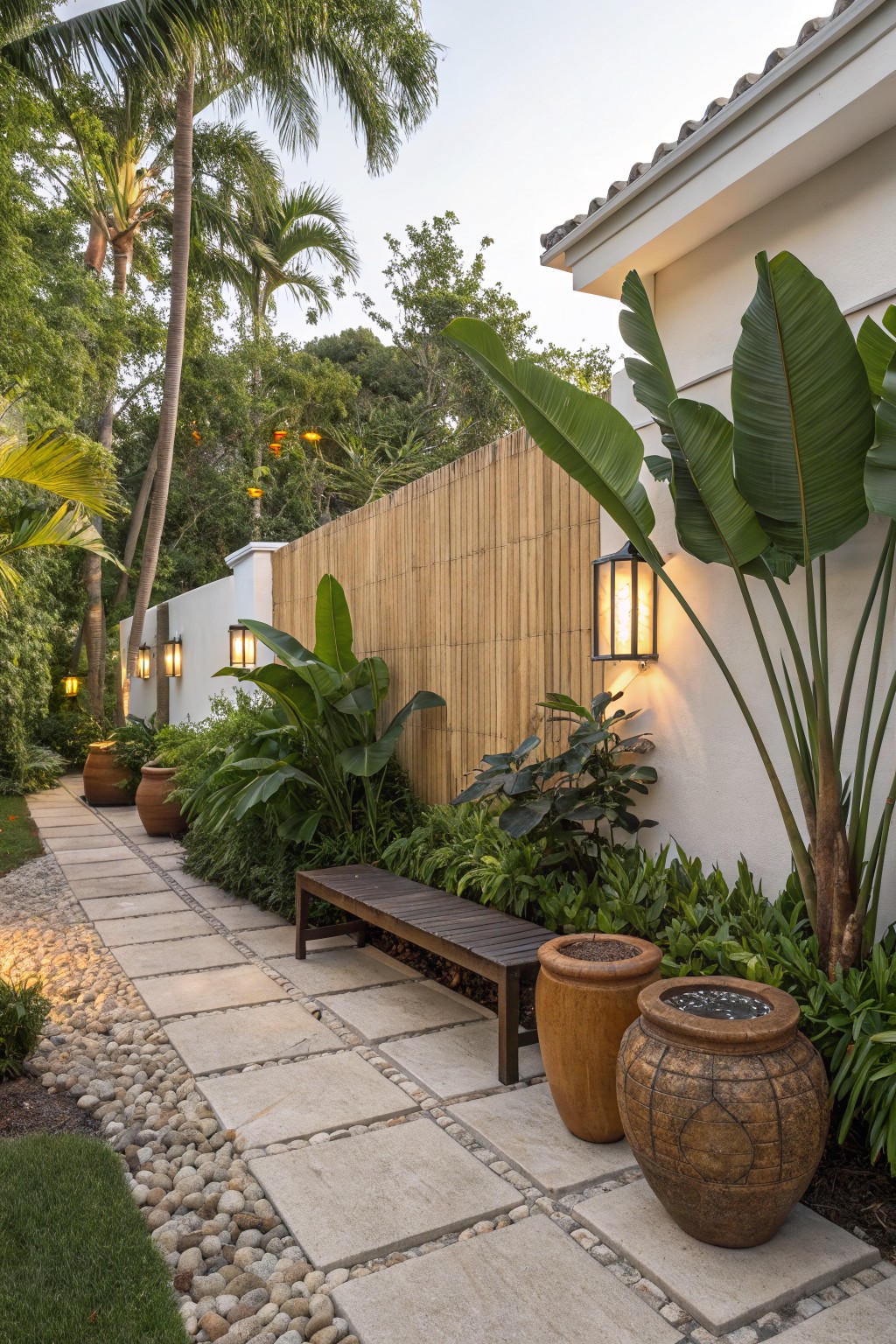
A narrow stone walkway winds along a tall bamboo fence, edged in smooth pebbles and tucked with layers of broad tropical leaves like banana plants. Large terracotta pots sit at intervals, and a simple wooden bench offers a spot to pause. Wall lanterns cast a soft glow at dusk. This pulls the eye through the space and hides the fence behind all that green, making a tight yard feel deeper and more peaceful.
You can pull this off in a front yard side strip or along a property line where you need some screening. Pick heat-loving plants that grow fast for cover, space the pots to break up the path, and add the bench if there’s room. Skip it in cold spots unless you want container swaps each season. Keeps things low fuss once established.
Slim Pool Along the Fence Line
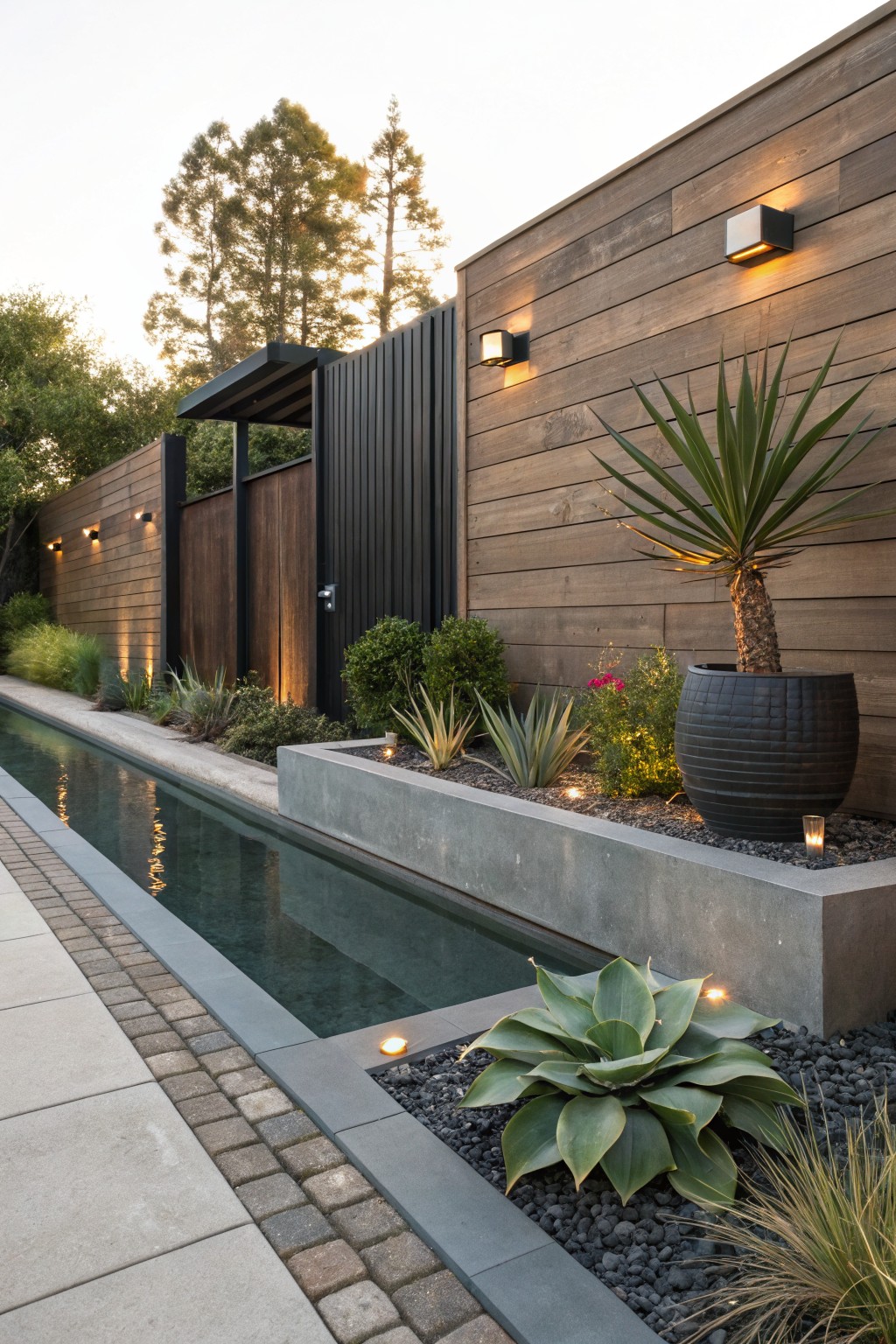
A narrow pool like this runs right up against the fence. It gives that smooth water reflection without eating up yard space. Paired with big agaves and simple gravel beds, it keeps things modern and easy to care for. The low lights along the edge make it shine at dusk.
This works best in skinny side yards or along a back boundary where you want some resort feel on a budget. Go for concrete edging to hold the clean lines, and stick to tough succulents that handle dry spells. Skip it if your fence gets too much shade. Might need a pro for the pool part.
Picket Fence with Dense Perennial Borders

A picket fence like this one works great when you pack the base with perennials. Think tall pink spikes mixed with lower blooms in purples and whites. It turns a plain fence line into a soft, colorful edge that feels cottage-like and lived-in. The stone path slipping through keeps it practical too.
Use this along your front fence where you get good sun. Start with grasses and shrubs at the back for structure, then layer flowers closer to the path. Suits older homes or rentals… just pick low-growers if mowing’s an issue nearby. Spillover plants add charm without much fuss.
Raised Beds Along the Fence
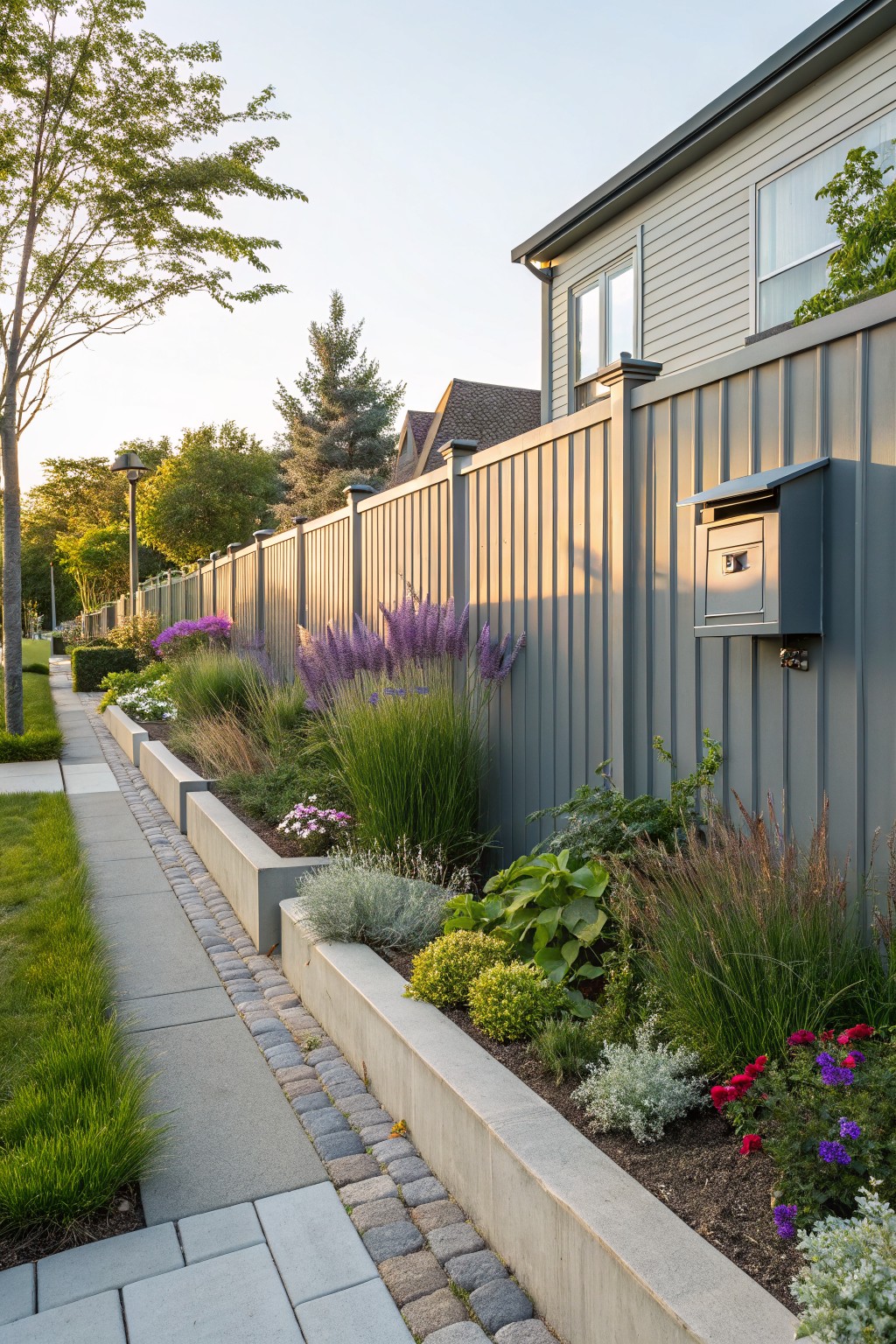
One straightforward way to dress up a fence line is with raised concrete beds right up against it. They give a clean edge that keeps everything tidy, while letting plants spill over a bit for some softness. Here, tall grasses and clumps of lavender mix with lower flowers like daisies, turning a plain fence into a colorful backdrop without much fuss.
These work best in skinny front yard strips where you want impact but not a lot of space. Pick tough perennials and ornamental grasses that don’t need constant care, and keep the concrete simple to match modern or craftsman-style homes. Just make sure the beds drain well so roots don’t rot.
Flower Beds Along a Picket Fence
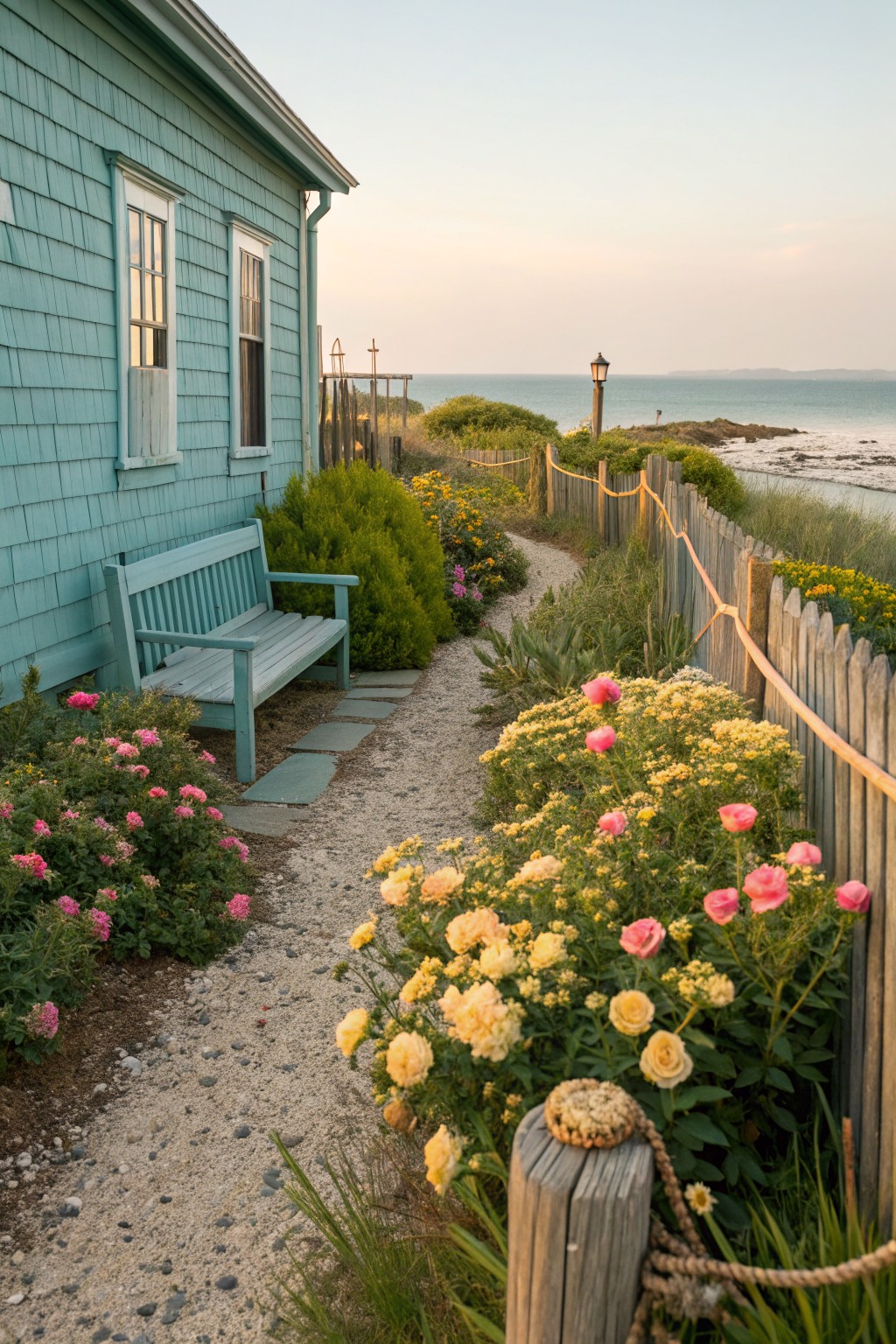
A gravel path runs right along a simple picket fence, with flower beds packed tight against it on one side. Clumps of pink roses and yellow perennials fill the beds, mixing heights and colors without much fuss. That setup turns a plain fence into a lively garden edge that draws you down the path.
It works best in front yards where you want to screen the fence line or add curb appeal without taking up yard space. Go for tough, repeat-blooming plants like roses or coreopsis that handle sun and wind. Add a bench nearby if there’s room. Suits cottage homes or coastal spots… just keep the path clear for walking.
Tiered Raised Beds Along the Fence
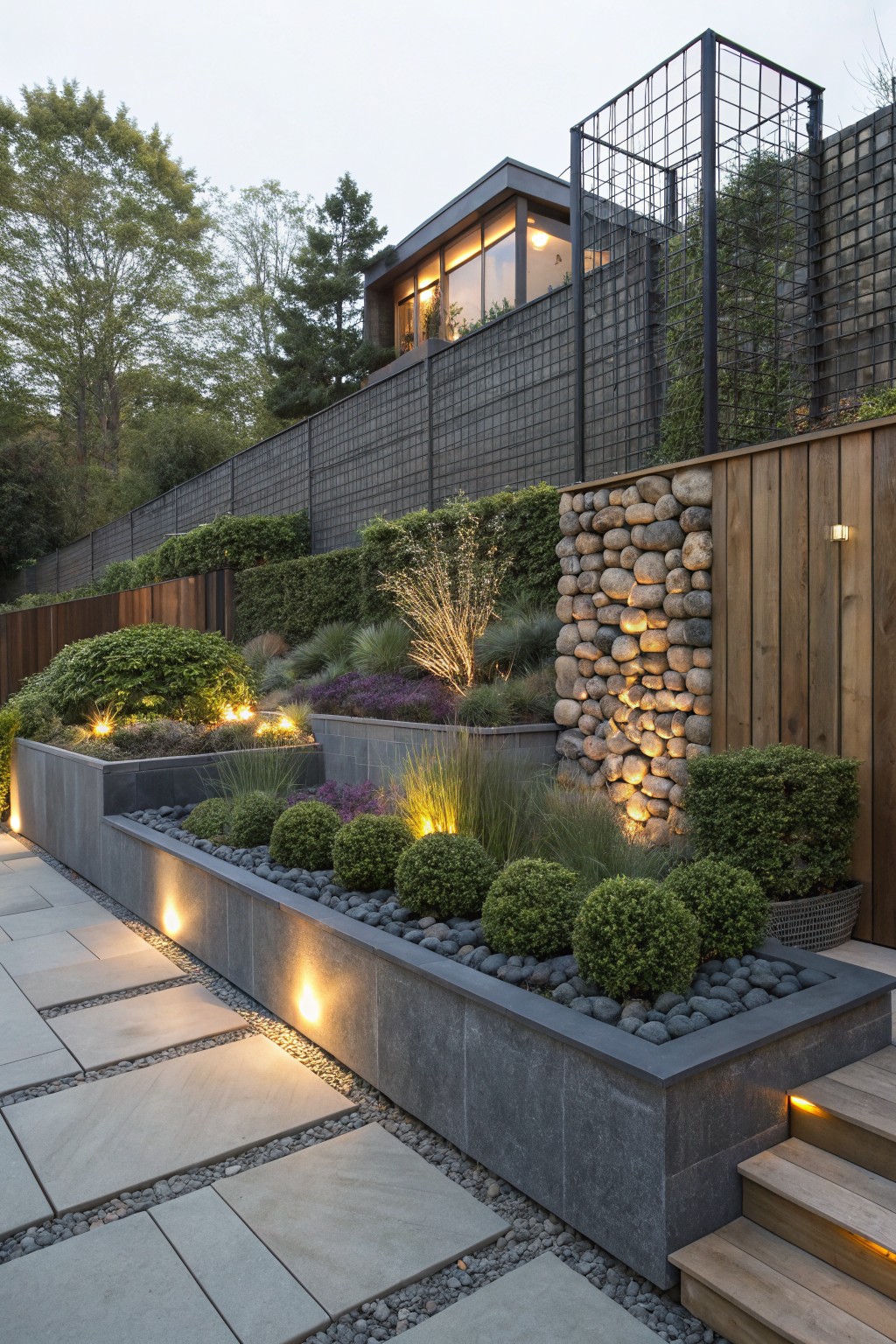
Raised beds like these give a clean structure to front yard planting right along the fence. Built from dark stone and filled with black gravel, they hold rounded boxwood shrubs and tall grasses that stay neat year round. The low lights tucked into the edges add a soft glow without much fuss.
You can use this setup on sloped lots to hold back soil and create steps down to a path. It fits modern houses or older ones wanting less mowing. Pick gravel that locks in place, and space the boxwoods for easy trimming.
Climbing Roses Along a Fence Line
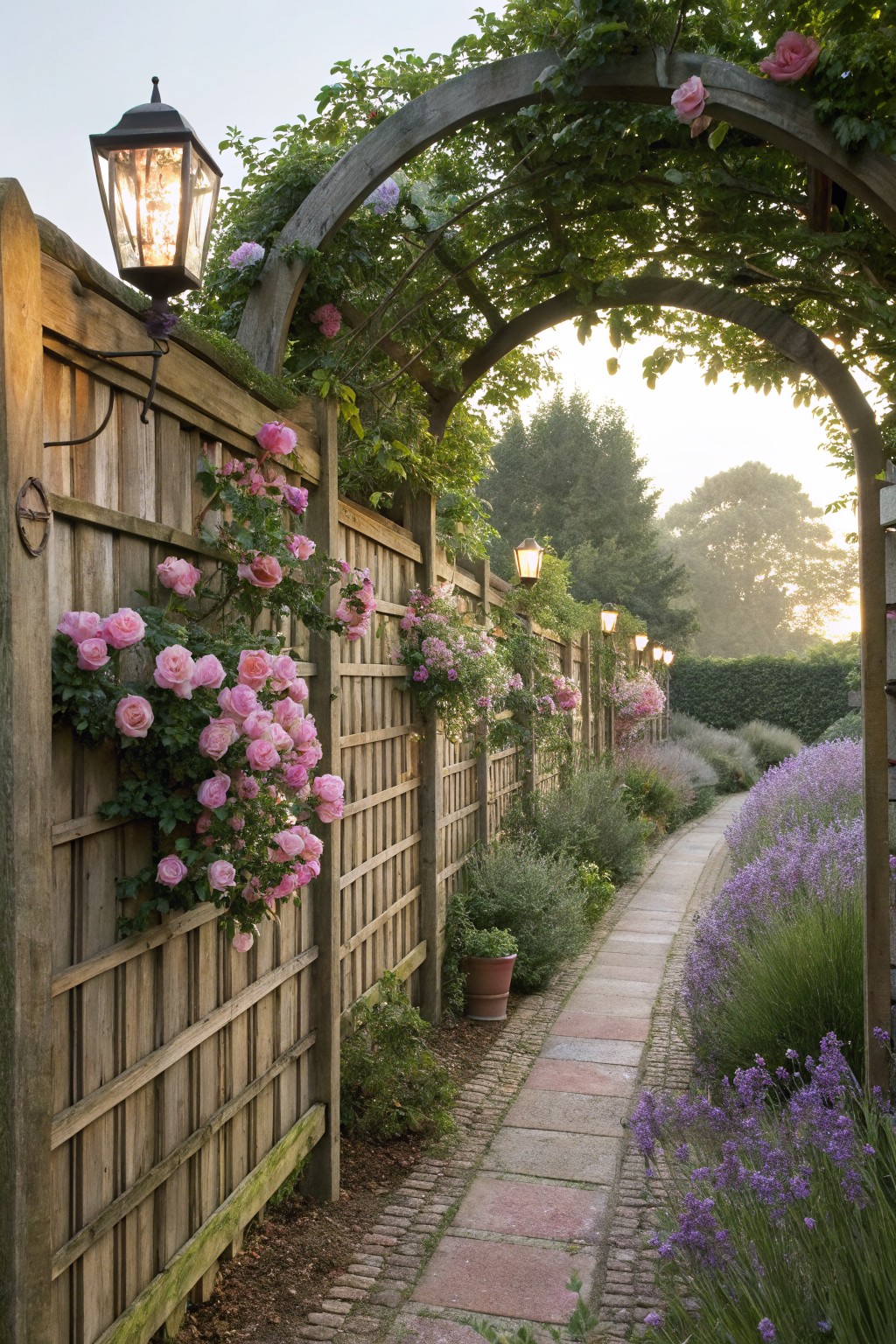
One easy way to dress up a plain fence is with climbing roses. They grow right up the wooden slats and cover them in soft pink flowers through the season. That burst of color turns a side path into something special, especially when you add a few lanterns for evening light.
Plant the roses at the base of your fence, tying the canes loosely to guide them up. Keep the path edged with tough plants like lavender that won’t mind some shade. This works well in front yards with not much room, giving privacy and that old garden feel. Trim them back each year to keep things tidy.
Raised Planters Along the Fence Line
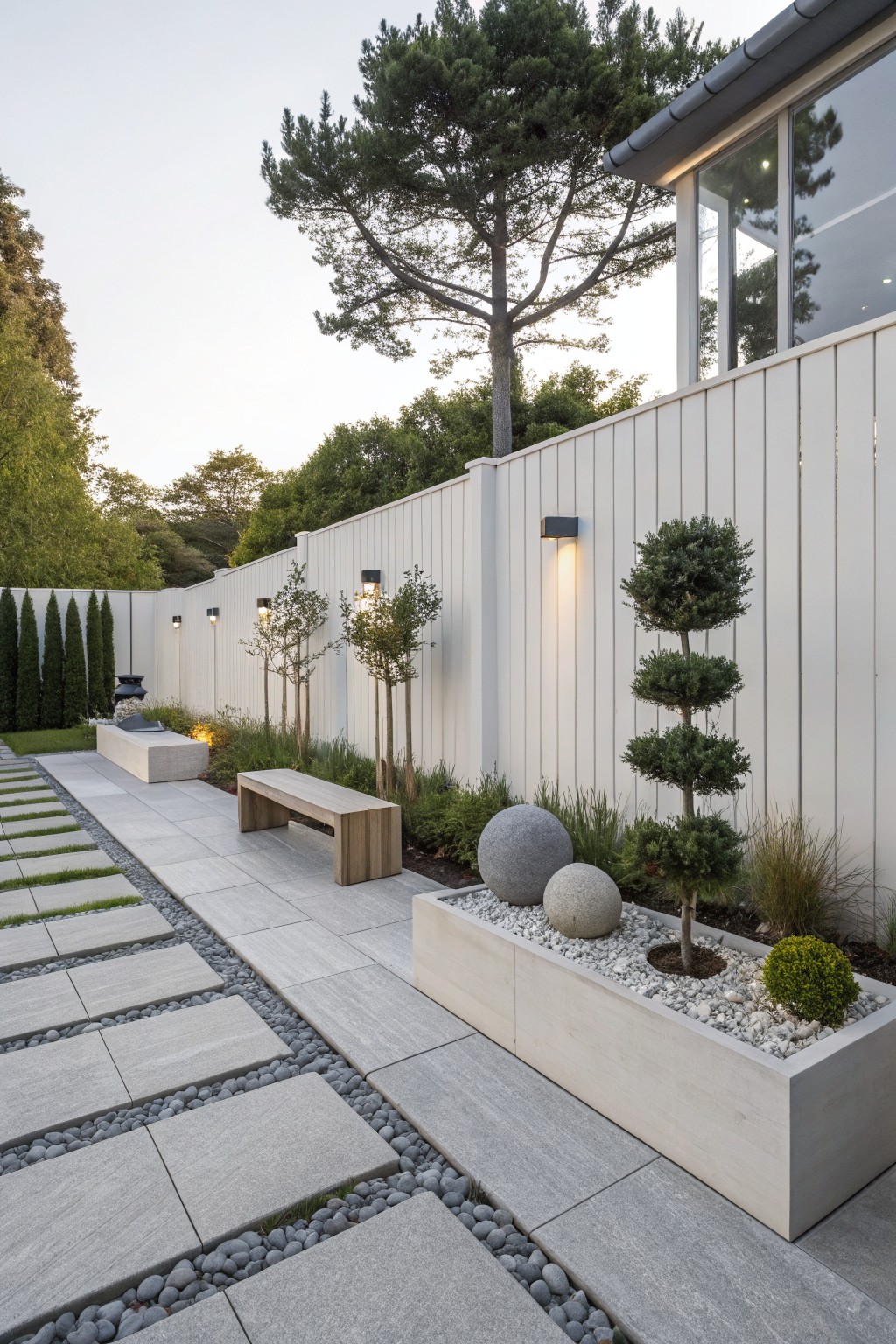
One easy way to dress up a plain fence is with low built-in planters like these. They run right along the base in white wood that matches the fence, packed with big round boulders, white pebbles, and a few clipped trees for height. It makes a tidy strip that’s modern but not fussy, and the gravel path beside it pulls it all together without taking up yard space.
This works best in skinny front or side areas where you want some green but not a lot of mowing. Pick drought-tolerant stuff like those small evergreens and grasses, add stones for weight, and keep the boxes simple. Skip anything too colorful if you like the calm feel… it stays low-maintenance year round.
Linear Gravel Path with Edge Lighting
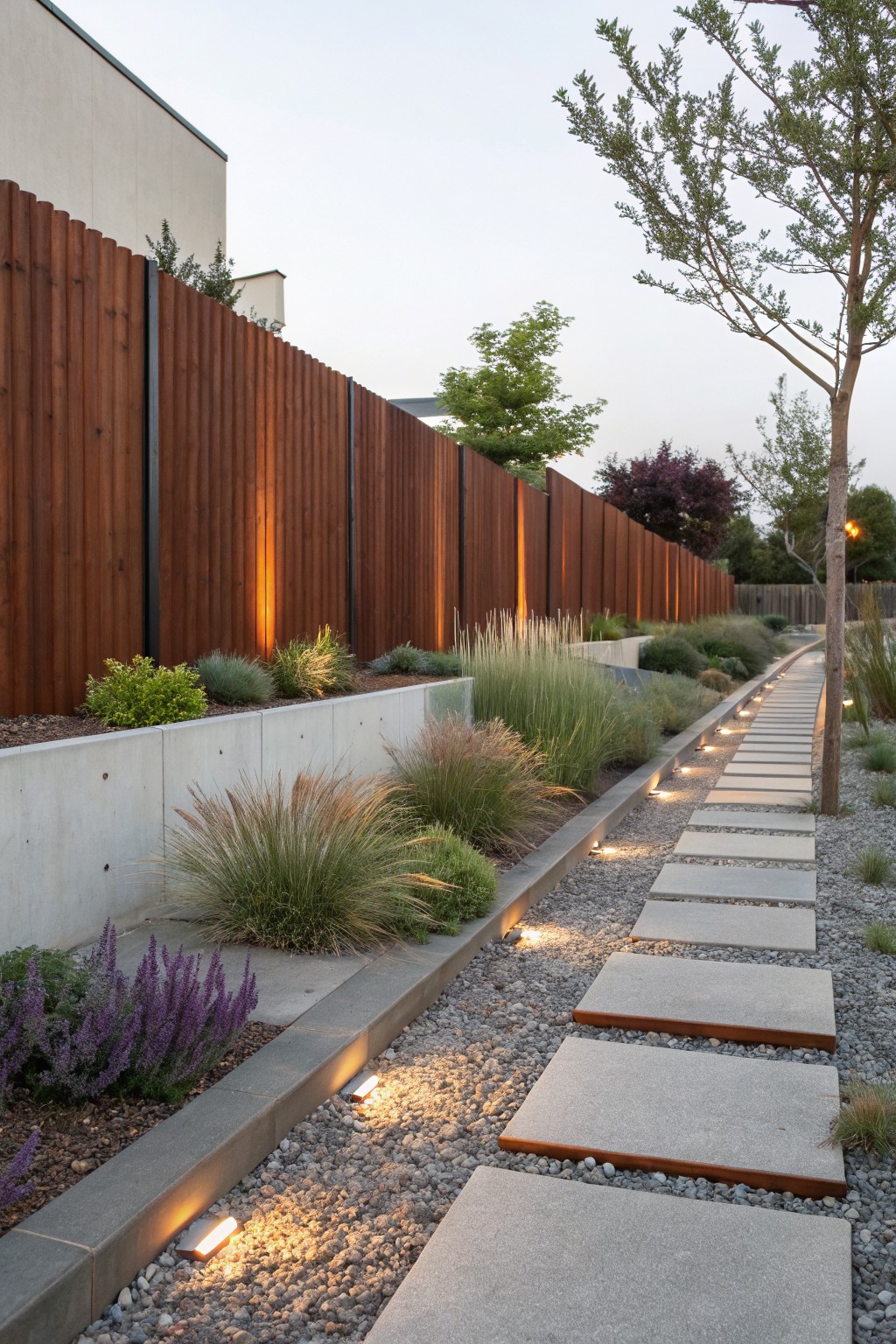
One straightforward way to landscape along a fence is to lay out a simple gravel path with oversized concrete pavers. Here the path runs right next to a tall wooden fence, edged by low concrete walls filled with clumps of feathery grasses. The recessed lights along the base make it practical for evenings, and the whole thing feels tidy without being fussy.
This works best in narrow front yard strips or side areas where you want to connect the house to the street or gate. Go for drought-tolerant grasses like miscanthus or fescue to keep upkeep low. Skip anything too colorful if you want that calm, modern vibe, and make sure the gravel drains well so it stays crisp.
Colorful Planters Line the Fence
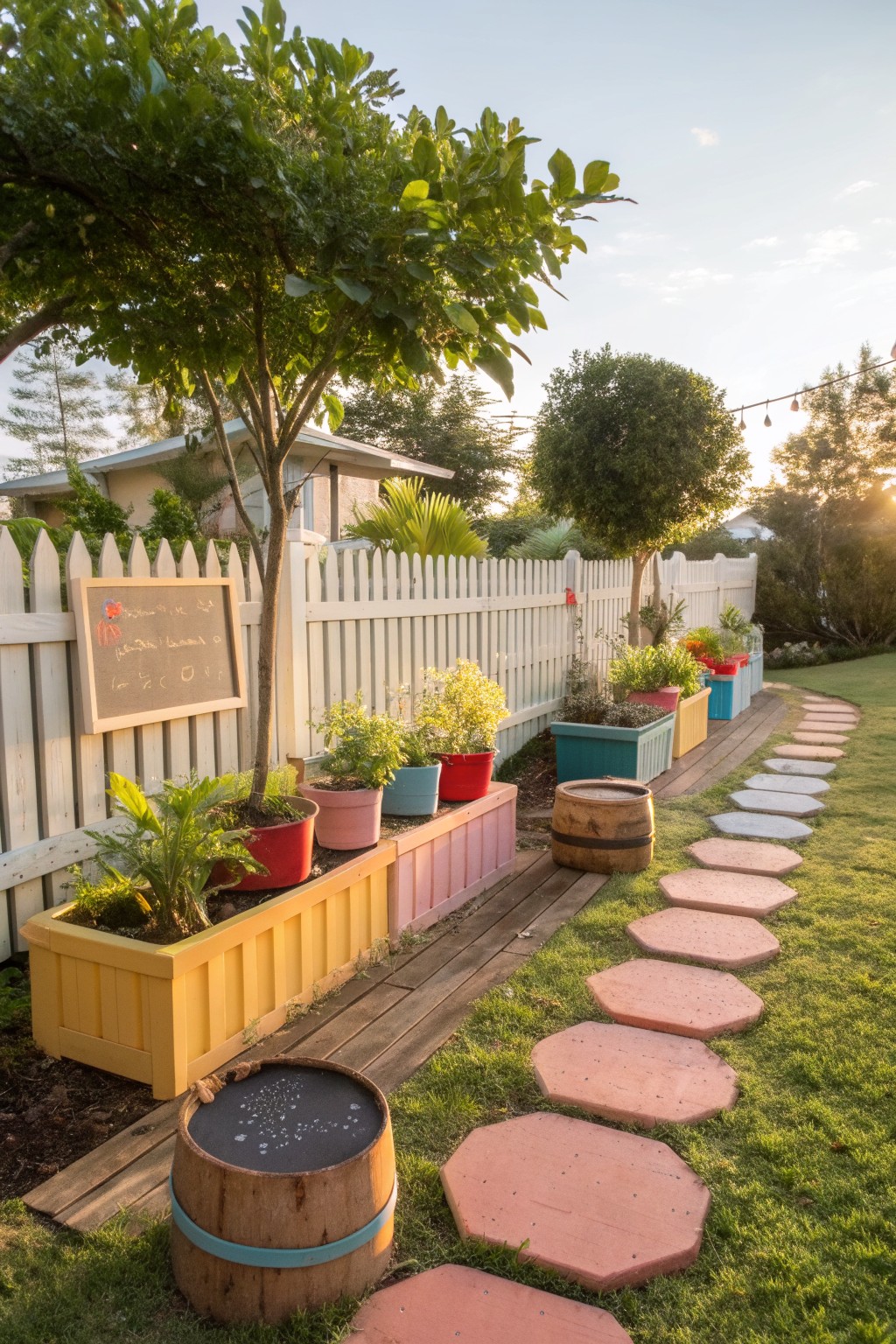
One simple way to dress up a fence line is with a row of colorful raised planters and pots. Here, bright yellow, pink, and blue containers sit right along a white picket fence, packed with greens and flowers. It makes the edge feel like a proper garden wall instead of just a boundary. The chalkboard signs on the fence and barrels add a playful touch too.
This works great in front yards where you want color and structure without digging up the whole lawn. Plant low-maintenance stuff like herbs or succulents. Add a path of stepping stones to guide people through. It suits most homes, especially cottages or family places. Just keep the colors from clashing too much with your house.
Rustic Path Along a Wooden Fence
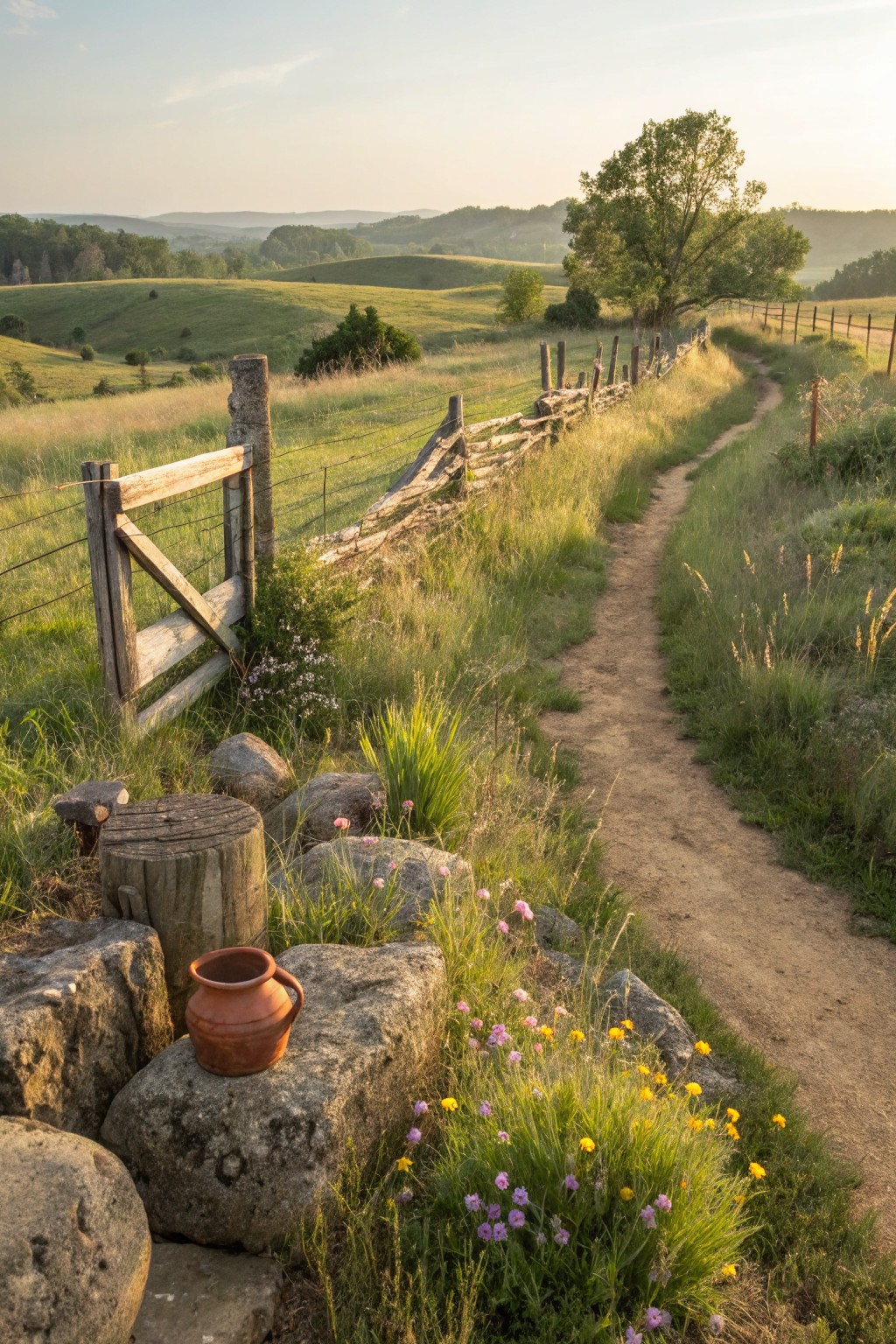
One easy way to make a front yard feel more welcoming is to add a simple dirt path that follows your fence line. Here the path winds gently beside an old split-rail fence, edged with tall grasses and colorful wildflowers. Big rocks and a stump with a clay pot add a natural touch without much work. It keeps things open and rustic, letting the yard breathe.
This works best in bigger yards or rural spots where you want low upkeep. Use native plants so they come back each year on their own. Line the path with fieldstones or whatever rocks you have around, and maybe set a pot or bench nearby for sitting. Skip fancy paving. It suits cottage-style homes or any place with a fence you don’t want to hide.
Boxwood Borders with Gravel Mulch
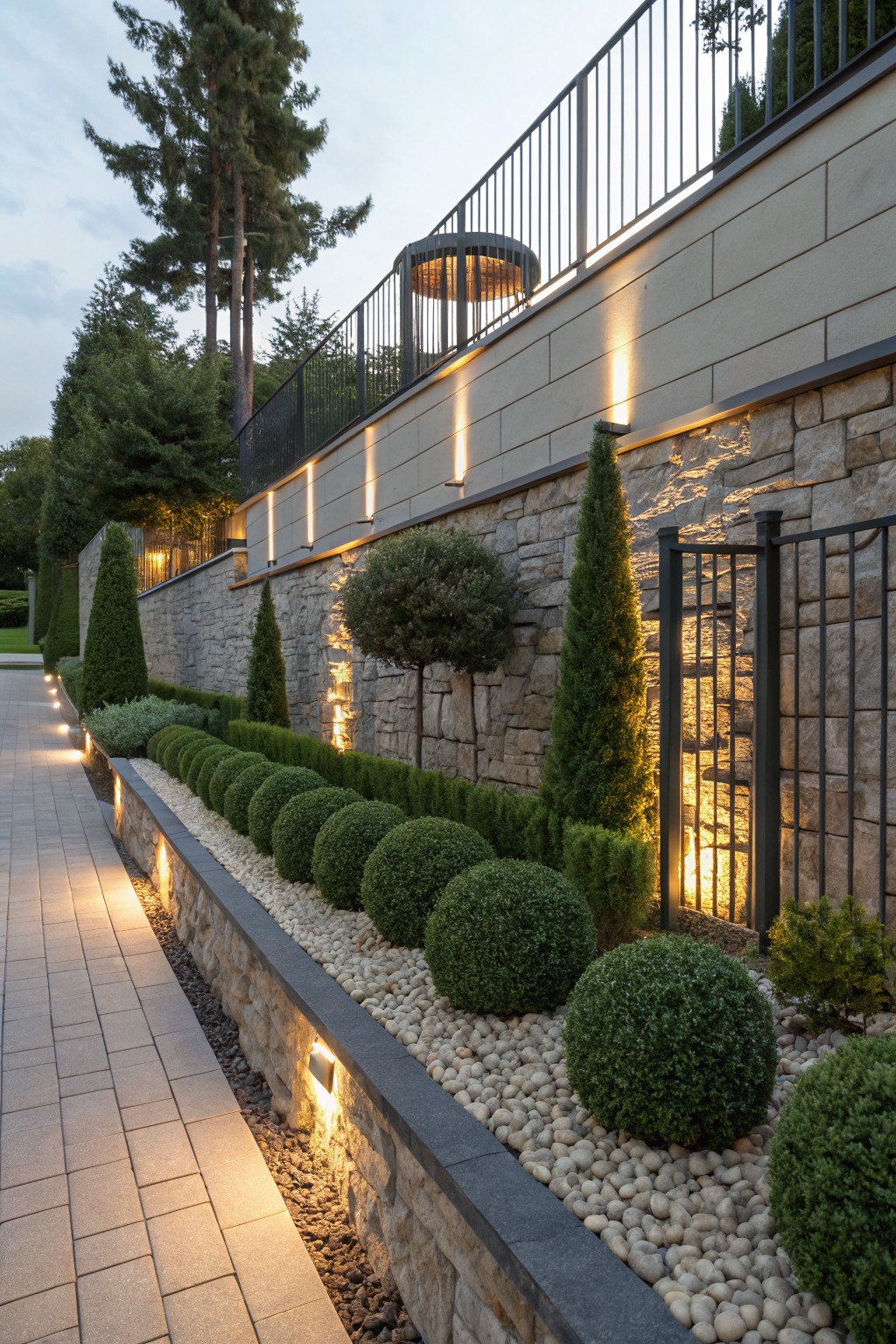
One clean way to dress up a front yard walkway is planting round boxwoods in beds of white pebbles right against a stone wall. The spheres stay neat and full, and the gravel keeps weeds down while letting water drain fast. Low lights along the path and wall add a soft glow that makes the whole line pop after dark.
This works well along a fence line or retaining wall, especially on a slope where you need structure. It suits most any house style, from modern to traditional, as long as you have full sun for the boxwoods. Trim them a couple times a year, and refresh the gravel now and then to keep it sharp.
Frequently Asked Questions
Q: How far should I plant from the fence to avoid problems?
A: Plant at least 18 inches away from the fence base. This space lets rain dry off and stops roots from crowding the posts. Mulch right up to the fence edge for a clean finish.
Q: What grows well if my fence line stays shady all day?
A: Ferns and hostas thrive there with zero drama. They spread gently to fill gaps. Toss in impatiens for bright color that lasts through summer.
Q: How do I keep it looking good without daily work?
A: Stick to tough perennials like daylilies or lavender. They bounce back fast after dry spells. Deadhead blooms occasionally and call it done.
Q: Got a budget? Where do I start cheap?
A: Layer cardboard under mulch to kill weeds for free. Add one or two sturdy shrubs from a local sale. Build the rest next season… it grows on you.
