


River rocks bring a quiet, enduring appeal to yard layouts that synthetic stones rarely match, especially as they settle into place alongside maturing plants and soil.
They excel at defining pathways that wind naturally through the space or edging beds that keep mulch and greenery contained over seasons of growth.
I added a low river rock border to one side of my driveway a couple years back, and it grounded the whole front yard in a way gravel never could.
Those subtle curves catch the eye right away on a walk-through.
Plenty of these setups adapt well to real challenges like slopes or wet spots, making them worth noting for your own outdoor tweaks.
Winding Path with River Rock Edges
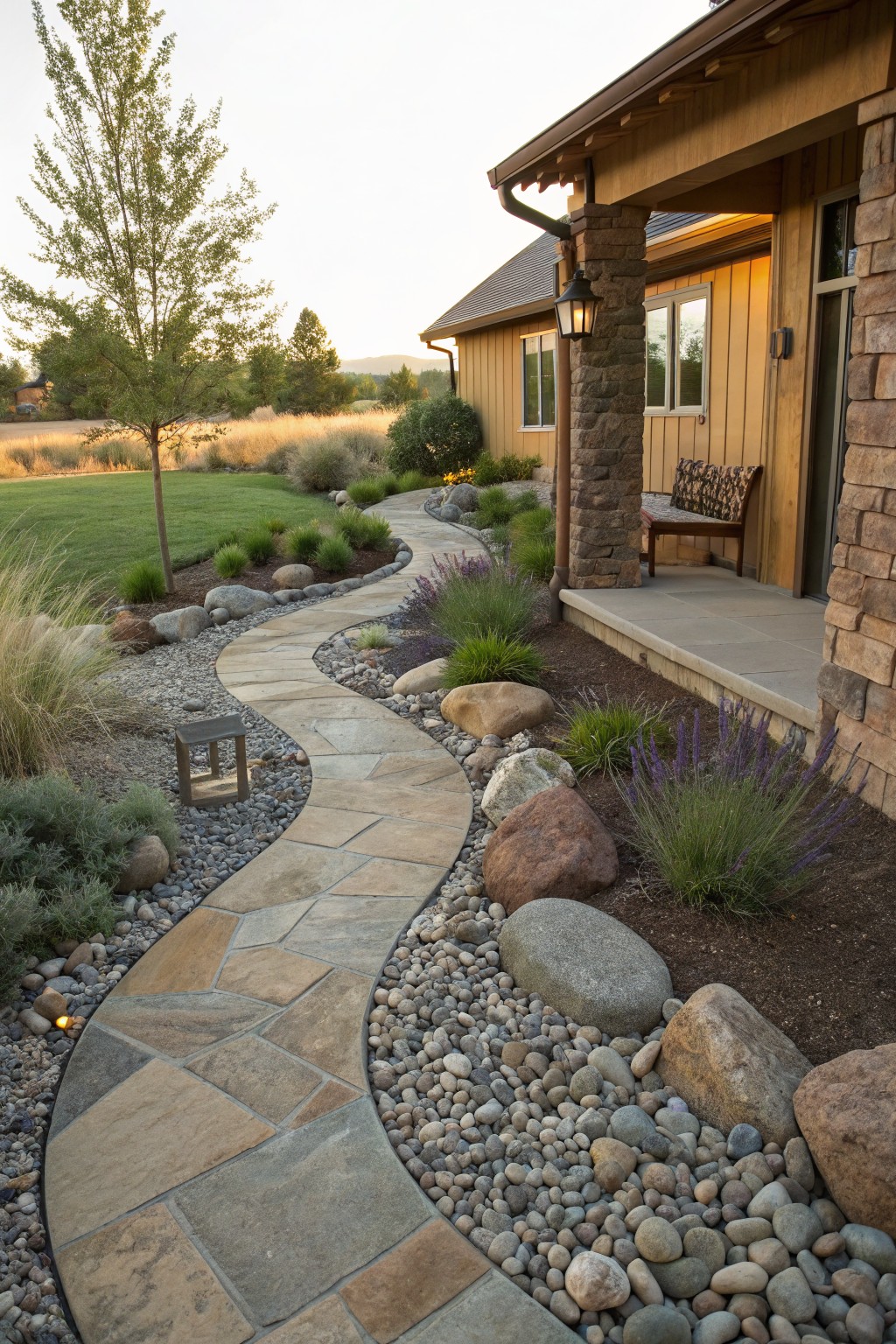
One easy landscaping move is to edge a curving stone walkway with river rocks. Here the flagstone path snakes toward the house, with smooth pebbles tucked right up against the edges and bigger boulders placed nearby. It keeps everything neat without looking too fussy, and the rocks tie into the dry grasses and lavender for a natural flow.
This setup suits front yards or side paths where you want low upkeep. Lay down landscape fabric first under the rocks to block weeds, then add plants that don’t need much water. It fits homes with a rustic porch or cabin feel best. Watch the path curve gently so it doesn’t feel forced.
River Rocks Edging Curved Paths
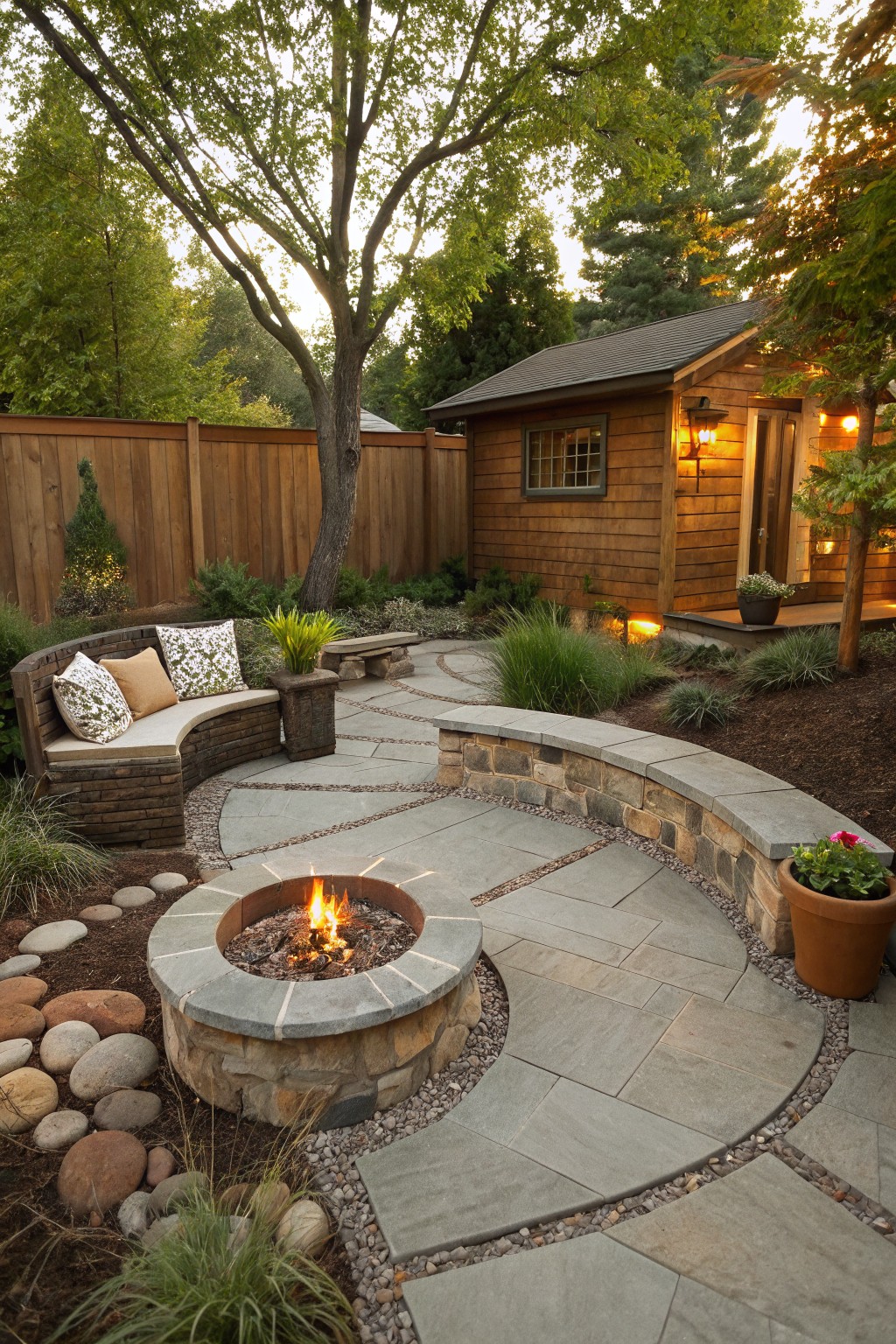
A simple way to make backyard paths feel more natural is to border them with river rocks. Here, smooth gray flagstone tiles curve around a fire pit, and the rocks fill in along the edges just right. It keeps things tidy while blending the hard path into the surrounding mulch and plants. No sharp lines. Just easy flow.
This works best in cozy backyards with a fence or trees for privacy. Lay the path first, then spill river rocks into the borders, maybe a foot wide. Suits sloped spots or paths to a fire pit or bench. Skip it if your yard floods a lot, since rocks can shift. But for low upkeep charm, it’s steady.
River Rocks in a Simple Planter Box

One easy way to add natural charm to a courtyard or patio is filling a low concrete planter with smooth river rocks. Tuck in small patches of moss or low greenery here and there. It fits right into modern hardscaping, like alongside a narrow reflecting pool. The rocks give a calm, water-worn texture that softens straight lines without much upkeep.
This works best in small enclosed yards or around seating areas. Go for rounded pebbles in gray or black tones to keep it understated. Size the box to about two feet square so it draws the eye but stays practical. Skip overcrowding with plants… just enough green keeps it alive-looking.
River Rock Pathways Between Stone Slabs
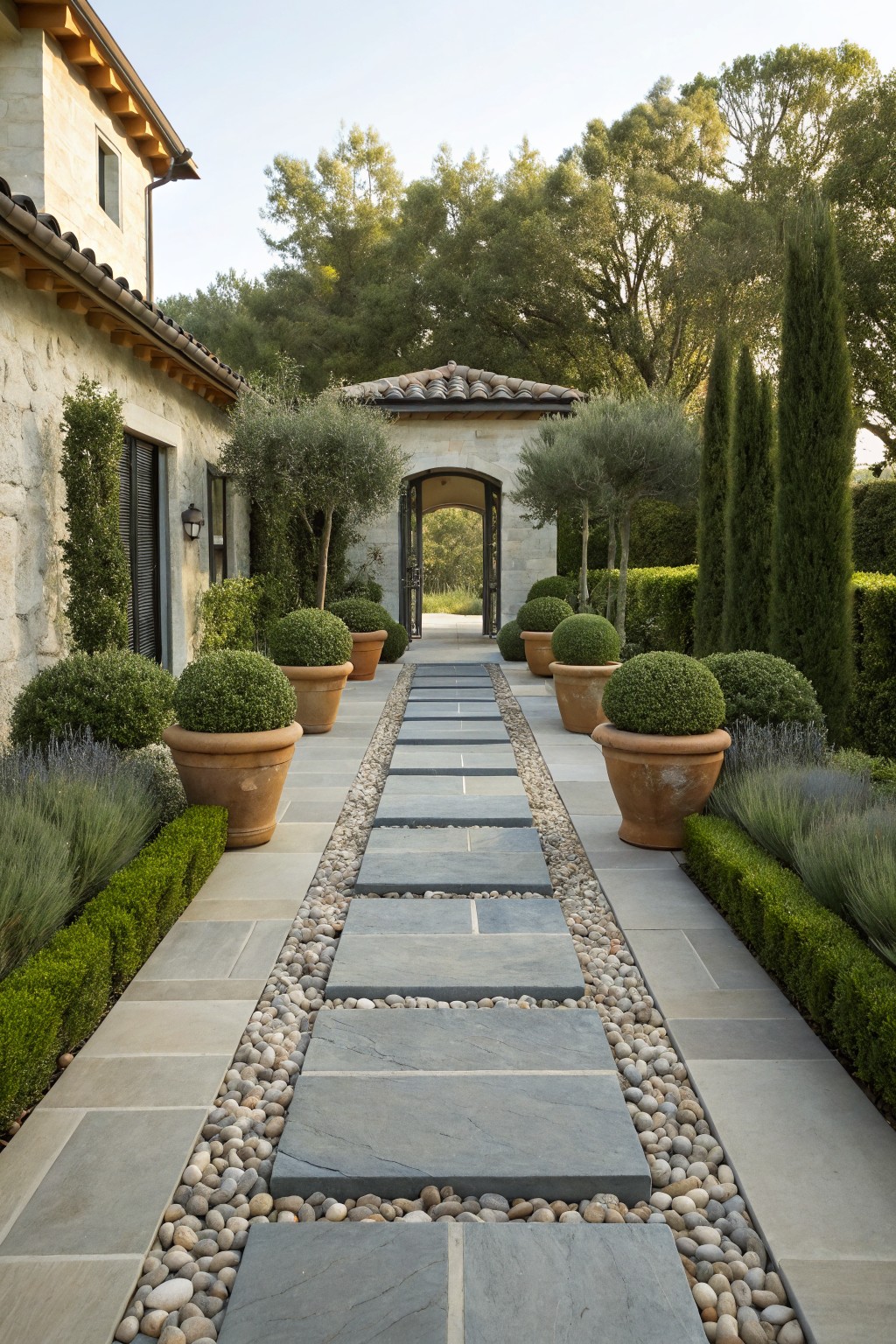
One straightforward way to use river rocks is filling the spaces between large stone slabs for a garden path. It keeps things clean and structured while the pebbles bring in that natural texture. You see it here leading up to the house, with terracotta pots of clipped boxwoods and lavender tucked along the edges. The look stays low fuss but feels put together.
This setup works best in front yards or side paths where you want definition without a lot of hard edges. It suits homes with a bit of Mediterranean or countryside style, like stucco walls and olive trees nearby. Go for rounded pebbles to avoid shifting, and keep the slabs wide enough for easy walking.
River Rock Stepping Stone Path
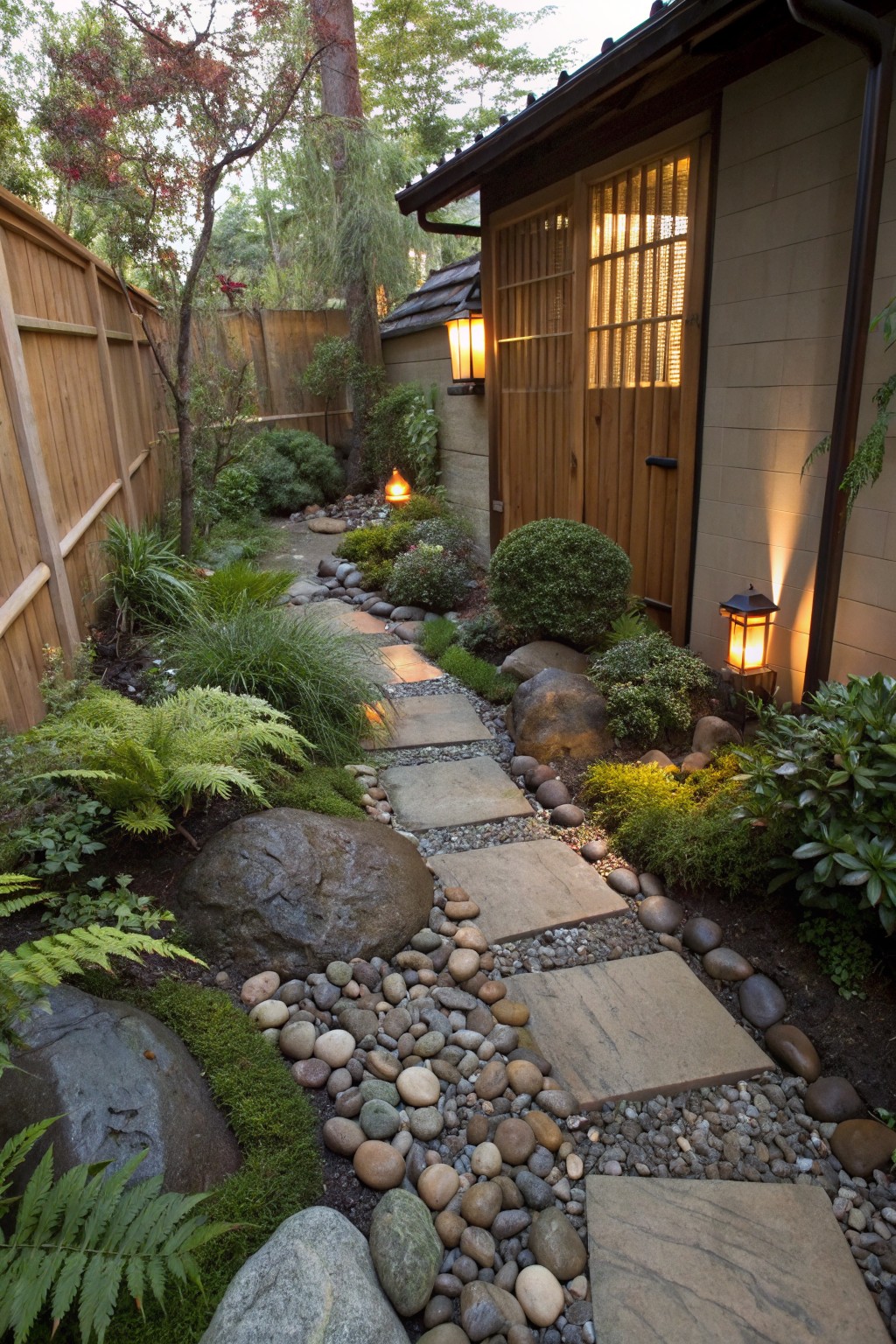
A simple way to use river rocks is filling the gaps between square stepping stones. It makes a path feel more natural, like you’re stepping across a shallow stream. Those smooth pebbles shift just a bit underfoot, and paired with low plants and boulders, the whole walkway blends right into the garden.
This setup works best in narrow side yards or leading to a back door. It suits any home with a touch of Asian garden style, especially where space is tight. Just choose rounded rocks to avoid sharp edges, and edge it with mossy plants for easy upkeep.
River Rock Pool Surrounds

River rocks make a smart choice around pools like this one. They fill in the space between the water and paths with a natural texture that looks good year-round. No grass to trim or weeds to fight. Here the dark pebbles hug the pool edge while lighter stones spread out to the loungers and plants. It keeps things tidy and adds that casual beach feel without much work.
Try this in smaller backyards or modern setups where you want low upkeep. Line the pool first then scatter rocks wider for paths or beds. Works best with drought-tolerant plants like agaves nearby. Just make sure to use landscape fabric underneath so rocks stay put.
Casual Stepping Stone Path in River Rock Gravel

A simple path like this uses flat, irregular stones set right into a bed of light river rock gravel. It curves through thick flower beds filled with hydrangeas and tall whites, keeping things loose and natural. What stands out is how the gravel lets water drain fast and plants tuck in close without much edging work.
This works best in cottage-style yards or along a side garden where you want low fuss. Space the stones about a foot apart for comfortable steps, and fill gaps with smooth river rocks. It suits sloped spots too, since gravel shifts less than mulch. Just rake it now and then to keep it tidy.
River Rock Path Borders
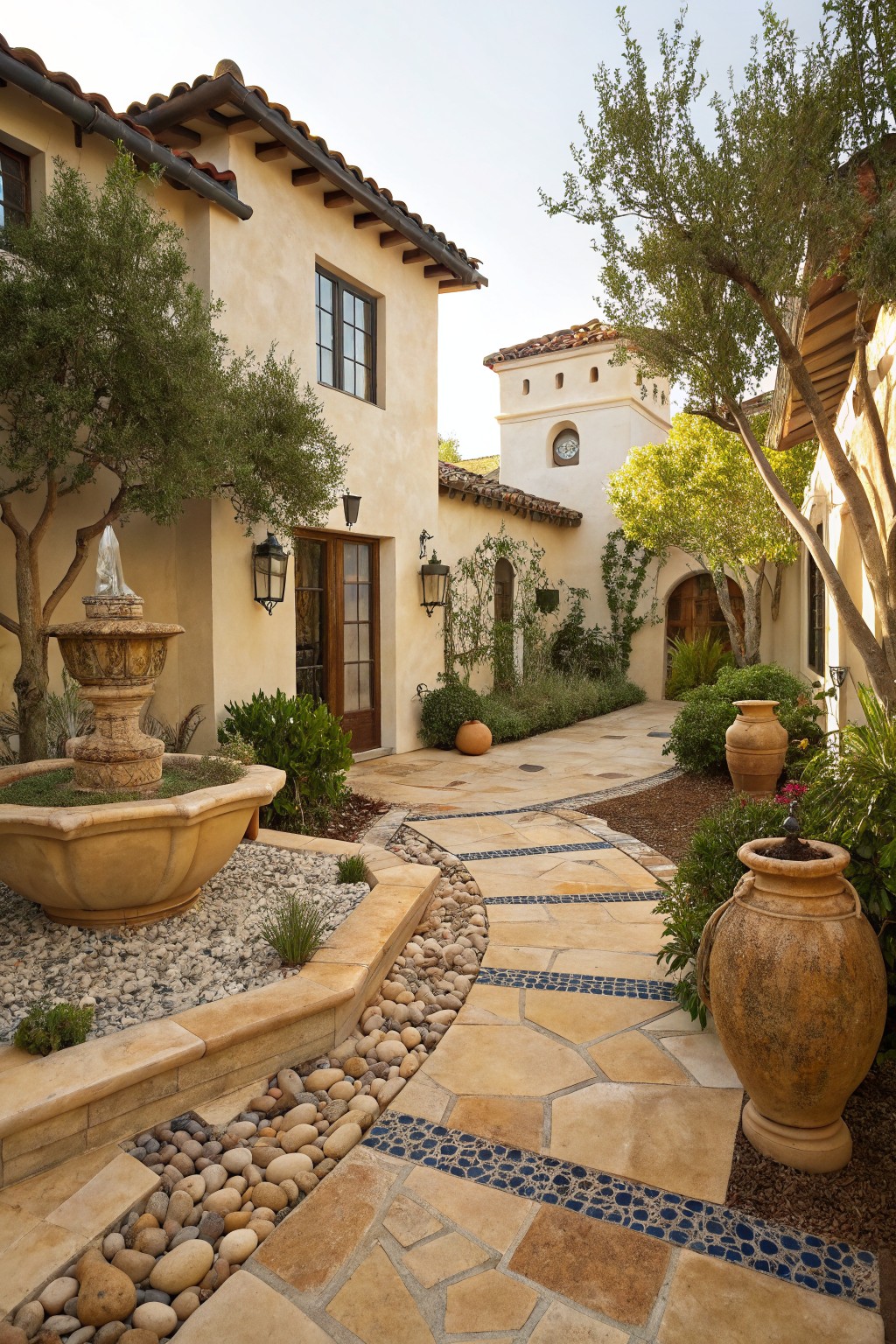
One easy way to bring natural texture to garden paths is lining them with river rocks. Here, smooth pebbles form neat borders along a winding flagstone walkway, creating a dry creek effect that guides you right through the space. It softens those big stone slabs without much upkeep.
This idea fits courtyards or entry paths in warmer climates. Dig a shallow trench next to your path, layer in some gravel for drainage, then add the rocks. Toss in olive trees or succulents nearby… keeps things low-water and ties into stucco homes nicely.
River Rocks Edge a Curved Walkway
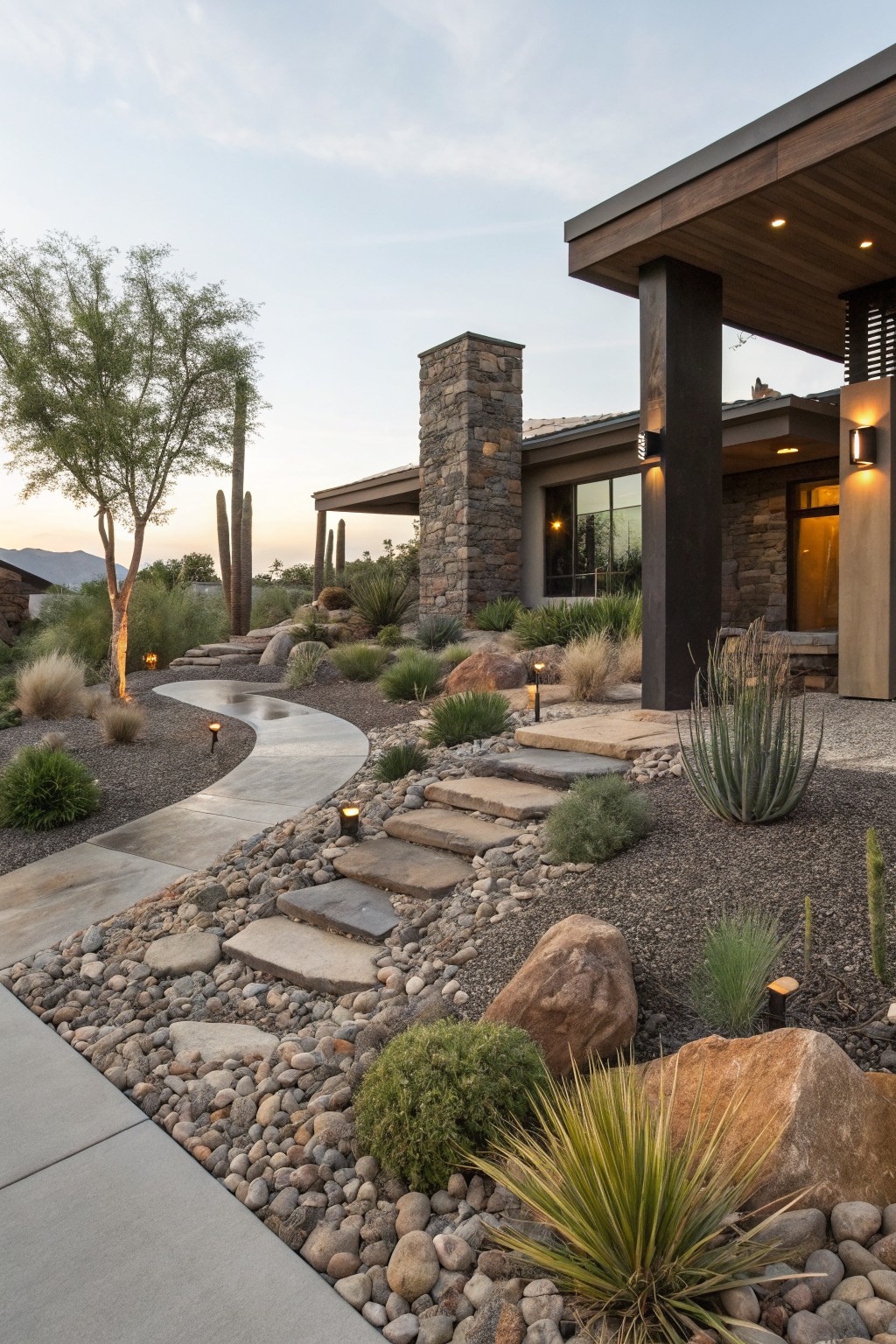
River rocks make a simple border around this winding concrete path, giving it a natural flow that fits right into a desert yard. They keep weeds down and add texture without much upkeep. Paired with a few big boulders and tough plants like agave, the rocks help tie the walkway to the landscape instead of making it stand out too much.
This setup works best in dry areas where you want low-water gardening. Lay the path first, then spill rocks around the edges and in planting pockets. It suits modern homes with stone details. Just keep the rocks from washing away in heavy rain by mixing in some gravel underneath.
River Rock Base for Outdoor Kitchen Islands

One simple way to add natural charm to your backyard is building an outdoor kitchen island with a river rock base. Those sturdy stone pillars give the setup a grounded, rustic feel that blends right into the landscape. They hold up the smooth concrete top where the grill sits, making the whole spot look custom and lasting.
This works great on a paver patio near the house, especially if you have some trees or shrubs nearby. Stack the rocks dry or with minimal mortar for that organic look, then top it with a durable surface. Keep the scale right for your space… too big and it overwhelms a small yard.
River Rock Fire Pit Gathering Spot
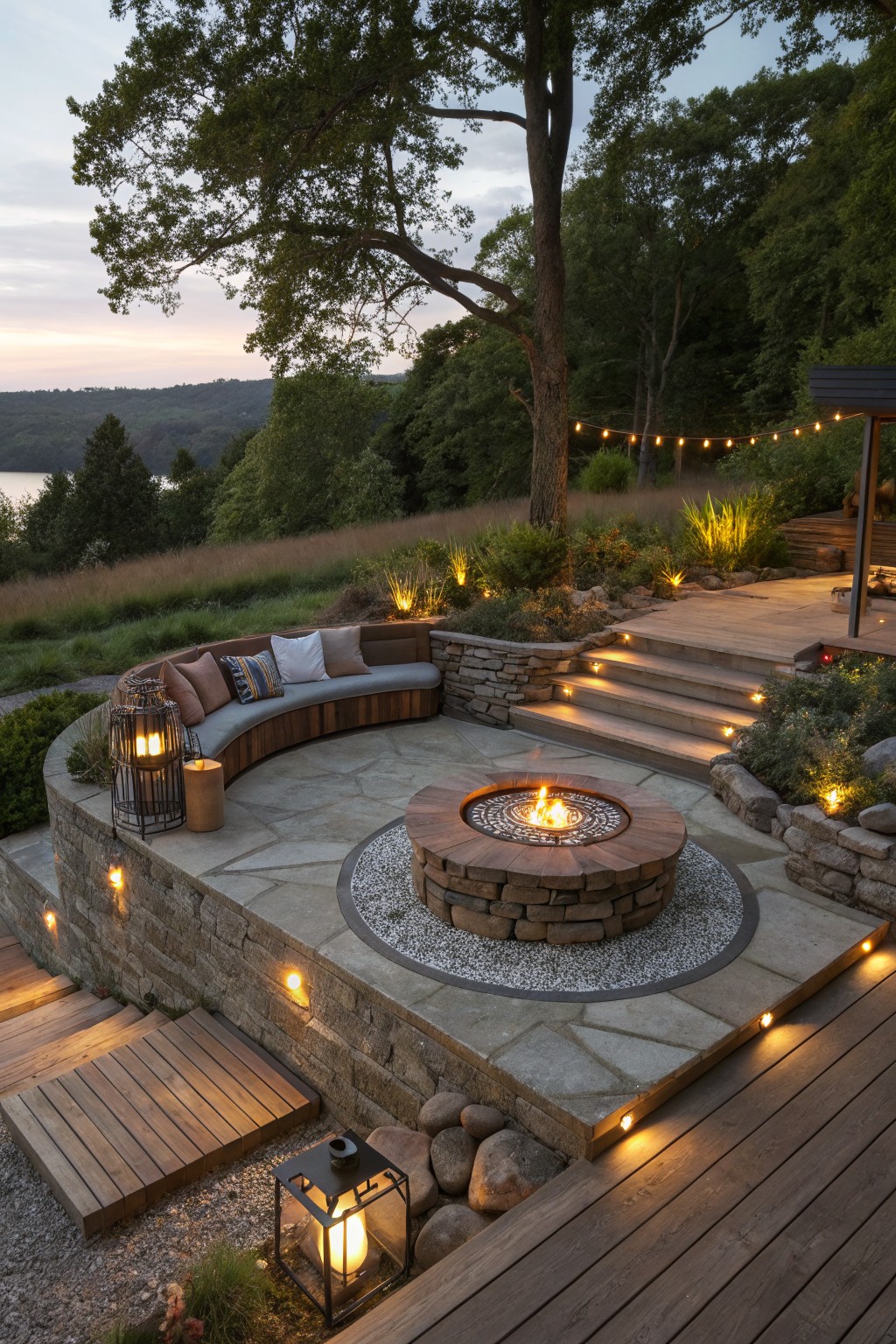
A simple river rock fire pit makes a natural heart for any backyard patio. Here it’s set right in the middle of a stone terrace, circled by smooth gray pebbles that keep things tidy and let the flames stand out. The built-in curved bench pulls people in close, and a few lanterns add soft light without fuss. It feels sturdy and welcoming, especially with hills and trees in the background.
Put one like this where you want a spot for evening talks or quiet nights out. It works great on sloped yards since the raised stone walls and steps tie it to the land. Use local river rocks for the surround to blend in, and keep the bench low for easy chats. Skip fancy extras. Just make sure the pit drains well so water doesn’t pool after rain.
River Rock Stream Beds

River rock stream beds give your yard that peaceful, natural creek feel without the hassle of real water. Here, smooth pebbles line a winding path with big boulders holding everything in place. Tall grasses and low flowers edge it just right, making the whole thing flow toward a simple deck. It’s a smart way to add movement and soften hard edges in the landscape.
These work best in backyards with some slope or open space near the house. Start by digging a shallow trench, layer in larger rocks first then fill with pebbles, and plant drought-tolerant stuff around the sides. It suits most homes, from modern to cottage style, and stays pretty with little upkeep. Just refresh the mulch every couple years.
Dry-Stacked Stone Walls for Sloped Paths

One simple way to handle a hillside yard is dry-stacked stone walls along a path. These walls use local boulders to hold back soil without mortar. They look natural right away. In this setup the flagstone steps fit right into the walls. Plants fill the pockets for a soft touch.
You can build this in any sloped spot near a house or down to a lower yard. Pick rounded boulders that match your area’s rocks. Add gravel mulch in the beds to cut weeds. It works best where you want low upkeep. Just make sure the path drains well after rain.
River Rock Garden Paths
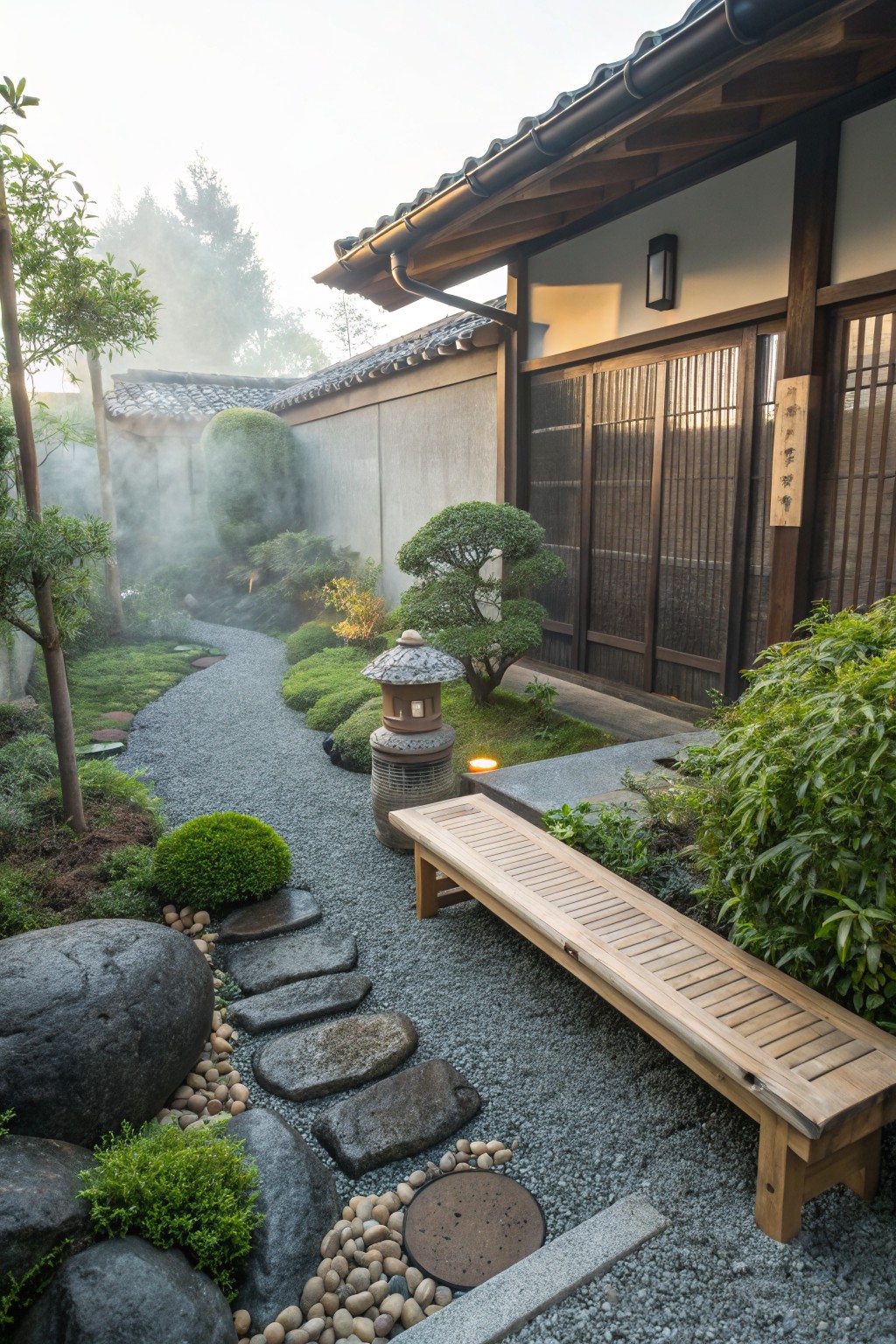
River rock paths like this one mix smooth pebbles and larger stones with gravel to guide you through the garden in a natural way. They feel peaceful and fit right into the landscape, especially around traditional homes. The irregular stepping stones add just enough structure without looking too planned out.
You can set these up in side yards or back gardens where you want low upkeep and a bit of charm. Start with bigger rocks along the edges for definition, then scatter smaller river rocks in the spaces between. They work best in shaded spots with mossy plants nearby, but watch for weeds popping up in the gravel.
Winding Flagstone Path by a Stream
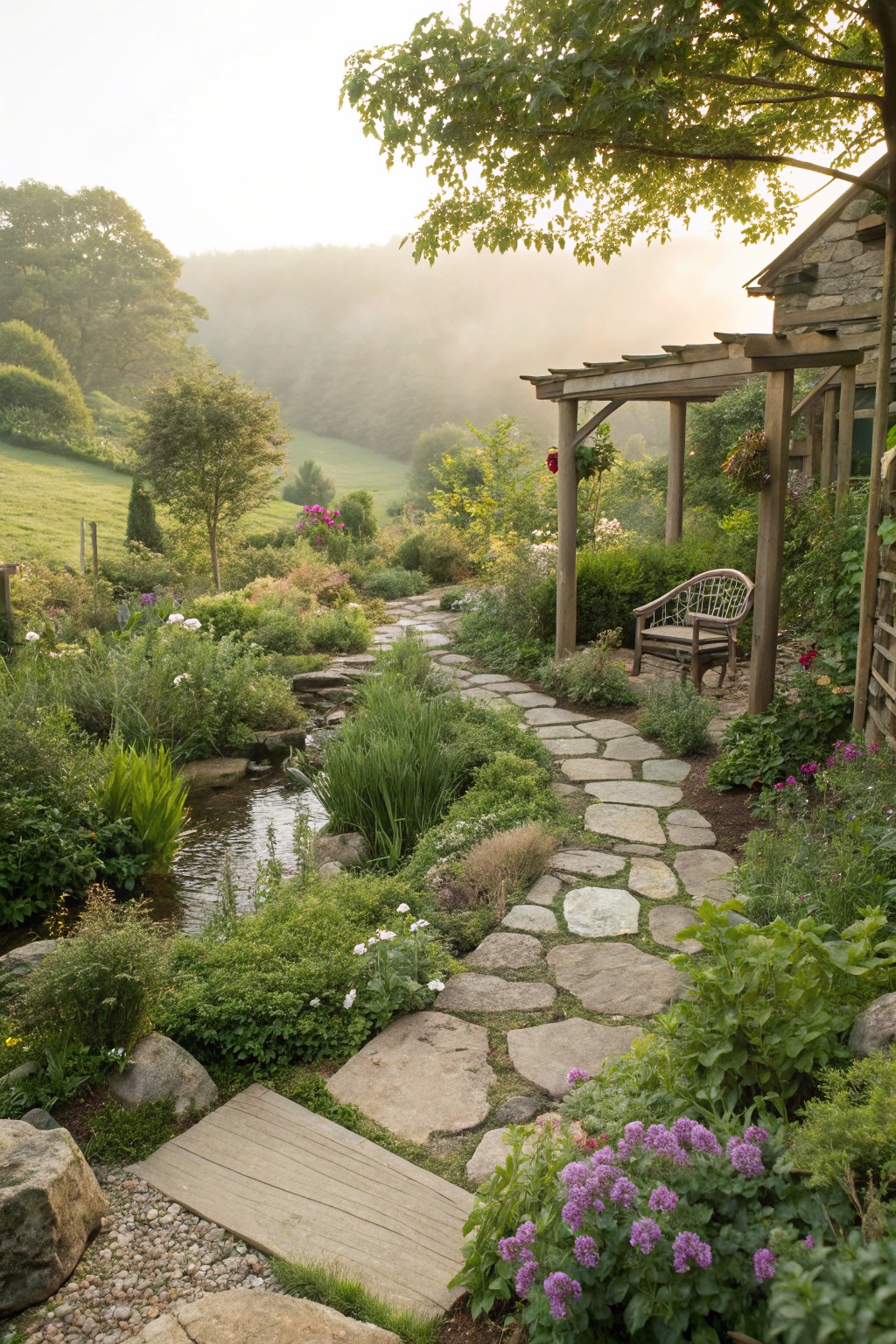
A winding path like this one uses rough-cut flagstone slabs laid in a loose, natural line. It runs right alongside a gentle stream edged with boulders and smaller rocks. What makes it stand out is how the path pulls you through the garden without feeling forced. The stones fit the ground’s contours, and plants spill over the edges for that lived-in look.
Try this setup in a backyard slope or side yard where you want movement through the space. Flat stones keep it walkable, even when damp. Mix in river rocks around the stream bed and gravel spots for easy drainage. Suits older homes or cottages best. Skip straight lines if your lot has any curve to it.
River Rocks Around Balcony Planters

River rocks make a simple, clean base around plants in raised planters on this balcony deck. They fill in the gaps nicely, letting low-water succulents and grasses stand out while keeping weeds down. The white pebbles catch the light from those low deck lights, giving the whole terrace a calm, finished look even at dusk.
You can pull this off on any rooftop or balcony with wooden decking. Just layer the rocks a couple inches deep in metal or wood planters alongside drought-friendly plants. It works best in sunny spots… skips the mess of soil everywhere. Skip darker stones if you want that bright, open feel.
Winding Flagstone Garden Path
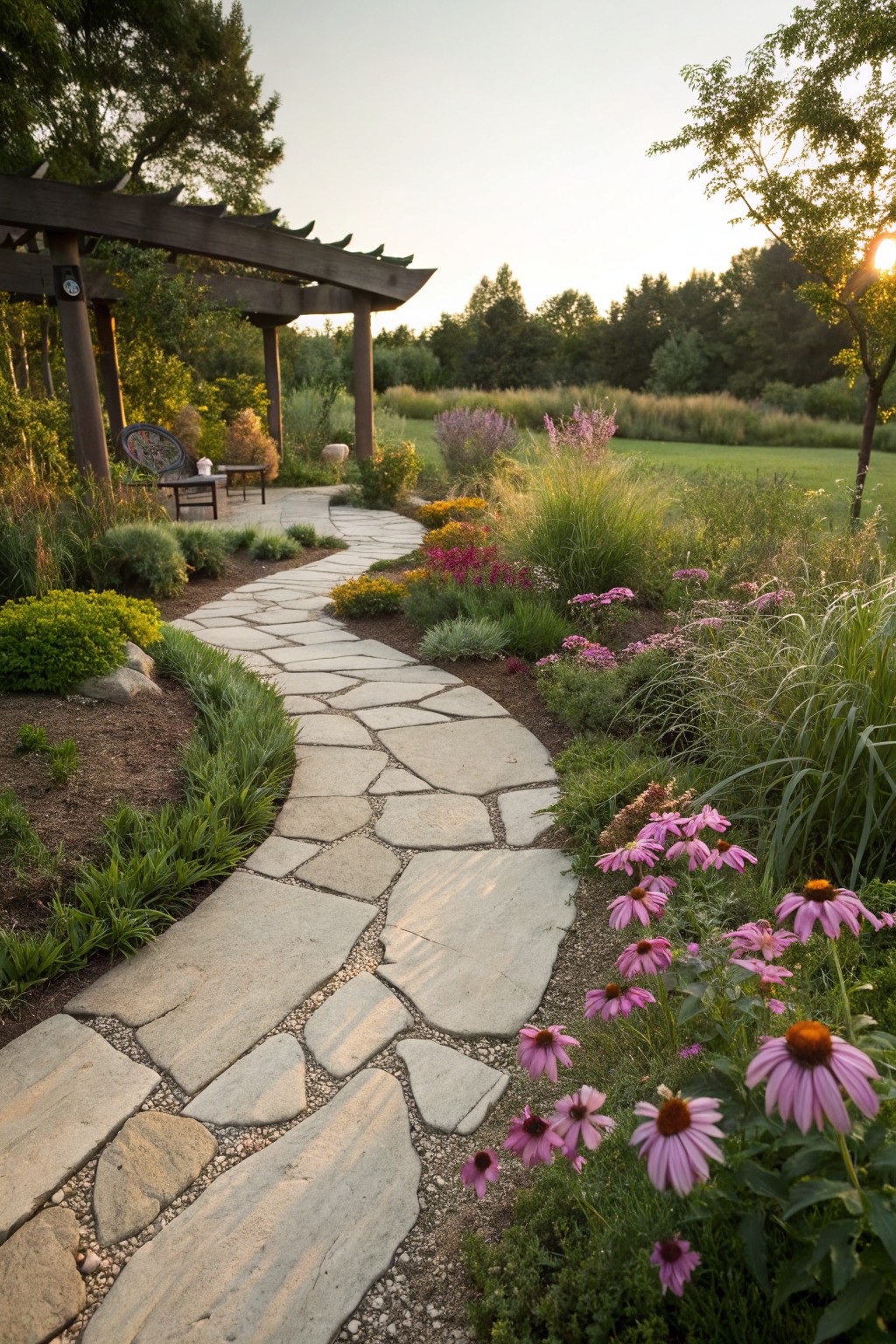
One simple way to guide people through a backyard garden is with a winding flagstone path like this. The irregular stones set in gravel create a natural feel that fits right into the planting beds. It avoids the stiff look of straight concrete walks and lets plants spill over the edges a bit. Folks like how it slows you down and makes the yard feel bigger.
To pull this off, lay down gravel base first then set the flat stones where they look right, leaving gravel in the joints. Line both sides with tough perennials and grasses, like those coneflowers here. It works best in cottage style yards or anywhere with some slope. Just keep the path wide enough to walk comfortably and refresh the gravel now and then.
River Rock Stream Beds

A river rock stream bed brings a touch of wild nature right into your yard. Smooth stones line a shallow channel where water trickles along, edged with taller grasses and clumps of iris. It pulls the eye through the landscape without much upkeep, and that gentle flow adds real life to plain grass areas.
Set one up along a path or near the house entry where runoff can feed it naturally. Use bigger rocks to hold the shape and gravel in the center for the water. Plants that handle wet feet work best around the edges. Skip it if your yard floods easy… too much water turns charming into messy.
River Rock Borders for Walkways
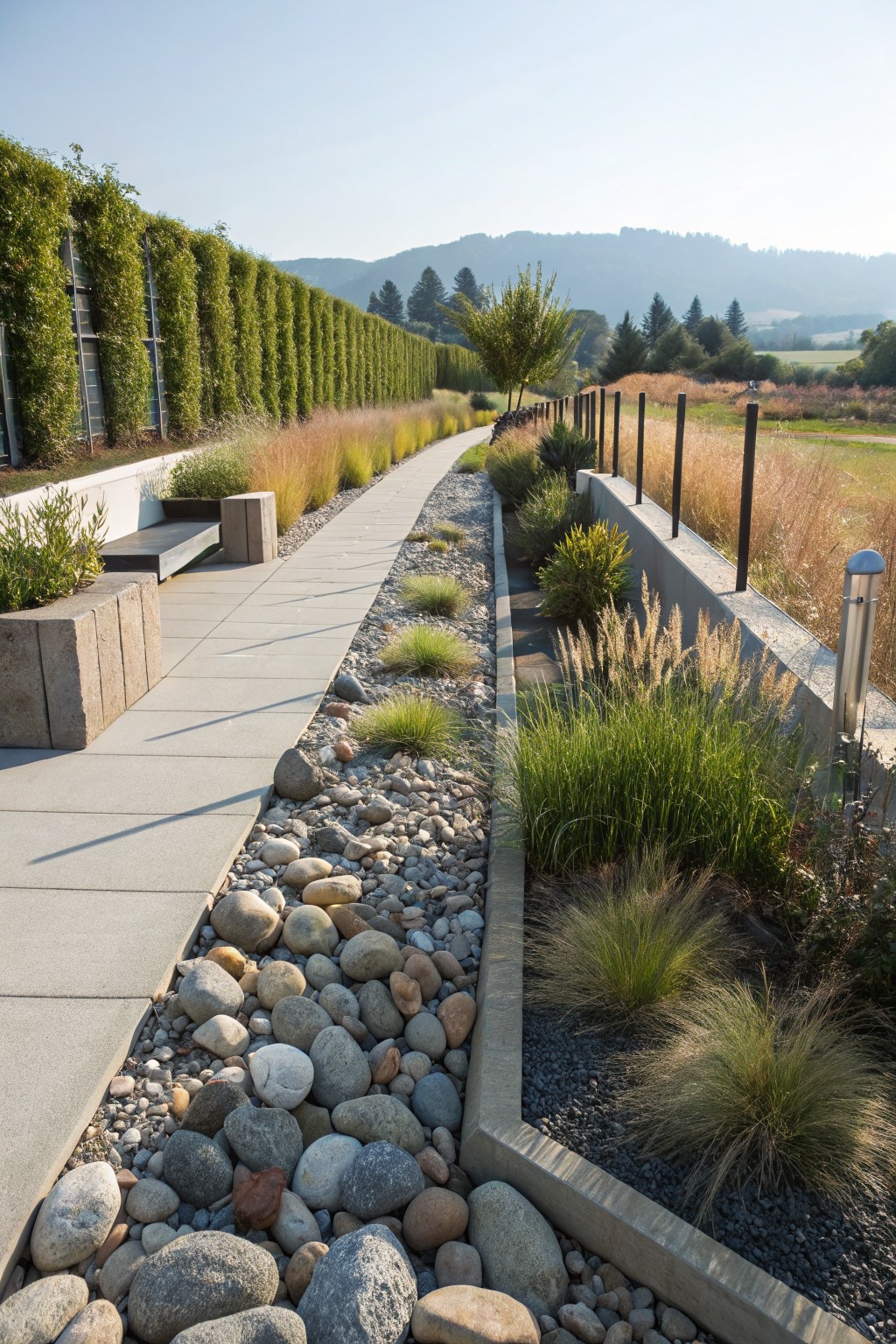
One straightforward way to add natural texture to a yard is lining a walkway with river rocks. Here, smooth stones fill a shallow concrete-edged bed right alongside a clean concrete path. Paired with clumps of feathery grasses, it creates a soft, flowing border that feels organic but stays contained. No fuss, just quiet appeal that ties into the landscape.
This works well in modern gardens or along side entries where you want definition without overplanting. The rocks handle drainage nicely and need little care. Skip finer gravel, though. Go for varied sizes to avoid a flat look, and keep the bed narrow to match the path scale.
River Rocks in a Courtyard Pebble Bed

One simple way to bring natural texture to a tight urban yard is with a wood-framed bed of river rocks. Here it’s tucked right against the patio pavers, creating a low spot filled with smooth pebbles that catch the light. Paired with plants around the edges, it feels calm and easy, like a little zen garden without the fuss.
This works best in small courtyards or backyards where space is short. Build the frame from reclaimed wood to match nearby planters, layer in washed river rocks for drainage, and keep plants low around it. Skip it in wet areas though, since water can shift the stones over time.
River Rock Filled Stepping Stone Paths
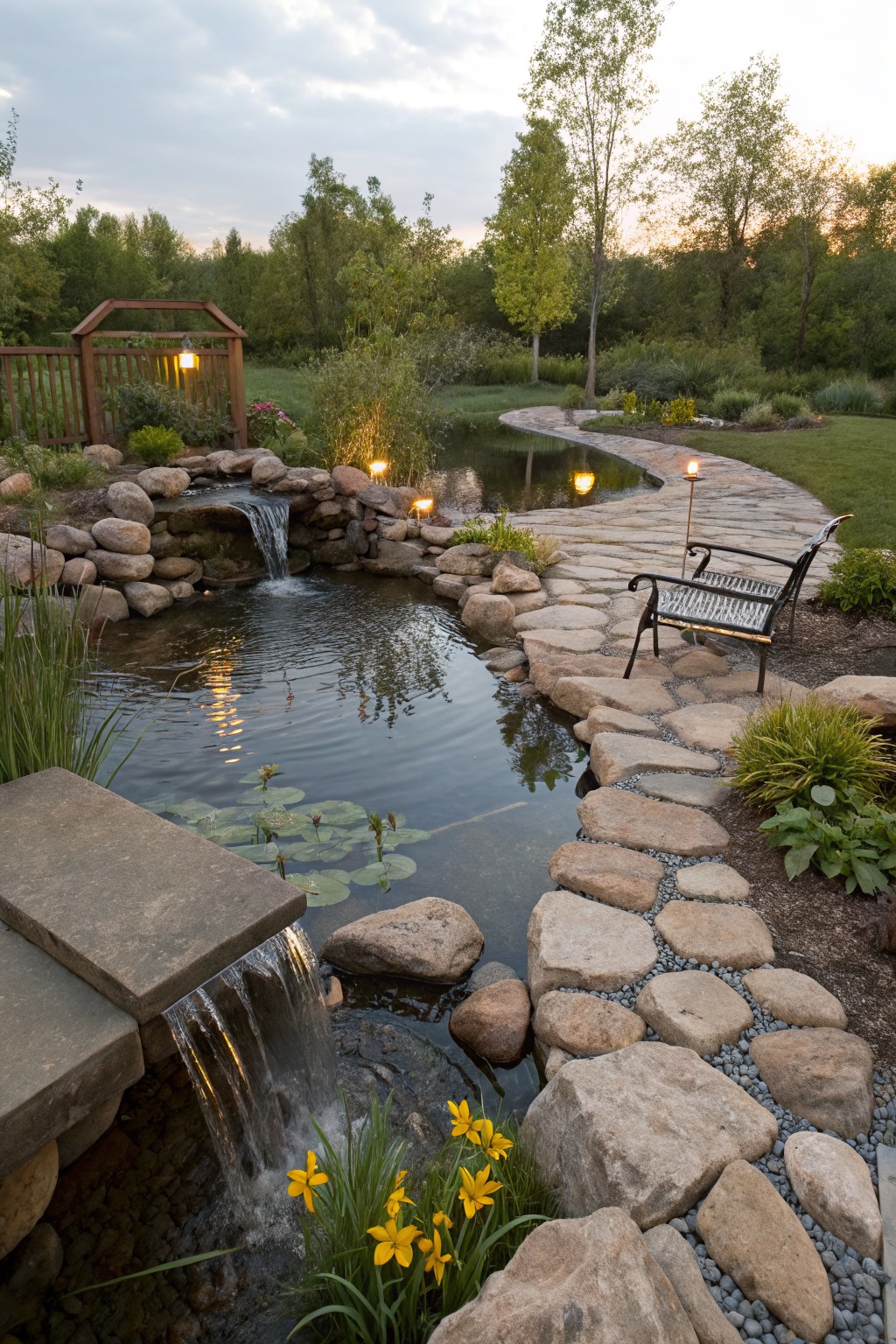
One simple way to add natural flow to your backyard is with stepping stone paths where flat stones sit close together and river rocks fill the gaps between them. This setup shows up nicely around a pond, like the one edged in boulders and plants here. It keeps things from looking too rigid, blending right into the grass and garden beds.
These paths work best in casual garden spots, leading from the lawn to a water feature or seating area. Lay them on level ground or a slight curve for easy walking. Pick smooth river rocks in a couple sizes so they settle well, and they hold up without much upkeep. Good pick for yards that see some foot traffic.
Frequently Asked Questions
Q: How do I keep weeds from popping up in my river rock area?
A: Spread landscape fabric over the soil first. It lets water through but blocks weed seeds. Top it with 2-3 inches of rocks for full coverage.
Q: Will river rocks hurt plants nearby?
A: Tuck them around flower beds as mulch, but leave space at the base of stems. This stops moisture from getting trapped and causing rot. Plants love the drainage.
Q: Do river rocks get scorching hot in summer?
A: They warm up under full sun… add pavers or grass paths if you walk barefoot a lot.
Q: How do I edge a river rock bed so rocks stay put?
A: Dig a shallow trench and set in flexible plastic strips or flat stones. Backfill with soil to hold everything steady. Now spills won’t happen when you mow.
