

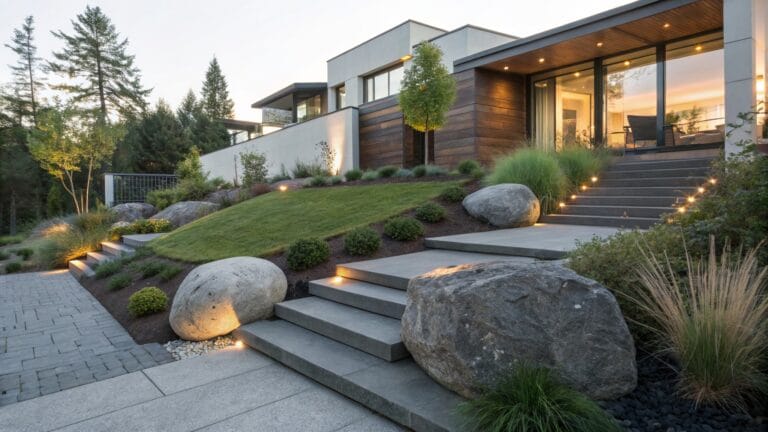
I’ve noticed that boulders give a yard that instant sense of permanence, especially when you position them to frame paths and planting zones right from the start. They pull focus immediately, turning a flat lawn into layered spaces that guide foot traffic and define where flowers or grasses can spread. In real yards, the key lies in how they settle into the soil over seasons, creating natural edges that hold up without much fuss. I once added a few large ones along my side path, and it completely shifted how the whole backyard flows day to day. These ideas show ways to adapt that kind of structure, worth tweaking for your own terrain and light.
Boulders Beside Sloped Entry Steps
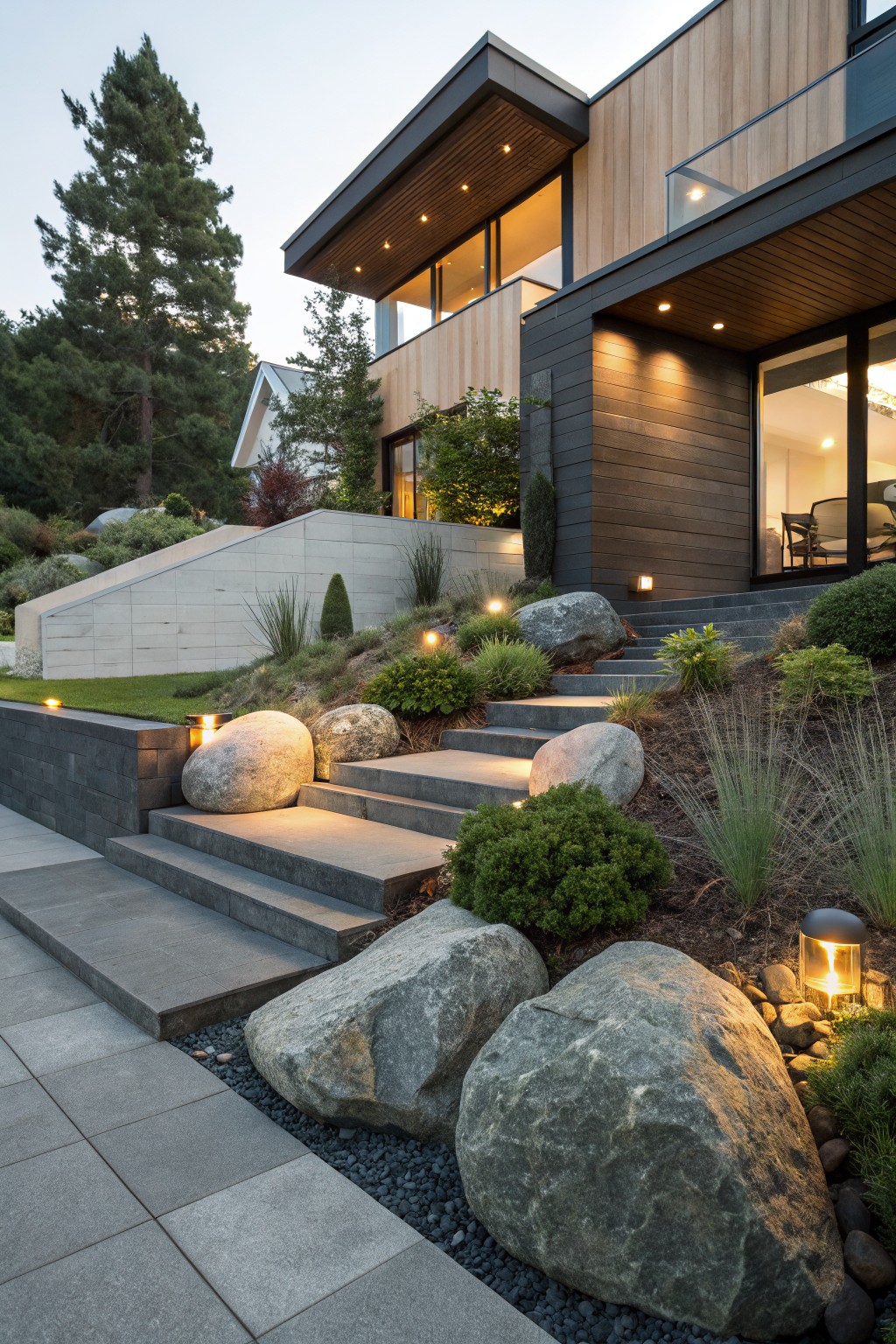
Placing large boulders right along the edges of concrete steps gives a sloped path some real weight and presence. It turns a basic walkway into something that feels rugged yet planned out. The grasses and low lights tucked around them add just enough life without overdoing it.
This idea fits homes on hillsides where you want the landscape to lead right up to the door. Go for rocks in natural sizes that match your area’s stone, and set them firm so they stay put. It keeps maintenance low once planted up.
Large Boulders Line Gravel Paths
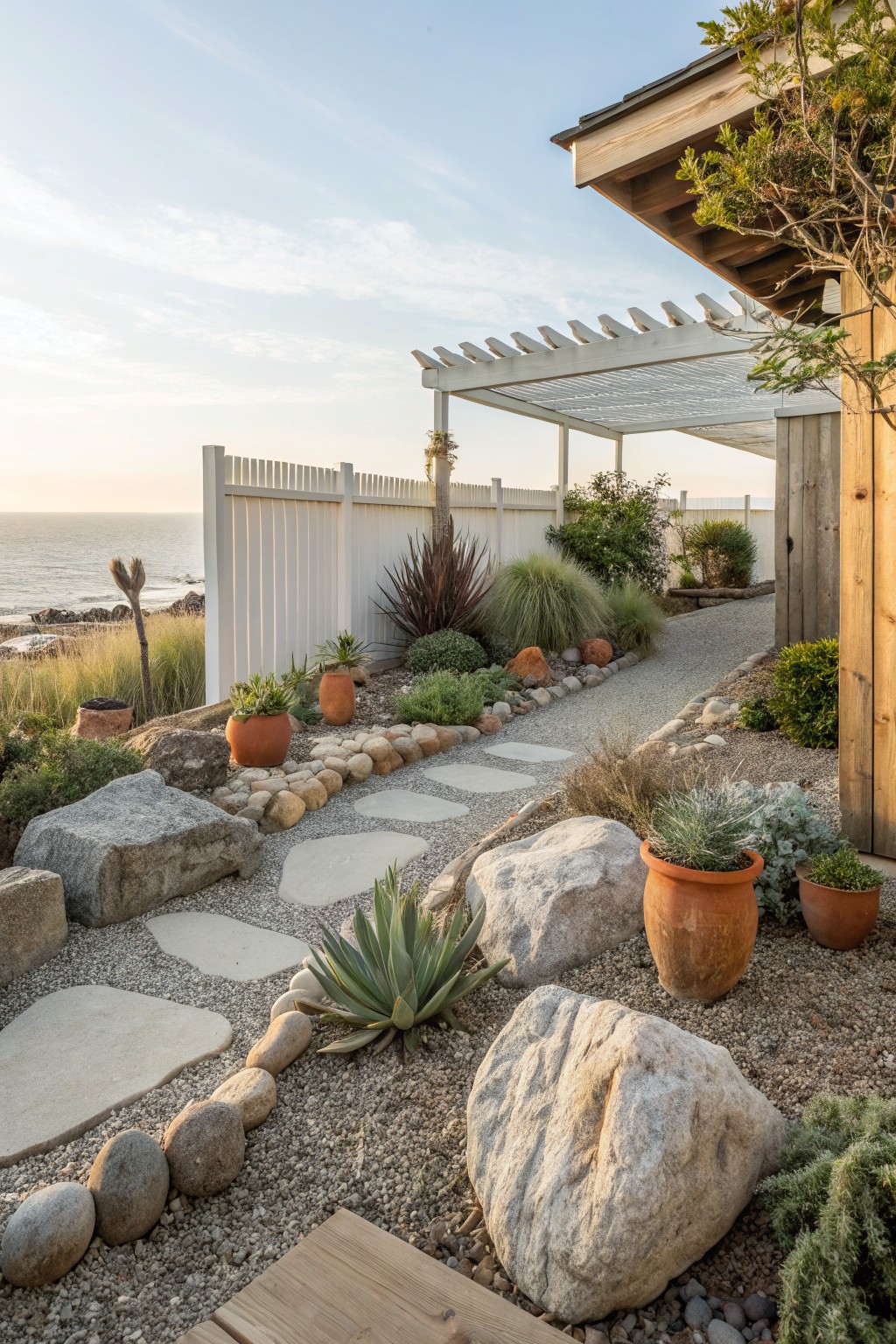
Big boulders work great to guide a path through the yard. They add weight and shape without much upkeep. Pair them with gravel and flat stepping stones like this, and the whole thing feels rugged yet walkable. Succulents and a few pots fill in the gaps nicely.
Try this in coastal spots or dry yards where you want low water use. Set the boulders first to hold the path in place, then add plants that handle sun. It suits sloped areas too… just watch the scale so they don’t overwhelm a small space.
Large Boulders in Gravel Yards
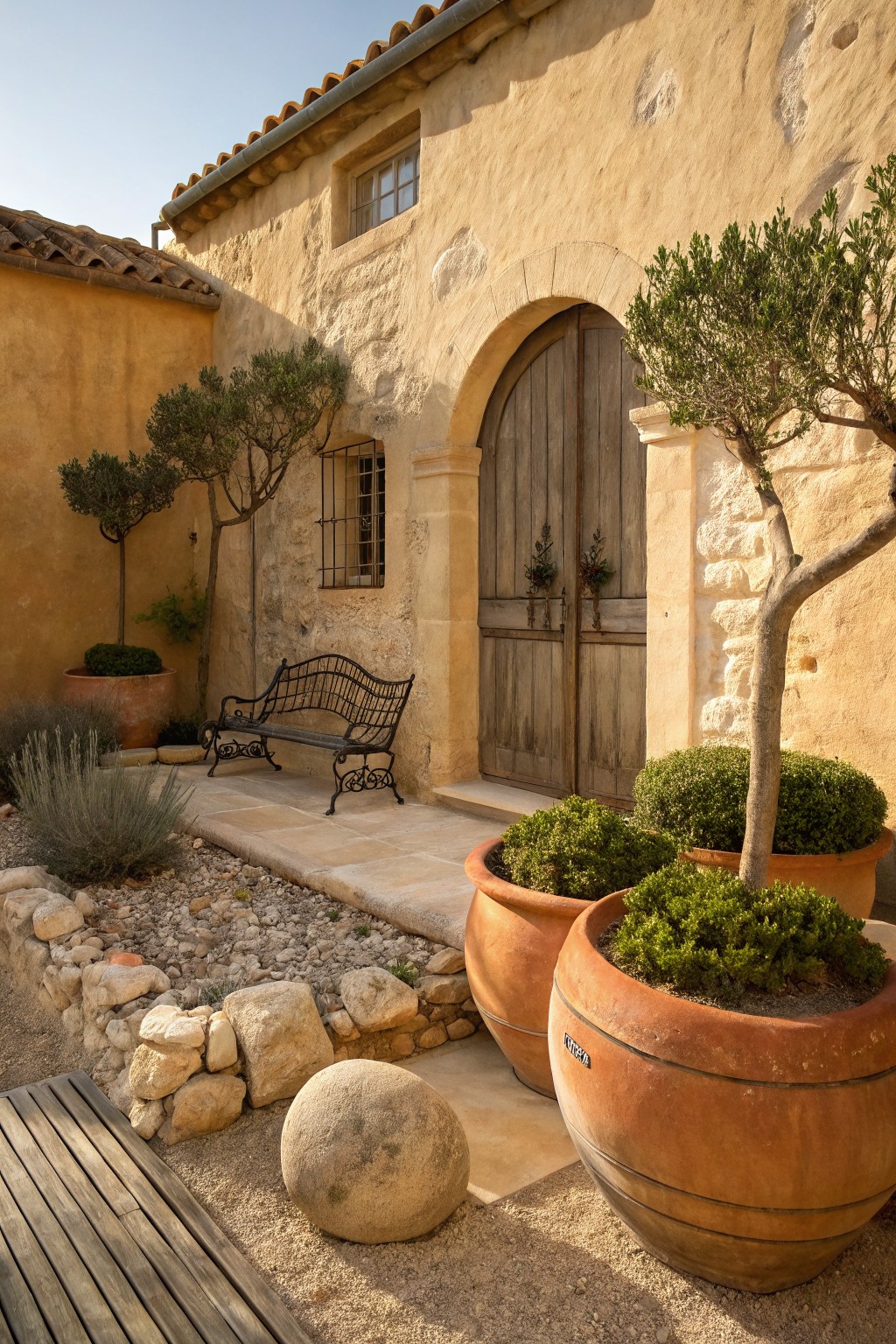
Big smooth boulders like these make a simple gravel yard feel more alive and structured. Placed along the edge near the house, they act like natural sculptures that tie into the stone walls and terracotta pots without much effort. It’s a low-maintenance way to add weight and interest to bare ground.
This setup shines in sunny, dry spots around entries or patios, especially with older stone homes. Just scatter gravel around them, add a few tough plants, and keep it sparse. Watch the scale though. Boulders too small get lost.
Boulders Shape a Mossy Garden Path
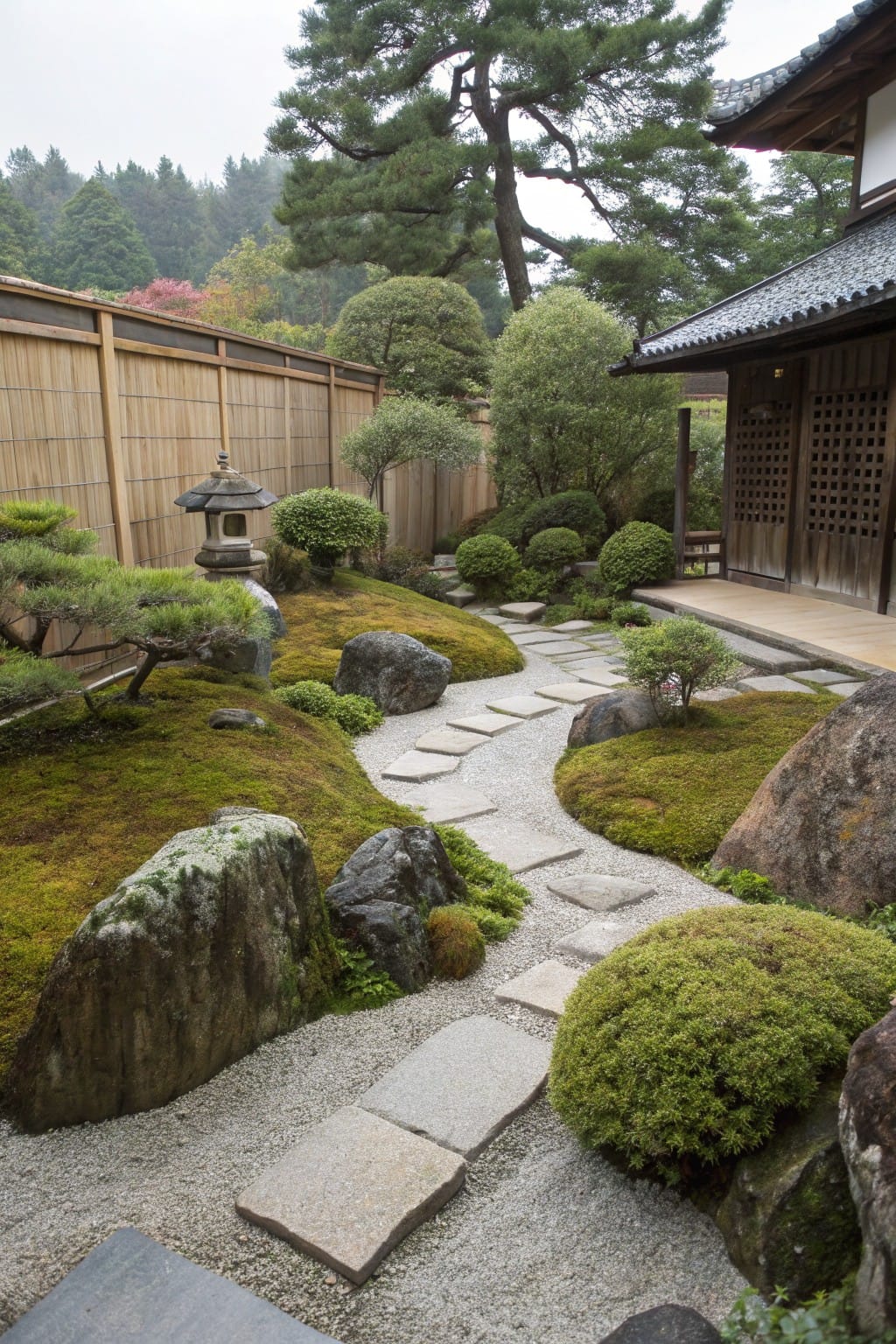
Large boulders work well when you tuck them into a yard like natural anchors. Here they mix with soft moss and low plants, setting off a simple stone path that winds through. The look stays calm and easy on the eyes, without needing much upkeep.
Put this setup in a backyard corner or along a walkway where space is tight. Start by picking rocks in different sizes, then fill around them with moss or ground cover that spreads on its own. Keep the path steps flat and spaced for slow strolling… it pulls the whole garden together without fuss.
Stepping Stone Path Edged by a Large Boulder
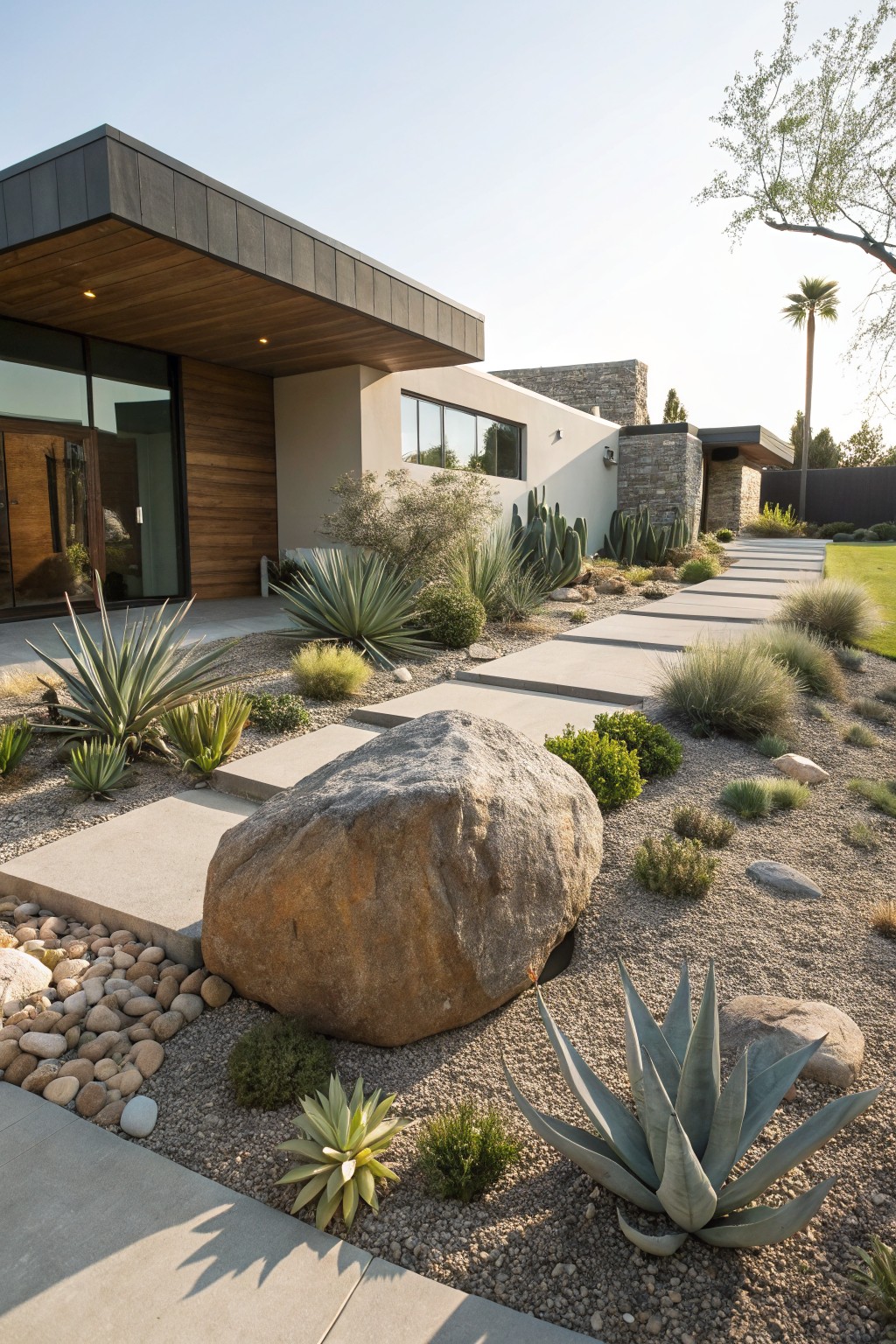
A simple way to add drama to your front yard path is placing a massive boulder right alongside the stepping stones. Here, one big rock sits snug against the concrete pavers, with gravel and a few agaves filling in around it. It pulls the eye right to the entry without much effort, and that natural heft makes the whole landscape feel solid and established.
This works best in dry yards where you want low upkeep. Tuck the boulder where the path turns toward the door, then layer in pebbles and tough plants like yucca or aloe. Skip it if your soil is too soft, though, since big rocks need stable ground to stay put.
Natural Boulder Edges Along Stone Paths
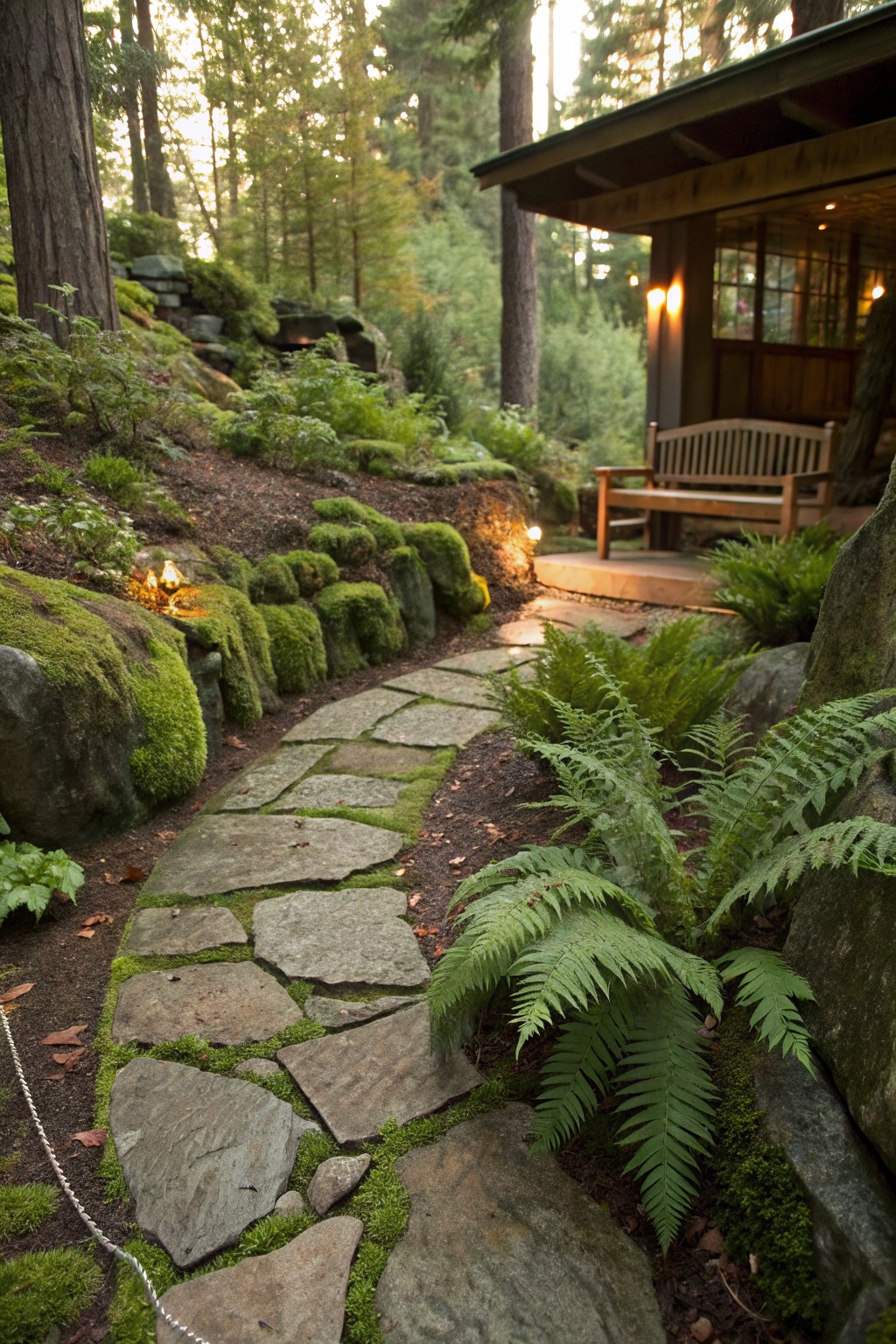
Big moss-covered boulders make a simple edging for flagstone paths like this one. They hug the stones tight and blend right into the woods around them. No fussy trimming needed. The path stays put even on a slope, and plants like ferns tuck in easy between the rocks.
Try this in shady wooded yards where you want a trail that feels grown there. Stack the boulders loose along one or both sides of your path, maybe 2 to 3 feet high. It suits cabins or homes backed up to trees best. Just make sure the base is stable so nothing shifts over time.
Boulder Retaining Walls for Sloped Yards
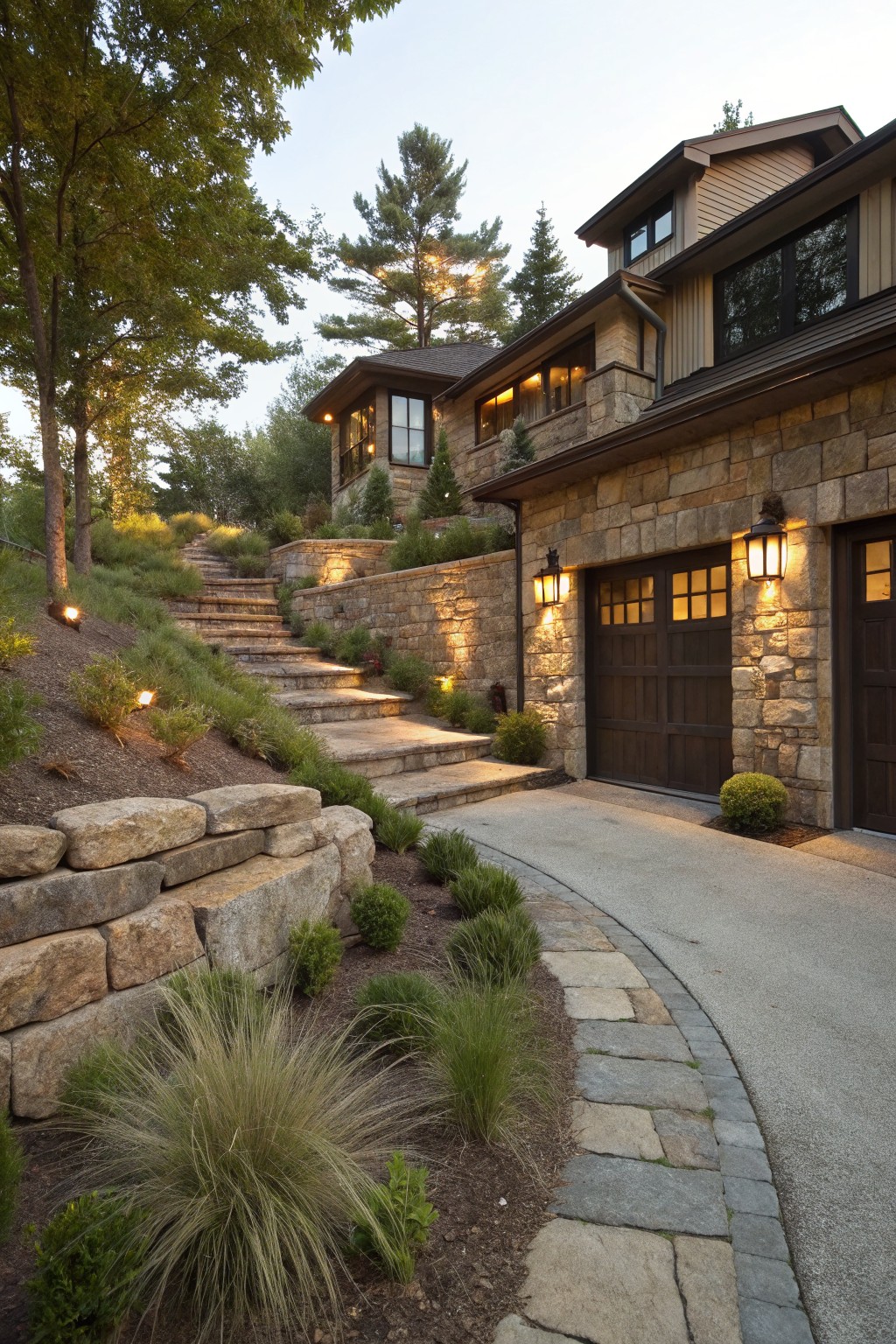
One solid way to handle a sloped yard is with big boulder retaining walls. They hold back the soil while looking natural, like they belong there. In this setup, the rough stones stack up along the driveway and stairs, matching the house’s stone garage nicely. It keeps everything stable and adds some real character without much upkeep.
These walls work best on hillsides near the house entrance or garage. Use local fieldstone or boulders for a low-cost look that blends in. Plant grasses and low shrubs in the pockets to soften it up, but skip anything too fussy. Watch the drainage so water doesn’t pool behind the rocks.
Large Boulders Line Gravel Paths
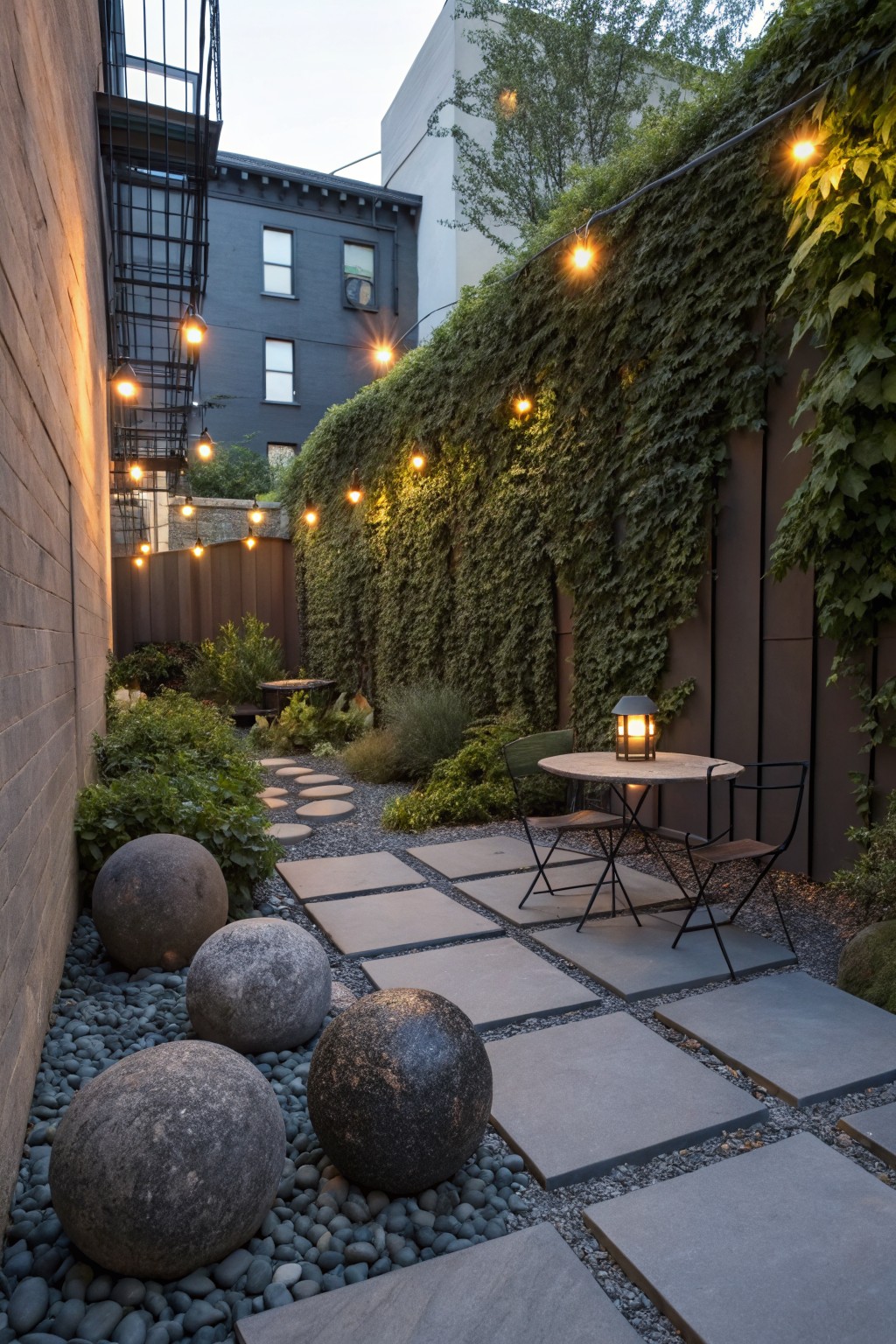
Big round boulders like these give a yard instant presence. They sit right in the gravel, next to simple stone pavers and a few stepping stones. No need for fancy planting everywhere. The rocks pull focus and make the space feel put together, even in a tight spot between walls.
Try this in side yards or narrow back areas where you want low upkeep. Go for boulders about two to three feet across, in rough gray tones. Dark pebbles around them keep dirt down and contrast nice. It fits modern homes best, or any place short on room but big on style.
Meandering Stone Slab Path
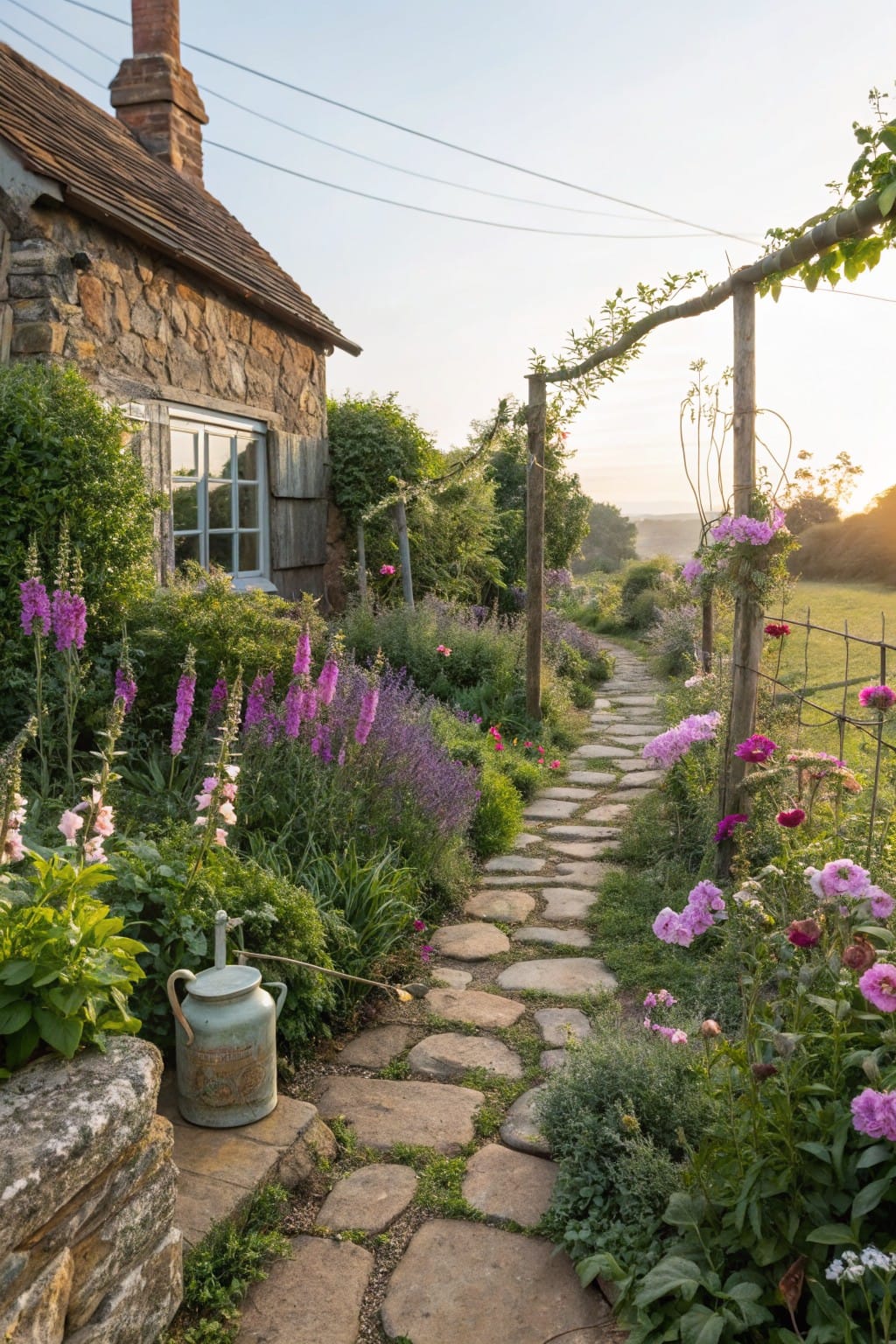
Big irregular stone slabs laid flat make up this garden path, curving softly past tall foxgloves and salvias right up to the cottage door. They tie into the house’s own stone walls, creating one smooth flow from building to yard. It’s a natural way to guide foot traffic without overpowering the plants.
Lay these in any side yard or along a fence line, spacing them just enough for grass or low herbs to peek between. Source affordable fieldstones from local quarries to keep costs down. Best for cottage-style homes or sloped lots where straight paths feel wrong. Skip mortar if you want that settled-in look over time.
Pathway Curving Around a Big Boulder

One simple way to add drama to a dry yard is to place a huge natural boulder right where your path bends. It turns a basic walkway into something that feels rugged and intentional, like the rock has always been there. Here, dark brick pavers wind gently around the stone, with gravel filling in the gaps and spiky cacti tucked nearby for that desert edge.
This works best in low-water gardens or arid spots where you want low upkeep. Pick a boulder that’s at least as tall as a person to make the impact, and keep the path smooth so it invites walking. It suits modern stucco homes with clean lines, but watch the scale, a too-small rock just looks lost.
Boulders Edge Gravel Garden Paths
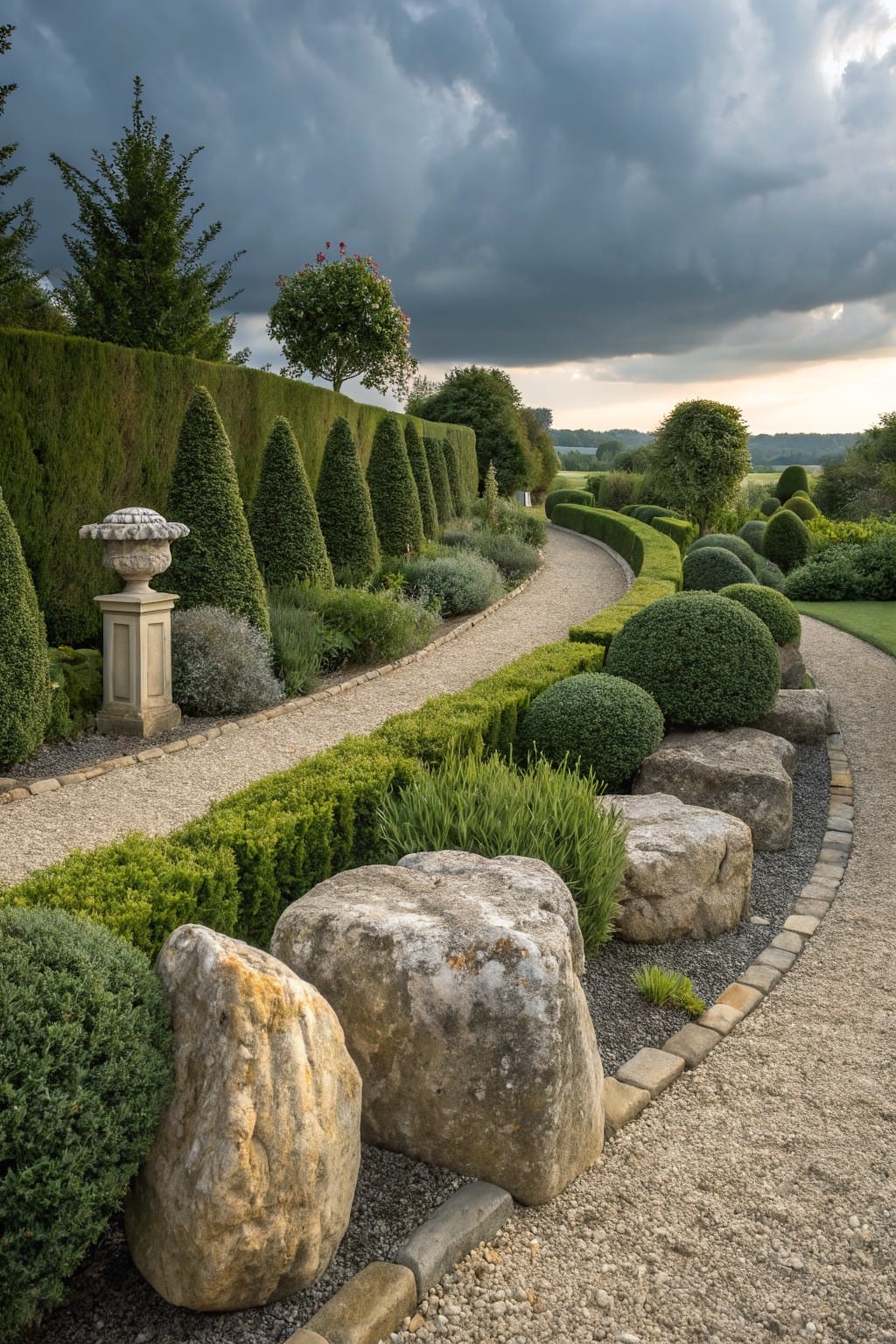
Big boulders like these make a simple gravel path feel more solid and interesting. They sit right along the edge, mixing rough stone texture with the smooth walkway and tidy hedges. That contrast gives the garden some natural weight without much upkeep.
Try this along a curving side path or backyard stroll. Go for local stone in medium to large sizes to keep it looking right. It suits formal hedges or cottage gardens best, but leave room between rocks so feet can pass easy. Just watch the scale, they can take over if too crowded.
Boulder Retaining Walls Frame Stone Steps
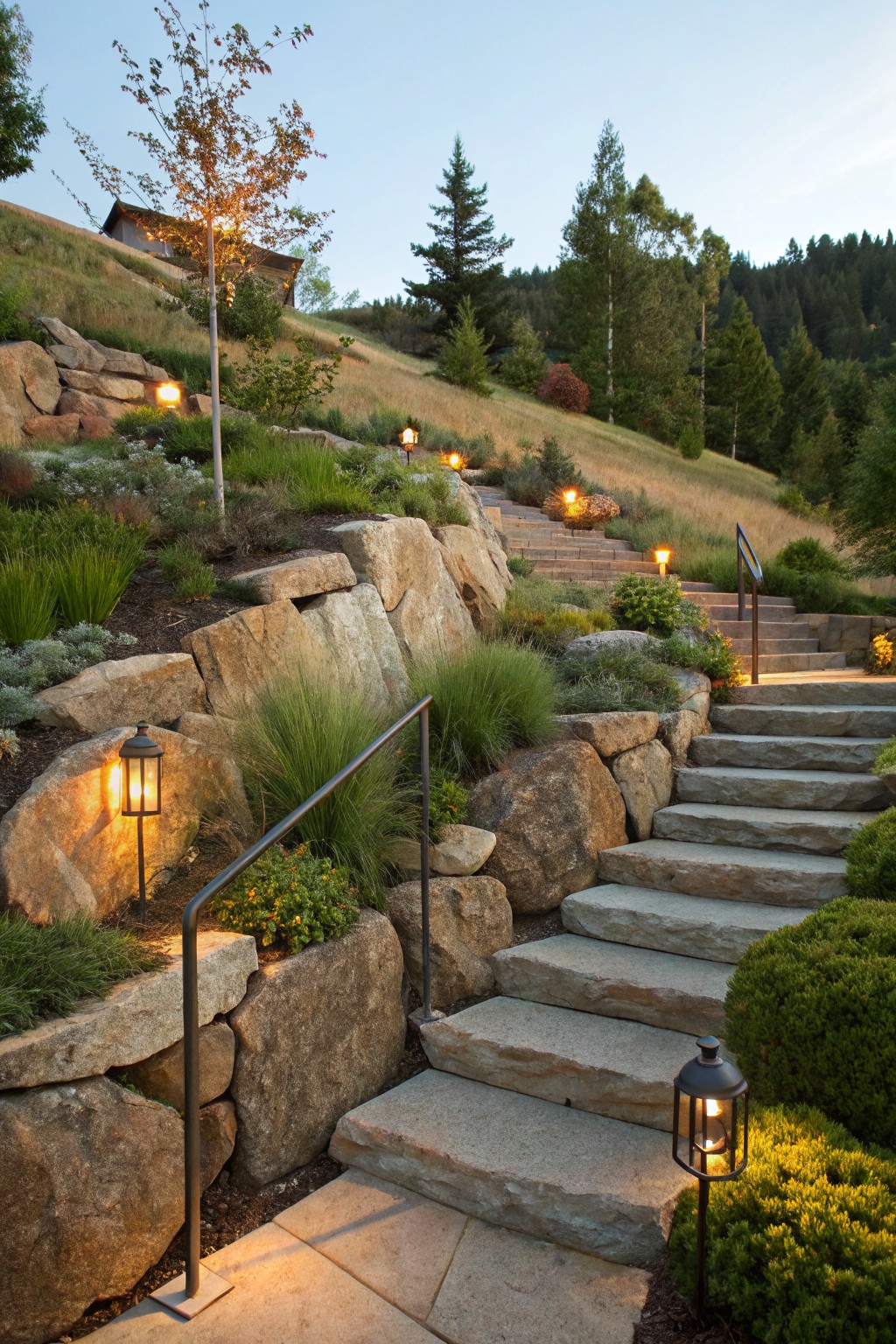
One solid way to handle a steep slope is stacking big boulders into retaining walls that hug a set of stone steps. This setup turns a tricky hillside into an easy path that feels right at home in the landscape. The rough boulders look like they grew there, and they hold back soil without much fuss. Add in low plants around the base, and it stays low-maintenance.
You’ll want this for yards with serious elevation changes, especially around a cabin or modern home tucked into the hills. Line the steps with simple lanterns for night use… they cast just enough glow. Get a pro to build it though, since big rocks need good drainage to avoid shifting over time.
Boulder Retaining Walls for Tiered Patios
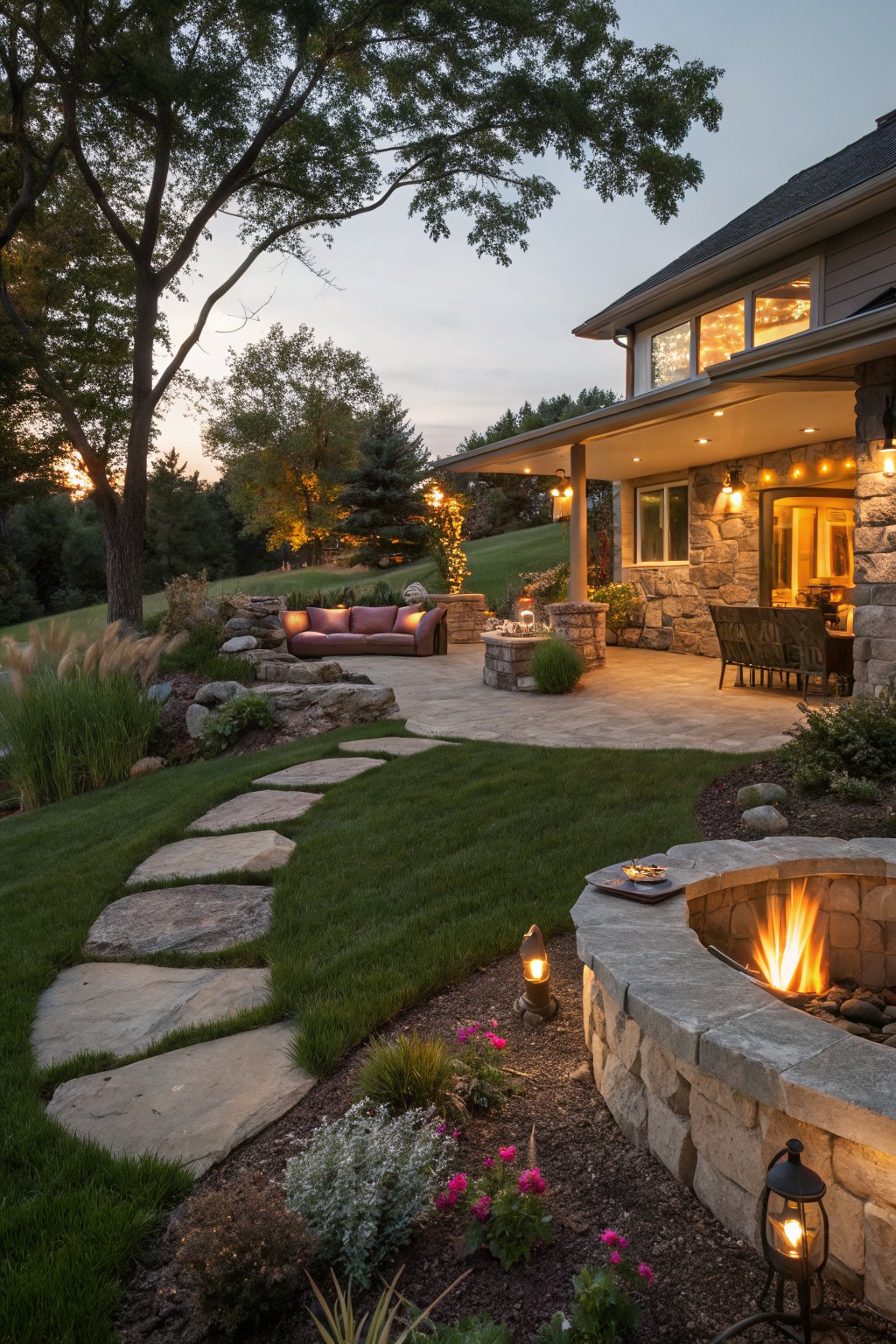
One straightforward way to make your backyard feel more put-together is stacking boulders into low retaining walls. They hold back slopes naturally and create flat spots for patios or seating right where you need them. In this setup, the curved wall around the fire pit keeps everything contained while letting grass and plants spill over the edges just enough.
These walls work best on sloped yards where you want usable space without big earth-moving projects. Pick boulders in a mix of sizes for a rugged look that blends with stone patios, then add steps or paths leading up. Keep them under three feet high for safety, and plant low stuff like grasses at the base to soften things up.
Stepping Stone Path Framed by Boulders
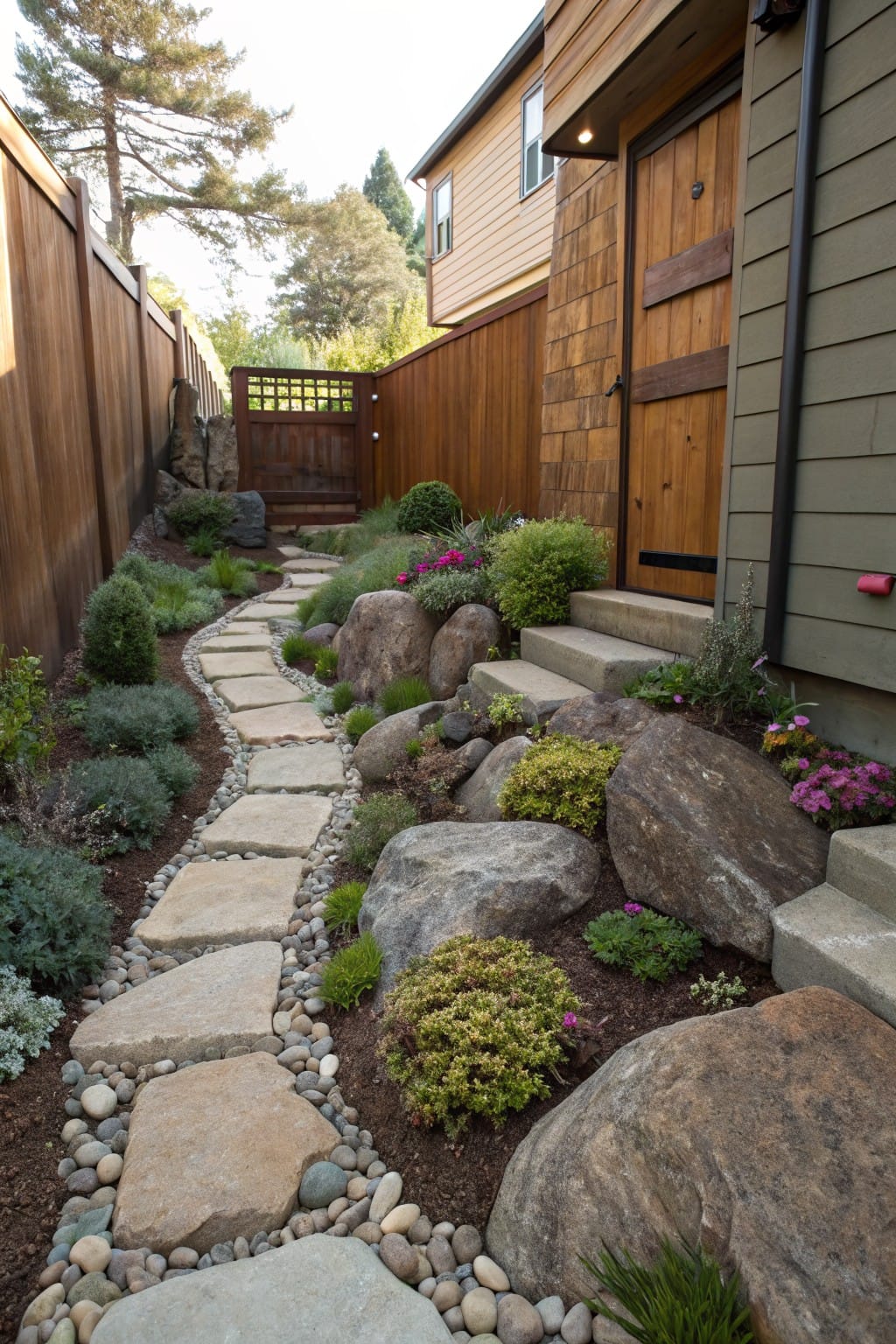
Big boulders tucked along a simple stepping stone walkway turn a skinny side yard into something with real character. The stones meander naturally between the rocks, and gravel fills the gaps for easy drainage. Low plants add a bit of green without crowding things out. It’s a low-key way to guide you right to the door.
This works best in narrow spots or along fences where you don’t have room for wide paths. Pick boulders in a couple sizes for interest, and set the steppers deep enough so they don’t shift. Suits most any house style, especially if the slope is gentle. Just keep the plants drought-tolerant to cut down on upkeep.
Boulder Fire Pit Enclosure
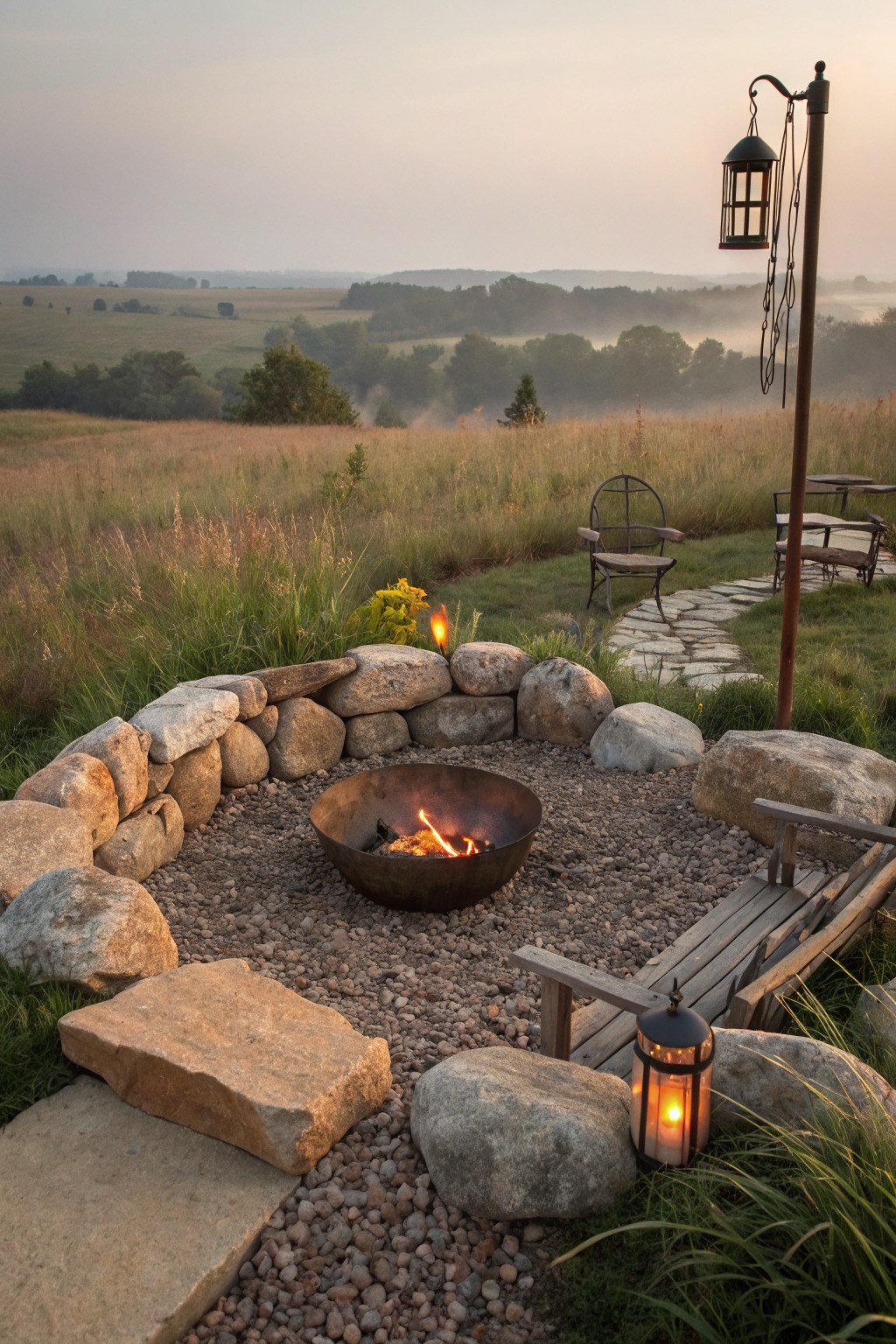
Large boulders stacked into a low circular wall make a simple way to define your fire pit area. They hold back the surrounding grass and dirt without much fuss. In this setup, the rough stones fit right into a natural yard, and the gravel inside keeps things tidy around the fire bowl.
You can pull this off on a slope or flat spot where you want a gathering space. Stack local fieldstones dry or with minimal mortar for that rugged look. Add a bench or two from wood, and light it up with lanterns at dusk. Works best in bigger yards that back up to fields or woods, but watch the scale, bigger rocks need room to breathe.
Boulders Line a Water Channel Path
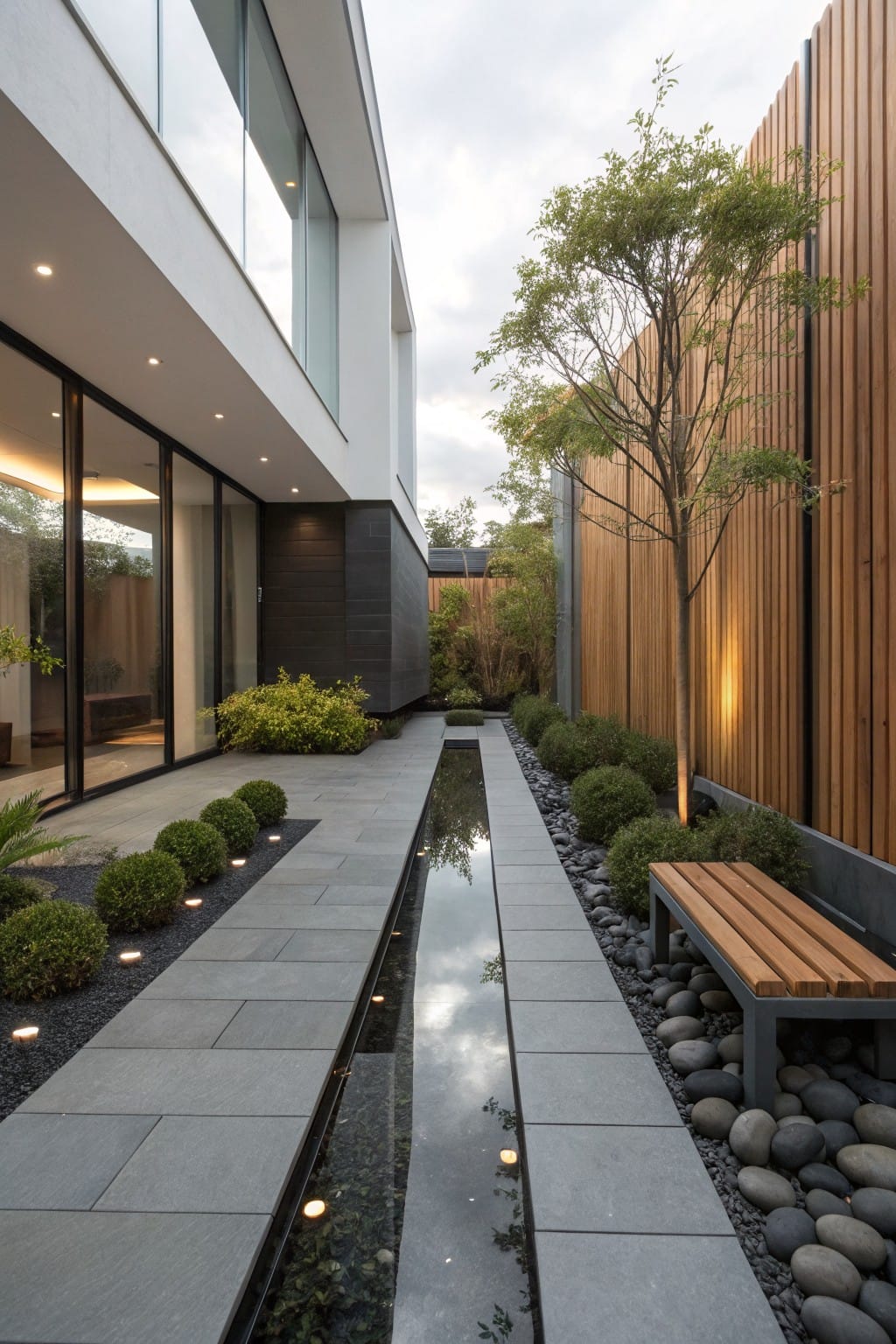
One simple way to add punch to a narrow side yard is to run a slim water channel right next to your walkway. Here, dark rounded boulders and smaller pebbles sit along the edge, giving the whole thing some weight and texture. The water reflects the gray stone path and keeps things calm while the rocks make it feel more rugged and finished.
This setup works great in tight spaces between the house and fence, where you want low upkeep but real impact. Pick smooth black or gray boulders to match modern homes, tuck in a few boxwood shrubs for green, and add path lights. Skip it if your yard floods easy, since water features need good drainage.
Boulder Waterfall at Pool Edge
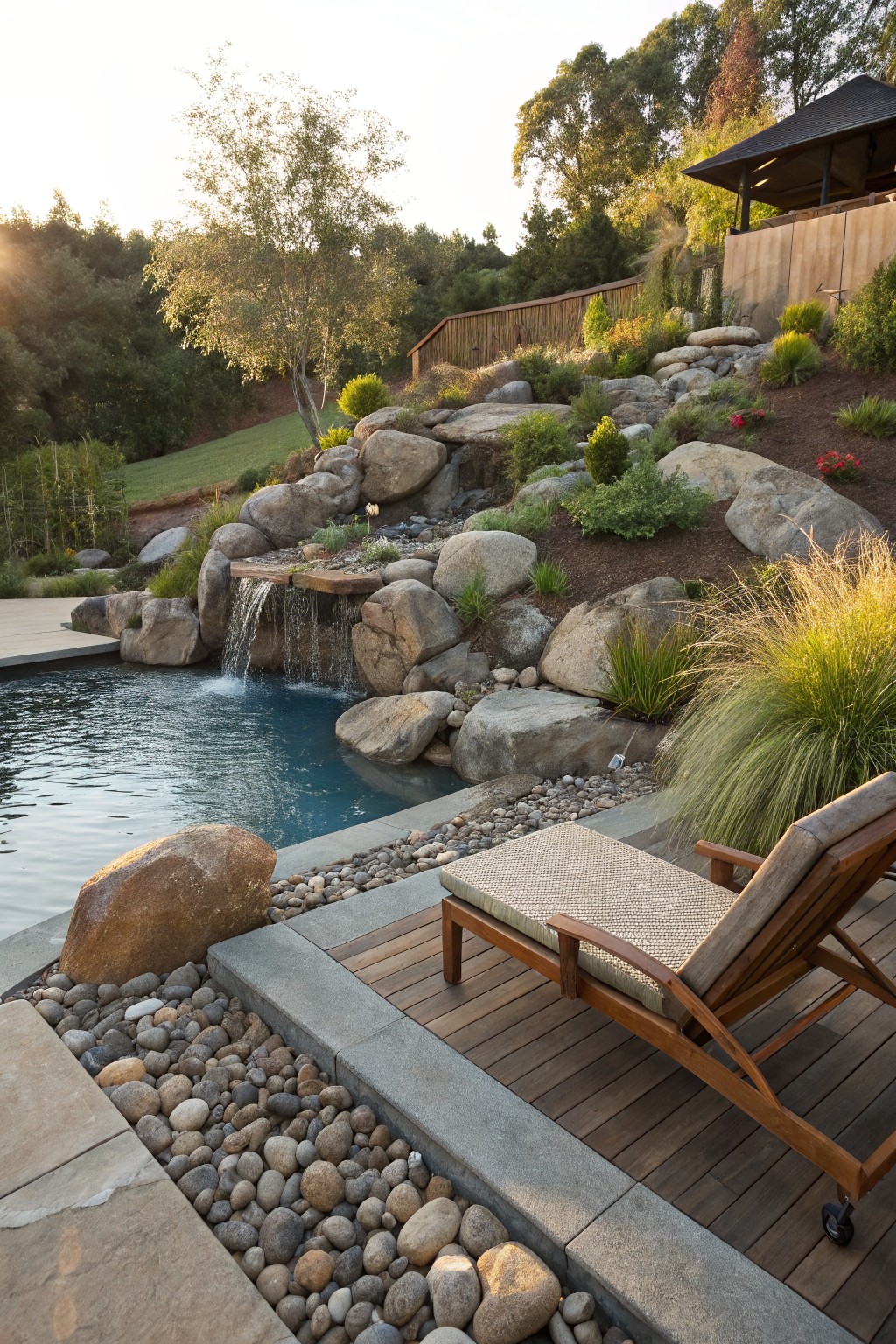
Big boulders stacked to form a waterfall right into the pool make this yard feel like a private resort spot. The rocks look natural, like they just rolled down the hill, and the water tumbling over them adds steady movement without any pumps showing. Plants tucked in the crevices keep it from feeling too stark.
You can pull this off on a slope behind your pool or hot tub area. Pick rounded fieldstone or river rocks in a mix of sizes, secure them with mortar or gravel backfill, then run a hidden pipe for the water flow. It fits casual family yards or upscale patios… just check local codes for the plumbing part.
Boulder Stepping Stone Garden Path
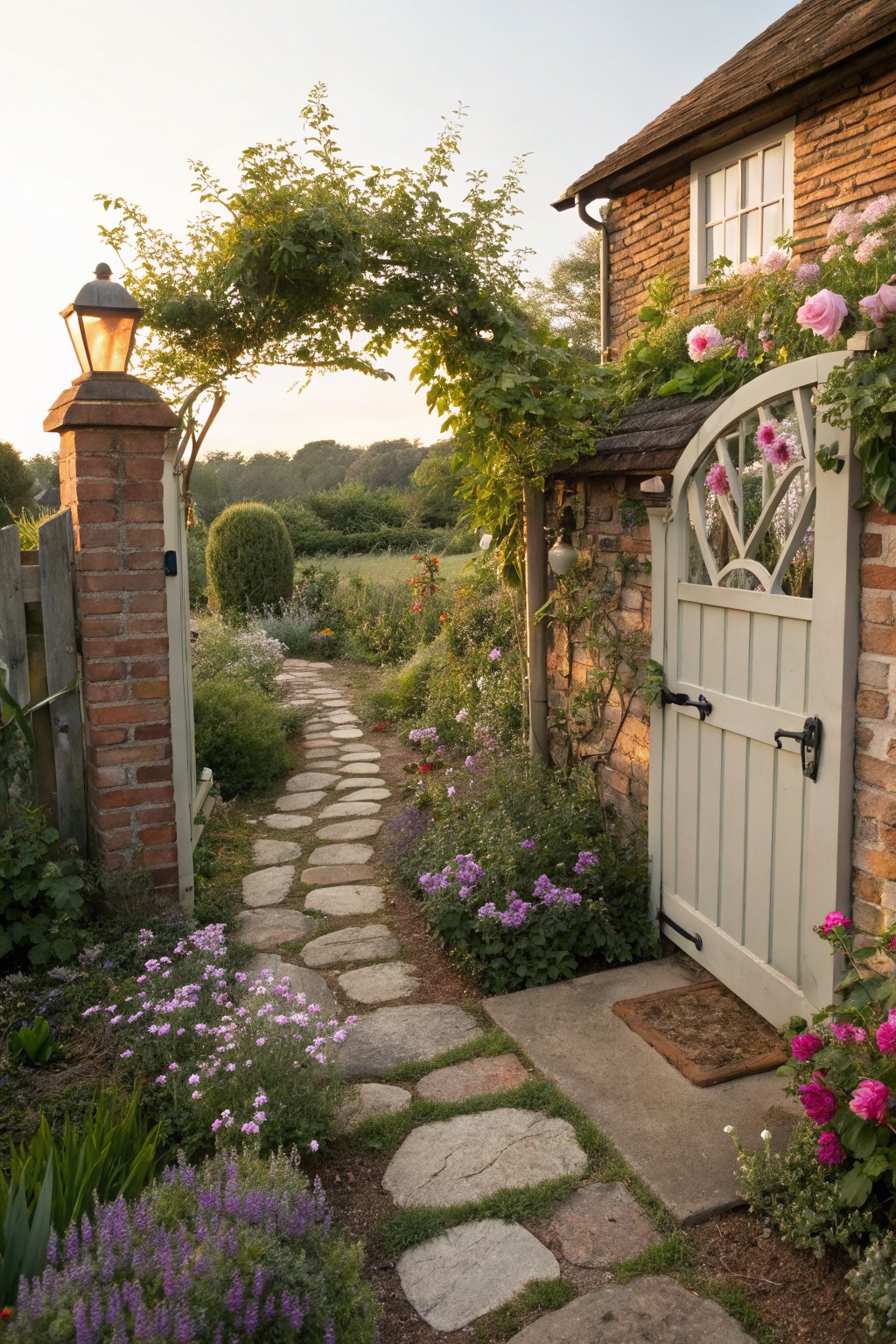
Large irregular boulders laid as stepping stones make a simple path that winds right through thick flower beds. It’s a bold way to handle garden traffic without paving over everything. The rough stones fit right in with plants spilling around them, keeping things natural and easy on the eyes.
This works best in cottage-style yards or anywhere you want to guide folks to a gate or back door. Space the stones about two feet apart for a relaxed stroll, and plant low stuff like lavender in between. Suits older homes with brick walls… just pick flat boulders so no one trips.
Boulders Edging Dune Paths
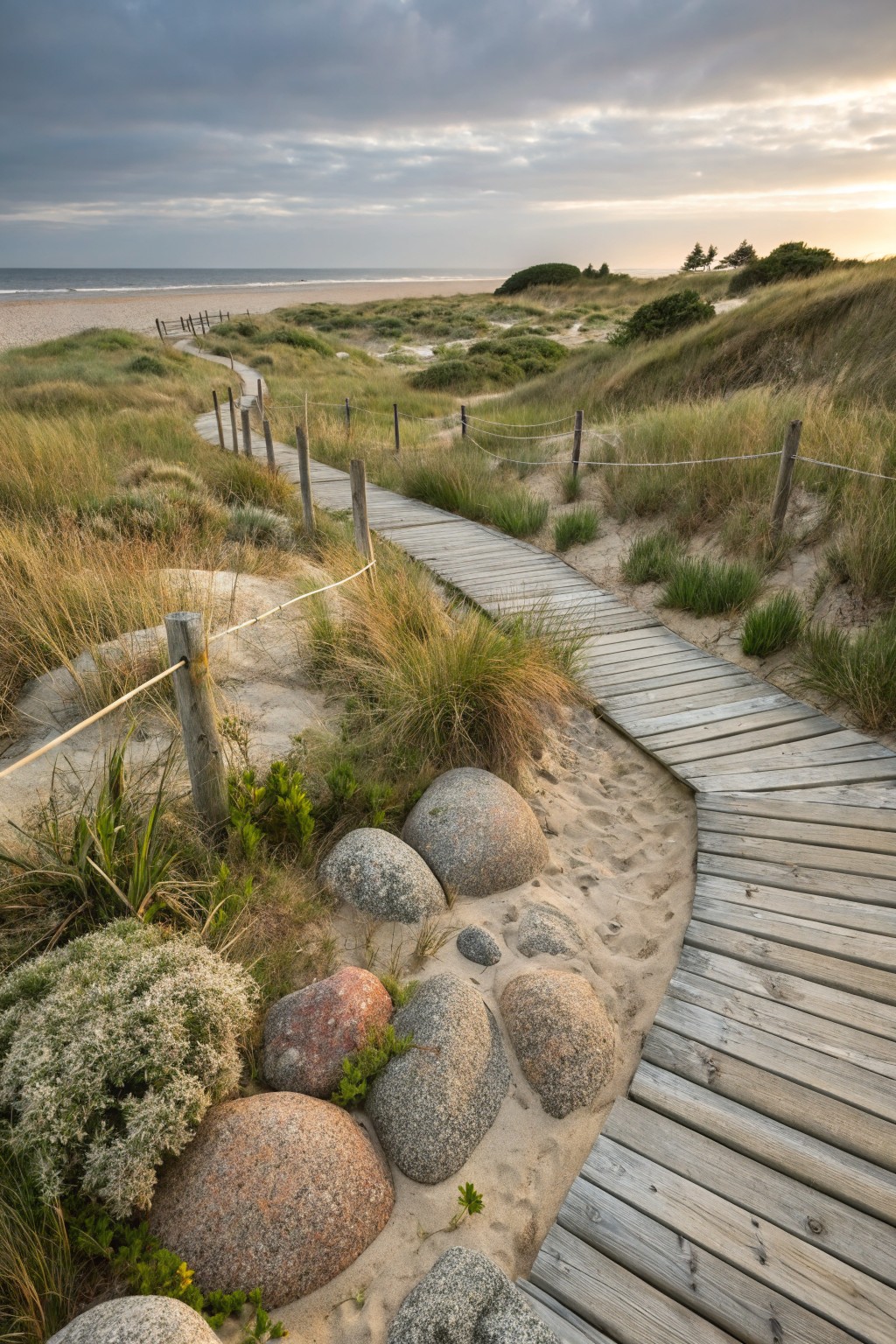
Large rounded boulders work great along a winding boardwalk like this. They sit right in the sand, mixing with the dunes and grasses for a natural edge that feels bold without trying too hard. The rocks add weight and texture to the path, making the whole yard look more grounded and beach-like.
Try this in a front yard or side path where you want low upkeep. It suits coastal spots or anywhere with sandy soil. Just pick smooth, local stones so they blend in, and keep the path wood or gravel to match. Watch the scale. too-small rocks get lost.
Boulder-Anchored Stepping Stone Path
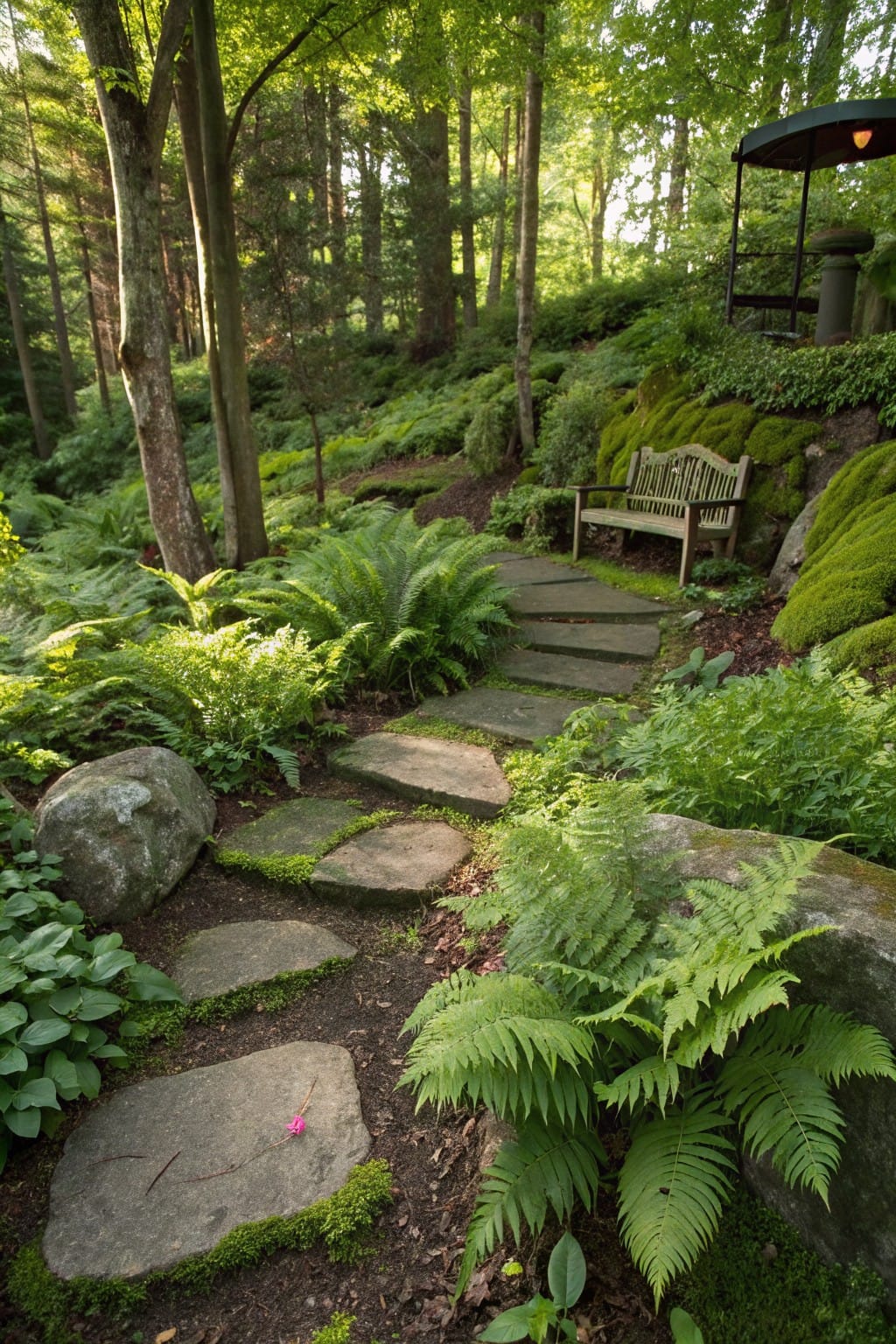
Large boulders sit right in the mix with rough stone steps here, making a path that feels like it grew out of the hillside. Ferns fill in around them, and moss softens the edges. It’s a simple way to guide people through a yard without anything too manicured. Those rocks add real weight to the layout.
Try this on a sloped spot under trees, where you want low upkeep. Pick boulders that match your local stone, and space the steps unevenly for that natural look. It suits wooded lots best, but scale it for smaller yards too. Just keep plants like ferns happy in the shade.
Boulder-Edged Gravel Paths
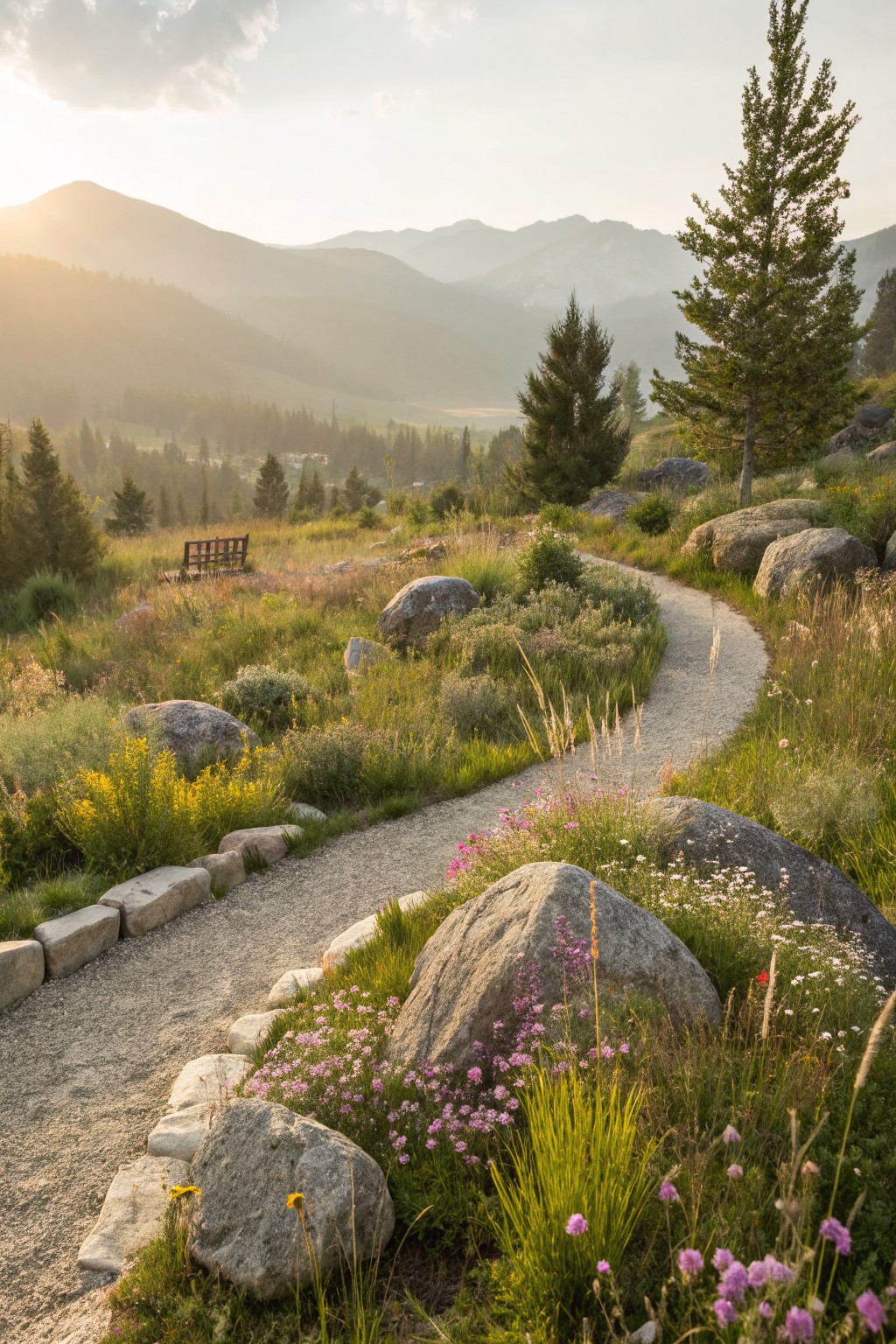
A gravel path that winds gently through the yard, edged by hefty boulders, brings a bit of wild mountain trail right to your doorstep. The rocks do a good job holding back the plants and soil, while keeping things casual and rugged. No stiff borders here. Just natural flow.
Put this setup in bigger yards or spots with some slope, where you want paths that invite a slow stroll instead of rushing you along. Native grasses and flowers tucked around the boulders mean less mowing and weeding over time. Fits homes near hills or open land best.
Boulder Retaining Walls for Sloped Yards
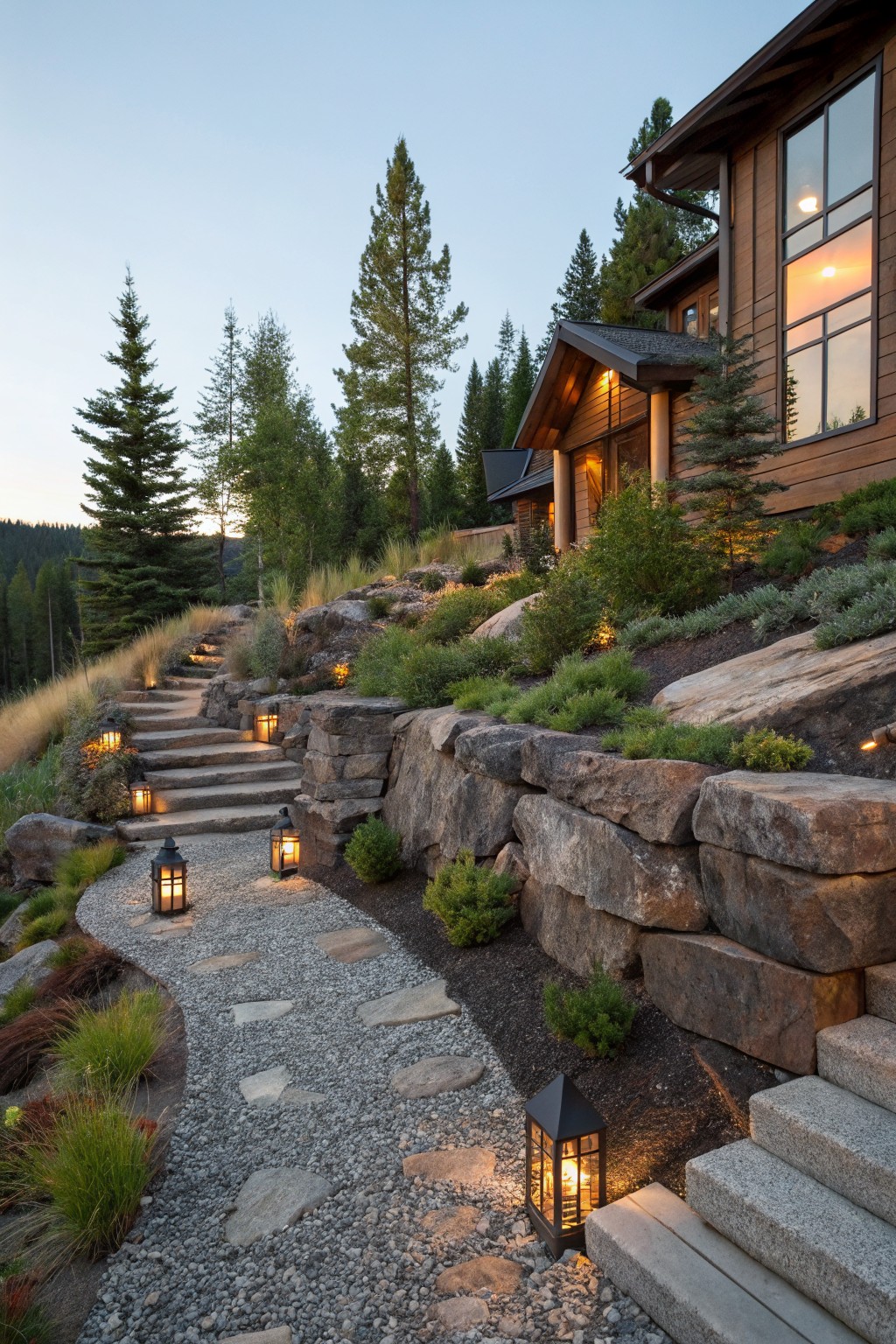
Big boulders stacked into retaining walls turn a tough slope into usable space. They hold back soil and create natural terraces that step down the hill. In this setup, the rough stones blend with the surrounding pines and grasses, giving the yard a rugged, lived-in feel without looking forced. Lanterns tucked along the edges add a soft glow at night.
These walls suit homes on hillsides or uneven lots, like cabins in the mountains. Stack local rocks for a custom fit, maybe dry-stacked for drainage or mortared for stability. Pair them with gravel paths or steps to guide foot traffic. Just plan for water runoff so roots don’t shift things over time.
Boulder Retaining Walls for Sloped Yards
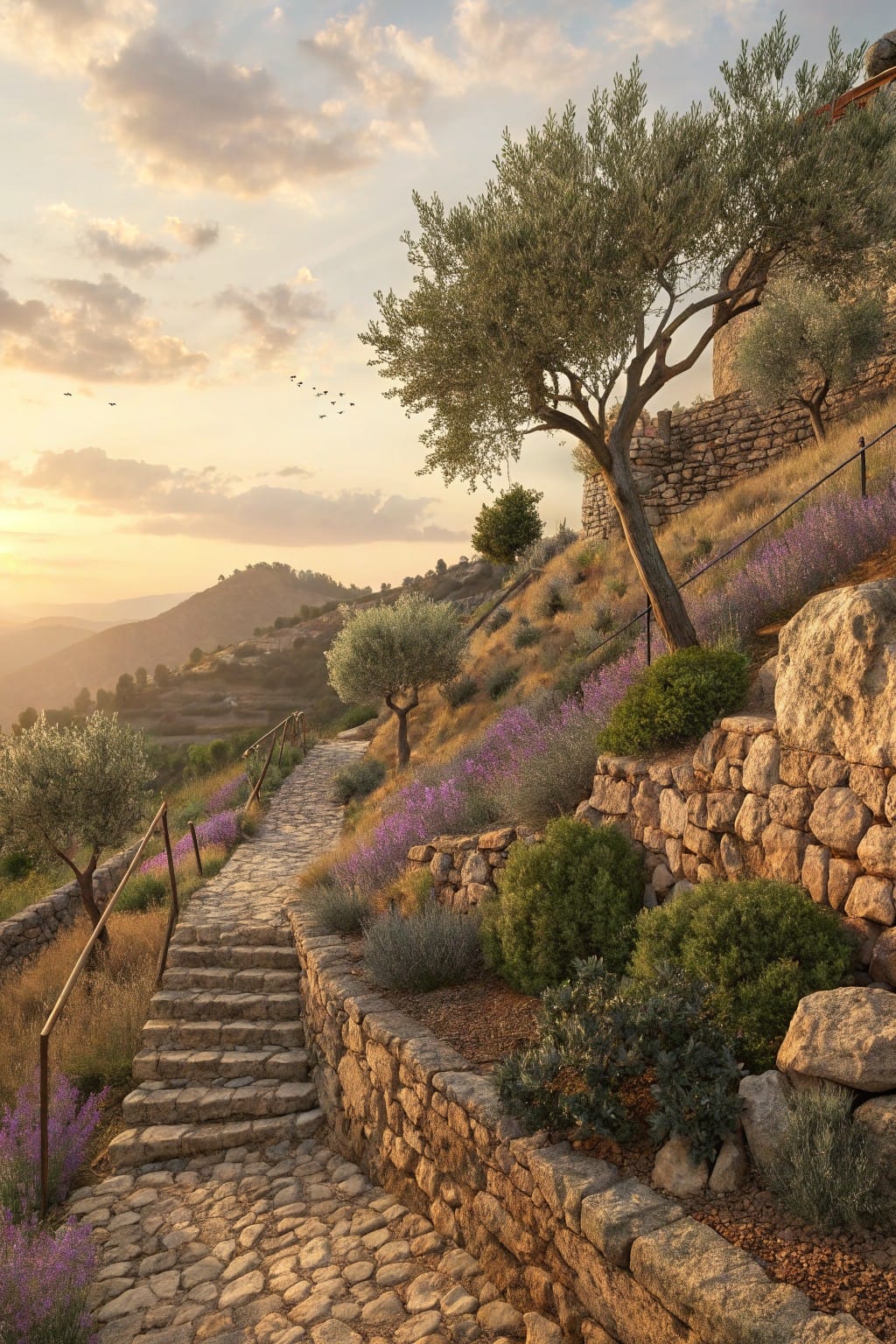
One solid way to handle a steep hillside is with boulder retaining walls. They turn tricky terrain into usable garden space. In this setup, big rocks stack right into sturdy walls that hold back soil and create flat terraces. The stones look natural, like they belong there, and mix well with plants tucked in around them.
You can use this on any sloped lot, especially where you want paths or planting areas without a lot of flat ground. Start with larger boulders at the base for stability, then add smaller stones and gravel for paths. Lavender or grasses along the edges keep it low maintenance. It works best in dry or Mediterranean-style yards, but watch for good drainage so the walls don’t shift over time.
Dry Creek Beds with Boulders and Pebbles
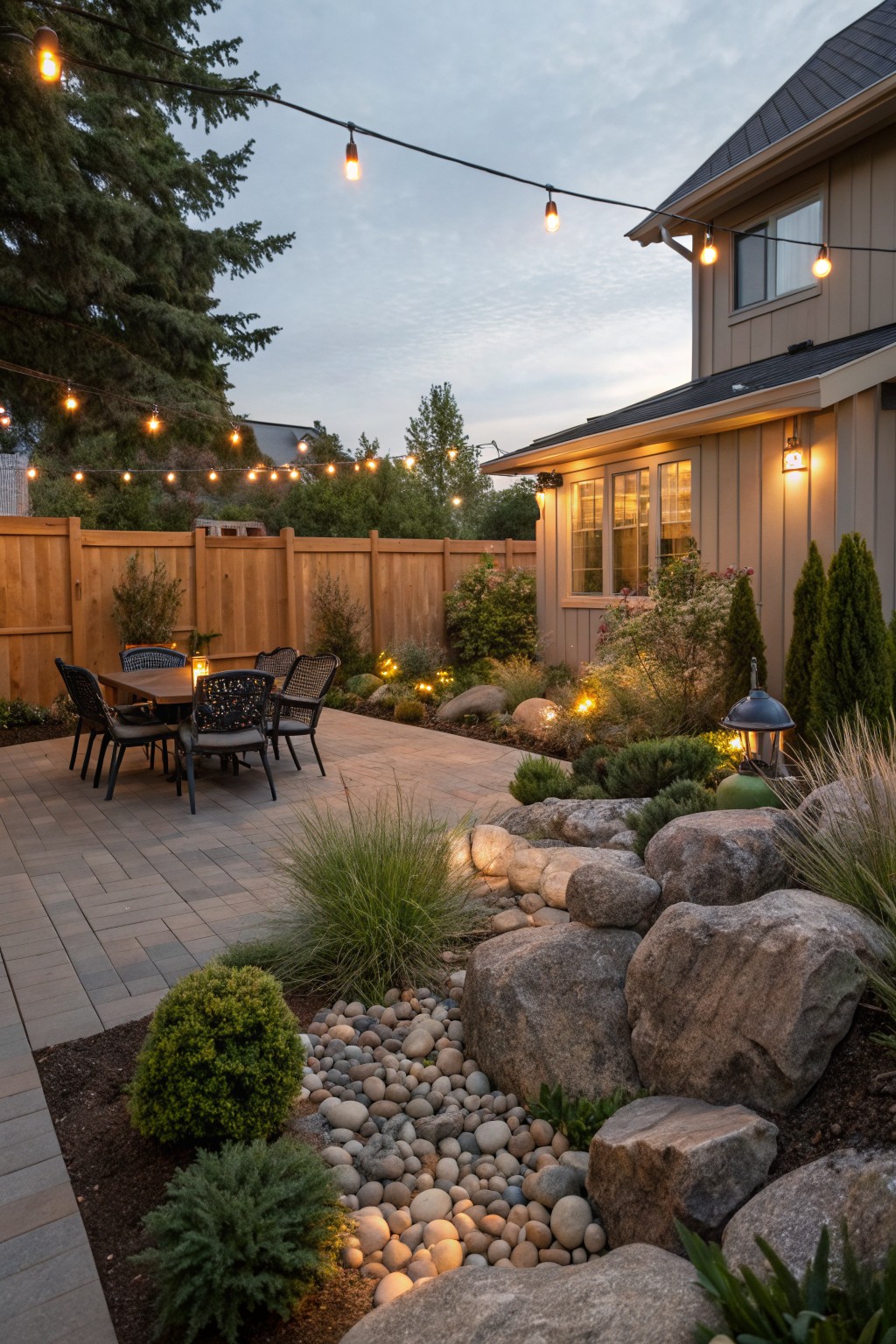
Big boulders paired with smooth pebbles make a simple dry creek bed that looks natural and pulls the yard together. It gives flat ground some flow and interest without needing water or much upkeep. In this setup, the rocks wind around the patio edge, tying into plants without overcrowding.
You can add one along a walkway or near seating to break up hard surfaces. It suits homes with some slope for better drainage, or even level yards if you dig a shallow trench first. Just pick rocks in a couple sizes for rhythm, and avoid too many colors so it stays calm.
Frequently Asked Questions
Q: Where do I source boulders that won’t cost a fortune?
A: Hunt for deals at local quarries or landscaping yards. They sell “reject” rocks cheap since the shapes aren’t perfect. Delivery usually runs under $200 for a truckload.
Q: How do I actually move those massive boulders into place?
A: Rent a dolly or use sturdy pipes to roll them. Position levers under the rock and inch it along step by step. Grab a couple friends, and you’ll finish in an afternoon.
Q: Will boulders ruin my yard’s drainage?
A: Nope, they improve it if you set them high enough on the soil. Water runs right off and around them.
Q: How do I blend boulders with plants so it looks natural?
A: Tuck low-growing shrubs or grasses in the crevices. They soften the edges and make the rocks feel like they grew there. And skip the fancy stuff, wild natives work best.
