

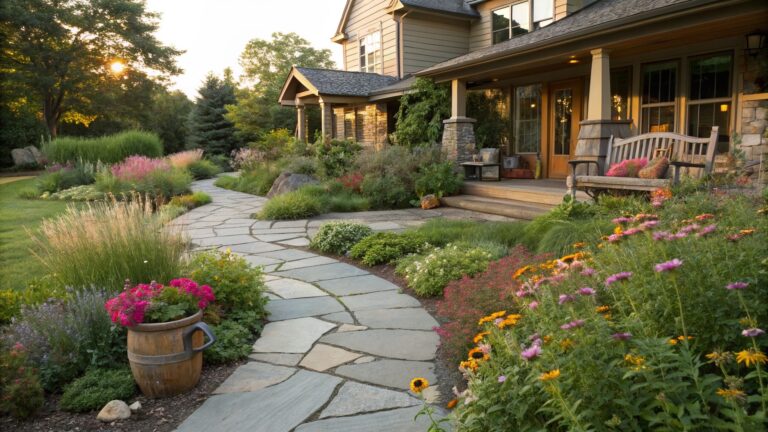
I’ve tinkered with wildflowers in my yard for a while now, and they shine when the layout lets plants layer naturally around curved paths that hold up year after year.
Good planting structure keeps things from spilling over, with low edging that frames the beds without fighting the wild feel.
Folks walking up always notice the hum of bees weaving through the front drifts first, setting the tone for the whole space.
That instant life makes the garden read as generous and alive.
A few of these setups are practical enough to sketch out and adapt to sloped lots or tight borders like mine.
Winding Flagstone Path Through Wildflower Beds
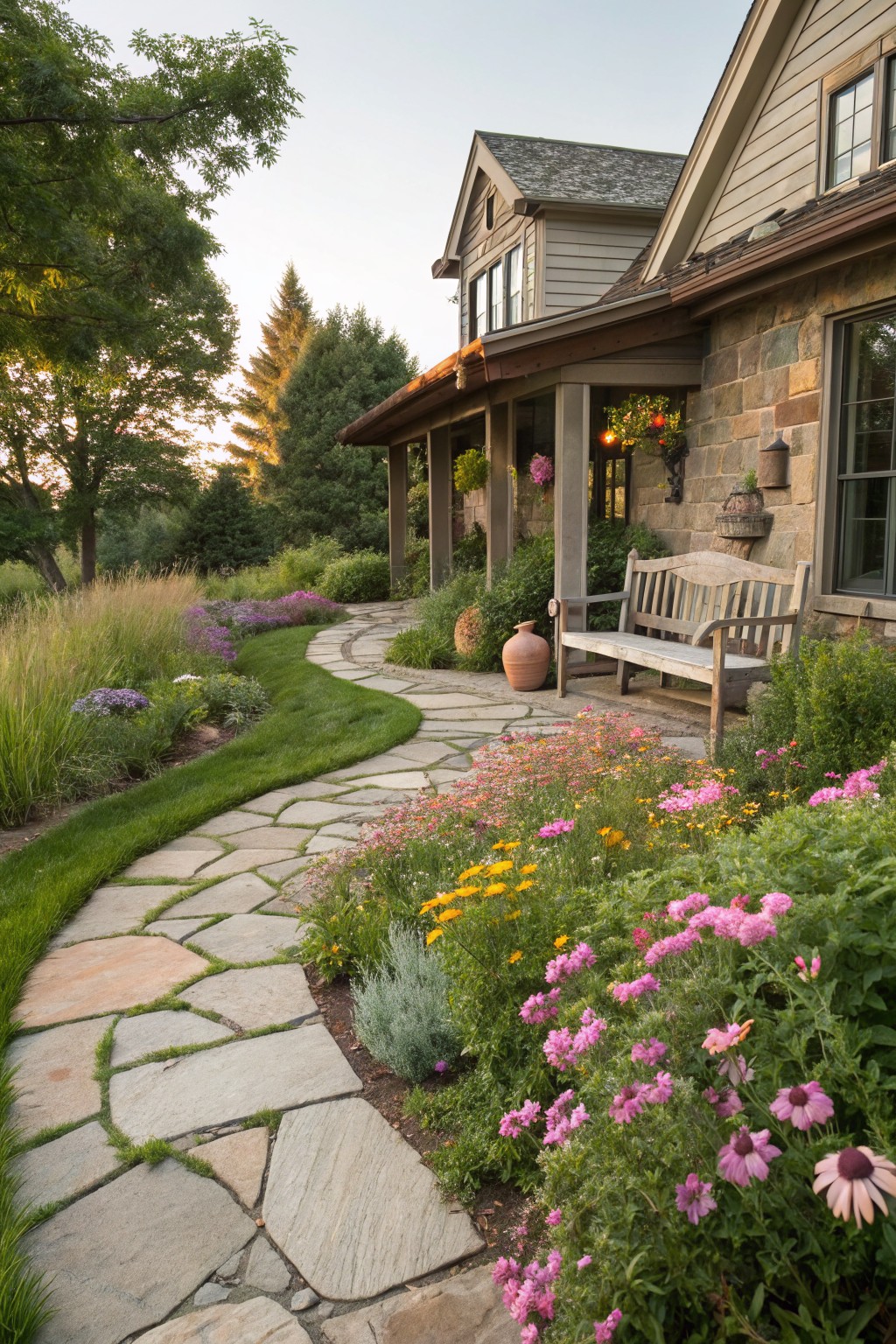
A simple winding path made from irregular flagstone slabs set right into the grass works wonders here. It curves gently through low beds stuffed with easy wildflowers, like those pink blooms and coneflowers that pull in pollinators. The path feels natural, not forced, and leads your eye straight to the porch bench without any stiff edges.
This kind of path suits front entries on country-style homes or cottages with a porch. Pick flat local stones for stability, then fill the beds with native perennials that don’t need much fuss. It keeps foot traffic clear while letting the flowers spill over a bit… just watch for tripping on loose slabs after rain.
Stepping Stone Path Through Lavender Beds
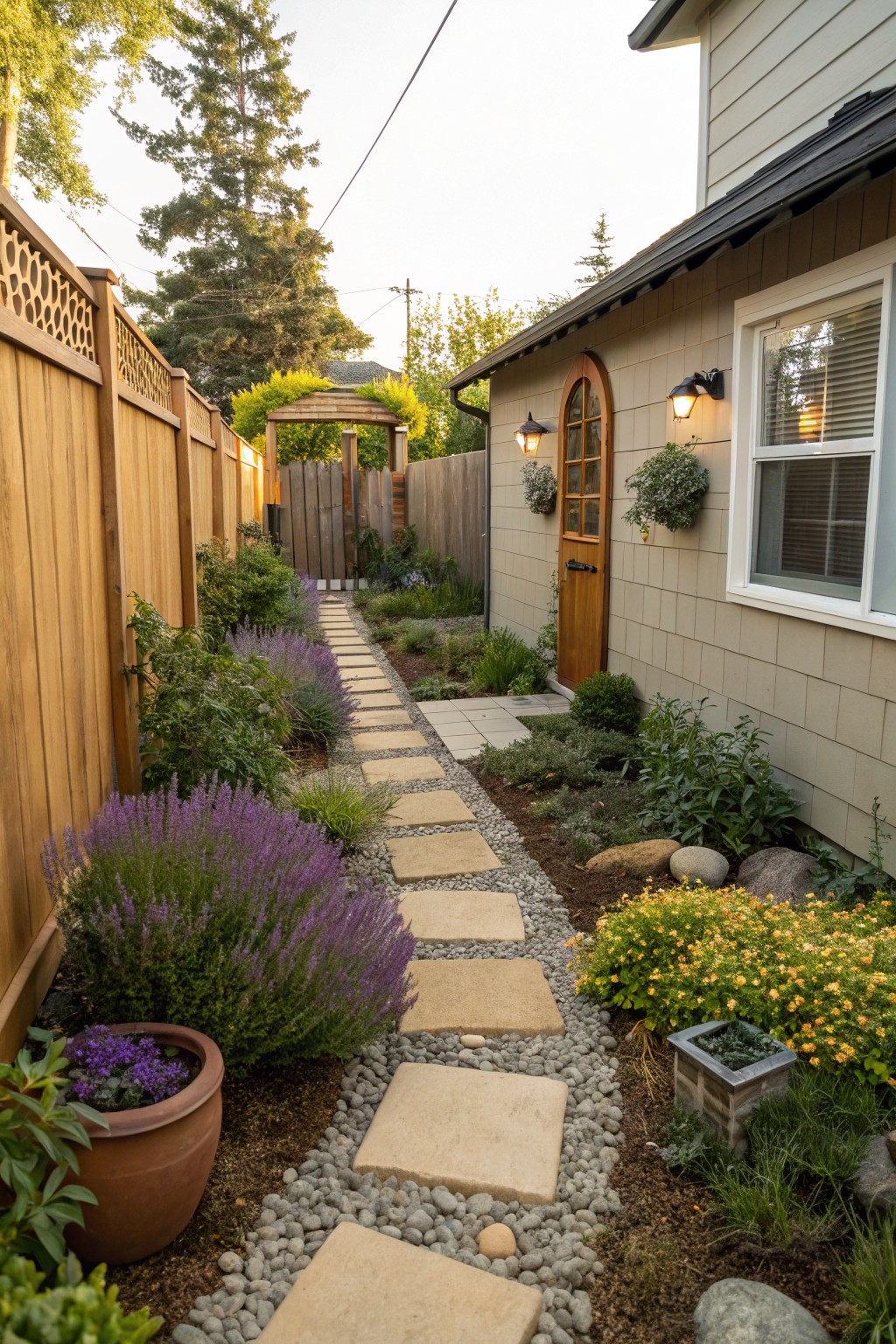
A stone stepping stone path like this makes a skinny side yard feel like a secret garden. It winds gently between fences, with lavender bushes and low wildflowers filling the borders. Those purple blooms draw bees and butterflies right in, and the gravel edges keep it neat without much work. It’s a practical way to add color and life where space is tight.
You can set this up along a walkway to your back door or garage. Pick flat stones set in gravel for easy stepping, then plant tough pollinator favorites like lavender or coreopsis around them. It works great on small lots or rentals. Just watch the path doesn’t get too narrow, or folks might brush the plants.
Brick Path Lined with Wildflowers
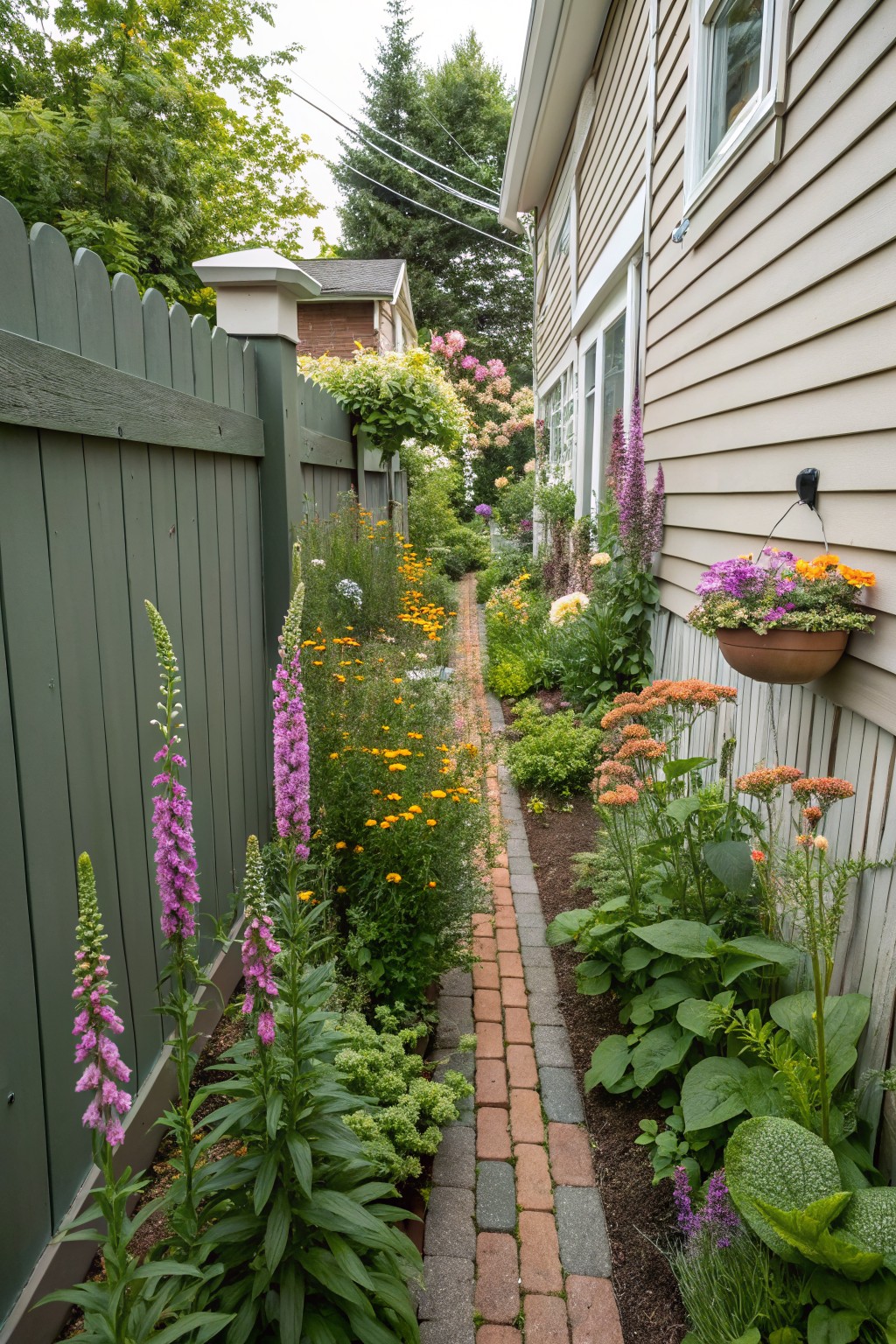
A simple brick path runs right down the middle of a narrow side yard, with tall pink foxgloves and colorful perennials crowding both edges. It pulls pollinators in close, turning tight space into a lively flower tunnel that feels wild but contained.
This works best along the house side where you need access without losing garden feel. Use old bricks for the path, plant natives like foxgloves or kniphofia shoulder to shoulder. Watch the scale… too much width and it loses that cozy pull. Suits cottage homes or any yard short on room.
Raised Beds Line Courtyard Paths
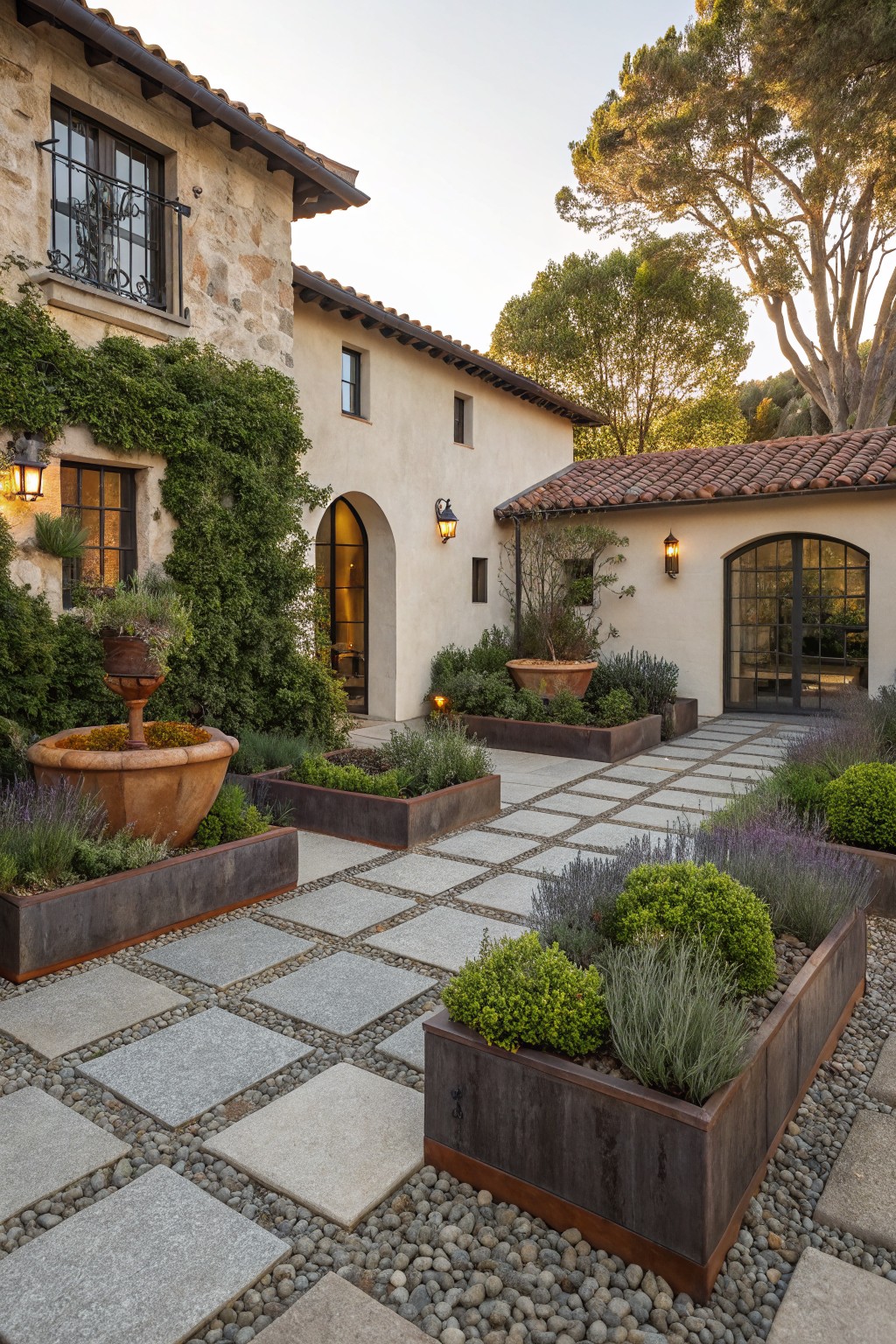
One simple way to organize a courtyard garden is lining paths with raised beds. Here, corten steel boxes hold lavender and low herbs that hug the stone pavers. The setup feels contained but easygoing. Plants like these draw bees and butterflies without much fuss.
Try this in sunny, enclosed yards near a house entry. Pick rustproof metal or wood for the beds, fill with drought-tough bloomers such as lavender or salvia. It suits stucco homes or anywhere space is tight. Just keep paths wide enough to walk.
Wildflower-Lined Dune Path
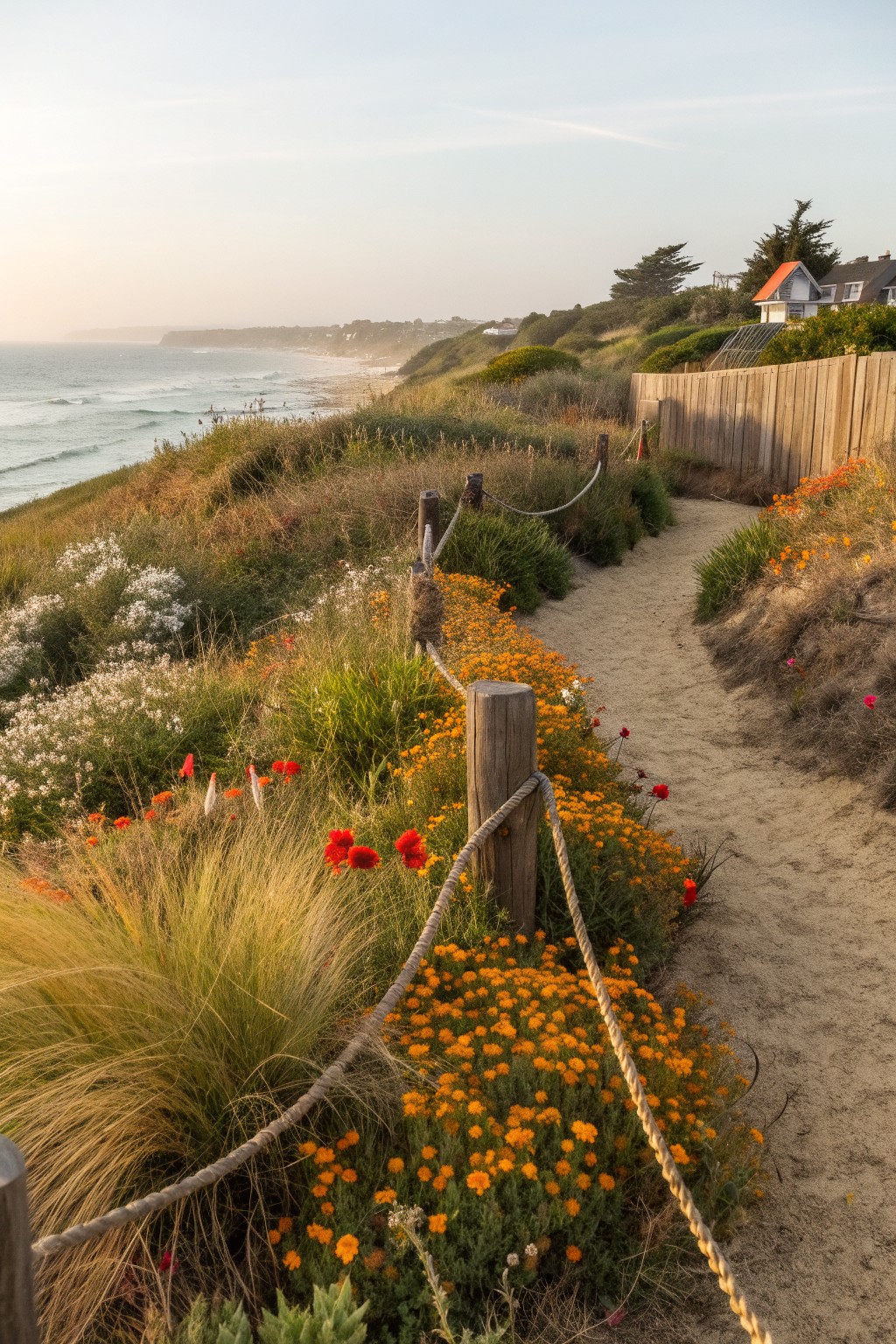
A sandy path like this one works well for guiding folks through a natural yard without much fuss. The rope tied to wooden posts keeps feet off the plants, while clumps of orange wildflowers and grasses fill in the edges. Those blooms bring pollinators right to your doorstep, and the whole thing feels easy and beachy.
Try it on a slope or open side yard where you want some structure but not a lot of hard work. Go for tough, local wildflowers that handle dry spells, like poppies or ice plant. Space the posts every few feet and string the rope loose. It suits coastal spots best, but inland homes with sunny banks could pull it off too… just watch for too much foot traffic wearing down the sand.
Raised Planters with Gravel and Uplights
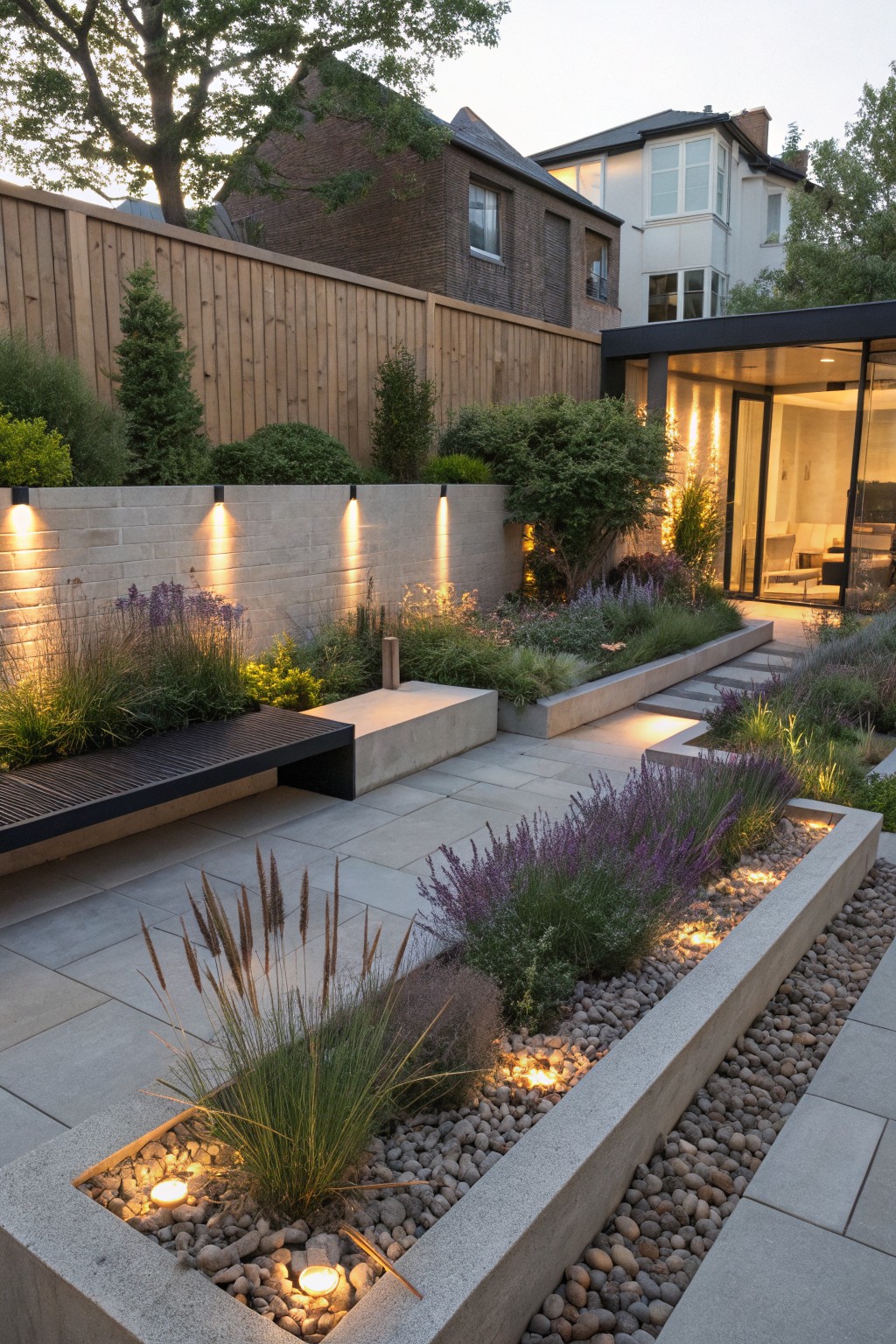
These raised concrete planters run along the patio edge, packed with lavender, tall grasses, and smooth river rocks for mulch. Small uplights sit right in the gravel, casting a warm glow up through the plants at night. It’s a simple way to frame your outdoor space and bring in pollinators, since lavender pulls bees like nothing else. The look stays neat even as the plants grow a bit wild.
You can pull this off in a backyard like this one, right up against the house or seating area. Go for sturdy concrete forms, fill the bottom with gravel for drainage, then add your pollinator plants. It suits smaller yards or modern setups best. Skip it if your soil drains poorly, or the plants might rot.
Terraced Planters for Sloped Yards
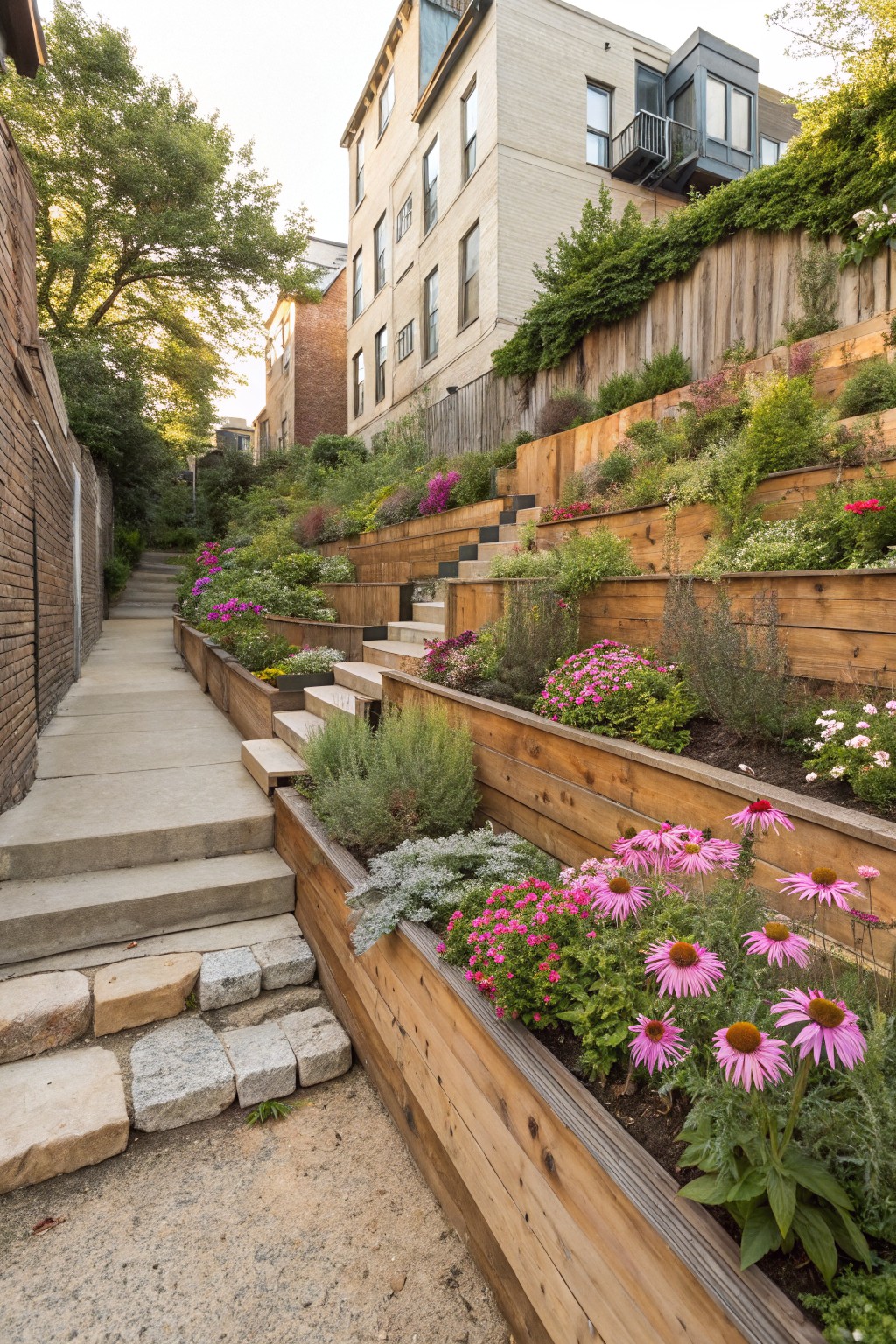
Slopes in backyards often go to waste or turn into muddy paths, but terracing them with simple wooden planters changes everything. These raised beds stack up neatly, holding soil in place while letting wildflowers spill over the edges. Pink coneflowers and other pollinator favorites thrive here, creating a natural cascade that feels wild yet contained.
This setup works best on steeper urban lots where flat space is limited. Build with untreated cedar for longevity, and fill with native perennials that need little care. Just make sure the beds drain well to avoid rot… and watch the bees show up in summer.
Winding Path Lined with Wildflowers
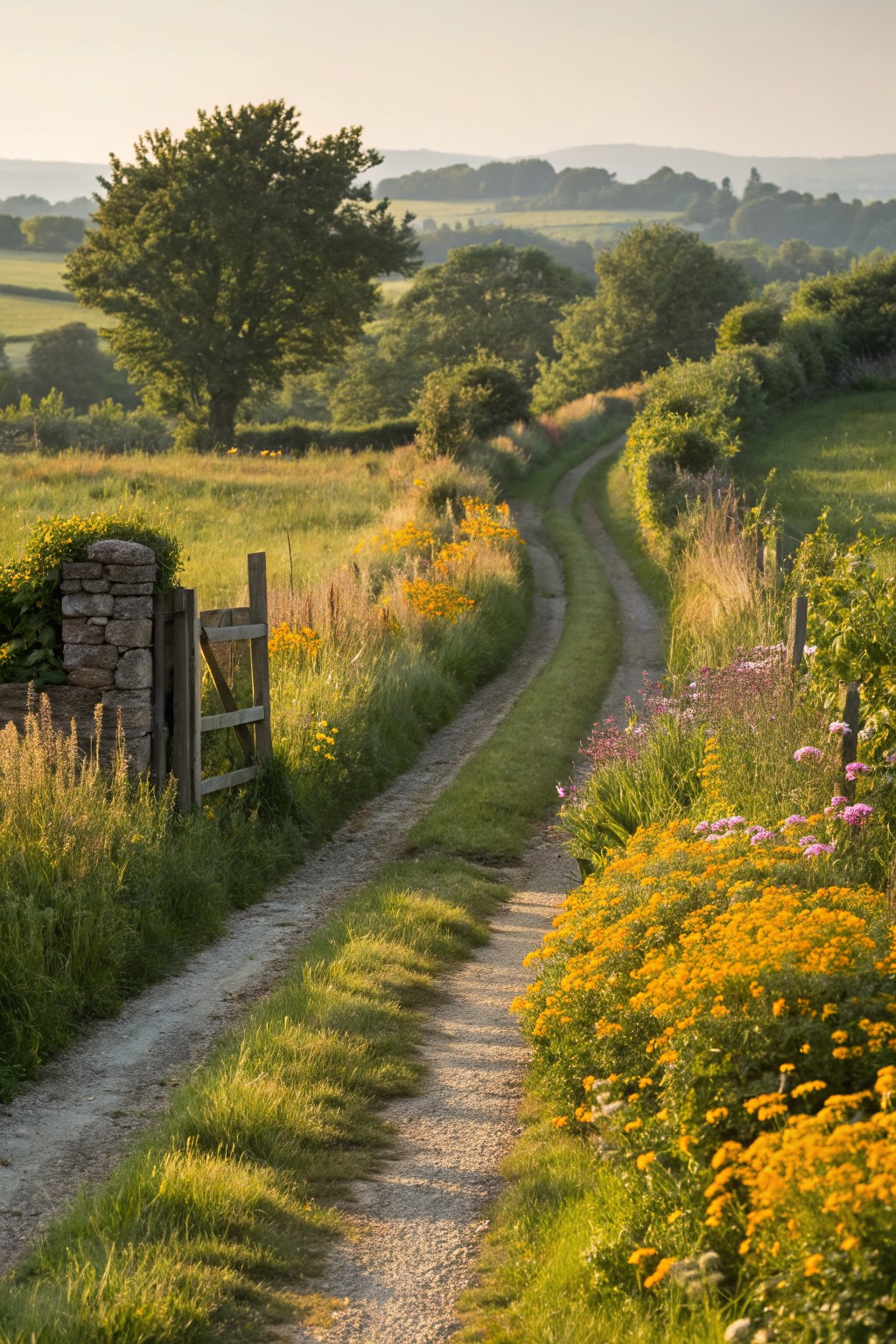
One simple way to bring wildflowers into your yard is a curving gravel path edged with meadow plants. It pulls the eye along naturally, like in this setup where tall grasses and orange blooms hug both sides. Those flowers draw bees and butterflies without much fuss, and the path keeps it all from spilling over.
You can do this in a backyard corner or along a side yard, especially if you have some open space. Start with a loose curve to mimic nature, plant natives like black-eyed Susans or goldenrod along the edges, and let them grow a bit wild. It works best in cottage-style gardens or rural spots, but watch that the path stays clear for walking.
Terraced Slopes with Stone Walls and Wildflowers
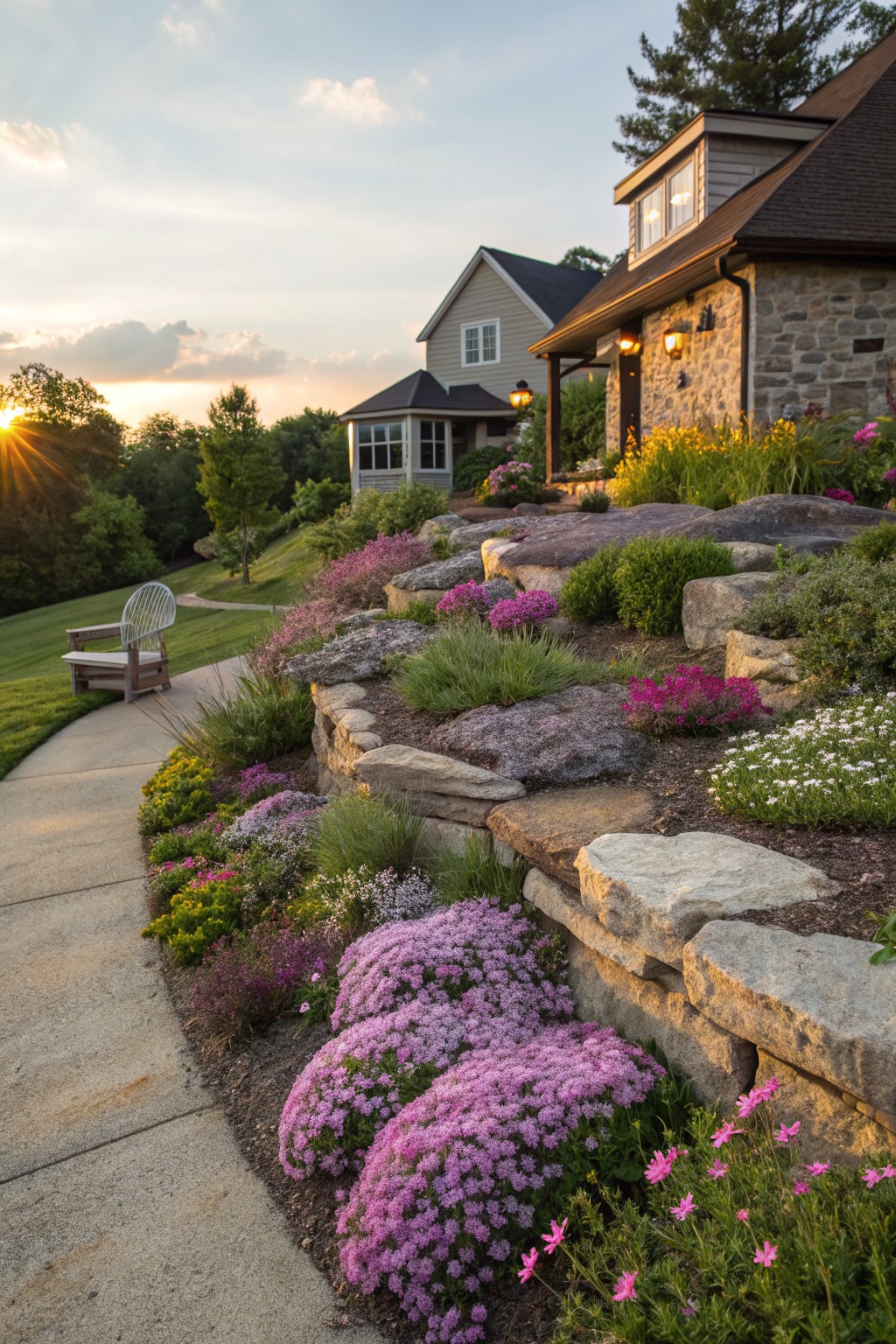
Slopes can be tricky in a yard. They erode easy and hard to mow. But stacking natural stone into low walls turns that problem into a pretty feature. Fill the pockets between stones with tough wildflowers like creeping phlox and sedums. Those pink and purple blooms spill over just right. Plus they draw bees and butterflies all summer. It’s a simple way to make a wild corner that fits the home without much upkeep.
This works best on moderate slopes near the house entry or patio. Use local fieldstone for a natural look that blends in. Plant drought-tolerant natives so it stays colorful with little water. Keep paths wide enough to walk. Watch for spots where soil washes out at first. After that it settles in fine. Good for any yard size really.
Winding Stone Path Through Wildflower Beds
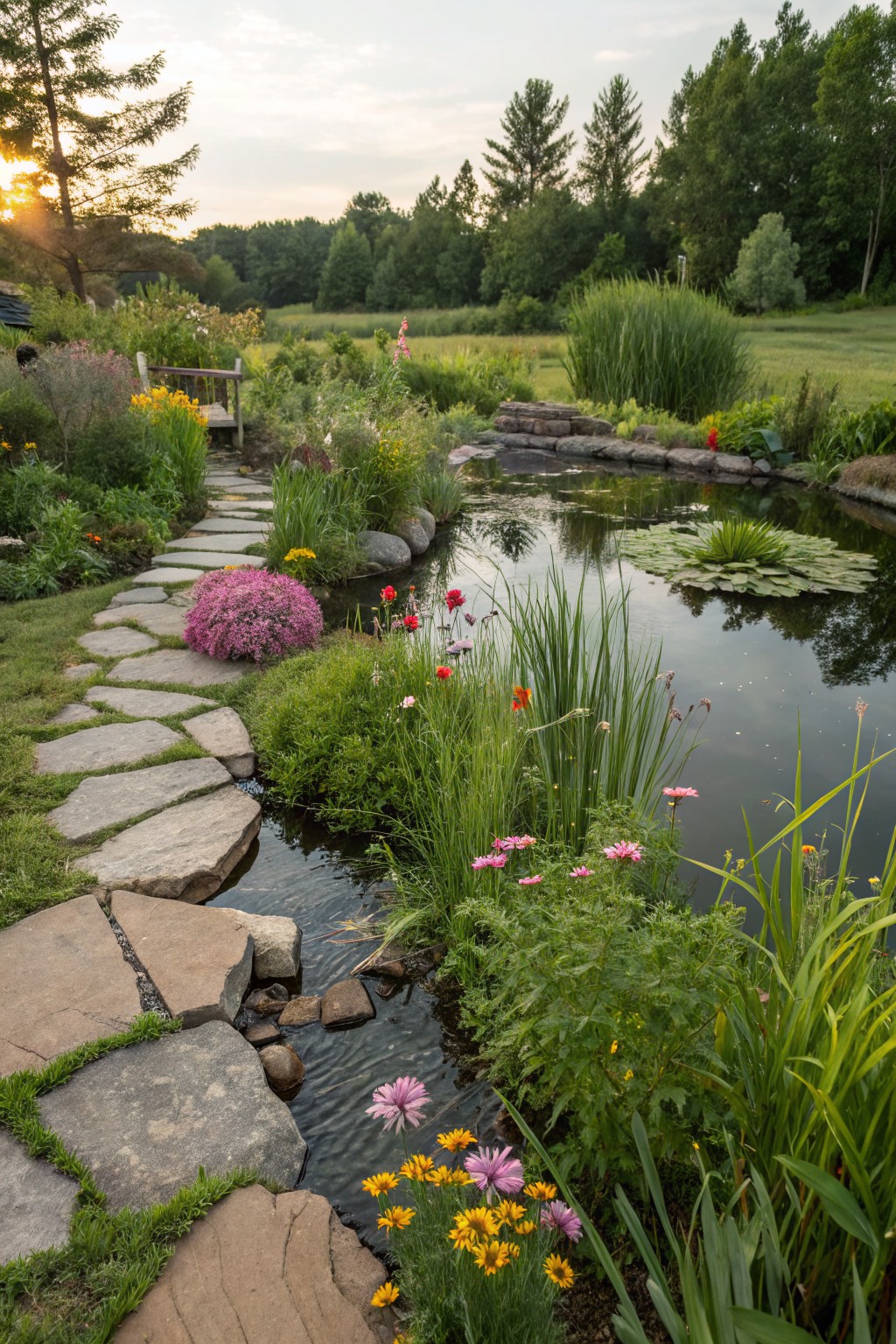
A simple winding path like this one made from rough stone slabs pulls you right into the garden without feeling too formal. It runs alongside a little stream and pond, with wildflowers spilling over everywhere, pinks and yellows drawing in bees and butterflies. That natural curve keeps things relaxed and lets the plants take center stage, just right for a pollinator spot.
You can set this up in a backyard corner or along a side yard, using flat fieldstones set in grass or gravel for easy drainage. Pick tough perennials like sedum or black-eyed Susans that spread on their own. It works best where you want low upkeep… no mowing needed along the edges. Just watch for slippery spots near water after rain.
Lavender-Lined Gravel Paths
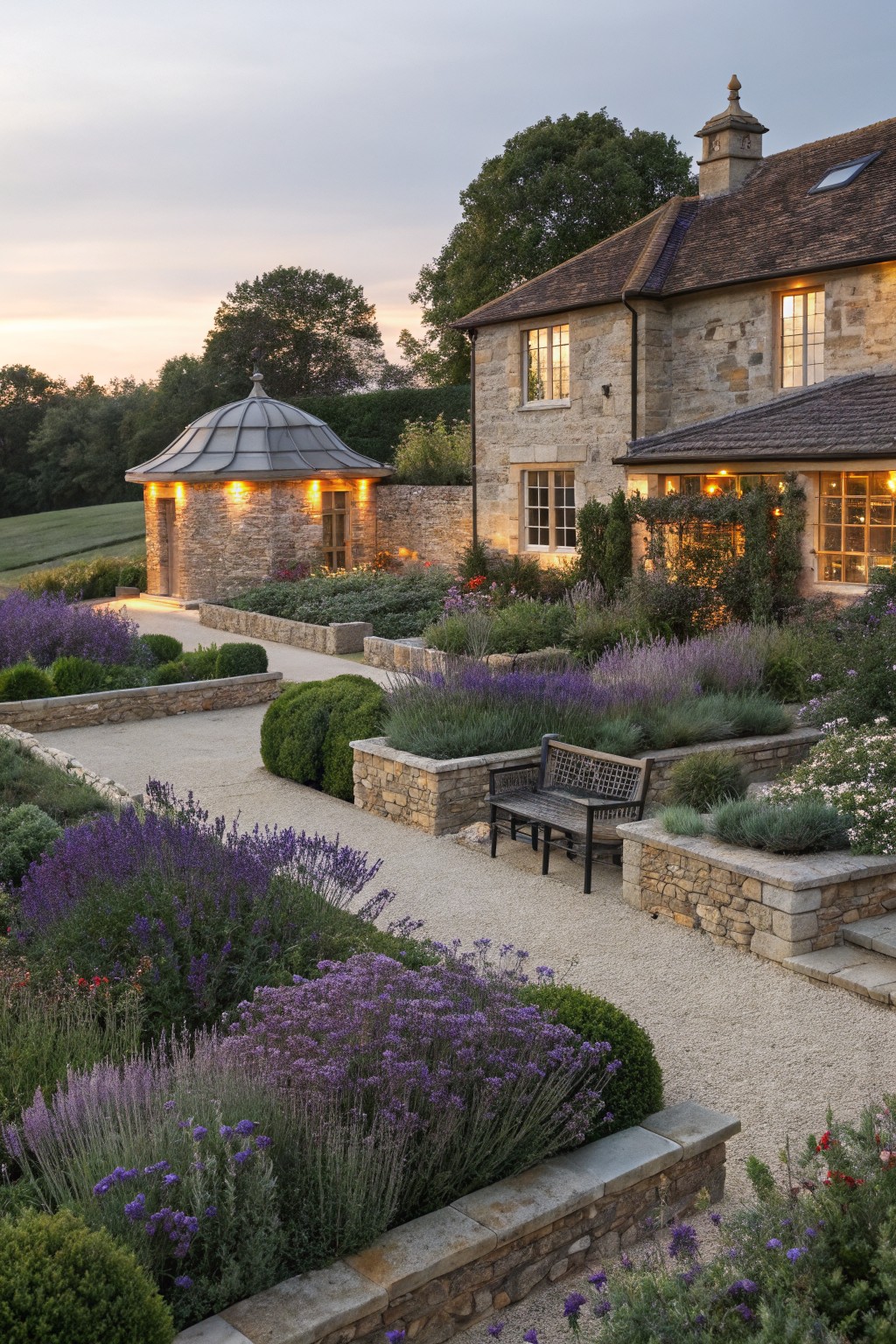
Gravel paths winding through thick lavender plantings make a natural draw for bees and butterflies. The soft purple blooms fill raised stone beds here, creating a low walkway that feels both structured and easygoing. Lavender thrives in full sun with little water once established, turning a simple path into a buzzing pollinator spot without constant upkeep.
Set this up along the side of your house or in a side yard where you want some quiet garden time. Use wide gravel for wheelbarrows or strolling, edge with low stone walls to keep soil in place, and plant lavender shoulder to shoulder. It suits older homes with stone details best… just shear it lightly after blooming to keep the paths clear.
Terraced Wildflower Beds on Stone Walls
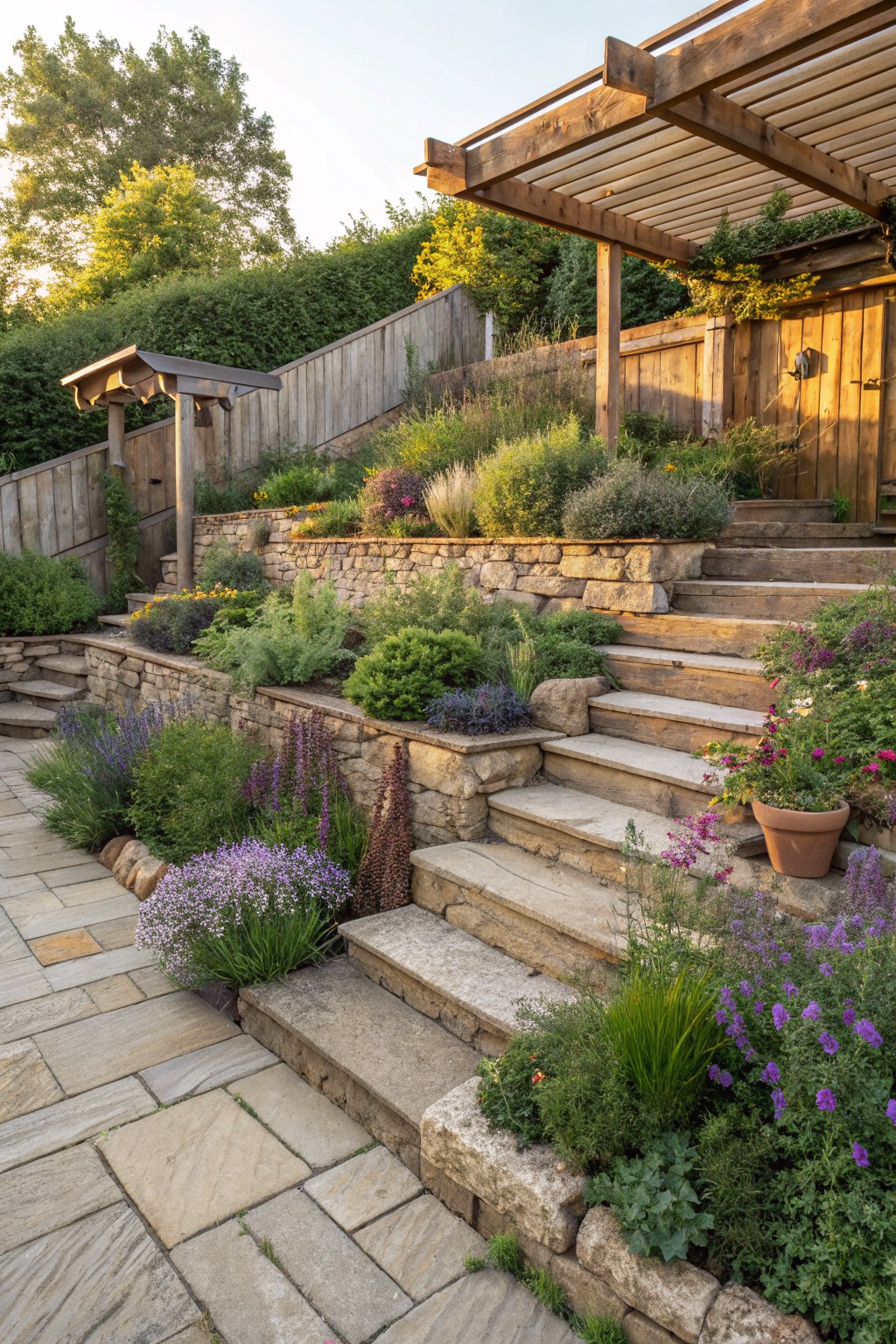
Sloped yards can be tricky but they make great spots for terraced planting. Here dry-stacked stone walls hold back the hill and create flat beds packed with wildflowers, lavender, and grasses. The layers give pollinators plenty of levels to work, from low lavender blooms up to taller stems. It keeps soil in place too.
Build these on any hillside where you want more garden room. Use local stone for a natural fit, then fill with easy natives that draw bees and butterflies. Watch the drainage so roots stay happy. Suits cottage-style homes or rural spots best.
Terraced Wildflower Beds on Slopes
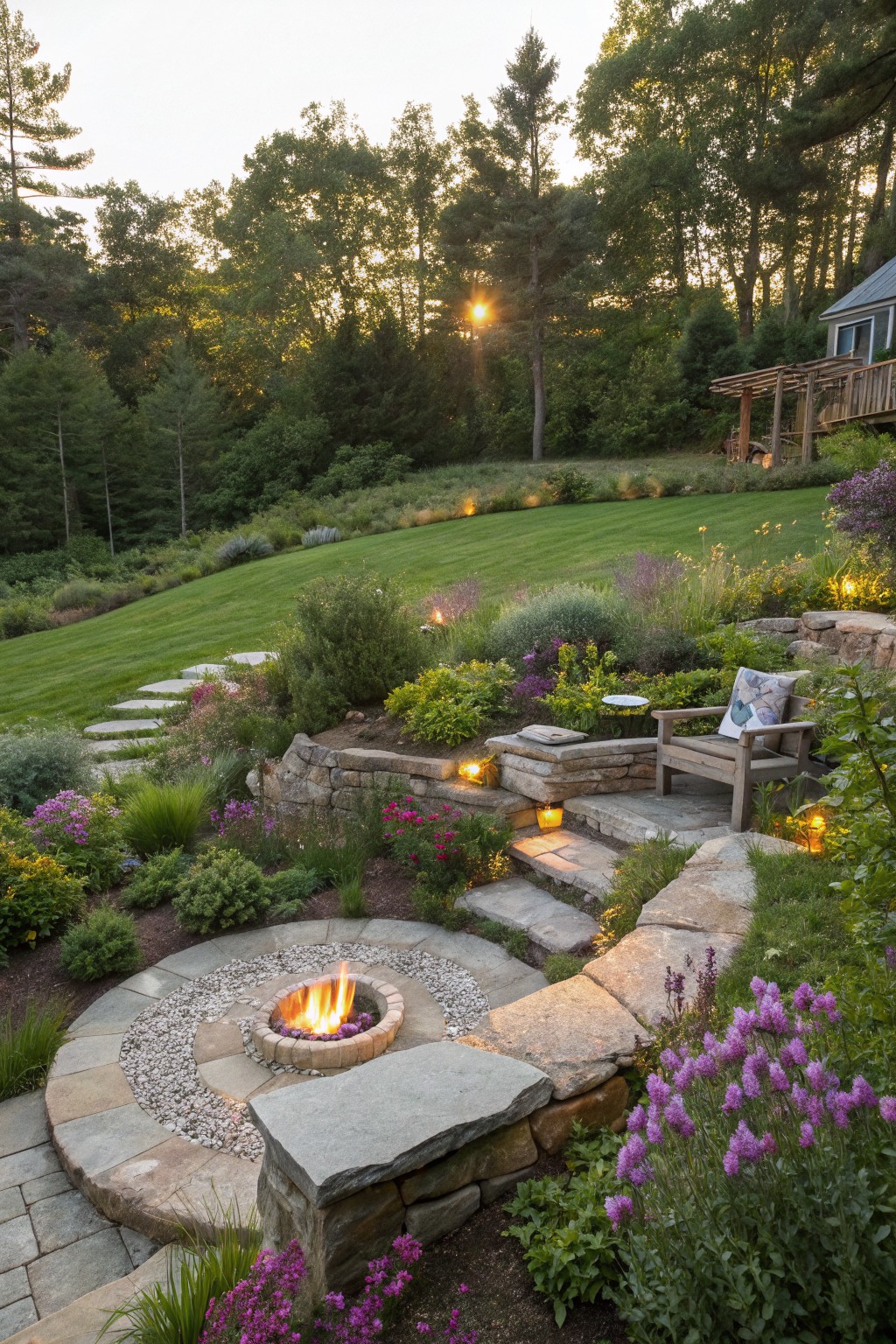
Slopes can be tough to work with in a yard. But terracing them with low stone walls and steps turns the problem into a feature. Fill the beds between with wildflowers like those tall purple spikes and waving grasses you see here. It creates a natural path that draws pollinators right to your doorstep, and the fire pit at the bottom makes a perfect gathering spot.
This works best on wooded lots or hillsides near a house. Pick tough, local wildflowers that handle some shade and poor soil. Just make sure the stonework has good drainage so roots don’t rot after rain. It’s low fuss once established.
Balcony Edges Lined with Pollinator Flowers
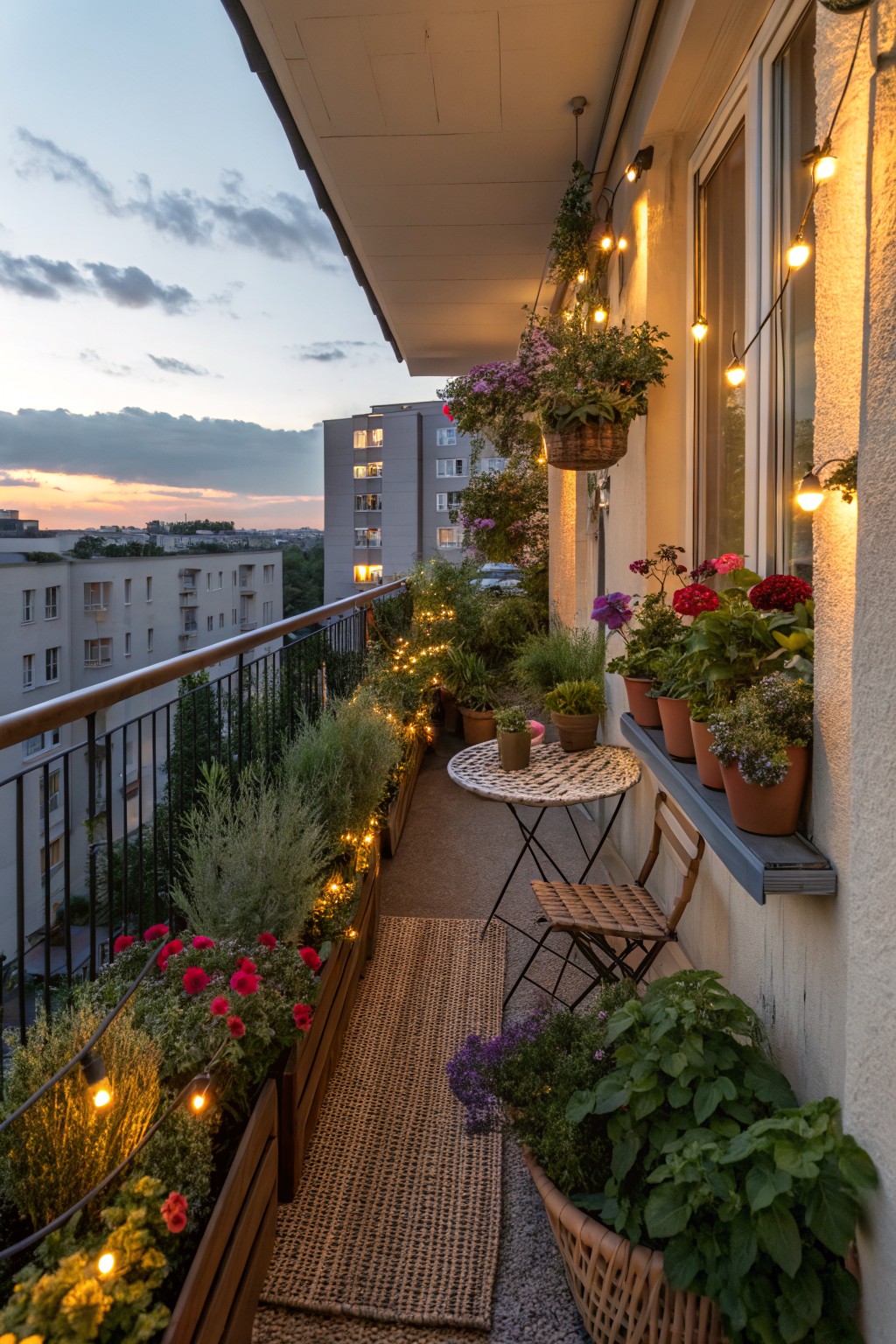
A simple way to bring wildflowers to tight city spaces is planting them right along the balcony railings and walls. Pots and boxes overflow with blooms like red geraniums and purple lavender that pull in bees and butterflies during the day. It turns a plain balcony into something alive and useful, with the plants softening the edges and giving a bit of privacy from neighbors.
This setup works best on narrow balconies or apartments without a yard. Start with railing planters and window ledges, mixing easy wildflowers with herbs. Add string lights for evenings… they make the spot cozy without much work. Just pick sun-loving varieties that don’t need constant fuss.
Winding Stone Paths Edged with Wildflowers
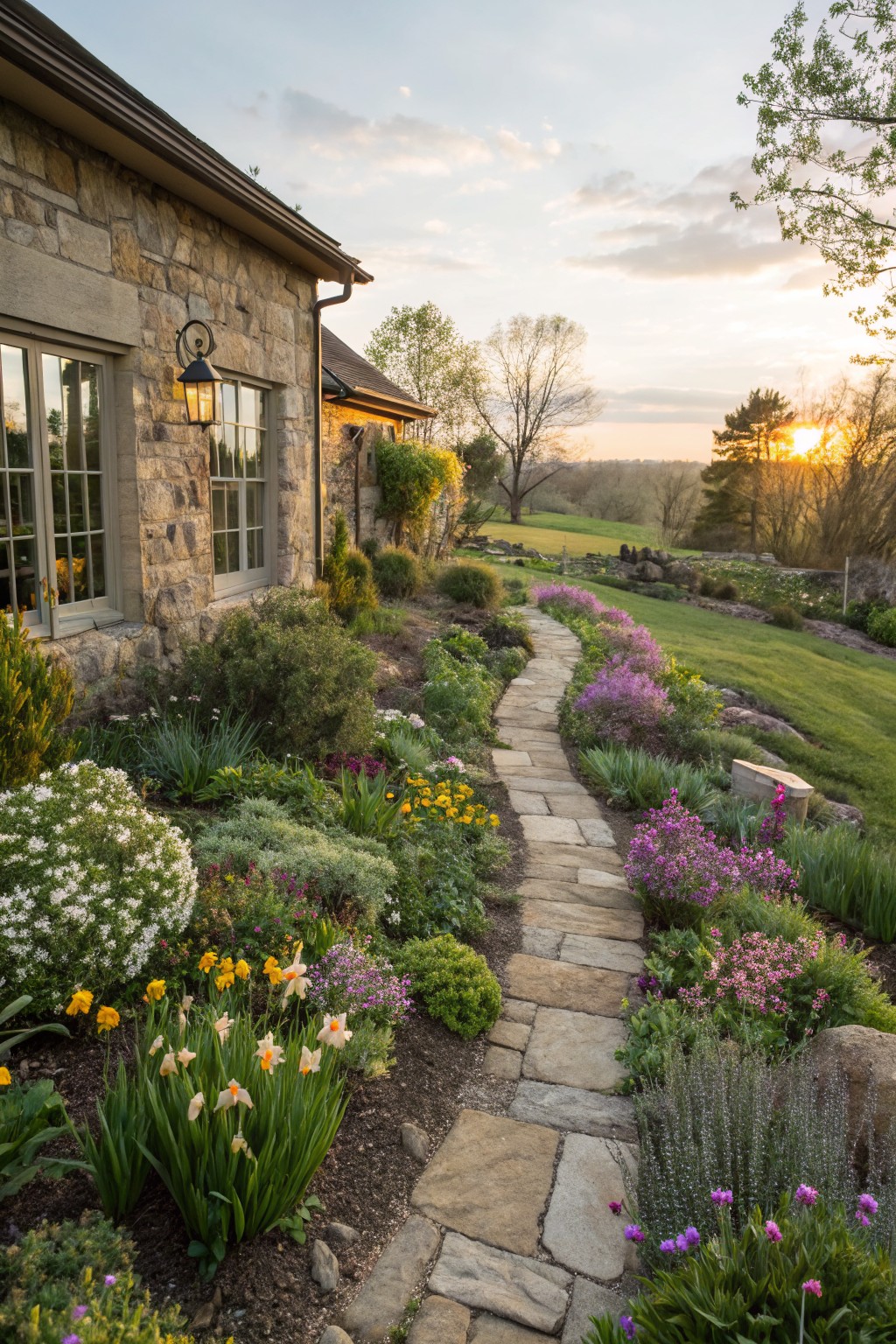
One simple way to welcome visitors right into your pollinator garden is a curving stone path like this. It starts close to the house and wanders through low beds packed with easy bloomers such as lavender, daffodils, and pink phlox. The irregular flagstones fit the natural feel. They guide you along without forcing a straight line. And those mixed flowers draw bees and butterflies from the start.
This setup works best along a side yard or toward a back seating area where you want a relaxed walk. Use it on sloped ground to slow the pace and show off more plants. Pick drought-tough perennials that spread on their own… less weeding that way. Just keep the path wide enough for two people. It suits cottage-style homes or any spot needing more life near the entry.
Vertical Planters on Balcony Screens
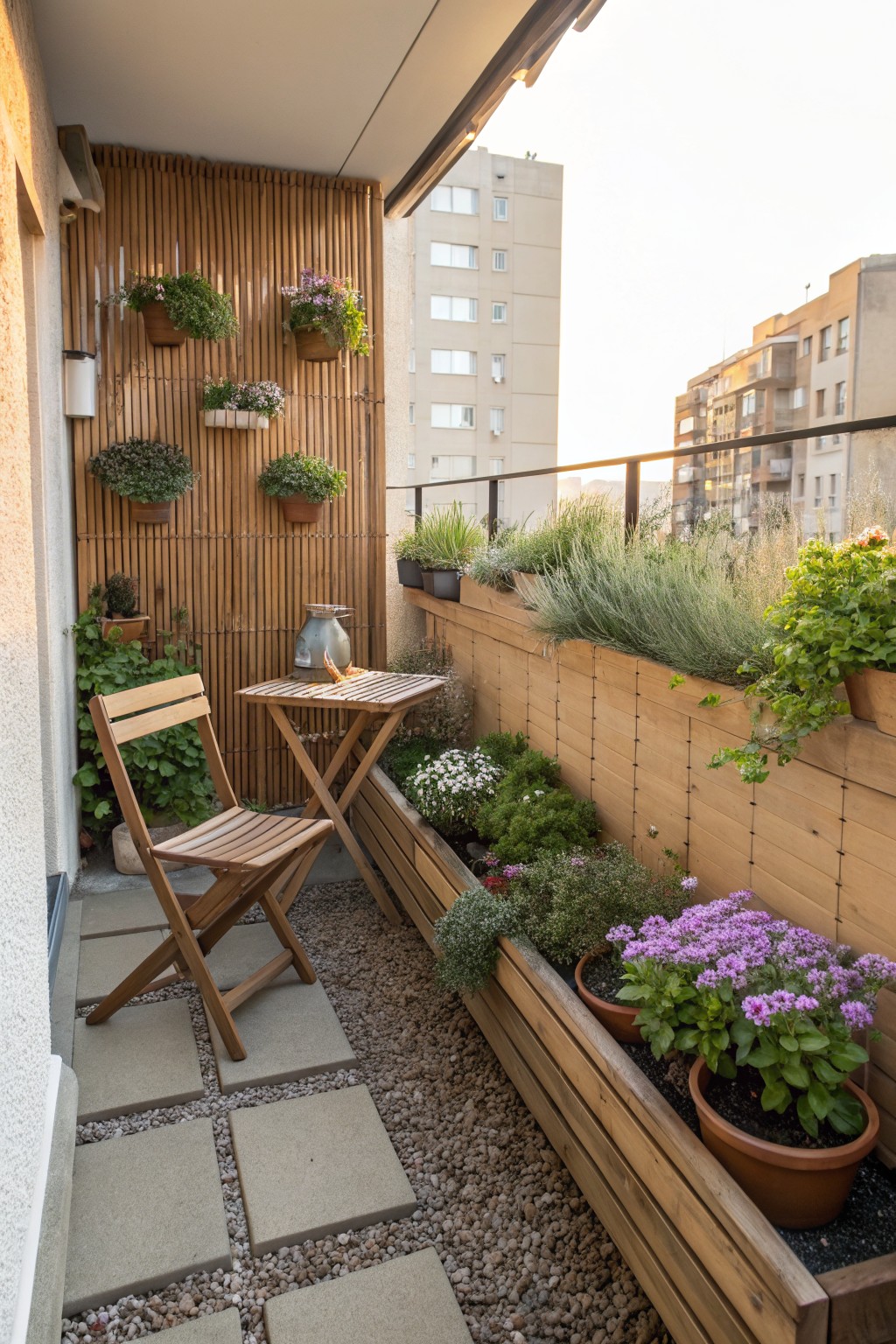
One smart way to fit wildflowers into tight spots is by using vertical planters right on your balcony screen. Here a bamboo fence holds hanging pots and shelves packed with blooms like lavender and trailing greens. It blocks the view from neighbors while giving pollinators easy access to nectar. The flowers spill over naturally, making the spot feel full and alive without taking floor space.
This works best on urban balconies or patios where ground room is limited. Pick tough wildflowers that draw bees, like those purple clusters you see, and secure pots well so nothing tips in wind. Pair with a folding table for coffee breaks amid the buzz. Just check your railing can handle the weight.
Terraced Raised Beds on Slopes
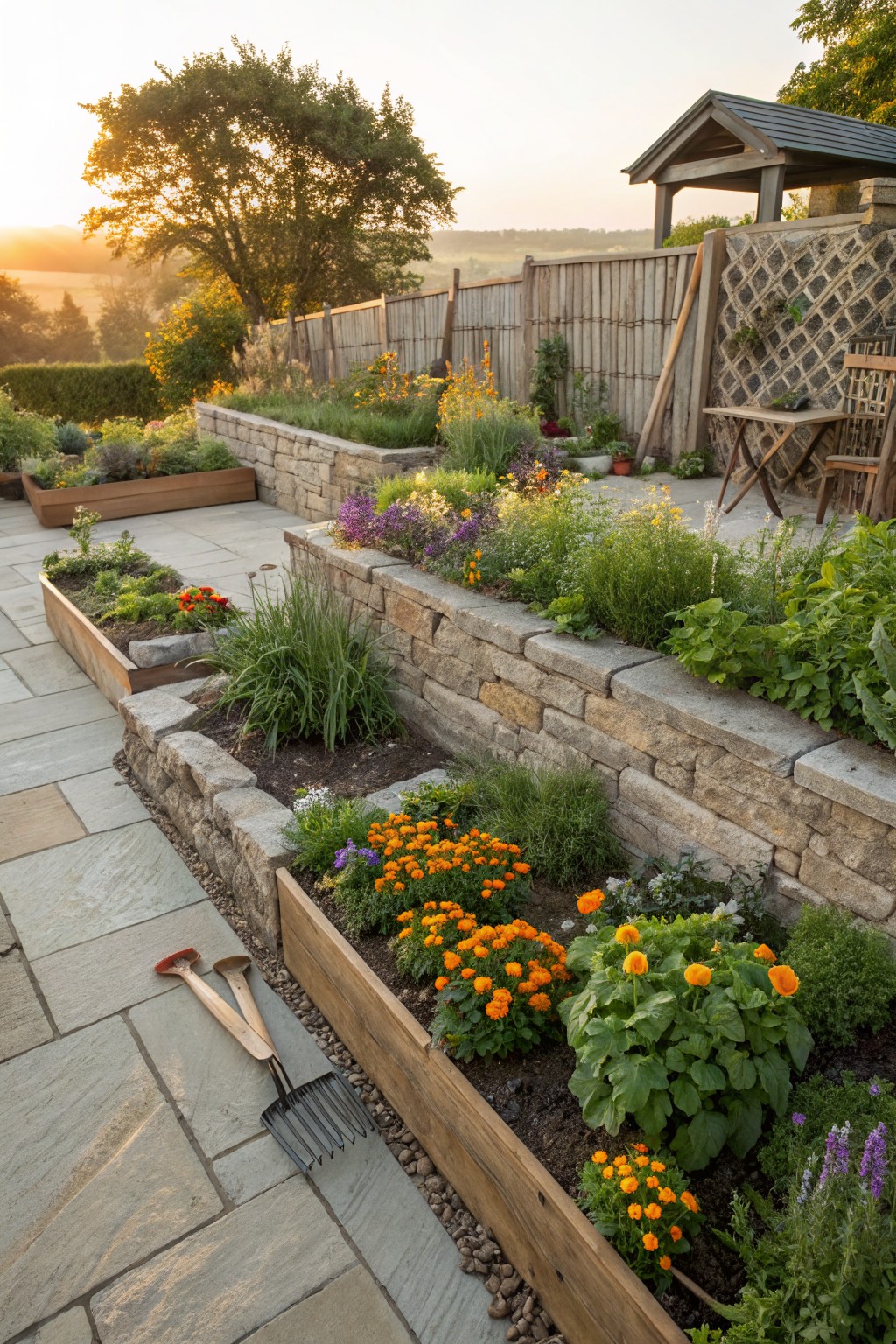
Slopes can be tough for planting, but terraced raised beds solve that nicely. Here stone walls create sturdy levels, with wooden planters tucked right against them and filled with orange marigolds and other bloomy plants. Those flowers pull in pollinators like bees, and the setup keeps soil in place while giving you flat spots to tend the garden.
This idea fits yards that drop off near the house or patio. Build the walls first for support, then add simple wood boxes for the plants. Choose tough wildflowers or herbs that spread a bit…they’ll thrive without daily work. Just watch drainage so the beds don’t get waterlogged after rain.
Frequently Asked Questions
Q: When’s the best time to sow wildflower seeds for pollinators?
A: Go for fall or early spring in most spots. Seeds need that chill to wake up strong. Just scatter them on cleared ground and press lightly.
Q: What if my yard has mostly shade—will wildflowers still work?
A: Stick to shade-loving natives like trillium or foamflower. They draw moths and bees that hunt in dimmer areas. Full sun grabs more buzz, but shade patches thrive too.
Q: How do I keep weeds from choking out the wildflowers?
A: Mow or weed the area short before sowing, then let the flowers crowd them out once they grow. Mulch lightly around edges if you spot invaders early. Nature handles the rest.
Q: Do these wildflower ideas work for total beginners?
A: Absolutely. Pick a packet of regional natives and toss them where grass struggles. Watch pollinators show up by summer—no green thumb required.
