

I’ve been walking through neighbors’ backyards lately, and it’s clear that harmony starts with picking elements that echo each other across the space. When you repeat curves in stone paths that match the arches of a pergola or blend foliage tones from border to border, the whole yard settles into a calm rhythm. Clashing hardscapes or random color pops often throw things off, making even generous spaces feel cramped and disjointed. I lean toward layered plantings that build from ground covers up through shrubs, as they ground the design without much fuss. A handful of these setups reward the effort.
Gravel Walkways with Pavers
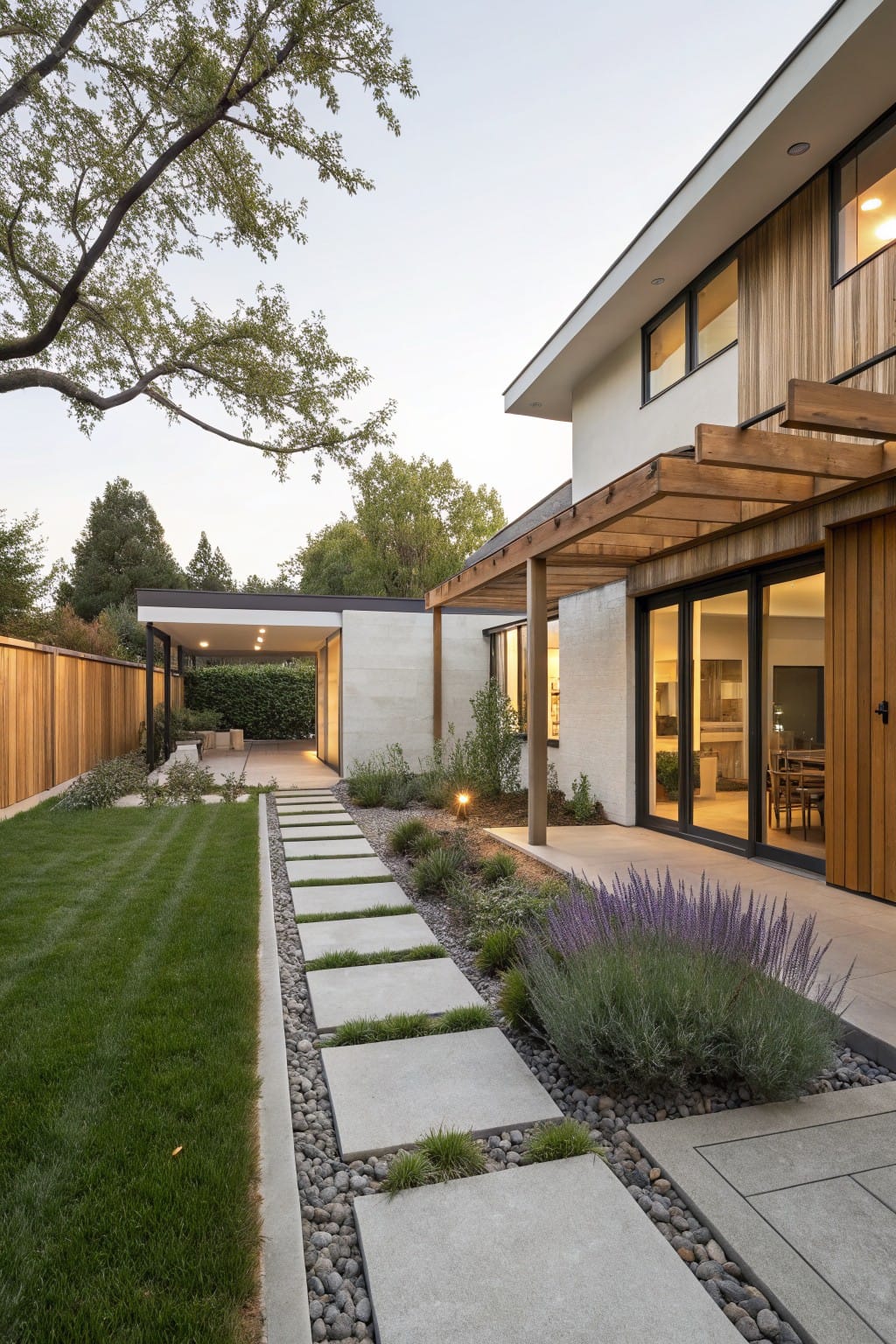
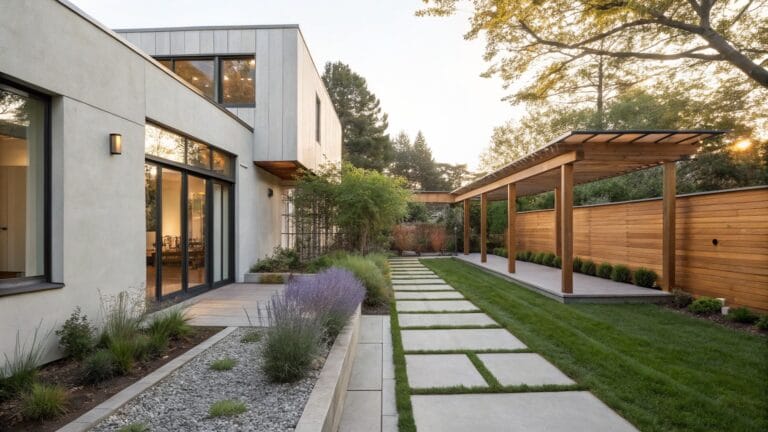
A gravel walkway lined with large square pavers offers a clean way to guide people from the house to the yard. In this setup, the wide strip of light gravel holds the pavers just far enough apart to let low plants like lavender peek through on both sides. It keeps things simple and modern without much upkeep, and the pale tones blend right into a light-colored patio and stucco walls.
This kind of path works best in backyards with a straight shot to the lawn or garden beds. It suits homes with a contemporary look, especially where you want low-water plants along the edges. Just make sure the gravel drains well so you don’t end up with puddles after rain.
Winding Gravel Paths

Nothing beats a gravel path that winds through the garden like this one. It pulls you along naturally past beds of flowers and shrubs, right up to the house. Folks like it because it slows you down a bit, makes the yard feel deeper and more lived in.
Put one in your backyard if you have room for curves. Line it with tough perennials and a bench here or there. It suits older homes or cottages best. Keep the gravel loose for easy walking, and slope it a touch for water runoff.
Courtyard Patio Centered on a Fountain

A courtyard patio built around a central fountain pulls the whole backyard together in a natural way. The water feature sits right in the middle of stone pavers, with plants tucked in along the edges and steps up to the house. It gives the space a quiet focus. People notice how the sound of water makes everything feel more alive without much upkeep.
This works best in sunny yards near the back of a house with stucco walls or arches. Pick a simple round fountain that fits the scale, lay down textured stone for the floor, and add terracotta pots for herbs or topiaries. It suits warmer climates. Just make sure the base drains well so water doesn’t pool after rain.
Wooden Boardwalk Paths Through Grasses

A wooden boardwalk path like this one winds gently through tall grasses toward the house. It keeps things natural and easy to walk on, especially over uneven ground or dunes. The rope railings add a simple touch that matches the casual style without overdoing it.
You can use this in backyards that slope or have loose soil. It suits coastal homes or any spot with native grasses. Go for pressure-treated wood to hold up outdoors, and keep the curves soft so it flows with the landscape.
Stepping Stone Paths in Gravel Gardens
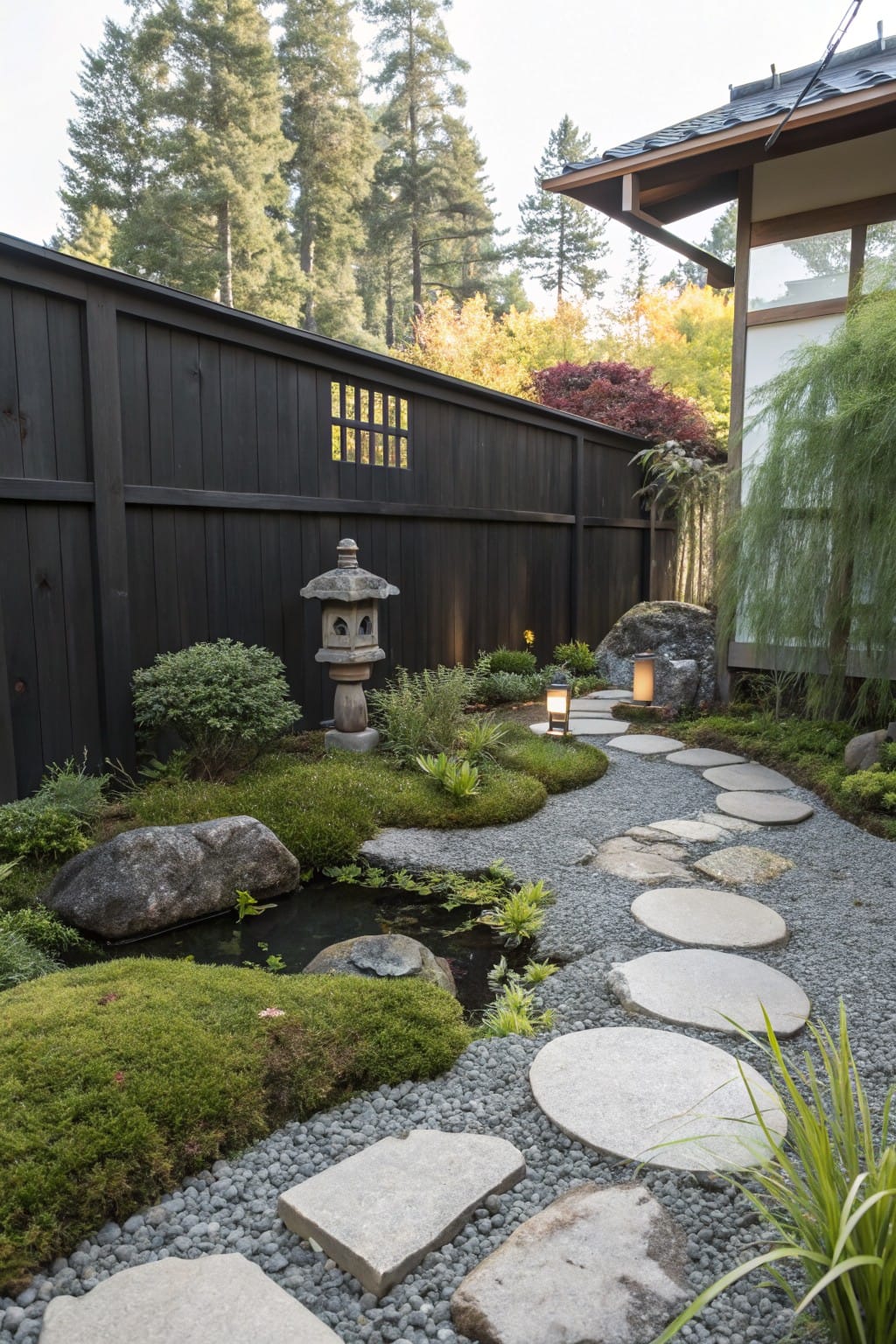
Stepping stone paths like this one stand out because they guide you right through the yard without taking up much space. Set into gravel and moss, these flat stones create a natural walkway that feels peaceful and easy to follow. The path winds around rocks and a small pond, making the whole backyard feel put together.
You can use this idea in smaller yards or anywhere you want low-maintenance landscaping. It works best with simple plantings like grasses and moss around the edges. Lay large round or irregular stones about two feet apart in pea gravel, then add moss for that soft look. Keep it near the house entry for a smooth transition inside.
Wooden Poolside Walkways
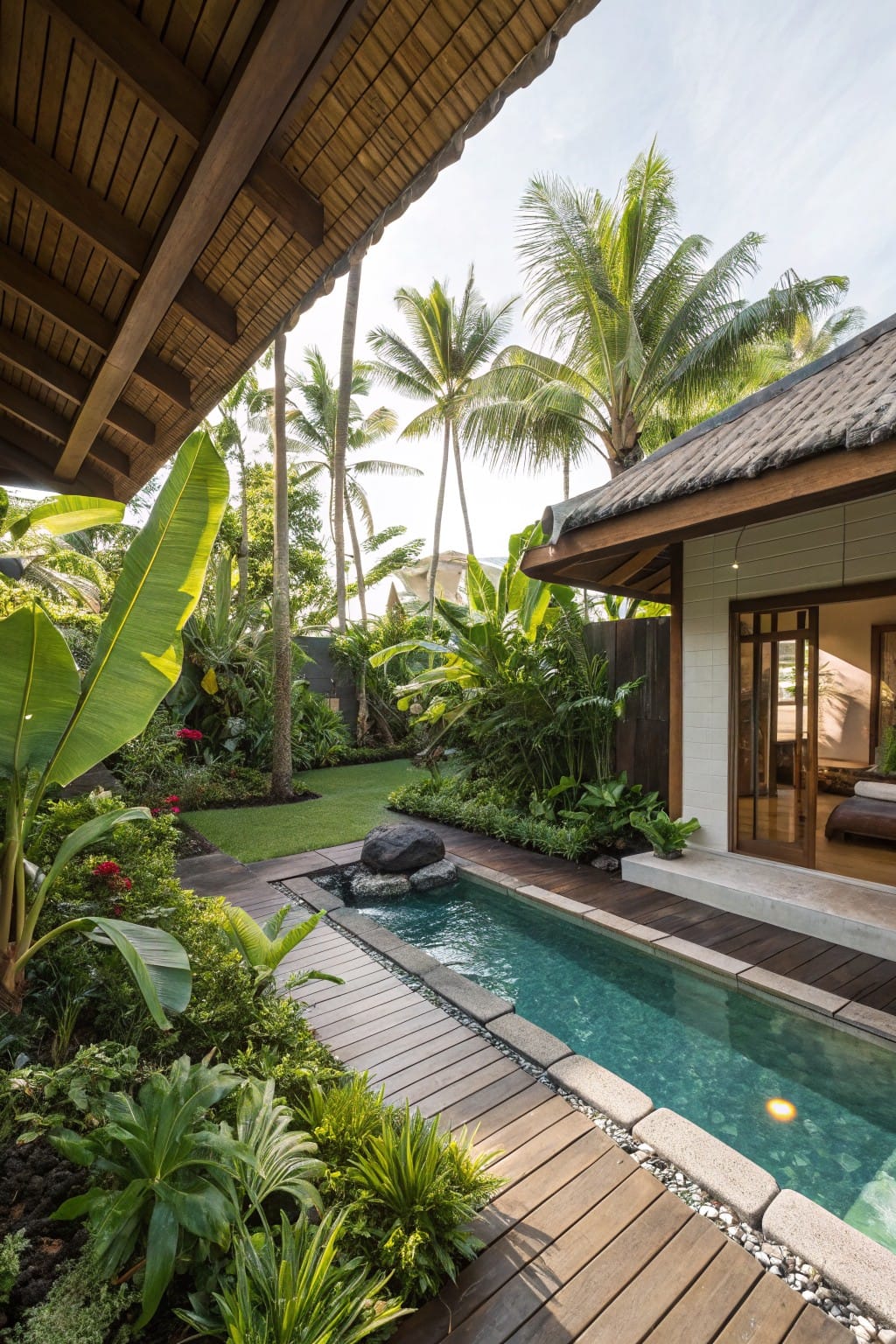
Wooden walkways like this one run right along the pool edge. They make the whole backyard feel connected. The dark wood picks up on the house trim and blends easy with the green plants around it. No big open pool deck here. Just a simple path that lets you stroll close to the water without losing yard space.
Try this in smaller backyards or spots with tropical plants. It suits homes with wood accents already. Keeps things private too, since the plants tuck it all in. One thing. Pick treated wood if your area stays humid.
Built-In Benches for Patio Seating
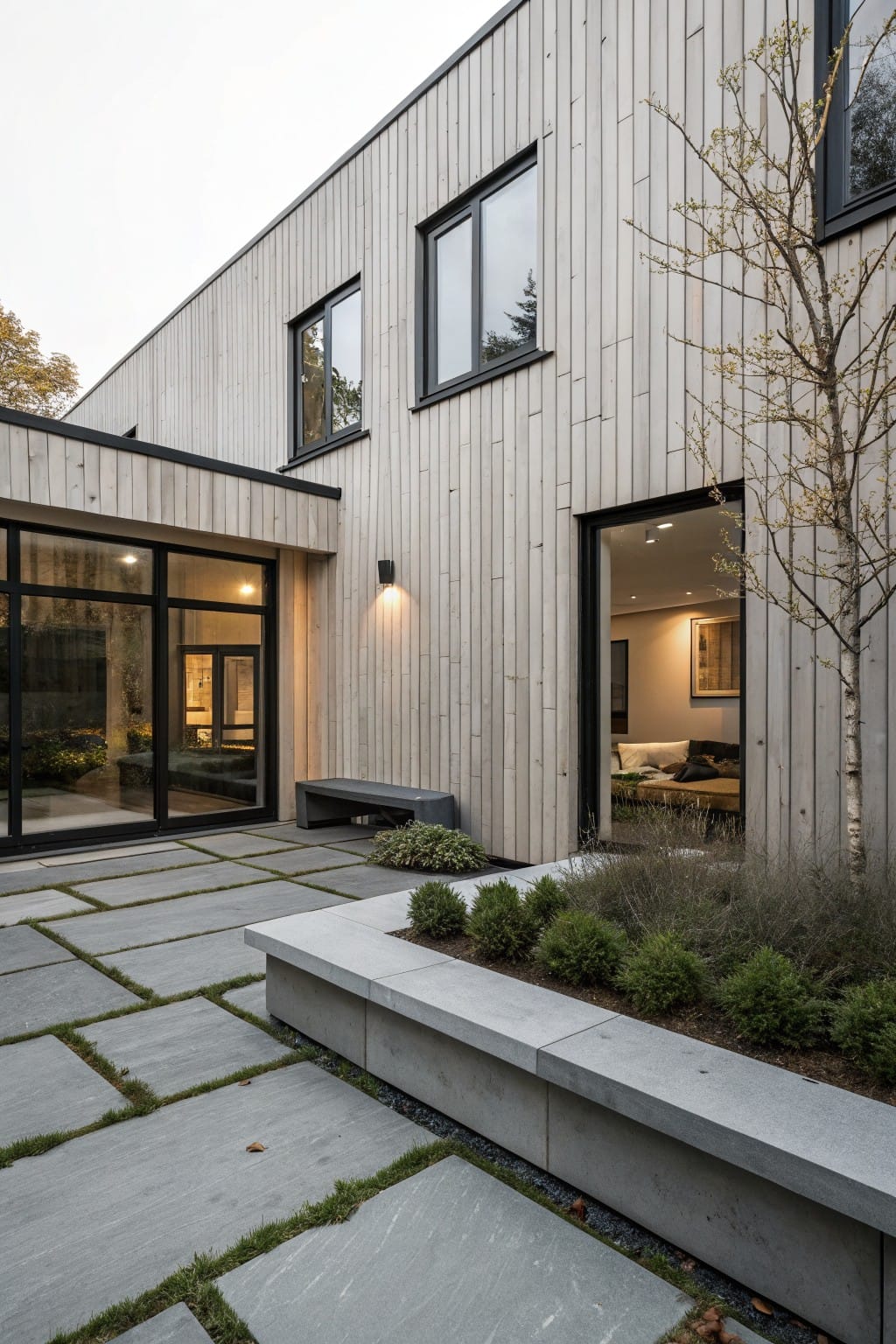
One straightforward way to add seating to a backyard patio shows up here with the concrete bench tucked along the raised edge. It keeps the area open and free of loose furniture. Plus it lines up nicely with the house’s simple wood siding for that smooth flow from inside to out.
This kind of bench suits modern homes or yards with a clean look. Build it low, maybe a foot high, and tuck plants along the front to soften things a bit. It holds up well outdoors and works in small spaces too. Just make sure the concrete matches your pavers.
Stone Paths in Gravel Gardens
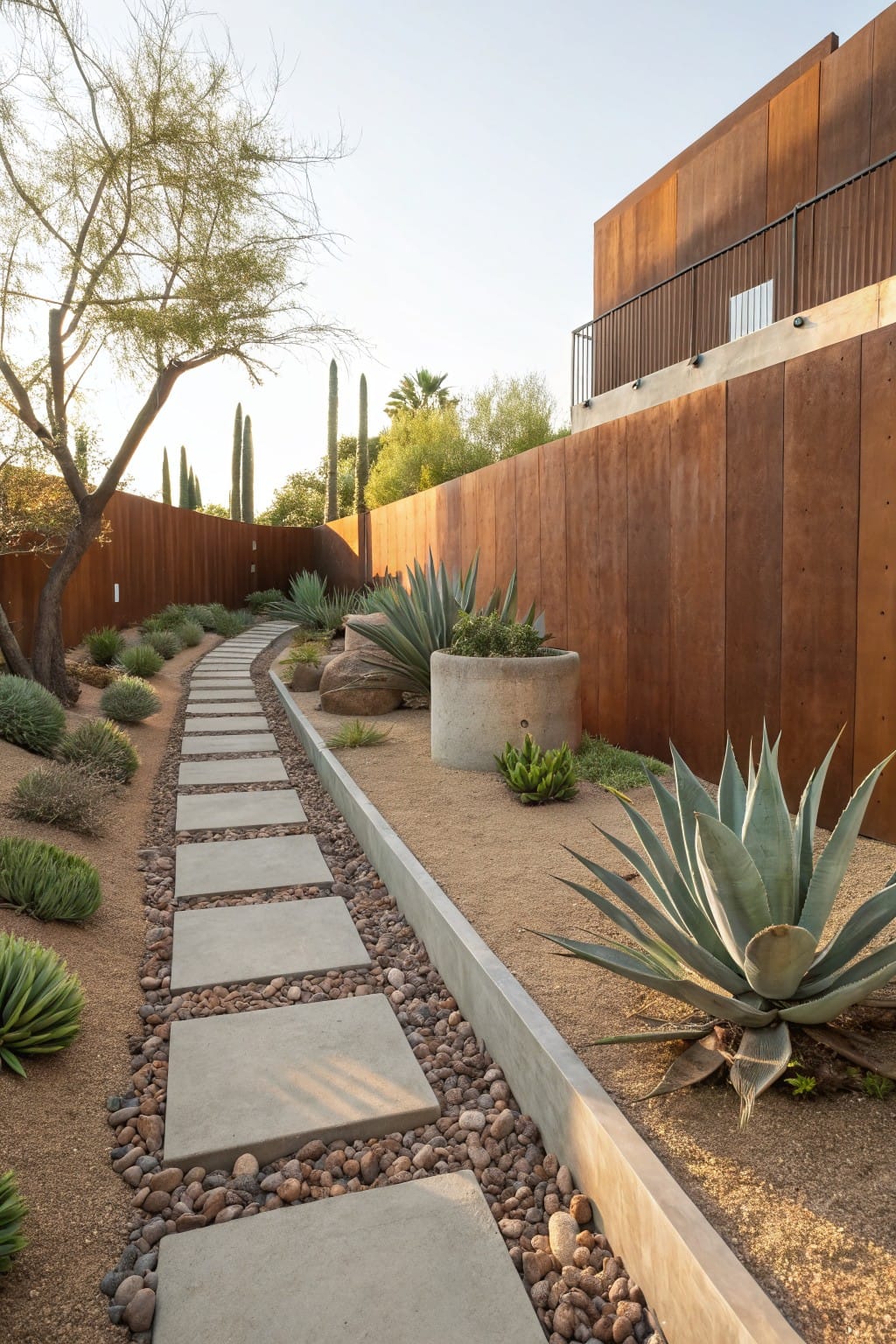
A stone path like this winds gently through a gravel bed planted with tough succulents. The square pavers sit loose in the gravel, so they don’t need perfect edging or mortar. It feels natural, almost like you’re walking a dry riverbed, and ties right into the rusty metal fence nearby.
Try this in hot, dry backyards where grass won’t grow. Lay gravel first, then drop in pavers every few feet to mark the way from gate to patio. Add agaves or other spiky plants along the sides. It stays neat without much watering… just rake the gravel now and then.
Formal Boxwood Parterres

A tidy setup of boxwood parterres along a gravel path makes the front entrance feel organized and welcoming. The clipped hedges form clean geometric beds that pick up on the house’s own symmetry. Folks notice how it turns a simple walkway into something with real garden character.
This kind of planting suits older brick homes or any place with a straight path to the door. Start with dwarf boxwoods so they stay low. Gravel keeps costs down and drains well. Just plan to trim a couple times a year… or hire help if you want it perfect.
Clear Glass Pool Fencing
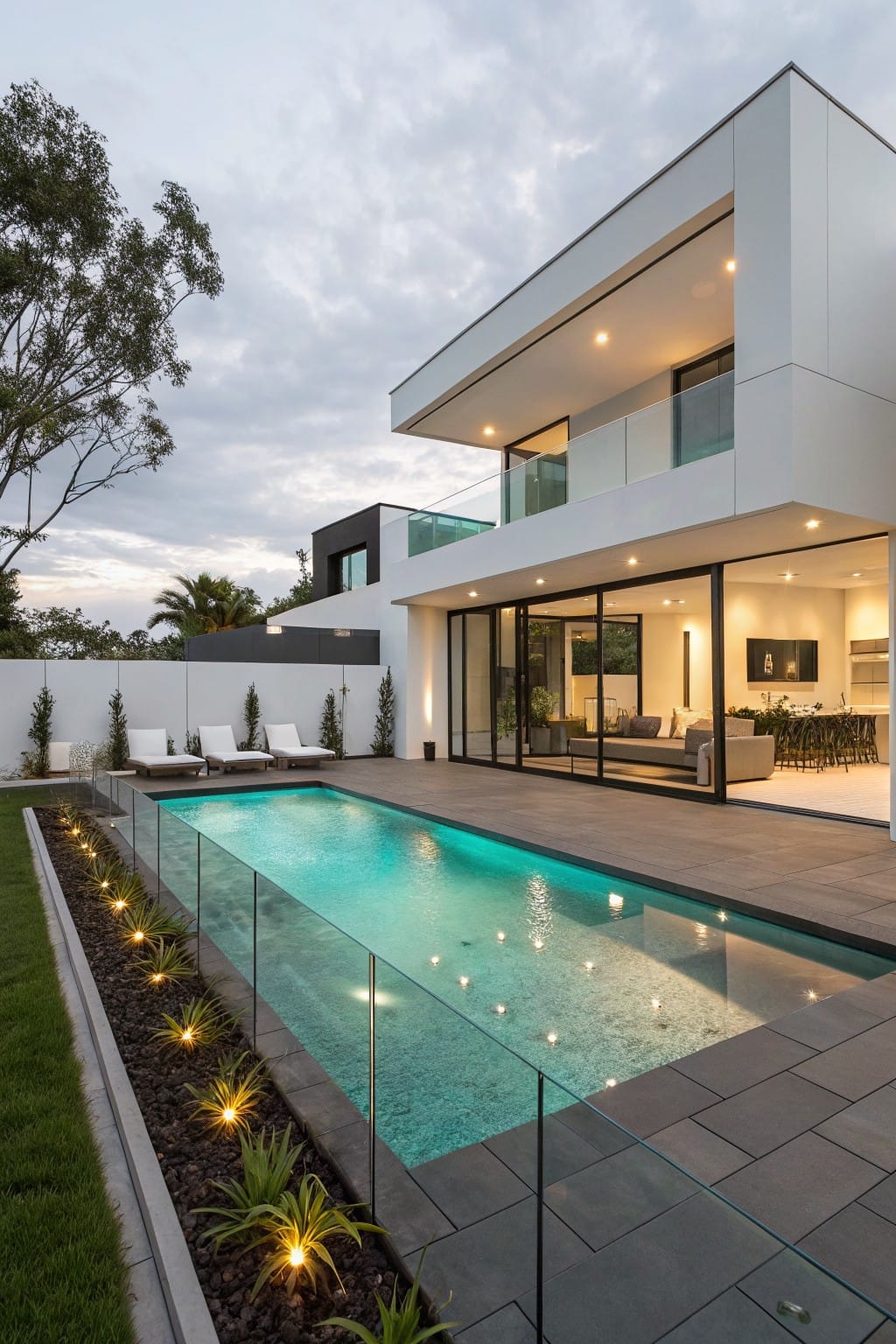
Clear glass fencing around a pool keeps the yard feeling open and tied together. You see straight through to the grass and plants beyond. No solid barrier chopping up the space. It matches right in with a modern house like the one here, where big glass doors slide open to the deck.
This works best in backyards that aren’t huge. It makes things look bigger and pulls the pool close to the house without crowding. Go for frameless panels on a stone base if you want that clean line. Keep it simple with low plants along the edge. Safety matters, so pick sturdy tempered glass. Cleans up easy too.
Winding Gravel Paths Through Native Plants

A simple gravel path that curves gently through tall grasses and wildflowers makes a backyard feel connected to the land. It stands out because it slows you down as you walk, letting you take in the plants along the way. No harsh straight lines here. Instead, it pulls the house right into the yard without trying too hard.
Use this in bigger backyards where you can plant natives like switchgrass or coneflowers along the edges. It works best with modern homes or cabins like the one shown, with its wood siding and glass doors opening to a patio. Keep the gravel topped up, and trim back plants once a year so the path stays clear.
Wooden Slat Fences for Backyard Privacy
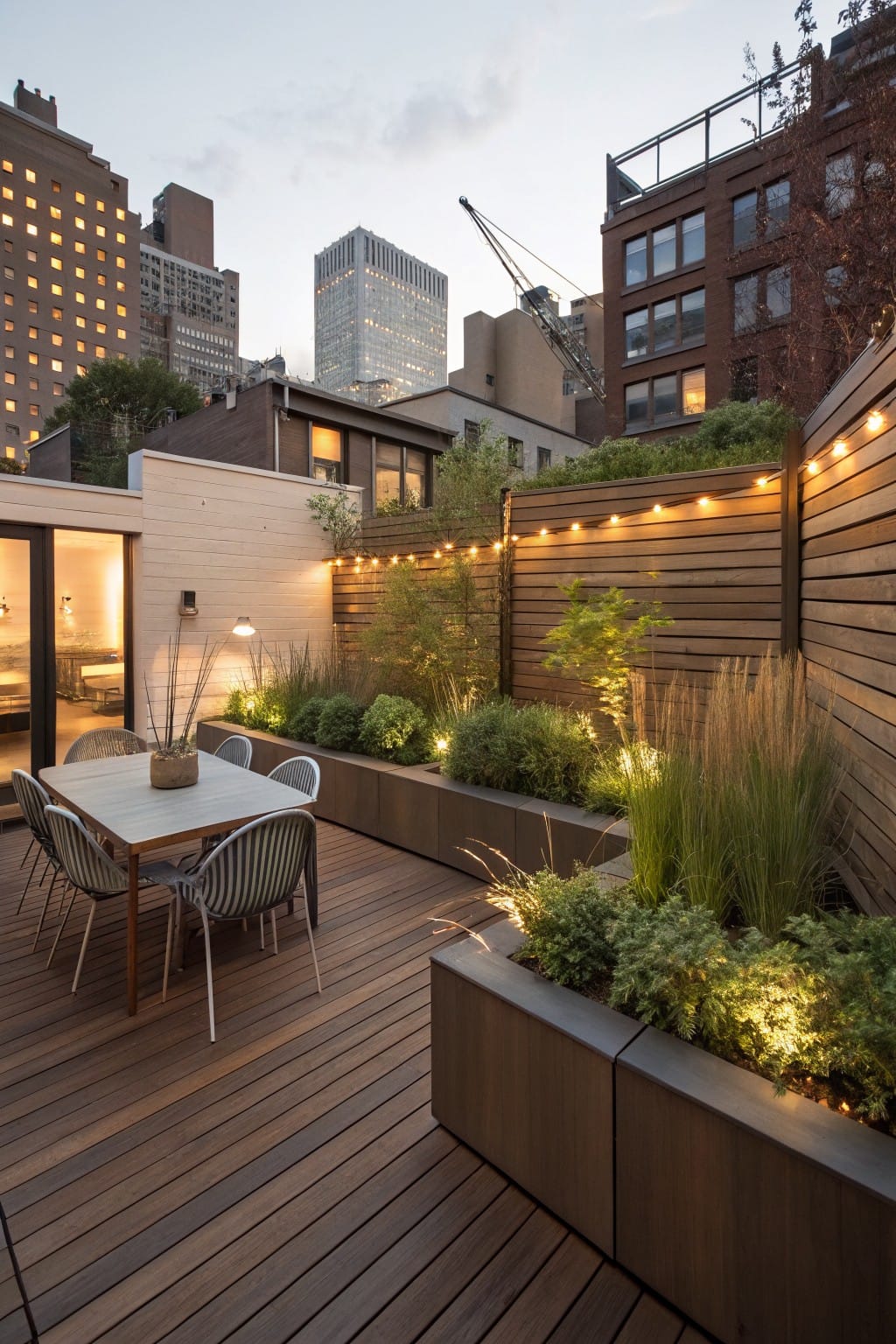
City backyards often feel too exposed. These tall wooden slat fences fix that nicely. They block views from neighbors but still let in some light and air. String lights draped along the top turn the space into a cozy spot after dark, like you see here with the deck and table setup.
Put them around decks or patios in townhouses or apartments. Match the wood tone to your decking for a smooth look. Add plants in front, say tall grasses in planters, to soften things up. Watch the height though. Too tall and it might feel closed in.
Brick Raised Planters That Match the House
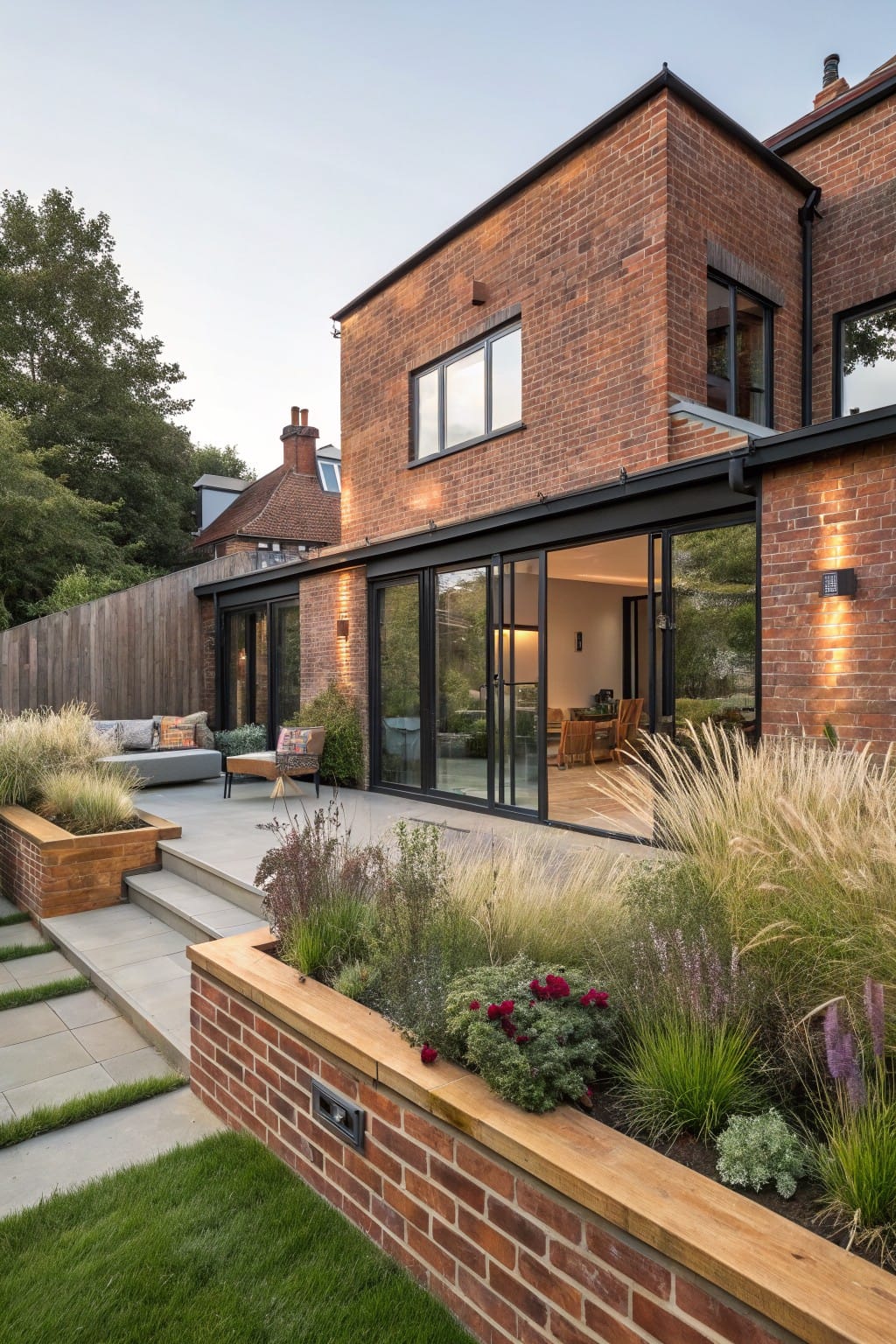
One simple way to make your backyard feel like an extension of the house is to build raised planters using the same brick as your exterior walls. In this setup, the planters run right along the edge of the patio, filled with tall grasses and low plants. It pulls the house materials out into the yard without much fuss. The result is a steady line that guides your eye from the doors to the lawn.
This works best on homes with brick facades, especially where you want to frame a seating area or define the patio border. Use it around sliding doors for easy flow, and pick tough plants like ornamental grasses that won’t need constant care. Skip it if your yard slopes a lot, unless you level the base first.
Narrow Pools Along House Walls
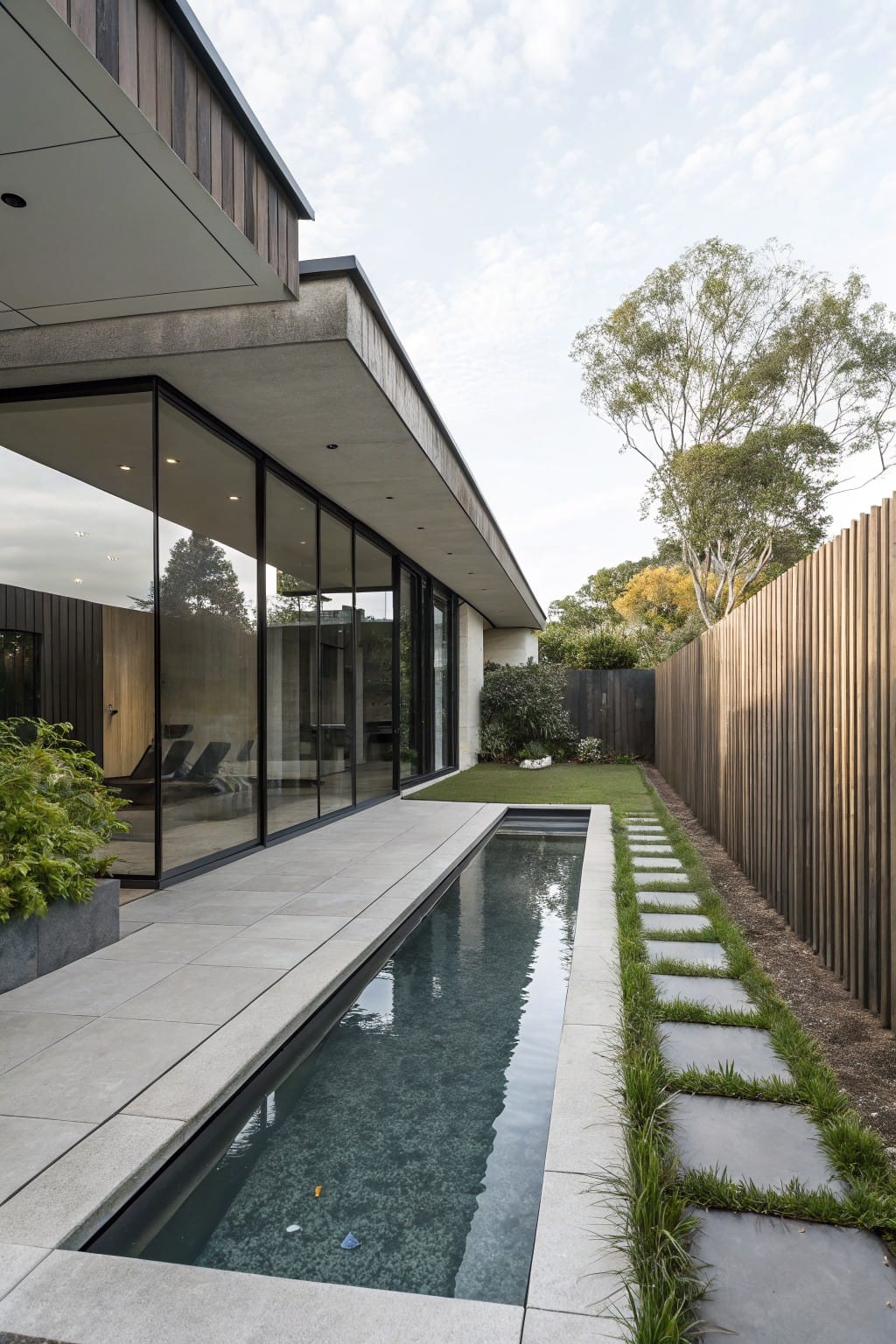
A narrow pool like this one runs right next to the house, turning a plain side yard into something special. It stretches out the space visually and picks up the clean lines of the glass walls. Folks like how it adds calm without crowding the yard.
You can fit this in tighter backyards or along a patio edge. Pair it with smooth pavers and patches of grass for easy upkeep. It suits modern homes best, but keep the pool shallow if kids play nearby.
Terraced Stone Walls for Sloped Yards
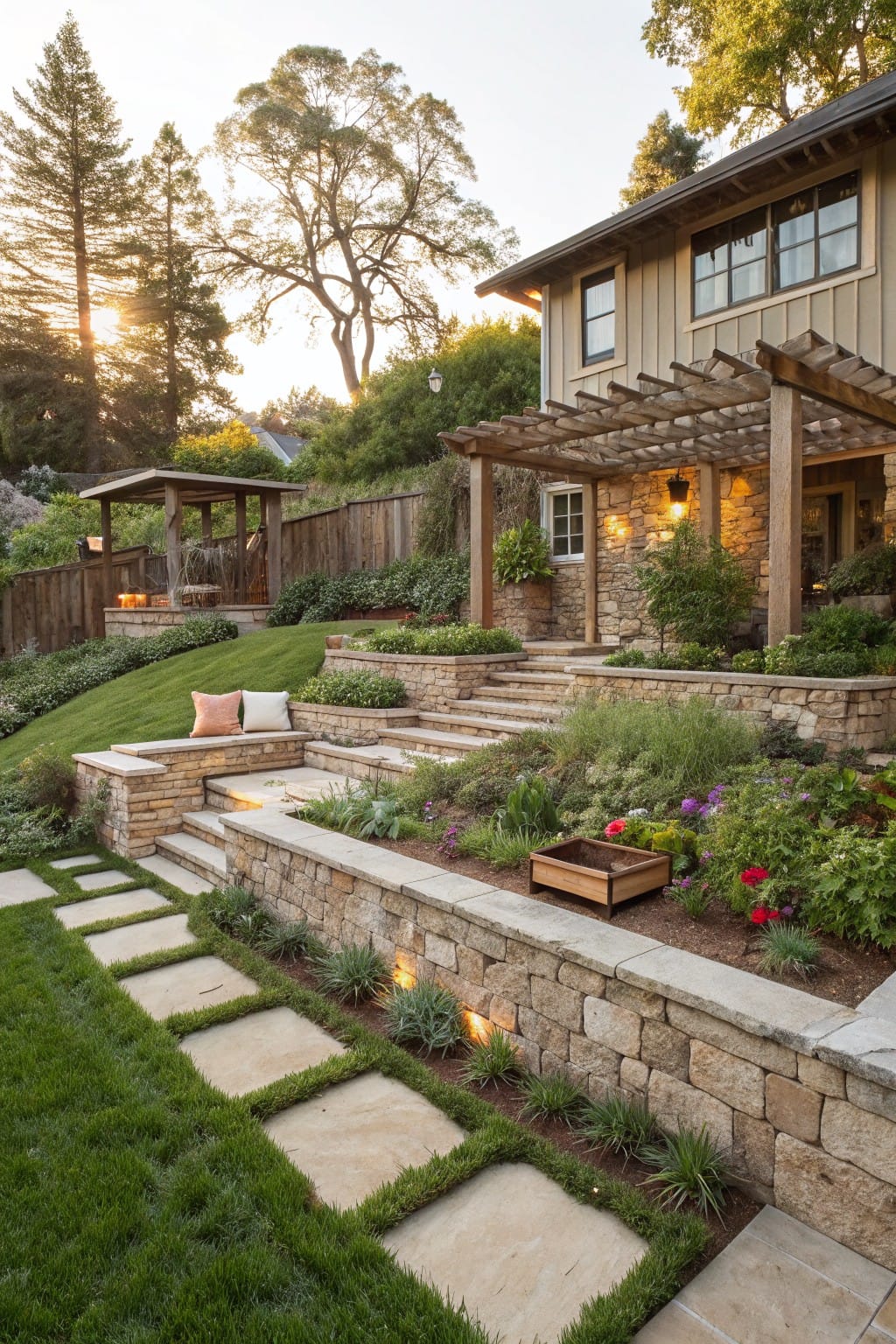
Sloped backyards can be tough to use. Terraced stone walls fix that by carving out level spots step by step. They keep soil in place and let you add plants or paths without everything washing away. The low walls here, with steps between them, make the hill feel like part of the yard.
Put these walls along a gentle slope behind most any house. Pick stone that matches your area, like the rough blocks shown. Fill the terraces with low plants and grass. Just make sure good drainage runs behind the walls, or you’ll have soggy spots come rain.
Reflecting Pool Walkway
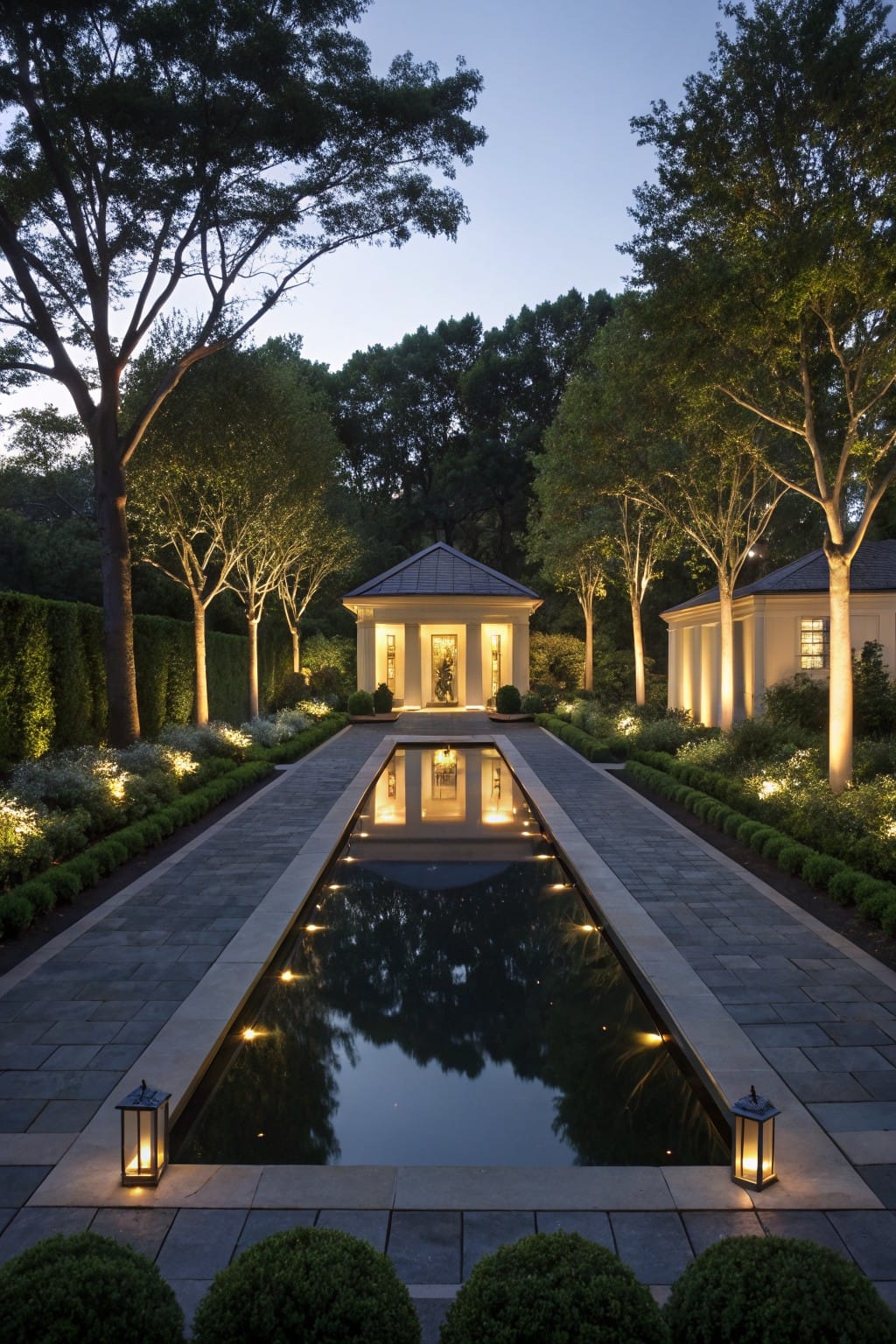
A reflecting pool stretched out long and narrow makes a strong line right through the backyard. It mirrors the trees and that small pavilion at the end, while edge lights give it a quiet glow after dark. Folks like how it turns a plain path into something with real pull.
Set one up in a wider yard that can handle the straight run. Frame it with boxwoods and slim trees for that even look. It suits older homes with formal gardens best. Keep the water clear or the reflection loses its point.
Frequently Asked Questions
Q: How do I start pulling together a mismatched backyard?
A: Walk around your yard and note repeating colors or shapes in what you already have. Pick one element, like a stone path or green fence, and echo it elsewhere with matching mulch or pavers. Build from there to link everything naturally.
Q: Can I create harmony without buying a ton of new plants?
A: Reuse what thrives in your yard and group similar ones together. Add a few fillers like ground cover to bridge gaps between beds. That instant repetition ties it all in.
Q: What’s a quick fix to connect my patio and garden beds?
A: Run a border of the same gravel or stepping stones from one area to the other.
Q: How do I avoid high upkeep once it’s cohesive?
A: Choose tough, native plants that match your climate and water them deeply but infrequently. Mulch everything thickly to cut down on weeds and keep soil steady.
