

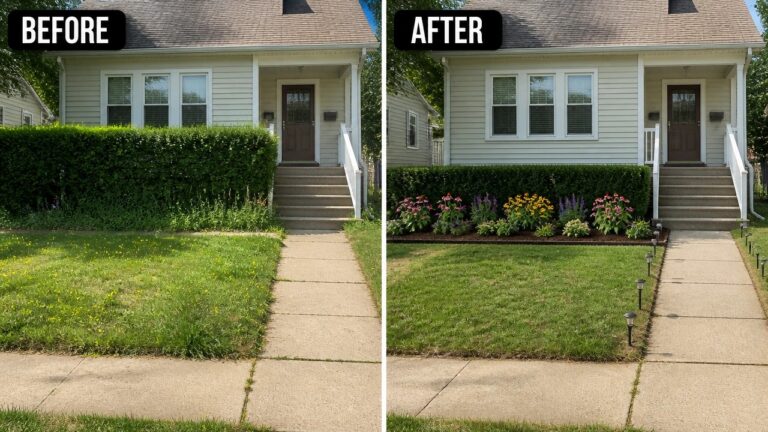
Yards left to grow wild for a season or two quickly lose any sense of order and start to feel more like a chore than an extension of the house.
I have noticed that a thorough clearing followed by simple edging and a few defined paths often creates more usable space than rushing to add new beds or features.
The lawn itself starts to read as intentional once its edges are clean and the overall shape makes sense from the main windows.
Privacy matters early in the process for me since it turns an open patch of grass into somewhere worth sitting for more than a few minutes.
These adjustments tend to layer nicely so the yard improves steadily without one big push.
Add A Flower Bed Along The Hedge
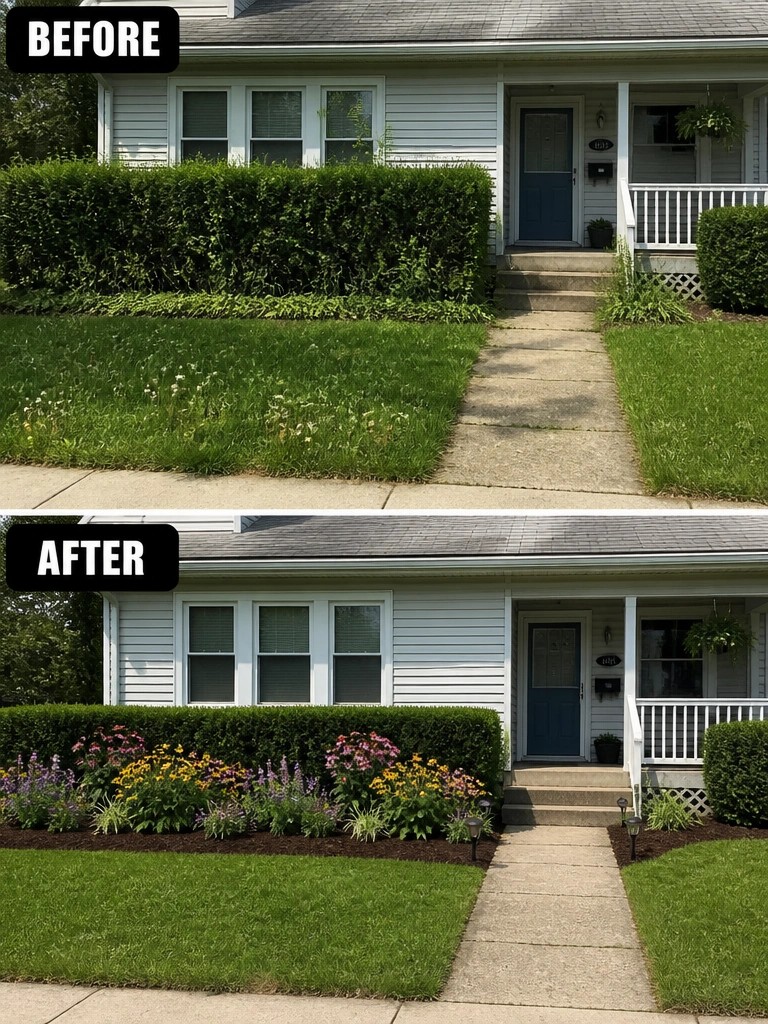
One easy way to fix an overgrown front yard is to add a defined flower bed right in front of the hedge. The before photo shows a weedy lawn edge with no clear border, while the after uses mulch and colorful plants to create a neat line that makes the whole front look cared for.
This idea works best when you keep the hedge but want something brighter below it. Clear the grass first, add a simple edging, and plant a mix of flowers that bloom at different times. It gives structure without needing a full yard overhaul.
Add Terracing To Handle A Steep Overgrown Slope
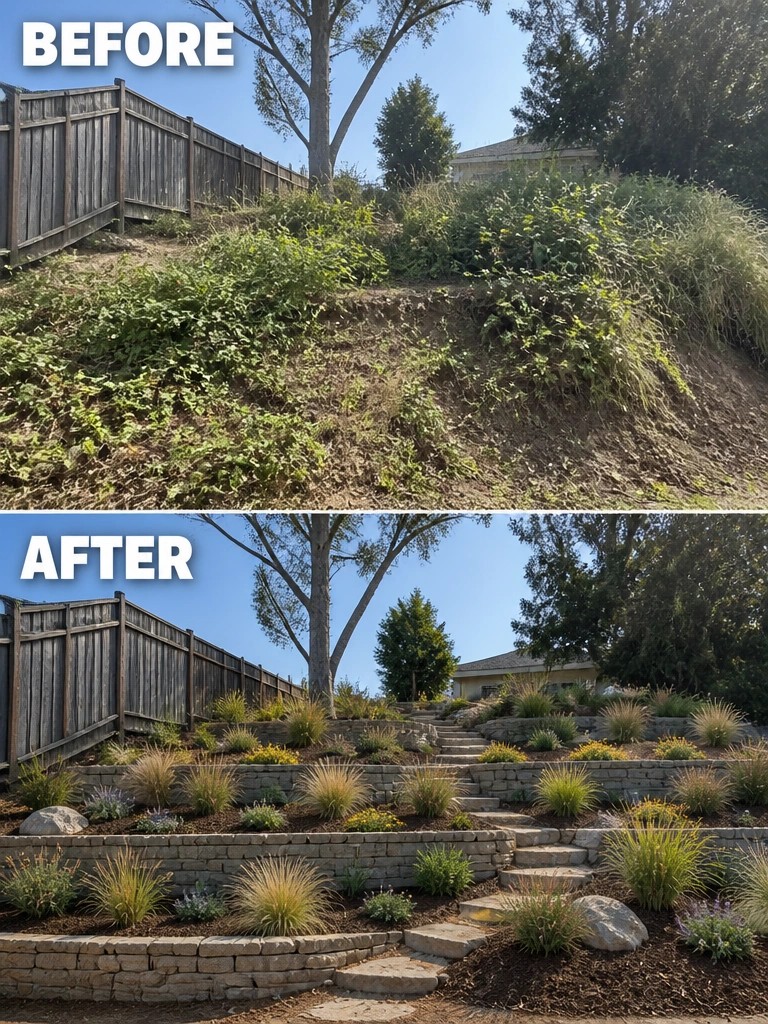
A steep slope covered in weeds and loose dirt is hard to maintain and easy to ignore. Adding low stone retaining walls turns the same slope into a series of flat, planted beds that stay in place and look intentional.
This idea works best on yards where the grade makes mowing or simple planting difficult. Focus on building the walls first so the new beds have clear edges, then choose plants that match the sun and drainage on each level.
Add Structure To An Overgrown Side Yard
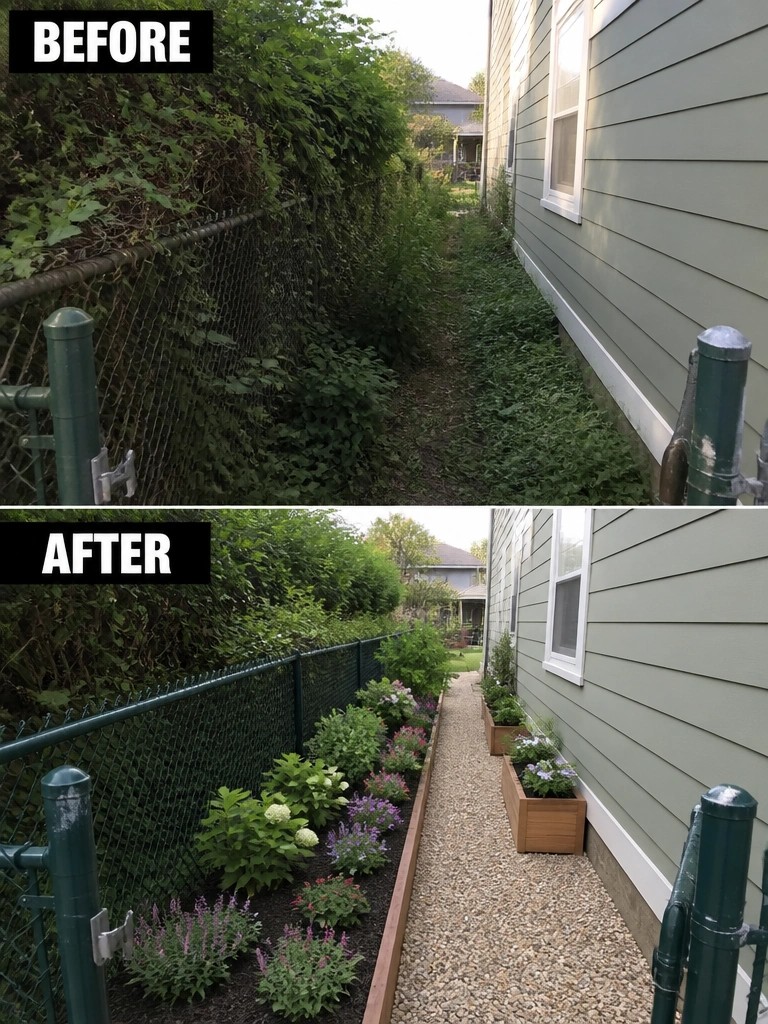
Clearing the thick overgrowth first made the narrow space between the house and fence usable again. Adding a gravel path and simple raised beds gave the area clear edges and kept plants from spilling everywhere.
This idea suits tight side yards where you need a walkway that stays dry and easy to maintain. Focus on one straight border and a few low plants rather than trying to fill every inch. The result feels planned without requiring a lot of extra work later.
Add Structure To An Overgrown Backyard
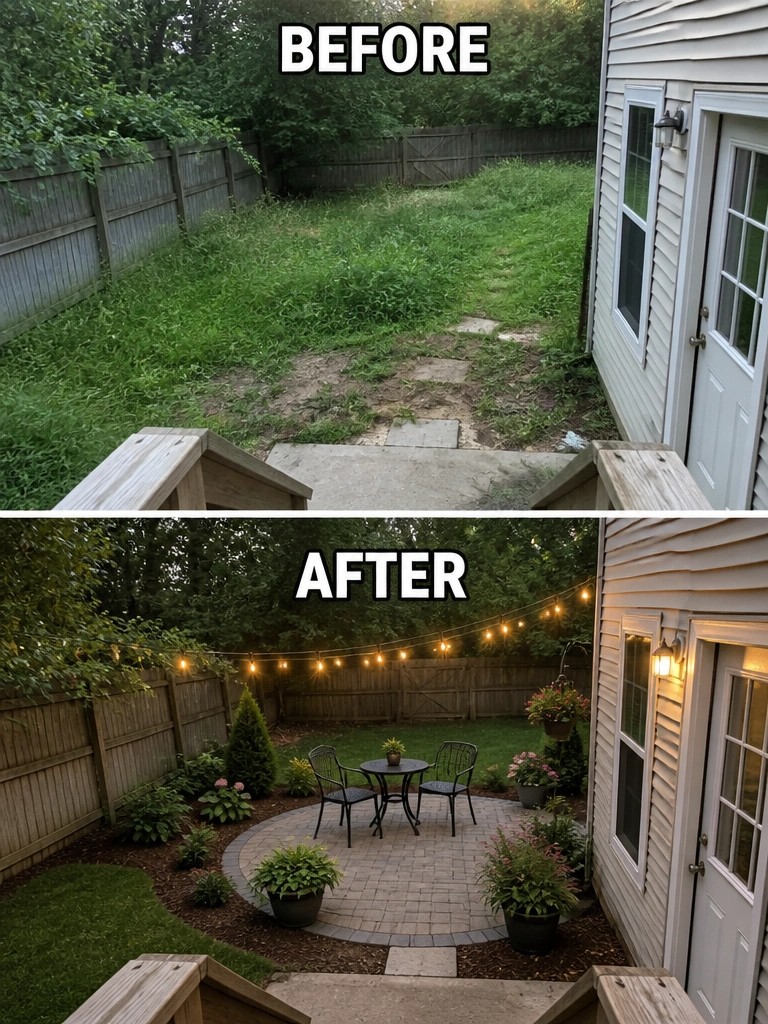
An overgrown yard often stays unused because there is no clear spot to gather. Adding a paved patio in the center gives the space a purpose right away. Mulched beds around the edges keep the lawn from taking over again and make the whole area feel more intentional.
This idea works best in small yards where you want one main seating spot without crowding the space. Clear the overgrowth first, then lay out the patio before adding any plants. Keep the beds simple so they stay easy to maintain over time.
Add Defined Borders Along A Walkway
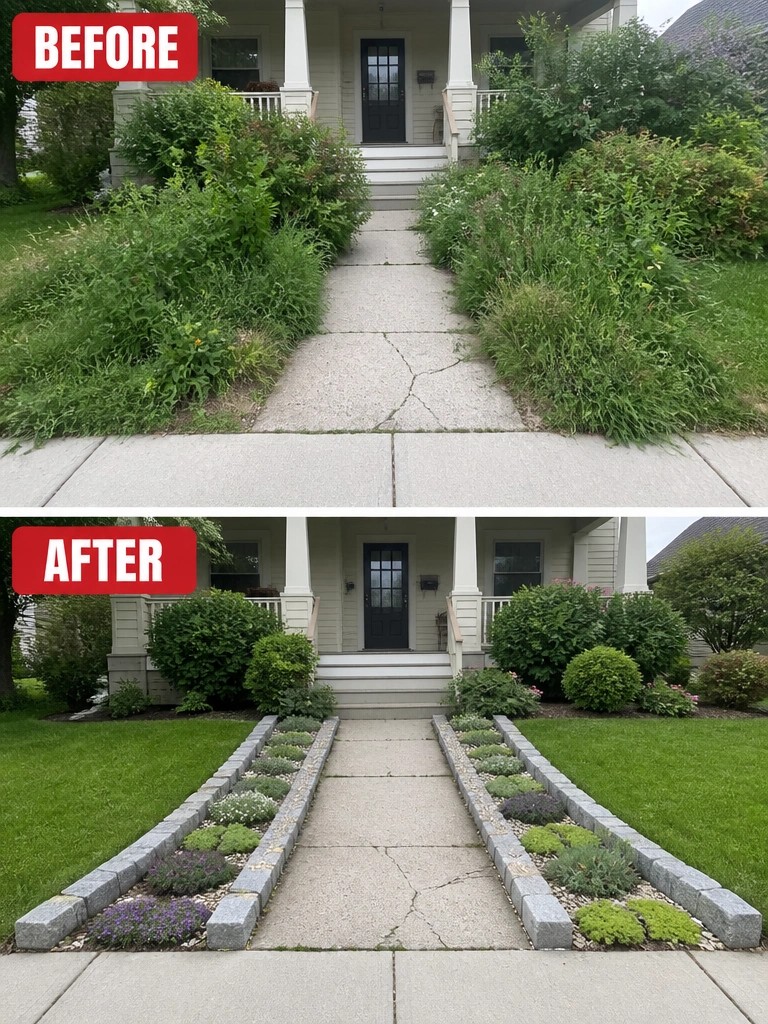
One simple way to improve an overgrown yard is to add clear borders along the main path. Cutting back the messy growth and installing stone edging on both sides turns a neglected walkway into something that looks planned and cared for.
This approach works best on smaller front yards where the path needs more definition. Keep the new beds narrow, use low plants that stay neat, and add a layer of gravel or mulch to hold everything in place. The result feels finished without requiring a big budget or major changes to the house itself.
Add Structure To An Overgrown Backyard
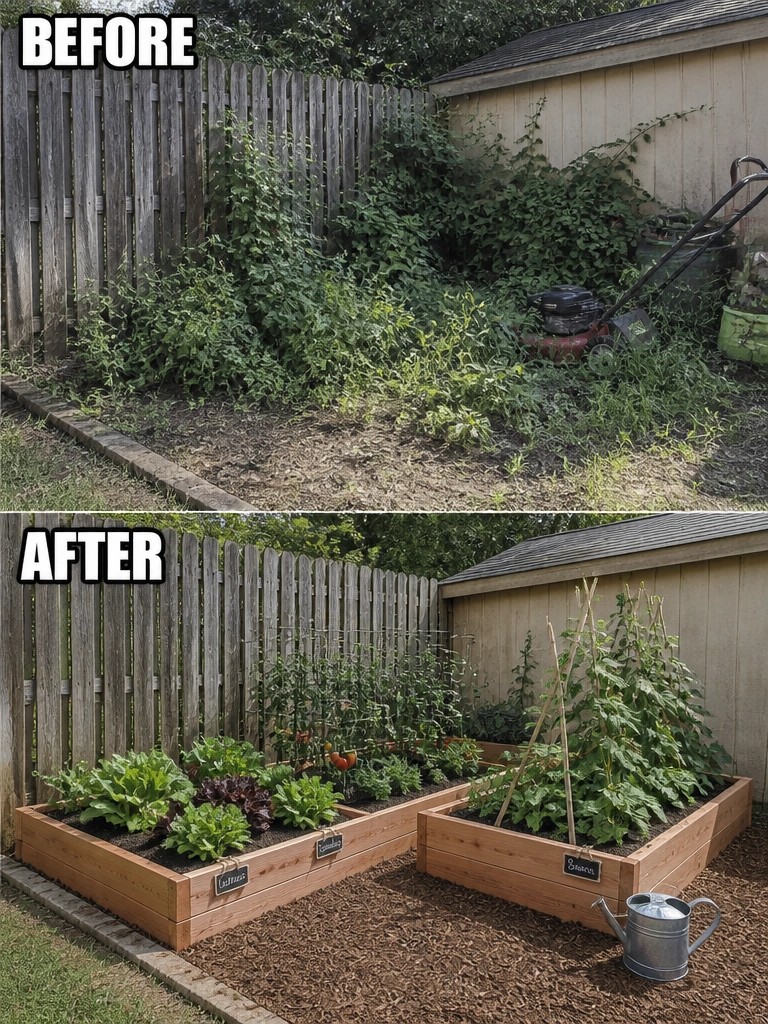
Clearing the weeds and vines first makes the biggest difference. Once the ground is open, simple raised beds give the space clear edges and turn a messy corner into a working garden without needing constant weeding.
This approach works well in small yards where you want vegetables or herbs without fighting grass and vines every season. Keep the beds modest in size so you can reach everything easily, and use mulch between them to hold down new weeds.
Define Driveway Edges With Simple Garden Beds
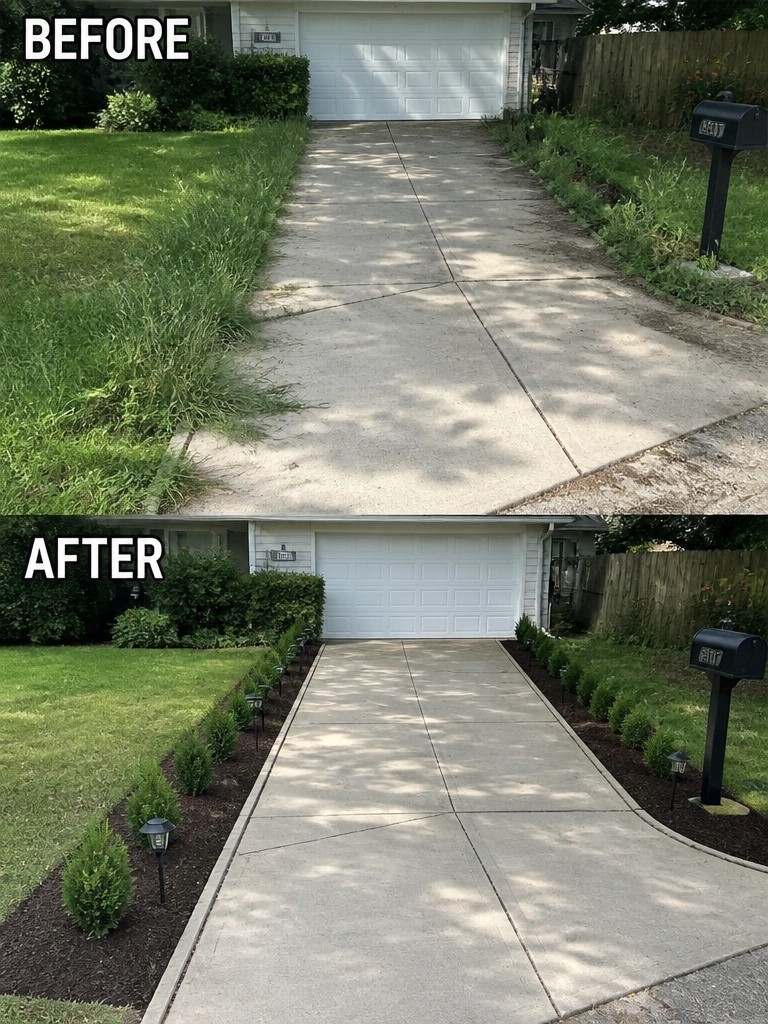
The main change here is how the tall grass along the driveway was cut back and replaced with a clear border of mulch and low shrubs. That single step stops the yard from looking messy and gives the whole front a much more finished feel.
This idea works best on homes where the lawn runs right up to a long driveway or walkway. Cut the grass back first, then add a simple edge and mulch before planting anything. Keep the shrubs low and repeat the same type for a cleaner result.
Define Overgrown Edges With A Simple Border Garden
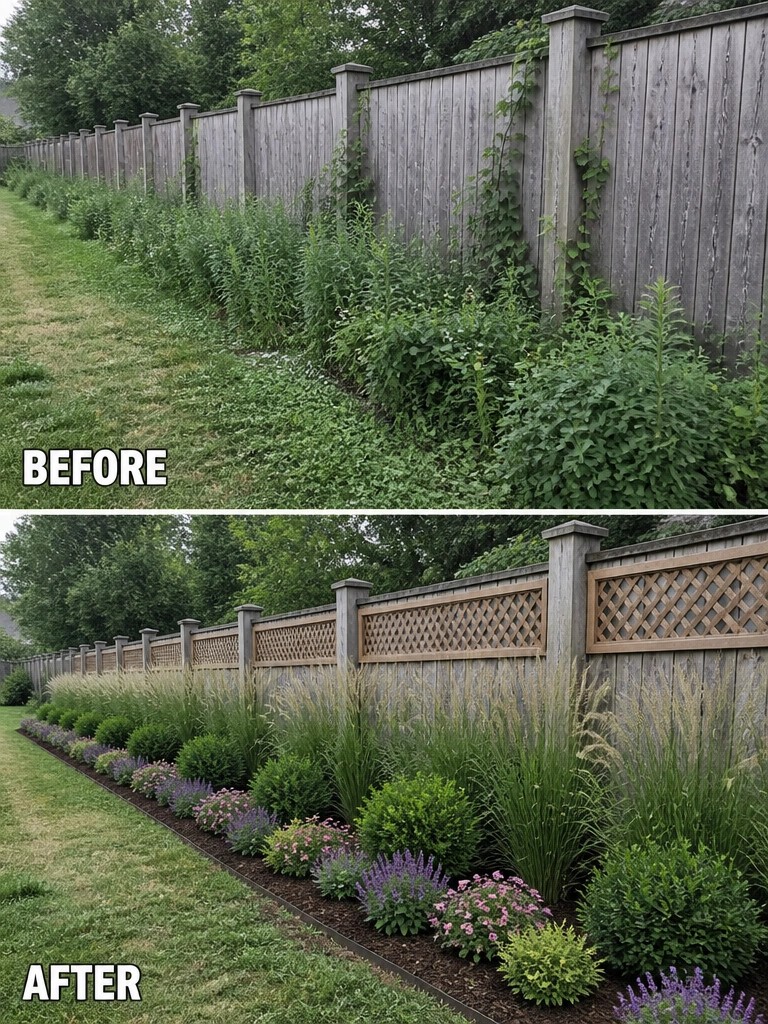
Clearing the mess first makes the biggest difference here. Once the tall weeds and vines are cut back, a straight bed line with mulch and layered plants gives the fence a purpose instead of letting growth just spill everywhere.
This works well along any long fence or property edge that has gotten away from you. Keep the bed fairly narrow so it stays easy to maintain, use a few taller grasses or shrubs toward the back, and fill the front with lower perennials. The result feels planned instead of neglected.
Add Structure To An Overgrown Backyard

A flat lawn with a path through it often looks unfinished once the grass grows uneven. Adding borders and filling the new beds with gravel gives the space clear edges and makes the path feel like it belongs.
This idea suits yards that already have a tree or two to work around. Start with the bed outlines and gravel first, then add plants in small groups so the layout stays simple to keep up over time.
Replace Overgrown Planters With Fresh Arrangements
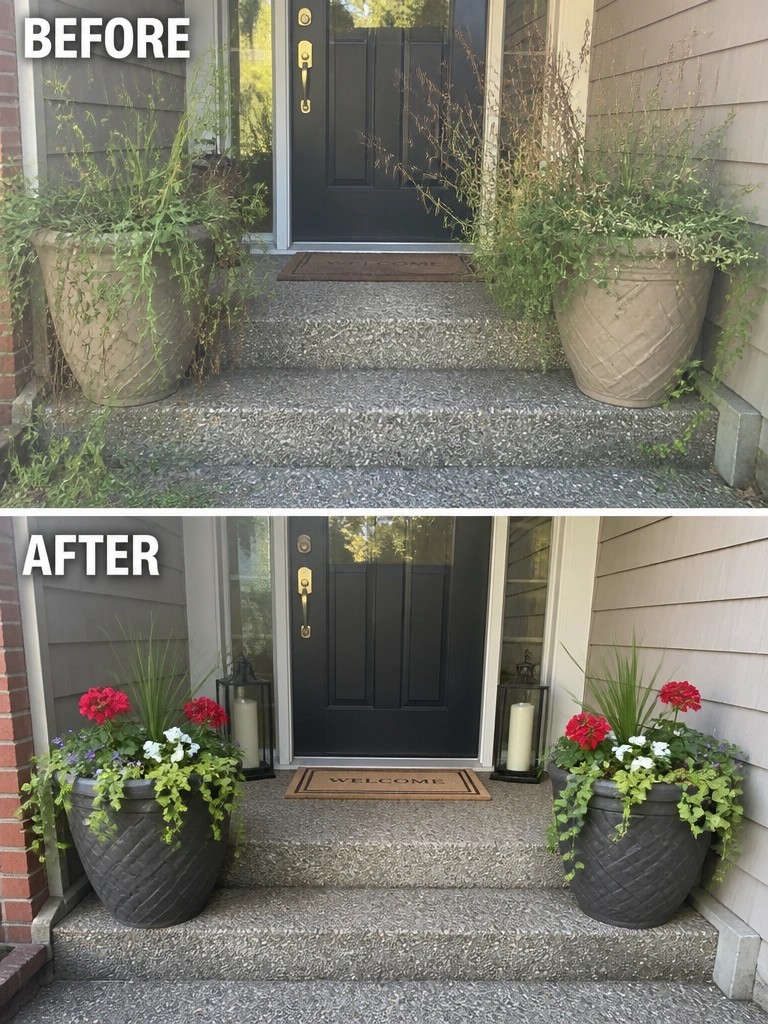
Overgrown pots can make an entry look neglected even when the rest of the yard is fine. In this case, the messy plants were swapped for tidy dark pots filled with bright flowers and simple greenery. The change instantly makes the front steps feel cared for and easier to walk past.
This approach works well on any home with large containers by the door. Start by removing the old plants completely, then choose one or two colors for the flowers and keep the rest simple. Darker pots also help the new plants stand out without adding extra decor.
Add Structure To An Overgrown Backyard
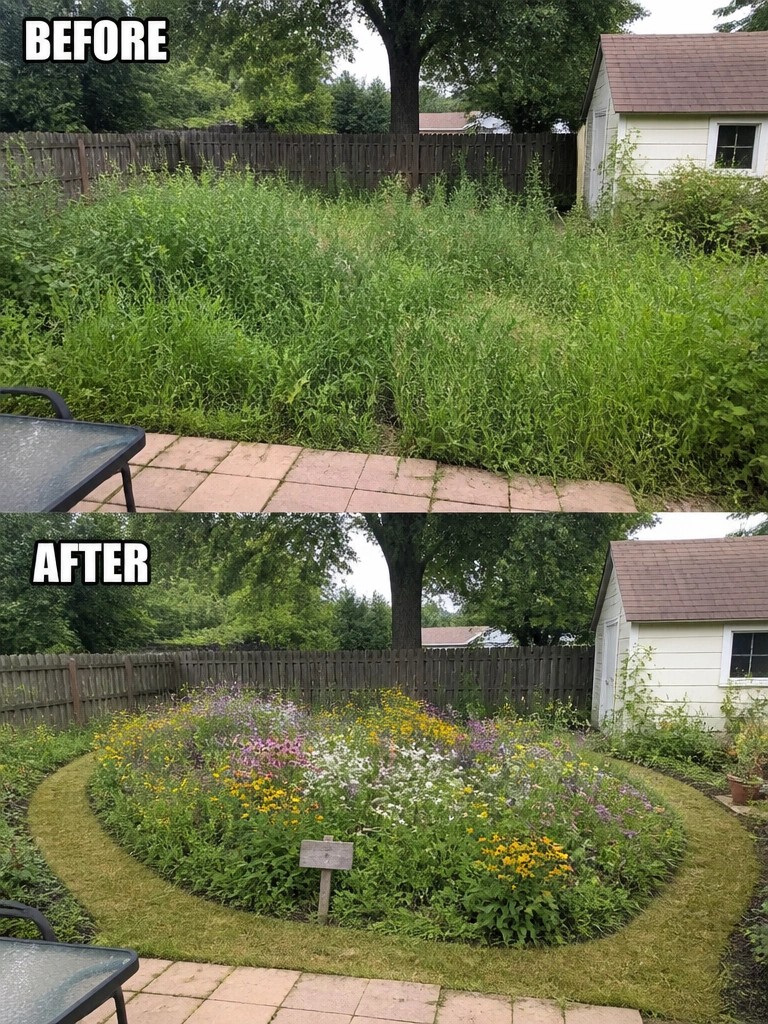
Clearing the tall grass first makes the biggest difference. Once the overgrowth is gone, a single round garden bed gives the whole space a clear shape and keeps the rest of the yard easy to mow and walk through.
This idea works well in smaller backyards where you want planting without losing open lawn. Start with one bed in a simple shape, edge it cleanly, and fill it with flowers that spread on their own. That way the yard looks cared for without needing a full redesign.
Add Structure To An Overgrown Garden Bed
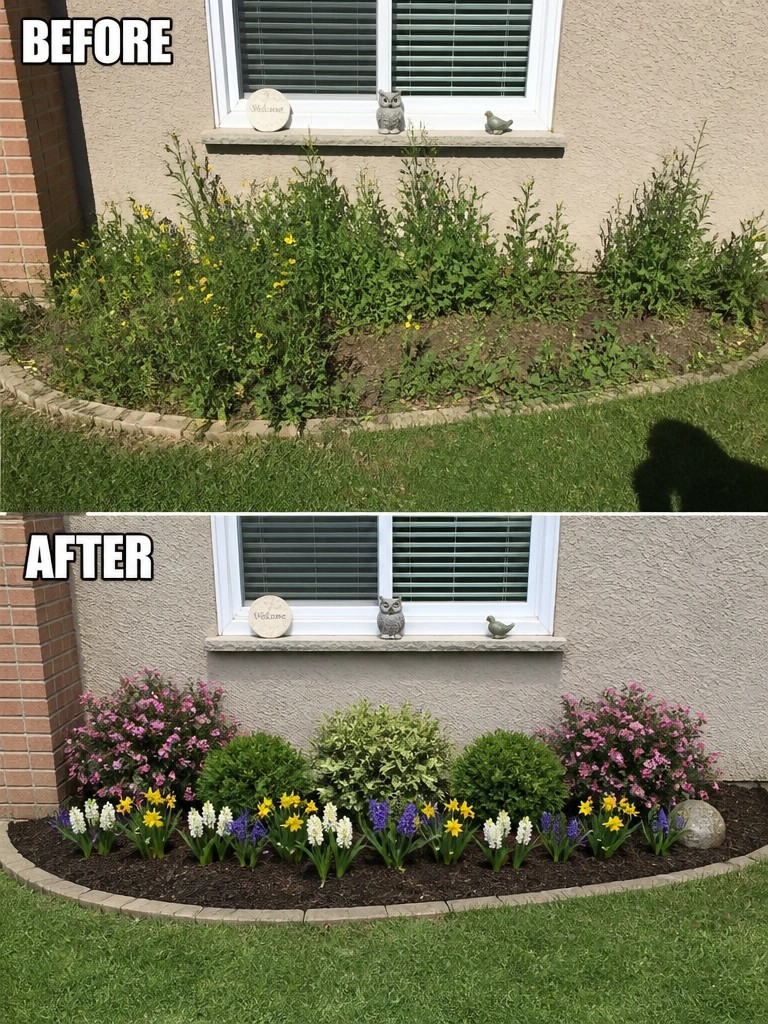
The main change here is clearing out the tall, messy growth and replacing it with a simple layout of shrubs and flowers in defined rows. Mulch keeps the soil covered and gives the bed a finished edge that matches the border already in place. This approach turns a neglected spot into something that looks intentional without needing a full redesign.
This idea works well along the front of a house or under windows where plants can get out of hand quickly. Start by removing the worst of the overgrowth, then group plants by height and repeat a few colors or shapes. Mulch helps control weeds and makes the bed easier to maintain over time.
Add Structure To An Overgrown Backyard
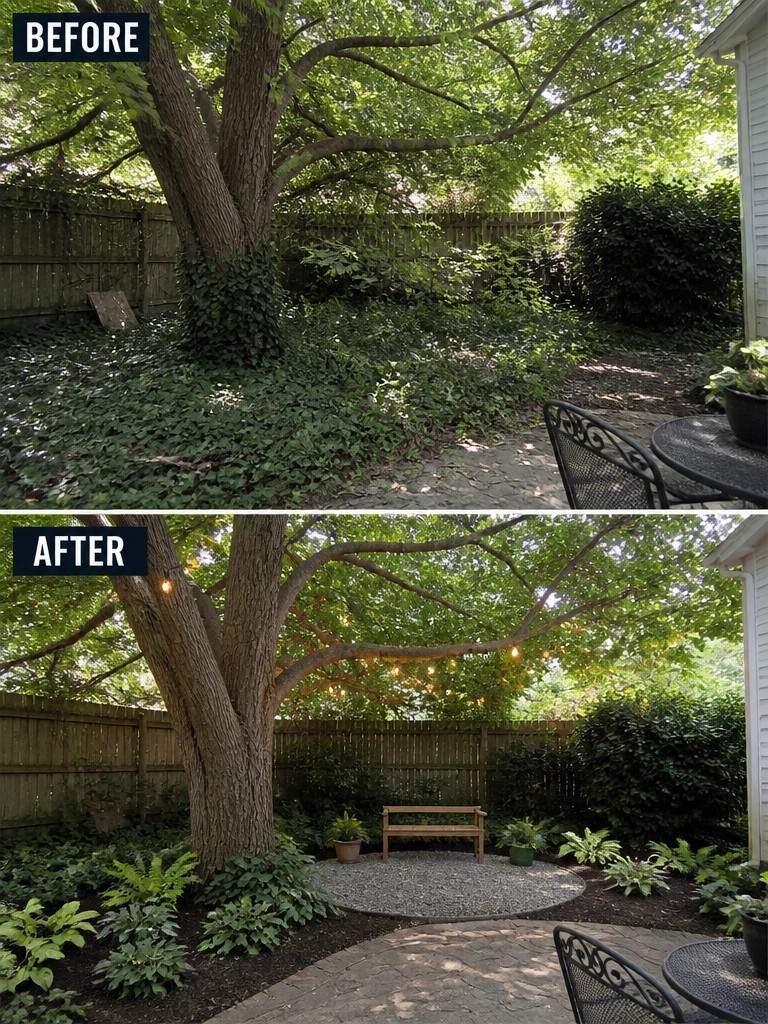
Many backyards get ignored once ivy and weeds take over the ground. Clearing that growth first makes the space feel larger and gives you room to add something useful. Here a gravel circle and a single bench created a clear spot to sit without fighting the plants around it.
This idea works best in shady yards where the ground has gone wild for years. Cut everything back hard, then use gravel or mulch to mark one simple zone before adding furniture or lights. It stops the new pieces from disappearing into the mess and keeps the whole project from feeling overwhelming.
Add Structure To An Overgrown Yard With Gravel Beds
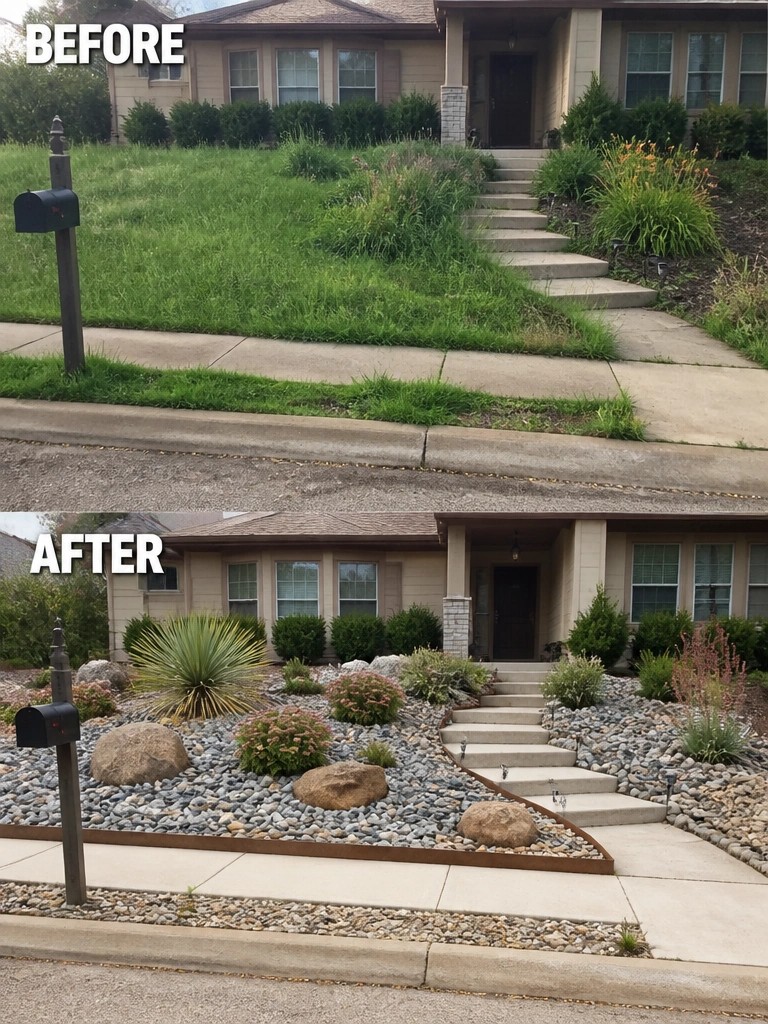
An overgrown strip of grass can make the whole front of a house look messy. Switching to gravel beds with a few larger rocks and low shrubs gives the area clear shape and keeps it from spilling onto the sidewalk or steps.
This approach works well along a walkway or at the base of stairs where grass is hard to mow. Start by clearing the old growth, then lay down edging and gravel so the beds stay neat without constant trimming.
Add Gravel And Edging To Define A Path
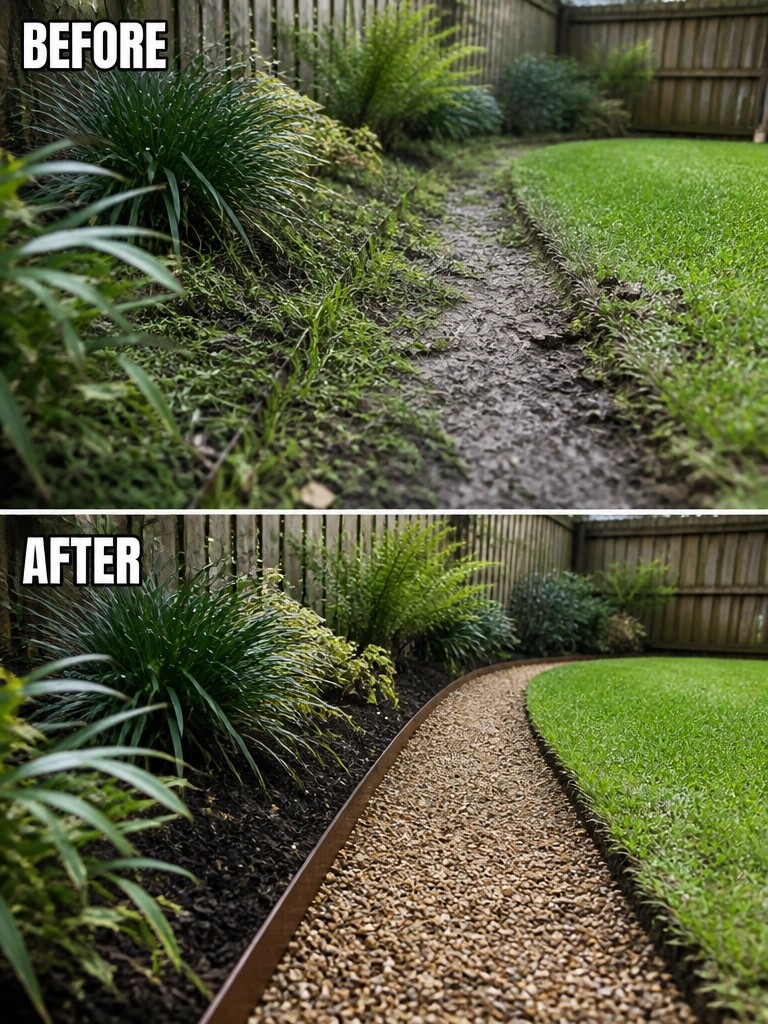
A muddy path through an overgrown yard can make the whole space feel neglected. Switching to gravel with a simple metal edge gives the path a clear shape and stops the mud from spreading into the grass and beds.
This idea works well in backyards where the main issue is a worn walking route rather than a full redesign. Start by clearing the wet soil, lay down a basic base, then add the gravel and edging so the path stays put and looks intentional even when the rest of the yard is still a work in progress.
Add Structure To An Overgrown Pond
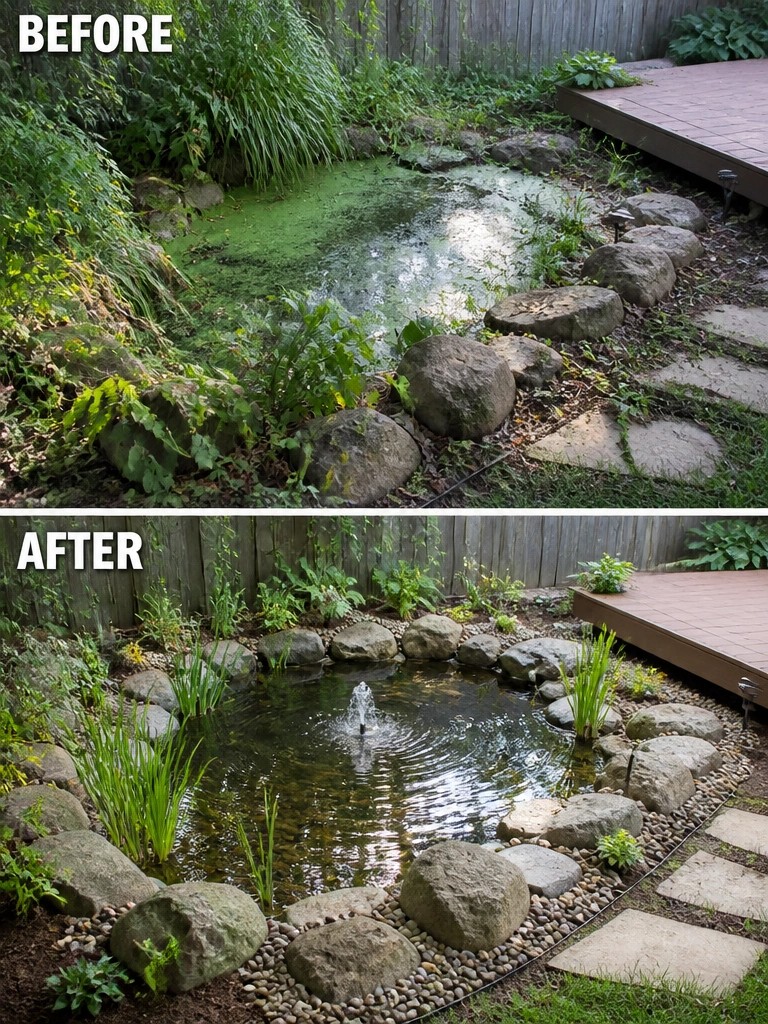
An overgrown pond often looks worse because the edges are undefined and the water gets covered in algae. Clearing the surface, adding a small fountain, and laying down a clear ring of rocks and gravel makes the whole area feel intentional instead of neglected.
This approach works best in small backyards where the pond is the main feature. Start by removing the worst of the overgrowth and debris, then set the border before adding any new plants. That order keeps the shape from getting lost again.
Add Structure To An Overgrown Backyard Slope
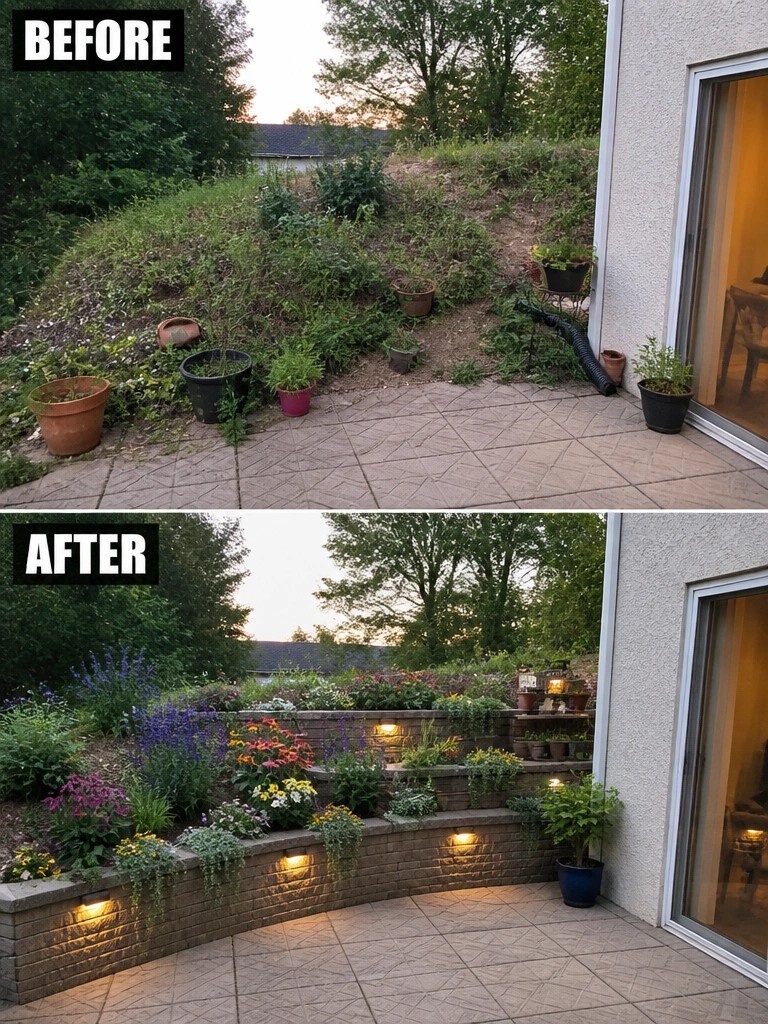
A sloped yard often ends up looking messy because there is no clear place to plant or maintain anything. In this case the fix was to build low brick retaining walls that turn the hill into a series of flat, usable beds. Once the beds were in place the plants could be grouped properly and the whole area stopped feeling like random pots scattered on dirt.
This approach works best on yards that already have a noticeable drop. Start with the walls first so the planting has a frame to follow. Keep the beds fairly narrow so everything stays easy to reach, and add simple lighting along the front edges if you want to use the space after dark.
Add Structure To An Overgrown Front Yard
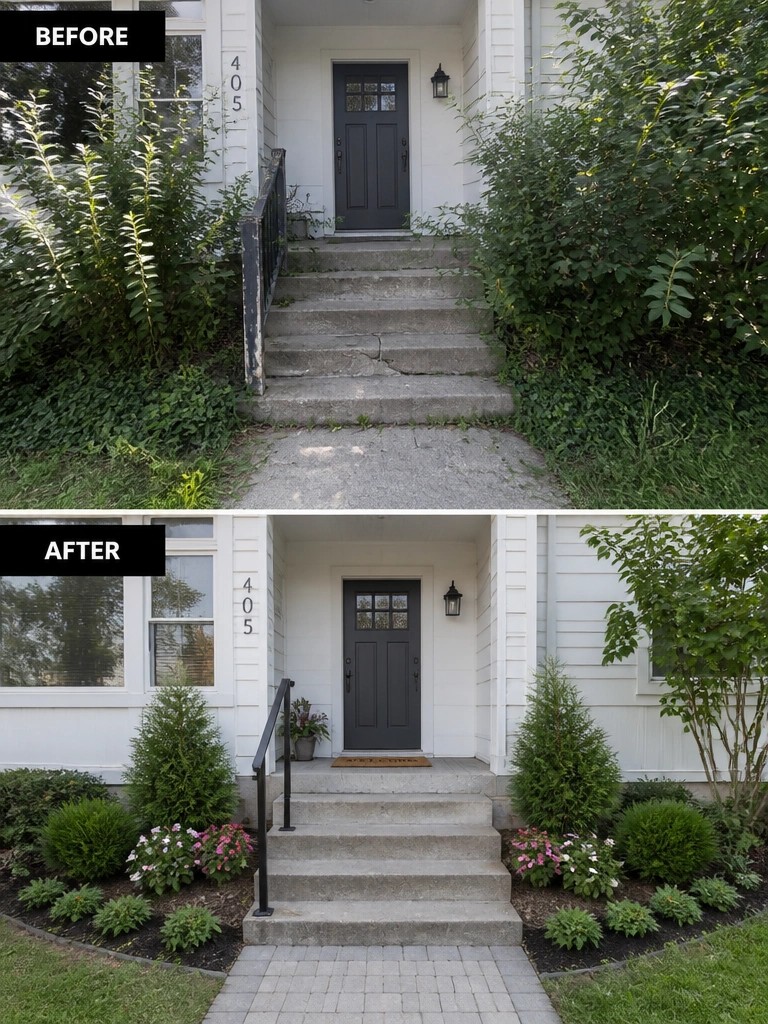
The tall, wild shrubs around this entry had taken over the steps and hidden much of the house. Removing most of that growth and replacing it with smaller evergreens and low flower beds opened up the space and made the front door the clear focus.
This approach works well on older homes where plantings have grown out of scale. Start by clearing what blocks the view or path, then add a few simple beds with plants that stay compact. It keeps the yard looking cared for without requiring constant work.
Clear Overgrowth First To Define The Beds
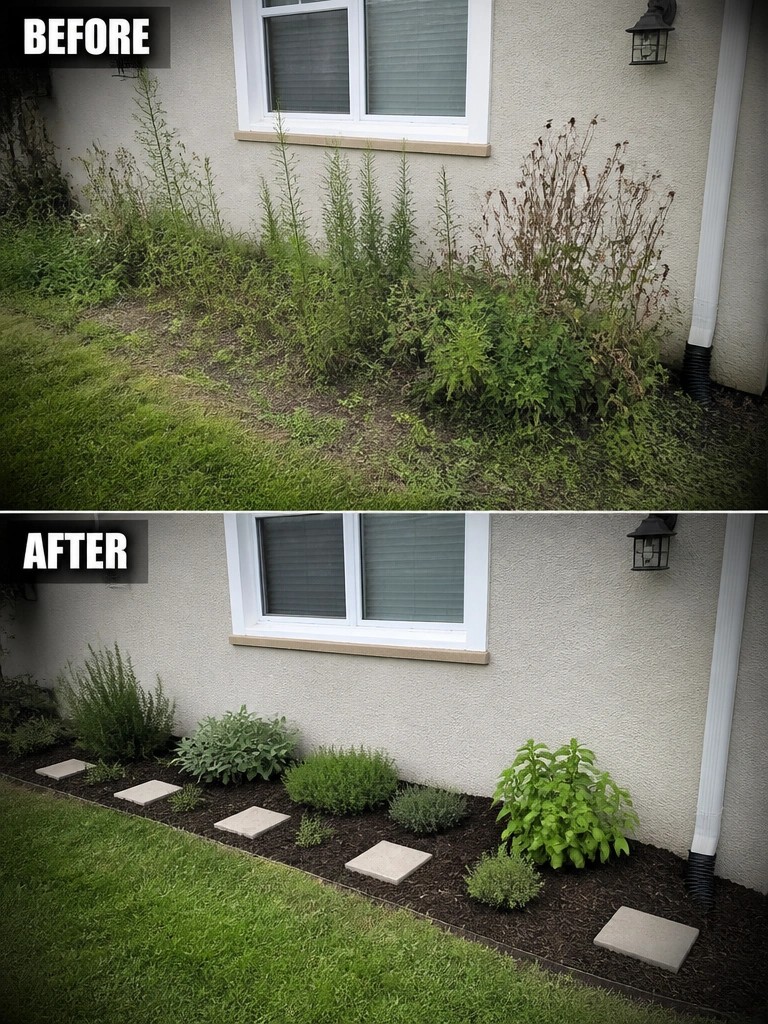
The biggest change in this yard came from removing the tall weeds and messy growth along the foundation before adding anything new. Once the area was cleared, a layer of mulch and a few stepping stones gave the space clean lines and made the remaining plants look intentional.
This idea works best on narrow strips beside the house where growth tends to get out of hand. Do the cleanup first so you can see the actual shape of the bed, then add mulch and simple paths to keep the area from looking neglected again.
Add Defined Garden Beds Along Driveway Edges
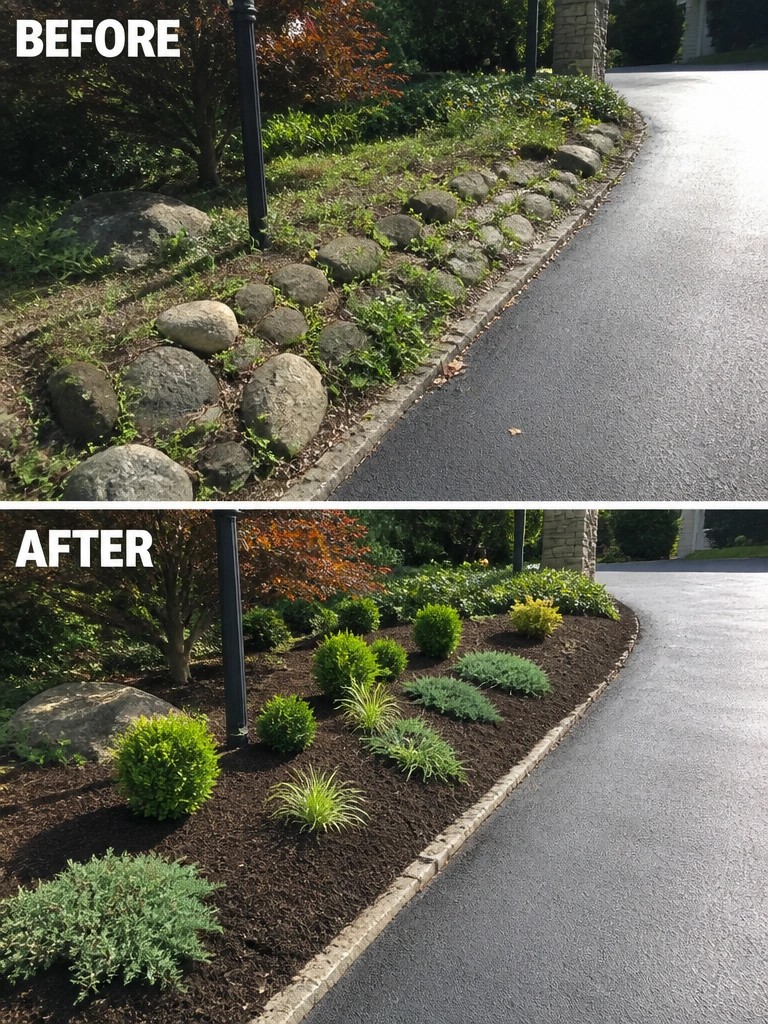
Clearing out random rocks and weeds first makes it much easier to create a tidy edge next to pavement. The after version shows how a simple mulched bed with repeated shrubs turns a scattered strip into a clean border that follows the driveway curve without looking busy.
This idea suits homes where the lawn meets the road or driveway in a straight or gently curved line. Keep the plant choices limited to two or three types, use mulch to hold the soil in place, and leave enough space between shrubs so they can fill in without crowding the walkway.
Add Structure To An Overgrown Backyard
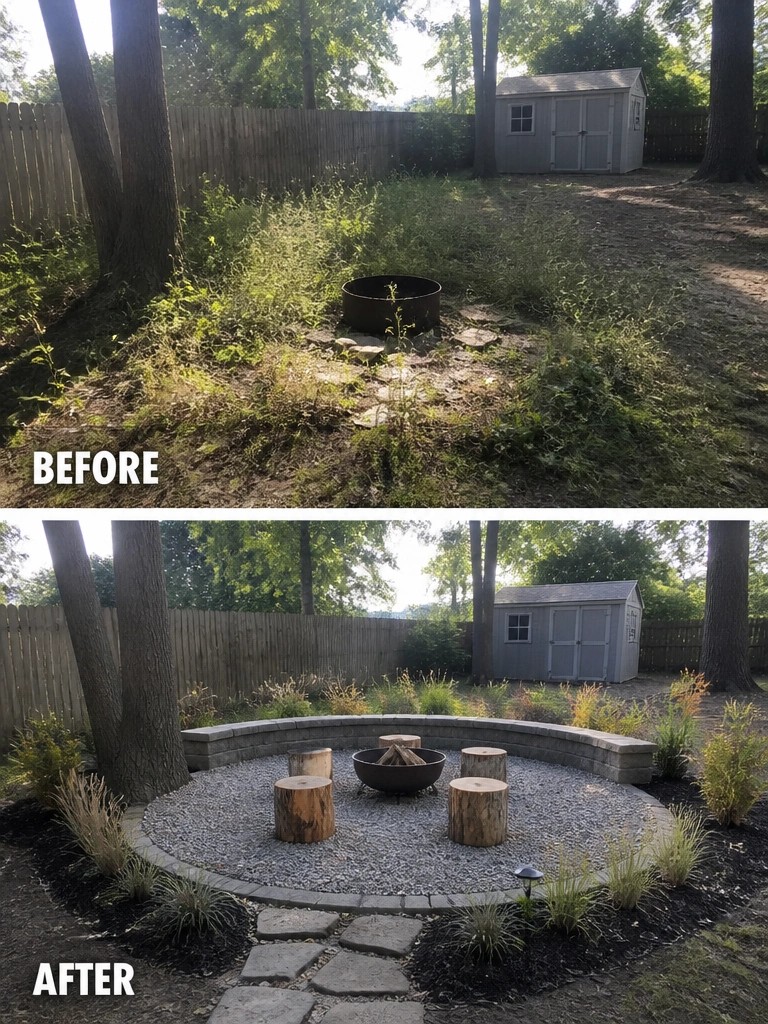
An overgrown yard often hides a simple fire pit under weeds and uneven ground. Laying gravel inside a low stone border gives the space a clear edge and turns it into a spot people actually want to use.
This idea works best once the overgrowth is cleared first. Use gravel or mulch to define the main area, then add a simple border so the shape stays visible even after a few seasons of growth.
Create Defined Beds In Overgrown Yard Areas

Clearing out the messy growth first makes the biggest difference. Once the weeds and volunteer trees were removed, a simple mulched bed with a central tree and low shrubs gave the space a tidy shape that fits the curve of the driveway.
This approach works well in any spot where plants have taken over without a plan. Start by cutting everything back to bare soil, add a clean edge if needed, and keep the planting simple with one focal tree and a few repeating shrubs. Mulch helps hold it together and makes future weeding easier.
Define An Overgrown Path With Pavers And Gravel
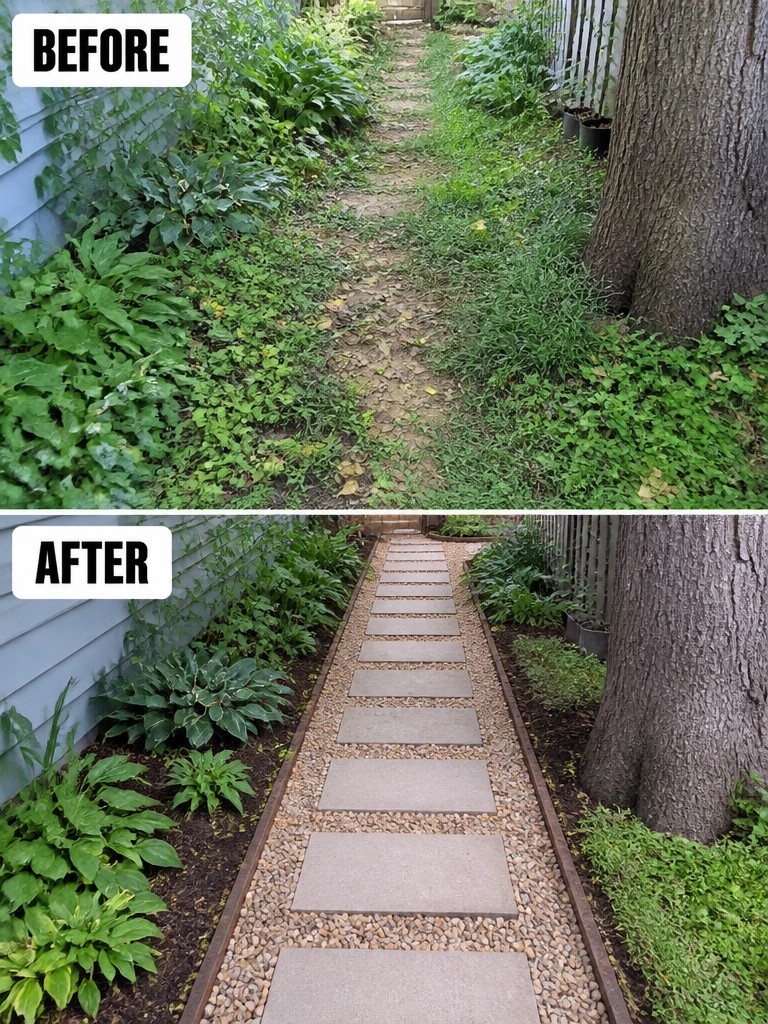
A narrow path that disappears under weeds and ground cover can make the whole side yard feel neglected. Adding a row of pavers set into gravel with a simple metal edge gives the walkway a clear shape and makes it much easier to use. The change turns a spot that was hard to walk through into one that feels intentional and cared for.
This idea works best in narrow side yards or along the back of a house where you need a practical route but do not want to add a full patio. Clear the overgrowth first, then build the path with a gravel base so water drains and weeds stay down. The edging keeps the materials in place, so the path stays neat with less work later on.
Frequently Asked Questions
Q: How do I pick the right plants if my yard gets uneven sun? A: Walk through the space at different times of day and note where light hits. Match new plants to those exact conditions instead of guessing from a photo.
Q: What if the old grass and weeds keep coming back after I clear them? A: Lay down a thick layer of mulch right after you pull them. This blocks light and cuts regrowth without extra sprays.
Q: Do I need fancy tools to start on an overgrown patch? A: A good pair of pruners and a sturdy rake handle most jobs at first. Add a wheelbarrow if you plan to move a lot of debris.
Q: How long before the yard starts looking like the after photos? A: Give new plants a full season to settle in and fill out. Water and trim as needed during that time.
