

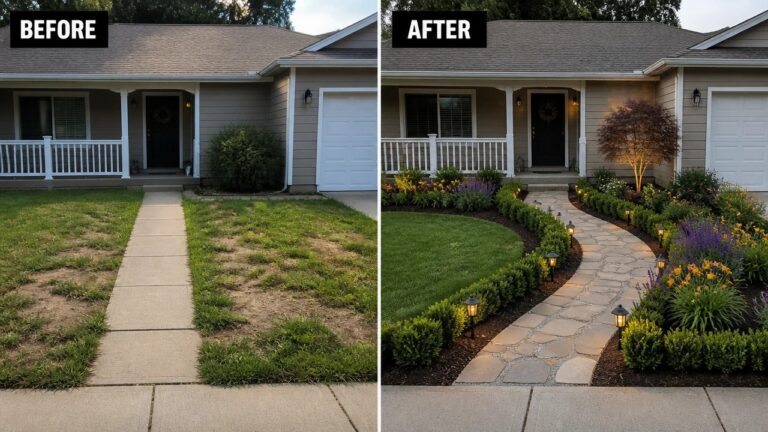
Yards often end up looking unplanned when edges wander and new plants get tucked in wherever there is space.
I usually start by walking the perimeter and noting where a path or border would pull things together before adding more greenery.
A few layout tweaks make the biggest difference.
When beds have clearer shapes and the lawn follows a simple outline the whole area feels more settled even if the plant choices stay modest.
I keep coming back to ideas that build on what is already there rather than starting from scratch.
Add Structure With A Stone Path And Border Beds
A straight concrete walkway next to patchy grass often makes the front yard feel unfinished. Switching to a wider stone path with a gentle curve and adding planted beds on both sides gives the space clear lines and makes the entry feel more intentional.
This approach works best on simple suburban lots where the lawn is mostly grass and the existing path is plain. Start by laying out the new path shape with string or a hose, then edge the beds with a consistent border material before planting. Keep the plant choices low and varied so the beds stay easy to maintain while still framing the walk.
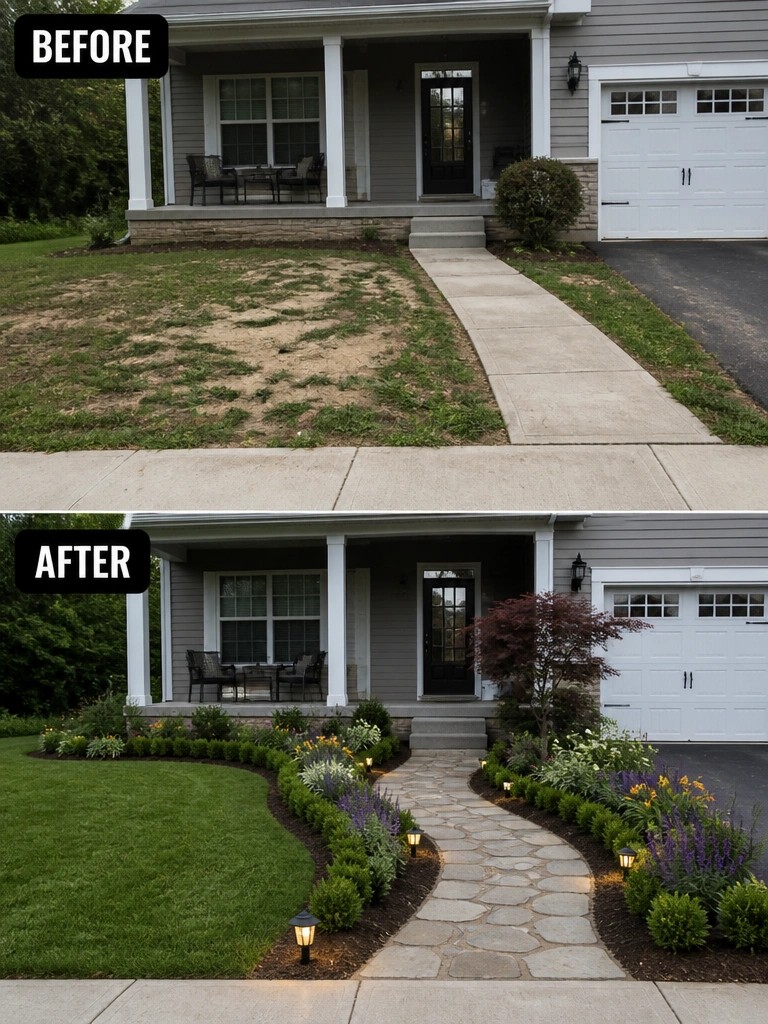
Add A Path And Defined Beds To Organize The Yard

The front yard went from a tangle of weeds and random pots to a clear layout with a gravel path running through mulched beds. That single change turned a messy slope into something that looks intentional instead of neglected. The path gives the eye a route to follow while the borders keep the plants from spilling everywhere.
This idea works well on any sloped or uneven front area where the planting feels scattered. Start by clearing the old growth completely, then lay out a simple path first so the bed shapes make sense around it. Keep the plant layers low near the path and taller toward the house so the whole space still feels open.
Define A Narrow Side Yard With A Path And Planting
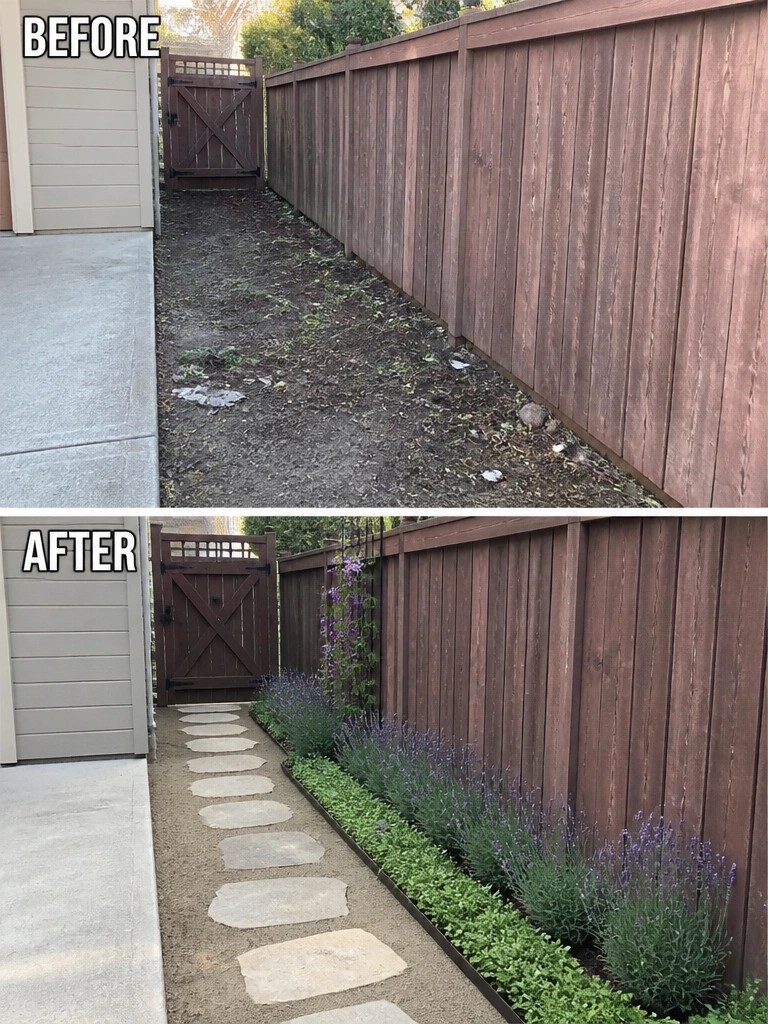
A narrow strip of dirt next to a fence often gets ignored because it feels like leftover space. Laying down stepping stones for a clear path and adding a planted border turns that strip into something useful and intentional instead of just an empty gap.
This idea works best in tight side yards where you need to keep things simple. Focus on the path first so the area becomes walkable, then add a low border of shrubs and flowers along the fence line. It gives the space structure without crowding it or requiring a lot of extra room.
Add Structure To A Sloped Yard With Terraced Beds
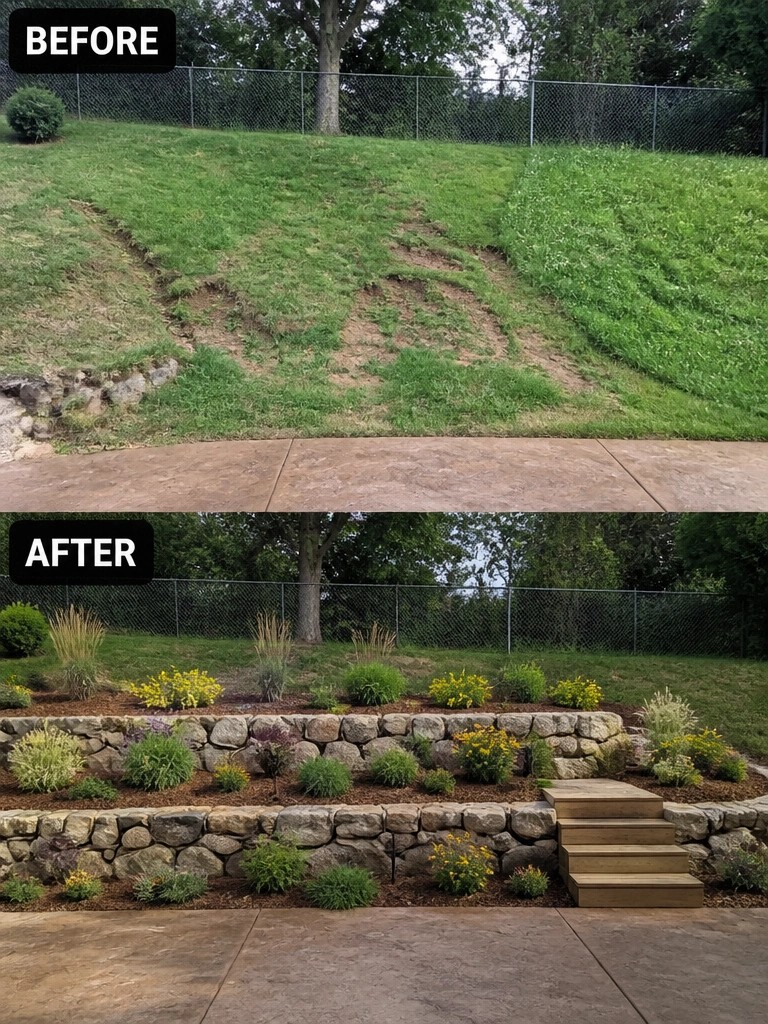
A steep, patchy slope often ends up as wasted space because grass struggles to hold and the ground erodes. Building low stone retaining walls turns the hill into flat planting levels that stay in place and give the yard clear shape.
This approach works best on properties where the lawn runs into a noticeable drop. Start with the walls first so the beds have a solid edge, then fill them with simple shrubs and ground cover rather than trying to plant directly into the slope. The wooden steps shown here also make the new levels easy to reach without cutting into the remaining lawn.
Turn An Empty Patio Into A Seating Area

A bare concrete pad usually stays empty because nothing signals that it is meant to be used. Adding a rug under a small table and chairs, plus a few strands of lights overhead, gives the space a clear purpose and makes it feel finished.
This idea works well on any home with a basic patio slab that already sits level. Keep the furniture scale modest so there is still room to walk around, and add the rug and lights only after the seating is in place.
Define Tree Bases With Clean Borders
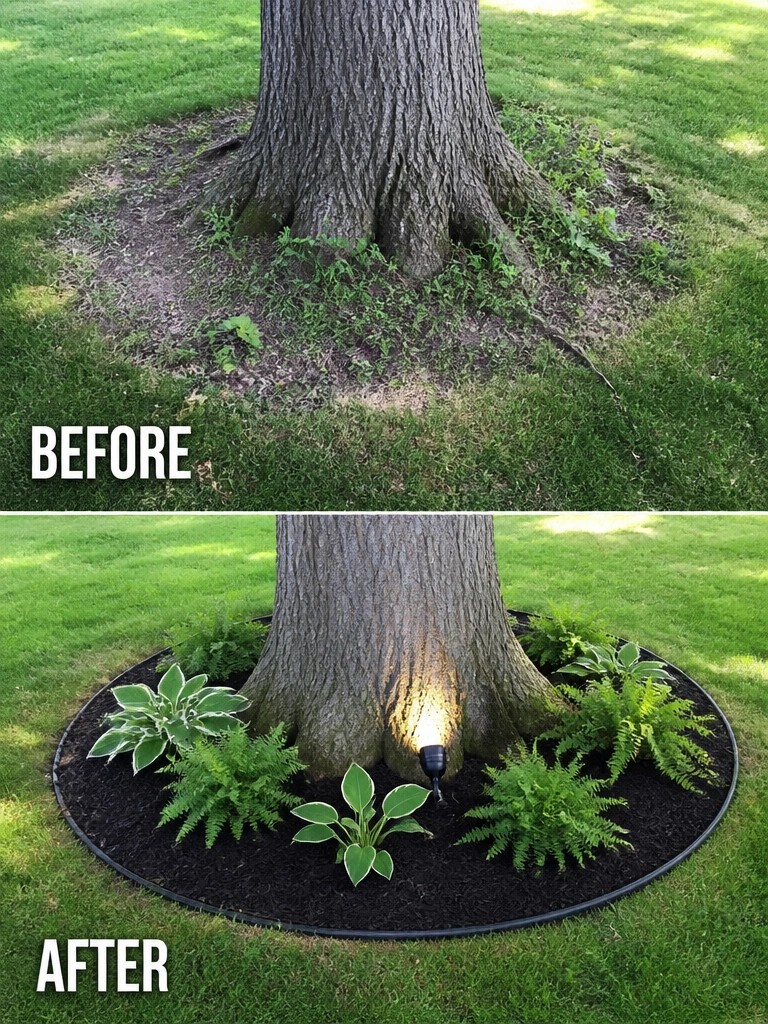
Many yards end up with messy spots right at the base of large trees where grass struggles and weeds take over. Adding a simple circular border and filling it with mulch creates a clear edge that separates the tree area from the lawn. The result feels much more intentional without needing a lot of new plants or hardscaping.
This approach works well in any yard that already has mature trees. Start by clearing the weeds and setting a flexible edging to hold the shape, then add a few shade-tolerant plants and fresh mulch. It keeps the focus on the tree while stopping the grass from creeping right up to the trunk.
Give A Plain Lawn Some Structure With Beds And A Path
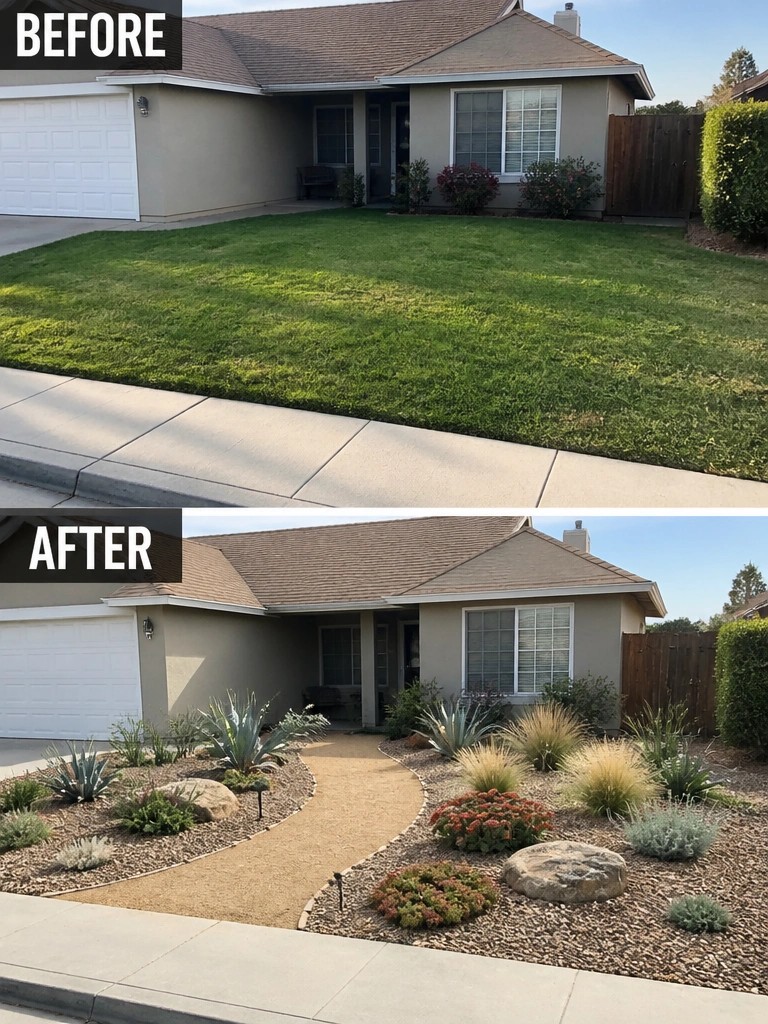
A flat lawn can look fine on its own, but it often feels unfinished because there is nothing to guide the eye. In this case the change was simple. The open grass was replaced with a curved path and planted beds edged in gravel. That single move turned an empty front yard into something that looks intentional.
This approach works well on any home where the lawn runs straight from the sidewalk to the house. Start by laying out the path and bed shapes with a hose before you dig. Keep the beds narrow enough that they do not crowd the walkway, and use gravel or mulch to keep the lines clean. The result feels planned without needing a big budget or a full redesign.
Add Structure To An Overgrown Backyard
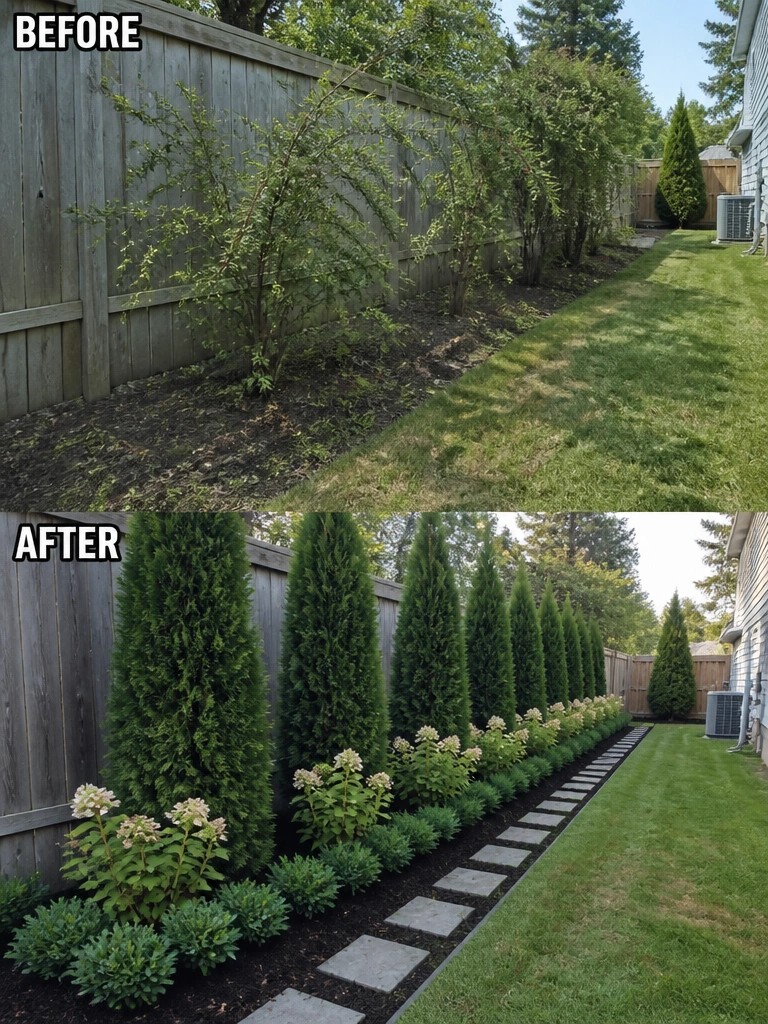
An overgrown strip along a fence often looks messy because the plants have no clear height or order. In this case, replacing the wild shrubs with a straight row of tall evergreens gave the space an immediate sense of order, while the low border plants and simple paver path kept everything from feeling crowded.
This approach works best when you start with cleanup first, then add one strong line of taller plants for the back and a lower layer in front. It suits long, narrow side yards or fence lines where you want privacy without blocking light. Keep the path or edging narrow enough to leave room for the lawn to stay usable.
Add Defined Garden Beds To Frame The Entry
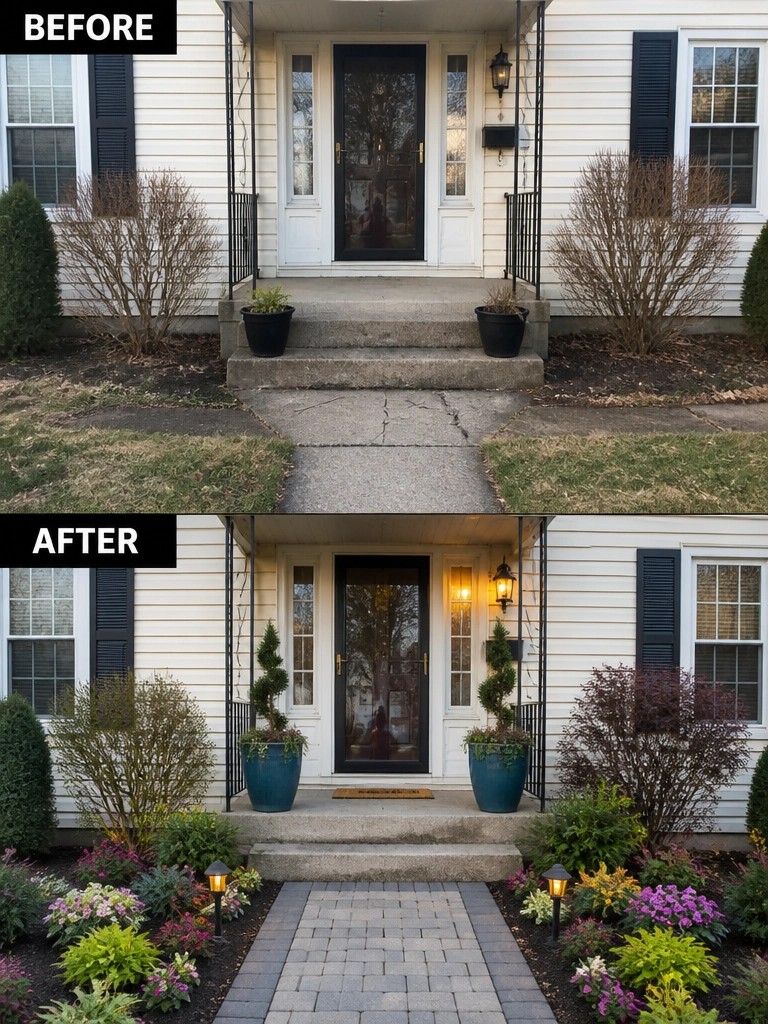
The main change here is how the front beds were cleaned up and given clear edges. Instead of a few scattered shrubs and cracked concrete, the space now has planted borders that follow the walkway and steps. This simple structure makes the whole entry feel more intentional without needing a big renovation.
This approach works well on smaller front yards where you want to guide the eye toward the door. Start by outlining the beds with a simple edge, then fill them with a mix of low shrubs and seasonal color. Keep the path clear and repeat a few plant types so it stays easy to maintain over time.
Add Raised Beds To Give A Bare Yard Clear Purpose
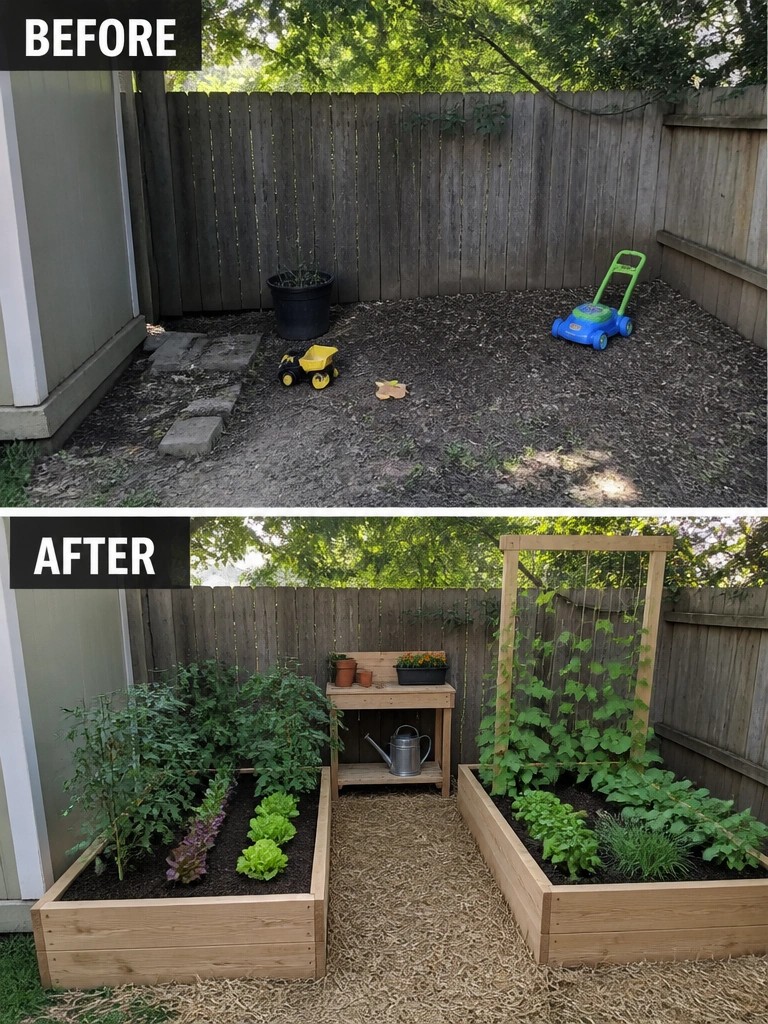
A flat dirt backyard often feels unfinished because nothing defines where planting should happen. Raised beds solve that by creating separate growing areas that look intentional and make it easier to manage soil and plants.
This idea works best in smaller yards that need both productivity and order. Keep the beds simple in wood, add one vertical trellis for vines, and leave enough open path space so the garden stays easy to walk through and maintain.
Add Defined Garden Beds Along A Driveway
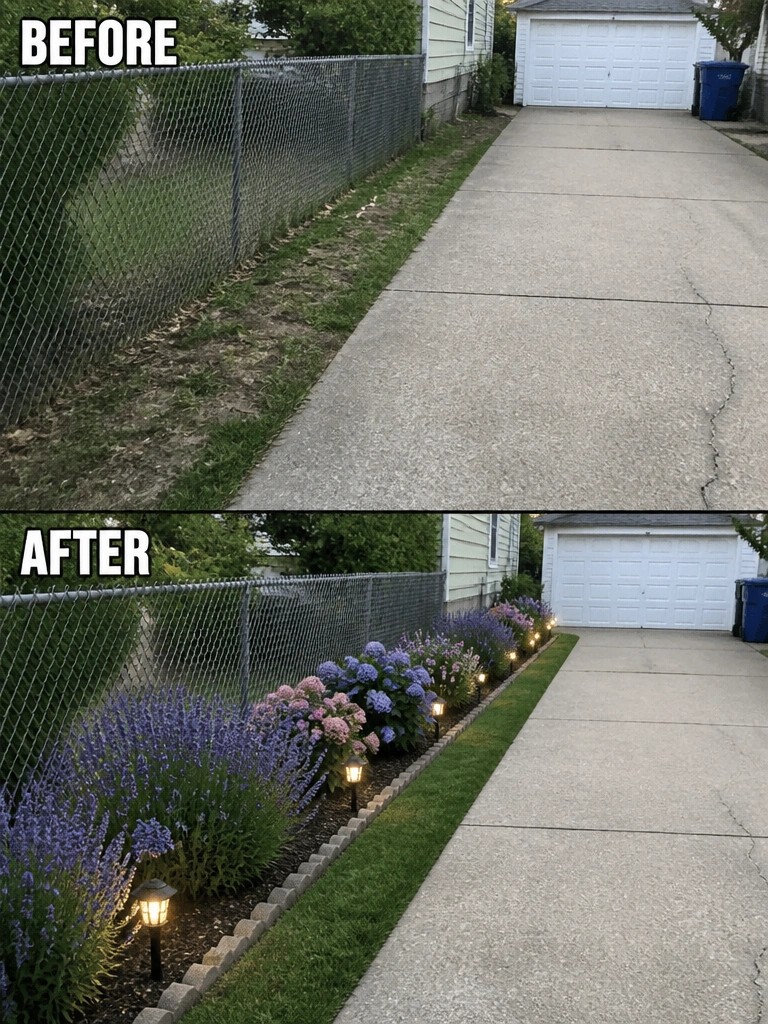
A narrow weedy strip next to a fence often gets ignored because it feels too small to matter. Adding a clear edge and filling it with plants turns that leftover space into a border that looks planned instead of accidental.
This approach works best on long, thin areas beside driveways or fences where you want structure without taking up much room. Use simple edging to mark the bed first, then choose a mix of taller and lower plants so the border stays interesting but easy to maintain. Low lights along the front help the bed read as intentional even after dark.
Turn A Bare Patio Into A Cozy Seating Area
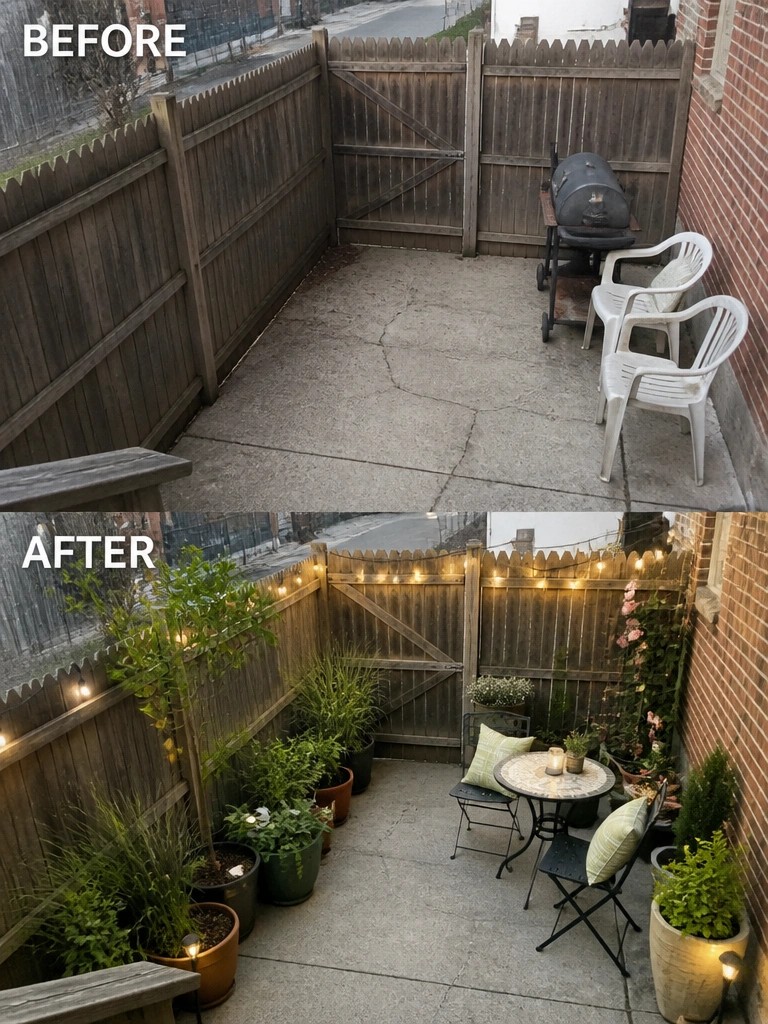
A plain concrete slab with just a fence and a couple of plastic chairs rarely feels like a place to spend time. Adding string lights along the fence and grouping potted plants around the edges gives the space a clear purpose and makes it feel enclosed without any new construction. The small table and chairs in the after photo show how little furniture is actually needed once the lighting and plants set the mood.
This approach works well on small urban patios or side yards where space is tight. Start with the lights first since they define the area at night, then add plants in different heights to soften the fence line. Keep a clear path through the middle so the space still feels open rather than crowded.
Turn A Bare Patio Into A Fire Pit Seating Area
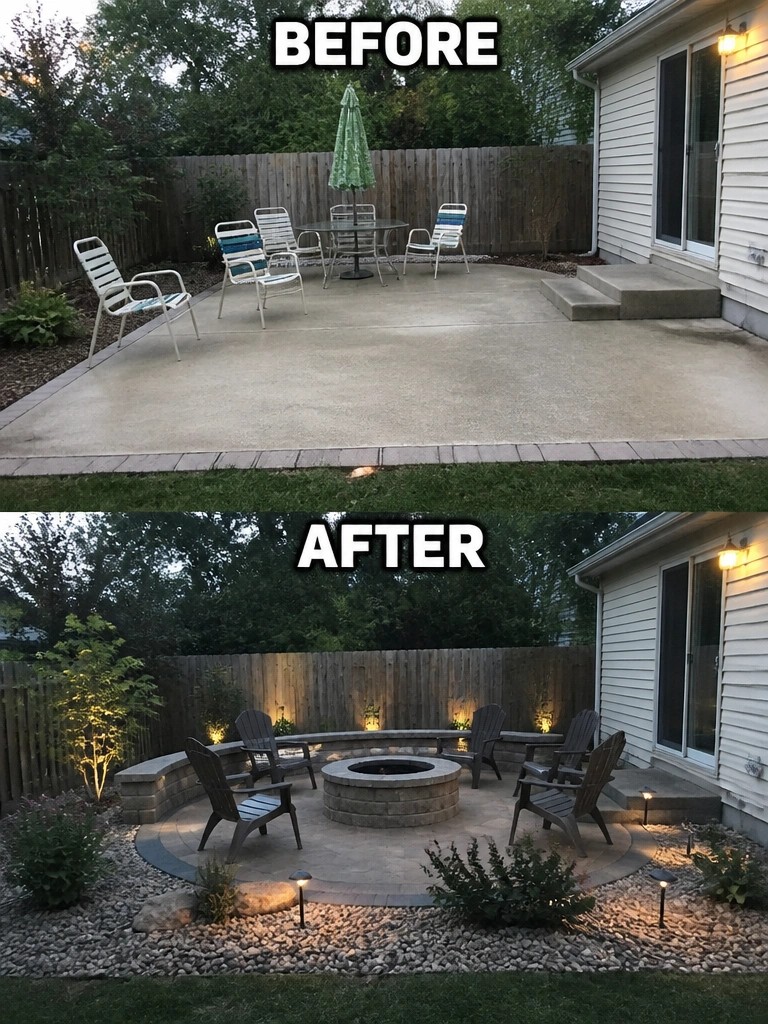
A plain concrete slab often sits unused because it has no real center. Placing a fire pit in the middle and arranging chairs around it gives the space a purpose, so people actually want to sit outside once the sun goes down.
This idea works best on patios that already have decent size but lack structure. Keep the seating simple, add a few low plantings along the edges, and use gravel or pavers to separate the sitting area from the rest of the yard so it feels like its own room.
Add Structure To Roadside Strips
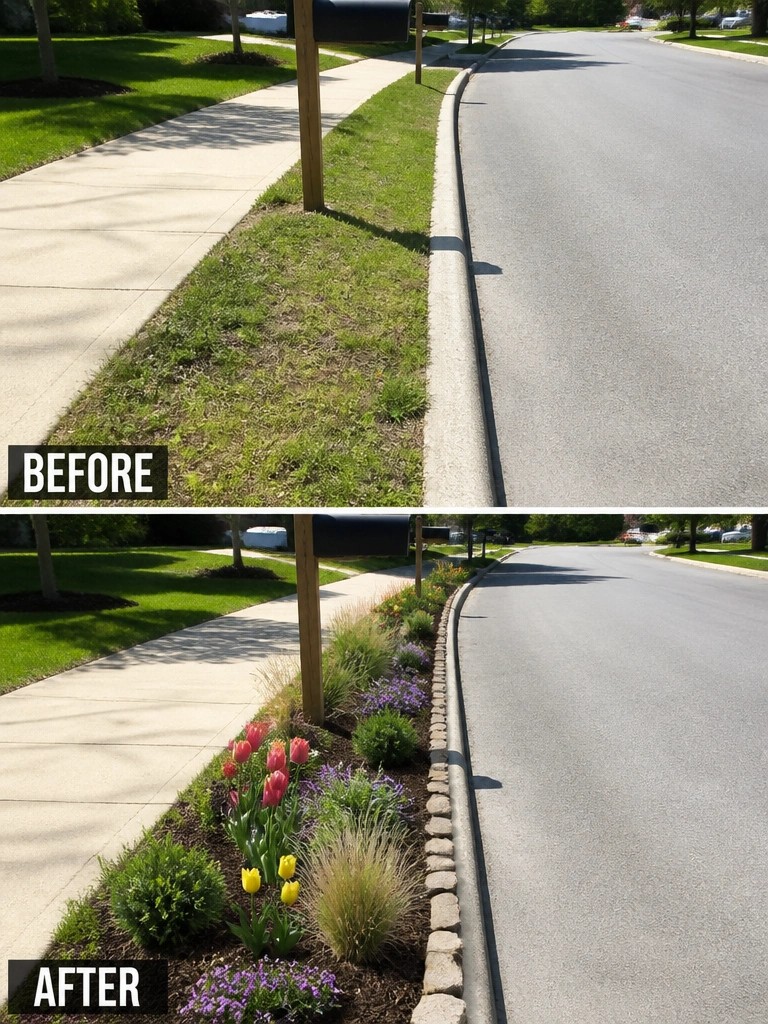
The main change here is turning a patchy, weedy strip into a clear planted bed. Adding a simple stone edge and filling the area with mulch and a few groups of plants gives the whole front a much more finished look without needing a big redesign.
This idea works well along streets or sidewalks where grass often struggles. Start with the edging so the bed stays neat over time, then choose plants that suit the sun and traffic exposure. Keep the number of varieties low so it stays easy to maintain.
Add Defined Borders Along A Gravel Path
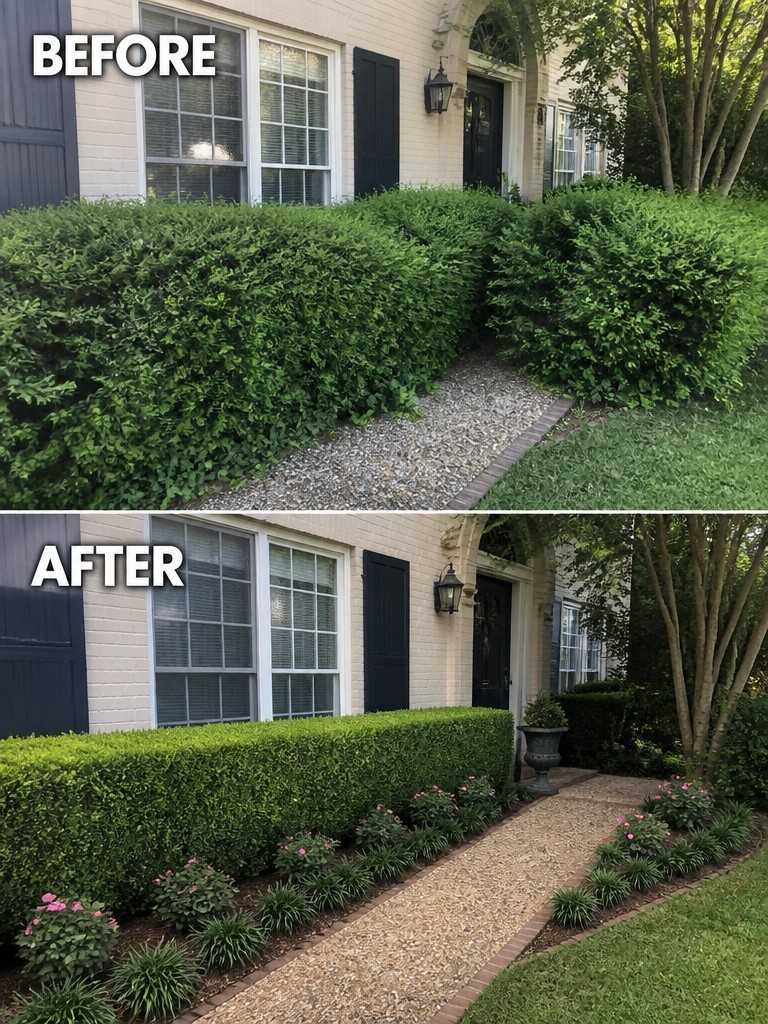
Trimming the tall shrubs down to a straight, low hedge instantly changes how the entry feels. Adding a row of small flowering plants right along the front edge of the path gives the whole area a clear shape instead of letting the planting spill everywhere.
This approach works best on older homes where the original shrubs have grown out of control. Keep the existing greenery but cut it back first, then add a simple border of low perennials in front. The result looks planned without requiring new hardscaping or major removals.
Add Structure To An Overgrown Side Yard

A long bare slope next to the house often ends up as a weedy strip that never feels intentional. Adding a simple path of stepping stones and a clear planting bed along the foundation gives the area shape right away. The before photo shows how loose and scattered the ground looked, while the after shows how the stones and plants pull everything into one tidy line.
This approach works well on narrow side yards or slopes where you want access without losing the lawn. Start with the path first so you can walk the space easily, then fill the bed with a mix of heights that stay in scale with the house wall. Keep the planting simple and repeat a few varieties instead of trying to fill every inch at once.
Add Defined Garden Beds Along A Fence
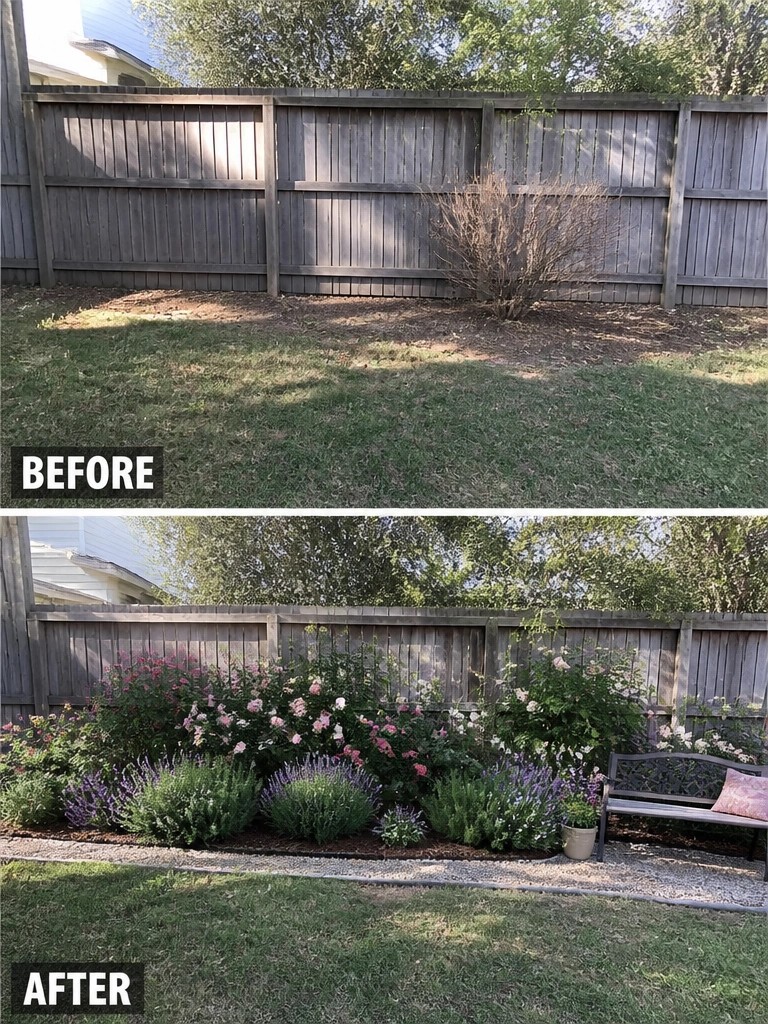
One simple way to make a plain backyard feel more planned is to add defined garden beds along the fence line. The before photo shows just grass and bare soil, while the after shows clear borders filled with shrubs and flowers that give the space shape and purpose.
This idea works best in yards that feel empty or unfinished. Mark out the bed first with edging or gravel, then plant a mix of taller shrubs and lower perennials so the bed has layers without looking crowded. A bench at one end can make the area feel usable right away.
Define Garden Beds To Make The Yard Feel Planned
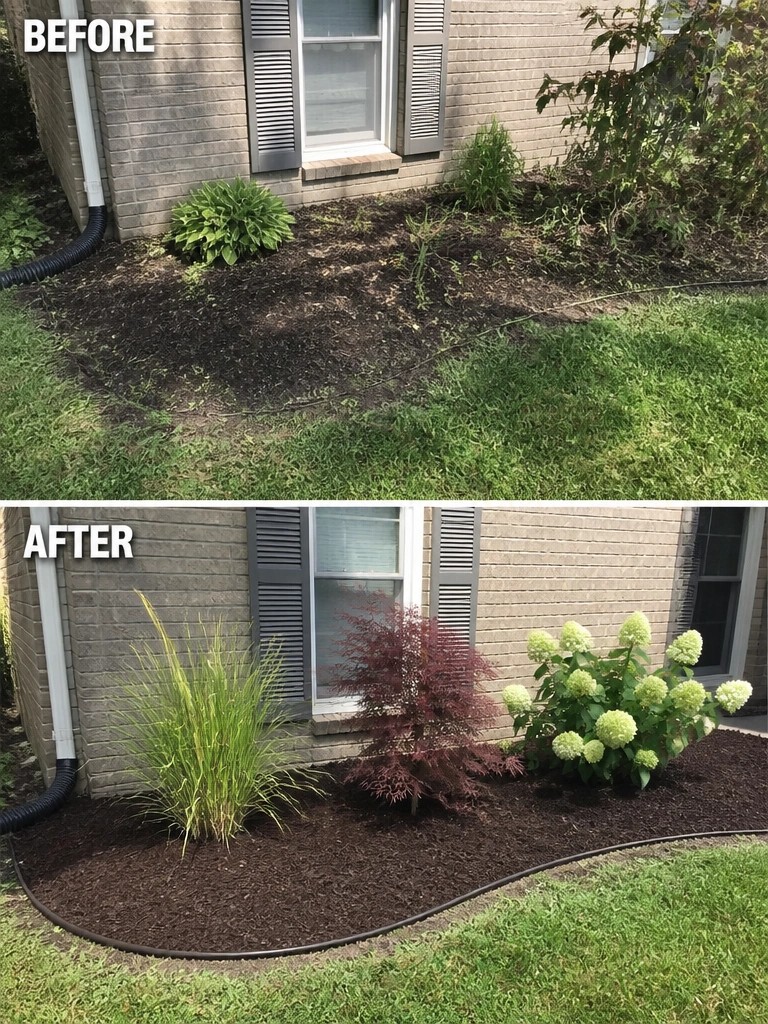
One of the easiest ways to make a yard feel more intentional is to give the planting a clear edge and a simple structure. The area along the house went from bare soil and scattered weeds to a single mulched bed with a short row of plants that now read as one unit.
This idea works well on homes where the foundation line is easy to follow. Start by cleaning up the edge and adding mulch before you worry about the plants themselves. Keep the number of plant types small so the bed stays easy to care for over time.
Define A Narrow Side Yard With Stepping Stones
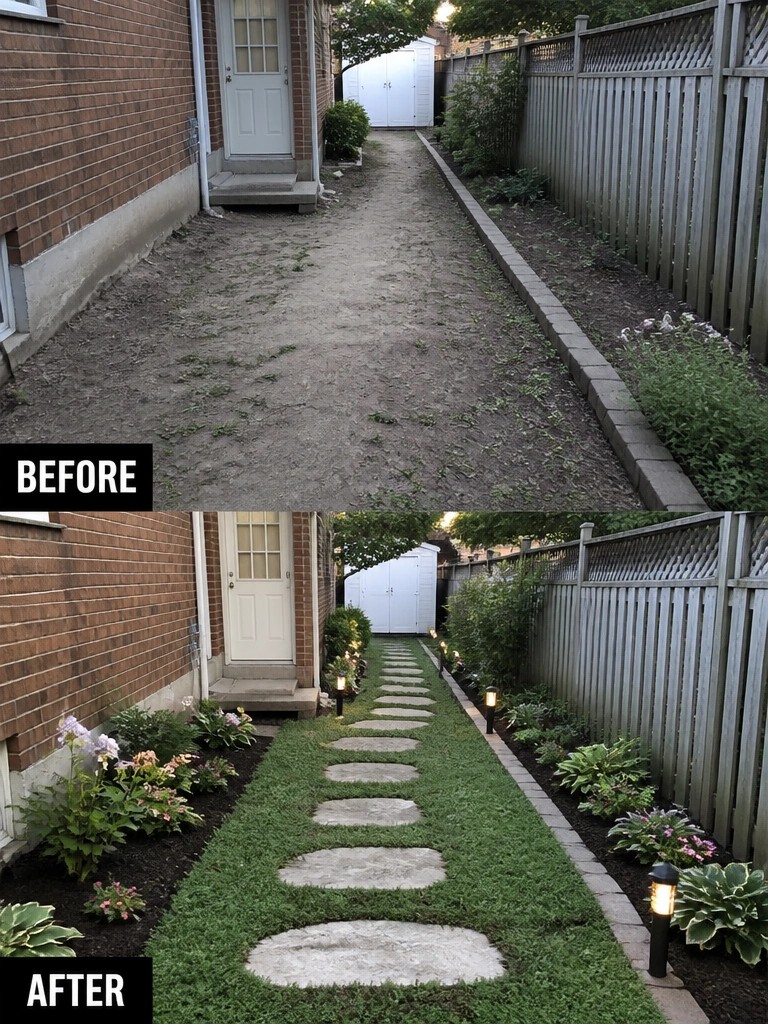
A narrow side yard can easily turn into an afterthought when it is just bare dirt between the house and the fence. Laying down a row of stepping stones through fresh grass gives the space a clear path and makes the whole strip feel like it was planned instead of left over.
This approach works best when you keep the path simple and let the borders do the rest. Place the stones first so you know exactly where people will walk, then add low plants along the edges to hold the grass in place. It keeps the area usable without crowding a tight space.
Shape The Garden Beds With Low Hedges
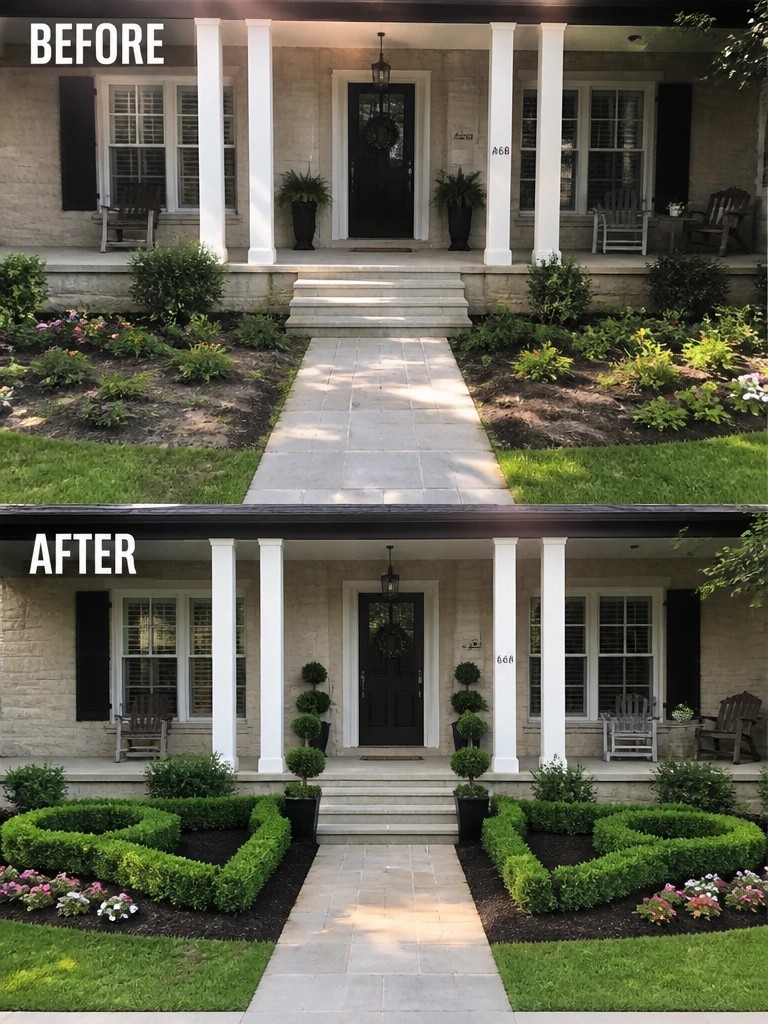
The front beds went from loose plantings and open soil to neat rows of boxwood that follow the walkway. That simple outline turns a scattered look into something that feels laid out on purpose.
Low hedges work best when they stay under window height and match on both sides of the path. Keep the shapes basic, use mulch to fill in, and leave room for a few seasonal flowers at the edges so the beds stay easy to maintain.
Hide Pool Equipment With Planting And Screening

A bare pool edge next to visible pumps and filters always feels unfinished. Adding a row of plants along the concrete and placing a simple lattice screen in front of the equipment turns the whole area into part of the yard instead of a utility zone. The plants soften the hard lines while the screen keeps the mechanical parts out of sight without blocking access.
This approach works well on any pool where the equipment sits right at the edge. Start with taller plants or a lattice panel to block the main view, then fill in with lower shrubs and pots so the border feels full but not crowded. Keep a path open for maintenance and choose plants that handle sun and occasional splash.
Add Defined Garden Beds To Shape A Plain Yard

A flat lawn often looks unfinished because it has no clear edges or focal points. Adding a few curved beds filled with wildflowers gives the space shape and makes the whole yard feel more intentional without covering all the grass.
This idea suits front yards or larger lawns where you want seasonal color but still need open space for walking or play. Mark the bed outlines with a hose first so you can adjust the curves, then keep the plantings fairly dense so they fill in fast and stay low maintenance.
Add Planters To Frame The Front Steps
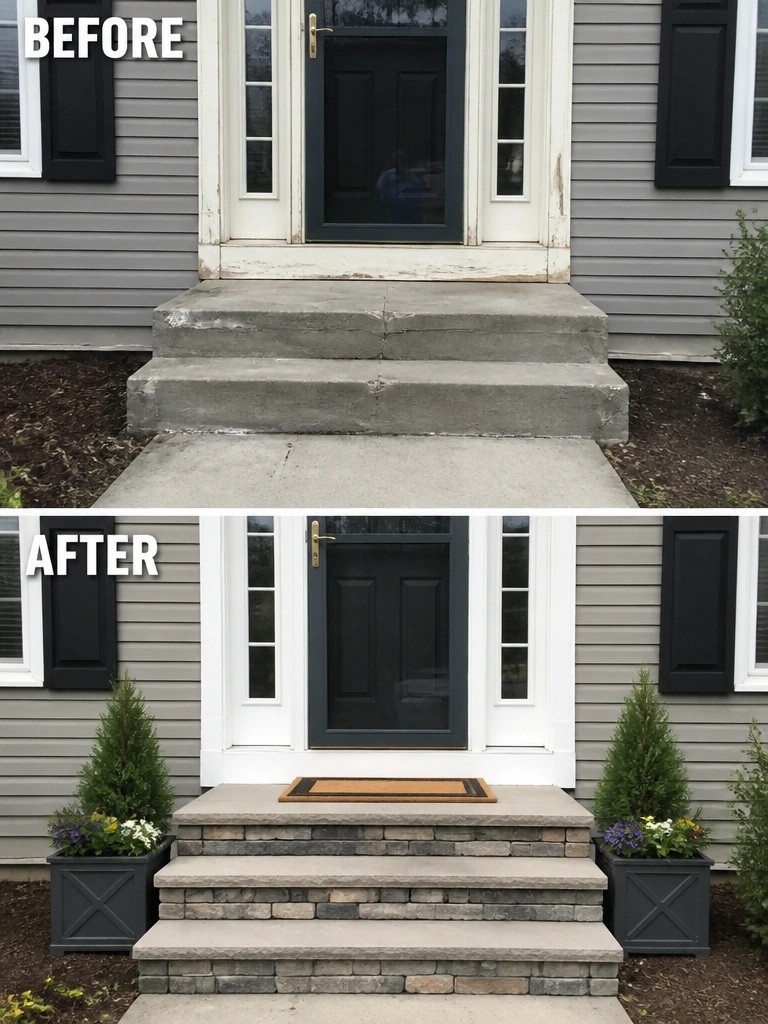
Plain concrete steps can make an entry feel unfinished even when the rest of the house is in good shape. Adding a pair of matching planters on either side gives the steps a clear border and makes the whole approach look more intentional. The simple addition of the doormat and the updated stone facing on the risers also helps tie everything together without major construction.
This idea works well on any front entry that has enough room on both sides for a pair of containers. Choose planters in a similar color or material so they feel like they belong together. Keep the planting simple and repeat the same plants on each side so the look stays balanced rather than busy.
Use Planting Beds To Organize Space Around A Shed
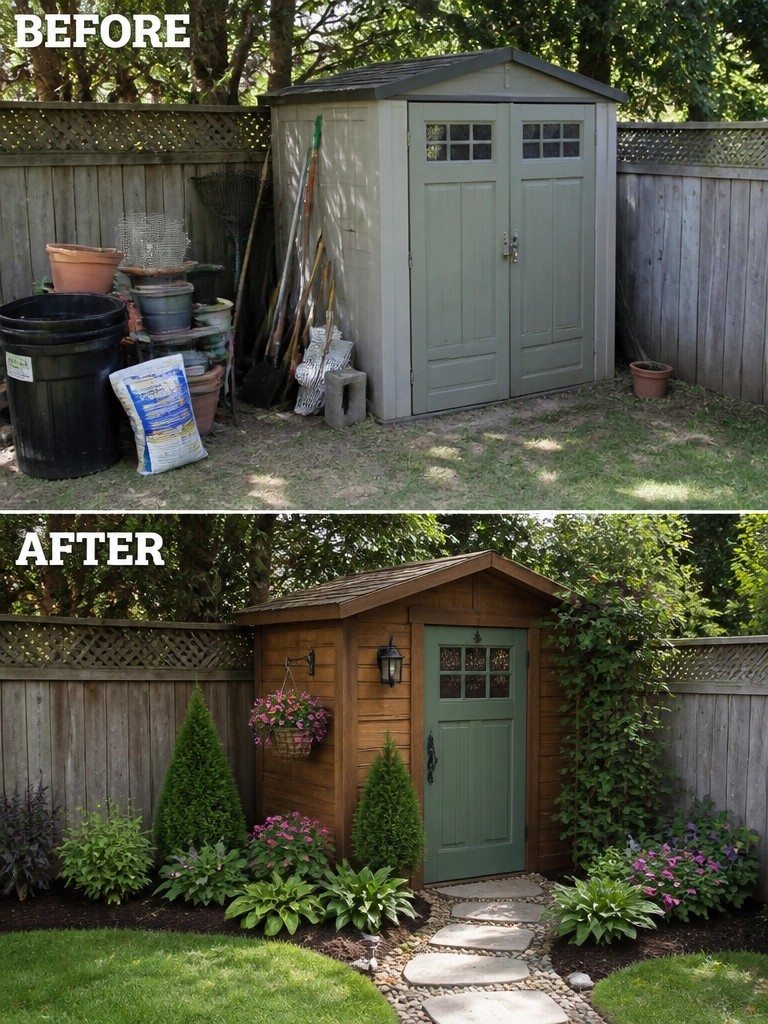
A shed can easily become the messiest part of a yard when tools and pots pile up around it. Adding planted beds on either side and a simple path to the door turns that same spot into something that feels like it belongs with the rest of the garden.
This idea works best in smaller yards where every corner needs a clear role. Keep the beds narrow enough to leave room to walk, choose plants that stay compact, and add a few stepping stones so the area stays usable instead of turning into mud.
Add A Pergola To Give A Backyard A Clear Purpose
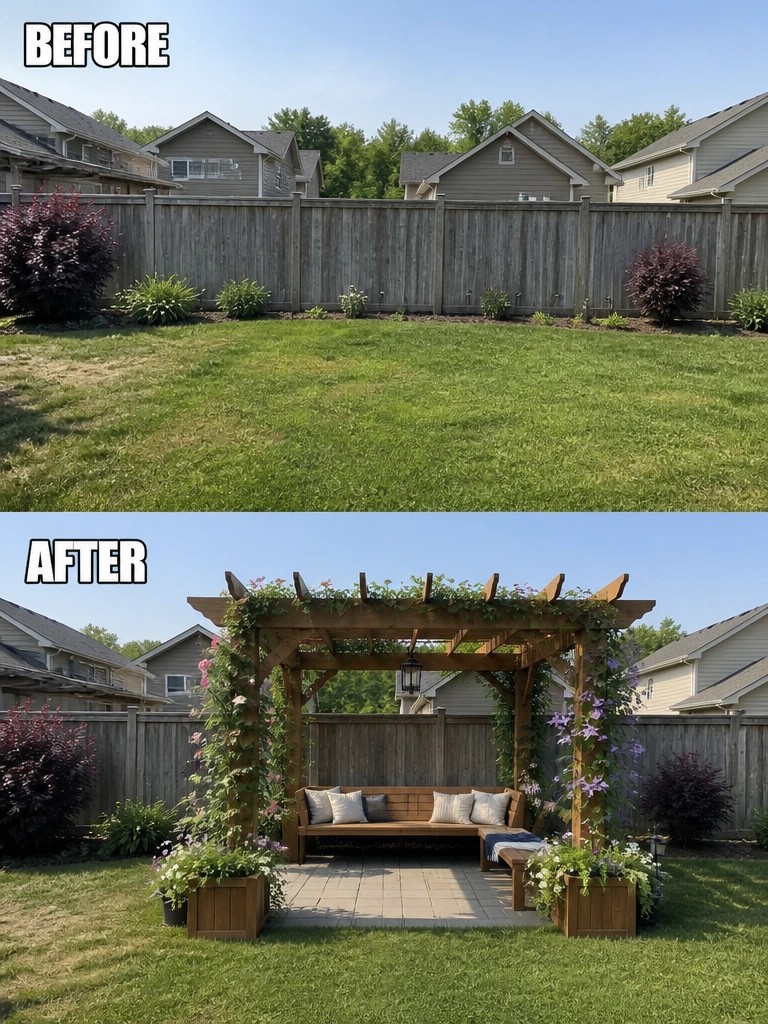
An empty lawn often feels unfinished because there is no real spot to sit or gather. Adding a pergola with a bench underneath creates that one defined area right away. The simple wooden structure and a couple of planted boxes turn the open grass into something that feels intentional instead of just leftover space.
This works best in a medium or large yard where you want one main seating spot without filling the whole lawn. Start with the pergola size first so the bench and planters fit comfortably, then add climbing plants or a few containers around the base. Keep the rest of the lawn open so the new area stays the focus instead of getting crowded.
Frequently Asked Questions
Q: Where should I start when I want the whole yard to look planned instead of added on piece by piece? A: Pick one main walkway or seating spot as the center. Repeat the same edging material or plant height around every bed so the eye moves smoothly from one area to the next. This single repeat pulls separate spots together fast.
Q: How do I choose plants that actually belong together without a lot of trial and error? A: Stick to two or three colors and leaf shapes across the whole yard. Place the tallest plants at the back of each bed and step down to shorter ones in front. The pattern keeps beds from looking scattered.
Q: What happens when my yard has a slope or awkward corner that breaks the planned feel? A: Build low terraces or place large rocks to turn the slope into steps. Fill the awkward spot with the same ground cover you used elsewhere. The matching cover makes the odd area blend in instead of standing out.
