

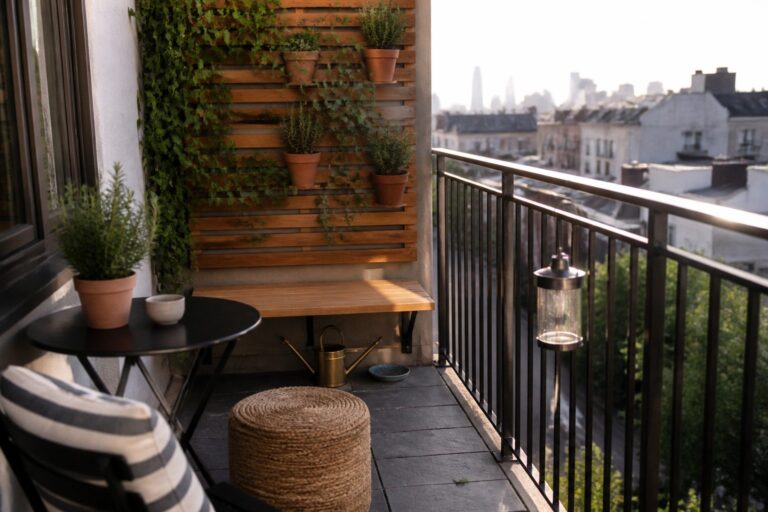
Living in the city often means squeezing real use out of whatever small outdoor patch you can claim, whether that is a narrow terrace or part of a shared courtyard.
I keep noticing that these spots only work well when there is actual room left to sit or walk without everything feeling cramped.
Usability beats looks every time.
Over the years I have learned to try simple layout changes in my own space first, such as shifting a bench or adding a movable screen, before spending on anything fixed.
That approach shows which ideas hold up once daily life moves through the area rather than just sitting still in a photo.
Vertical Planter Walls Work Well on Small Balconies
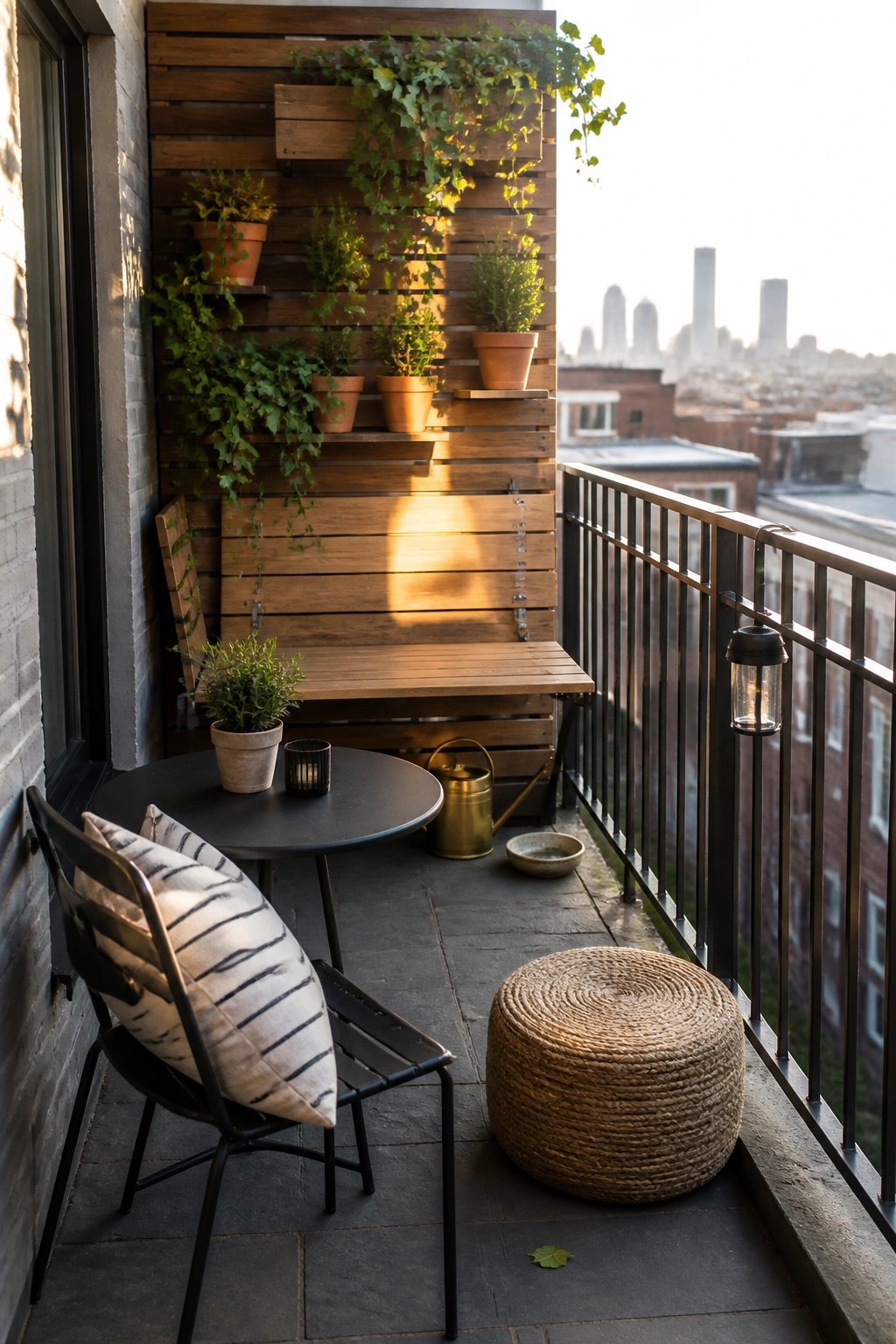
A vertical planter wall gives you room for more plants without crowding the floor. The wooden slats with built-in shelves keep everything off the ground and create a green backdrop that feels private even when buildings sit close by.
This setup suits balconies or terraces that lack width. Mount the structure on the back wall, choose lightweight pots, and leave enough open floor area for a chair or two. Watering stays simple if you group the plants by how much moisture they need.
Built In Planters For Small Terraces
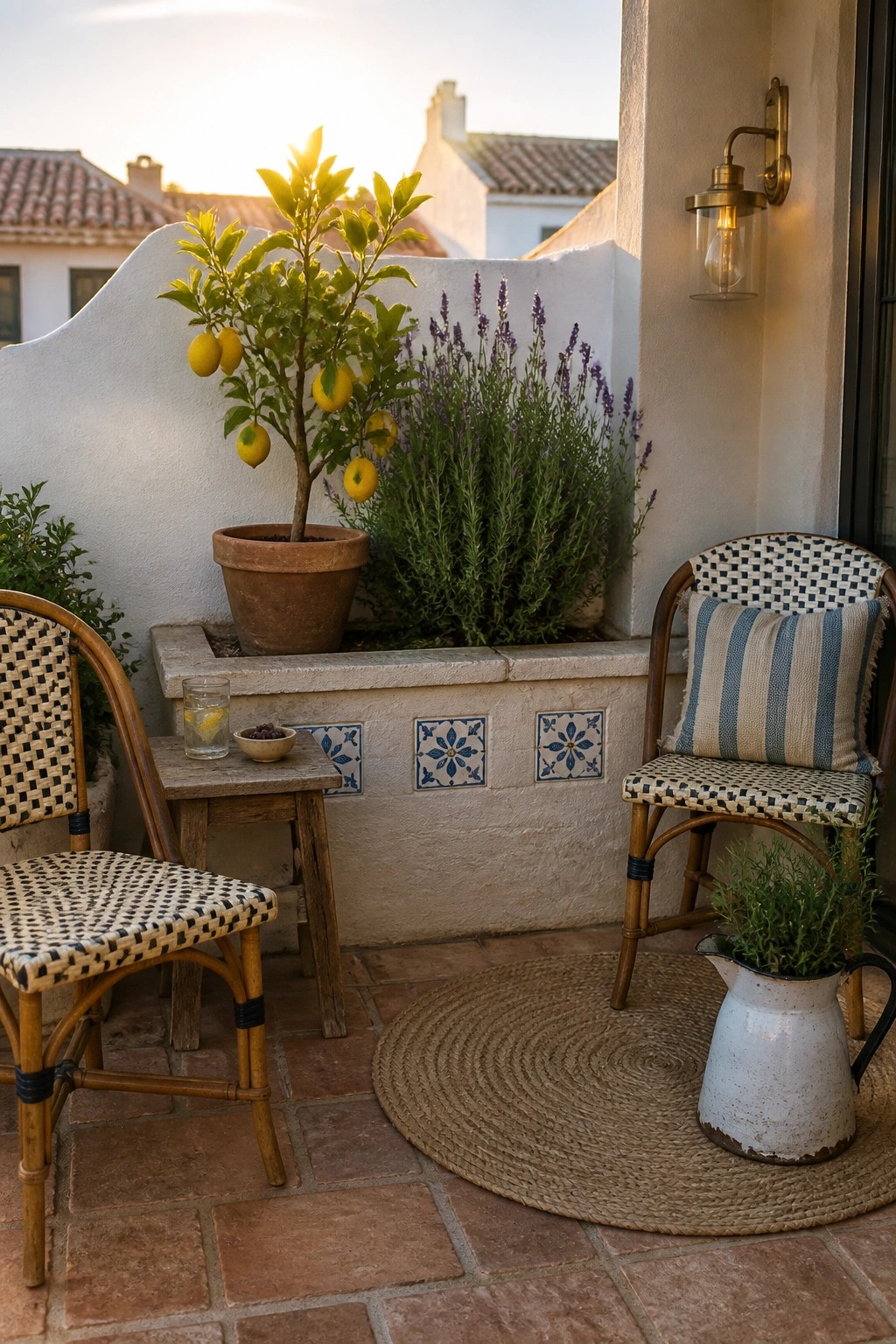
A built in planter along the edge of a terrace gives you room for larger plants without losing floor space for chairs or tables. It turns a plain wall into a growing area and keeps everything contained so the patio still feels open.
This setup works well in city spaces where you want greenery but need to keep things tidy. Place bigger pots like citrus trees inside the planter and fill gaps with smaller herbs or flowers. Check drainage before planting so water does not pool during heavy rain.
Stepping Stone Paths In Tight Courtyards
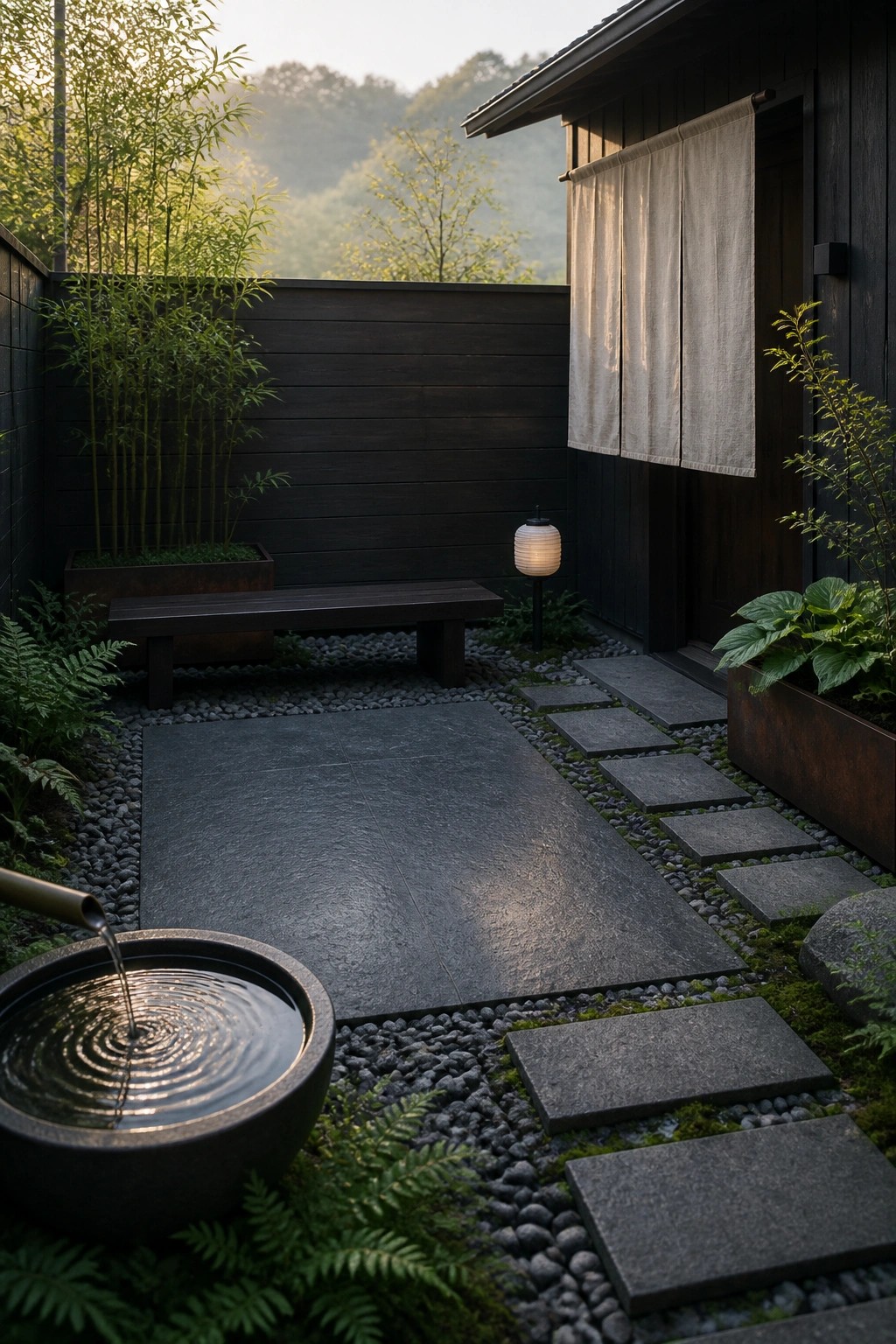
Stepping stones set into gravel give a small courtyard a clear way to move around without covering the whole space in solid paving. The loose gravel drains well and keeps the area from feeling too hard or closed in, which works especially well when you only have a few meters to work with.
Place the stones where you need to walk most, like from the door to a bench or seating spot, and let the gravel fill in the rest. This setup suits city homes or shared courtyards where you want something simple to maintain and easy to adjust later if plants grow in or you want to change the layout.
Hang a Hanging Chair on Your Terrace
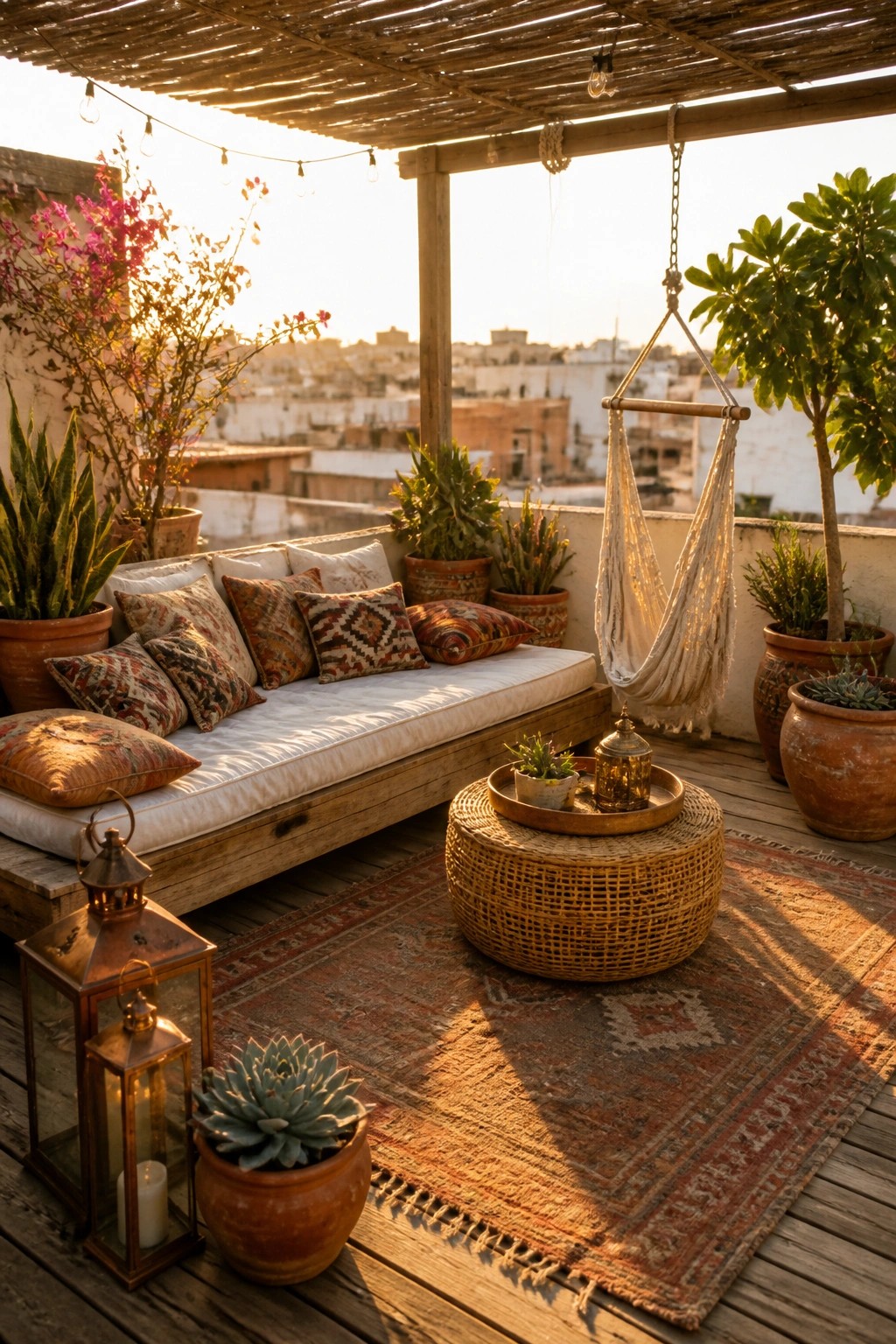
A hanging chair works well on small terraces because it adds a seat without taking up floor space. You can still move around the rest of the area freely, which matters when the space is tight.
This setup suits city rooftops and shared courtyards where every square foot counts. Hang it from a sturdy beam or frame, keep the chain length short enough for safety, and pair it with a simple floor cushion or two if you want more seating options nearby.
Anchor Your Patio With a Central Fire Pit
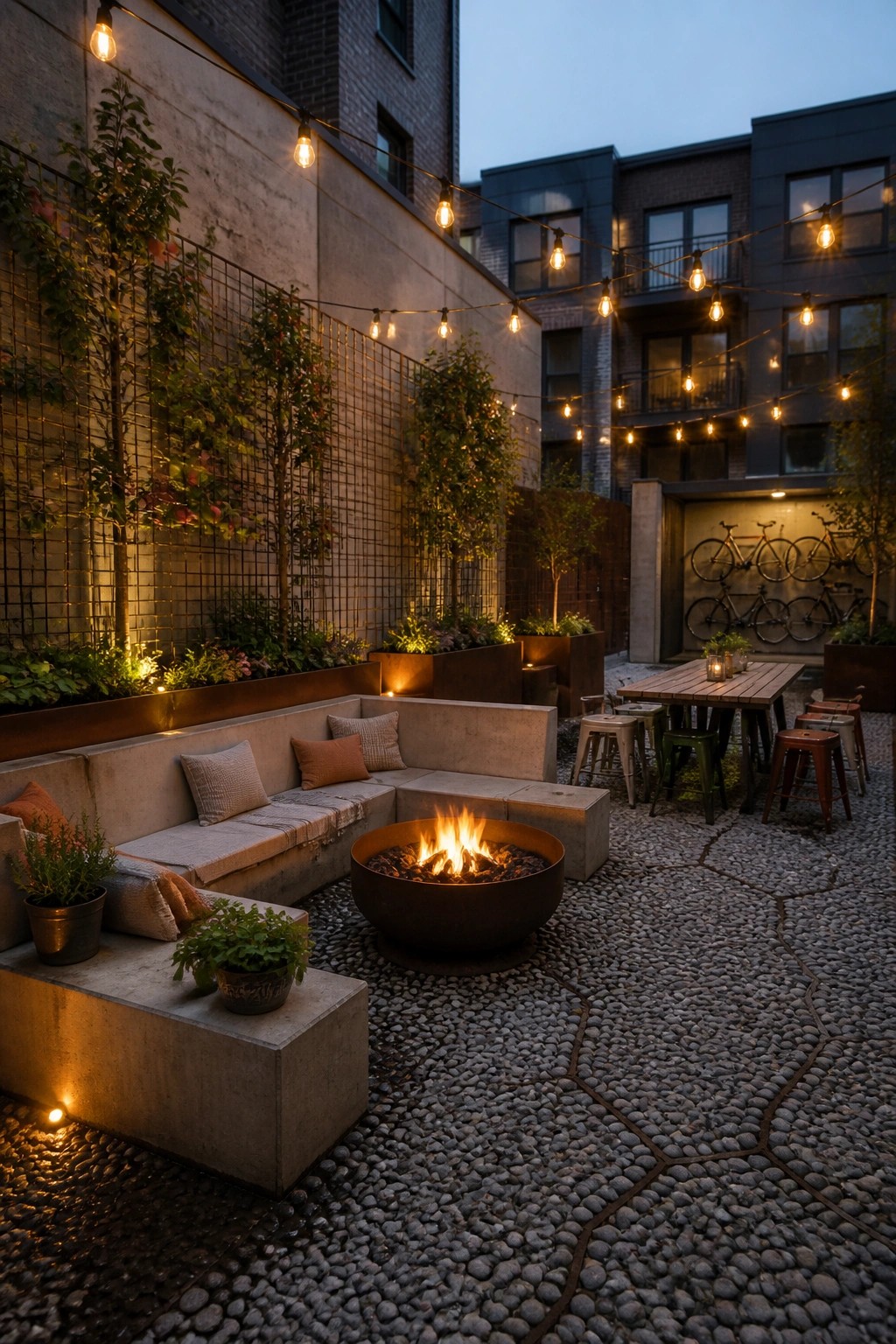
A round fire pit works well as the main focus in a small courtyard because it pulls seating around it naturally. The concrete benches in this setup form an L shape that keeps everyone close to the flames without needing a lot of extra furniture.
This layout suits tight urban spaces where you want one clear spot for evening use. Keep the surrounding area open so people can move around the pit easily, and choose seating that matches the hardscape already in place.
Mount Planters On The Wall To Save Floor Space
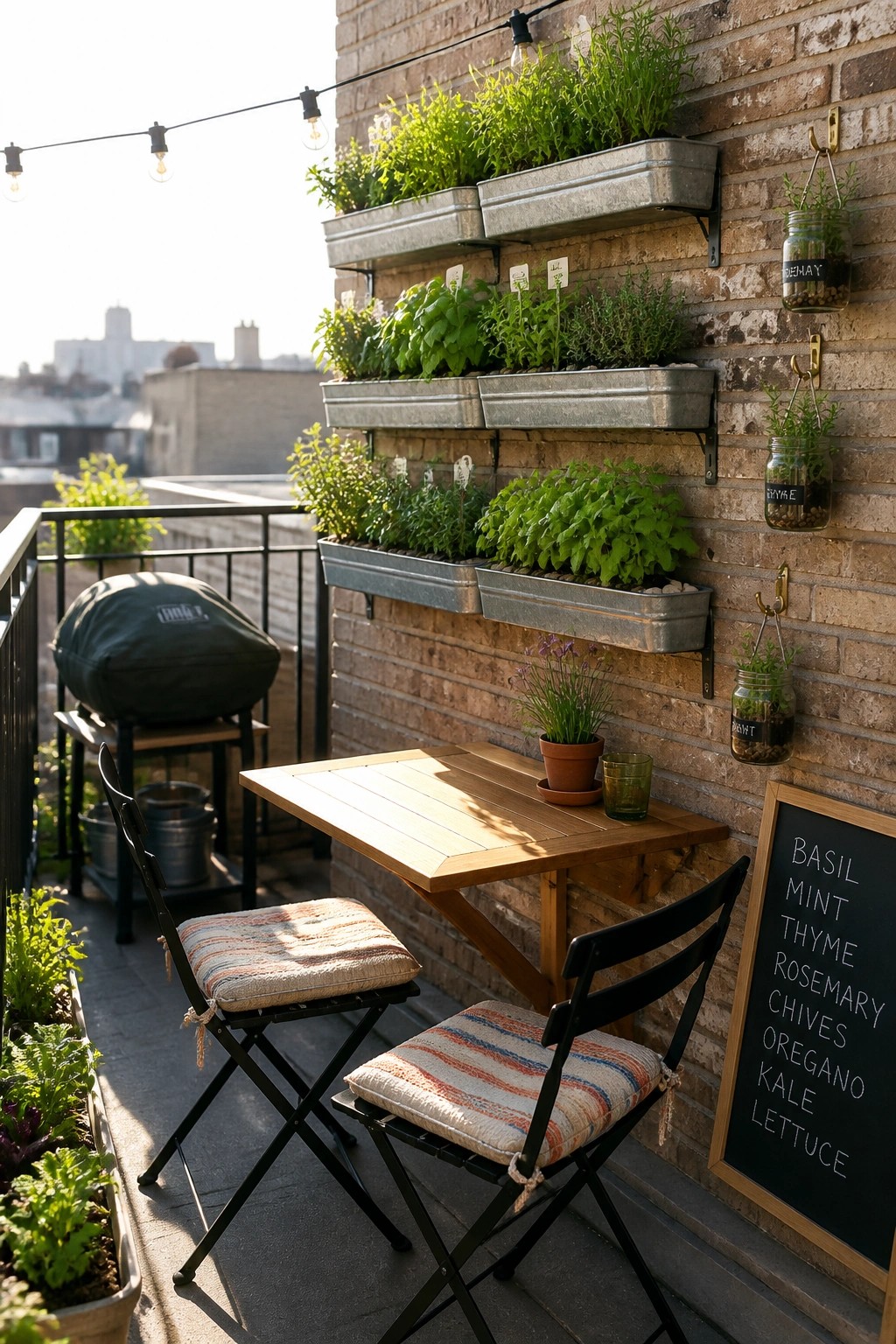
Wall planters are a simple way to grow more in a small urban patio without losing room to move around. By hanging troughs and jars along the brick wall you keep the floor clear for a table and chairs while still having space for herbs and greens right where you need them.
This approach works best on balconies and narrow terraces where every square foot counts. Metal troughs bolted in place or jars hung on hooks are easy to install and maintain, and they turn an empty wall into a working garden without much extra cost.
Layer Textiles On Outdoor Seating
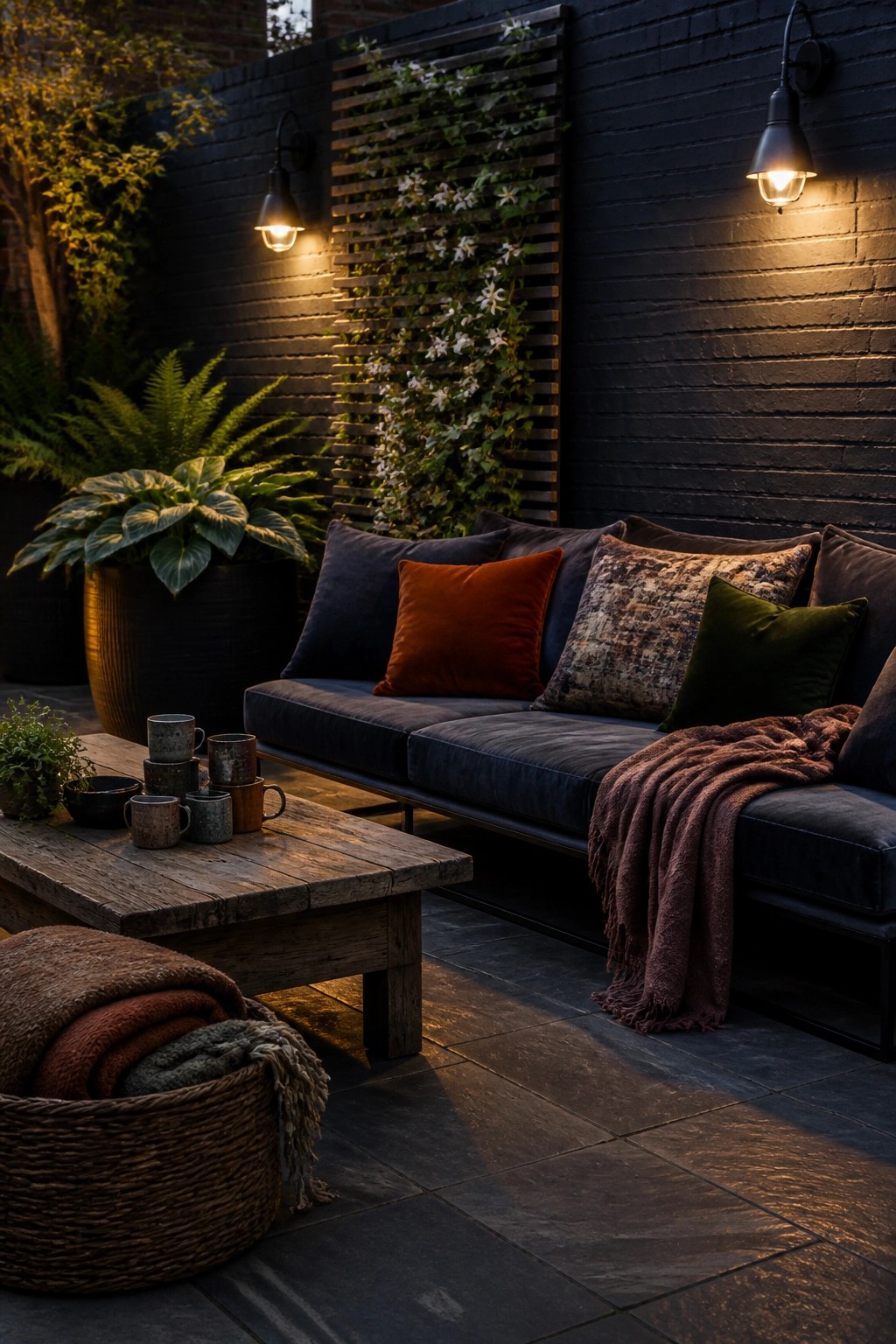
Many city patios feel a bit bare because the furniture is built to handle weather. Adding a few layers of textiles changes that fast. A solid sofa base works better when you pile on pillows in different fabrics and drape a throw or two across the seat.
This approach suits small terraces and shared courtyards where you want the space to feel used after dark. Keep the base colors simple and let the textiles carry the warmth. Swap them with the seasons so the same sofa works in cooler months without buying new furniture.
Slatted Screens For Balcony Privacy
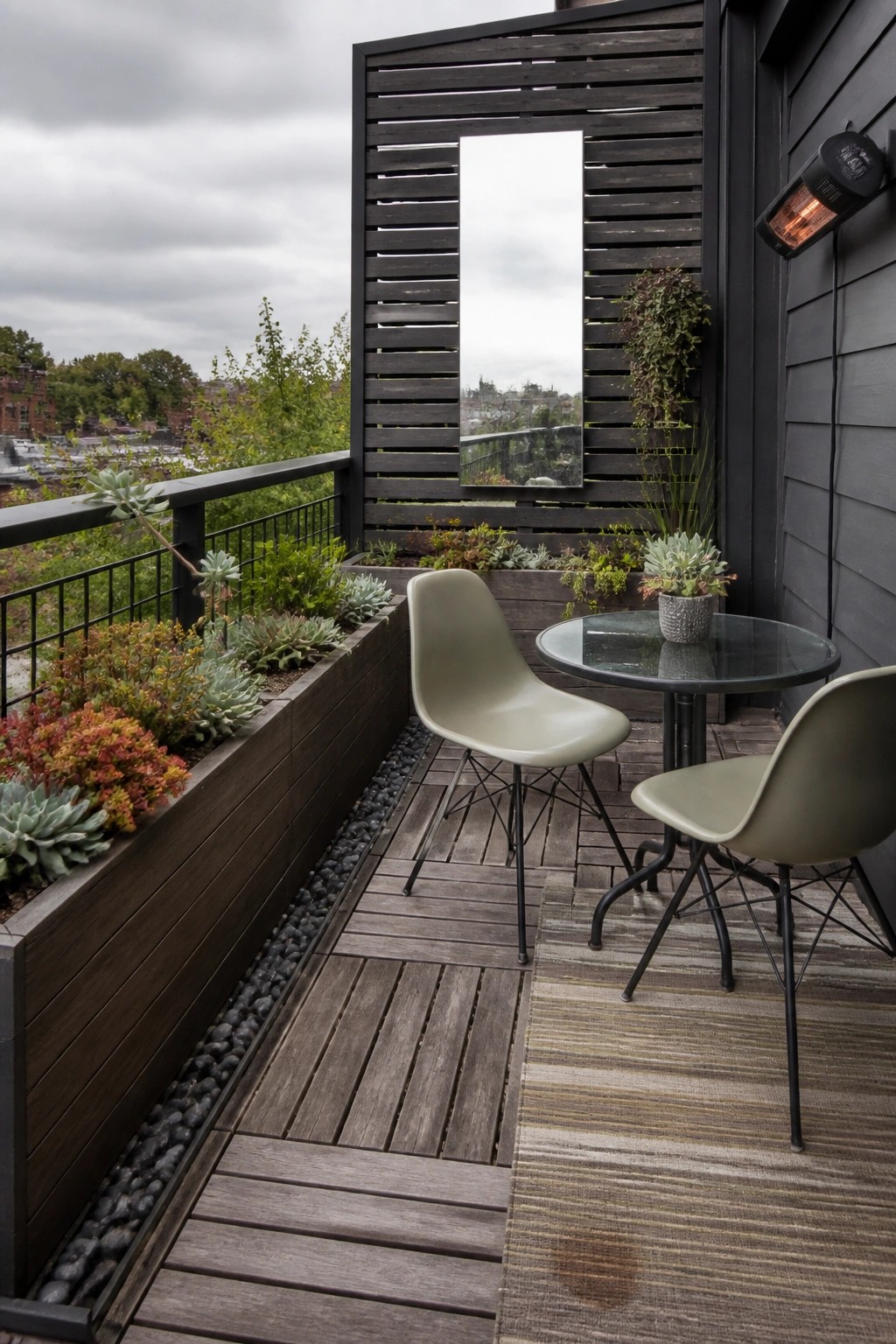
A tall slatted screen gives a small terrace the separation it needs without closing the space in completely. The mirror set into the screen helps by bouncing light around and making the area feel a bit larger than it actually is.
This setup works well on city balconies where neighbors are close. Keep the screen height just above eye level and add a few plants along the base so the whole thing feels softer. It is a simple way to get privacy without losing the open feel of an outdoor spot.
Built-In Seating for Small Courtyards
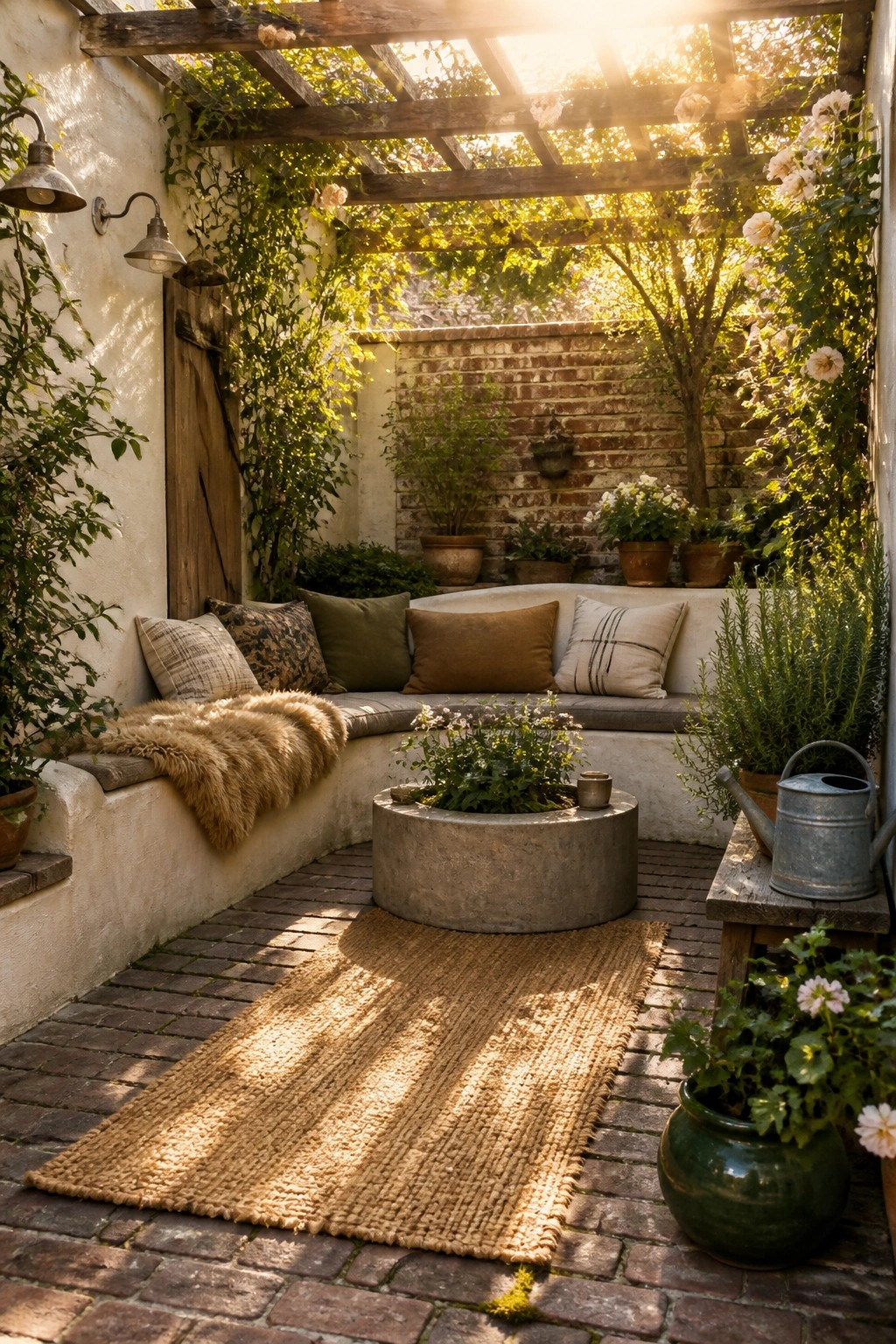
Built-in seating works well in tight outdoor spaces because it uses the walls instead of taking up floor area. A simple bench that follows the shape of the patio gives you room for cushions and still leaves space in the middle for a small table or plants.
This approach suits city courtyards and shared terraces where furniture has to stay put. Keep the cushions weatherproof and add a rug on the bricks if you want the area to feel more finished.
Stepping Stone Paths For Narrow Terraces
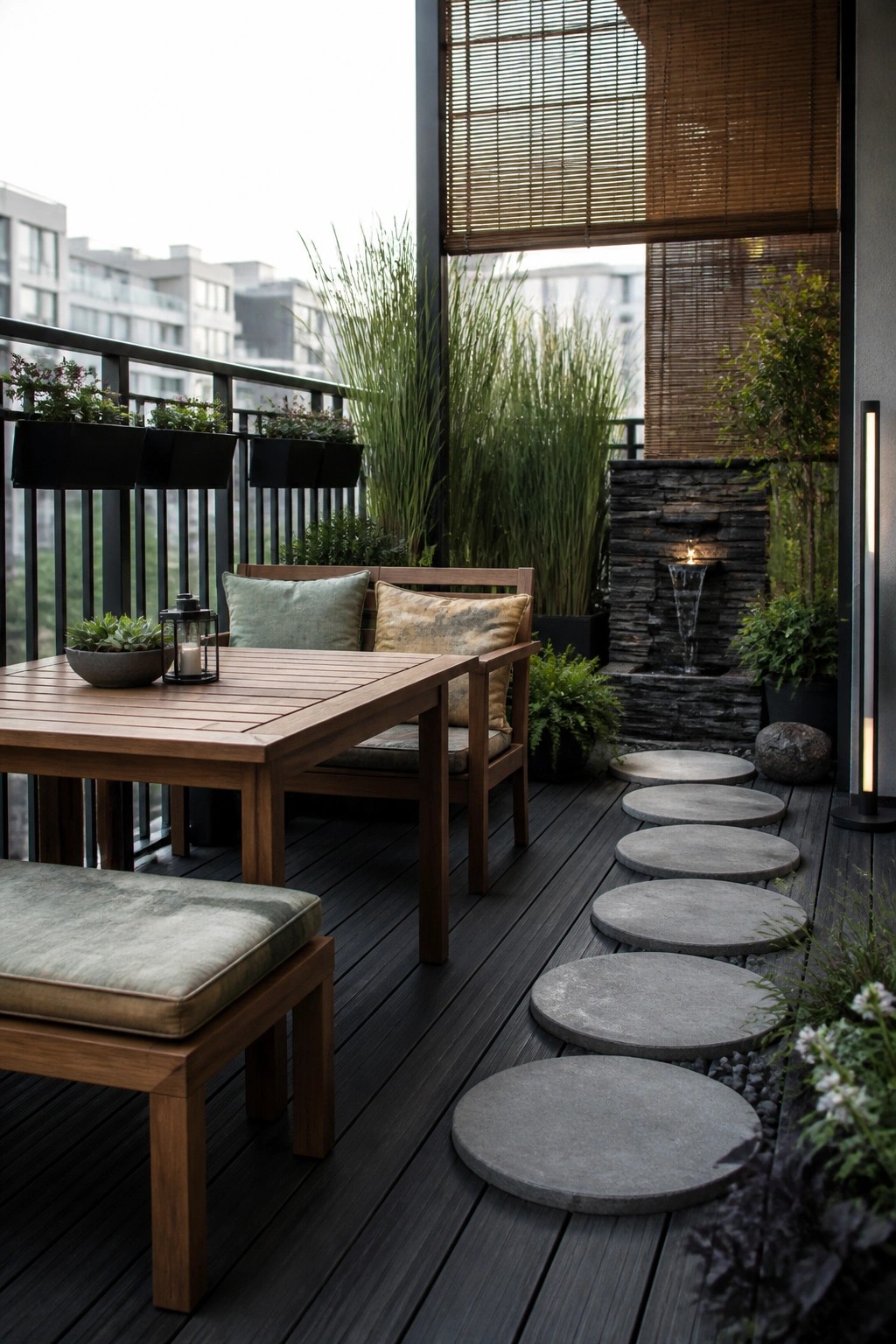
Stepping stones laid across a deck give a narrow patio a clear sense of movement without eating up floor space. They break up the flat surface and lead people toward a focal point like a small fountain, which keeps the area from feeling like one big rectangle.
This works well on city balconies or shared terraces where you need to separate a seating zone from the rest of the deck. Keep the stones simple and round, space them evenly, and let low plants soften the edges so the path feels natural rather than forced.
Add a Bar Counter to Your Outdoor Kitchen
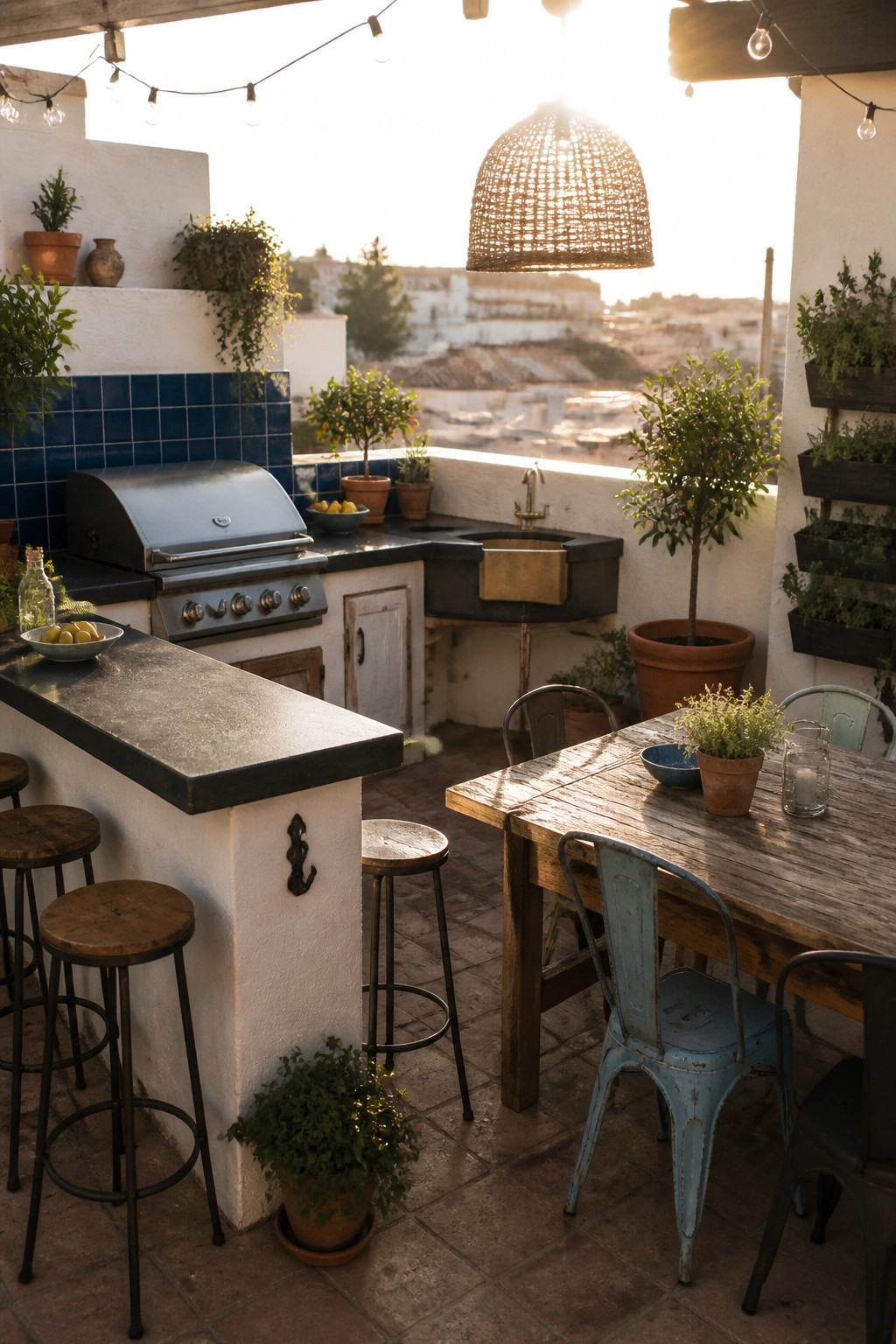
A bar counter with stools right next to the grill gives people a place to sit and talk while food is cooking. It turns the kitchen area into a natural gathering spot without taking up much extra floor space on a small terrace.
This setup works best on urban patios that need to handle both cooking and meals in one area. Keep the counter along the edge for casual seating and place a separate table nearby for actual dining. Just make sure there is still room to move between the two zones.
Use a Stone Lantern to Light a Small Patio Garden
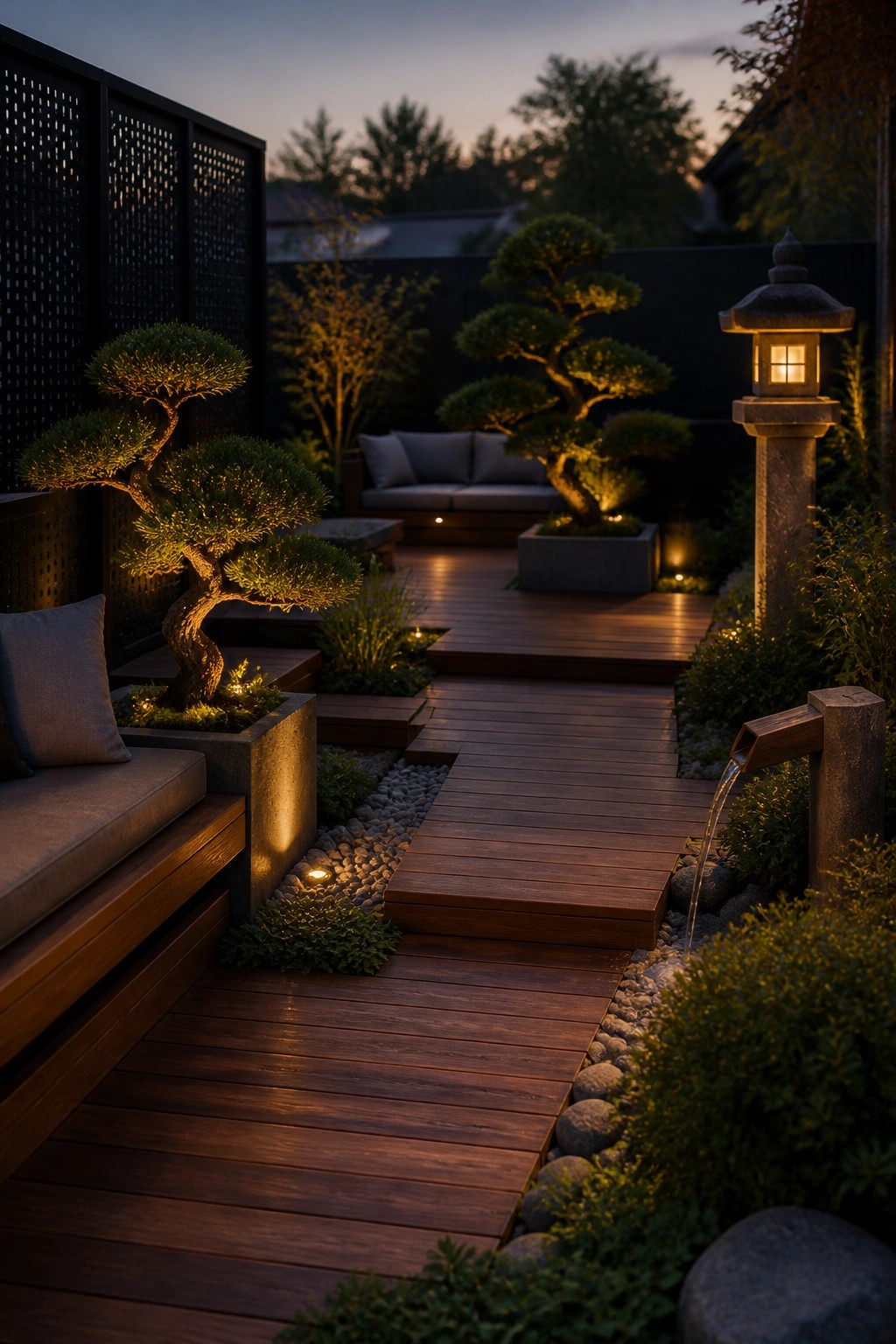
A stone lantern gives a patio garden a steady, low glow that feels calm without being bright. It works especially well in tight city spaces where you want light that guides the eye along a path or highlights a few key plants instead of flooding the whole area.
Place the lantern near a seating zone or along the edge of a deck so it marks a natural stopping point. Pair it with a few small path lights if you need a bit more visibility at night, but keep the overall effect soft so the space still feels private and restful.
Hang a Swing for Relaxed Patio Seating
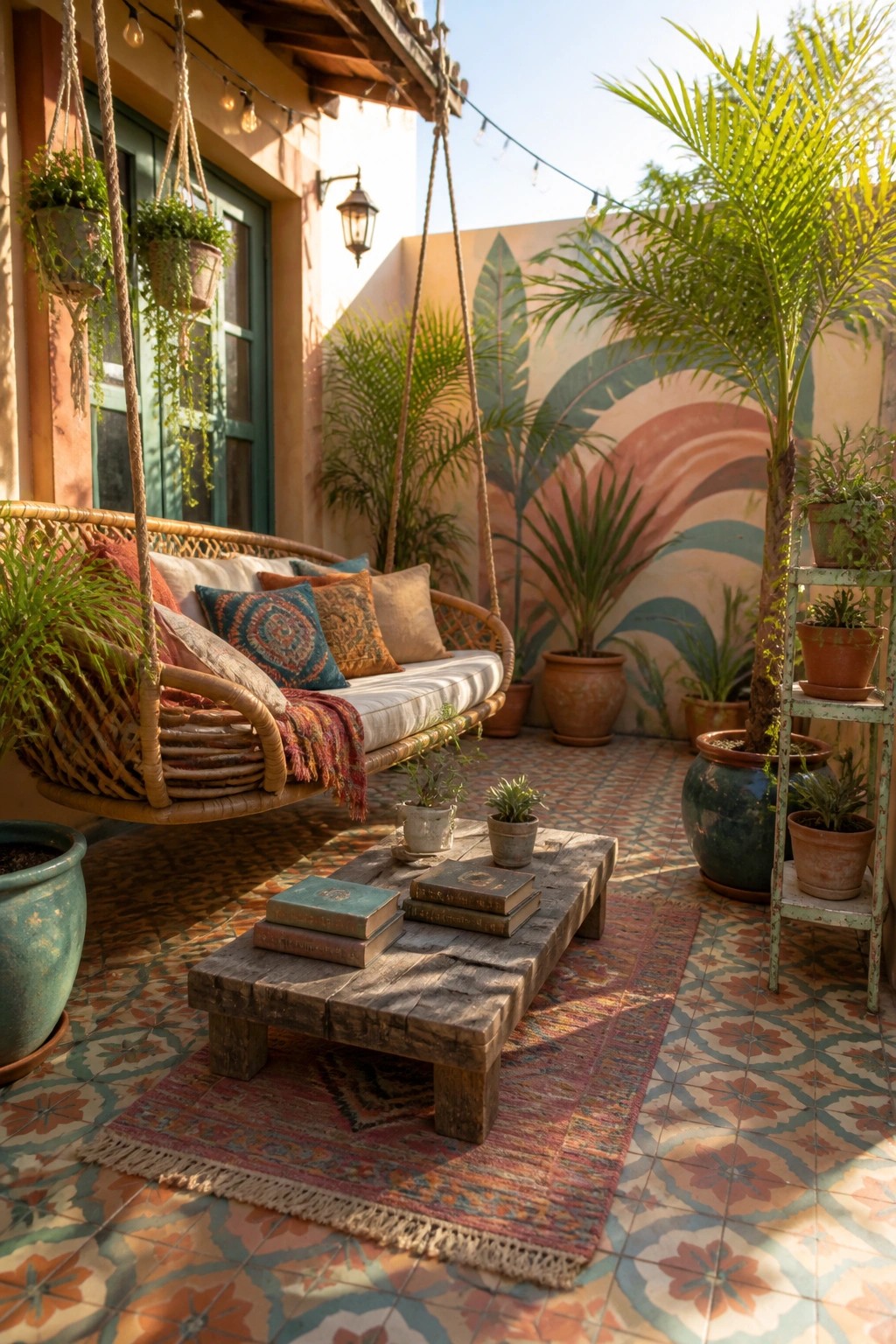
A hanging swing takes up little floor space while giving you a comfortable spot to sit back and enjoy the outdoors. It works well in tight urban patios because it leaves room for plants and a simple table underneath.
Hang it from a solid beam or bracket and use sturdy rope or chain. This idea suits small terraces and shared courtyards where people want seating that feels casual without crowding the area.
Folding Sets For Narrow Courtyards
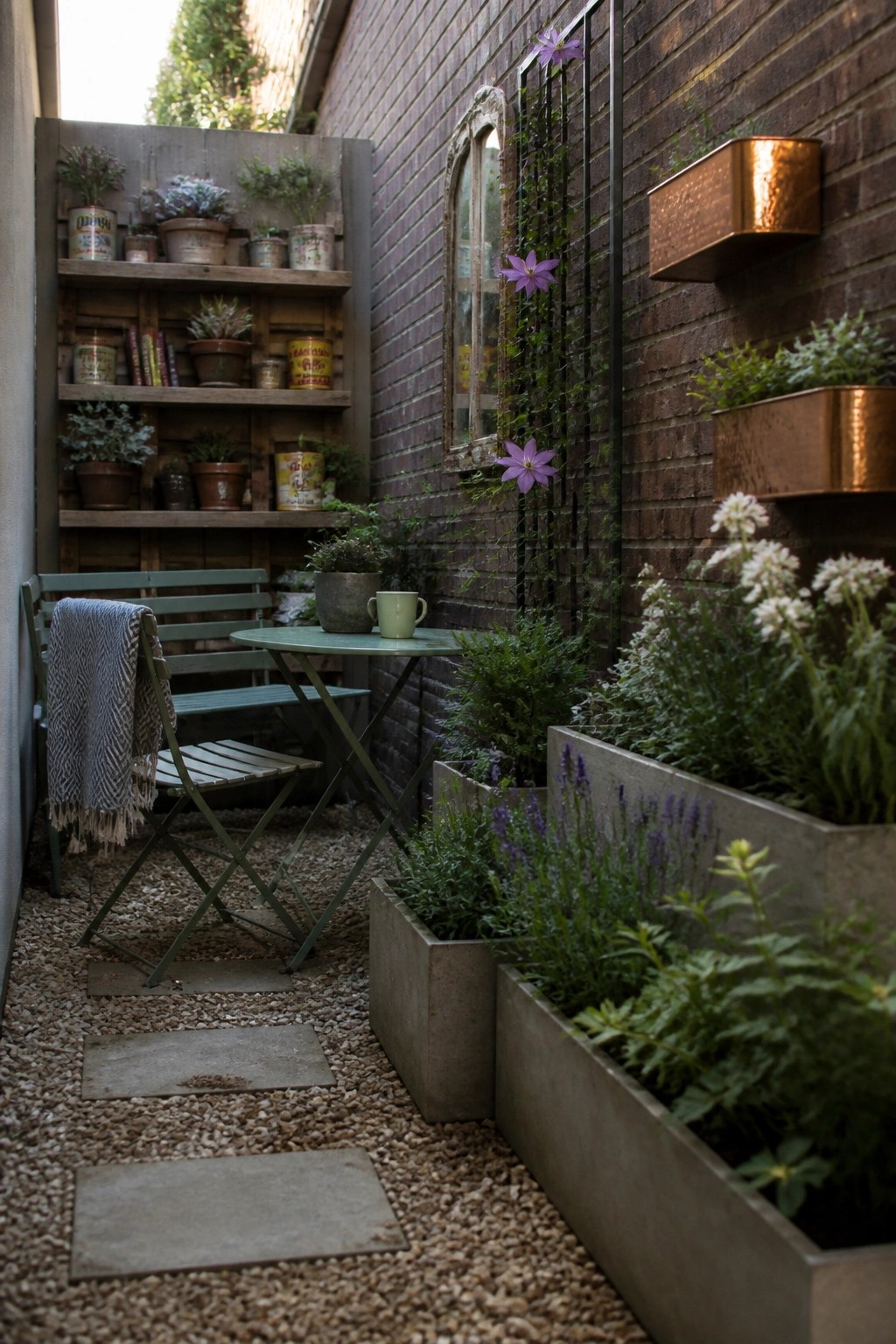
A small folding table and a couple of chairs can turn a tight passage into a usable spot without blocking the way. In city spaces where every inch counts, these lightweight pieces tuck away when you need more room and come right back out for coffee or a quiet moment.
They work especially well in shared courtyards or side yards with gravel underfoot and raised beds along the edges. Just keep the set compact and choose simple metal or wood that can handle weather. Avoid anything bulky that stays out all the time.
Raised Beds Help Maximize Space On City Terraces
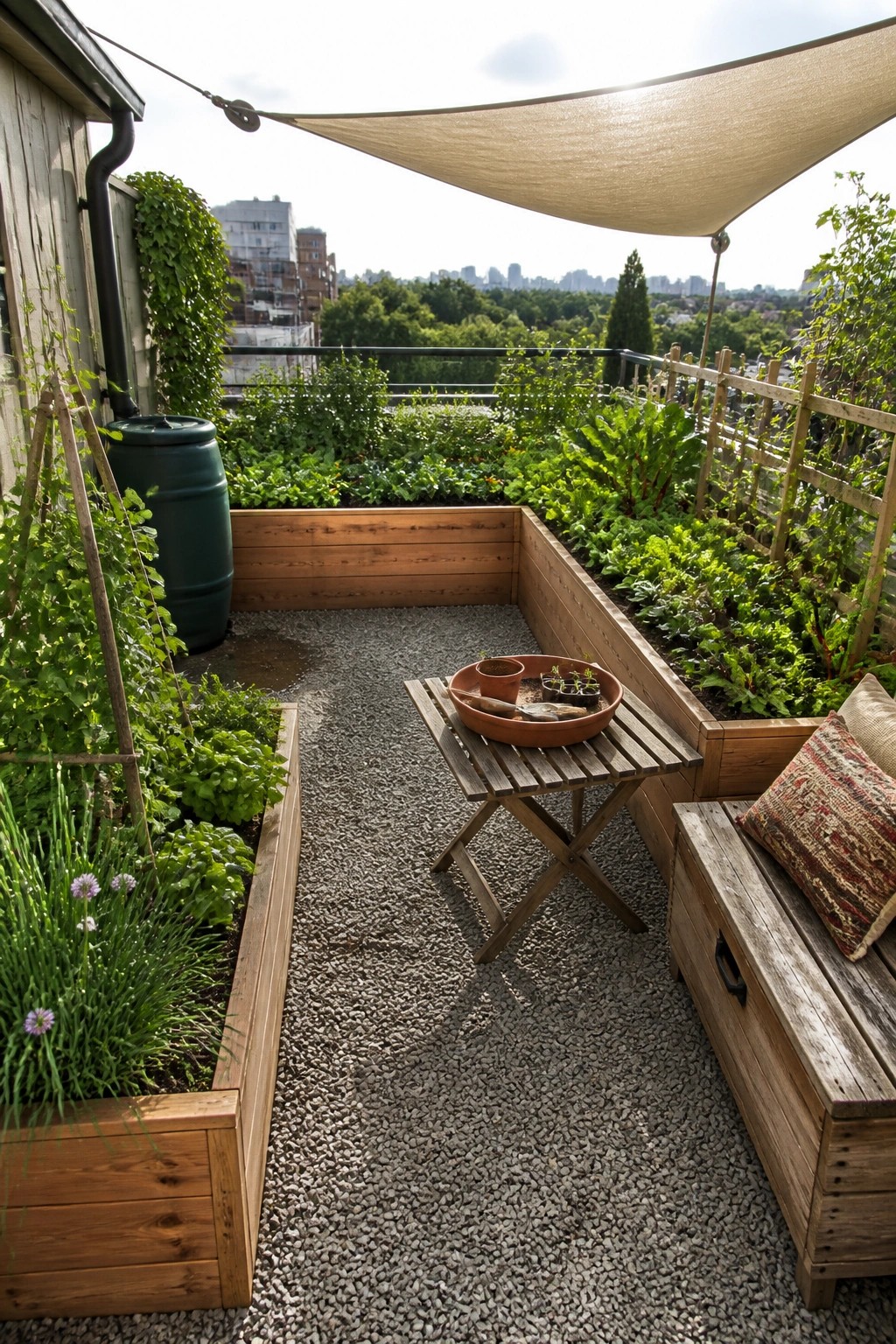
Raised beds give you a simple way to grow plenty of plants without taking over the whole patio. They keep the soil contained, make watering easier, and leave a clear walking area in the middle. On a small terrace this setup turns what could be just a sitting spot into a place that actually produces food.
This works best on rooftops or balconies with a solid floor. The beds can run along the edges and still leave room for a table or a couple of chairs. Gravel underfoot helps with drainage and keeps things from feeling muddy after rain. Just make sure the structure can handle the weight before you build.
Central Fire Pit for Small Patios
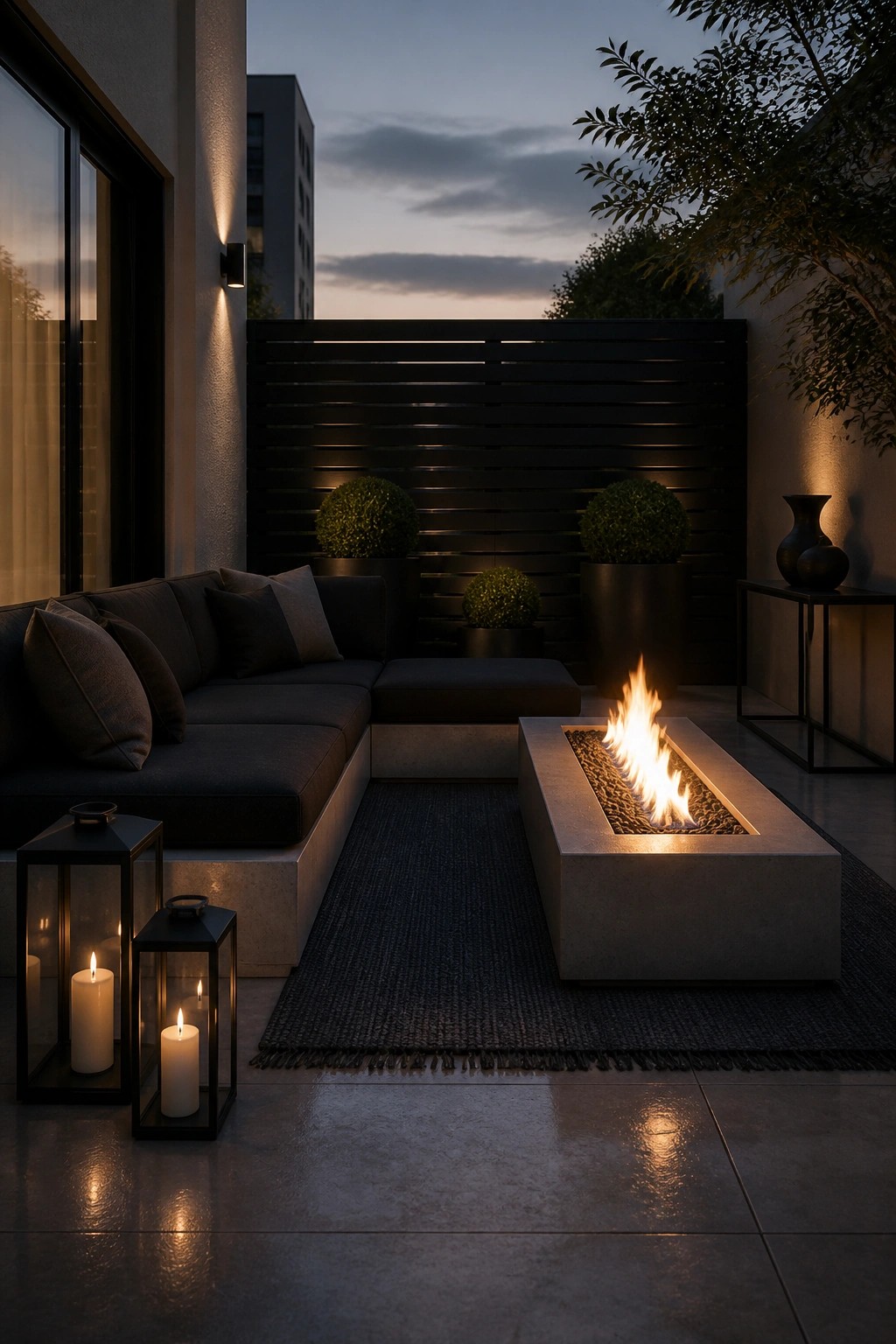
A fire pit placed right in the middle of the seating area gives a small urban patio a clear reason to be used after sunset. It pulls everything together without needing lots of extra pieces or decoration.
This approach works best on terraces and shared courtyards where space is tight. Keep the seating low and close to the pit so the warmth reaches everyone and the layout stays practical.
Layer Pots Around a Small Patio Table
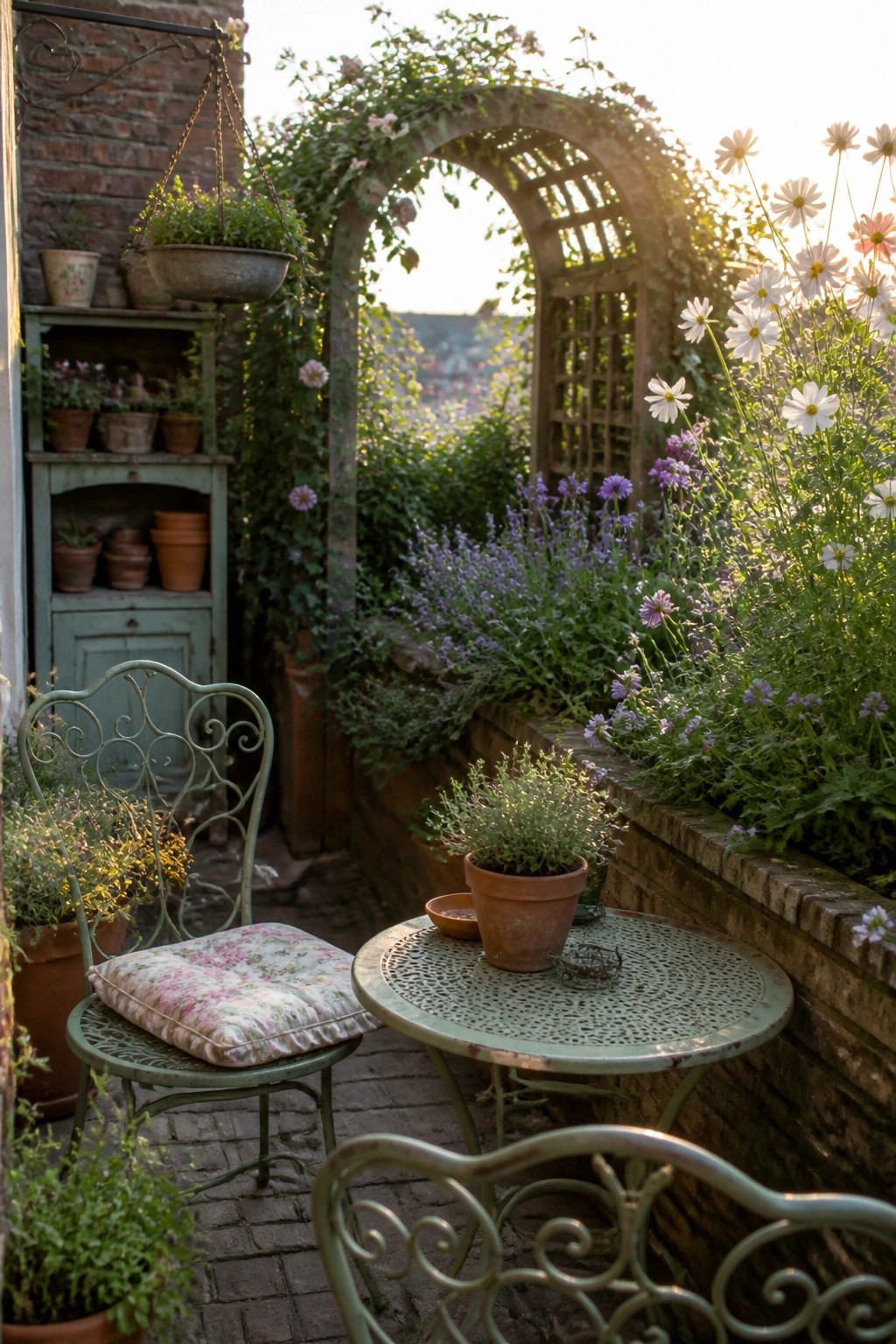
Many small terraces feel more inviting when you place a table and chairs right in the middle of the plants instead of pushing everything to the edges. The mix of pots at different heights creates a sense of enclosure without needing walls or screens.
This approach works especially well on city rooftops or shared courtyards where space is tight. Use a few larger pots on the floor, line the edge with smaller ones, and let a couple of climbers run up an arch or railing. Just watch that the pots do not block the walkway when people need to move around the table.
Central Planter To Anchor Rooftop Seating
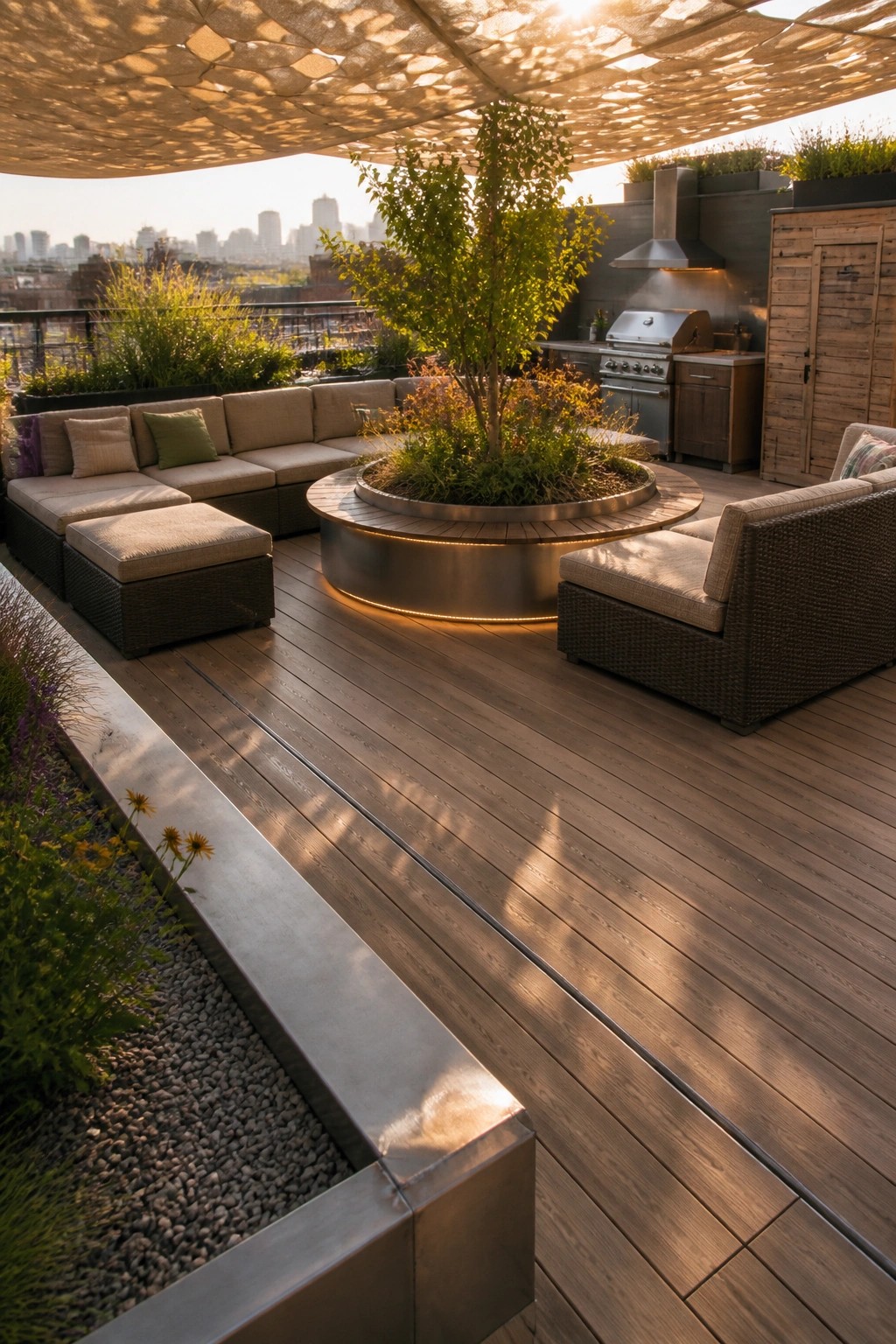
A round planter placed in the center of the deck gives the whole patio a clear spot to gather around. It breaks up the open floor without needing walls or extra furniture and keeps the seating from feeling too spread out on a flat rooftop.
This setup suits city terraces and small upper-level spaces where you want some greenery but still need room to move. Keep the planter low and wide so it does not block views, and use it to separate lounging from the cooking area if you have one.
Frequently Asked Questions
Q: My terrace gets almost no direct sun. What plants will actually work there?
A: Pick shade lovers like ferns or hostas and group them in the corners where light bounces off walls. Water them a bit more often since city shade can stay damp longer. Rotate the pots every week or two so growth stays even.
Q: Neighbors share the courtyard and I worry about clutter.
A: Stick to one or two big planters instead of scattering small ones around. Ask the building manager first if you want to add a small screen for privacy. Keep everything movable so cleanup stays simple when needed.
Q: How often should I water when I’m gone for weekends?
A: Set up a drip tray under each pot and use self watering inserts. That way the soil stays moist without daily checks. Test the system for a week before you leave.
Q: Is it worth building raised beds on a small patio?
A: Skip the build and go for stackable crates instead. They drain better in tight city spots and you can move them if rules change.
