

I’ve found that patios tend to work better when the seating areas sit close to the main house entrance instead of being pushed to the far end.
That placement makes it easier to carry things out and keeps the space feeling connected to the rest of the yard.
Flow becomes obvious once you actually live with the setup for a while.
The plant zones I added last year taught me to leave wider gaps between beds so paths stay usable even after everything grows in.
Testing small changes like these has helped me see which layouts hold up once the season gets busy.
Long Benches Create Better Flow In Narrow Patios
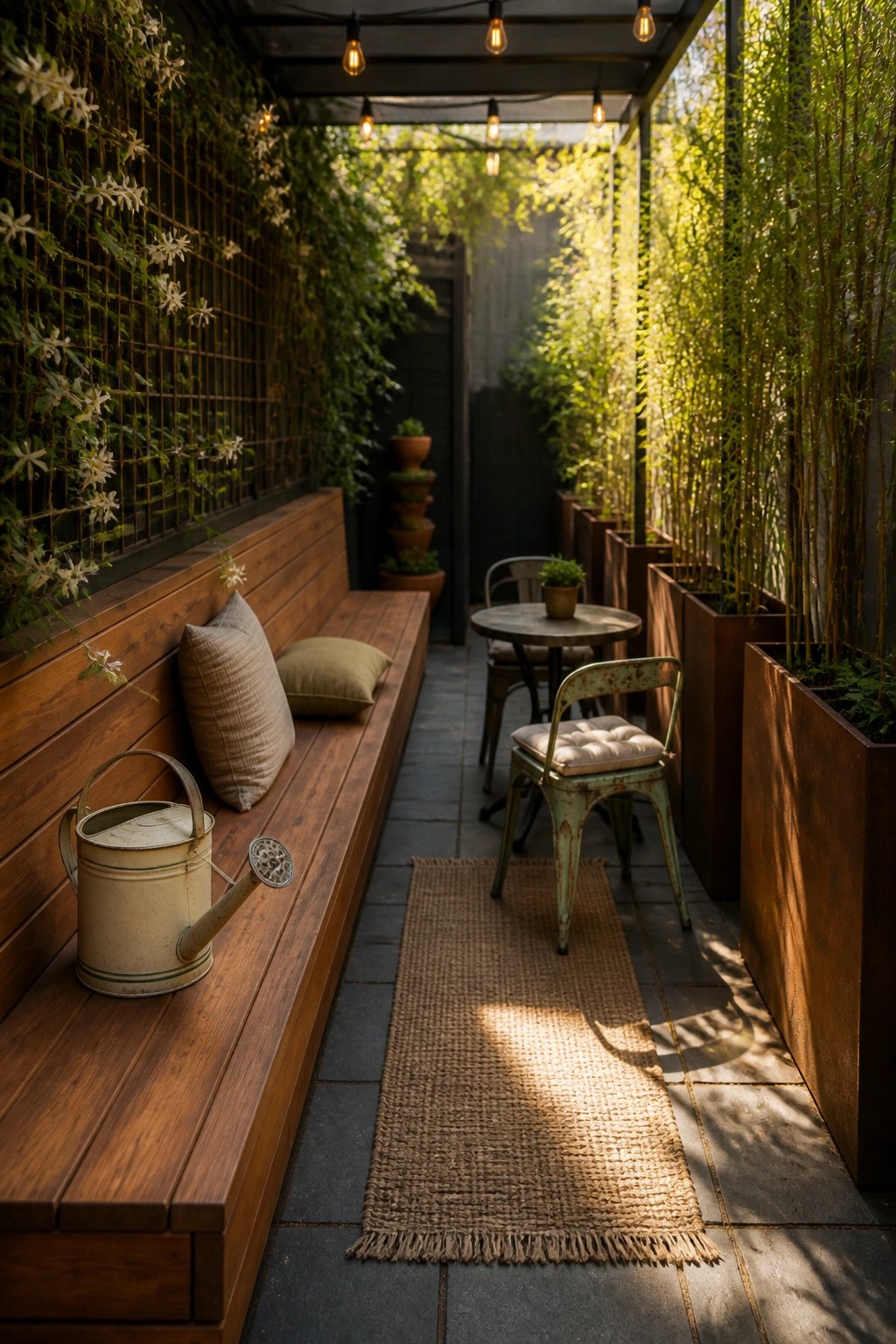
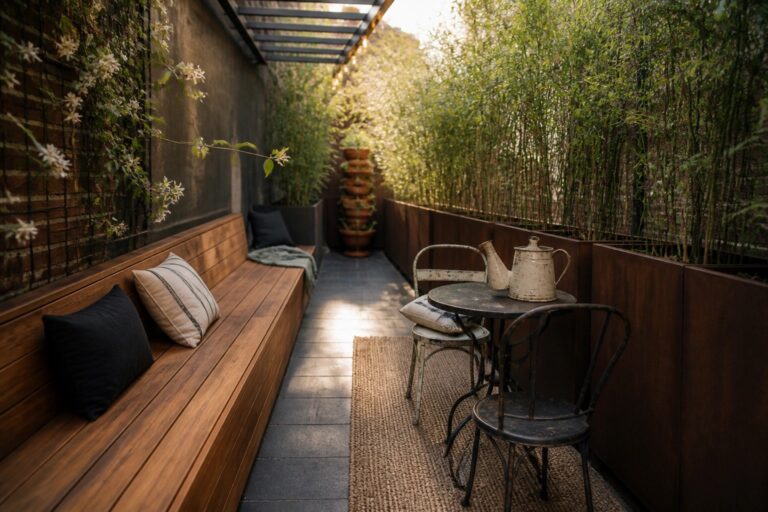
A long bench along one wall turns a narrow patio into a usable space without crowding the center. It gives seating for several people while leaving a clear path through the middle for walking.
This layout suits small side yards or tight courtyards where width is limited. Add tall planters on the opposite side to bring in greenery and keep the area feeling open rather than closed in.
Round Table Seating That Improves Patio Flow
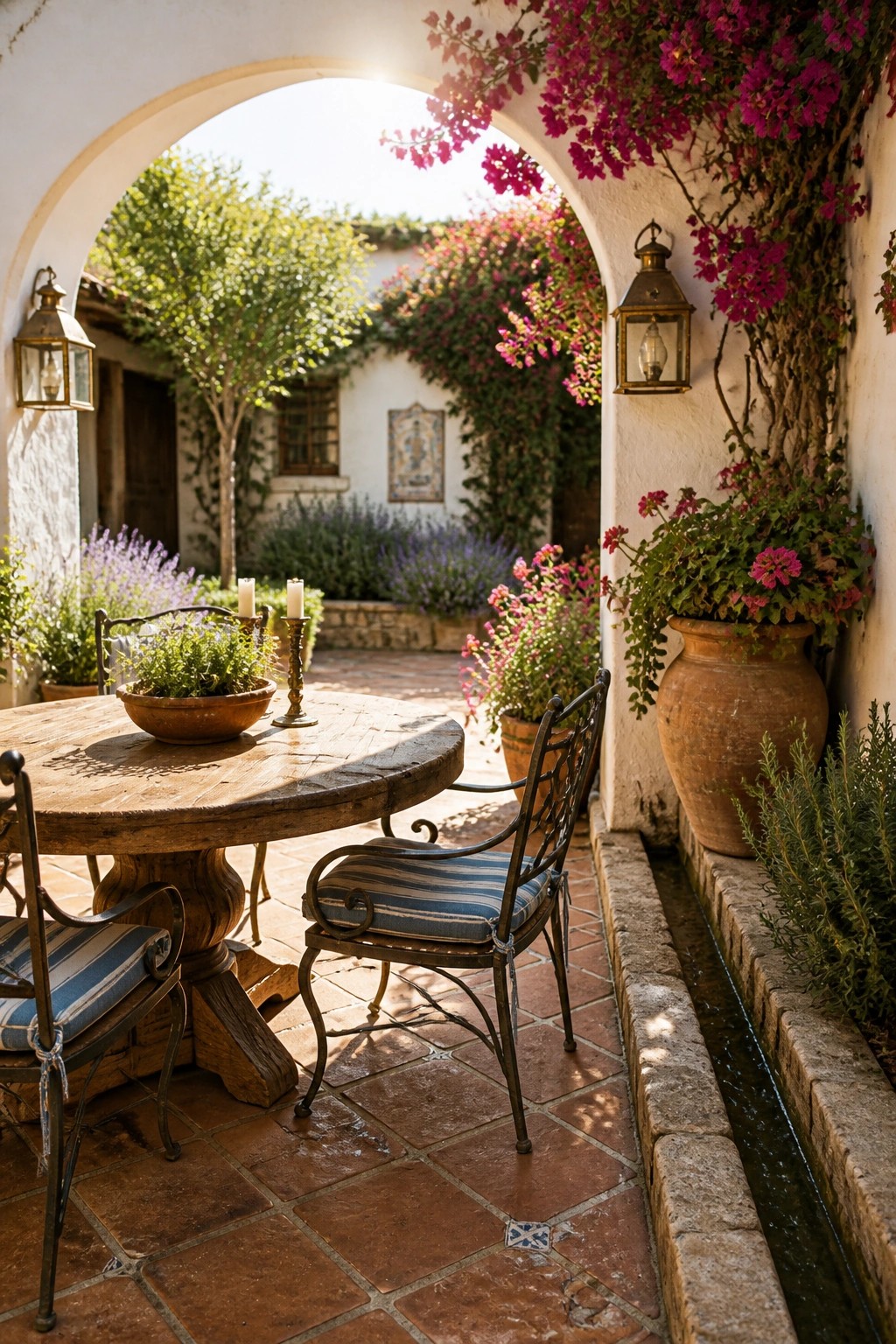
A round table helps keep movement easy on a small patio because there are no sharp corners to bump into or block the path. It creates a natural spot for seating while leaving room around the edges for plants and other features to sit without crowding the space.
This layout works best on patios that already have some architectural edges like a wall or channel. Keep the table centered or slightly off to one side, add a few potted plants nearby, and let a narrow water line run along the border to separate the seating zone from the rest of the garden.
Mix Bench Seating With Chairs Around The Table
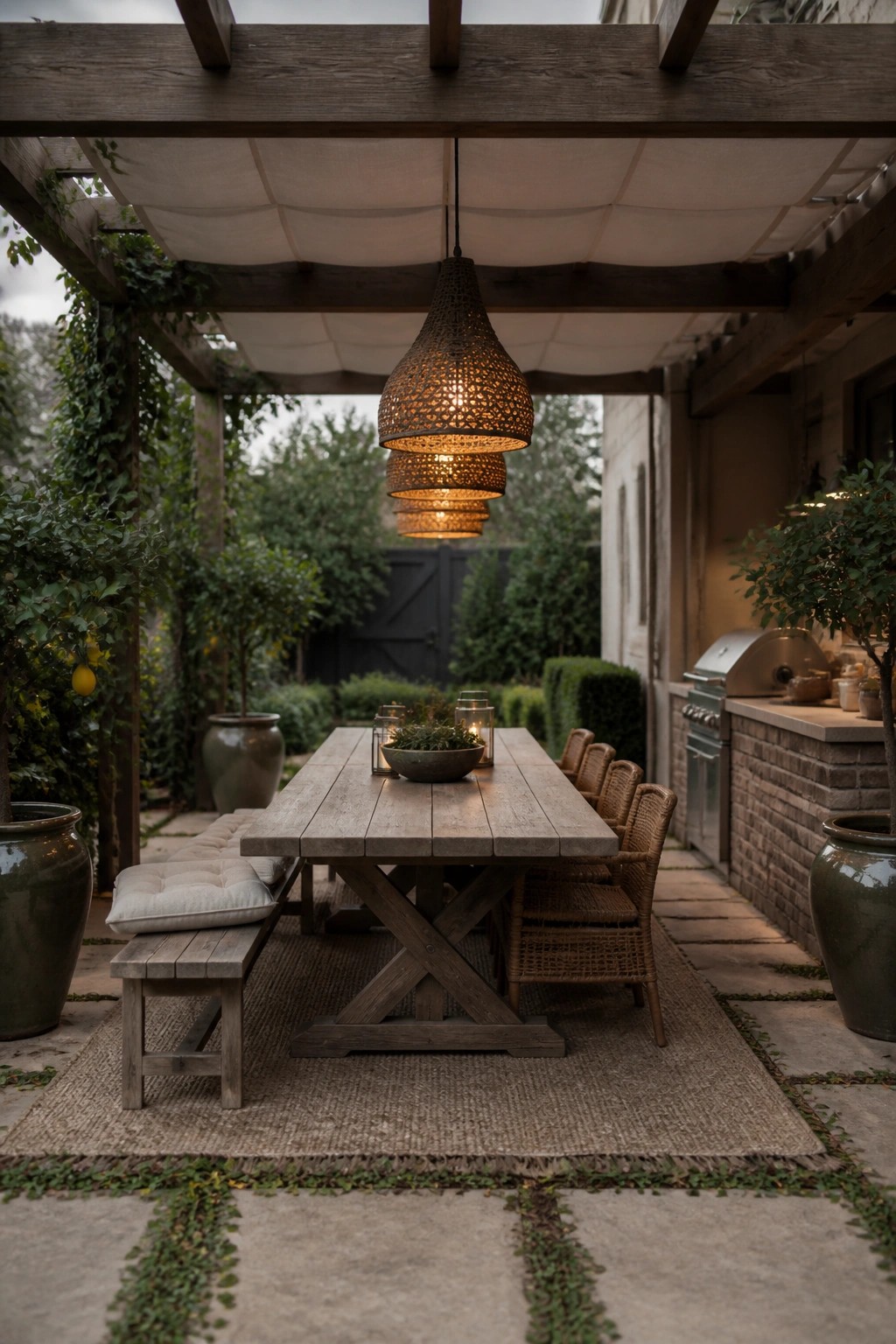
A long table works better when one side has a bench instead of all chairs. It opens up the space so people can slide in easily and makes room for more guests without crowding. The bench also gives the setup a relaxed look that fits a garden patio.
This arrangement works best on covered patios where you have a wall or planter on one side. It suits homes that want simple seating that can handle both everyday meals and larger gatherings. Just make sure the bench is not too deep or it can feel hard to get in and out.
Circular Seating Around A Fire Pit
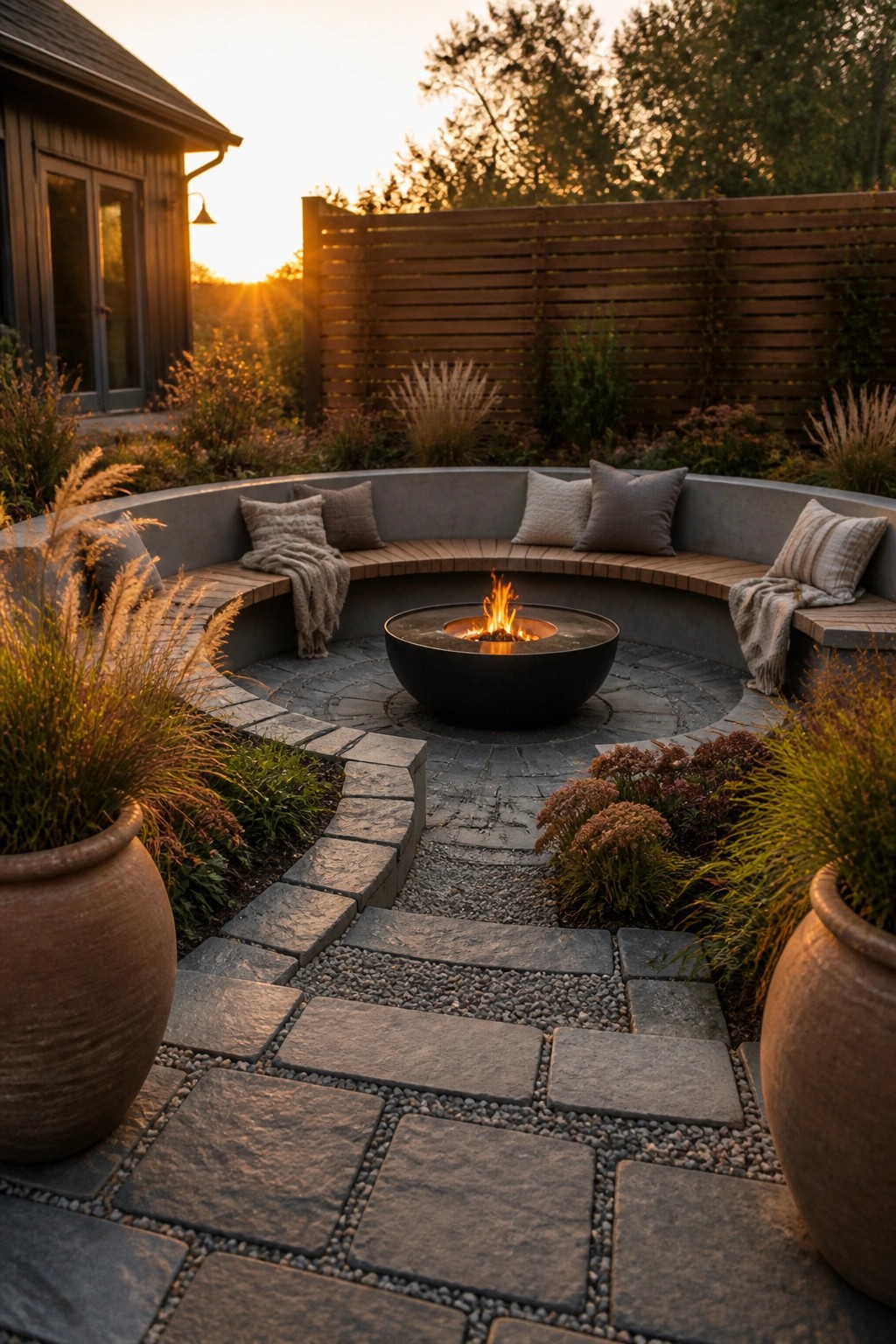
A round fire pit with seating that curves all the way around it keeps the whole patio feeling open and easy to move through. The shape pulls people together without blocking the path from the house or garden, and it leaves room for plants along the edges so the space does not feel too hard or empty.
This layout works best in medium backyards where you want one clear spot for evenings outside. Keep the bench low and simple, add a gravel or stone path leading straight to it, and let taller plants sit just behind the seating so the zone stays practical without crowding the fire.
Create Distinct Zones With Stepped Levels
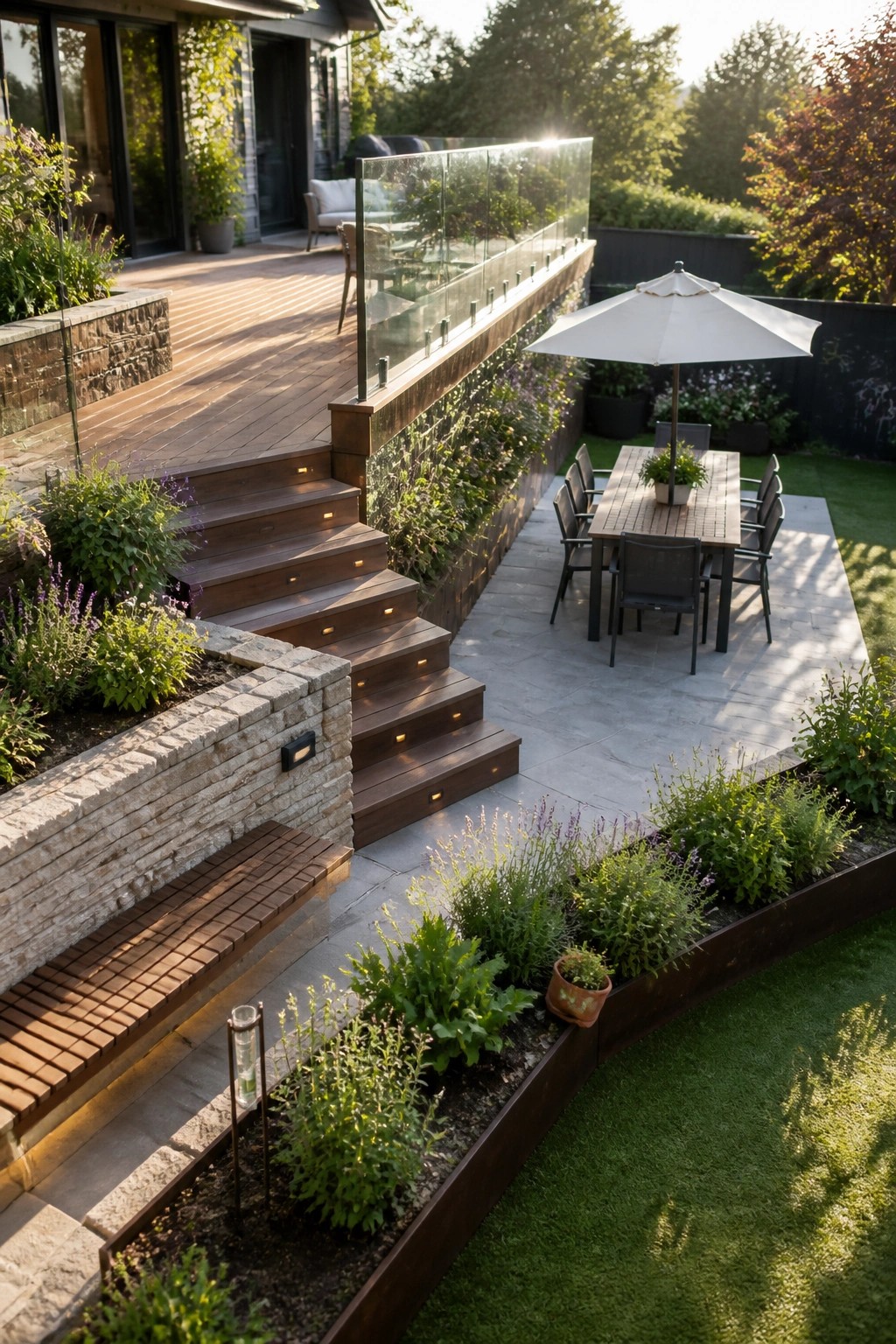
Stepped levels work well when you want to keep seating and planting areas from running into each other. The change in height makes each part feel separate without needing walls or fences, and the steps themselves become a simple path that keeps people moving through the space.
This approach fits homes with even a slight slope or where the yard sits lower than the main deck. Keep the steps wide enough for easy use and add lighting if the area sees evening traffic. Just avoid cramming too many levels into a small space, since that can make the layout feel choppy instead of useful.
Use a Living Wall to Add Greenery Without Losing Floor Space
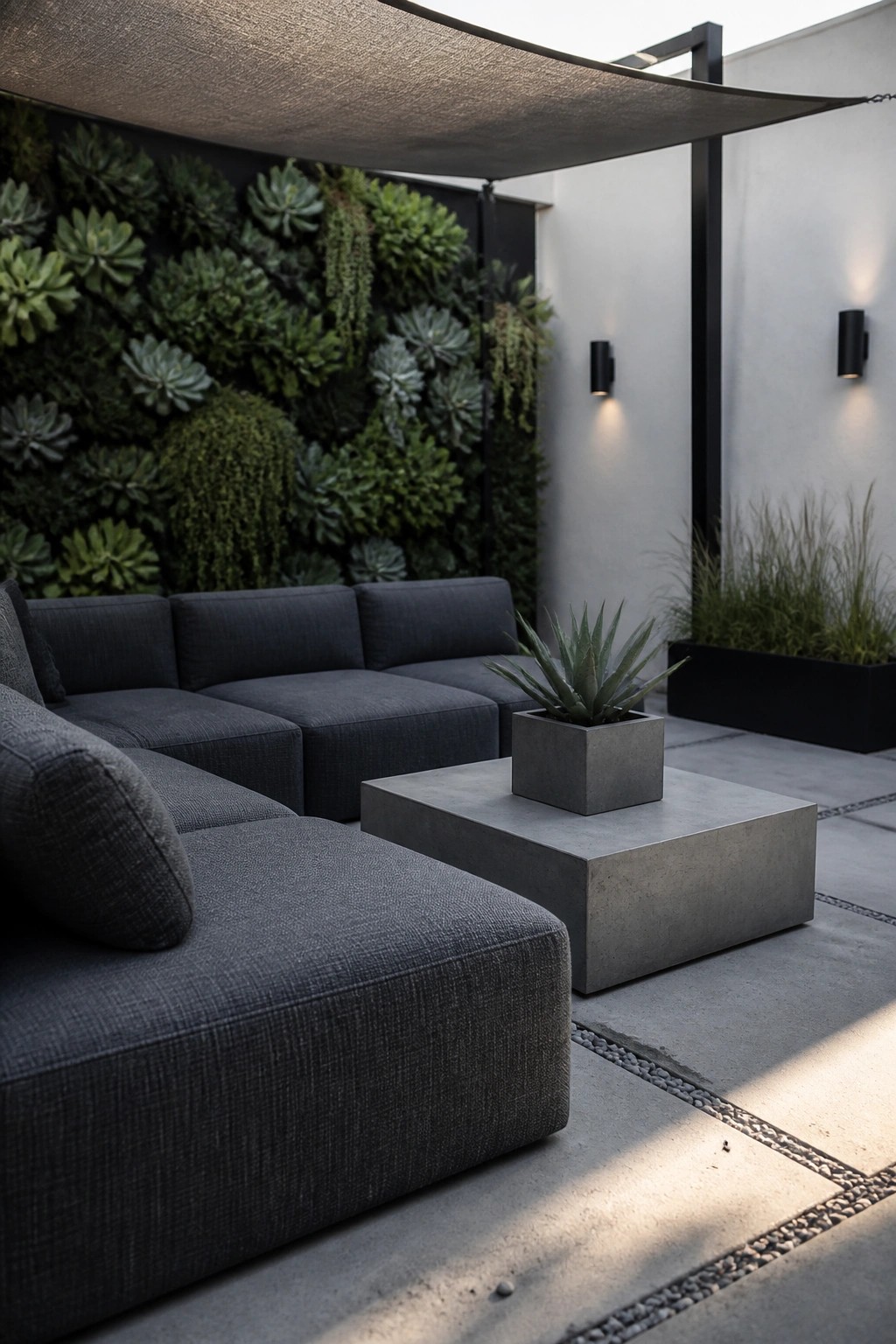
A living wall works well when you want more plants around your seating but do not have room for big pots or raised beds. It turns the back edge of the patio into a planted zone while keeping the floor open for movement and furniture.
This approach suits smaller patios or side yards where you still need a clear walkway. Place the wall behind the main seating, keep the planting mostly green and low maintenance, and let it do the work of softening the space.
Place Seating Next to the House
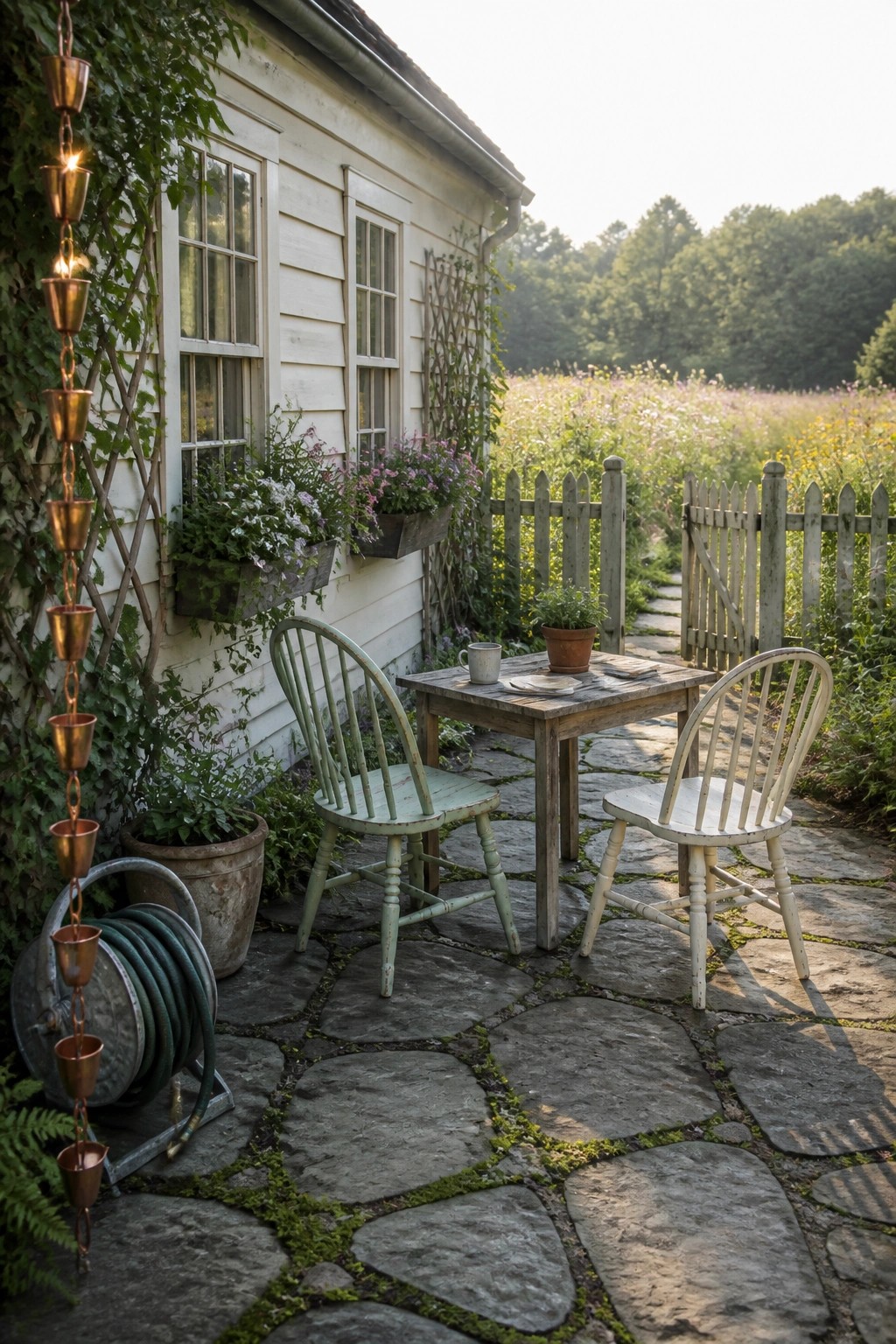
A small table and a couple of chairs set right against the house wall turn an empty patch of patio into a spot you actually use. It keeps everything close at hand, so you can carry out a cup of coffee without much effort and still feel connected to the garden beyond.
This works best on modest patios where you do not want to block walking paths or crowd the plants. Stick with simple wood pieces that age well, and leave enough room on one side so people can move through without squeezing past.
Arrange Lounge Chairs In A Straight Line By The Pool
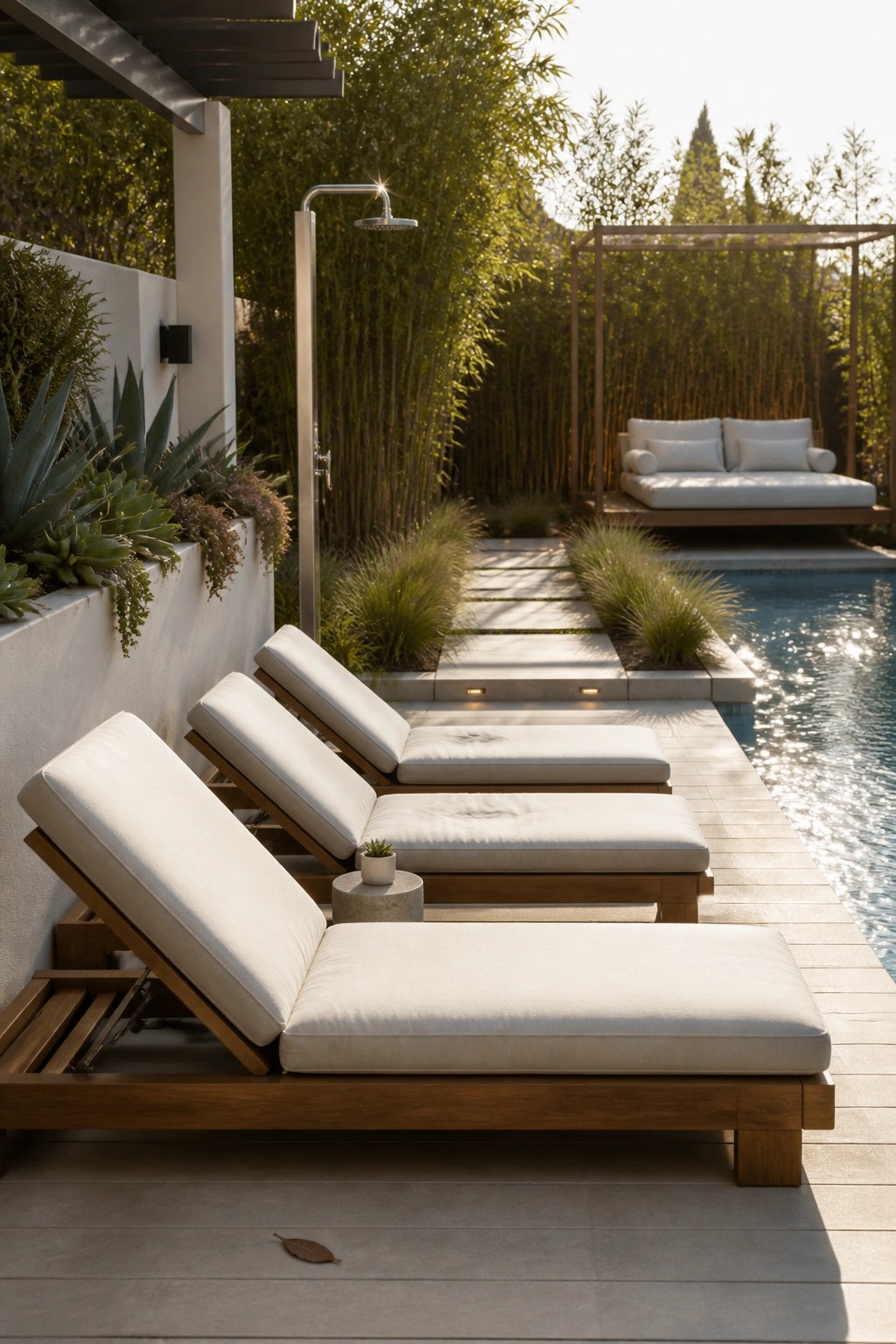
Lining up lounge chairs along the edge of the pool creates a simple seating zone that keeps the space easy to move through. The straight row gives everyone a clear view of the water while leaving room for paths and planting on the other side.
This layout works best on longer pool decks where you have enough length to fit several chairs without crowding. It suits homes that want practical seating without extra structures or complex furniture arrangements.
Vertical Planting Keeps a Small Patio Open for Seating
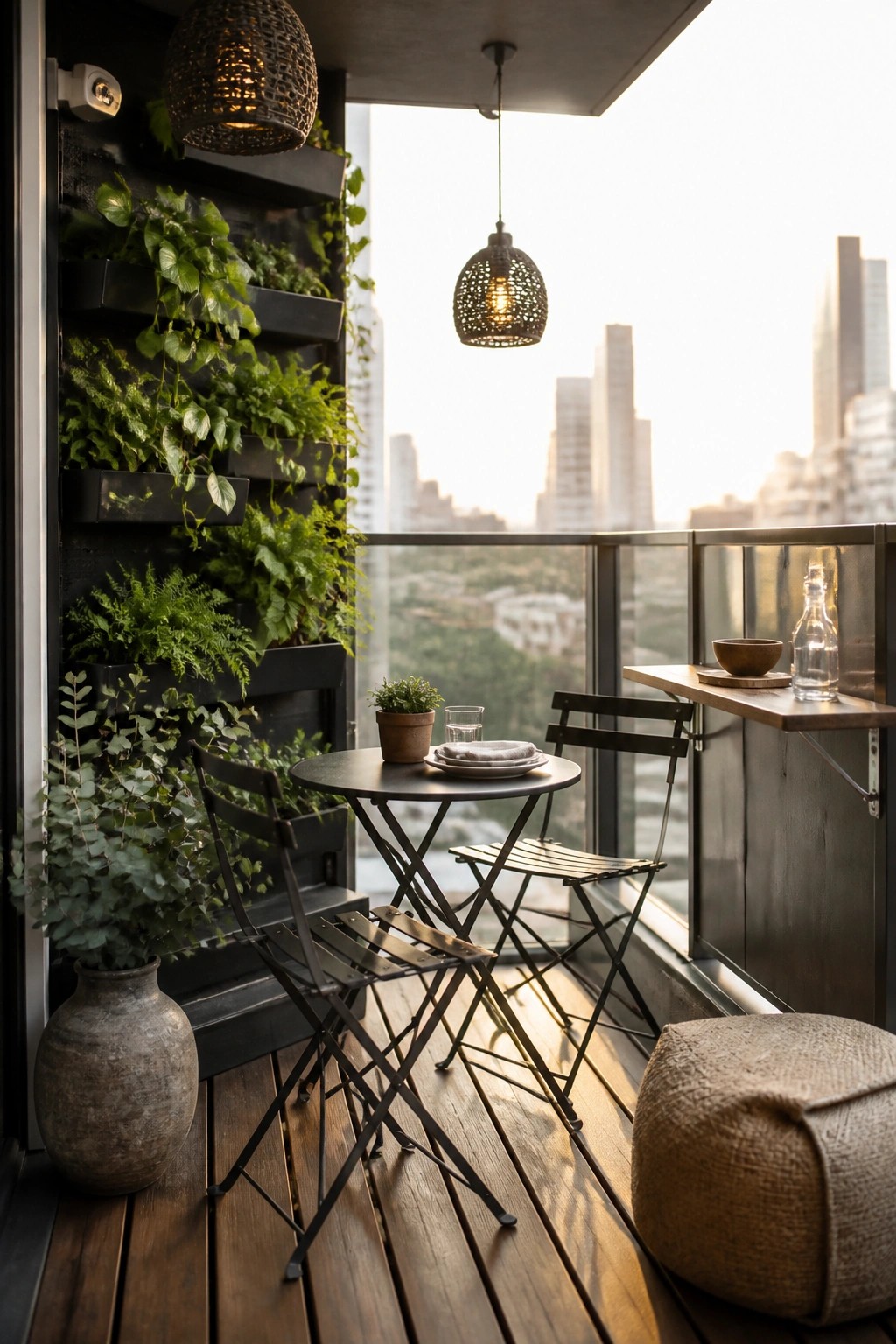
A vertical garden wall turns an otherwise blank surface into a plant zone without taking up floor space. On a compact balcony this leaves room for a small table and a couple of folding chairs that can be moved around easily when you need to walk through.
The setup works best on urban balconies or narrow patios where every square foot counts. Use sturdy brackets and lightweight planters so the wall can handle the weight, and keep the seating simple so the area does not feel crowded.
Curved Paths for Better Outdoor Flow
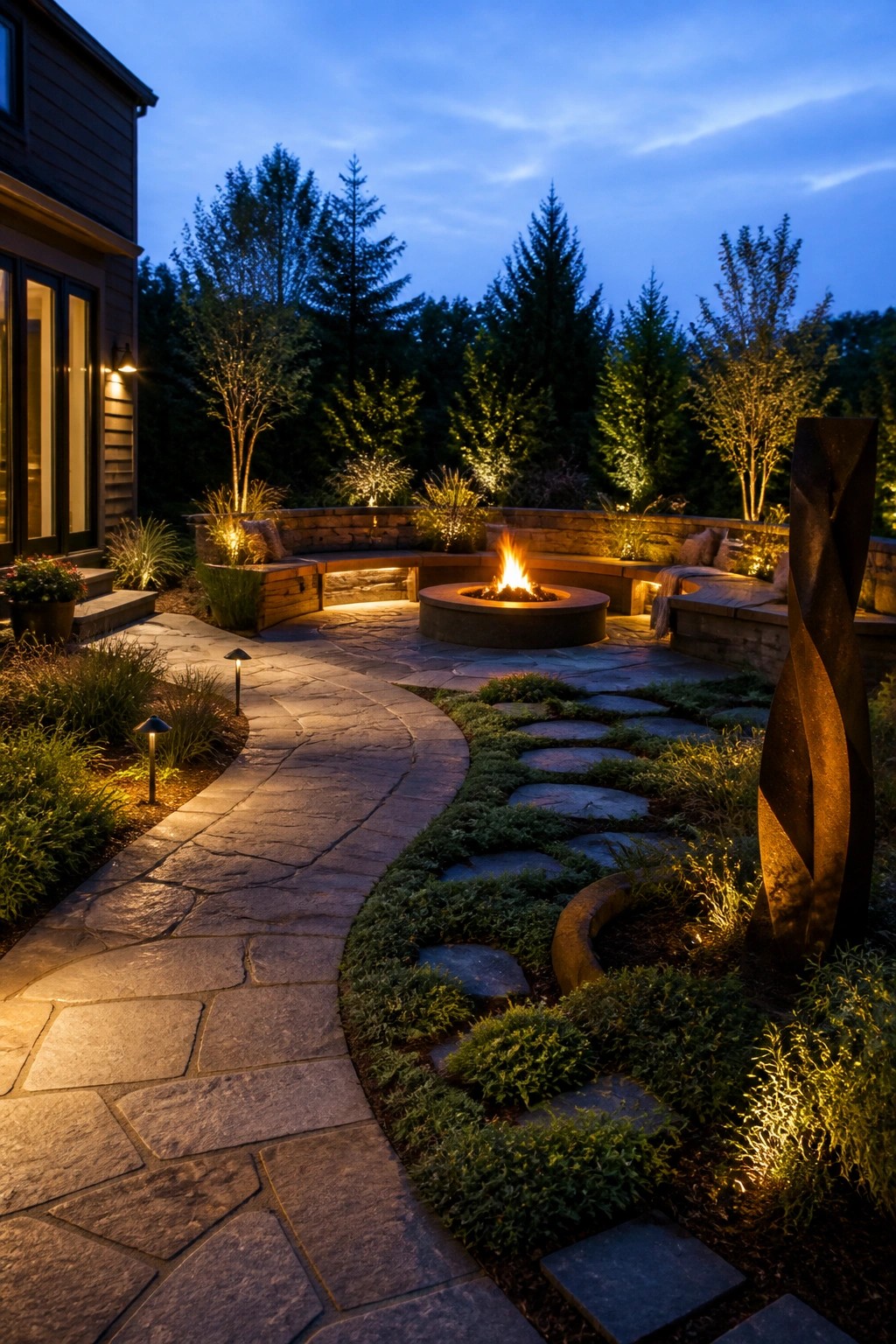
A curved stone path helps a patio garden feel more open while still guiding people through the space. It creates a natural route that connects seating areas to other zones without making the layout feel chopped up or too formal.
This approach works best on medium or larger patios where you want to keep the fire pit as a central spot but still leave room for planting beds and walking room. It suits homes with existing garden beds that need a simple way to tie everything together.
Divide Patio Zones With a Linear Water Feature
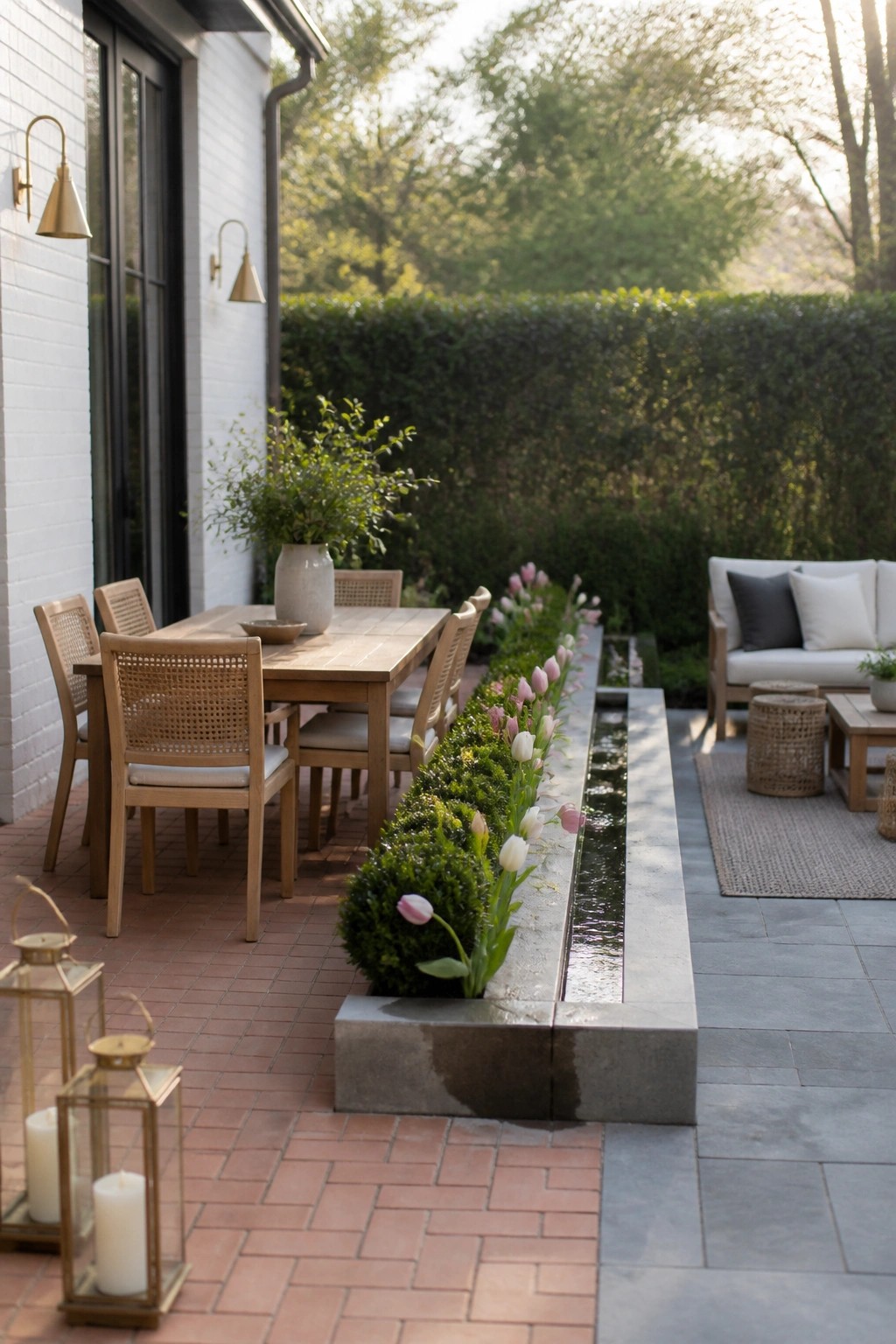
A long, narrow water channel with plants running down one side can split a patio into clear areas without making the space feel chopped up. The water adds a quiet sound and the plants stay contained, so the whole layout stays open and easy to walk through. This setup works especially well when you want dining on one side and lounging on the other.
It suits homes where the patio sits between the house and the yard and needs some structure. Keep the channel low so it does not block sight lines, and choose plants that can handle both sun and occasional splashing. The result feels organized but still relaxed.
Curved Raised Beds Along Paths
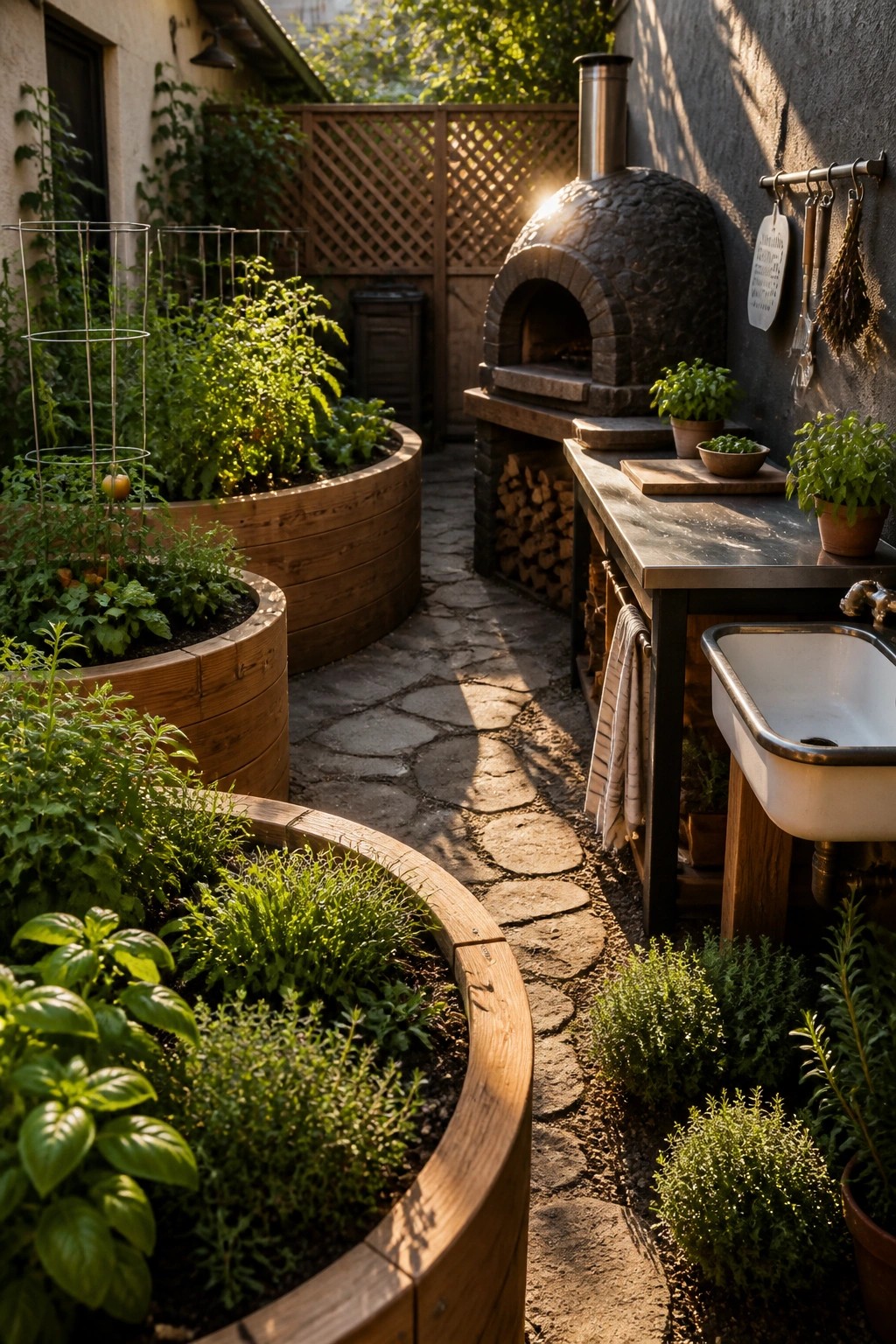
Curved raised beds work well in narrow side yards or small patios because they soften the edges and keep the space from feeling like a straight hallway. The beds create clear planting zones while still leaving room for a path that moves people through the garden without crowding the plants.
This layout suits homes with limited outdoor space where you want both vegetables and a cooking area. Keep the beds about waist high so you can reach the center easily, and use the same material for the beds and any nearby counters so everything feels connected. Watch the width of the path so a wheelbarrow or grill cart can pass through without scraping the sides.
Terraced Retaining Walls for Sloped Gardens
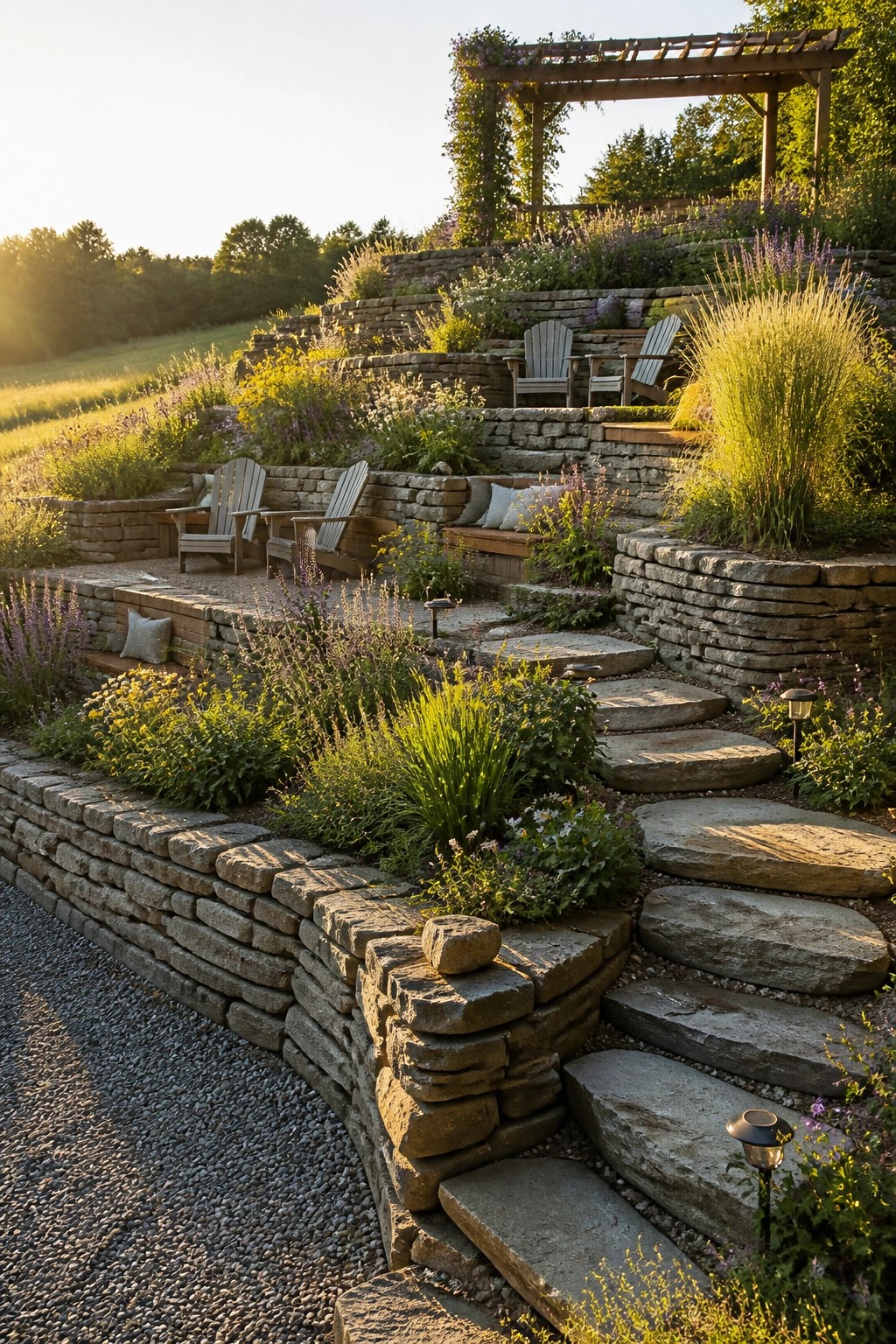
Terraced retaining walls work well when a yard sits on a slope. They break the hill into flatter sections that are easier to plant and walk through. Stone walls give the beds a clear shape and keep soil in place without looking too built up.
This approach suits homes with uneven ground where a single flat patio would feel forced. Keep paths between the levels wide enough for comfortable movement and group plants by height on each terrace. Avoid packing too many walls close together or the space can start to feel chopped up.
Define Seating with a Circular Paved Zone
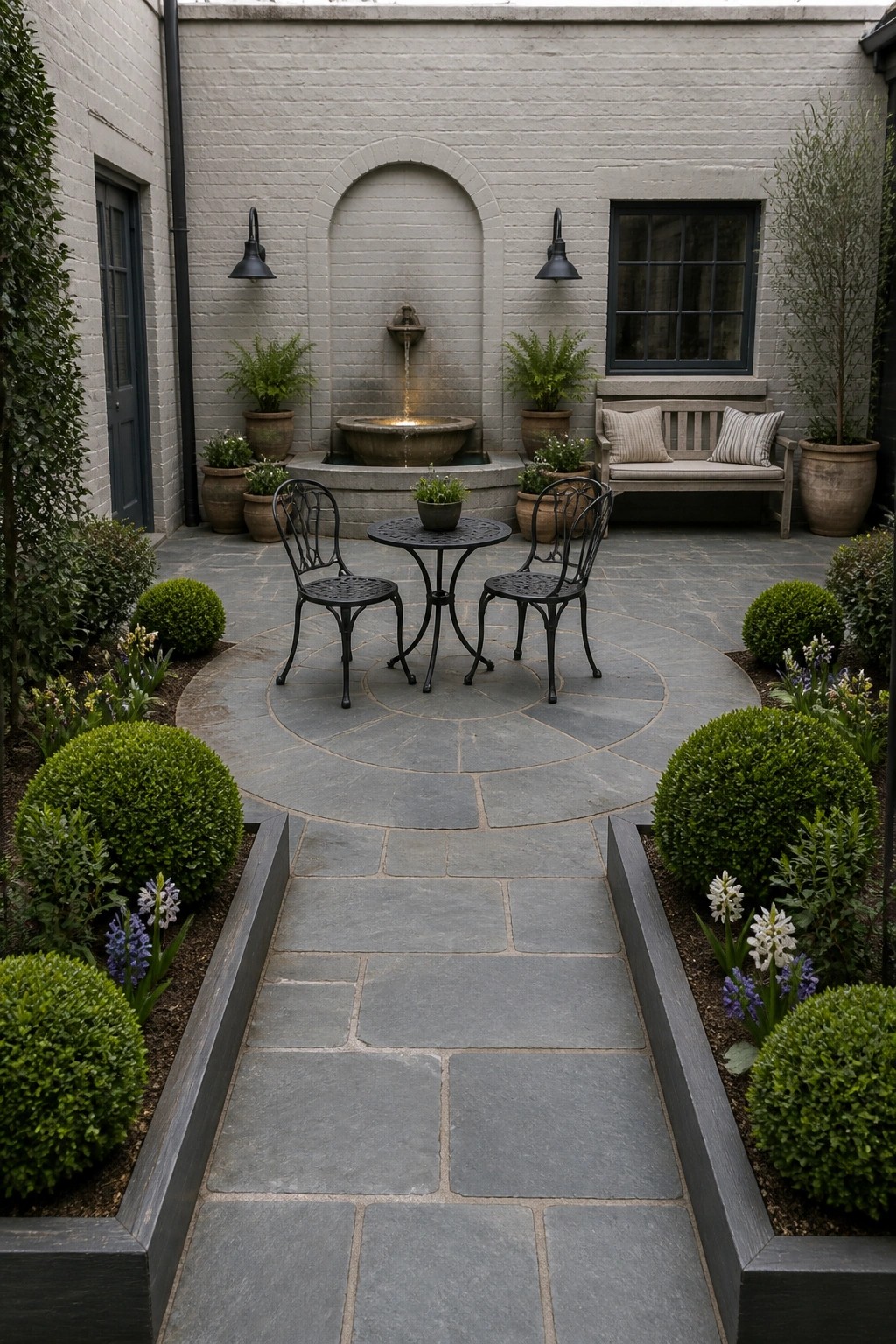
A circular stone patio gives the seating area its own clear spot without cutting off the rest of the garden. It keeps the table and chairs centered while the surrounding beds and path stay separate, so people can walk through without crowding the chairs.
This layout works well in a walled courtyard or a small backyard where you want one solid place to sit and still keep room for plants along the edges. Stick with simple edging so the circle does not fight the straight lines of the path or the beds.
Hang a Hammock to Add Casual Seating
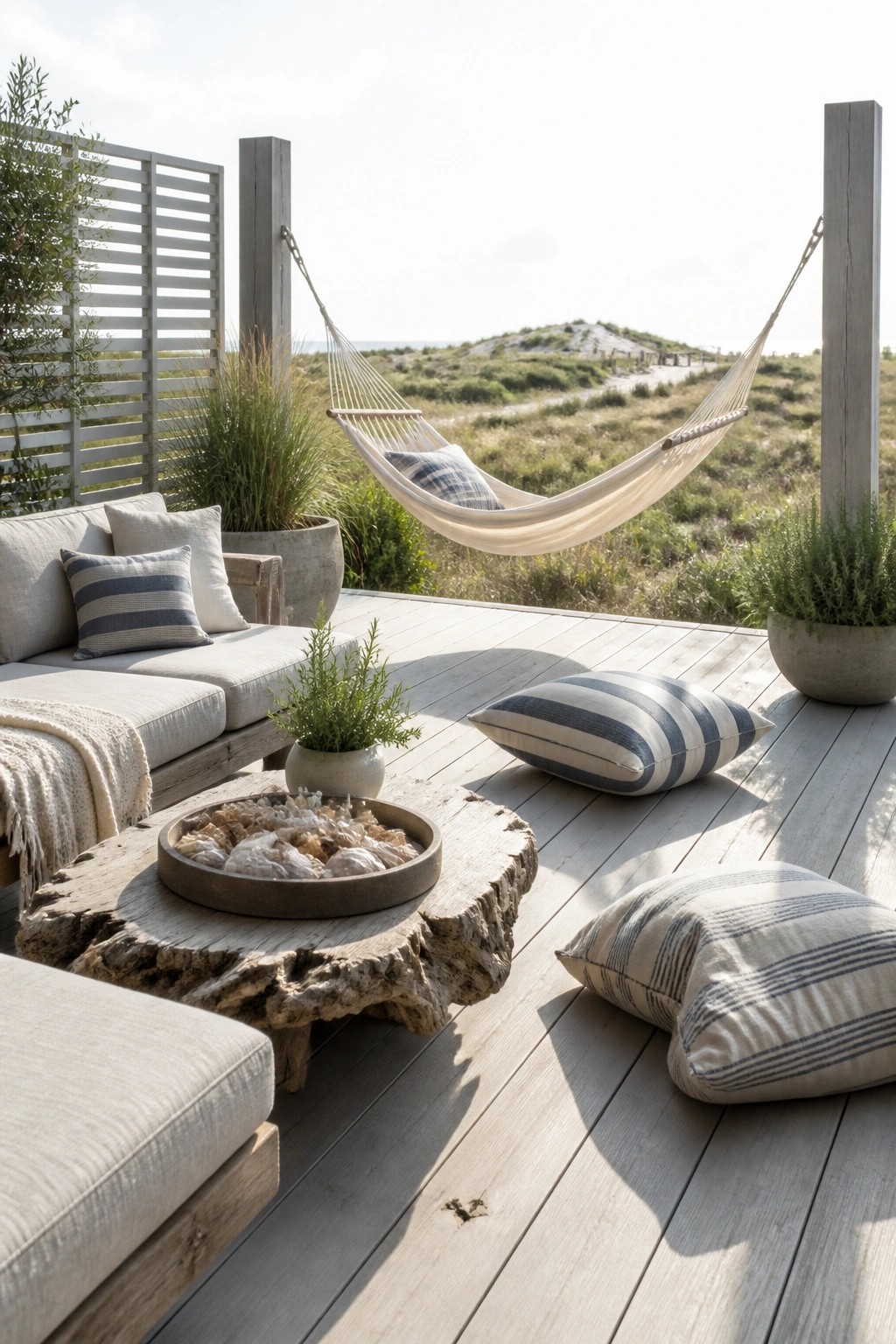
A hammock strung between posts gives you a place to lounge without adding more furniture to the deck. It keeps the floor open and creates a separate spot for relaxing that feels different from regular chairs or sofas.
This works best on patios or decks with sturdy vertical supports already in place. Just make sure the posts can handle the weight and leave enough room around it so people can walk through easily.
Add a Bench Along the Garden Path
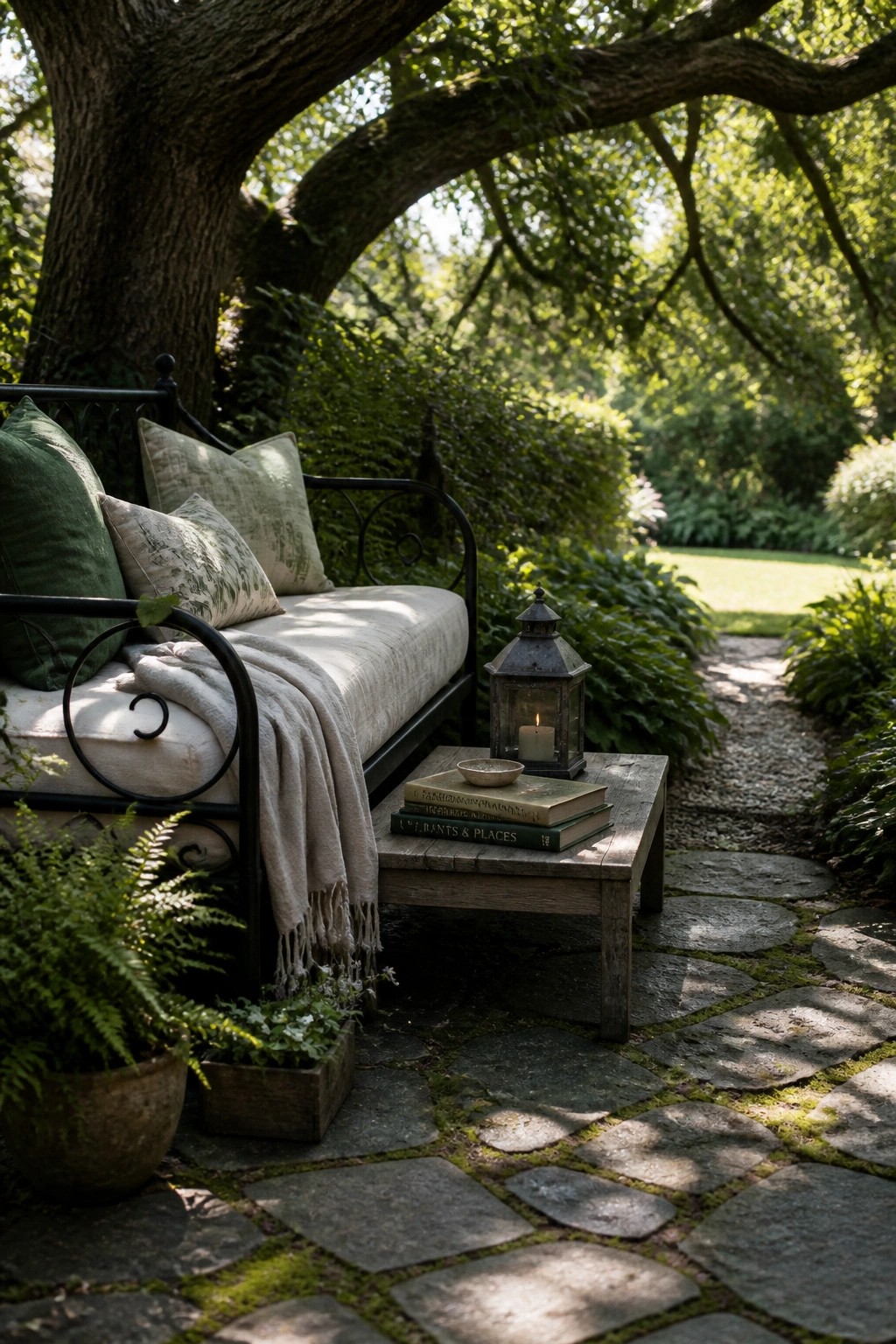
A bench placed right on the path gives you a spot to sit without carving out a whole new area. It keeps the garden moving forward while still offering a place to rest or read for a while. The setup works because it uses the existing walkway instead of fighting against it.
This works best in gardens that already have a clear route through the plants. Keep the bench simple, add a small table for a book or light, and let the surrounding greenery do most of the work. Just make sure the path stays wide enough for walking once the seating is in place.
Checkered Flooring for Simple Patio Zoning
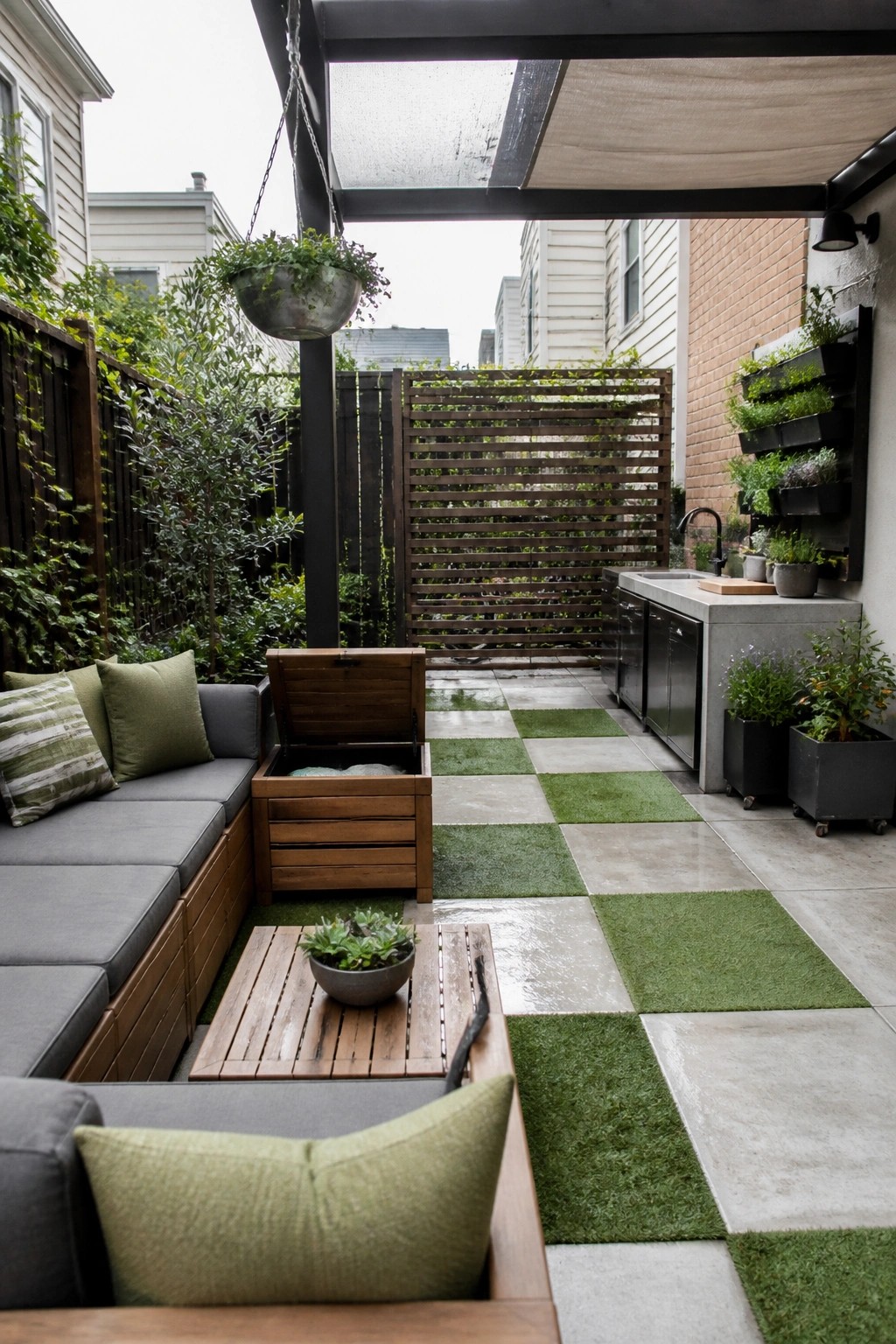
A checkered layout of grass squares and stone pavers gives a patio clear walking paths and separate spots for seating or cooking without adding extra structures. It keeps the space open while making it easy to see where one area ends and another begins.
This approach works well on smaller or medium patios where you want both greenery and easy maintenance underfoot. Just map out the grid first so the turf sections stay in lower traffic spots and the pavers handle daily use.
Line An Outdoor Kitchen Along The Patio Edge
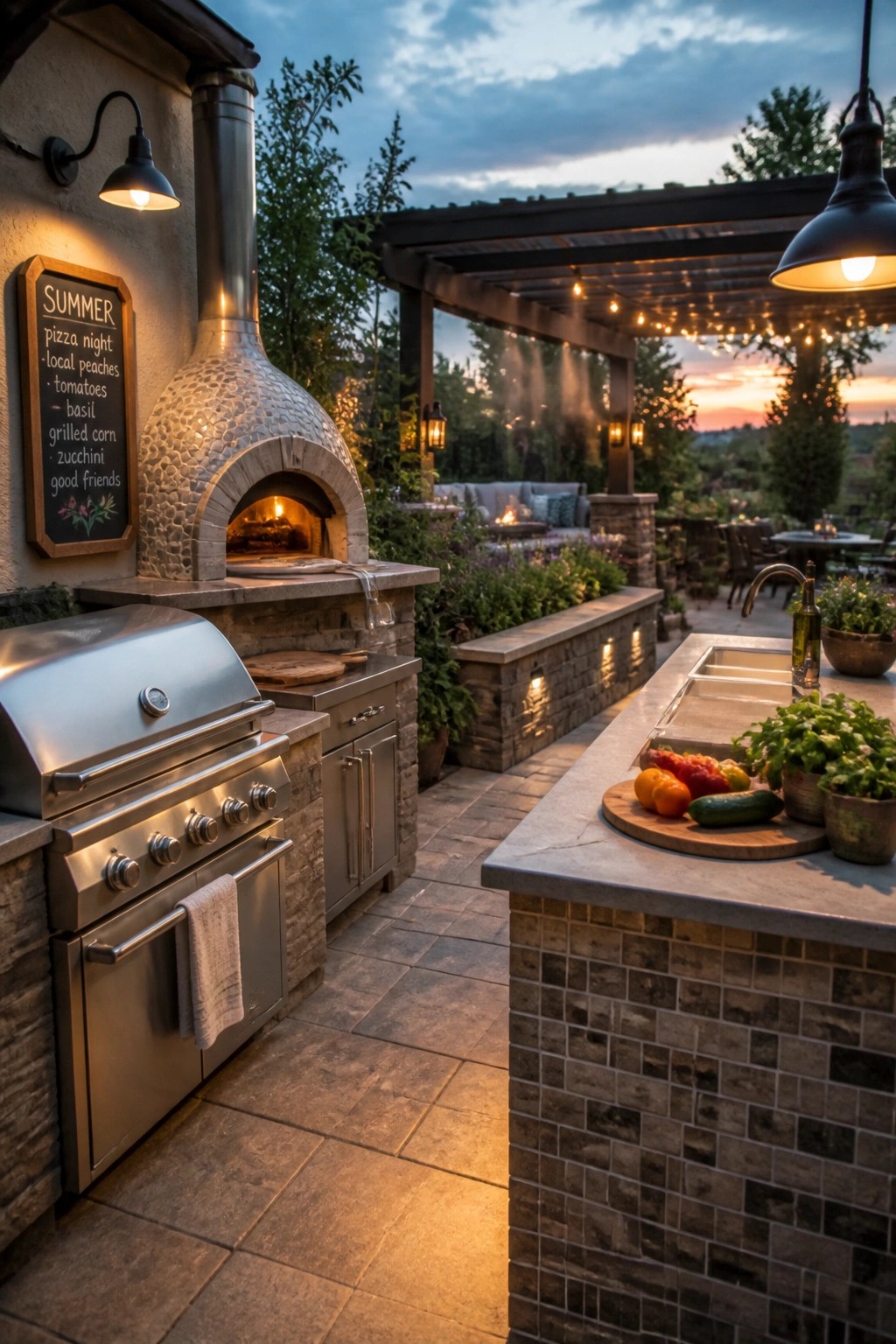
An outdoor kitchen placed along one side of the patio keeps the cooking area from taking over the whole space. The long counter gives you room to prep and serve while still leaving open paths to the seating area beyond it.
This works best on patios that have enough length to run the kitchen in a straight line. Keep the grill and oven at one end and the sink closer to the middle so you do not end up walking back and forth too much during a meal.
Curved Raised Beds Shape Patio Paths
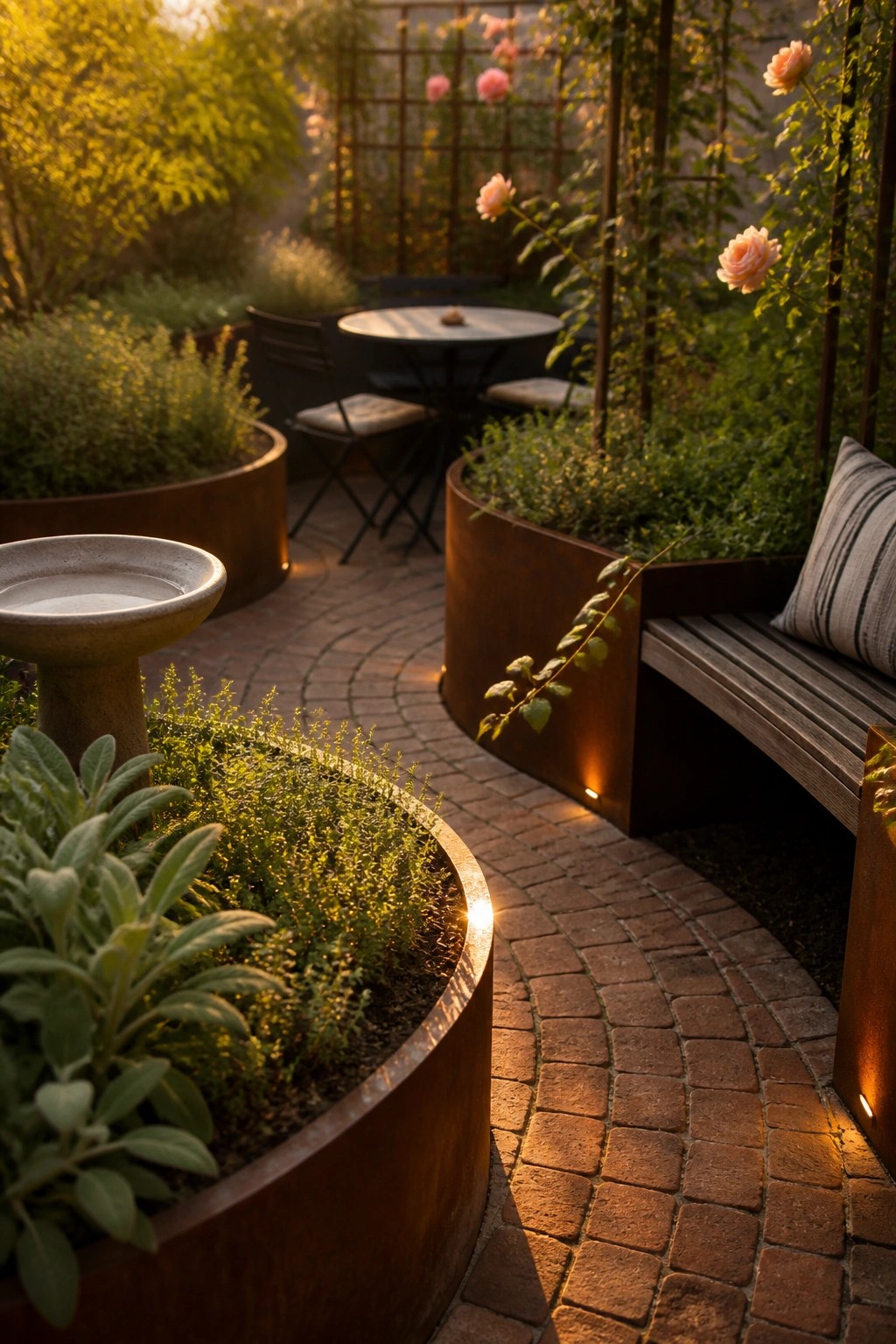
Curves in raised beds make a patio feel more open and help people move through it without sharp turns or tight spots. The rounded shapes let paths flow naturally around the planting areas instead of cutting straight across them.
This layout works especially well in smaller backyards where you need both seating and garden space. Keep the curves wide and simple so the path stays easy to walk and the beds stay practical to plant.
Mark Off a Fire Pit Zone with Turf
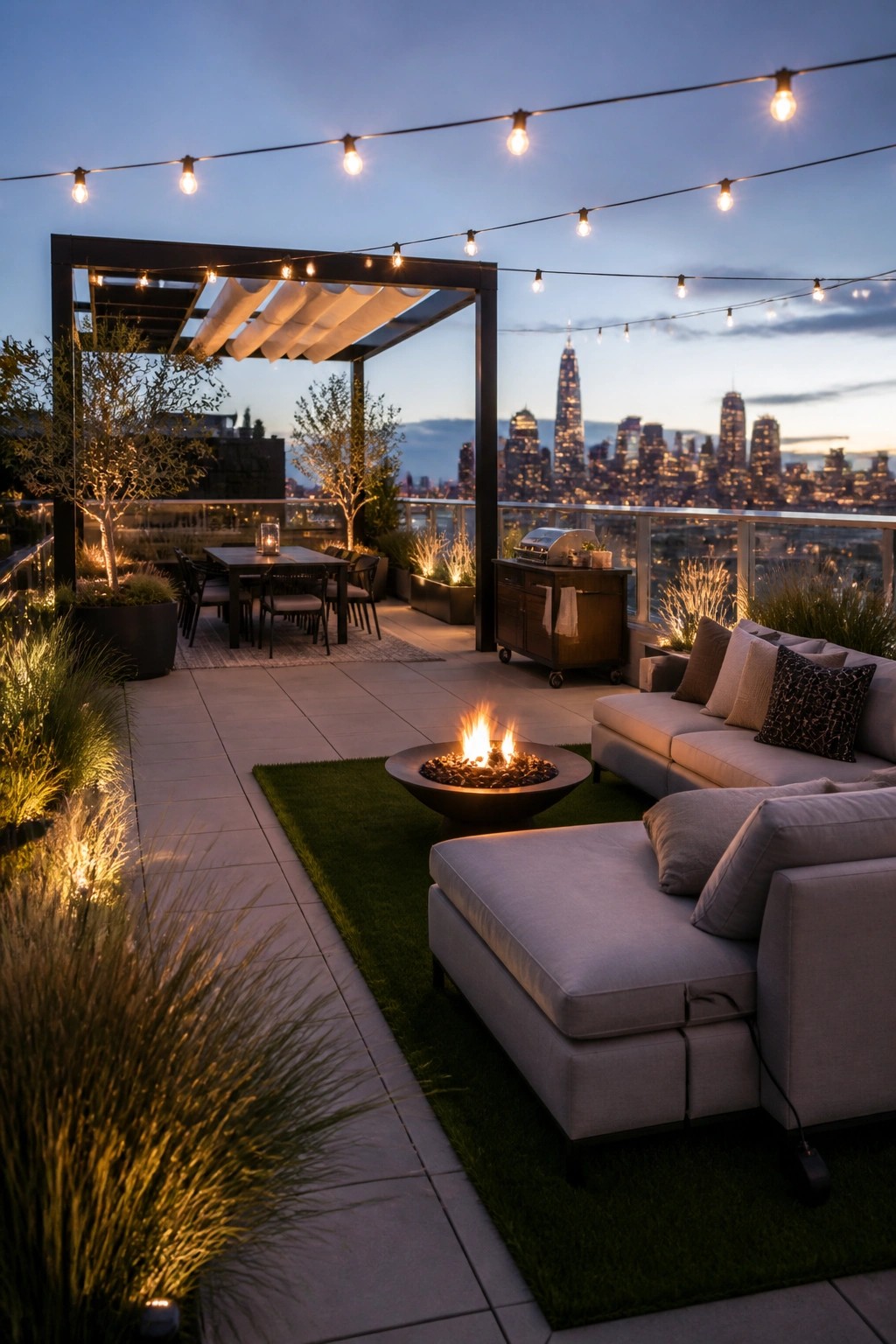
A strip of turf can help separate the fire pit seating from the rest of the patio without needing walls or extra structures. It gives that part of the space a softer feel and makes the lounge area feel more distinct while still keeping everything connected.
This works well on rooftops or decks where you want a clear spot for gathering around the fire but still need easy walking paths on the hard surface. Just make sure the turf section is large enough for the seating arrangement and keep the surrounding plants low so the zone stays open.
Use Gravel to Separate Patio Zones
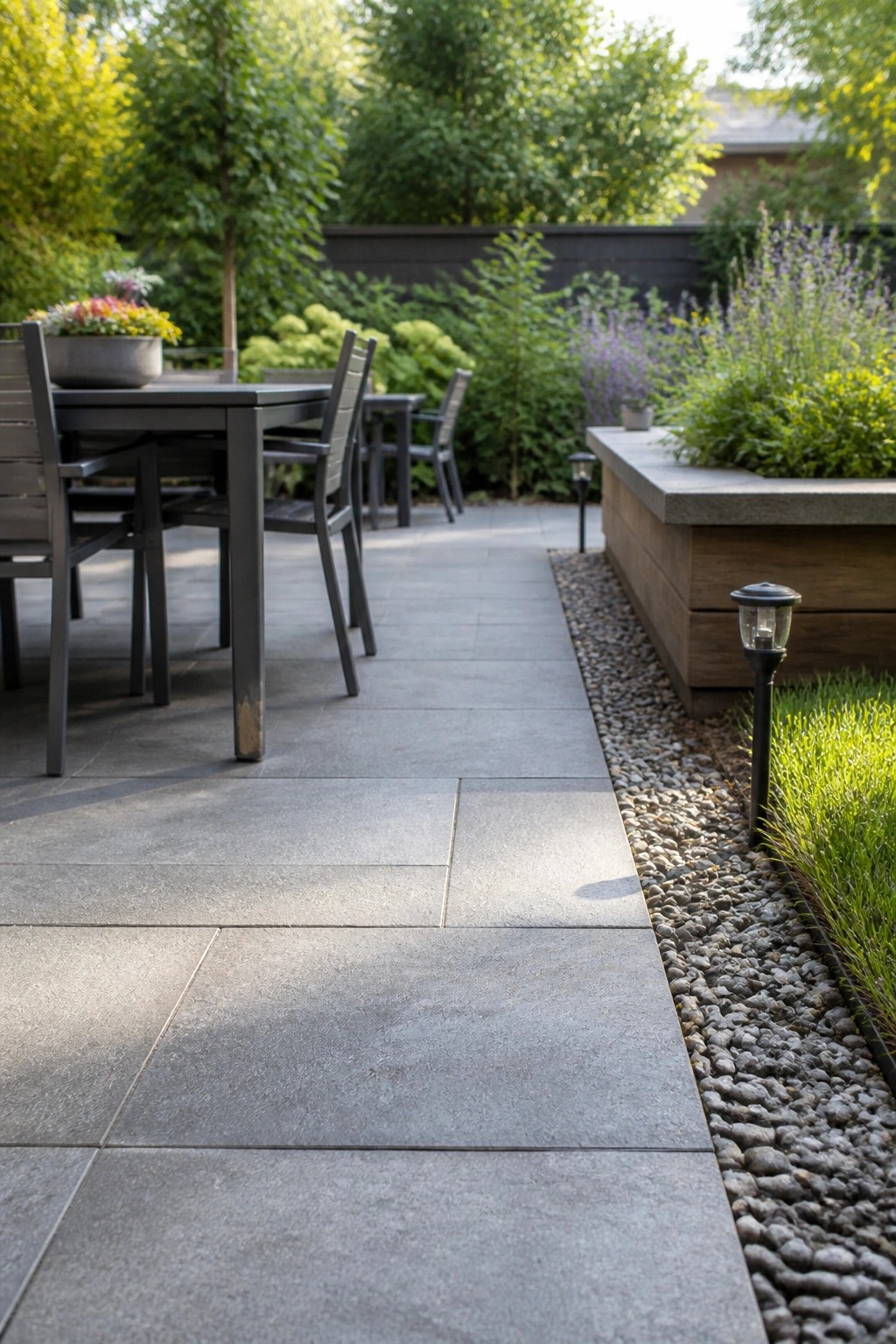
A simple gravel strip along the edge of a paved patio helps keep the seating area distinct from the garden beds. It gives the space a clean line without needing a wall or fence, and it makes mowing or weeding easier because the plants stay contained on one side.
This setup works well on long, narrow patios where you want room to walk and still keep chairs and tables from feeling crowded. Just keep the gravel band about a foot wide and add a few low lights if the path gets used after dark.
Stepping Stone Paths That Guide Garden Flow
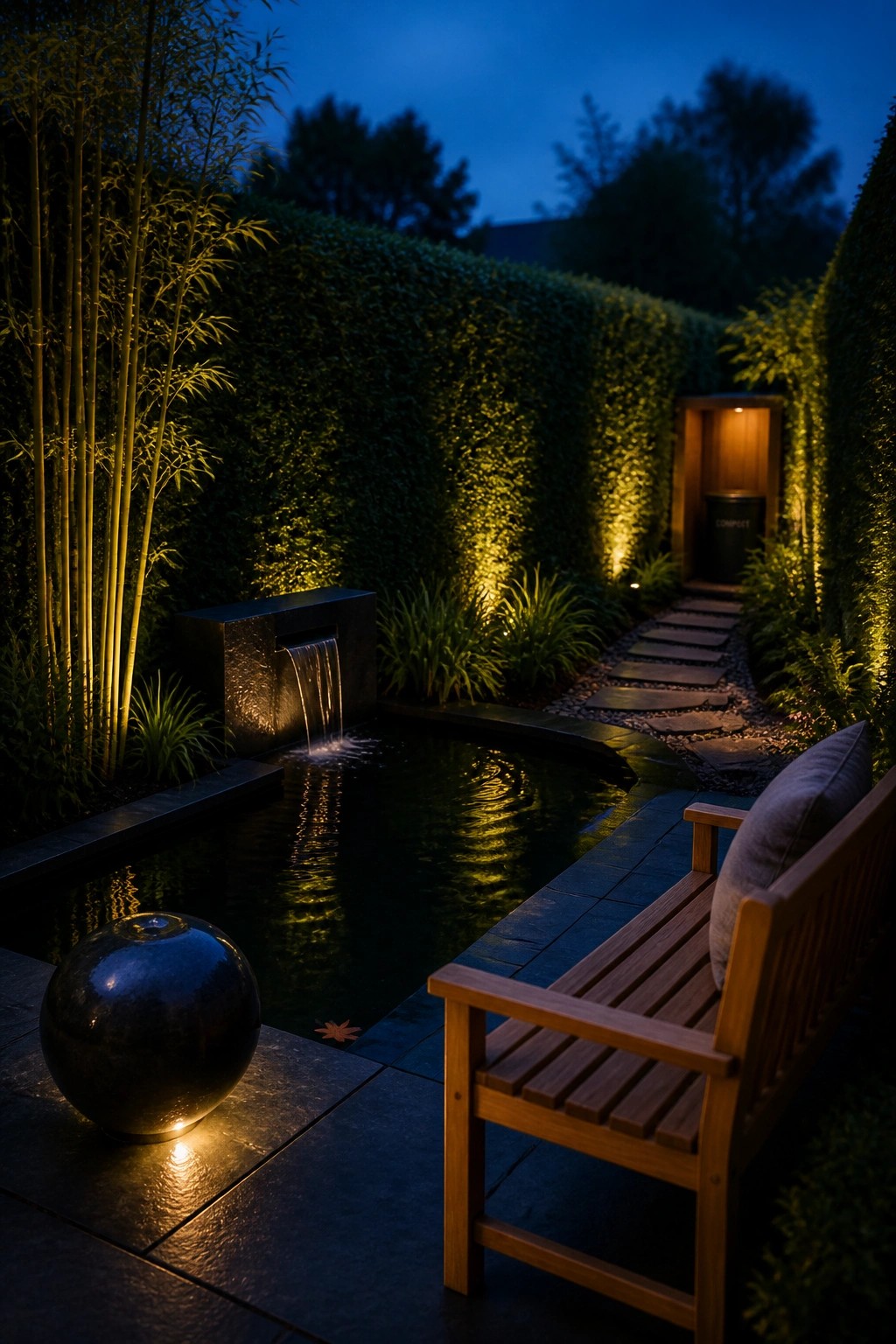
Stepping stone paths help a garden feel organized without cutting it into rigid sections. They let people walk through planted areas while keeping the beds full and natural. In this layout the stones curve gently past the water and lead straight to a bench, so the space feels connected rather than chopped up.
Use the same path idea to link a seating spot with the main plant zones in your own yard. Keep the stones slightly irregular and set them in gravel so the edges stay soft. This works especially well in narrow side gardens or small backyards where you need clear routes but still want plenty of greenery on both sides.
Mobile Raised Beds Keep Planting Zones Flexible
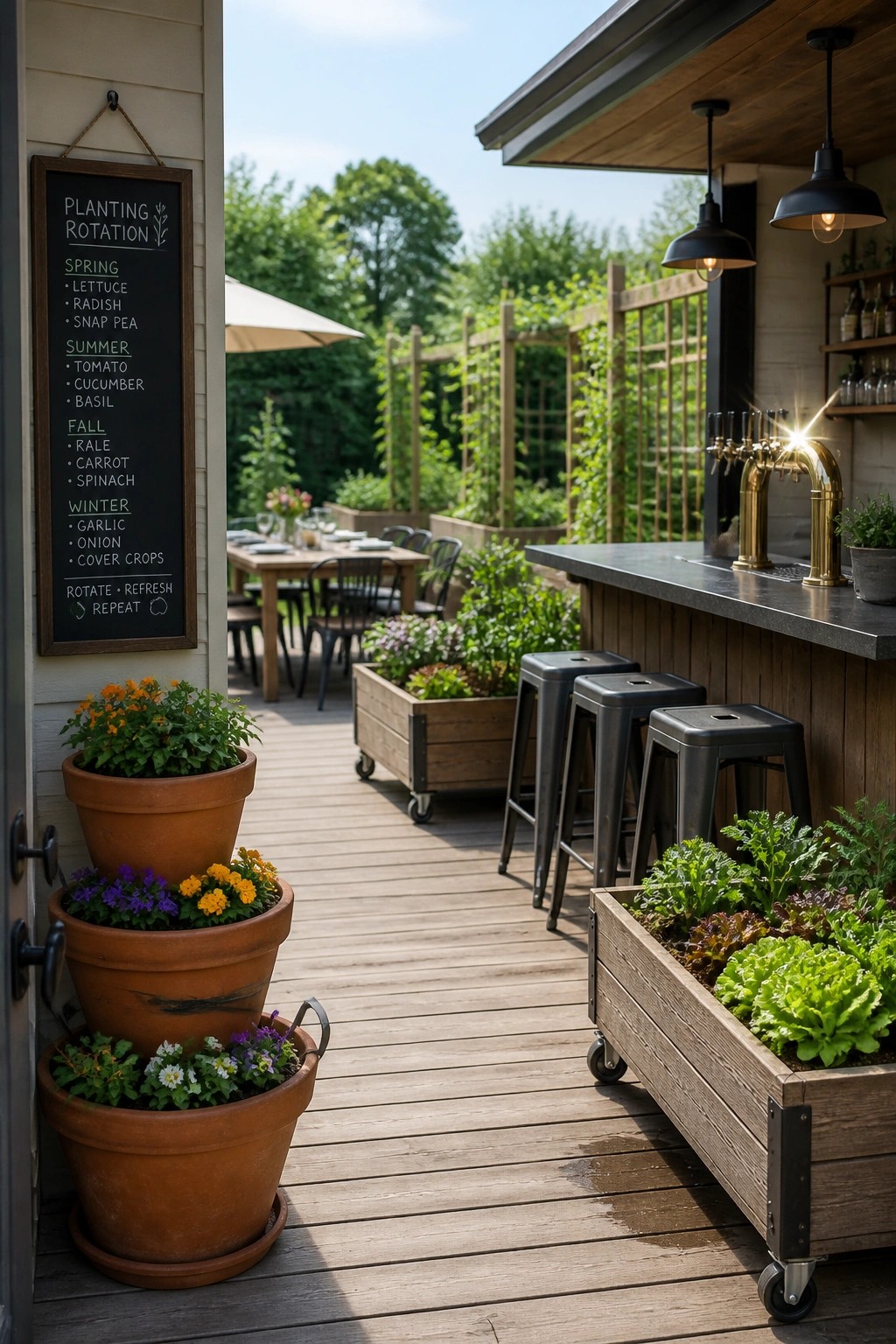
Wheeled raised beds are a simple way to add planting space to a patio without locking the layout into one arrangement. You can shift them around as the seasons change or when you want more room for chairs and tables.
They work especially well on decks where permanent beds would crowd the flow. Keep a few near a seating area or bar counter so the plants stay close but never block movement.
Stone Paths That Guide Garden Flow
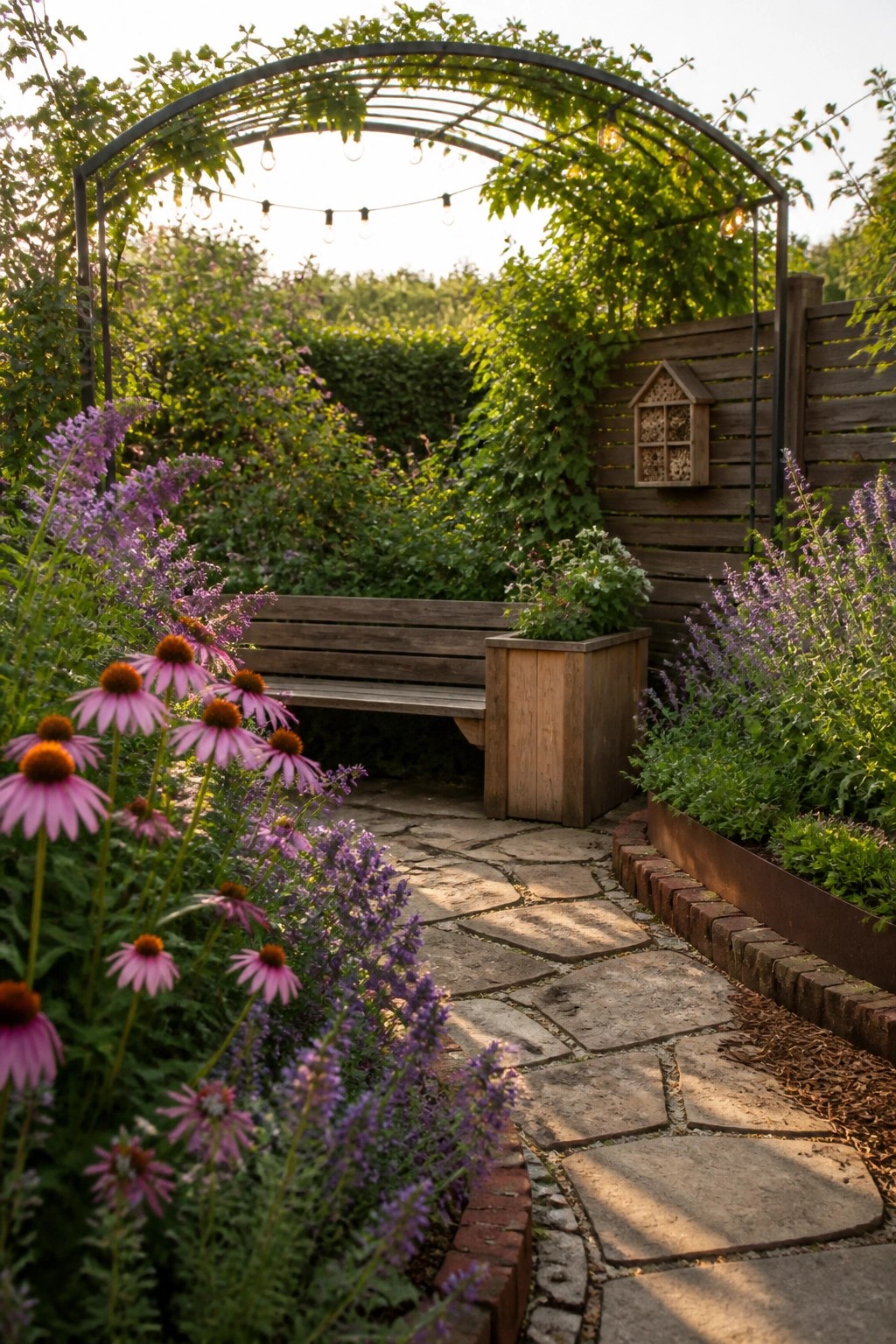
A curved stone path helps move people through the garden without making it feel chopped up. It creates a clear route while letting the plants on either side form their own zones.
This works best in smaller yards where you need both seating and planting space. Keep the path a comfortable width for walking and let the flowers spill over the edges a little to soften the look.
Frequently Asked Questions
Q: How do I figure out the best spot for plant zones without messing up the walking paths? A: Walk your patio at different times of day and note where you naturally step. Set the zones along the sides first so the center stays clear for movement. This keeps traffic smooth while the plants still feel grouped together.
Q: What works for seating when I want to add a couple of chairs but keep the flow open? A: Place them facing into one plant zone rather than across the main path. Leave at least three feet behind each chair so people can get by without squeezing. The setup feels inviting without turning the space into an obstacle course.
Q: My patio is narrow. How do I still create separate zones? A: Use low planters to mark the edges of each area instead of tall dividers. This gives the sense of different spots while the whole patio stays connected and easy to cross.
