

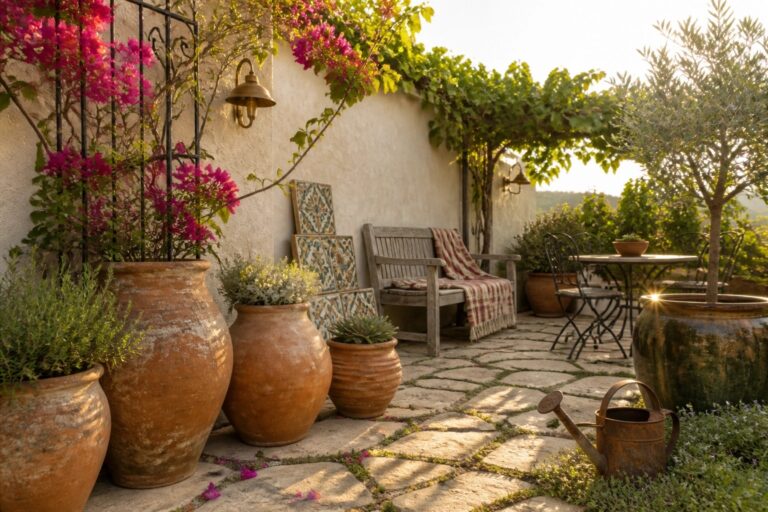
I often start by mapping out where people will actually sit before choosing any containers or vines for a patio.
Large pots can define different zones in an outdoor space without the need for permanent structures, and I have seen this approach hold up well over a few seasons of regular use.
Climbing plants trained on trellises or along railings bring in greenery at eye level while leaving the ground clear for furniture and foot traffic.
The ideas that stand out to me are the ones that balance visual interest with enough open area to move around comfortably during gatherings.
Trying a simple vine addition on an existing fence has been one change that made a noticeable difference in how inviting the whole patio felt.
Oversized Pots With Climbing Plants
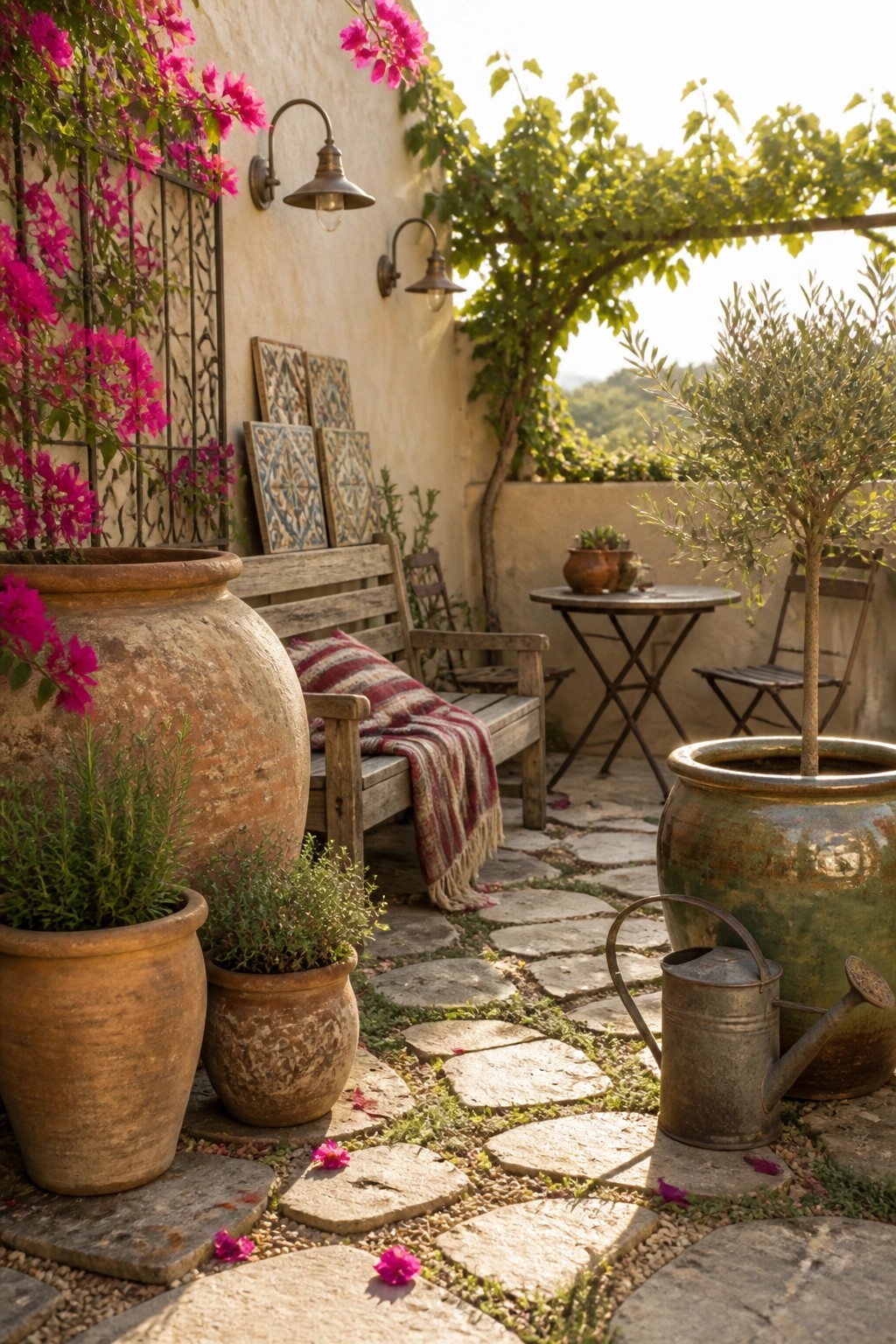
Large pots give a patio garden real structure without any construction. They hold plenty of soil and let vines climb from the same spot, so everything stays connected.
Put the biggest ones near a bench or table so the greenery feels close when you sit outside. This setup works on almost any paved surface and keeps things simple to maintain.
Oversized Pots And Climbing Plants For A Lush Patio
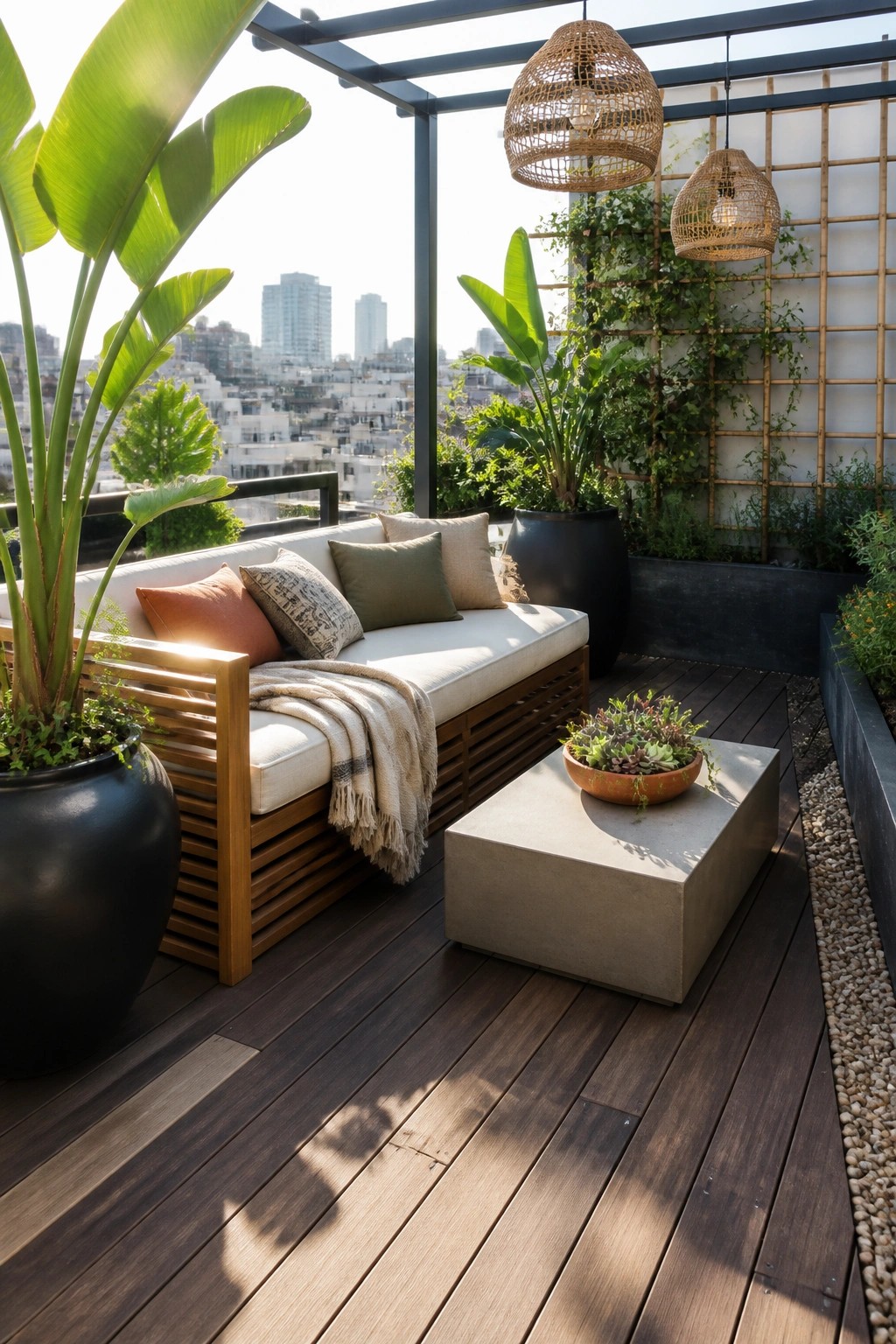
Large pots make it easy to bring real height and fullness to a patio without needing to dig into the ground. They let you place big leafy plants right where you want them, and they work especially well on decks or rooftops where permanent beds are not an option. Adding a simple trellis behind them gives climbing plants a place to grow and softens the edges of the space over time.
This setup suits small urban patios or balconies that need more greenery without crowding the floor. Keep the pots in a few matching sizes and let the climbers fill in gradually rather than planting too many at once. It stays manageable and still feels full.
Using Large Pots With Climbing Trellises
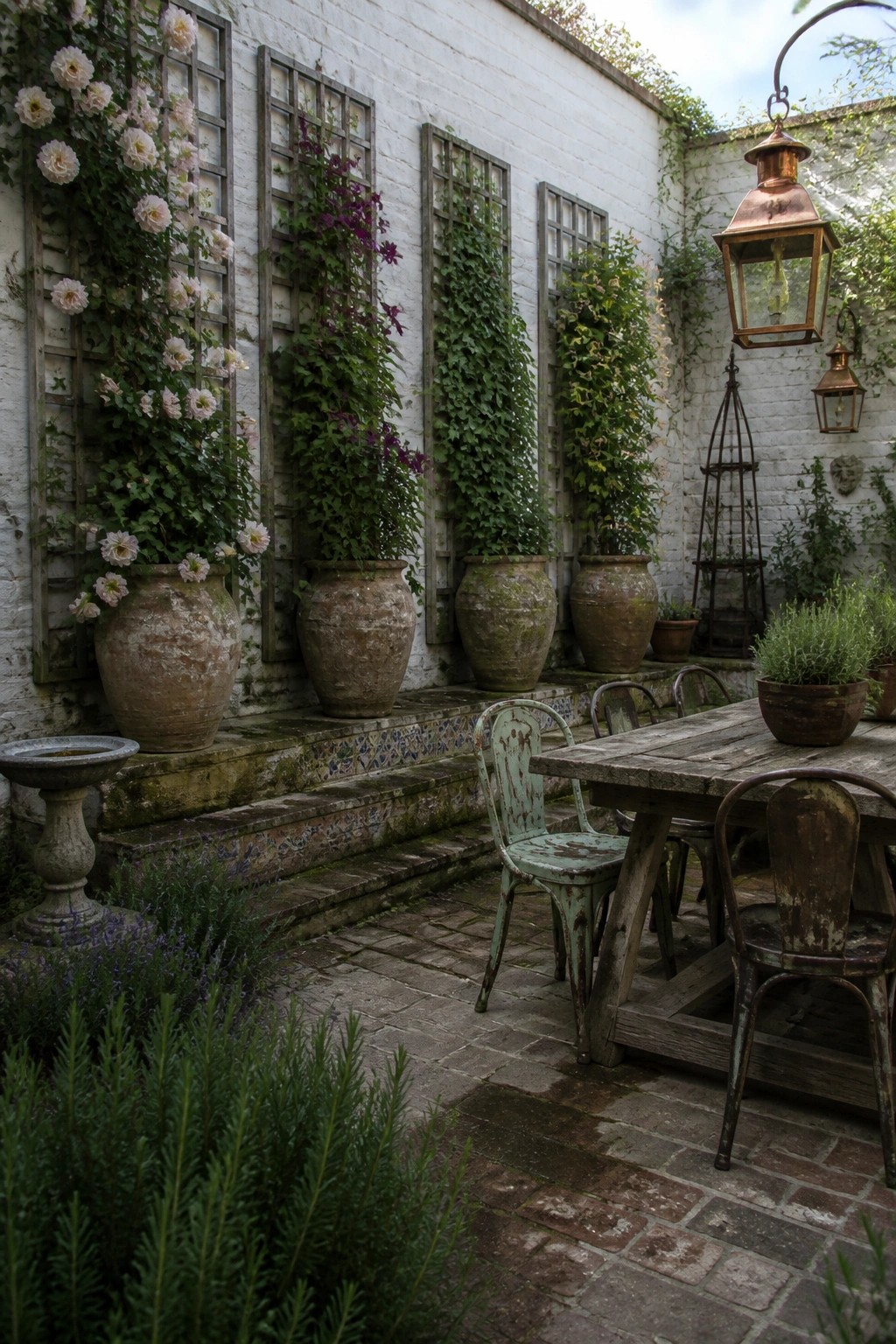
One simple way to add height and greenery to a patio is by setting oversized pots at the base of wall-mounted trellises and training climbing plants up them. This approach keeps the floor space open while still giving the area a full, layered look that feels established.
It works especially well along a solid wall where you need vertical interest without blocking light or movement. Try it on brick or stucco surfaces with rustic seating nearby, and choose plants that can handle the local sun and wind conditions.
Wall Mounted Planters For Climbing Plants
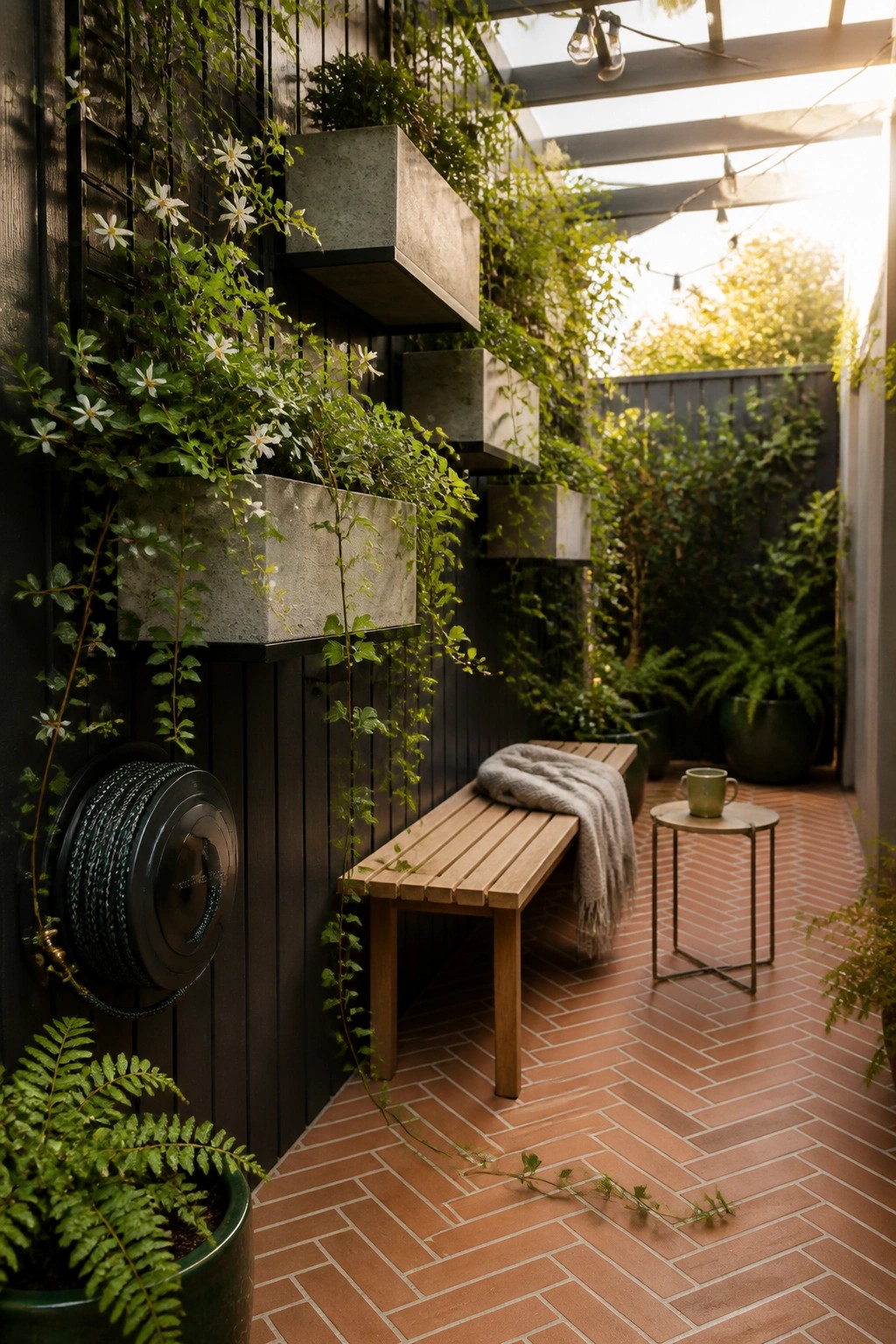
Mounting large concrete planters directly on a wall lets you bring in plenty of greenery without crowding the floor space on a patio. The vines trail down naturally and soften the hard surfaces around them. This works especially well in narrower outdoor areas where a full garden bed would not fit.
It suits homes with existing vertical surfaces like fences or side walls that get decent light. Start with just two or three oversized planters and let the plants fill in over a season or two. Keep the watering system simple so it does not become a chore.
Layer Oversized Pots And Climbing Plants Along Brick Walls
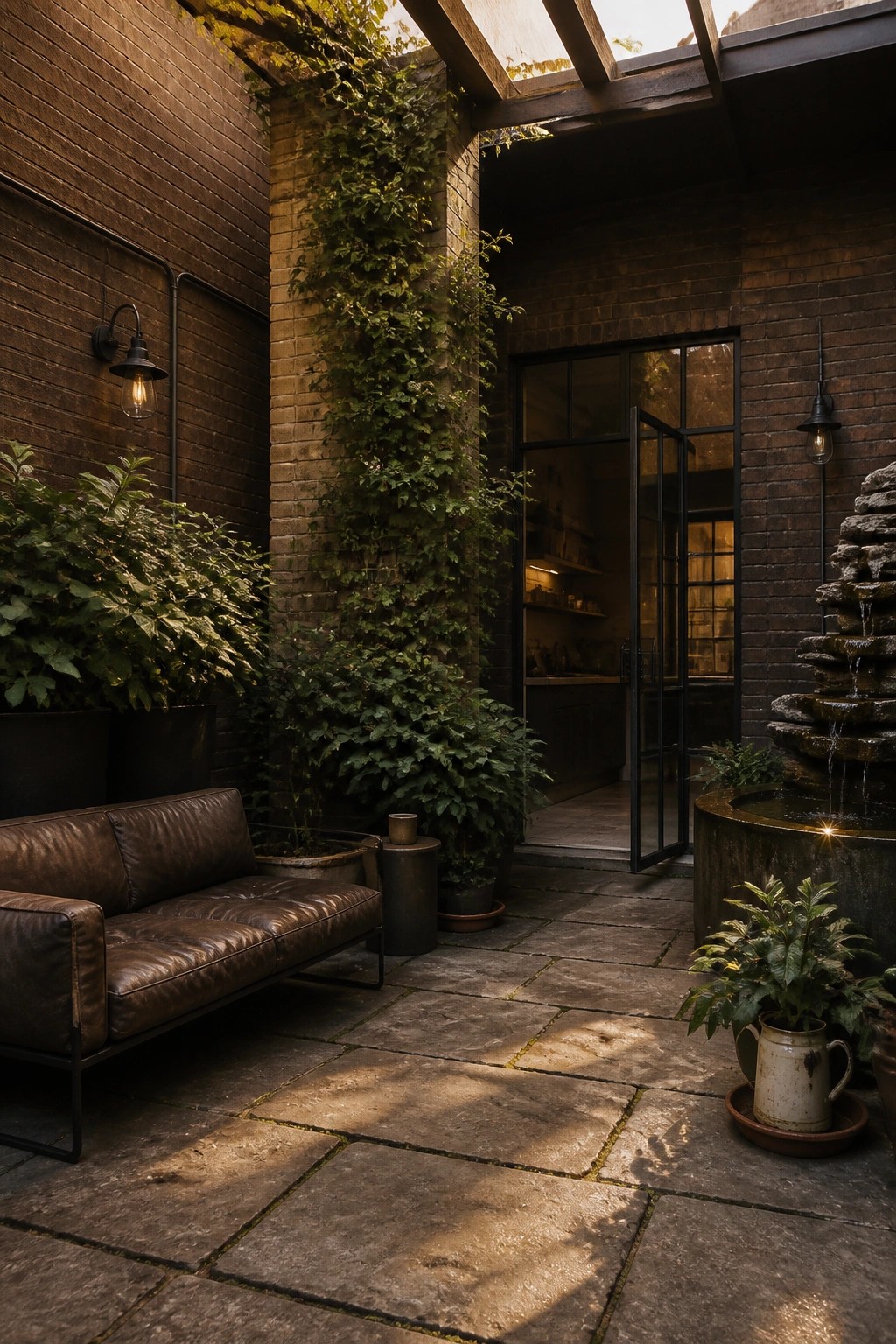
Many people turn to big pots and climbing plants when they want to soften a paved courtyard without major construction. The containers give height and presence right away, while the vines add coverage over time and help the space feel less like a hard surface.
This setup suits homes with existing brick or masonry walls and works especially well in smaller outdoor areas. Place the largest pots near seating so the plants frame the space, and pick climbers that can handle the light levels you actually get.
Oversized Pots With Climbing Vines
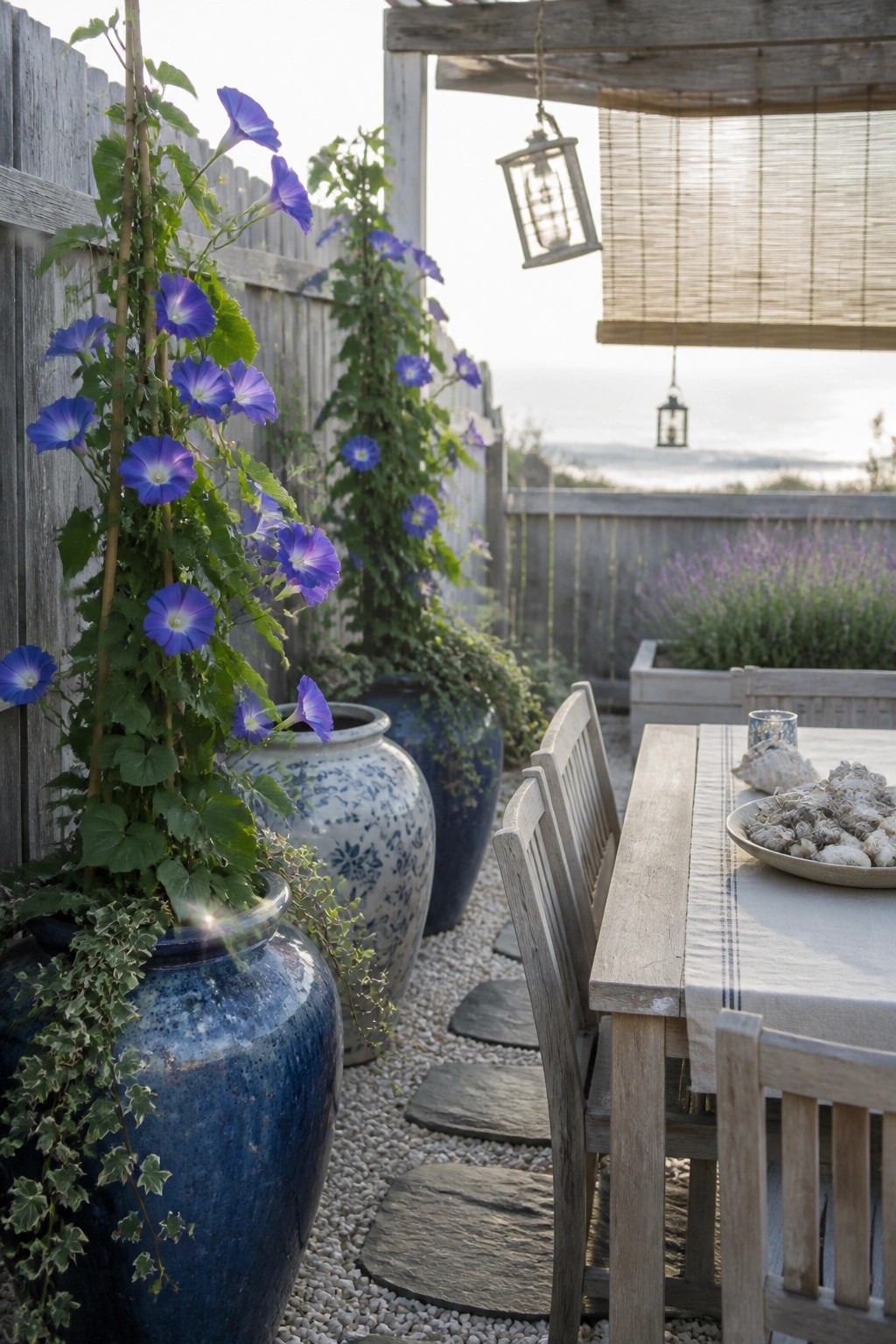
One simple way to add height and softness to a patio is to set a few oversized pots along the edge and let climbing plants spill upward. The vines bring movement and color without needing permanent structures or extra beds.
This works best on patios that sit next to a fence or wall where the plants can grab hold. Stick with one or two strong varieties so the look stays full but not messy, and make sure the pots are heavy enough to stay put once the plants grow.
Oversized Pots With Climbing Plants
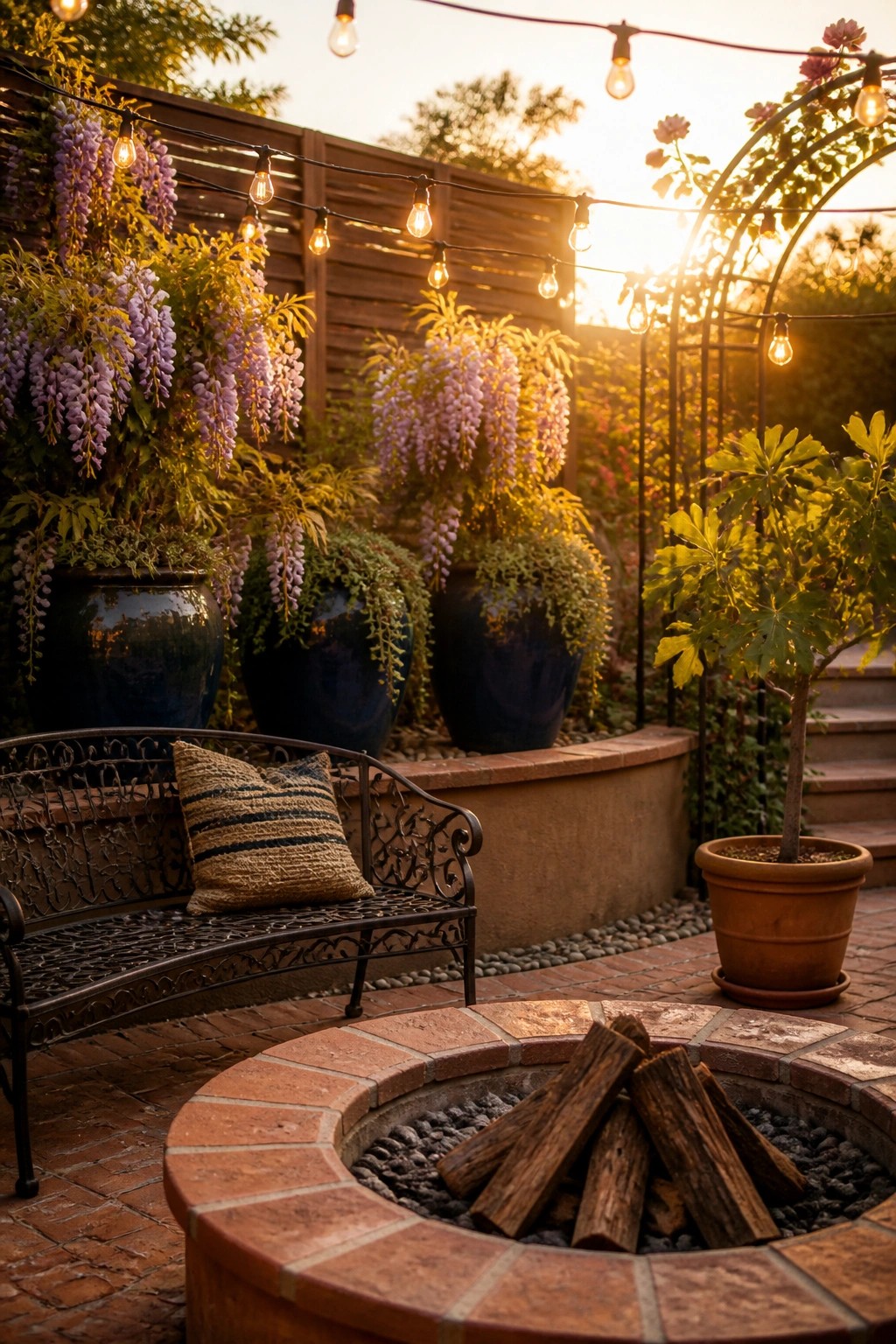
Large pots give climbing plants like wisteria a simple way to add height and softness around a patio. They turn an open seating area into something more enclosed without needing permanent walls or trellises. The vines spill over the edges and catch the light, which makes the whole space feel greener and more settled.
This setup works best on patios that already have a fire pit or bench as the main focal point. Place the pots along the back or sides so the plants can grow up and over nearby structures. Just make sure the pots are heavy enough to stay put and give the roots room to grow.
Oversized Pots on the Patio
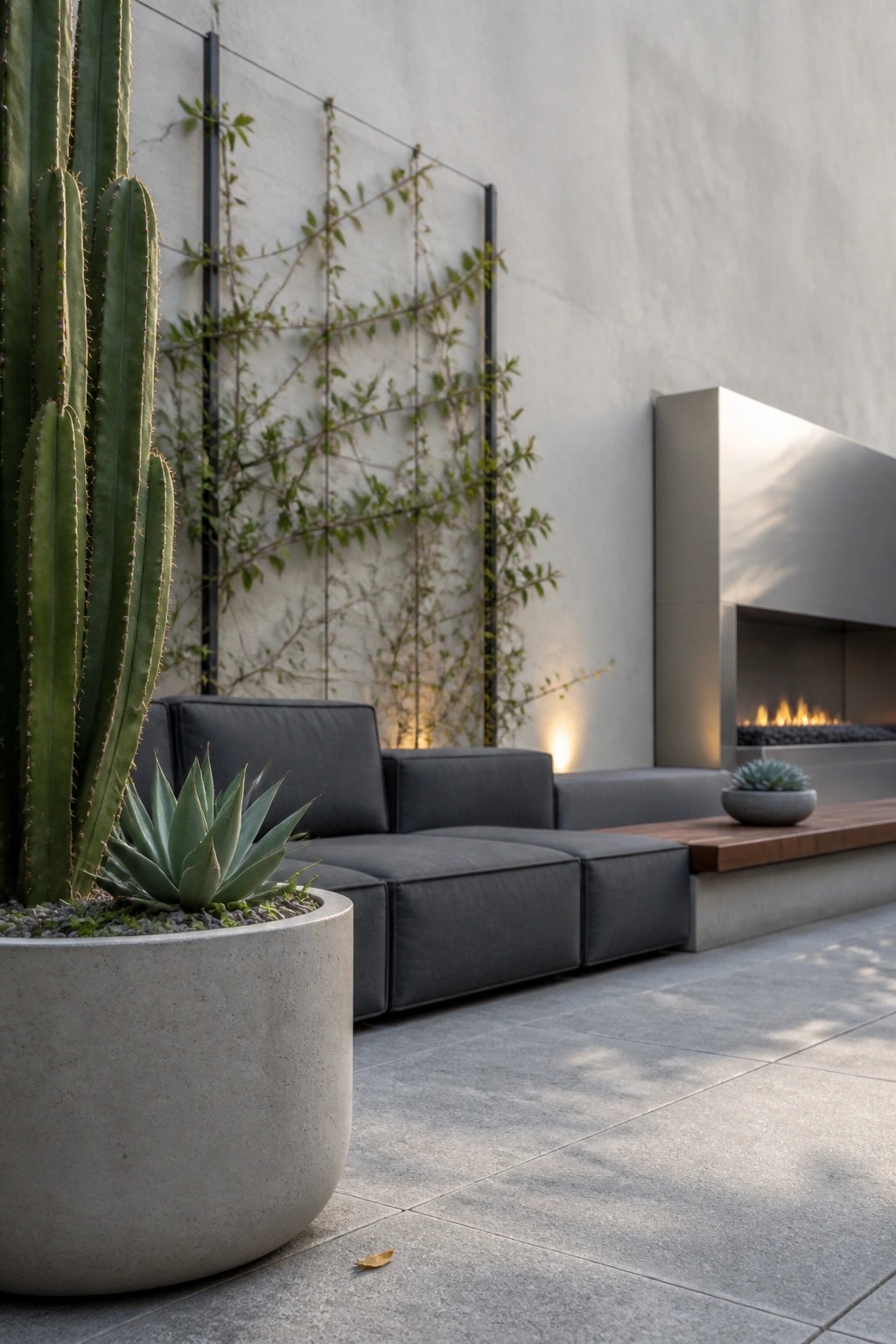
Many people use oversized pots to bring big plants into a patio without needing full garden beds or a lot of digging. The large containers make a strong statement on their own and let you move things around if the layout changes later.
This works best on paved surfaces or in smaller yards where permanent planting is not an option. Put the pots near seating so the plants feel connected to the space, and add a simple trellis behind them for climbing vines if you want extra height without crowding the floor.
Grow Vines on an Arbor for Shade
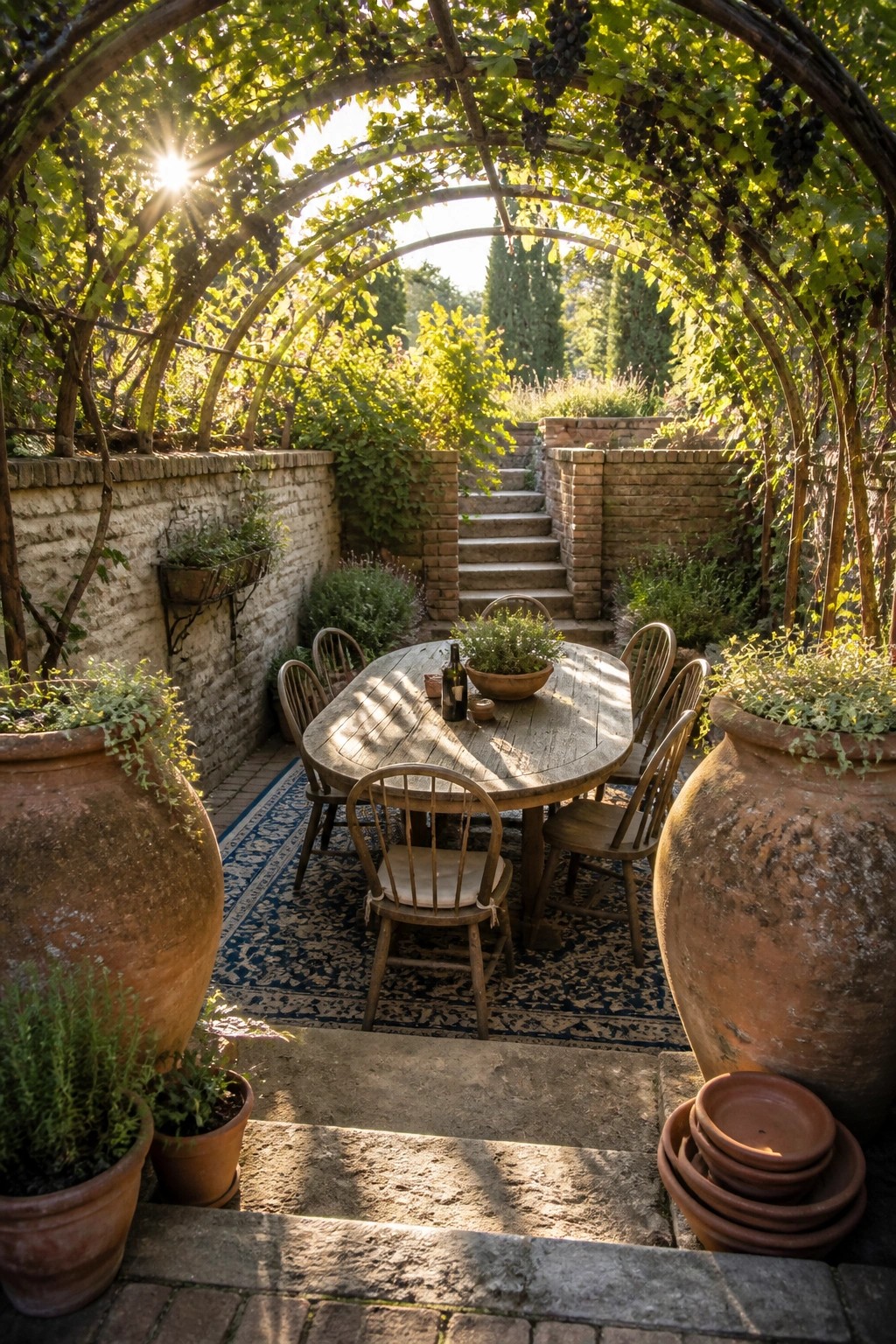
An arbor covered in climbing vines gives an outdoor table a sense of shelter without building a full roof. The plants filter the light and create a cooler spot for meals, which works especially well in warm months when you want to sit outside longer.
Large pots placed at the sides help mark the edges and keep the setup from feeling too open. This approach suits a small courtyard or walled patio where you already have some structure to work with. Keep the vines trimmed so they do not block too much light or drop too much fruit on the table.
Mix Oversized Pots with Overhead Climbing Plants
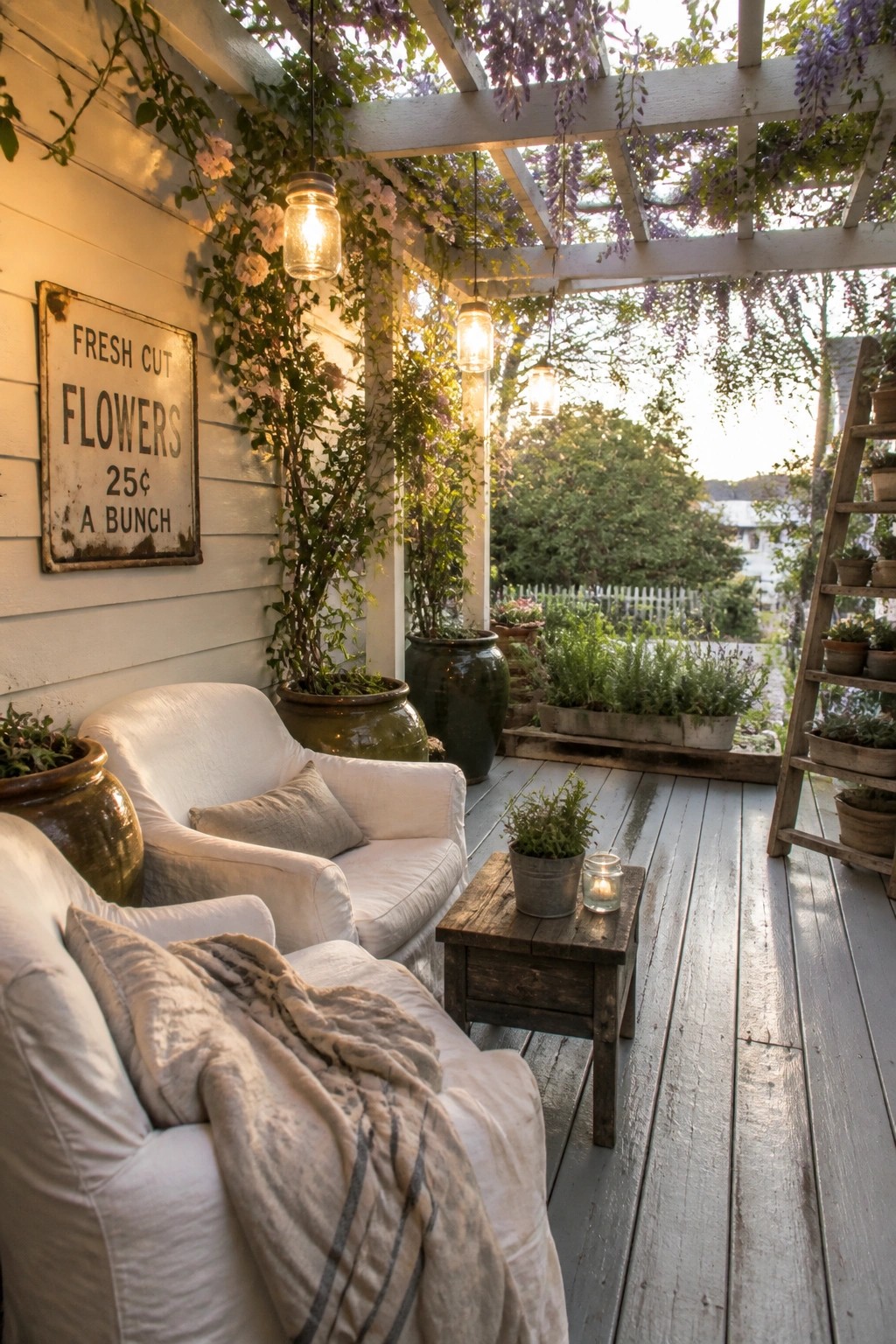
Large pots placed around seating give a patio real presence and let you move plants around as needed. When you add climbing vines on the structure above, the space starts to feel more enclosed and green without adding walls or heavy screens.
This works best on a covered deck or porch that already has beams or a pergola in place. Choose pots big enough to hold mature plants and pick vines that grow fast so the area fills in during the first season or two.
Large Pots with Climbing Plants
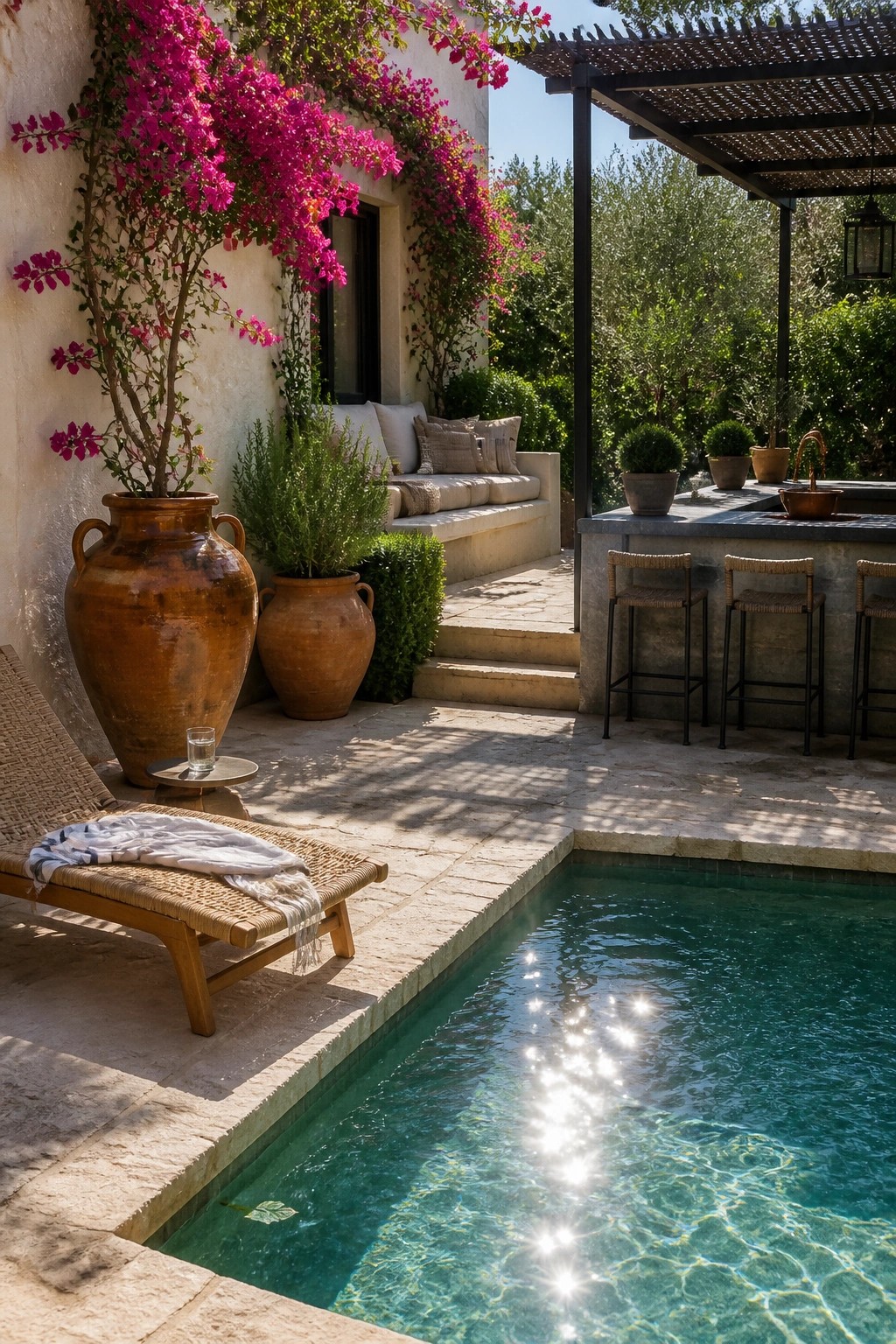
Large pots make it easy to add height and greenery along the edge of a patio without building anything permanent. When you choose ones big enough to hold climbing plants, the vines can grow up nearby walls or structures and soften all the hard surfaces around them.
This works best on paved outdoor spaces where you want a bit of garden feel without digging beds. Set the pots near seating or along a pool edge so the plants help mark the space and give some shade or color as they grow. Just pick pots that are sturdy and deep enough for the roots.
Raise Oversized Pots on Brick Bases
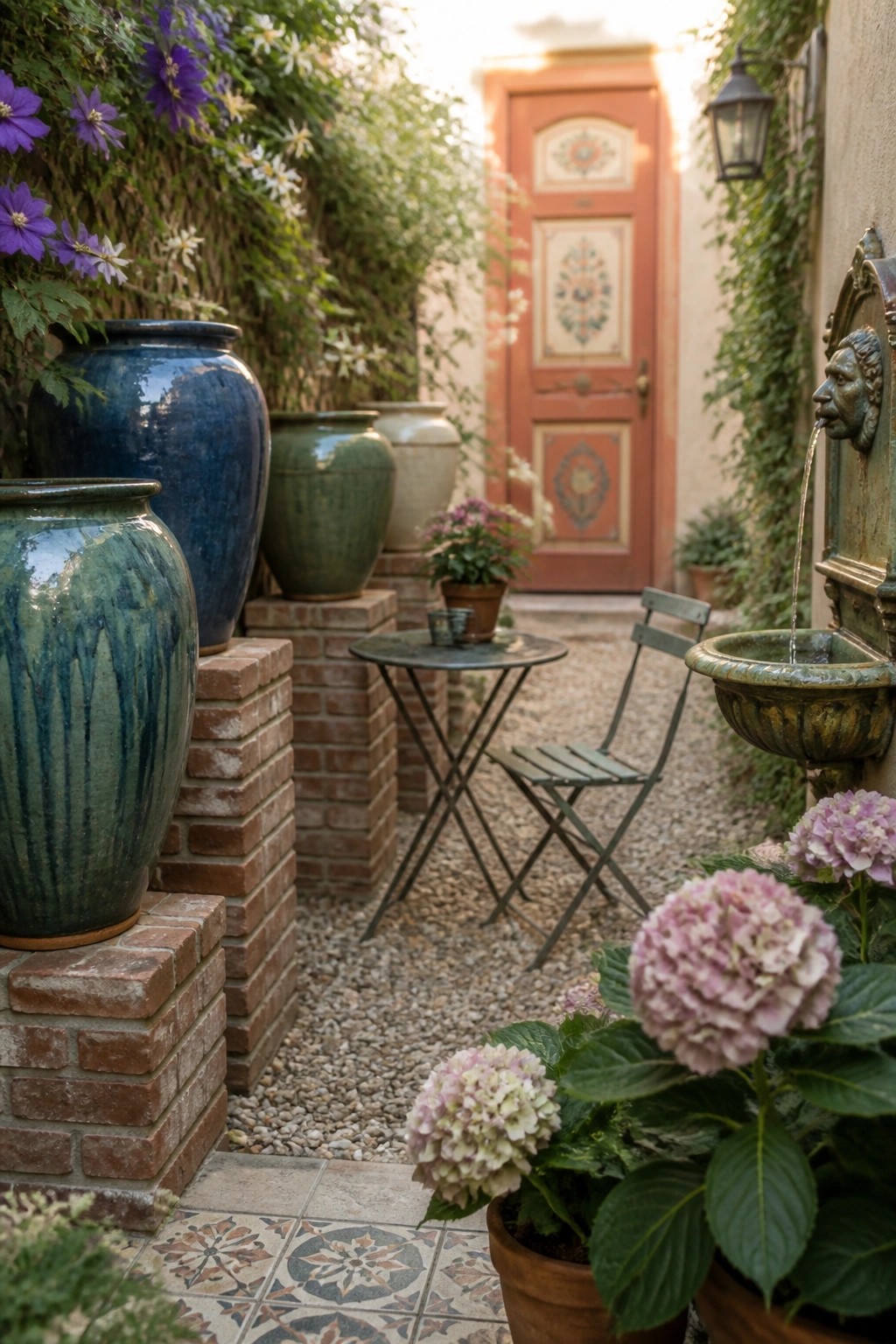
Large pots gain real presence when they sit on simple brick platforms instead of resting directly on the ground. The extra height helps them balance the vertical lines from climbing plants on nearby walls and keeps the arrangement from feeling flat in a narrow space. It also makes watering and weeding easier since the pots are at a comfortable level.
This approach works well in small courtyards or side passages where floor space is tight. Use matching or similar bricks for the bases so they blend with existing paving, and choose pots in a few related colors so the grouping feels calm rather than busy. Keep the number of pots modest so the path stays clear.
Large Planters Anchor Outdoor Seating
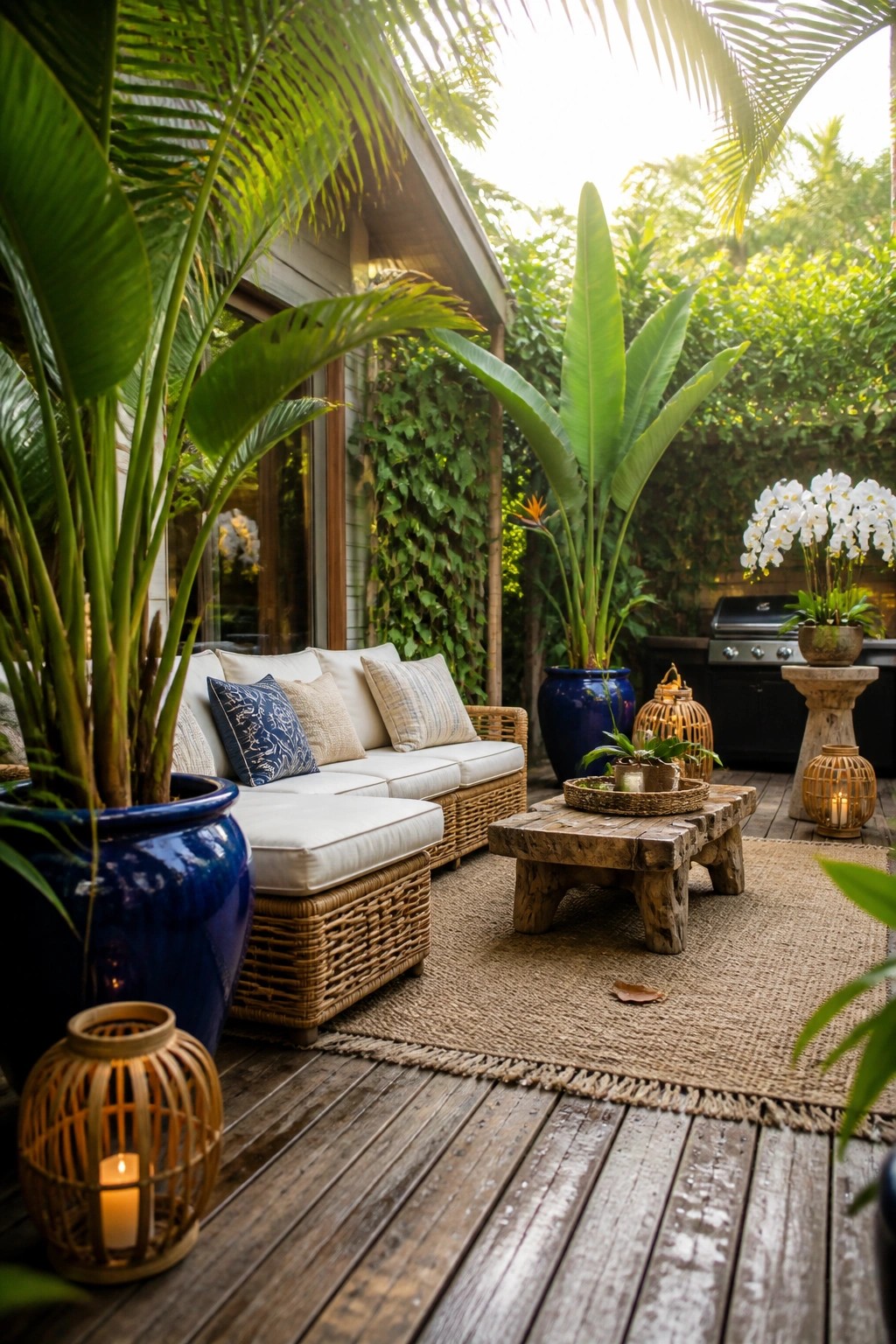
Large planters give a patio real presence without needing built-in beds. They let you add height and full plants that make the space feel more like a garden than just a deck. The oversized pots hold substantial root systems so the greenery stays healthy even in hot months.
Set them around the edges of your seating area to create a loose border. This works well on wooden decks or paved terraces where digging is not possible. Check the weight load first if your surface is older or elevated.
Enclose A Small Patio Table With Tall Planters And Climbing Roses
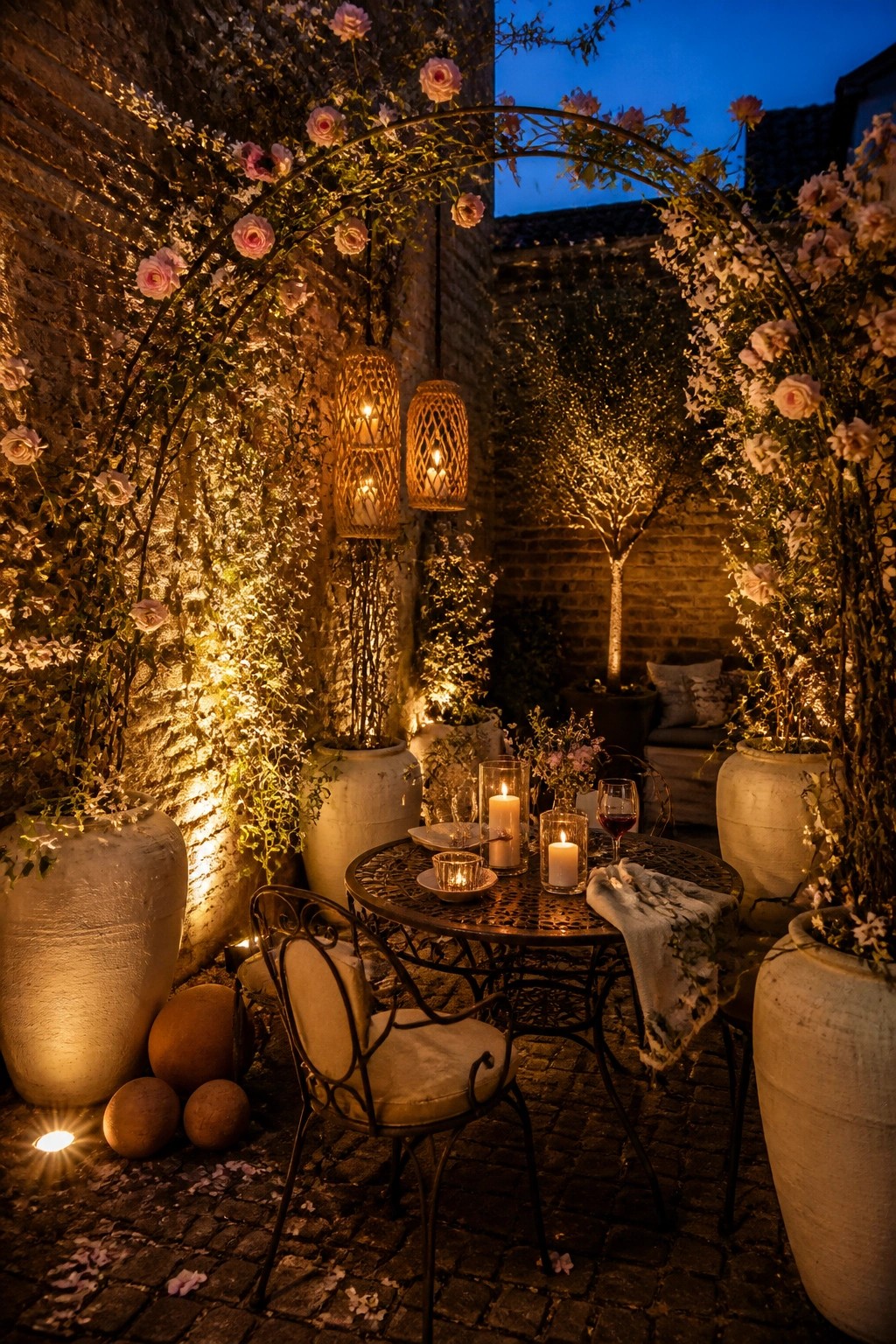
Large pots give you an easy way to shape a tiny patio into something more private. The plants do the work of creating walls and a bit of overhead cover, so the space feels set apart without any construction. In a narrow spot between brick walls, a few oversized planters can turn an ordinary table into a tucked-away spot for dinner.
Place the biggest pots at the corners or along the sides of your seating area and let the climbers run up simple arches or trellises. This works especially well on brick or stone patios where you cannot dig beds. Just keep the pots watered and give the roses room to grow, and the whole setup stays soft and full without taking up floor space.
Let Oversized Pots Hold The Climbing Plants
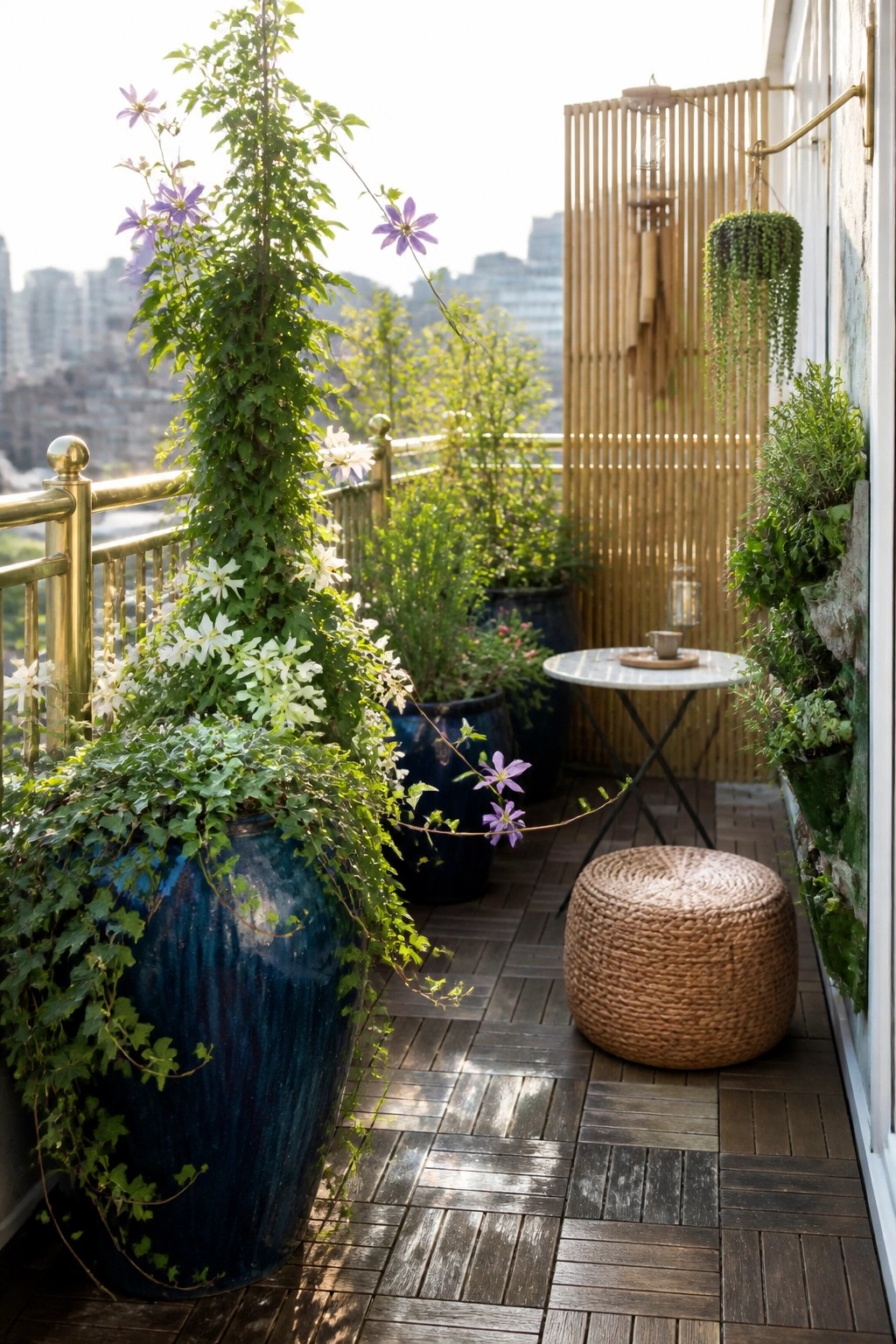
Oversized pots give climbing plants the root room they need while keeping everything contained on a small patio. The vines can then reach upward without crowding the floor space, and the whole setup feels fuller without adding more furniture or built-ins.
This works best on balconies or compact decks where floor area is limited. Place the biggest pots near a railing or screen so the plants have something to grab, and choose one or two strong climbers rather than filling every inch with smaller pots.
Cluster Oversized Pots Around the Edges
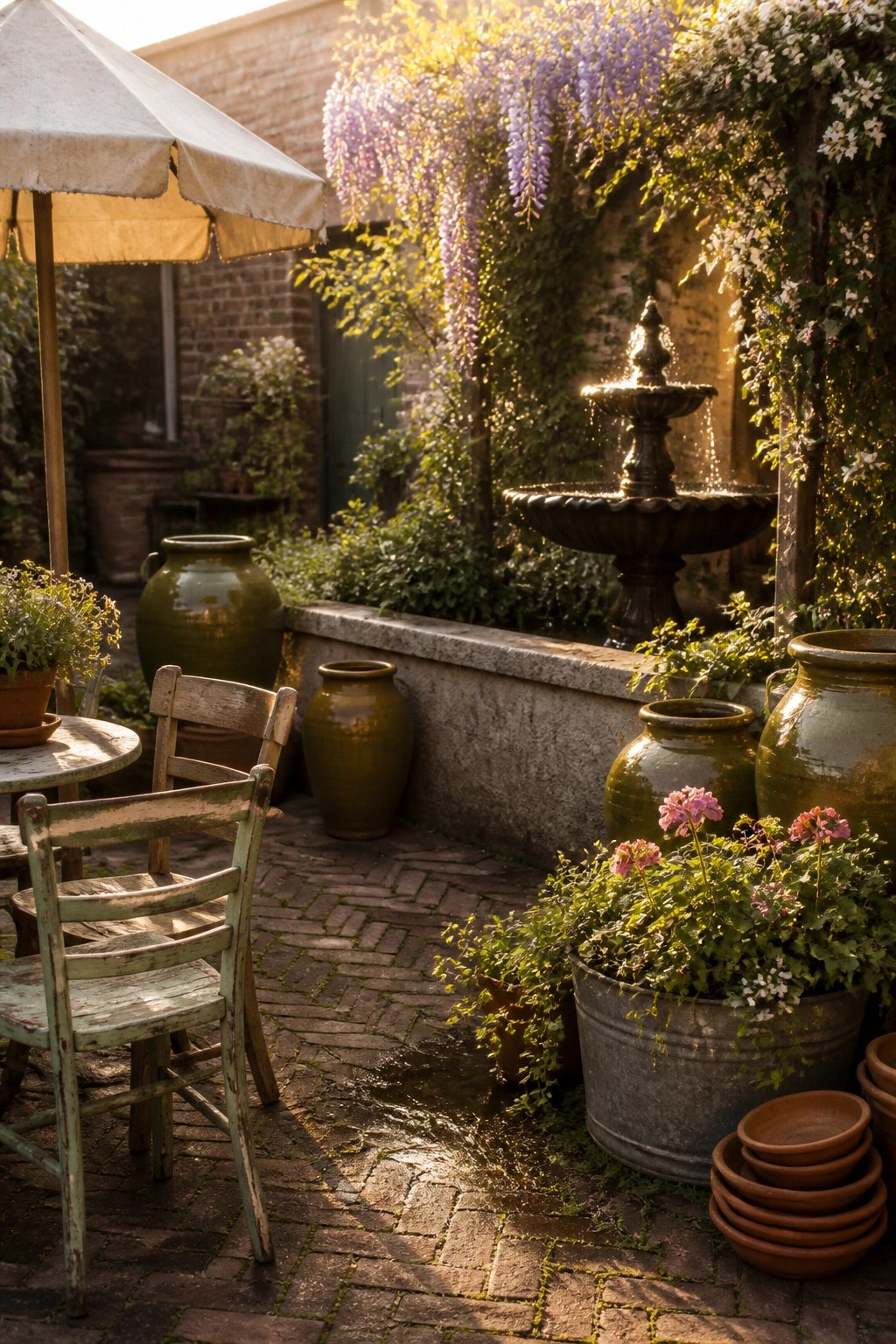
Large pots give you a quick way to add height and greenery right next to a patio without building permanent beds. They work especially well on brick or stone surfaces where you want softness but still need to keep the walking area clear. The different sizes also let you create layers that feel more like a garden than a few scattered containers.
This setup suits small courtyards or side patios where space is tight. Group the pots in uneven clusters along the walls or low ledges, and let a few climbers spill over the rims or nearby structures. Just make sure the biggest pots sit on solid ground so they stay stable.
Climbing Plants Along Patio Edges
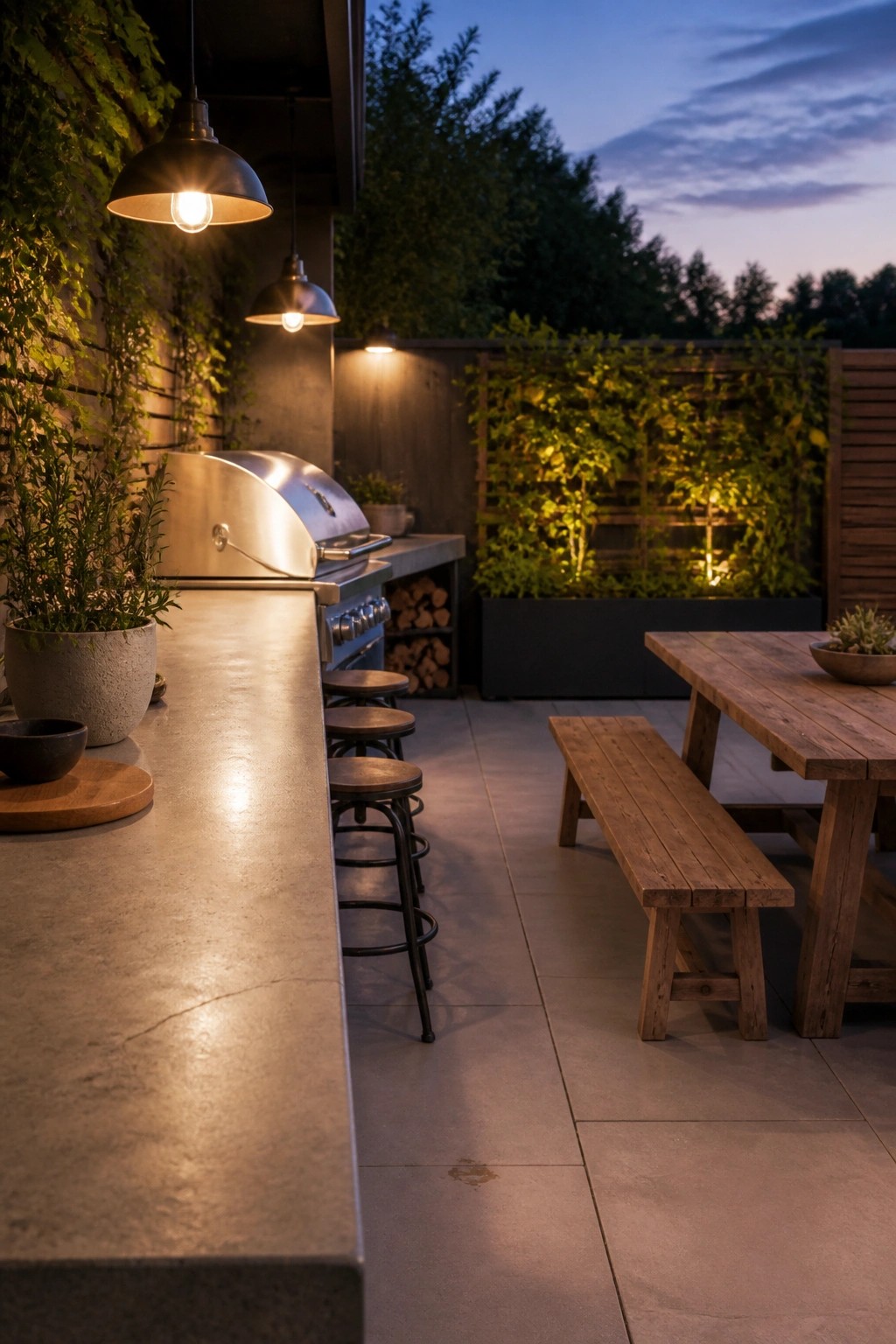
One simple way to make an outdoor kitchen feel connected to the garden is to run climbing plants along the back edge. The vines soften the hard surfaces and give the space a bit of enclosure without needing a full wall.
This works best on patios that already have some structure like a fence or screen. Use a few oversized pots at the base and let the plants climb upward. It keeps the cooking area open while adding greenery that changes with the seasons.
Frequently Asked Questions
Q: How do I keep climbing plants from toppling out of those big pots once they get tall? A: Stick a sturdy stake or small obelisk straight into the potting mix near the center. Guide the stems around it loosely with soft ties as they stretch upward. This setup handles wind without crowding the roots.
Q: What climbers actually thrive when planted in oversized containers on a patio? A: Go for varieties like clematis or morning glory that tolerate confined roots. They climb fast and reward you with blooms all season if you feed them monthly.
Q: Do I need to repot these setups every year? A: Refresh the top few inches of soil each spring instead. That keeps nutrients high while the plants stay put in their roomy homes.
