

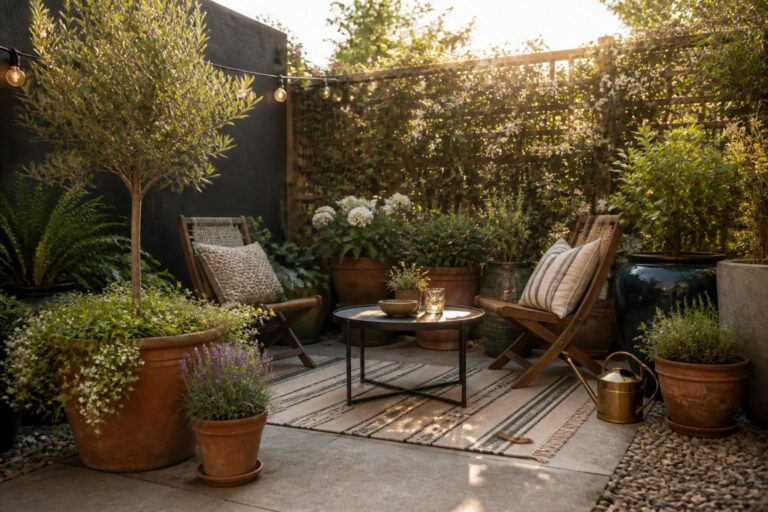
Many concrete patios end up feeling like leftover space because the surface stays hard and empty for most of the year.
I have noticed that the setups that actually get used are the ones where seating and walking paths are planned before any plants go in.
Adding layers of greenery works better when you start with the spots that already get decent shade or morning sun instead of trying to cover everything at once.
Some of the simpler ideas here feel worth testing on one corner first so you can see how the space changes with daily use.
The rest can wait.
Define a Seating Zone With a Striped Rug
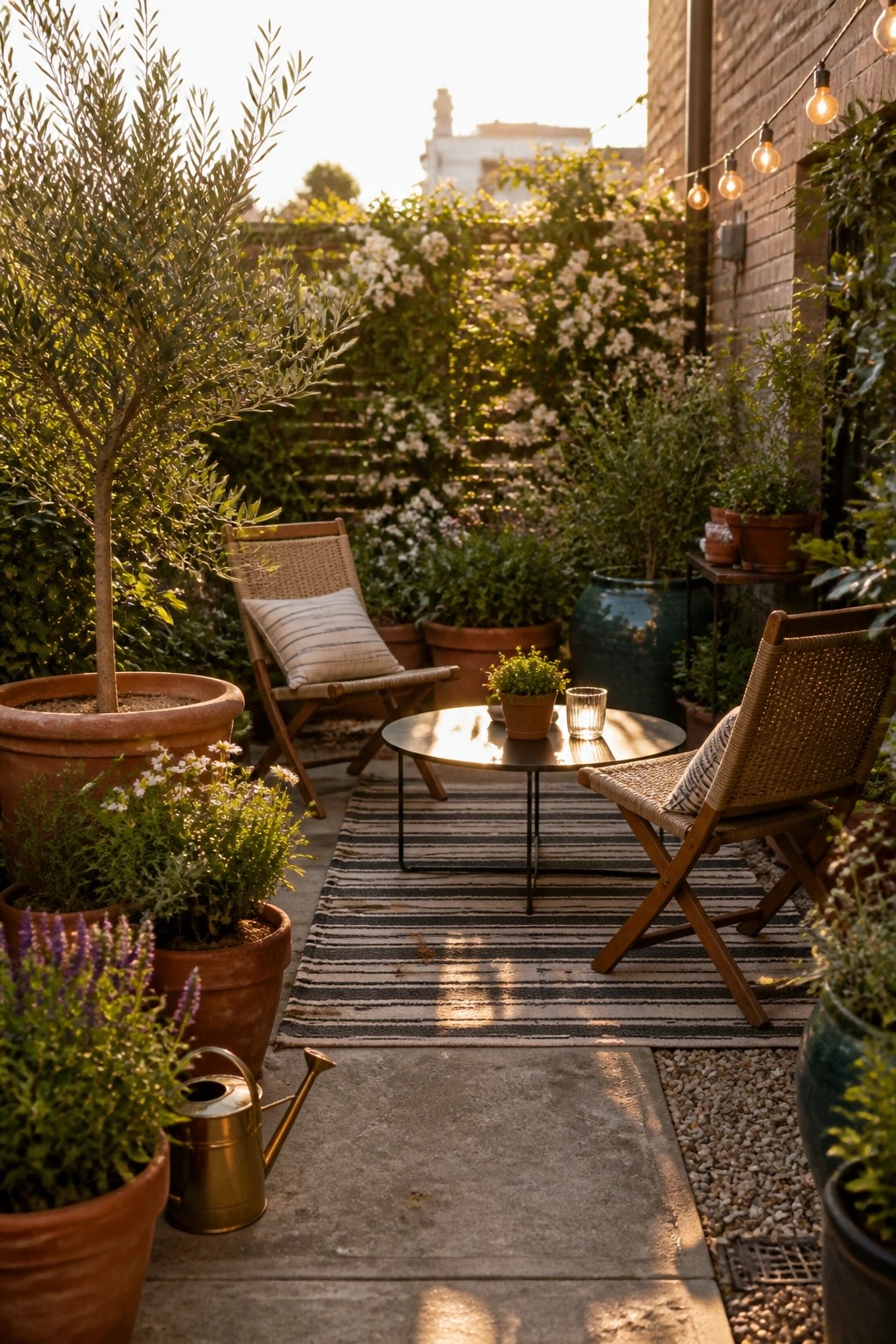
A striped rug gives bare concrete an easy sense of order. It marks off the chairs and table so the space feels like a separate room instead of just a hard surface with furniture scattered on it.
This approach suits small patios or side yards where you want a clear spot to sit without building anything permanent. Choose a durable outdoor rug and keep a few pots nearby so the greenery softens the edges.
Place A Bench Beside Raised Concrete Planters
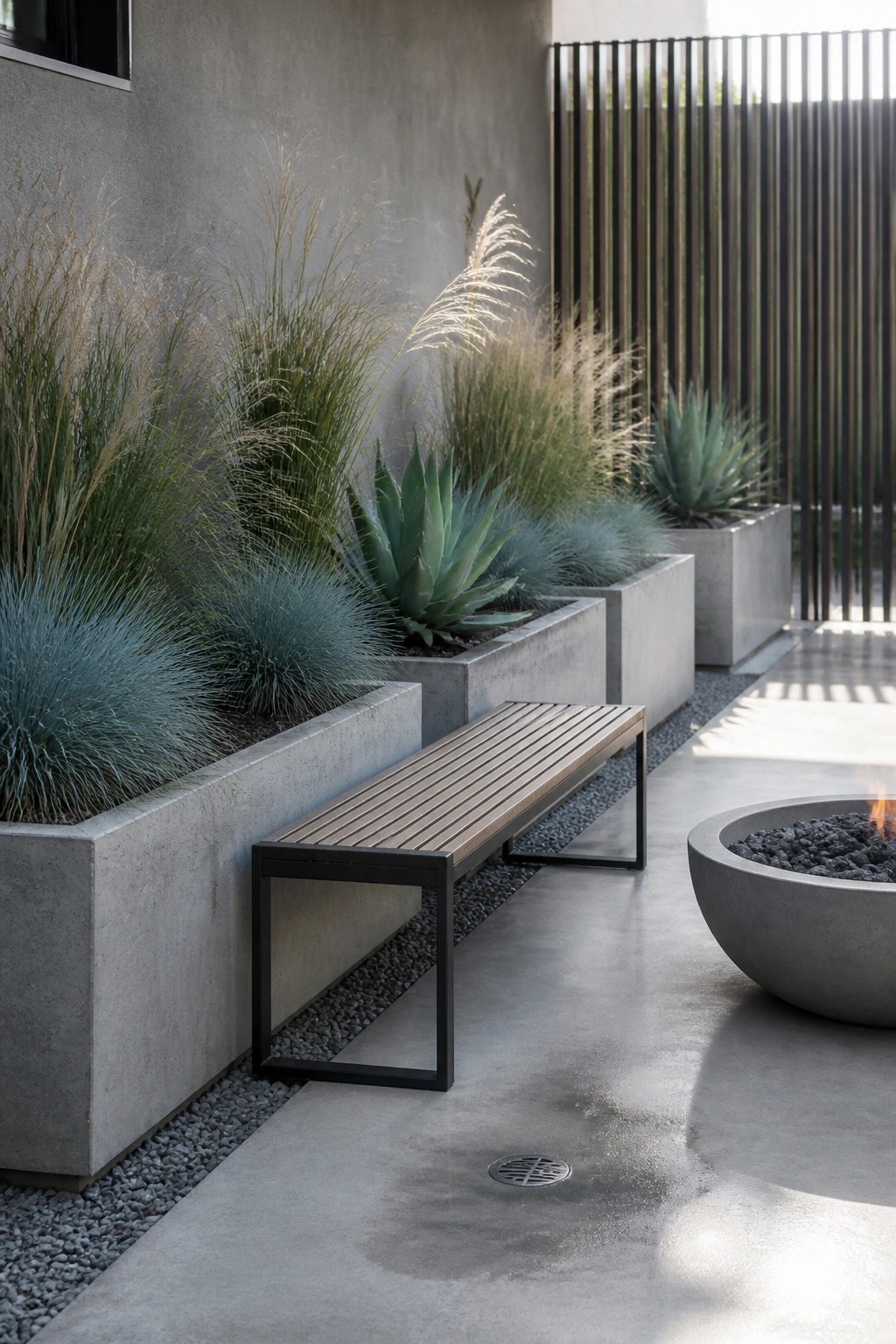
Many people soften a plain concrete patio by running raised planters along one edge and setting a bench right against them. The plants create a soft border that feels natural while the bench stays simple and functional.
This layout works best on smaller outdoor spaces or modern homes where you want some greenery without a lot of maintenance. Stick with tough grasses and succulents that handle dry conditions, and keep the bench low and narrow so the whole area stays open.
Hang Plants From A Pergola
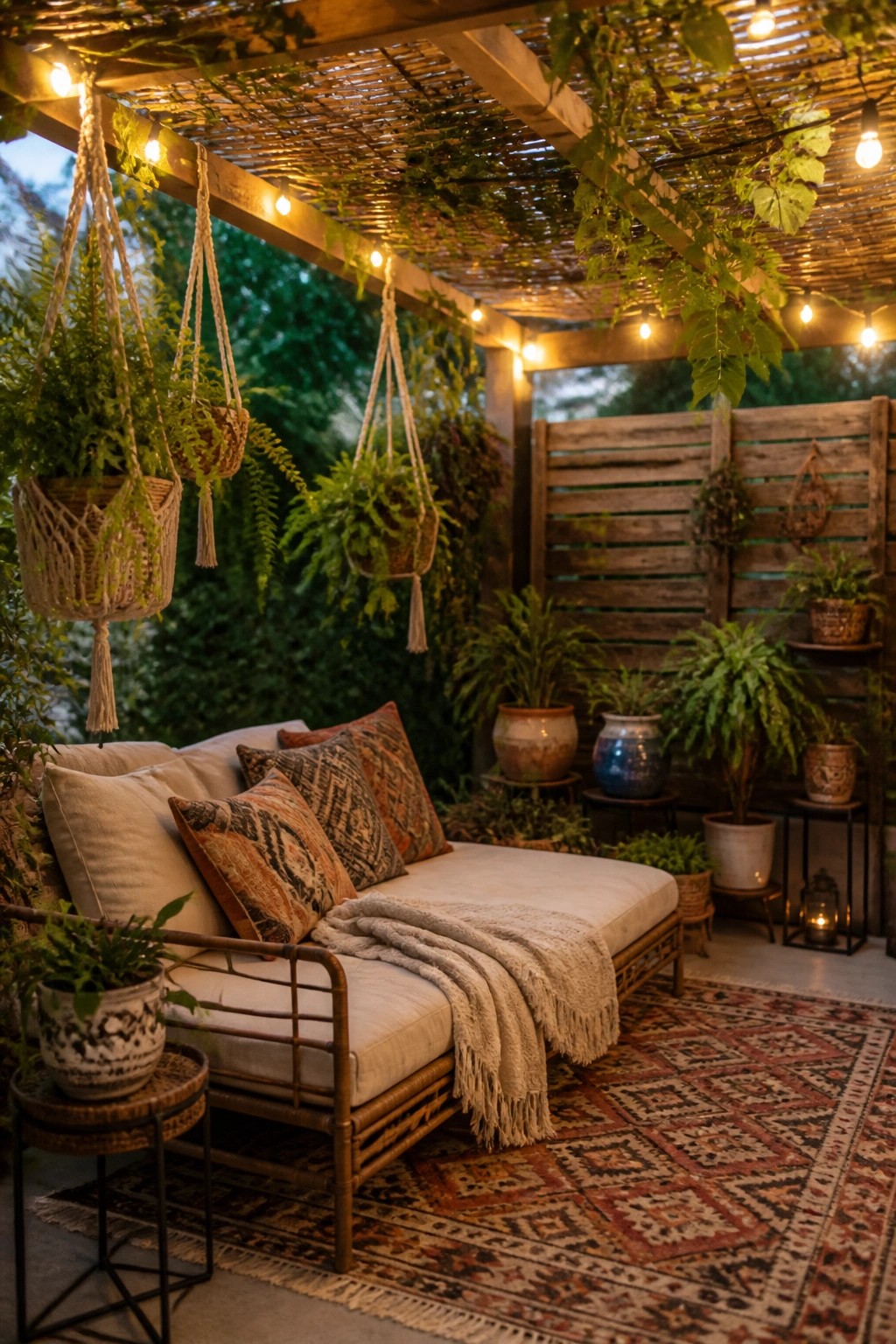
Hanging plants from a pergola gives a patio some much needed shade and softness without taking up floor space. The greenery breaks up the hard overhead lines and makes the whole area feel more enclosed and calm.
This setup works best on concrete slabs that already have a simple wood frame overhead. Use sturdy hangers and choose plants that can handle some movement from wind. Keep the lower area open for seating so the space still feels usable rather than crowded.
Cluster Large Pots Around Seating
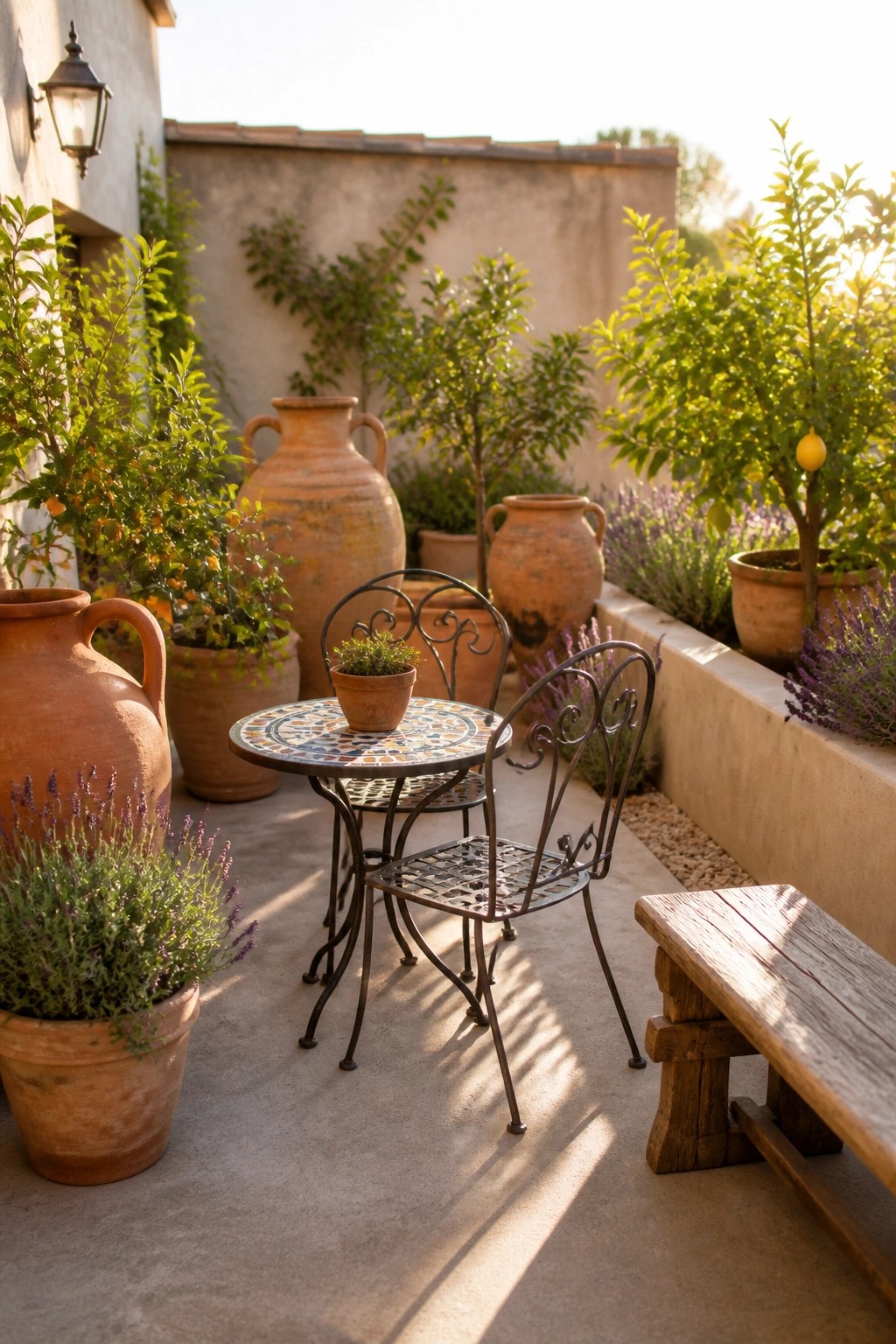
One easy way to soften a bare concrete patio is to gather several large pots close to the table and chairs. This creates a quick border of greenery that makes the space feel more like a garden than a hard surface.
It works best on patios that cannot be dug up or on rentals where changes must stay removable. Mix a few taller pots at the back with lower ones in front so the plants add depth without crowding the seats.
Vertical Pallet Planters For Patios
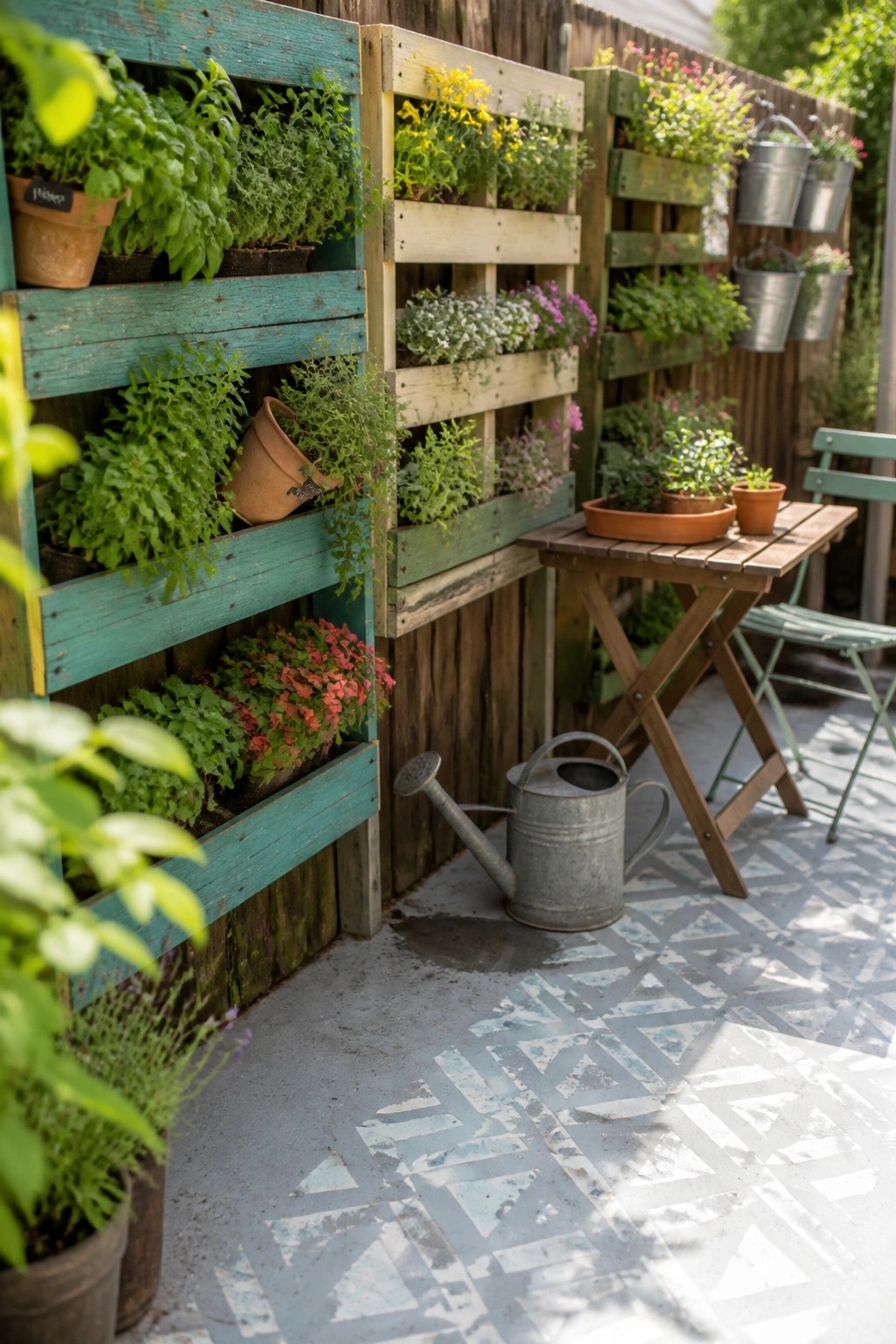
Many people like vertical pallet planters because they add a lot of greenery without taking up floor space on a concrete patio. The pallets can be stacked or hung on a wall or fence, which leaves room for a table and chairs while still making the area feel like a garden.
They suit small urban patios or rental spaces where you cannot dig beds or add big containers. Use treated wood, secure the pallets well, and choose plants that handle the sun and wind in your spot.
Line Planters Along The Patio Edge
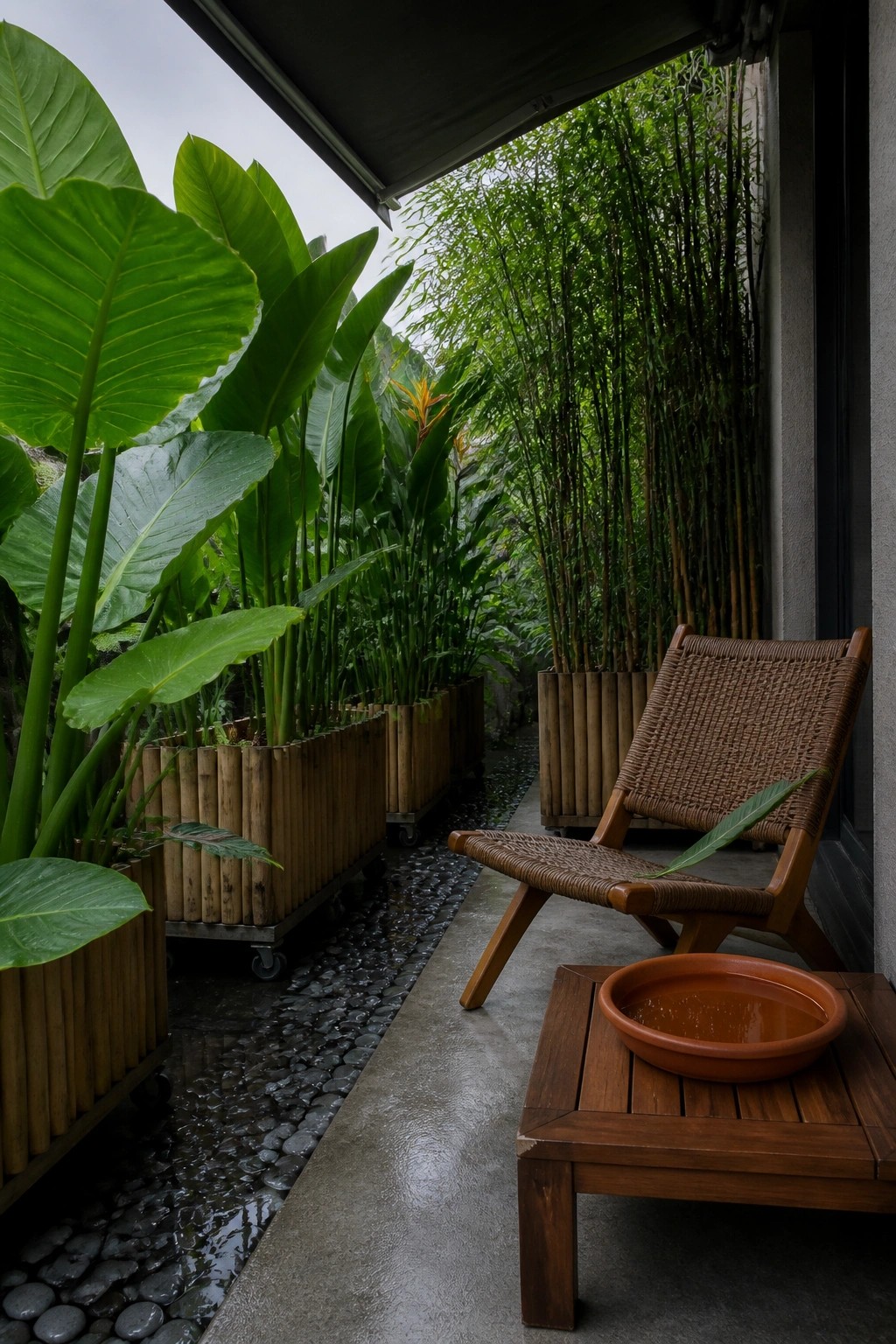
Large planters filled with tall plants can turn a stretch of bare concrete into a more inviting spot without any permanent changes. The containers act as a soft border that blocks the view of the hard surface while still leaving the space open.
This works best on patios where you cannot dig or build raised beds. Choose planters on wheels so you can shift them around when you want a different layout or need to clean the area. It also helps if the space gets strong sun or wind, since you can move the plants to better spots as needed.
Layer Pots Along Brick Edges
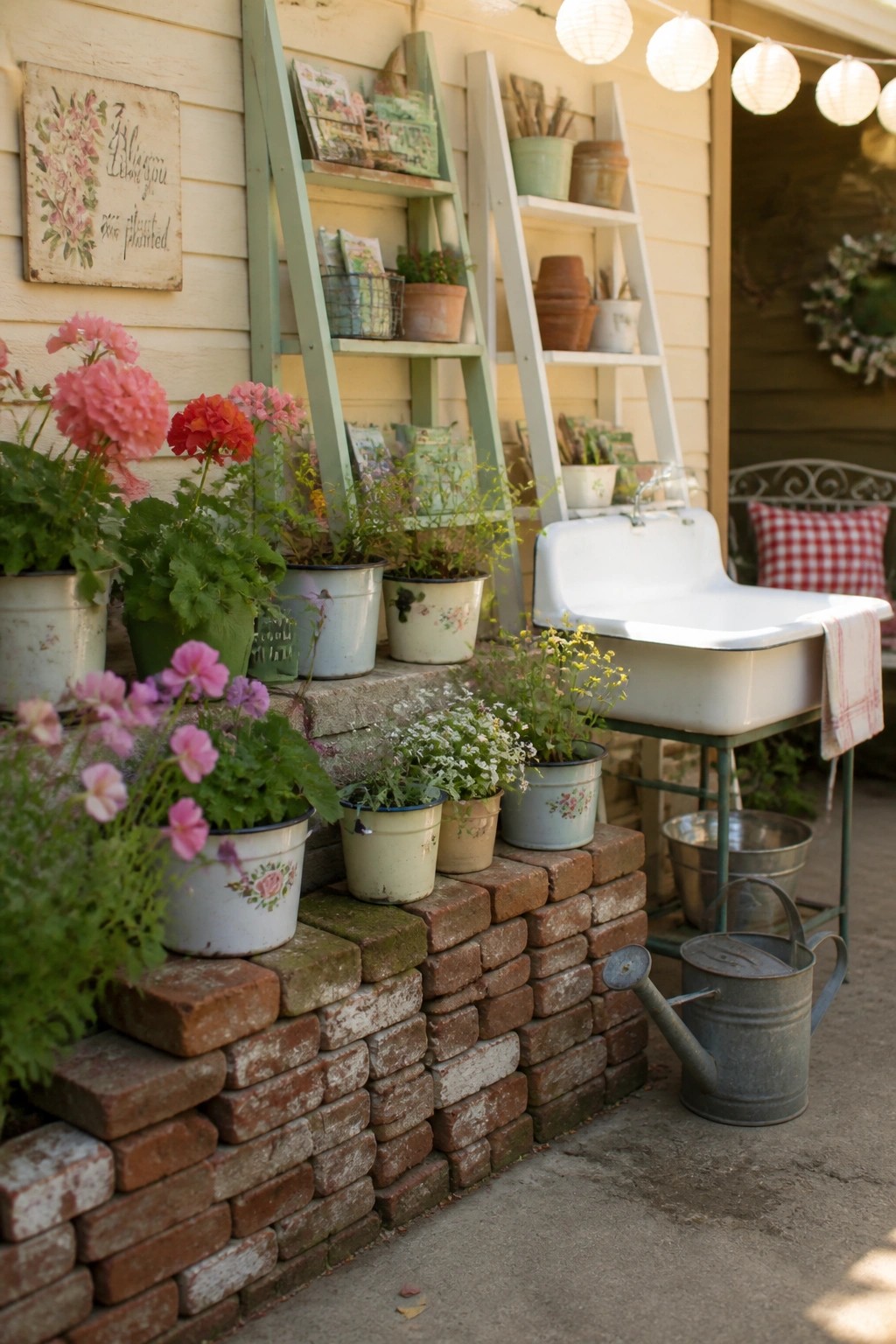
Brick edges give you an instant way to raise pots off flat concrete and create depth without any major construction. The staggered heights let plants spill over naturally and keep the space from looking flat or crowded. It works especially well on narrow patios where ground space is limited.
Start with one low brick row along the edge of your seating area and add more rows behind it if you want extra levels. This setup suits older homes or simple concrete slabs where you want a relaxed garden feel without digging beds. Just make sure the bricks sit level so the pots stay stable.
Raised Beds Along the Patio
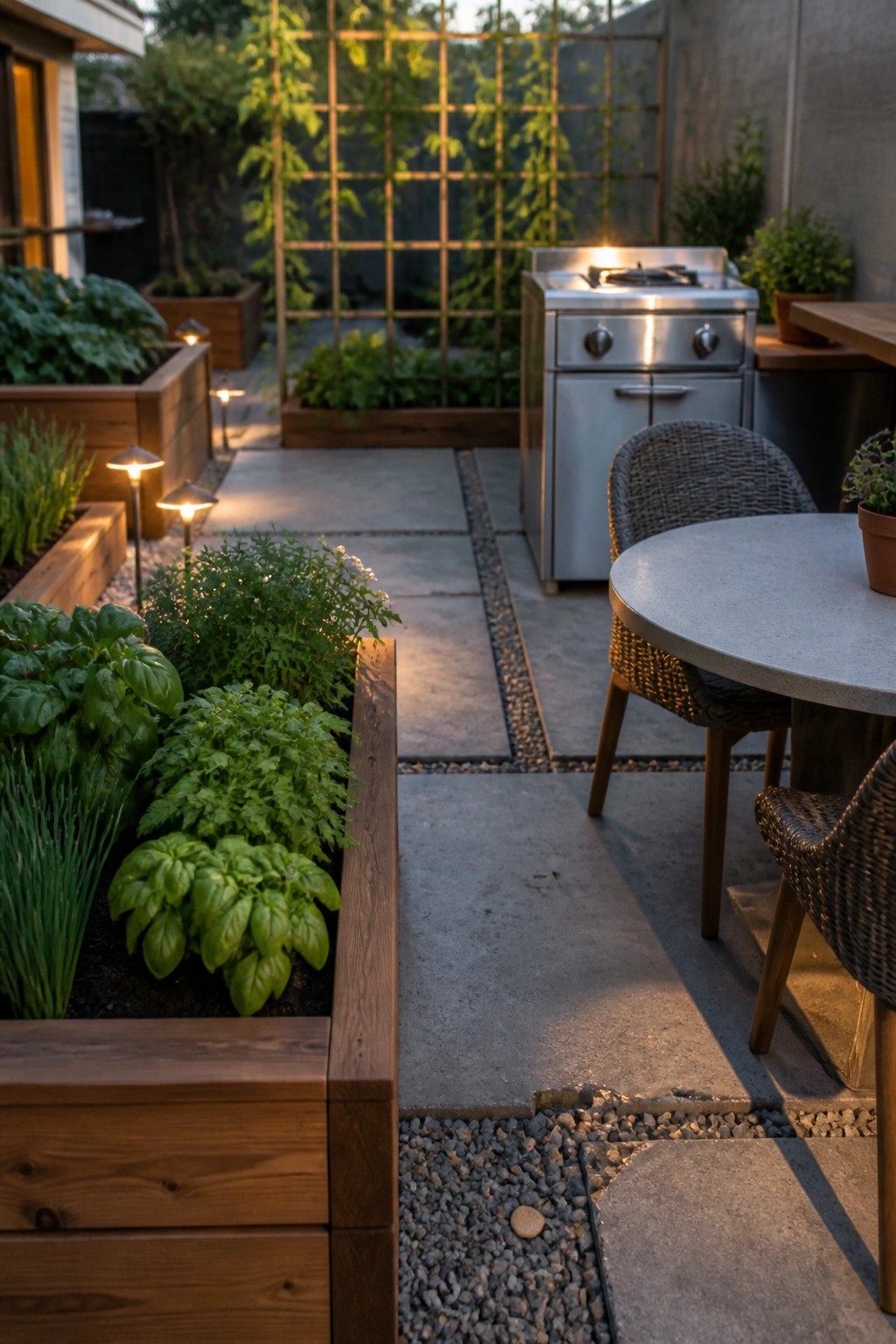
Raised beds give you a simple way to add real planting to a concrete patio without tearing anything up. The wooden boxes sit right at the edge of the hard surface and turn a flat, empty area into something that feels like a small garden. You get fresh herbs and greens close at hand, and the wood softens the look of all that concrete.
This setup works best on patios that already have a clear border or walkway. Keep the beds narrow enough to reach across easily and fill them with plants you actually use. Just watch the drainage so water does not sit against the concrete or the wood.
Large Planters Add Greenery to Concrete Patios
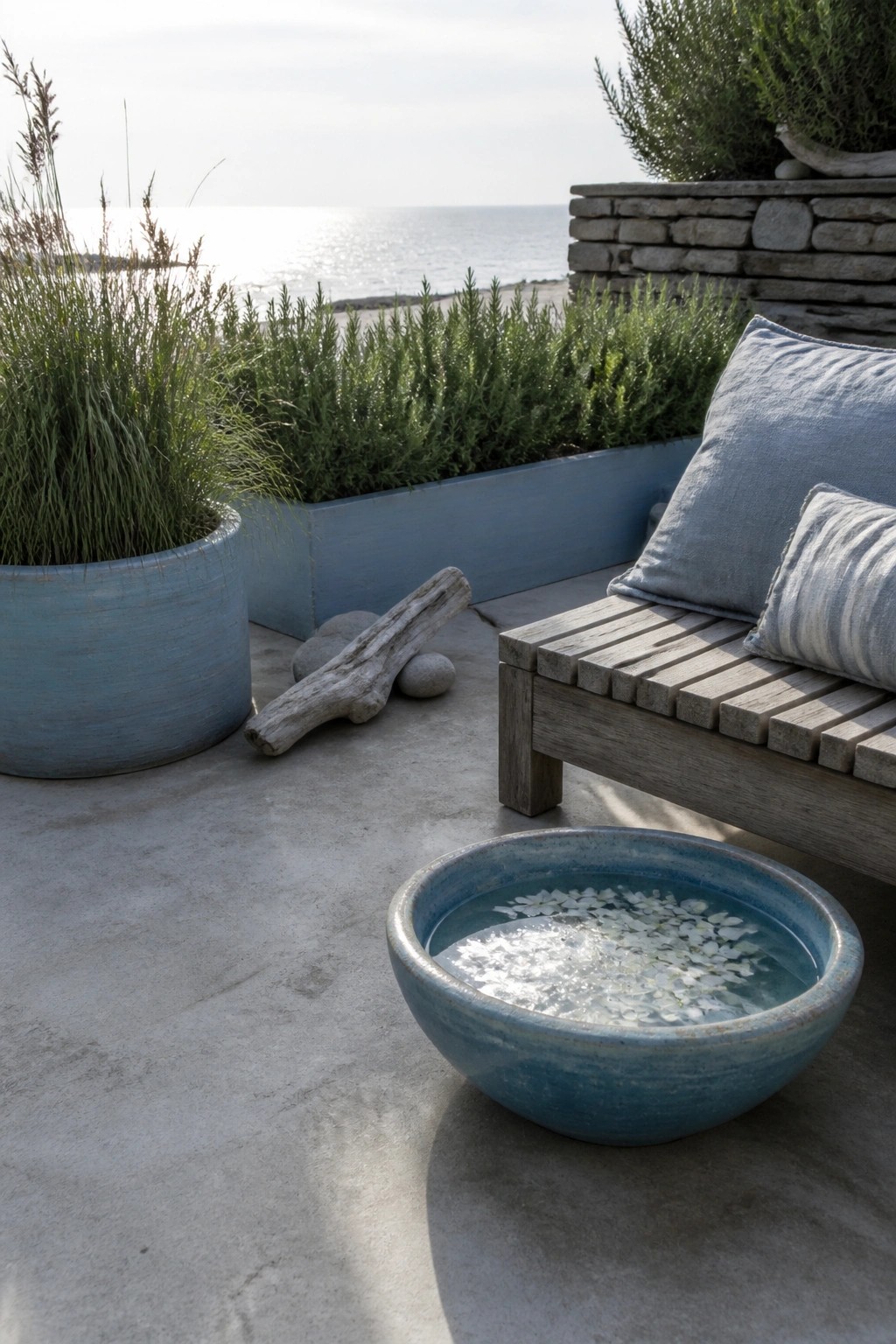
Many concrete patios stay bare because people assume they need built-in beds or major construction. A few oversized planters change that fast by bringing in height and plants without touching the surface.
Set them along the edges or near seating so the greenery frames the space and softens the hard floor. This works on any size patio and makes it easy to adjust the layout later if needed.
Add a Gravel Path With Stepping Stones
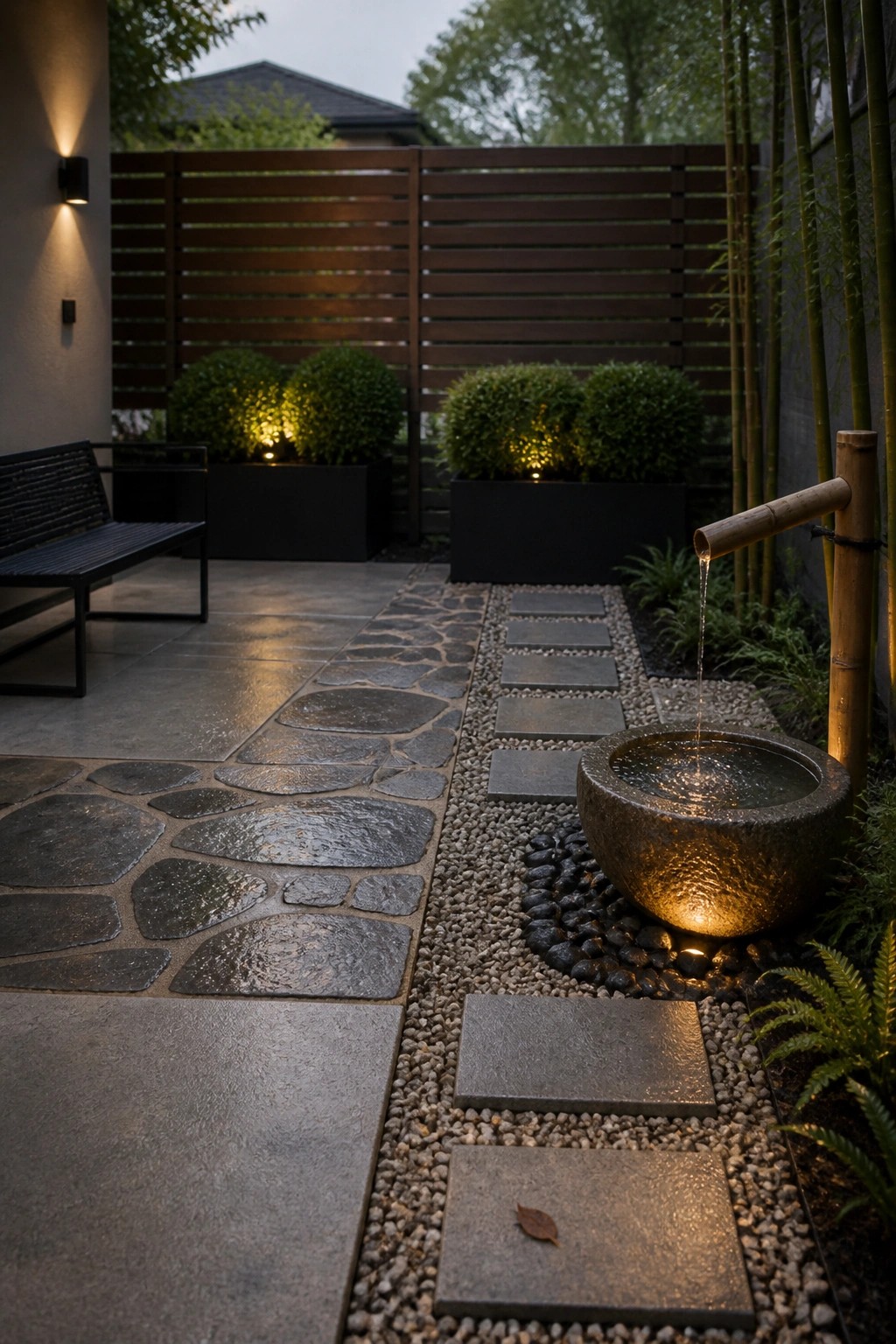
A simple path of gravel and stepping stones can turn a flat concrete patio into something that feels more like a garden. The mix of textures breaks up the solid surface and gives the space a clear direction without needing a full redesign.
This approach works best in narrow side yards or small patios where you want to lead people toward a bench or a water feature. Keep the stones level and use edging to hold the gravel in place so it stays neat over time.
Use Turf Sections to Soften Concrete Patios
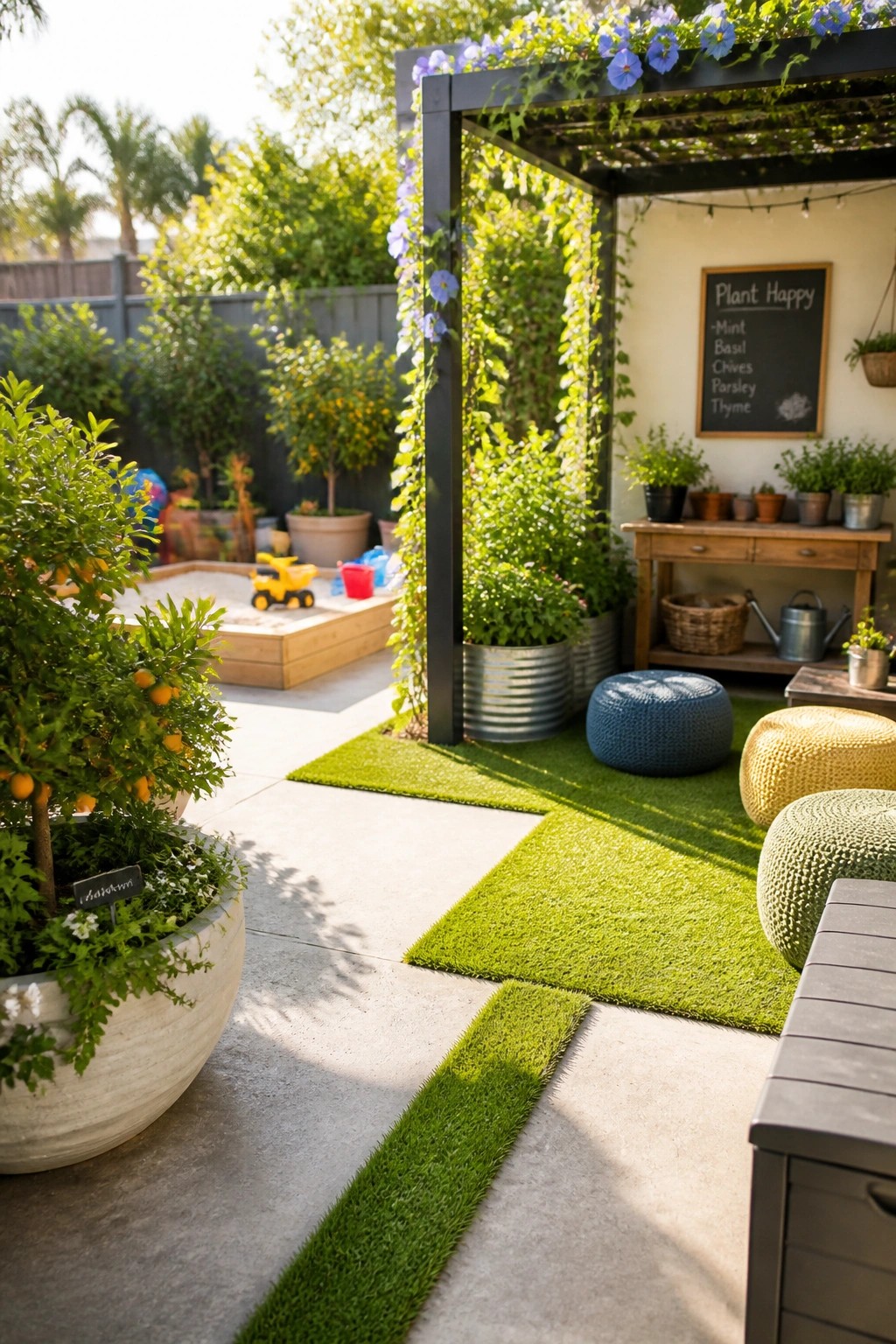
Laying down rectangular sections of turf is a simple way to turn a bare concrete slab into something that feels more like a garden. The green patches break up the hard surface and give the space a softer look without any major construction.
This approach works best on patios where digging is not an option or where you want something easy to adjust later. Measure the open areas first and choose turf that sits flat so it does not become a tripping hazard over time.
Use Curved Beds To Break Up Concrete Patios
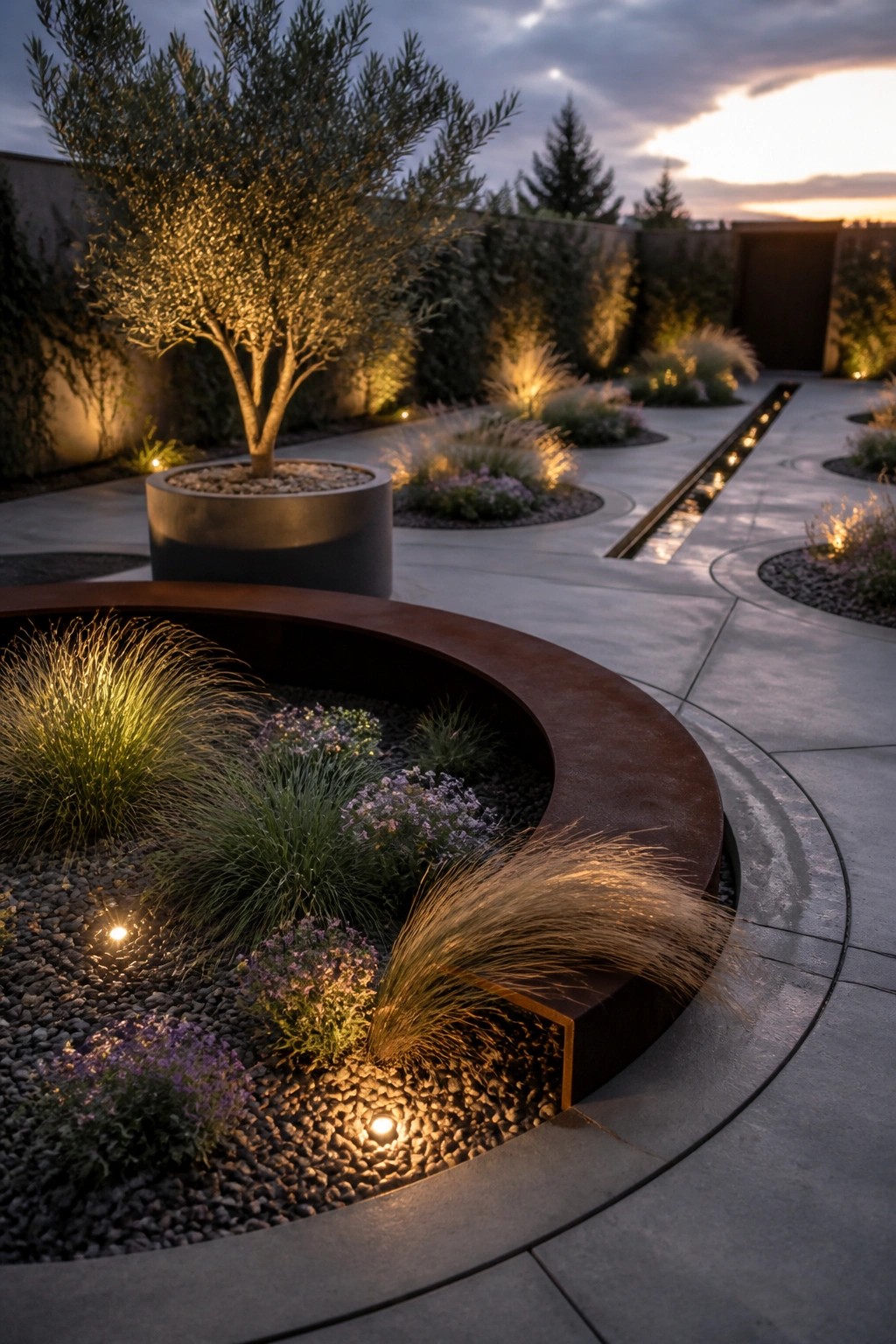
Large flat concrete areas often feel empty even after basic planting. Curved beds with metal borders create pockets of greenery that soften the hard surface without requiring major demolition.
These beds suit modern homes with existing patios or driveways where full garden installation is not practical. Keep the shapes simple, add a few low lights, and fill them with grasses and small flowering plants that stay tidy year round.
Use Metal Shelves To Hold More Plants
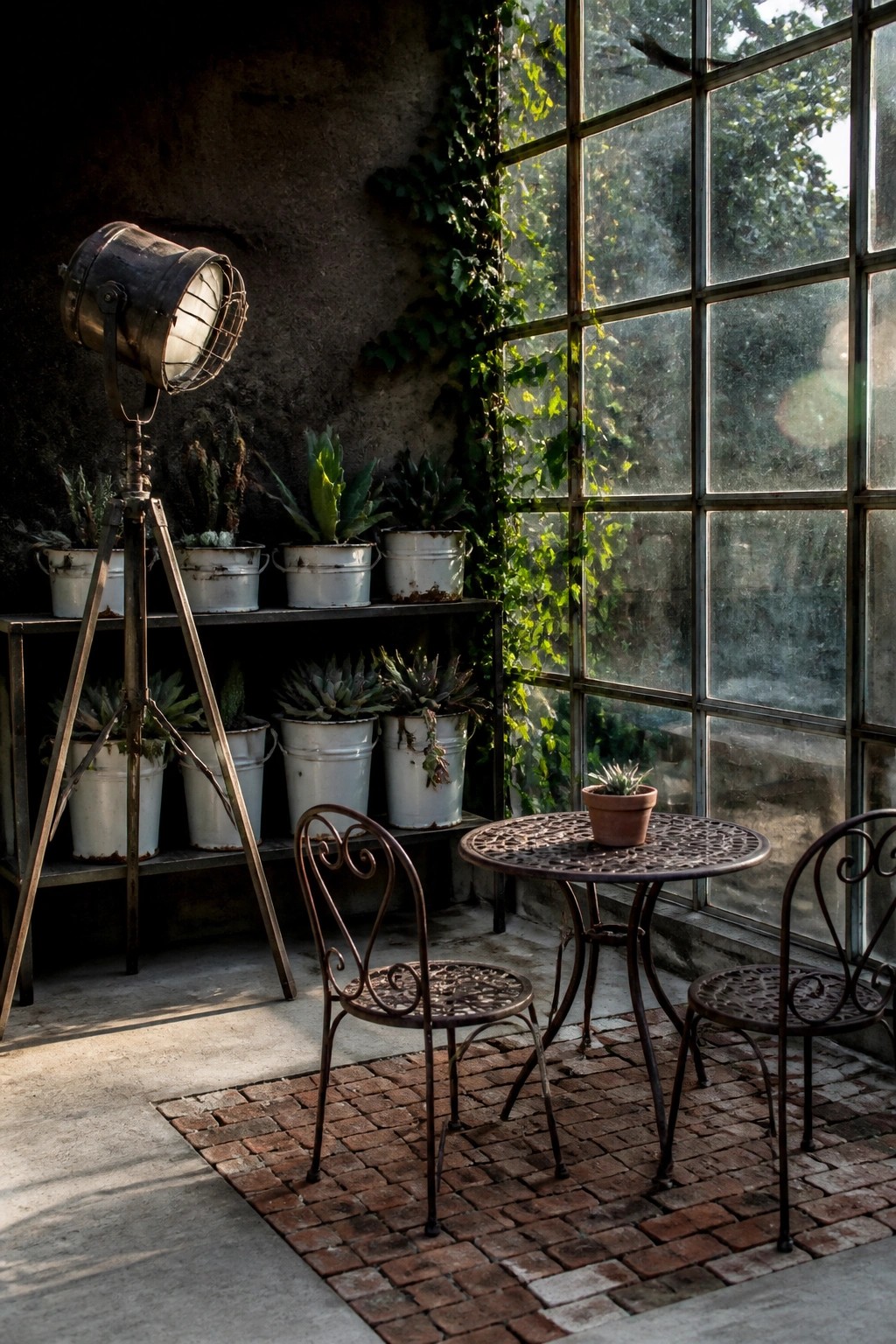
Metal shelving gives you a simple way to add plenty of plants without taking up floor space. It works especially well on patios with concrete or stone floors because the open shelves let light reach the plants and keep the area from feeling crowded. The sturdy frames also hold up outdoors and give the space a practical, lived-in look.
This setup suits smaller patios or corners where you want greenery at different heights. Place the shelves along a wall or railing and use matching pots to keep things neat. Just make sure the shelves are stable and the plants can handle the amount of sun the spot gets.
Vertical Planters Add Greenery Without Taking Floor Space
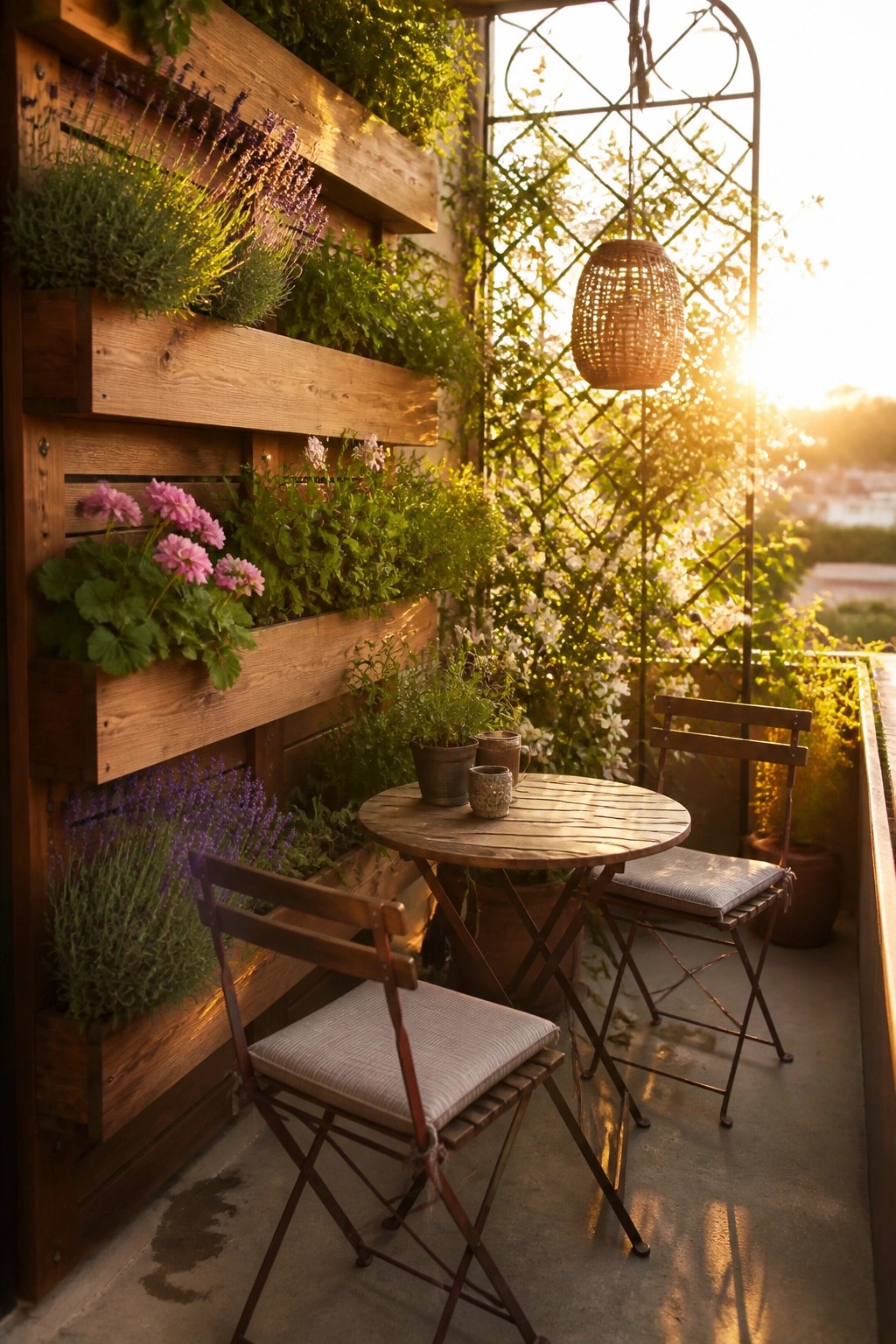
Mounting planters on the wall is one of the simplest ways to turn a plain concrete patio into something softer and more usable. It keeps the ground clear for a table and chairs while still giving the space plenty of growing room.
This setup works best on balconies or small terraces where every square foot counts. Stick with deep wooden boxes, group a few different plants together, and make sure everything is secured well so it holds up through the seasons.
Use Gravel Beds To Add Plants To A Concrete Patio
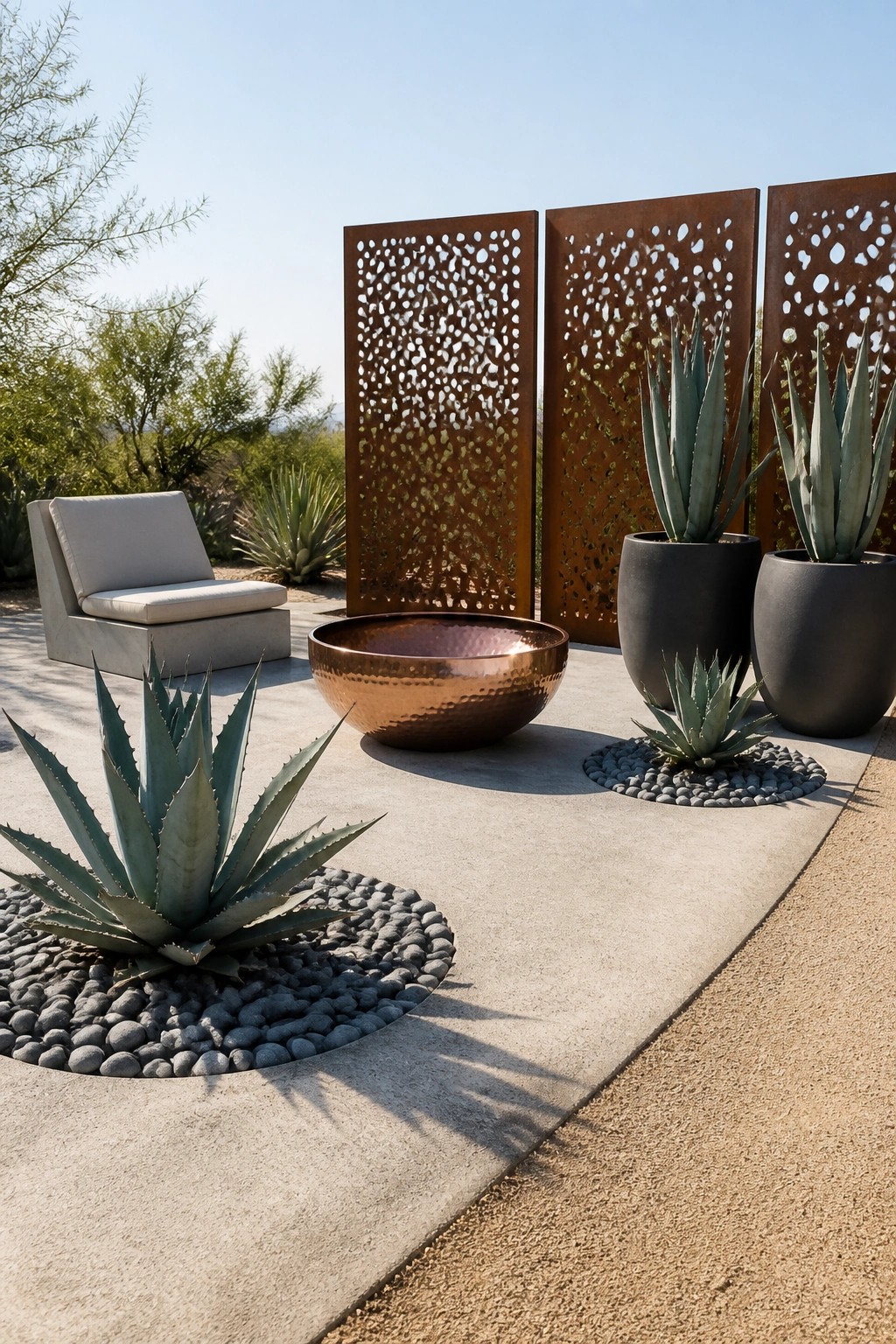
Gravel beds cut right into the concrete let you bring larger plants into a patio without tearing up the whole surface. The beds give roots room to spread while keeping the area tidy and helping with drainage. This approach works especially well on flat, bare slabs that feel too hard and empty on their own.
It suits homes with simple concrete patios that need softening but not a full remodel. Keep the beds modest in size and repeat the same gravel so the look stays clean. Watch the slope of the concrete so water does not pool around the plants.
Group Potted Plants Along the Edges
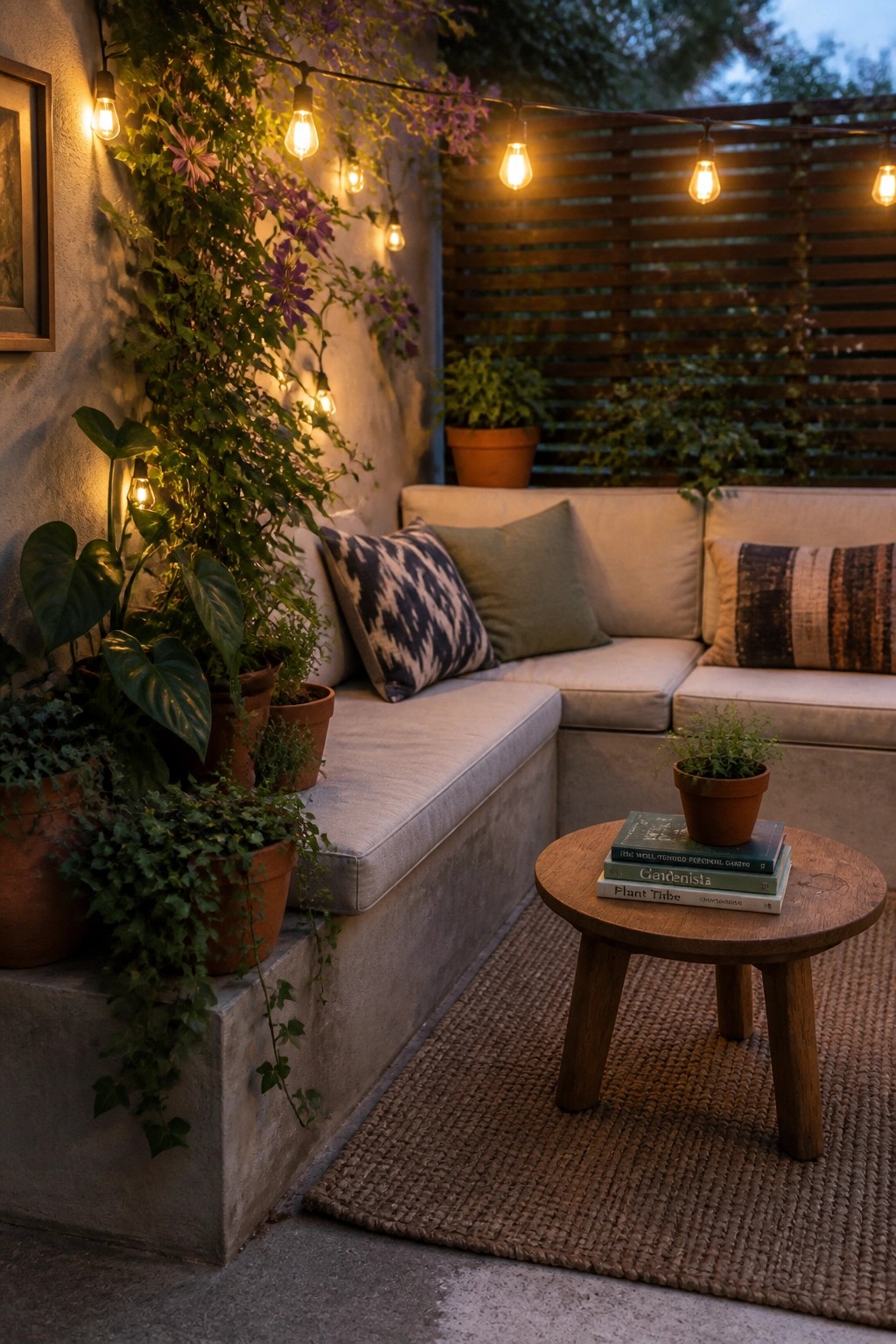
One simple way to make bare concrete feel less harsh is to line the edges with plenty of potted plants. Clustering them at different heights along walls and seating creates a soft border that turns the space into something greener and more inviting.
This approach works best on patios where digging is not possible. Stick with sturdy pots in similar tones and mix trailing vines with fuller plants so the greenery feels layered rather than scattered.
Raised Planters Along Concrete Edges
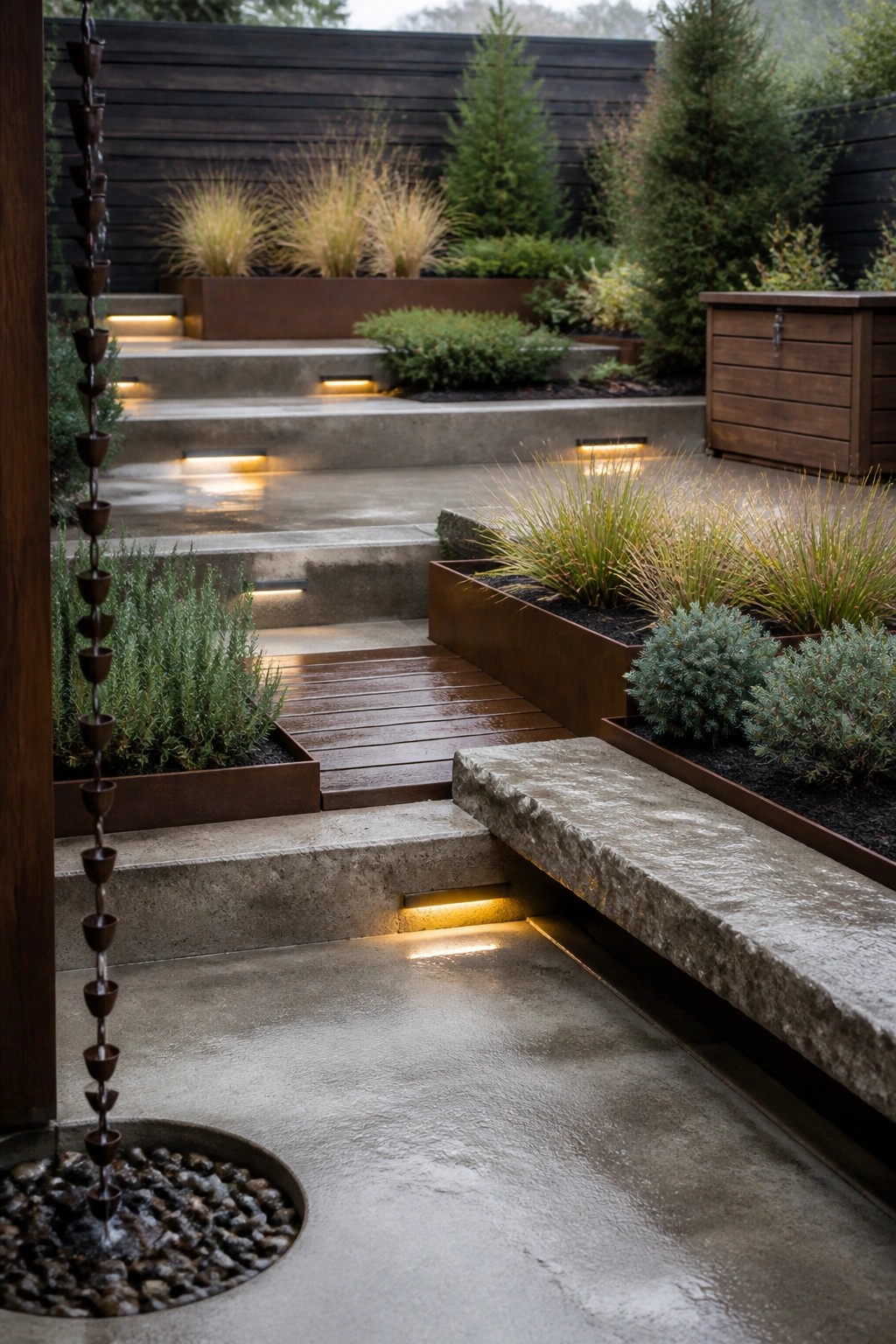
Raised planters give you a clean way to add soil and plants over an existing concrete patio without breaking up the surface. The metal boxes sit right on the concrete and create actual planting beds that feel more like a garden than a few pots scattered around.
They suit small urban yards or side areas where digging is not an option. Keep the planters low enough to sit on and choose grasses or small shrubs that do not need constant watering. The built-in lights under the steps are optional but help if you use the space after dark.
Mix Bright Metal Chairs With Clustered Pots
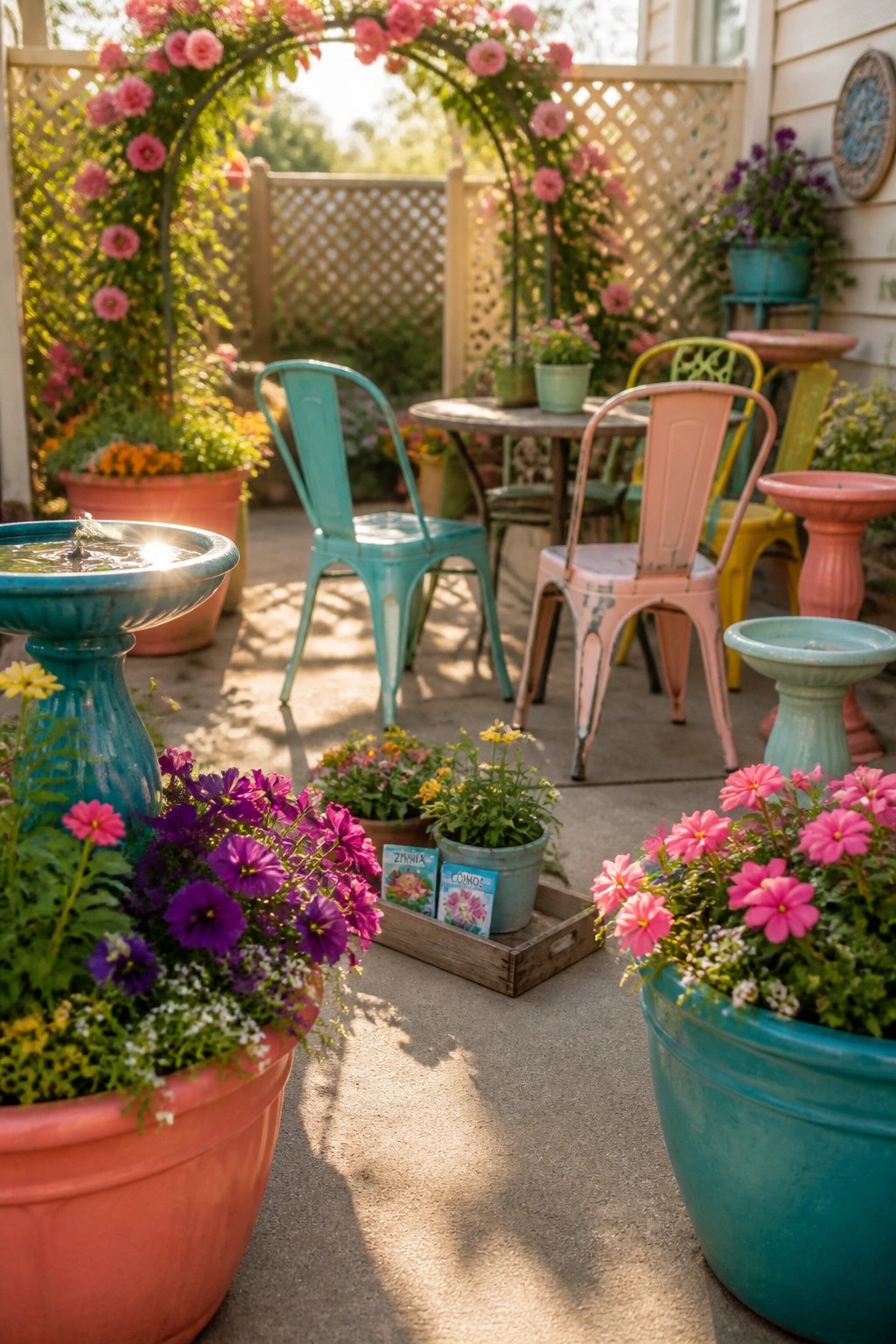
One simple way to make a concrete patio feel like a real garden is to bring in a few painted metal chairs and surround them with groups of potted plants. The chairs add instant color and a place to sit, while the pots let you move plants around easily until the space feels full.
This approach works especially well on rental patios or small yards where you cannot change the ground. Keep most pots in two or three colors so the look stays simple, and place the tallest ones toward the back to create a bit of height without blocking the seating.
Add An Overhead Awning For Evening Use
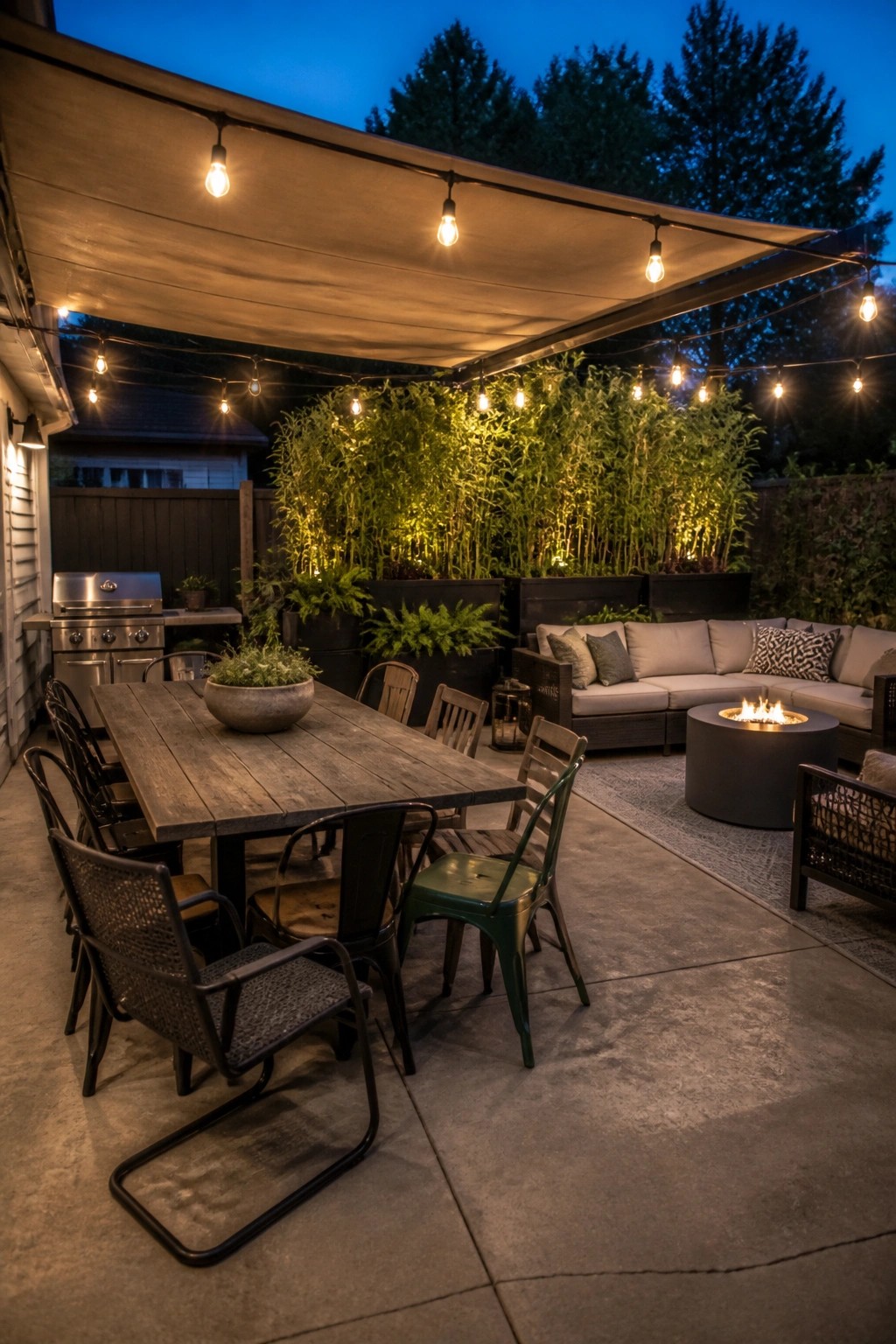
A fabric awning stretched over part of a concrete patio gives the space a clear sense of being a room rather than just an open slab. It cuts the glare during the day and makes the area feel contained once the lights come on, which is why so many people end up spending more time outside after adding one.
This works on most patios as long as you have a solid way to attach it to the house or posts. Keep the fabric color neutral so it does not fight with your plants or furniture, and make sure the height still lets you walk under it without ducking.
Curve Paths Through The Planting Beds
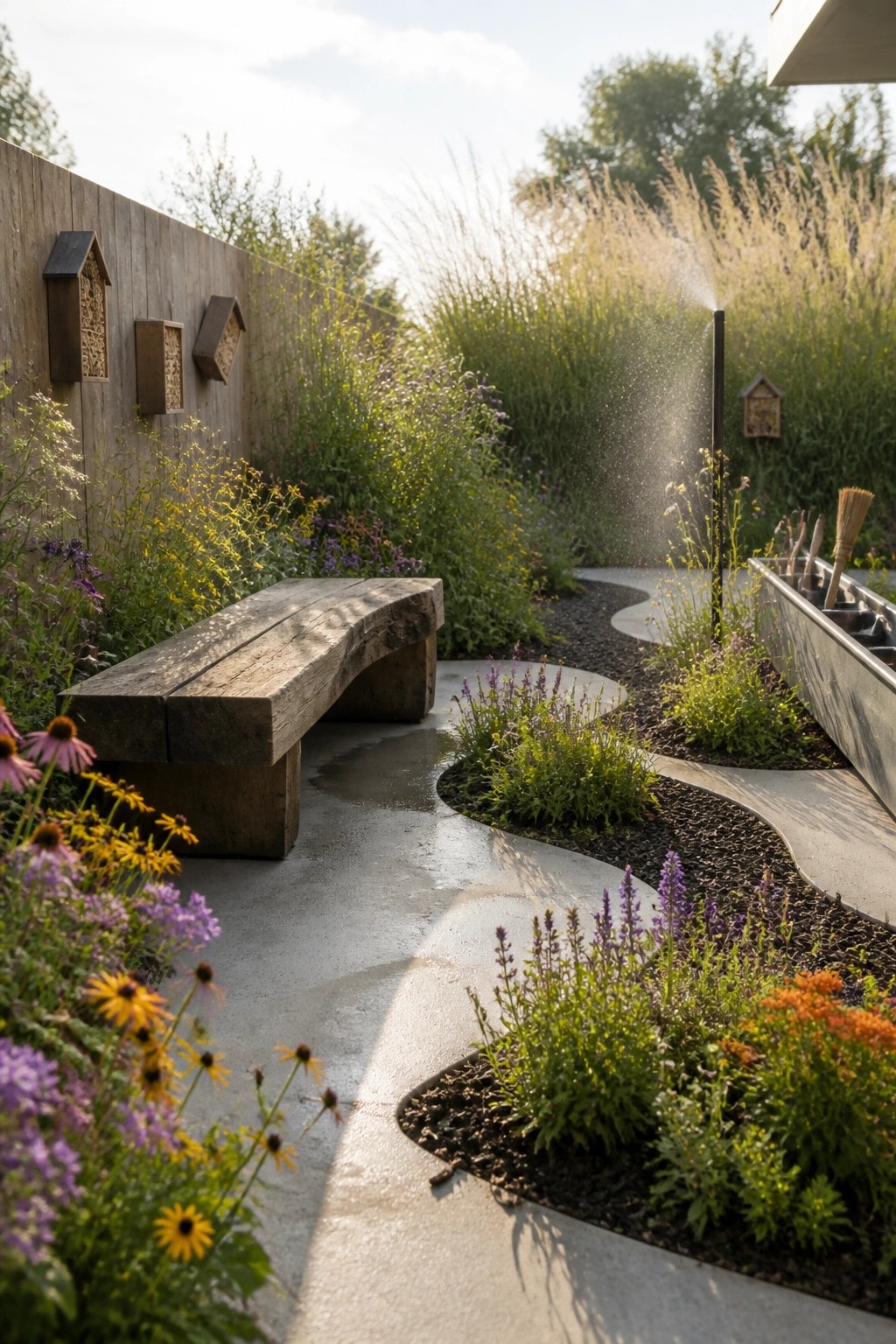
A simple curved path can change how a concrete area feels right away. Instead of a straight run that highlights the hard surface, the bends let the plants and beds take over and make the space feel more like a garden.
This layout works best in smaller yards or side areas where you want to slow people down and show off the plantings. Keep the edges soft and vary the width of the beds so the concrete does not dominate the view.
Frequently Asked Questions
Q: How do I water everything without making a mess on the concrete? A: Set up a simple drip system that runs along the edges of your pots. This keeps water contained and reaches the roots directly. Check the soil moisture every few days to adjust as needed.
Q: What plants work best if my patio gets full sun all day? A: Go for tough varieties like lavender or succulents that handle heat well. Place them in larger containers to hold moisture longer.
Q: What if I can’t attach anything to the concrete because I rent? A: Use freestanding planters and trellises that rest on the surface instead. Stack crates or use hanging options from above to add height and greenery. This keeps everything removable when you move.
