

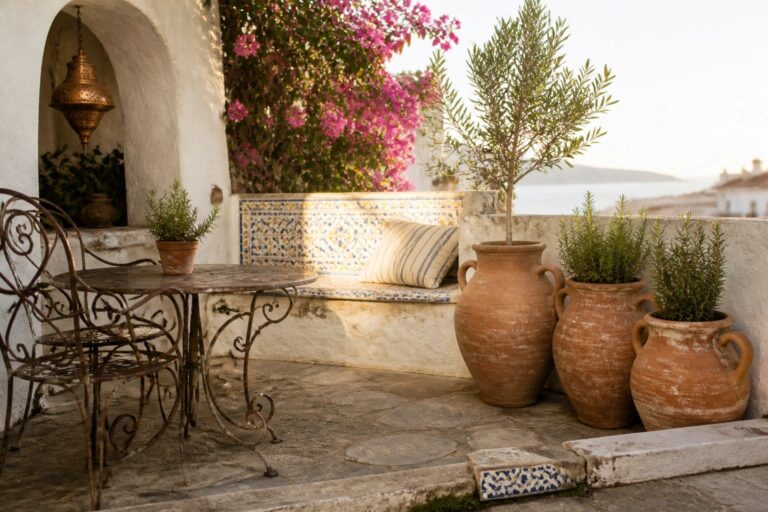
Patios tend to feel more like extensions of the house when the planters sit at a height that lets you reach the plants without bending awkwardly over the seating.
I tried grouping low borders around a corner table last summer and it changed how often we actually ate outside because the space no longer looked like a walkway.
Sun angles and daily foot traffic usually decide whether a layout stays comfortable or turns into something you only use on weekends.
Small adjustments matter more than big redesigns.
Starting with planters that match the depth of your chairs keeps the whole area from looking scattered once everything is in place.
Frame Patio Seating With Large Planters
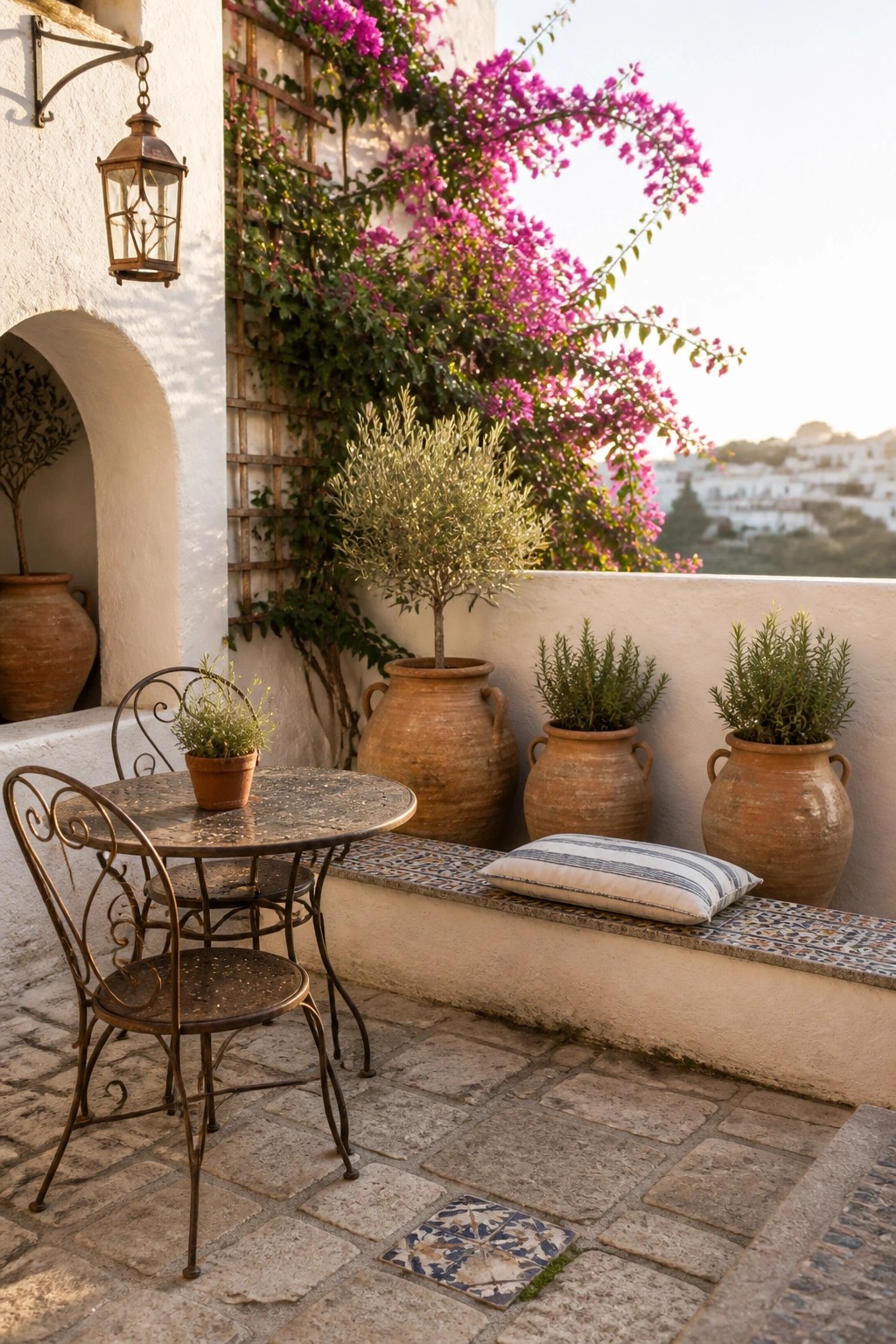
Large planters work well for marking off a seating area without building walls or adding railings. The clay pots here sit right along the edge of the bench and table, which keeps the space feeling open but still separate from the rest of the patio.
This setup suits homes with small outdoor areas or uneven surfaces where fixed borders would be hard to install. Place a few tall pots at the corners and a couple shorter ones near the seating to guide the eye and add some greenery without crowding the chairs.
Planters That Form A Border Around Patio Seating
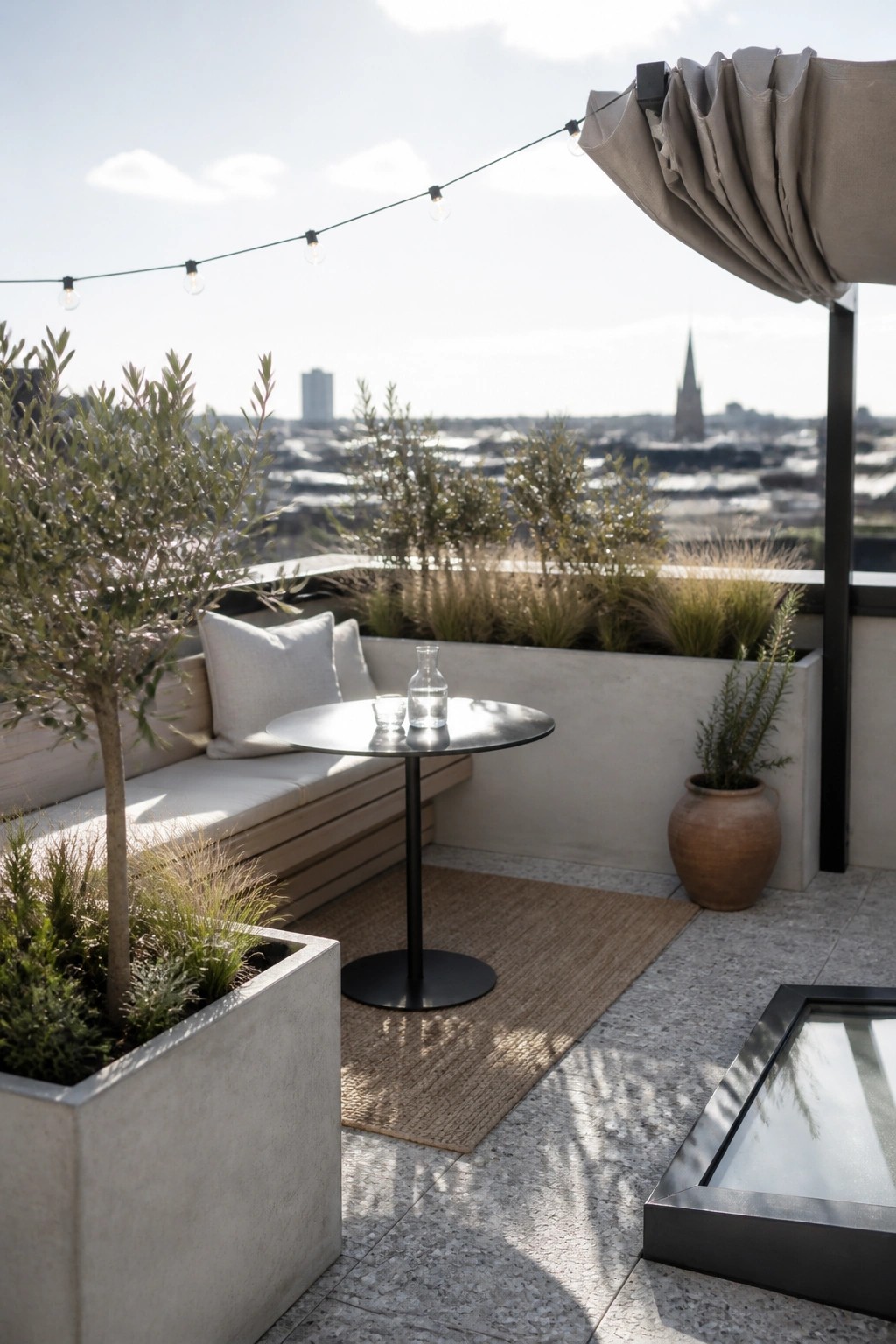
Many people like how planters can mark off a seating area while still keeping the space open. They give the patio a bit of structure without closing it in, and the plants add softness right where you sit.
This setup works best on rooftops or terraces where you want greenery close to the furniture. Match the planter material to the bench or flooring if you can, and leave enough room around the table so people can move easily.
A Weathered Table for Casual Outdoor Meals
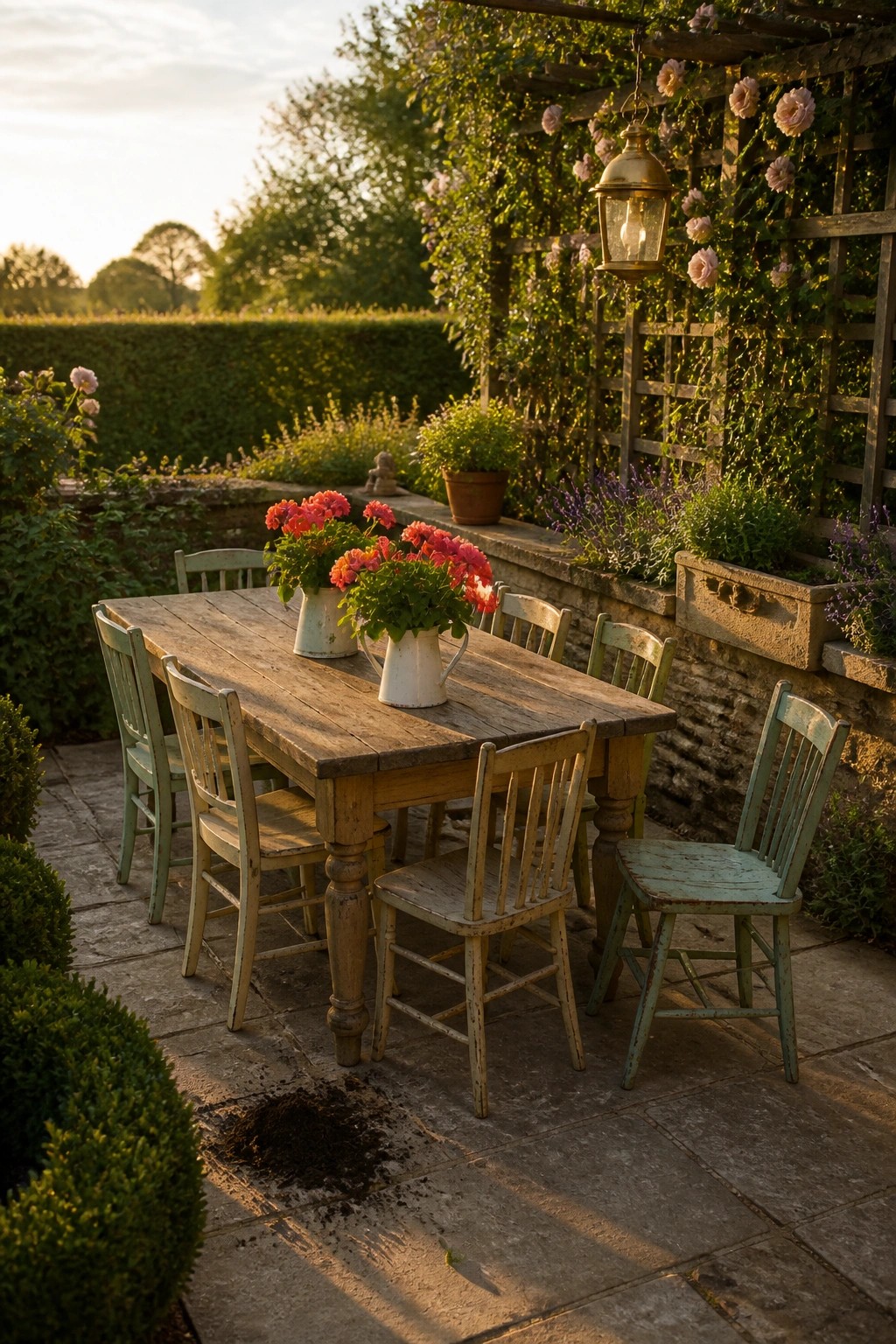
A long wooden table works well on a patio because it feels sturdy and welcoming without trying too hard. It gives you a solid spot for meals while still letting the garden stay close by.
Place it near a wall or trellis and add a few flower pitchers down the center. This setup suits smaller yards where you want room to sit without crowding the plants.
Frame Seating with Large Potted Plants
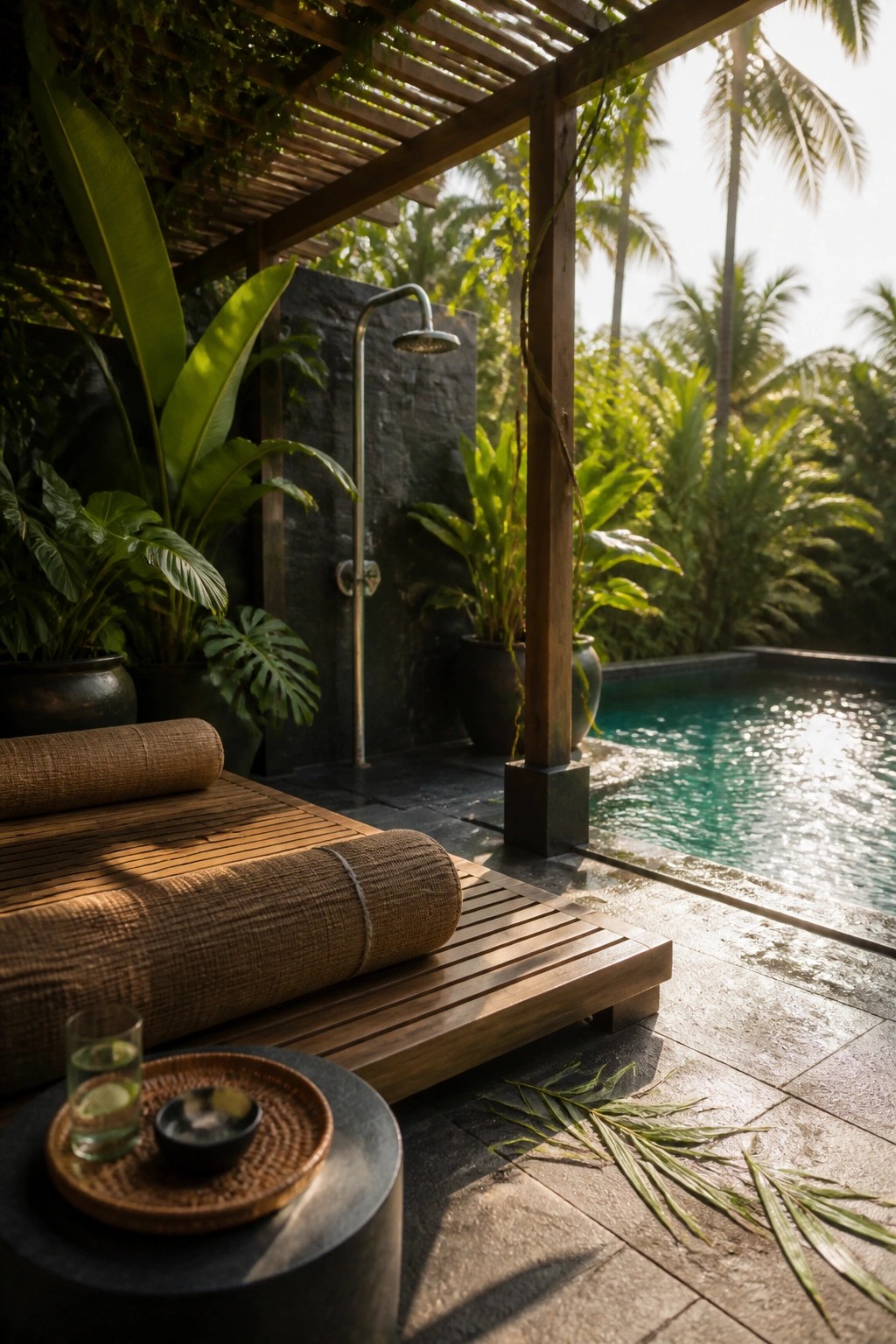
Large pots help turn a basic seating spot into something that feels more like a garden. The bench here sits low to the ground and gets surrounded by tall planters on both sides, which creates a natural border without any extra walls or fencing. This setup works especially well when you want the seating to feel tucked in but still open to the pool or yard.
Try grouping two or three big pots at each end of the bench rather than spreading them out evenly. It suits homes with warm climates and simple wood or stone patios. Just make sure the pots are heavy enough to stay put in wind and that the plants can handle the sun exposure in that spot.
Built-In Seating With Planting Borders
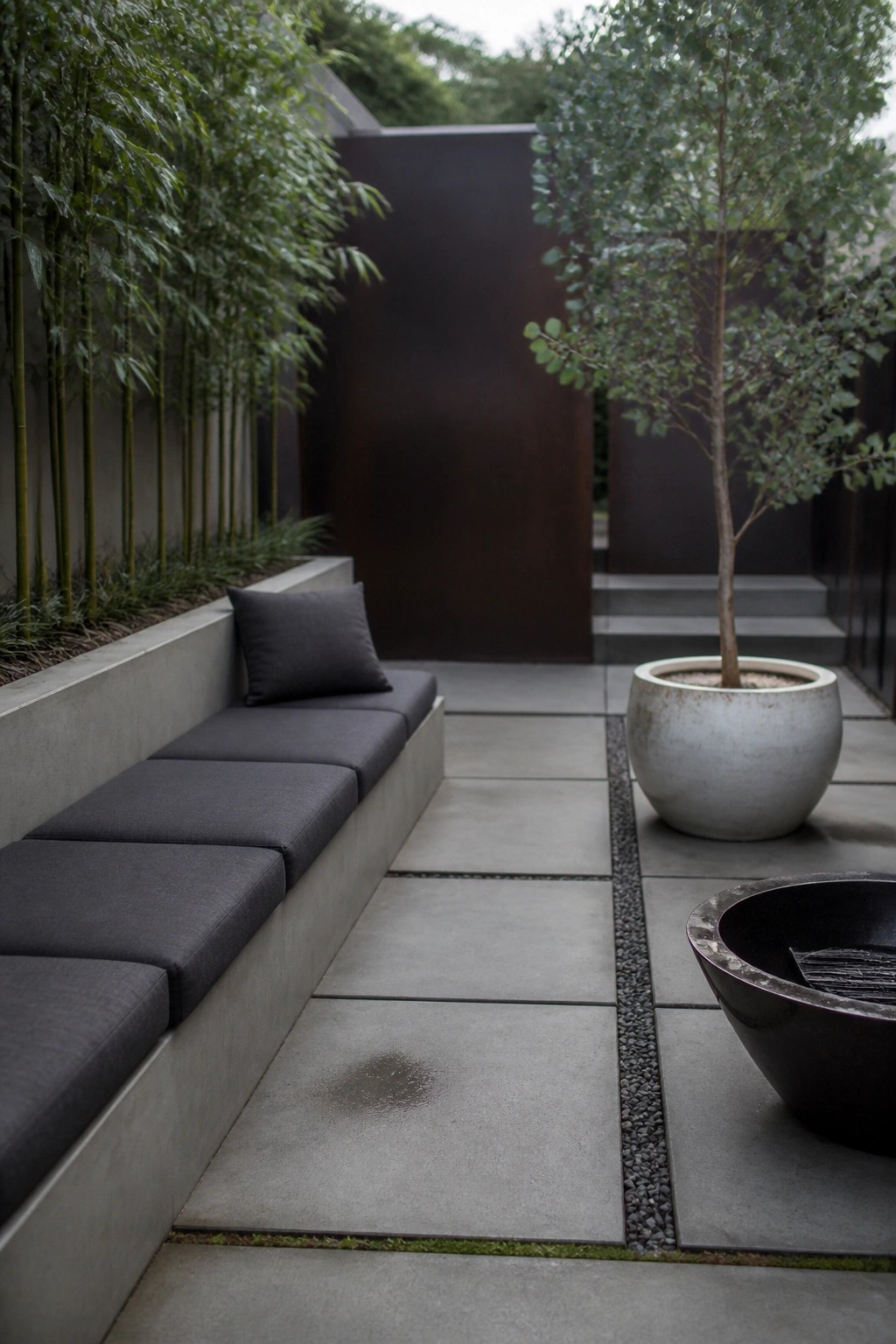
A built-in bench along the edge of a patio gives you seating without crowding the open space. It turns what would be just a border into something you can actually use, and the planting behind it adds height without needing separate pots or beds.
This setup works best on narrow patios or side yards where you want to keep the middle open. Keep the bench material simple so it blends with the paving, and use taller plants behind it if you want a bit of privacy.
Low Poufs For Casual Outdoor Seating
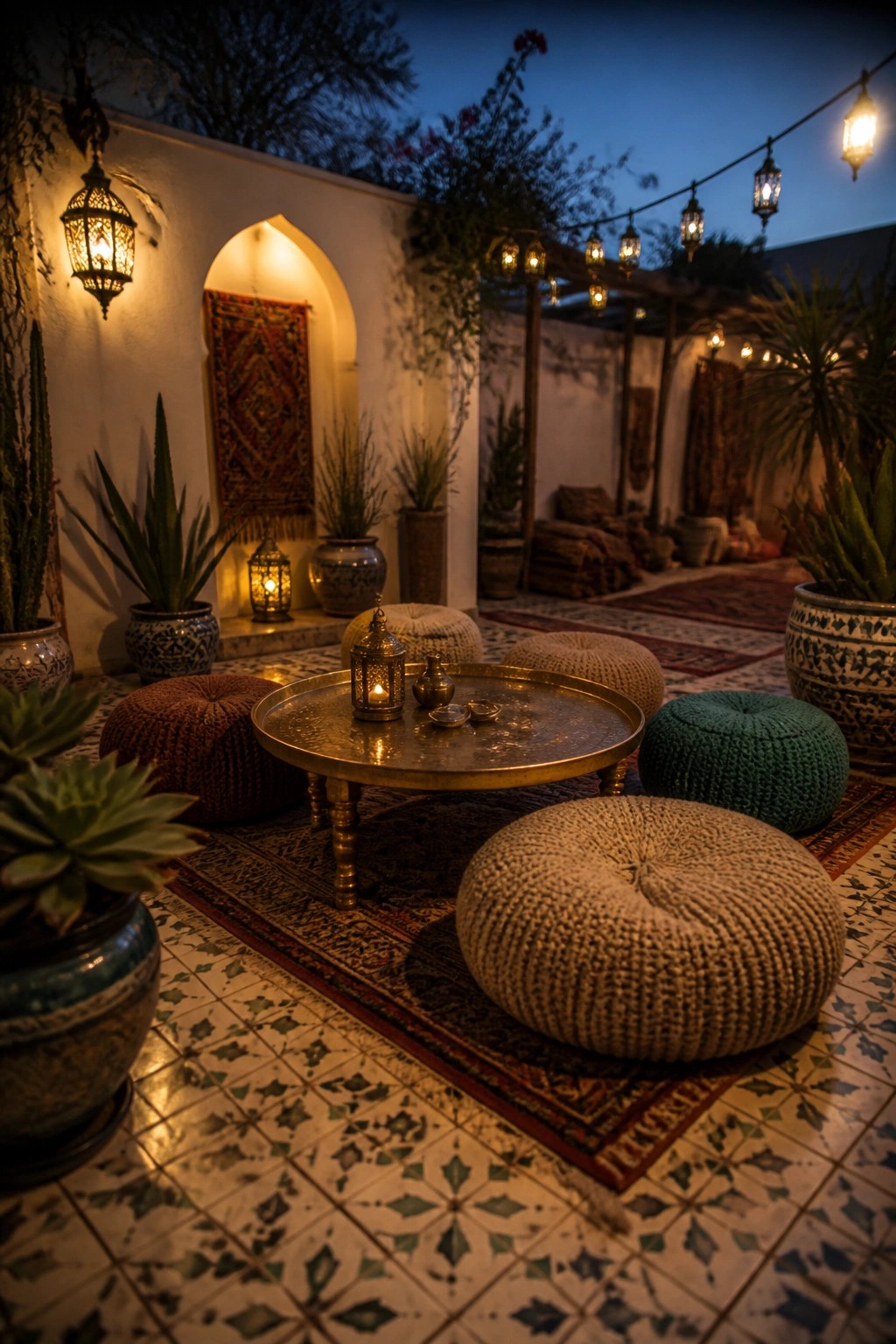
Low poufs make it simple to create flexible seating on a patio without crowding the space. They sit right on the ground or rugs, so people can pull them closer or spread them out depending on the group.
This works well on tiled patios or in small courtyards where you want a relaxed layout. Mix a few neutral tones with one or two brighter colors to keep it from feeling too uniform.
Add An Outdoor Stove Near Your Patio Seating
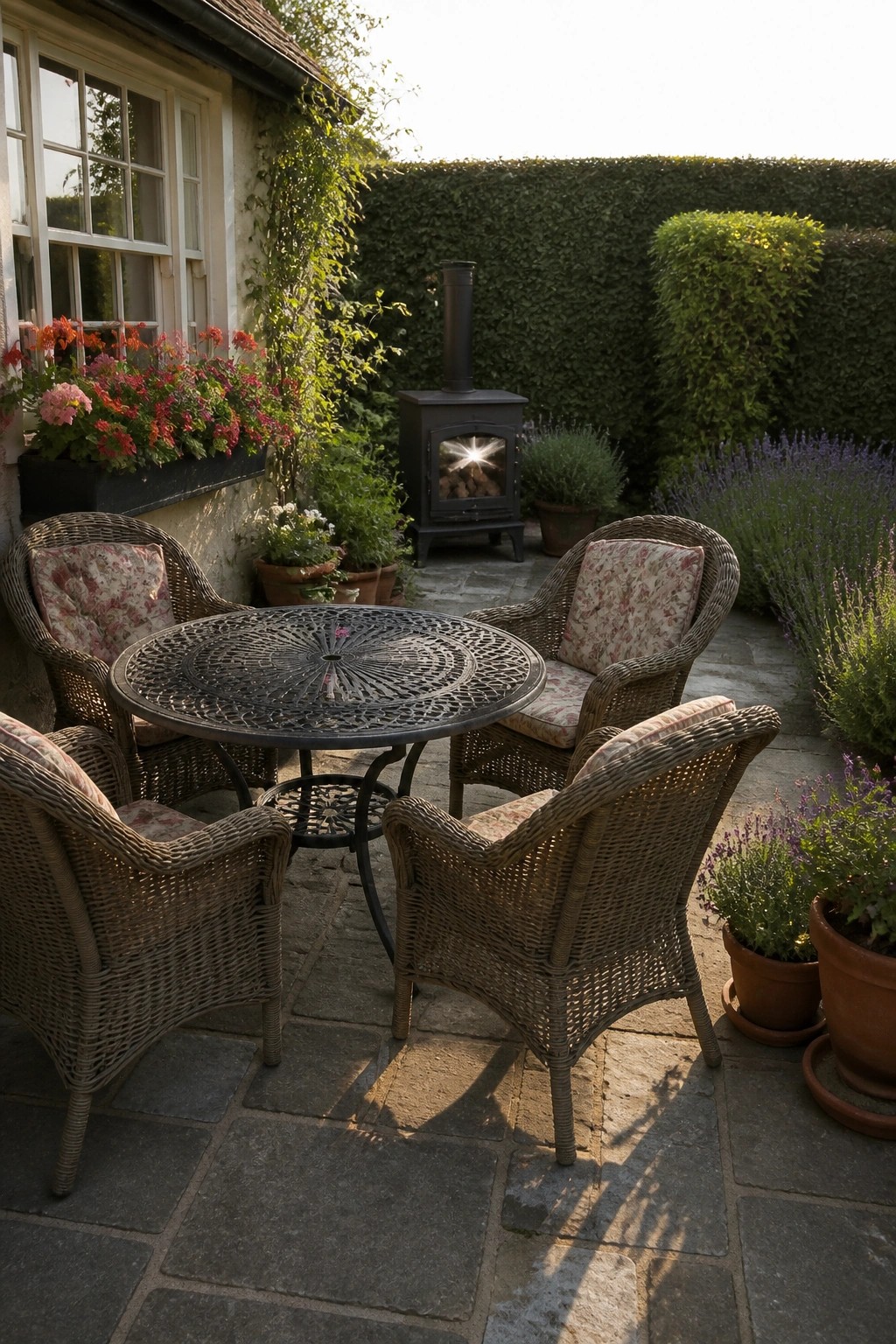
An outdoor stove placed close to the seating area turns a basic patio into a space that can be used well into the cooler months. The heat source keeps people comfortable without needing to move indoors, and it gives the whole setup a relaxed, lived-in feel that works for both quiet evenings and small gatherings.
Position the stove so it can be seen from the chairs but still leaves enough room to move around the table. Wicker seating with soft cushions pairs well with this setup on a stone surface, and it suits homes where the patio sits right off the house. Just make sure there is proper clearance and a safe surface underneath.
Foldable Seating For Narrow Balconies
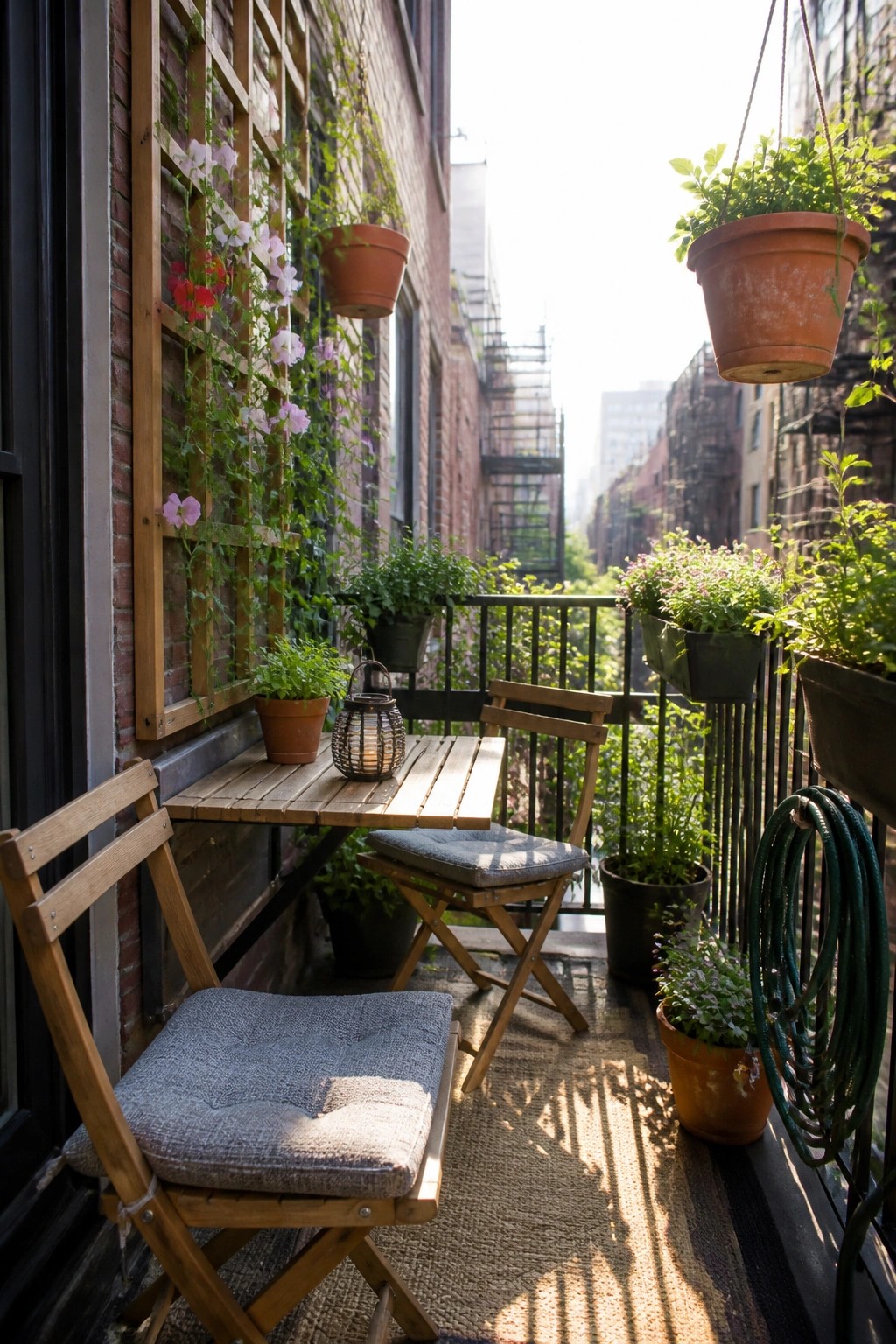
Small balconies often feel too tight for proper seating, but foldable wooden chairs and a simple table change that quickly. They open up when you want to sit outside and fold away easily when you need the floor space back.
This approach works best on urban balconies where every inch counts. Keep the table against the wall and add plants along the railing so the seating stays usable without crowding the walkway.
Wrap Seating Around A Fire Pit
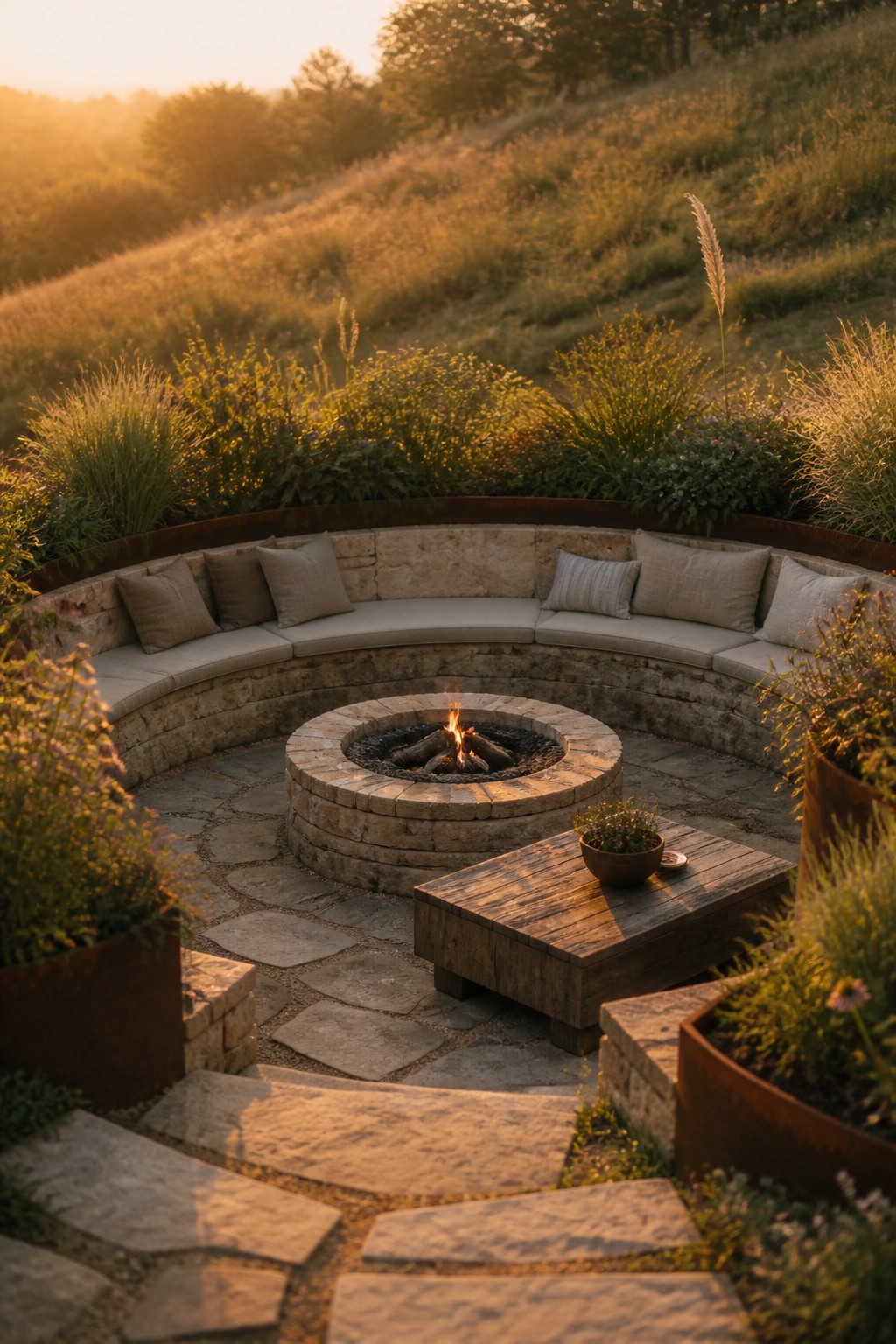
A curved bench that follows the shape of the fire pit makes the whole area feel more pulled together. People can sit close to the fire without dragging chairs around, and the layout naturally encourages conversation.
This works best on a patio that has room for a central feature like this. Stone or similar materials hold up well outside, and adding a few planters nearby helps soften the edges without crowding the space.
Hang Planters to Soften a Patio Seating Area
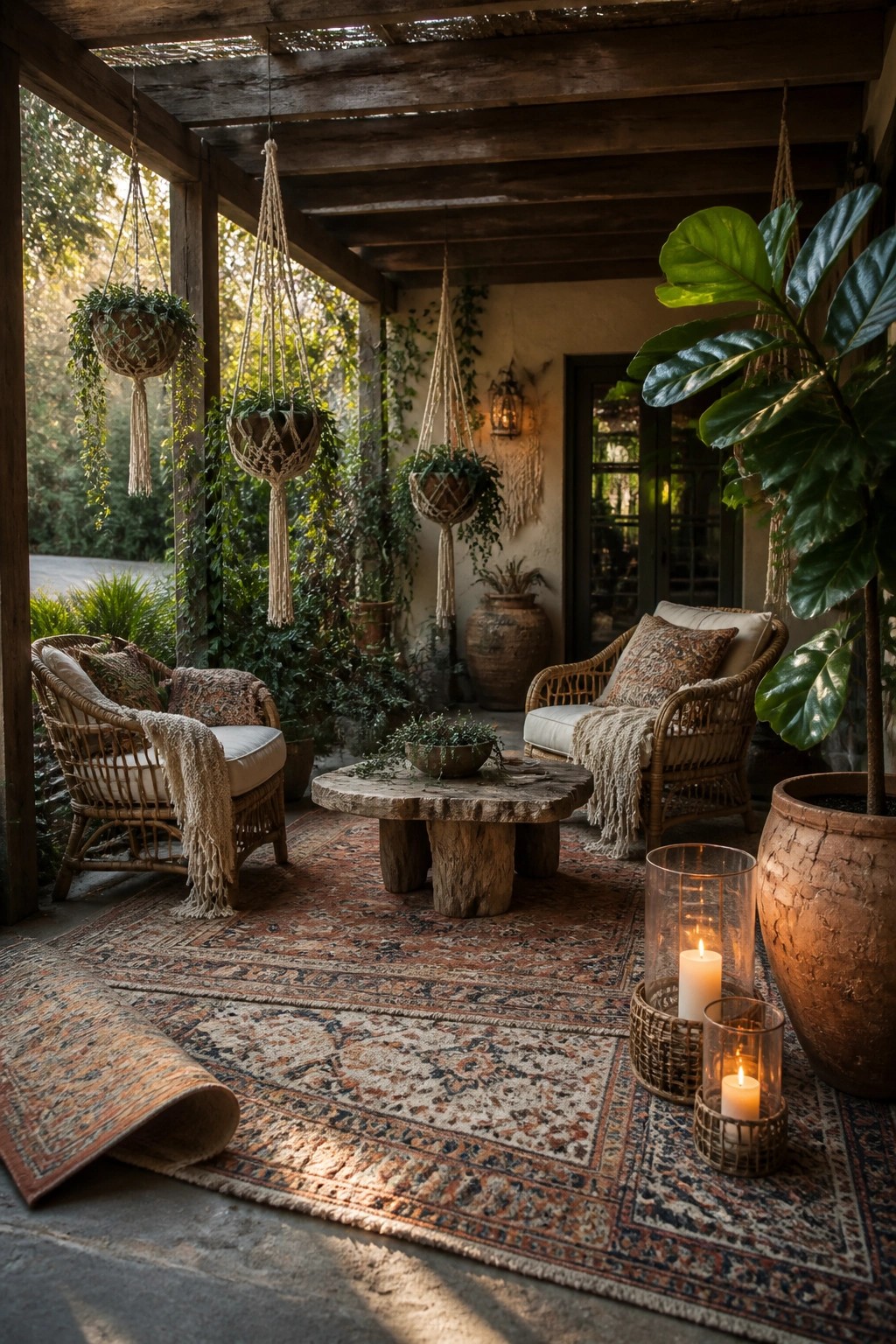
Hanging planters work well on a covered patio because they add greenery without crowding the floor space. They let you bring in more plants even when the seating area is already filled with chairs and a table. The result feels softer and more inviting than hard surfaces alone.
This approach suits homes with a solid roof overhead and some existing structure for hanging. Keep the pots fairly light so the ropes or chains hold up over time, and choose plants that handle the amount of light the space actually gets.
Light Up Planter Borders For Evening Use
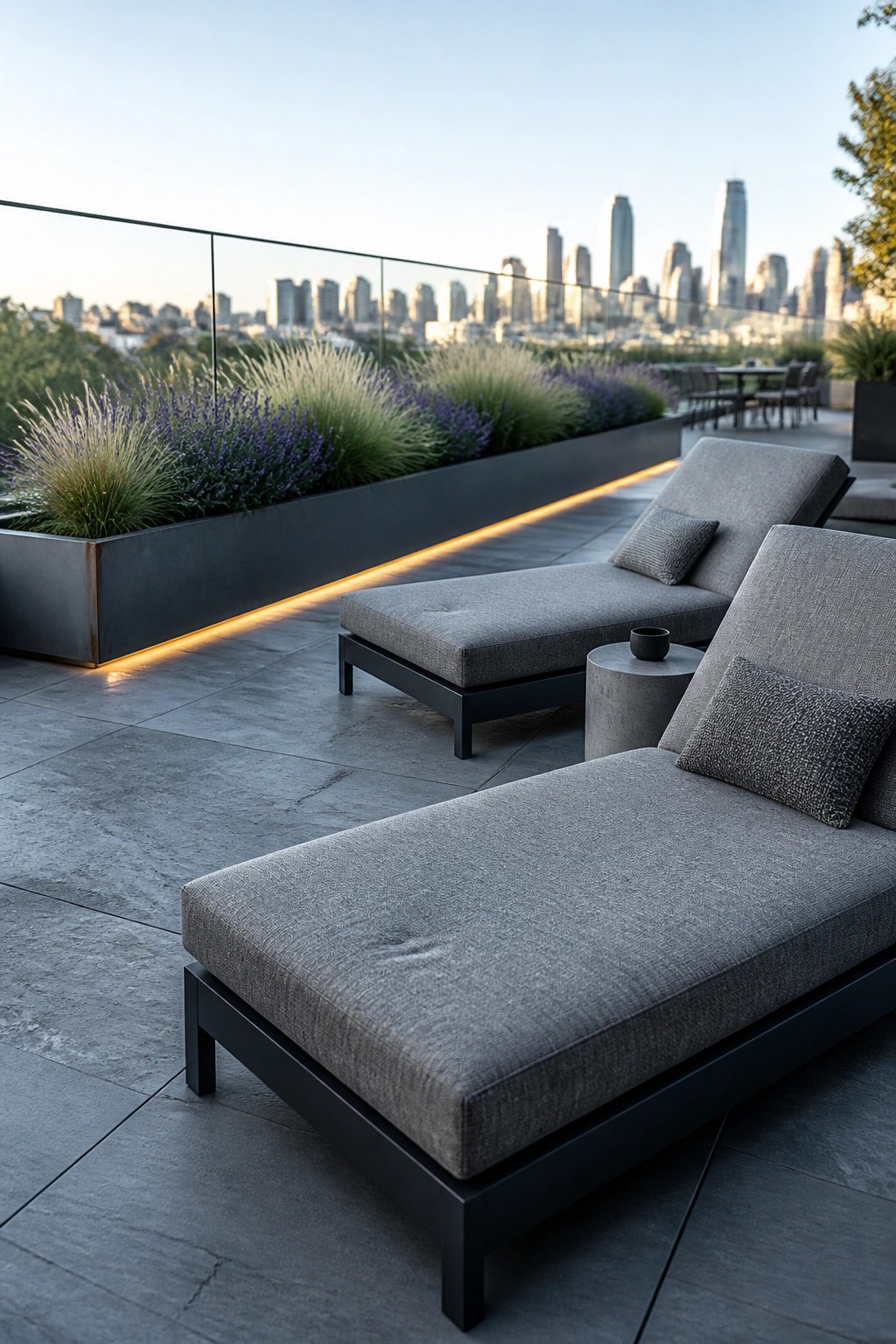
Many patios feel finished once the furniture is in place, but adding light along the base of a long planter changes how the space works after dark. The glow outlines the seating area and keeps the focus on the planting instead of scattered fixtures.
This approach suits rooftops and terraces where you want low, contained lighting that does not overwhelm the view. It pairs well with simple lounge setups and works best when the planter itself is deep enough to hold a mix of taller grasses and lower flowers.
Stepping Stones Through Gravel For Garden Paths
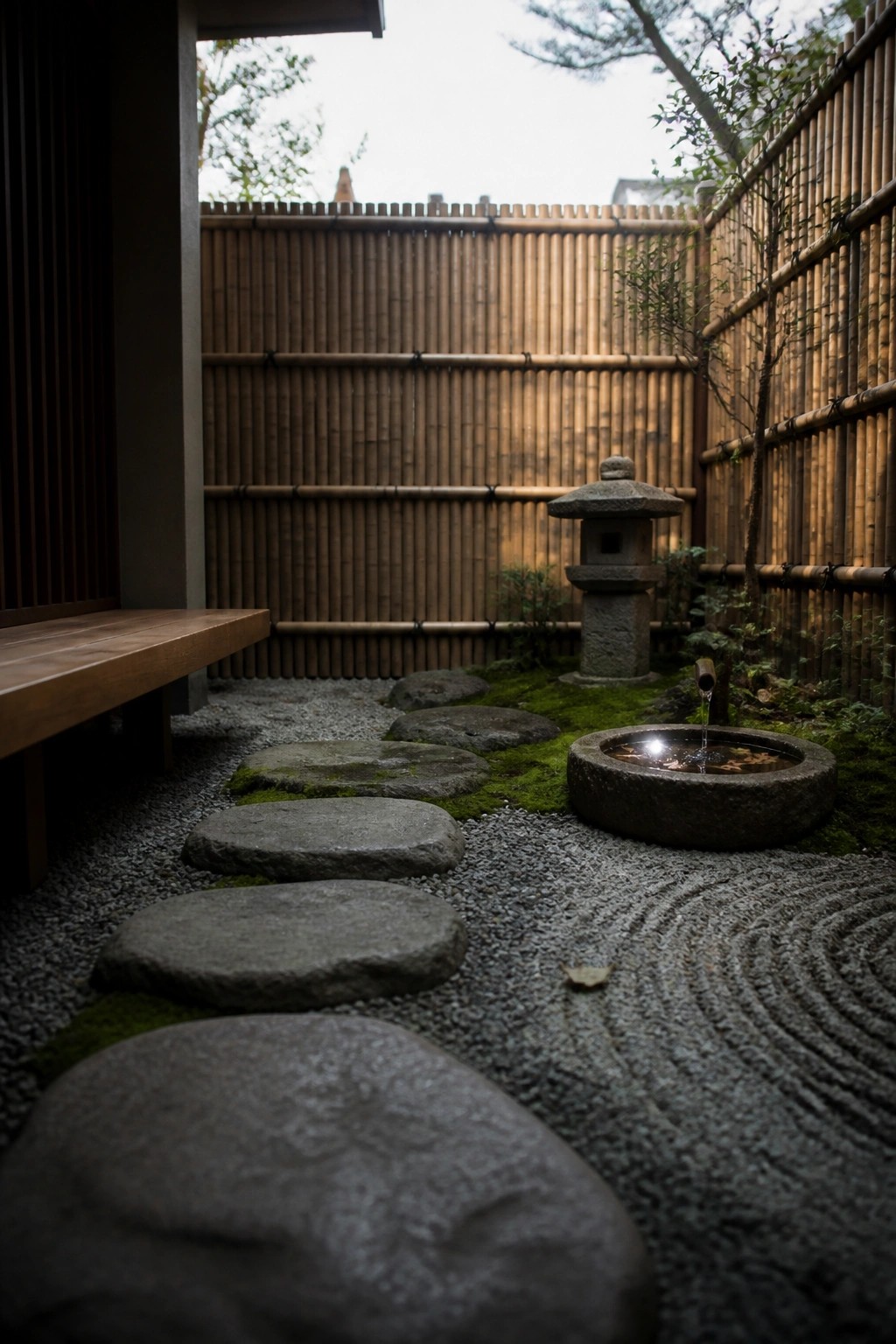
Stepping stones set into gravel make a simple path that feels natural in small gardens. The stones give you a clear route while the gravel keeps the area low maintenance and easy to walk on.
This works best in side yards or narrow spaces where you want some structure without a full patio. Place the stones so they sit level and leave enough room between them for a comfortable stride. Over time moss can fill in around the edges for a softer look.
Woven Seating With Potted Plants On The Deck
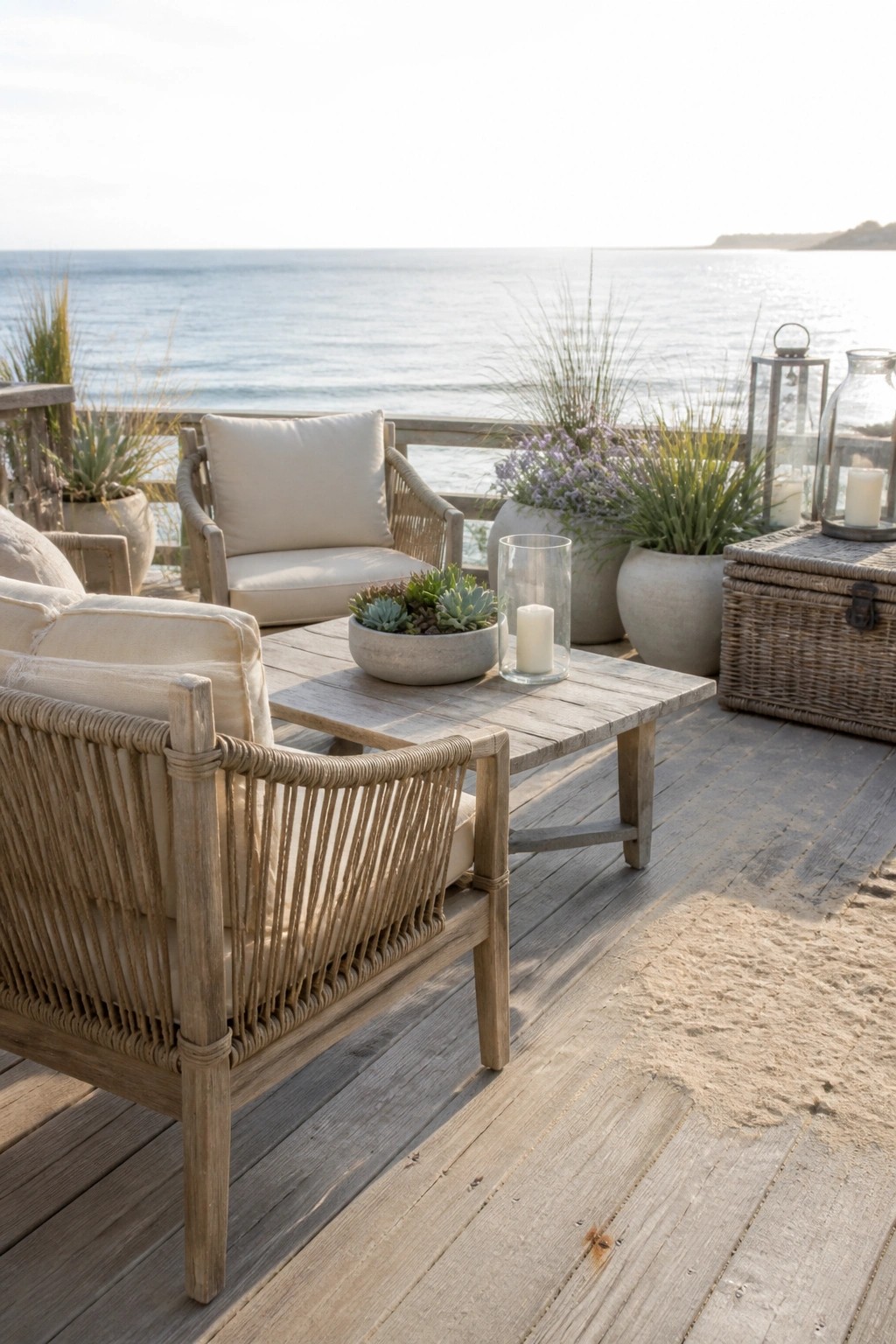
Woven chairs work well on a wooden deck because they feel light and let the wood show through. Pairing them with a few stone or concrete planters keeps the look simple and natural instead of cluttered.
This setup suits decks that already have good views or open space. Place the chairs around a low table and set the planters nearby so the plants soften the edges without blocking the view. Stick to grasses and succulents if you want low care.
Long Tables For Outdoor Dining
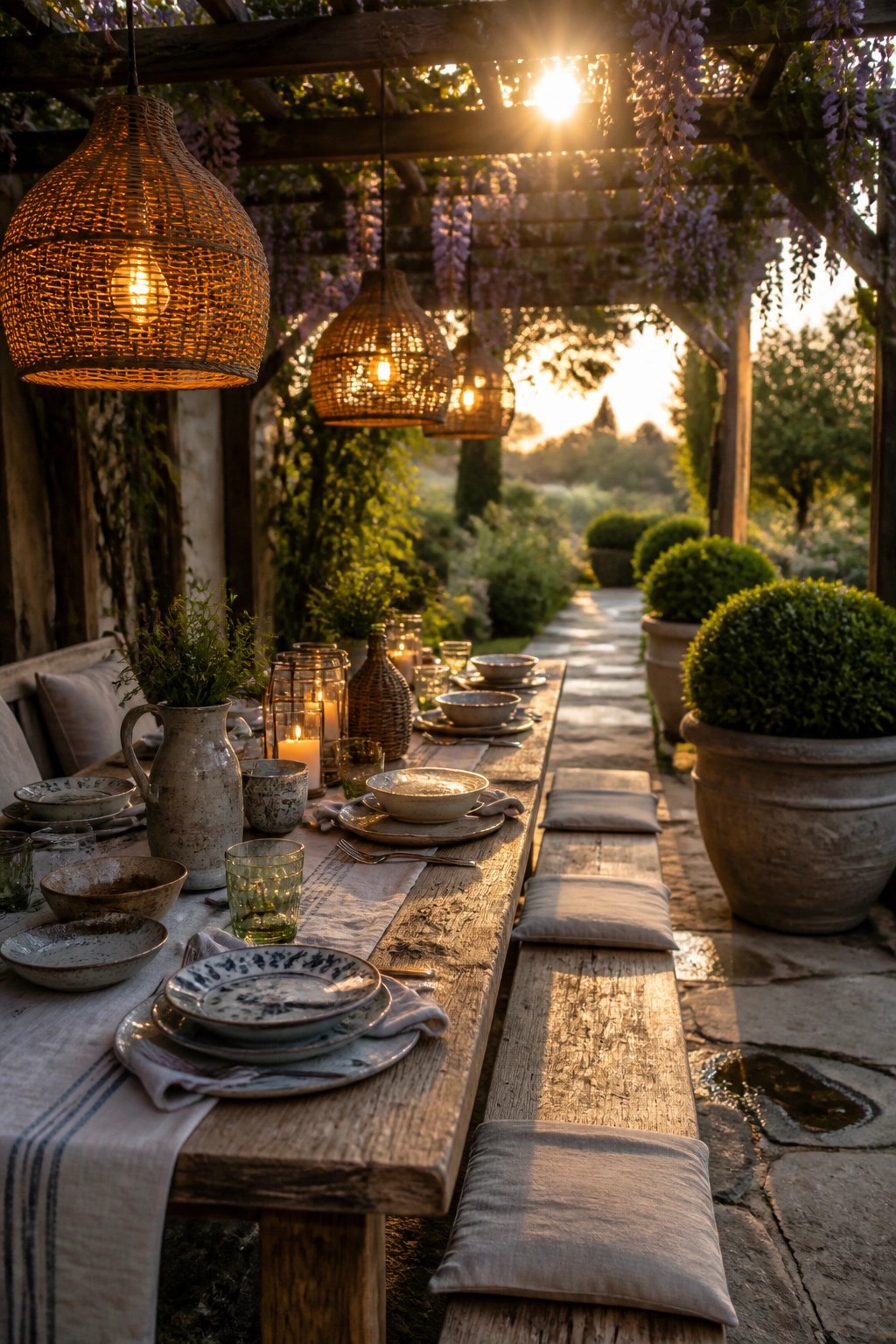
A long wooden table works well for outdoor dining because it brings everyone together in one spot without needing lots of separate seating pieces. Bench seating on both sides keeps things simple and lets you fit more people than chairs usually allow.
This idea suits patios or covered areas with enough length to run a table down the middle. Line the sides with large pots to soften the edges and add hanging lights overhead so the space stays usable after dark.
Raised Wooden Planters For Patio Vegetables
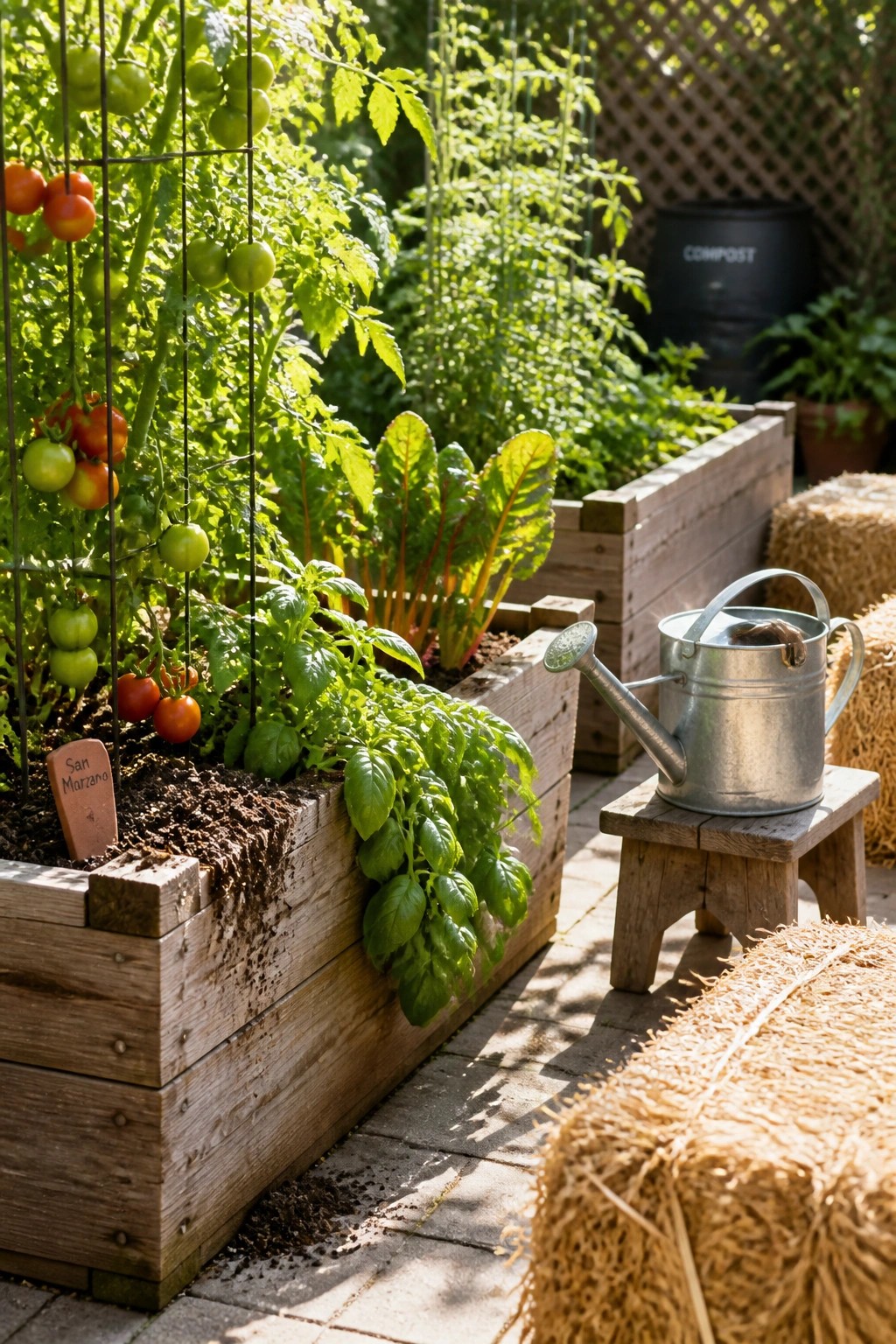
Raised wooden planters let you grow tomatoes, herbs, and other crops directly on a patio without needing open soil. They keep everything organized and make watering and harvesting simpler since the beds sit at a comfortable height.
Place two or three planters side by side to form a small kitchen garden near a seating area. This setup works best on paved surfaces where digging is not possible and suits homes that want fresh produce without a large yard.
Add A Bar Counter For Casual Patio Seating
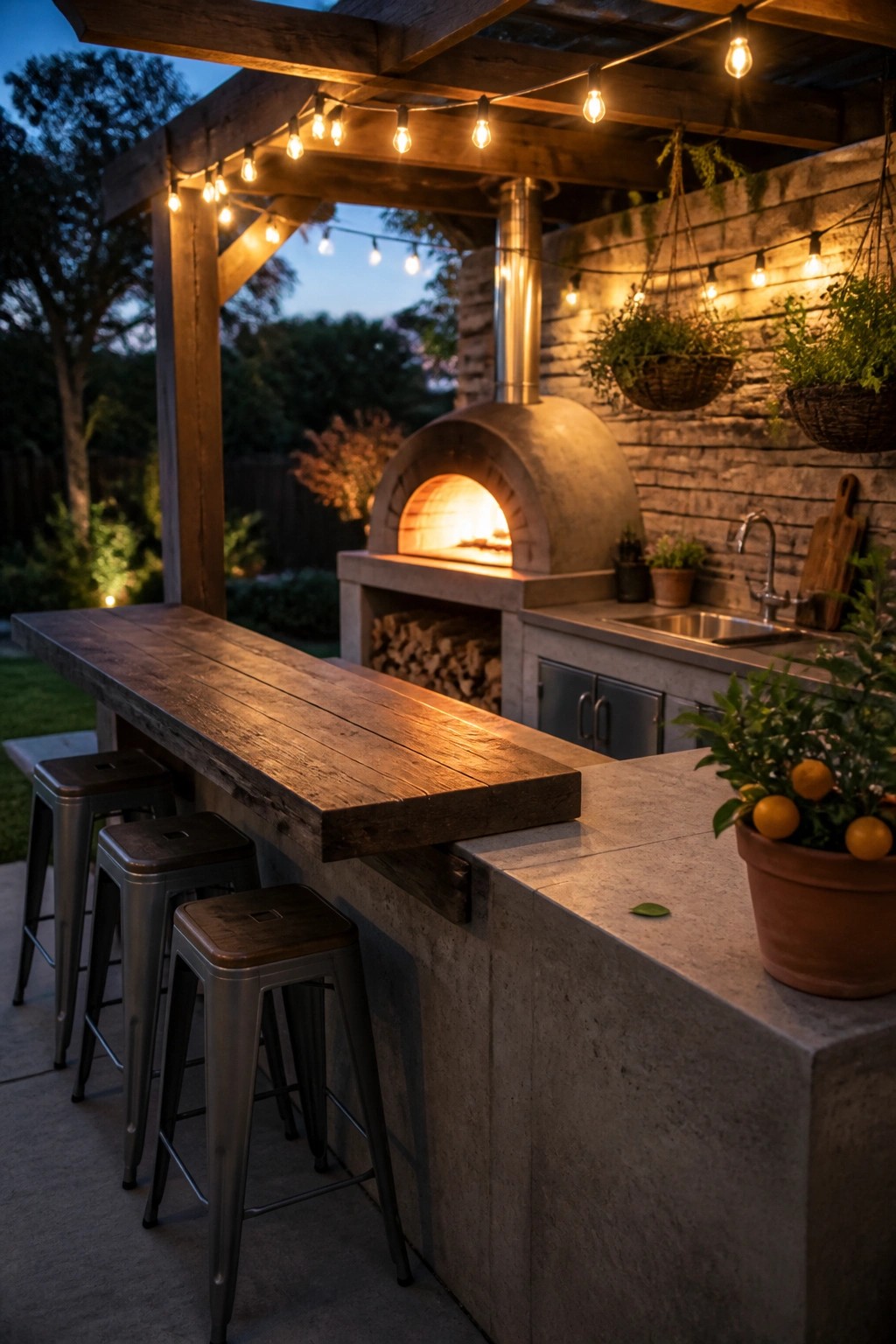
A long bar counter with stools gives you a simple way to add seating without crowding the patio. It works as a place for drinks and snacks while keeping the space open for people to move around.
This idea fits homes that use the patio often for everyday gatherings. Keep the counter near the grill or oven so food stays close, and add a few large pots nearby if you want a bit of greenery without a full garden.
Curved Bench Seating With Gravel Borders
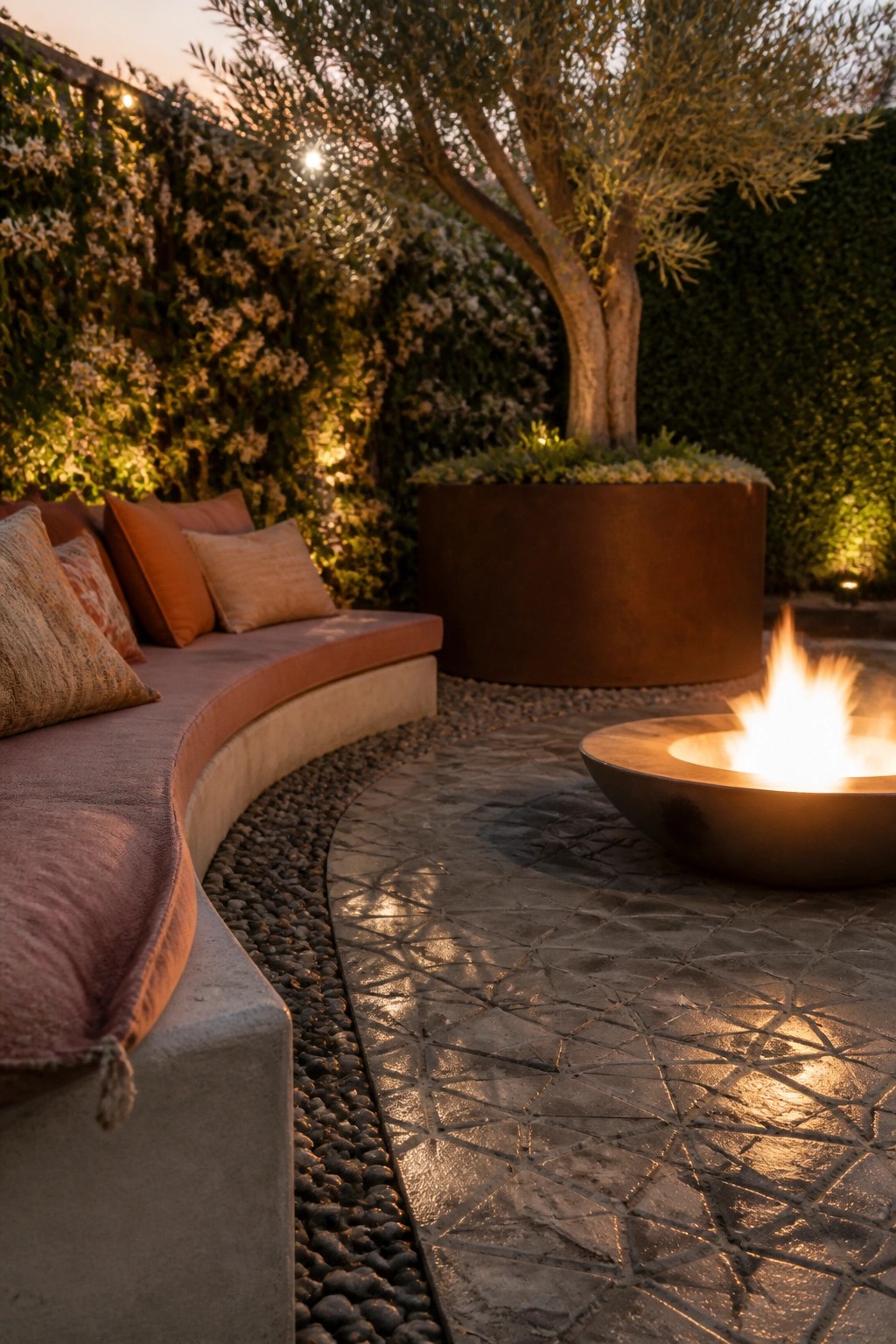
A curved bench gives the seating area a gentle shape that feels more natural than straight lines. It helps the space wrap around the fire pit without needing a lot of extra furniture or tight corners.
This setup works best in smaller patios or garden corners where you want to define the zone clearly. Use a simple concrete or stone base, add a gravel strip along the edge, and finish with loose cushions for comfort.
A Pebble Path Adds Flow to a Patio Garden
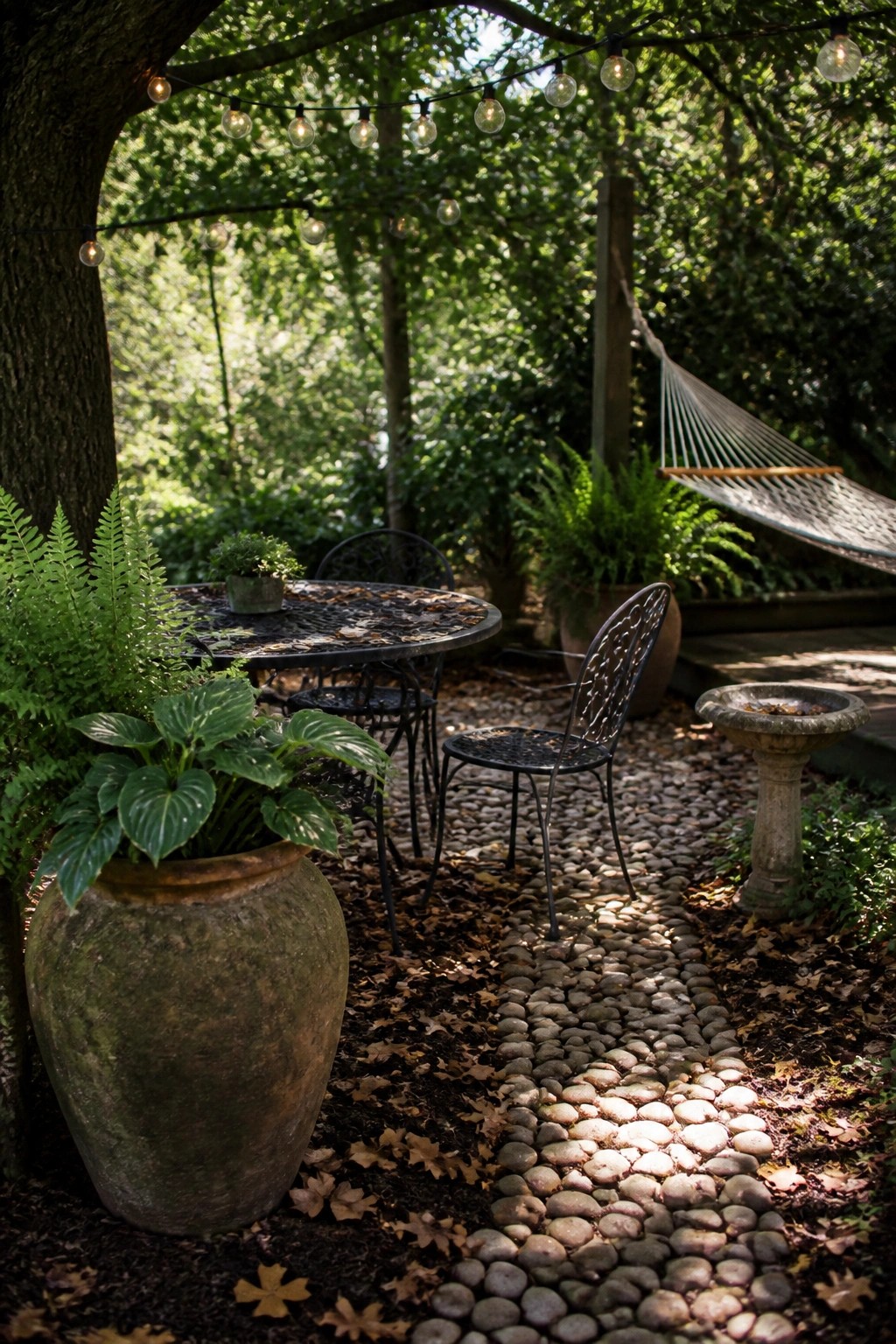
A pebble path gives a patio garden some structure while still feeling relaxed. It keeps feet out of the dirt and guides people toward the seating without needing walls or fences. The rounded stones also bring a bit of texture that pairs nicely with plants in big pots.
This works best in smaller yards or side gardens where you want to connect a table, a couple of chairs, and maybe a hammock without making the space feel crowded. Just keep the path a comfortable width so two people can walk side by side, and let the edges stay a little soft with leaves or low plants.
Planters That Shape Outdoor Seating Zones
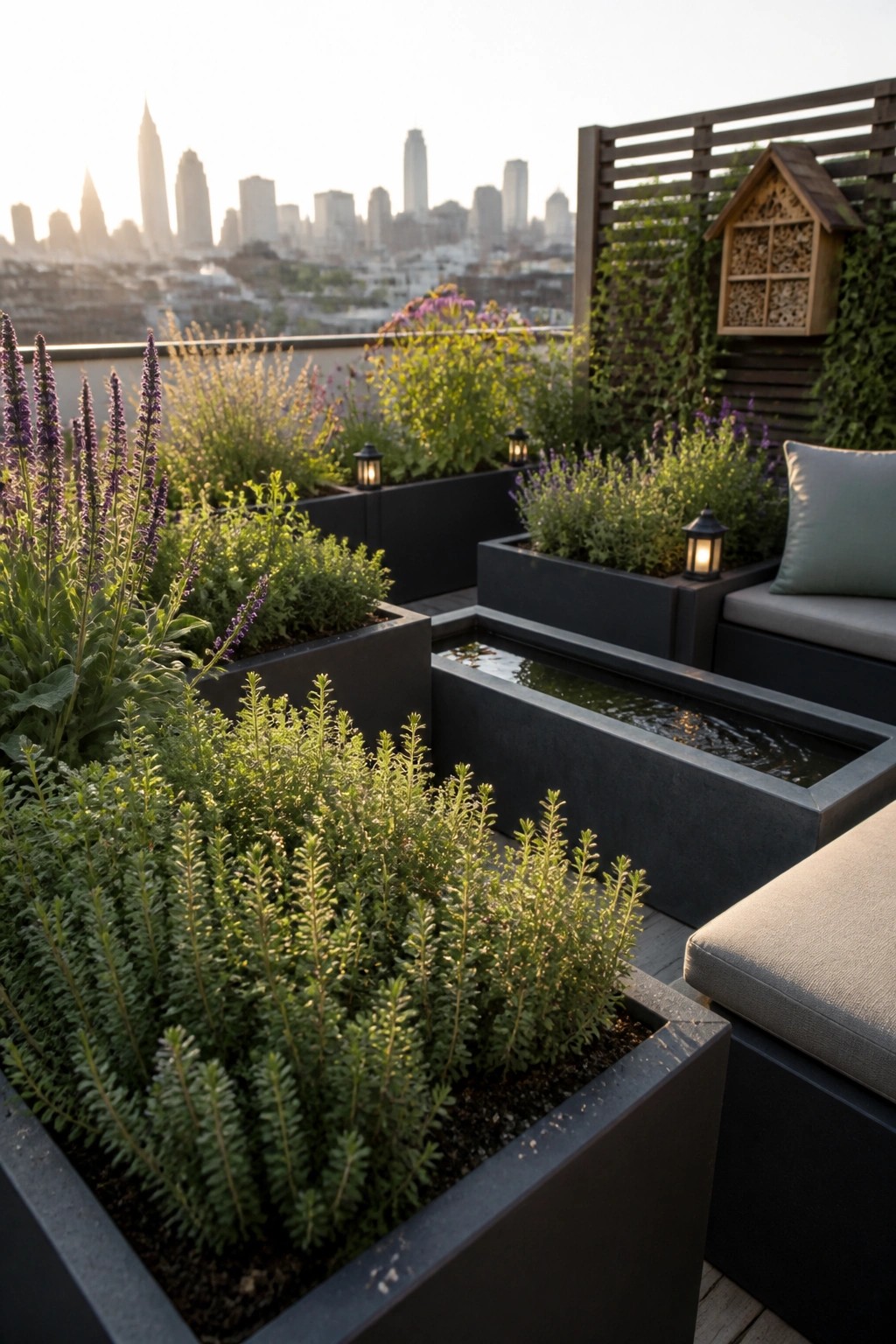
Large rectangular planters work well for marking out seating areas on a patio or terrace. They keep the layout tidy, add height with greenery, and make the space feel more enclosed without needing walls or fences.
This approach suits rooftops and decks where floor space is limited. Position the planters to form loose borders around benches or chairs, and choose ones deep enough for a mix of taller and trailing plants so the seating feels settled into the garden rather than just placed beside it.
Frequently Asked Questions
Q: What plants do well in planters if my patio has little shade? A: Go for hardy options like lavender or succulents that handle heat. Water them deeply once a week during dry spells. This keeps them thriving without much fuss.
Q: How can I stop weeds from creeping into my patio borders? A: Lay down landscape fabric before adding mulch or gravel. Pull any stray weeds by hand every couple of weeks. Mulch also helps lock in moisture for nearby plants.
Q: Where should I place cozy seating around the planters? A: Tuck a bench near a cluster of tall planters for a private feel. Add cushions that match the border colors.
Q: Do I need to bring planters inside during winter? A: Check your plant types first. Most perennials survive if you wrap the pots in burlap.
