

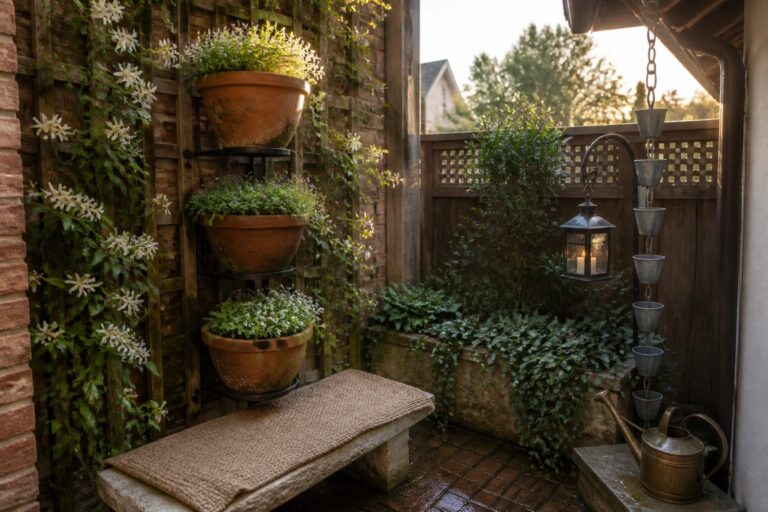
Corners on a patio often end up ignored because it is hard to picture how anything will fit without blocking the flow of the space.
I usually notice first whether I can still walk through or pull out a seat once something is added to those spots.
Tiered pots can change that quickly if the heights stay practical.
Over the years I have tested a few ways to lift plants without crowding the surface underneath and the ones that last are the ones that leave room to move.
I would try one simple stack in my own awkward corner before deciding how far to take the rest of the layout.
Tiered Pots Fill Corner Spaces
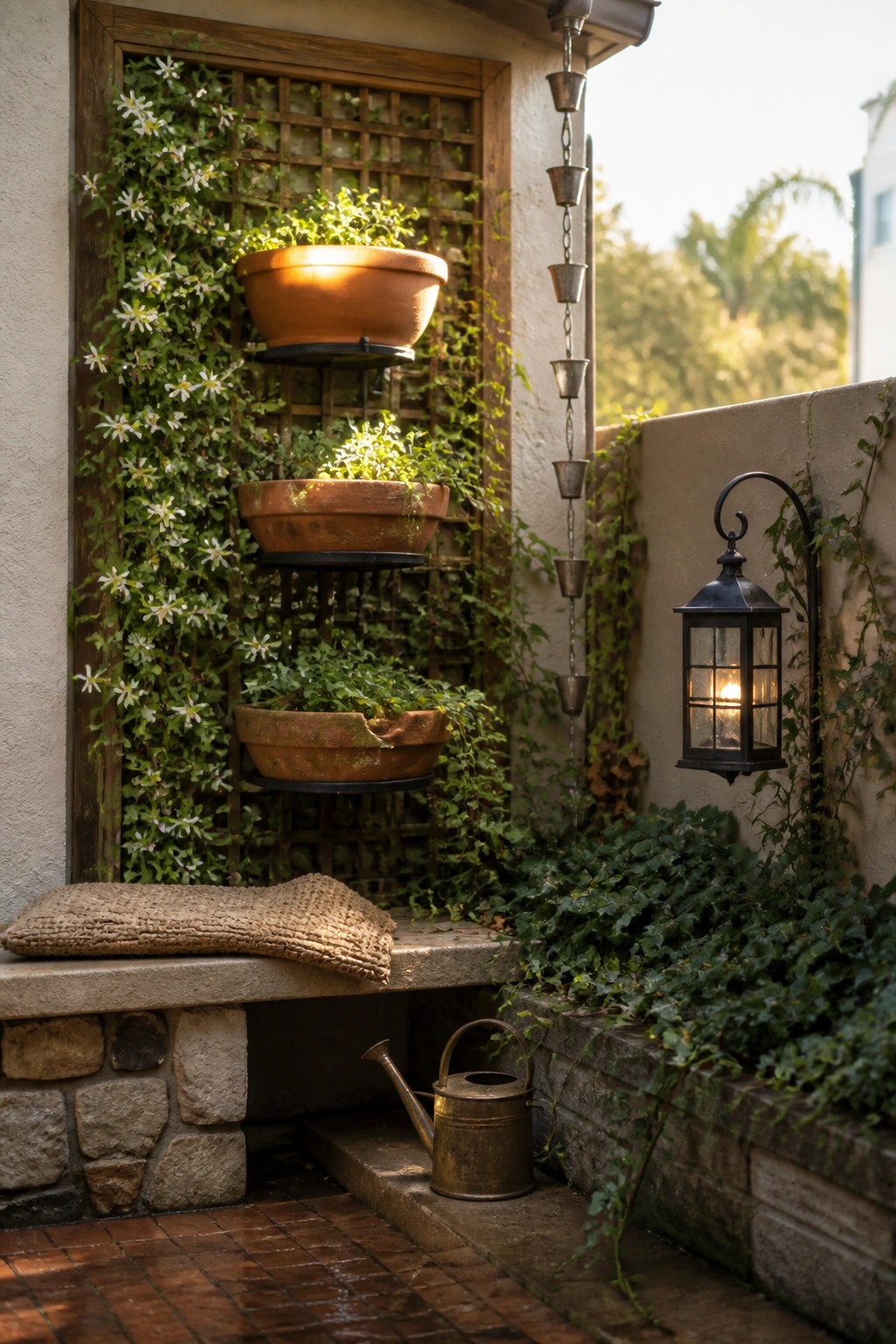
Tiered pots let you add plenty of plants without crowding the ground in a small patio corner. They stack upward against a wall so the space stays open and usable below while still showing off greenery at different heights.
This works best on a side yard or narrow patio where floor room is limited. Mount a simple bracket or lattice on the wall, line up matching pots, and keep the bottom clear for seating or storage. Just check the weight once the soil and plants are in place.
Tiered Stands For Corner Patios
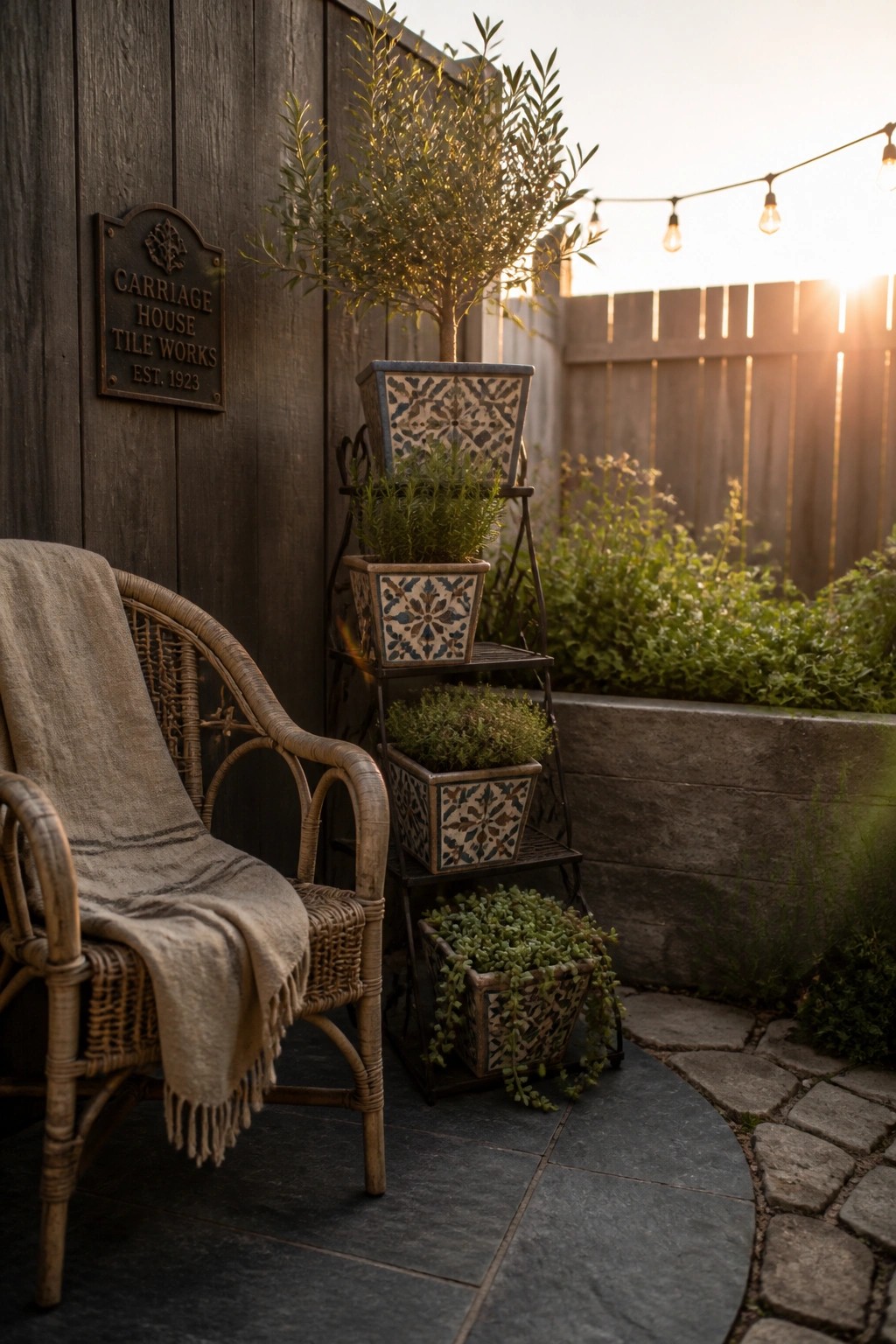
A tiered stand lets you stack several pots in a small area instead of spreading them across the ground. This keeps the space open while still giving you room for more plants than a single pot would allow.
It works best against a wall or fence where the levels stay visible from the seating area. Mix trailing plants on the bottom shelf with upright ones higher up so nothing gets hidden.
Tiered Planters Work Well In Corner Gardens
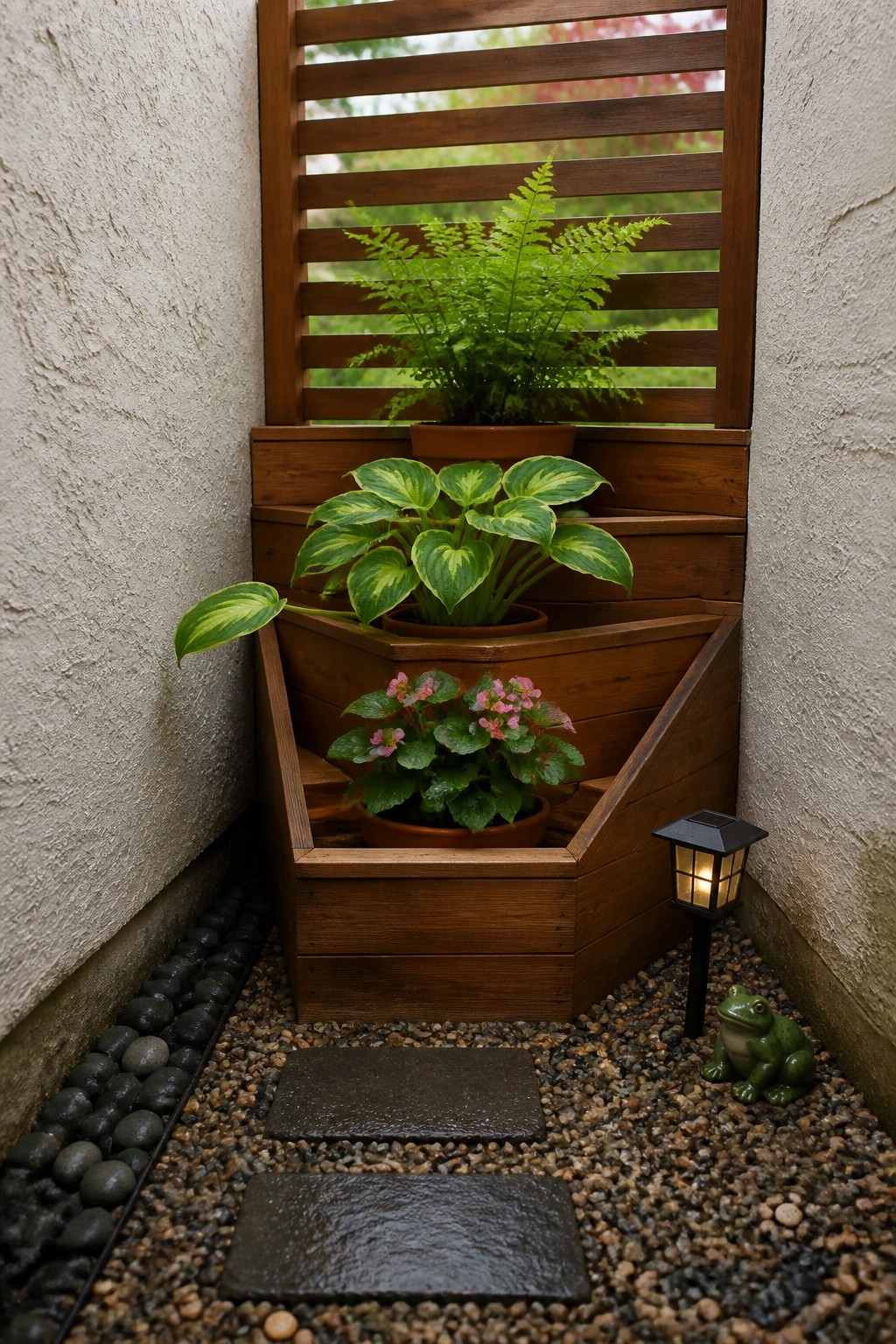
A tiered wooden structure gives you several planting levels in one small spot. This approach turns a tight corner into a full display without spreading out across the ground.
It works best against a wall or fence where you can stack the levels upward. Keep the wood simple and match it to any nearby decking or fencing so the whole thing feels like part of the same build.
Lean A Ladder Shelf In The Corner For Tiered Pots
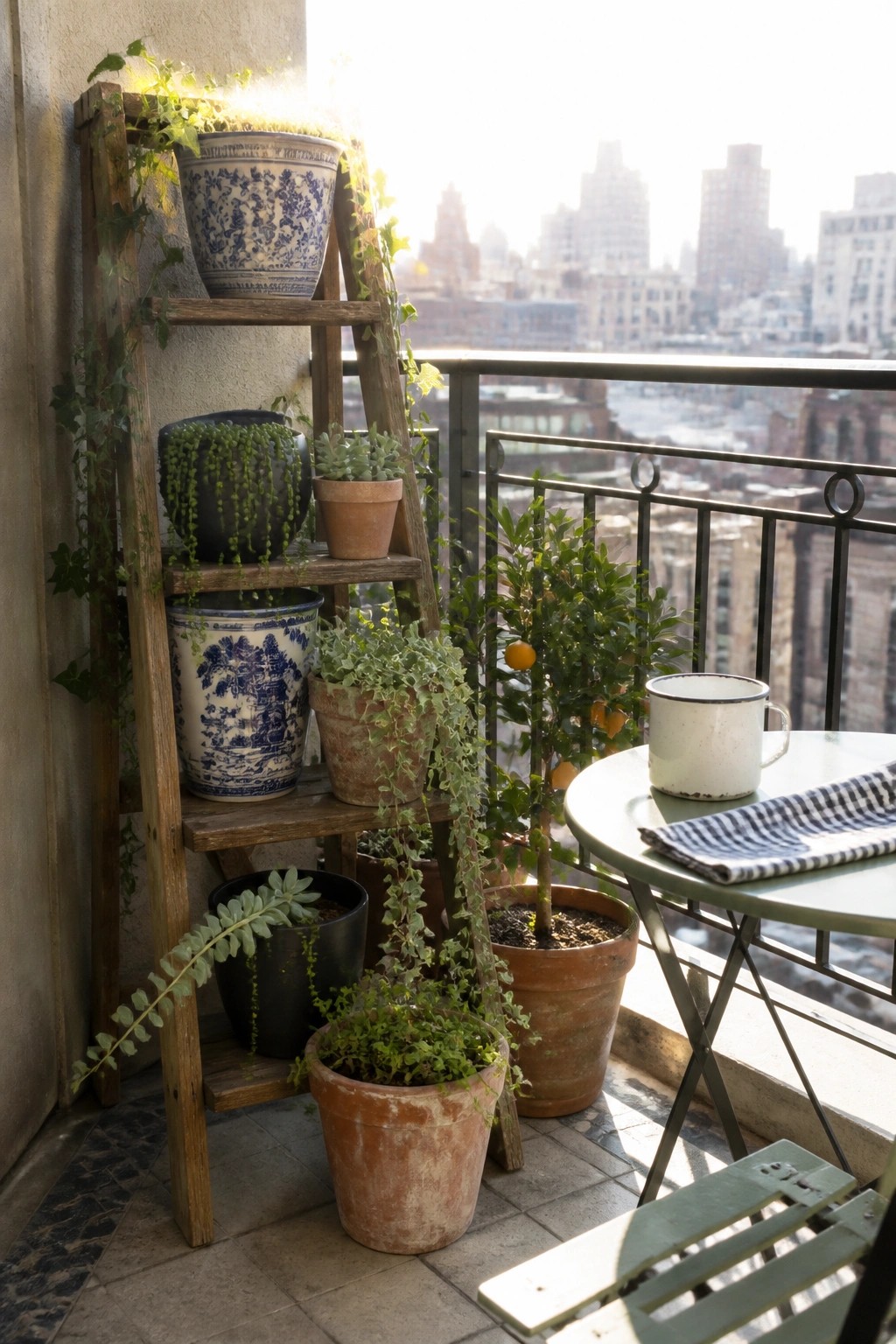
A ladder shelf solves the problem of limited floor space on a small balcony or patio. It lets you stack plants at different heights so the corner feels fuller without crowding the walkway.
This setup works best against a wall or railing where you can lean the ladder safely. Use a mix of pot sizes and trailing plants to keep the look balanced, and make sure the bottom rung stays clear for stability.
Stacked Blocks For Tiered Corner Gardens
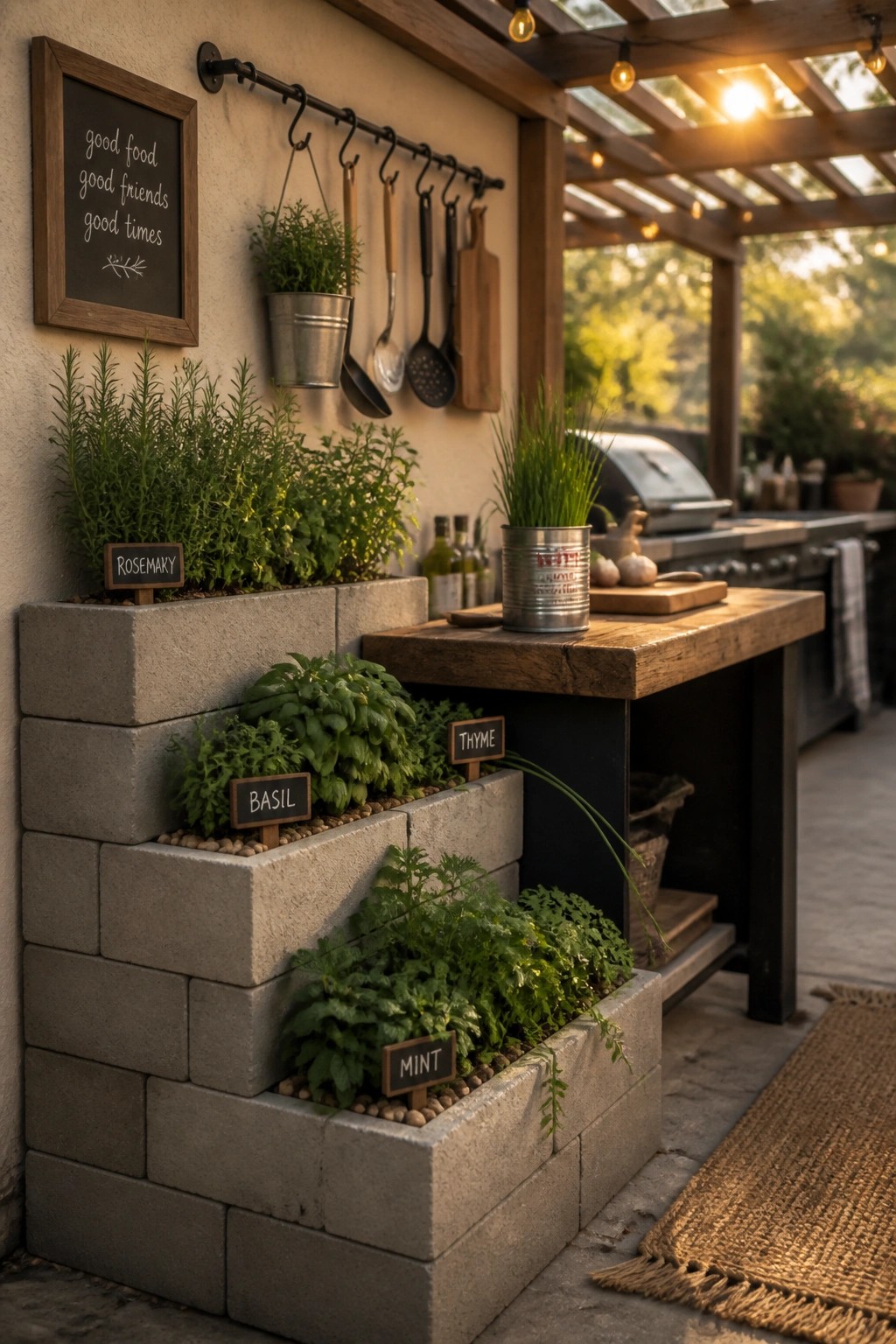
Stacked concrete blocks give you an easy way to build height in a tight corner without taking up much floor space. The different levels let you grow several herbs at once while keeping everything within reach, and the blocks themselves hold up well outside.
This setup works best along a wall or next to a patio table where you already have some structure in place. Just make sure the bottom row sits on a level surface and add a bit of gravel in each tier for drainage.
Tiered Pot Displays Work Well In Corner Patios
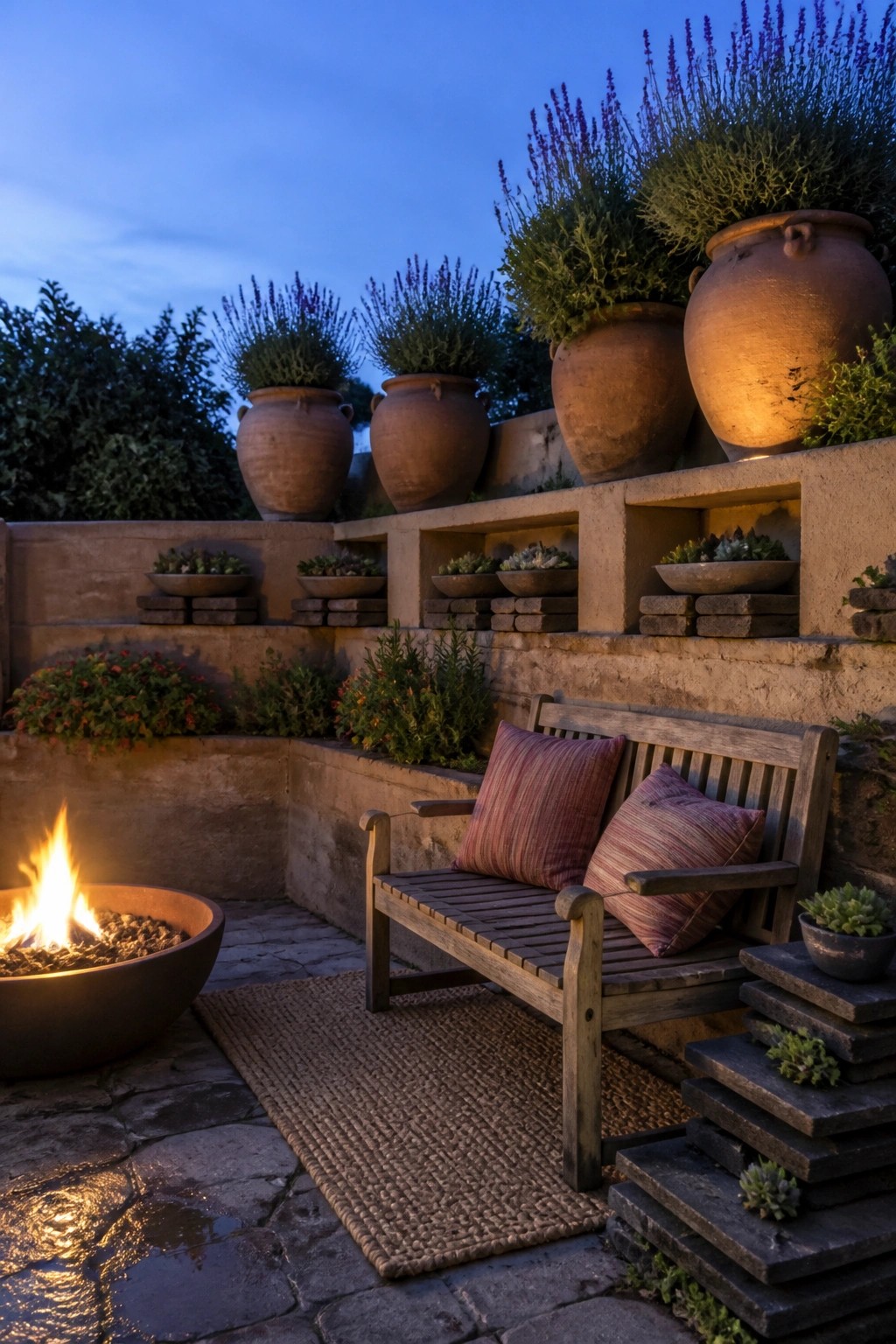
One simple way to deal with an empty corner on a patio is to use pots at different heights instead of spreading everything flat on the ground. This adds interest and makes the space feel more complete without crowding the seating area.
It works best when there are already low walls or steps nearby that can hold the pots. Place larger ones up high and smaller ones lower down so the whole display stays balanced and easy to reach for watering.
Tiered Planters Help Fill Corner Spaces
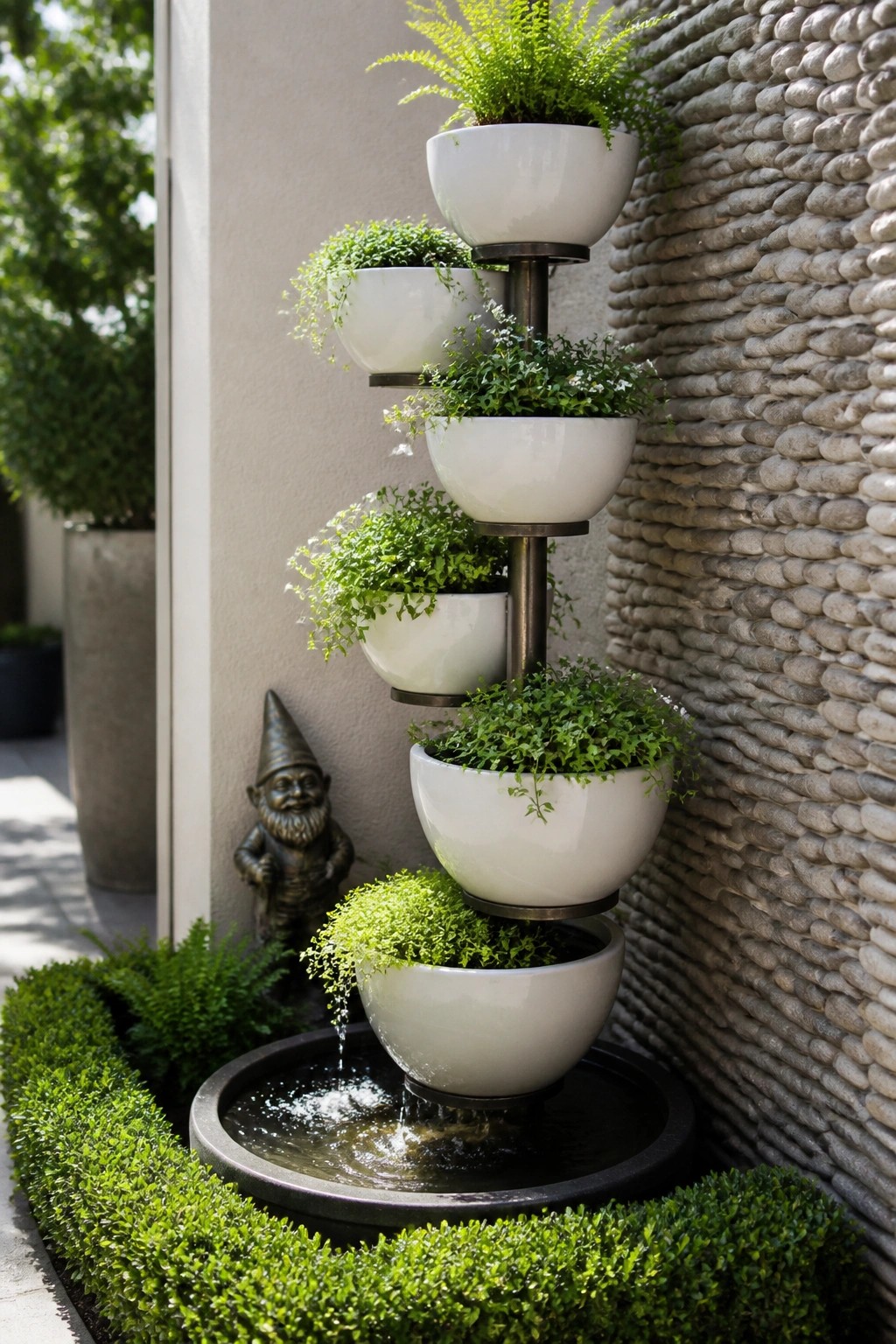
Tiered planters give you a simple way to add height and plants without taking up much ground space. They work especially well in tight corners where a flat bed or single pot would feel lost. The stacked shape draws the eye upward and lets you fit several plants into one spot.
These stands suit homes with small patios or narrow side yards. Place them where the corner meets a wall so the tiers stay balanced and the base stays level. Just check that the lowest tray can handle a little runoff if you add a small water feature.
Tiered Pots on Steps Work Well in Tight Corners
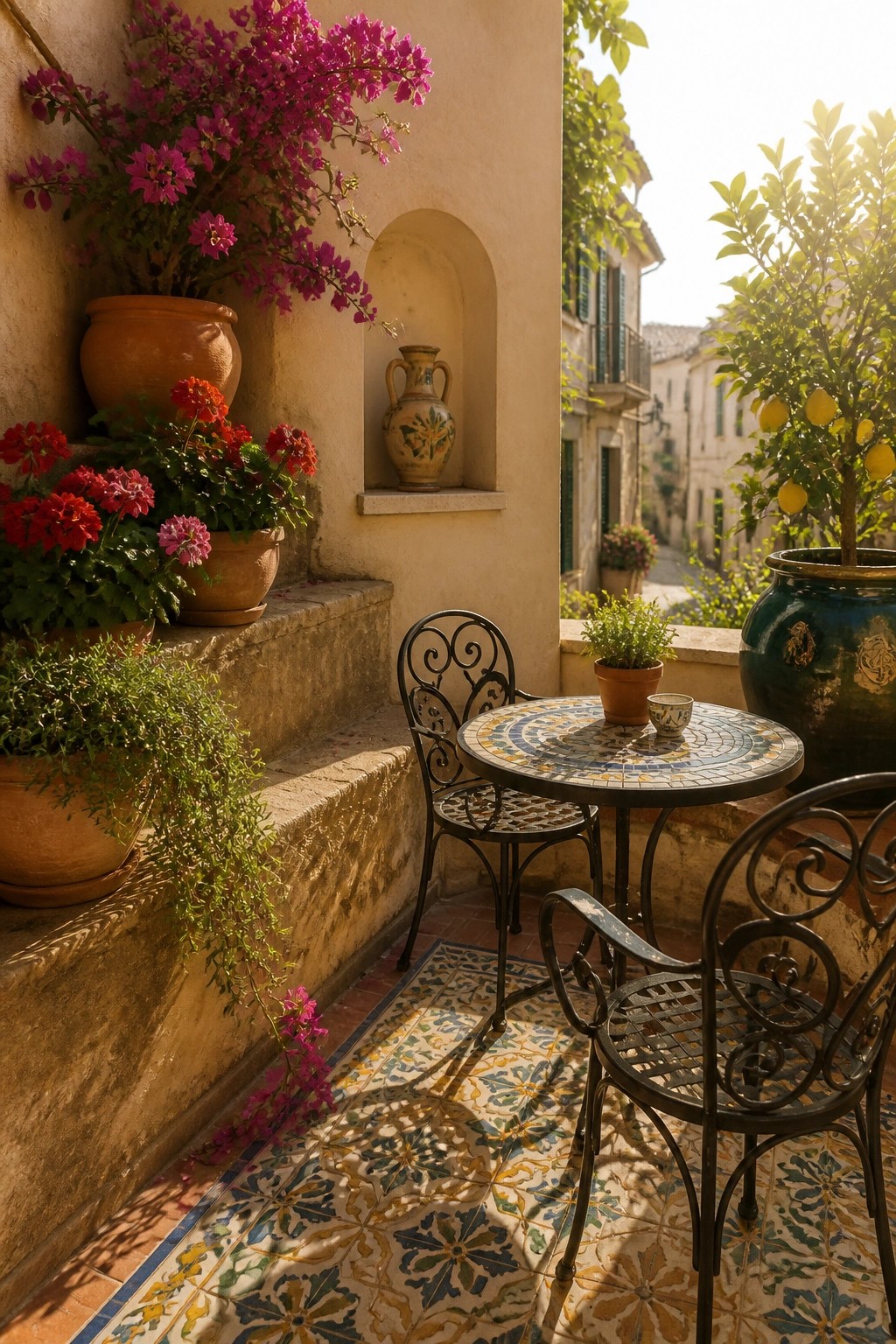
Placing pots at different heights along steps or low ledges turns an awkward corner into a planted area without taking up floor space. The staggered levels let you fit more plants while keeping the seating area open and easy to move around.
This setup works best on patios with existing stone or brick steps, or where you can add a simple low ledge. Use larger pots at the bottom and smaller ones higher up so everything stays balanced and the plants get enough light.
Stacked Crate Planters For Corner Spots
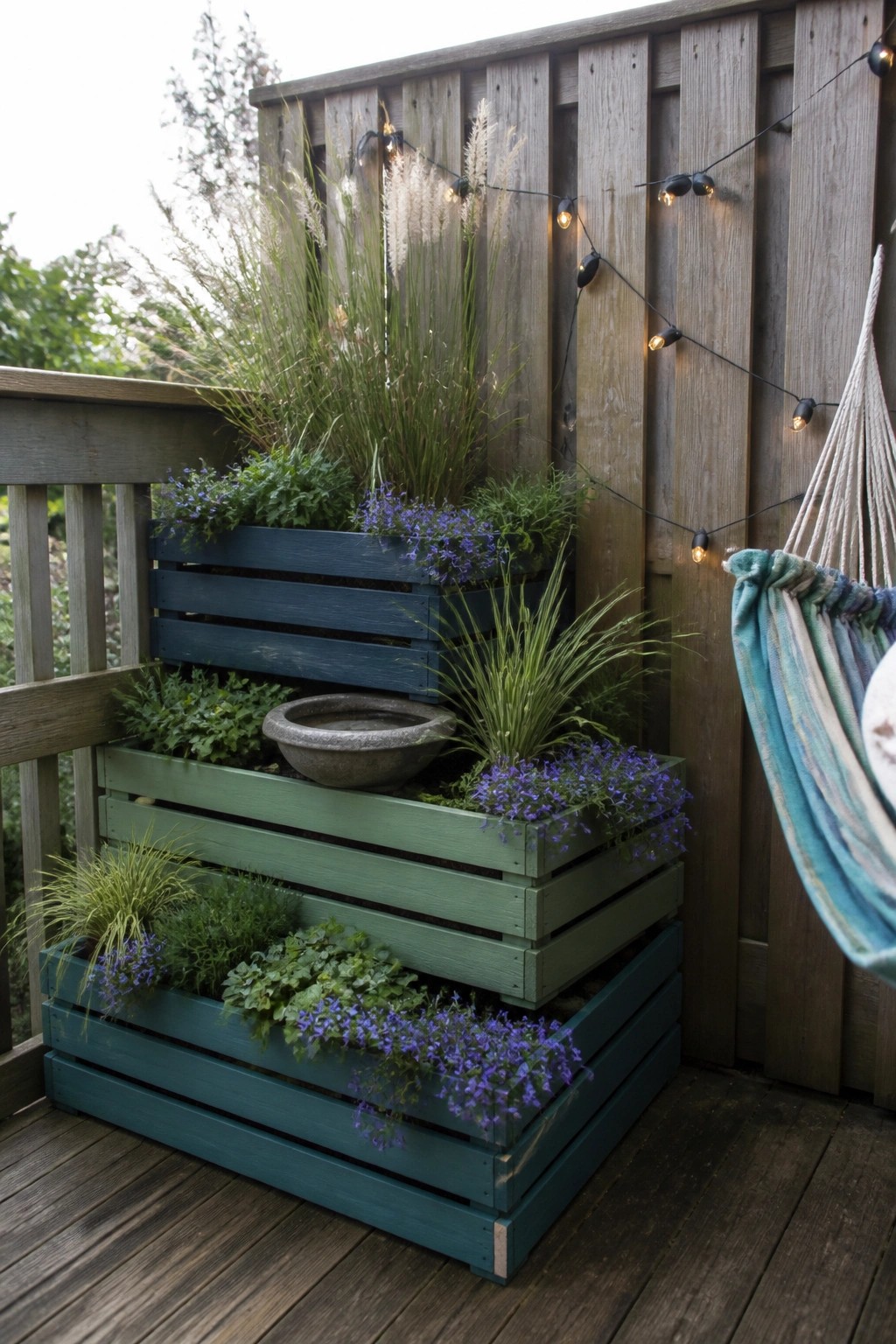
Tiered crates stacked against a wall give you an easy way to add height and more planting room in a small patio corner. The different paint colors help the crates blend with the deck while still standing out as a simple structure. It works well when you want vertical interest without buying fancy pots or building something permanent.
This setup suits homes with wooden decks or fenced corners that feel empty. Use crates of similar size, stack them securely, and fill the lower levels first so the top ones stay stable. Just watch the weight once the soil and plants go in.
Tiered Planters Make Corner Patios More Useful
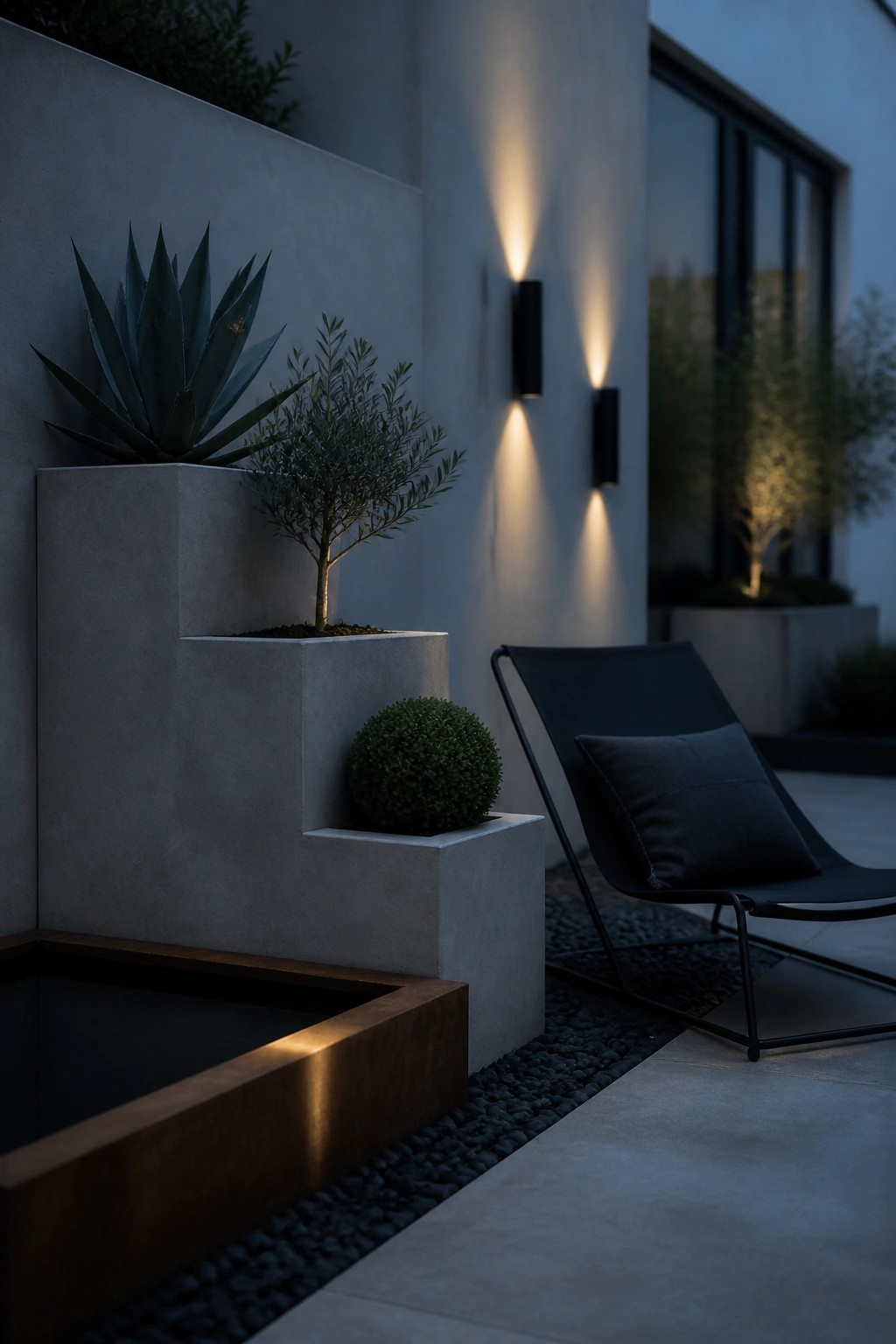
Tiered planters give you a way to add plants at different heights without crowding the ground. This setup works well in corners where a single row of pots would look flat or leave empty space behind them.
You can build them from concrete blocks or similar materials to match a modern house. Keep the tallest plants on the top level and use lower ones below so everything stays visible from the seating area.
Tiered Pots On A Ladder
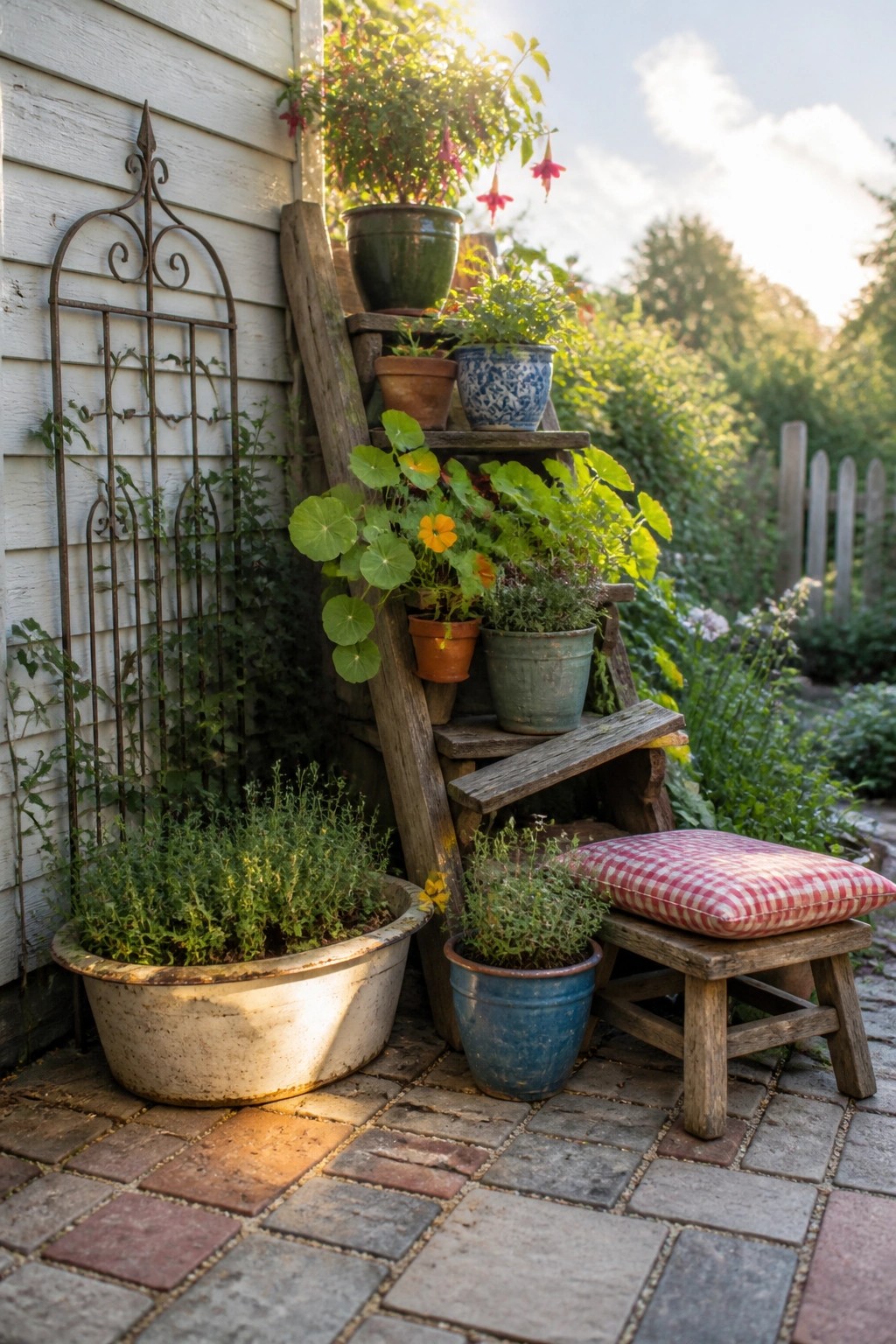
A leaning wooden ladder makes a simple way to stack plants in a tight corner without taking up much ground space. The steps hold different sizes of pots at different heights so everything gets light and stays easy to reach. It turns an awkward spot into a working display without any fancy building.
This works well along a house wall or fence where you need vertical interest but do not want a big planter box. Old ladders or leftover deck boards do the job fine as long as they sit steady. Just check the angle so the pots do not tip when you water.
Hang Herb Planters Directly on the Wall
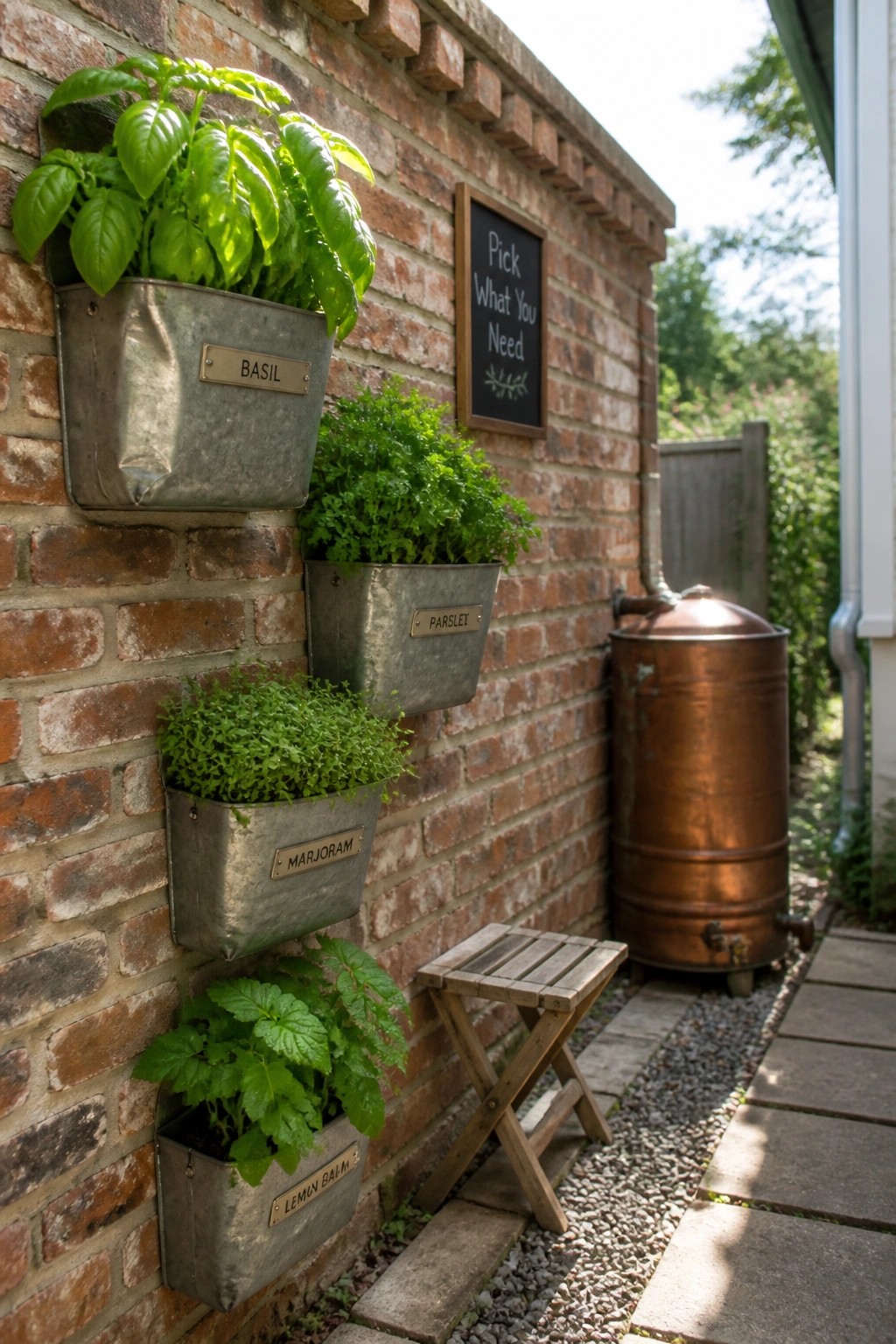
Mounting a few metal containers on a bare wall turns a narrow side area into a working herb garden without taking up floor space. The different heights keep everything reachable and let the plants get good light even in a tight corner.
This works well on brick or any solid surface near a back door or along a path. Just make sure the wall can hold the weight once the tubs are filled with soil, and group plants that need similar watering so nothing gets neglected.
Tiered Hanging Planters For Corner Patios
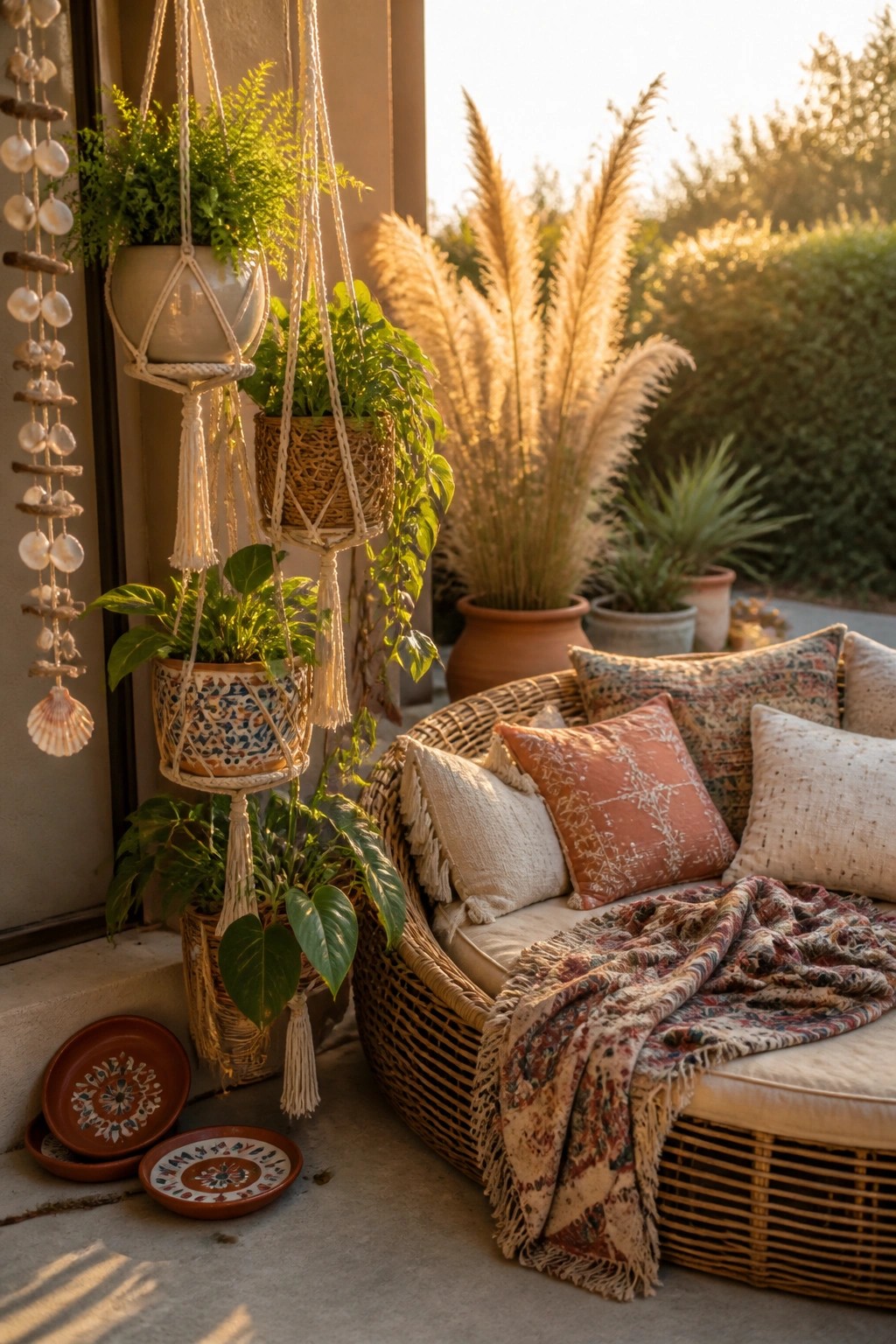
Hanging planters at different heights can turn an empty corner into a spot that feels full without crowding the floor. The mix of macrame holders and stacked pots lets you layer plants vertically, which works especially well when space is tight or the layout feels awkward.
This approach suits small patios or side areas where a single large pot would look out of place. Keep the hangers at staggered levels and add a low seat or bench underneath so the plants become part of the seating zone rather than just decoration.
Tiered Pots Along Brick Steps
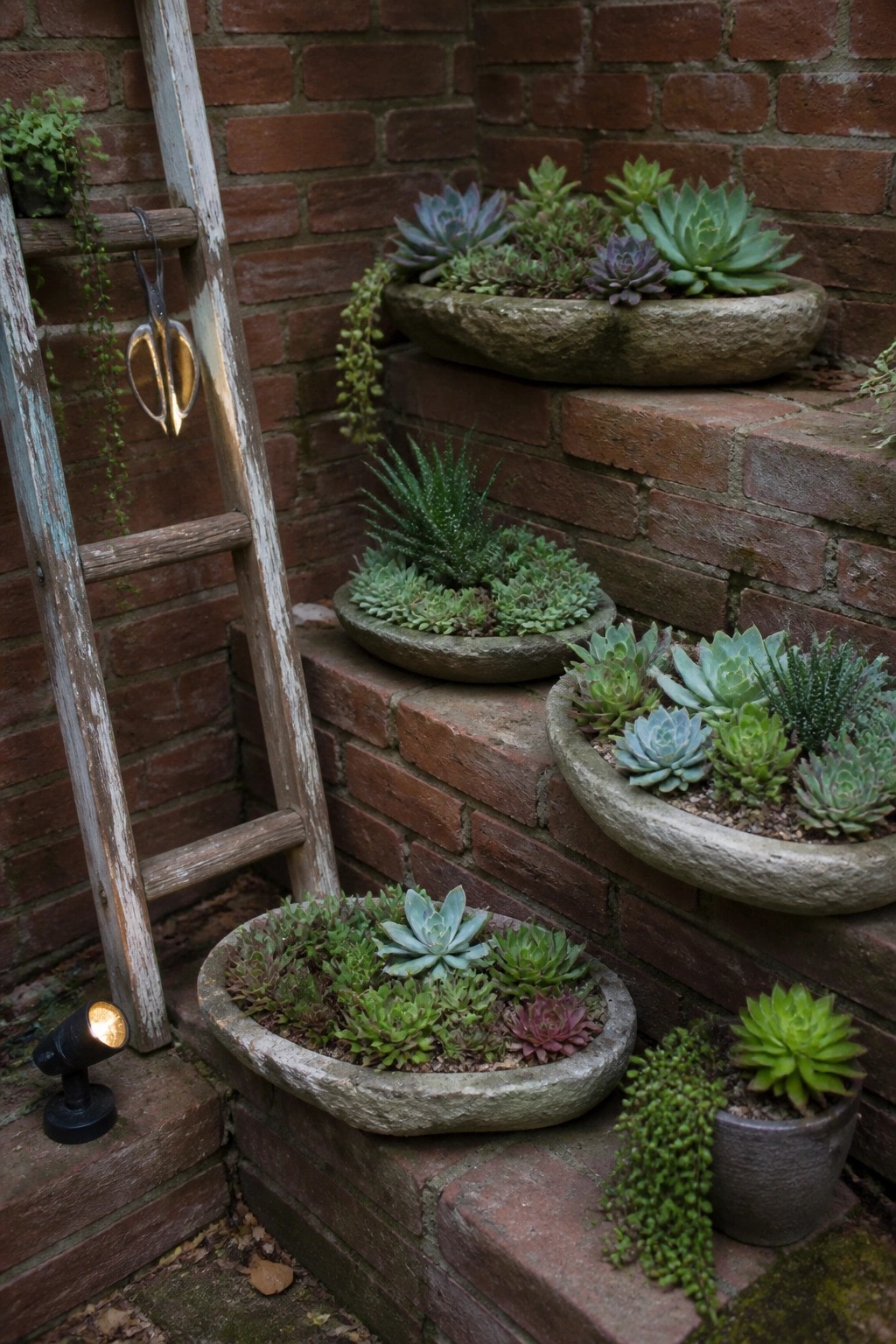
Placing pots at different heights along existing steps or ledges makes good use of a tight corner. It turns a plain wall into a layered display without needing extra shelves or stands.
This approach works well on patios or small yards where space is limited. Stone or concrete pots hold up outdoors, and mixing a few trailing plants with upright ones keeps the look full but simple.
Stacked Crates Create Simple Tiered Displays
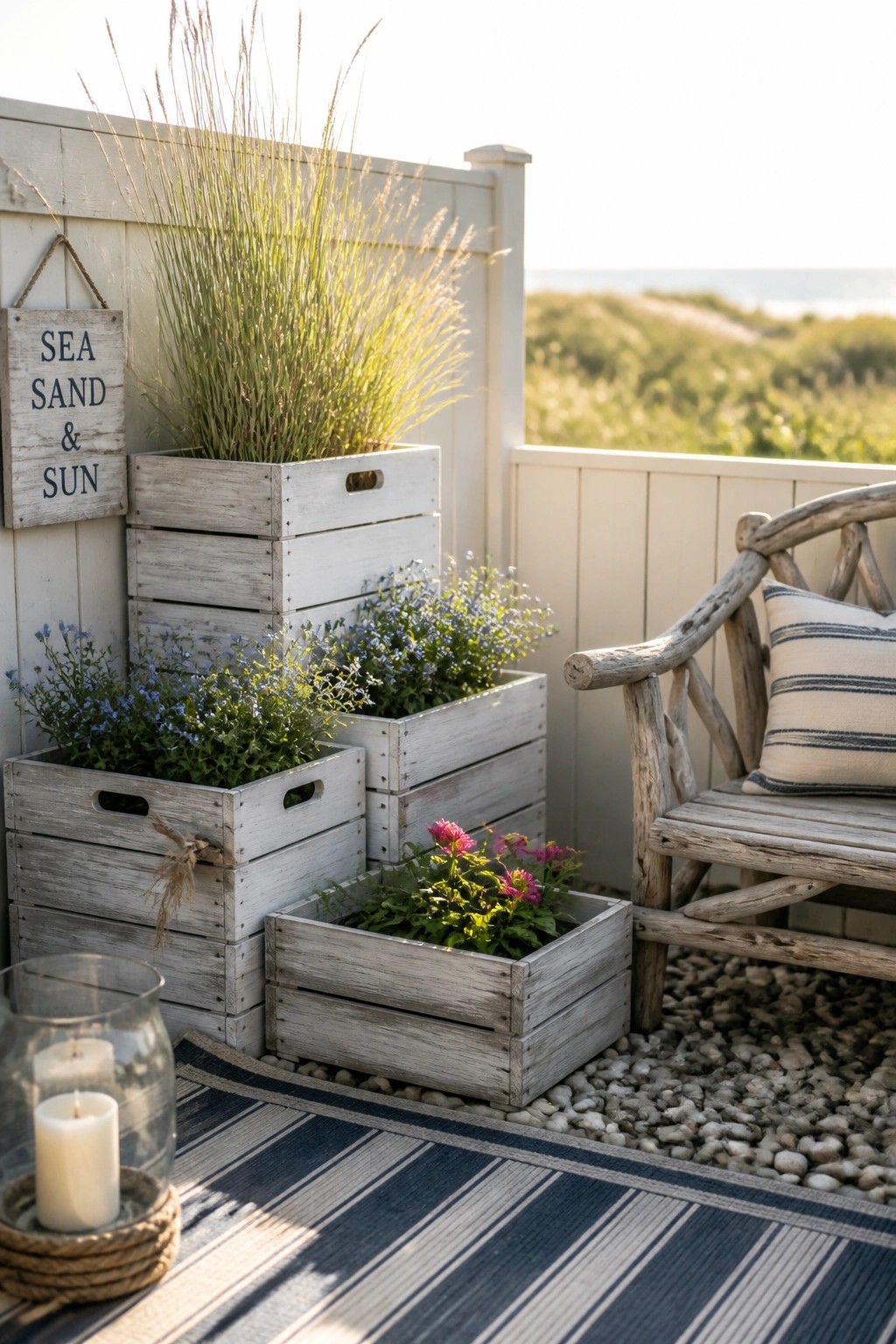
Stacking wooden crates gives you an easy way to add height in a corner without building anything permanent. The different levels let plants sit at varied heights, which keeps the whole spot from looking flat and makes it easier to group things that need more or less sun.
This works best on small patios or decks where floor space is limited. Use crates of different sizes so the arrangement feels relaxed, and place the tallest stack in the back against the wall or fence.
Tiered Pot Displays on Steps
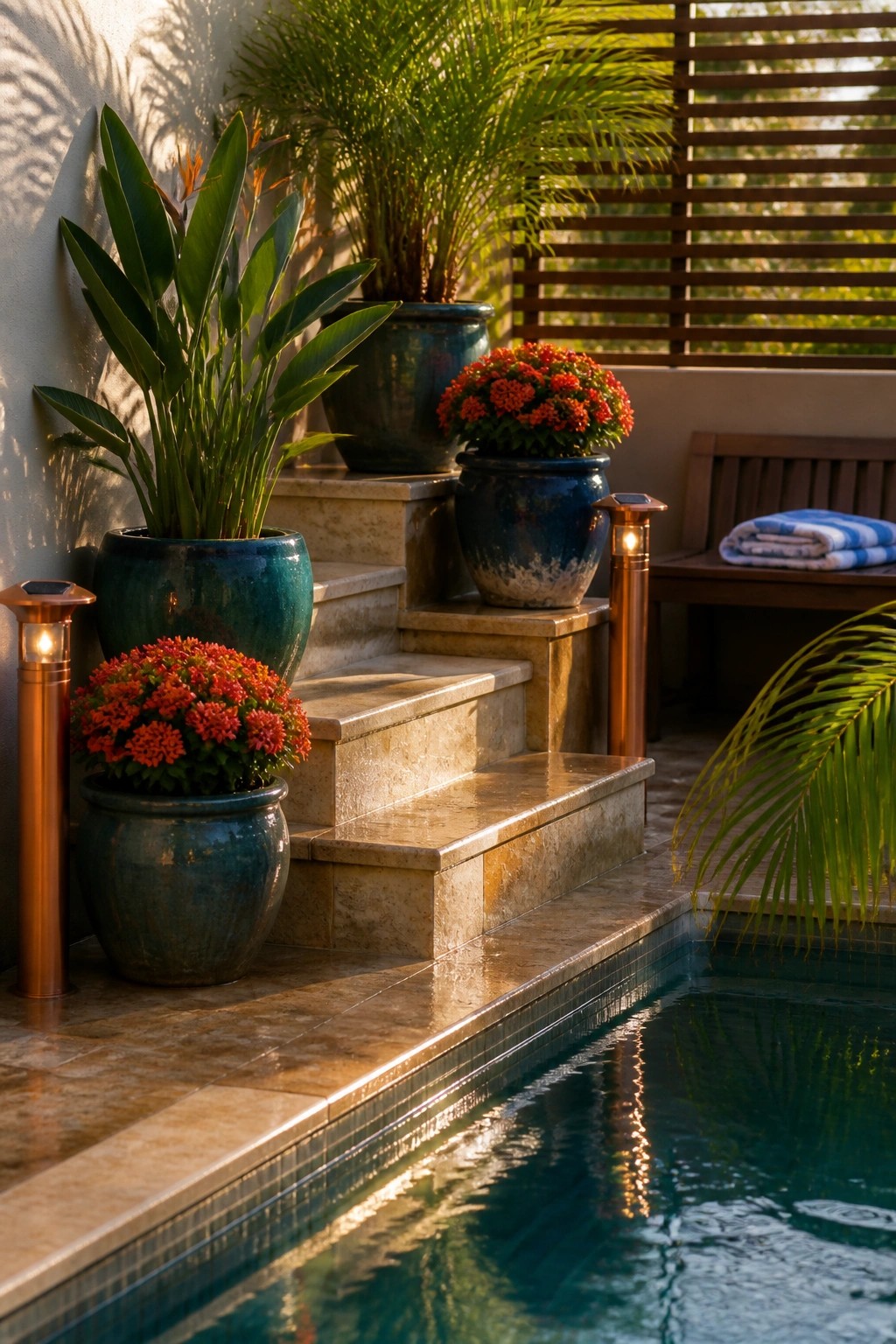
Placing pots on the different levels of outdoor steps gives you an easy way to add height and color without crowding the ground. It turns a simple walkway into a planted feature that feels natural and full.
This approach works best on homes with pool decks or patios that already have a few stairs. Use matching pots in a few sizes and keep the path clear so people can still walk through comfortably.
Tiered Stands For More Plants In Small Spaces
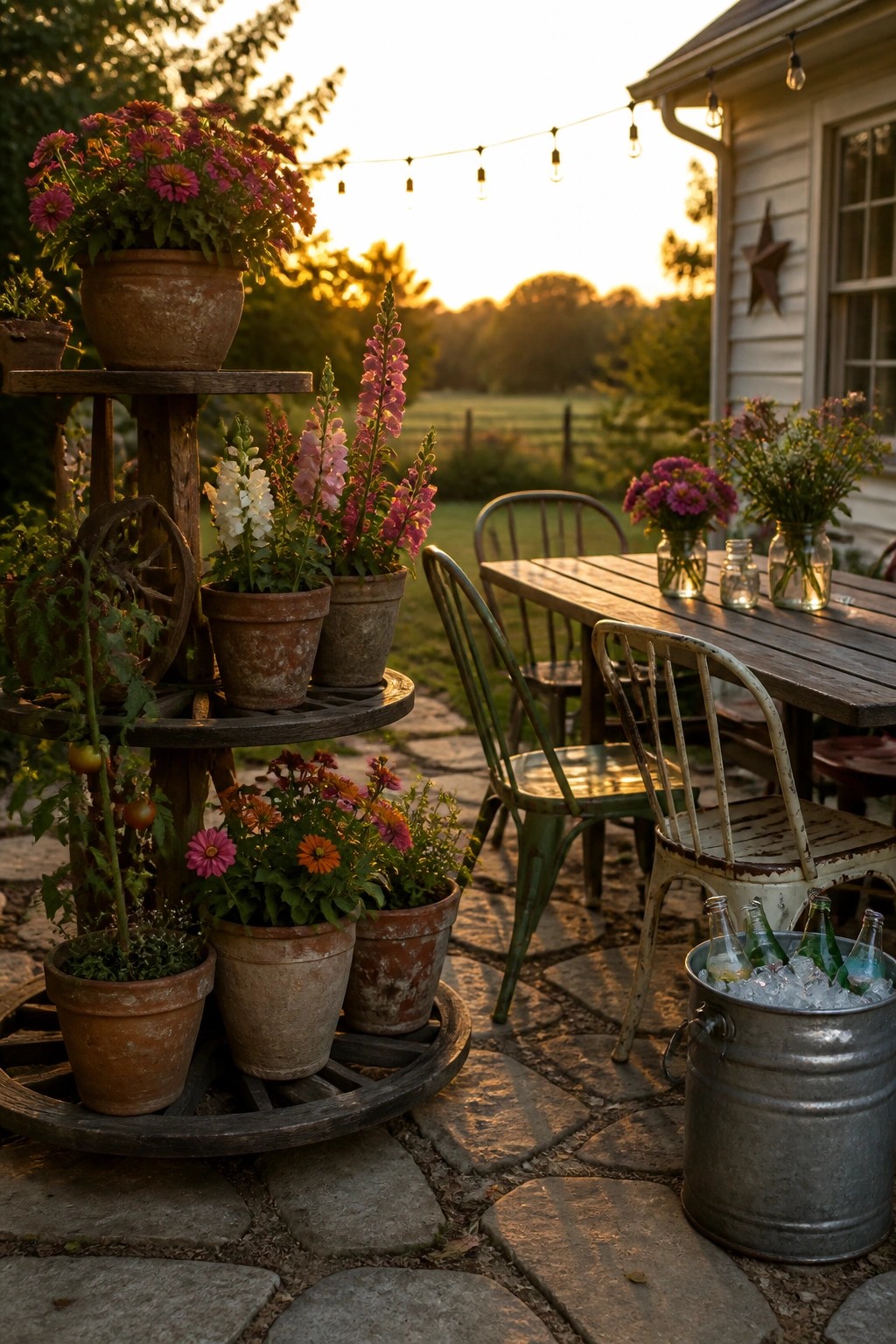
A tiered stand lets you fit quite a few pots into one spot without spreading everything across the ground. It works especially well when you want more flowers or herbs but the patio itself stays tight.
Place the stand near a seating area so the plants stay close but do not block chairs or walking paths. Older wood stands hold up fine as long as the base is solid and the top levels are not overloaded.
Tiered Planters Fill Corner Spaces On Small Balconies
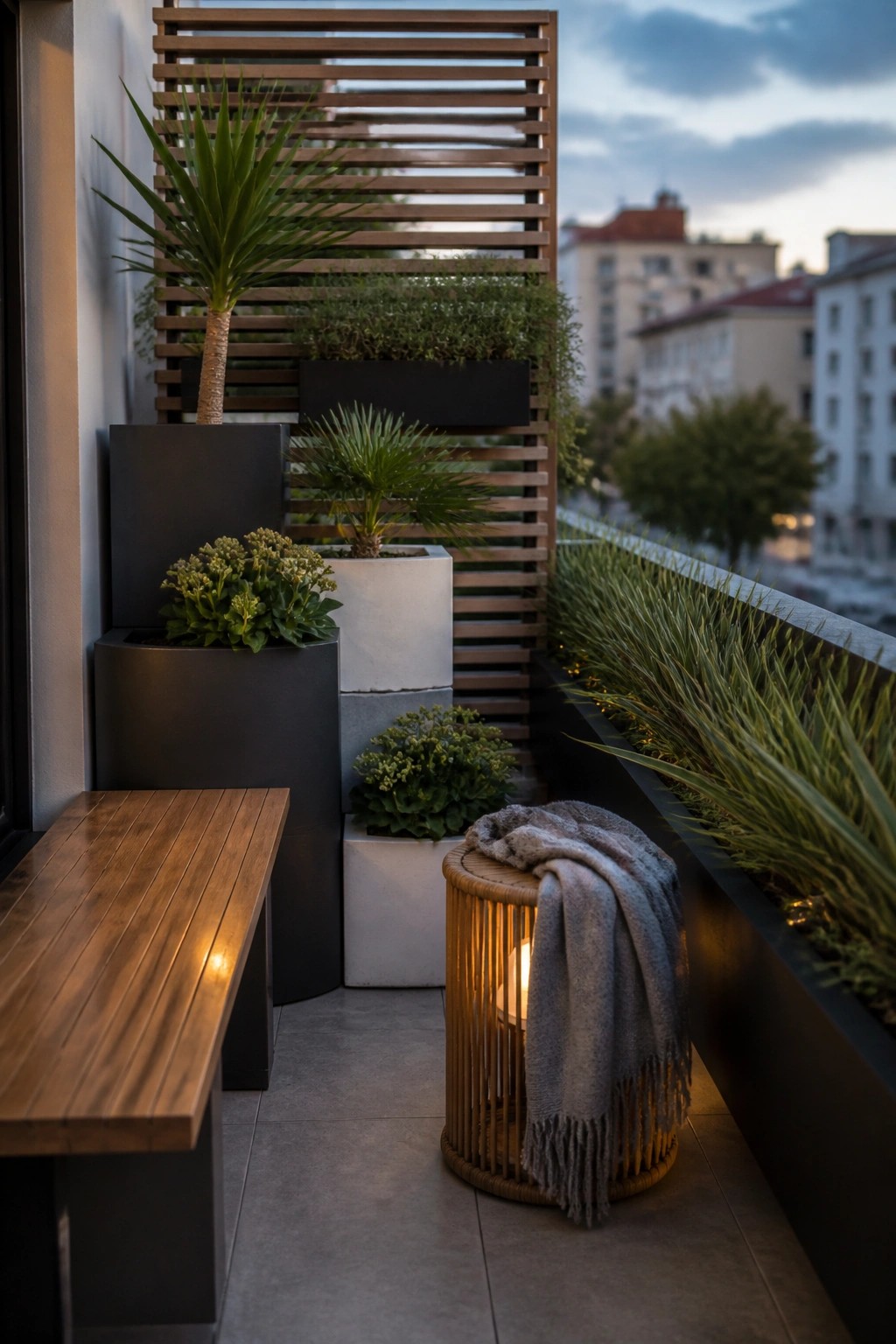
Many balconies leave an awkward corner that feels wasted. Stacking planters at different heights turns that spot into a small garden without taking up much floor room.
This setup works best on urban balconies where space is tight. Mix a few taller containers with shorter ones, and place them against a simple screen so the plants can layer naturally.
Tiered Pots On Steps
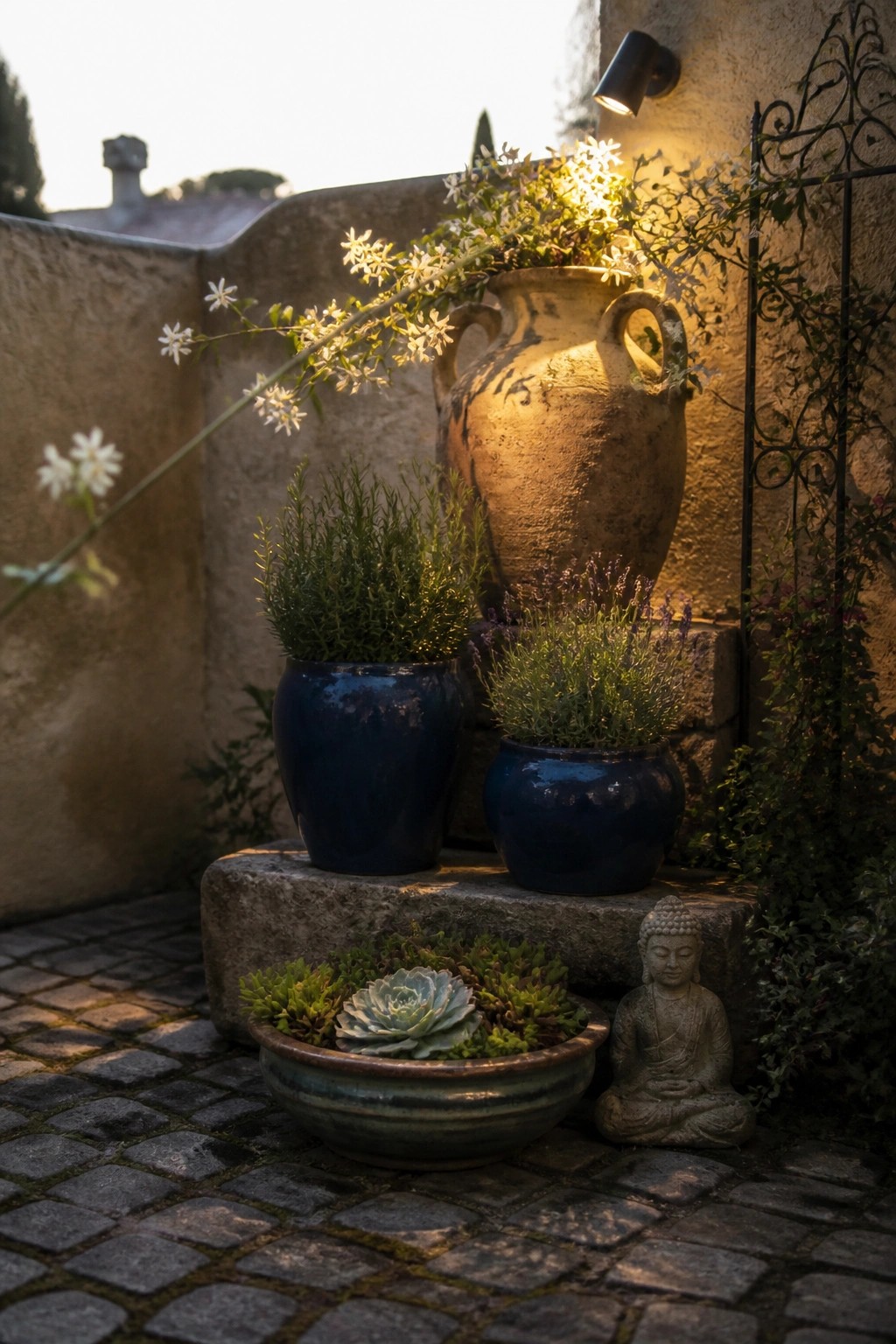
Placing pots at different heights is a simple way to fill a corner without crowding the ground. Steps or low ledges already give you built-in levels, so the display feels natural instead of forced.
This works best in small patios or tight side areas where flat rows of pots would look thin. Match the pot colors and let some plants trail while others stay upright so the whole group reads as one arrangement.
Frequently Asked Questions
Q: How can I make sure my corner garden gets enough light? A: Observe the spot throughout the day to see where shadows fall. Choose shade tolerant plants if direct sun is limited. Move pots around as seasons change to catch more rays.
Q: What size pots work best for tiered displays in small corners? A: Start with a large base pot for stability and go smaller as you stack up. This keeps the display balanced without overwhelming the space. Fill each with good potting mix before adding the next layer.
Q: Do I need to worry about drainage in awkward patio spots? A: Always check that pots have holes at the bottom. Elevate them slightly with bricks if the ground stays damp.
