

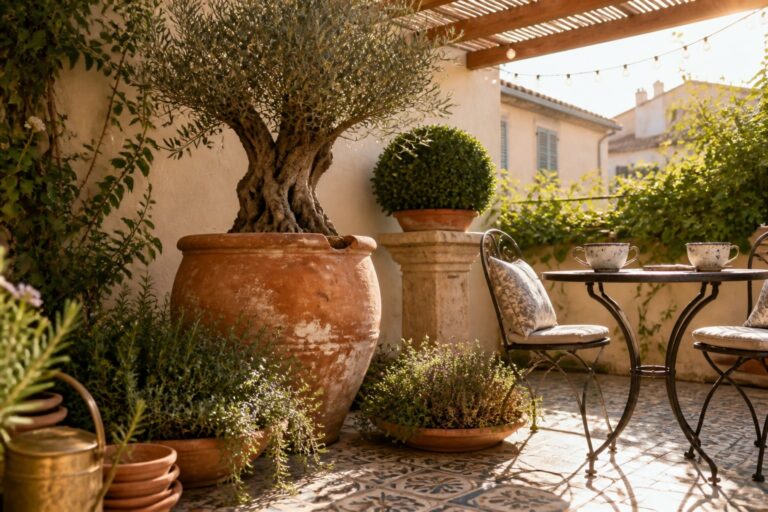
Patios tend to feel flat and unused when every container sits at the same height and stays in one fixed spot all season.
I have noticed that shifting small groups of pots lets the space adjust when we actually sit out there for dinner or just want room to walk through.
Layered heights give the eye something to follow without crowding the floor.
Flexible clusters also make it easier to move things aside if a table needs to expand or if heavy rain leaves one corner wetter than the rest.
Small changes like these show up quickly once the patio starts getting daily use.
Vary Pot Heights For Simple Layers
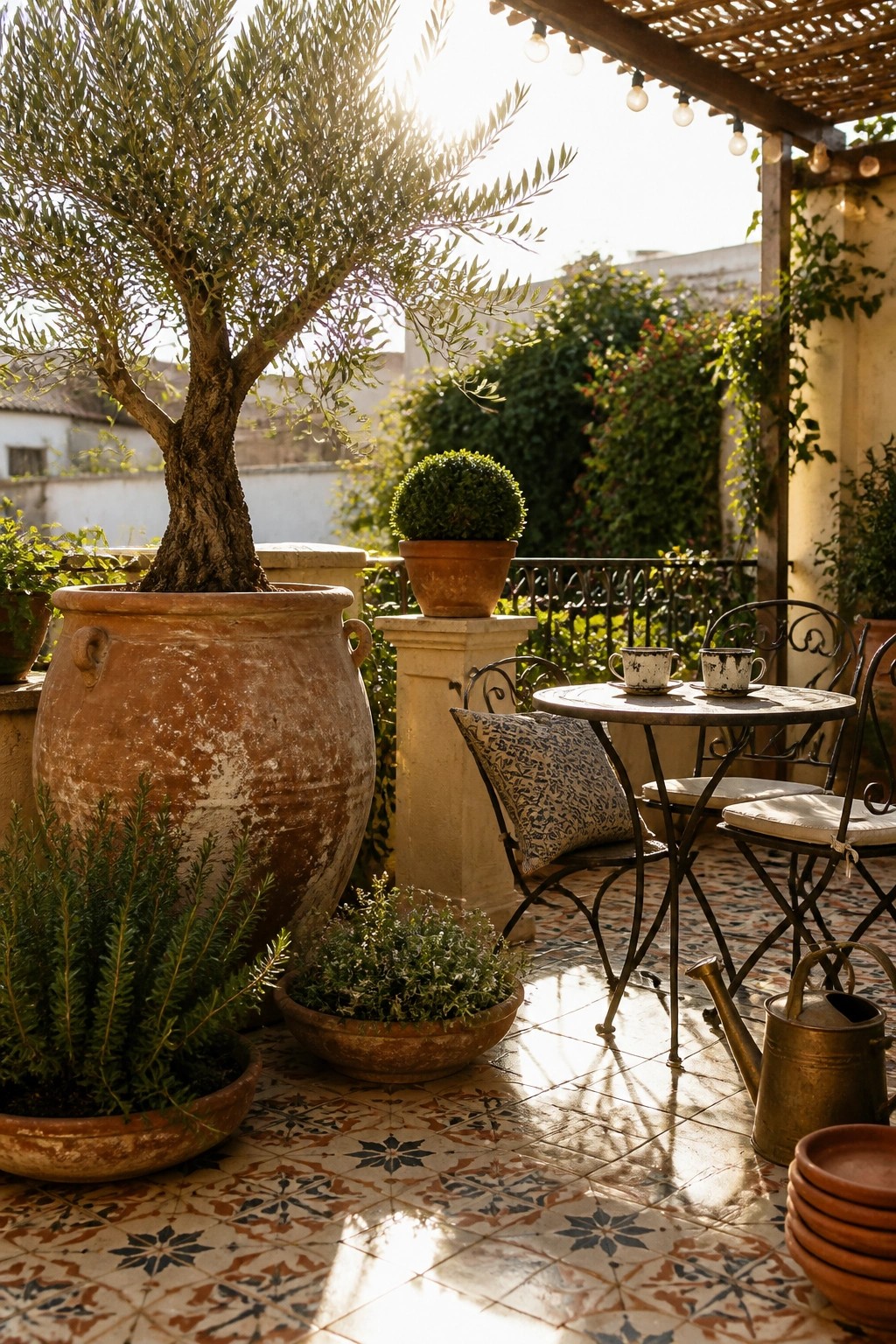
Grouping containers at different heights makes a patio feel more full without crowding the space. A tall olive tree in a big pot next to shorter shrubs and smaller herbs creates that stepped look right around the seating area.
This approach works well on any size patio since you can shift the pots as needed. Place the tallest ones toward the back or corners and keep lower ones closer to chairs so the table stays clear for use.
Group Containers at Different Heights
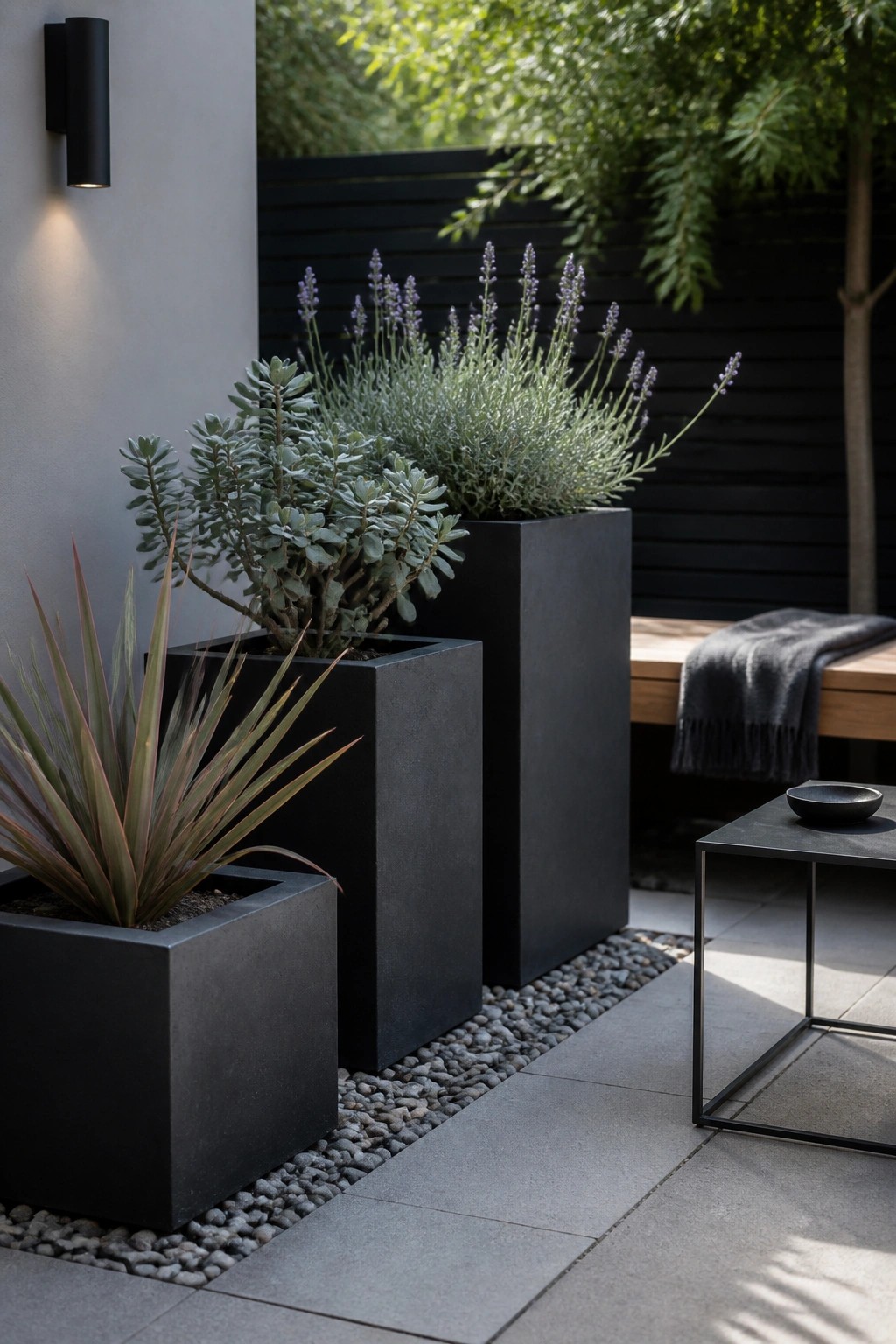
One simple way to add interest to a patio is to place several containers together but vary their heights. This creates layers without needing built-in beds or permanent changes. The different levels let plants show off their shapes while keeping the whole arrangement easy to move or adjust later.
This approach works especially well on paved areas or small outdoor spaces where you want flexibility. Use two or three sizes in one spot, and leave a little room between groups so the layout stays open. It suits modern homes or any patio that gets regular use, since the pots can be shifted around with the seasons.
Cluster Containers at Different Heights
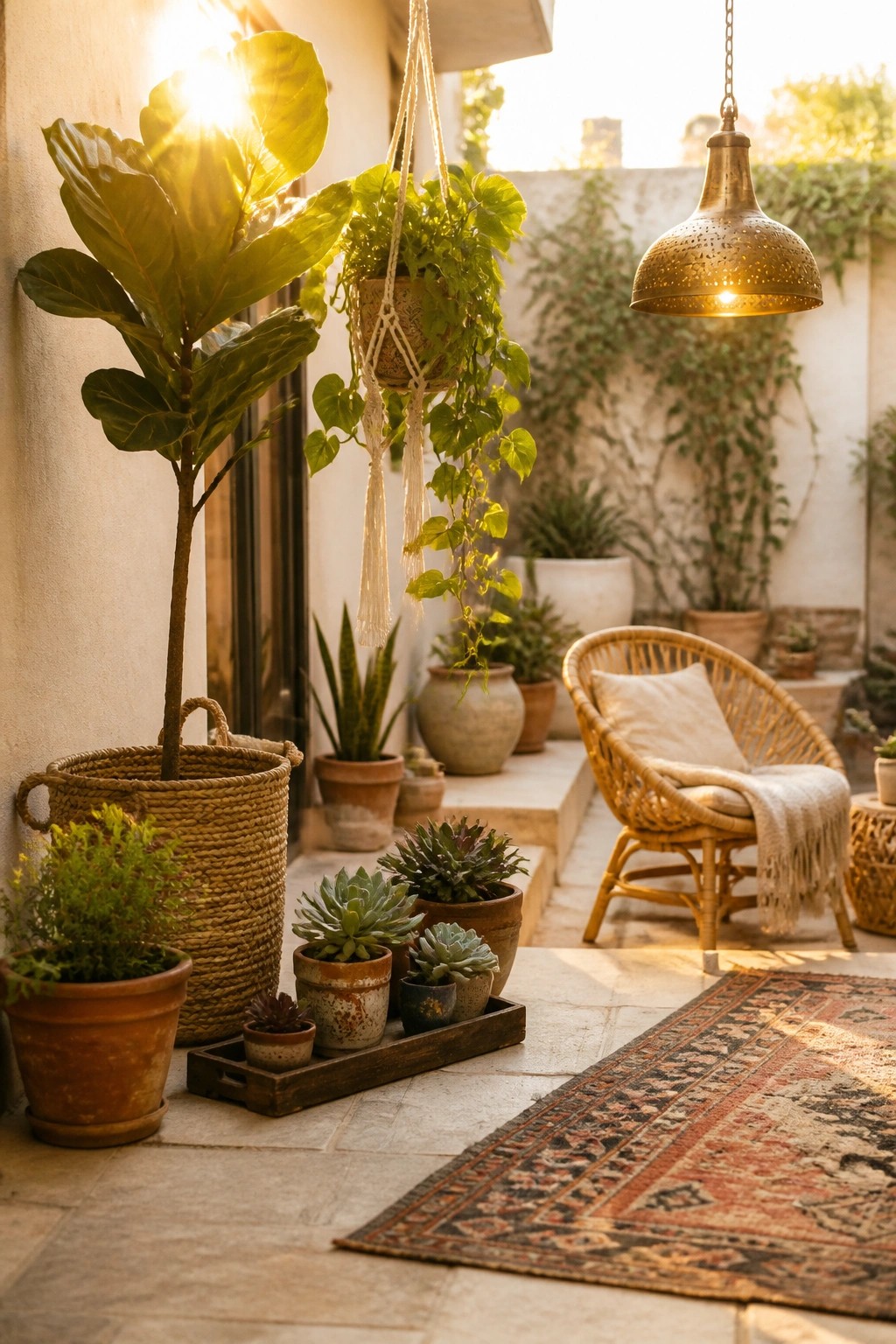
Grouping pots at varying heights makes a patio feel fuller without needing a big garden. Baskets, trays, and simple stands let you stack or shift plants easily so the arrangement stays flexible as seasons change.
This approach works especially well on small patios or rental spaces where you cannot add permanent beds. Start with a low tray of succulents near the floor, add a few medium pots on steps or low stools, and hang one or two plants above to keep the eye moving.
Vary Pot Heights To Build Layers
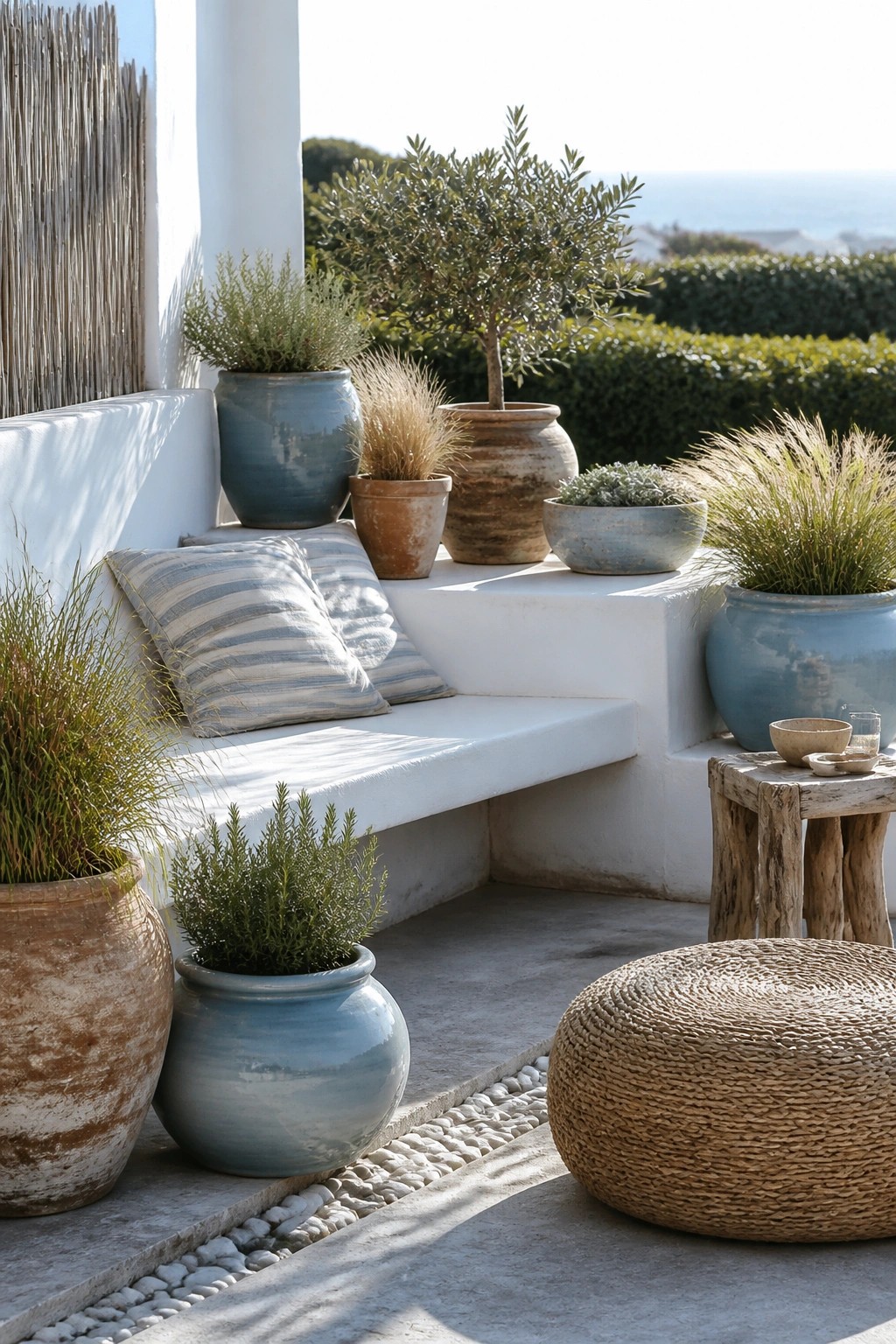
One simple way to make a patio feel fuller is to mix pots at different heights instead of lining them all up at the same level. Taller containers in the back and shorter ones in front create depth and keep the space from looking flat.
This approach works especially well around built-in seating or along the edge of a patio. Place a few large pots on the floor, set medium ones on low steps or stools, and let the plants do the rest.
Use Ladders And Crates To Layer Heights
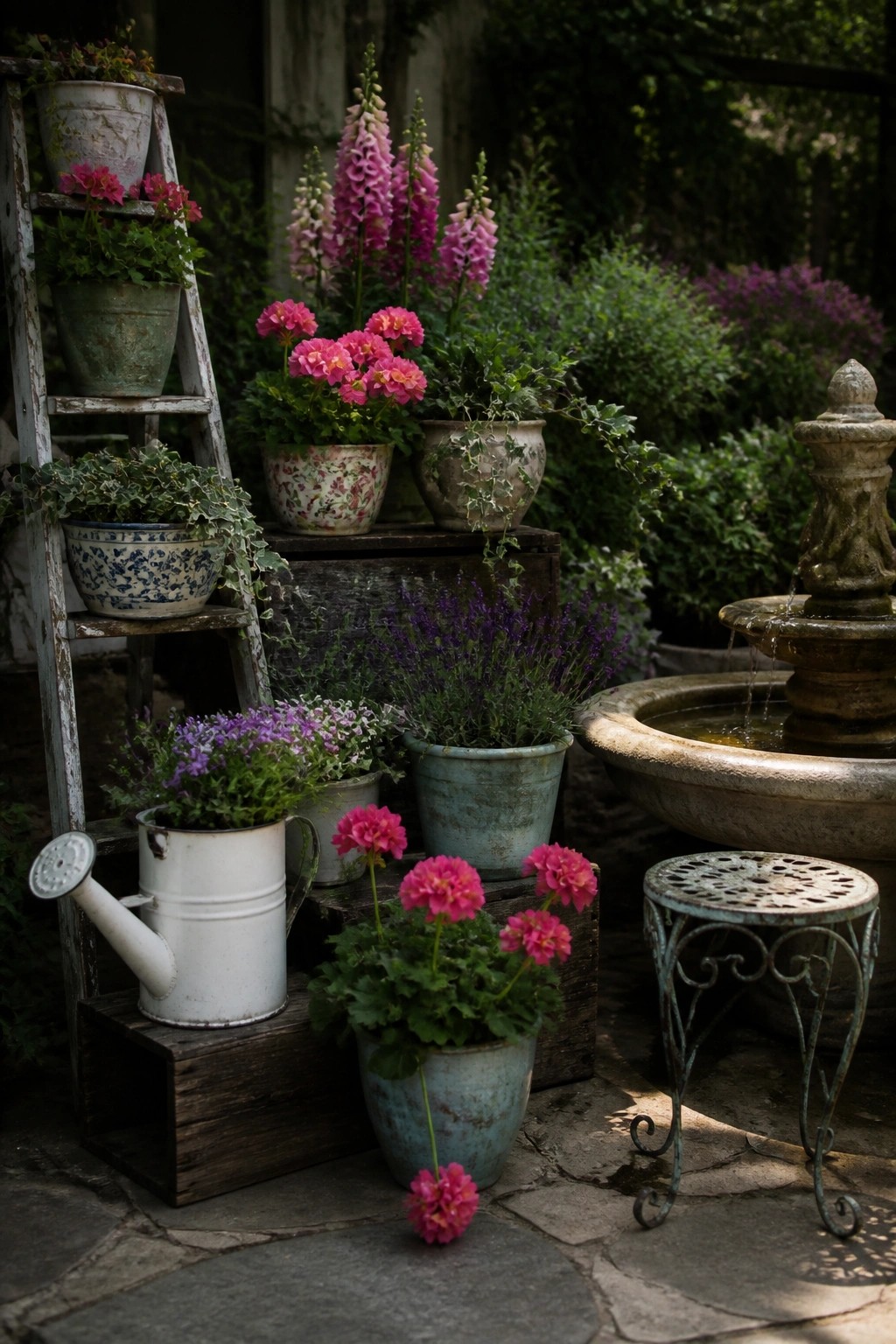
Grouping containers at different levels keeps a patio from looking flat. An old ladder or a few stacked crates gives you instant height without needing big planters or permanent shelves. The eye moves up and down naturally, and you can fit more plants into a small space.
This works well on stone or brick patios where you want flexibility. Move the pieces around as the season changes or when plants need more sun. Just make sure the ladder or crates sit steady so nothing tips.
Mix Pot Heights For Layered Groups
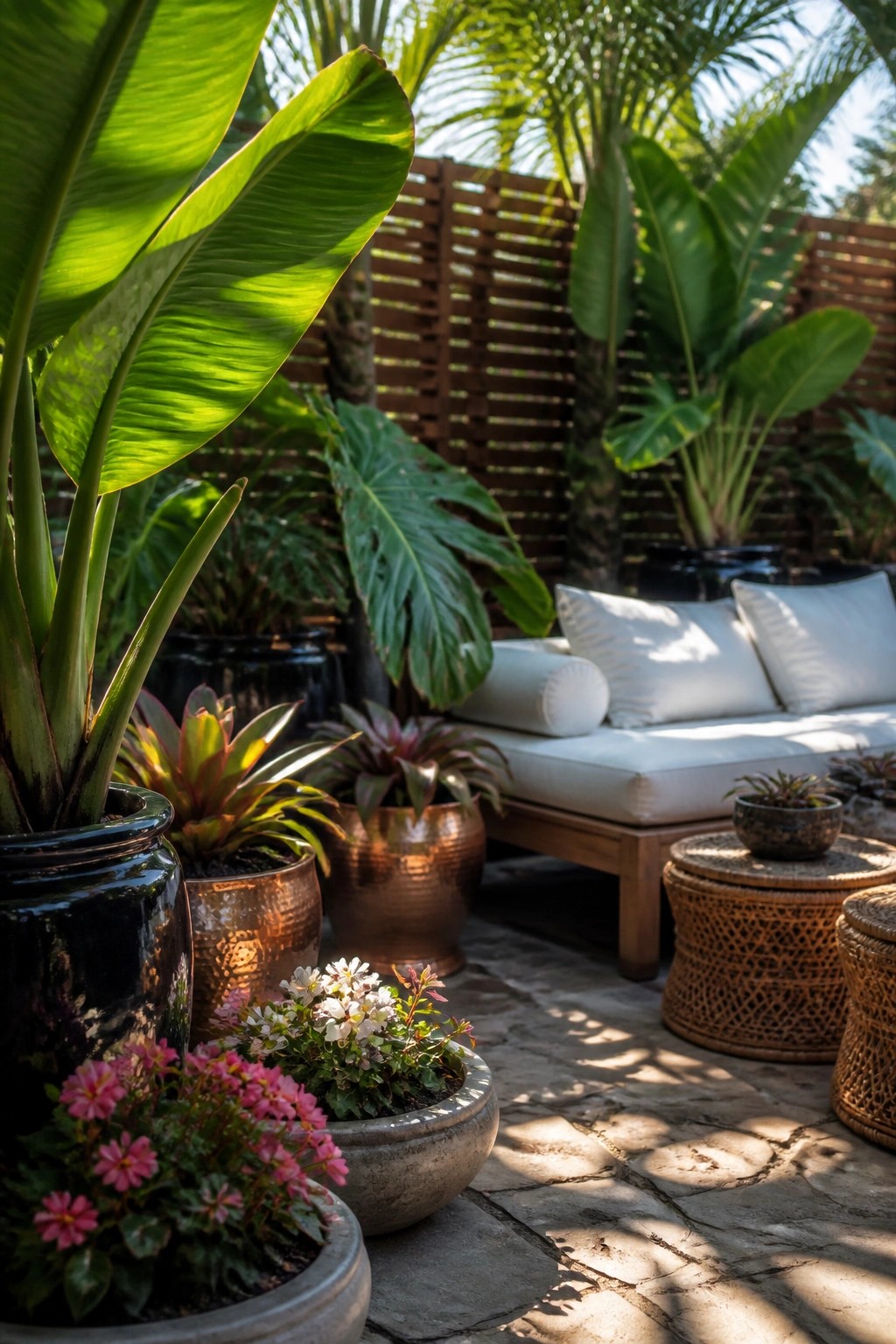
Placing containers at different heights lets you build layers even on a flat patio. Taller plants in big pots sit toward the back while smaller ones fill in the front, which keeps the view open and gives the whole area more depth.
This approach suits patios with seating because the pots can be shifted around the chairs or daybed whenever the arrangement feels off. Stick to three or four main heights and repeat a couple of pot finishes so the groups stay simple to adjust.
Wheeled Planters Keep Things Flexible
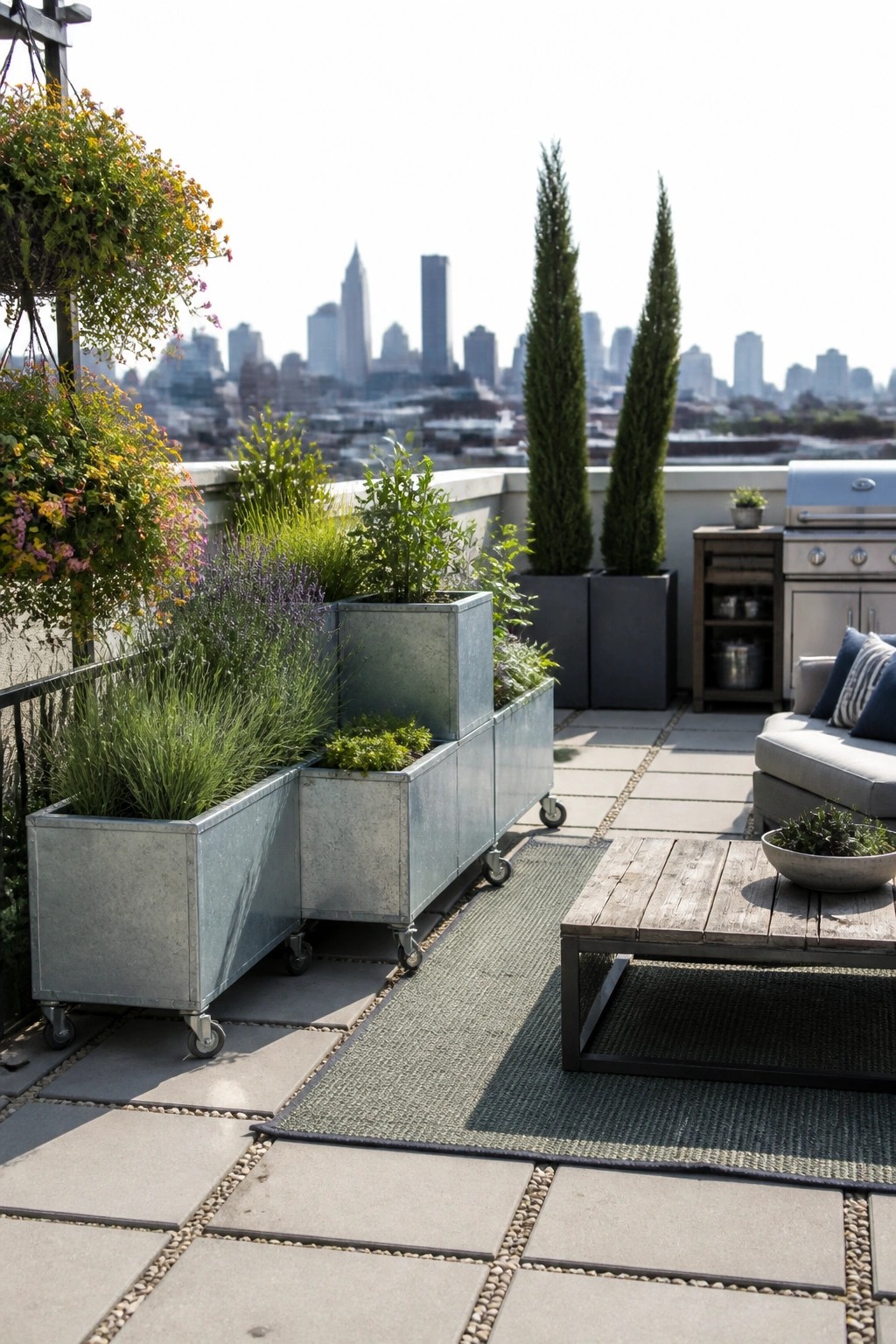
Containers on wheels give you a simple way to move plant groupings around without much effort. You can shift them for sun, shade, or just to change the layout when the mood strikes, and the different heights in each group keep the arrangement interesting.
This approach works well on patios or terraces with solid paving where wheels roll easily. Choose sturdy casters that can handle the weight once the pots are filled, and group a few sizes together so the overall look stays balanced even after you rearrange.
Create Layers By Raising Some Pots On Stands
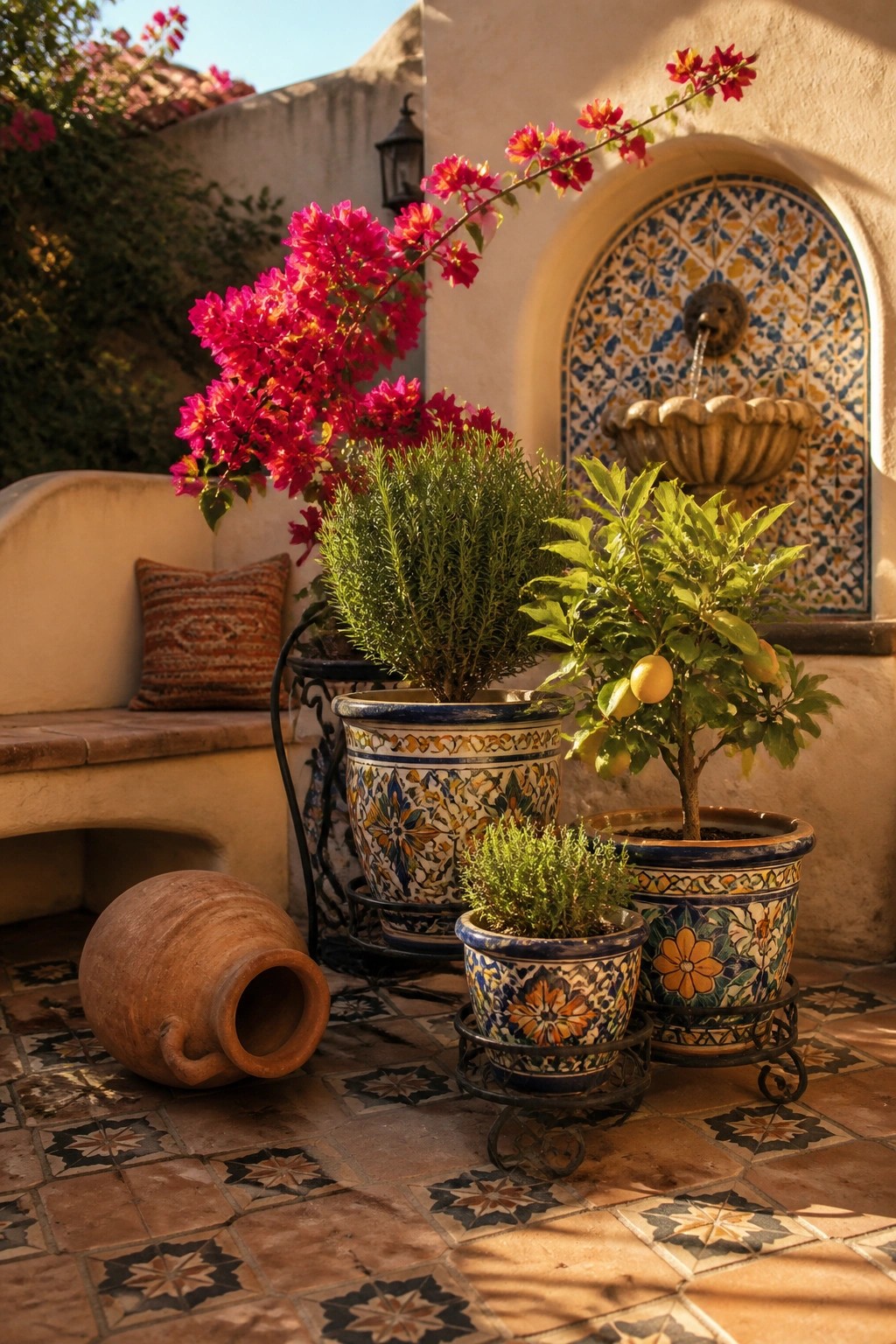
Raising a few pots on simple metal stands adds height without needing big plants or permanent structures. It keeps the grouping flexible so you can shift things around as seasons change or when a plant needs more sun. The stands also help smaller pots sit at eye level instead of getting lost on the ground.
This works well on patios or terraces where you want variety but still need to move things for cleaning or rearranging. Try it with two or three stands of different heights placed near a bench or wall. Just keep the tallest stand toward the back so the whole group stays balanced and easy to reach.
Create Layers With Pots Of Different Heights
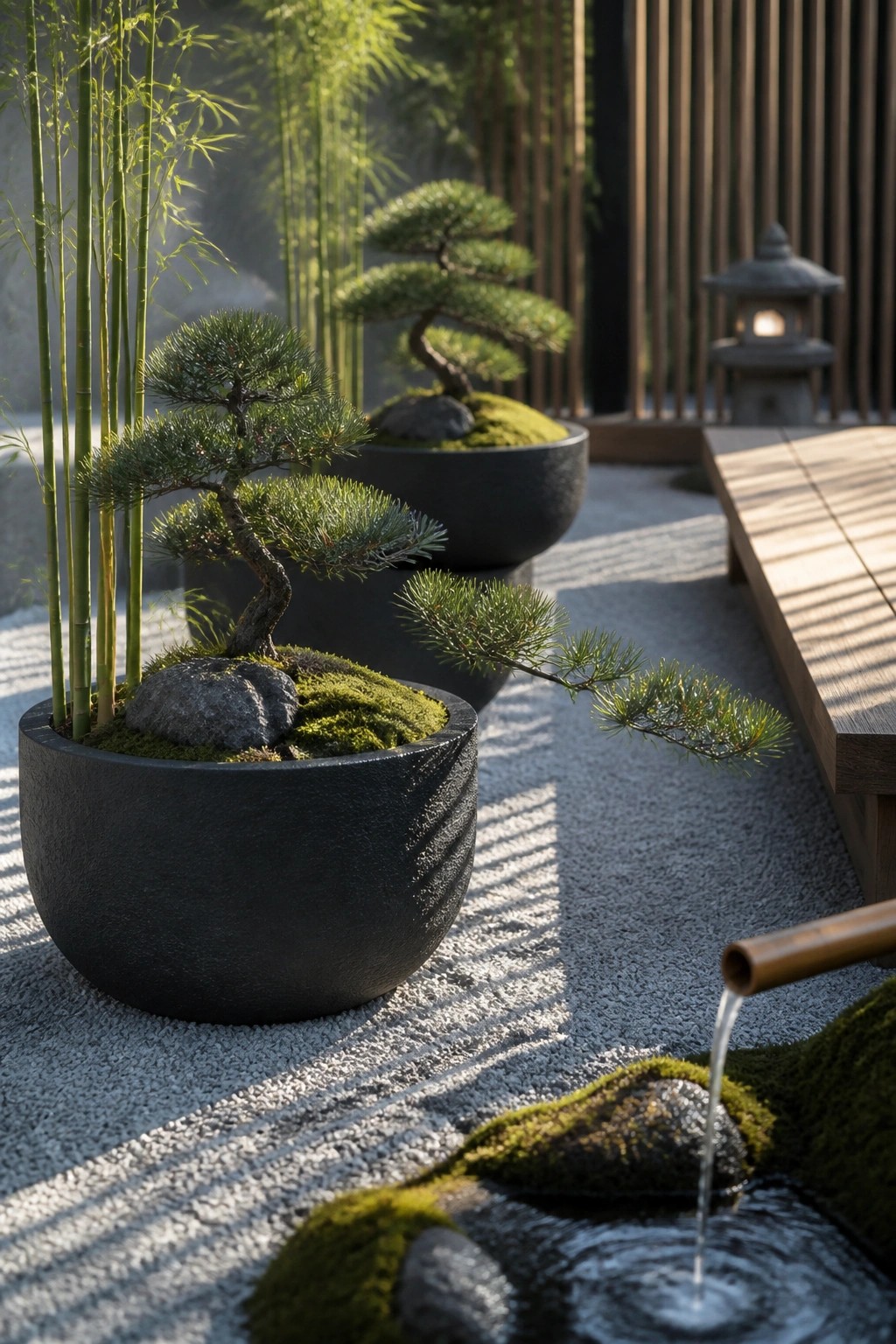
Grouping containers at different heights gives a patio more depth without needing a big garden. Tall bamboo next to shorter pines in the same dark pots creates a simple stepped look that feels natural and easy to adjust.
This setup works best on gravel or stone surfaces where pots can be shifted around. Keep the tallest pieces toward the back near seating so the layers frame the space rather than crowd it. Dark pots help the greens stand out and tie the group together.
Group Containers in Layers Around the Patio
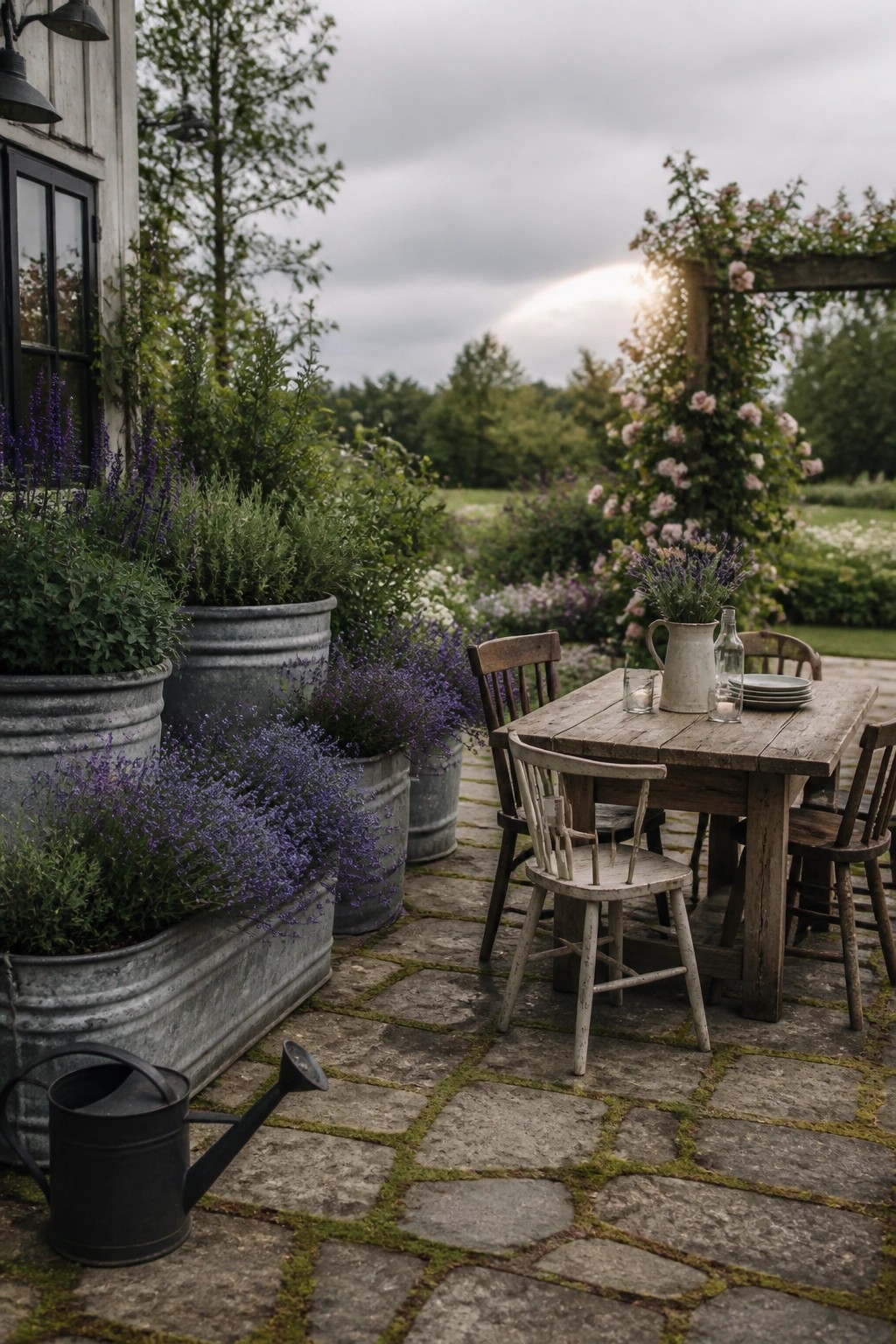
One simple way to add interest to a patio is to place containers in small clusters instead of spacing them out evenly. Taller pots go toward the back or center and shorter ones sit in front so the plants form a gentle slope of color and texture.
This approach works on any hard surface where you want some softness without digging beds. It suits older homes with stone or brick patios and makes it easy to shift things around when the light changes or when you need more room for chairs.
Vary Planter Heights For Simple Layers
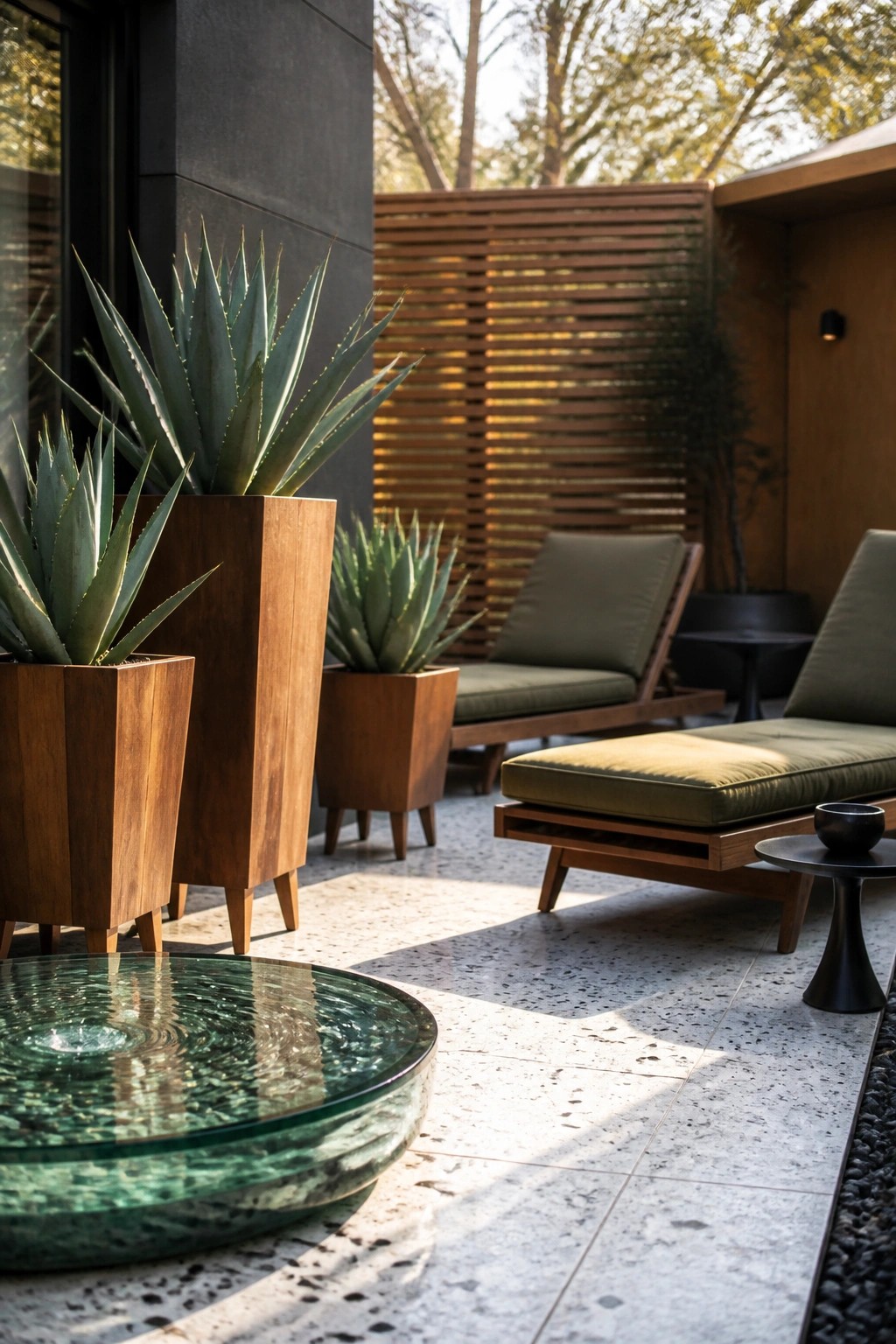
Grouping containers at different heights gives a patio more depth without any permanent planting. Tall wooden boxes next to shorter ones let the plants create a stepped look that feels full and balanced around seating.
This approach works best on paved areas where you can shift the pots as needed. Keep the materials similar so the focus stays on the plants rather than a mix of styles.
Layer Pots At Different Heights Around Seating
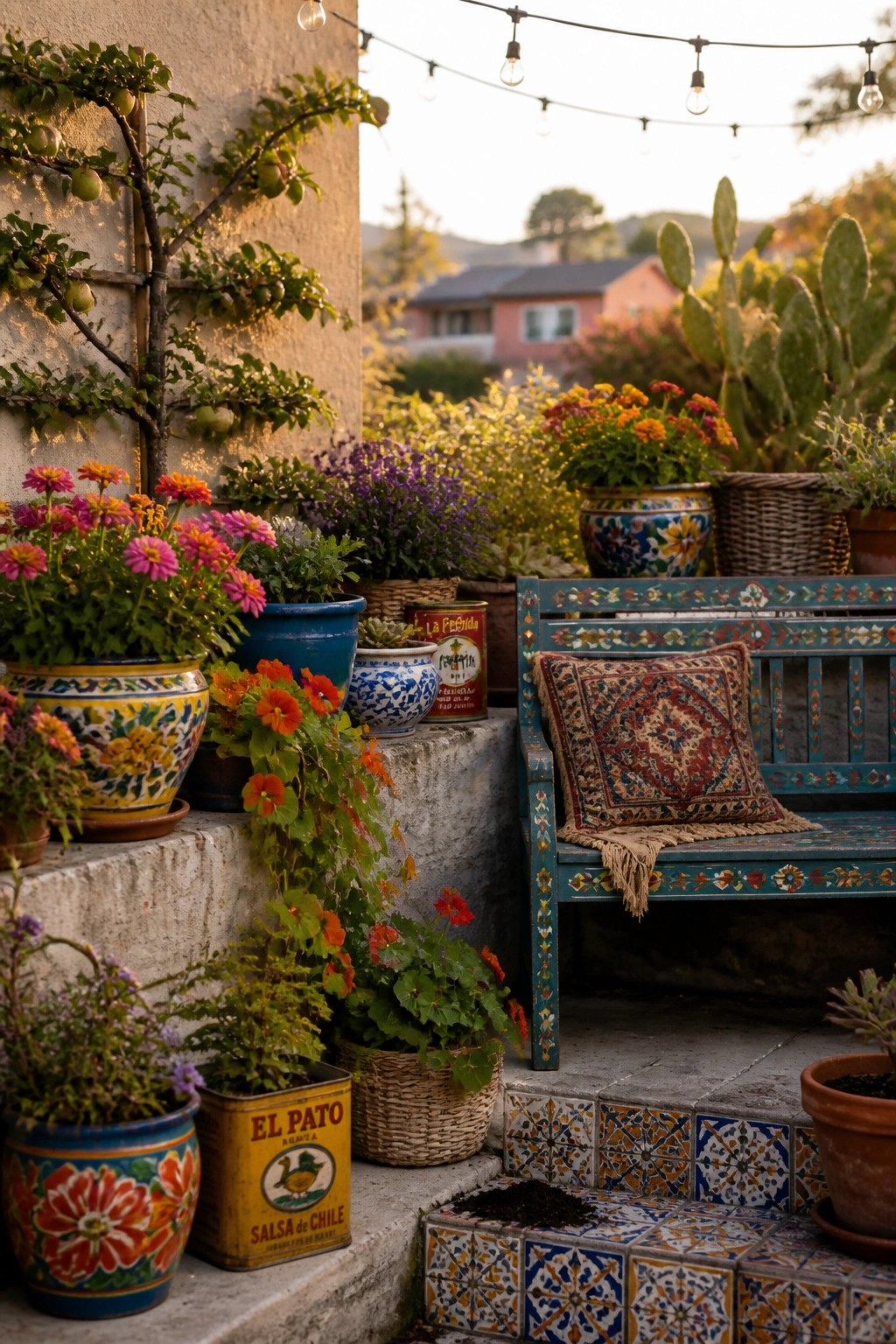
Grouping containers at several levels makes a small patio feel much fuller without taking up floor space. Tall pots on ledges or upper steps, medium ones clustered near the bench, and low growers spilling onto the ground create that layered look people often want in outdoor seating areas.
This approach works especially well on patios with built-in steps or low walls. Mix a few larger pots with smaller ones, keep the bench clear for sitting, and shift things around as plants grow or seasons change.
Vary the Heights of Your Container Plants
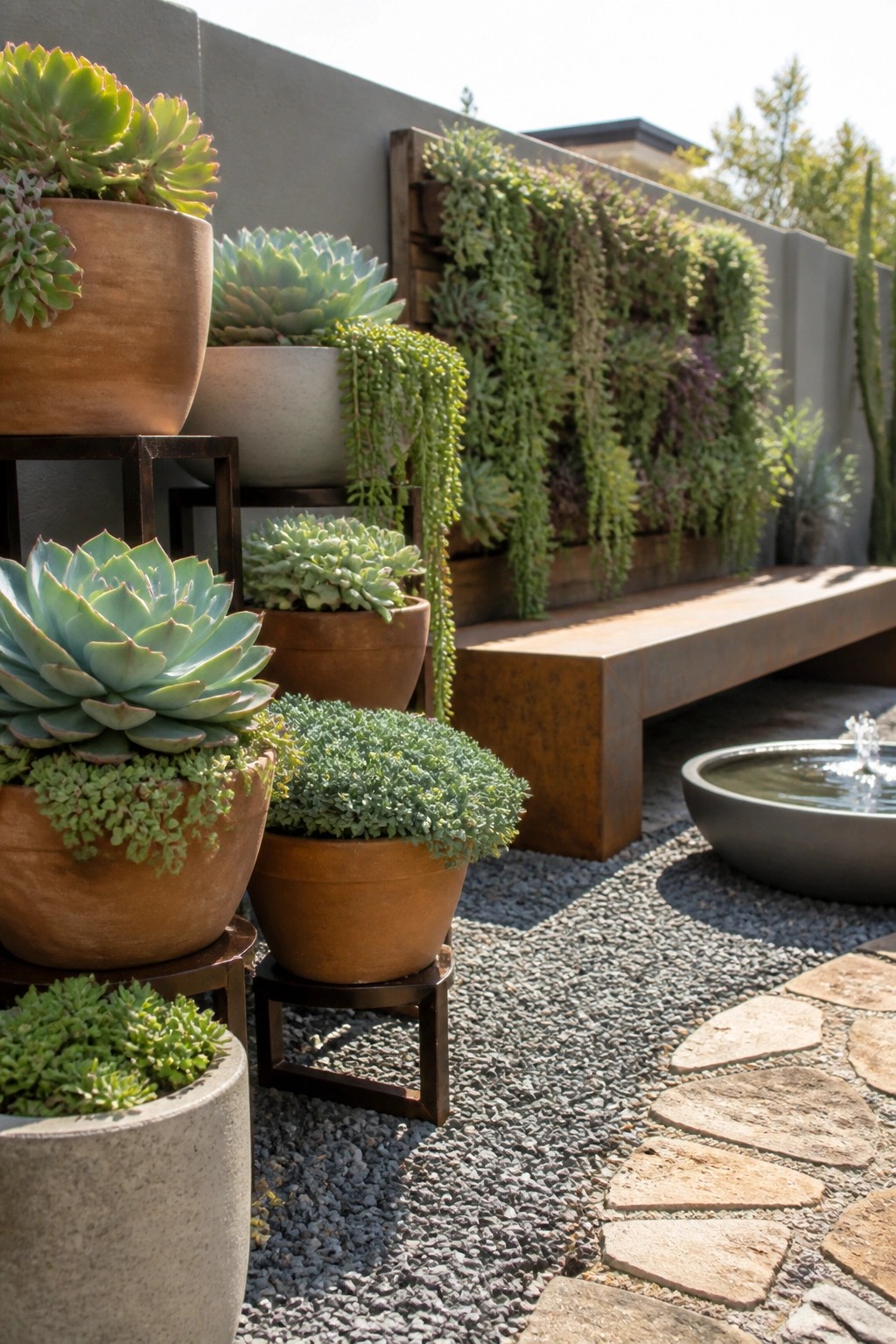
Raising some pots on stands while keeping others low is one of the easiest ways to add depth to a patio garden. It keeps the arrangement from looking flat and lets you fit more plants into a small space without crowding them together.
This approach works well on patios that have a mix of hard surfaces and gravel. Try a few simple metal stands in different heights and move the pots around until the grouping feels balanced. It is easy to adjust later if the plants grow or you want a different look.
Stack Crates To Create Layered Heights
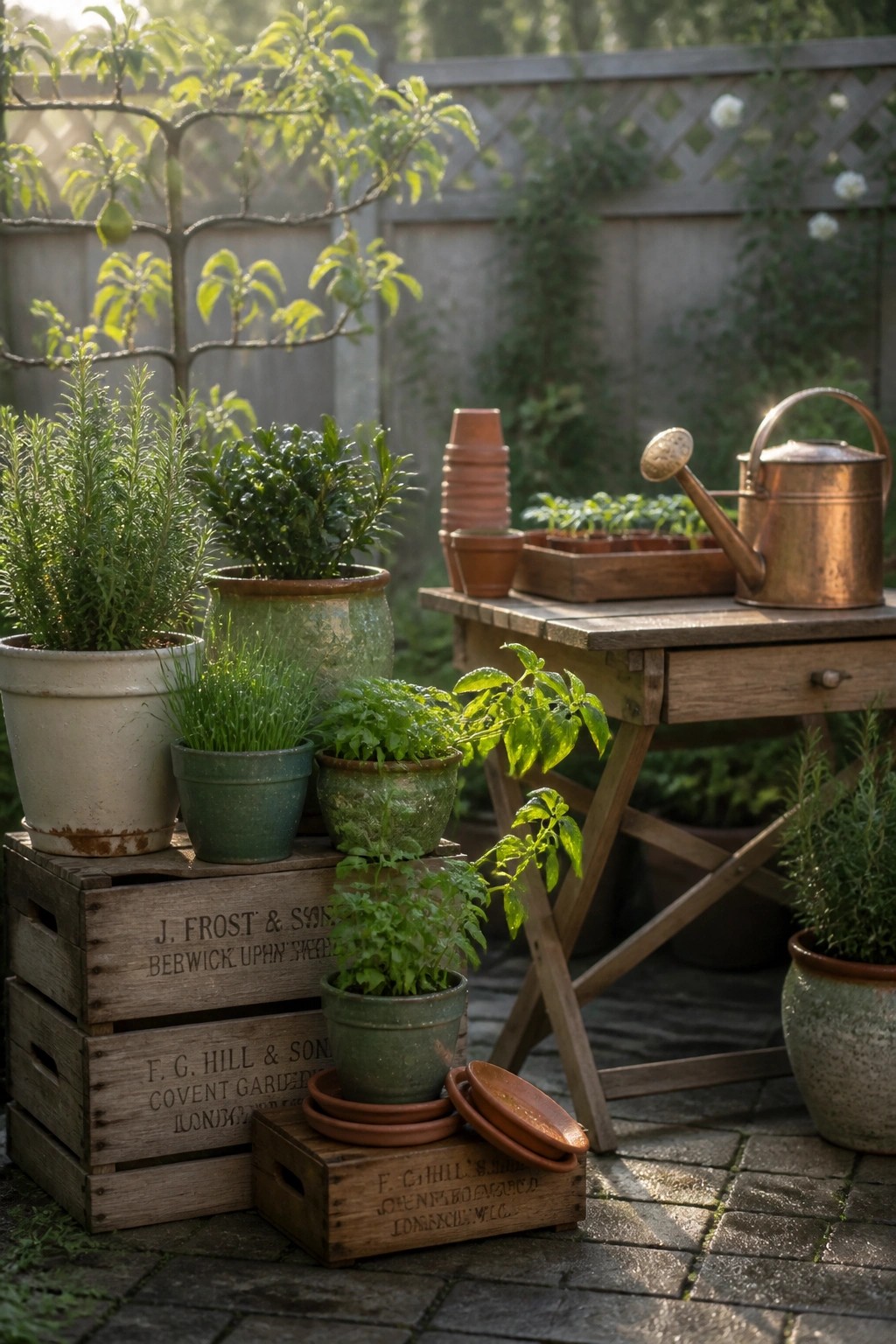
Stacking wooden crates gives you a simple way to change plant heights without any construction. It works because you can add or remove a box whenever you want, and the whole setup stays movable.
This idea fits small patios best, especially when space is tight and you need to rearrange often. Keep the crates in one corner and shift pots around as plants fill out or the light changes through the season.
Layer Pots at Different Heights Along the Edges
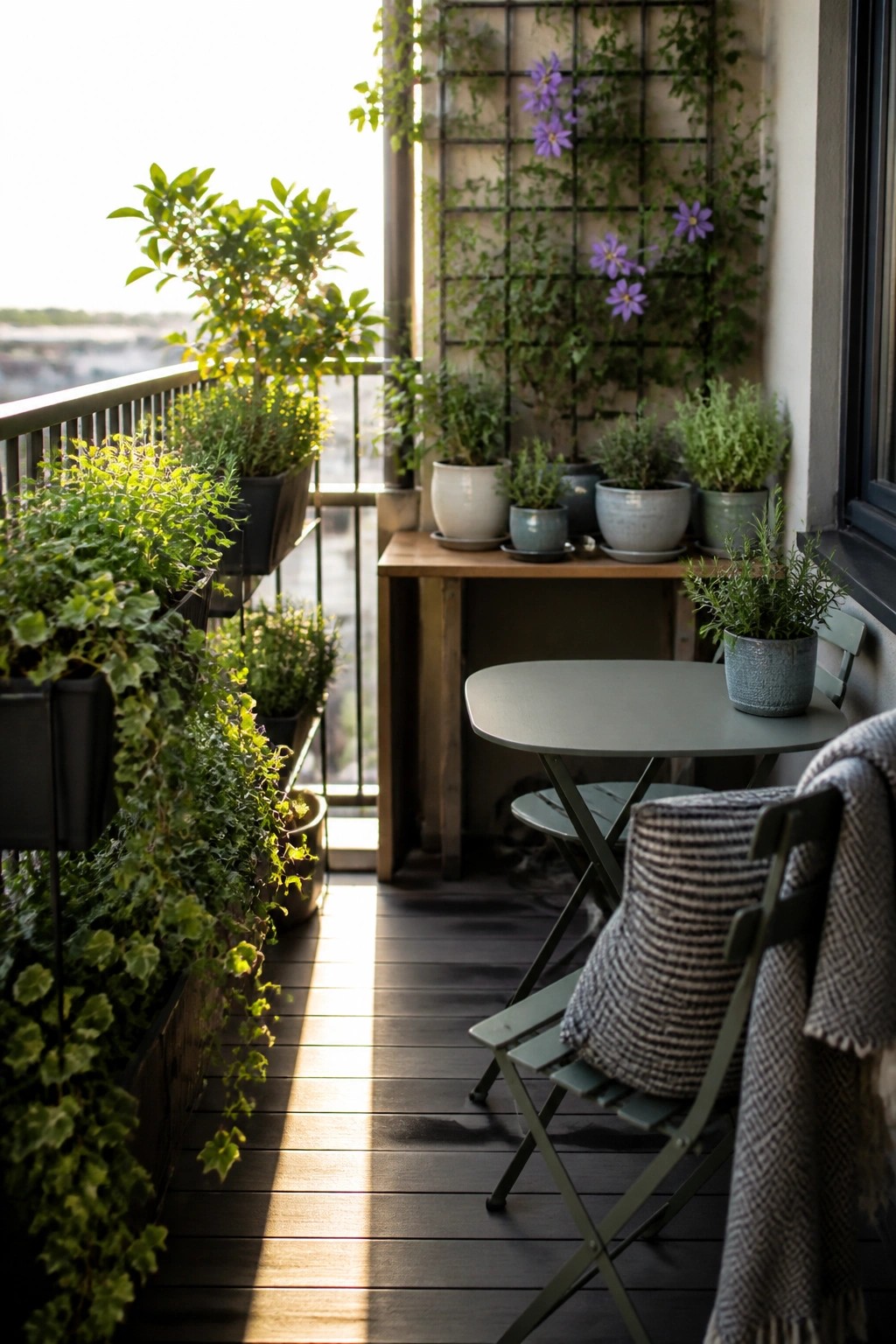
Grouping containers at several heights makes a small balcony feel much greener without crowding the floor space. Taller pots in the back or on a low bench, with shorter ones in front, create that layered look and let more plants fit into the same area.
This setup works best on balconies or patios with railings, where you can mix hanging planters, floor pots, and a few on a table or stool. It also makes it easy to rearrange when plants need more sun or when you want a fresh layout for the season.
Vary Pot Heights for a Layered Patio Look
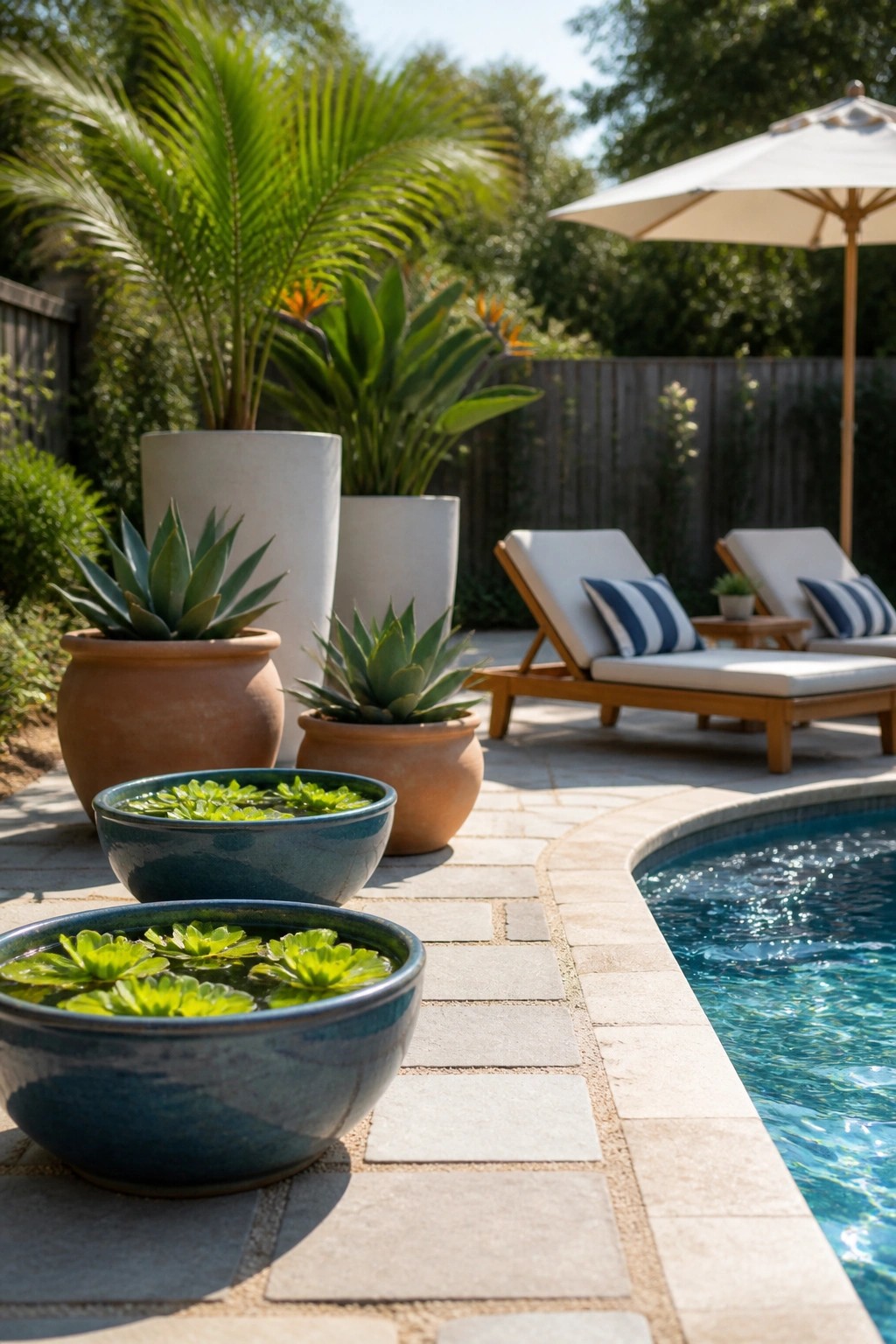
Grouping containers at different heights adds structure and depth along a pool edge or patio without needing built-in beds. The mix of tall and low pots keeps the space from feeling flat while still leaving room to move furniture around.
This approach works best on paved surfaces where you want greenery close to seating or water. Start with one or two taller pots in the back, then add shorter ones in front so the plants overlap slightly. It suits most homes with open decks or pool areas, though it needs occasional rearranging as plants grow.
Layered Container Heights Around Outdoor Seating
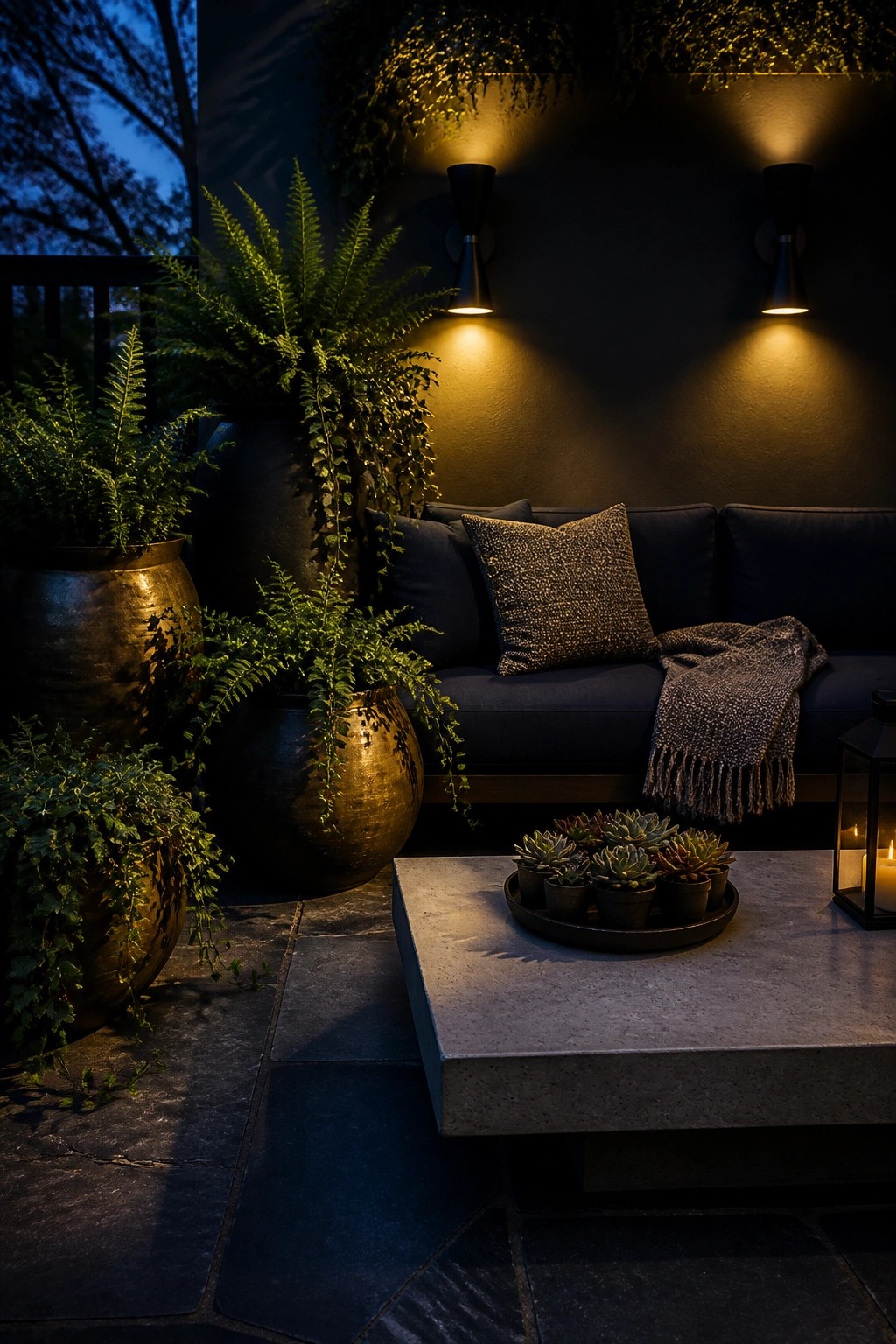
Grouping containers at different heights is a simple way to add depth to a patio without crowding the space. Tall ferns in large pots can sit behind lower plants, while smaller succulents stay closer to seating areas where they are easy to reach and rearrange.
This approach works especially well on patios that double as dining or lounging spots. It lets you shift things around for parties or to follow the sun, and it keeps the layout feeling open even when you use quite a few pots.
Group Pots of Different Heights
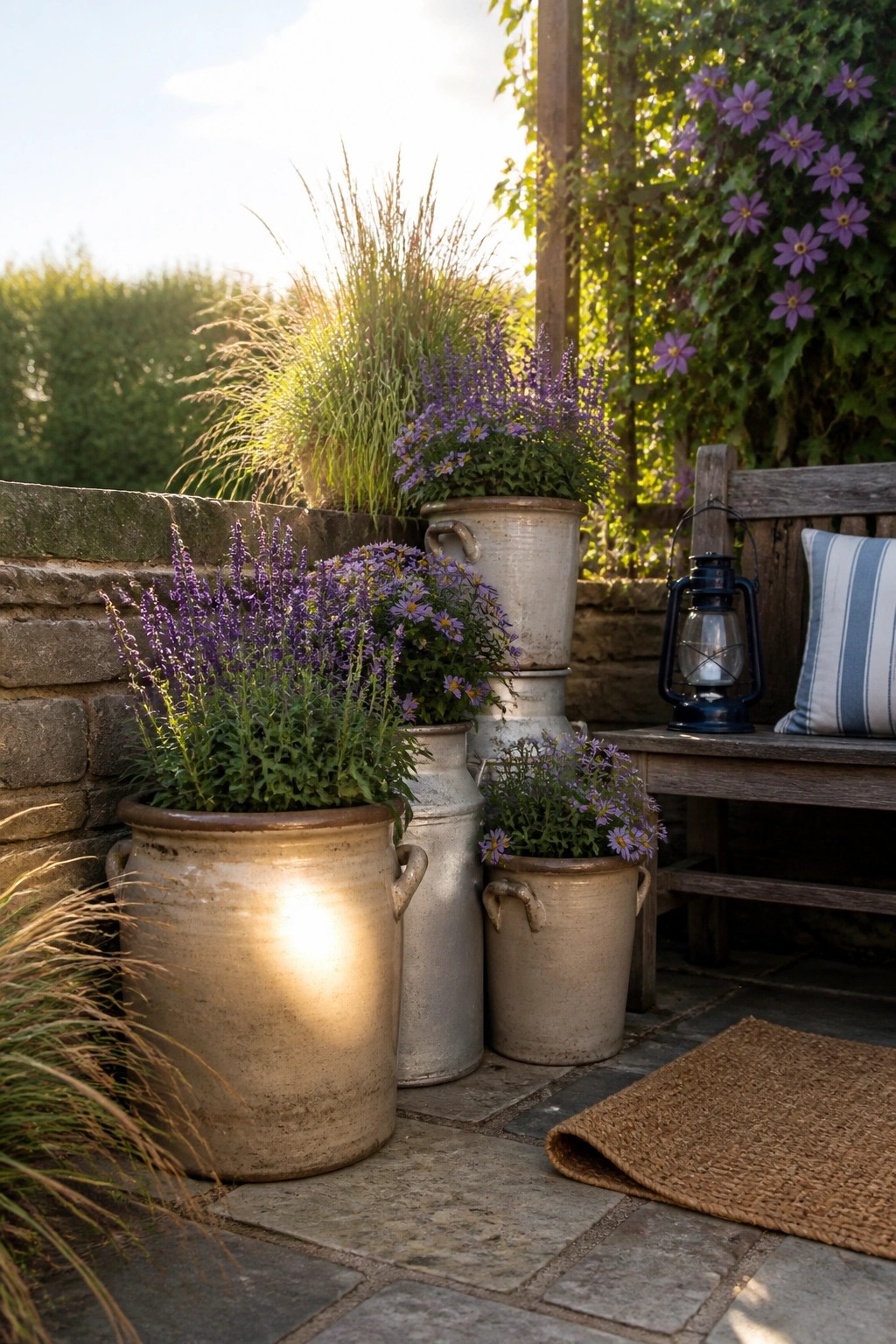
Clustering containers in a mix of heights gives a patio that layered look without needing built-in beds. The taller pots in back and shorter ones in front create depth right where you sit, and it works especially well when the pots are grouped near a bench or seating area.
This approach suits small patios or decks where you want to change things around each season. Stick to three or four pots at most so the group stays easy to move, and choose a few matching finishes to keep it from feeling scattered.
Layer Pots at Different Heights Around Seating
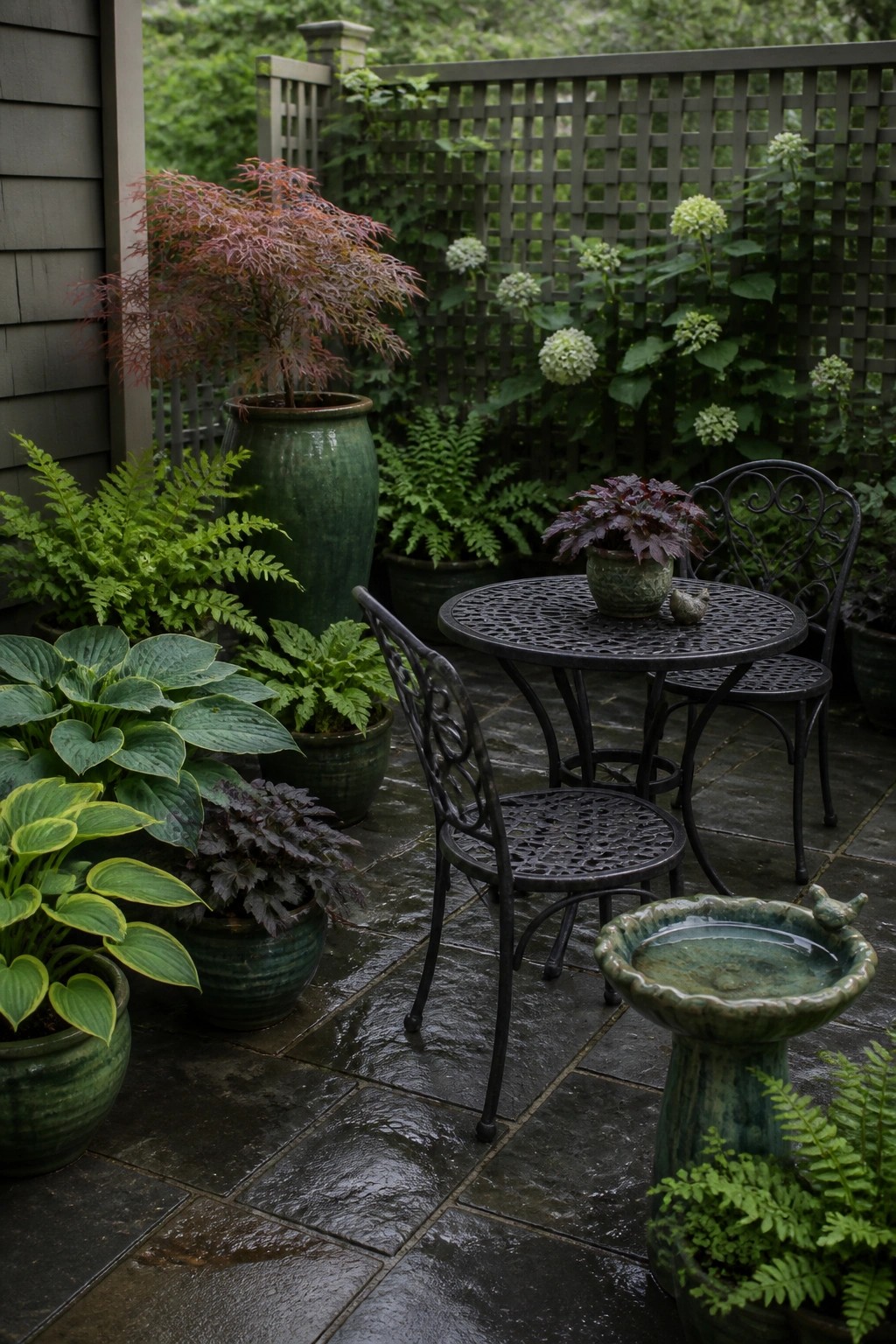
One of the simplest ways to make a patio feel fuller is to mix container heights instead of lining everything up at the same level. Taller pots in the back and shorter ones in front create depth without needing a big space or permanent beds.
This approach works well on stone or wood patios where you want the seating area to feel surrounded but still open. Start with one or two larger pots for height, then add mid-size and low ones around the edges. The arrangement stays flexible since you can move the pots as seasons change or when you want a different look.
Create Layers With Pots of Different Heights
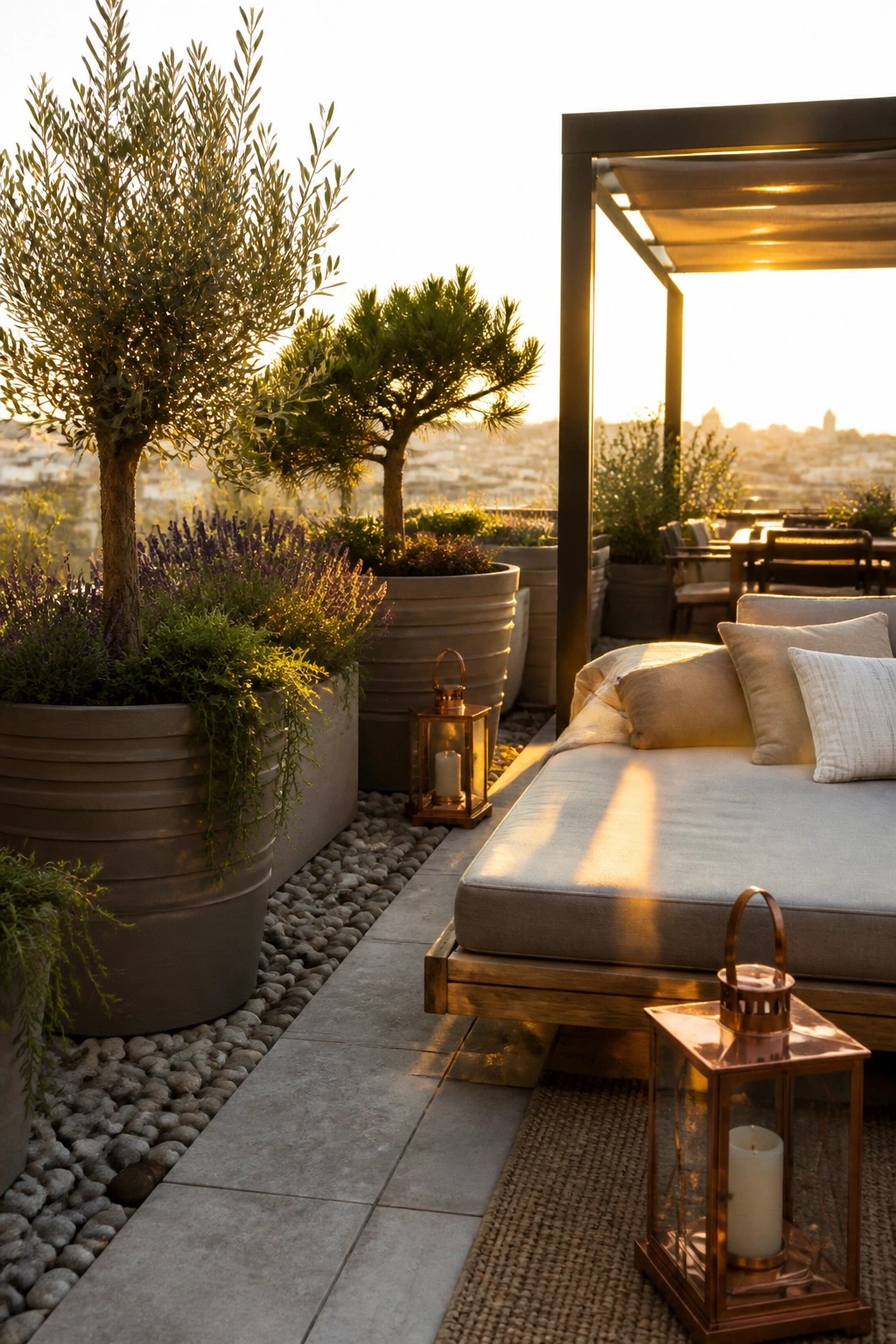
Grouping containers at different heights gives a patio garden more depth without much extra work. A tall tree in a large pot can sit behind medium shrubs and lower plants, building a simple layered look that feels full even in a small space.
This approach suits rooftops and terraces where soil beds are not an option. Move the smaller pots around as needed for sun or seating changes, and keep the tallest ones anchored toward the back or sides so the arrangement stays balanced.
Frequently Asked Questions
Q: How do I keep taller plants from shading the shorter ones in the same group? A: Place the tallest pot at the back or center and angle the midsize ones forward so light still reaches everything below. Check the setup in the afternoon sun and nudge pots an inch or two if shadows start to creep. That small tweak keeps the layers working without extra gear.
Q: Can I really move the pots around once summer hits? A: Sure, slide a couple groups closer to the table for evening meals and shift others toward the railing when you want more floor space. The flexible setup makes these changes quick and keeps the whole patio feeling fresh.
Q: What happens if one container dries out faster than the rest? A: Water the thirsty pot by hand instead of dragging out the hose for the whole group. A quick check with your finger in the soil tells you which ones need it that day.
