

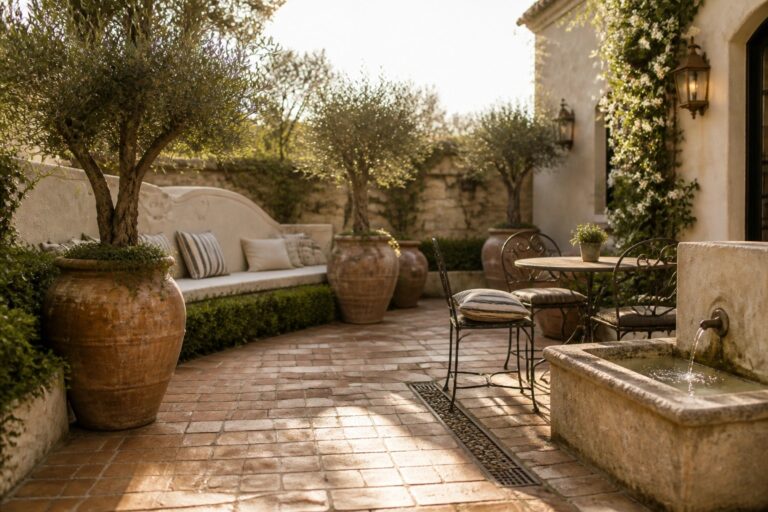
I’ve noticed that patios tend to work best when the layout lets people move through them without feeling cramped or exposed.
When I look at my own yard, I usually start by checking how the hard surfaces drain and whether the pots can shift around as plants grow or seasons change.
A few adjustments to the planting structure often fix problems that photos never show.
Some setups look balanced on paper but end up feeling bare once you sit outside for more than a few minutes.
I would test a couple of larger pots first to see how they anchor the space before adding anything else.
Using Large Pots On Paved Patios
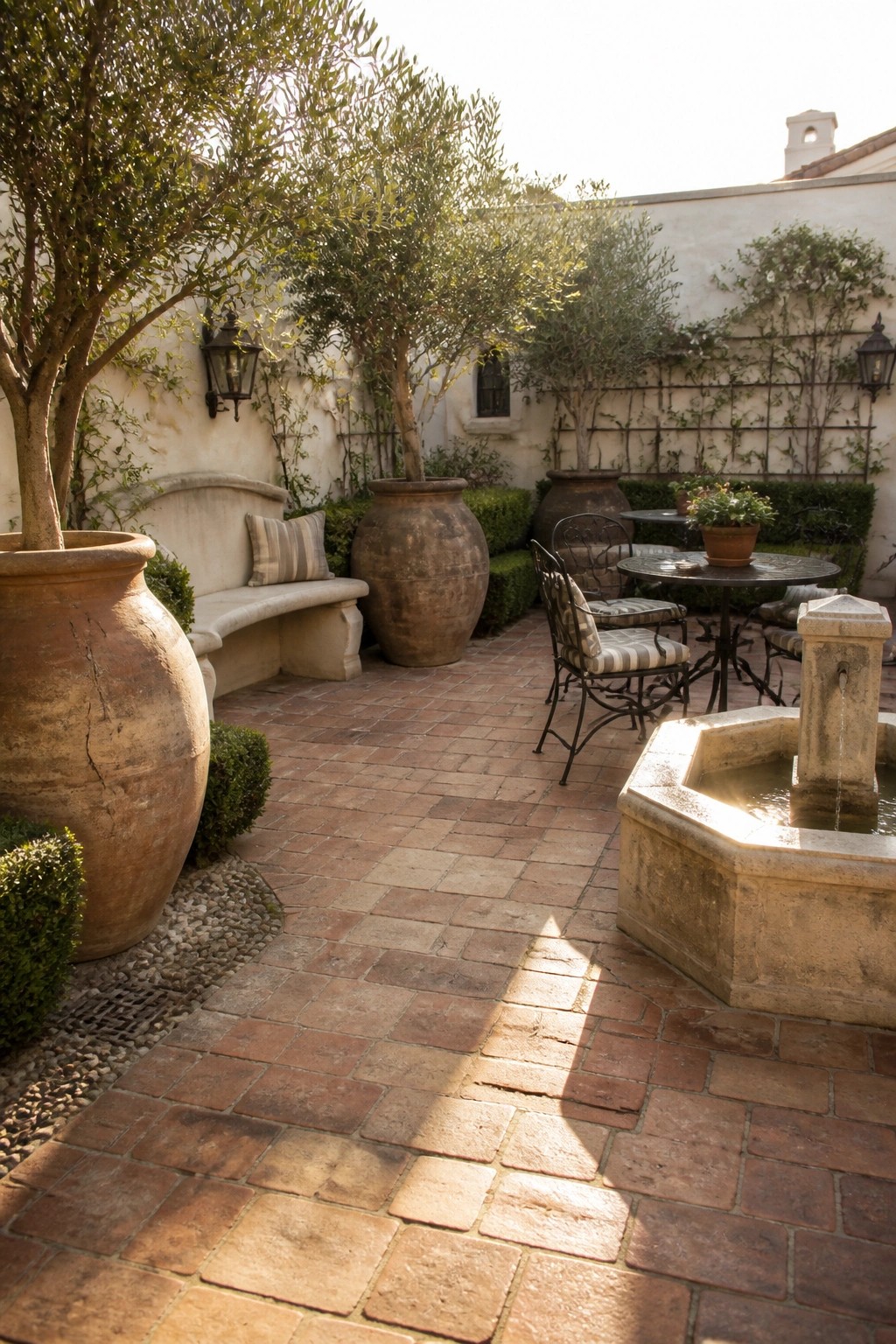
Large pots give you a simple way to add plants to a patio without digging beds or changing the hardscape. They sit right on the pavers and create height and weight that feels permanent even though everything can be moved later.
This approach works best on brick or stone patios where you want some greenery but also need the surface clear for furniture and walking. Stick with two or three oversized pots in the same material so the look stays clean instead of scattered.
Large Planters to Frame a Patio Fire Pit
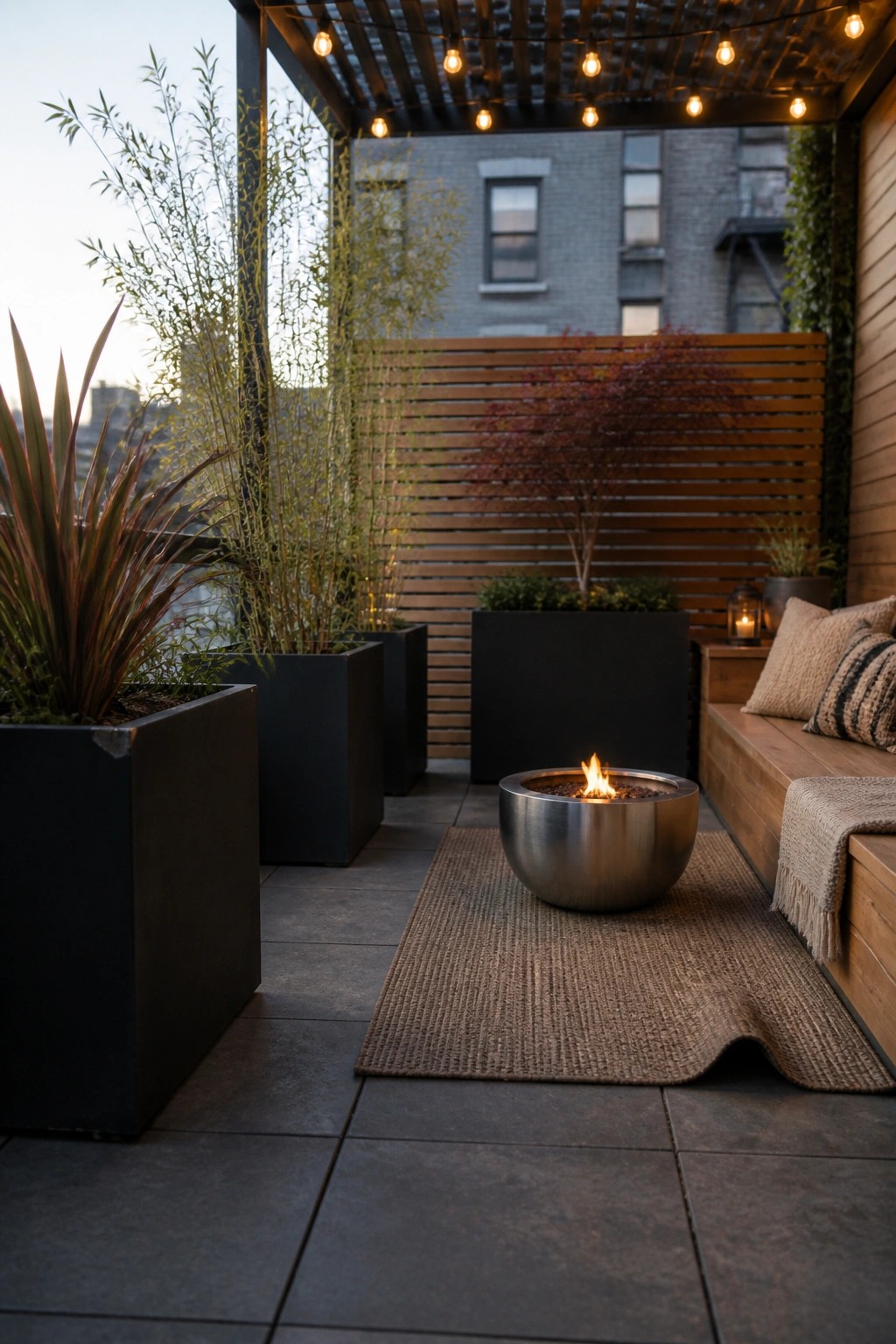
Large planters help mark out a clear zone on a paved patio without adding walls or fences. They bring height and greenery right up to the seating area, which keeps the hard surfaces from feeling too open or empty around the fire pit.
This works especially well on rooftops or small terraces where built-in beds are not an option. Set the pots along the sides and back, leave the center open for the fire feature, and choose a few tall plants to soften the view.
Circular Paver Patterns for Patio Gardens
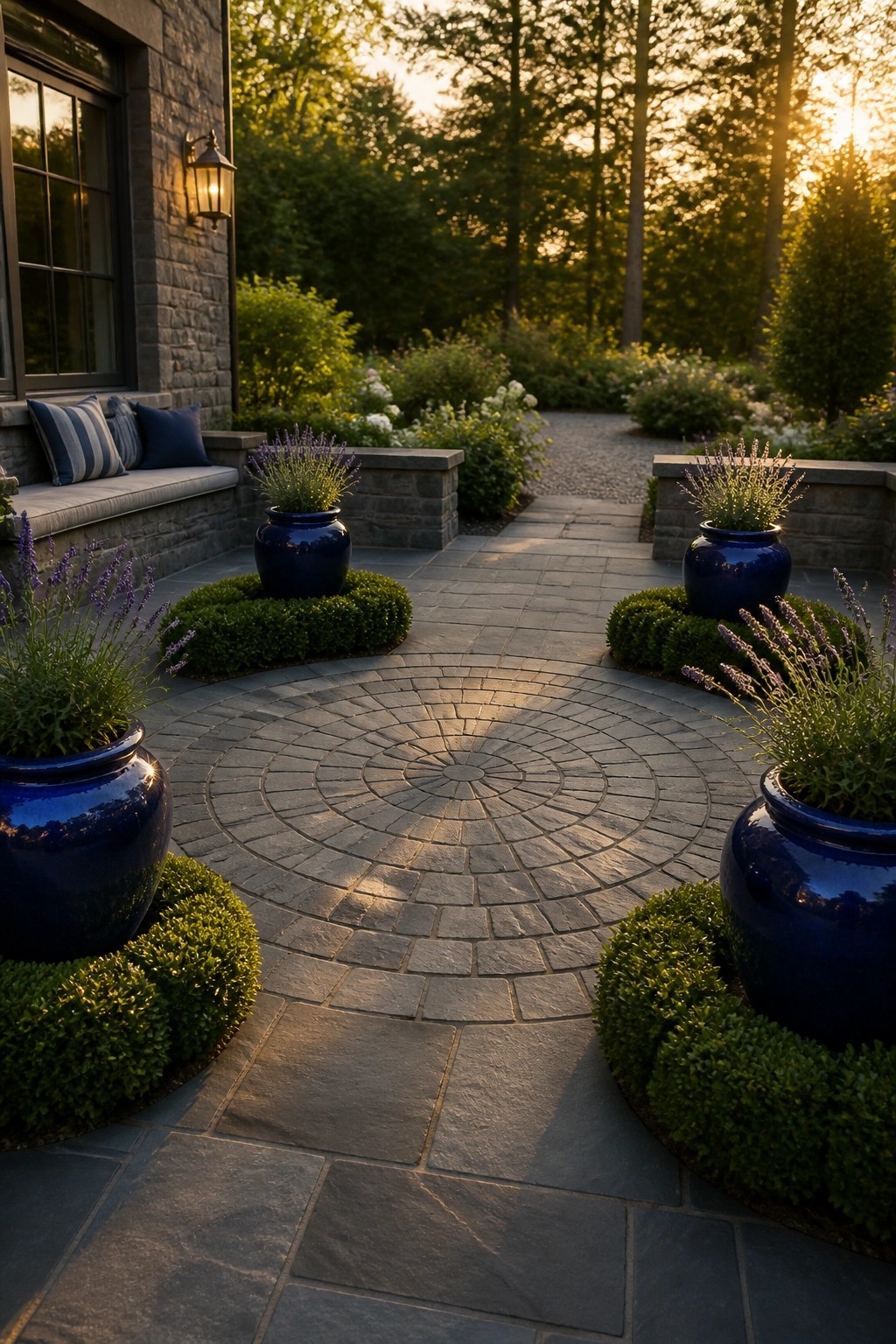
A circular paver layout gives a patio a clear center point that feels intentional. It works especially well when the rest of the space is fairly simple, since the pattern itself does most of the organizing.
This approach suits homes with modest outdoor areas where you want a defined spot without adding walls or structures. Keep the surrounding planting low and repeat a few large pots around the edges so the circle stays visible.
Pots on Pavers for Flexible Planting
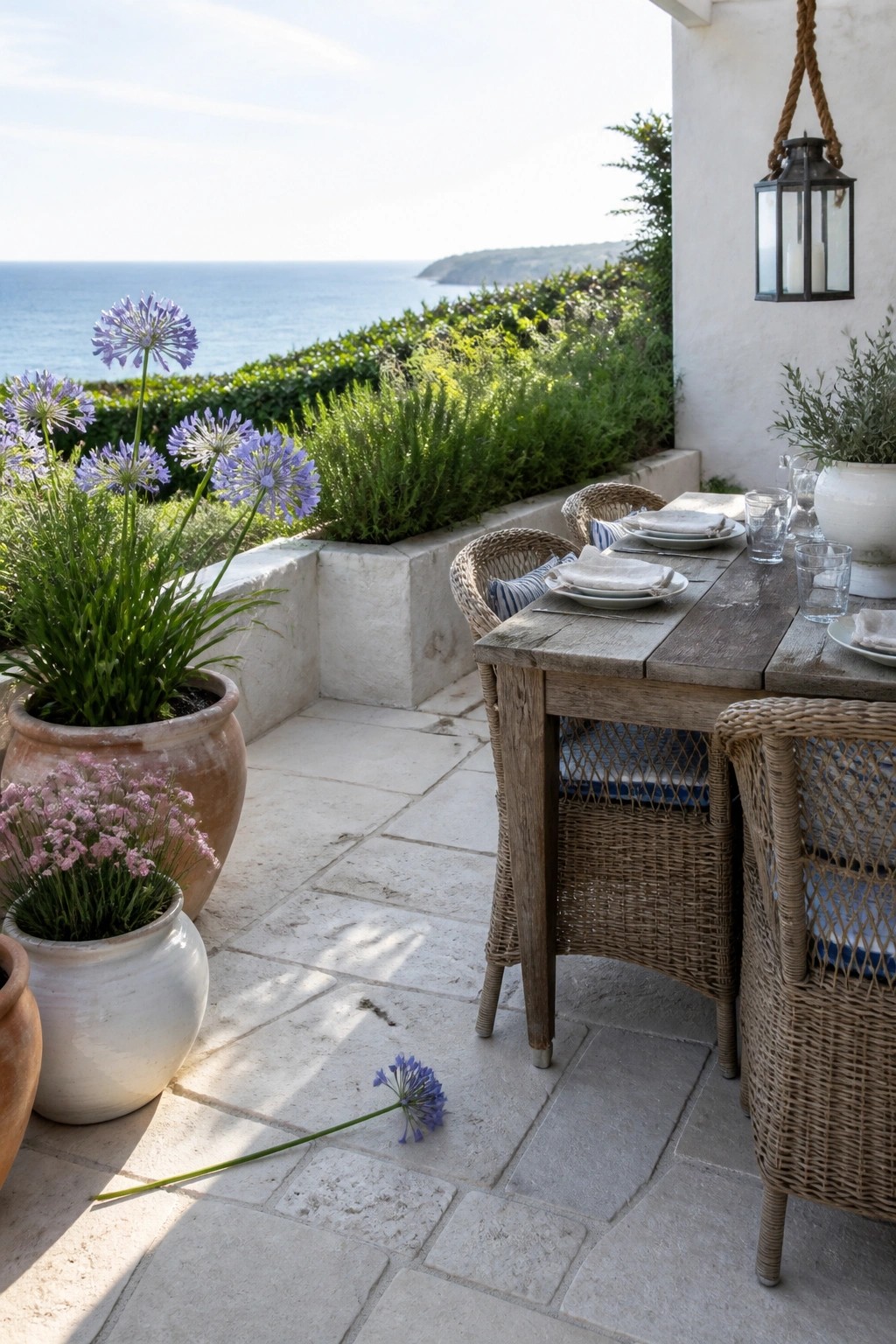
Large pots placed right on stone pavers let you add real plants without digging beds or changing the hardscape. It keeps the surface clean and open while still giving the patio a garden feel, and you can move things around when you want a different look.
This works best on patios that get full sun or where permanent planting would be hard to maintain. Stick with a few bigger pots rather than lots of small ones, and group them near the edges so the dining area stays clear. Watch the drainage so water does not pool on the pavers.
Using Herringbone Pavers For Patio Floors
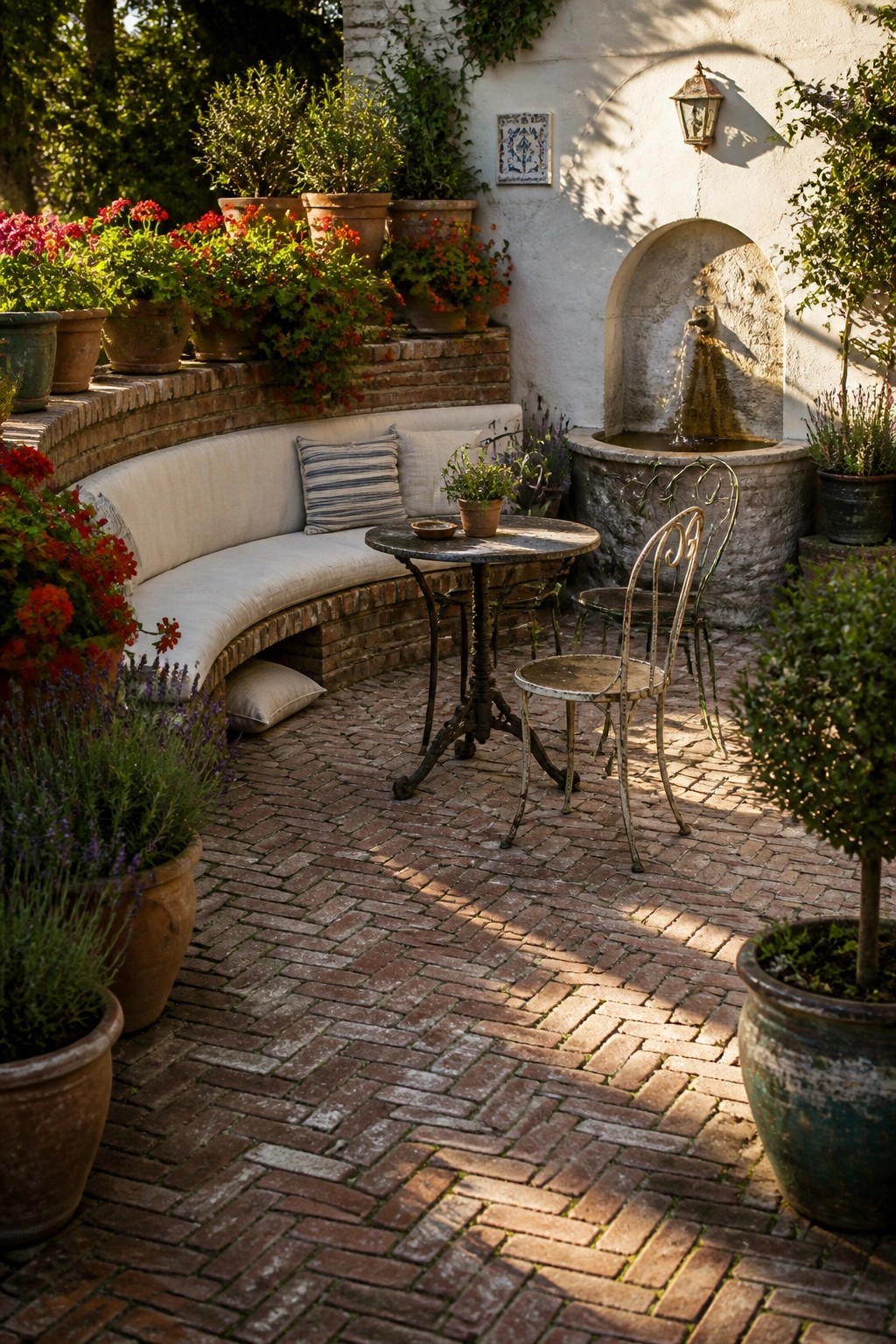
Herringbone brick pavers create a solid base that feels both structured and welcoming. The pattern keeps the surface interesting while still letting the pots and plants stand out around the edges.
This works well in smaller courtyard spaces where you want seating and planting to feel connected without needing a lot of extra features. Keep the pavers in a warm brick tone and let the pots do most of the softening.
Pavers With Grass Strips Between Them
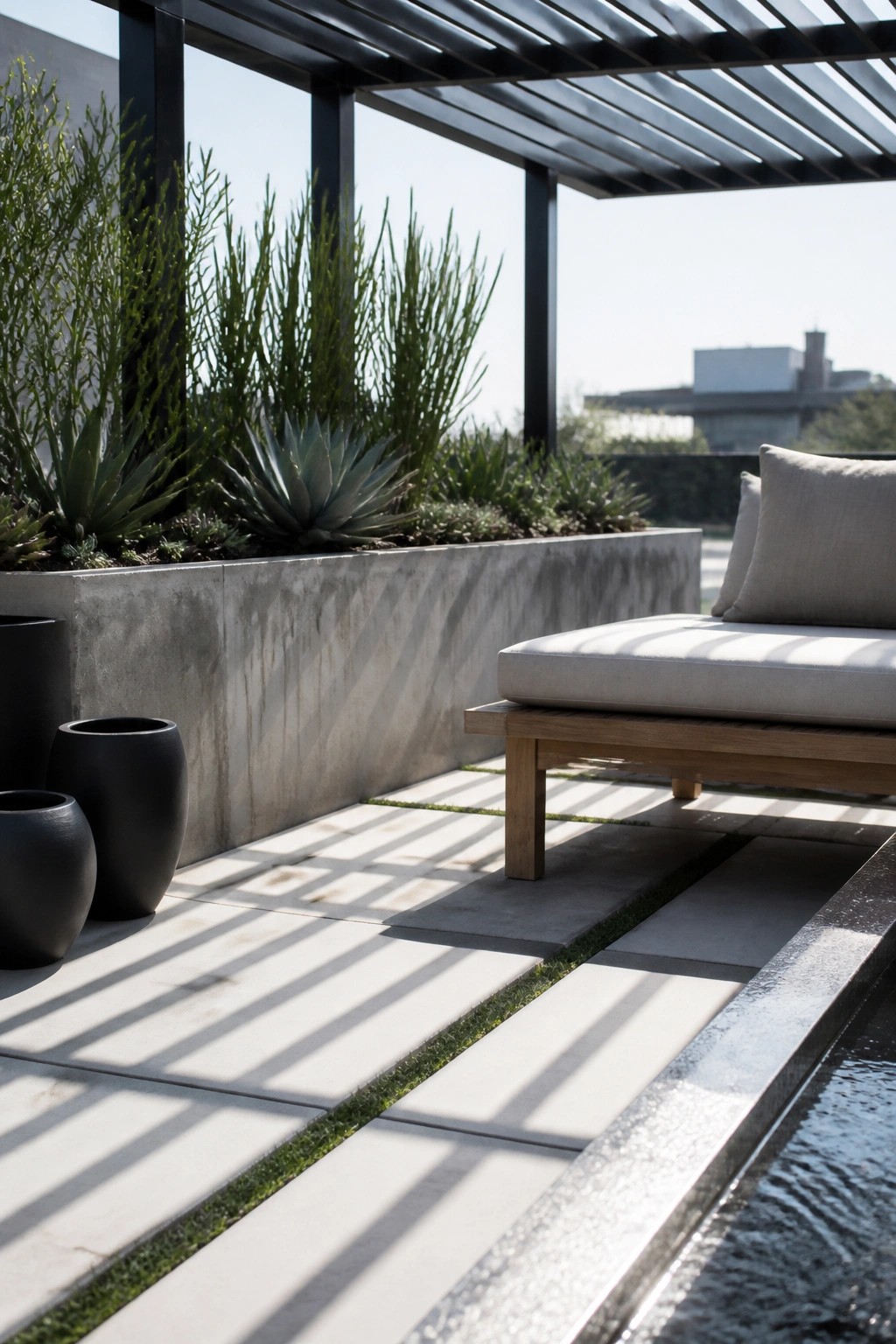
Large pavers laid with narrow grass strips running between them give a patio a structured surface while still letting a bit of greenery through. The look stays clean and simple, yet it avoids the flat feel of a solid slab. This approach works especially well when the rest of the space includes big pots and raised beds to keep the planting polished.
It suits homes that want a low-maintenance outdoor floor without losing all connection to the garden. Keep the joints narrow so grass does not overtake the pavers, and choose a light stone tone if your pots are dark. The contrast helps the whole area feel balanced.
Patterned Pavers For Patio Flooring
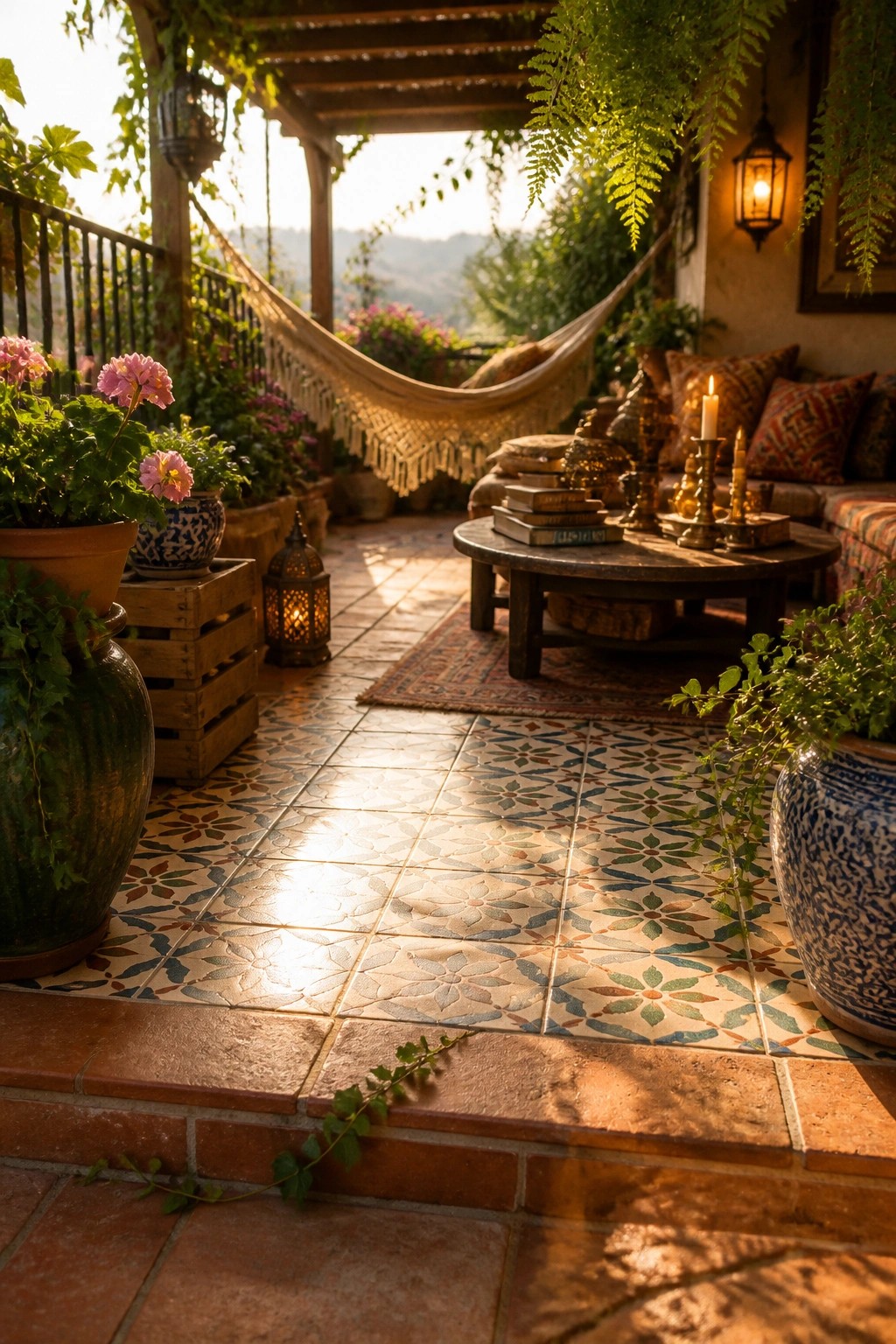
Patterned pavers give a patio floor enough visual interest to stand on its own. They create a solid base that holds up well under heavy foot traffic and pairs naturally with pots placed around the edges.
This approach suits homes that already have an outdoor seating area or want to add one. Keep the pattern simple enough that it does not compete with the plants, and choose colors that echo the pots or surrounding greenery.
Stepping Stone Paths In Gravel
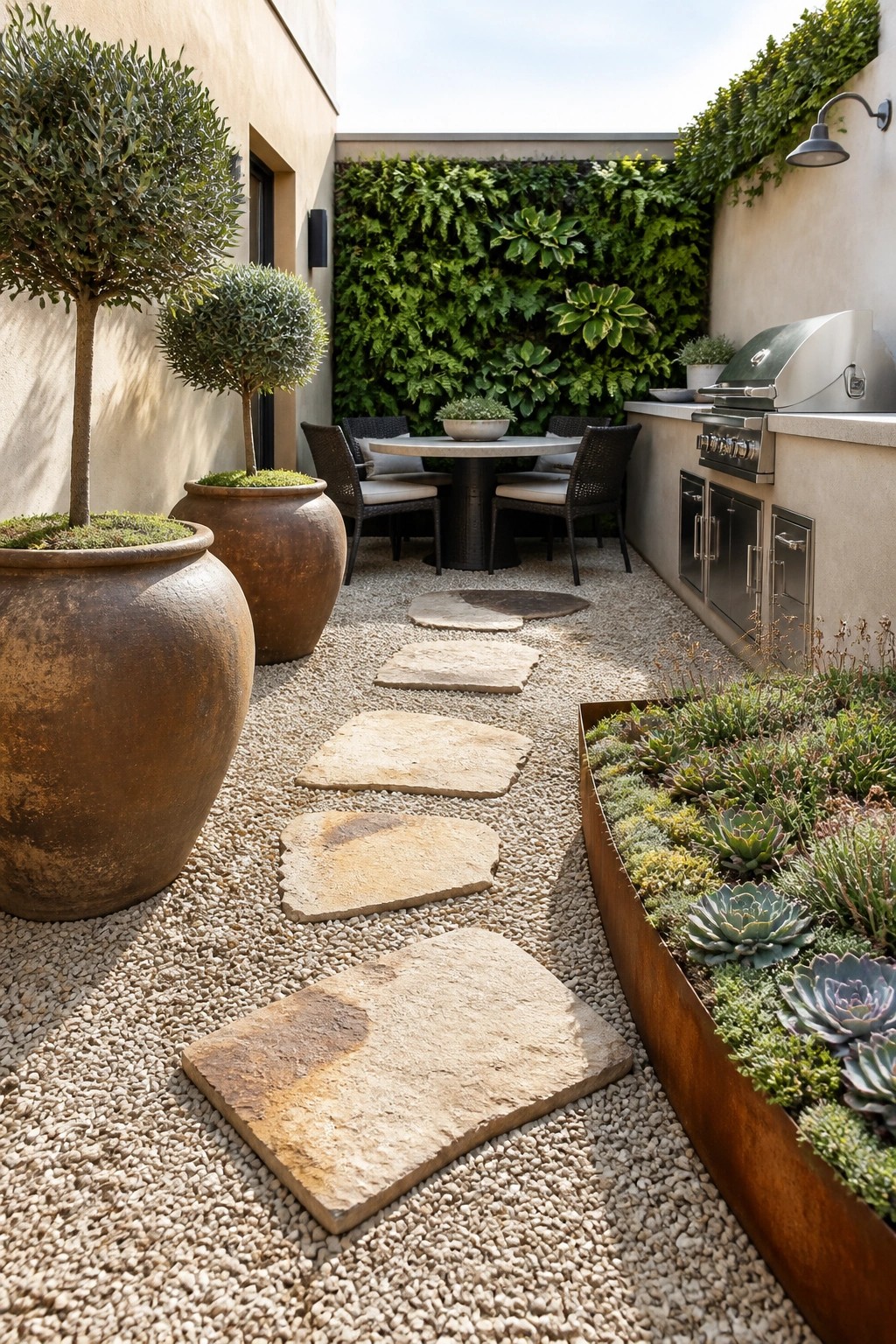
Many people like the look of a few large pavers set right into gravel instead of covering the whole surface. It keeps the space feeling open and a bit softer underfoot while still marking a clear route from one part of the patio to another.
This works well in narrow side yards or small courtyards where a solid patio would crowd the space. Space the pavers about a normal step apart and let the gravel settle around them so the path stays simple and easy to maintain.
Large Pots Define Patio Edges
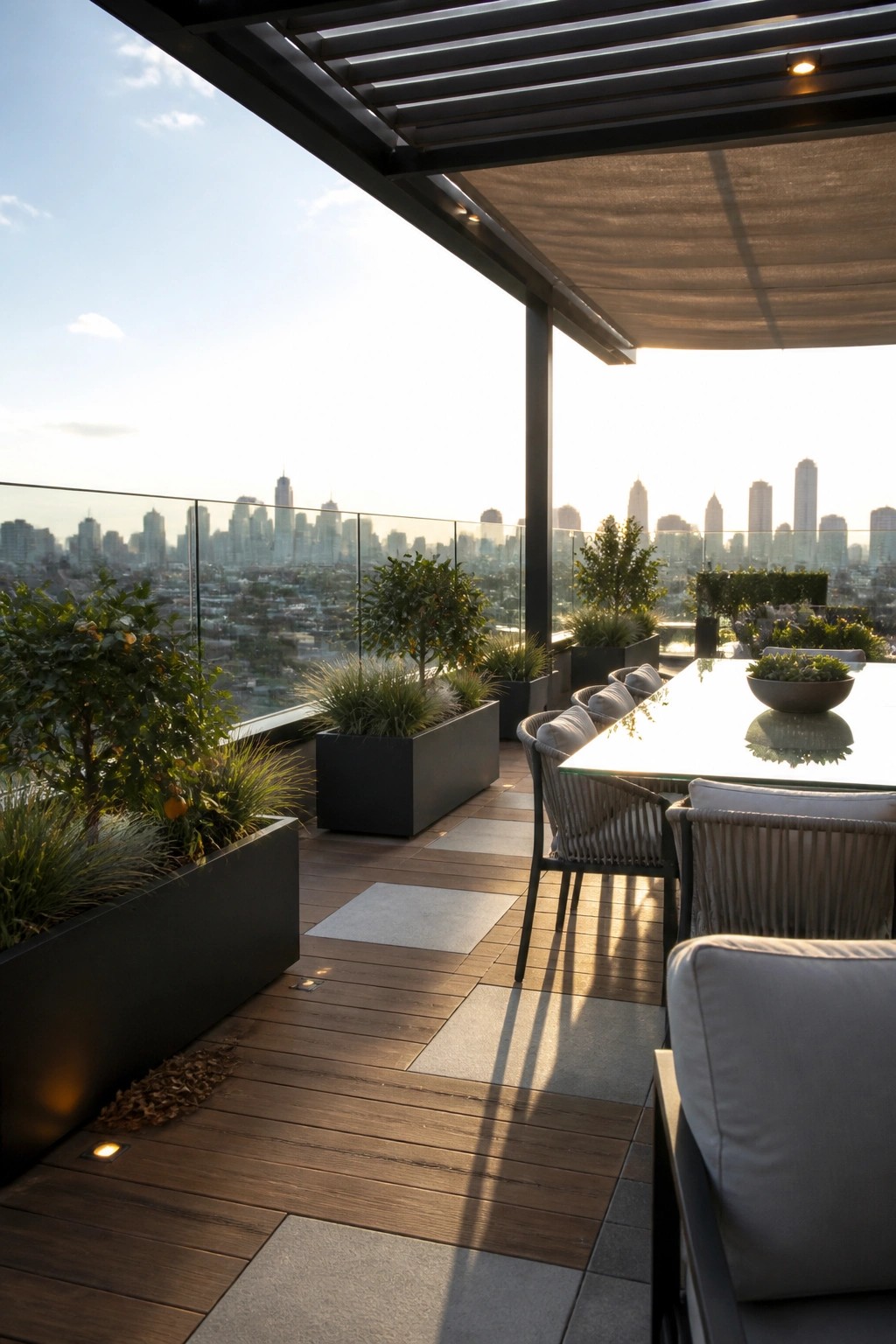
Large rectangular pots let you add real planting to a deck or terrace without digging beds or changing the hard surface. They create a clear boundary that makes the seating area feel more like a garden room while still leaving the floor open for movement.
This works best on rooftops, balconies, or any paved space where you need flexibility. Group a few pots of the same dark finish and vary the plant heights so the line feels full but not crowded. Keep the scale big enough to match the open setting.
Pavers With Pots For Easy Patio Updates
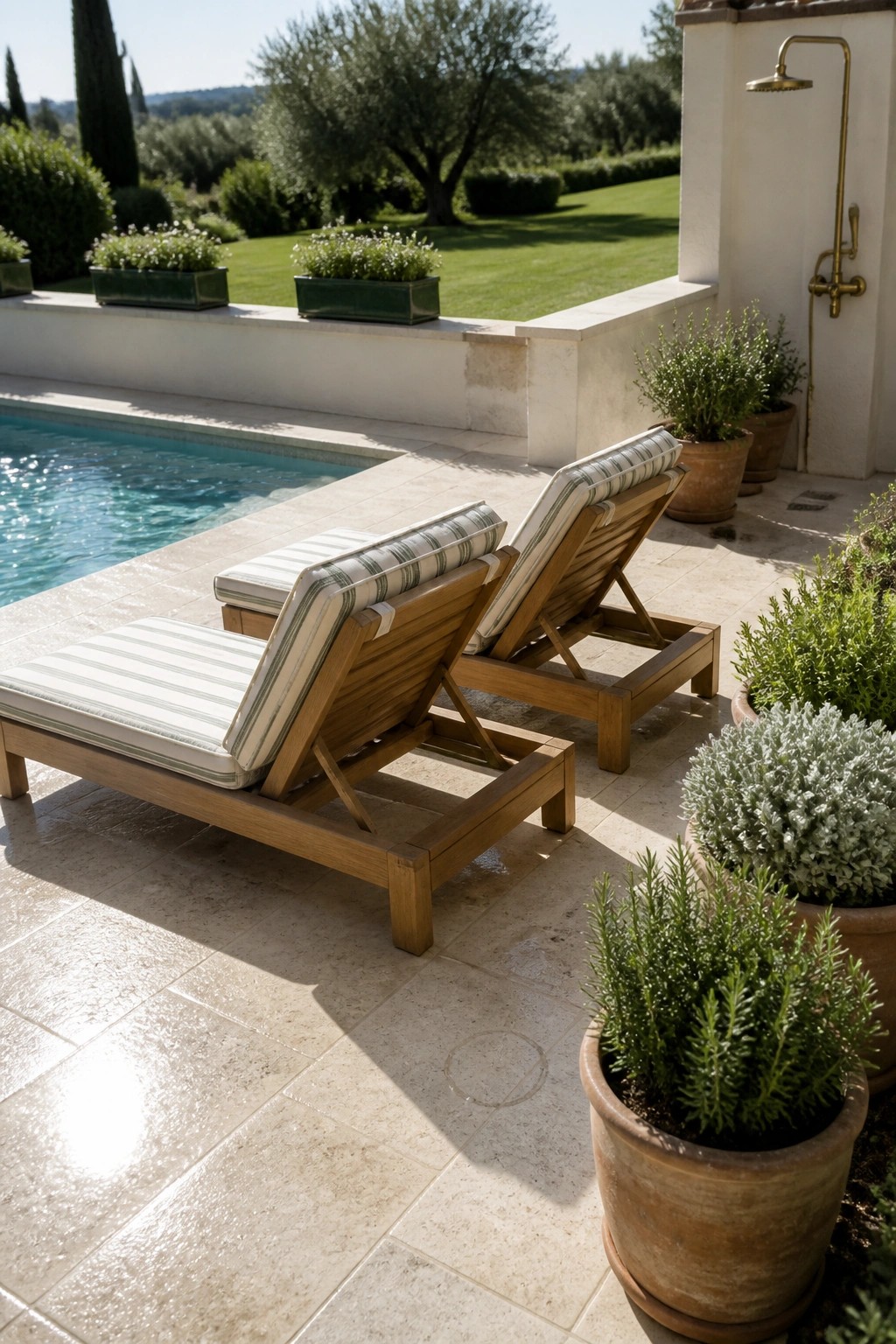
Pavers give a patio a solid base that holds up well around a pool. They create a clean surface that drains properly and stays easy to clean. Adding pots lets you bring in plants without digging beds or changing the layout later.
This works best on larger paved areas where you want some greenery but still need room to move furniture around. Place bigger pots near seating spots and smaller ones along the edges. Stick with a few plant types so the look stays simple instead of crowded.
Stone Pavers For Outdoor Seating Areas
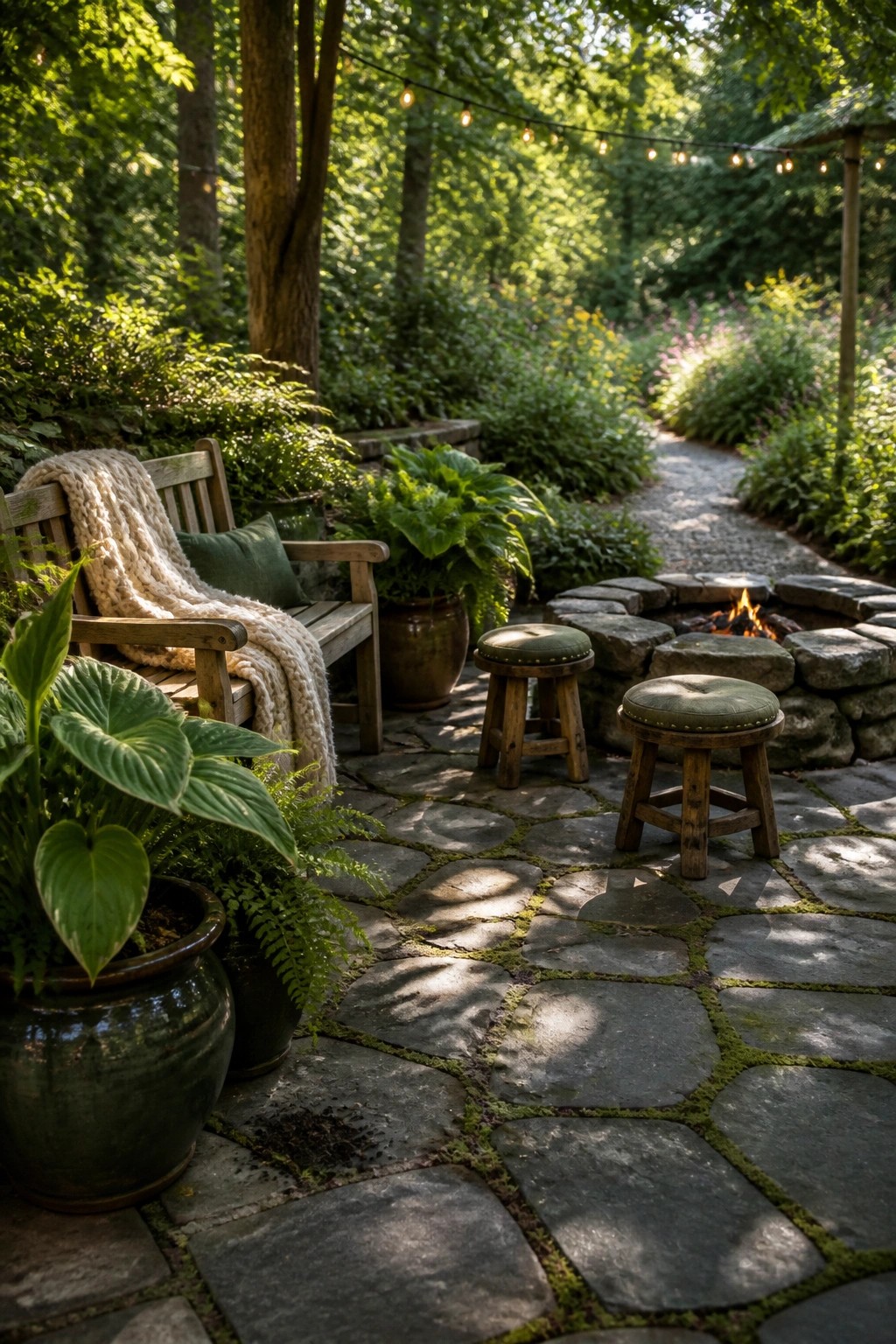
Stone pavers work well when you want a patio that feels like part of the garden rather than something added on top of it. The irregular shapes and mossy joints help the surface settle into the landscape over time, and they pair easily with simple seating and a few large pots.
This approach suits smaller backyards or side yards where you need a defined spot for a fire pit without building a full deck. Keep the paver layout fairly open so plants can spill over the edges, and choose a neutral stone color that matches the existing paths or walls.
Stone Pavers For A Garden Path
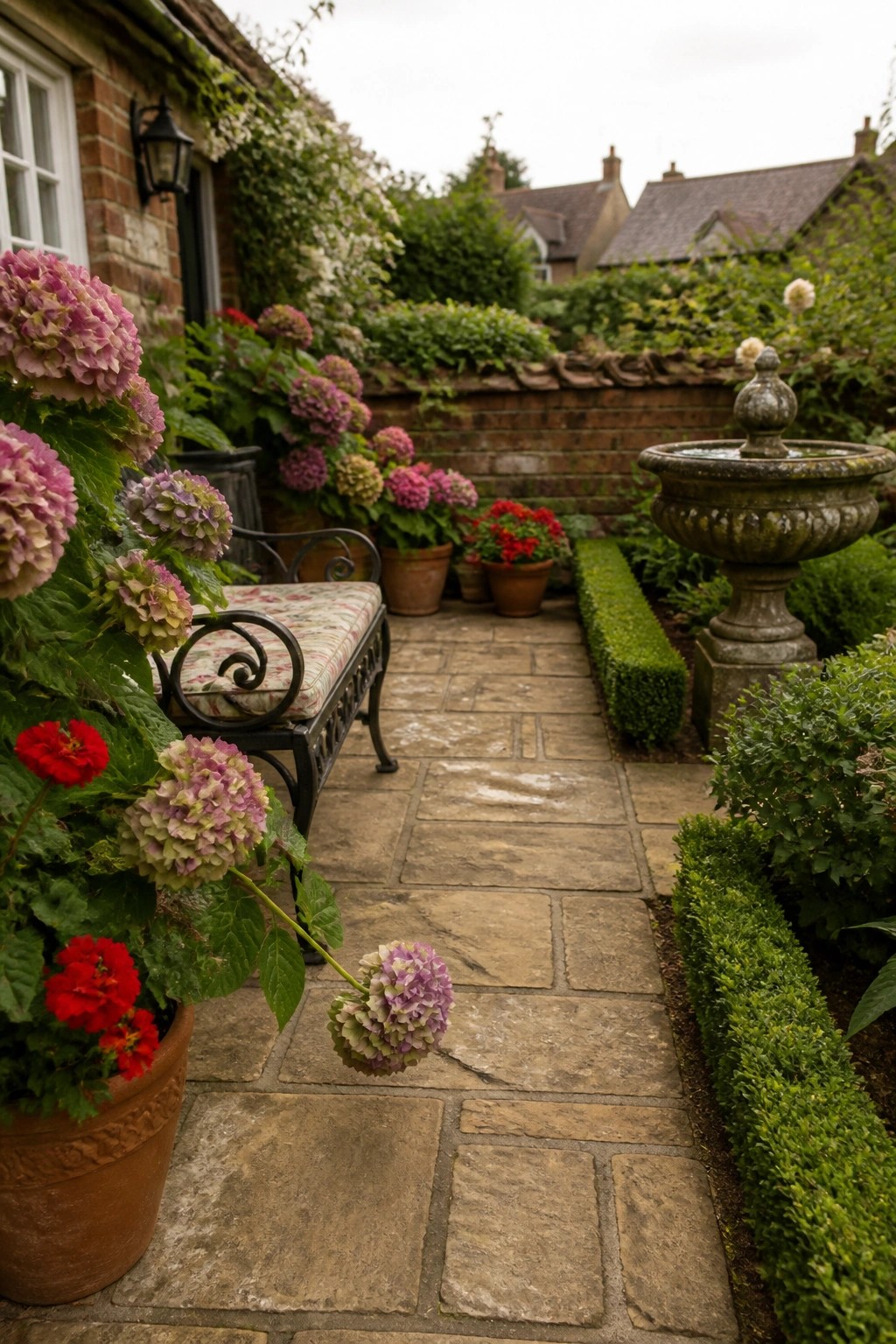
A paver path gives the garden a clear route without making the space feel stiff. The stone adds weight and order while the pots and low hedges on either side keep the look soft and planted.
This works best in smaller gardens or along the side of a house where you need a walkway that still leaves room for flowers. Use simple rectangular pavers in a neutral tone and place pots at varying heights so the path feels inviting rather than bare.
Pavers For The Main Patio Surface
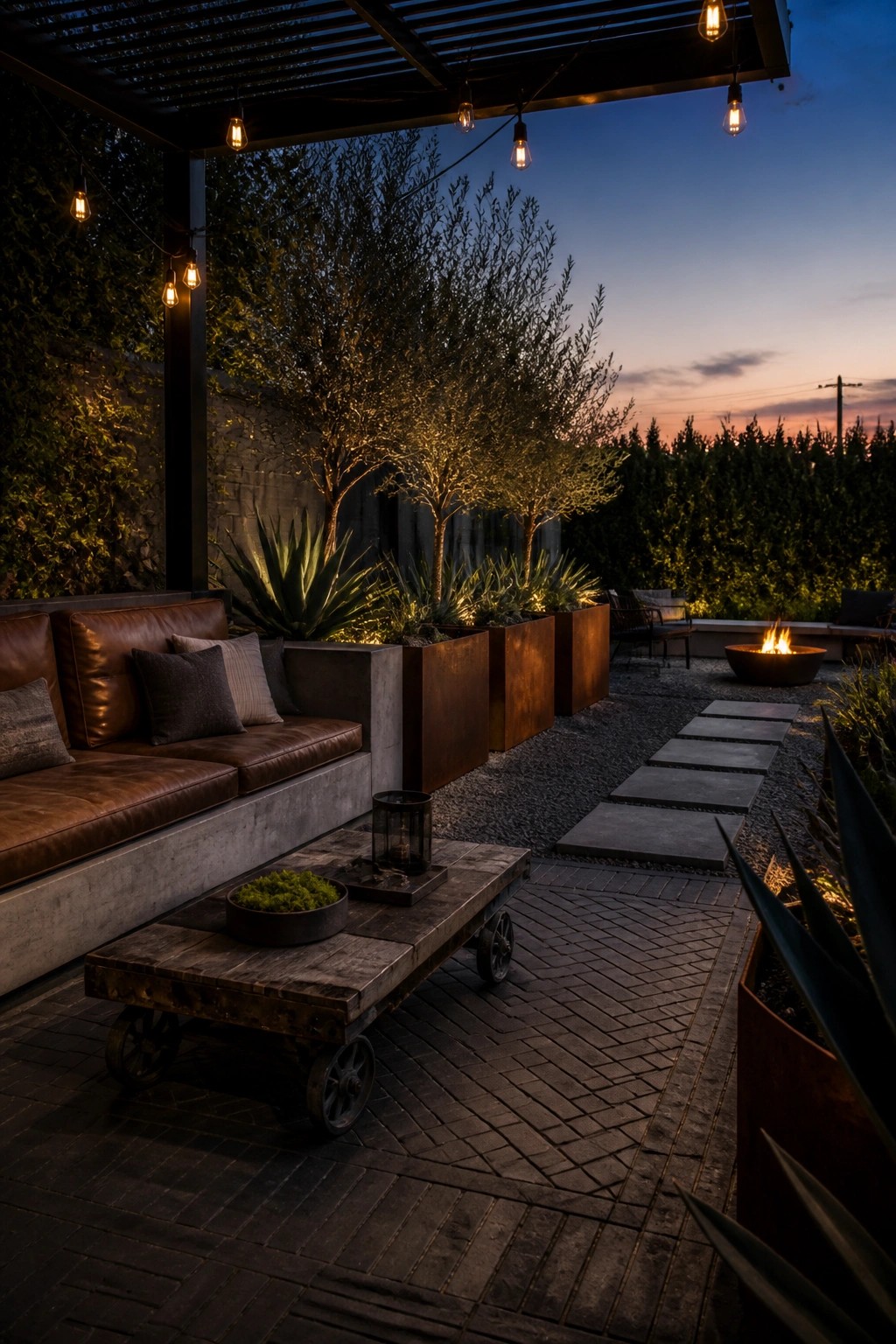
Pavers give you a firm, level base that stands up to regular use and changing weather. They also help separate the main seating area from gravel paths or planted beds without needing a lot of extra edging.
This approach works best on patios that get daily traffic or sit near garden zones. Stick with a simple pattern like herringbone and leave room for a few large pots so the planting stays easy to adjust later.
Stepping Stones Over Gravel
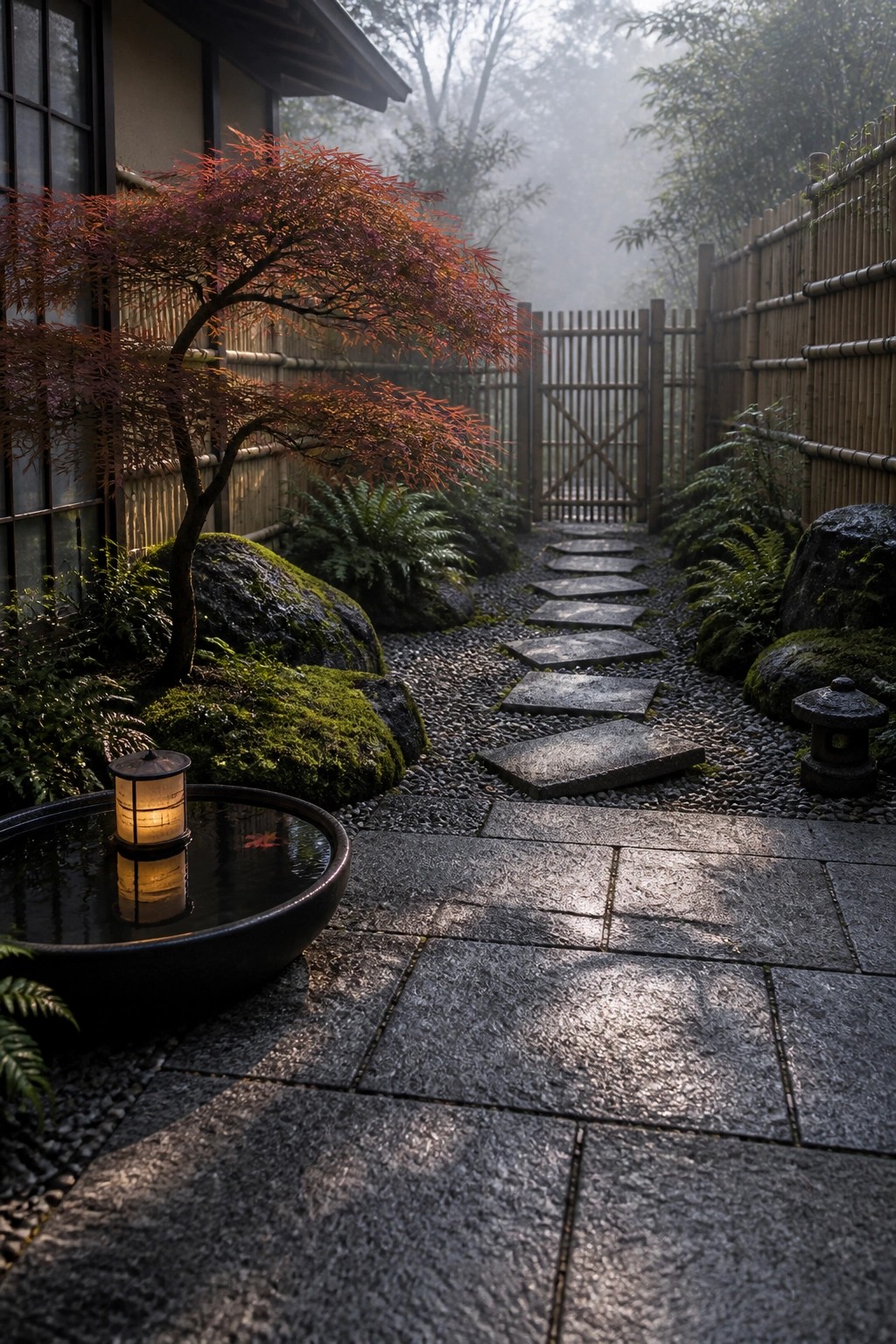
Stepping stones set into gravel give a garden path a relaxed feel that still guides people clearly through the space. The loose material lets water drain right away and keeps the whole layout looking natural instead of built up.
This works best along the side of a house or in a narrow garden where you want a simple route without laying a full patio. Keep the stones a comfortable stride apart and let moss or low ferns creep in at the edges so the path blends with the planting.
Define Zones With Potted Plants
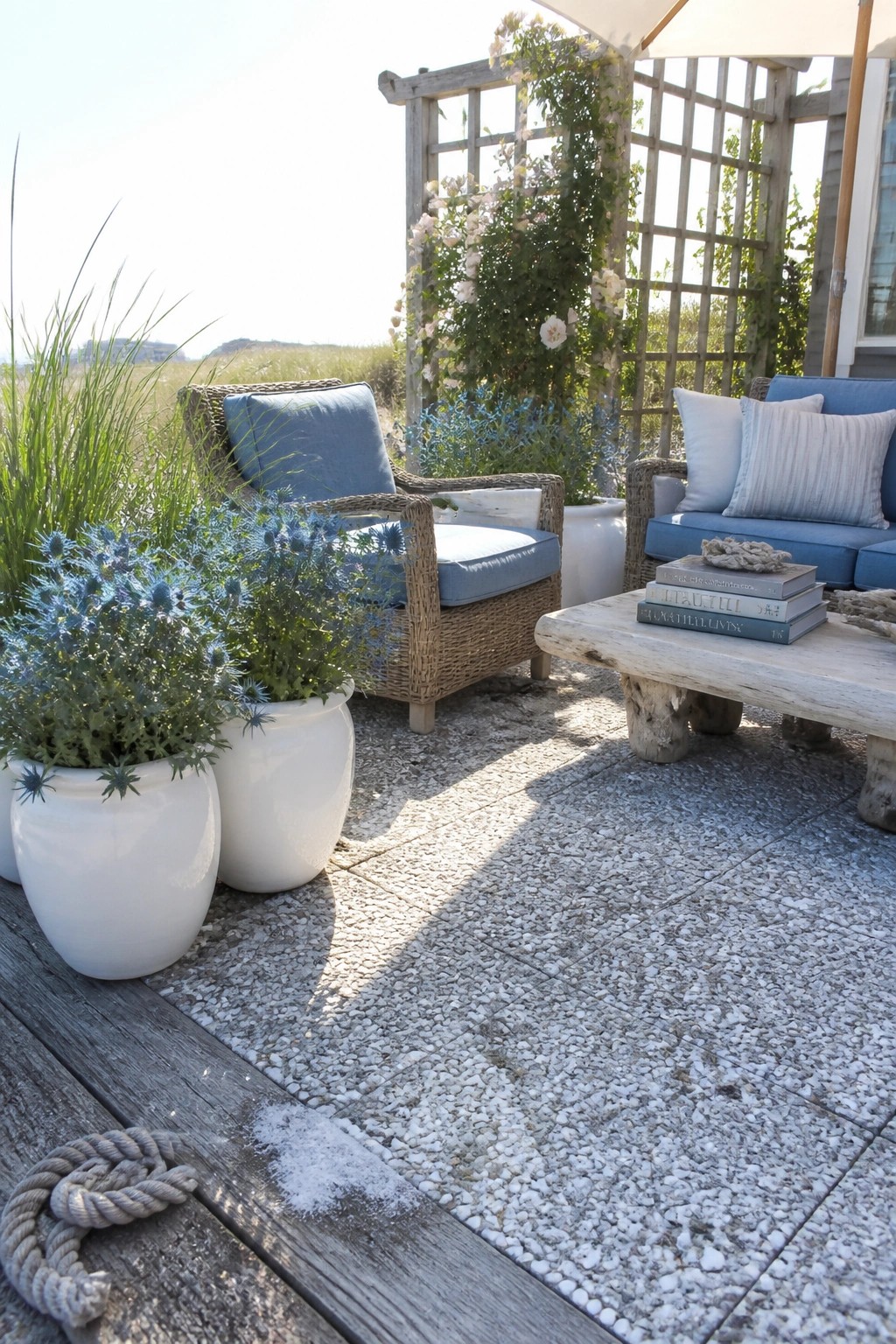
Placing a few large pots where two paving types meet helps mark off the seating area without building walls or adding extra furniture. The pots act as a soft divider that still lets the space feel open and connected to the rest of the yard.
This approach works best on smaller patios or decks that already have mixed surfaces like wood and gravel. Stick to two or three matching pots with the same type of plant so the line stays clean rather than cluttered.
Oversized Planters To Define Patio Spaces
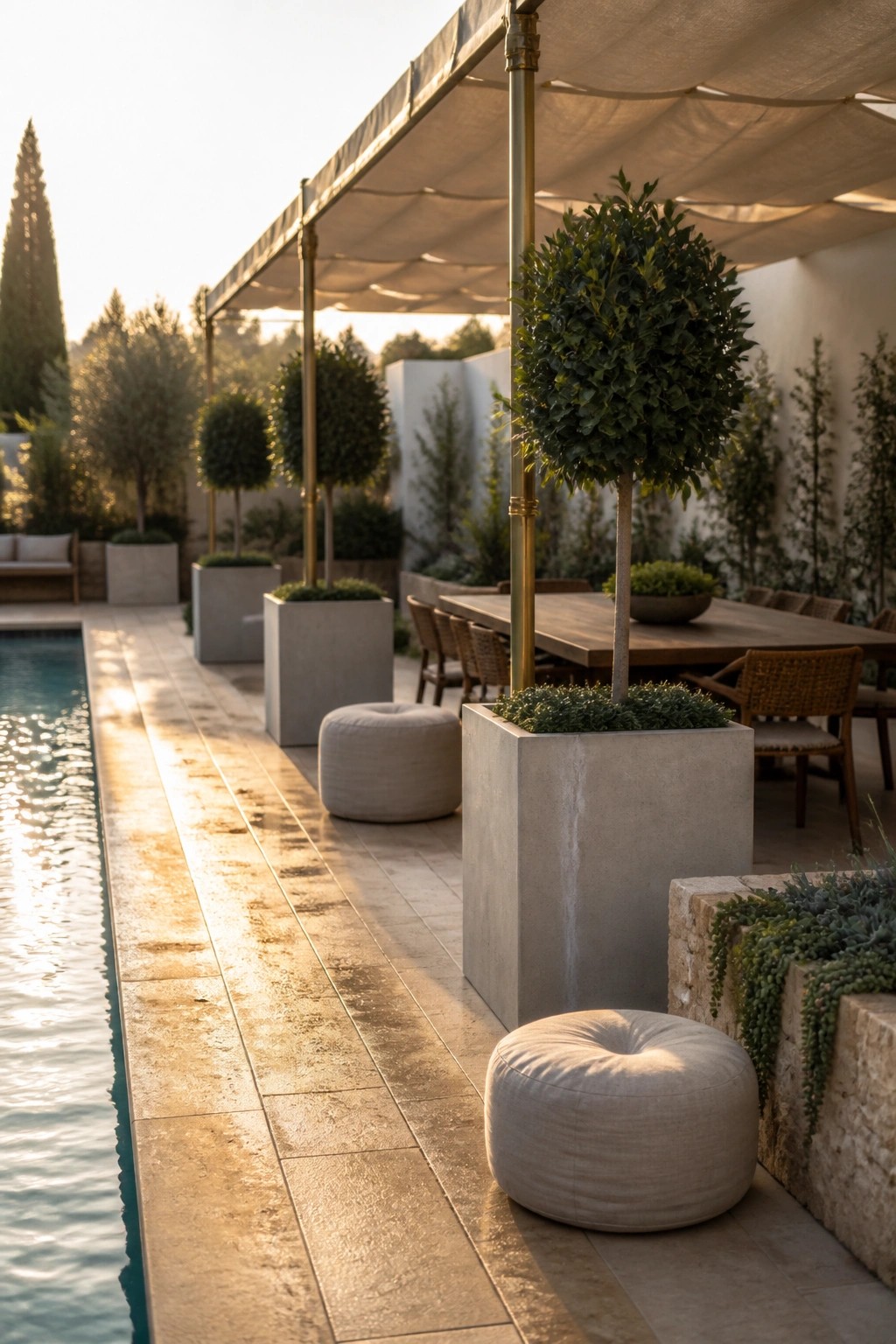
Large planters with clipped greenery give a patio a clear sense of order. They break up a long stretch of pavers into smaller zones without adding walls or screens, and they keep the space feeling open while still guiding where people sit or walk.
Place them along the edge of a pool or beside an outdoor table to mark off dining from lounging. They suit sunny backyards with a simple layout, but choose pots that are wide and heavy so they stay steady.
Recessed Lighting In Stone Steps
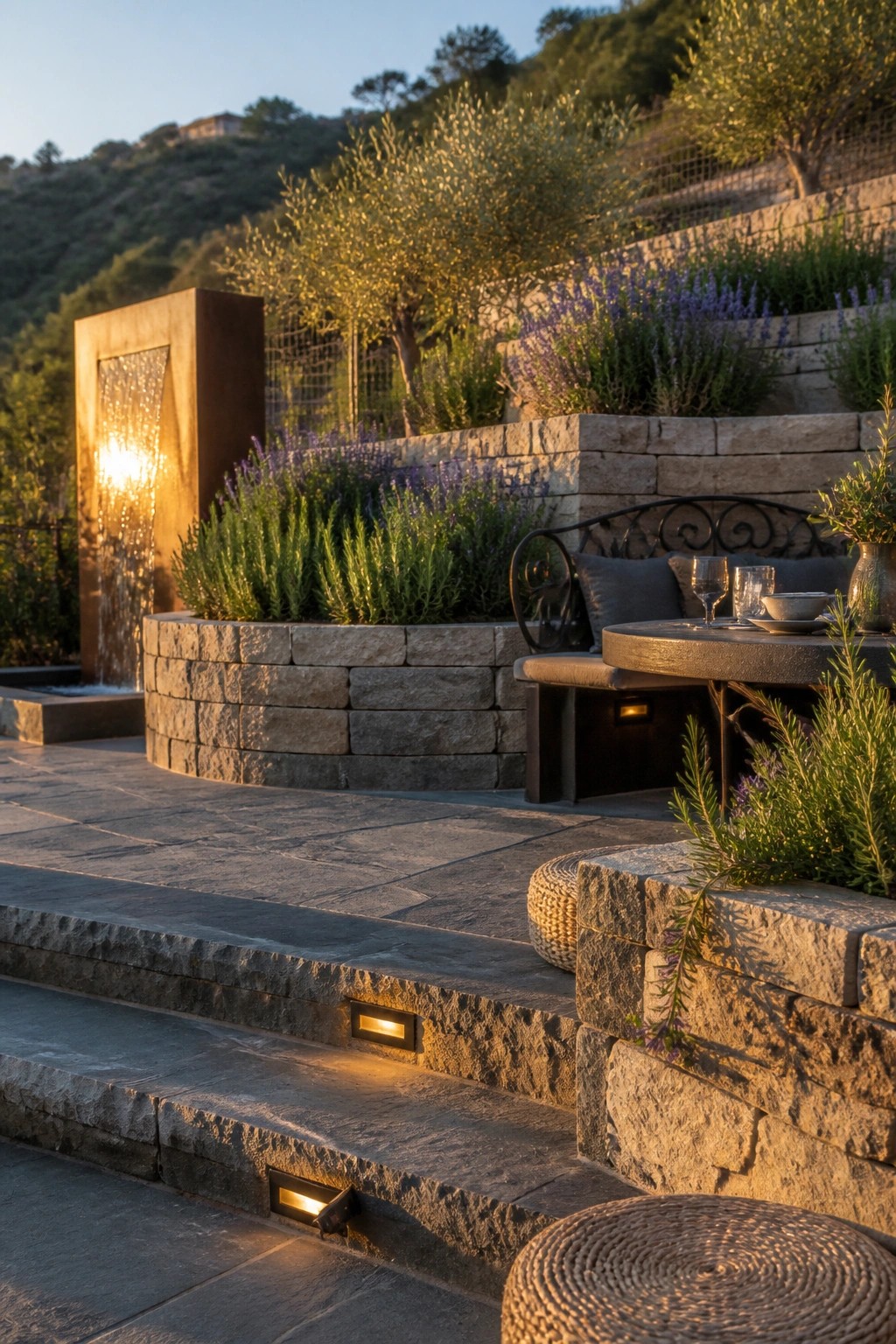
Recessed lights built into stone steps give a patio a quiet glow that lasts well into the evening. They mark the edges clearly without the glare of overhead fixtures, so the space feels calm rather than lit up.
This approach works best on sites that already use natural stone pavers and low retaining walls. Keep the fixtures small and warm-toned, and space them evenly along the risers so each tread stays visible.
Circular Planting Beds Cut Into Pavers
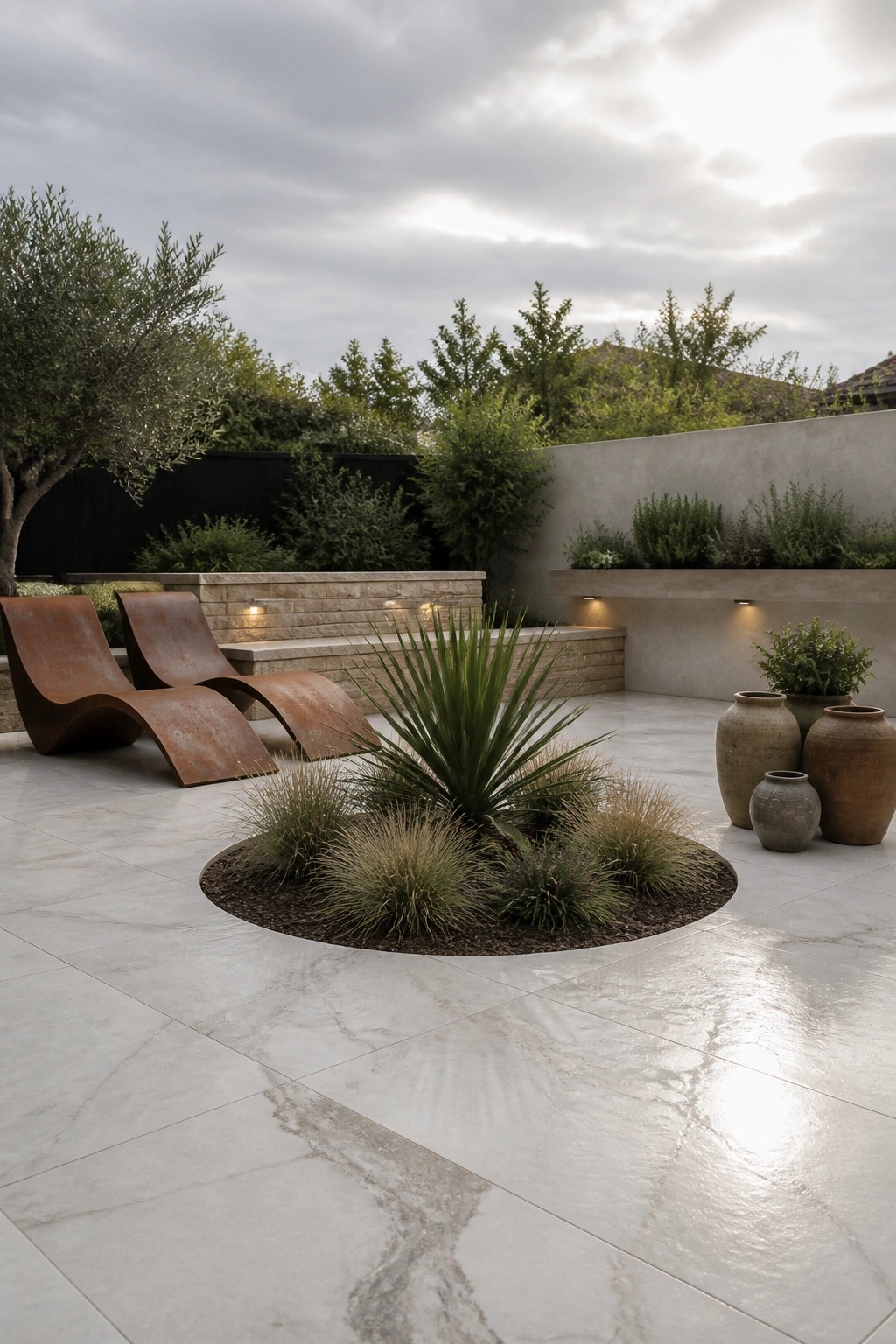
A full paver patio can start to feel flat after a while. Adding a simple circular bed right into the surface breaks up the hardscape and brings planting straight into the space where you sit.
This approach works well on medium to large patios. Keep the bed simple with grasses and one taller plant, then add a few pots nearby so the whole layout stays balanced and easy to maintain.
Paver Patios With Side Planters
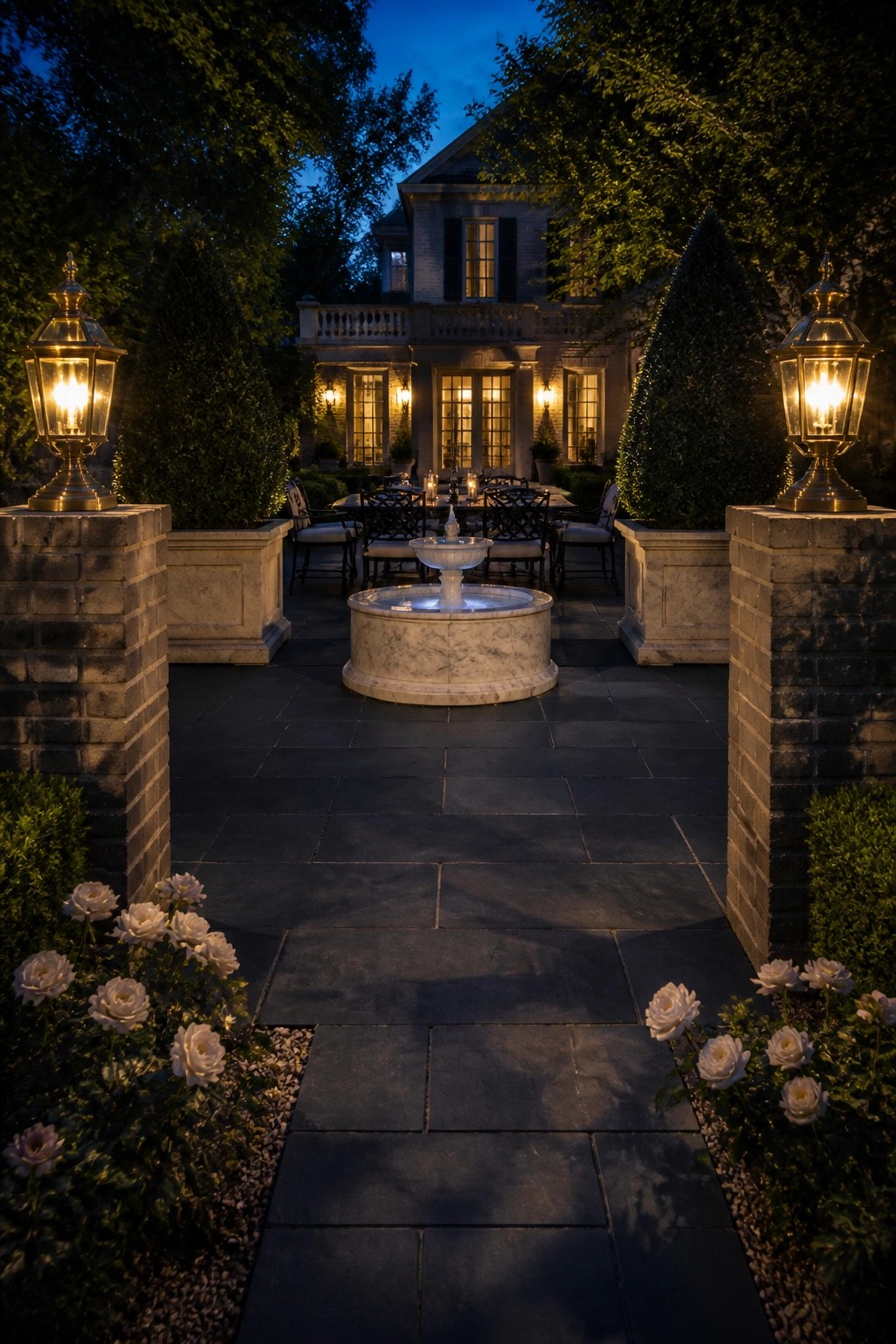
Large pavers give a patio a solid, open feel that works well for dining areas. Placing matching planters on either side helps mark the space without adding walls or railings.
This approach suits homes with a traditional look and works best when the planters hold evergreens or seasonal flowers. It keeps the layout simple and makes the patio feel more finished.
Layer Rugs Over Pavers To Define The Seating Area
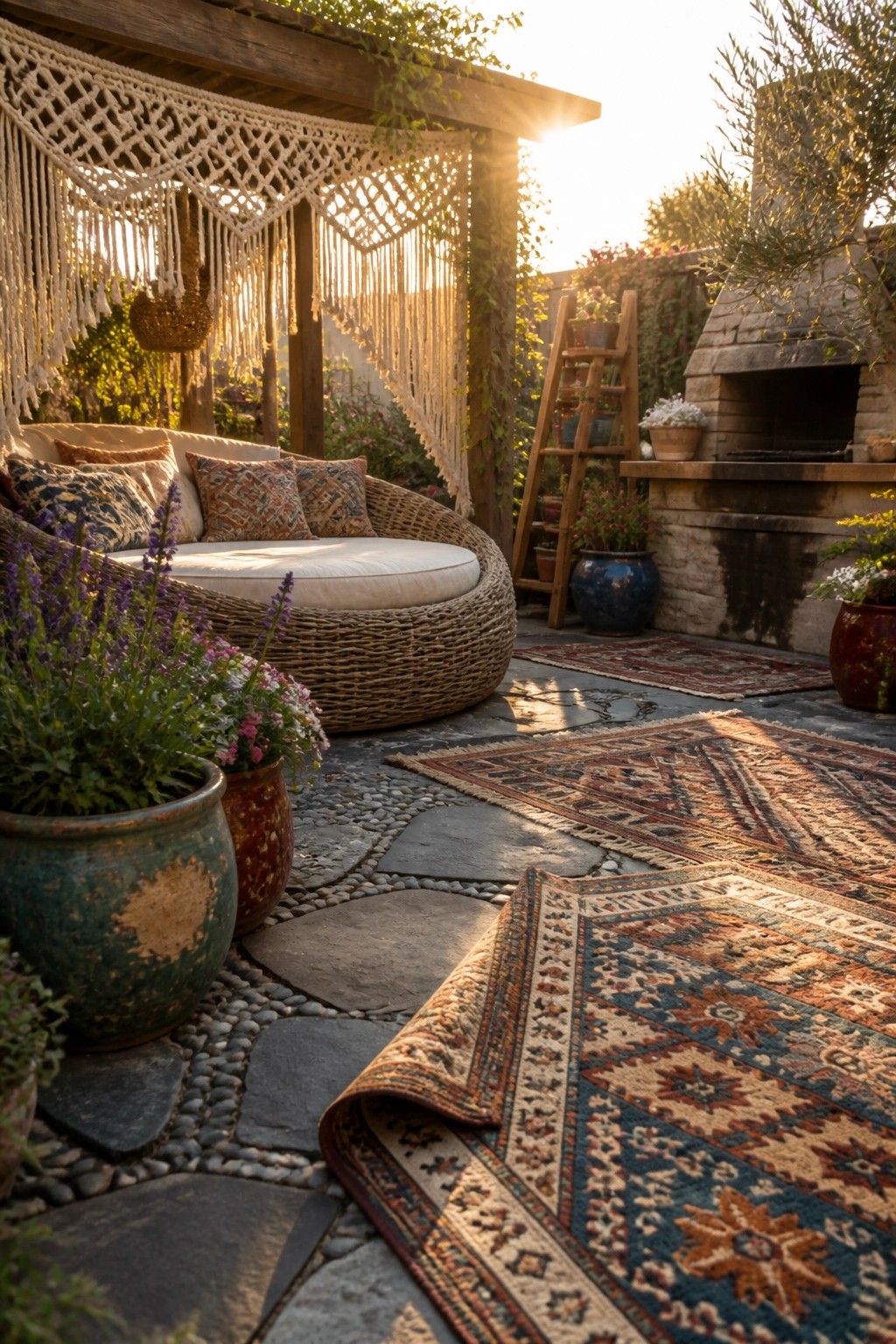
Rugs make a stone paver patio feel softer and more like an actual room. They also help mark off the sitting space so it does not just blend into the rest of the yard.
This works best on smaller patios where you want to keep the layout simple. Choose outdoor rugs that can handle weather and overlap them slightly so the arrangement feels collected rather than scattered.
Vertical Gardens Add Height To Narrow Patios
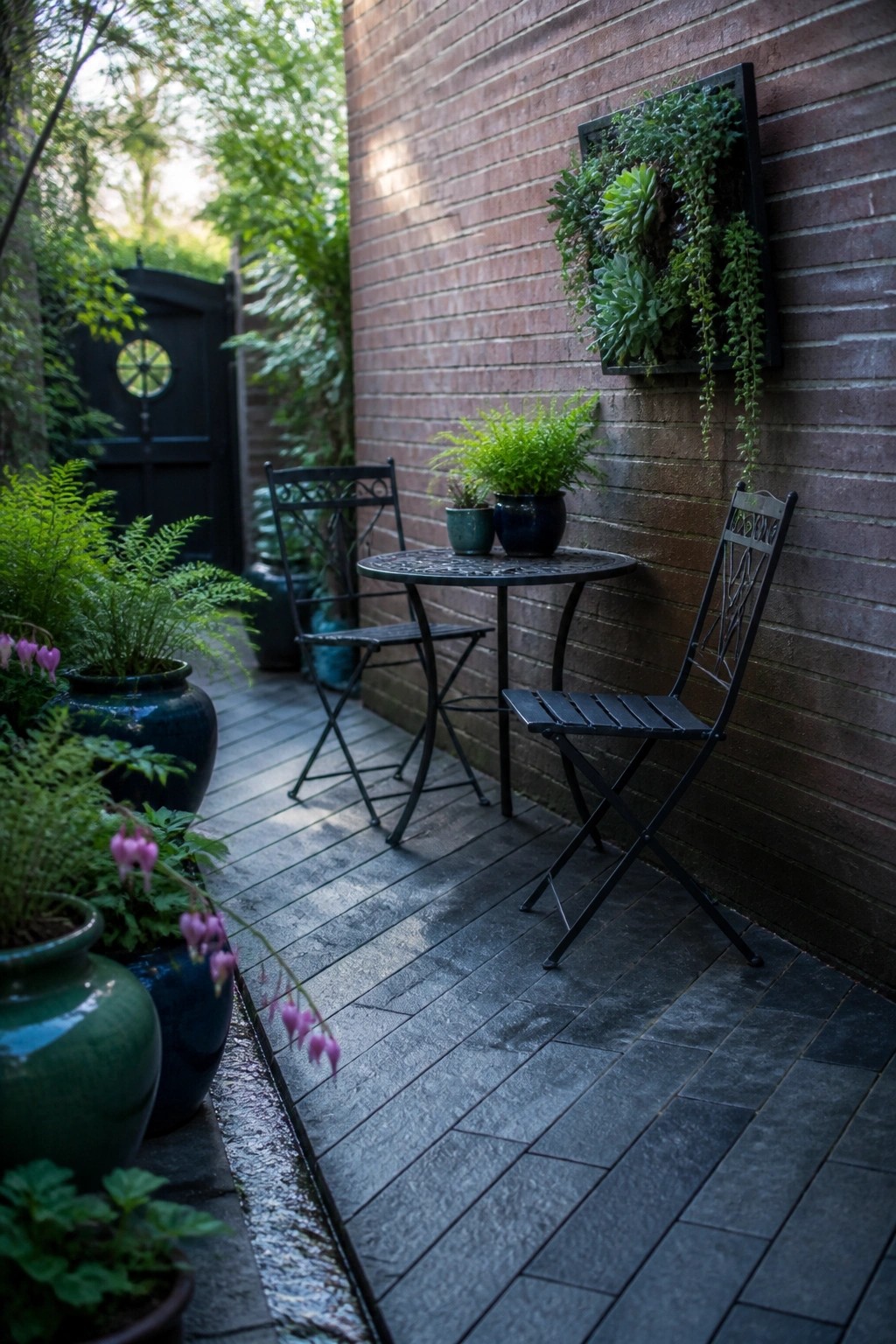
A vertical garden panel on the wall gives you extra planting space when the floor is already filled with pots. It keeps the area from feeling flat and brings in more green without crowding the walkway or seating spots.
This works best on patios that run along a house or fence where floor room is tight. Mount the panel at eye level, group a few pots below it, and leave the rest of the surface clear so the space still feels open.
Large Pots To Add Height Around Paved Patios
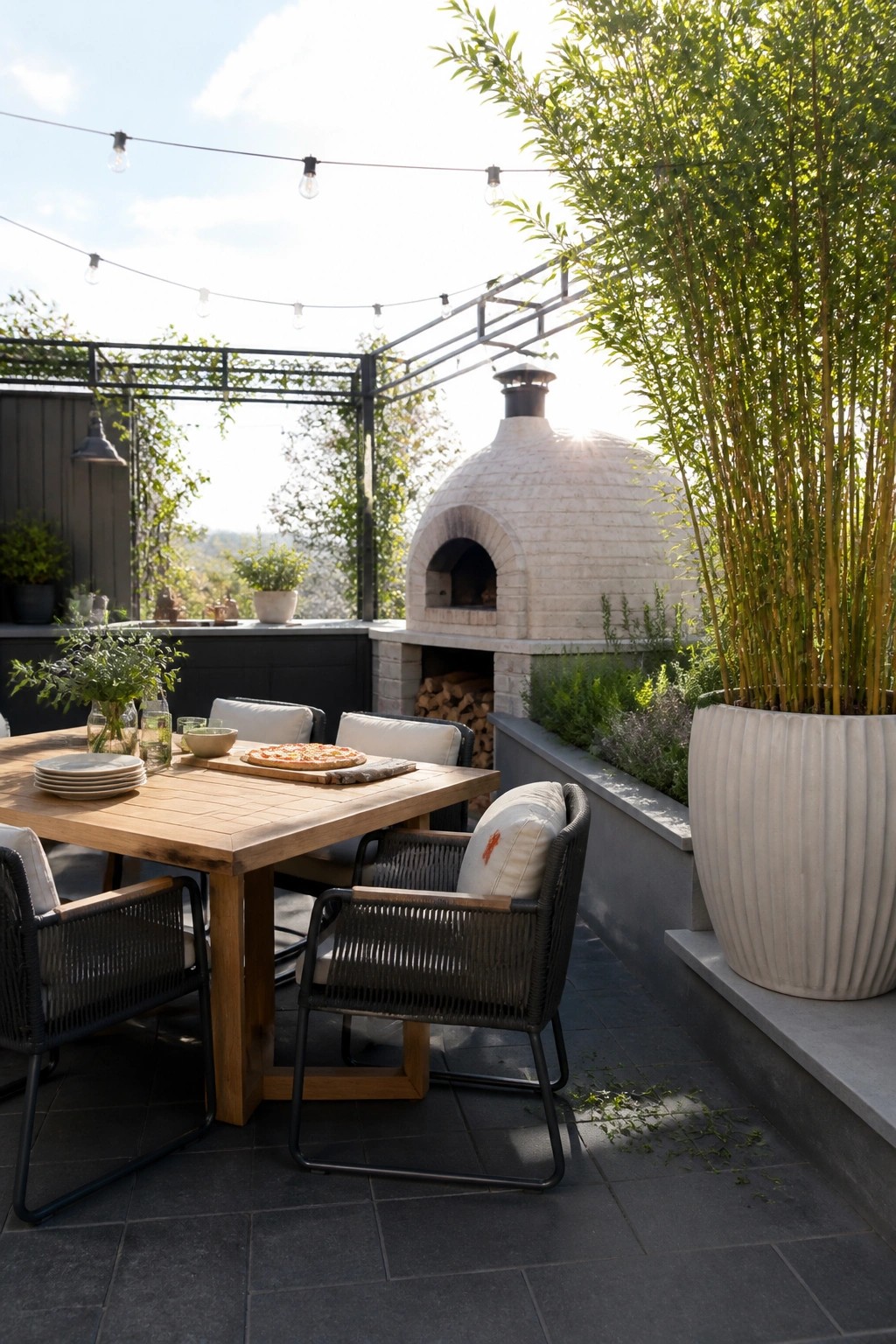
Many patios end up feeling flat when everything sits on the same hard surface. A few oversized pots with tall plants give the space some vertical interest and help mark the edges without any permanent construction.
This works best on patios that already have good paving and outdoor dining furniture. Keep the pots simple in shape and color so they blend with the seating rather than compete with it, and choose plants that stay upright so they do not block movement around the table.
Edge Lighting Along Paver Edges
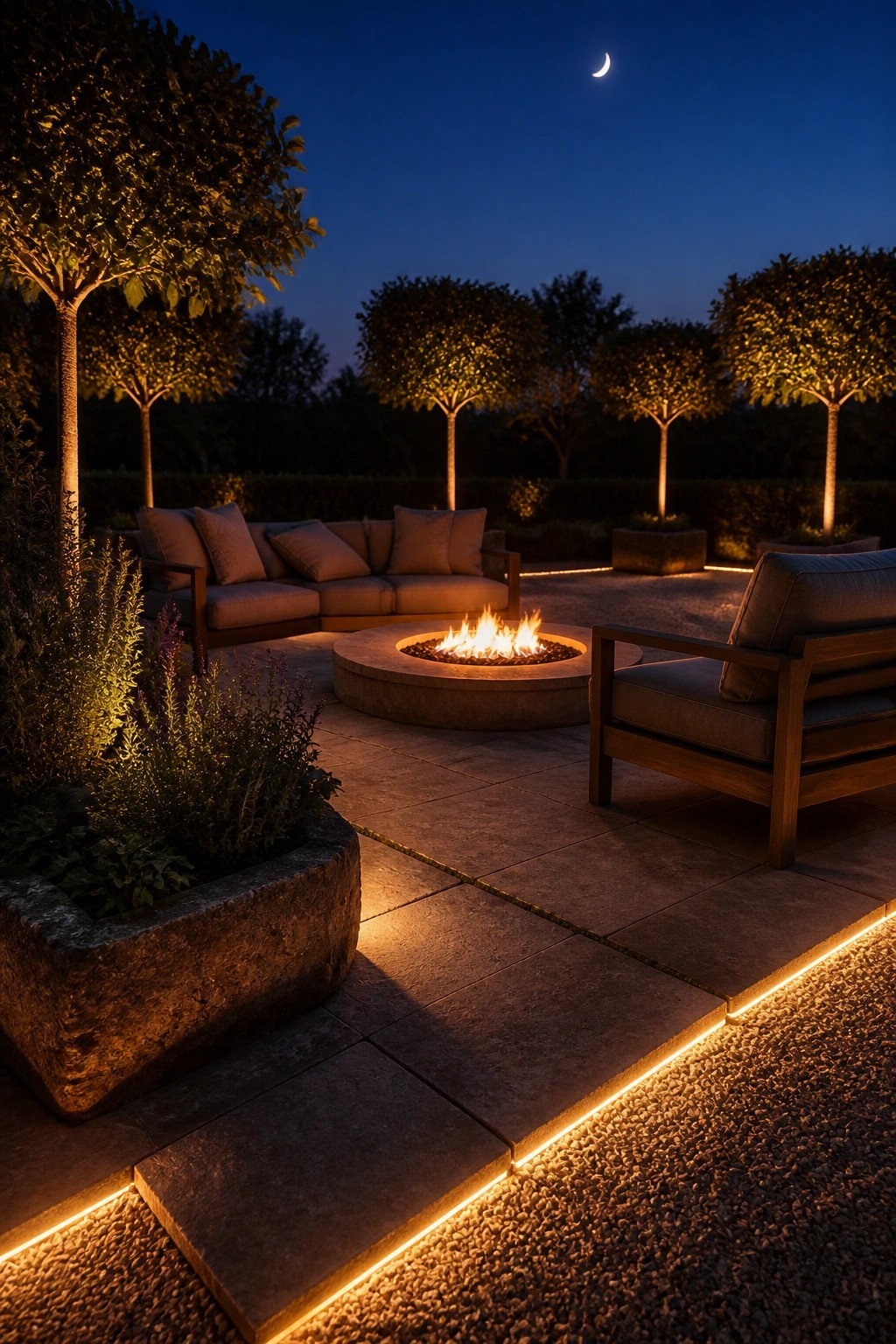
One simple way to make a patio feel finished is to run low linear lights along the edges of the pavers. It marks the boundary without needing extra fixtures or tall posts, and it keeps the surface usable after dark.
This works best on stone or concrete pavers where the light can sit in a narrow gap or channel. It suits homes that use the patio mainly in the evening and want a clean look without cluttering the planting beds nearby.
Frequently Asked Questions
Q: What size pots work best for keeping the patio balanced? A: Start with medium sizes around your seating areas. Mix in a couple taller ones near the edges to draw the eye outward. This keeps walkways clear while adding height without crowding.
Q: Should I match pot colors to my pavers? A: Pick pots in tones that echo the pavers for a quiet feel. One or two standout colors add interest without clashing.
Q: How often should I water plants in pots on a sunny patio? A: Check the soil every other day during warm months. Water deeply until it drains out the bottom. Grouping pots together can help them retain moisture a bit longer.
