

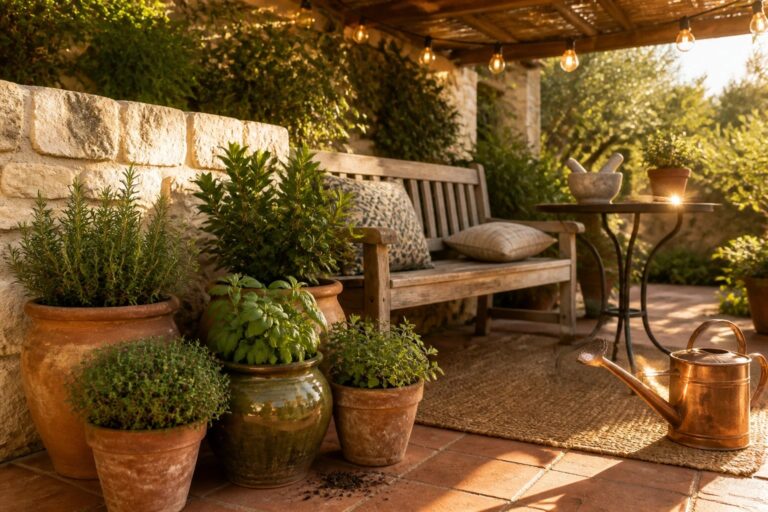
I have found that a patio works best when the herbs sit right where you cook rather than in some distant corner.
Many setups look appealing from a distance but become frustrating once you start preparing food.
Easy access makes all the difference.
Trying a few different pot placements last summer showed me which heights and spots actually get used every day.
The ideas that focus on both convenience and simple maintenance are the ones worth testing first in a real backyard space.
Keep Herb Pots Close to Your Seating
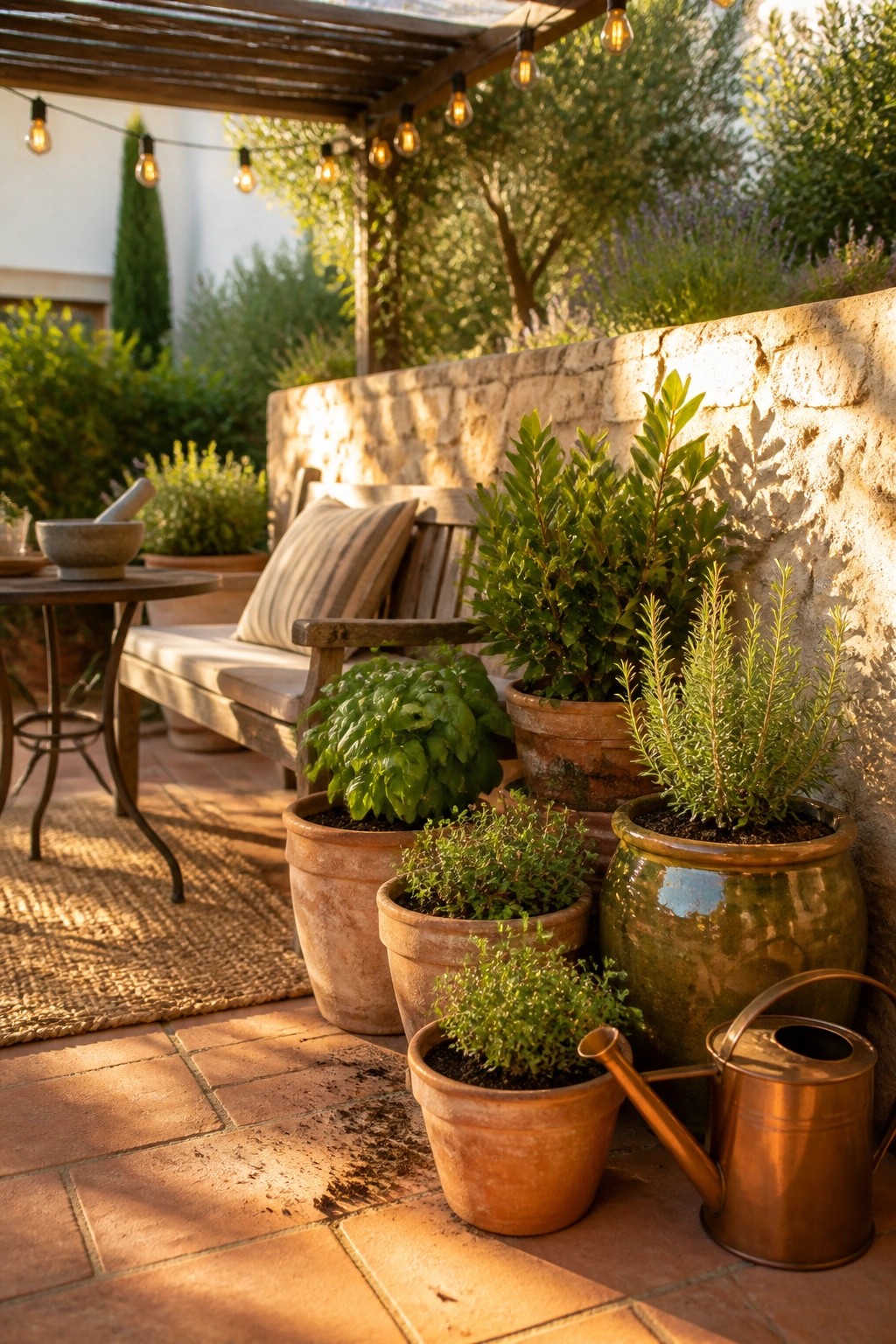
Many cooks like having fresh herbs within easy reach when they are outside. Placing a few pots right beside the bench or chairs means you can grab basil or rosemary without leaving your seat.
This works best on patios that already have a seating spot and some floor space. Choose pots that are not too heavy to move and stick to herbs you use often so the spot stays practical rather than just decorative.
Wall Mounted Herb Pockets For Easy Balcony Access
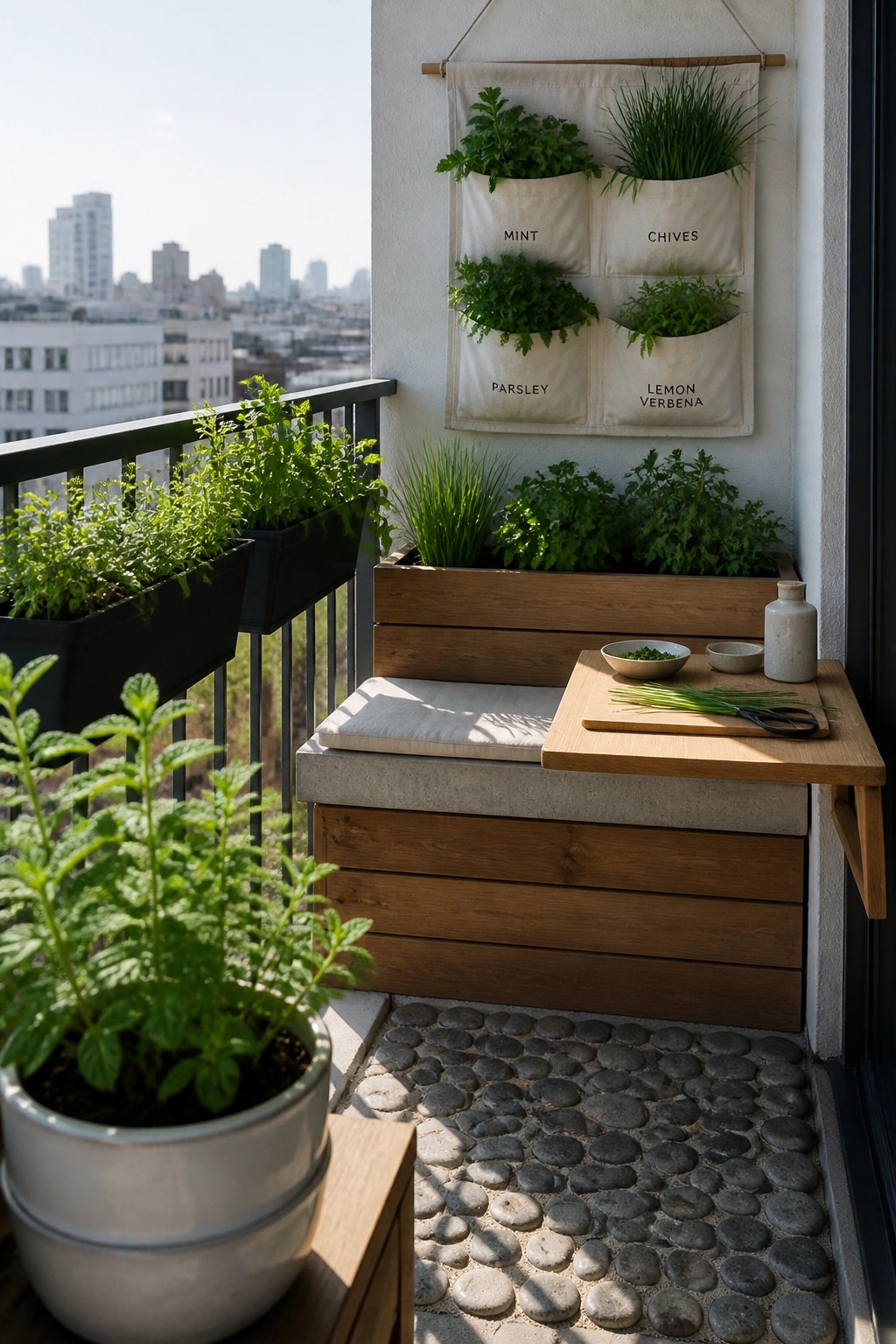
Many people with small balconies like the idea of growing herbs without crowding the floor. A simple hanging organizer on the wall keeps plants off the ground and puts them right at hand when you need fresh leaves for cooking.
This setup works best on compact patios or balconies where space is tight. Mount the pockets securely, choose herbs you use often, and pair them with a bench or narrow table nearby so harvesting stays quick and practical.
Keep Fresh Herbs Within Reach with a Rolling Cart
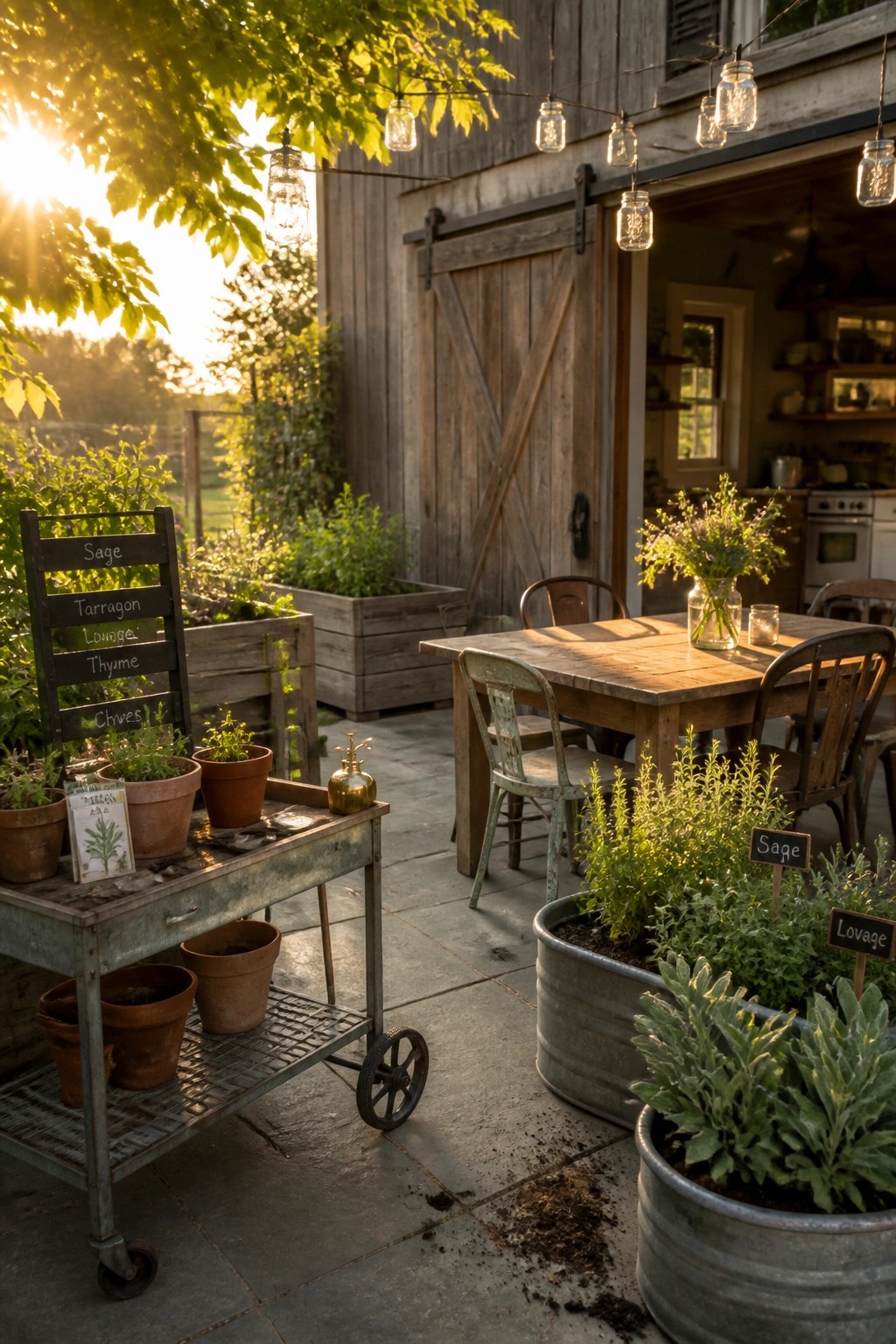
A rolling cart gives you a simple way to group herb pots in one movable spot. It keeps the plants close to your cooking area so you can snip what you need without extra steps.
This setup works best on a paved patio near an outdoor table. Place the cart where it gets good light but stays easy to roll when you want to rearrange or bring it closer during meals.
Use a Tabletop Herb Box for Daily Cooking
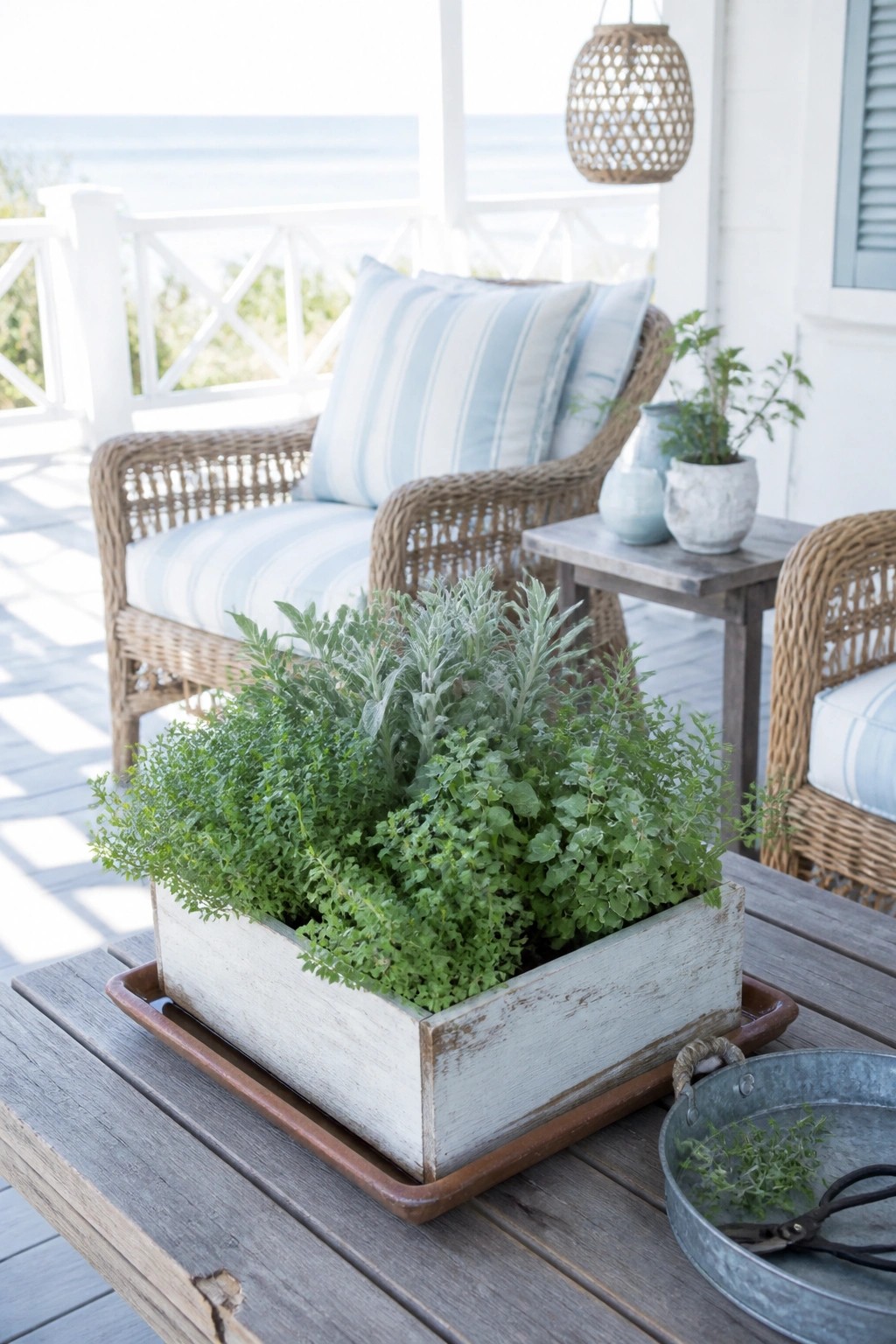
A wooden box planter sitting right on the patio table makes it simple to reach for fresh herbs while you cook. You do not need to walk across the yard or bend down to a garden bed. The box keeps everything contained and easy to move if needed.
This setup works best on smaller patios or decks where space is tight. Choose a box with drainage holes and set it on a tray to protect the table. It suits homes where people like to cook outdoors often and want herbs within arm’s reach.
Grow Herbs Right Behind the Outdoor Counter
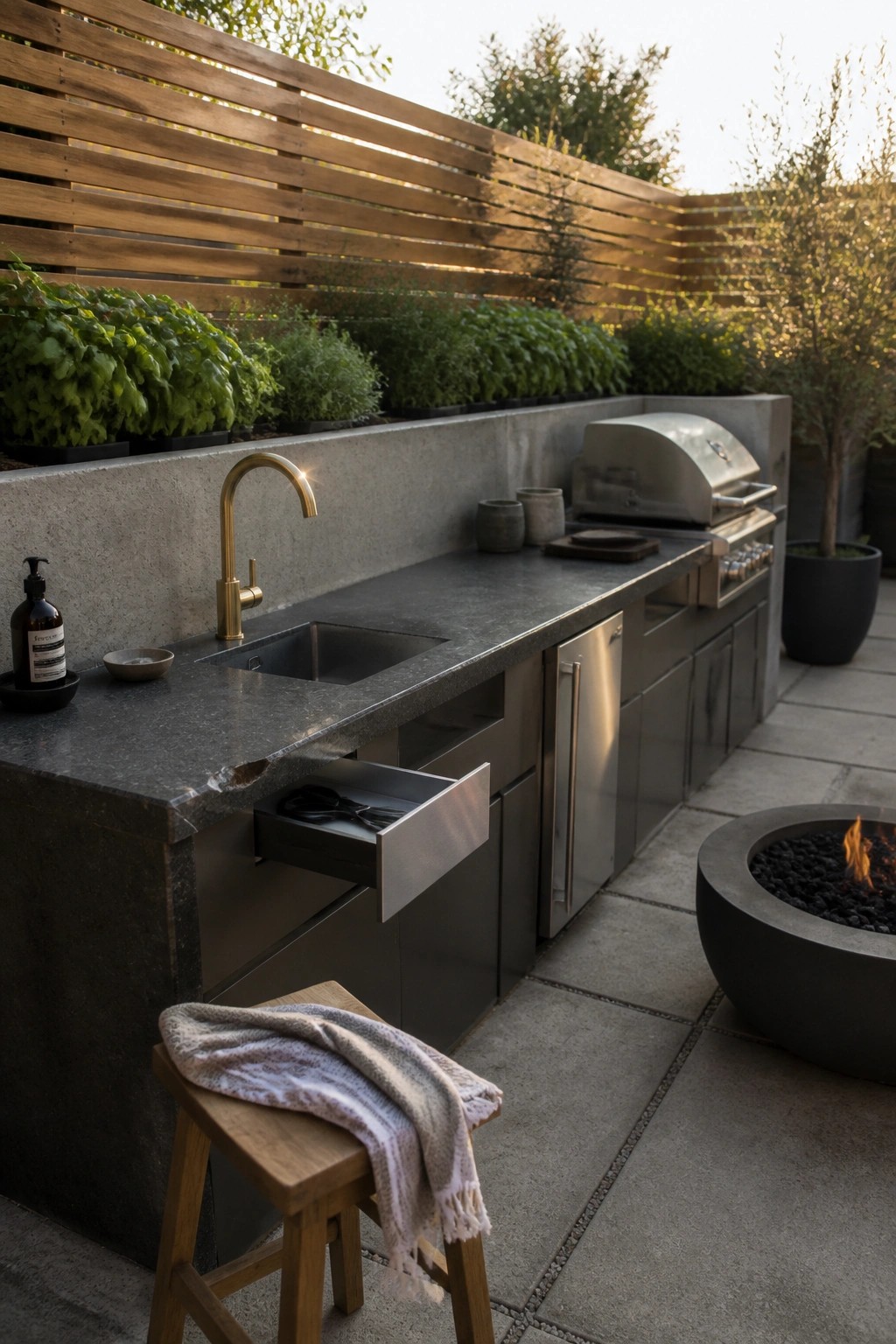
Many outdoor kitchens feel more useful when the herbs sit close to the cooking surface. A long planter set along the back edge puts basil, rosemary, and thyme within arm’s reach while you grill or prep.
This setup works best on a paved patio with a solid counter and good sun exposure. Keep the soil well drained and pick varieties you actually cook with so the plants stay productive instead of turning into decoration.
Tiered Stone Herb Beds
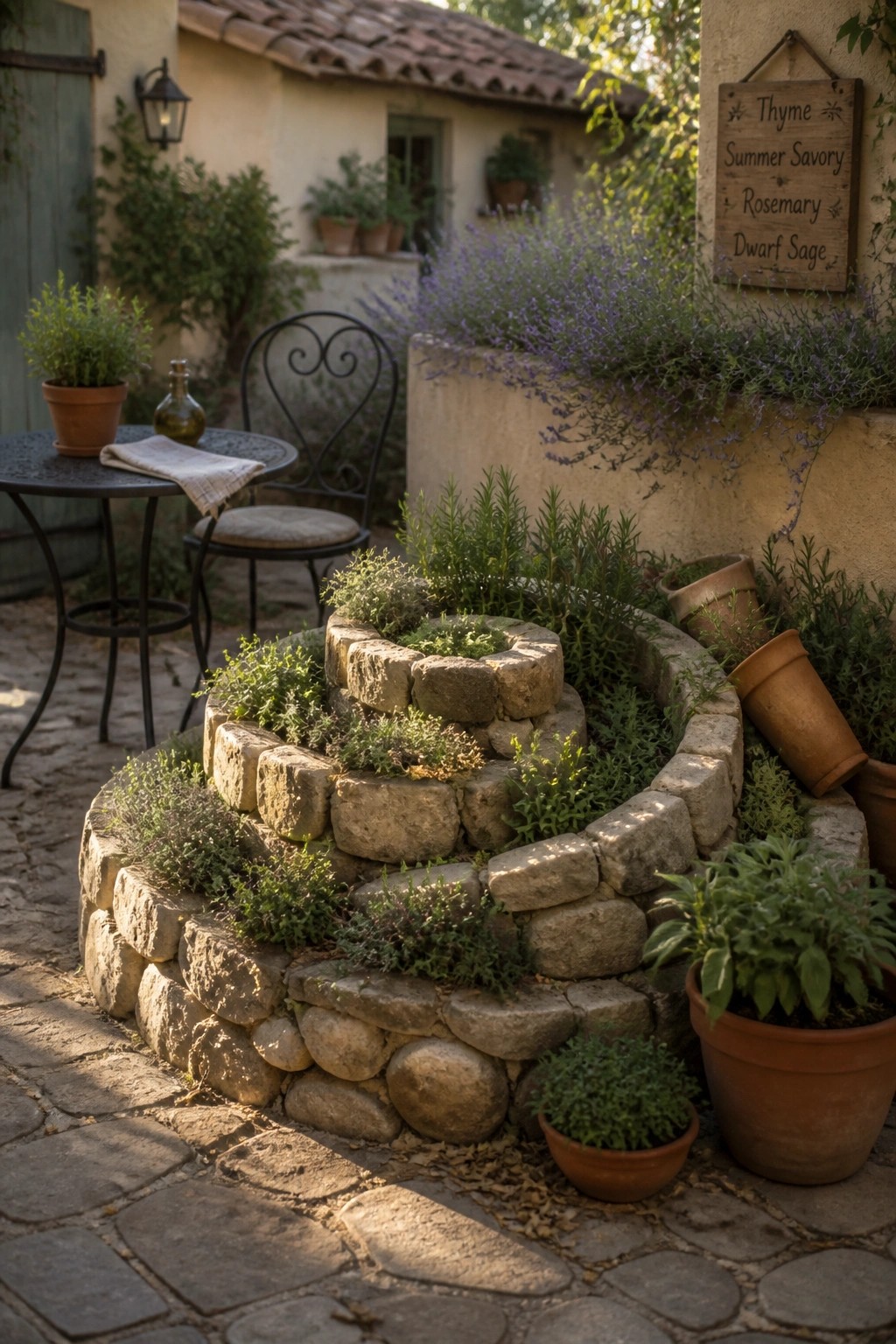
A tiered stone herb bed packs several planting levels into one compact circle. It keeps different herbs separated while making them easy to reach without bending down much.
This works best on a patio or near a back door where you cook often. Use it for common kitchen herbs and make sure the top tiers get enough sun so nothing gets shaded out.
Tiered Shelving Keeps Herbs Within Reach
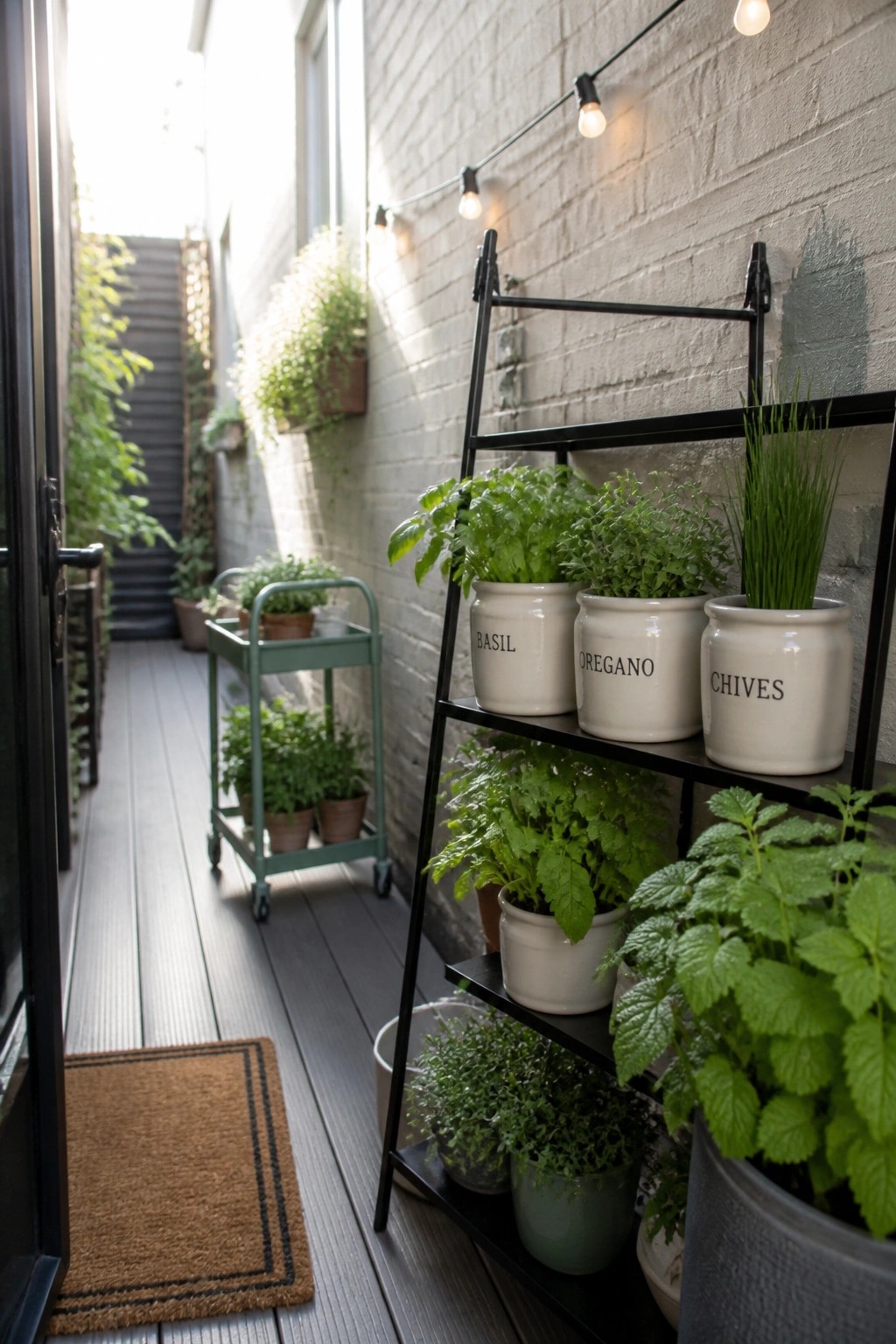
A simple tiered stand lets you fit more herb pots into a narrow patio without crowding the floor. The vertical layout keeps plants at different heights so you can spot and grab what you need quickly while cooking.
This works best on decks or side areas where space is tight but you still want everything close to the door. A rolling cart nearby adds flexibility if you need to shift plants for sun or bring them inside during bad weather.
Wheeled Planters Keep Herbs Within Reach
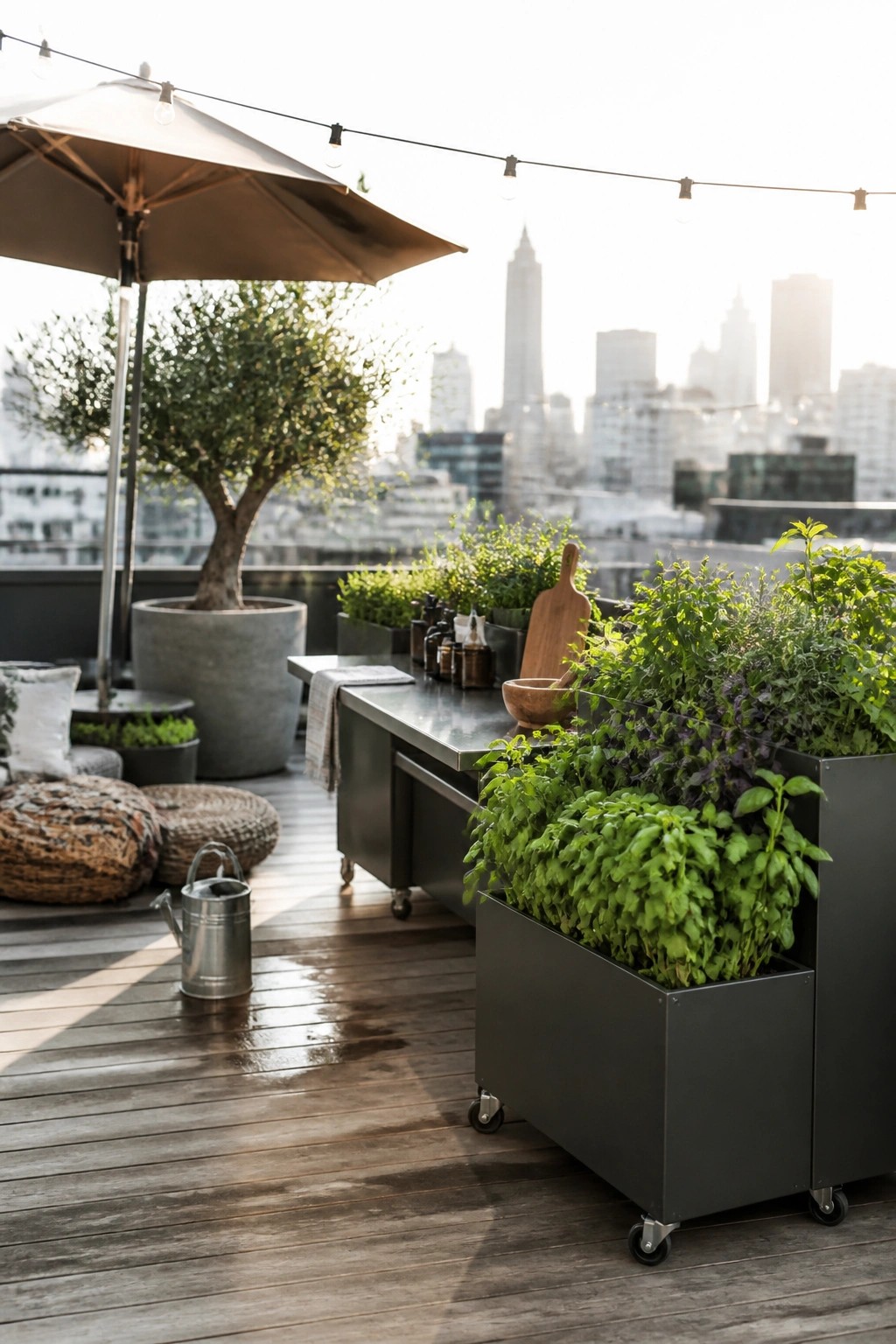
Growing herbs right on the patio works best when you can move them easily. Wheeled planters let you roll the whole bed closer to the counter when you cook or shift it into better sun without lifting heavy pots.
This setup suits decks and terraces where space gets used in different ways throughout the day. Choose sturdy metal boxes with strong casters and keep the soil mix light so the plants stay healthy even after frequent moves.
Hang Herbs Overhead for Easy Access
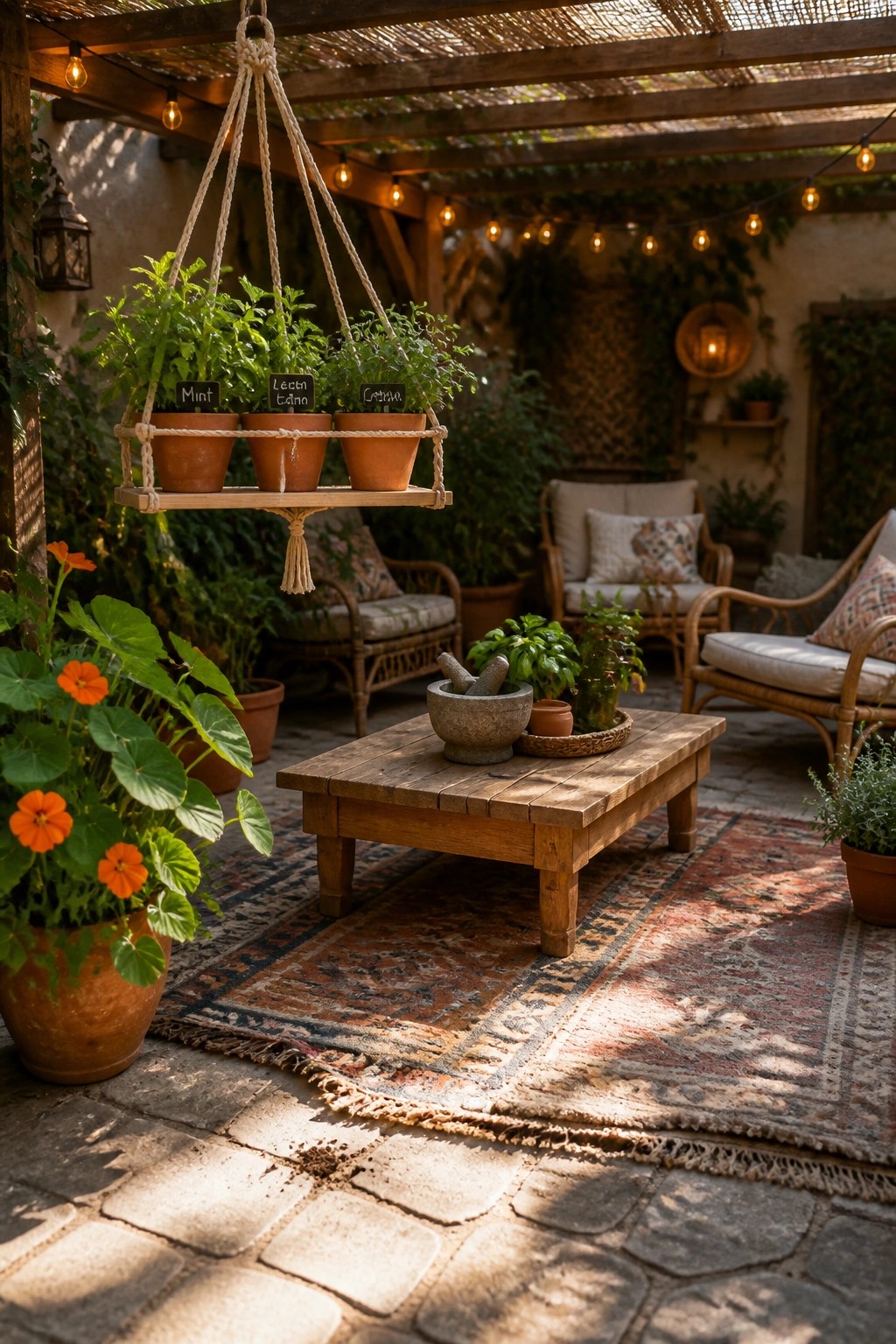
A hanging tray keeps fresh herbs right where you need them during cooking. It frees up table and counter space while still letting you grab a handful of mint or oregano without walking across the patio.
This setup works best under a covered area with sturdy beams or hooks. Make sure the tray hangs at a comfortable height so you can reach it without stretching, and use lightweight pots so the ropes do not strain over time.
Build Herb Planters Into Your Patio Bench
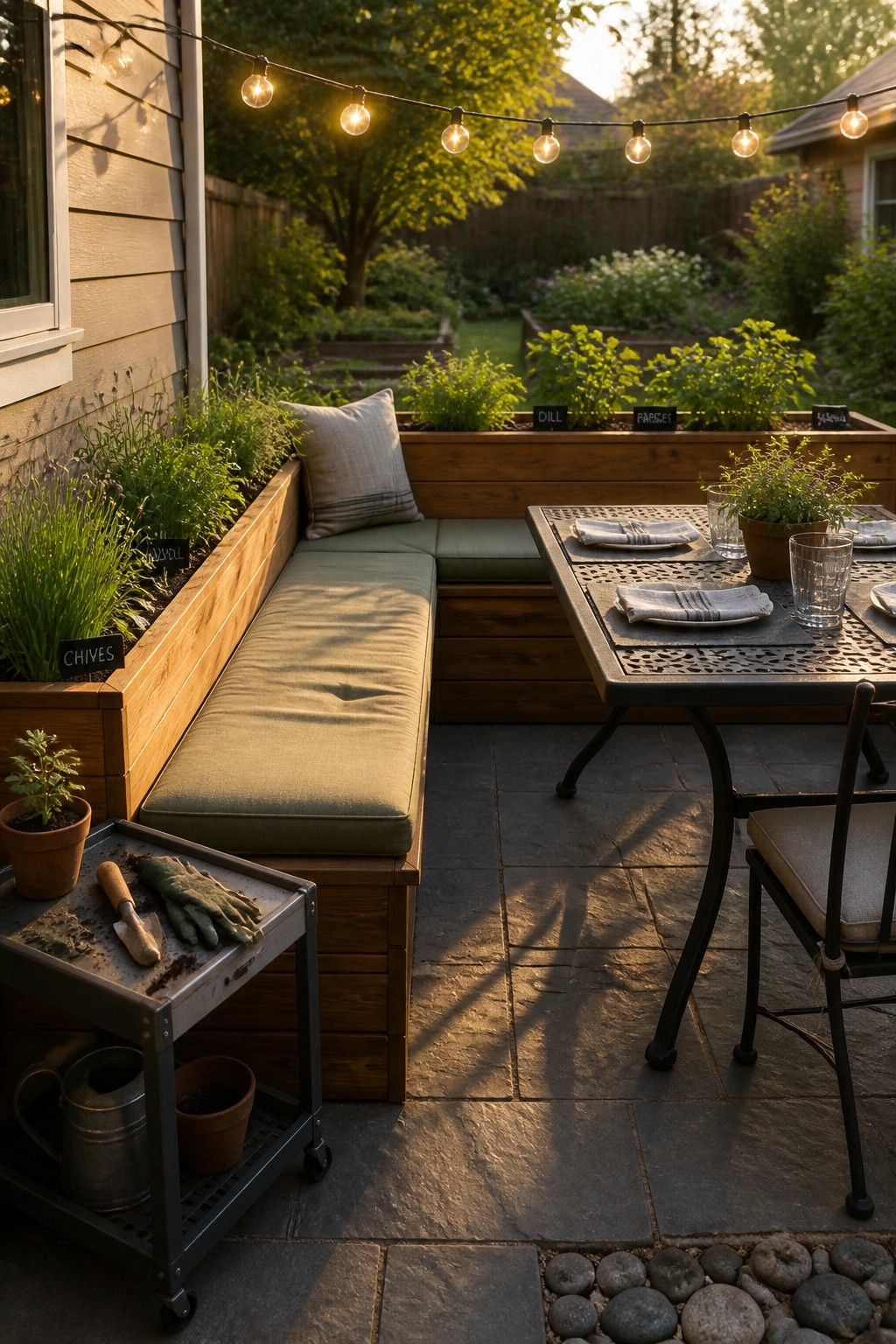
Placing raised herb beds right behind a built-in bench keeps fresh herbs within arm’s reach while you cook or eat outside. The setup saves floor space and turns the back of the seating into useful growing room instead of leaving it empty.
This works best on patios that already have some kind of bench or low wall. Match the wood to your existing seating, keep the planters at a comfortable height, and stick to herbs you use often so the spot stays practical rather than decorative.
Set Up an Outdoor Herb Station with Easy Water Access
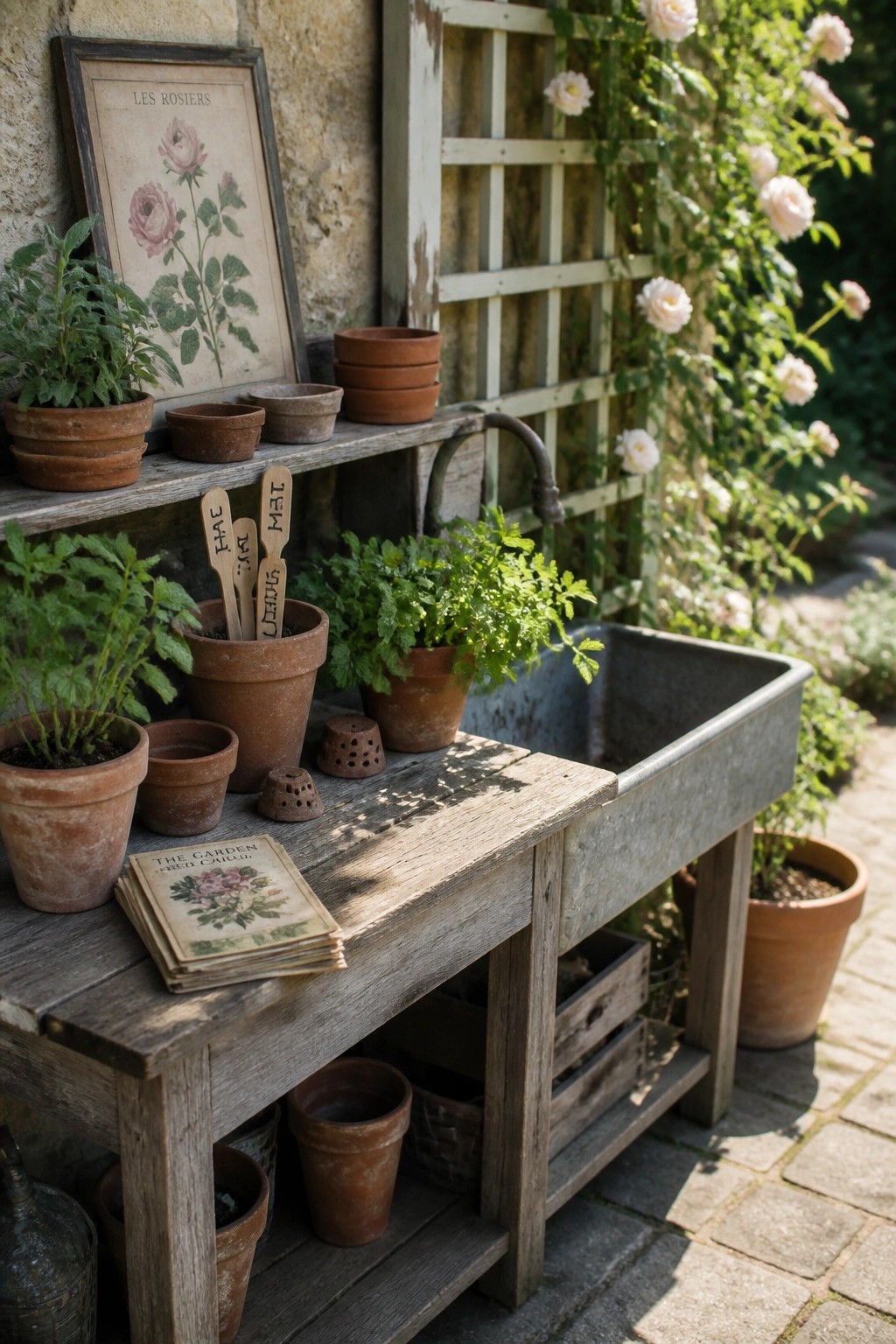
A small station like this makes daily herb care much simpler. You can water plants, rinse leaves, and grab what you need without walking back and forth across the patio. The sink keeps everything in one spot, which helps when you cook often and want fresh cuttings right at hand.
This setup works well on a modest patio or along the side of a house where space is tight. Use a sturdy bench or table that can handle moisture, and group the pots so the tallest ones do not block the sink. Just check that the drain has a clear path so water does not pool under the bench.
Raised Planters Beside a Bench
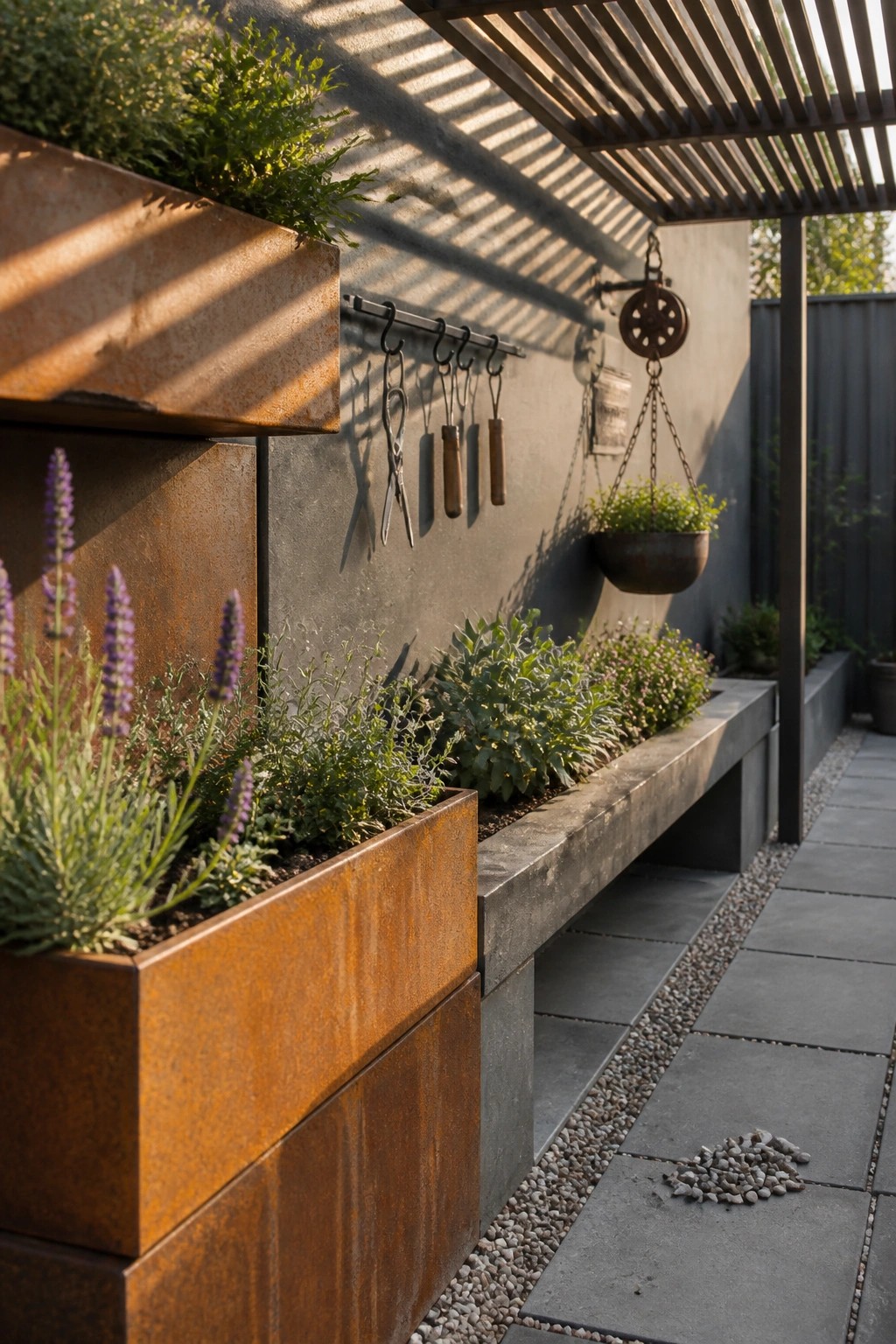
Raised planters make it simple to grow cooking herbs right where you can reach them without bending or walking far. Placing them next to a bench gives you a spot to sit while you pick what you need, and the height keeps the plants at a comfortable level for daily use.
This setup works well on narrow patios or along a back wall where space is tight. Use sturdy metal or concrete boxes so the soil stays warm and drains well, and keep a few basic tools nearby so you can trim and maintain the herbs without extra trips.
Wall-Mounted Herb Boxes Keep Picking Easy
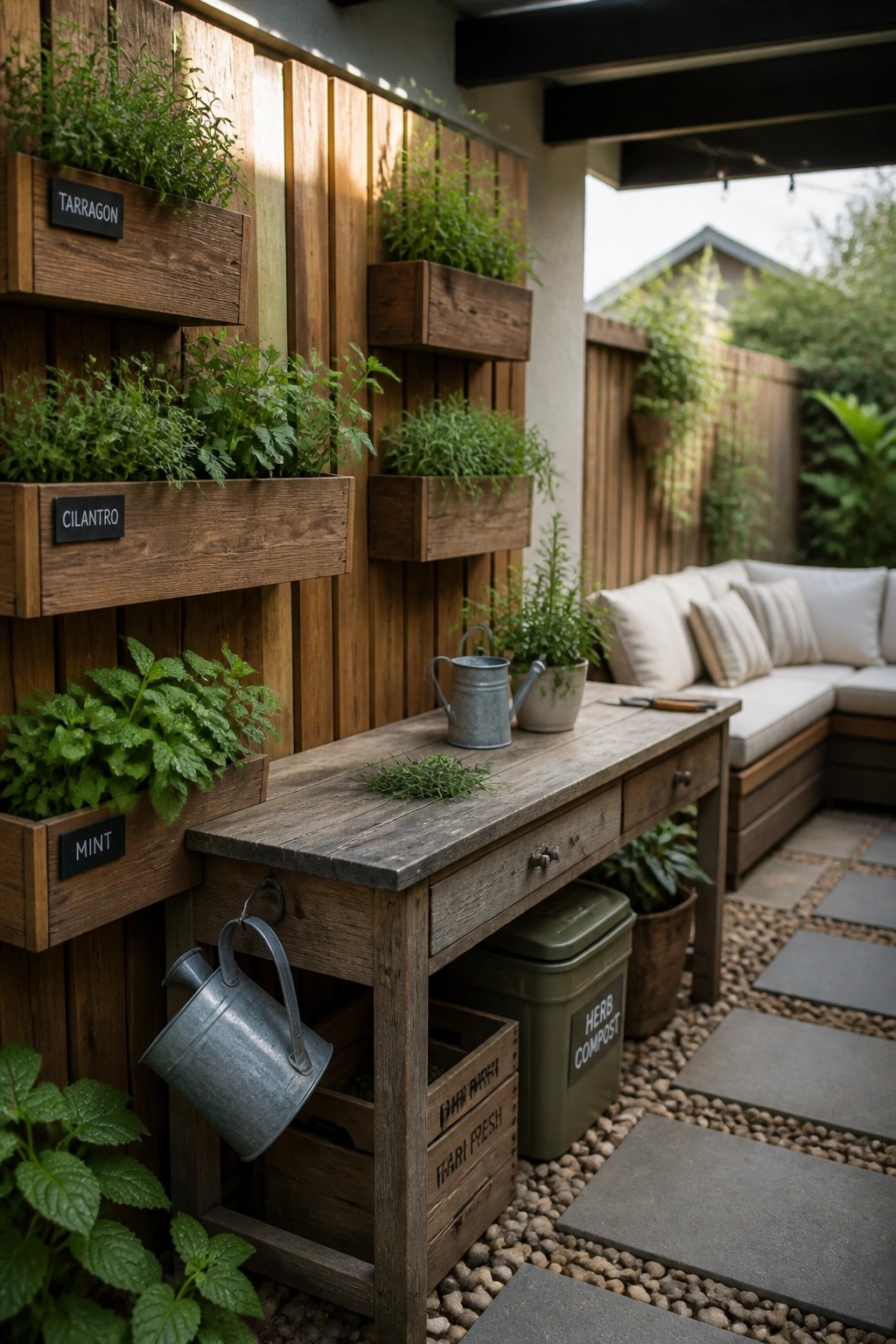
Mounting herb planters directly on a patio wall puts fresh flavors within arm’s reach while you cook. It frees up floor space and turns an unused vertical surface into a working garden that stays organized with simple labels.
This approach suits covered patios or decks with a nearby table for prep. Keep the boxes at comfortable heights, choose a sunny spot, and check that the wall can support the weight once the soil is added.
Mix Container Styles for Your Herb Garden
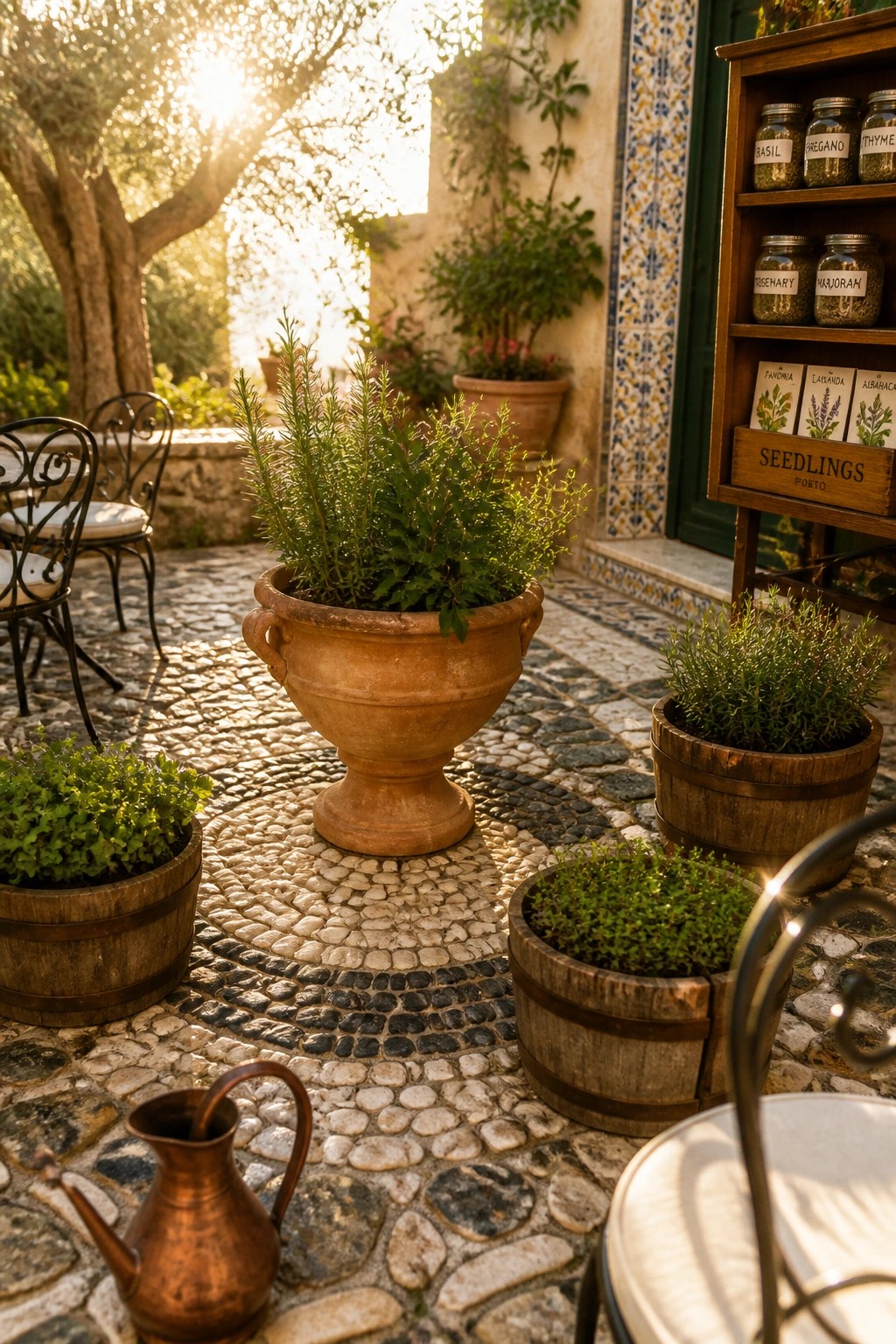
Many people like mixing terracotta urns with wooden barrels when they grow herbs on a patio. The different materials and sizes let you fit more plants into one spot without it looking too uniform, and you can move the lighter barrels around as needed for sun or easy picking.
This setup works best on small patios or near an outdoor table where you cook often. Just make sure the containers have good drainage and group the ones you use most often closest to the seating area.
Use a Long Raised Planter for Easy Herb Access
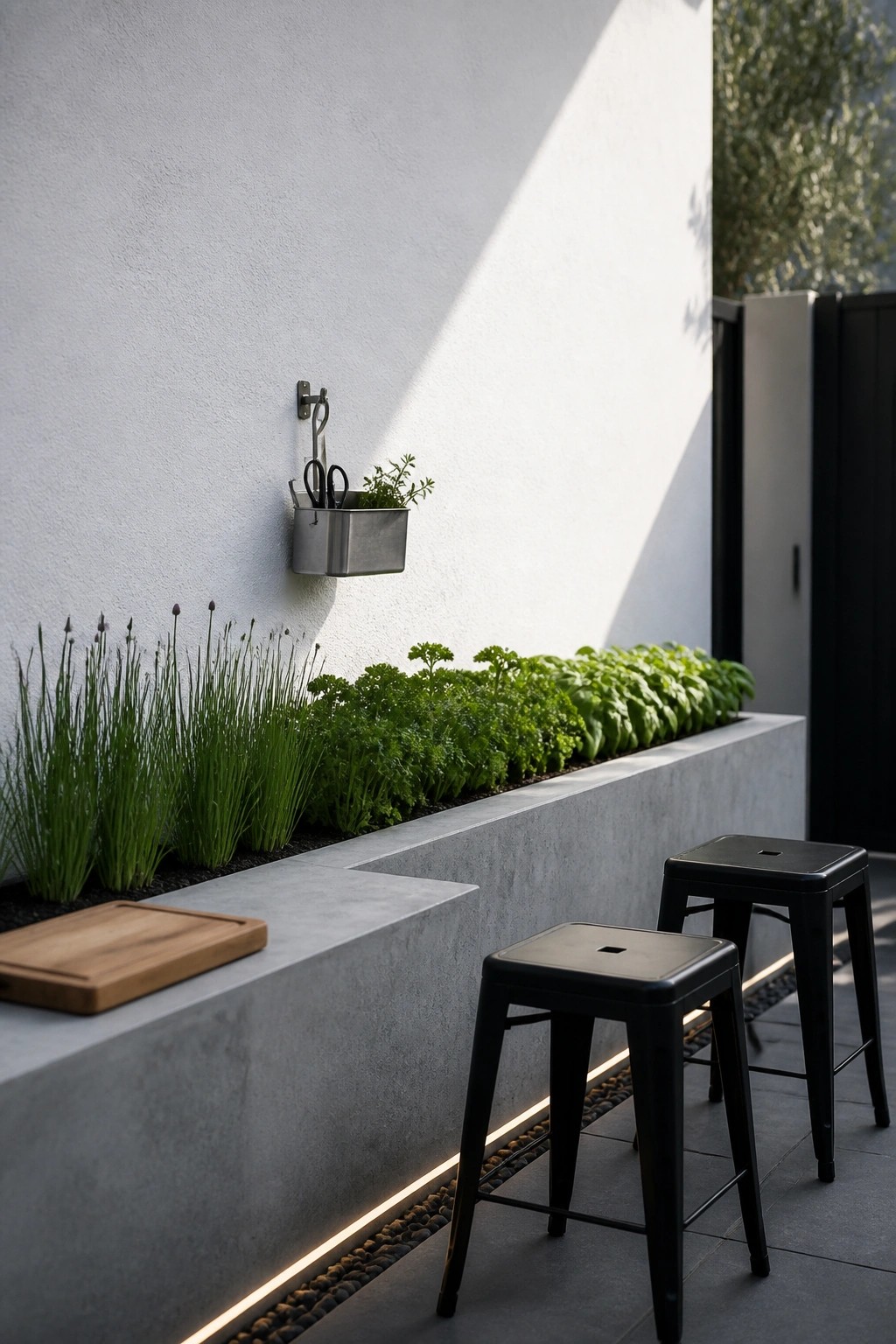
A long raised bed built into the patio edge keeps herbs right where you need them for cooking. The concrete construction holds up well outdoors and creates a clean line that separates the growing area from the seating without taking up extra floor space.
Place a few stools along the front so you can sit and trim or gather herbs without bending over. This works best on narrow patios where you want fresh basil, parsley, and chives close at hand but still need room to move around. Keep the bed narrow enough that you can reach across it easily from either side.
Tiered Stone Walls Keep Herbs Within Reach
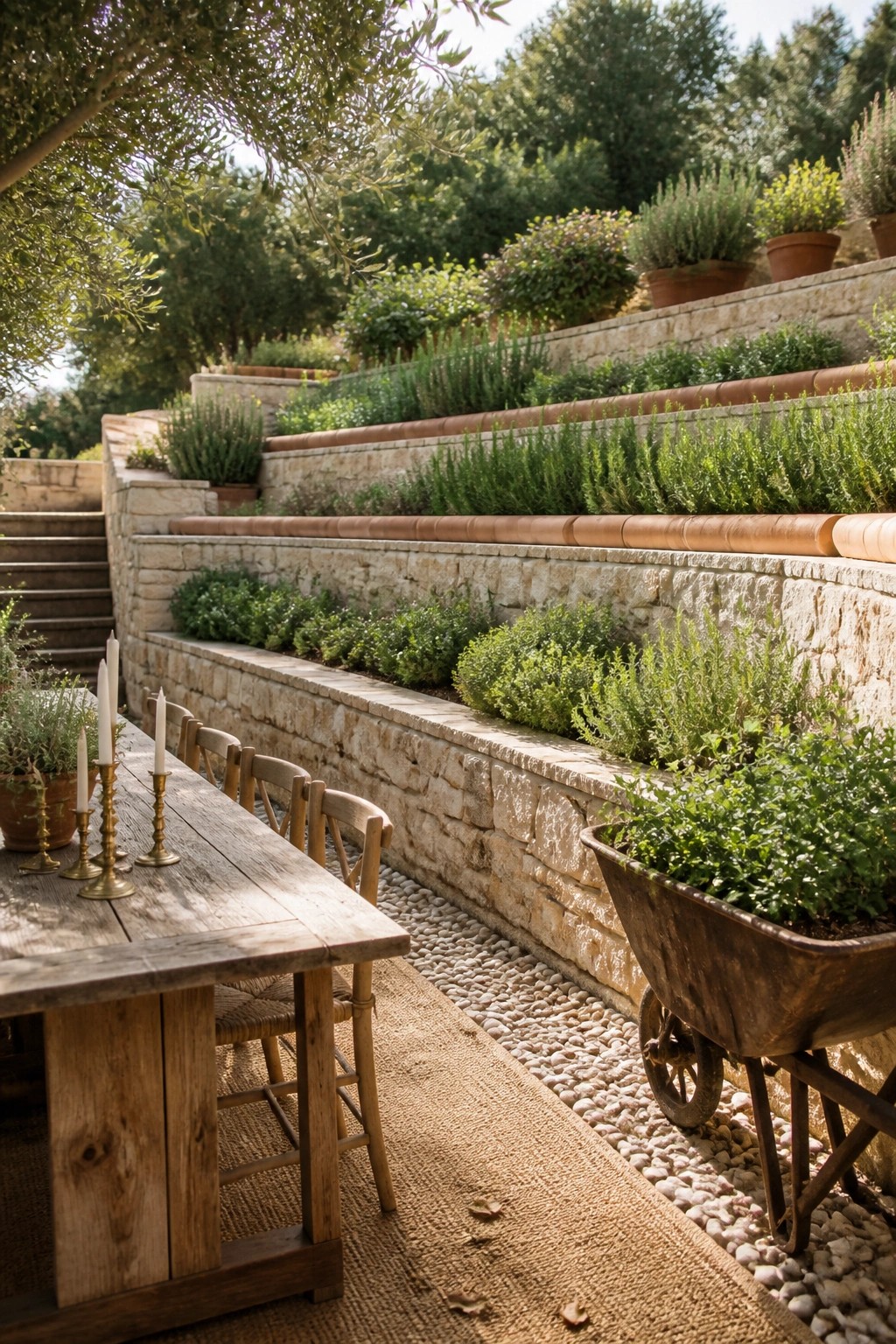
One practical way to grow herbs for cooking is to plant them in tiered stone beds right next to an outdoor dining spot. The stacked walls create multiple levels of growing space while keeping everything close to the table so you can step over and pick what you need.
This approach suits patios with a slight slope or homes that already have retaining walls in place. Use the same stone to match the existing hardscape and leave enough room along the base for chairs to pull out easily.
Ladder Shelves Keep Herbs Within Reach
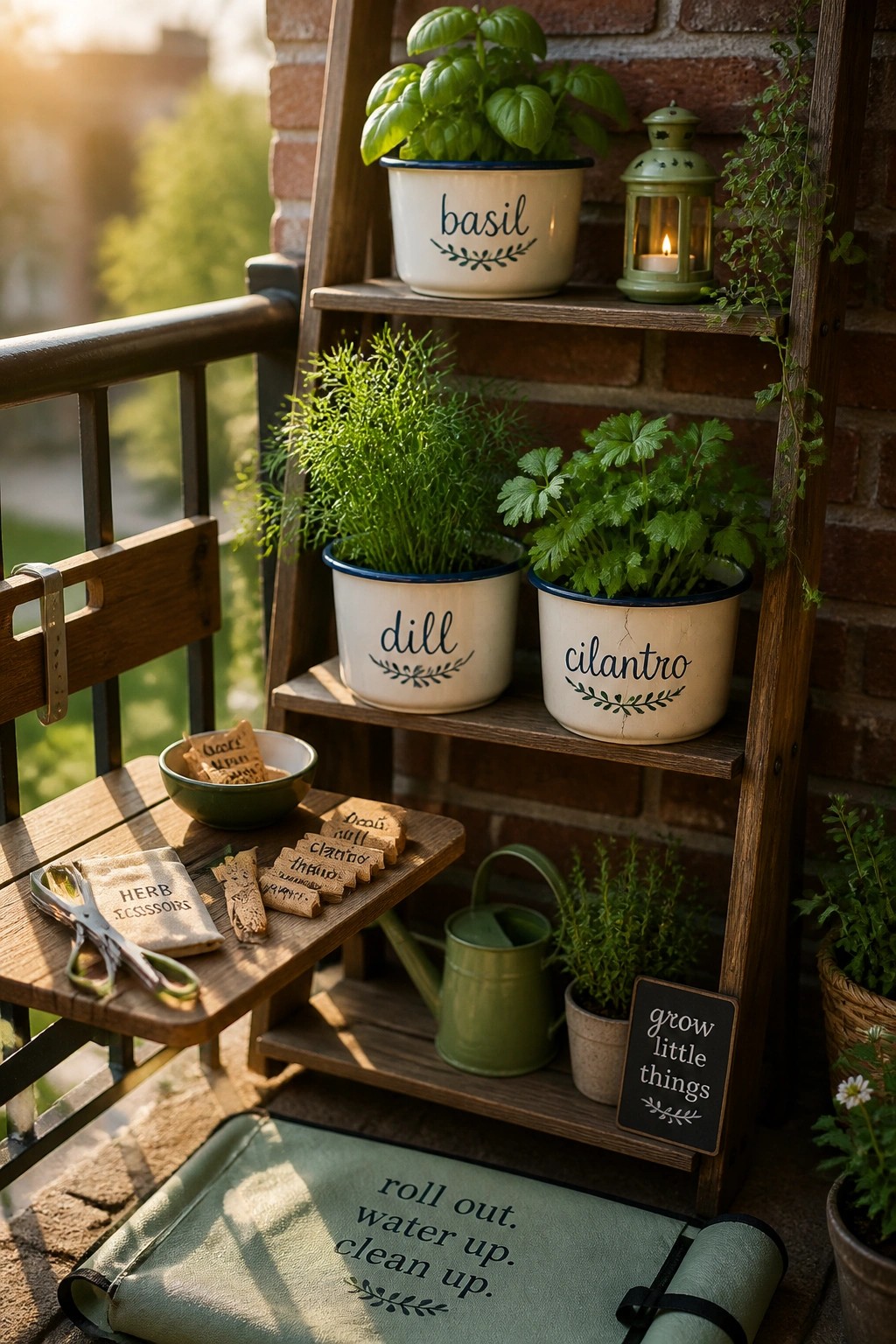
A ladder shelf gives you room for several herb pots without crowding the floor or blocking the view. The stepped design lets each plant get light while keeping everything at a comfortable height for watering and picking.
This works best on a balcony or small patio where space is tight. Set it against a wall or railing, label the pots clearly, and keep a few basic tools nearby so you can grab what you need while cooking.
Line Herb Planters Along the Patio Edge
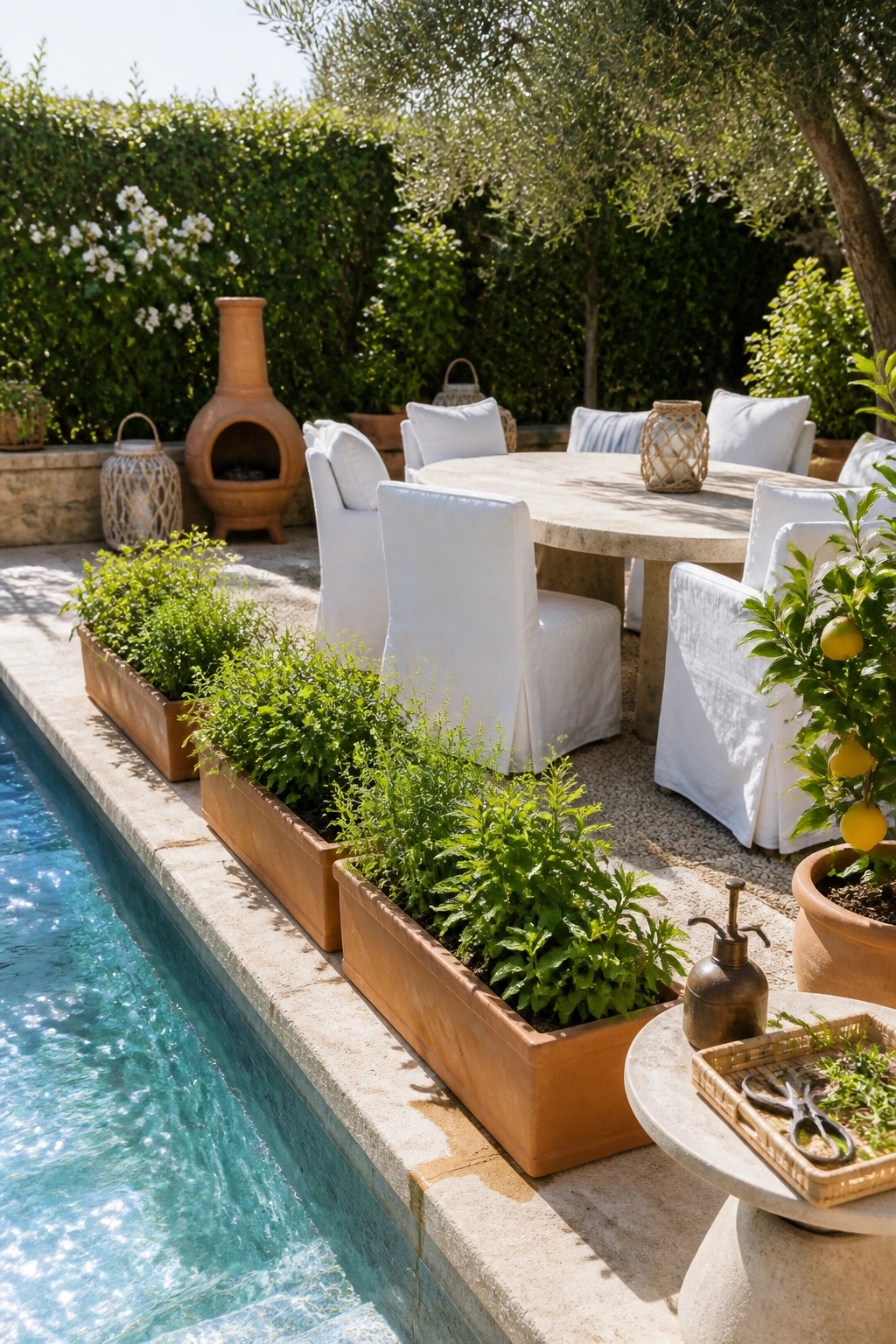
Many people find it handy to keep fresh herbs right where they cook and eat outside. Long rectangular planters set along the patio edge put the herbs within easy reach of the dining area without taking up extra floor space.
This works best on poolside patios or open terraces that already have a clear linear edge. It suits homes that want simple access for daily cooking while letting the herbs get plenty of sun.
Wooden Crates for Patio Herb Pots
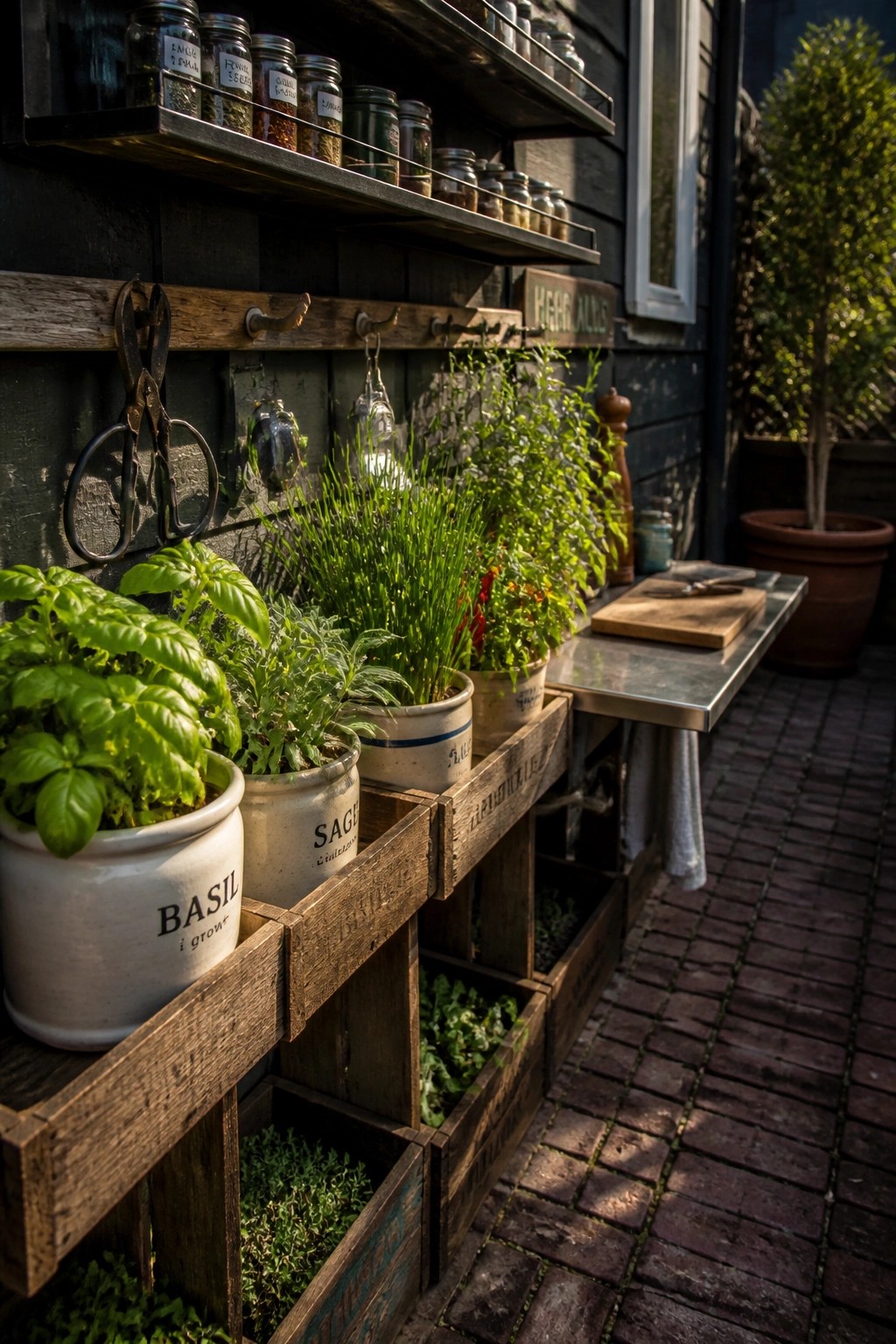
Wooden crates make a simple way to group herb pots together on a patio. They lift the plants off the ground, keep them in one spot, and give you a clear place to reach for what you need while cooking.
This works best along a wall or beside a table where you prep food. Line up a few crates, set the pots inside, and add a shelf above for jars or tools if you have the space. Just check that the crates stay dry so they last longer.
Frequently Asked Questions
Q: How often do I really need to water herbs in patio pots? A: Check the soil with your finger each morning and water when the top inch feels dry. Morning watering lets the plants soak it up before the sun gets strong. Group pots with similar needs so you can hit them all at once without extra work.
Q: What if my patio gets strong afternoon winds? A: Set the taller pots against a wall or railing to block the worst gusts. Choose low-growing herbs like thyme or oregano for the windiest spots since they stay steadier. A quick tie with soft string keeps floppy stems from snapping.
Q: How do I harvest without killing the plant? A: Pinch off outer leaves or stems first and leave the center growing point alone. Do this every few days once the herbs look full. Regular picking actually pushes out more leaves for your cooking.
Q: Can I start new plants from cuttings of the ones I already have? A: Snip a healthy stem below a leaf node and stick it in a small jar of water. Change the water every couple of days until roots show up in a week or two. Pot it up once the roots look sturdy and keep it near the parent plant for easy care.
