

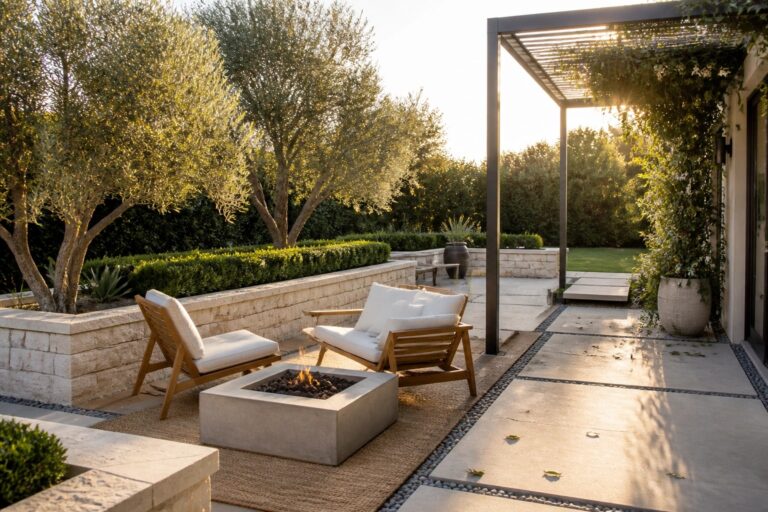
I have learned over time that patios often fail when the hardscaping leaves too little room for furniture and movement.
Stone and concrete set a strong base, yet they need careful placement so the space stays practical through daily use.
Usability comes first.
Sculptural greenery can then soften the edges without blocking sightlines or paths that people actually walk.
I tend to try one layout adjustment like that in my own yard before making bigger changes.
Pergola Structures for Fire Pit Patios
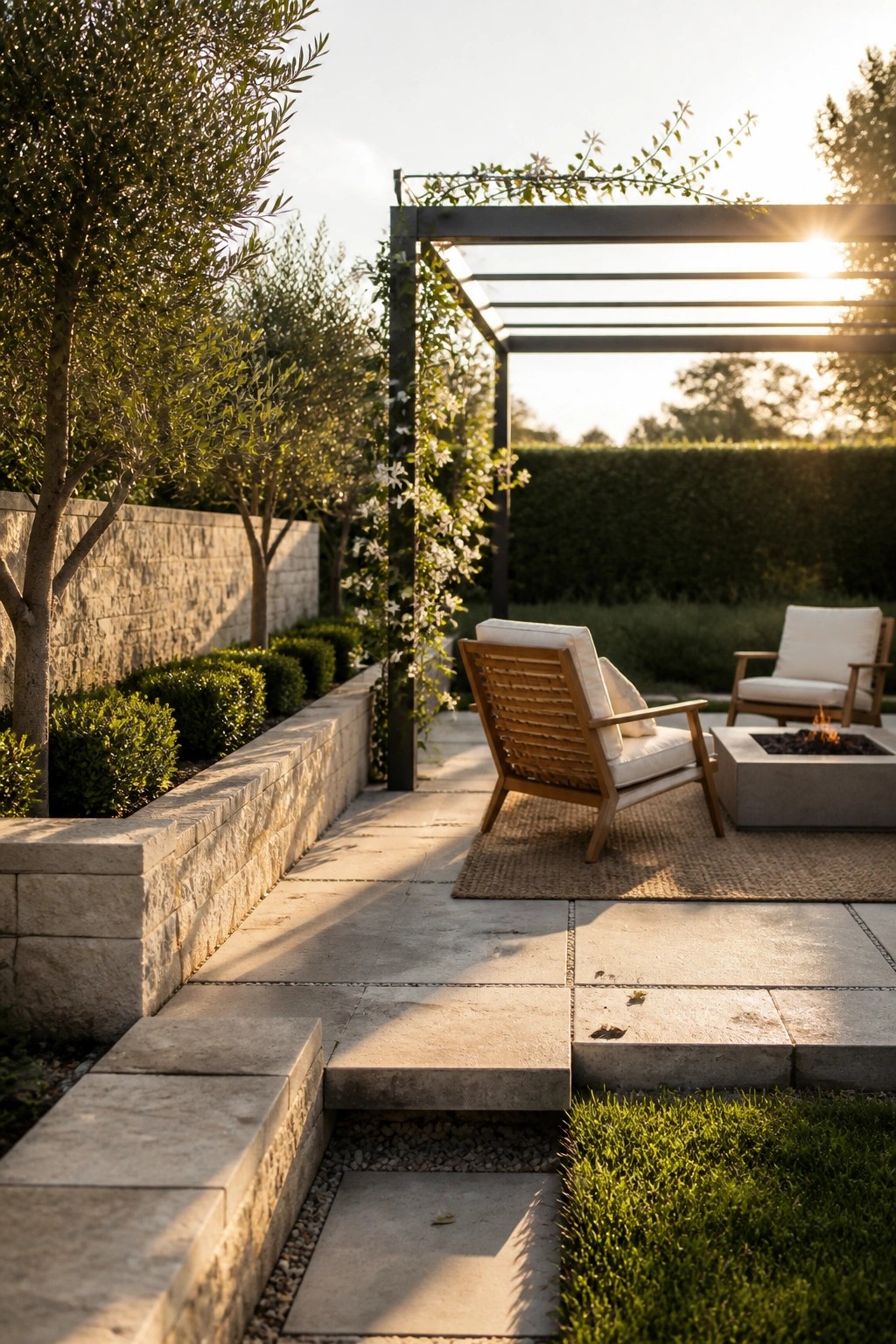
A pergola gives the seating area a clear sense of enclosure without closing it in. It works especially well when the fire pit sits just outside the covered zone so the two functions stay distinct yet connected. The stone walls and concrete paving underneath help the whole setup feel grounded rather than temporary.
This layout suits homes that already have a flat patio space and want to add usable shade without building a full roof. Keep the pergola simple in color and line so it does not compete with the surrounding planting. Watch the scale. Too large and the space starts to feel heavy instead of open.
Concrete Bench Seating That Blends Into The Garden
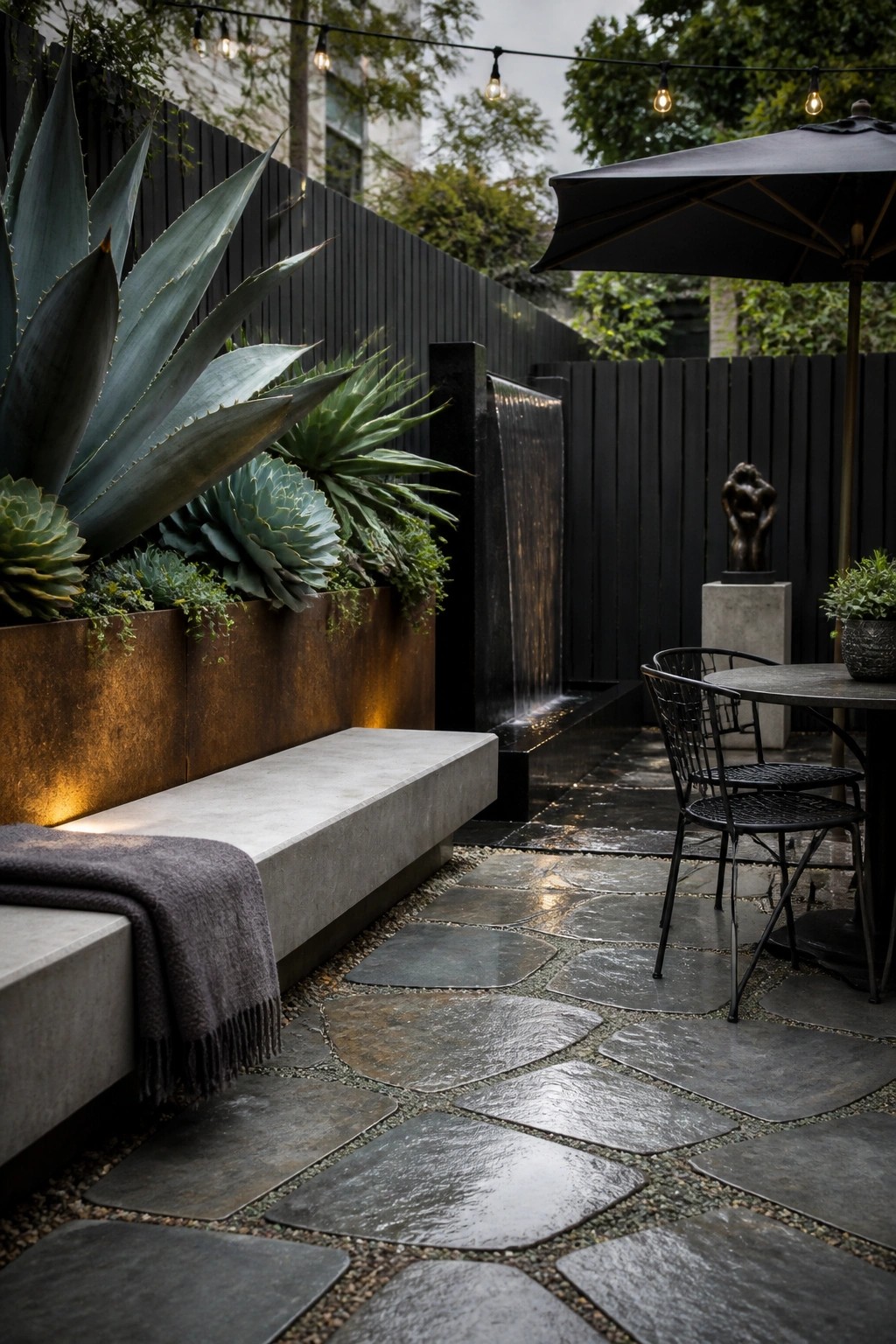
A long concrete bench works well when it sits right against the planting bed instead of floating on its own. It gives you solid seating without adding extra furniture that can crowd a smaller patio. The material feels permanent and holds up to weather, which keeps the space looking clean over time.
This setup works best on patios that already use stone or gravel paving. Keep the bench low and simple so the plants and any water feature stay the main focus. It suits homes that want a modern look without turning the whole yard into a full outdoor room.
Concrete Planters With Tall Trees
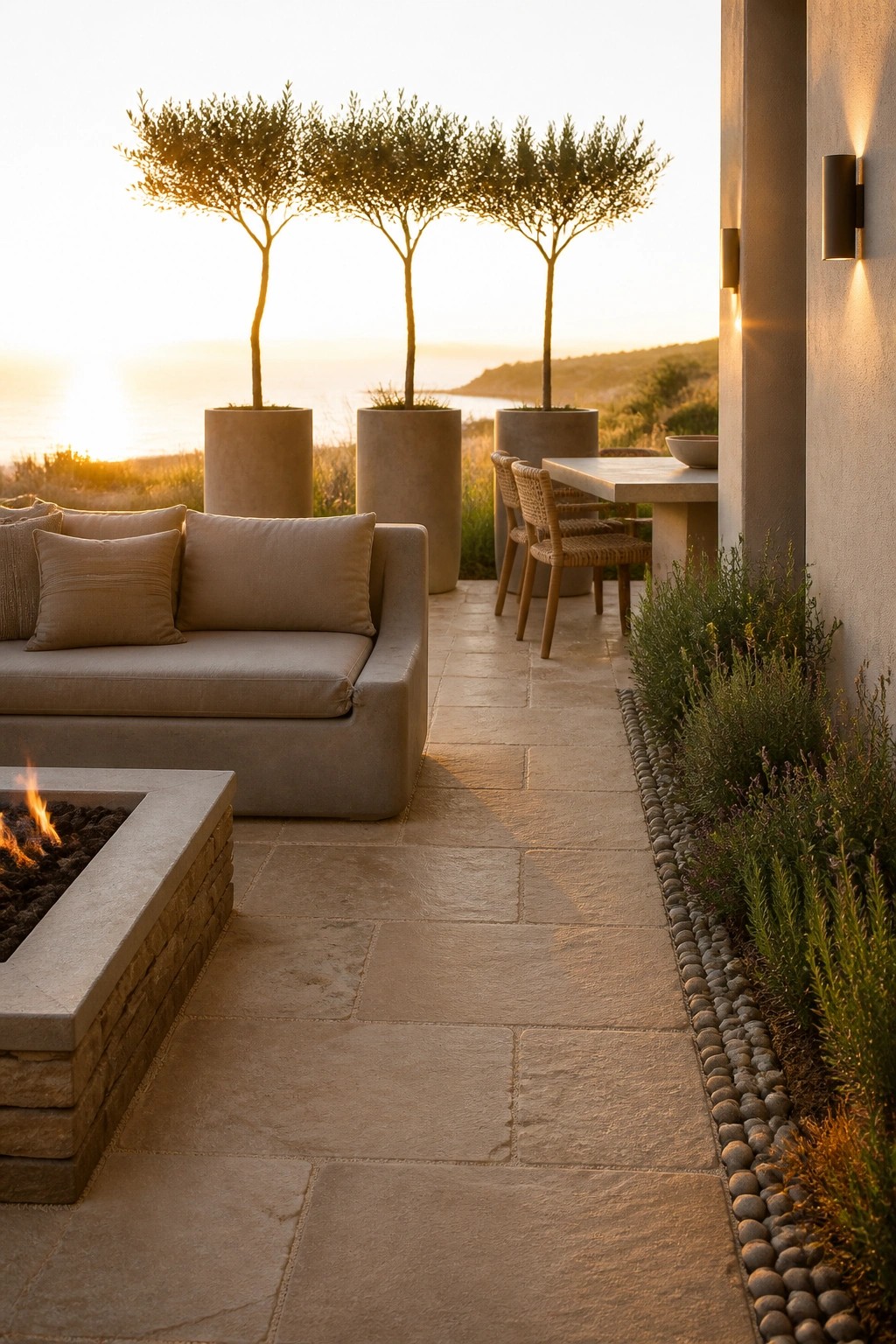
Large concrete planters holding trees give a stone patio some height and a bit of softness without needing permanent beds. The pots sit right on the paving and create a simple line that separates the seating area from the edge.
This approach works well on flat paved spaces where digging is not an option. It suits homes that want greenery but still need the surface to stay open for furniture or walking through.
Built-In Seating Around A Fire Pit
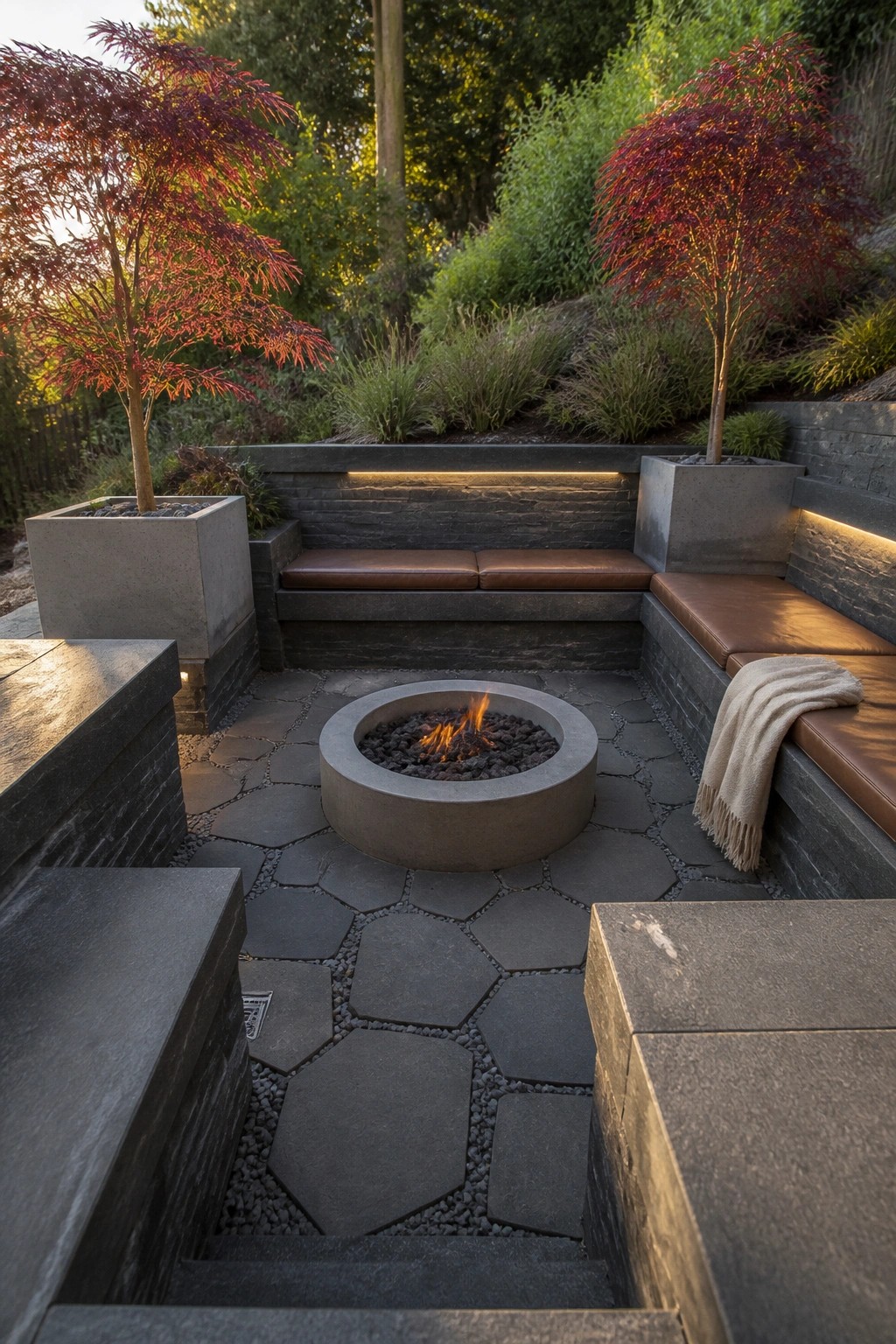
Many people like how built-in concrete benches wrap right around a fire pit. It turns the whole area into one solid gathering spot without extra chairs or tables taking over the space.
This setup works best in smaller yards or on patios where you want something permanent. Stone paving underneath helps tie it together and keeps the look simple.
Concrete Planters Along Outdoor Dining Tables
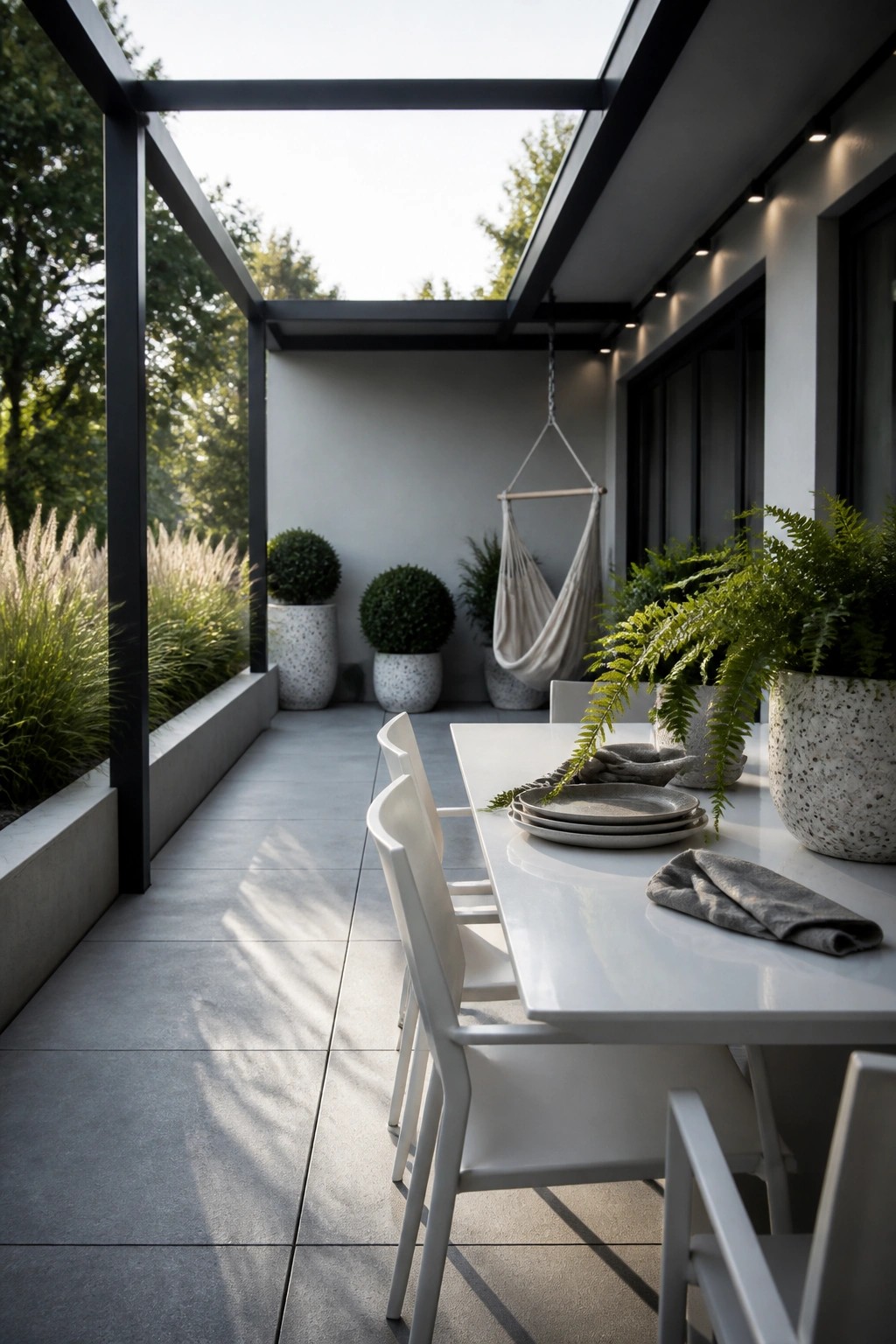
Large concrete planters work well when you want greenery without digging up a patio. They let you place bigger plants right next to a table, which adds height and softness while the floor stays simple and easy to clean.
This setup suits modern homes with covered outdoor spaces. Keep the planters in a similar tone to the paving so the plants stand out, and choose one or two plant shapes that repeat rather than mixing too many kinds.
Stepping Stones Over a Reflecting Pool
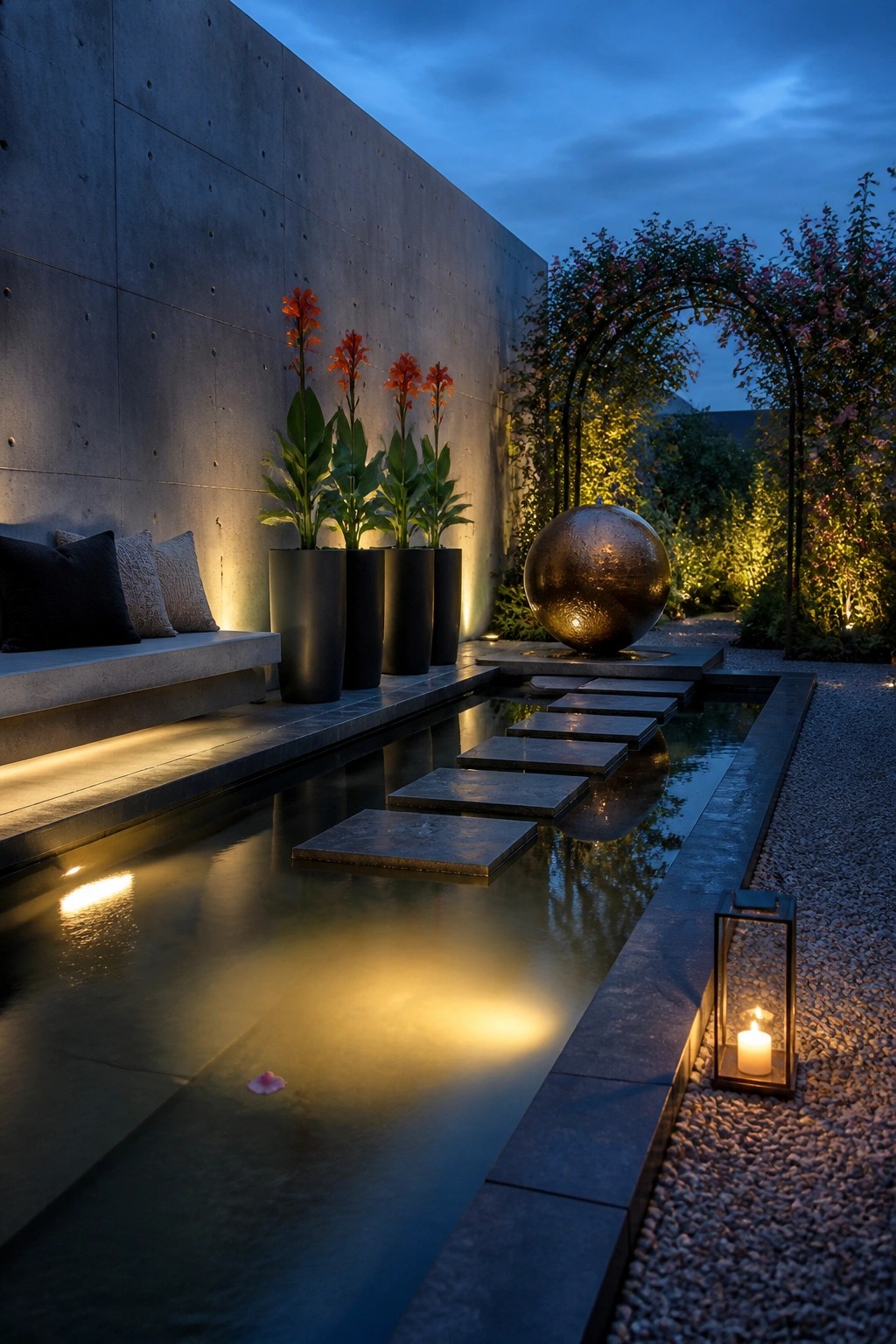
A narrow water feature with stepping stones running through it gives a patio garden a simple way to move from one side to the other while keeping the surface calm and open. The stones sit just above the water so the path feels light but still solid underfoot.
This setup works best in smaller modern gardens that already use concrete and stone. Keep the pool shallow and the stones wide enough for steady footing. It adds movement without crowding the space or needing much extra planting.
Use a Tall Stone to Anchor the Patio
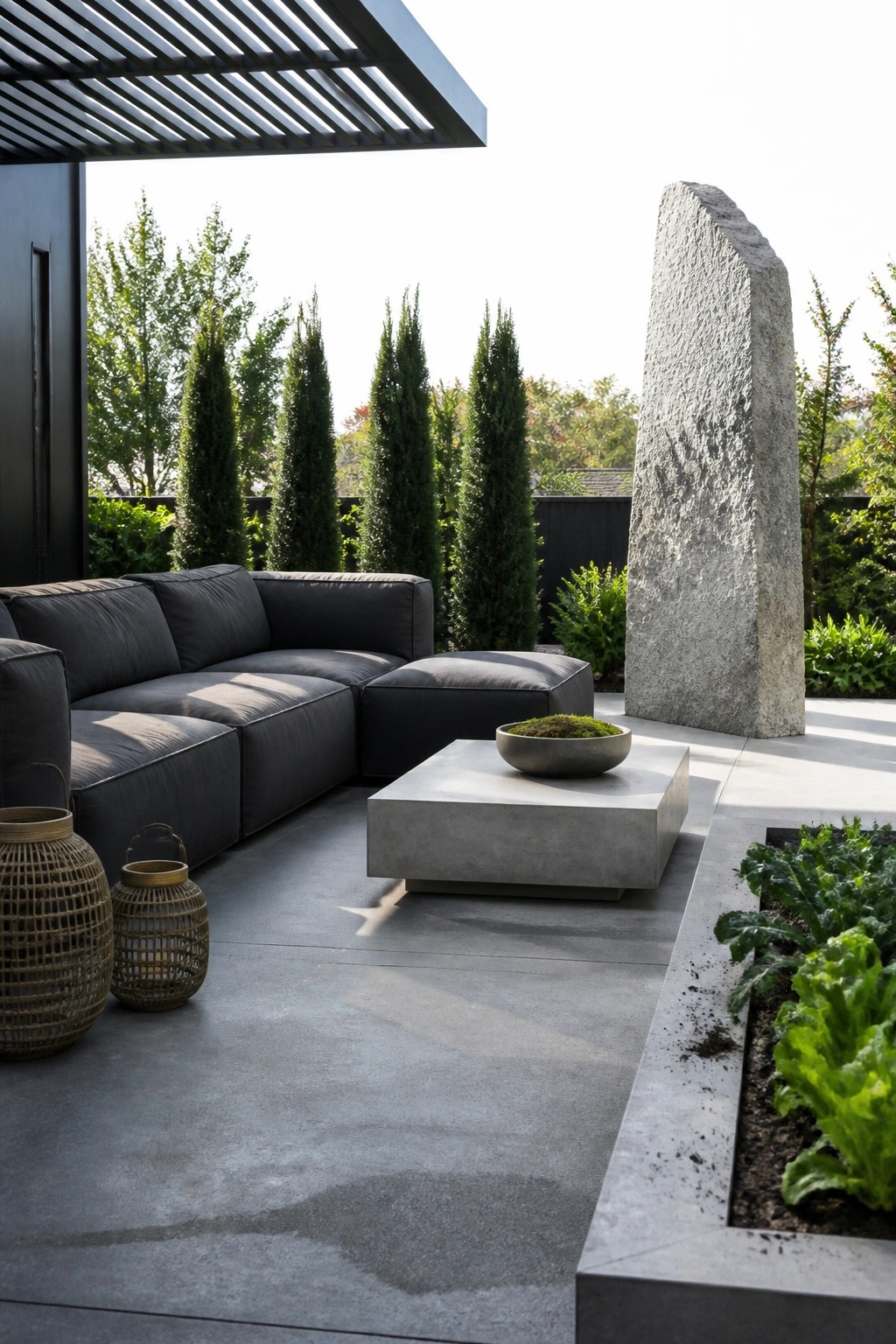
A tall standing stone works well in a modern patio because it gives the space a clear focal point without adding clutter. The rough texture and simple shape stand out against smooth concrete, which keeps the whole area feeling calm and structured rather than busy.
This approach suits homes with clean lines and limited planting space. Place the stone where it can be seen from the seating area, and keep surrounding plants low so the stone remains the main feature. Avoid crowding it with too many other objects or the effect gets lost.
Built-In Curved Seating For Patio Tables
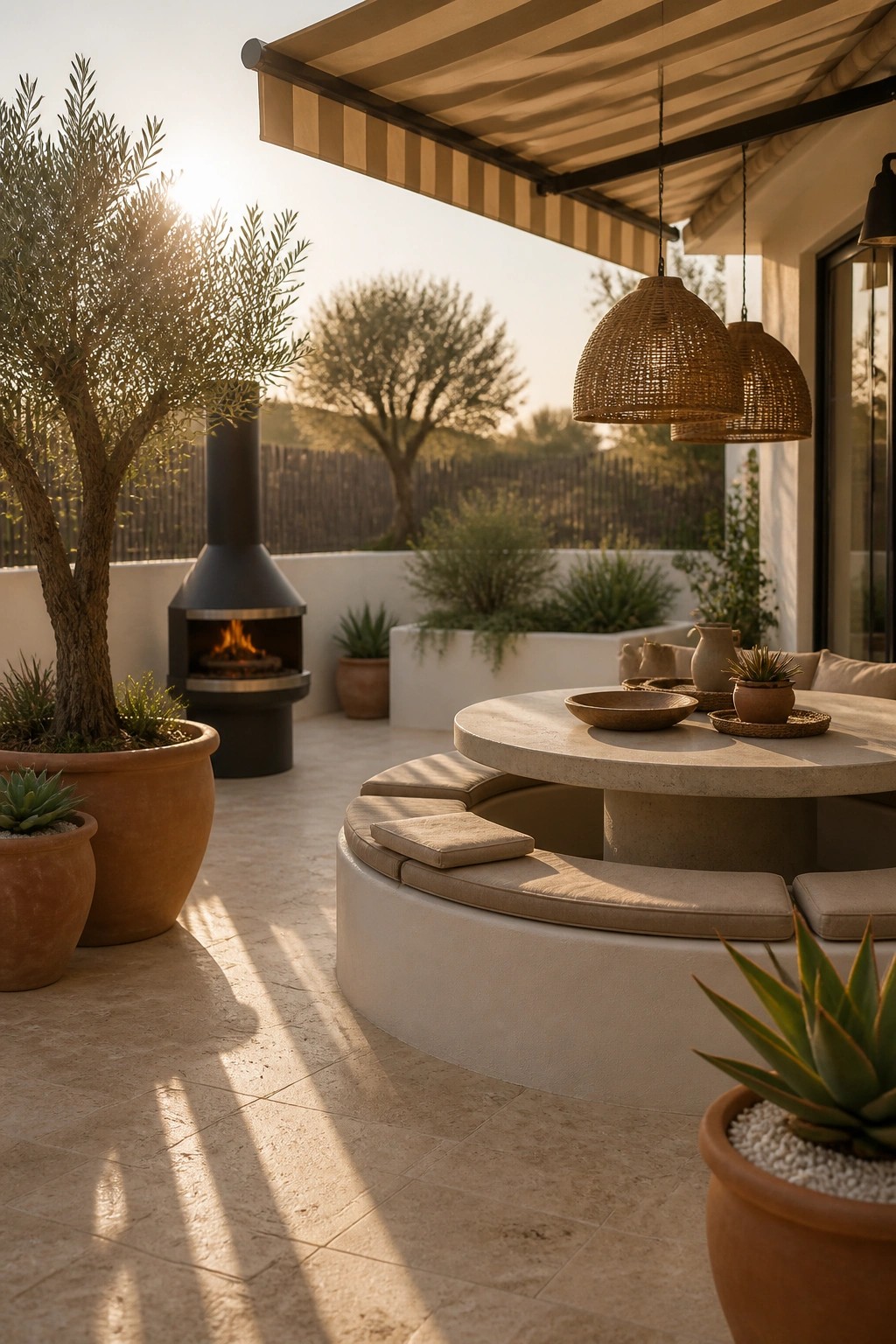
A curved built-in bench around a central table gives the patio a settled, finished look without crowding the space with loose chairs. The seating stays in place year-round and makes the area feel like one complete zone rather than a collection of separate pieces.
This works best on patios made of concrete or stone where the bench can be poured or built to match the floor. Keep the cushions simple so they can stay outside, and leave a little extra room around the edges for a few large pots.
Line a Path With Tall Planters
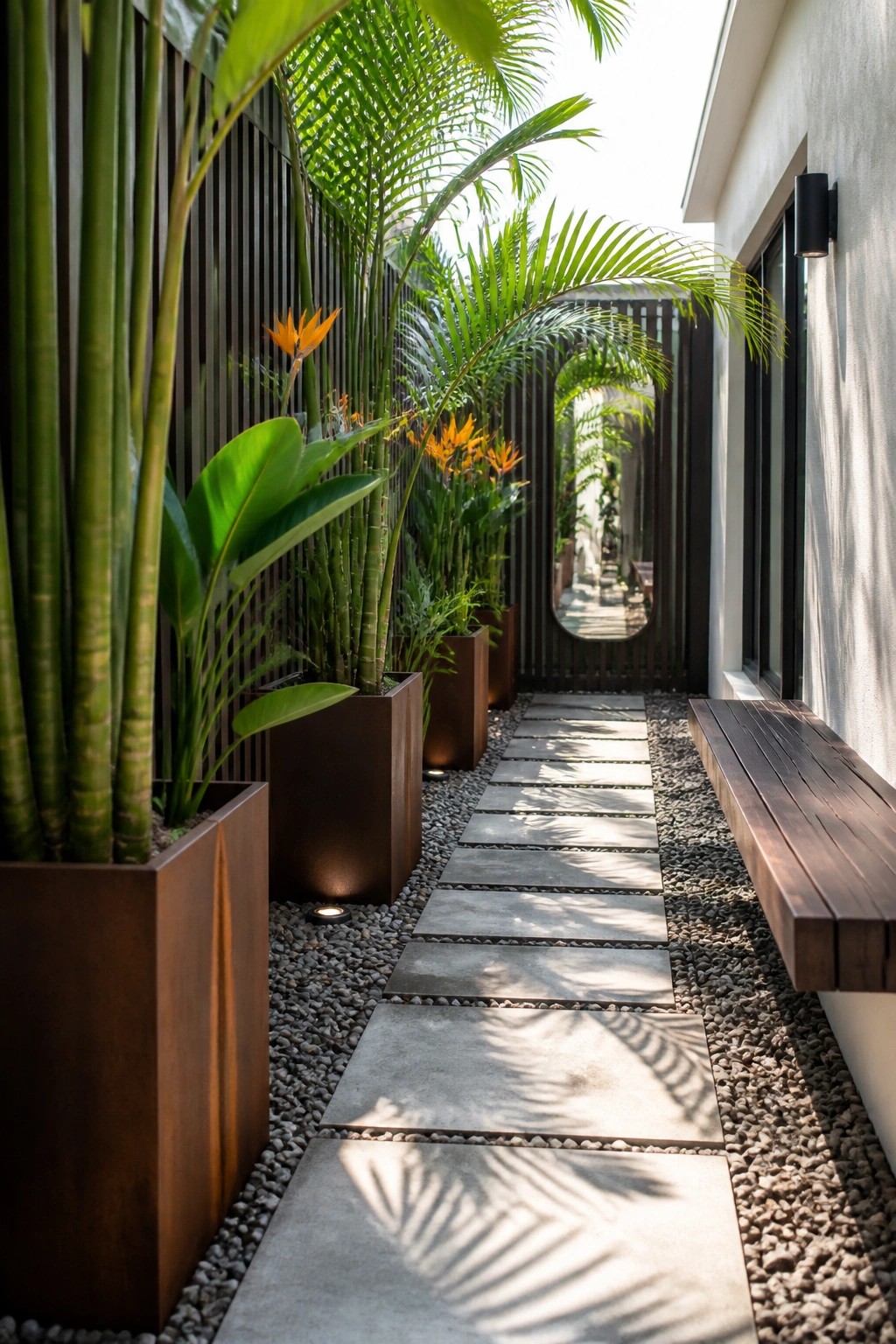
Tall planters placed along a walkway give a narrow space more structure without crowding it. The plants add height and greenery while the containers keep everything contained and neat. This setup works especially well in side yards or tight passages where a full garden bed would not fit.
It suits modern homes that already use clean lines and simple materials. Stick with one or two plant types in matching containers so the look stays calm rather than busy. Gravel between the stepping stones helps with drainage and keeps the path from feeling too formal.
Concrete Bars For Casual Outdoor Seating
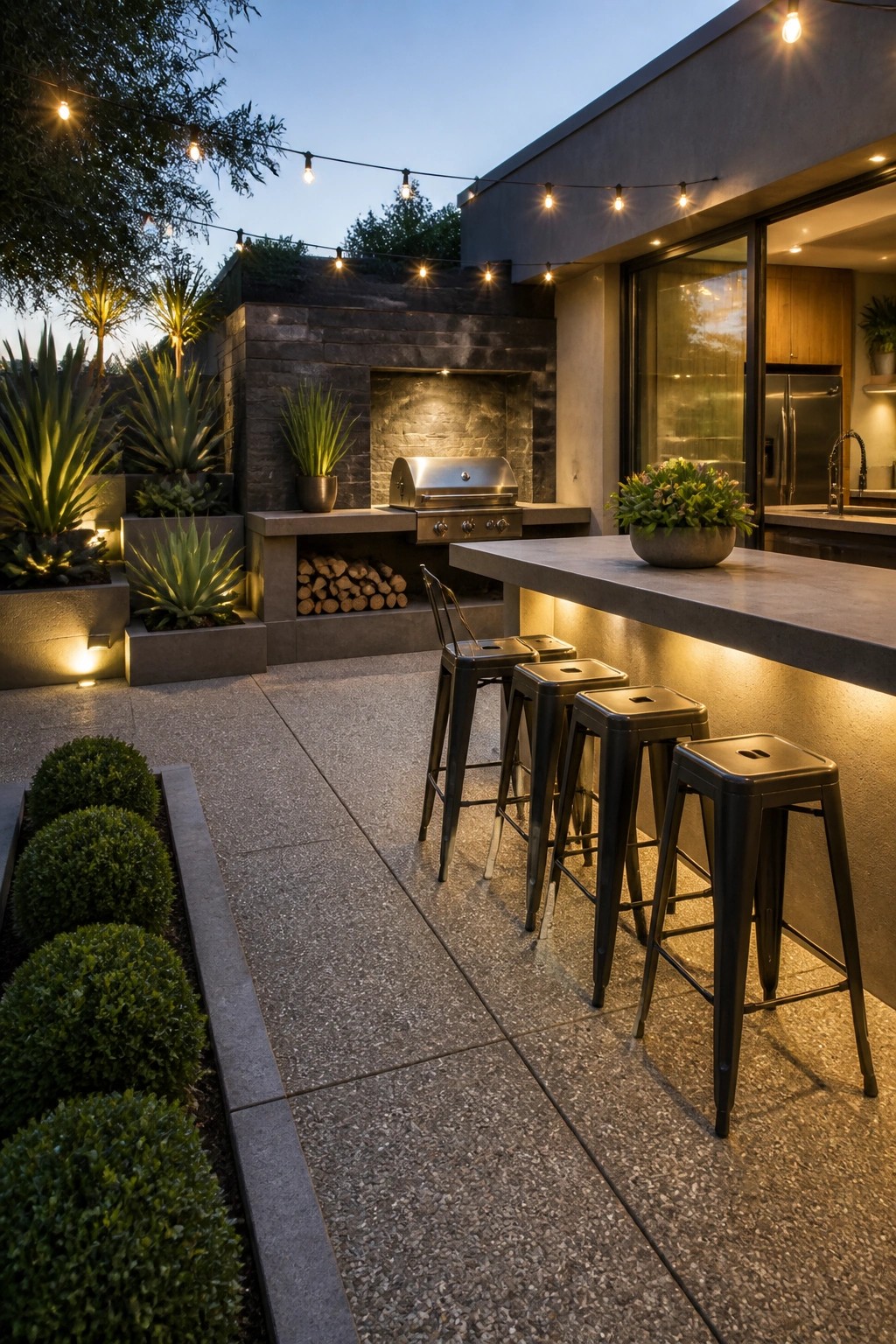
A concrete bar works well on a patio because it creates a sturdy surface for both serving food and pulling up a few stools. It feels more permanent than portable tables and holds up to weather without much fuss.
This approach suits homes with a grill nearby and enough space to keep the bar from blocking the flow of the yard. Keep the stools simple and metal so the whole setup stays low maintenance and easy to clean.
Concrete Raised Planters For Rooftop Edges
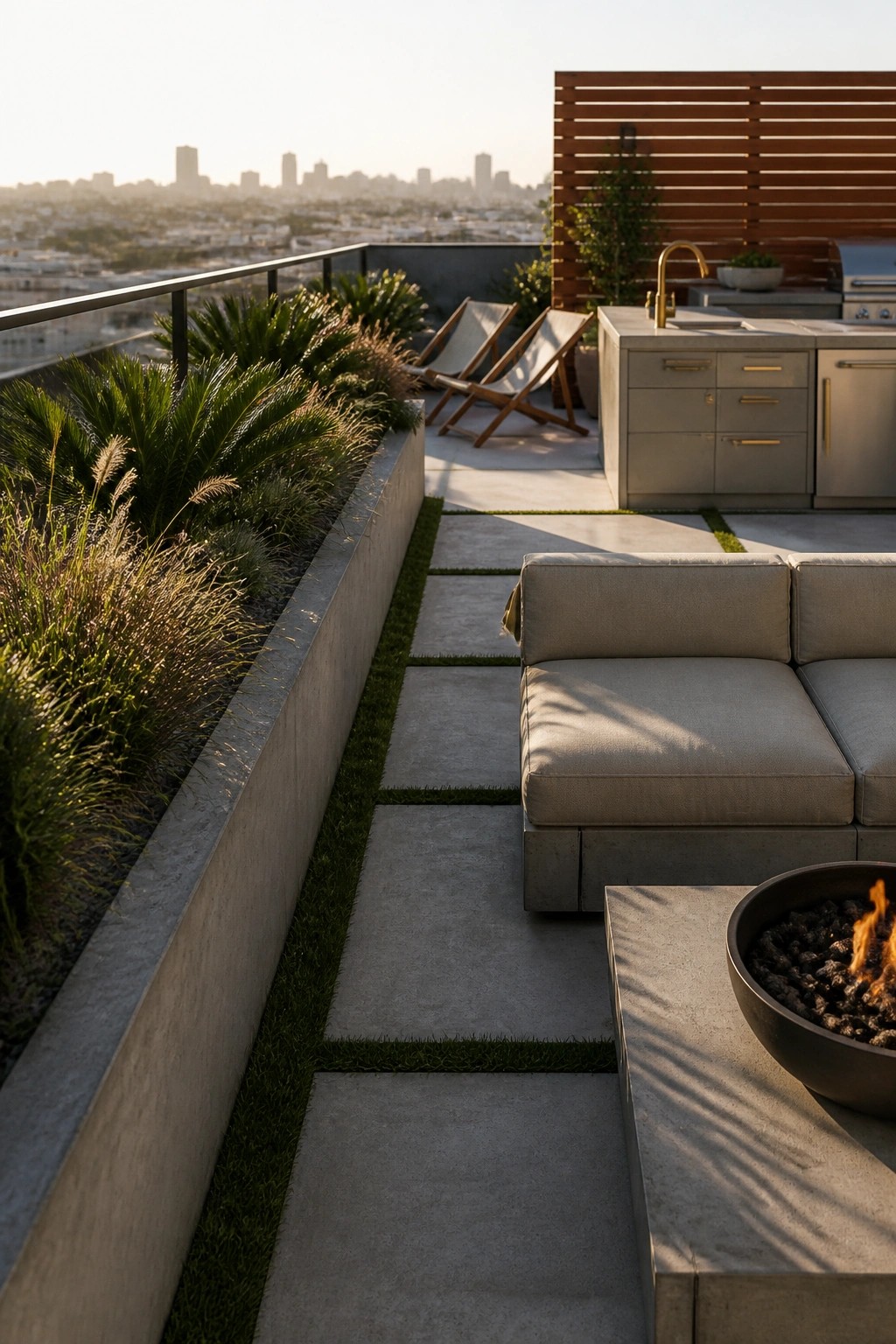
Many rooftops feel too open until you add a long raised planter along one side. Concrete works well here because it holds up to weather and gives the plants a solid base without taking up much floor space.
Place the planter to run beside the main seating area so the greenery creates a soft screen. This setup suits modern homes with flat roofs and helps keep the hard surfaces from feeling bare.
Fire Pits Set Into Stone Patios
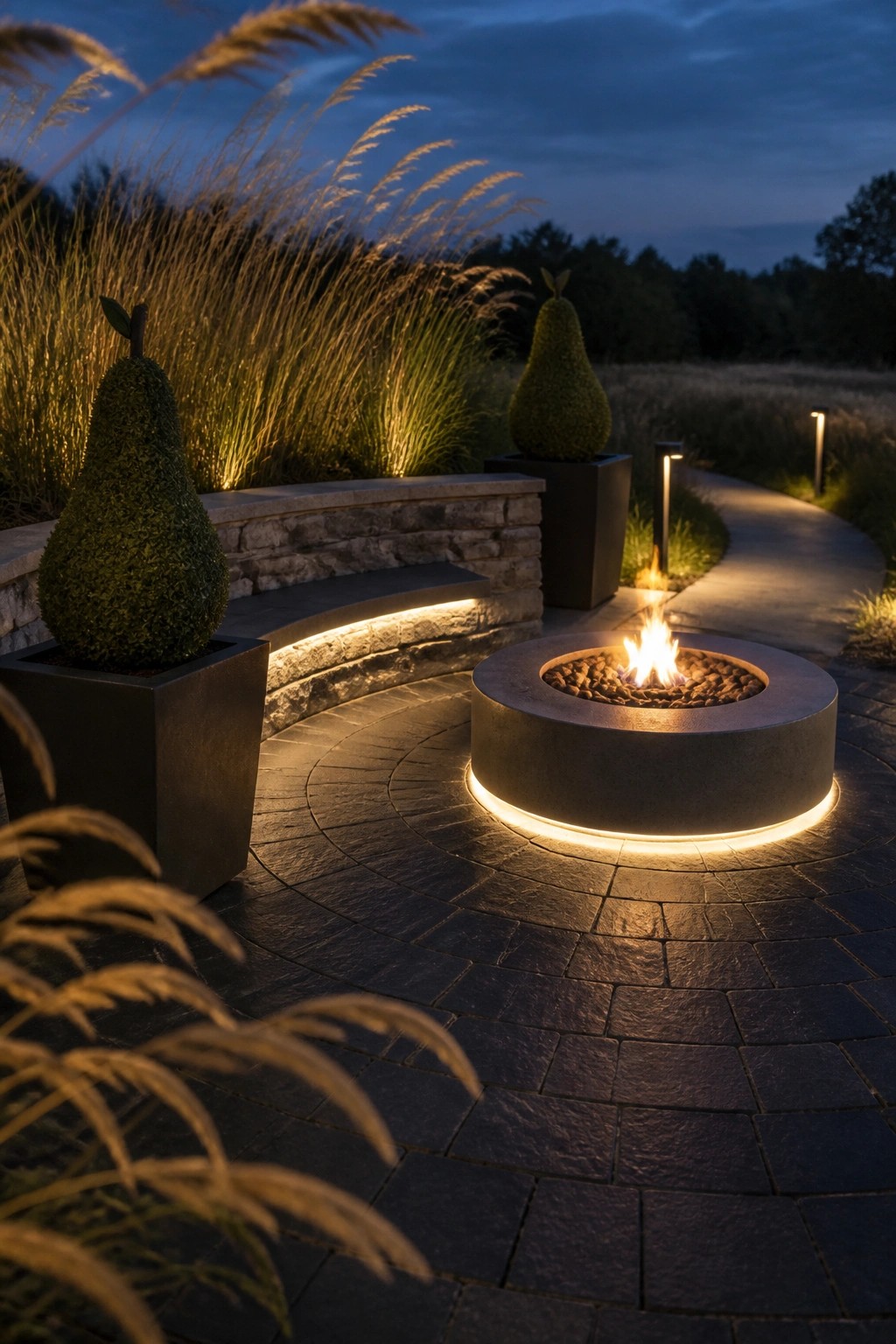
A round fire pit placed directly into the patio floor keeps the space open while giving people a clear spot to gather. The low concrete design sits flush with the paving so it does not block movement or views across the yard.
This setup works well on medium to large patios where you can run the stone in a simple circle around the pit. Keep the base lighting soft and close to the ground so the fire itself stays the main focus at night.
Set One Tree On A Concrete Platform
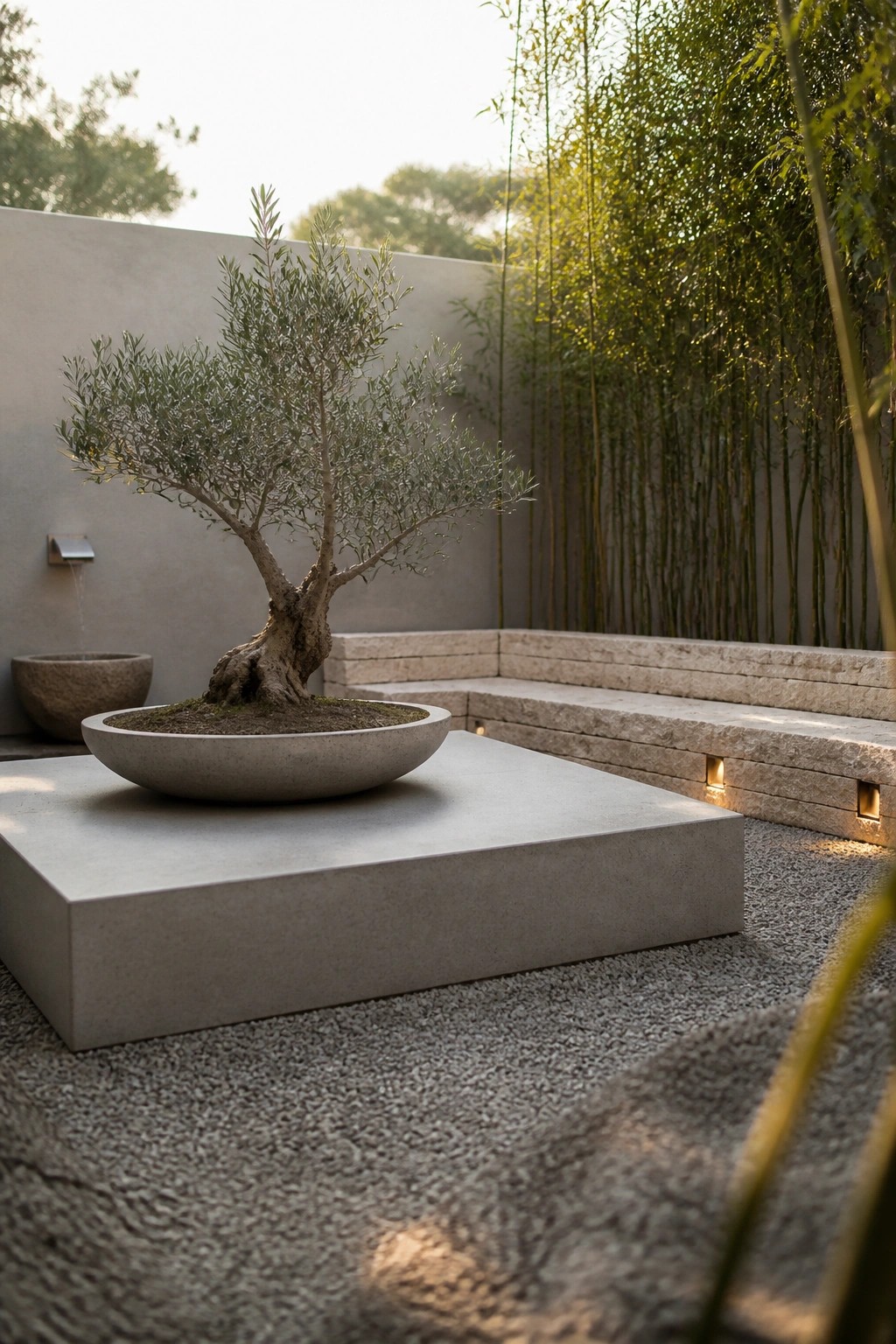
A single mature tree can carry an entire patio garden when it sits on its own raised base. The concrete platform lifts the planter just enough to make the tree feel intentional instead of placed at random, and the low bowl keeps the look clean and simple.
This works well in small or narrow yards where you want one strong focal point rather than lots of smaller plants. Keep the surrounding ground plain with gravel or stone, and let built-in seating run along the edges so the tree stays the main event. Make sure the planter is wide enough for the roots and has good drainage.
Concrete Pool Decks
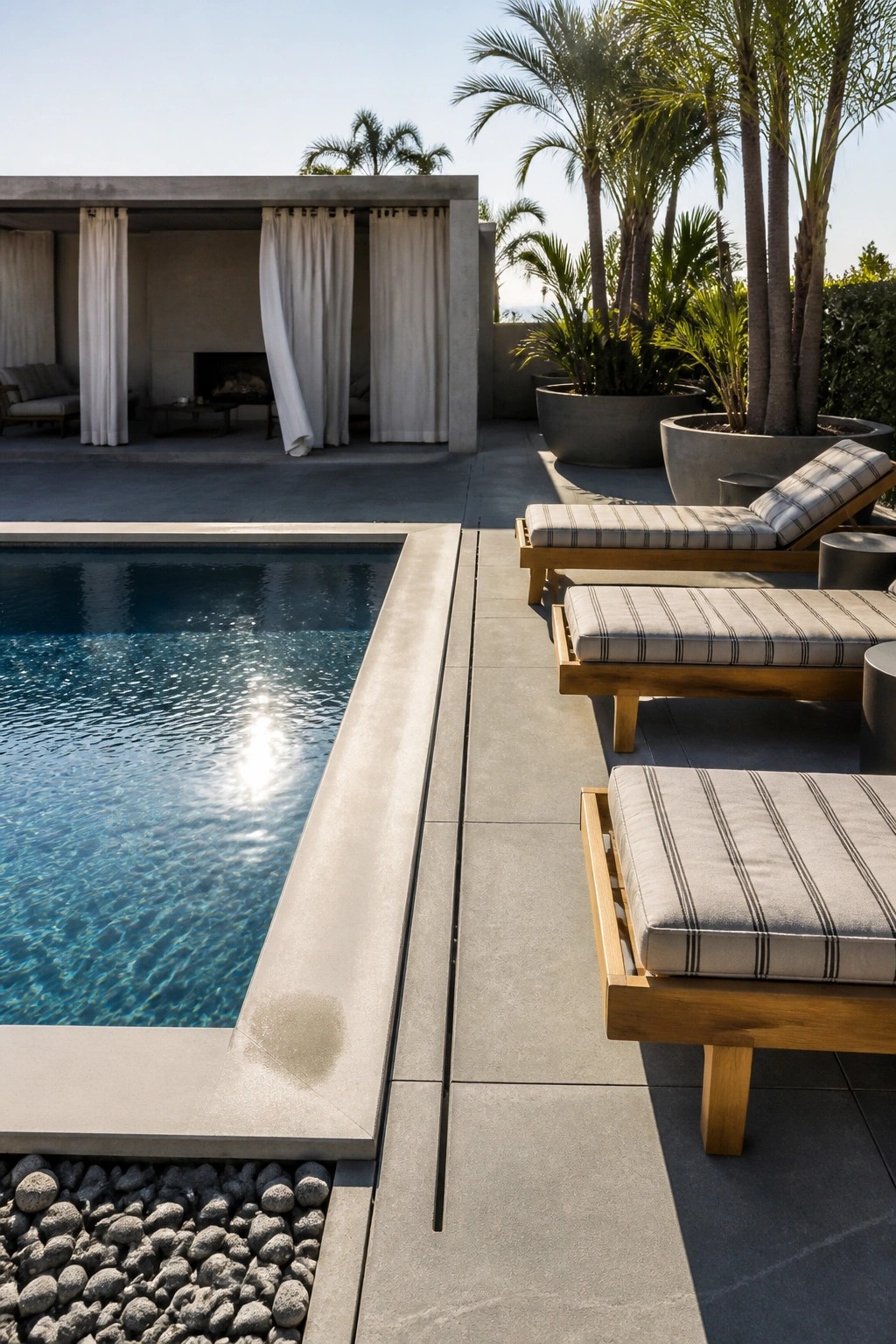
Concrete works well for pool decks because it stays cool underfoot and needs little upkeep. The flat surface lets you place lounge chairs right next to the water without extra steps or different materials getting in the way.
This approach suits homes in warm climates where the pool gets daily use. Keep the concrete color light so it does not get too hot, and add a few large planters to soften the edges if the space starts to feel too bare.
Built-In Fire Pits Along Patio Seating
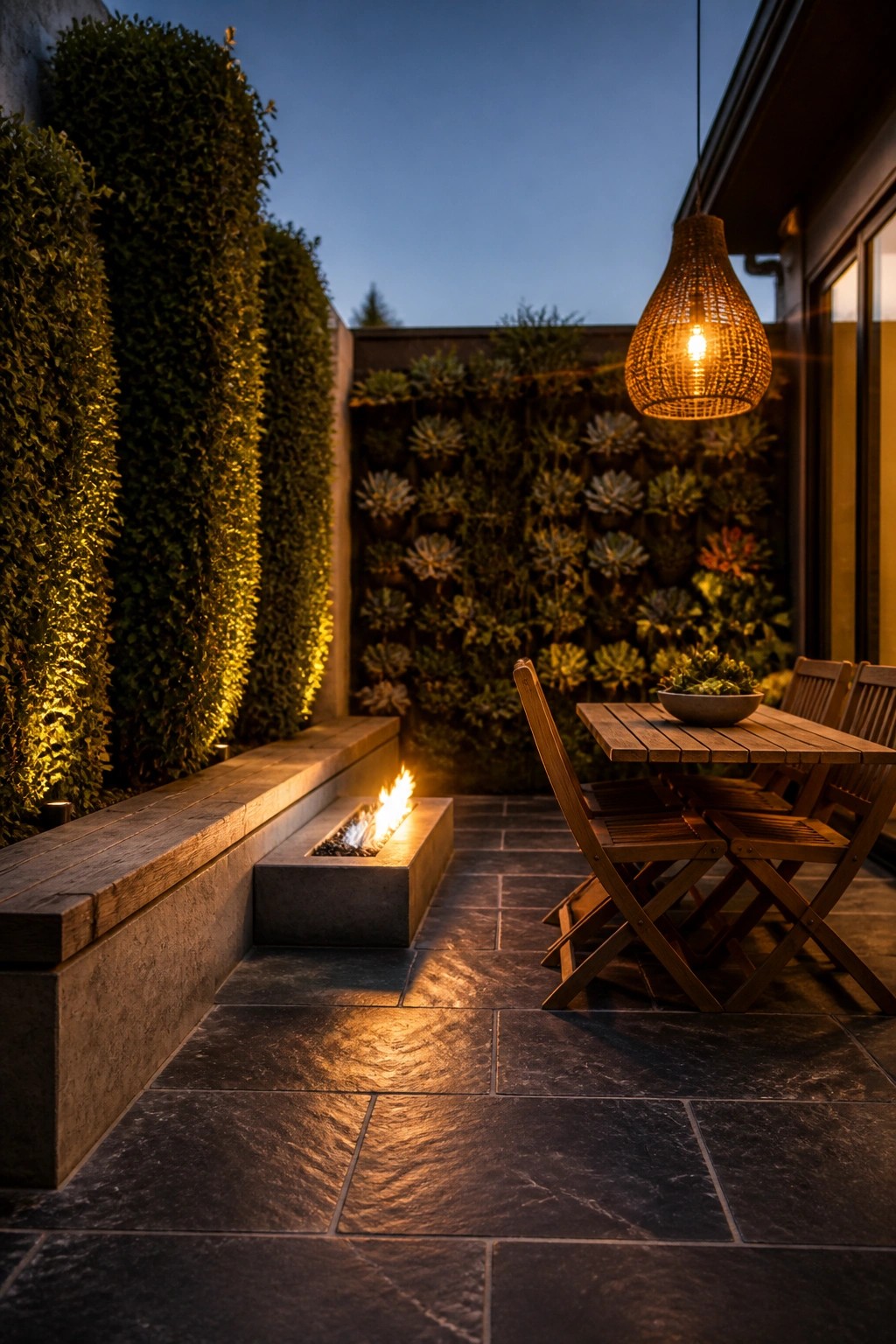
A built-in fire pit set into a concrete bench gives the patio a clear center without crowding the space. It turns the seating area into one connected spot where people can gather around the flame while still having room to move.
This setup works best on smaller patios or side yards with stone paving. Keep the concrete simple and match it to any nearby walls or steps. Pair it with a few chairs and a table rather than trying to fill the whole area.
Curved Stone Paths With Pebble Edges
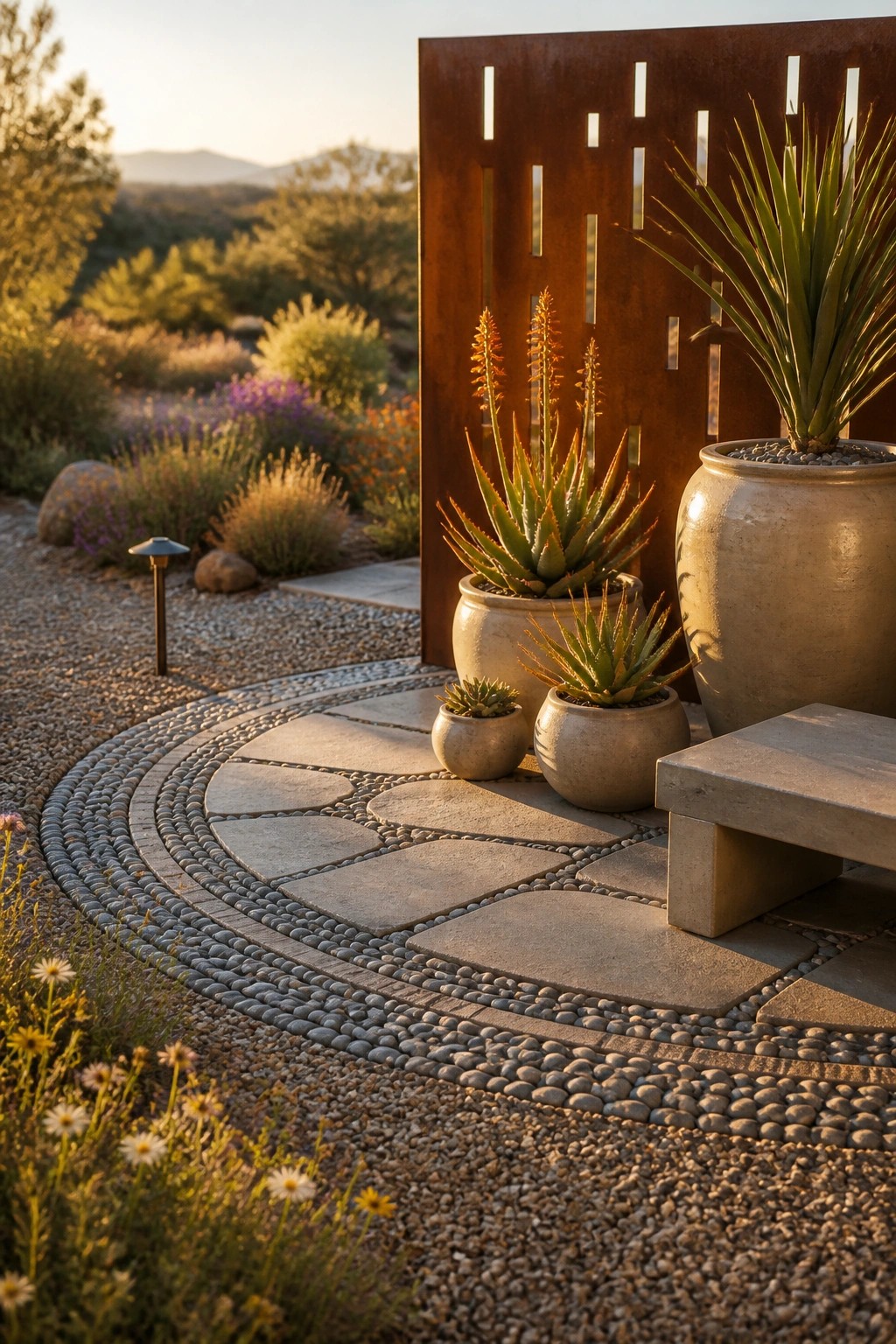
A curved stone path edged in small pebbles gives the garden a soft, flowing shape that feels more natural than straight lines. It helps define the patio area while letting the surrounding gravel and plants blend in without hard borders. Many people like this look because it adds movement and keeps the space from feeling boxed in.
This approach works especially well in smaller yards or side gardens where you want to guide foot traffic without adding walls. It suits homes with dry climates and low-water plants since the pebbles help with drainage. Just make sure the curve is gentle so the path stays easy to walk on.
Concrete Fountain As A Simple Garden Focal Point
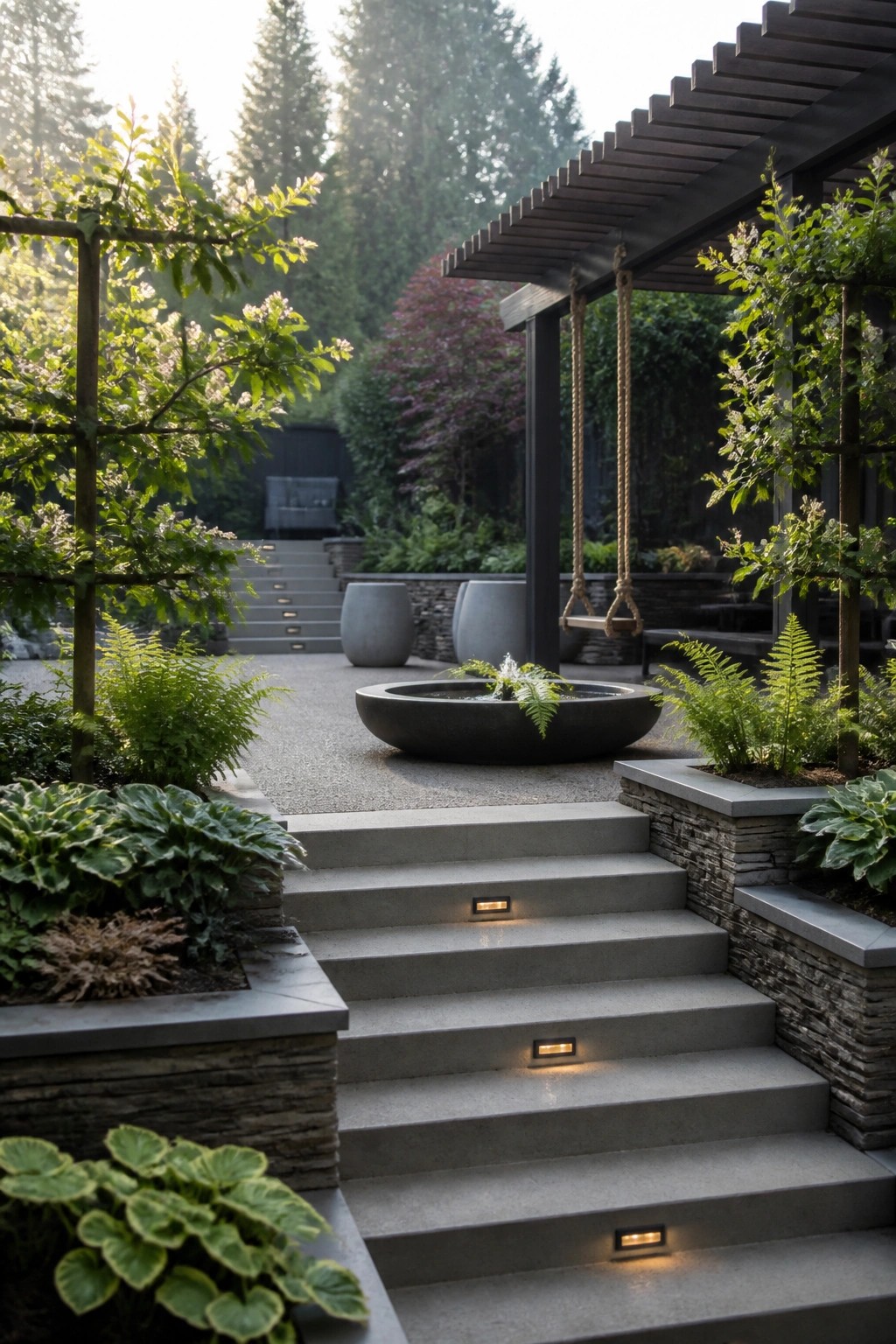
A large concrete bowl fountain can pull a whole garden together without needing much else around it. The shape stays clean and modern, while the water adds a quiet sound that makes the space feel settled. It works especially well when set into gravel or between stone steps, because the hard surfaces keep the look grounded instead of busy.
This idea suits homes with small to medium outdoor areas where you want one strong element instead of lots of smaller decorations. Place it where paths meet or near seating so it becomes the natural spot people notice first. Just keep the planting simple, like ferns or low greenery spilling over the edge, so the fountain stays the main feature.
Concrete Planters Along a Gravel Path
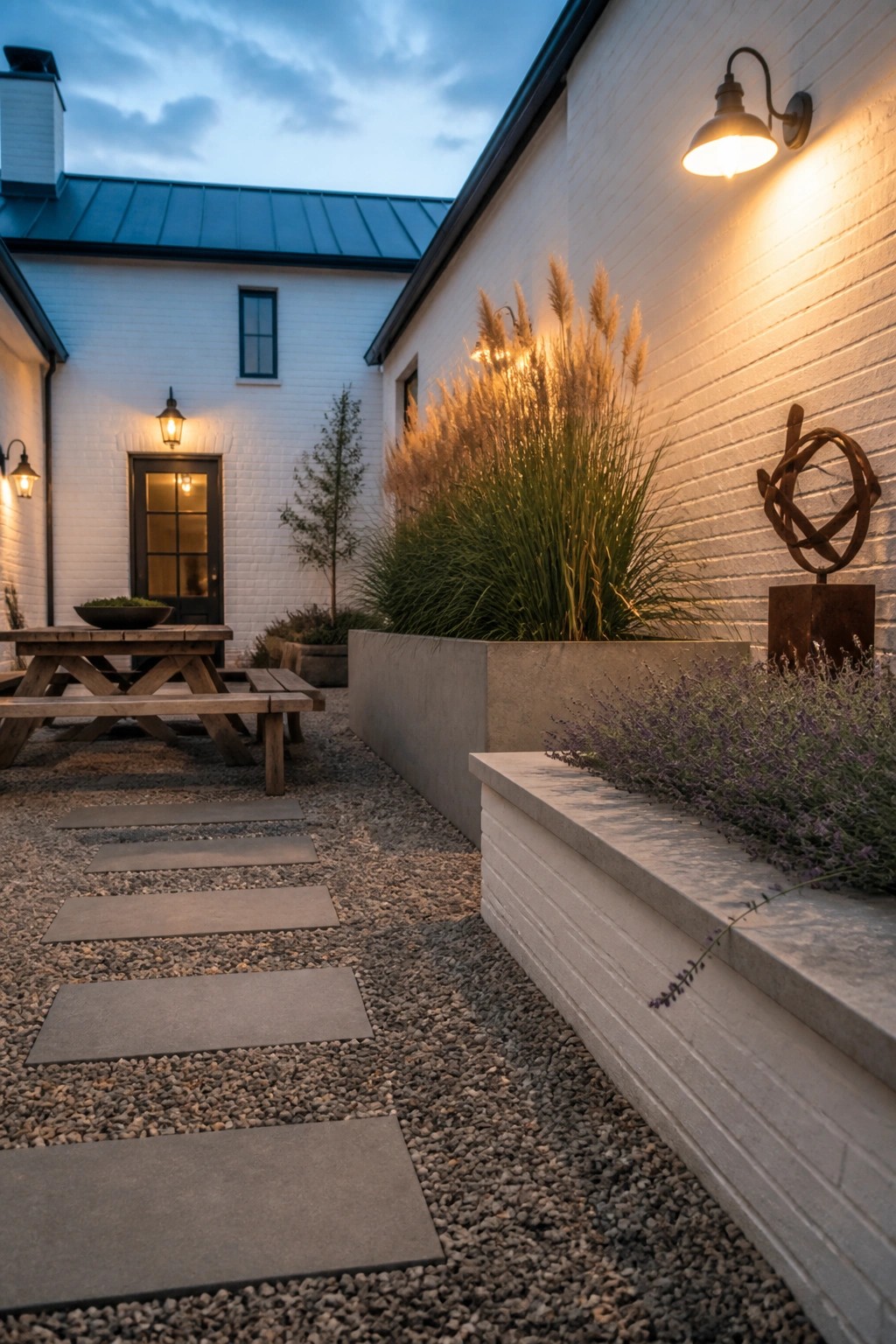
Concrete planters give a gravel path a clear edge without making the whole space feel boxed in. The low walls hold taller grasses and smaller flowering plants at different heights, which keeps the walkway feeling open while still giving the garden some shape. Stepping stones make it easy to cross the gravel without tracking it everywhere.
This setup works best in smaller side yards or courtyards next to a simple house exterior. It keeps maintenance low because the planters limit how far the plants can spread and the gravel needs little more than occasional raking. Use a neutral concrete color so it sits quietly against brick or siding rather than competing with it.
Concrete Planters To Structure A Small Patio
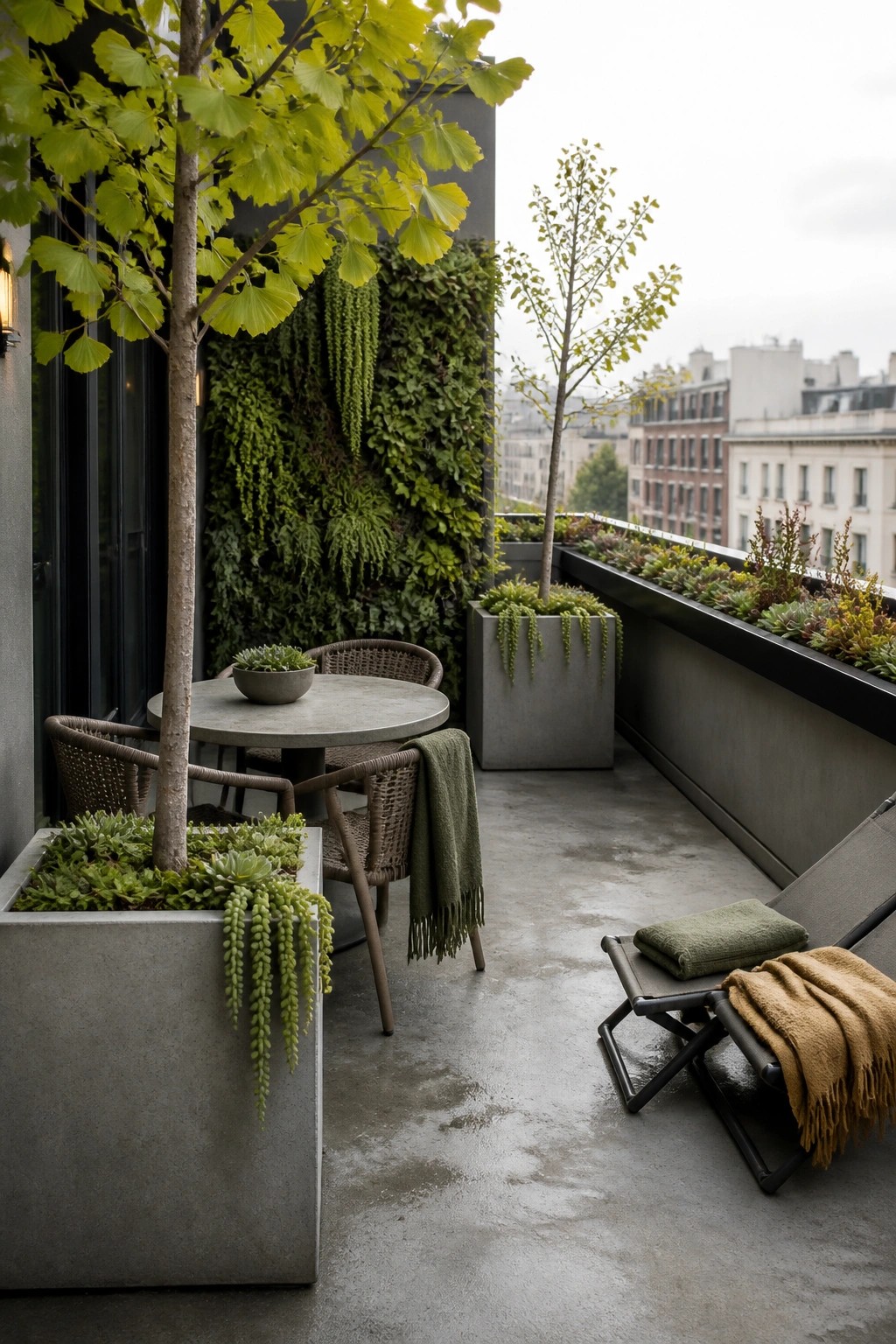
Large concrete planters give a patio real presence even when the space is limited. They hold substantial plants like small trees and trailing succulents while creating natural boundaries around the seating area.
This approach works best on balconies or rooftops where you need something sturdy that can handle wind and weight. Place the planters first to set the layout, then fill in with furniture that fits the remaining room.
Frequently Asked Questions
Q: How do I keep concrete from cracking in cold winters? A: Use a fiber reinforced mix when you pour it. Check the base for good drainage before starting. This prevents most issues from freeze and thaw cycles.
Q: What greenery gives that sculptural effect in small patios? A: Try tall grasses or succulents with bold leaves. Set them against stone walls to create contrast. They grow into striking shapes without taking much room.
Q: Can I lay stone pavers myself over existing concrete? A: Yes, but clean the old surface thoroughly first. Use a thinset mortar to hold everything in place. Level each paver as you go for a smooth finish.
