

Gardens often end up looking patchy when paths and edges do not line up with how the space actually gets used.
I have noticed that adding basic structure first usually makes the planting feel more settled than buying more flowers ever does.
Reused materials work well for this kind of work because they already carry some age and texture.
It is satisfying to watch a side yard that once felt forgotten start to look like it belongs with the rest of the house.
Many of these changes improve a garden more when they are added one layer at a time instead of all at once.
Add Defined Garden Beds To A Neglected Yard
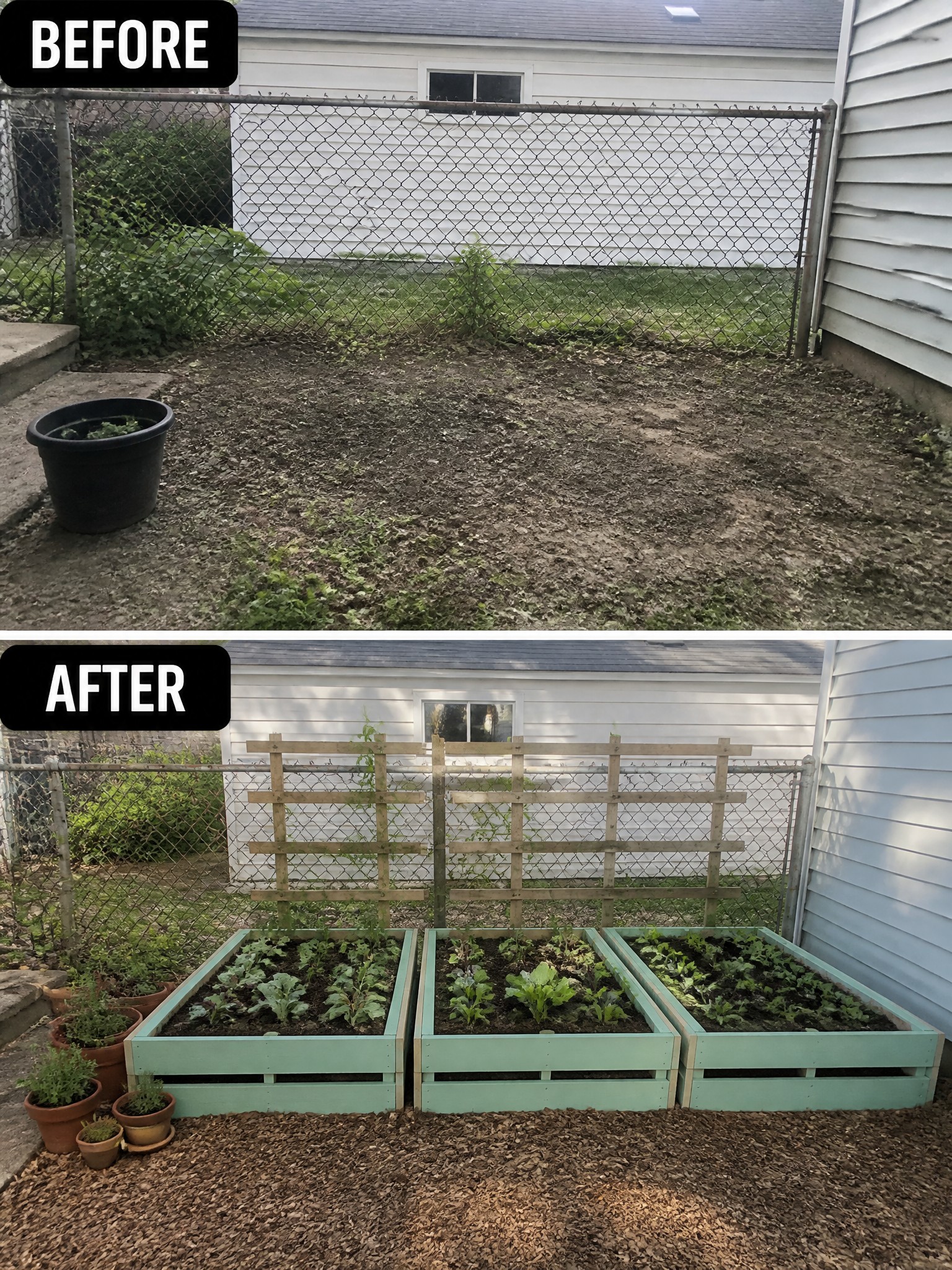
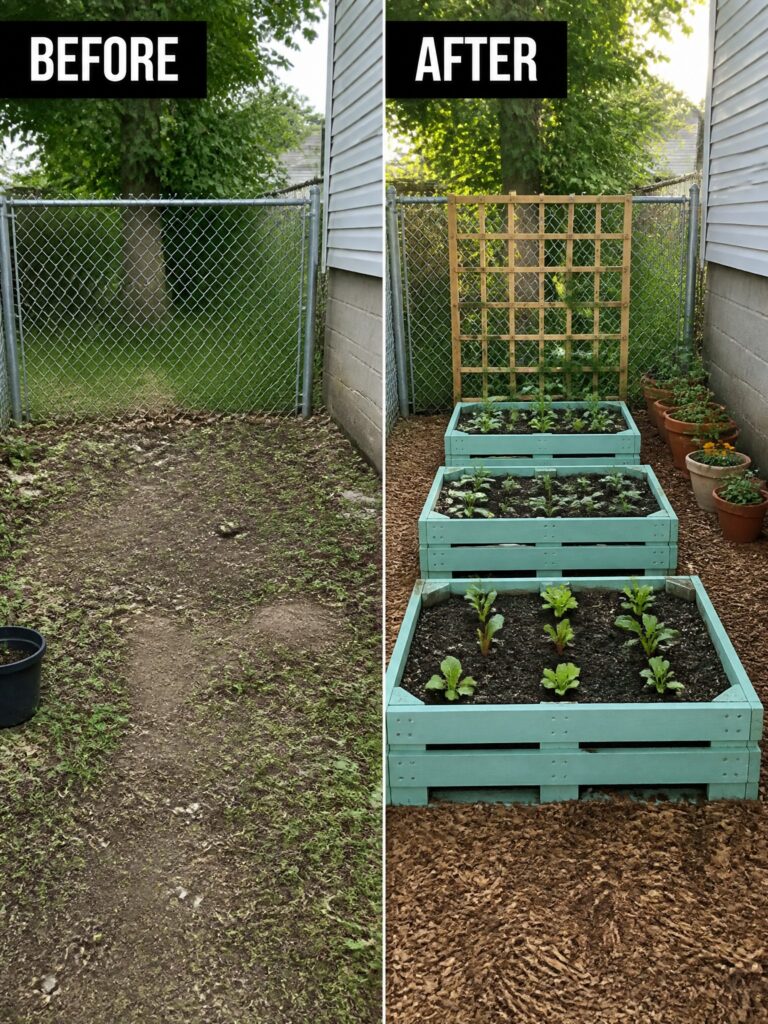
A weedy patch of dirt can feel like wasted space until you give it clear boundaries. Raised beds made from simple wood frames turn the area into a working garden and keep plants contained while the fence gets basic trellises for vertical growth. The mulch layer finishes the look and cuts down on weeds.
This idea suits small backyards where you want to grow food or flowers without a full redesign. Use scrap lumber or old pallets for the frames, set them level, and add a couple of horizontal rails on the fence for support. Focus on the beds first before worrying about extra pots or decorations.
Define A Garden Path With Brick And Gravel
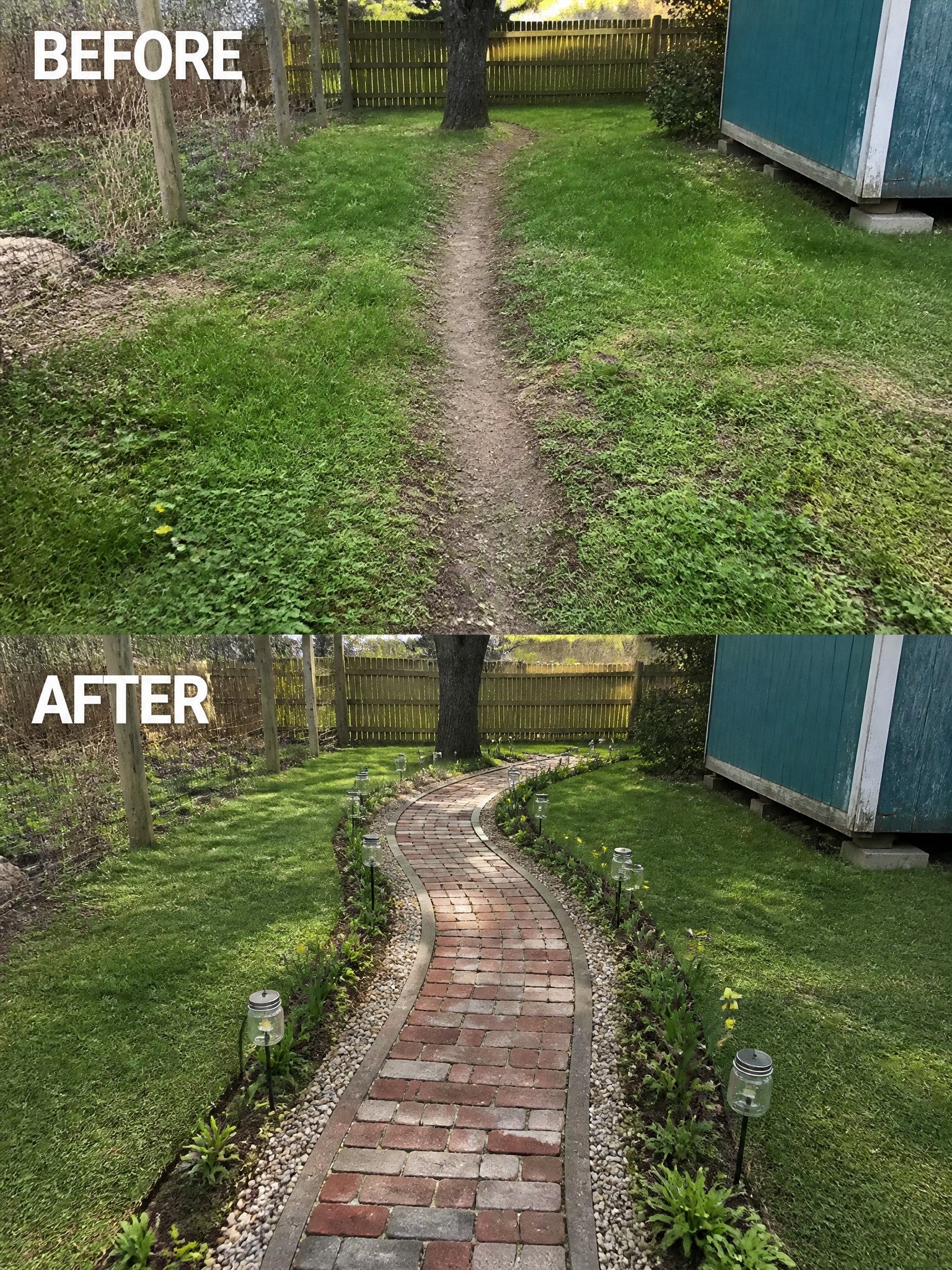
A dirt trail through the grass often ends up looking messy and hard to maintain. Laying a brick path gives the yard a clear route while also creating space for simple planting beds along the edges. The change turns an informal walkway into something that feels more intentional without needing a full redesign.
This idea works best in backyards where the lawn is already established but the paths feel random. Reuse old bricks if you have them or look for affordable pavers, then add a narrow gravel strip on each side to keep the edges neat. Keep the planting simple with low perennials so the path stays the main feature.
Edge Garden Beds With Reused Bottles
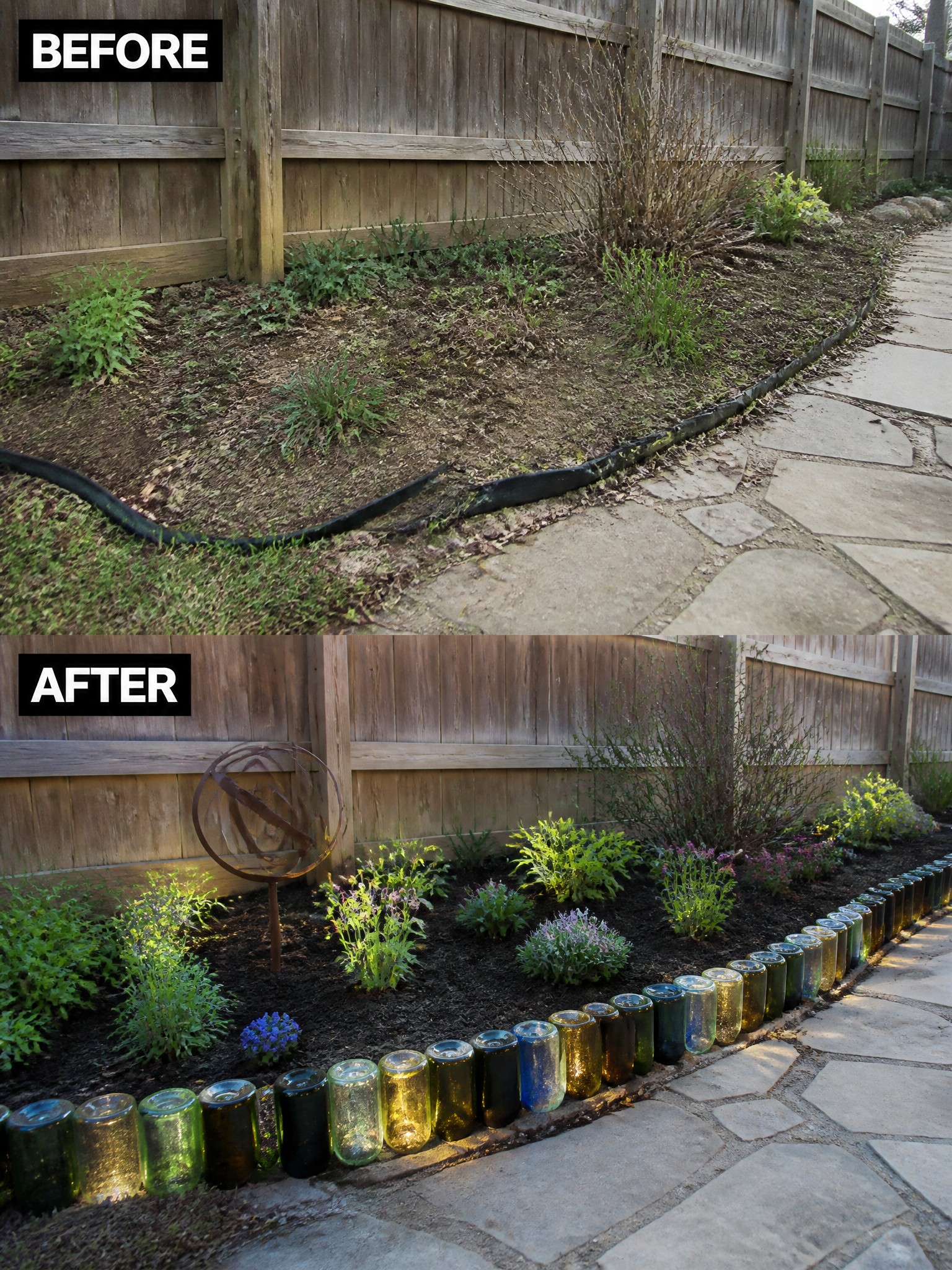
One simple way to bring order to a messy strip of garden is to add a clear edge using bottles you already have. The before photo shows a weedy area with no real boundary, while the after uses a line of glass bottles sunk into the soil to separate the planted bed from the path and give the whole space a finished shape.
This approach works best along fences or walkways where you want low cost definition without buying edging materials. Clear the weeds first, improve the soil, then plant in groups before setting the bottles in place. It suits homes that can collect bottles over time and keeps the focus on the plants rather than new purchases.
Use Reused Tires To Create A Tiered Garden Planter
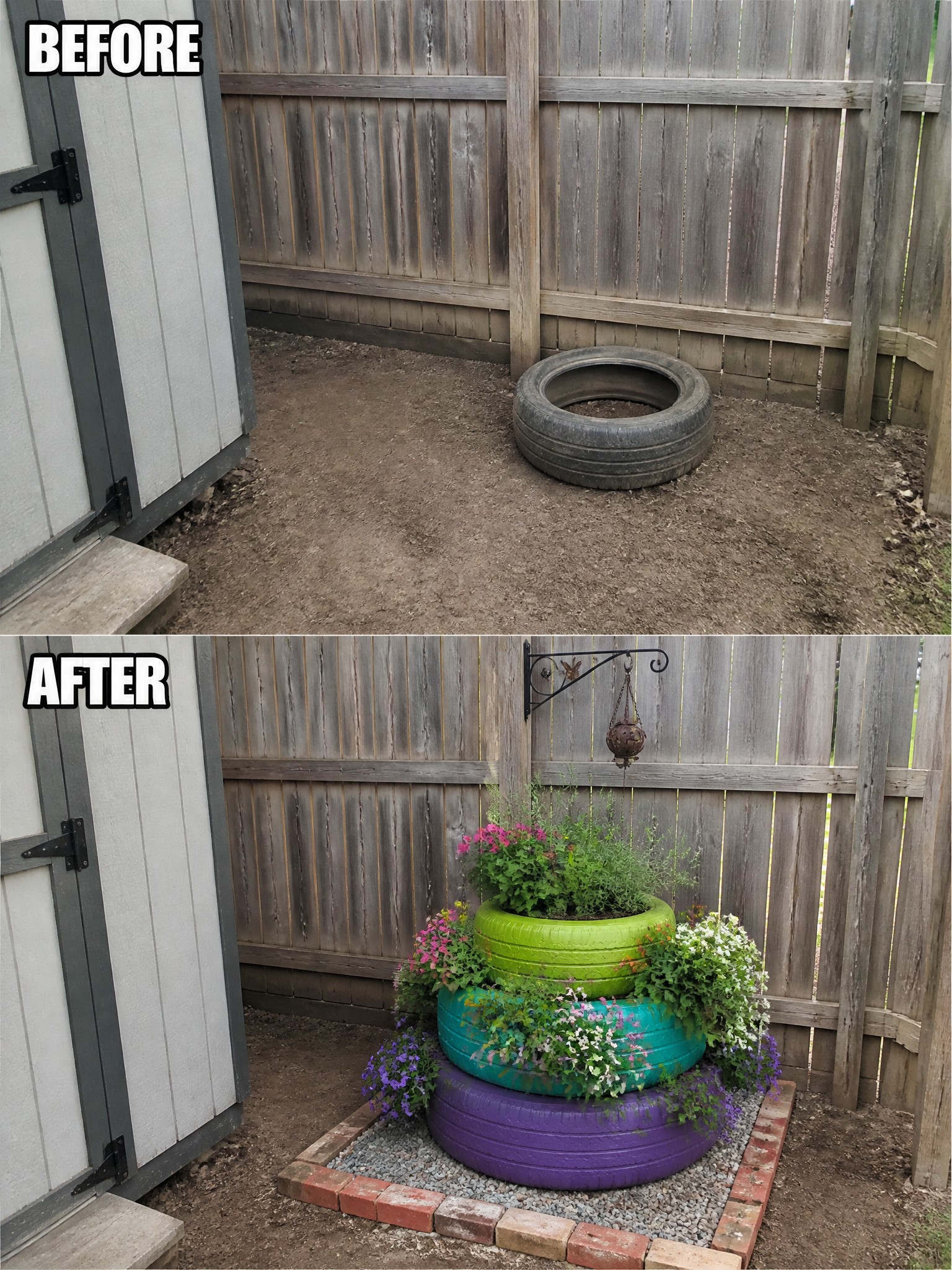
Stacking old tires into a tiered planter gives a bare garden spot some height and color without much cost. Painting the tires in different shades and filling them with flowers turns a neglected corner into a clear focal point, while the brick border and gravel base keep the whole thing looking finished.
This approach works best along fences or in small yards where you need vertical planting space. Clean the tires first, use exterior paint, and keep the base simple so the structure stays stable and easy to maintain over time.
Frame A Garden Entry With A Reused Gate And Trellis
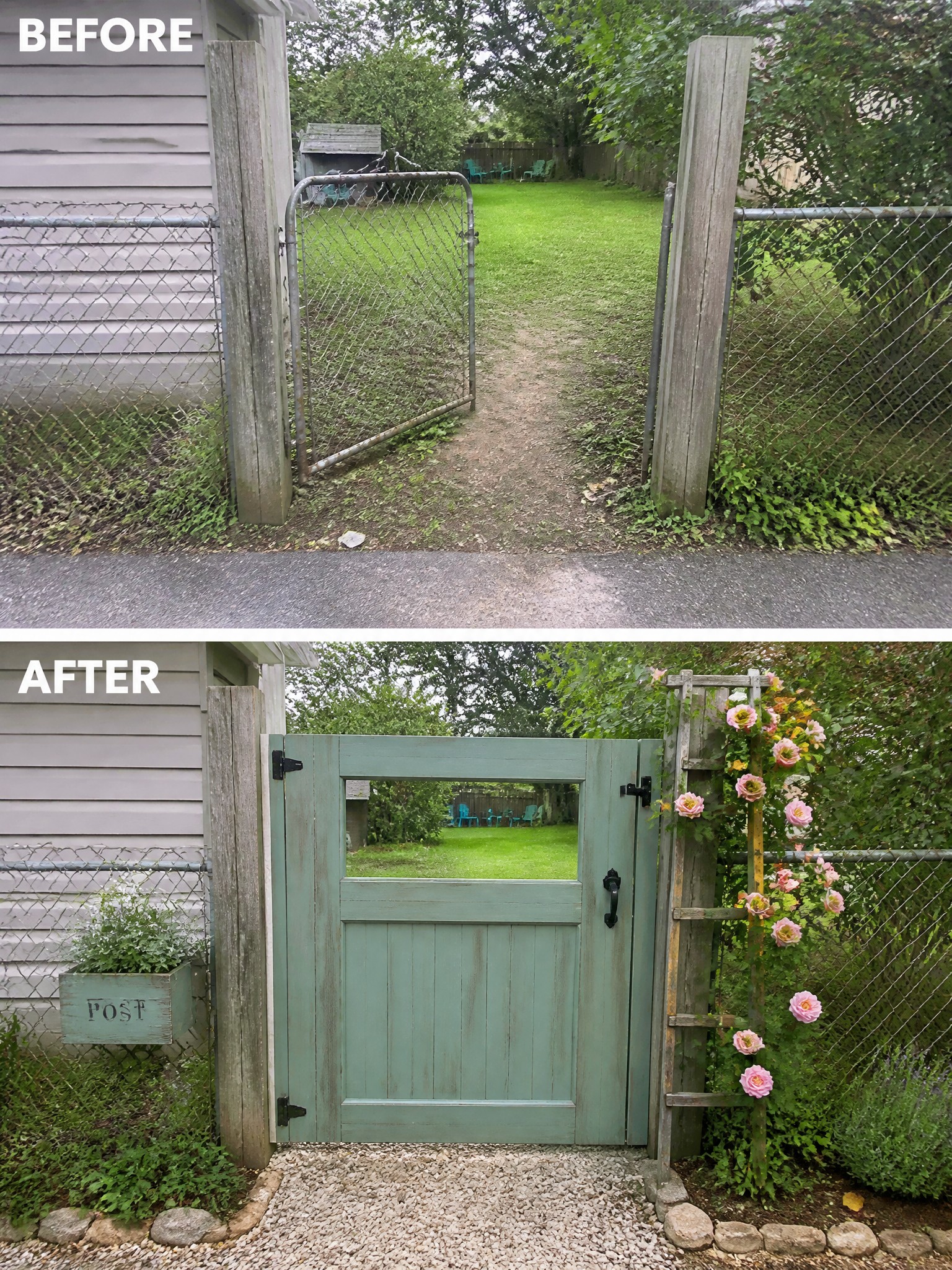
A plain chain link gate often leaves the side or back of a yard feeling unfinished. Replacing it with a simple wooden gate and adding a basic trellis gives the entrance clear shape and turns the spot into something that feels intentional. The gravel base and a few climbing roses help tie the new gate into the surrounding plants without much extra cost.
This approach works well on older homes where the fence is staying put but the entry needs better definition. Start with whatever wood you can salvage for the gate and trellis, then add one or two climbing plants that will cover the structure over time. Keep the planting simple so the gate remains the main feature and the path stays easy to walk.
Turn A Bare Patio Into Seating With Reused Blocks
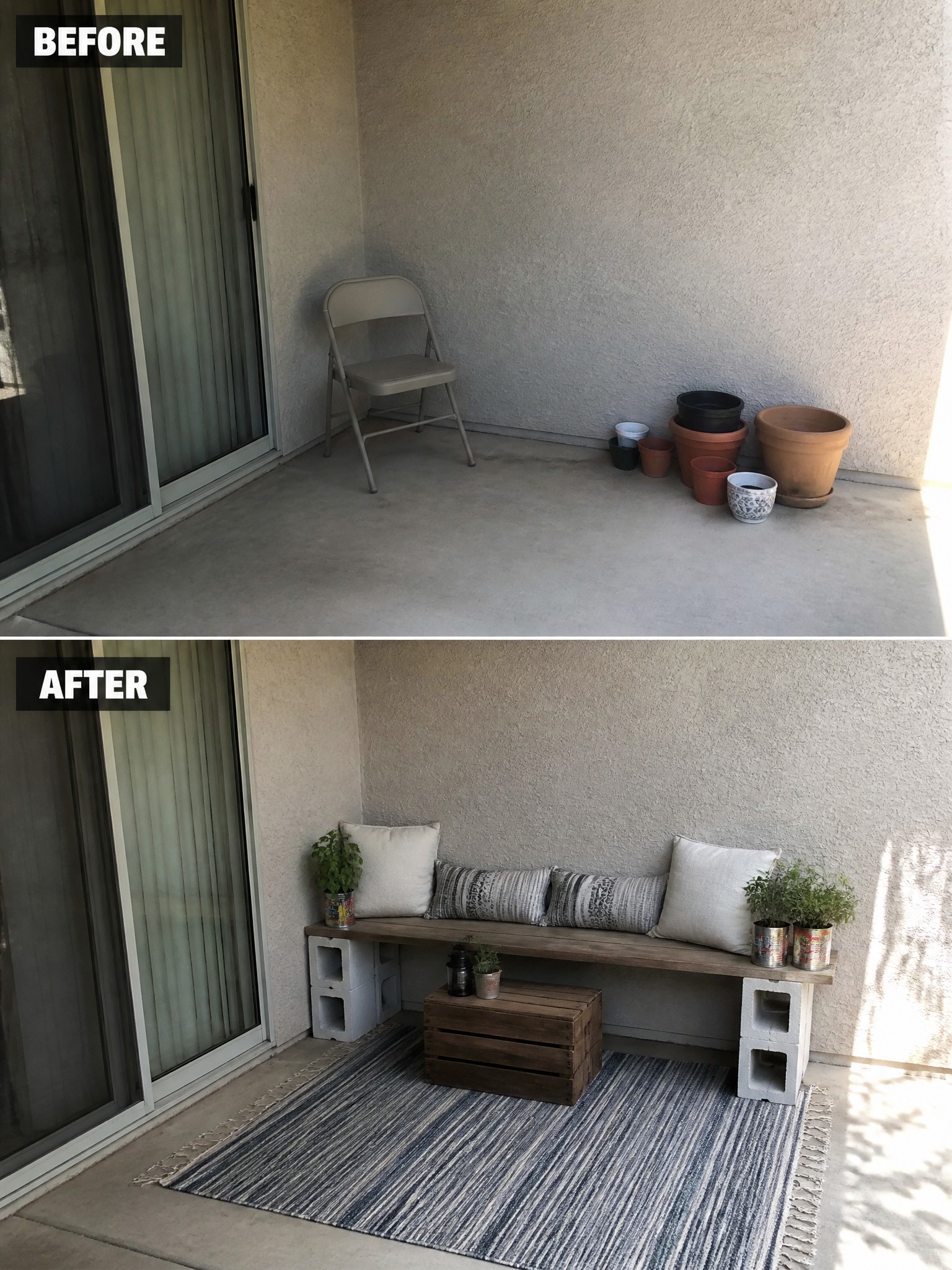
An empty concrete patio often sits unused because it lacks any clear purpose. Stacking a few cinder blocks at each end and laying a plank across them turns the space into a simple bench without buying new furniture. A rug underneath pulls the area together and makes it feel more finished.
This idea works best on small balconies or side patios where you want something basic and movable. Use whatever wood and blocks you already have or can find cheap, and keep the rest of the surface clear so the seating stays practical.
Build A Simple Vertical Herb Garden Using Pallets
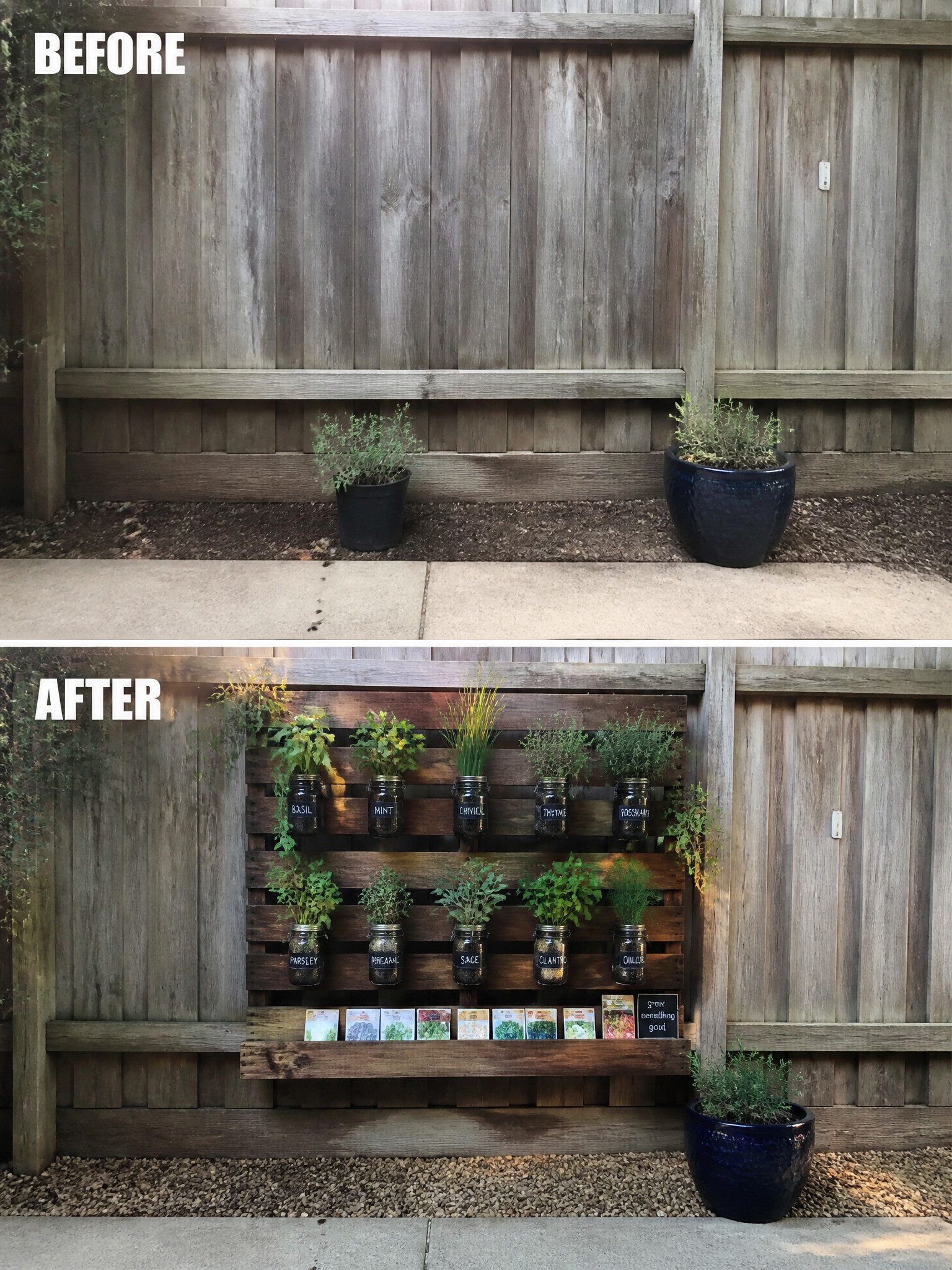
A plain fence often leaves an empty strip that feels unfinished. Mounting a pallet and filling it with herb jars gives the space height and purpose without crowding the ground. The jars keep plants contained and easy to label, while the lower shelf holds seed packets for quick reference.
This idea works best along a side fence or back wall where floor space is tight. Secure the pallet well, pick herbs that match your sun levels, and keep the layout simple so watering stays easy. It suits small yards that need more planting without adding beds.
Lay A Mosaic Patio Using Salvaged Stones And Tiles
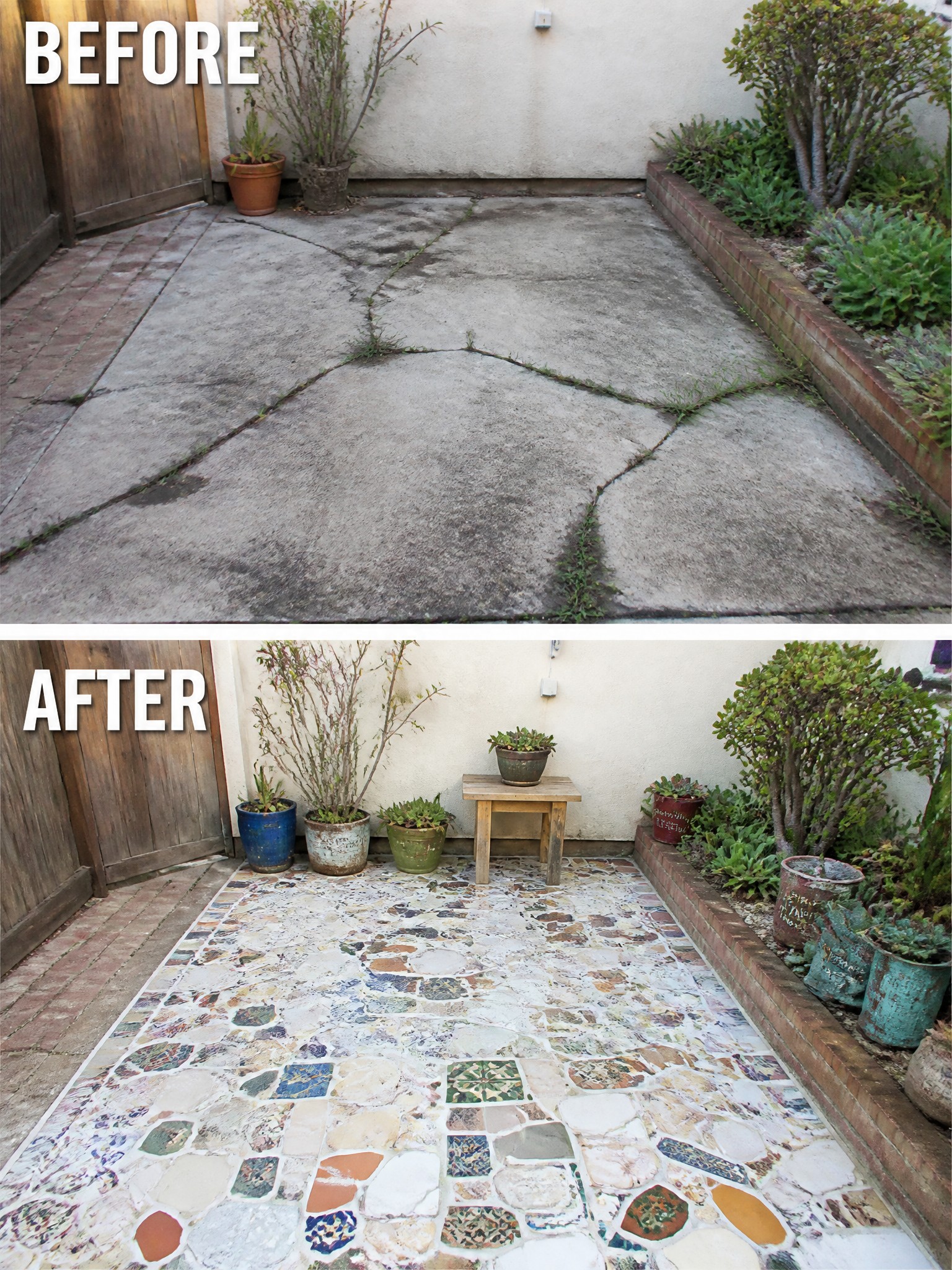
Covering old cracked concrete with a mosaic of reused stones and tiles gives a tired outdoor space new life without tearing everything out. The before photo shows a plain slab with weeds growing through the cracks, while the after shows how the same area now has a flat, colorful surface that feels much more intentional.
This idea works best in small side yards or back corners where you want to add interest on a budget. Clean the concrete first, then lay the pieces in a simple pattern using whatever stones and tiles you can collect. Keep the layout open enough for easy walking and watering, and the result will last longer if you use materials that can handle weather.
Add A Simple Trellis For Climbing Vegetables
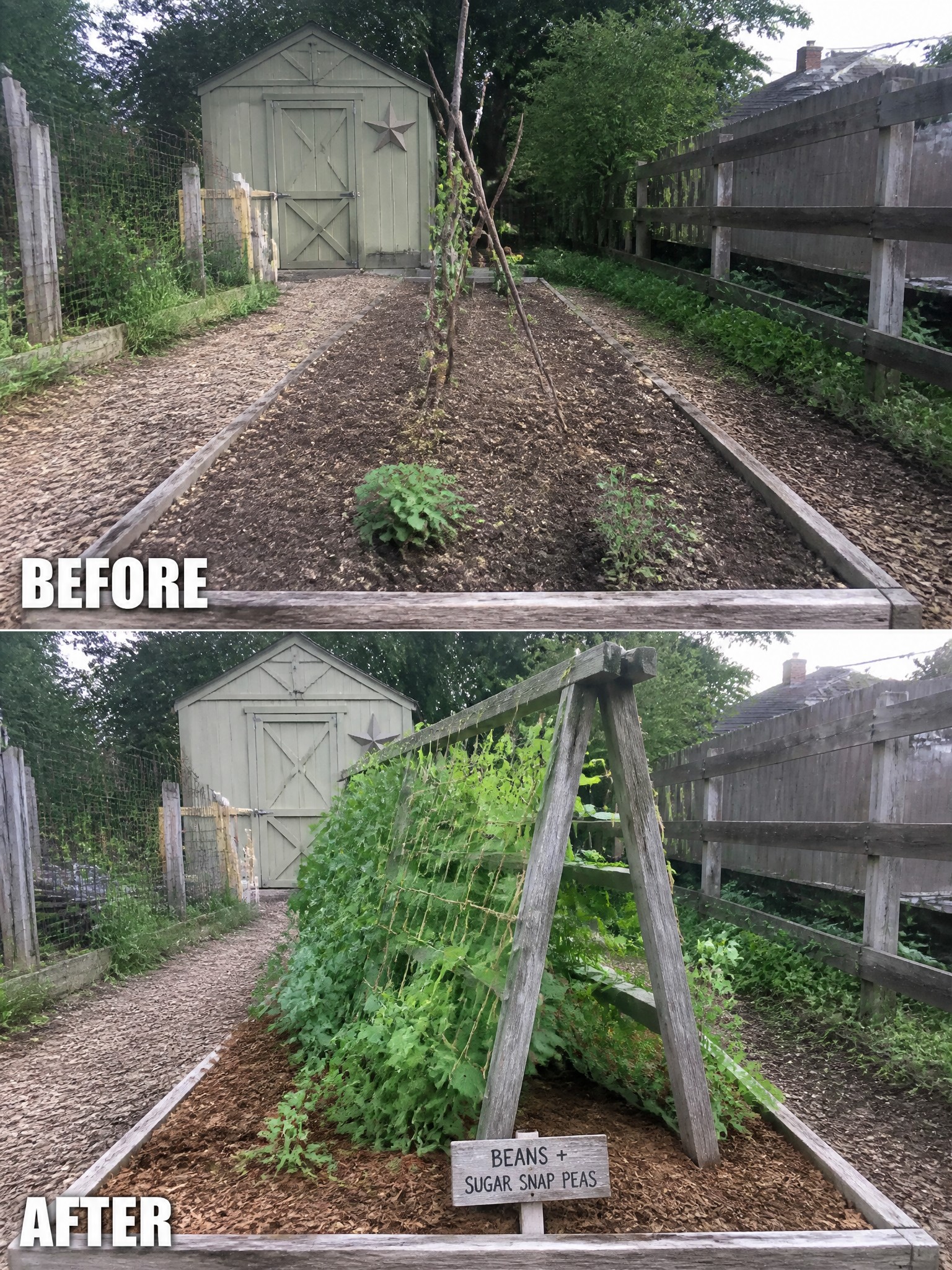
A flat garden bed can hold more plants once you add a basic wooden trellis. The before photo shows an open bed with only a few low plants. In the after photo a simple A-frame structure lets beans and peas grow upward instead of spreading across the soil.
This idea suits small gardens or anyone reusing scrap wood. Build the frame tall enough for the vines, set it firmly in the bed, and plant climbers at the base. Leave enough room on each side for access and choose sturdy wood that can handle weather.
Use String Lights And Reused Pieces To Finish An Outdoor Patio
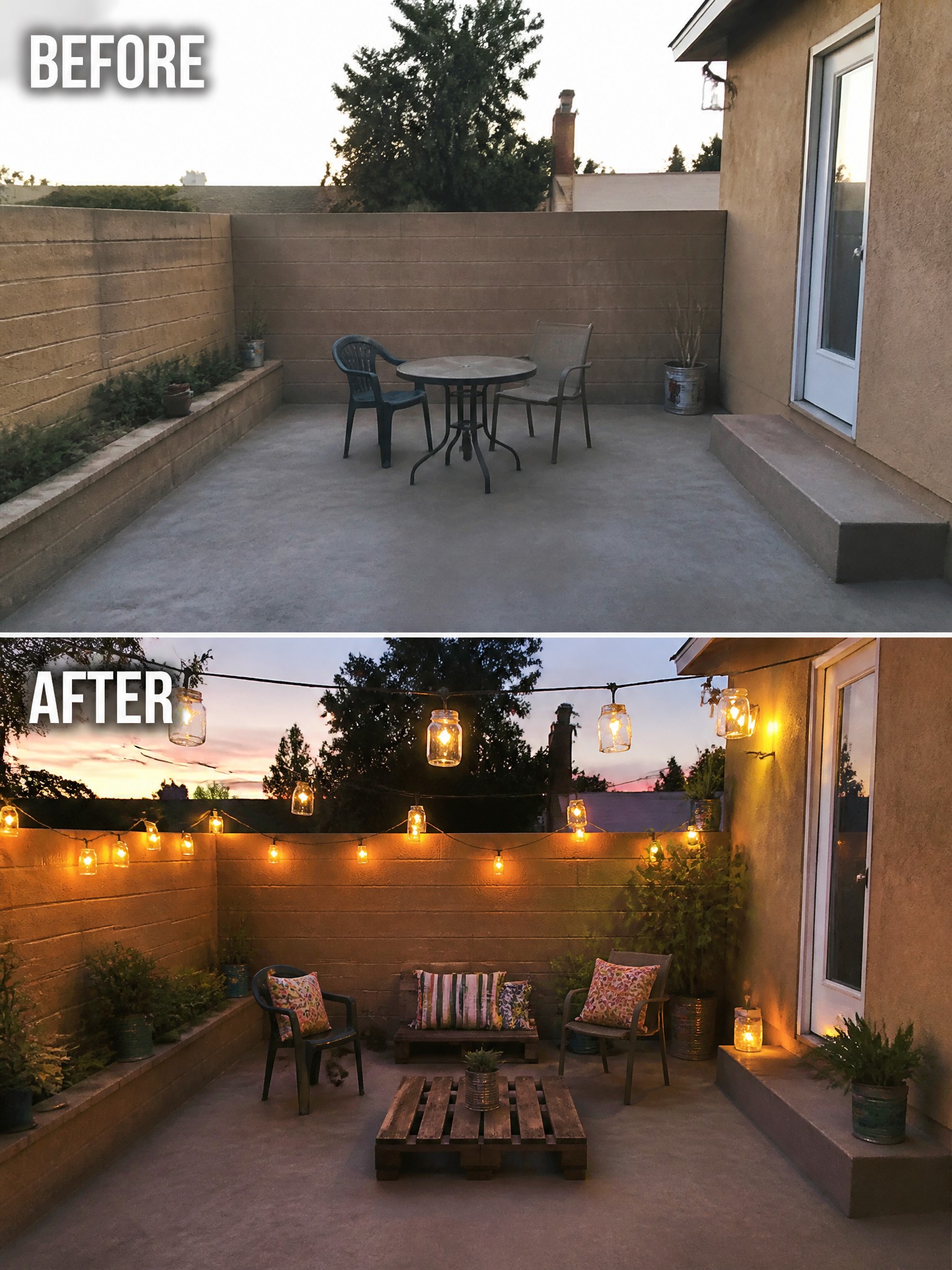
The main change here is how string lights made from jars instantly make the space feel usable after dark. The before photo shows a plain concrete patio with only a small table and a few chairs. Adding the lights along the walls and overhead gives the area a clear purpose without any major construction.
This idea works best on small patios where you already have basic seating. Start with the lights first, then bring in a few reused items like a pallet table or old chairs with fresh cushions. Keep the furniture simple so there is still room to walk around.
Turn Bare Ground Into A Defined Fire Pit Area
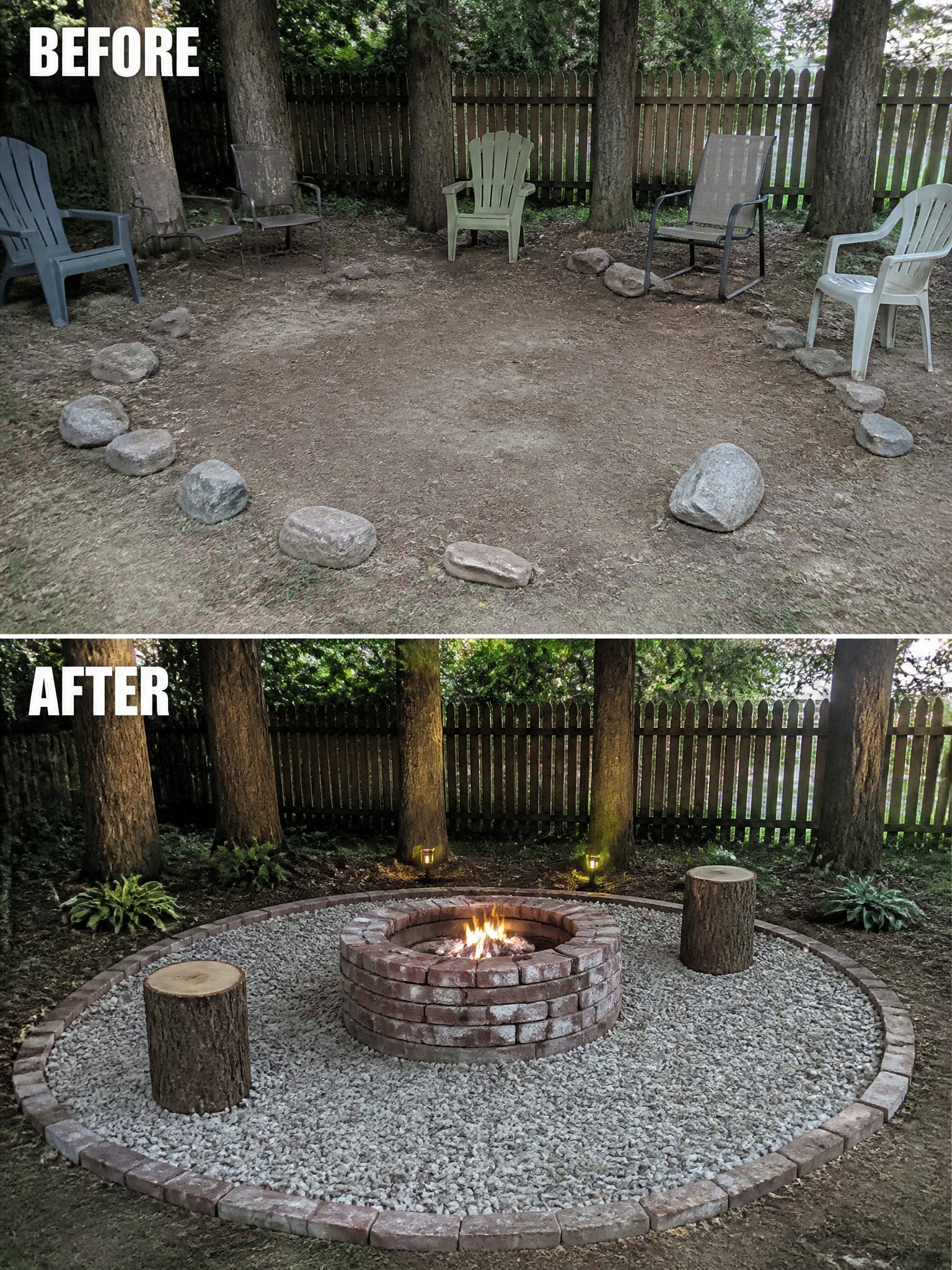
A patch of dirt with a few scattered chairs does not feel like a place to gather. Adding a simple gravel circle edged with brick and a basic fire pit in the middle gives the space a clear purpose so people know where to sit and stay.
This approach works best in backyards that already have trees or a fence for background structure. Keep the circle modest in size, use weatherproof seating like cut logs, and make sure the gravel layer is thick enough to stay in place through rain and foot traffic.
Cover Garden Beds With Old Windows
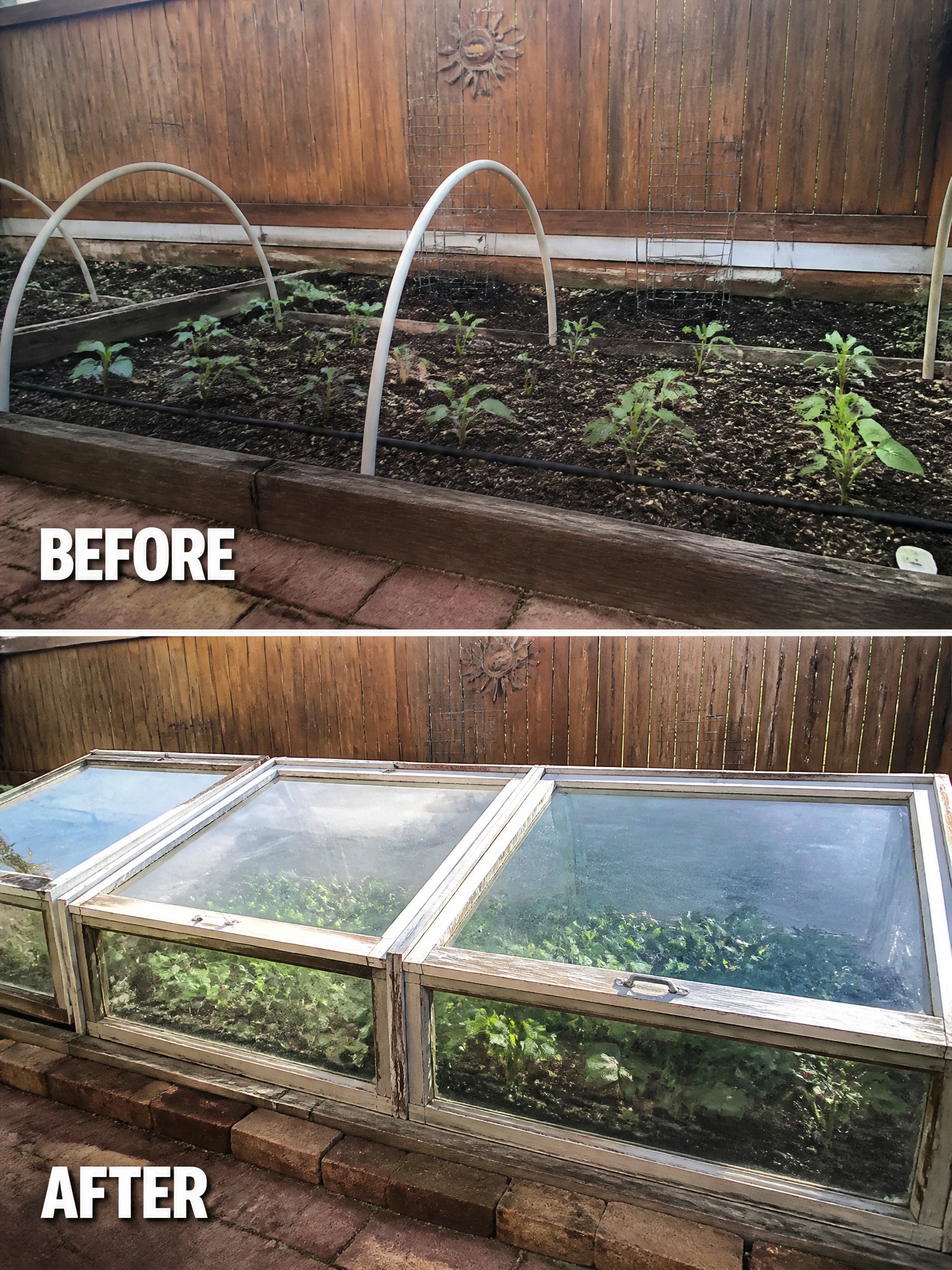
One easy way to stretch a garden season is to lay old windows over the beds. The open soil and young plants in the before photo become protected growing space once the glass panels go on, letting sunlight through while blocking wind and cool nights.
This idea works best in spots that get full sun and where frost can still hit in spring or fall. Look for windows that are roughly the same width as the bed, set them in place so they sit flat, and lift one end when you need to water or harvest. It keeps the cost near zero if the windows are salvaged and gives seedlings a real head start.
Mount Reused Troughs On A Fence For Vertical Planting
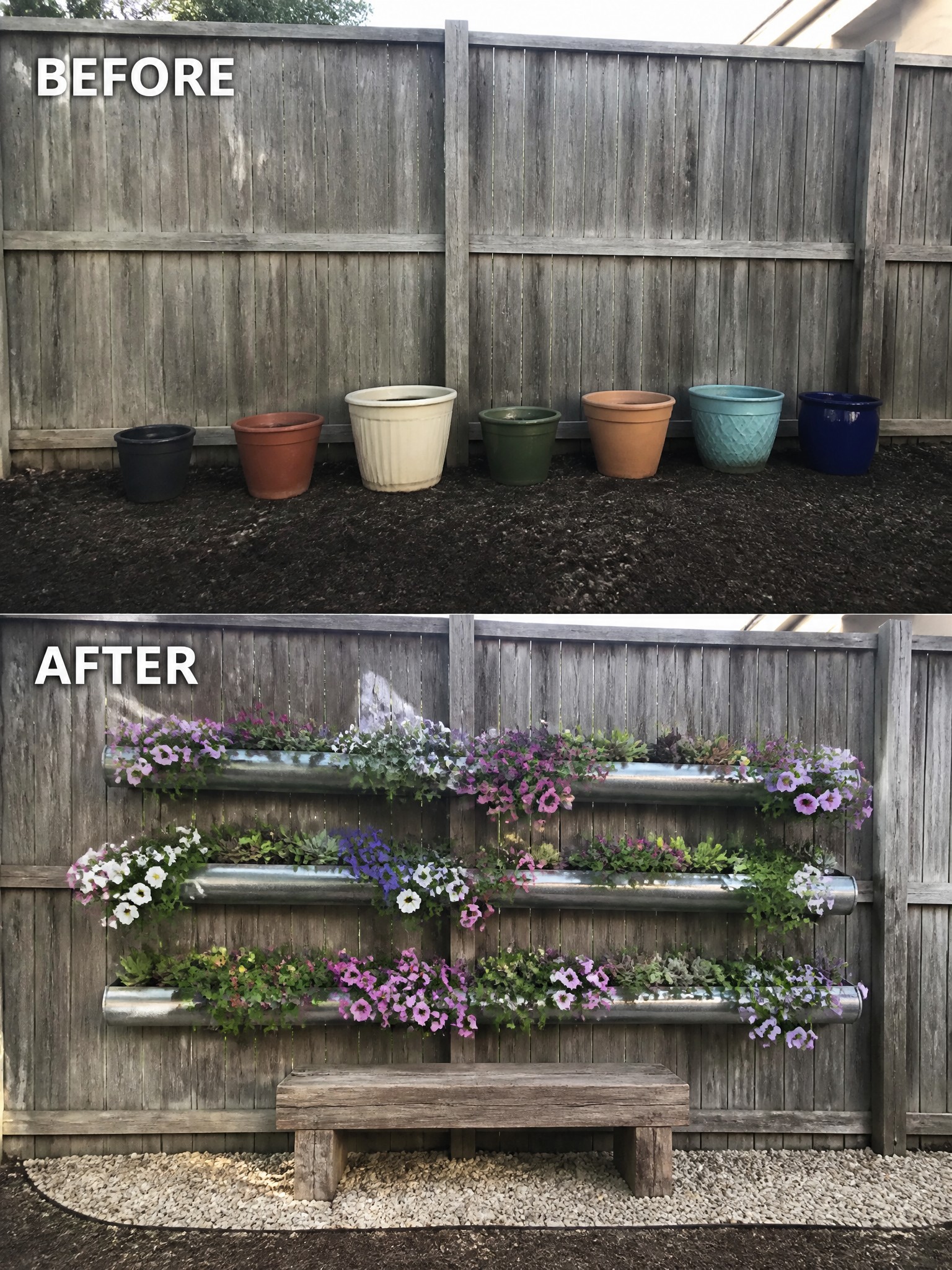
A row of loose pots on bare mulch leaves a fence looking empty and scattered. Mounting long metal troughs in stacked rows turns the same fence into a planted wall that holds far more flowers and greenery while keeping the ground clear.
This approach works well along property lines or narrow side yards where floor space is limited. Secure the troughs firmly to the fence posts, add drainage holes if needed, and choose trailing or compact plants that fill out quickly. A simple bench underneath gives the area a finished spot to sit without adding more clutter.
Use Reused Crates For Tiered Beds On Slopes
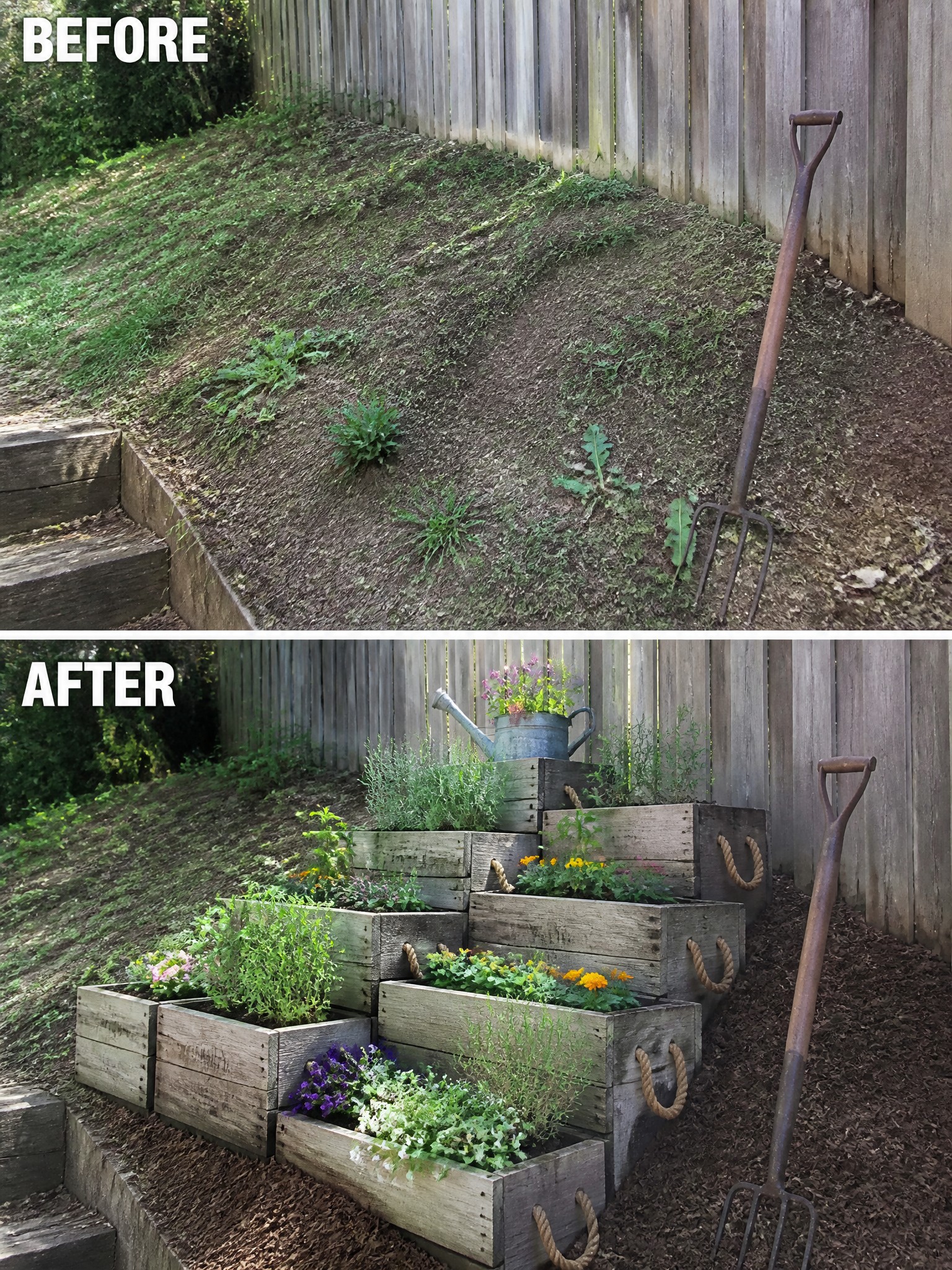
A bare slope often stays empty because nothing stays put on the angle. Stacking old wooden crates into stepped tiers gives the ground clear structure and turns the same space into actual planting beds.
This idea works best on modest slopes where you want height without building retaining walls. Secure the crates in place, fill them with soil, and add mulch around the base so the whole area looks finished and stays manageable.
Create A Defined Seating Area With Reused Materials
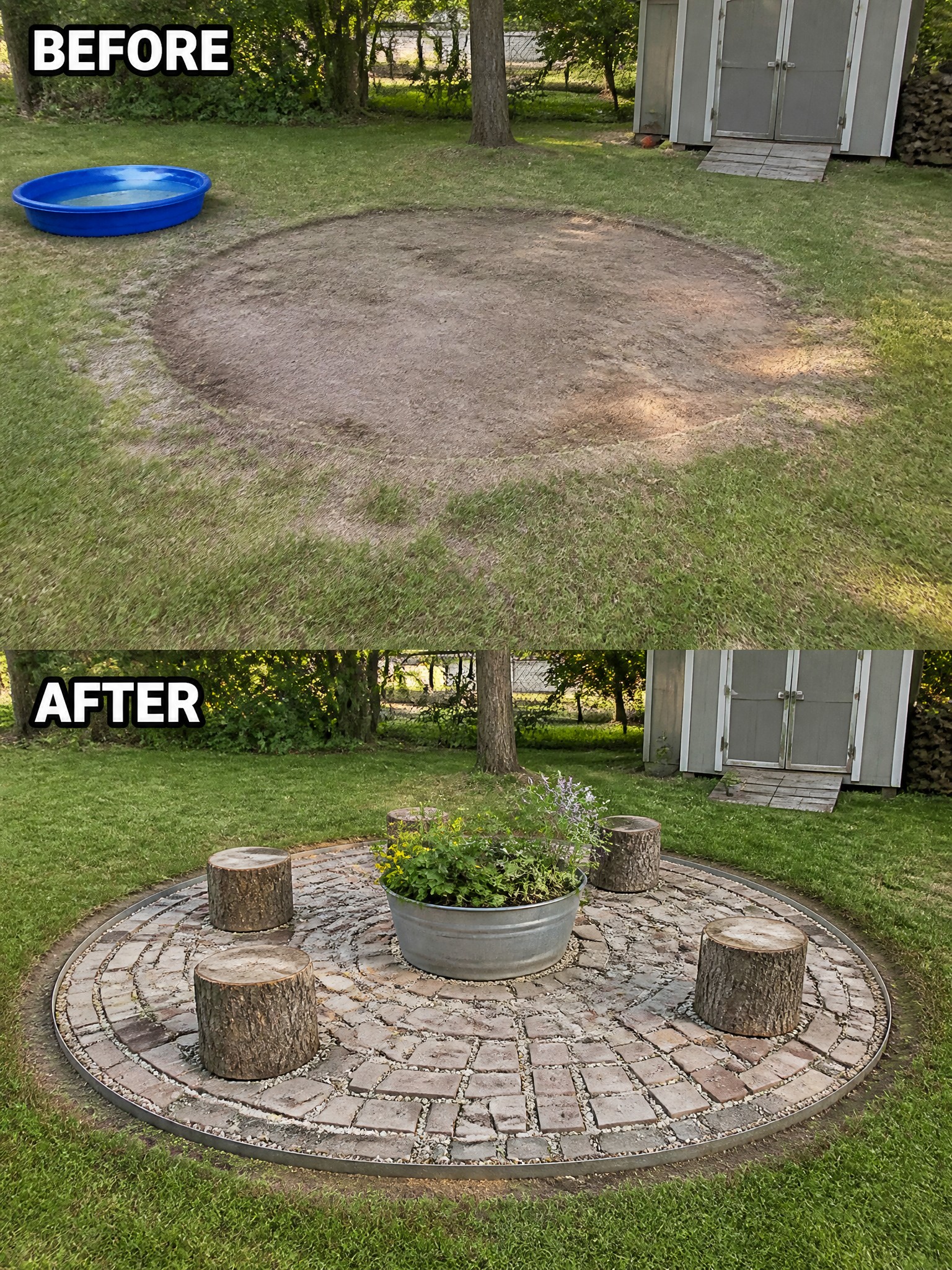
A bare dirt circle in the middle of the lawn does not give you much to work with. Laying down a ring of old bricks creates a clear boundary and turns that empty spot into a simple seating area. Tree stumps around the edge add places to sit without buying new furniture, and a large metal tub in the center holds plants that pull the whole thing together.
This approach works well in a small yard where you want one usable spot instead of spreading things out. Start with the pavers to set the shape, then add whatever seating or planting you already have on hand. Keep the circle a practical size so there is still room to walk around it and mow the grass outside the edge.
Define Overgrown Beds With Simple Reused Edging
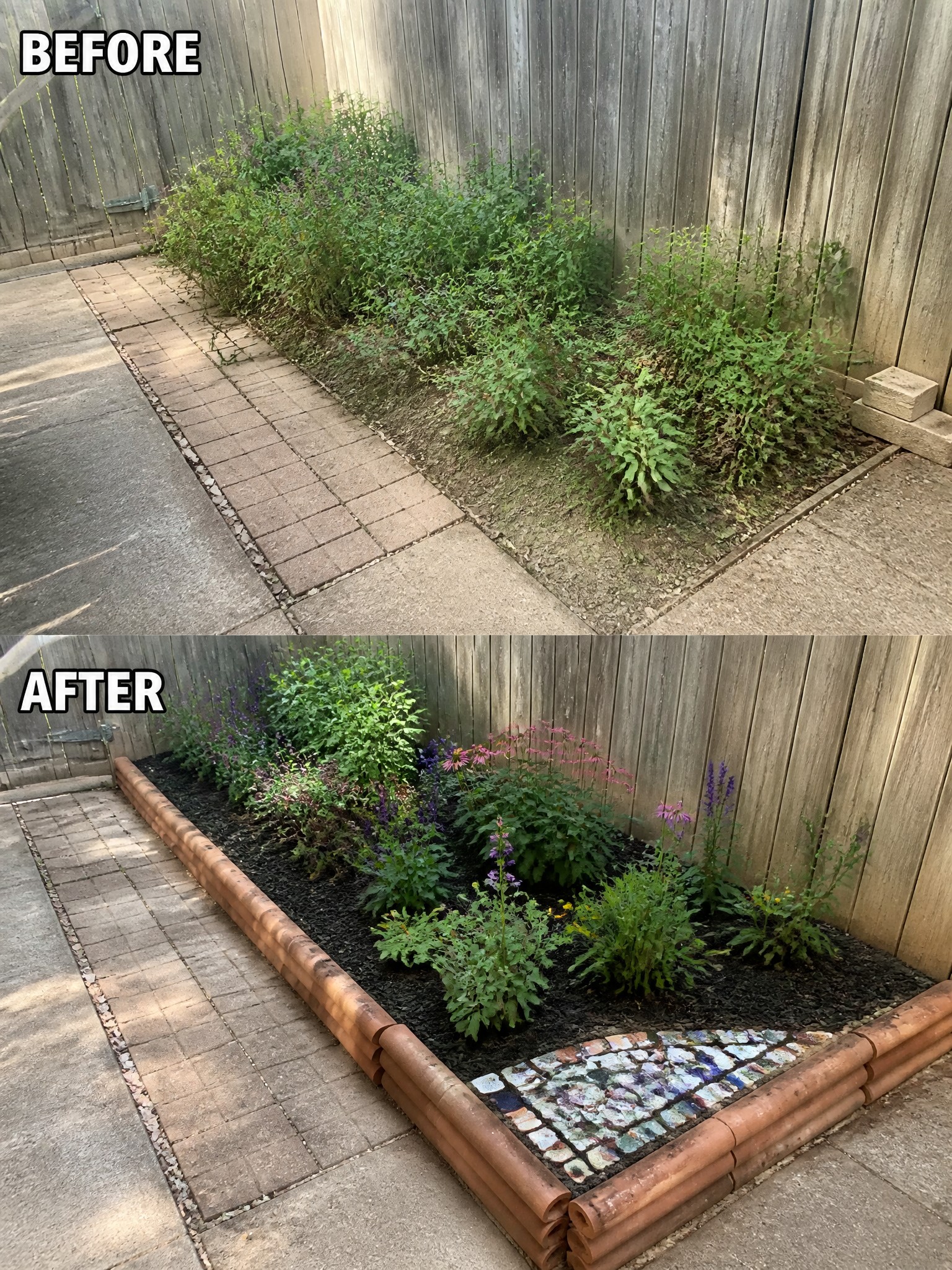
Clearing out the worst of the overgrowth and adding a firm edge is often enough to make a messy strip of ground look like an actual garden bed. Here the plants were thinned and the soil was contained with lengths of old pipe stacked along the front and side, which stops everything from spilling onto the walkway.
This works best in narrow side yards or along fences where you need a low wall without spending much. Look for any long, weatherproof pieces you already have, set them in place to create the shape you want, then add mulch inside the border so the bed stays tidy and easy to maintain.
Turn A Bare Patio Into A Shaded Seating Area
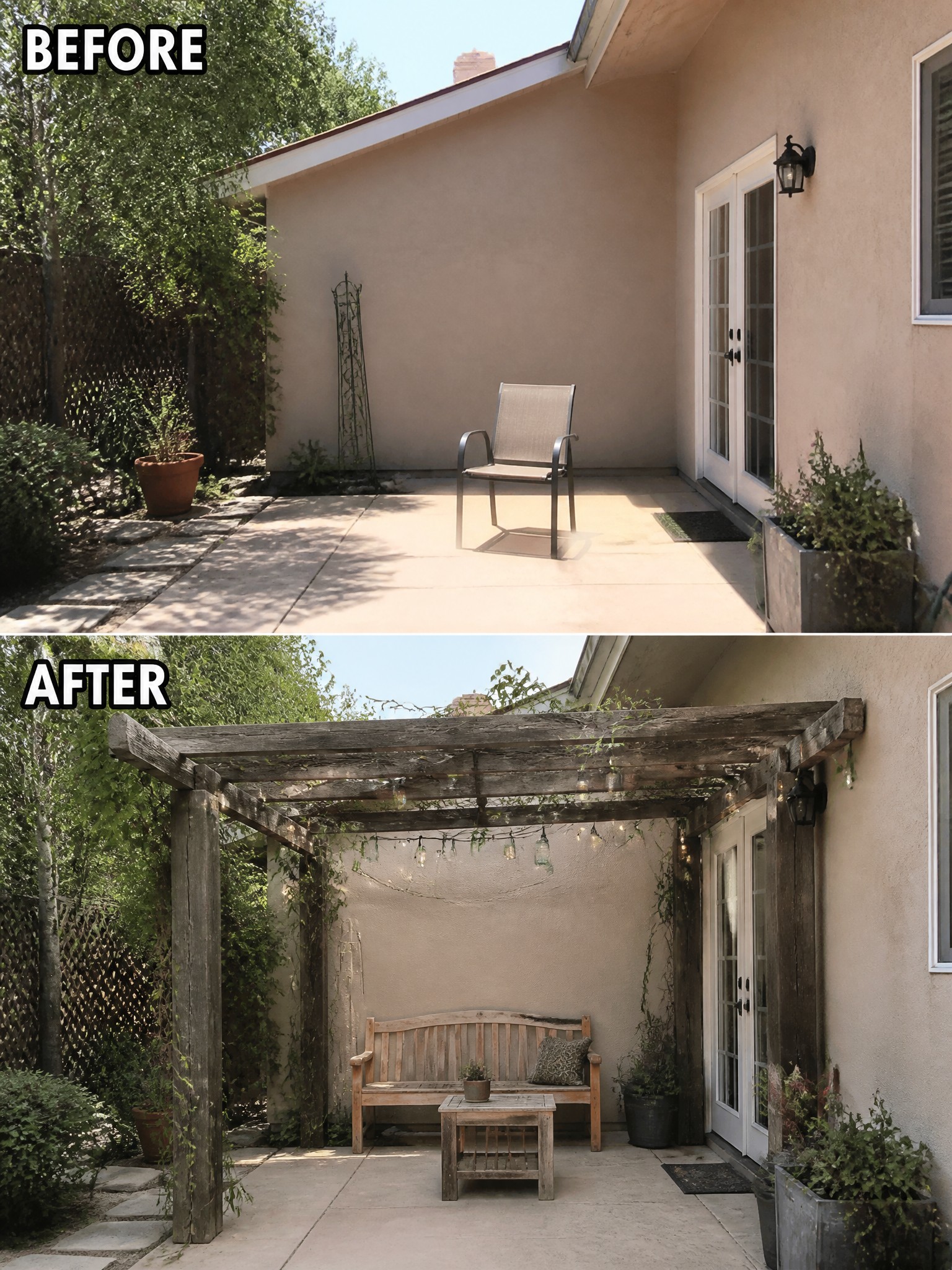
An empty concrete patio often sits unused because it lacks any sense of enclosure or purpose. Adding a basic pergola overhead changes that by creating a clear spot for seating and giving the space some much-needed shade and structure.
This approach works best on flat patios that get strong sun. Keep the frame simple with sturdy posts and beams, then add string lights across the top for evening use. A bench and small table underneath are usually enough to make the area feel finished without crowding the space.
Repurpose An Old Sink To Create A Garden Focal Point
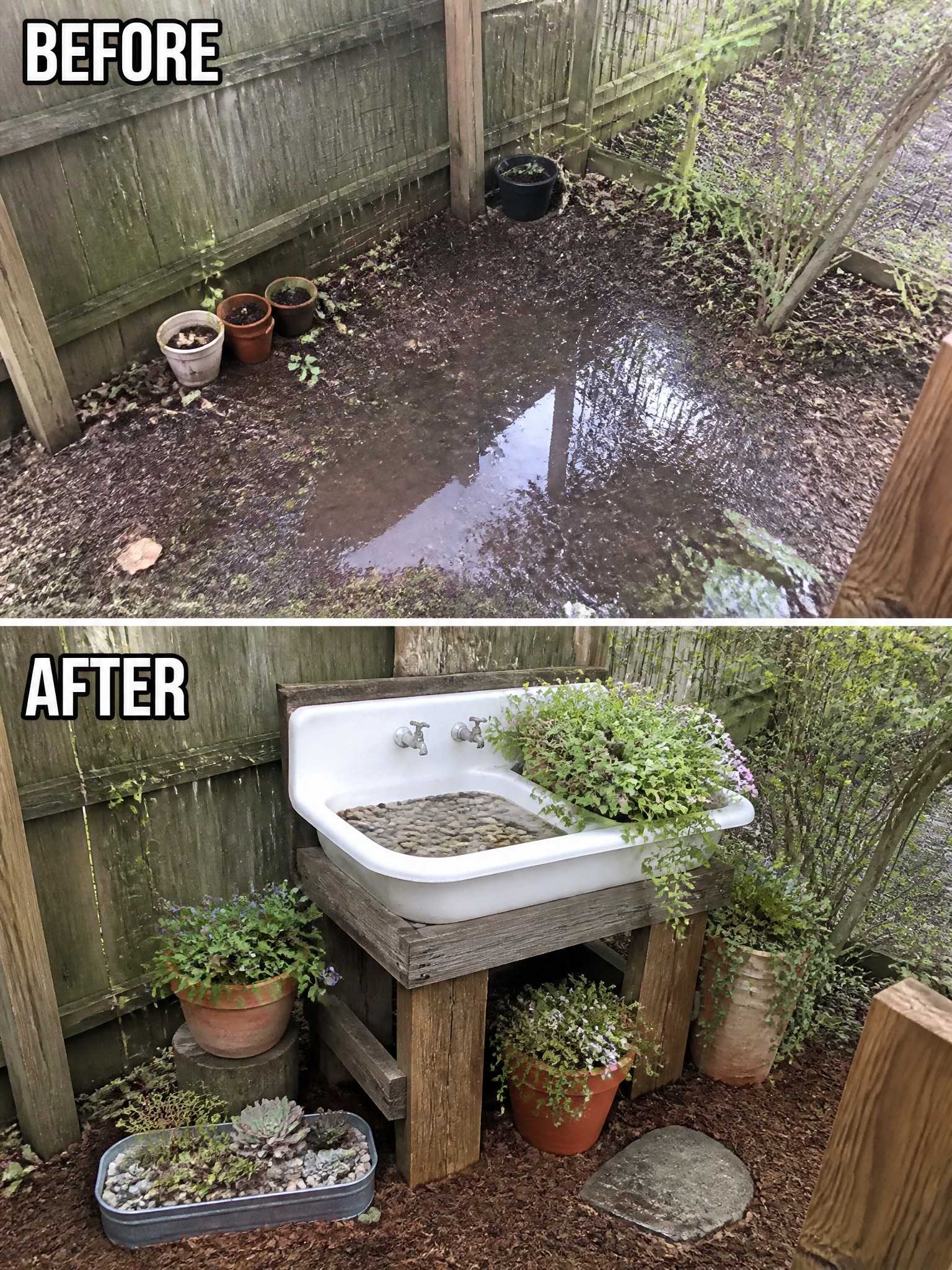
A muddy low spot in the yard often stays useless until something gives it a clear purpose. Placing a salvaged sink on a simple wooden stand turns that wet patch into a stable feature that handles water and adds height without much cost. The sink holds pebbles that let water drain slowly while the stand keeps everything off the soil.
This approach works best in small backyards or side yards where drainage is poor. Start with any sturdy basin you can find, build the stand from leftover lumber to match the sink size, and set it where you already see water collect. Add a few pots around the base to soften the edges and keep the whole spot from looking bare.
Create Outdoor Seating With A Basic Raised Deck
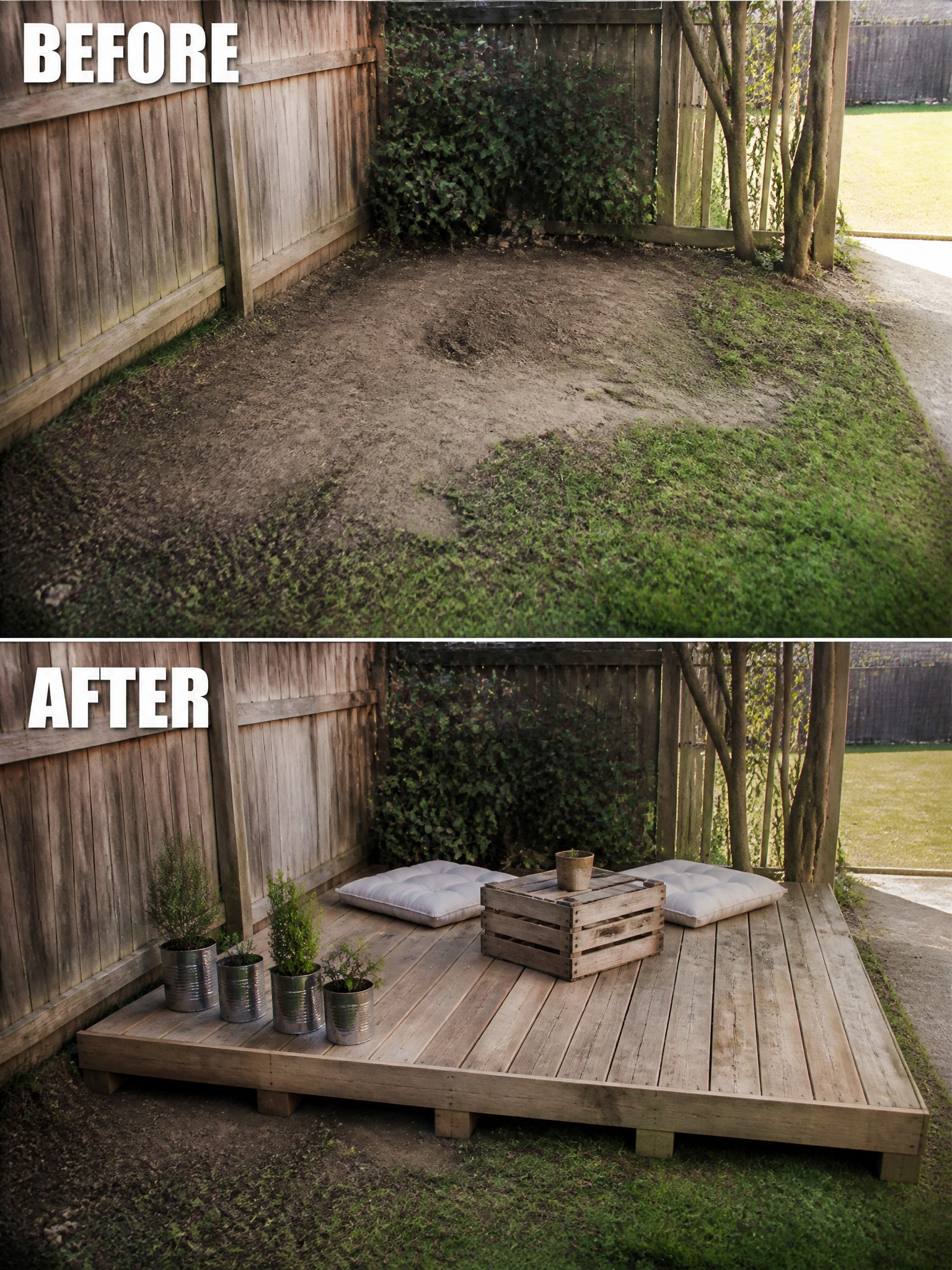
A low wooden platform turns bare dirt into a spot you can actually use. The simple deck lifts the seating area off the ground so cushions stay cleaner and the space feels more defined without needing a full patio.
This works best in small yards or corners that get little traffic. Start with treated lumber for the frame, keep the height low for easy access, and add just a couple of cushions and pots so the area stays practical rather than crowded.
Build Raised Beds From Reused Bricks
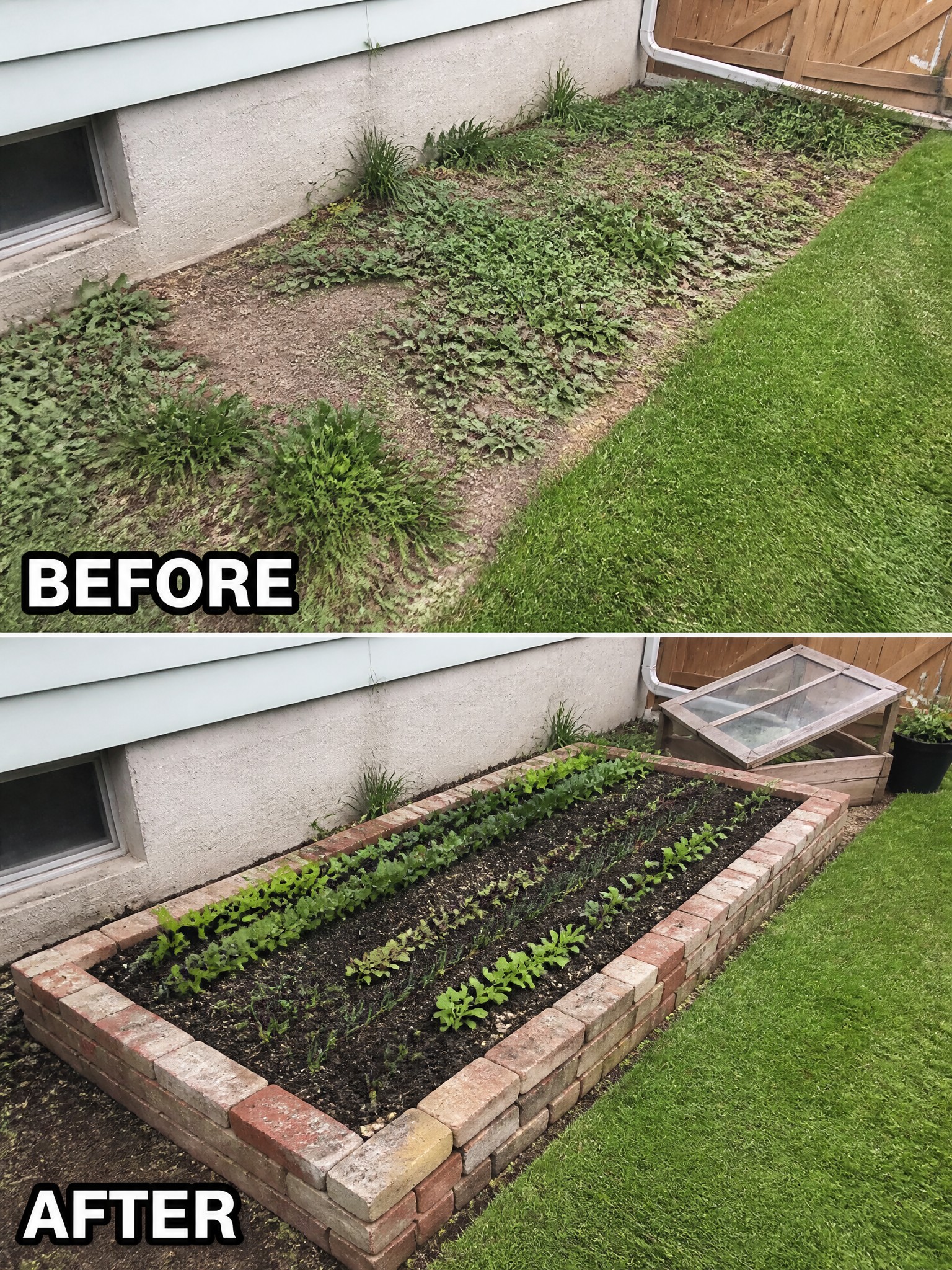
Turning a weedy strip beside the house into a proper growing space starts with cleanup and simple edging. Stacking old bricks into low walls creates a raised bed that keeps soil contained and gives the plants a clear place to grow.
This idea suits narrow side yards or foundation areas where grass never takes hold. Level the ground first, then reuse whatever bricks or pavers you already have so the bed stays affordable and matches the size of the space.
Frequently Asked Questions
Q: Where do I even start looking for free materials like old wood or metal scraps? A: Drive around new neighborhoods on trash day or swing by construction sites after hours and ask if you can haul away scraps. Neighbors often post free garden junk on local online groups too. Grab what you need before the rain hits it.
Q: How do I stop pallet planters from falling apart after one season? A: Stack the pallets on bricks so the bottom stays dry and give every board a quick brush with outdoor sealant. Check the joints every few months and tighten any loose nails before they pop out.
Q: What if I want to reuse old tires but worry about growing food in them? A: Skip tires for edibles and use them only for flowers or as simple borders instead. Stack two or three and fill them with soil for a quick raised spot that stays put.
