

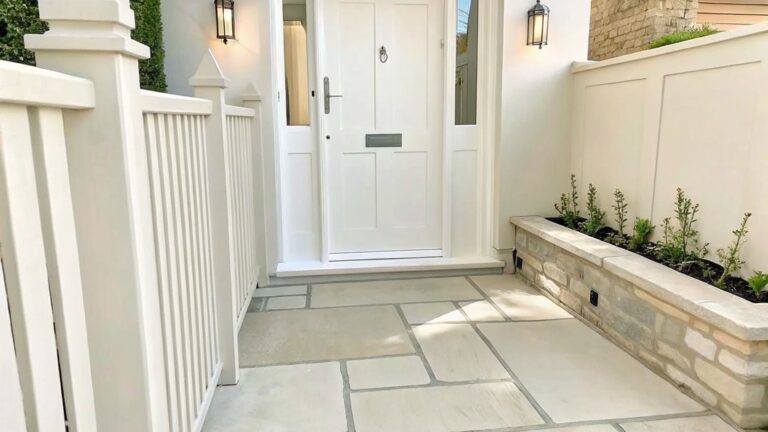
I notice the front borders on houses long before I take in the rest of the yard because they shape the first view from the sidewalk.
Choosing the right plants and edging materials helps define the space without making it feel closed off from the street.
Over the years I have learned that low maintenance options often look better after a few seasons than more elaborate ones.
The details matter.
A simple change in height or texture can pull the whole front area together in a way that feels natural rather than forced.
Low Shrubs Edge the Front Path

A low border of mixed shrubs and perennials along a front walkway gives the entry a settled look without blocking the view of the house. The plants soften the hard edges of the path and steps while keeping the space open and easy to maintain.
This approach works well on smaller lots or homes with simple facades. Keep the plants under two feet tall near the walk so they guide visitors without crowding the door, and choose a mix of textures that stay neat through the seasons.
Gravel Strips For Simple Front Borders

A narrow gravel strip along the base of the house creates a clean break between paving and planting. It keeps the edge looking sharp without needing constant trimming or weeding.
This approach suits homes where the front path runs close to the wall. Stick to a consistent width and choose low pots or compact plants so the gravel stays visible and the whole border remains easy to maintain.
Use Large Pots To Edge Front Steps

Large pots placed right along the edges of entry steps give a front garden border that feels intentional without needing a lot of planting beds. The containers add height and structure while keeping the look simple and easy to maintain, especially when you choose trees that stay neat year round.
This approach works best on homes with clean architecture and straight stair lines. Make sure the pots are big enough to balance the scale of the steps, and stick with one or two plant types so the border stays calm rather than busy.
Gravel Edging Defines The Garden Paths

Gravel strips running right beside the concrete make the whole front yard feel more put together. They give the paths a clear edge without adding height or fuss, and they help keep the planting beds from spilling over onto the walkway. The look stays simple even when the rest of the yard has rocks, plants, and different ground textures.
This works well on newer homes with wide paved areas and low-water gardens. Keep the gravel in a narrow band so it reads as a border rather than a second path, and choose stones that match the color of your hardscape. It cuts down on trimming and weeding along the edges, which makes the whole front look neater with less work.
Pebble Edging Along The Path
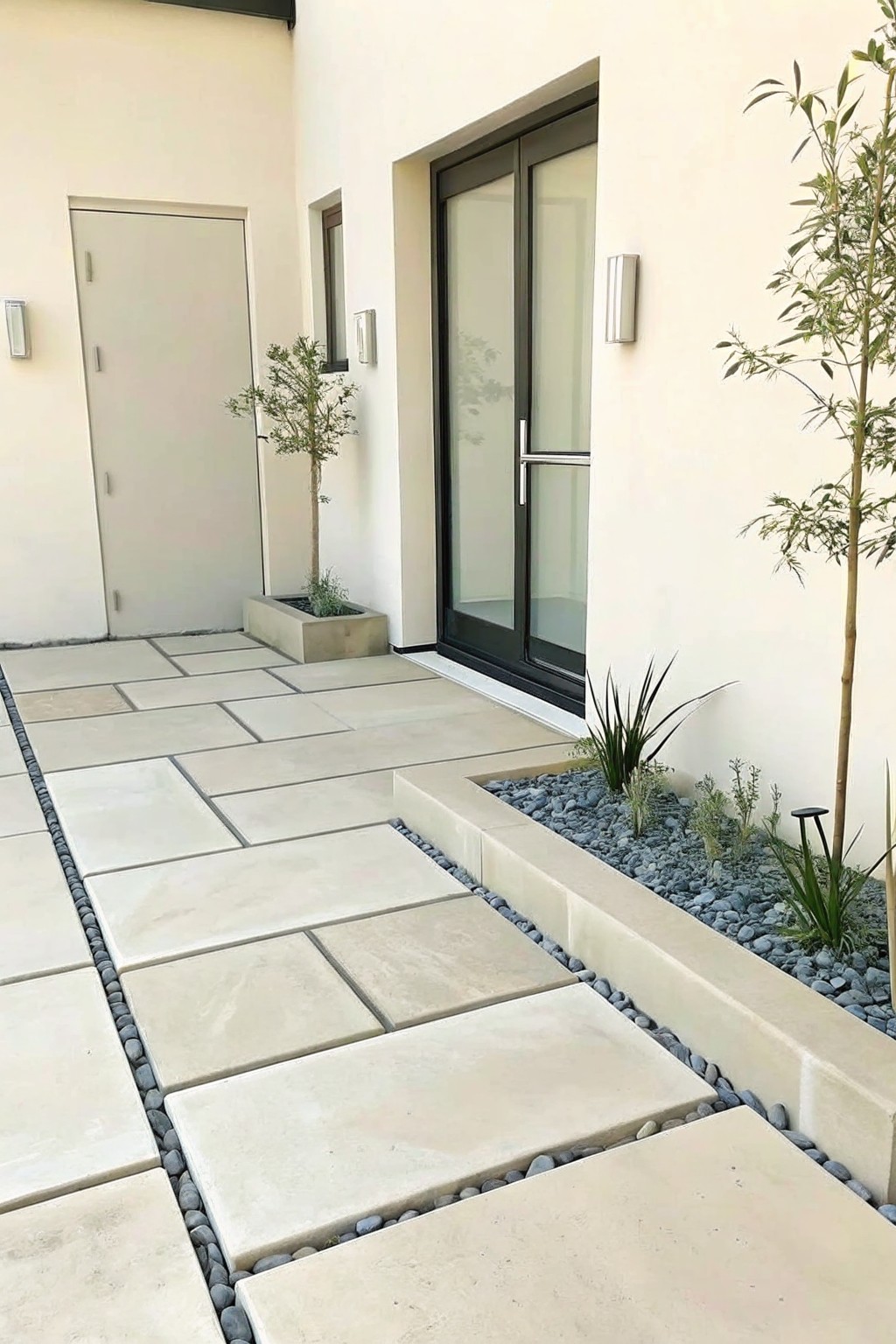
Large stone pavers gain a cleaner look when lined with dark pebbles on both sides. The edging keeps the walkway from blending into the beds and gives the whole front a finished feel with very little upkeep.
This works best on modern homes with simple lines. Use it where you want the path to stand out from the planting without adding raised curbs or extra materials that need trimming.
Pebble Edging For Front Step Borders
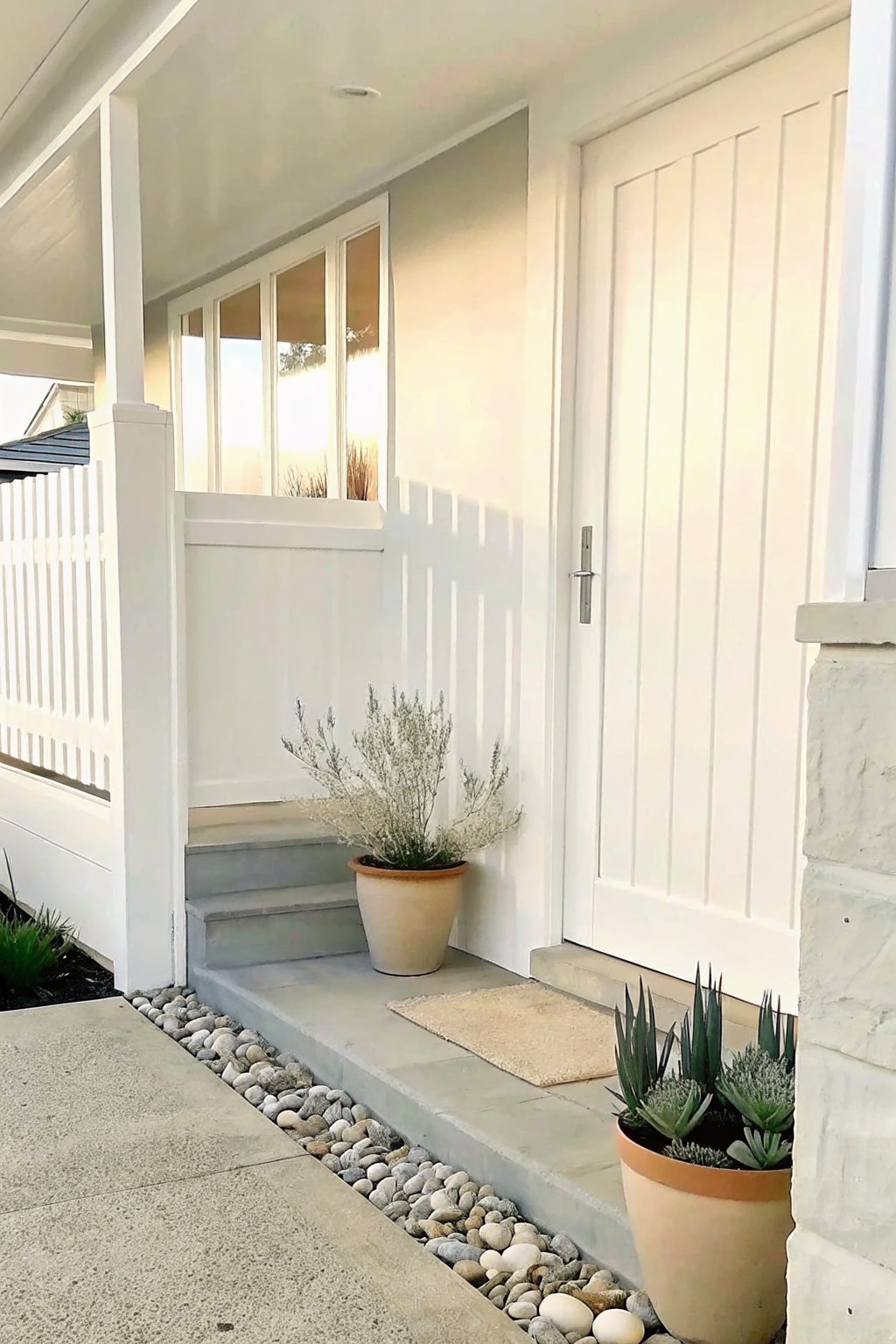
A row of river rocks creates a clean edge where the concrete steps meet the planting bed. It separates the walkway from the soil without adding height or bulk, and it keeps mulch or plants from spilling onto the walking surface.
This border works best on homes with simple concrete entries that need a little definition. Lay the stones directly against the step edge and keep the planting low so the border stays visible from the street.
Frame Front Paths With Raised Borders
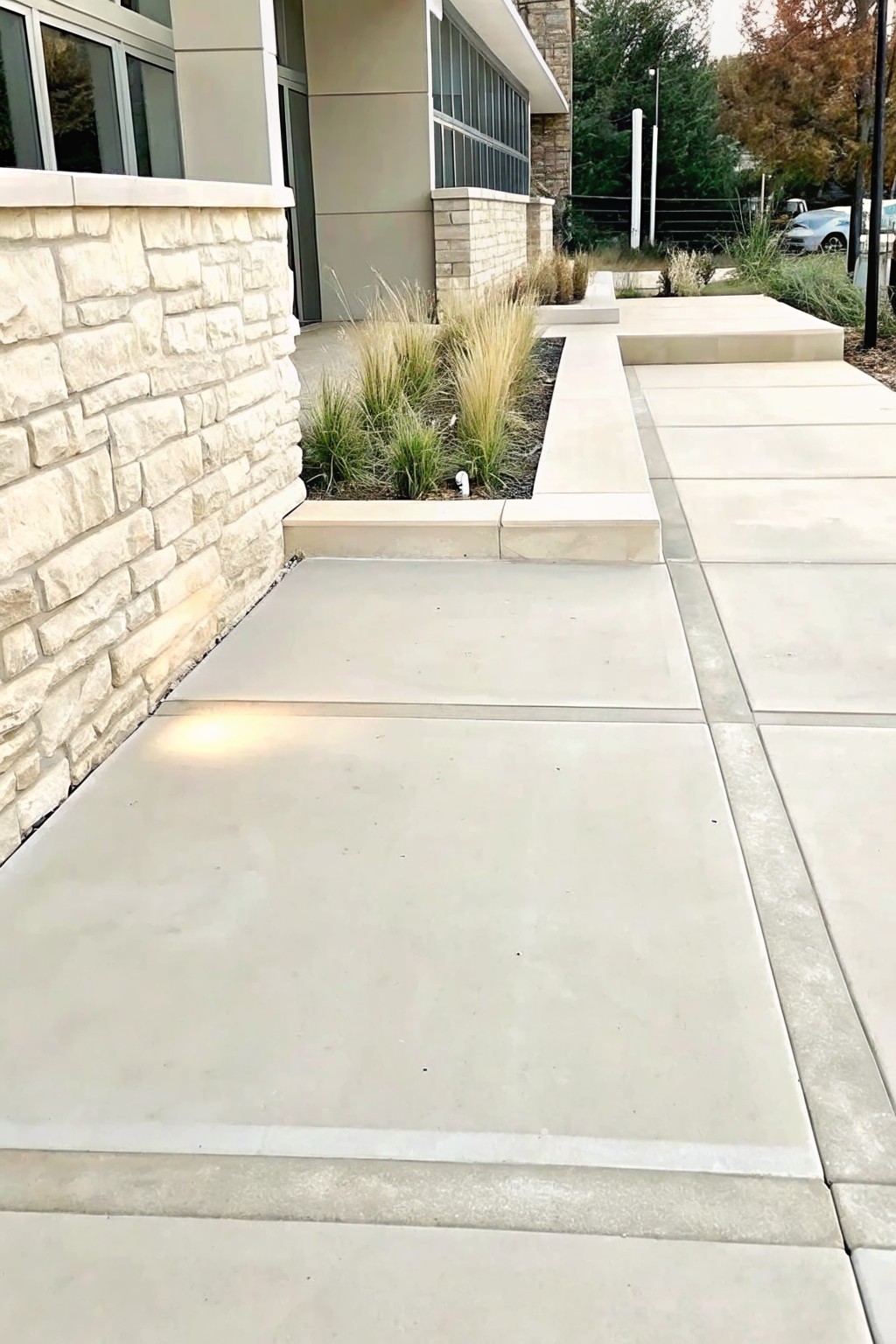
Raised borders along a front path give the whole entry a clear shape without needing lots of plants or extra decoration. The hard edge keeps grass or beds from spilling over while the path itself stays wide and easy to walk on. This works especially well when the house already has simple lines and you want the garden to match that order.
It suits newer homes or those with stone and concrete details because the border can echo the same materials. Keep the height low and the color close to the path so the look stays calm rather than busy.
Stone Edging Defines A Front Border
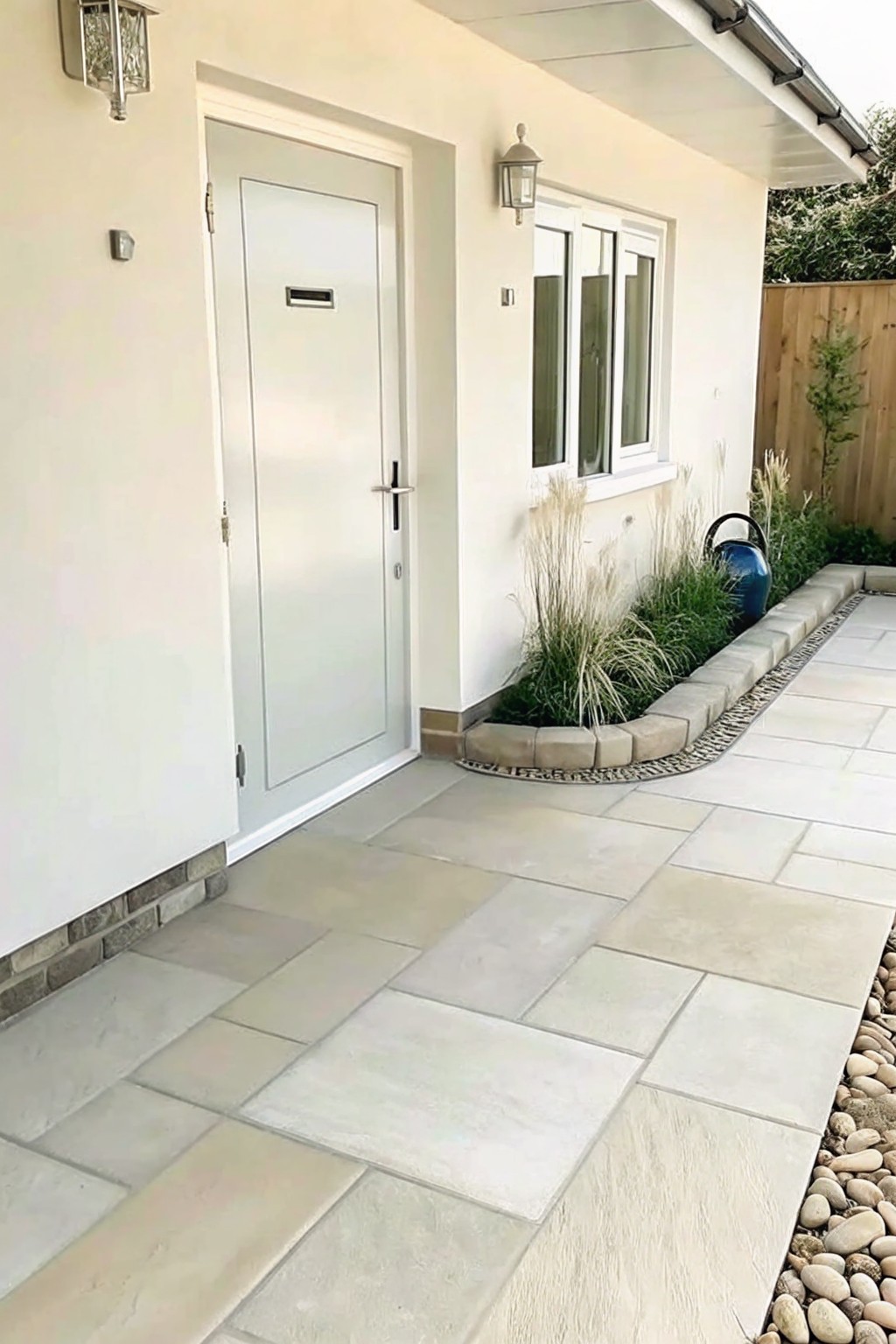
A low stone border gives the planting bed a clear shape and stops it from spilling onto the path. It works well here because the curve softens the straight lines of the house while the pebbles along the edge add a finished look without much fuss.
This approach suits homes with a simple front path where you want the garden to feel contained. Keep the stones low so they do not block drainage, and choose a color that blends with your paving. It is an easy upgrade that holds up over time with little upkeep.
Frame Paths With a Simple Pebble Border

A narrow strip of white pebbles next to a thin line of grass gives a path a finished look without much fuss. It keeps the walkway feeling open while stopping soil or plants from spilling onto the paving. Many people like this setup because it stays neat with very little upkeep.
This border works well on side entrances or front paths where space is tight. It suits homes with light paving and simple planting, and it looks best when the pebbles stay level with the grass edge. Just watch that the strip stays narrow so it does not crowd the walking area.
Flagstone Paths That Follow the House
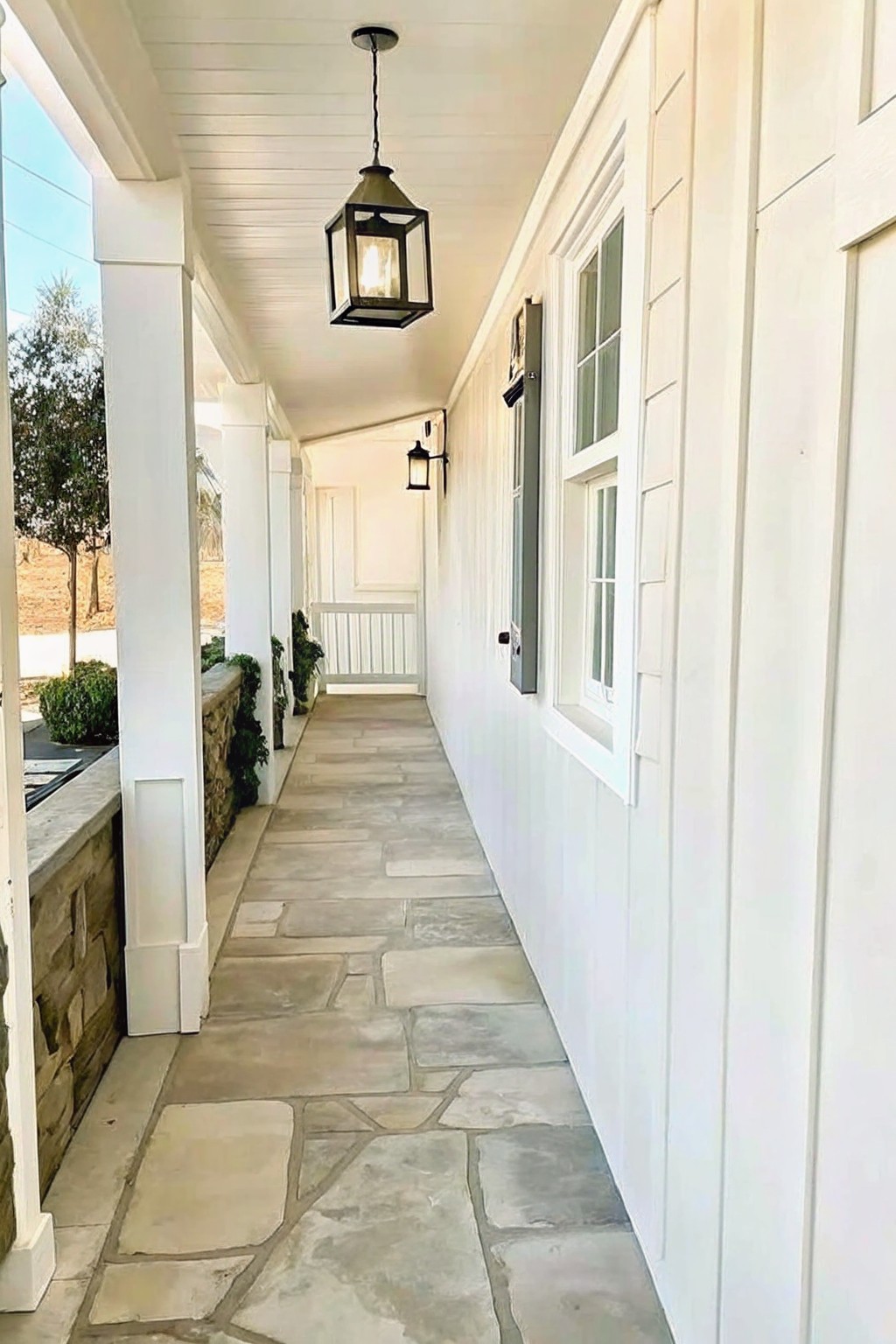
A long stone path set right against the foundation gives the side of a house a clear edge without needing extra plantings or fancy trim. It keeps the border simple and lets the walkway itself do the work of separating the building from the yard. The irregular shapes also add a bit of texture that feels more natural than a straight concrete slab.
This approach works best on homes with a side entry or a long facade where you want to guide people along the house without crowding the garden beds. It suits traditional or farmhouse styles especially well. Just keep the path width consistent so it does not feel like an afterthought.
Gravel Edging For Defined Walkways

A strip of gravel next to a paved path gives the whole border a sharp, finished look without needing much extra planting. It keeps the walkway from feeling too wide or plain and stops soil or mulch from spilling onto the stones. Many people like this because it stays neat even when the rest of the garden grows a bit wild.
This works best on narrow side returns or front approaches where you want a simple line that still feels intentional. Use it with raised beds or low shrubs so the gravel reads as a clear edge rather than just filler. Keep the path material light in color so the darker gravel stands out.
Raised Concrete Planters Along the Front Path

Raised concrete planters work well as a border because they give the walkway a clear edge while keeping the whole front area feeling open. The low height and simple shape let the plants do the main job without crowding the space or blocking light into the house.
This setup suits modern homes that already use clean lines and neutral tones. It stays low maintenance since the gravel helps drainage and the succulents need little water, though it looks best when the planters stay narrow enough to leave plenty of walking room.
Rock And Grass Borders For A Clean Edge

A simple line of river rocks paired with clumps of tall grasses makes a neat border that runs along the house without looking fussy. It keeps the path separate from the foundation and gives the side of the house a finished look that still feels relaxed.
This kind of edging works best on homes with long side walls or narrow walkways where you want low maintenance. The rocks hold back soil and weeds while the grasses add height and movement. It suits newer builds or simple exteriors that already have clean lines.
Gravel Edging For Potted Accents

A potted tree set inside a gravel circle gives a front area clean structure without needing a full garden bed. The gravel keeps the planting contained, stops mulch from spreading across the paving, and creates a neat visual break against the house wall.
This works best on homes with paved courtyards or narrow side spaces where digging in is not practical. Choose a pot that matches the wall color and keep the gravel light so the whole element stays simple and easy to refresh.
Built-In Shelving Keeps Closets Useful

Many closets end up half empty because there is no good way to stack or sort what goes inside. Adding a few simple shelves changes that by turning wasted vertical space into steady storage for baskets and smaller items.
This works best in bedrooms or hallways where you want things close at hand but still out of view. It suits homes that lack extra square footage since the shelves stay hidden behind the doors and do not crowd the room.
Keep Narrow Borders Clean With White Pebbles

A strip of white pebbles gives a sharp edge next to paving without the need for constant weeding or mowing. It also helps water drain away from the house wall in tight spots where soil would otherwise stay damp.
This setup suits modern homes with straight lines and works best when the edging stays perfectly straight. Place a few small pots inside the pebbles if you want a bit of green without planting directly in the ground.
Integrated Concrete Planters Define Front Borders

These planters give the front a neat, structured look that holds up over time. They sit low against the house and run along the walkway, keeping plants contained so the border stays clean and easy to maintain.
They suit modern homes where you want simple lines without a lot of extra edging. Set them where the path meets the foundation, fill with gravel, and add a few tough plants that do not need constant trimming.
Edge Front Gardens with Dark Pebbles

A strip of dark pebbles gives a front garden border clear definition without adding height or bulk. It separates the planting beds from the walkway in a simple way that still feels intentional and keeps the space from looking messy.
This works best on modern homes with straight lines and light paving, where the contrast can stand out. It stays low maintenance since the pebbles suppress weeds and need only occasional raking to look tidy.
Using Open Storage Under The Vanity

Open storage under a bathroom vanity gives you quick access to towels and everyday items without adding extra cabinets that can make a small room feel closed in. It also keeps the overall look lighter, since the floor and lower part of the wall stay visible.
This setup works best in simpler bathrooms where you do not need hidden storage for a lot of clutter. A single basket or two is usually enough to hold what you reach for most often, and it avoids the heavy look of fully enclosed cabinetry.
Pebble Edging Frames a Front Path

A row of small pebbles along both sides of a paved path keeps the whole front garden looking neat. The border stops grass or soil from creeping onto the slabs and gives the entrance a clear, finished line that is easy to maintain.
This approach works best on homes with simple stone or concrete paving. Lay the pebbles in a narrow strip and keep the planting low beside them so the path stays the main feature without extra fuss.
Define The Path With Oversized Planters

Large planters set along a front walkway create a clear border without needing a full garden bed. They add height and keep the planting neat while still letting the path feel open and welcoming.
This works best on homes with straight stone paths and simple architecture. Place matching planters on both sides, use a mix of shrubs and lower plants in each one, and add a narrow gravel strip along the edge to finish the line.
Raised Stone Borders Along the Path

A raised stone border gives the front garden a clear edge and makes the whole entry feel more finished. It turns a simple path into something structured without needing lots of extra planting or decoration.
This works best on modern homes with clean lines where you want the border to double as both edging and a low wall. Keep the plants low and add a few lights inside the bed so the line stays visible at night. Just make sure the height stays modest so it does not block views from the street.
Raised Stone Planters Create Clear Front Borders

Raised stone planters give the front garden a solid edge that feels permanent and neat. They lift the planting beds off the ground so the layout stays tidy even when the space is small or the ground slopes a little.
This works best on homes with a simple entry path and neutral walls. Match the stone color to the house or steps, keep the plantings low in the front layers, and leave enough room for a straight walkway through the middle.
Pebble Borders Along Entry Paths

Running a narrow strip of pebbles right beside the paving gives the front garden a sharp, finished edge without extra fuss. It separates the walkway from the beds in a simple way that still feels intentional and keeps everything looking tidy year after year.
This approach suits modern homes best, where clean lines matter more than soft curves. Use one consistent pebble size and color so the border stays neat, and make sure the strip is wide enough to be noticed but narrow enough not to crowd the path.
Gravel Beds Keep Path Edges Neat

A gravel strip planted with a few simple flowers and grasses gives the side of a path a finished look without much work. It separates the paving from the house wall so water drains away easily and weeds have less room to spread.
This setup works well on narrow side passages or front garden walks where you want low maintenance. Keep the plants sparse and choose ones that stay small so the gravel stays visible and the whole border stays easy to sweep.
Frequently Asked Questions
Q: What plants keep a border looking full without constant trimming?
A: Choose slow growing shrubs like boxwood or dwarf conifers for the backbone. Add a few ground covers that spread nicely on their own. They fill gaps without taking over.
Q: Can old bricks or stones from a demolition site make good borders?
A: Yes they work fine if you clean them up first. Stack or set them in a simple pattern that matches your house style. The texture adds character right away.
Q: What happens if tree roots push up my border after a few years?
A: Lift the edging and reset it farther out from the trunk. Trim small roots only if needed then replant around the border.
