


Over the years I have found that the borders around garden beds set the tone for how much upkeep the whole space will need once the seasons change.
When those edges stay contained without constant intervention the rest of the yard feels easier to enjoy instead of turning into another chore.
I tend to try one new edging method in a small section before committing it across the property.
Plants that hold their shape and need little dividing have worked better for me than ones that spread quickly and blur the lines.
Paying attention to how a border looks after several months of growth usually reveals whether it will stay low maintenance in the long run.
Raised Beds With Gravel Keep Path Edges Simple

Raised beds filled with gravel create a clean border that needs very little work once it is in place. The concrete edges stop soil and plants from creeping onto the path, and the gravel cuts down on weeds without constant attention.
This approach suits narrow side passages or small yards where regular weeding would be a chore. Pick low plants that stay compact, and the whole thing stays tidy with just an occasional sweep.
Narrow Borders With Low Plants

A narrow planted strip next to a concrete path keeps the whole side of the yard looking tidy without much work. The low plants stay contained, the mulch suppresses weeds, and there is no need for constant trimming or replanting through the seasons.
This setup works well along the side of a house or any straight walkway where you want a clean edge but do not want high maintenance. Stick with tough, low growing varieties and a simple border light or two if you need a little evening visibility.
Raised Borders With Gravel Edging
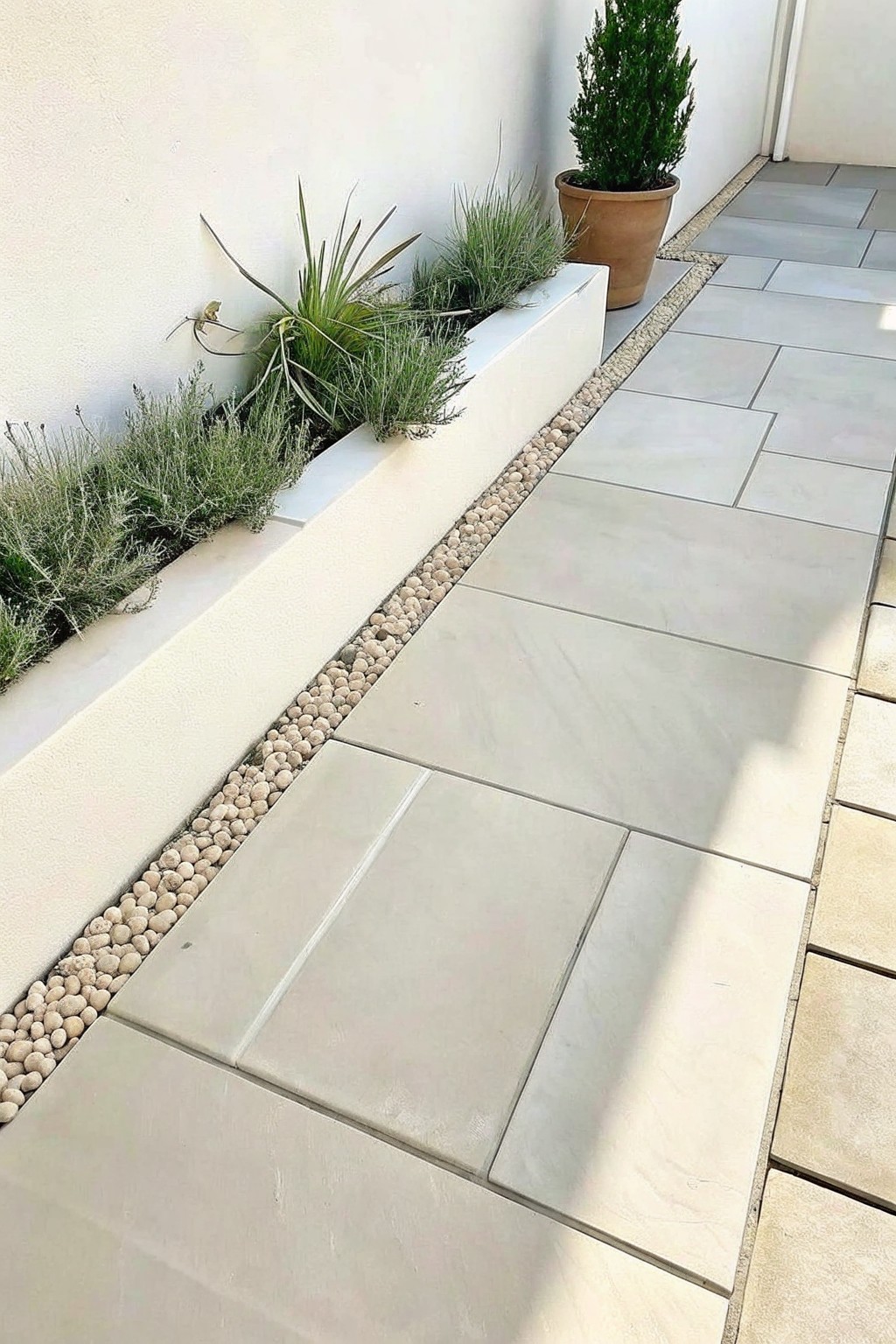
A raised border like this keeps plants neatly contained while cutting down on weeding and trimming along the edges. The clean white finish stands out against the paving and gives the whole area a tidy look without much extra work. The narrow gravel strip between the bed and the path also helps stop soil from spilling over and makes mowing or sweeping simpler.
This setup works well in smaller yards or along side paths where you want low maintenance without losing structure. It suits homes with paved outdoor areas and pairs best with tough grasses or shrubs that do not need frequent watering. Just make sure the border has good drainage so water does not pool inside after rain.
Concrete Edging For Low Maintenance Borders

Raised concrete borders filled with gravel give you a clean edge that stays in place year after year. The hard material stops grass and weeds from creeping in, and the gravel layer cuts down on the need for mulch or constant soil work.
This approach suits narrow strips beside the house or along a patio where you want simple upkeep. Keep the planting light so the border stays neat without extra trimming or seasonal replanting.
Raised Planters With Gravel Borders
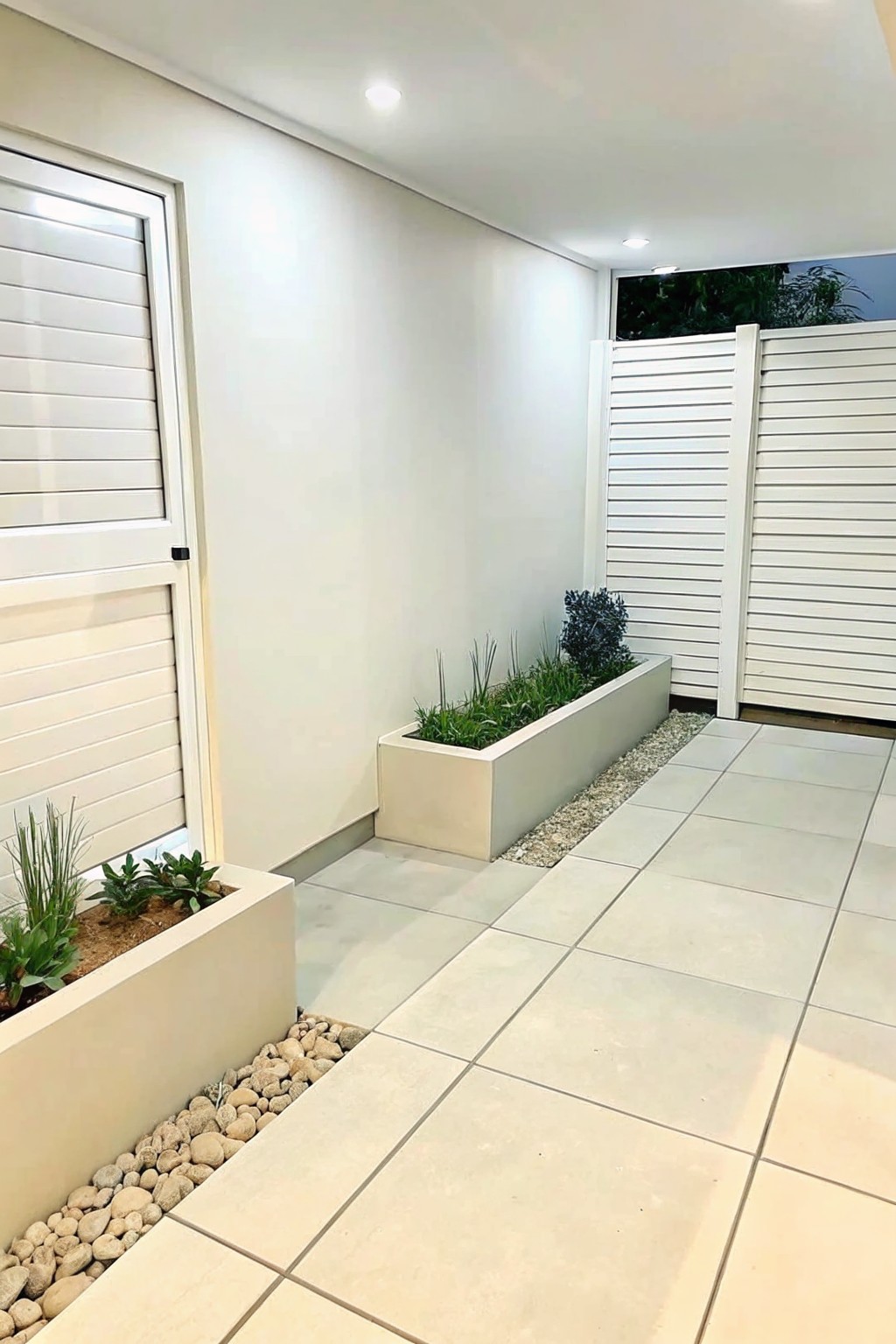
Raised planters paired with a gravel strip give you a clean border that stays tidy with very little effort. The plants stay contained in their beds, and the gravel keeps weeds down while letting water drain away easily.
This approach suits side yards, narrow passages, or any spot where you want a simple edge without constant trimming. Just match the planter height to nearby paving and use a gravel color that blends with your hardscape.
Gravel Strips Along Paths Cut Down On Maintenance

Gravel strips next to a paved walkway create a clear edge that keeps weeds from creeping in and makes the whole area look tidier with very little work. The light pebbles also let water drain away quickly so the path stays drier after rain.
This setup works well on narrow side yards or along the back of a house where you want something simple that still looks finished. Just keep the gravel layer a few inches deep and add a weed barrier underneath if the soil tends to push up growth.
Concrete Paths With Sand Borders

Concrete slabs create a clean, simple path that needs almost no upkeep from season to season. The sand on either side keeps the edges sharp, drains well after rain, and stops weeds from creeping in without extra work.
This approach suits sunny yards or coastal homes where you want something practical that still looks tidy. Lay the slabs straight, fill the borders with sand or gravel, and add a few tough grasses if you want a bit of green without regular trimming.
Gravel Strips Along The Foundation

A narrow gravel strip between the walkway and the house wall gives a clean edge without constant weeding or mowing. It keeps the area looking tidy while letting a few small plants fill in on their own.
This setup works best on the sides of the house or along paths where you want low upkeep. Stick with drought-tolerant plants and a simple gravel layer so the border stays neat through the seasons without much attention.
Pebble Strips With Grasses Make Simple Path Borders

A narrow border of pebbles dotted with a few clumps of tall grasses keeps the edge along a path looking tidy with almost no work. The stones suppress weeds and the grasses add height without needing regular trimming or watering.
This approach fits well beside house walls or in slim side yards where soil is limited. Use it where you want a clean line that holds up through changing seasons and requires only occasional raking.
Gravel Borders With Tough Grasses

Gravel makes a simple border that stays neat with almost no work. The stones keep weeds down and let rain soak in, while a few tough grasses add a bit of green without needing much trimming or watering.
This setup suits homes with straight paths and plain walls. Keep the plants low and spaced out so nothing crowds the walkway or needs constant cleanup.
Raised Planters With Pebble Borders

One simple way to handle garden borders is to use raised concrete planters paired with a narrow strip of pebbles at the base. This keeps the edge clean and stops grass or ground cover from creeping into the beds.
It suits homes with paved patios or side yards where you want a low-maintenance line that does not require frequent weeding or edging work. Make sure the pebbles sit on landscape fabric so they stay put over time.
Gravel Beds With Stone Edging

Gravel beds edged with stones give you a tidy border that stays neat with almost no work after the first setup. The gravel covers the soil so weeds have less chance to grow, and the larger stones keep everything in place without needing constant adjustments.
This style suits narrow strips along a house or fence where you want some plants but little watering or weeding. Lay down fabric first, add the gravel, and choose tough low-water plants that fit the space.
Long Planters Keep Borders Simple

Long rectangular planters set right along the edge give a clean border without a lot of digging or weeding. They work well on balconies and patios where space is tight and you want something that stays neat all year. The straight lines make the area feel organized and the plants stay contained so nothing spills onto the walkway.
These planters suit homes with hard surfaces or small outdoor spots where traditional beds would not fit. Choose tough evergreens or herbs that do not need constant trimming and water them through a drip line if you want even less work. Just check the drainage once in a while so water does not pool on the floor.
Raised Concrete Borders Keep Planting Areas Contained
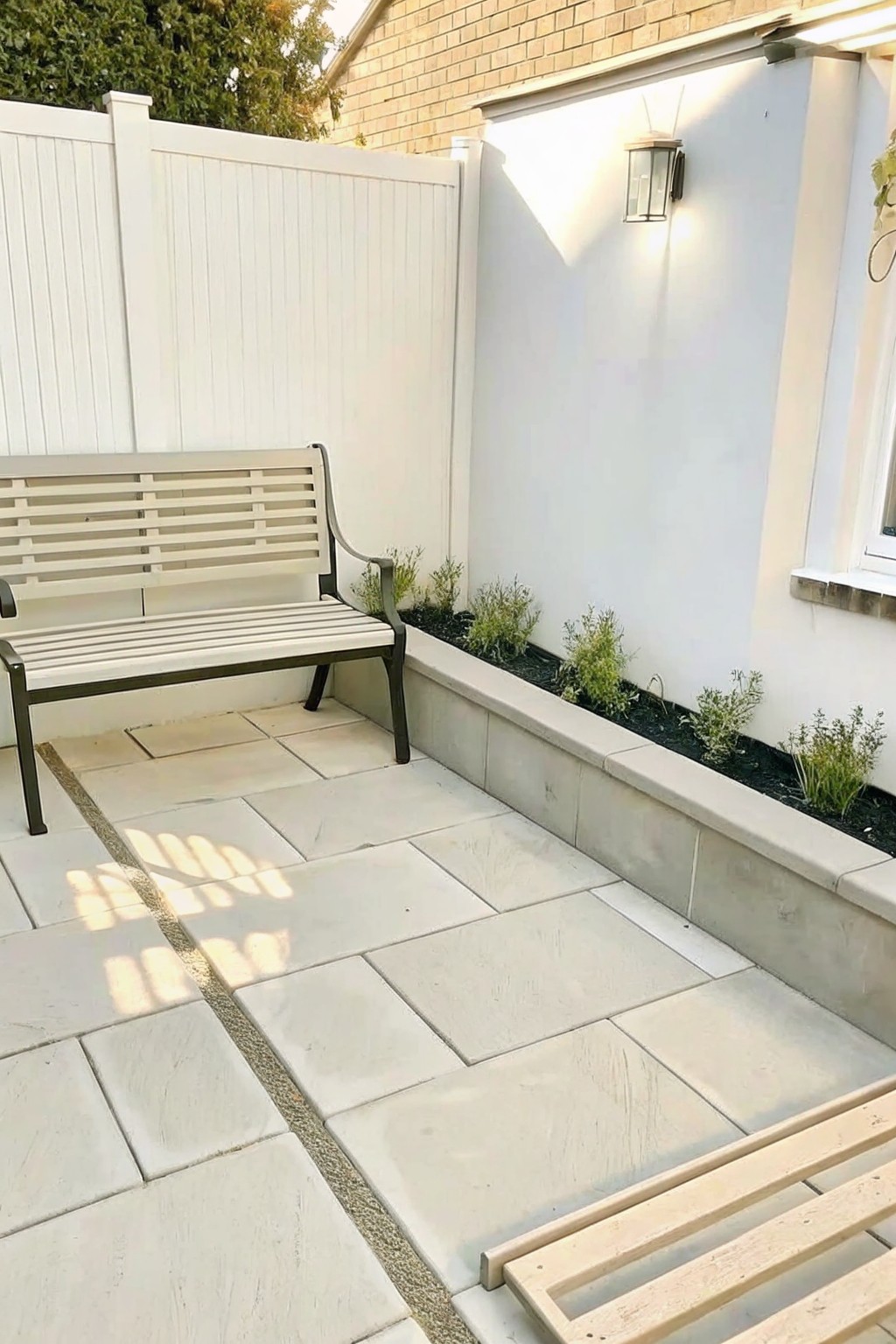
A raised concrete border gives a clean separation between paving and soil without constant trimming or edging work. It holds mulch and plants in place so the line stays straight even after rain or foot traffic.
This setup suits small side yards or patios that run along a house wall. Keep the bed narrow, add a few tough shrubs, and the border takes care of the rest with very little seasonal effort.
Paver Walkways With Pebble Borders
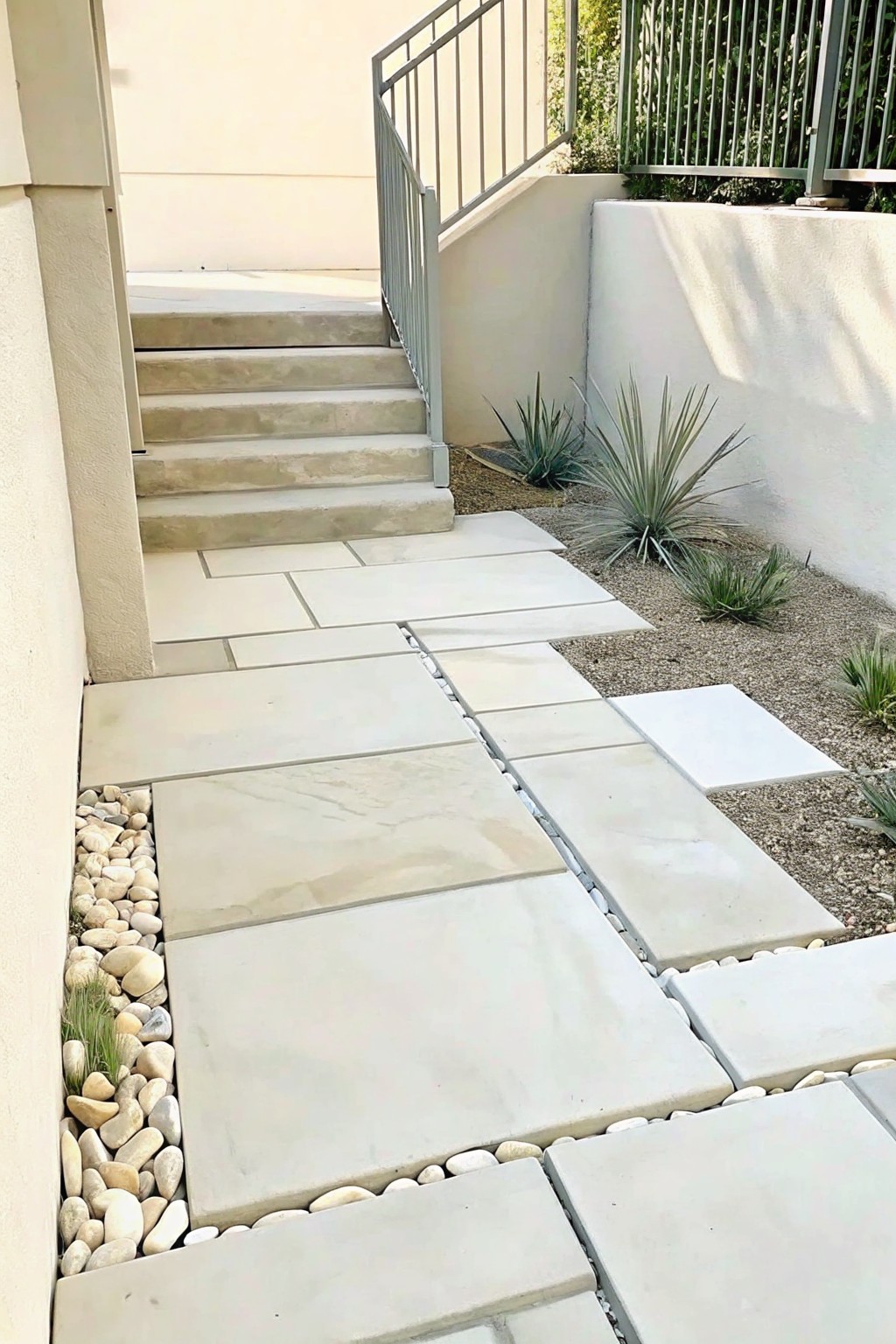
Large pavers laid in a straightforward pattern create a firm walking surface that holds up without constant repairs. The border of small stones along the sides keeps the path contained and stops mulch or soil from creeping onto the walkway.
This setup works best in side yards or narrow garden spaces where you need a reliable route but want to avoid frequent edging work. It suits homes that already use gravel or stone in other areas and helps keep the whole border looking tidy with little seasonal effort.
Gravel Strips Keep Path Borders Simple
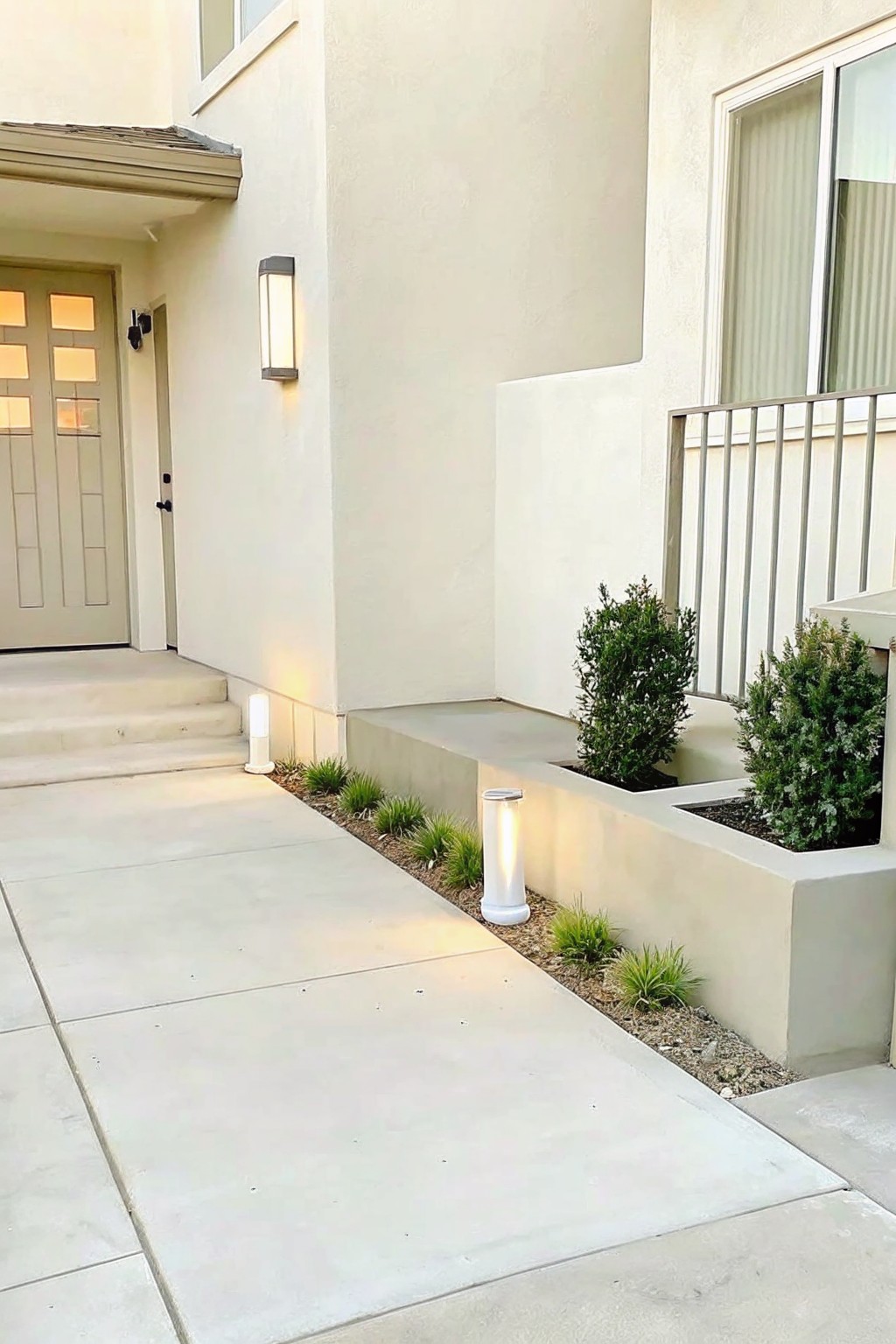
A narrow gravel strip along a walkway cuts down on weeding and gives the edge a finished look without extra fuss. The small plants stay contained so they do not creep onto the concrete or need constant trimming.
This works best on homes with straight concrete paths and low plantings. Pick tough groundcovers that stay short, add a couple of path lights for safety, and the border stays tidy through most of the year.
Built-In Raised Beds Along Walls

Raised beds built right against the walls give you a clean border without a lot of extra work. The contained shape keeps plants from spreading where they are not wanted, and the straight lines make mowing or sweeping around them simple. A few taller plants mixed in with lower ones add height without needing constant trimming.
This setup works well on paved outdoor areas where you want some greenery but do not want to deal with soil edges or weeds creeping in. Choose tough plants that suit your climate and make sure the beds have good drainage so they stay low maintenance over time.
Ornamental Grasses Create Low-Maintenance Borders
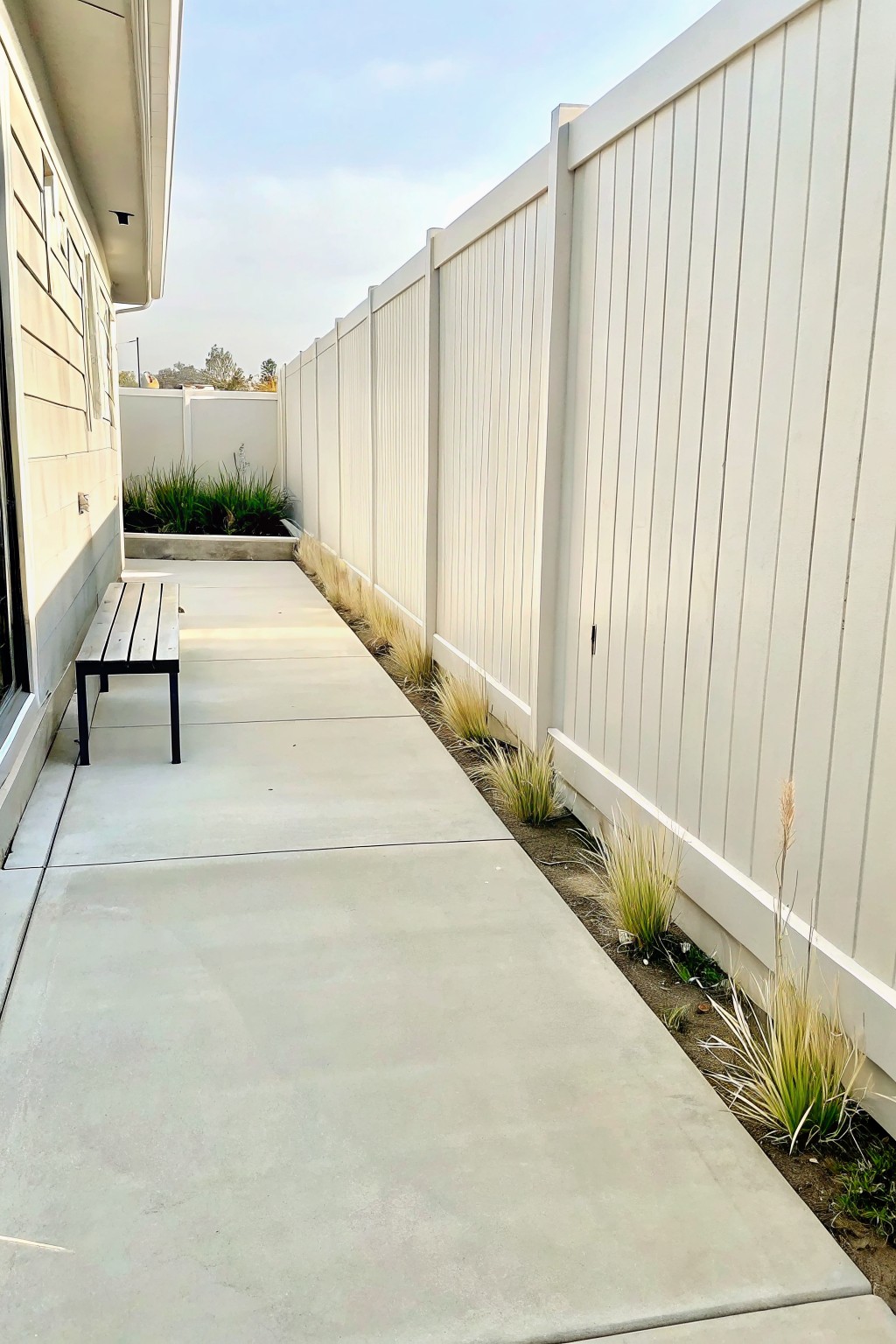
Ornamental grasses give you a clean border that stays looking decent with almost no effort. They fill a narrow strip along a fence or path without spreading everywhere or needing regular trimming like shrubs often do.
This works best on homes with long side yards or simple concrete walkways where you want a bit of green but not a lot of seasonal work. Just space the clumps evenly and let them grow through the year.
Gravel Paths With Pavers Keep Garden Work Light

Many people like this approach because the gravel fills the spaces between pavers and cuts down on weeding and edging. It gives you a clean walkway without adding lawn or dense planting that needs regular attention.
This setup works best in narrow side yards or small gardens where you want simple access. Set the pavers on a compacted base and fill around them with gravel so water drains and the path stays stable through the seasons.
Gravel Borders Along Narrow Paths

A narrow path like this works well with simple gravel strips on each side instead of full garden beds. The gravel keeps things tidy and cuts down on weeding, while a few small plants add just enough green without needing much care. It is an easy way to handle tight side yards that would otherwise feel bare or overgrown.
This setup suits homes with long, slim access areas next to fences or walls. Keep the plants spaced out so they do not crowd the gravel, and choose tough varieties that handle dry conditions. It stays neat with very little seasonal work.
Stone Pavers For Low Maintenance Borders
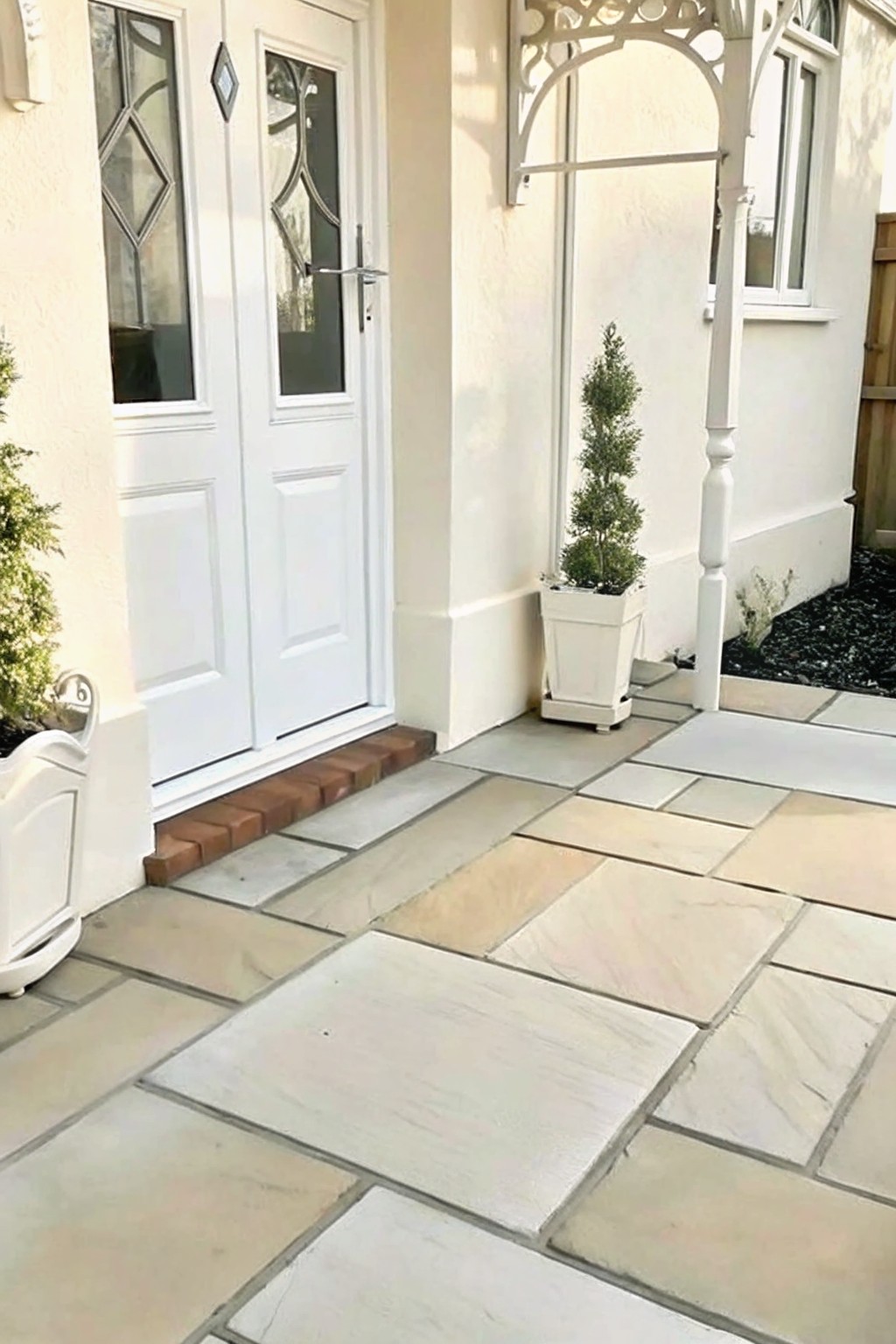
Large stone pavers work well when you want a clean edge that needs almost no seasonal work. They create a solid surface that keeps weeds down and gives the garden a tidy frame without constant trimming or replanting.
This approach suits homes where the patio runs right up to the house wall. Lay the pavers in a simple pattern, then add a few pots with evergreen shrubs if you want a bit of greenery that stays neat all year. Just sweep the surface now and then and the border stays looking good.
Narrow Borders With Vertical Trellises

A long, narrow raised border works well when space is tight along a wall or walkway. The concrete edge keeps the soil contained while the simple metal frames give climbing plants a place to grow upward instead of spreading out. This setup adds height without needing a lot of width or constant trimming.
It suits side yards, entry paths, or the edge of a patio where you want some greenery but not a lot of upkeep. Choose tough climbers that do not need much water once established, and keep the border depth shallow so it stays easy to reach for occasional pruning.
Frequently Asked Questions
Q: How do I stop grass from creeping into my new borders? A: Lay down a thick layer of mulch right after installing the border. Check the edges every few weeks and pull any strays by hand. This keeps things neat without constant effort.
Q: Can I use these ideas if I rent and cannot dig? A: Focus on options like movable pots or fabric edges that sit on top of the ground. They add definition without permanent changes.
Q: What if the borders start to look worn after a year? A: Refresh the mulch or add a coat of sealant to wood pieces in spring. Most setups need just that one touch up to stay low maintenance. It brings back the clean look fast.
