

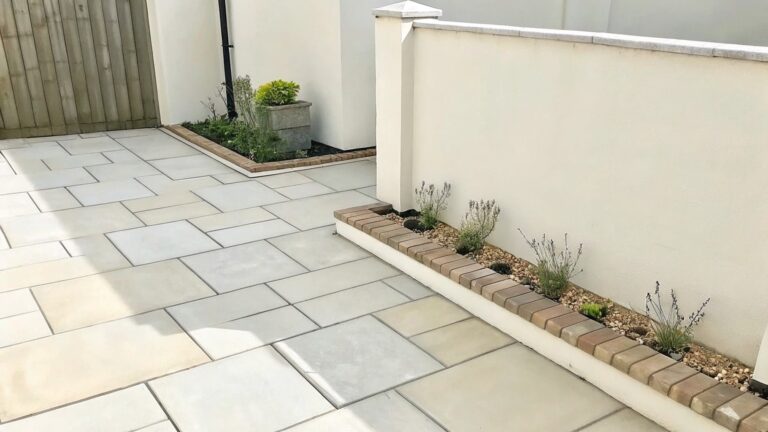
When I look at my own narrow beds the edges always seem to blur into the lawn unless I put some real thought into how they meet the grass.
Finding a border that defines the space without crowding the plants or shrinking the usable area takes some trial and error in a small yard.
I test ideas one at a time.
That way I can see how the materials settle in over a few months and whether the layout still feels open enough for everyday use.
Small changes like this often end up making the whole garden feel more put together than I expected.
Brick Edging Defines Narrow Garden Borders
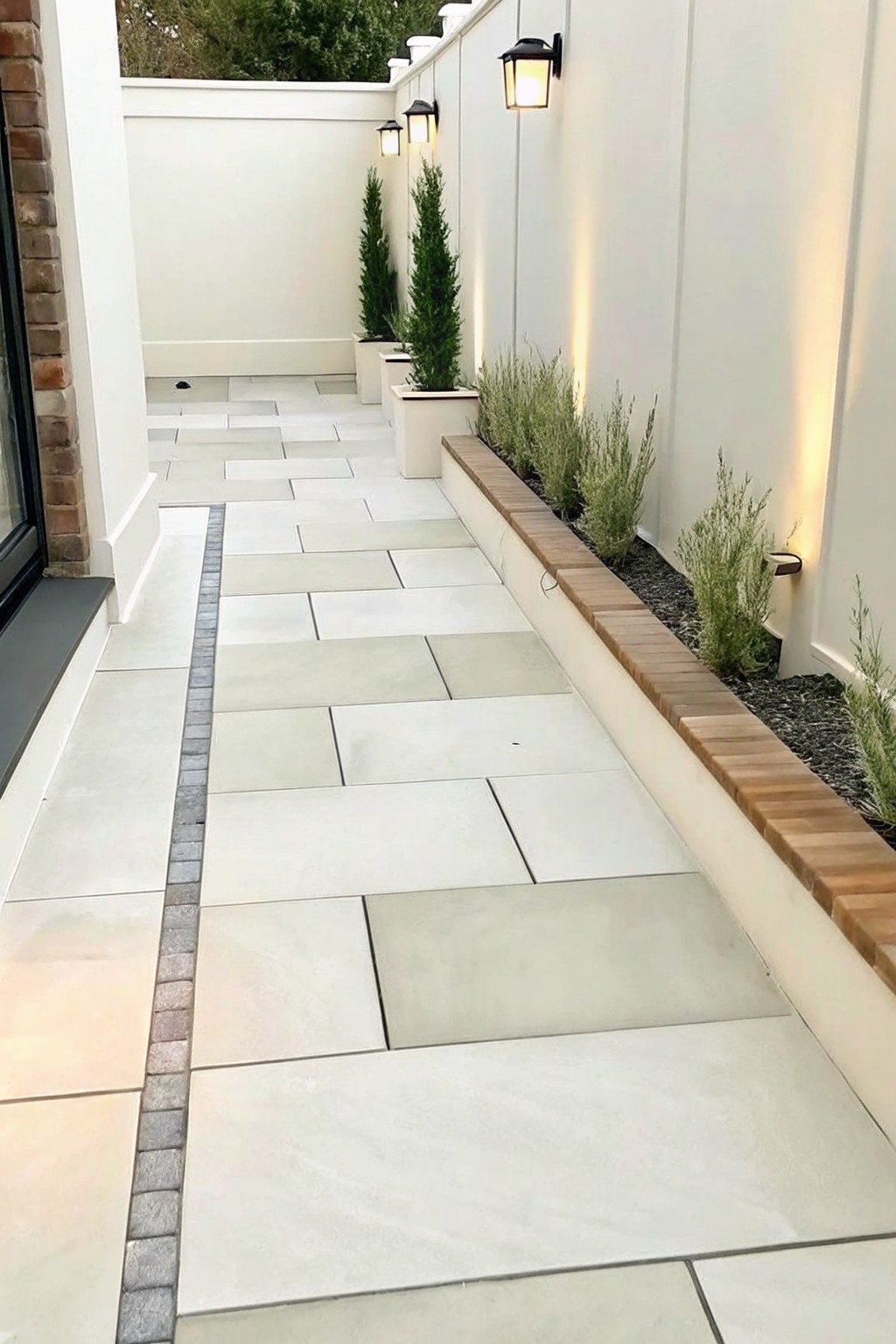
A raised border with brick edging is a simple way to handle narrow beds beside a path. It keeps the planting area contained, gives the edge a finished look, and stops soil or mulch from spilling onto the walkway.
This works best in tight side yards or along house walls where every inch counts. Keep the bed narrow, use the brick as a cap, and plant in layers so the space still feels open rather than crowded.
Raised Concrete Borders For Narrow Beds
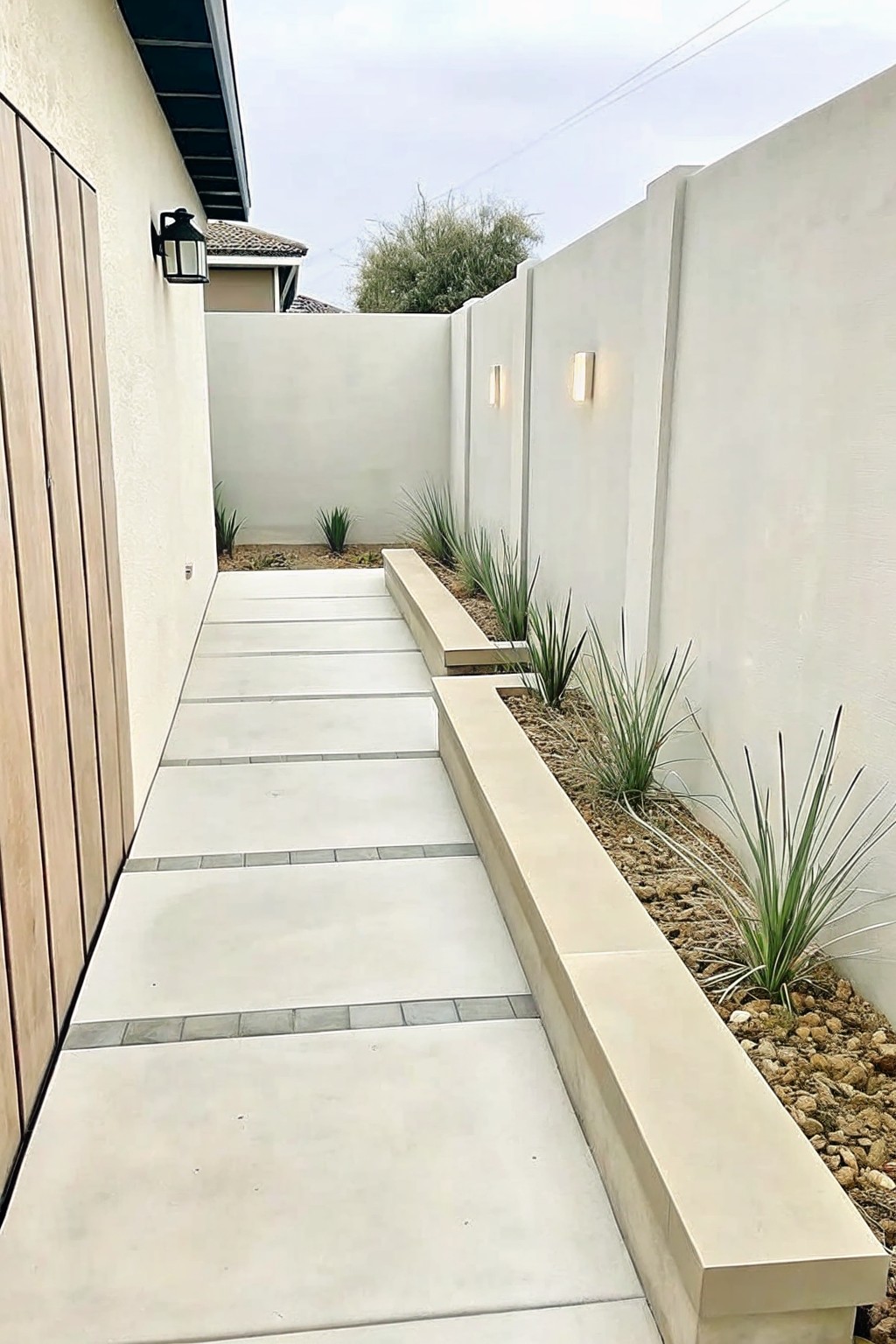
A low concrete ledge works well along narrow paths because it holds the soil and gravel in place without adding extra width. It gives the planting strip a clean edge that stays tidy even in a tight side yard where every inch counts.
This approach suits homes with long, slim passages between walls or fences. Keep the border height low so it doubles as a casual seat or step-over point, and fill the bed with gravel and upright plants that do not sprawl.
Stepping Stones in Gravel Beds

This setup keeps a walkway functional in a very tight space without adding width or bulk. The flat pavers sit level with the gravel so the path stays low and does not crowd the planting on either side.
It works best along the edge of a house or between fences where a full sidewalk would feel too heavy. Space the stones at a comfortable stride and choose gravel that drains quickly to avoid puddles.
Built-In Planters Along Narrow Paths

Built-in planters work well when space is tight because they tuck right against the wall and keep plants off the ground. This setup adds greenery along a narrow walkway without eating into the walking area or needing extra beds dug out.
They suit modern homes or small side yards where you want a clean edge but still need room to move through. Choose plants that stay compact and add drainage holes so water does not pool inside the boxes.
Built-In Planters For Narrow Garden Borders

Raised wooden planters let you add plants along a tight walkway without losing walking space. They keep the beds contained so soil and roots stay in place, which helps in small yards where every inch matters. The clean lines also keep the path looking open instead of cluttered.
This setup works best beside house walls or fences where digging beds is not practical. Use a simple wood finish that matches nearby paving or trim, and stick to one or two plant heights so the border stays neat. Watch the depth though, since anything over about eighteen inches can start to crowd the path.
Raised Planters Along Narrow Walkways

One simple way to handle a tight side yard is to build a long raised planter down one edge. It gives you room for plants without letting them spill onto the path or make the space feel even smaller. The clean line also helps the whole area look more organized.
This setup works best with large pavers and a low border on the opposite side. It suits modern homes with limited width and keeps weeding and watering easier since everything stays contained in the bed.
Raised Stone Borders For Narrow Garden Beds

Raised stone borders turn a slim strip of ground into usable planting space without crowding the walkway. The low walls keep soil contained and give the beds a tidy edge that holds up over time.
This approach works best along fences or house walls where the garden bed has limited width. It suits small yards that need both planting room and a clear path, and the stone can match other hardscaping to keep the whole area looking simple.
Pebble Borders Keep Narrow Beds Tidy
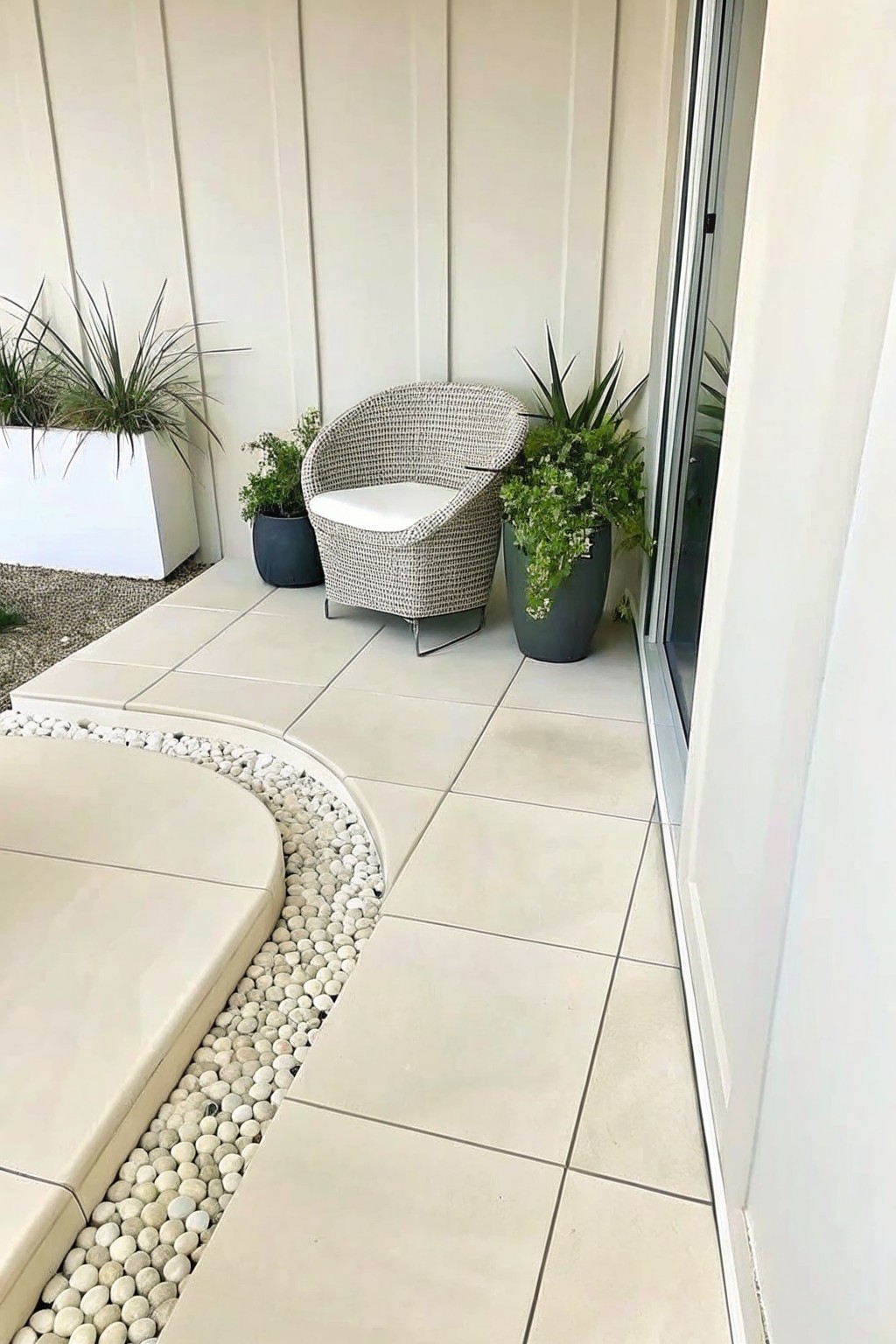
A strip of pebbles makes a simple divider between paving and plants. It gives the bed a clear edge without taking up extra width or adding bulky materials that crowd a small space.
This works best along patios or paths where the bed is tight. Keep the pebble band narrow, follow the curve of the planting area, and choose a light color so the line shows up against the paving. Check the edge every season to stop the stones from drifting.
Raised Planters for Narrow Garden Borders

Raised planters work well when you need to add plants along a tight path without letting beds sprawl. They keep everything neat and contained while still giving the space a bit of greenery.
This setup suits side yards or narrow passages where ground space is limited. Fill the planters with grasses and small shrubs, and add a gravel strip beside them to help with drainage and keep the path clear.
Vertical Planters For Narrow Yards
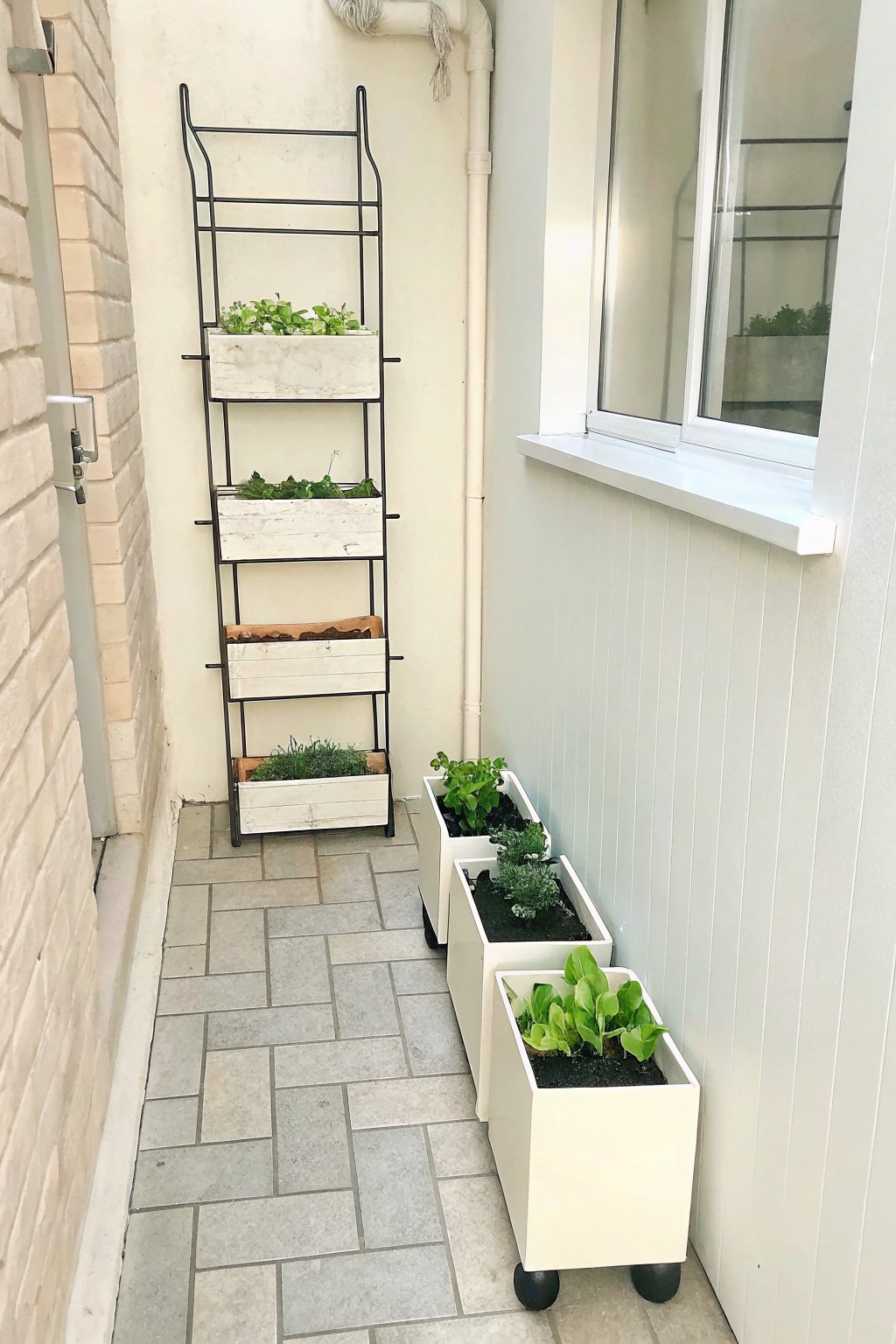
A tall stand with stacked boxes gives you multiple planting spots without spreading out across the ground. This approach fits narrow beds or side passages where regular rows of plants would feel cramped. It keeps the soil and roots contained while still showing off the greenery at different heights.
You can add a few low pots on wheels nearby to fill gaps or shift things around with the seasons. The setup works best in small yards or along house walls where space is tight. Just check that the frame sits level and the boxes drain well after rain.
Gravel Borders for Narrow Foundation Beds

A narrow gravel strip along the base of a house keeps things tidy without taking up much room. It works especially well when the space between a path and the wall is tight, since gravel fills the area cleanly and needs little upkeep.
This approach suits small yards where you want some planting but not a full garden bed. Scatter a few low plants and a couple of rocks through the gravel so it still feels natural, and keep everything low so it does not crowd the walkway.
Gravel Strips For Narrow Garden Beds

A narrow gravel strip beside a paved path gives you a simple border that fits into tight spaces without crowding the walkway. It adds a bit of planting room while keeping the whole setup low and easy to walk past.
This works best along side yards or between a house wall and fence where beds have to stay slim. Use a few tough grasses or small plants spaced out and let the gravel fill in the rest so it stays neat with little fuss.
Frequently Asked Questions
Q: How do I keep grass from creeping into a narrow border without extra digging?
A: Sink a strip of plastic or metal edging along the lawn edge before planting. It sits low and blocks runners while leaving room for your border plants to grow. Push soil right up against it so everything looks natural from the start.
Q: Will these ideas work in a yard with heavy clay soil?
A: Mix in some compost when you first turn the bed to loosen things up. Then choose tough plants like sedum or daylilies that handle clay once they root in. Water them well the first season so they get established.
Q: What if my narrow bed runs right along a fence?
A: Train a few climbing vines up the fence for height without widening the bed. Keep lower plants in front so air still moves through and nothing crowds the base.
