

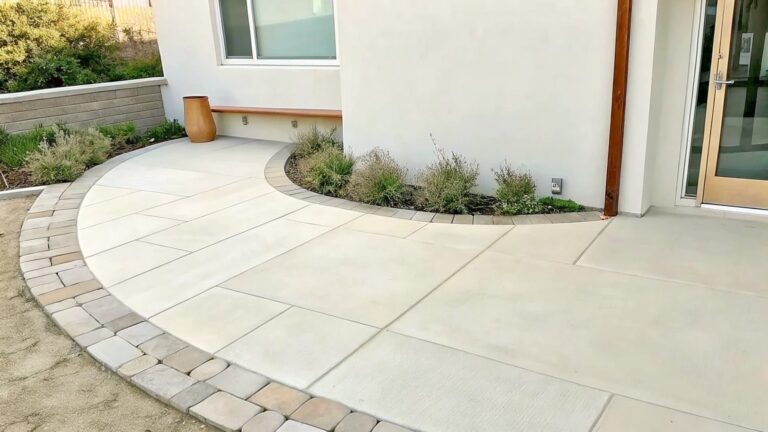
I’ve always found that the line where a garden bed meets the lawn sets the tone for the rest of the yard long before any blooms appear.
When edging stays sharp and the planting builds in clear layers the whole border holds its shape even after a few seasons of growth and weather.
In my yard the borders that worked best were the ones where a simple cut or material choice kept the edge defined while the flowers added depth right behind it.
Small adjustments there change more than I expected.
I tend to test ideas that keep maintenance low while still giving the beds a finished look from the path or patio.
Pebble Strips Keep Planting Edges Tidy
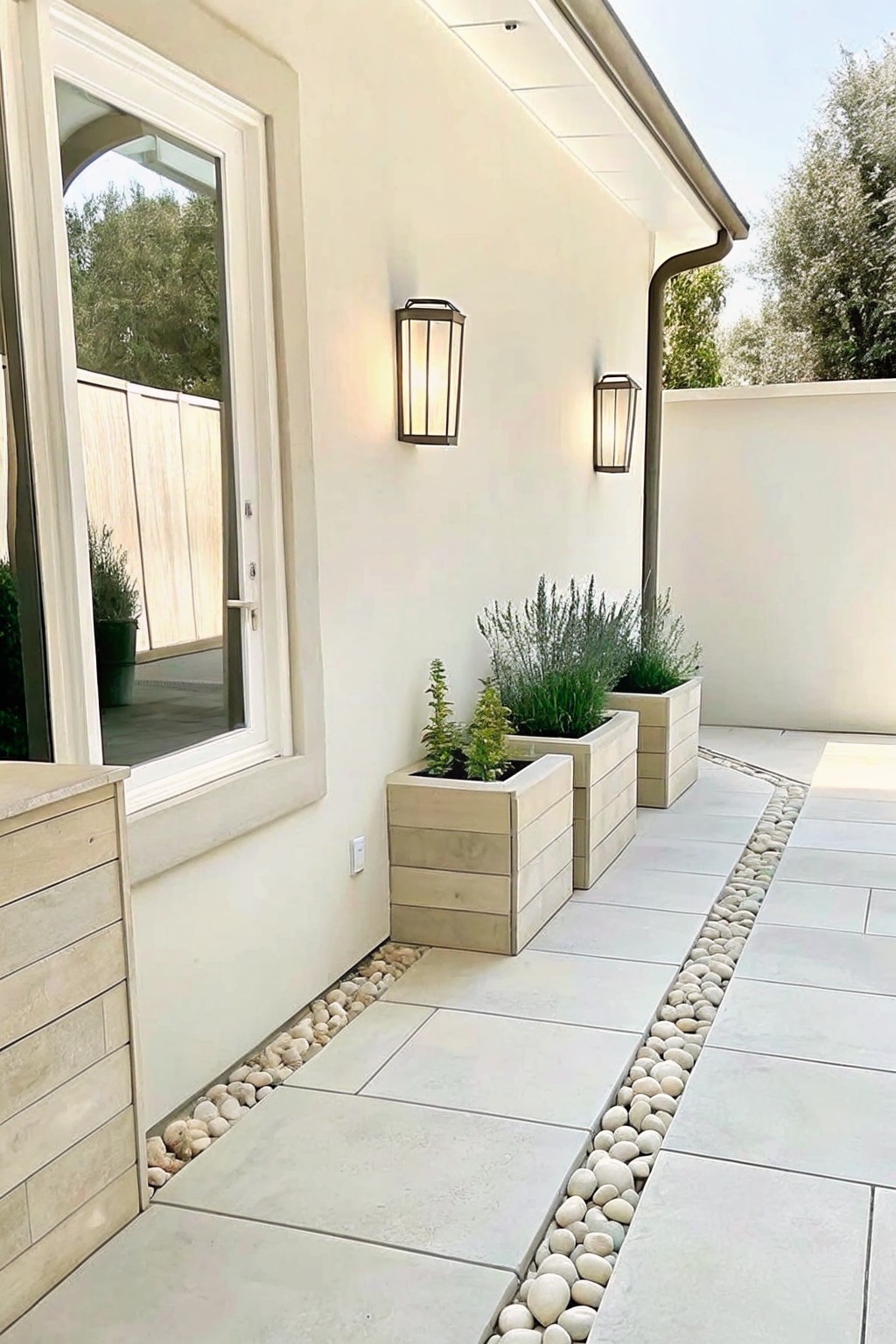
A narrow band of river rock gives a clean break between paving and planting beds. It stops grass or mulch from spilling over and keeps the line looking sharp with almost no upkeep.
This approach works best along house walls or walkways where space is tight. Raised wooden planters add height and keep roots contained, so the border stays neat even in smaller yards.
Low Stone Edging Keeps Narrow Borders Tidy
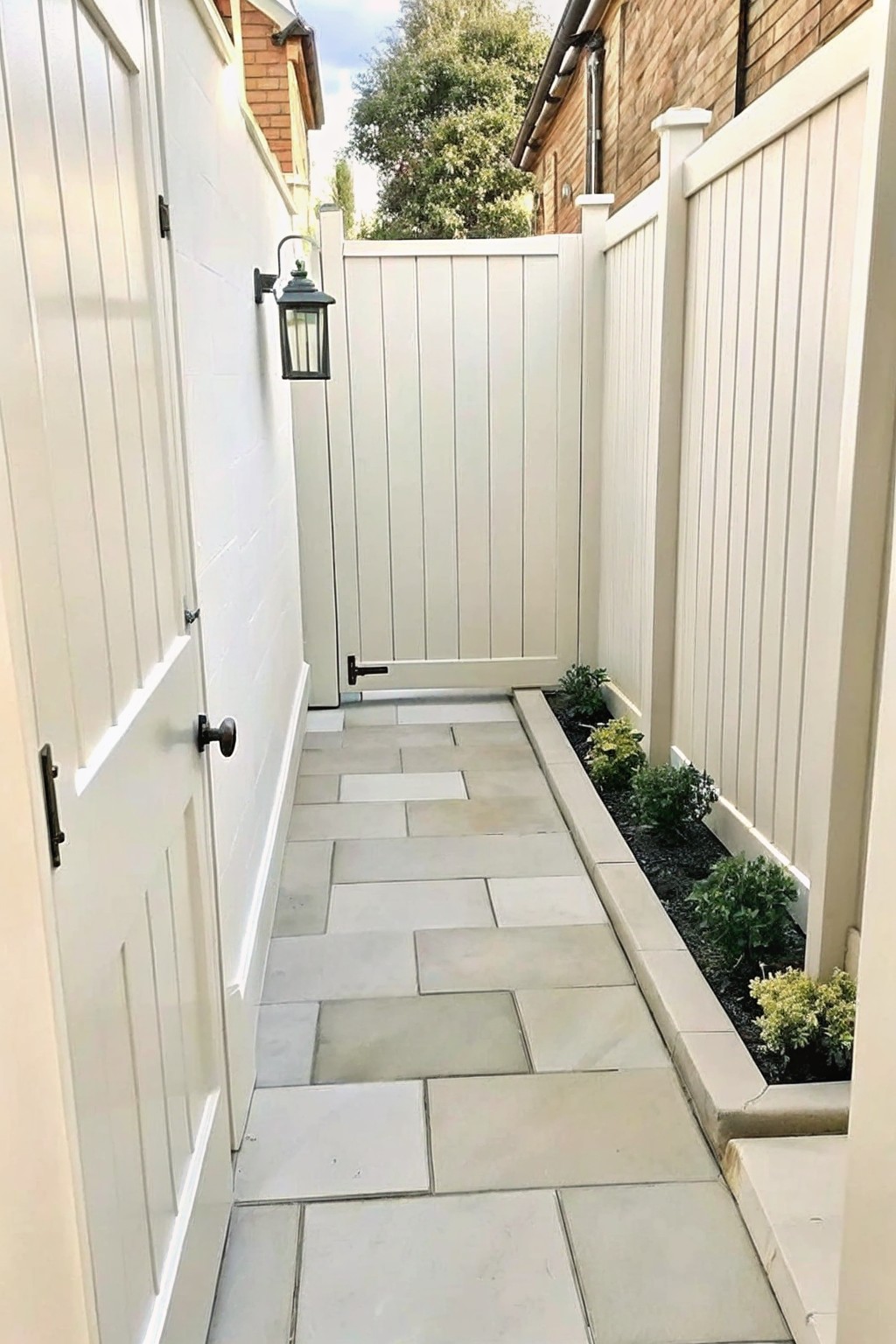
A low stone edge gives a narrow garden bed a clear shape without crowding the path. It stops mulch from spilling over and makes the whole strip look more finished even when the space is tight.
This works best along side yards or between houses where you need a simple border that does not take up room. Keep the plants low and layered so the bed stays easy to walk past and does not block light from nearby windows.
Narrow Grass Strips Make Simple Path Borders
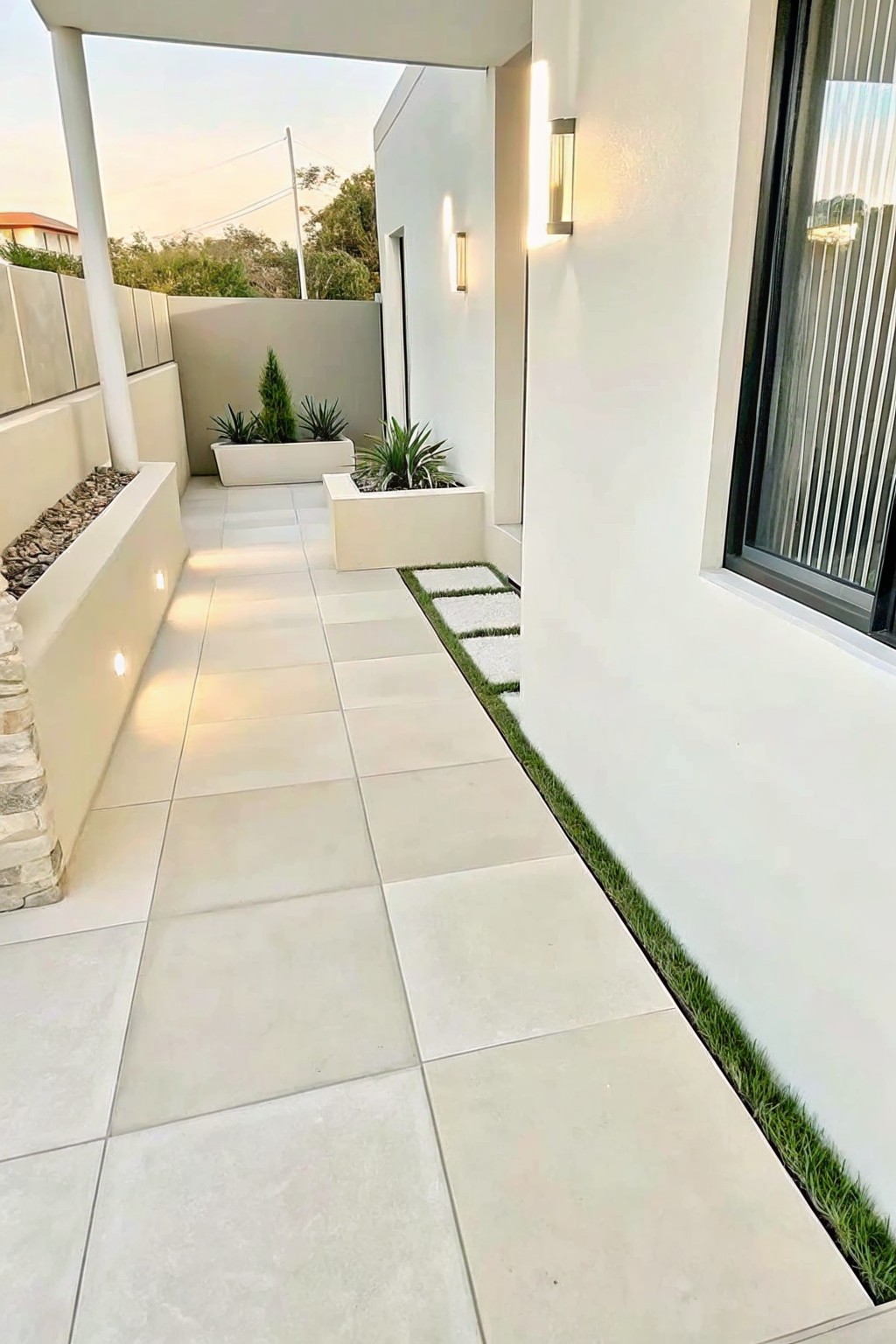
A narrow strip of grass next to a paved path gives the walkway a clean edge that feels soft but still defined. It works especially well when you want separation from a wall or planting bed without adding more hard materials or heavy flower layers.
This approach suits modern homes with straight lines and limited space. Keep the grass mowed low and the paving clear so the border stays neat with very little upkeep.
Raised Planters For Clean Borders
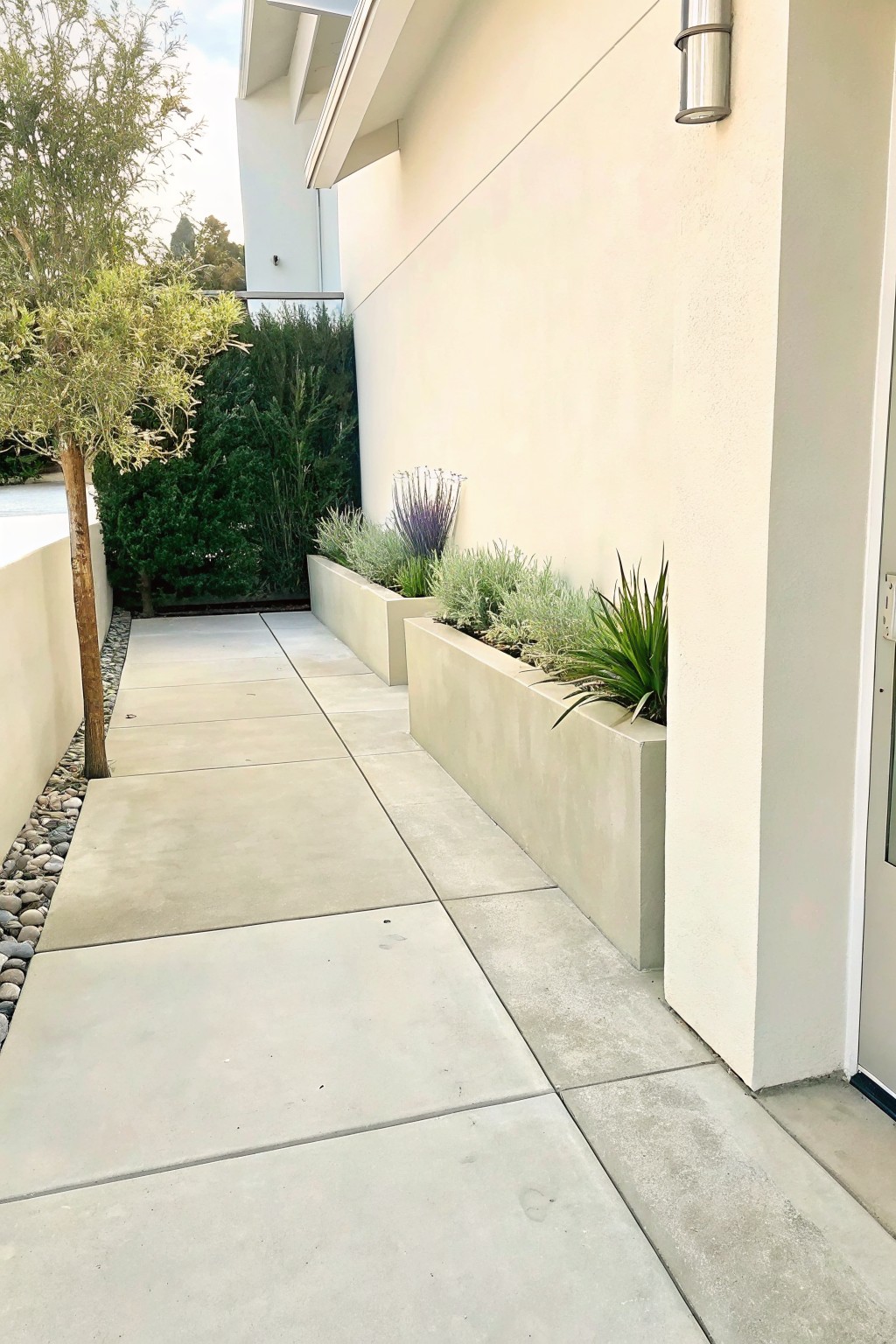
Raised concrete planters give a walkway a sharp edge that stays in place year after year. They keep the planting contained so the path stays clear and the beds do not spill over onto the paving.
This setup works best on modern homes or narrow side yards where you want structure without adding full retaining walls. Use a simple mix of low grasses, mid-height shrubs, and one or two taller accents inside each box to get the layered effect without crowding.
Stone Edging for Straight Shrub Beds
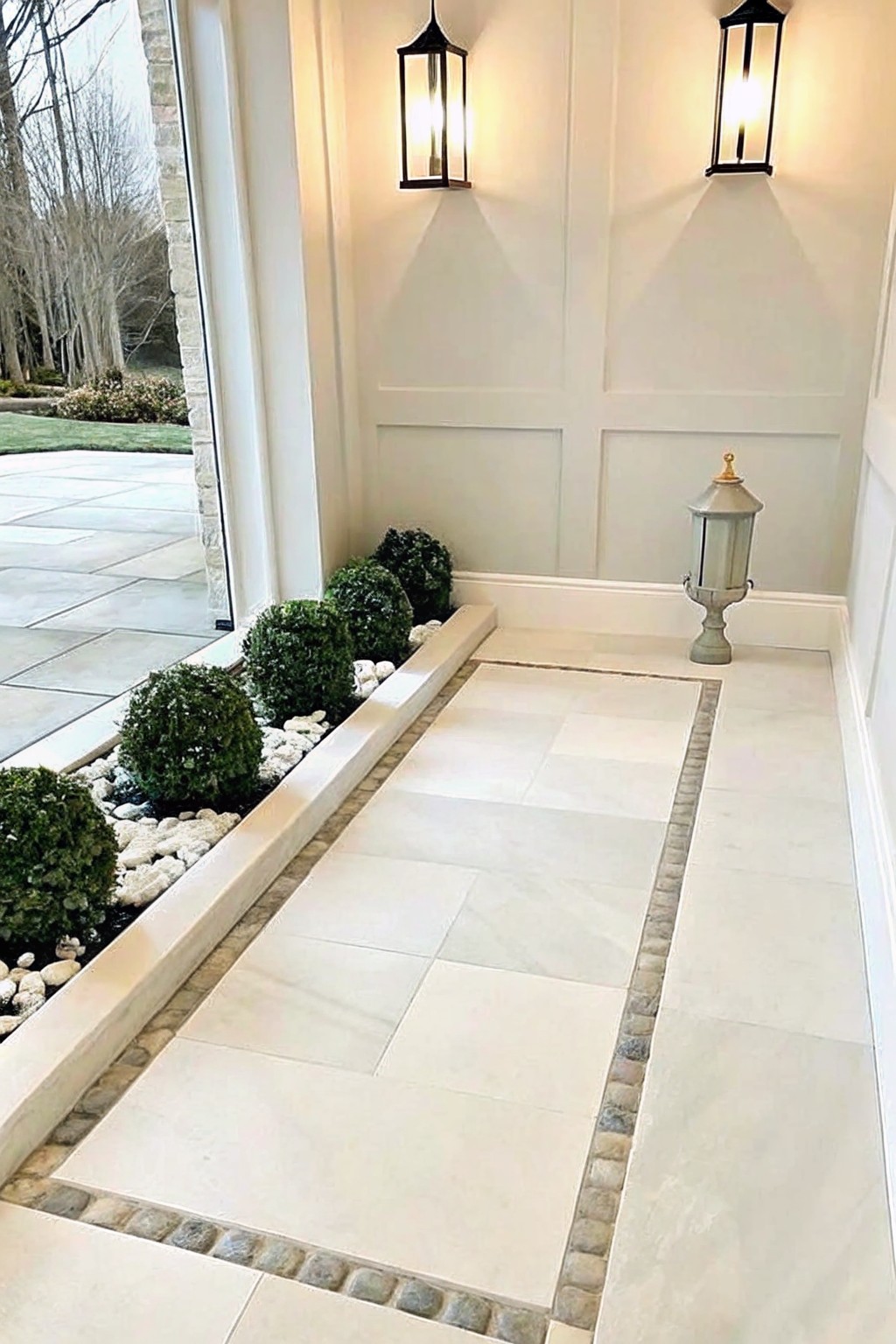
A low stone border gives a shrub planting real structure without making it feel stiff. It keeps the bed raised and contained while the path stays open and easy to walk.
This works best on homes where the walkway runs close to the house. Use the same border material on both sides of the path if you want the whole entry to feel pulled together. Just keep the shrubs rounded and evenly spaced so the line stays simple.
Tall Cabinets Add Storage To Narrow Entries
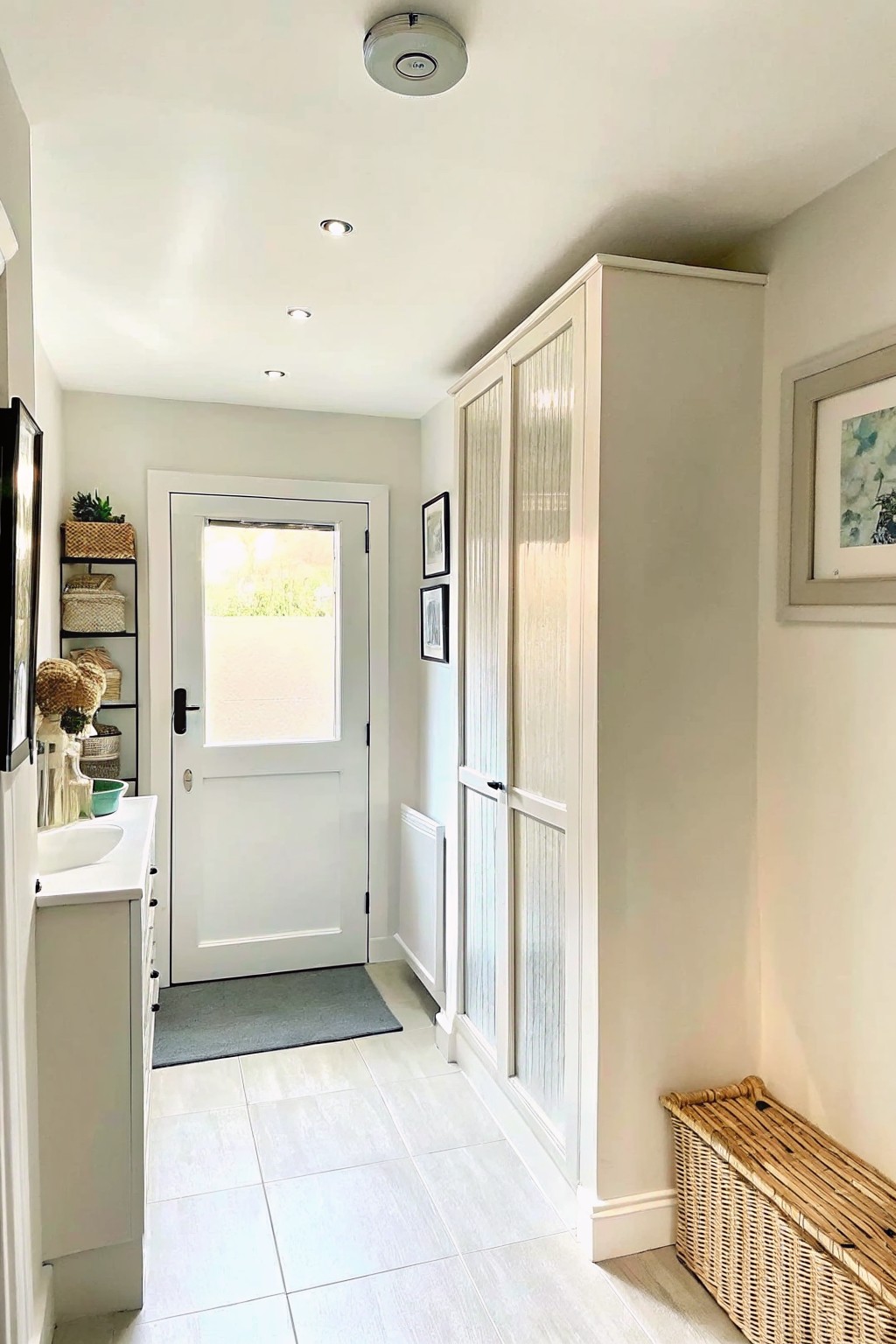
A narrow entry or mudroom often ends up as a catch-all for shoes, coats, and bags. Fitting a tall cabinet along one wall gives you hidden storage without crowding the floor space or making the hallway feel smaller.
This approach works best in homes with light walls and simple trim details. Keep the cabinet color close to the surrounding doors and baseboards so the whole area stays calm and uncluttered. Add a small bench nearby if you need a spot to pull on boots.
Raised Planters With Pebble Borders
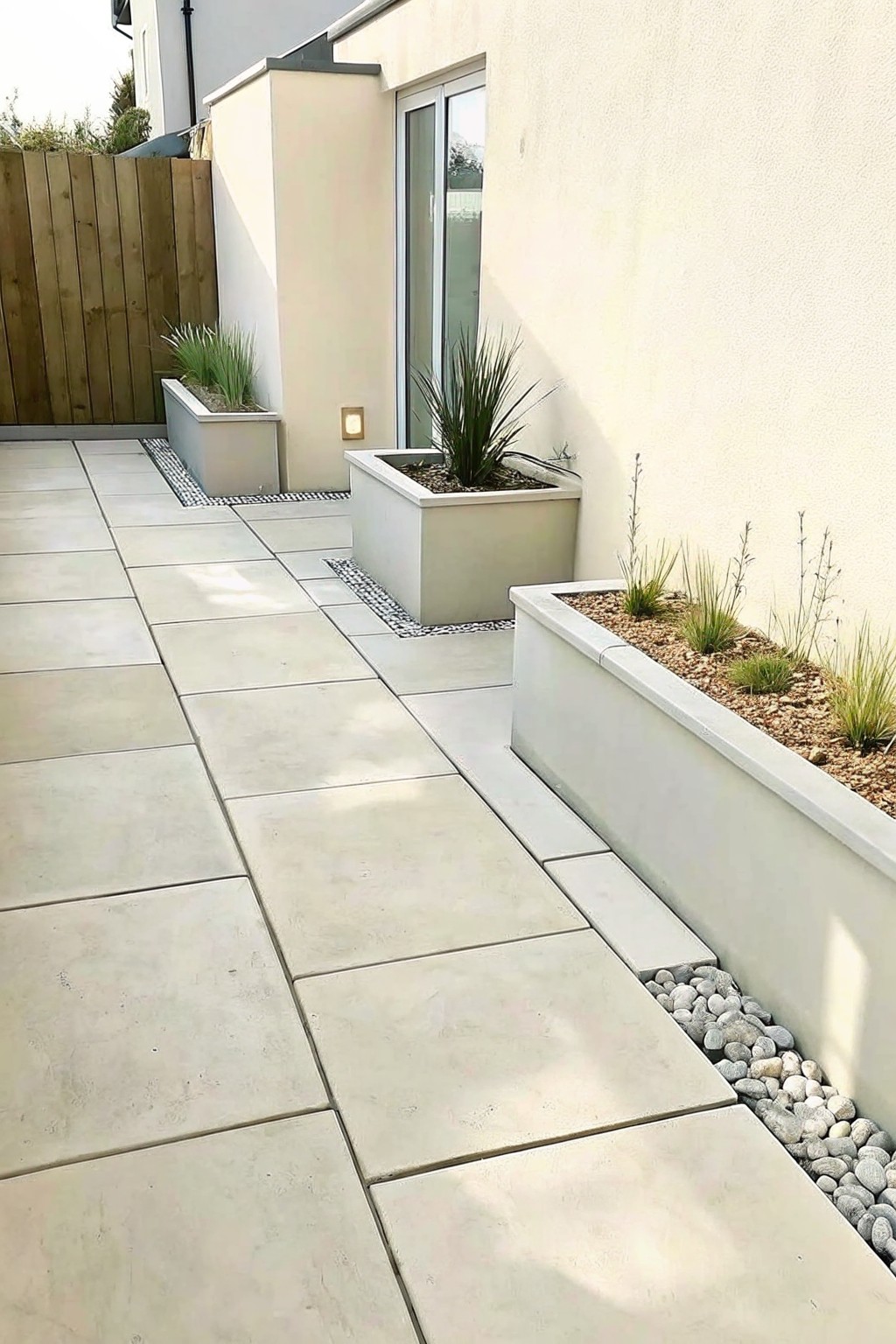
Raised planters give you a simple way to keep garden edges straight and contained. The clean sides stop plants from spilling onto the path, and the pebbles along the base add another clear line that holds everything in place without extra trimming.
This setup works best along patios or house walls on homes that already have a simple, modern look. Keep the planting light with grasses and low perennials so the structure stays the main feature rather than getting overgrown.
Stone Planters For Clean Pathway Borders

A low stone planter running along a walkway gives a sharp edge that stays in place without extra trimming or digging. It turns the border into a built-in feature instead of something that needs constant upkeep.
This works best on newer homes or updated yards where the path already has a simple layout. Keep the planting low and layered so the stone edge stays visible and the bed does not spill over onto the paving.
Pebble Strips For Clean Edging
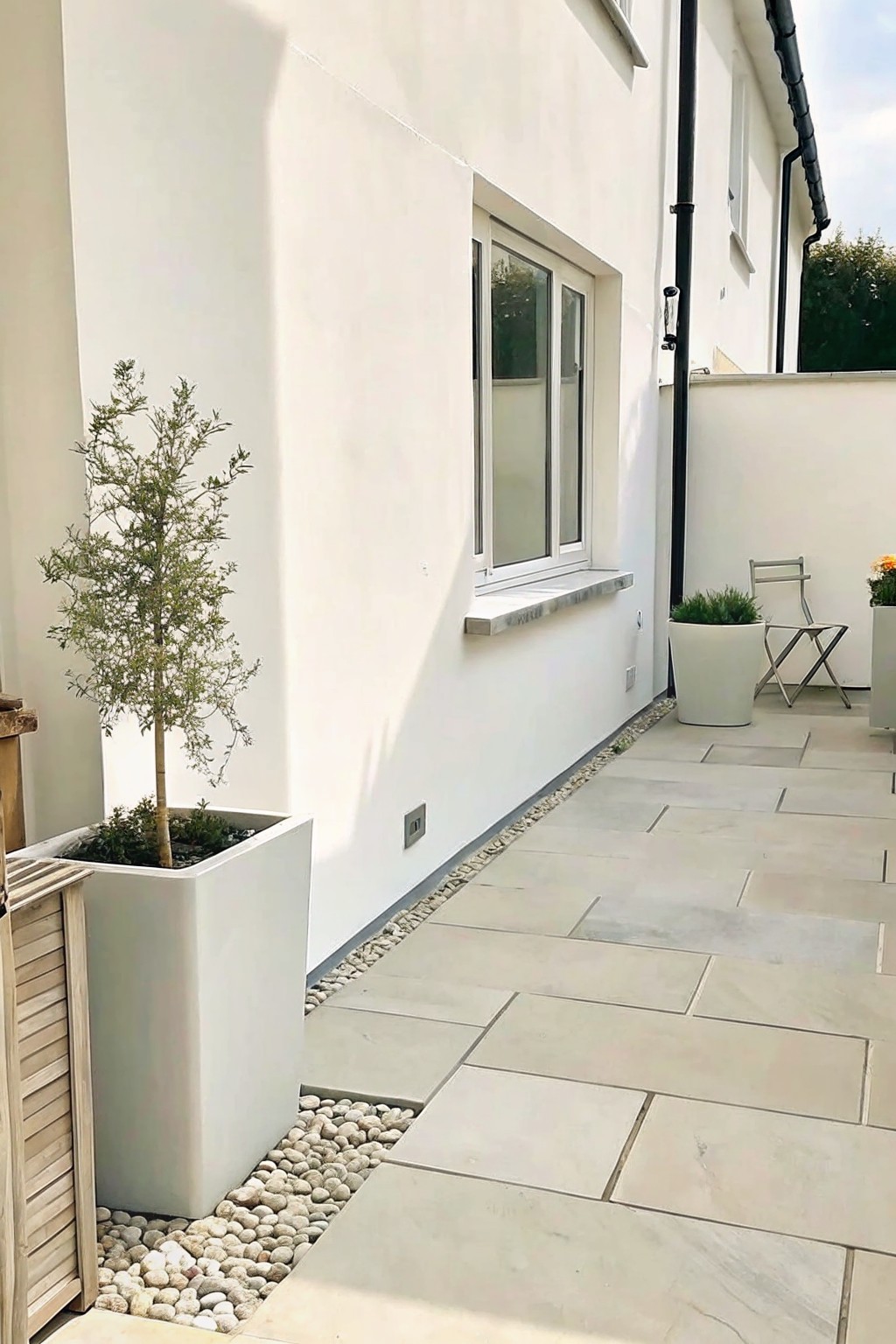
A narrow band of pebbles along the edge of paving creates a sharp line that keeps the whole area looking tidy. It separates the hard surface from the wall or planting beds without needing extra trim or complicated cuts.
This approach suits side yards or small paved spaces where you want low upkeep. Keep the strip narrow and use larger pebbles so they stay in place even if the area gets occasional foot traffic.
Wooden Planters Edge The Path
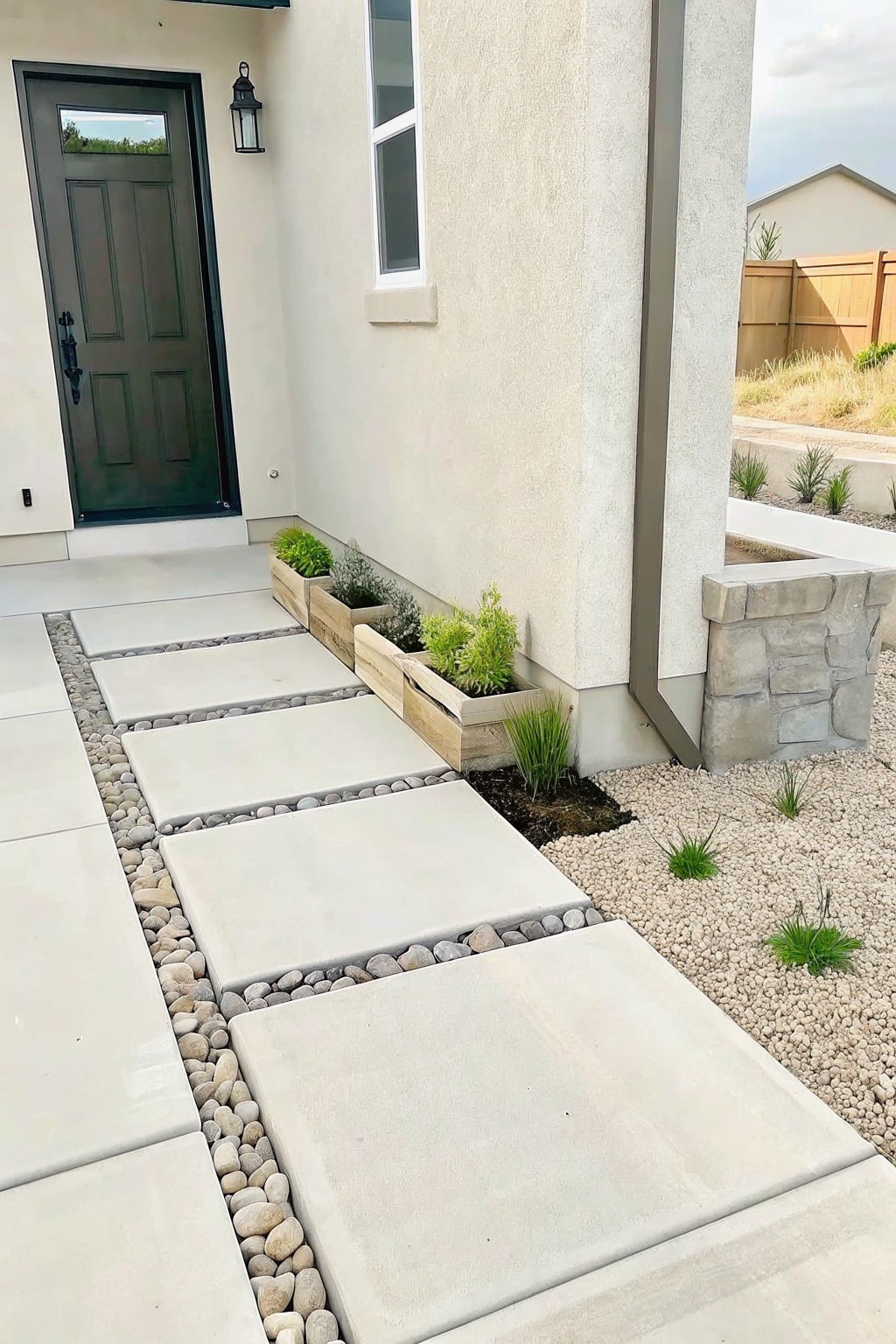
Wooden planters give you a clean way to add layers of plants right along a walkway. They keep the border tidy, hold soil in place, and let you mix heights without planting directly into the ground.
This works best on newer homes with simple lines where you want some greenery but still need a firm edge. Place the boxes end to end, use taller plants toward the house, and keep lower ones facing the path so everything stays neat and easy to maintain.
Stone Edging for Foundation Beds
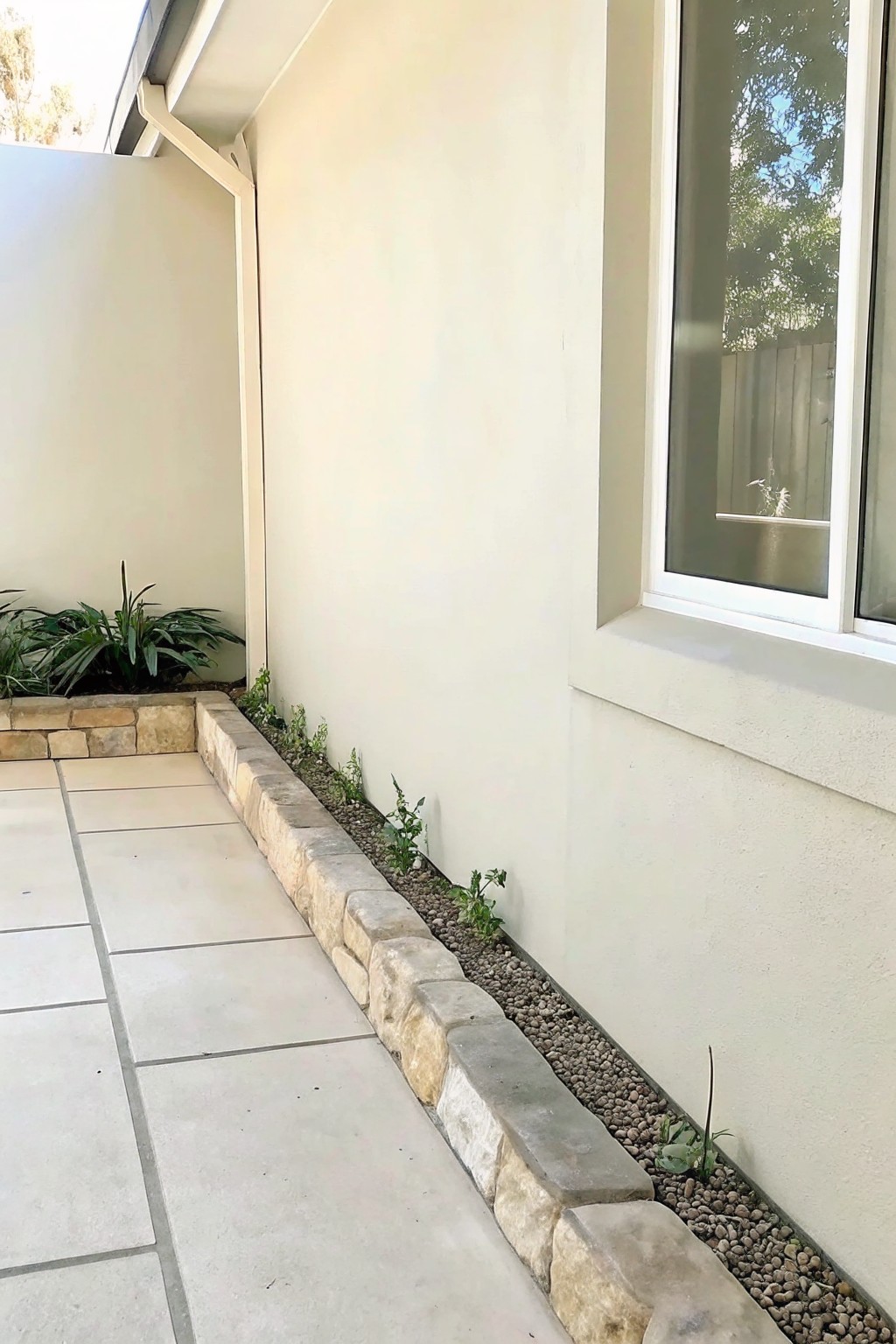
A low stone border gives the planting strip along the house a clear edge without adding much height. It holds the gravel in place and keeps the bed from creeping onto the patio, which makes the whole side yard look more intentional.
This kind of edging works best on narrow foundation strips where you need a simple, low-maintenance solution. It suits homes with stucco walls and pairs well with small perennials or ground covers that stay under a foot tall.
Raised Planters Keep Garden Borders Clean
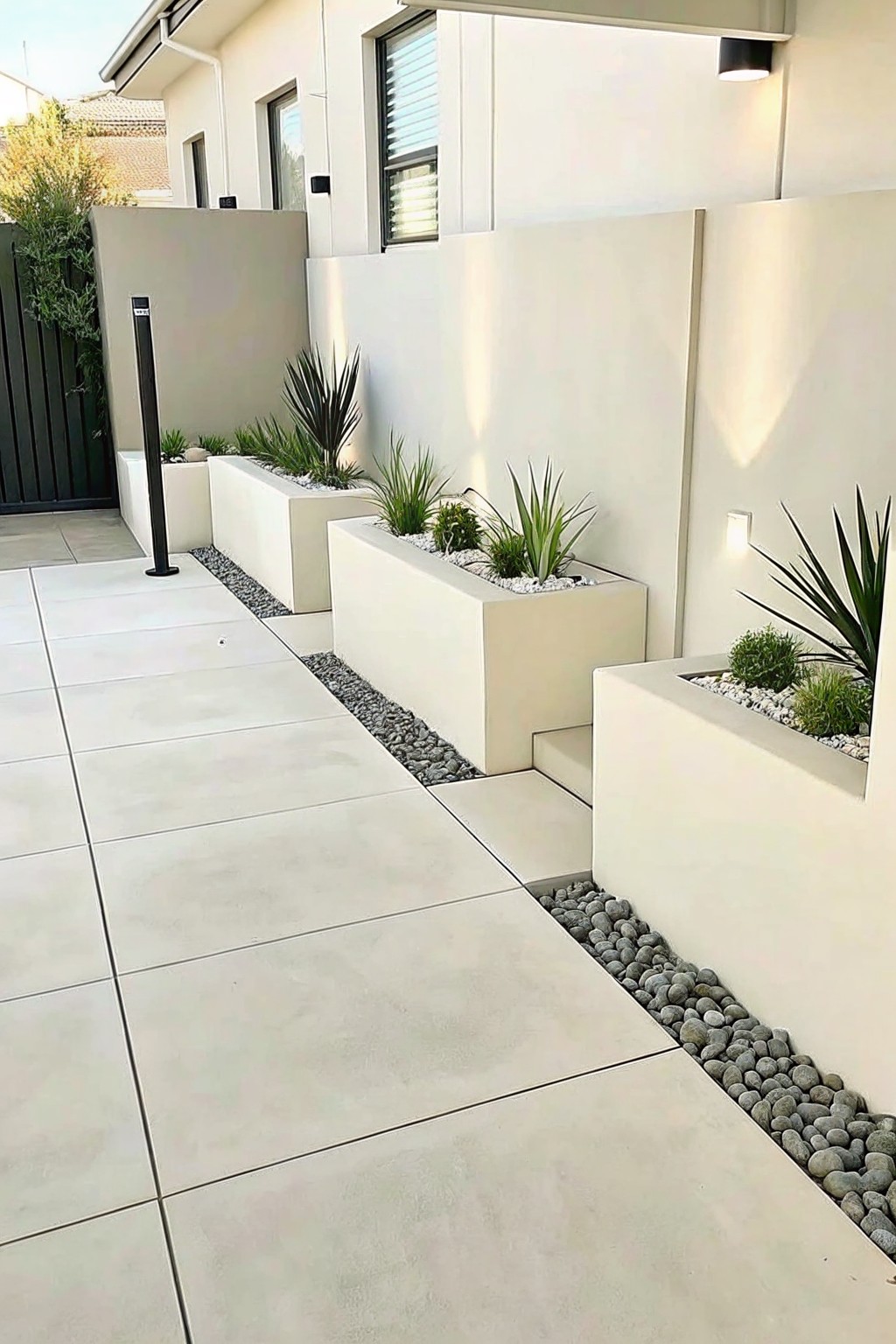
Raised planters give you a simple way to mark the edge of a garden bed without relying on constant trimming or fussy curves. The solid sides create a straight line that stays neat year round and works especially well next to paved paths.
This setup suits homes with modern or minimalist exteriors where you want low maintenance. Place the planters along a walkway or house wall and fill them with layered plants that stay contained inside the box.
Raised Planters for Neat Garden Borders
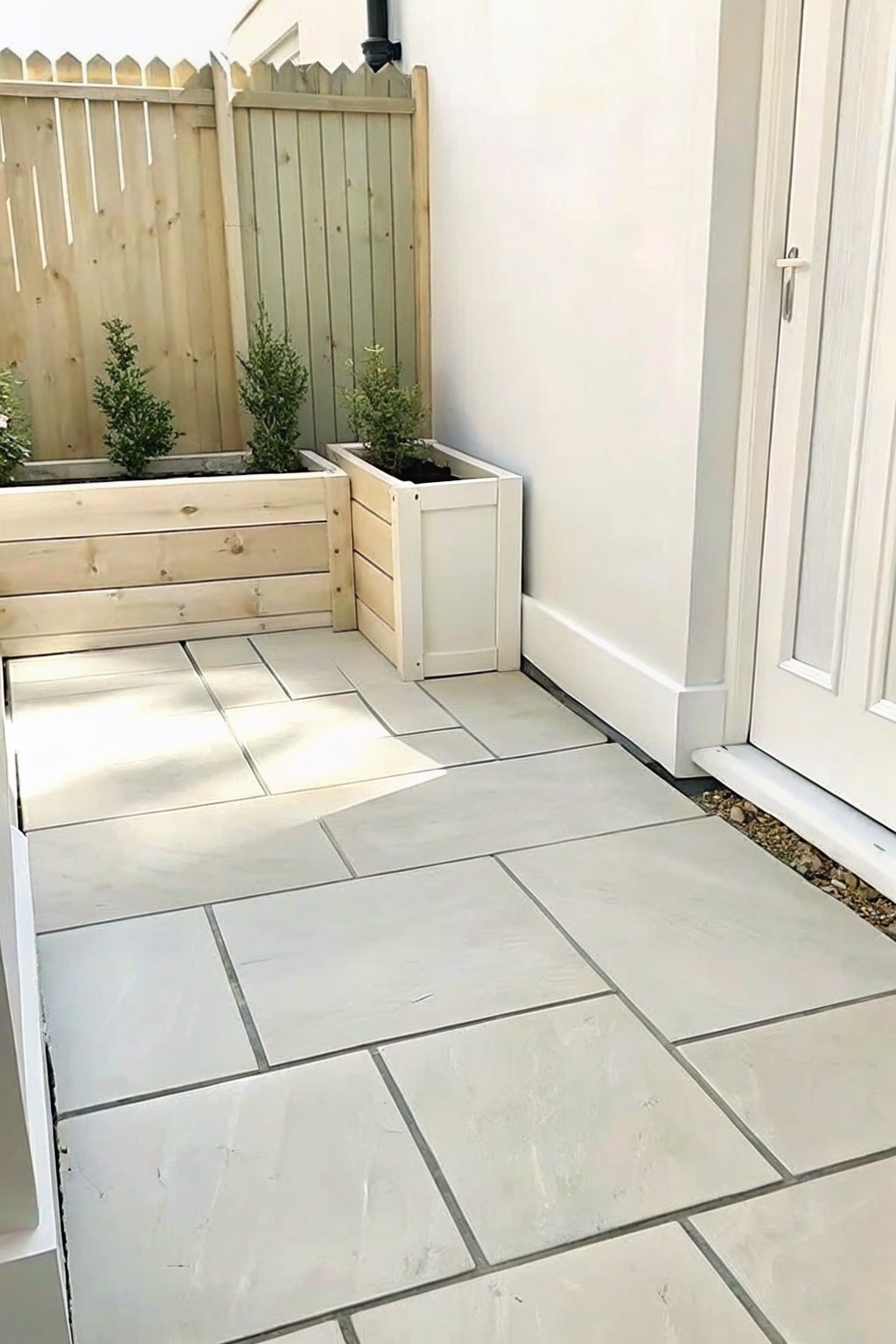
Raised planters give a small yard a clean edge without a lot of extra work. They hold the planting in one spot and keep the paved area looking open and simple at the same time.
They suit narrow side yards or spaces right next to the house. Mix a few natural wood boxes with one or two painted to match the trim so the border feels consistent but not too heavy.
Built-In Planters With Integrated Lighting
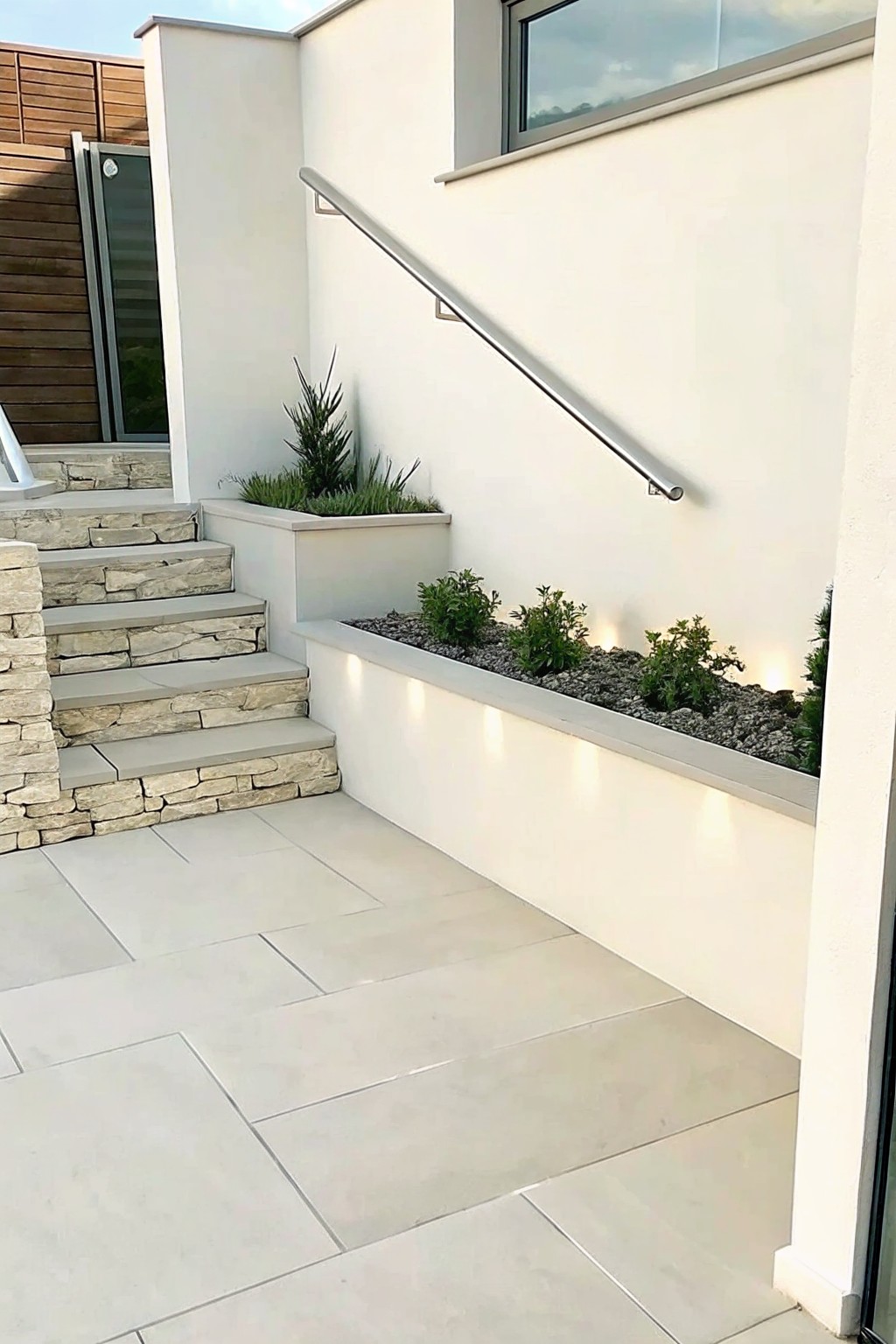
A long built-in planter gives a garden border a sharp, finished look without needing lots of separate edging pieces. The gravel keeps weeds down and lets the small plants stand out, while the lights along the front make the whole thing useful after dark.
This setup works best on patios or beside steps where you want a low border that stays neat year-round. It suits modern homes with clean lines, and the main thing to watch is placing the lights so they do not shine straight into windows or seating areas.
Raised Concrete Borders For Neat Garden Edges
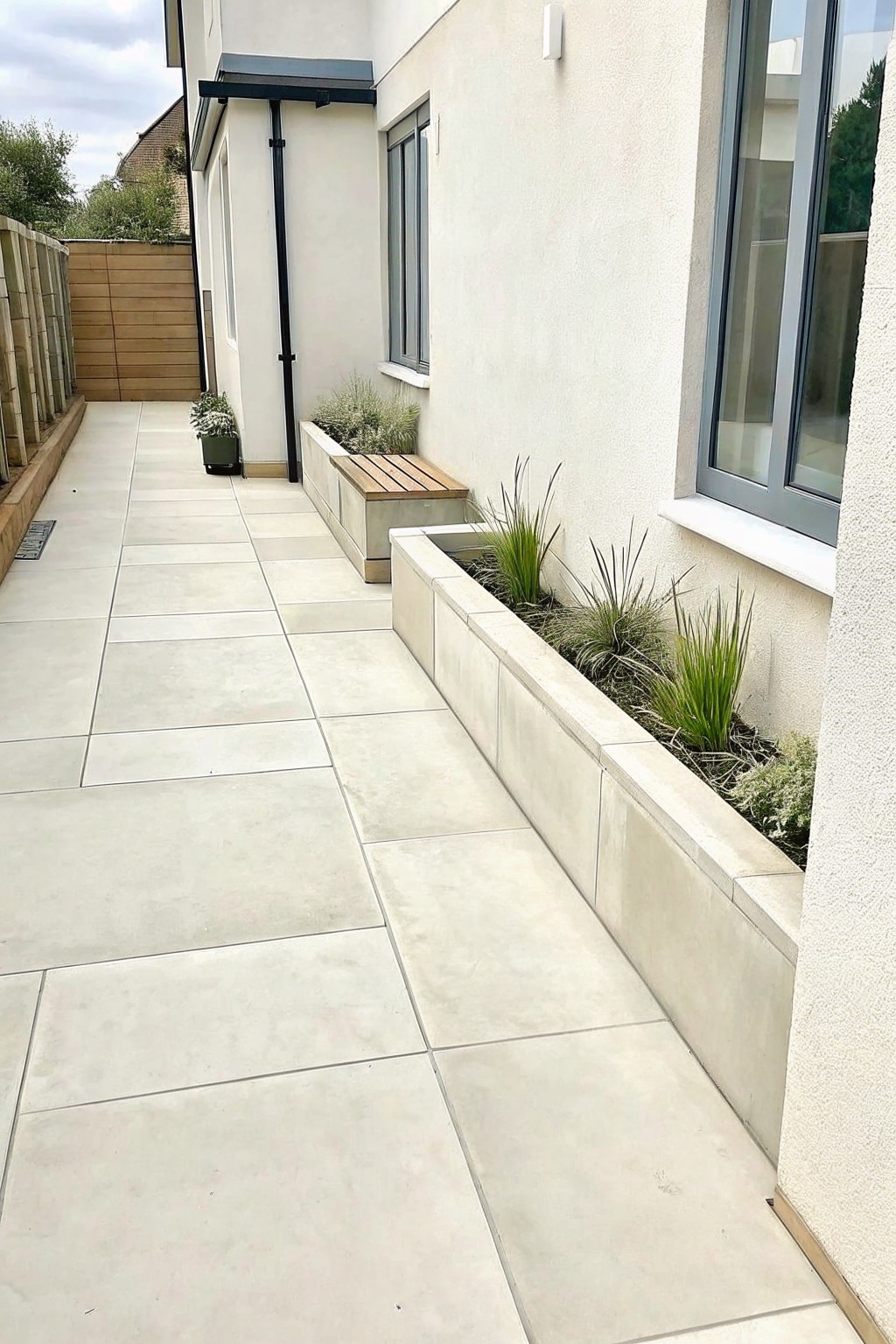
Raised concrete borders give garden beds a solid, finished edge that stays put year after year. They keep soil contained and create a clear line between the path and the planting, which makes the whole area feel more structured without much extra work.
This approach suits homes with paved side paths or narrow strips along the house where you want low maintenance. Fill the borders with a simple mix of taller grasses and lower ground cover so the layers show without crowding.
Gravel Edging For A Clean Border
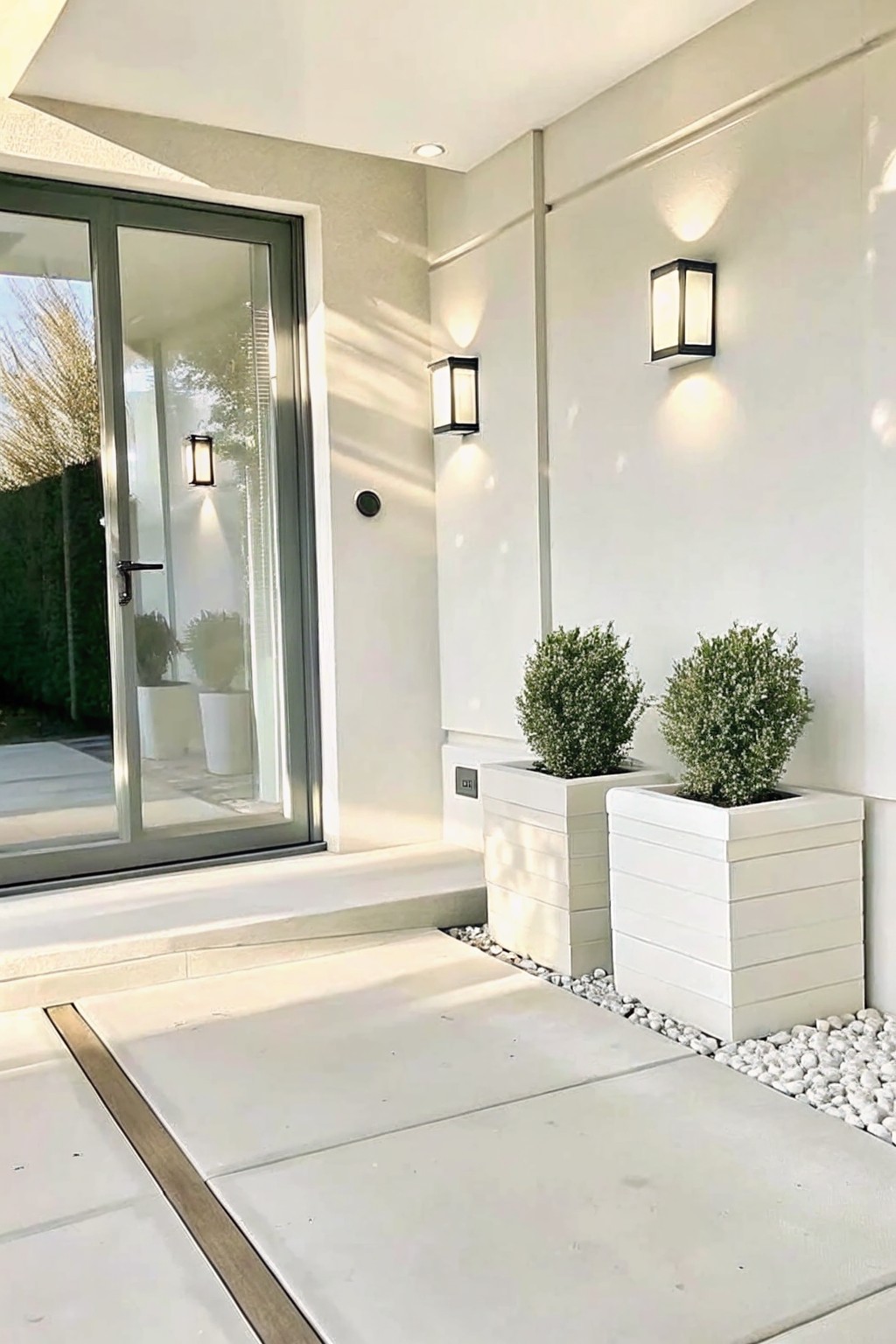
Gravel makes a simple way to mark the edge between paving and planted areas. It creates a clear line that stays neat without much work, and it works especially well when the paving runs right up to the house.
This style suits homes with straight lines and low planting. Keep the gravel band narrow and level so it does not shift much, and pair it with solid containers to hold the shape of the border over time.
Pebble Edging For Indoor Plant Zones
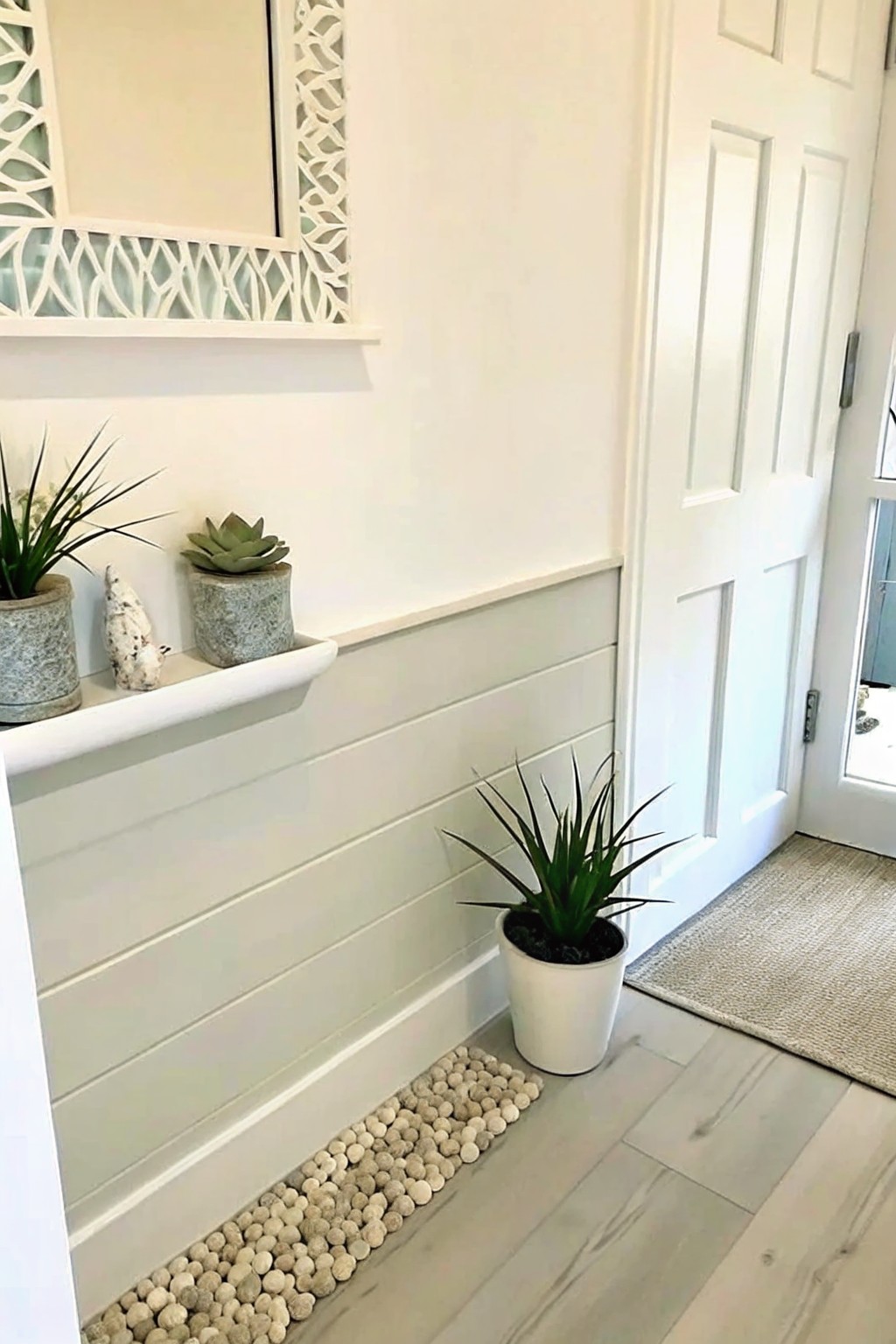
A row of small pebbles along the base of the wall gives the plants a clear edge without needing a full raised bed. It keeps the space feeling open while still marking off the planted area in a simple way.
This works well in entryways or hallways where you want a few plants but do not want them to look scattered. Keep the pebbles in a single line and match the pot colors to the wall for a quieter look.
Use Layered Pots to Edge a Walkway
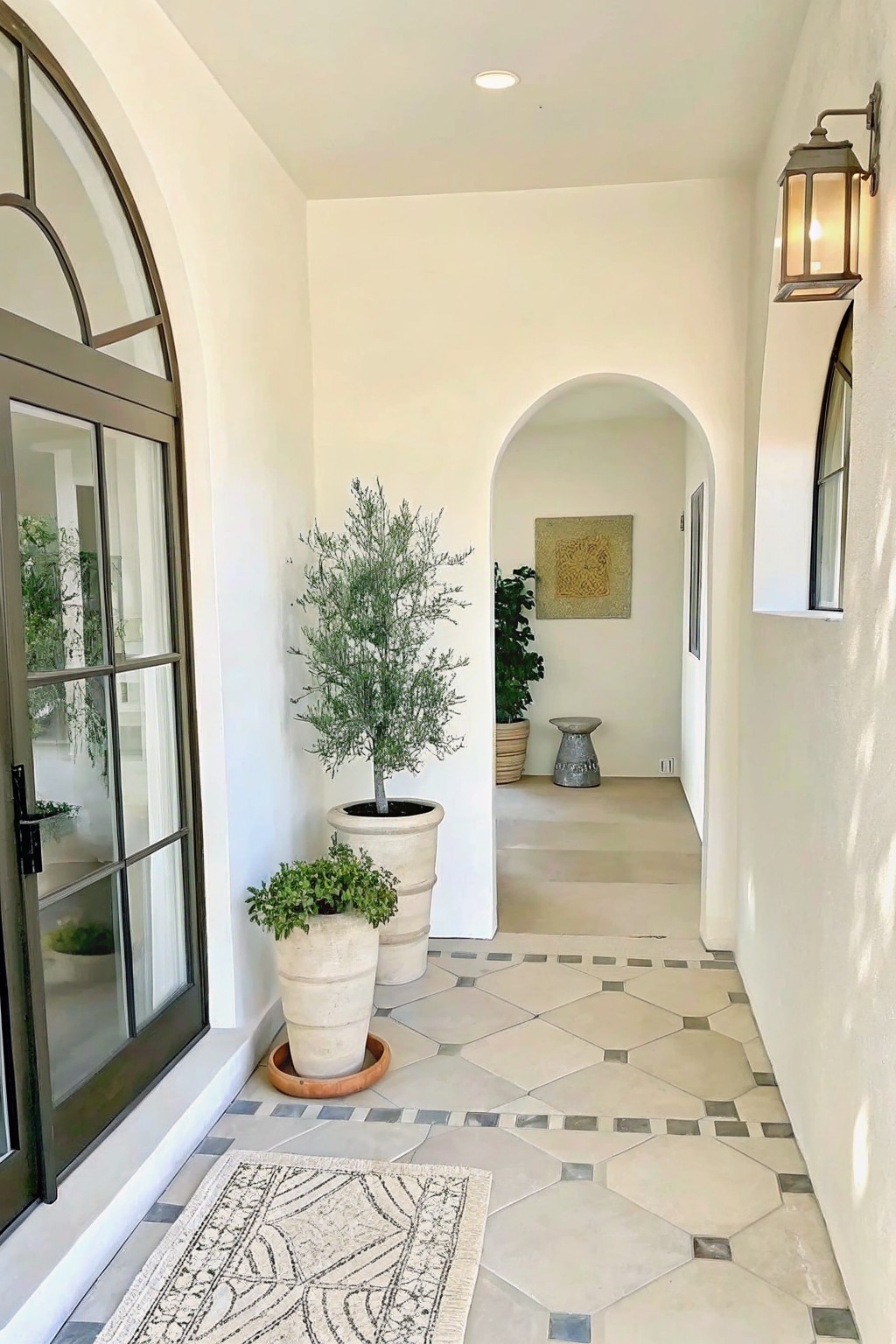
Large pots let you add a planted border without cutting into the ground or laying permanent edging. The mix of heights gives that layered look right away, and you can move things around if the layout needs adjusting later.
This approach works best on paved paths or entries where a bed would feel too heavy or hard to maintain. Stick to two or three pots in a row, choose plants with different shapes, and keep the containers simple so the focus stays on the greenery.
Narrow Borders Along Walls
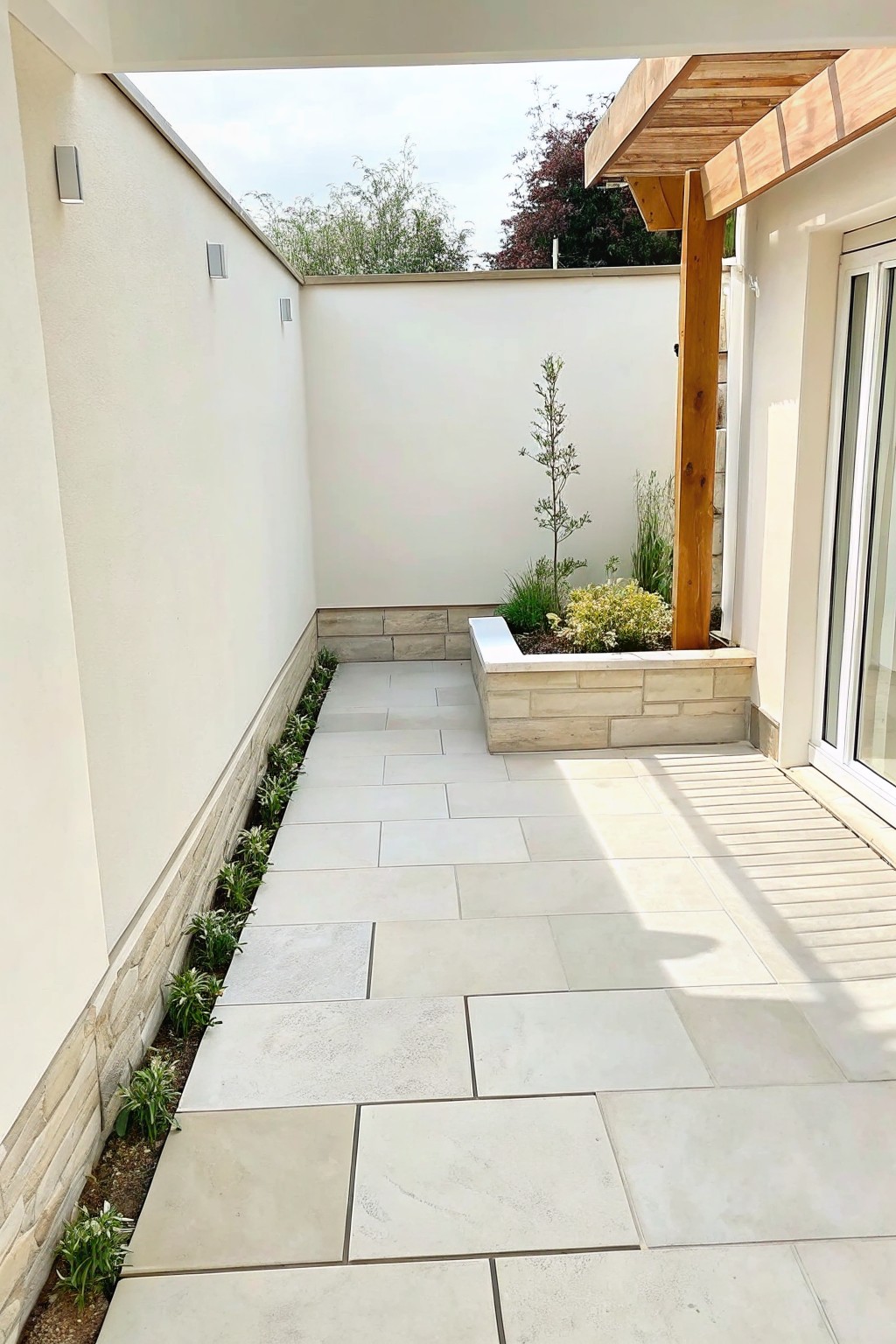
A narrow planted strip along a wall gives the whole area a softer edge without taking up much space. It keeps the paving looking clean while adding just enough greenery to break up all the hard surfaces.
This works well in side yards or small paved gardens where a full border would feel too wide. Use low plants that stay compact and mix a couple of textures for a bit of layering without extra work.
Straight Concrete Edging For Clean Garden Borders
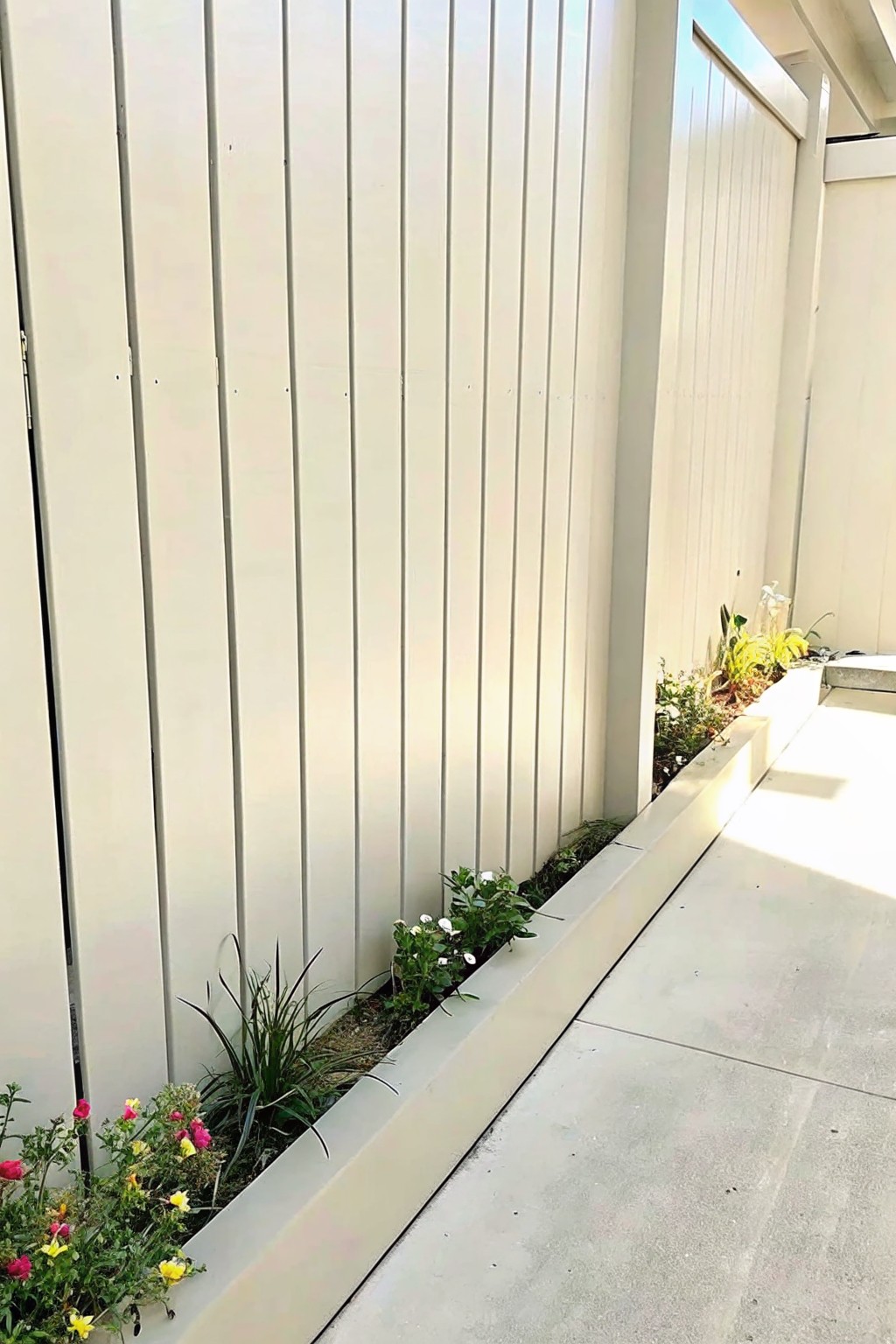
A low concrete edge like this one keeps the garden bed looking intentional without a lot of fuss. It creates a clear line between the planting area and the walkway, which makes the whole space feel more organized even when the flowers are a bit loose and mixed.
This approach works well along fences or house walls where you want to add color without letting plants spill onto paths. It suits smaller yards or side yards especially, since the straight edge keeps things from looking overgrown. Just make sure the border sits slightly above the soil so mulch and water stay contained.
Frequently Asked Questions
Q: How often should I redo the edging to keep it looking clean?
A: Walk the borders every couple of weeks and slice away any grass that creeps forward. A quick pass with a half moon edger keeps the line sharp and stops it from blurring into the lawn.
Q: Which plants work best for the front layer without blocking the view?
A: Use low spreaders like sweet alyssum or dwarf phlox right at the edge. They fill in fast, stay under eight inches, and let the taller flowers behind them show off.
Q: What if weeds pop up between the flowers?
A: Spread a thin layer of mulch right after planting to smother most of them. Pull the few that still appear while they are small so they do not steal water from your border plants.
Q: How do I choose edging material that lasts?
A: Pick metal strips or bricks set on their side. They stay put through rain and frost better than thin plastic rolls.
