Close Menu
My Gardening StoriesMy Gardening Stories
    My Gardening StoriesMy Gardening Stories
    • Home
    • Lawn
    • Flowers
    • Gardening Tools
      • Lawn Mower
    • About
      • Editorial Guidelines
    • Contact
    • Privacy Policy
    My Gardening StoriesMy Gardening Stories
    Home»Garden Border Ideas»23 Stylish Garden Path Borders That Guide Movement Through Planting Beds
    Garden Border Ideas

    23 Stylish Garden Path Borders That Guide Movement Through Planting Beds

    MarieBy MarieAugust 12, 202612 Mins Read
    Share Facebook Twitter Pinterest Copy Link LinkedIn Tumblr Email Telegram WhatsApp
    Large light gray stone pavers form a path beside white wall and gravel garden
    Share
    Facebook Twitter LinkedIn Pinterest Email Copy Link

    Walking through a garden feels more intentional when the paths have defined edges that keep the planting beds in place over the seasons.

    Table of Contents

    Toggle
    • Stone Borders Define a Garden Path
    • Pebble Edging Defines Straight Paths
    • Gravel Borders Keep Stone Paths Looking Tidy
    • Raised Beds Give Paths A Defined Edge
    • Raised Wooden Planters Along a Path
    • Pebble Borders Along Walkways
    • Planting Beds That Border Stone Paths
    • Stone Flooring That Mimics A Garden Path
    • Raised Concrete Borders For Neat Path Edges
    • Frame the Path with a Narrow Stone Border
    • River Rock Borders Along Paver Paths
    • Circular Stone Borders Guide Garden Paths
    • Raised Planter Borders Along Narrow Paths
    • Line Paths With Potted Plants
    • Stone Borders For Pebble Paths
    • Paved Paths With Gravel Borders
    • Runners That Mark A Clear Path Indoors
    • Border Paths with Contrasting Edging
    • Gravel Edging Along Concrete Paths
    • Pebble Edging Along Concrete Paths
    • Gravel Creates Clean Borders for Stepping Stone Paths
    • Raised Borders Keep Planting Beds In Place
    • Stone Flooring That Guides Movement Indoors
    • Frequently Asked Questions

    I have seen too many yards where the borders slowly erode and the paths start to wander into the beds, which makes the whole space look less cared for.

    Good edging changes that.

    Over time, the right border materials can guide how people move through the garden without needing signs or obvious barriers.

    In my own space I would start by trying a couple of these ideas near the main walkway to see which ones blend best with the existing plants.

    Stone Borders Define a Garden Path

    Large light gray stone pavers form a path beside white wall and gravel garden

    A simple border of lighter stone along the edge of a paved path helps keep the walkway looking intentional. It separates the main surface from the gravel and planting areas without adding much extra work or cost.

    This approach works well in narrow side yards or where a path needs to curve around beds. Stick with a material that contrasts slightly in color so the line stays visible over time.

    Pebble Edging Defines Straight Paths

    Modern concrete paver path bordered by pebbles between white walls with black lights

    Large concrete pavers gain a cleaner look when small pebbles run along both sides as a border. The pebbles create a simple edge that keeps the path separate from planting areas and stops soil from creeping onto the slabs.

    This approach works well in narrow side yards or modern gardens where space is tight. It adds a bit of texture without extra materials and pairs easily with low plants or plain walls.

    Gravel Borders Keep Stone Paths Looking Tidy

    A narrow garden path made of irregular light stone pavers with green ground cover between them, lined on both sides by white pebbles next to a bamboo fence and a plain wall, with a stone lantern at the far end.

    A gravel border along a stone path helps keep the walkway clear and separate from the surrounding plants. It stops mulch or soil from spilling over the edges and gives the path a finished look without needing fancy materials. Many people like this approach because it works in small side yards or narrow passages where you still want a clear route.

    This works well on homes with simple fencing or low walls because the light gravel adds contrast without competing with the plants. Use it where foot traffic is light to moderate, and choose stones that match the color of your path so everything feels connected. Just make sure the gravel layer stays shallow enough that it does not shift underfoot.

    Raised Beds Give Paths A Defined Edge

    A narrow paved stone walkway runs alongside a long raised planter bed filled with gravel and small shrubs against a white stucco wall, with glass doors visible on the right side.

    Raised beds with gravel inside them create a clean, lasting border along a garden path. The hard edge keeps soil from spilling onto the walkway and gives the whole area a more structured look without needing constant upkeep.

    This approach works best in narrow side yards or along house walls where space is tight. Keep the bed height low enough to step over easily and choose plants that stay compact so the path stays easy to walk.

    See Also  20 Natural Garden Border Ideas That Blend Soft Grasses into the Landscape

    Raised Wooden Planters Along a Path

    White covered porch with wooden planters, green plants, and light wooden flooring.

    Raised wooden planters make a simple and sturdy border for a garden path. They keep the planting area contained, give the path a clear edge, and let you add height without building separate walls or using metal edging.

    This approach works best on homes with long side walks or covered porches where you want some greenery right next to the walking surface. The wood can be left to weather, and a thin gravel strip below the planters helps with drainage and keeps the border looking tidy over time.

    Pebble Borders Along Walkways

    Interior hallway with white walls and doors, large irregular stone floor tiles, and a narrow border of small pebbles running along the left edge next to a wooden post.

    A narrow line of pebbles gives a walkway a clear edge without taking up much space. It helps separate the main path from the surrounding surface and adds a simple natural texture that feels grounded.

    This approach works best in long, narrow areas like hallways or garden paths where you want movement to feel directed. It suits homes with stone or tile floors and pairs easily with wood trim or painted walls, though the pebbles need to be set securely so they do not shift over time.

    Planting Beds That Border Stone Paths

    Elegant stone-paved courtyard with arched double doors, lanterns, and potted shrubs.

    A wide stone path works better when planting beds run right along both edges. The beds give the walkway a clear shape and keep feet on the route without needing extra railings or walls. Low shrubs and simple ground cover do the job quietly while adding some softness next to the hard surface.

    This approach suits front entries or side yards on homes with neutral stone or concrete paving. Keep the beds fairly narrow and low so the path still feels open. Avoid tall plants that lean over and crowd the walking space.

    Stone Flooring That Mimics A Garden Path

    Narrow stone-tiled hallway with white doors and terracotta potted plant.

    Large irregular stone tiles can turn a simple hallway into something that feels more like a path than a floor. The uneven shapes and soft color variations keep the surface interesting without looking too finished, and the layout guides you forward in a relaxed way.

    This approach works well in older homes or any space where you want a bit of outdoor texture inside. Keep the stones in similar tones to the exterior path if you have one, and avoid tight grout lines that make it feel too indoor.

    Raised Concrete Borders For Neat Path Edges

    A straight garden path of large rectangular concrete pavers separated by grass joints, running beside a pebble bed planted with tall grasses.

    A low concrete border along a garden path gives the whole layout a clean, finished edge. It stops soil and pebbles from drifting onto the walking surface and makes the path feel more intentional as it moves through the beds.

    This works best in smaller side yards or narrow passages where you want simple structure without adding extra materials. Keep the border height modest so it stays easy to step over if needed, and match the tone to your pavers for a quiet, unified look.

    Frame the Path with a Narrow Stone Border

    A long paved garden path made of irregular light stone slabs with a narrow border of small gray stones along the left side next to a wall.

    A narrow border of small stones keeps the larger pavers from looking loose and gives the walkway a clear edge against the wall. It also helps direct foot traffic without needing extra plants or structures right along the path.

    This approach suits narrow side passages or areas next to a house where space is limited. Use the same border material throughout so the path feels consistent rather than pieced together.

    River Rock Borders Along Paver Paths

    A narrow concrete paver path bordered by lines of smooth river rocks and gravel planting beds with yucca plants, running between light-colored walls.

    A narrow strip of river rock between the pavers and the gravel beds gives the path a clear edge that stays in place over time. It keeps the walkway looking neat without adding extra structures or materials that might crowd the space.

    See Also  17 Unique Garden Border Ideas Built Around Contrasting Materials

    This approach suits side yards and tight passages where you want movement to feel guided but not boxed in. It works best with low-water plants and simple hardscaping, though the rocks need occasional raking if leaves collect in them.

    Circular Stone Borders Guide Garden Paths

    A circular garden path formed by concentric rings of light pavers and pebble borders on gravel, with a tree and bench in the background.

    Using rings of pavers and pebbles to mark a path keeps the eye moving and makes the space feel organized without looking stiff. The pattern works especially well in gravel areas where you need something to define walking routes around plants and seating.

    This approach suits smaller courtyards or side gardens where a full walkway would feel too formal. Make the rings wide enough to stay clear after rain and foot traffic, and keep the center open so the layout does not crowd the middle.

    Raised Planter Borders Along Narrow Paths
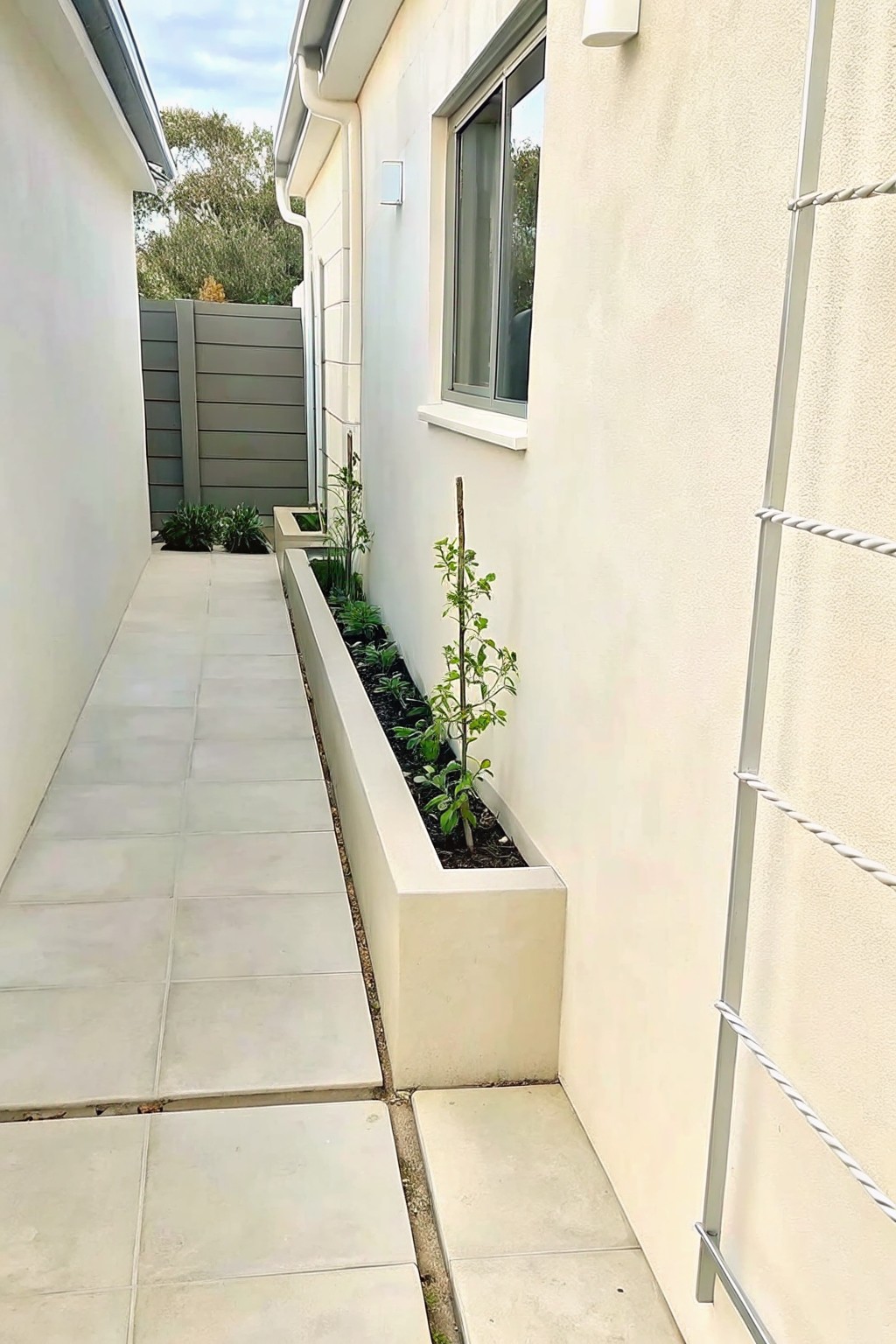
    Narrow tiled walkway beside long concrete planter with young plants and tree.

    A raised concrete planter running the length of a side path gives the walkway a clear edge without closing it in. It keeps soil and plants contained while still letting the garden feel part of the movement through the space. The solid border also protects the path from soil wash and makes mowing or sweeping easier later on.

    This works best on narrow lots or along the side of a house where you need planting but cannot spare much width. Keep the bed at a comfortable height for weeding and choose lower growing plants so the path stays open and usable.

    Line Paths With Potted Plants

    Narrow balcony with light tiles, potted plants, string lights, and white walls.

    A row of pots along one side of a walkway gives the path a clear edge without needing permanent borders. In a narrow space this keeps the route easy to follow while still leaving room for plants.

    This works well on balconies, side yards, or small garden strips where you want movement without crowding the area. Stick to matching or similar containers so the line stays neat, and choose plants that stay roughly the same height.

    Stone Borders For Pebble Paths

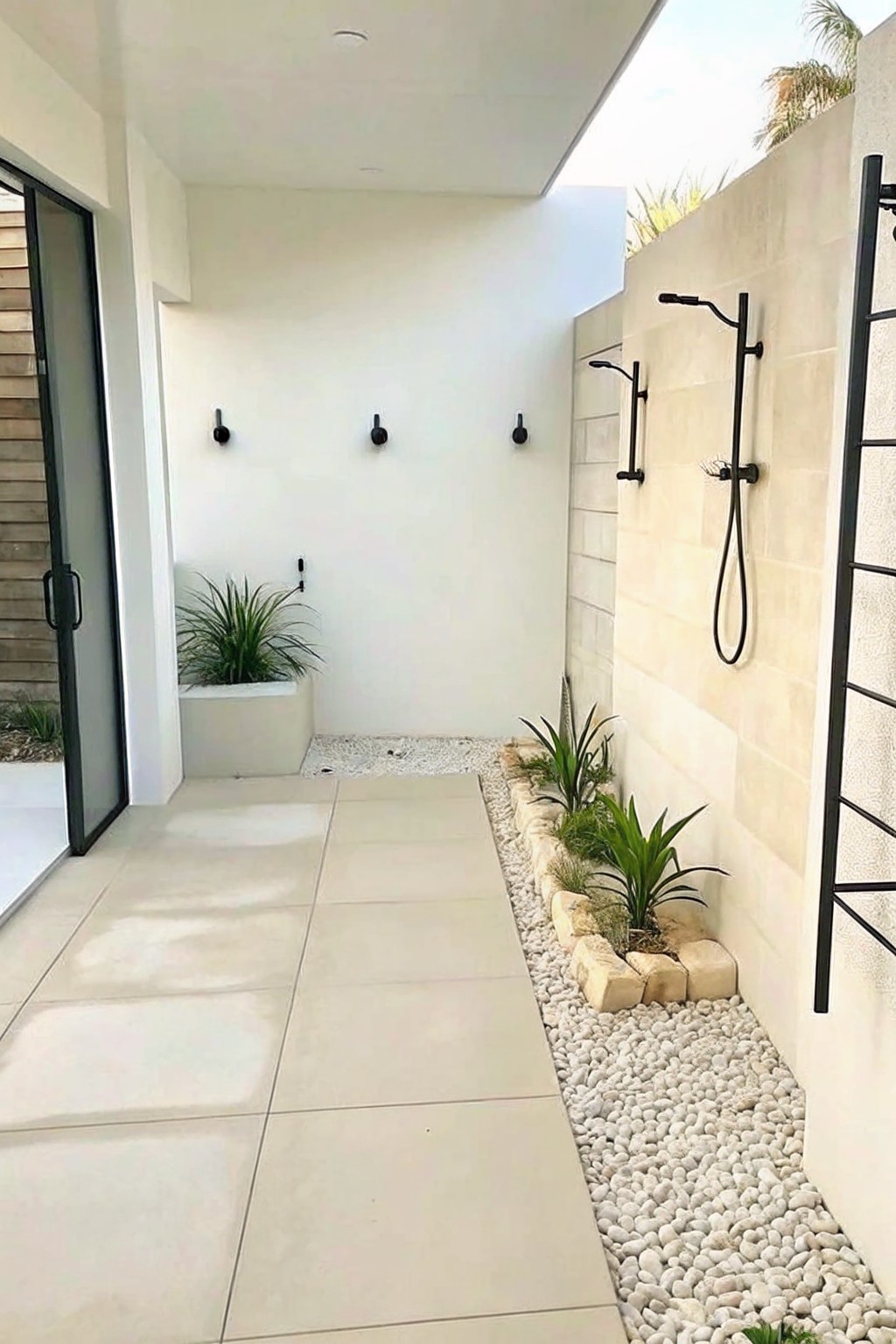
    Modern outdoor shower with black fixtures on beige tiled wall beside pebble garden bed

    A low row of stones makes a simple border that keeps pebbles contained and gives the planting strip a finished edge. It turns what could look scattered into a clear path that moves people along without extra fencing or tall plants.

    This setup works best in modern yards with clean paving where you want low maintenance and good drainage. Keep the stones modest in height so they guide movement but do not block the view or create tripping points.

    Paved Paths With Gravel Borders

    A courtyard path made of large light-colored square pavers bordered on one side by gravel and potted plants with a wooden fence visible on the left.

    A wide path of large square pavers makes a simple and practical way to move through a garden space. The gravel strip along one edge keeps the planting beds contained while adding a softer contrast that still feels neat and low maintenance.

    This approach works well in small courtyards or side yards where you want clear movement without a lot of fuss. Keep the pavers light and uniform, then let the gravel and a few taller plants do the rest of the work.

    Runners That Mark A Clear Path Indoors

    Interior hallway with white walls and concrete floor, two woven rugs aligned to form a continuous path toward an open room at the end.

    A long hallway with hard flooring can feel like a tunnel unless you give it some direction. Placing woven runners end to end creates a simple route that guides people through the space without any extra construction.

    This works best in homes with concrete or stone floors where you want to soften the surface and keep traffic moving in one line. Choose natural-fiber rugs that can handle daily use and make sure they sit flat so no one catches an edge.

    See Also  22 Easy DIY Garden Border Ideas for Quick Weekend Installation

    Border Paths with Contrasting Edging

    A light stone pathway with dark tile borders runs between white walls and leads up steps to a white door, with potted plants placed along the sides.

    A simple dark border along a light stone path helps keep the route clear and easy to follow. The narrow strip of smaller dark tiles frames the larger pale stones and stops the edges from looking ragged over time.

    This approach works best on straight runs or gentle turns where you want movement to feel guided without adding tall plants right beside the walkway. It suits homes with side entrances or narrow side yards, and it stays low maintenance as long as the border material matches the scale of the main paving.

    Gravel Edging Along Concrete Paths

    A narrow outdoor path of rectangular concrete pavers bordered by gray pebbles, with potted plants along a white wall on the left and a wooden door at the end.

    This simple border choice keeps the walkway defined even in a narrow space between walls. The gravel strips hold the pavers in place visually and stop the planting beds from creeping onto the walking surface.

    It suits side yards or tight passages where you want low maintenance but still need clear movement. Keep the gravel layer thin and contained with edging so it stays put after rain or foot traffic.

    Pebble Edging Along Concrete Paths

    A straight concrete path bordered by white pebbles runs between two beige walls with small plants visible on the left.

    Pebble edging gives a clean line to a simple concrete path and helps keep the surrounding soil or gravel from creeping over the edges. It works especially well in narrow side yards where you need something low and tidy that still separates the walkway from the house wall.

    This approach suits homes with mostly hard surfaces and minimal planting beds. Use larger river rock if you want less shifting, and keep the border about four to six inches wide so it stays defined without taking up extra space.

    Gravel Creates Clean Borders for Stepping Stone Paths

    Stepping stones set in white gravel along a white fence in sunny yard

    Gravel works well when you want a path that feels simple and stays looking neat over time. The white stones sit level in a bed of matching gravel, which keeps them from shifting and gives the walkway a finished edge without needing extra materials.

    This setup suits narrow side yards or tight garden spaces where you need clear footing but do not want a solid paved surface. It also helps keep soil and mulch from spilling onto the path, so the border stays sharp with very little upkeep.

    Raised Borders Keep Planting Beds In Place
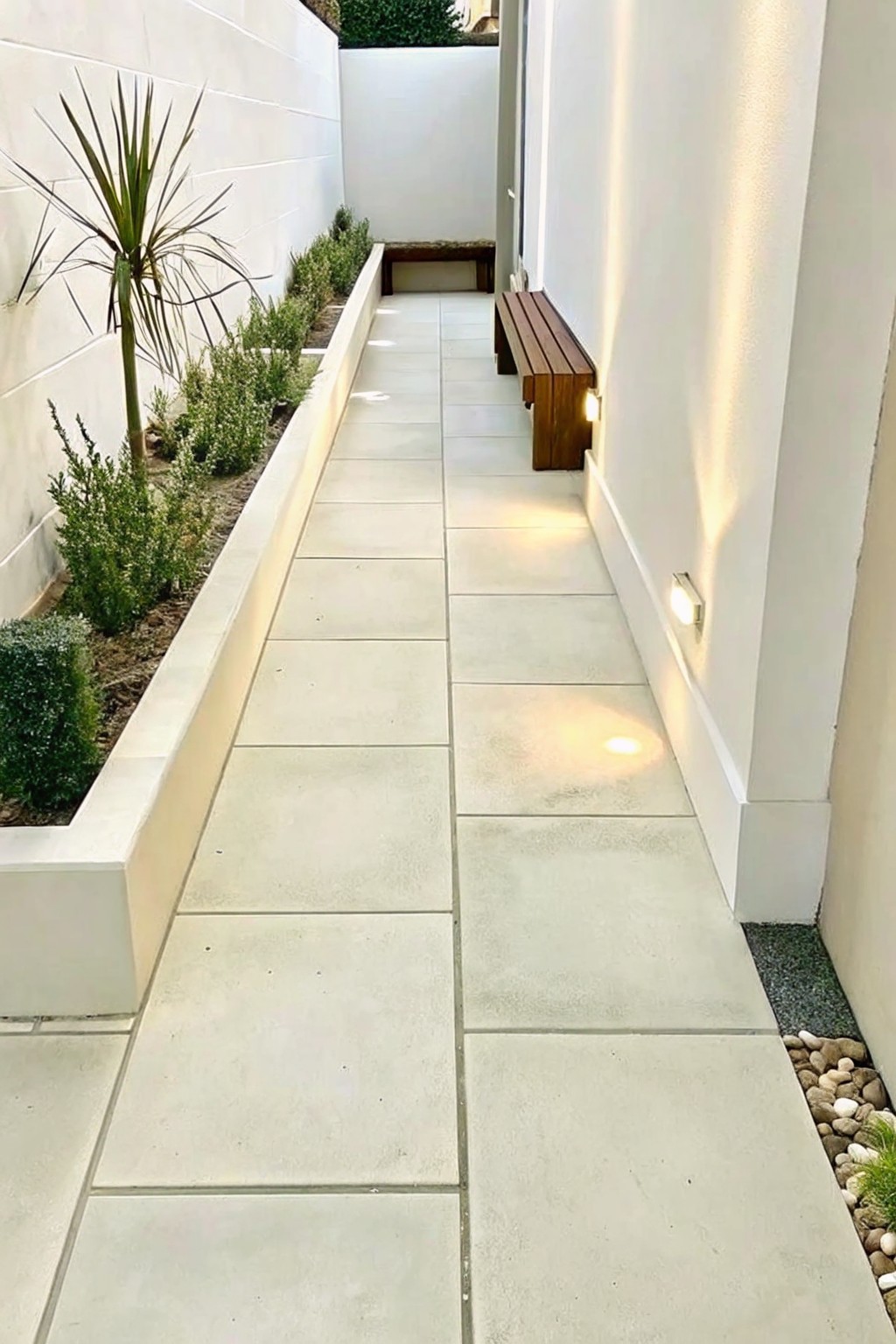
    Narrow tiled walkway between white walls with wooden bench and plants

    A raised concrete edge along a garden path gives the beds a firm boundary so soil and plants stay where they belong. This setup works especially well in tight side yards where you need a clear walking route without constant cleanup from loose mulch or dirt.

    It suits homes with simple modern lines and pairs easily with matching wall materials. Keep the border height low enough that it does not block views of the plants but high enough to hold everything back during rain.

    Stone Flooring That Guides Movement Indoors

    Narrow white hallway with stone floor, doors, mirror, lantern light, and open door

    Stone tiles laid in a long run can turn a plain hallway into something that feels more like a path than just a corridor. The material holds up well under foot traffic and gives a subtle outdoor connection without needing any extra trim or edging.

    This approach works best in homes that already use similar hardscaping outside or in entry areas where you want a smooth transition. Keep the grout lines simple so the stones read as one continuous surface rather than a busy pattern.

    Frequently Asked Questions

    Q: How do I stop grass from sneaking back into the path once the border is in? A: Pull the turf back a few inches when you set the border. Lay a narrow strip of landscape fabric right along the inside edge. Check it each season and yank any new shoots before they settle in.

    Q: What if the ground slopes along my path? A: Follow the slope with your border instead of trying to level it. Dig a shallow trench that matches the angle so the edge stays even as it moves through the beds.

    Q: Can I add a border without tearing up plants that are already there? A: Work from the path side and ease the material under stems where possible. Pick something flexible like thin metal or rope that bends around roots. Trim any broken leaves so the plants bounce back quickly.

    Share. Facebook Twitter Pinterest LinkedIn Tumblr Email Copy Link
    marie johnson
    Marie
    • Website

    Hi, I’m Marie! I’ve always had a passion for gardening, from growing my first tomato plant to designing lush backyard spaces. I love sharing practical tips and creative ideas to help others enjoy the beauty and joy of gardening as much as I do. Let’s grow together! 🌿

    Related Posts

    25 Bold Front Garden Borders That Strengthen Curb Appeal

    August 12, 2026

    16 Relaxed Wildflower Borders Designed for Soft, Natural Movement

    August 12, 2026

    19 Space-Saving Garden Border Ideas for Narrow Beds and Small Yards

    August 12, 2026
    Add A Comment
    Leave A Reply Cancel Reply

    My Gardening Stories

    Your go-to source for gardening tips, plant care guides, and creative DIY projects. Grow with us and discover new ways to enjoy gardening! 🌱

    Affiliate Disclosure

    As an Amazon Associate, I earn from qualifying purchases.

    Latest Articles

    25 Bold Front Garden Borders That Strengthen Curb Appeal

    16 Relaxed Wildflower Borders Designed for Soft, Natural Movement

    19 Space-Saving Garden Border Ideas for Narrow Beds and Small Yards

    23 Stylish Garden Path Borders That Guide Movement Through Planting Beds

    22 Low-Maintenance Garden Border Ideas for Simple Seasonal Upkeep

    20 Natural Garden Border Ideas That Blend Soft Grasses into the Landscape

    20 Practical Lawn Border Ideas Designed to Reduce Spreading Grass

    22 Easy DIY Garden Border Ideas for Quick Weekend Installation

    My Gardening Stories
    • Home
    • About
    • Contact
    • Editorial Guidelines
    • Privacy Policy
    • Disclaimer
    • Terms and Conditions
    • Affiliate Disclosure
    © 2026 My Gardening Stories.

    Type above and press Enter to search. Press Esc to cancel.