

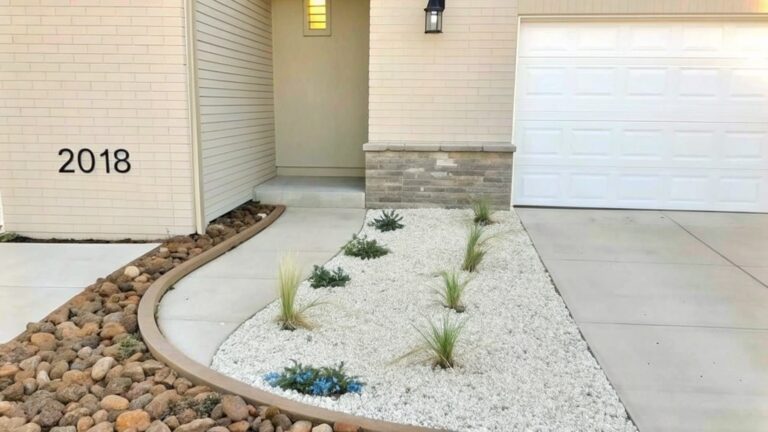
I have spent years watching grass creep into my flower beds no matter how often I pull it back.
That is why I started paying more attention to the borders that actually hold up over time.
Some simple changes make a big difference.
Over the seasons I have found that the right edging keeps the lawn in place while letting the rest of the yard breathe.
It is worth testing a couple of these methods against the way my own beds are laid out.
A Paved Path Makes a Strong Lawn Border

A concrete walkway can serve as a clean, low-maintenance border that stops grass from creeping where it is not wanted. The hard edge gives you a clear line to mow against and keeps the lawn from mixing into fence lines or planting beds.
This approach works best in narrow side yards or along property edges where grass tends to spread into unwanted spots. Keep the path wide enough for easy walking and let a narrow strip of soil or gravel sit between the concrete and the fence so water can drain properly.
Raised Borders Keep Planting Areas Under Control

Raised borders made from concrete or similar materials give garden beds a solid edge that grass cannot easily cross. This setup works especially well when the rest of the yard is paved, since it removes the need for constant trimming along the lawn line.
The approach suits homes with modern outdoor spaces where you want planting to stay neatly contained. Build the border at least a foot high and wide enough to support small shrubs, and it will hold back spreading grass while keeping the overall look clean.
Paver Paths Keep Grass From Spreading

A walkway made of large pavers with narrow grass strips between them gives the lawn a built-in border. The concrete edges stop the grass roots from creeping outward, which works better than a simple mowed line in many yards.
This setup suits narrow side passages or areas next to fences. Keep the gaps small and consistent, and add a thin gravel strip along the outer edge for extra separation. It works best on homes where you want the lawn contained without adding raised beds or heavy edging materials.
Gravel Strips With Low Brick Edging

A gravel strip between the paving and the house wall gives grass a hard stop. It keeps runners from creeping onto the patio and makes the edge look neat without extra trimming.
This setup works best along narrow side yards or back patios where you want low upkeep. Lay the gravel about six inches wide and use a simple block or brick border to hold it in place.
Curved Edging Keeps Grass From Spreading

A curved border made from stone or concrete works well because it gives the grass a firm edge it cannot easily cross. The shape also softens the look of the path while still doing the practical job of holding the lawn in place.
This setup works best next to paved areas or along the side of a house. Keep the curve gentle so mowing stays simple, and add a thin gravel strip along the base of the wall for extra separation.
Gravel Strips Along Walls

One simple way to stop grass from creeping where it does not belong is to run a gravel strip along the base of walls. The loose stones create a dry zone that grass roots rarely cross, and it keeps the edge looking neat without constant trimming.
This setup works best in narrow side yards or along house foundations where space is tight. Keep the gravel layer a few inches deep and choose small plants that can handle the reflected heat from the wall.
Gravel Strips Make Simple Bed Borders

A narrow gravel strip along the edge of a planting bed gives a clear break between the lawn area and the plants. It stops grass from creeping in while keeping the bed looking neat without a lot of trimming.
This works well along walls or fences where space is tight. Just lay a shallow layer of pebbles over landscape fabric so weeds stay down and water drains away from the house.
Gravel Borders Along Paved Paths
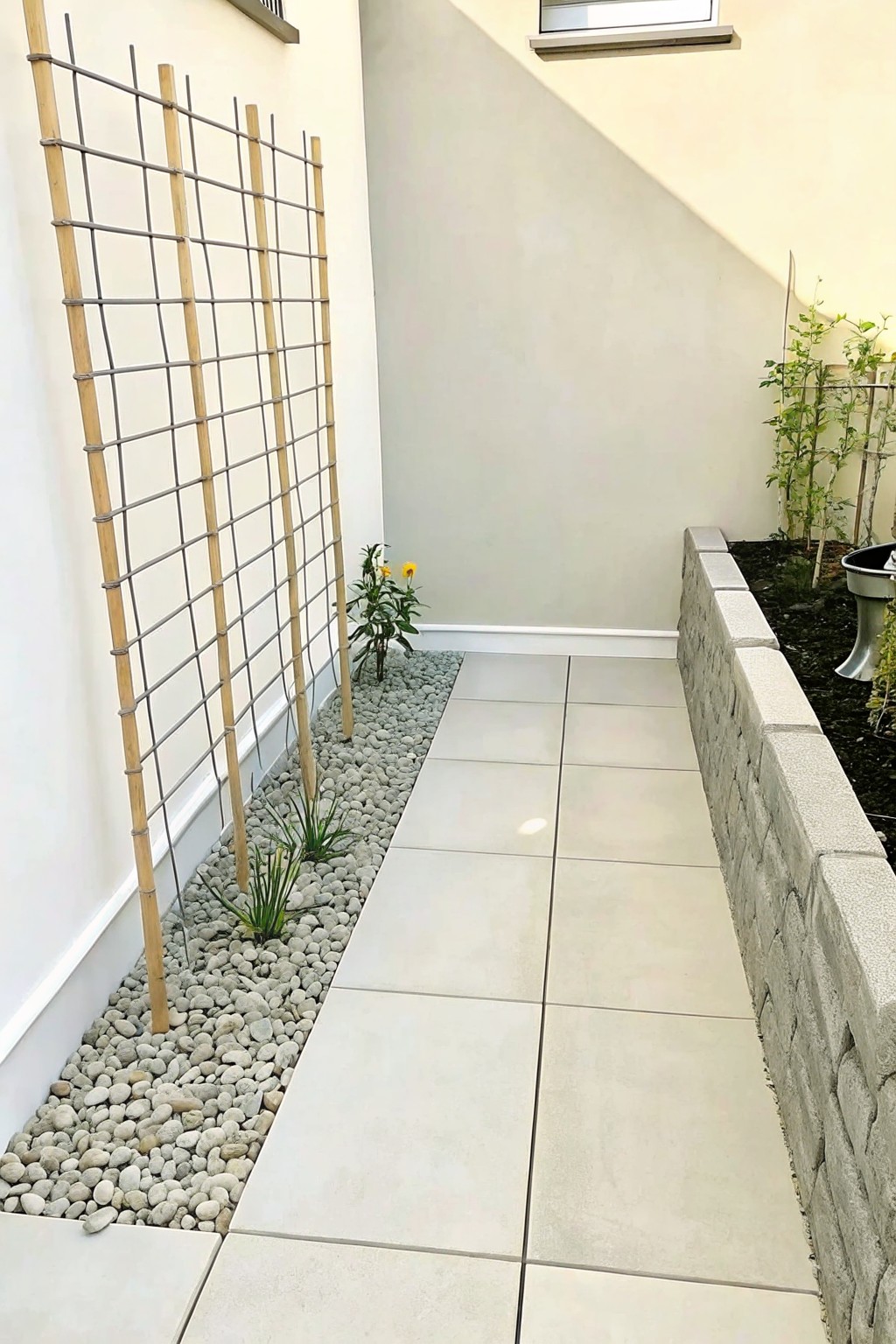
A strip of gravel next to paving makes a simple barrier that grass has trouble crossing. It keeps the edge looking tidy without constant trimming or edging work.
Run the gravel about a foot or two wide and add a few low plants if you want. This setup works best in side yards or tight spaces where you need something practical that still leaves room for a path.
Gravel Strips With Stone Edging

A narrow gravel strip edged with pavers works well as a border between a wall and a paved path. The gravel creates a clear break that stops grass from creeping in while keeping the area looking tidy with very little upkeep.
This setup suits homes with tight side yards or long stretches along stucco walls. Place low plants in simple stone rings within the gravel so they stay contained and the whole border stays low maintenance over time.
Raised Planter Borders Filled With Gravel

A raised wooden planter filled with gravel makes a simple border that keeps grass from creeping into planted areas. It creates a clear line between the path and the garden without needing constant trimming or edging tools. This setup works especially well in narrow side yards where space is tight.
It suits homes with paved patios or paths right up against a fence. Build the bed low and fill it mostly with gravel so plants stay contained and maintenance stays low. Just watch that the wood is treated for outdoor use so it lasts.
Use a Paved Border to Limit Grass Spread

A paved deck next to the pool creates a solid barrier that keeps grass from creeping into the main living area. The hard surface leaves no soil for runners to take hold, which cuts down on edging work and keeps the pool zone cleaner overall.
This approach suits homes with small backyards or pool setups where you want low maintenance. Lay the paving first, then add a narrow strip of plants along the edge for a finished look without inviting more grass in.
Raised Planters Help Contain Garden Beds

Raised planters give you a solid edge that stops grass from working its way into planted areas. The concrete sides sit above the ground, so you avoid the constant battle of roots sneaking under a flat border.
This setup works best in narrow side yards or along paths where you want low upkeep. Fill the beds with gravel and stick to smaller shrubs or ground covers that stay contained without much trimming.
Gravel Strips Next To Pavers Reduce Grass Spreading
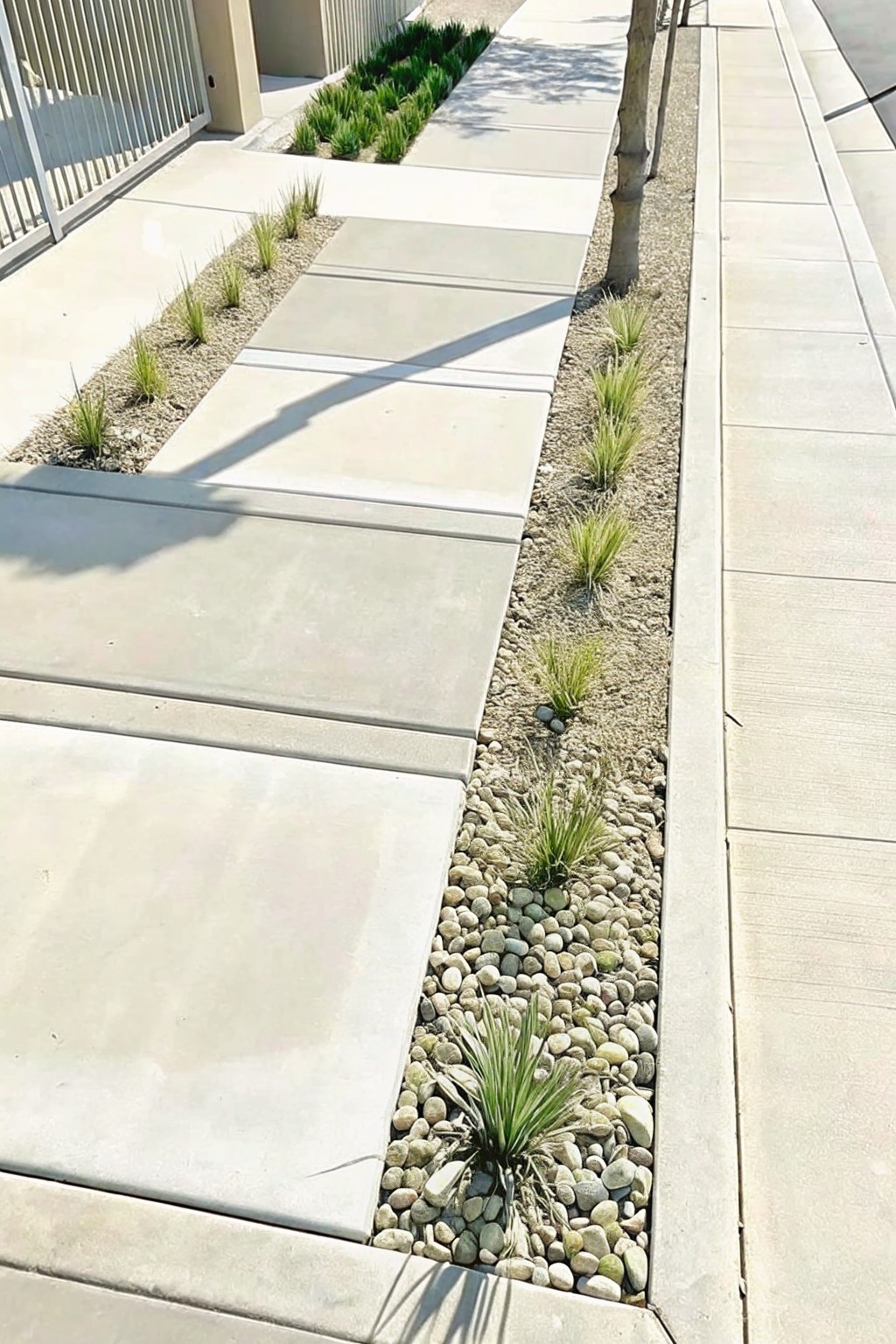
A gravel strip running along the edge of a concrete path creates a simple barrier that keeps lawn grass from creeping into the walkway. The small plants set into the gravel add a touch of green while still leaving a clear gap that grass has trouble crossing.
This approach works best in sunny side yards or front paths where you want low upkeep and a tidy line. It suits homes with existing concrete paving and needs only occasional weeding to stay in good shape.
Gravel Borders Along Paved Areas

A narrow strip of gravel next to paving gives a clean break that keeps the edges looking sharp over time. It also creates a simple barrier that makes it harder for grass to creep in from nearby beds or lawns.
This works well in smaller yards or modern layouts where you want low upkeep without adding more plants. Just keep the strip about four to six inches wide and use a decent edging material underneath so the gravel stays put.
Gravel Strips Beside Paths
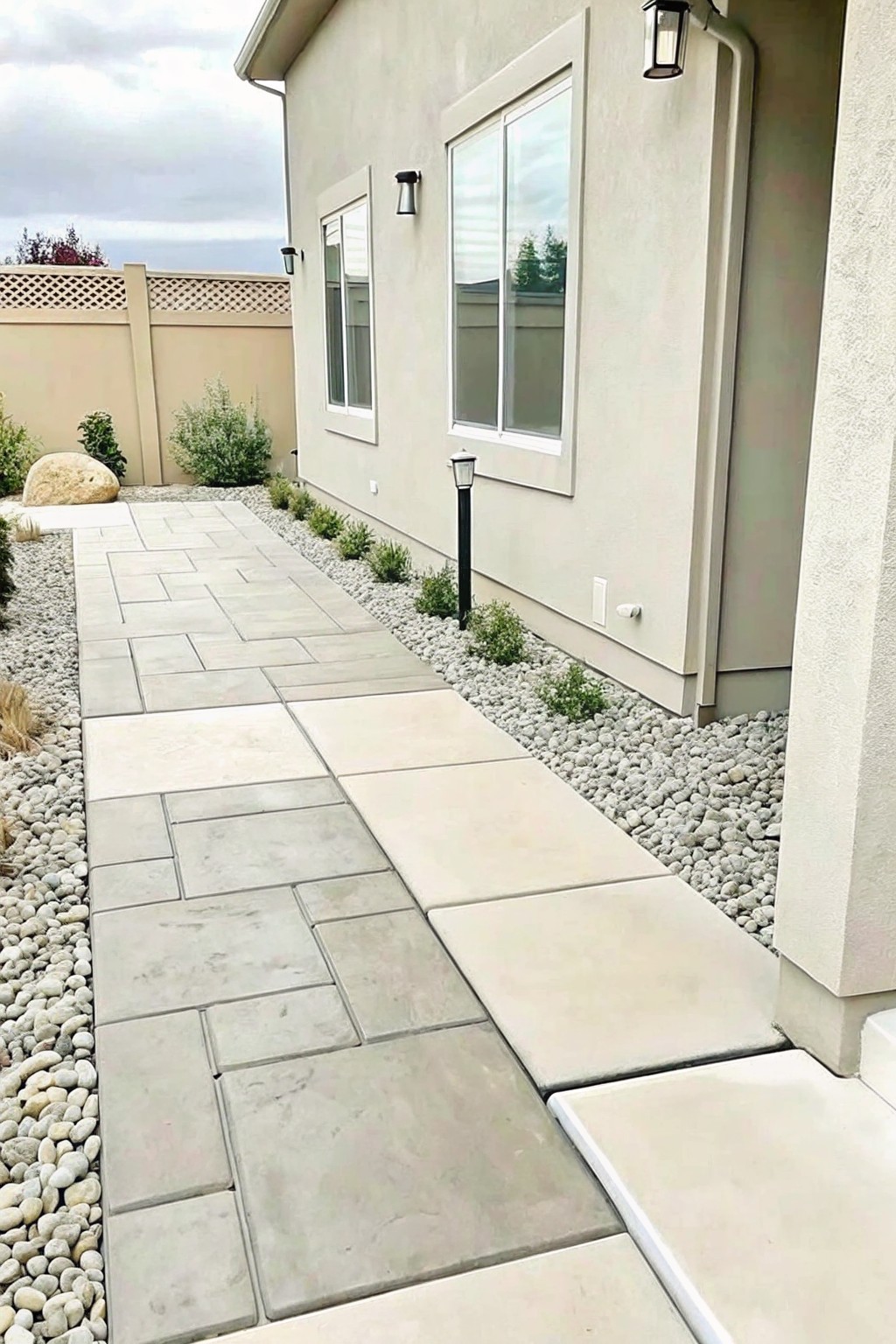
A gravel strip next to a walkway gives grass a hard stop so it cannot creep into the pavers or up against the house. The loose rock also makes the edge look neat without extra edging materials.
This setup works best on narrow side yards where a path runs close to the foundation. Lay landscape fabric first, spread a few inches of gravel, and add a few small plants if you want a bit of green without letting anything spread too far.
Raised Concrete Borders
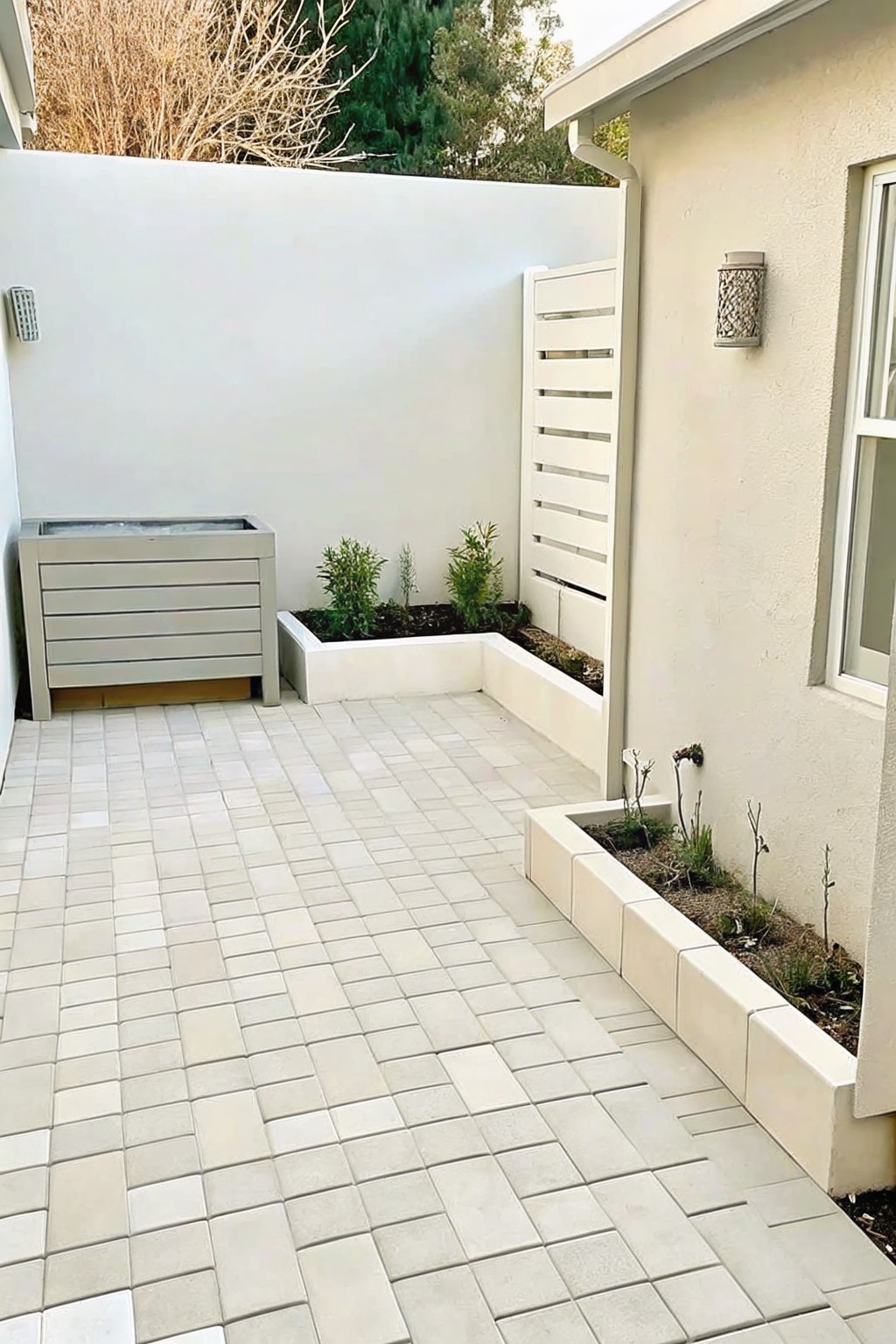
Raised concrete borders give planting beds a firm edge that stops grass from spreading into the paved area. They keep the beds in place without needing constant edging or weeding along the sides.
These borders work best along walls or the edge of a patio where you want low maintenance. They suit smaller yards and homes that already have simple, clean landscaping.
Frequently Asked Questions
Q: Do I need to dig a trench before adding any border? A: Yes, digging a shallow trench helps most borders sit flat and block roots better. Start by marking your line with string and remove the sod along it. This keeps the grass from sneaking underneath right away.
Q: How do I keep mulch from washing away in heavy rain? A: Lay down landscape fabric under the mulch first. Build a slight lip with your border material on the lawn side. That catches most of the washout before it reaches the grass.
Q: What works if my yard has a lot of foot traffic? A: Choose sturdy materials like bricks or pavers for those spots. They hold up without cracking under regular steps. Just make sure to set them level with the ground so no one trips.
