


I have noticed over the years that garden borders shape how the rest of the yard holds together once the seasons start changing.
They decide where paths feel natural and where planting can stay sparse without looking unfinished.
Gravel helps keep those lines sharp with less work than I first expected.
Minimal planting then lets the structure show through instead of competing with it.
I usually test the simplest edging options first to see how they settle after a full year of rain and growth.
Gravel Borders Along Paved Paths

A strip of gravel running beside a paved walkway gives a clean edge without needing a lot of plants. It separates the path from the wall or garden bed while keeping the whole area looking simple and tidy. The gravel also helps with drainage and cuts down on weeding.
This works best in narrow side passages or along house walls where space is tight. Use a few tough grasses spaced out in the gravel so the look stays minimal rather than overgrown. Make sure the gravel layer is deep enough to stay in place over time.
Low Edging to Separate Path and Gravel

A low concrete curb gives the border a clear line without making the space feel boxed in. It holds the gravel neatly in place and stops the paving from looking like it just runs into the planting area.
This kind of edging suits narrow side paths or long strips next to a wall where you want order but still keep the look simple. It works best with light gravel and a few small plants so the edge stays visible but not dominant.
Raised Beds For Simple Borders

Raised beds give you a clean way to add a border without filling the whole space with plants. The long white planter here runs along the edge of the paved area and holds just a few compact shrubs that stay low and tidy.
This works best in narrow side yards or small courtyards where you want structure but still need room to walk. Use the same idea with any straight bed and choose shrubs that need little trimming so the border stays neat year after year.
Stepping Stones In Gravel For Narrow Paths

Many people like setting large concrete pavers straight into gravel when they need a simple path along a fence line. It keeps the space looking open and neat without requiring much upkeep or constant weeding.
This approach suits tight side yards or back garden routes where you want easy access but do not need a full paved surface. Use a decent depth of gravel so it stays put, and stick to small plants that will not spread over the stones.
Mix Rectangular And Round Pavers In Gravel Paths

Mixing large rectangular slabs with round stepping stones set in gravel gives a clean path that still feels relaxed. The contrast in shapes breaks up the length without needing extra plants or borders.
This works best in narrow side yards or along fences where you want a clear walkway but little maintenance. Stick to tough low plants along the edges and keep the gravel layer even so the pavers sit stable.
Gravel Edging At Entry Steps
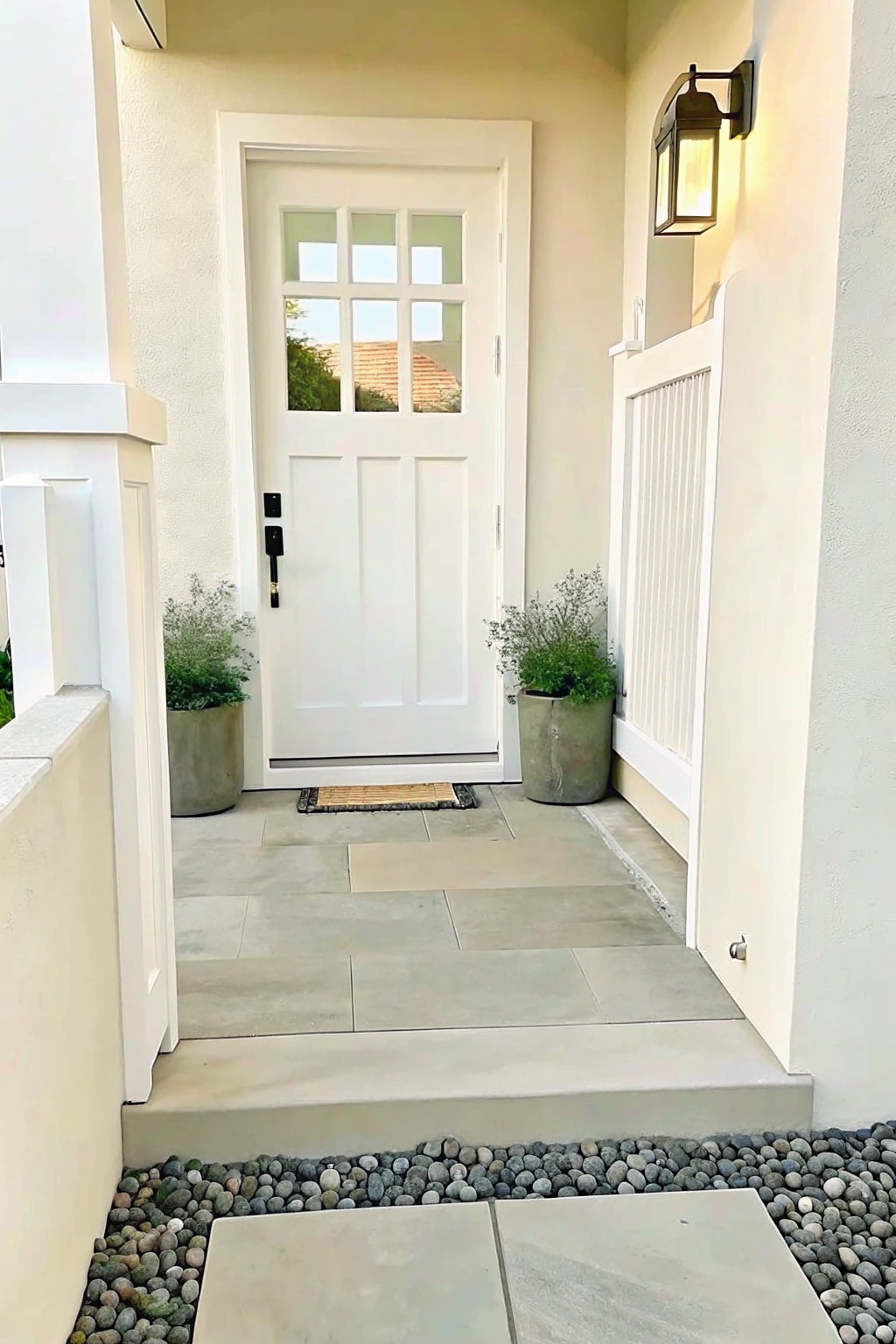
Gravel works well as a simple border at the base of entry steps because it gives a clean edge without needing a lot of planting. It keeps the area looking tidy and helps separate the hardscape from the surrounding ground.
This approach suits homes with straight lines and minimal landscaping. Place the gravel in a narrow strip along the steps and add just a few large pots for interest. It stays low maintenance and works especially well in smaller front yards where you want to avoid clutter.
Recessed Pots Make An Easy Garden Border

Setting large pots right into the paving works well when you want a planted edge without digging up the whole path. It keeps the look simple and lets you move things around if needed. The black containers here sit flush with the tiles and break up the long stretch of hard surface without adding much clutter.
This approach suits narrow side paths or tight spaces where a full border bed would feel too wide. It works best on homes with clean lines and minimal planting overall. Just make sure the pots are deep enough for the plants to stay stable and that you can reach them for watering.
Raised Concrete Borders With Gravel Fill

Raised concrete borders give gravel planting areas a sharp, finished look without adding much visual weight. The low walls keep the gravel contained and create a clear separation between the path and the planting beds. This approach works especially well in narrow side yards or courtyard spaces where you want structure but still need room to walk.
The style suits modern homes with simple stucco or concrete walls and pairs nicely with drought-tolerant plants like agaves. Keep the planting sparse so the gravel and the border itself stay the main features. Avoid filling the beds too densely or the clean lines will disappear.
Raised Planters With Gravel Borders

Raised planters work well when you want a clear garden border without filling the space with lots of plants. They create a simple edge that stays neat and lets the gravel do most of the work for drainage and finish.
This setup suits homes with straight lines and light paving, especially next to a pool or patio. Keep the planting minimal, use one or two taller varieties for height, and let the gravel run along the base so the whole border stays low maintenance.
Gravel Strips To Define Side Paths

A gravel border works well in narrow side areas because it creates a clean edge without crowding the space. The light gravel strip sits between the paved path and the wall or planters, which keeps the whole run looking simple and open rather than cluttered.
This setup suits homes with tight side yards where full garden beds would feel too much. Use the same light gravel throughout and keep planting minimal in raised boxes so the path stays easy to walk and maintain over time.
Gravel Edging for Paved Garden Paths

A narrow gravel strip next to square pavers gives a path clear definition without adding clutter. The gravel settles into a low, textured line that separates the walking surface from the wall or planting area and cuts down on weeding.
This works best in tight side yards or along house walls where you want structure but little upkeep. Keep the planting minimal in a simple raised bed so the gravel stays the main feature and the whole border stays neat year round.
Raised Planters With Gravel For Clean Borders

A raised concrete planter filled with gravel gives the border a finished look while keeping plants contained and easy to manage. The gravel also helps with drainage and cuts down on weeds, so the area stays tidy without constant work.
This setup works best along the side of a house or beside a path where you want structure but not a lot of visual clutter. It suits homes with simple architecture and pairs well with drought-tolerant plants that stay low. Keep the bed height in line with nearby steps or paving so the whole thing feels connected rather than added on later.
Raised Gravel Beds Along Walkways

Many people turn to raised beds filled with gravel when they want a border that stays neat without constant upkeep. The white stones keep the look light and simple while the small shrubs add just enough shape and green without filling the space.
This works best along paths or beside patios on modern homes where you need clear definition but still want low maintenance. It helps control weeds and drainage while keeping the overall planting minimal and easy to manage.
Gravel Borders Around Concrete Pavers

This setup uses dark pebbles to frame large light pavers and keep the walkway edges sharp. The border adds definition without extra plants or fuss, and it holds up well in areas that get regular foot traffic.
It works best on straight front paths where you want a clean look with minimal upkeep. Try it on homes with simple architecture, and keep any planting low and spaced out so the gravel stays the main detail.
Gravel Borders Along Concrete Paths
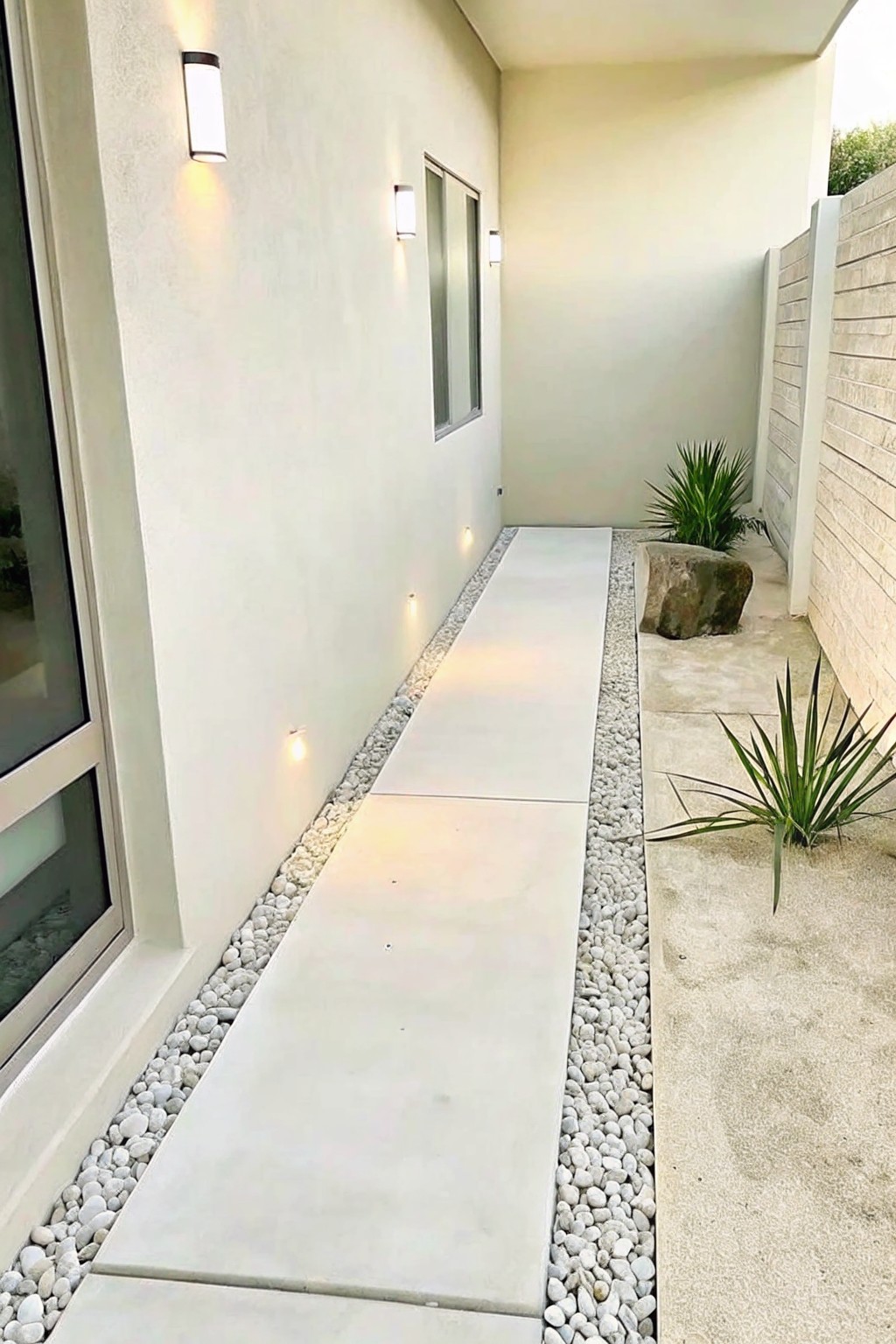
A strip of gravel on each side of a concrete path gives the walkway a finished look without adding clutter. The contrast between the smooth slabs and the loose stone keeps the whole thing feeling light and simple, which works especially well in narrow side yards or service areas.
This approach suits homes that already lean modern or minimalist. Keep the planting very sparse, like a few tough grasses or succulents, and add low path lights if you need evening visibility. The main thing to watch is drainage so the gravel stays in place over time.
Gravel Borders Along Stone Paths

Gravel makes a simple border that keeps a paved path looking neat without adding much else. The light stones stand out more when they sit next to the smaller gravel, and the edge stays clean even when plants are kept low and sparse.
This works best in narrow side gardens or small courtyards where you want low maintenance. Lay the gravel in a narrow strip on both sides of the paving and limit the planting to a few tough perennials so the border stays the main feature.
Gravel Beds With Stepping Stones For Side Yards

Gravel works well along the side of a house because it drains fast and needs almost no upkeep. A few tough plants scattered through the stones keep it from looking too bare while still letting the gravel read as the main surface.
This setup suits narrow side yards on modern homes where you want a clean look without constant trimming. Place the stepping stones where you actually walk so the gravel stays in place and the whole border stays simple.
Gravel In Raised Beds For Clean Borders

Raised beds filled with gravel give a garden border a sharp, finished look without needing constant upkeep. The white edges keep everything contained while the light stones highlight the few upright plants instead of competing with them.
This approach works especially well along side paths or next to house walls where space is limited. Keep the planting very sparse so the gravel stays the main surface, and make sure the beds have good drainage so water does not pool after rain.
Gravel Borders For Raised Planters

A strip of gravel between paving and built-in planters gives a clean break that feels intentional. It stops the hard surface from butting right up against the concrete and keeps the whole area looking simple and low maintenance.
This works best on modern homes where the paving is large and plain. Keep the gravel band narrow, use the same stone throughout the planters, and stick to just a few small plants so the border stays the main feature.
Concrete Planters With Gravel For Path Borders
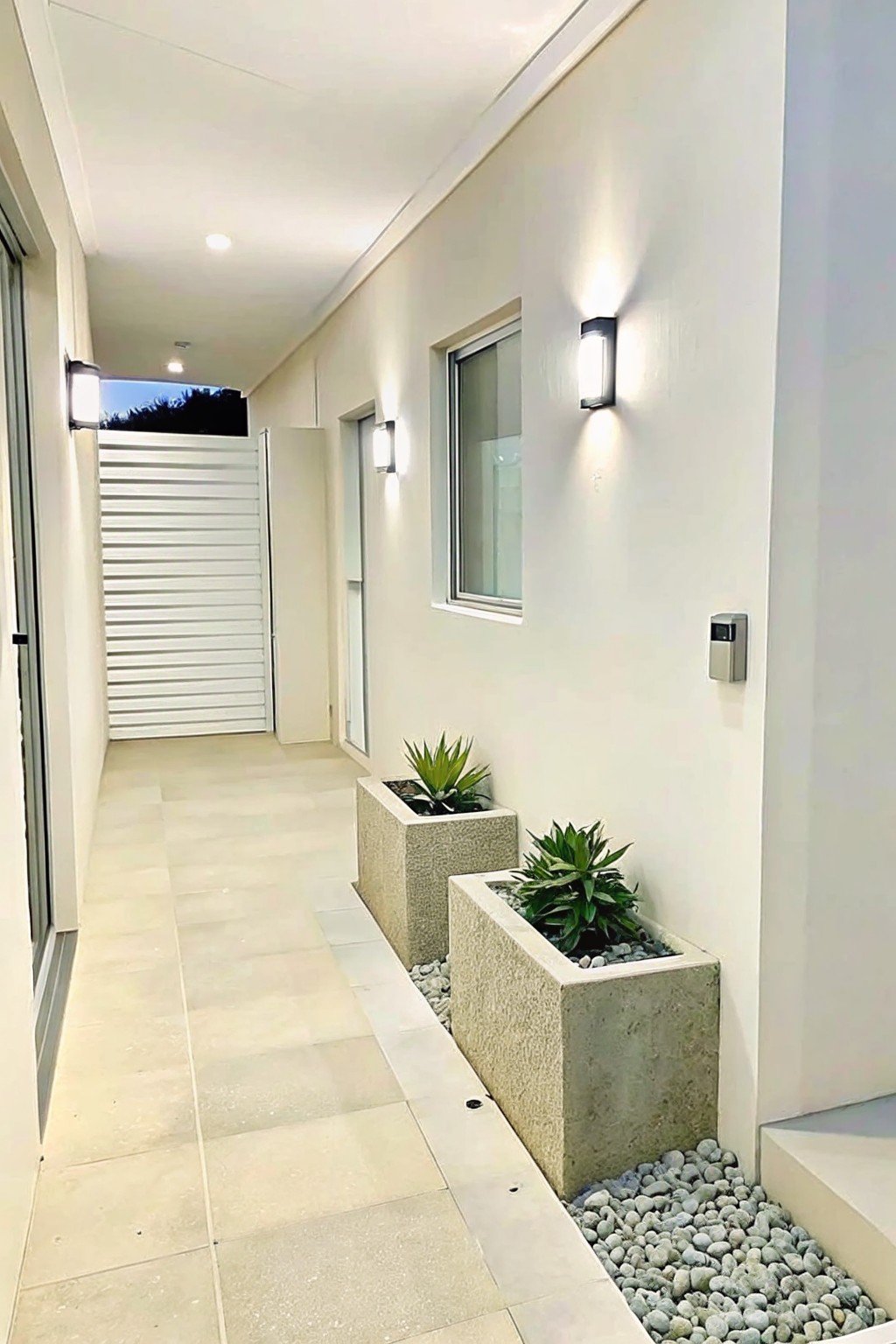
Concrete planters give you a clean way to edge a narrow walkway without planting directly in the ground. They hold the soil and plants in place while the gravel around the base handles drainage and keeps the whole strip looking tidy.
This setup works best on modern homes with limited side space. Keep the planting minimal, choose a few tough plants, and let the gravel do most of the work.
Concrete Planters For Simple Garden Borders
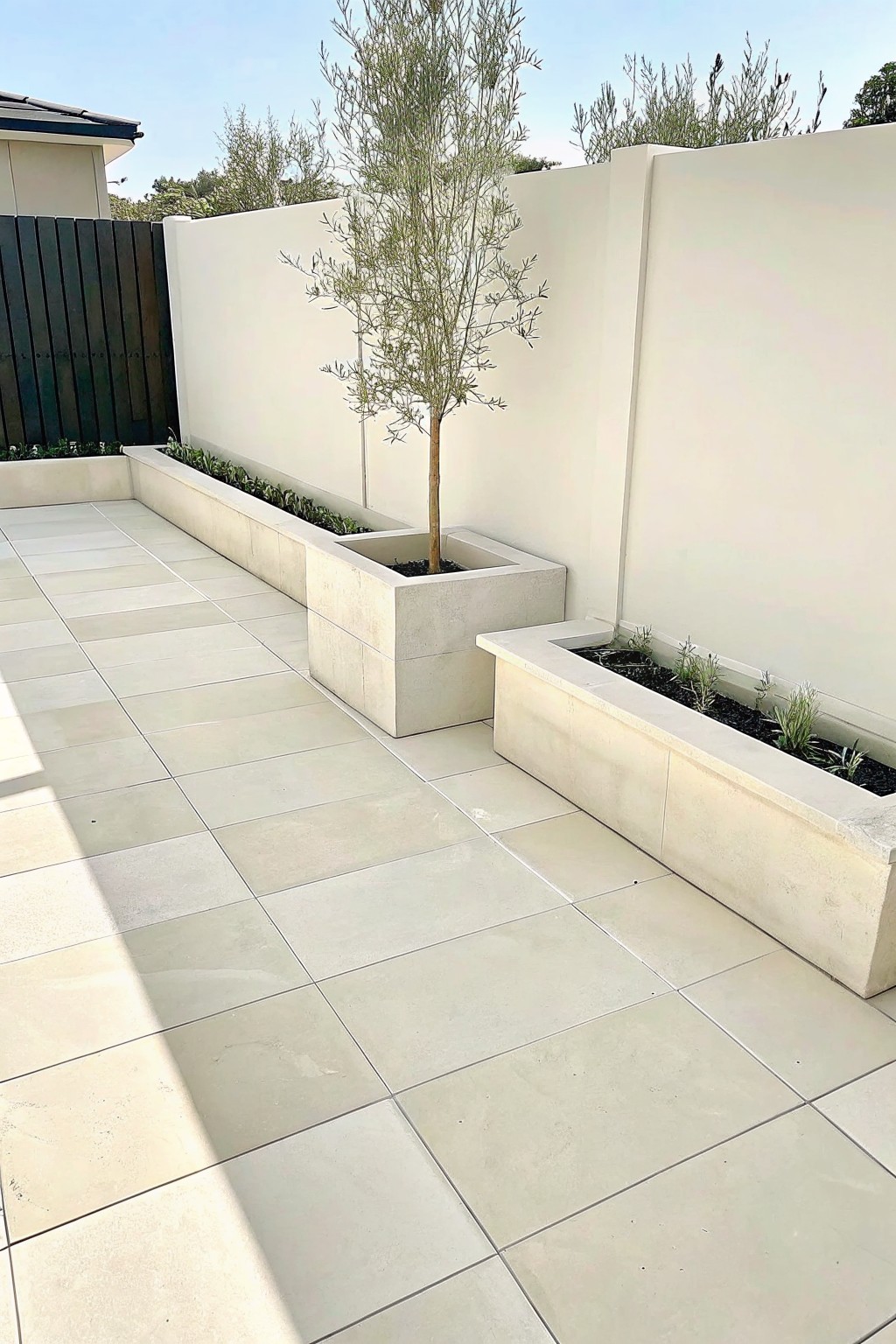
Raised concrete planters make it easy to create clean, structured borders without filling every inch with plants. They keep the soil contained and let you stick to just a few key pieces, which works well when you want a modern garden that stays low maintenance.
This approach suits homes with paved outdoor areas and straight walls or fences. Place the planters along the edge to define the space and add a bit of height without crowding the layout. Keep the planting sparse so the concrete itself becomes the main feature.
Gravel Borders With Box Planters

A gravel strip along the house makes a narrow side path feel much cleaner and easier to keep up. The small stones create a simple edge that needs little watering or weeding, and the white planters add just enough structure without filling the space.
This works best on homes with straight walls and limited planting room. Space the boxes evenly, stick to a few low plants, and let the gravel do most of the work. It keeps the look modern and avoids the messy look that comes with too many plants crammed in.
Gravel Borders For Clean Garden Edges

Gravel works well as a simple border because it creates a clear break between paving and planting without adding much visual weight. In this kind of setup the gravel runs along the base of the walls and raised beds, keeping the whole space looking neat while using very few plants.
This approach suits small modern courtyards or side gardens where you want low upkeep. Keep the planting minimal with just a few rounded shrubs or small trees so the gravel itself stays the main detail and the area does not feel crowded.
Gravel Strips Along Narrow Walls

A gravel strip in a trough works well when space is tight and you still want some planting along the edge. It keeps things simple, adds texture underfoot or along the side, and needs very little upkeep once the pebbles are down.
This setup suits apartment balconies or side passages where a full bed would not fit. Place the trough against the wall, drop in a few sturdy pots with herbs or small shrubs, and let the gravel fill the gaps. Just make sure the container has drainage so water does not pool.
Frequently Asked Questions
Q: How do I stop the gravel from spilling onto the lawn? A: Install a simple metal or plastic edging strip along the inside edge. This keeps everything neat without much effort. Refresh the gravel once a year if it settles.
Q: Which plants work best for the minimal look? A: Choose low growing perennials or grasses that stay under a foot tall. Space them out so each one stands out on its own. This keeps the border looking tidy year round.
Q: What about weeds in the gravel itself? A: A good layer of landscape fabric underneath cuts down on most of them. Pull any that do appear right away before they spread. You will spend less time on this than with a regular bed.
