


I often find that the borders in a garden set the structure for everything else that grows around them.
Over time the right edging keeps beds from spilling onto paths and helps maintain a clear layout even as plants fill in.
Start small.
I like to try out a couple of these border methods in less visible spots first to see how they hold up with my soil and weather.
That way the changes feel practical rather than overwhelming when I apply them to the main areas of the yard.
Narrow Gravel Borders Along Paths

A gravel strip with a few small plants makes a clean, low-maintenance border between a path and the house wall. It adds a touch of greenery without crowding the walkway or requiring much upkeep.
This approach suits narrow side yards where space is tight. Lay landscape fabric, spread gravel, and plant a few tough perennials or shrubs to keep the edge tidy and defined.
Paver Paths With Gravel Borders

This approach keeps a garden path looking neat without a lot of upkeep. The wide concrete pavers create a solid walking surface while the narrow gravel strips on either side act as a simple border that separates the path from the planting beds.
It works well in narrow side yards or along fences where you want a clean line but do not want to fuss with frequent trimming. The gravel also helps with drainage and gives the plants a bit of breathing room so the beds do not spill onto the walkway.
Vertical Planters on a Ladder Frame

A ladder frame with attached boxes gives you a simple way to add height and plants without spreading out across the ground. It turns an empty wall into a growing spot that stays neat and contained, which works especially well when you need a border but have limited floor space.
This approach suits side yards, patios, or along a fence where you want something quick to build. Use treated wood for the frame, attach the boxes at different heights, and set it against any solid surface so the plants get good light.
Gravel Borders Along A Path

Gravel strips on either side of a paved walkway keep the edges clean and simple. This setup works well because it needs little upkeep and still gives the path a finished look without adding bulk.
Lay down fabric first, then spread the gravel and add a few tough plants like agaves. It suits narrow side yards on most homes where you want drainage and low maintenance without much digging.
Run a Border Bed Down a Narrow Walkway

A straight border bed works well when space is tight and you still want room for plants. It turns a plain side passage into something useful without crowding the walkway or needing much width.
Keep the bed narrow and line it with simple edging so it stays neat over time. This approach fits homes with limited outdoor areas and lets you add color and greenery in spots that often get ignored.
Gravel Edging Along Narrow Paths
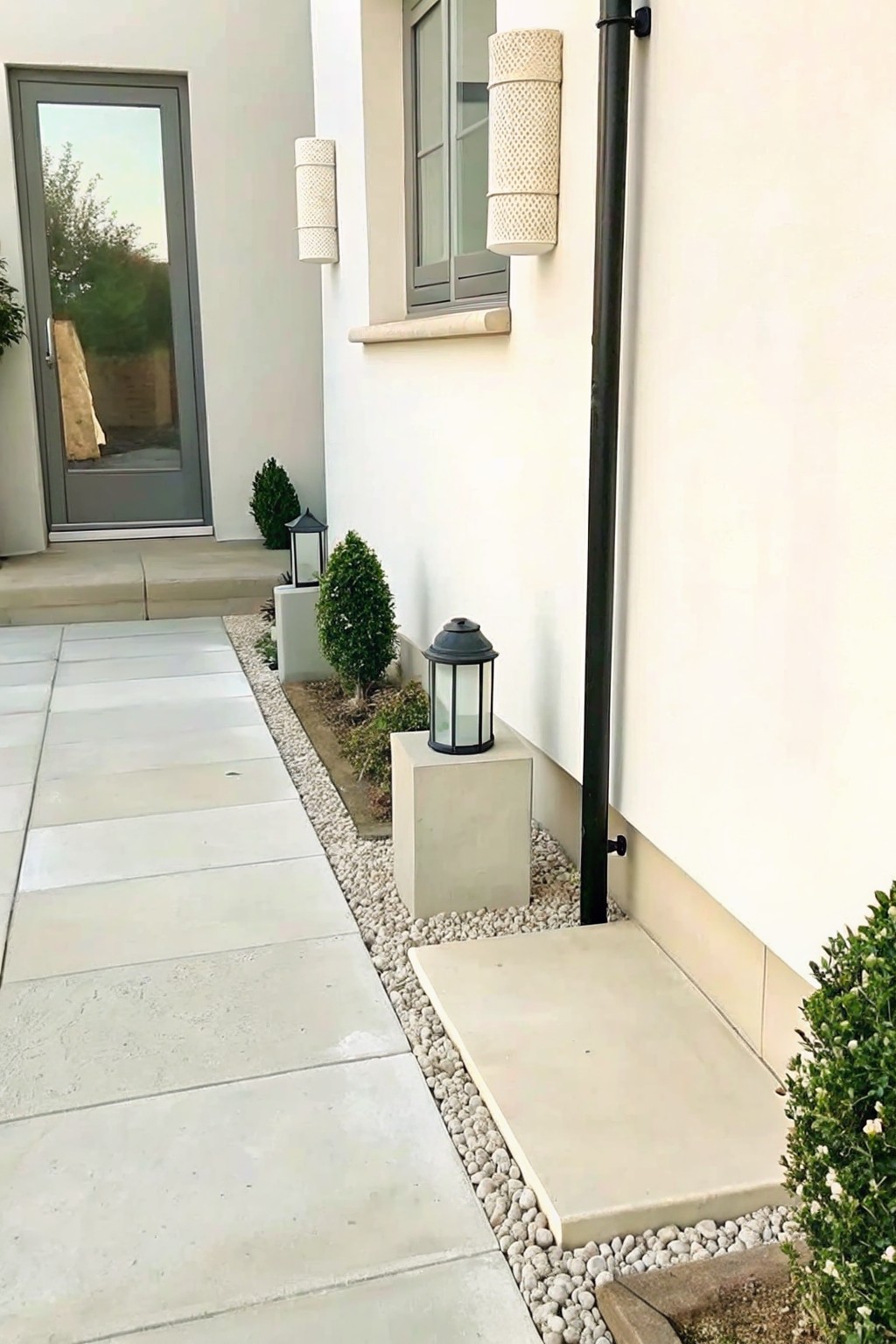
A gravel strip works well when you want a clean line between a walkway and the planting area without adding a lot of structure. It keeps the beds from spilling onto the path and makes the whole side yard look tidier with very little effort.
This approach suits homes with tight side passages or simple modern exteriors. Just lay down landscape fabric, spread the gravel a few inches deep, and add a few low plants or lights if you want. The main thing to watch is keeping the gravel from migrating onto the paved surface over time.
Try a Long Planter Box for a Simple Border

A long planter box gives you a clean border without digging or installing traditional edging. It keeps everything contained and makes the space look tidy even when the plants are still filling in.
This works best along a house wall or next to paving where you want low maintenance. Fill it with a mix of small plants and gravel so it stays neat with very little watering or weeding.
Line Paths with Pebbles
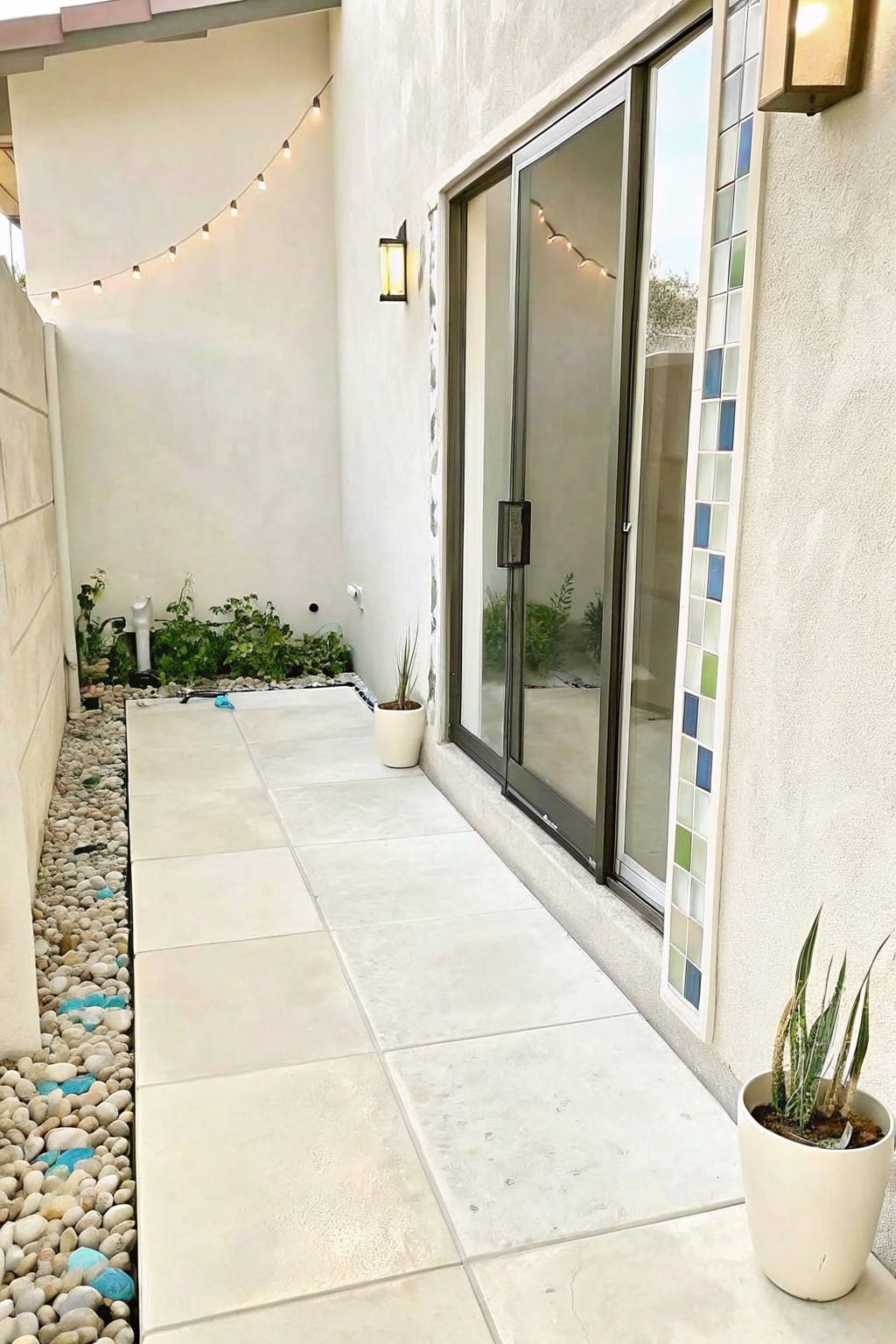
A strip of pebbles running along a walkway gives the garden a tidy edge without needing fancy materials or tools. It separates the path from the planting bed, keeps mulch or soil from spilling over, and adds a bit of texture that feels natural rather than built.
This works well beside any straight or gently curved hardscape, especially in smaller side yards or narrow passages where you want low maintenance. Just lay down landscape fabric, pour in the pebbles, and rake them flat. It suits homes with existing concrete or tile paths and holds up fine in most climates.
Gravel Borders Along Paved Paths

Gravel makes a simple border that keeps the edges of a paved path looking neat without much work. The light stones contrast with the larger pavers and help water drain away from the house walls instead of pooling on the surface.
This setup works well in narrow side yards or back garden walkways where you want a clean look but do not want to mow or trim right up to the paving. Lay landscape fabric first, then add a layer of pebbles between the path and any beds or walls. It suits most homes and takes only a weekend to install.
Use Pebble Strips To Edge Concrete Paths

A narrow bed of pebbles with a few small plants tucked in creates a clean line between the walkway and the house. It keeps the area from looking bare while avoiding the need for constant weeding or mowing right up against the foundation.
This works best in narrow side passages or along modern homes where you want something simple and low water. Lay down fabric, spread the pebbles, and space out a handful of plugs so they fill in over time without crowding the space.
Add a Paver Path to Define Side Borders

A straight paver path gives a clean edge that separates planting beds from the walkway without extra framing. The light rectangular stones stay simple to install and help keep the area looking tidy year round.
This setup works best in narrow spaces next to the house where you want easy foot traffic and low upkeep. Lay the pavers on a compacted base in a basic grid pattern and add a thin gravel strip or low plants along one side to finish the border.
Concrete Steppers In Gravel

This setup uses large concrete pavers placed directly into a gravel bed to form a simple path that also serves as a border. It keeps the area looking tidy without much work and handles foot traffic well while letting water drain easily.
It suits small side yards or entry areas on newer homes where you want something quick to install and low on upkeep. Level the ground first, spread a few inches of gravel, and set the pavers in a loose pattern so they feel natural rather than rigid.
Define Paths With Small Stone Borders

Small stones set along the edge of larger pavers keep the path looking tidy and stop mulch from creeping onto the walkway. The contrast also makes the main path stand out without needing extra materials or complicated cuts.
This border works best in side yards or along walls where space is tight. Lay the smaller stones in a single row, keep them level with the ground, and you can finish the job in a weekend.
Raised Concrete Borders For Clean Garden Edges

Raised concrete borders give a garden a finished look without needing fancy materials or weeks of work. They keep soil in place, create straight lines, and make the whole space feel more organized even when the yard is narrow. The light color also bounces light around so the area does not feel closed in.
This approach works well along side paths or between houses where you want planting beds but need to keep everything contained. You can build the forms and pour in a weekend, then add simple lighting or gravel at the base if you want. It suits small urban yards or modern homes that already have clean architecture.
Painted Posts For Quick Garden Edging
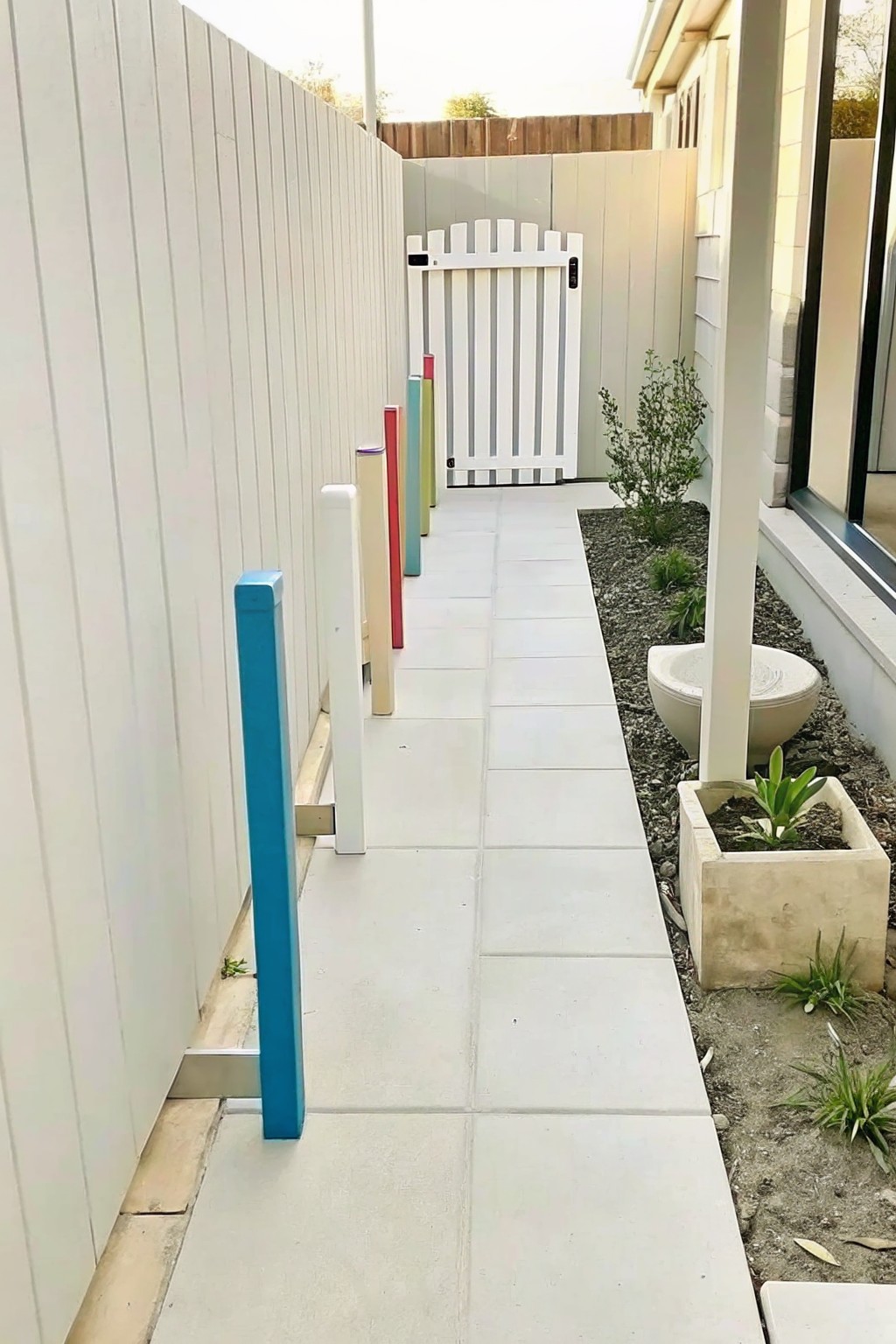
Short painted posts give a garden path or bed a clean edge without needing much skill or time. They stand out because you can add color in a simple way while keeping the whole look low key and easy to maintain.
This approach works well along fences or next to paving where you want a soft border that still feels defined. Cut the posts to matching heights, paint them in a few light shades, and set them in place for a weekend job that holds up with little fuss.
Pebble Mosaic Borders Along Paths

A pebble mosaic border gives a path a finished look without much extra work. The small stones create a clear edge that separates the main paving from the surrounding area and keeps everything in line over time.
This works best on straight or gently curving walkways in smaller gardens. Set the pebbles in a shallow mortar bed on each side of your larger pavers and keep the width consistent so the border stays neat rather than fussy.
Gabion Style Borders Using Wire And Stone
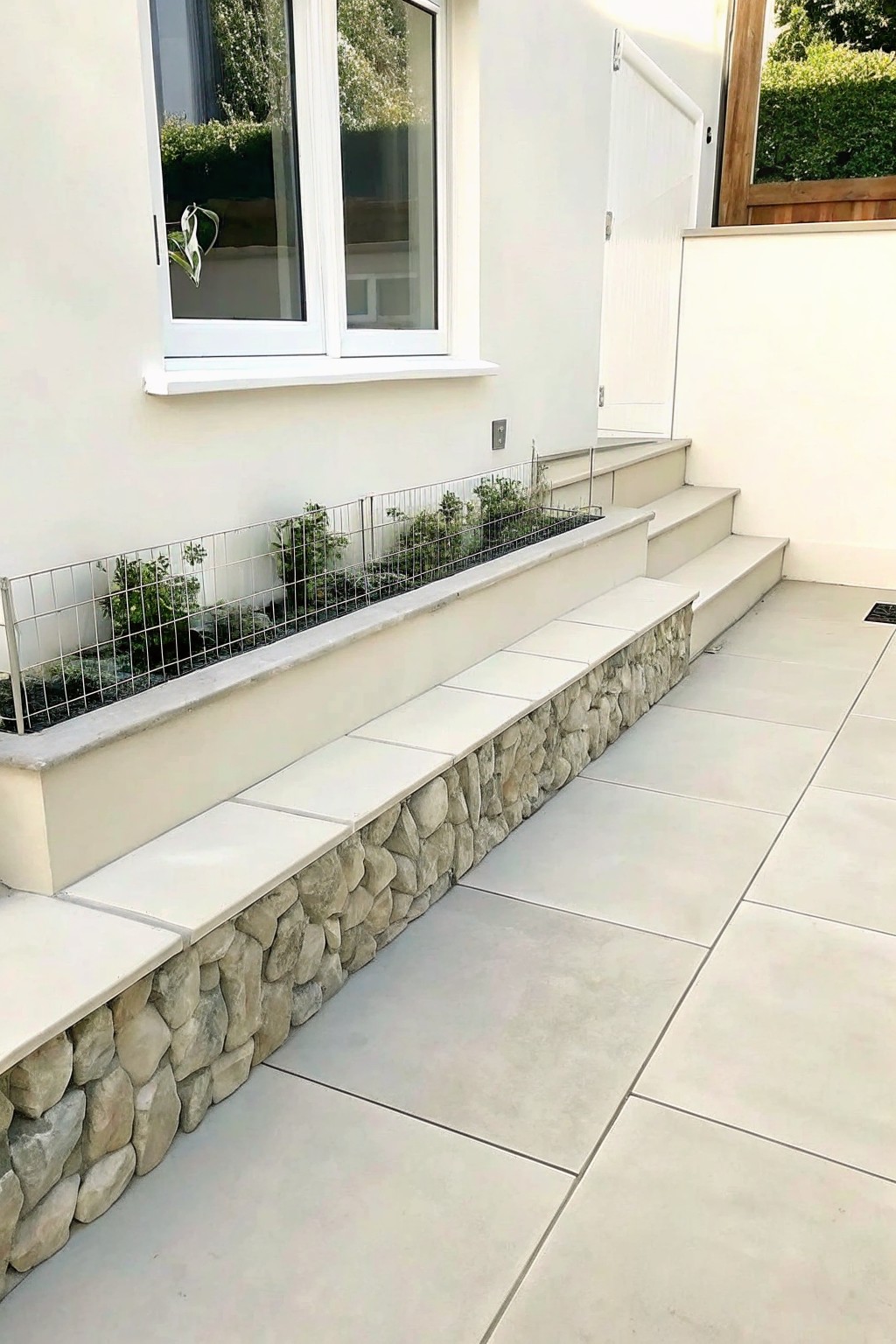
A simple way to edge a raised bed is to use wire mesh filled with stones. It holds everything in place, looks tidy right away, and needs almost no maintenance once it is done.
This approach works best along patios or near steps where you want the bed to feel built in rather than added on. Fill the mesh with whatever local stone you can get, top it with a flat cap if you want a seat edge, and keep the height low so it stays easy to build in a weekend.
Raised Planter Boxes With Trellises

These simple wooden boxes turn a narrow strip into usable growing space without crowding the walkway. The attached trellises give climbing plants a place to go upward, which keeps the beds from looking messy while adding height along the wall.
Build them from basic lumber and place them end to end for a quick border that works in side yards or along fences. They suit small lots where ground space is limited and you still want room for vegetables or flowers.
Frequently Asked Questions
Q: How do I keep the border straight while I work?
A: Lay out a garden hose first to mark the curve or line you want. Then follow that as you dig or place the materials. It saves time on adjustments later.
Q: What if it rains right after I finish installing?
A: Most of these borders settle fine with a bit of moisture. Just check for loose spots the next day and firm them up by hand. Avoid walking on the area until it dries.
Q: How often do I need to maintain these borders?
A: Check them once a season for any shifting or gaps. Pull weeds by hand as they appear to keep the look clean.
