

I often notice that a garden feels scattered until there are some clear paths and a few planted areas to give it shape.
Gravel works well for filling in those paths because it settles quickly and needs little more than occasional raking.
Planters let me try different groupings without committing to permanent beds right away.
I would lay out the gravel sections first in my own yard to check how they look from the windows.
Those basic additions tend to make the space feel more finished after a season or two of growth.
Use Gravel And Planters To Give A Yard Clear Structure
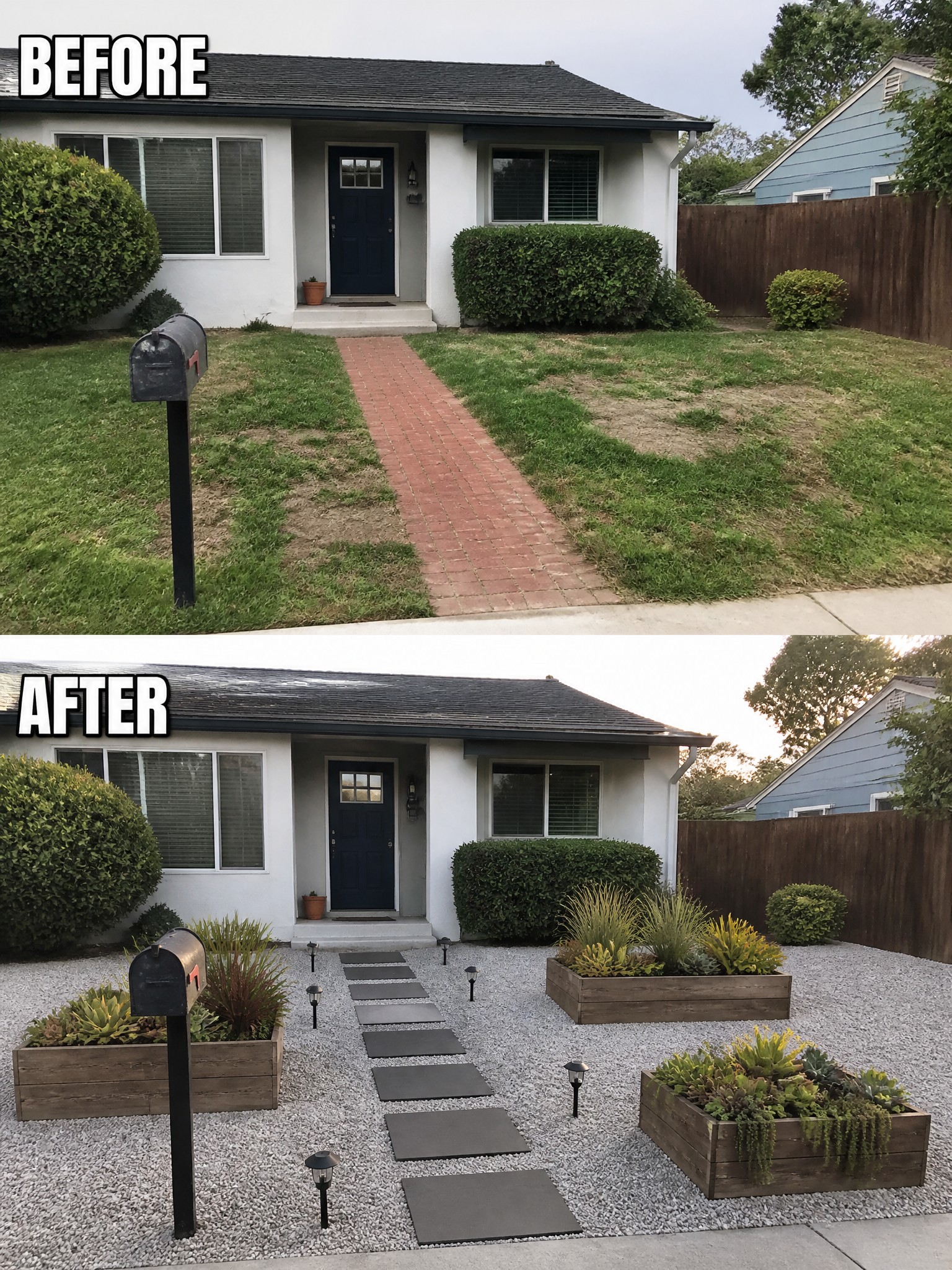
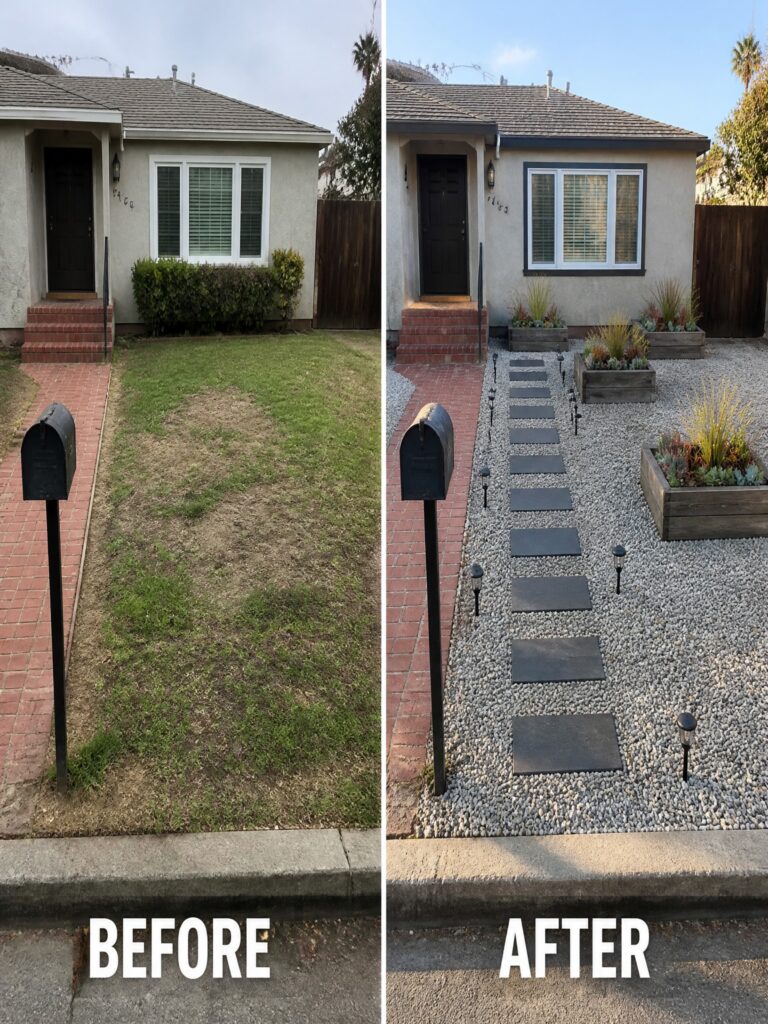
A patchy lawn can make even a simple house look unfinished. Covering the grass with gravel and adding a few raised planters gives the space clean edges and cuts down on weekly mowing. The stepping stones keep a clear path to the door without needing a full walkway.
This idea works best in smaller front yards or side areas where grass struggles. Keep the planters low and repeat the same wood tone so the look stays simple. Start with the gravel base first, then add plants that match your sun and water conditions.
Turn Bare Concrete Into A Defined Patio With Gravel And Planters
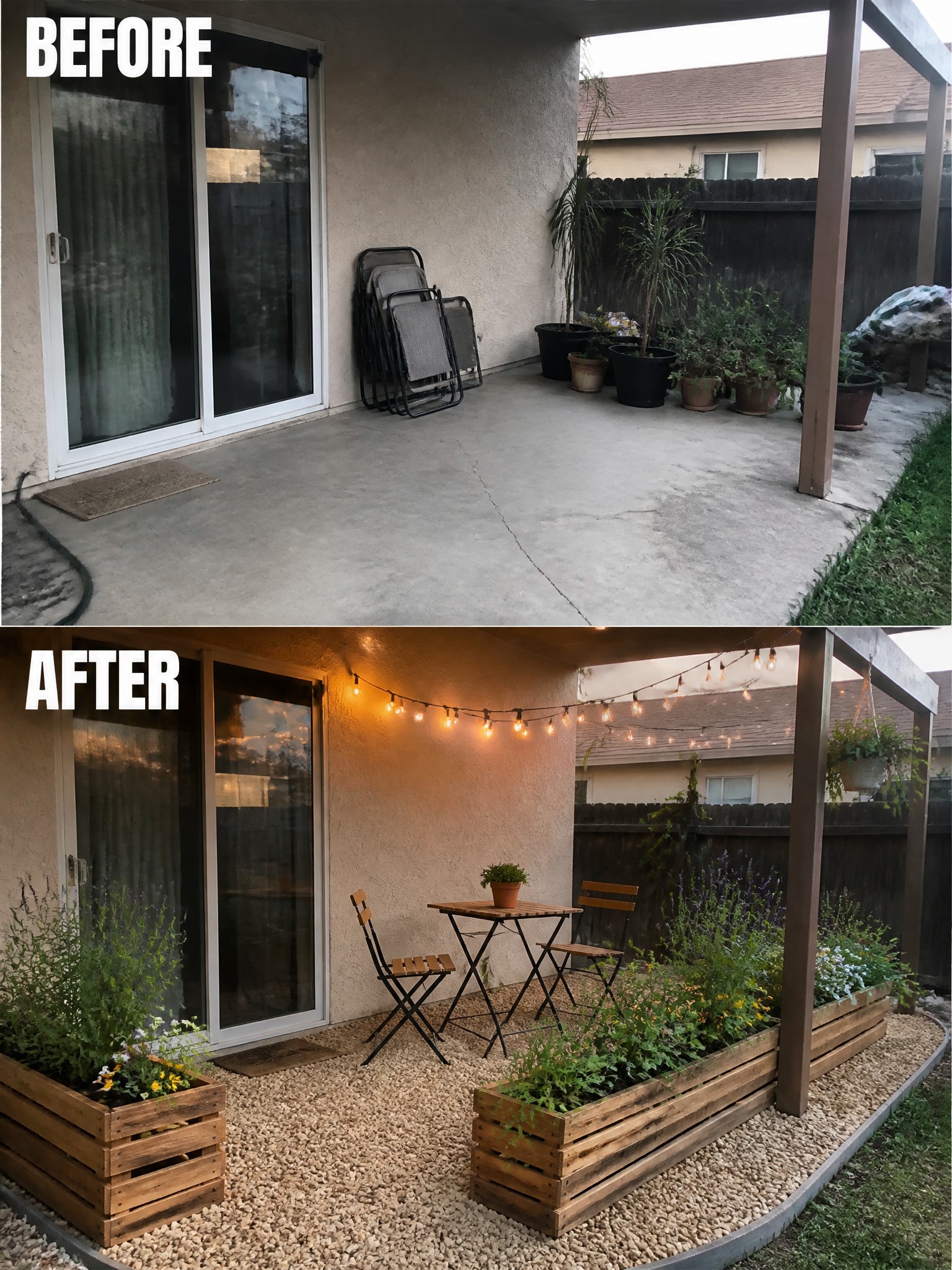
Covering a plain concrete patio with gravel and adding wooden planters gives the space a clear purpose. The gravel softens the hard surface and creates a natural boundary, while the planters bring in planting without digging permanent beds. A simple table and chairs then fit right in as the main seating spot.
This idea suits small backyards or side patios where you want function without major work. Keep the furniture lightweight and weatherproof, and group the planters to form a loose border rather than spreading them out. The result feels finished without needing new paving or built structures.
Define A Narrow Side Yard With Gravel And Vertical Planters
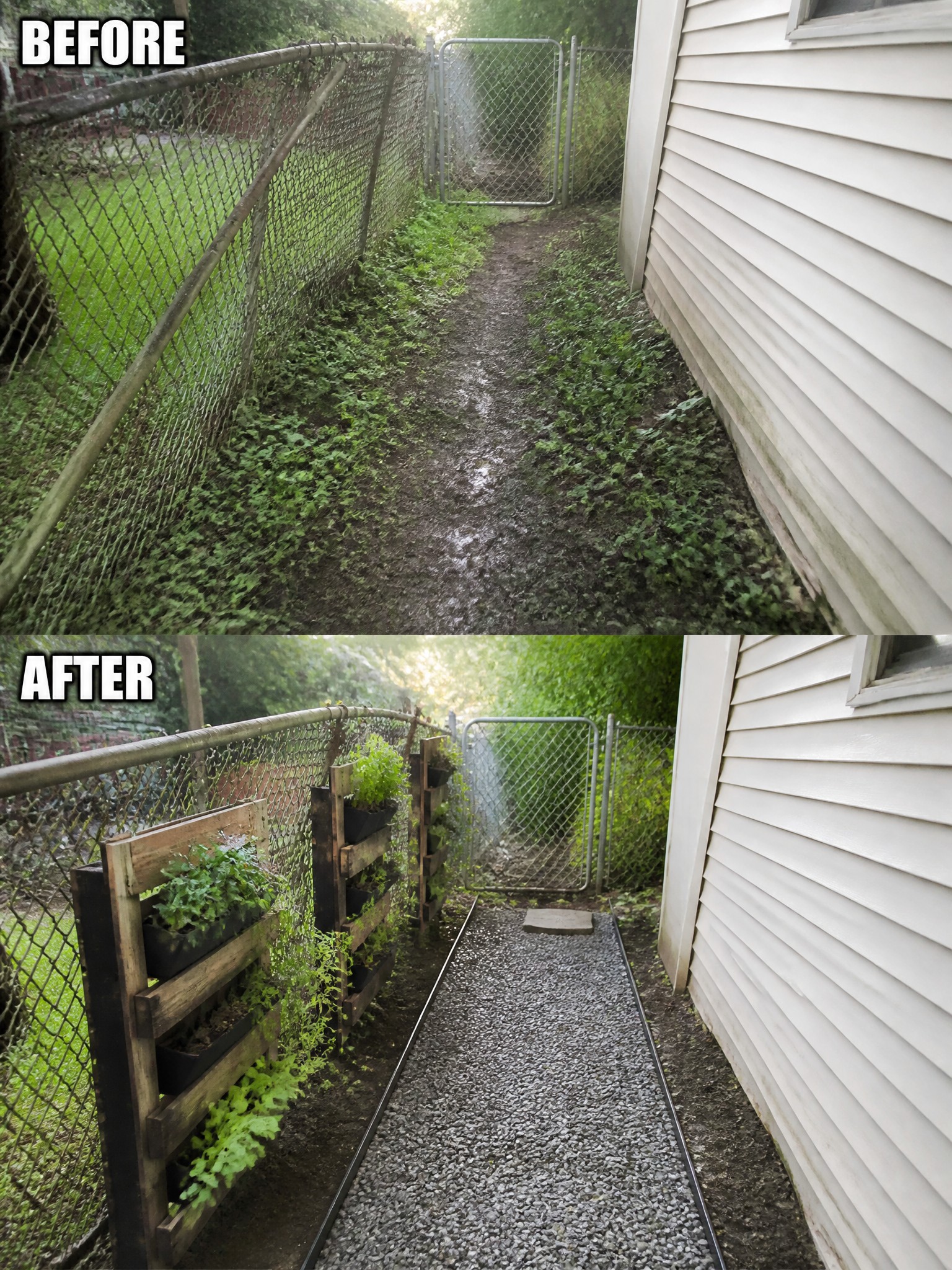
A muddy path lined with weeds makes a side yard feel more like an afterthought than usable space. Adding a gravel walkway gives the area a clear route while vertical planters mounted on the fence bring in plants without taking up ground room.
This idea suits homes with tight side access or long fence lines where full garden beds would feel cramped. Clear the overgrowth first, lay a simple gravel base, and use basic pallet-style planters to hold herbs or flowers. The result keeps the path open for walking and adds growing space that stays out of the way.
Use Tiered Planters And Gravel To Shape A Sloped Yard
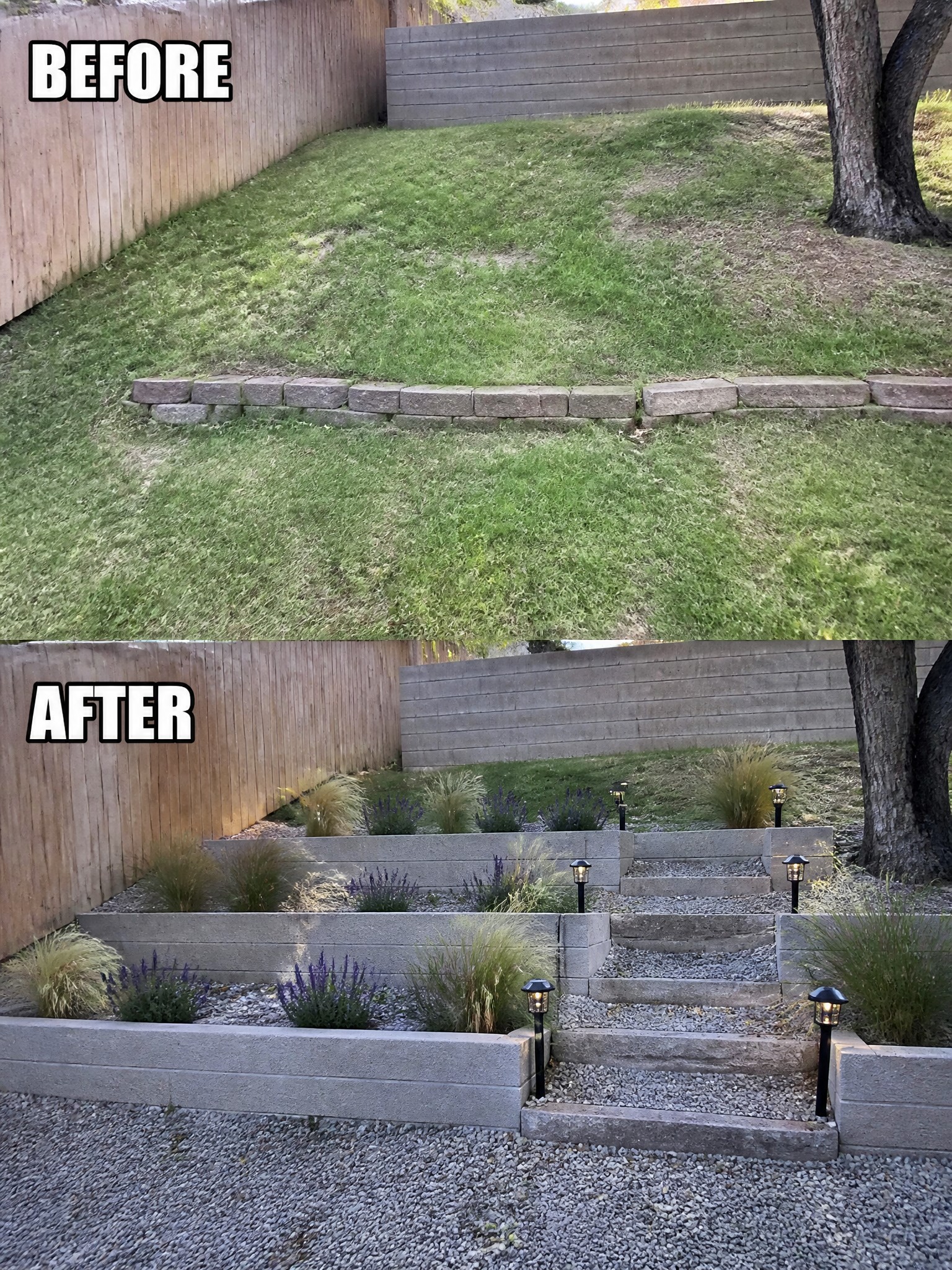
A slope often leaves a backyard feeling unfinished and hard to use. Adding stepped concrete block planters breaks the hill into flat planting zones and creates a clear path system filled with gravel.
This idea works best on modest backyard slopes where you want low maintenance and better drainage. Place the blocks to form the tiers first, then fill the gaps with gravel so water moves through easily. Keep the planting simple with grasses and low shrubs that do not need constant trimming.
Turn A Bare Balcony Into A Usable Outdoor Space
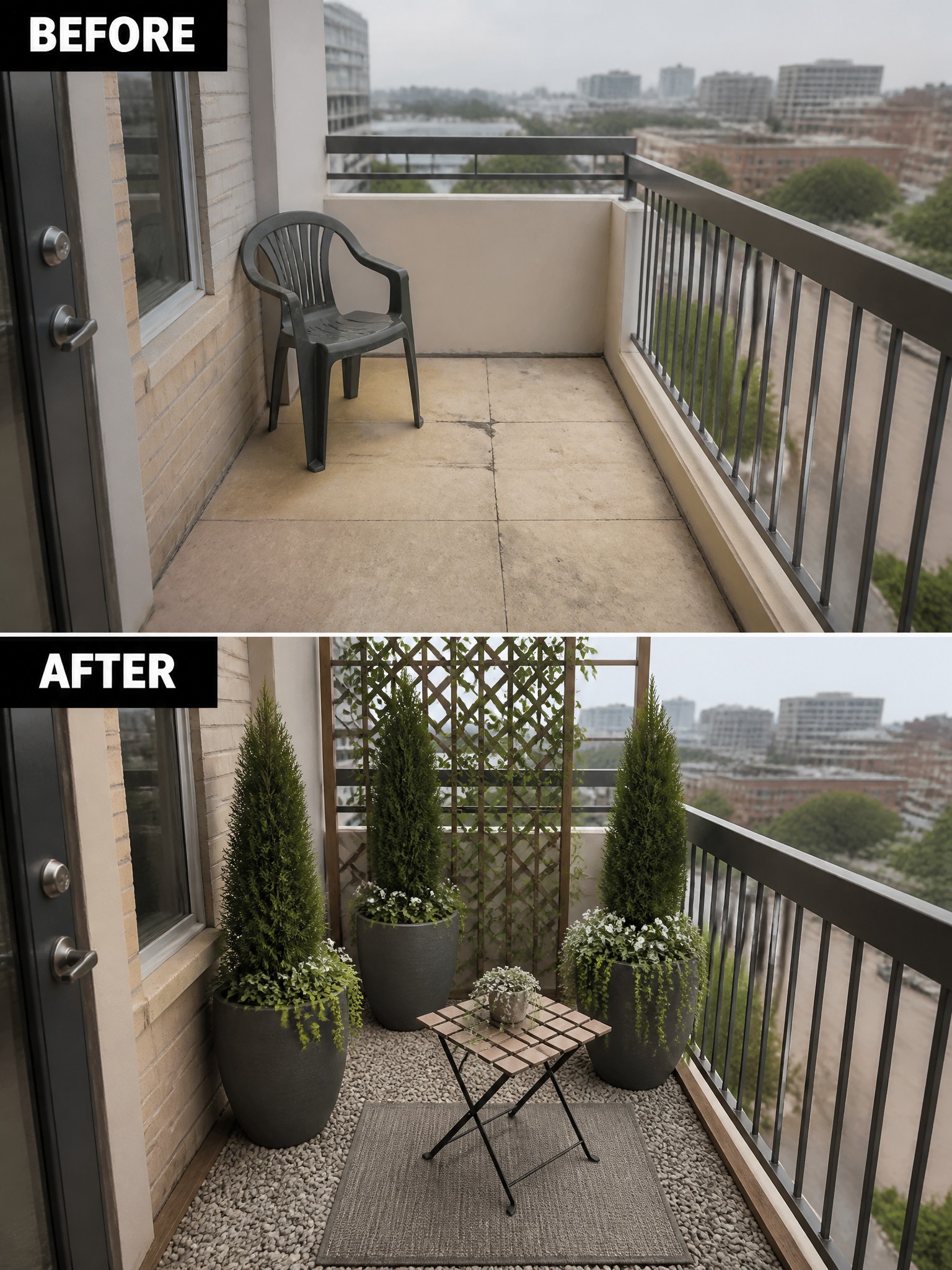
A plain concrete balcony with just one plastic chair feels empty and unused. Adding gravel across the floor and placing a few large planters creates a simple base that makes the space feel more finished and inviting. The change turns the area into somewhere you might actually sit.
This idea works well on small balconies or patios where you want low maintenance and clear boundaries. Start with the gravel to cover the hard surface, then use tall planters to add height without crowding the floor. Keep the furniture small so there is still room to walk around.
Add Structure To An Overgrown Backyard
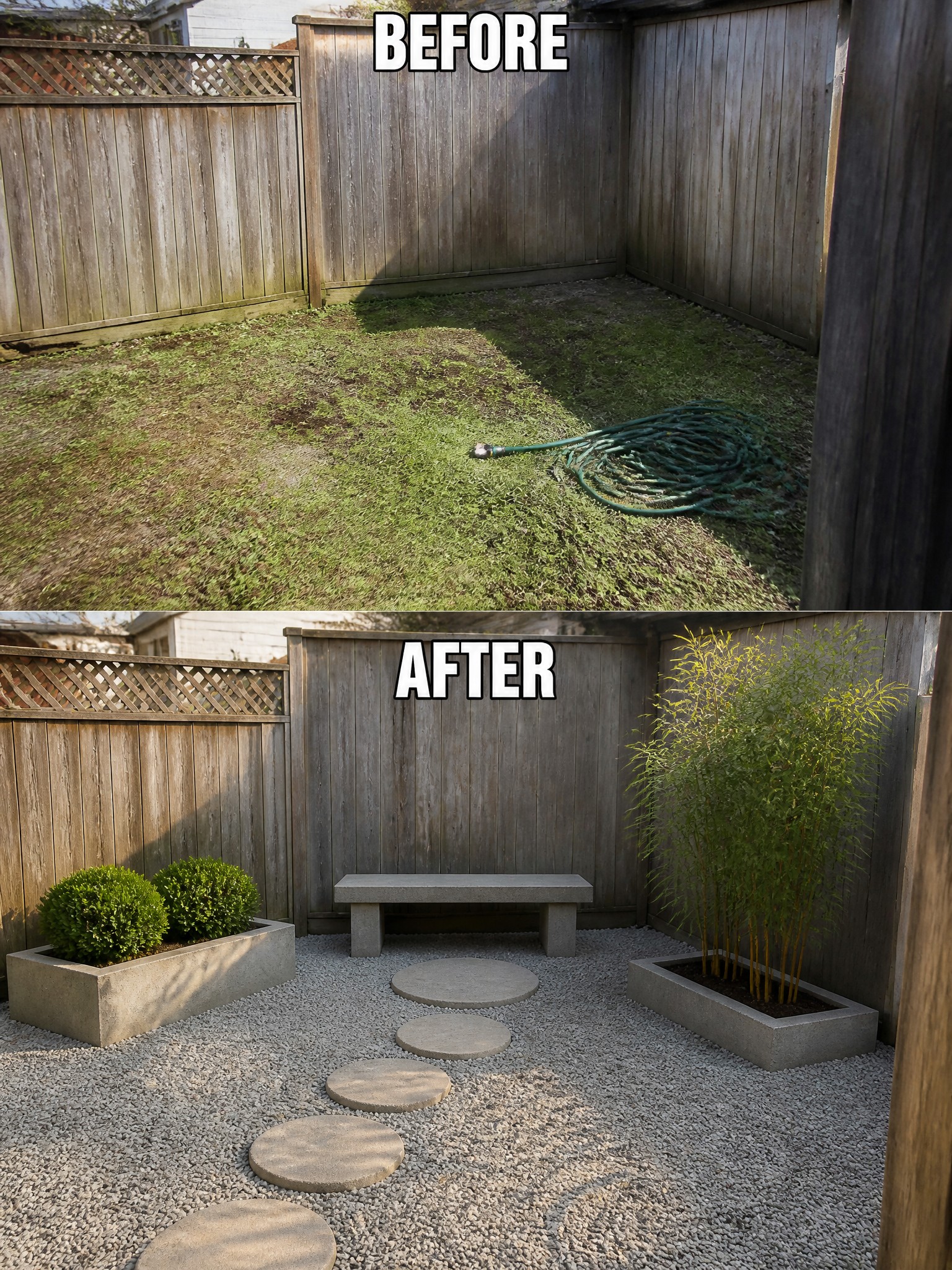
Starting with a full cleanup makes the biggest difference when a backyard has turned into a mass of weeds. Once the ground is cleared, gravel gives the space a flat, low-maintenance surface that stays tidy without regular mowing. A few large planters placed along the edges add simple planting spots and help define the area.
This idea suits small or awkward yards where a lawn is hard to keep. Gravel works well in shade and needs little upkeep, while the planters let you add greenery without digging up the whole space. Leave room for a basic path and one seat so the area stays practical for daily use.
Use Gravel And Planters To Shape An Overgrown Garden Bed
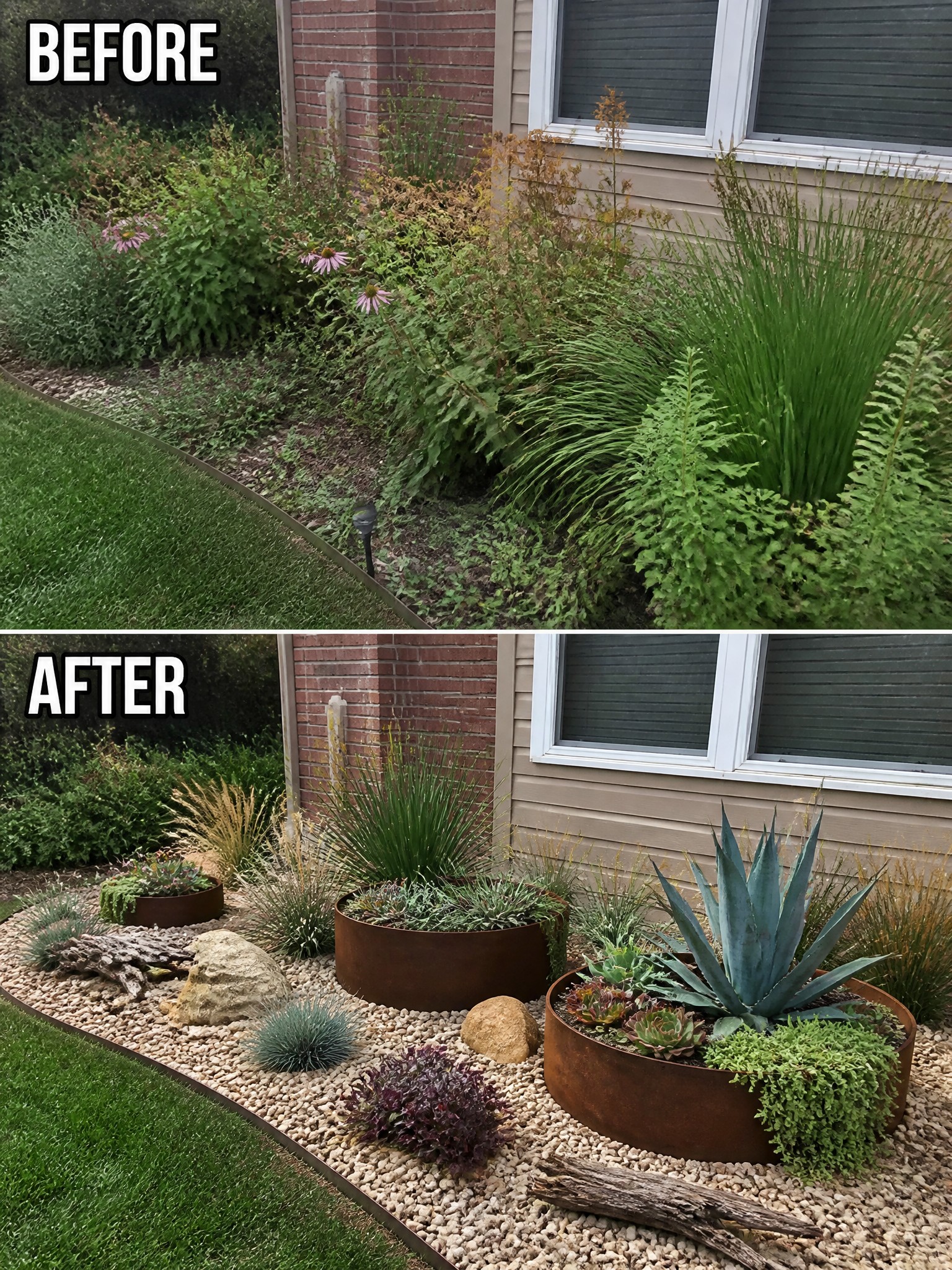
An overgrown strip along the house often turns into a tangle of plants that no one enjoys. Laying down gravel creates a clean base that stops the mess from spreading, while a few large planters keep the planting simple and contained.
This works best on narrow foundation beds or side yards where you want low upkeep. Start by clearing the worst of the growth, set the planters where you want the main interest, and let the gravel do the rest of the work keeping the area tidy.
Refresh An Overgrown Path With Gravel And Structured Planting
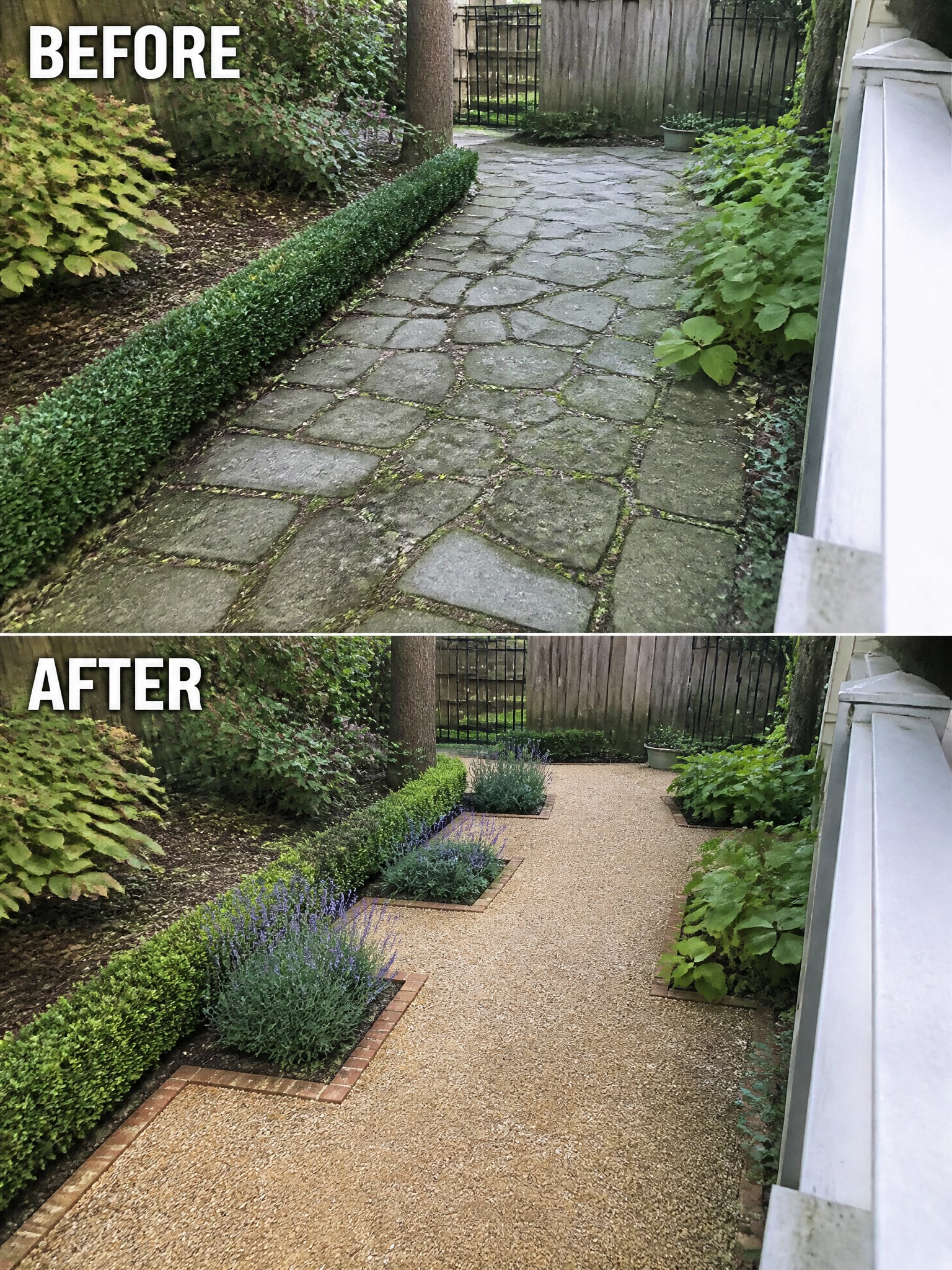
The uneven stone slabs had become buried under moss and weeds, making the whole side yard feel neglected. Replacing them with gravel gave the path a clean, level surface while the brick-edged beds kept the planting contained and easy to manage.
This works especially well along the side of a house or in a narrow garden where you need a path that drains well and stays low maintenance. Clear the old surface first, add a simple base, then use the same edging and a few repeated plants to give the space order without crowding it.
Define A Plain Entry With Gravel And Planters
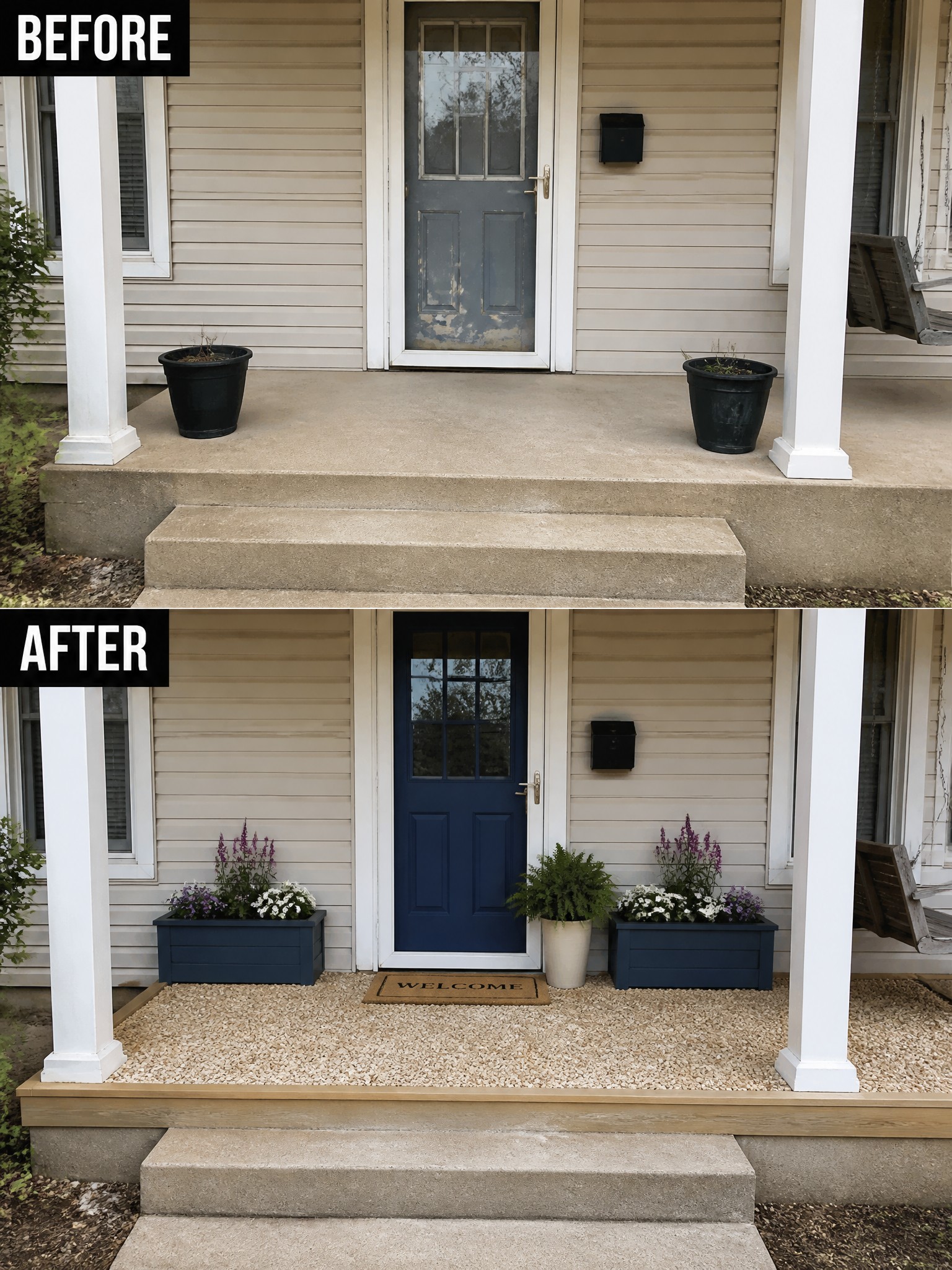
The bare concrete porch felt flat and unfinished with just two plain pots sitting on the steps. Switching to a gravel base and adding a pair of matching planters on each side gave the entry clear shape and made the door area feel more intentional.
This idea suits homes with small front porches or stoops where you want a tidy look without major construction. Lay down a barrier first so the gravel stays put, keep the planters in one color, and leave enough open space in the middle for a doormat and easy foot traffic.
Use Gravel And Planters To Give Shape To A Plain Backyard
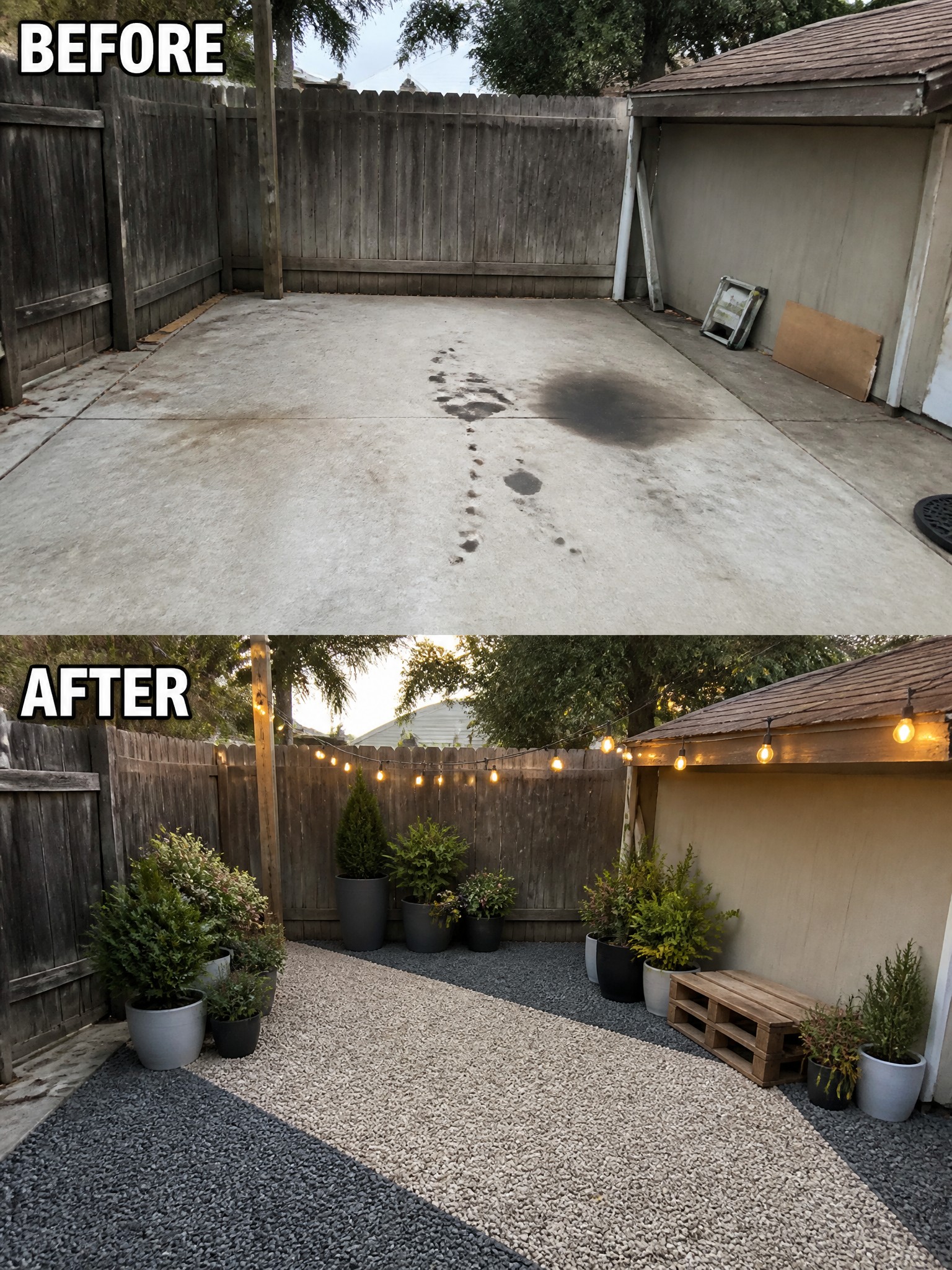
A bare concrete slab often feels like wasted space because it has no edges or purpose. Laying down gravel creates a softer surface underfoot and gives the area clear boundaries without needing to pour new concrete or build raised beds. Adding a row of planters along the fence turns the same empty wall into a planted border that softens the look and adds height.
This approach works well in small or rental yards where digging is limited. Start with a simple gravel layer over the concrete, then place larger pots first to mark the edges before filling in with smaller ones. The result feels planned rather than scattered, and the containers let you change the planting each season without permanent changes.
Shape A Small Backyard Corner With Gravel And Planters
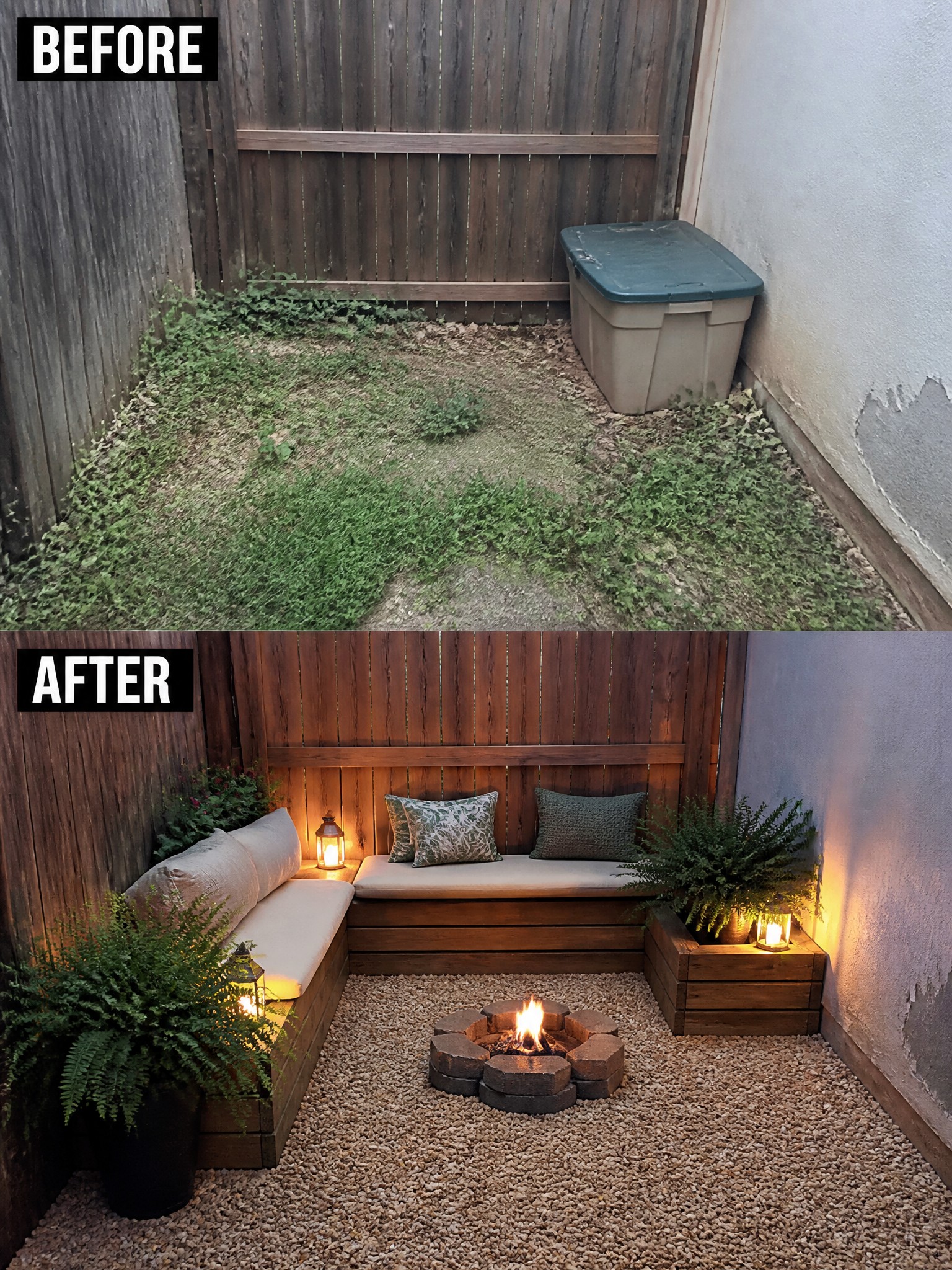
An overgrown side yard or back corner often stays empty because the ground feels messy and undefined. Laying gravel across the area gives it a clean base that instantly makes the space feel usable, while a few large planters add structure and keep plants contained without needing new beds.
This idea suits narrow yards or awkward corners where a full patio would be too much work. Place the planters first to mark the edges, then fill the middle with gravel so the seating zone stays clear and the whole spot feels planned rather than leftover.
Add Structure With Raised Planters And Gravel Paths
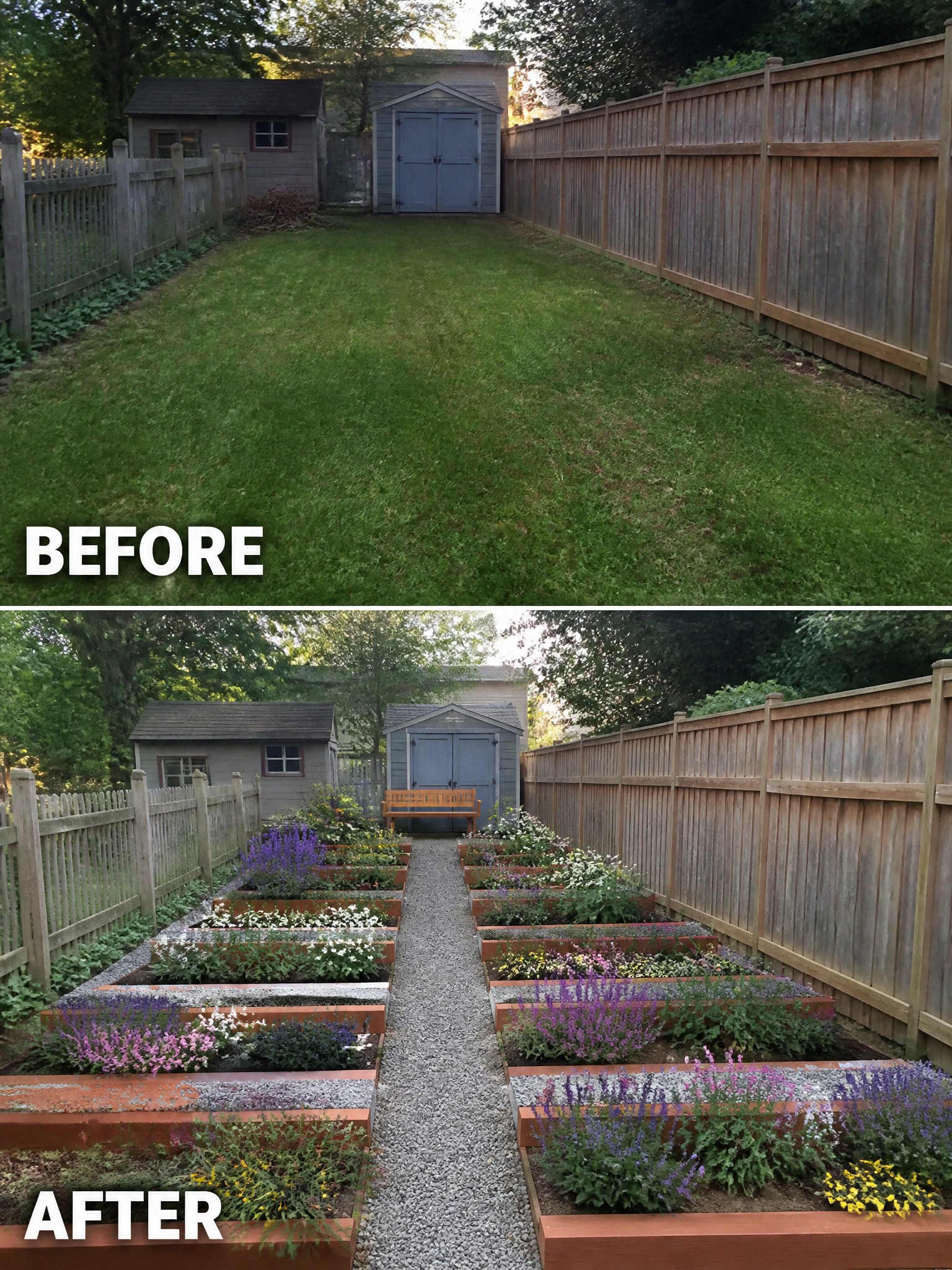
A large open lawn can feel unfinished when there is no clear way to use the space. Adding rows of raised planters with a central gravel path turns the area into a working garden that is easier to maintain and more pleasant to walk through.
This idea suits long or narrow yards where you want planting space without losing the ability to move around. Place the beds in straight lines first, then add the path so the layout stays simple and the plants have room to grow without crowding the walkway.
Use Gravel And Planters To Define Space Around Trees
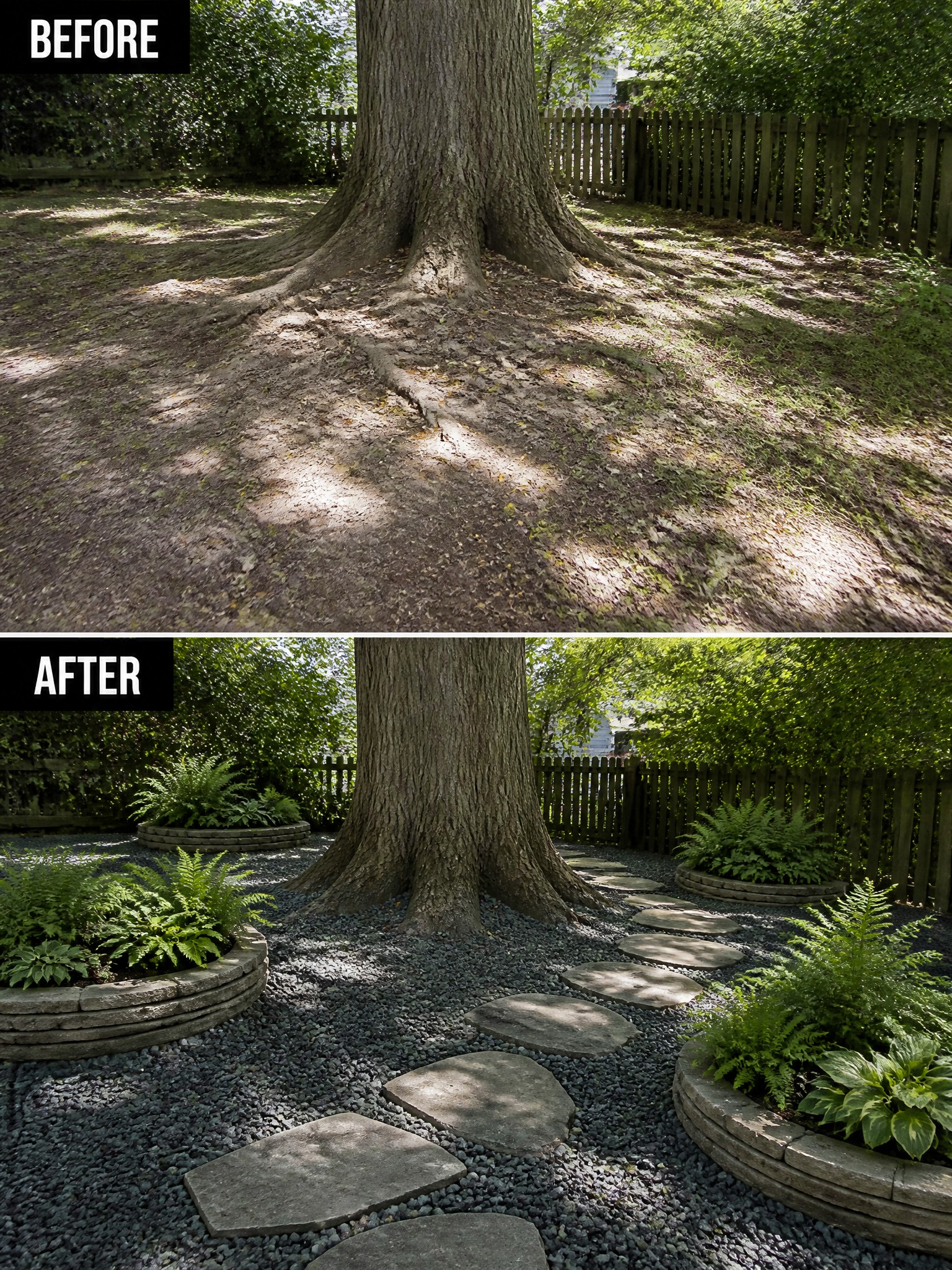
Exposed tree roots often leave a bare patch that is hard to mow and looks unfinished. Laying down gravel creates a clean surface that protects the roots while still allowing water and air to reach them. Adding a few low stone planters around the edges gives the area shape without crowding the trunk.
This idea works best in shady yards where grass will not grow well. Keep the gravel layer thin near the roots, use flexible edging for the beds, and choose shade plants that can handle dry soil. The path through the middle keeps the space easy to walk through even after the plants fill in.
Clean Up A Foundation Bed With Gravel And Planters
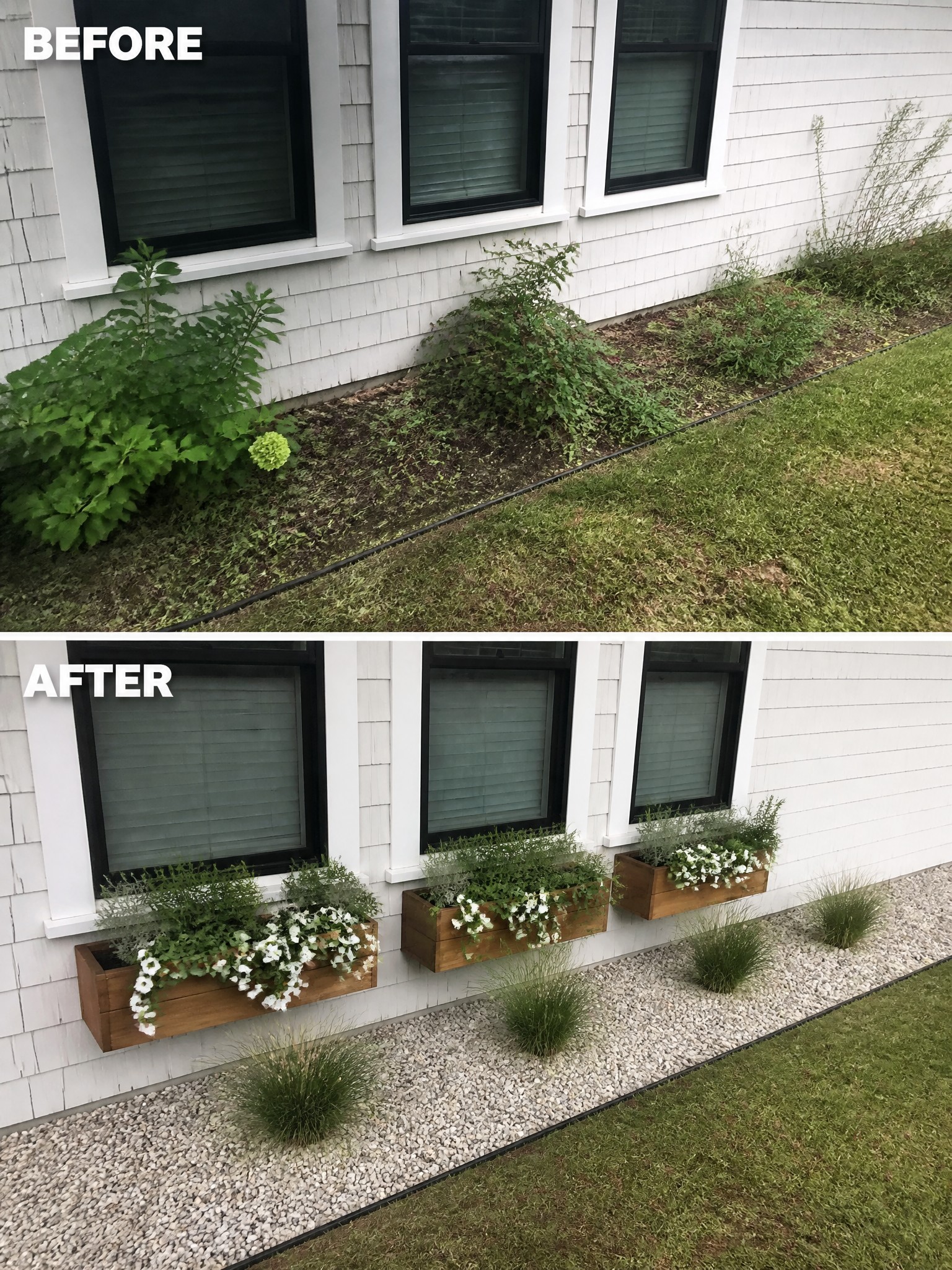
An overgrown strip of weeds right against the house can make the whole side of the yard feel neglected. Switching that area to a narrow gravel bed with a few simple wooden planters gives the foundation a clear edge and keeps the space looking tidy without constant weeding.
This idea works on any home where the planting strip has filled in with random growth. Clear the bed first, add a layer of gravel for drainage and definition, then set planters under the windows with plants that stay contained. It keeps the area low maintenance while still giving the house a finished look along the lawn.
Use Gravel To Shape A Narrow Garden Strip
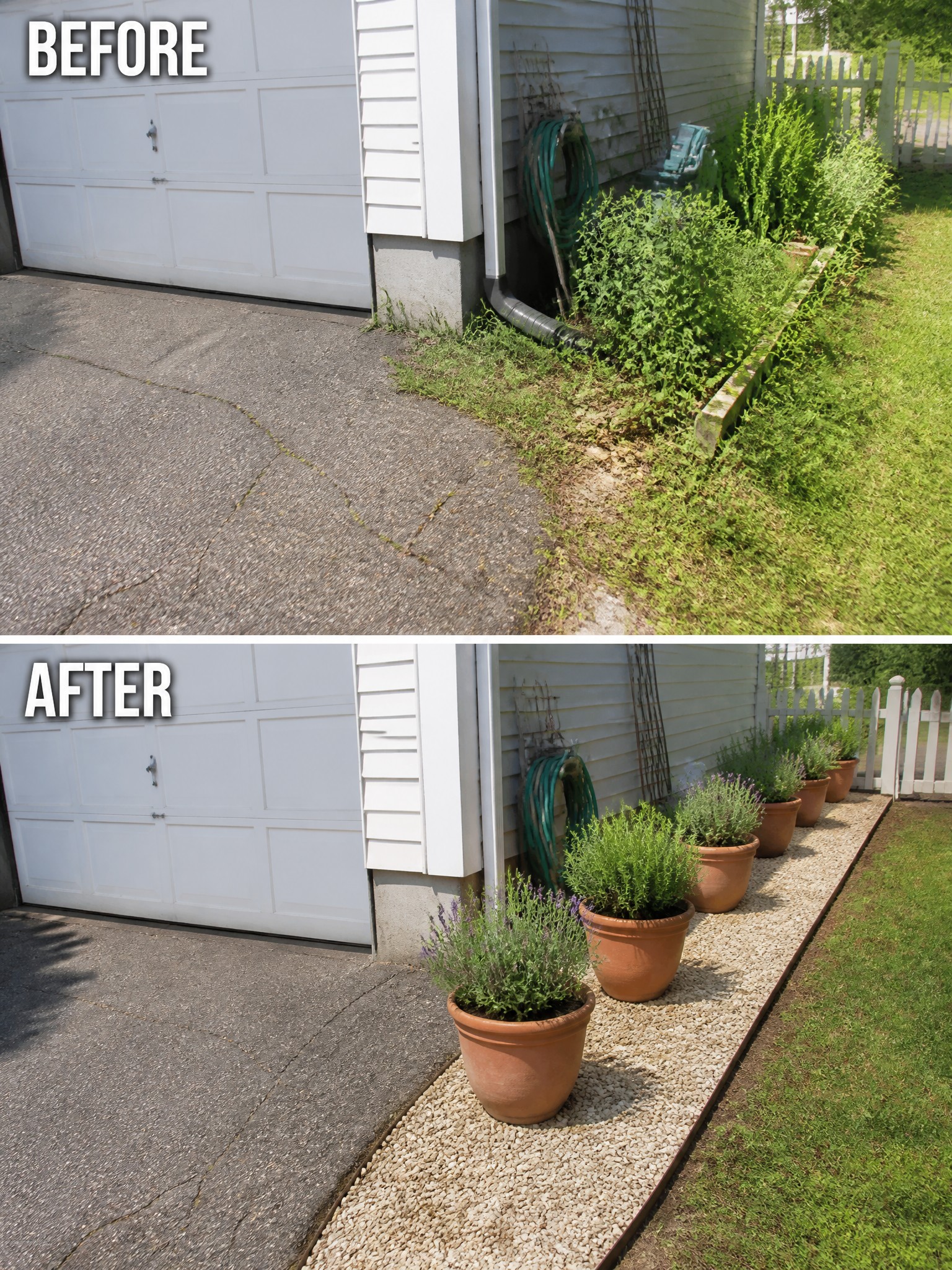
An overgrown strip along the house can quickly look messy and hard to maintain. Laying down gravel creates a clean edge that separates the lawn from the foundation while keeping the area looking intentional instead of neglected. The pots add planting without the need for digging into compacted soil or dealing with constant weeding.
This approach works well on narrow side yards or foundation beds where space is limited. Start by clearing the worst of the overgrowth, then lay landscape fabric and a simple metal or plastic edging before adding gravel. Choose pots in one material and repeat the same plants for a calm, uniform look that stays easy to manage.
Define A Retaining Wall With Planters And Gravel
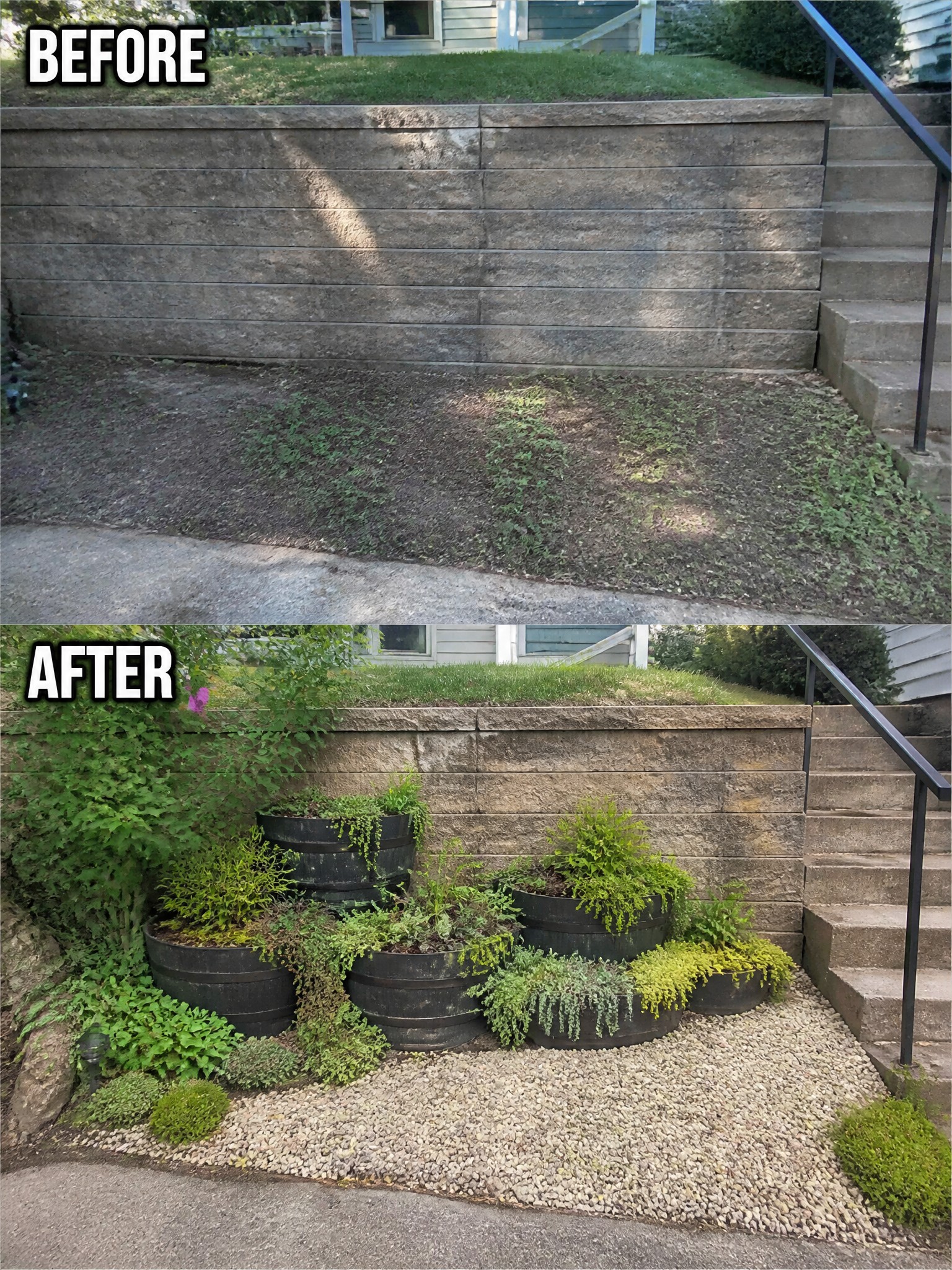
A bare, weedy strip in front of a retaining wall often looks unfinished and hard to maintain. Placing a few large planters along the base and covering the ground with gravel gives the area clear shape and makes the wall feel more intentional without major construction.
This approach works well on sloped lots or narrow side yards where digging new beds is difficult. Start with cleanup, then choose sturdy planters that can handle weather and repeat the same gravel or mulch throughout the space so the whole border reads as one planned area.
Replace Cracked Concrete With Gravel And Raised Planters
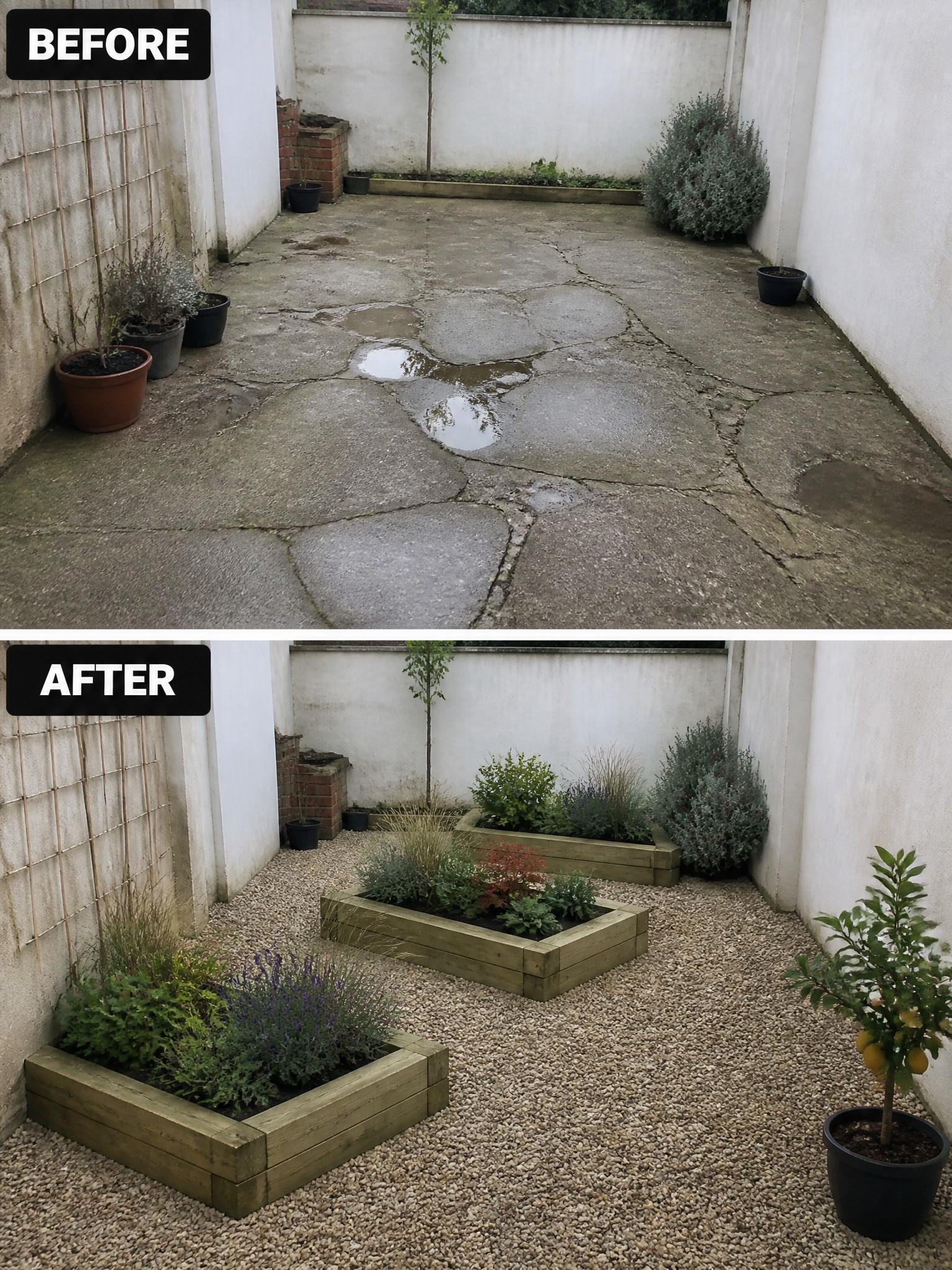
The cracked concrete in the before photo collected water and looked worn out. Covering it with gravel and adding a few wooden raised planters gave the space a much cleaner layout while keeping the budget low.
This approach works well in small yards where you want to hide old paving without major demolition. Start with a weed barrier under the gravel, then place the planters to create simple planting zones. It suits homes with limited outdoor space and helps keep the area low maintenance over time.
Define An Overgrown Garden Bed With Gravel And Planters
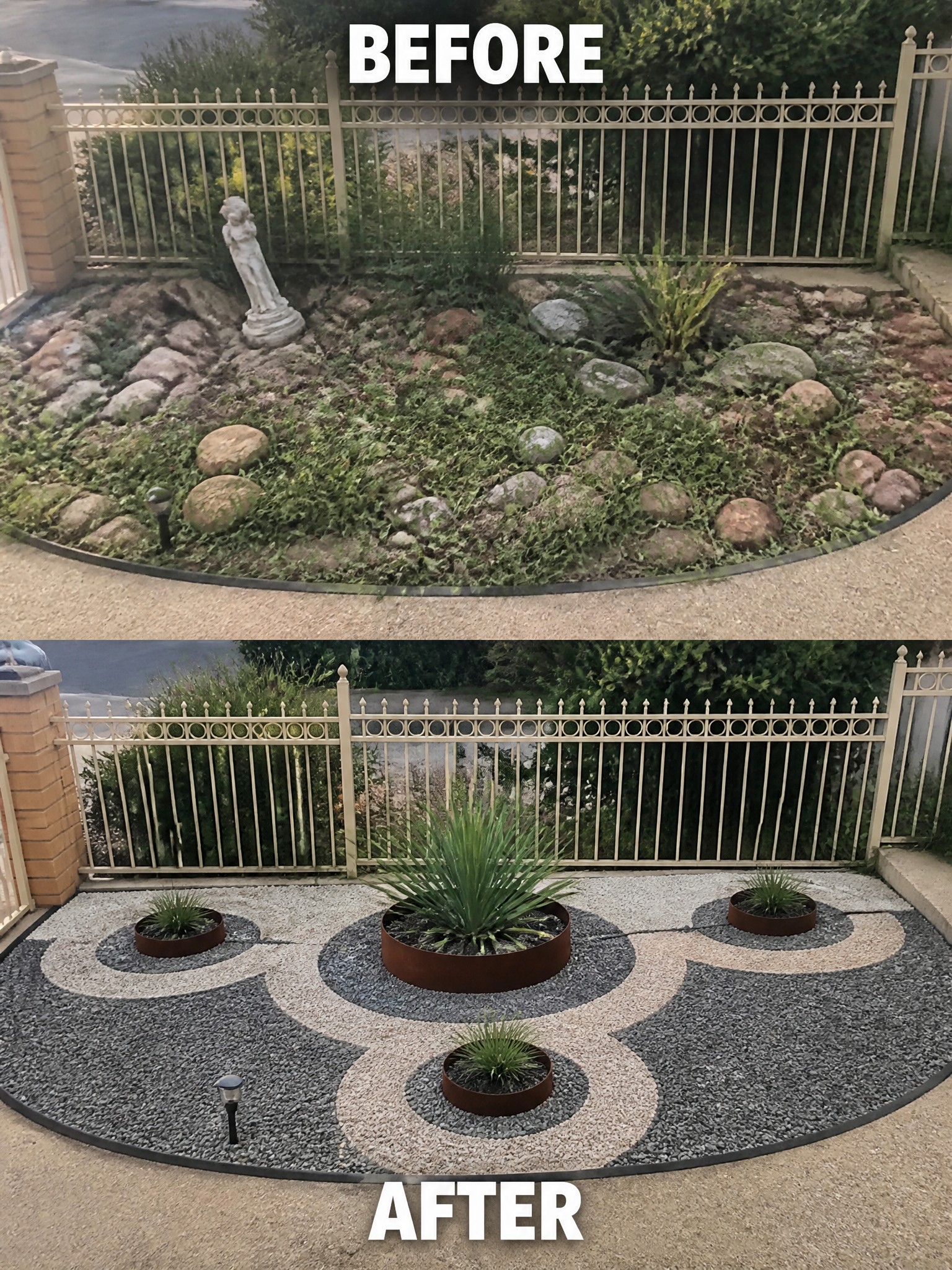
An overgrown patch full of weeds and random rocks quickly starts to look neglected. Switching to a gravel base with a few metal planters arranged in a repeating pattern brings order without adding much cost or work.
This idea suits small front beds or side areas where you want low maintenance but still some structure. Clear the weeds first, lay landscape fabric, then spread the gravel and set the planters in place before adding plants. The circles keep everything contained and make the space feel intentional rather than just filled in.
Replace Lawn With Gravel For A Poolside Seating Area
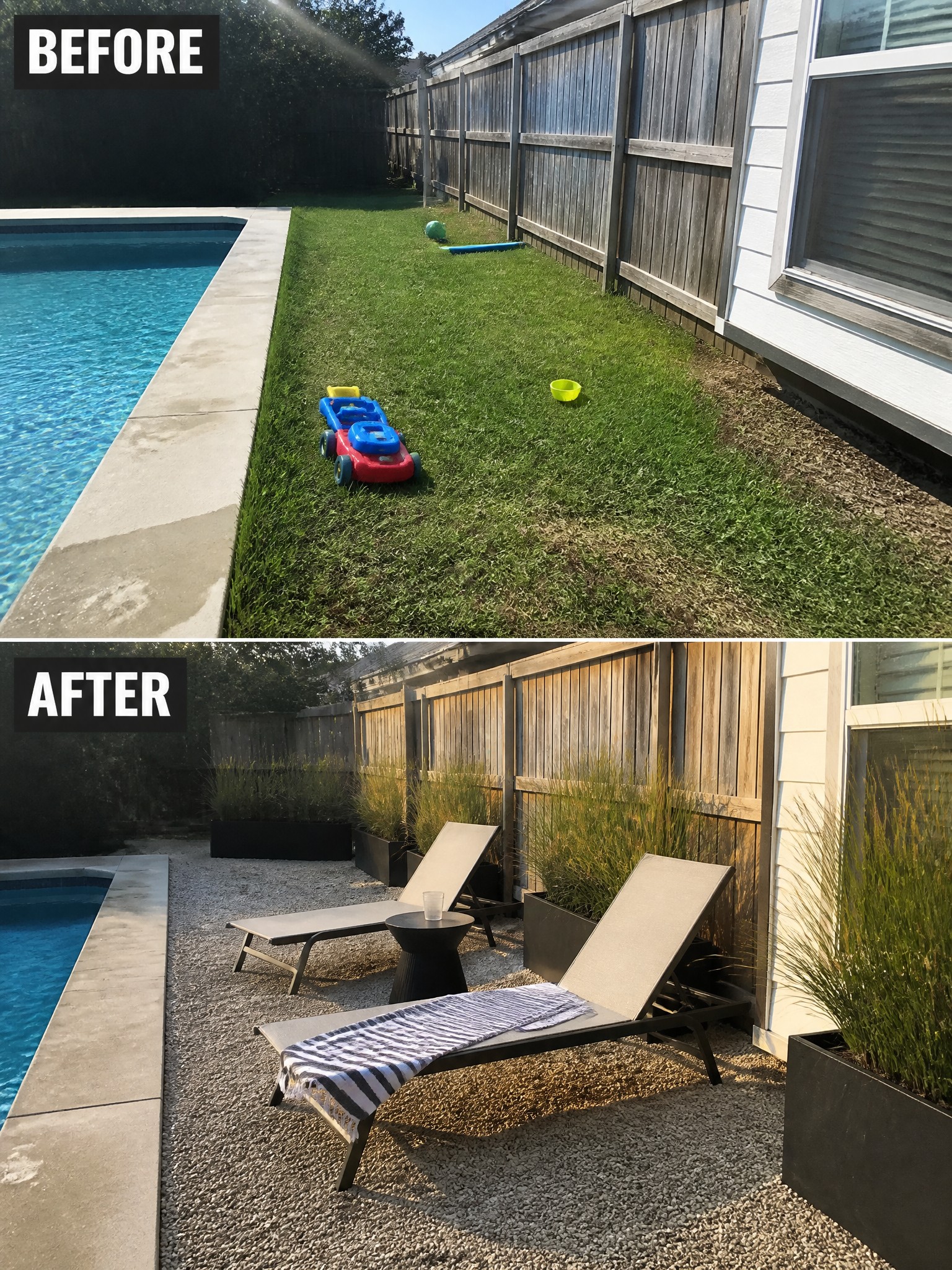
A narrow strip of grass next to a pool often ends up as wasted space or a spot for scattered toys. Switching to gravel creates a firm, low-maintenance surface that supports lounge chairs and keeps the area usable year-round. The addition of tall planters along the fence gives the space clear edges and softens the hard surfaces without taking up much room.
This approach works best in side yards or pool edges where grass is hard to mow and drainage can be an issue. Keep the gravel layer thick enough to stay in place and choose planters that match the scale of the fence so the seating area feels balanced rather than cramped.
Use Gravel And Planters To Shape A Front Walkway
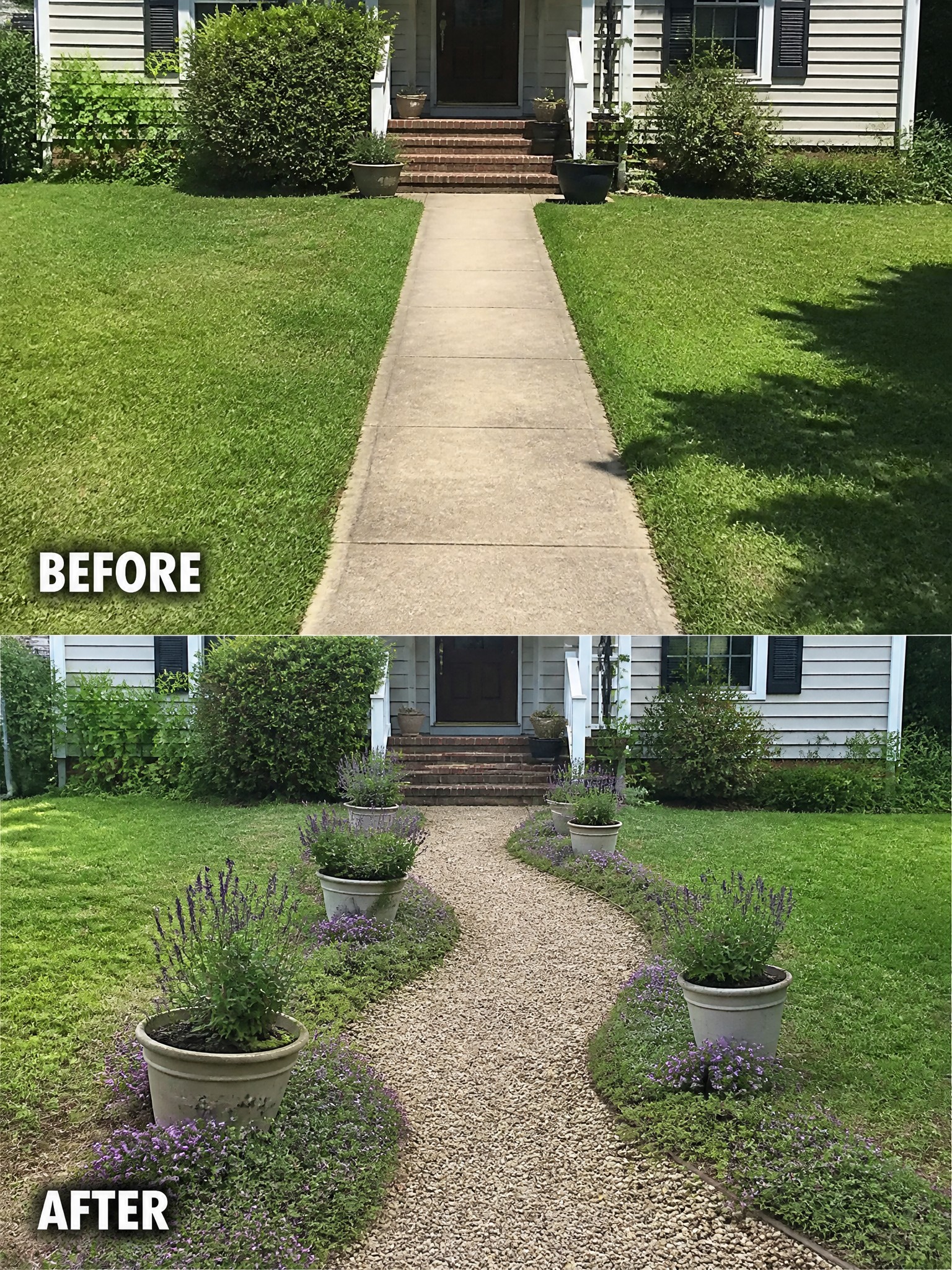
A straight concrete path often makes the front yard feel plain and narrow. Switching to gravel lets the walk curve gently and gives the space a softer edge. Lining both sides with large pots adds height and breaks up the open lawn without digging permanent beds.
This idea suits homes with basic entry walks where you want more structure on a budget. Lay down a weed barrier first so the gravel stays clean, and stick with the same few plants in matching pots on each side. That keeps the look simple and balanced instead of scattered.
Use Gravel And Planters To Refresh A Narrow Side Passage
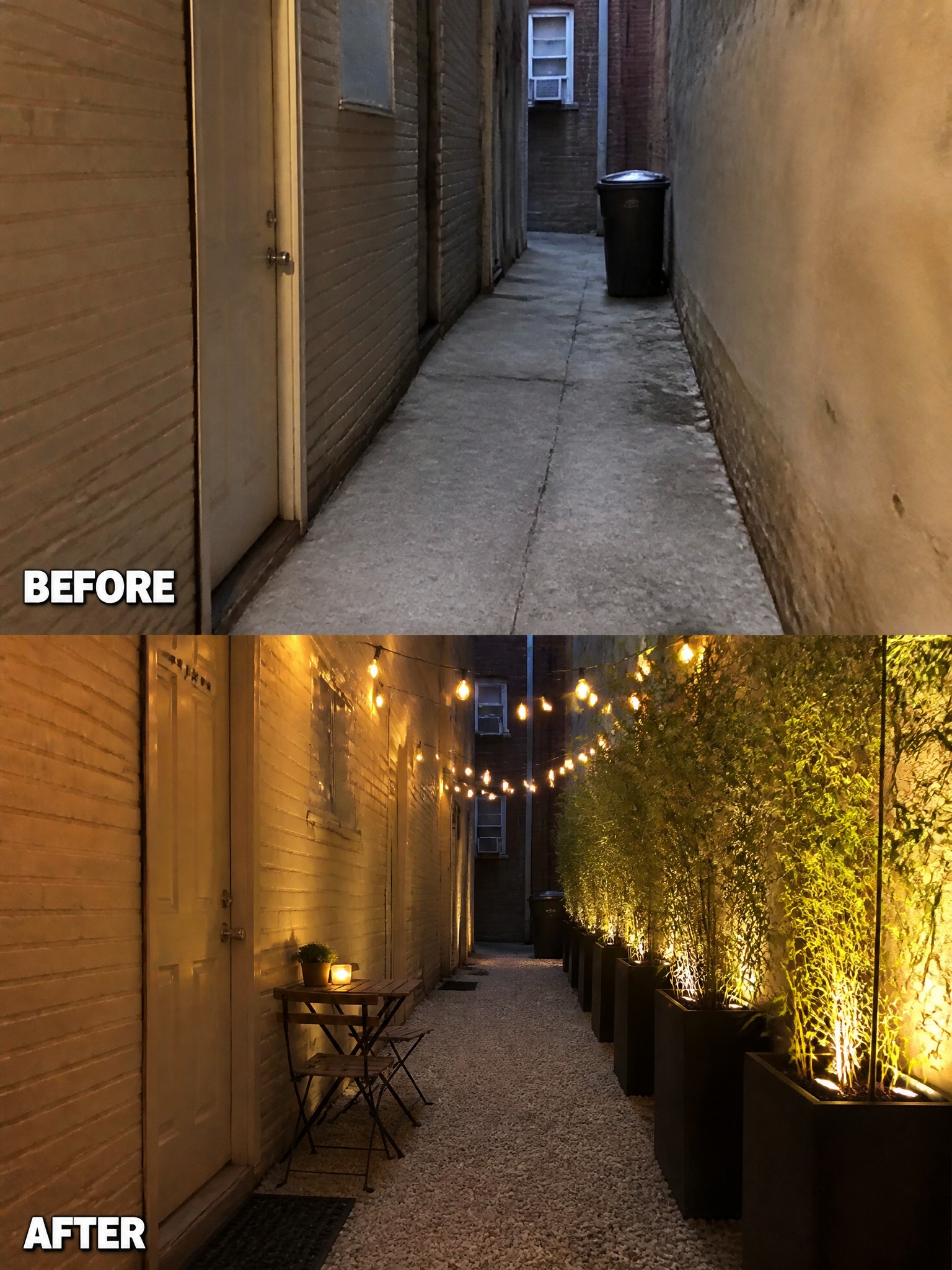
A narrow alley often stays bare because the space feels too tight for normal garden beds. Laying gravel over the concrete gives the ground a finished look while a row of matching planters brings height and greenery without crowding the walkway.
This idea suits urban homes or townhouses where the side passage needs to feel intentional rather than neglected. Keep the planters uniform in size and color, and choose plants that tolerate shade and wind. The gravel also improves drainage and makes the area easier to maintain over time.
Use Gravel And Planters To Give A Narrow Bed Structure
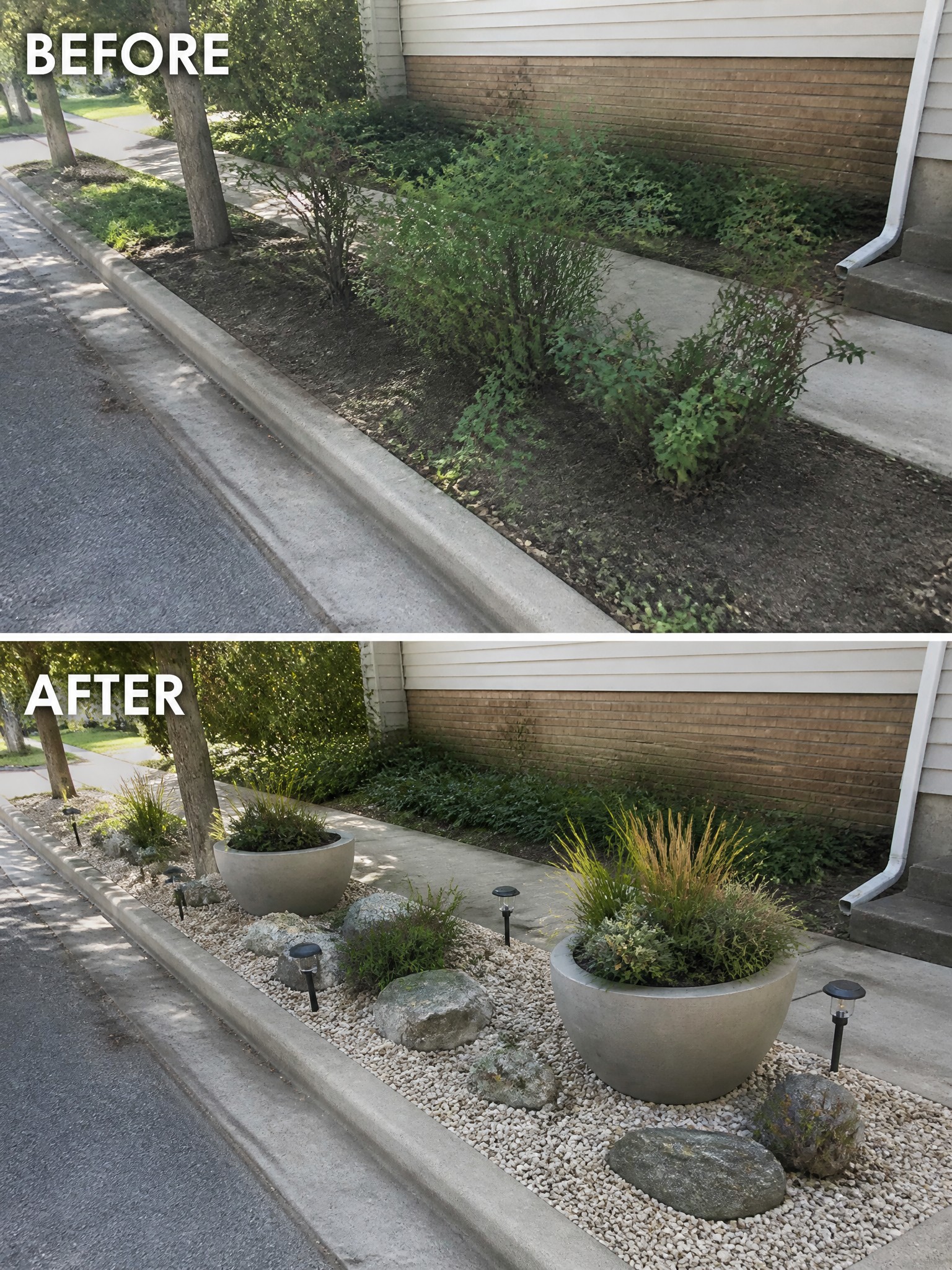
An overgrown strip right along the sidewalk often ends up looking messy because the plants have no clear boundary. Replacing the thick shrubs with gravel and a couple of large planters instantly creates edges and keeps the area from spilling onto the path.
This idea works best on narrow beds where you want low upkeep and a finished look without adding dozens of small plants. Use one or two oversized planters as anchors, spread gravel to cover the soil, and add a few rocks to hold everything in place. It suits homes where the foundation planting needs to stay simple and tidy year after year.
Add Structure To An Overgrown Backyard
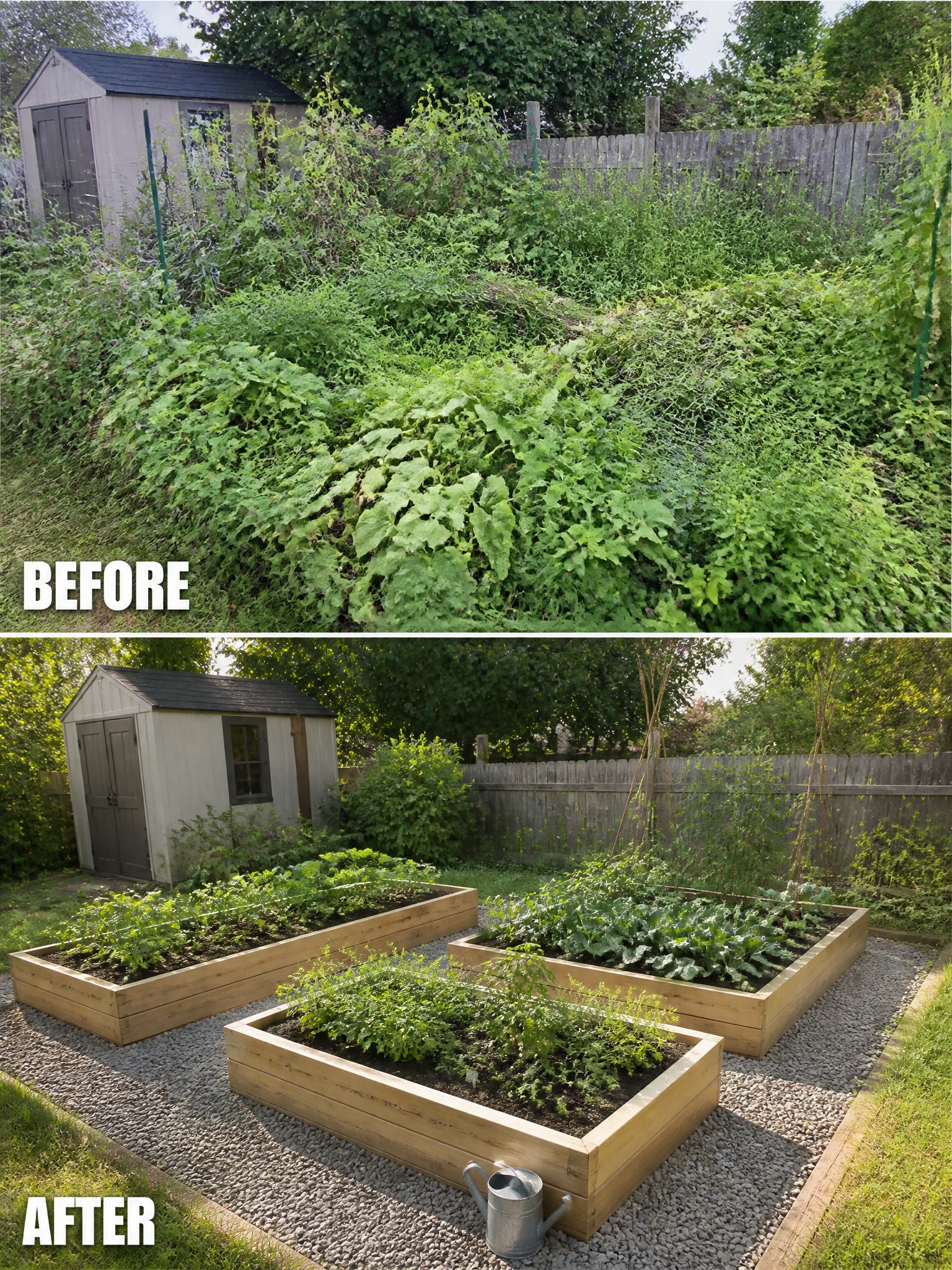
An overgrown yard quickly becomes hard to use when vines and weeds take over everything. Raised wooden beds paired with a gravel base gave this space clear growing areas that stay contained and easy to walk around.
The same idea works in many small backyards where you want vegetables or herbs without constant weeding. Clear the worst growth first, set the beds where you can reach them comfortably, then add gravel so paths stay dry and the whole layout feels planned rather than scattered.
Use Gravel To Create A Clean Work Zone
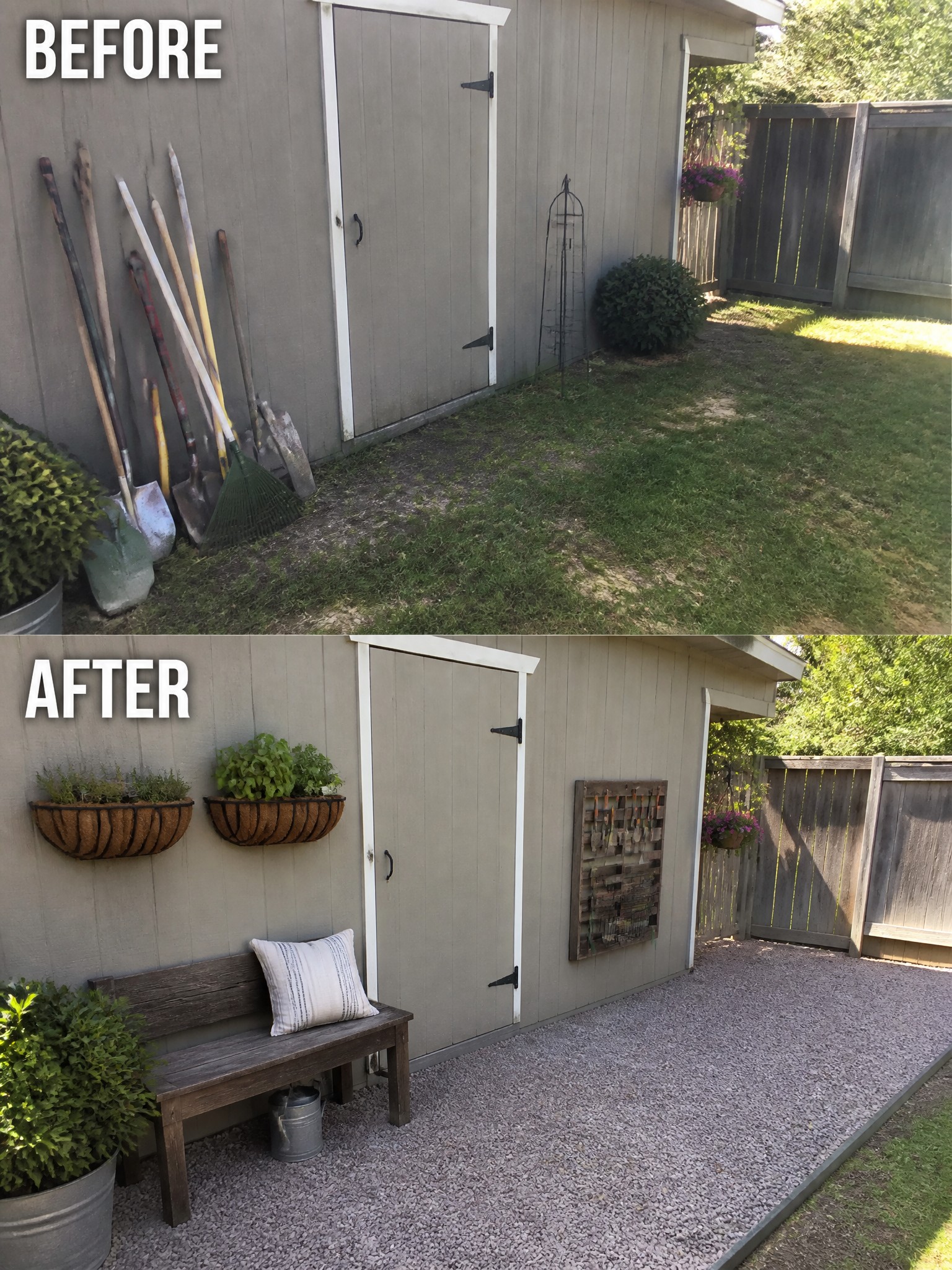
A messy shed side with tools scattered on the ground can feel like wasted space. Laying down gravel gives the area a solid surface that stays dry and easy to walk on, while a few wall planters and a simple bench turn it into a spot you can actually use.
This approach works well behind a shed or along a fence where you need room to move tools without tracking mud. Start with the gravel base first, then add planters at eye level and a board for hanging smaller items. Keep the layout open so you still have space to work.
Define A Narrow Border With Gravel And Planters
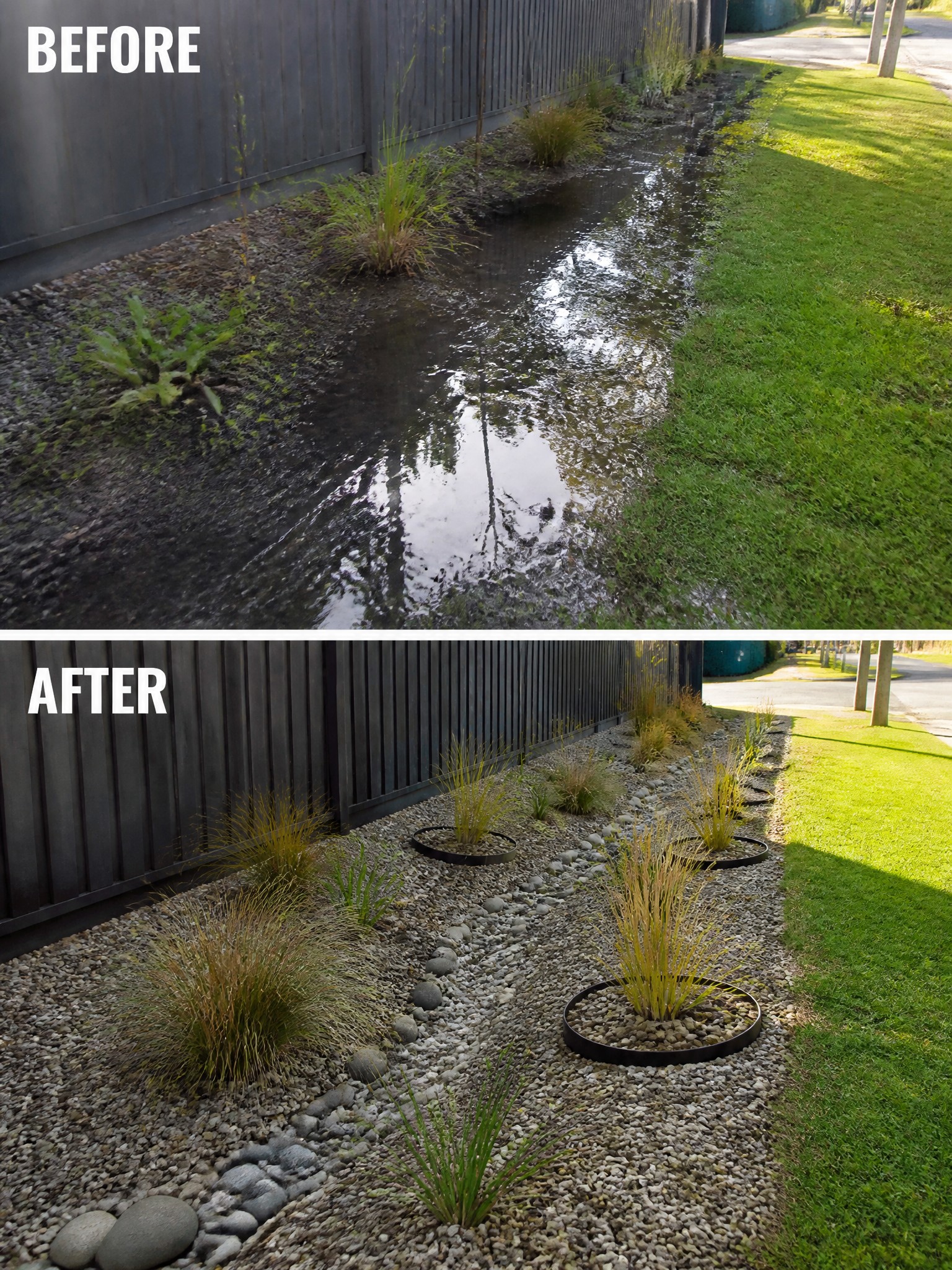
A long wet strip next to a fence often stays messy because water sits and weeds take over. Switching to gravel gives the area a firm base that drains better, while the ring planters keep the grasses contained and easy to manage. The result looks intentional instead of neglected.
This approach works well along fences or house walls where space is tight. Start by clearing the mud and leveling the ground, then lay landscape fabric before adding gravel. The circular planters let you move plants around if needed and keep maintenance simple in a spot that gets little foot traffic.
Frequently Asked Questions
Q: How do I stop weeds from popping up in the gravel? A: Spread landscape fabric across the ground first. It blocks most weeds and holds the gravel steady without adding much work.
Q: Can I use cheap plastic planters without them looking out of place? A: Paint them to match your fence or house trim. This makes them blend into the gravel setup right away.
Q: What happens if rain pools around the planters? A: Set each planter on a couple of bricks to lift it slightly. Water drains off instead of sitting at the base and rotting the roots.
