

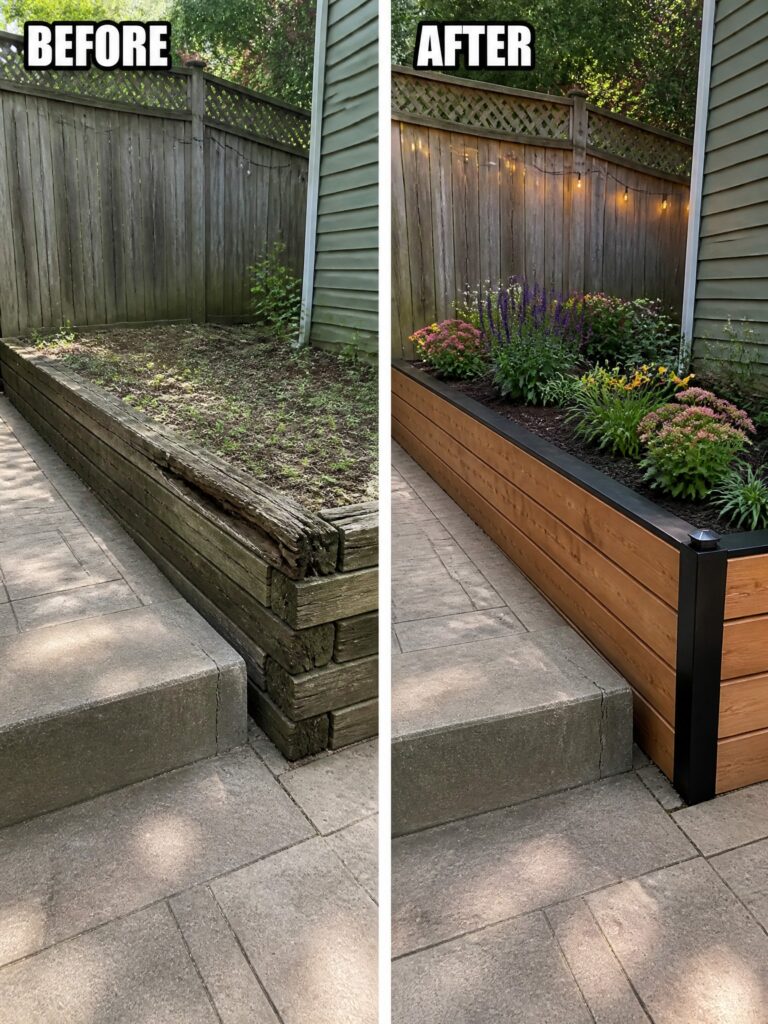
Raised flower beds often lose their shape once the borders wear down and the soil starts to spread into the surrounding grass.
I have found that adding a simple frame keeps the planting area neat and makes it easier to reach everything without stepping on the plants.
Building one or two at a time works better than trying to fix the whole garden at once.
The added height also helps with drainage and gives me a clear spot to add compost each season without it washing away.
Over time those steady edges make the yard feel more organized even when I only work on one corner at a time.
Replace Old Timbers With Raised Garden Beds
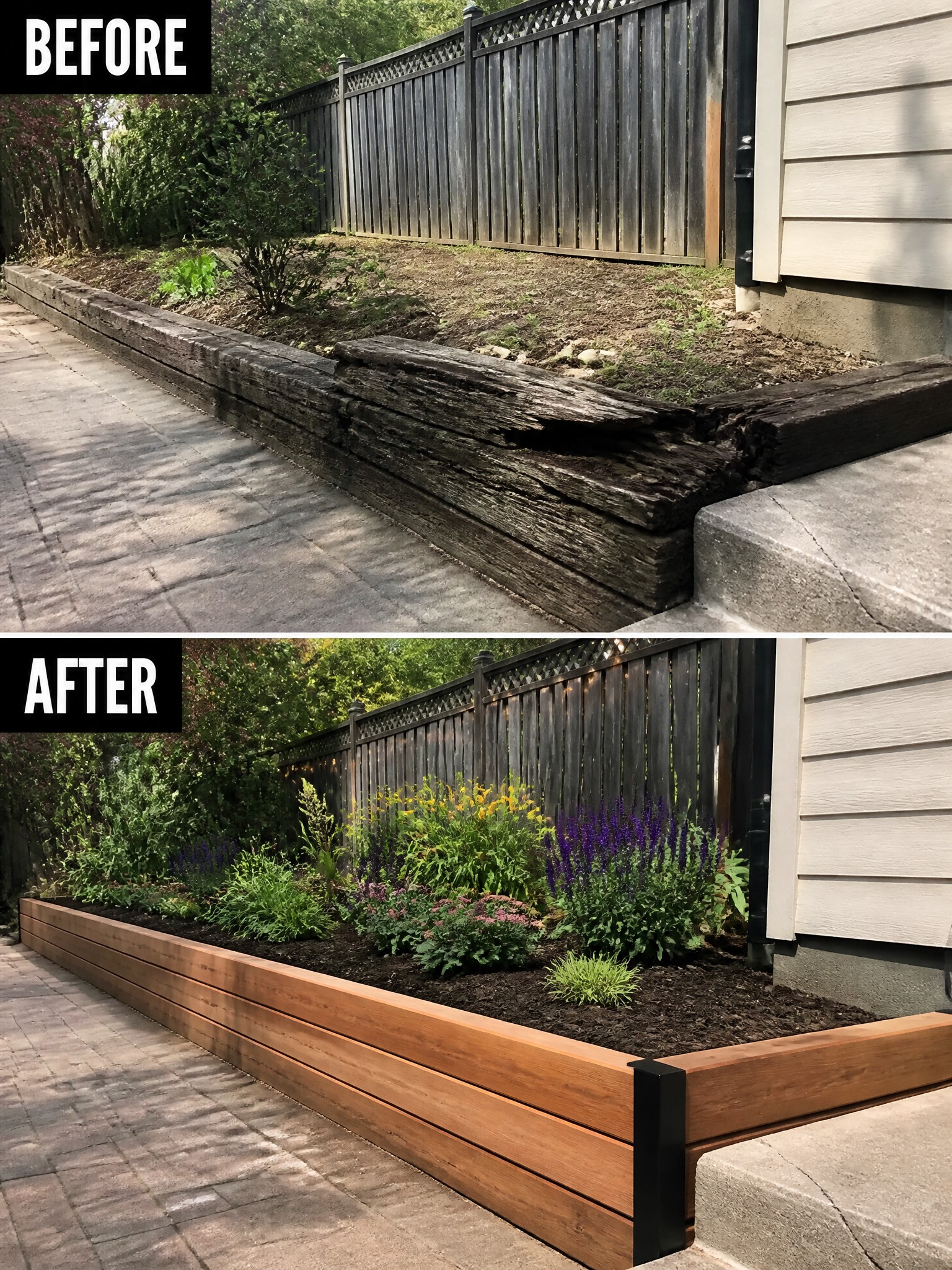
Old wooden timbers often rot and shift over time, leaving a border looking uneven and neglected. Switching to raised beds gives the same area clean lines and a solid frame that holds soil and plants in place without constant repairs.
This approach works well along fences, walkways, or house foundations where you need height and structure. Start by removing the old material, then build simple stacked beds from pressure-treated lumber or composite boards. Keep the planting simple at first so the beds themselves stay the main feature.
Add Structure To An Overgrown Backyard
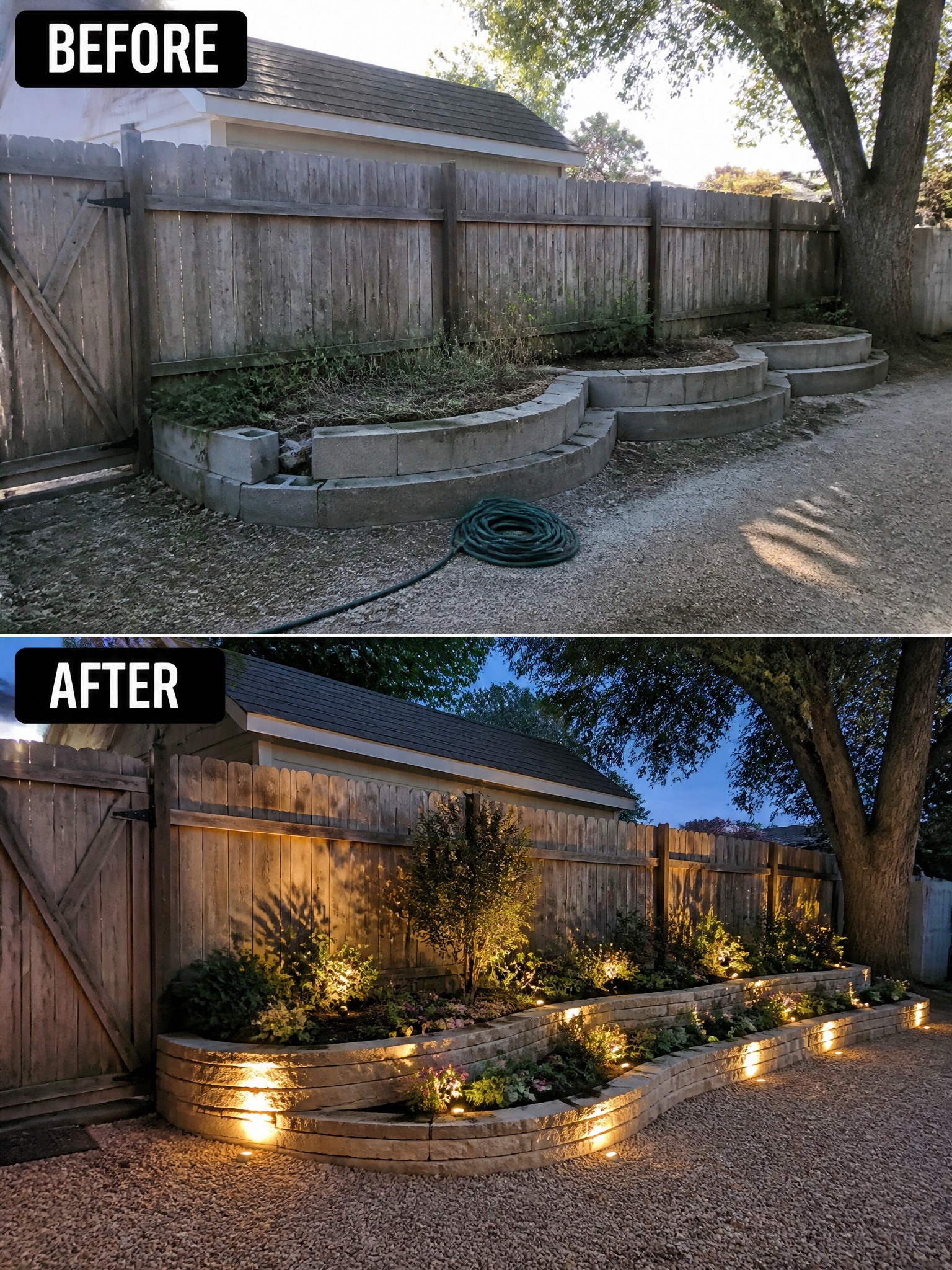
The main improvement came from replacing loose blocks and weeds with solid, curved raised beds that follow the slope. This single change turned a scattered patch into a garden that actually holds its shape.
Raised beds like these work best along fences or on uneven ground. Start with the edging first, then add a few low lights along the front so the beds stay visible after dark without extra fixtures.
Use A Raised Bed To Give A Front Border Better Structure
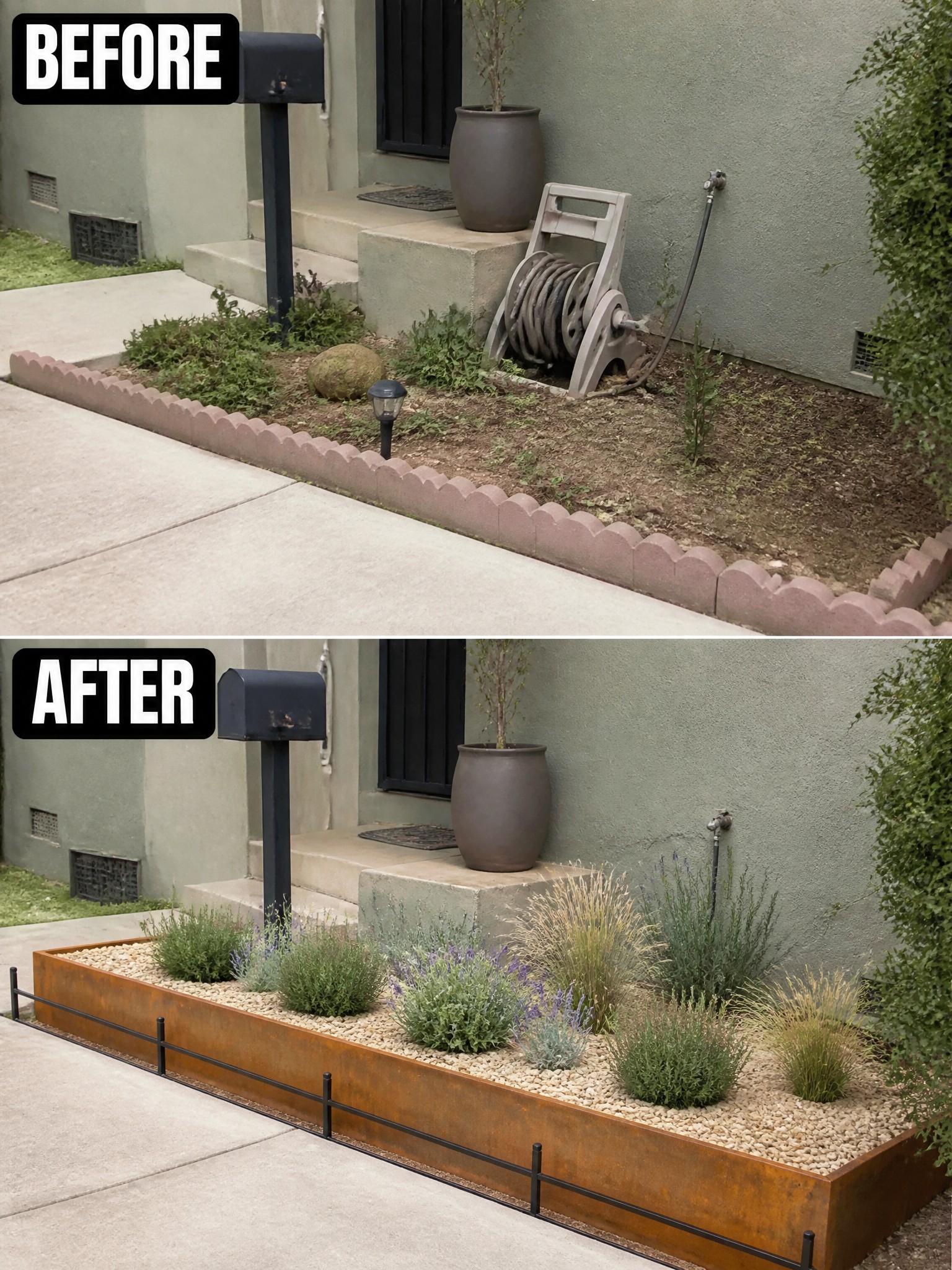
A front border that sits right along the house often turns into a messy strip of dirt and random plants. A raised bed fixes this by giving the space a solid frame so it stops looking like leftover ground and starts looking like a planned part of the yard.
This idea works especially well on narrow areas between the sidewalk and the house. Use gravel inside the bed to keep weeds down, then plant in simple groups rather than scattering everything. The result stays neat with far less upkeep.
Add A Raised Planter Box For Better Structure
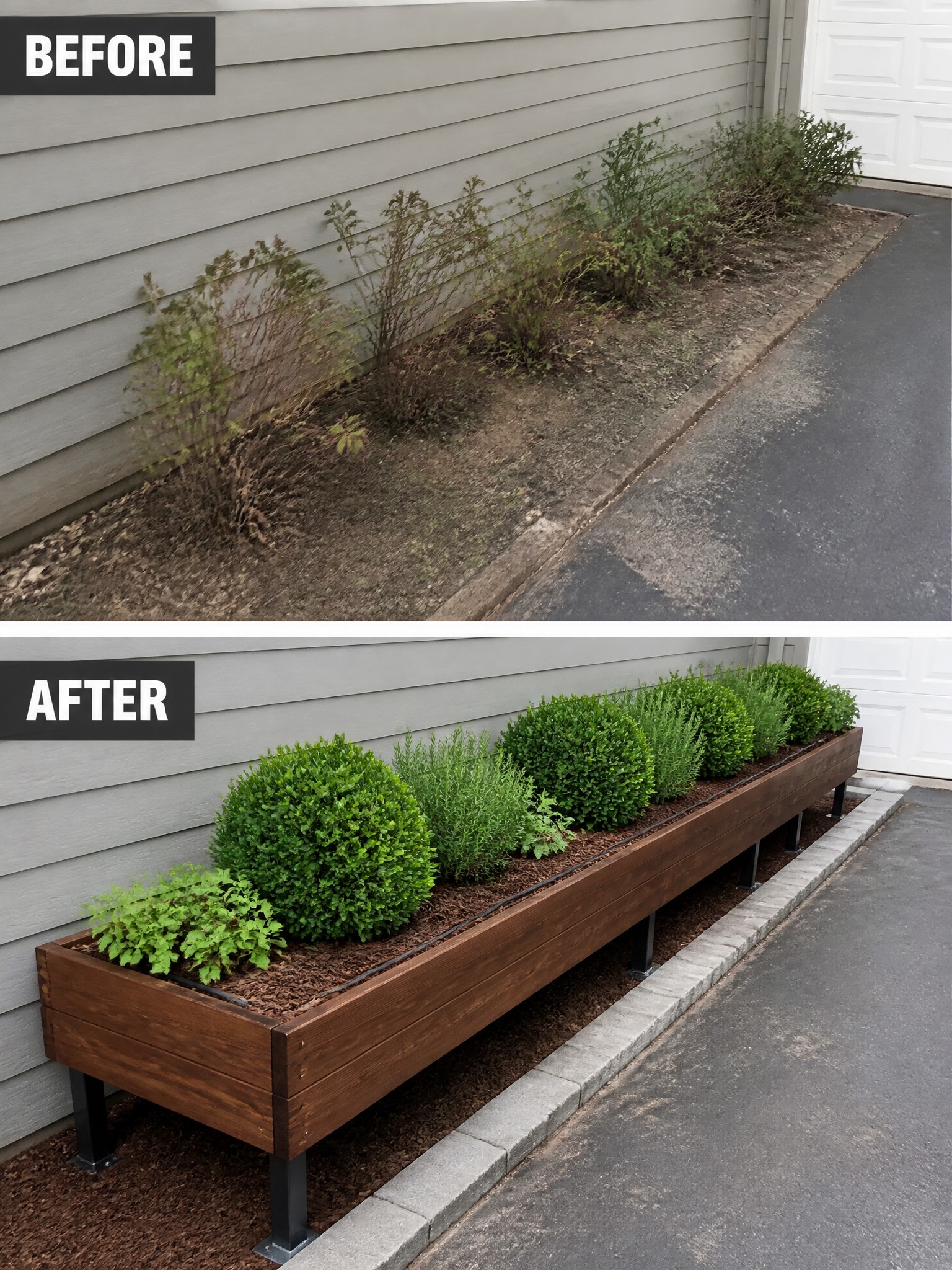
A long, messy strip of plants along the house often ends up looking neglected because there is no clear edge or height to the bed. Raising the whole planting area into a simple wooden box gives the space a defined shape that stays neat even as the plants grow.
This approach works well along driveways or side yards where the ground slopes or the soil stays bare. Keep the box low enough to match the scale of the house and use a few repeated shrubs inside it so the look stays orderly instead of crowded.
Build Raised Beds That Include Seating
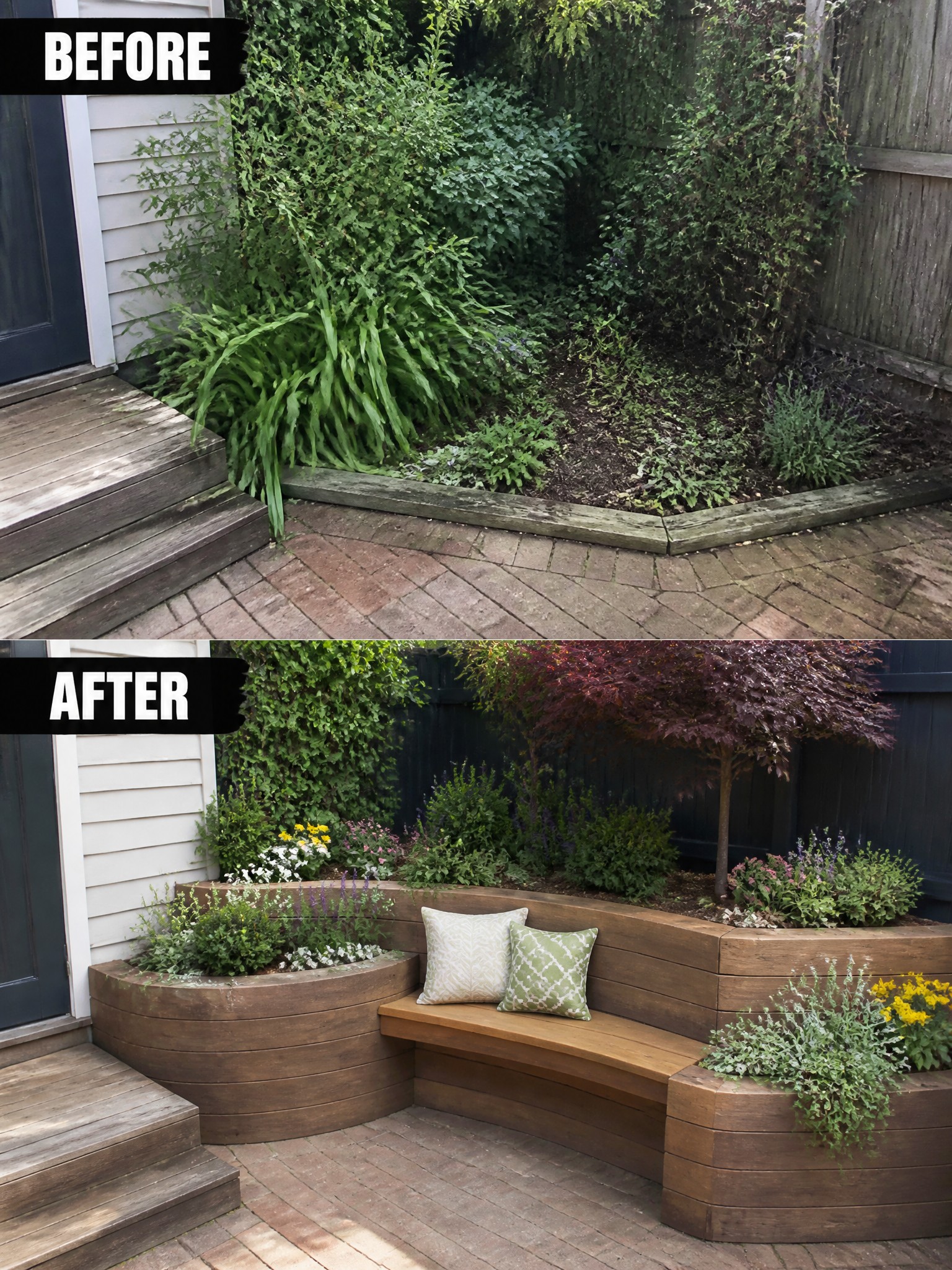
One useful way to fix an overgrown corner is to add raised beds that also create seating. The messy planting was cleared out and replaced with curved wooden beds that wrap around the space and form a bench right where people can actually sit.
This idea works best along a deck or patio where you need both planting room and a place to relax without adding separate furniture. Build the beds at a comfortable sitting height and use sturdy wood that can handle weather so the structure lasts.
Use Raised Beds To Add Structure To A Slope
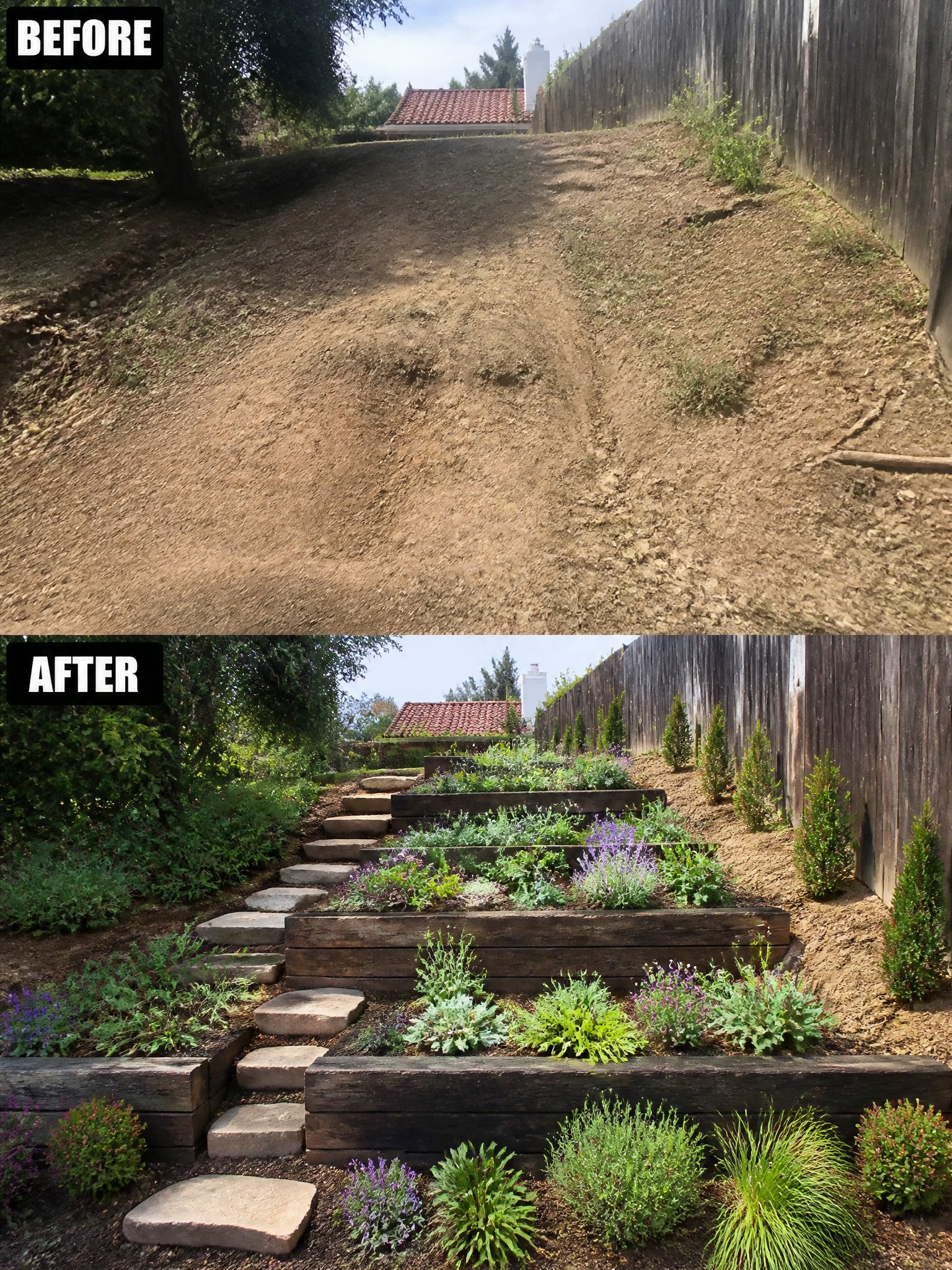
A bare dirt slope is hard to use and even harder to maintain. Raised beds solve this by turning the hill into level planting areas that stay in place and give the garden clear shape. The wooden frames and simple stone steps shown here make the slope feel intentional instead of neglected.
This approach works well on any noticeable grade where you want planting space without constant erosion or awkward mowing. Start with the largest bed at the bottom, work upward, and keep paths wide enough to walk and weed comfortably. The beds also let you control soil quality on ground that may be poor or compacted.
Raise A Flower Bed With Brick Edging For Better Structure
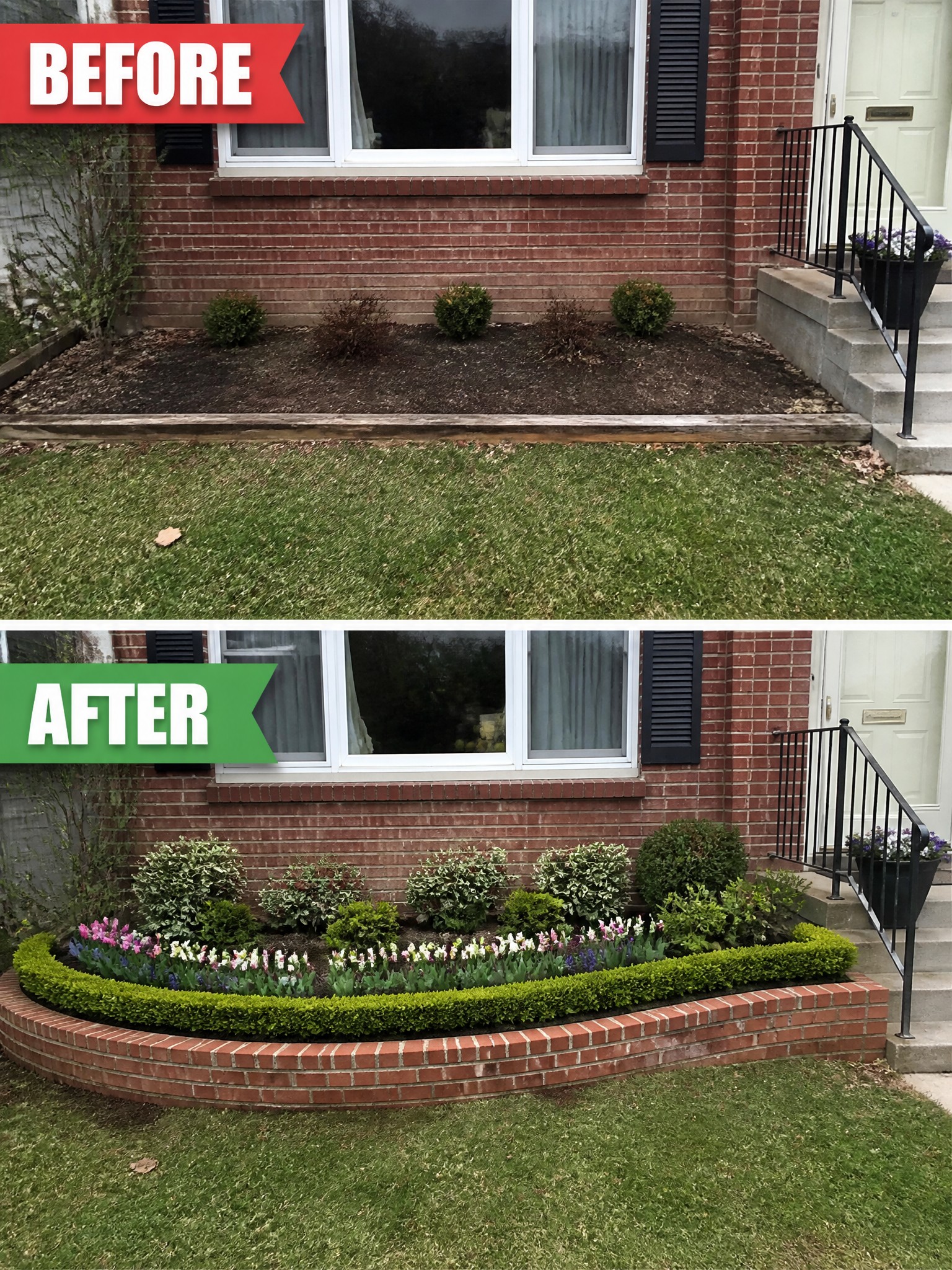
A flat strip of soil along the house often looks unfinished, even after mulch and a few shrubs go in. Adding a low brick border turns that same area into a raised bed that holds soil in place and gives the planting a clear edge. The change shows up right away in how the bed sits higher and stays neat against the lawn.
This approach works well on older homes where the foundation planting has lost its shape. Keep the border low so it does not block windows, and use the extra height to layer smaller plants in front and taller ones behind. The brick also makes future weeding and mulching simpler because the bed has a firm line to follow.
Add Structure To An Overgrown Raised Bed
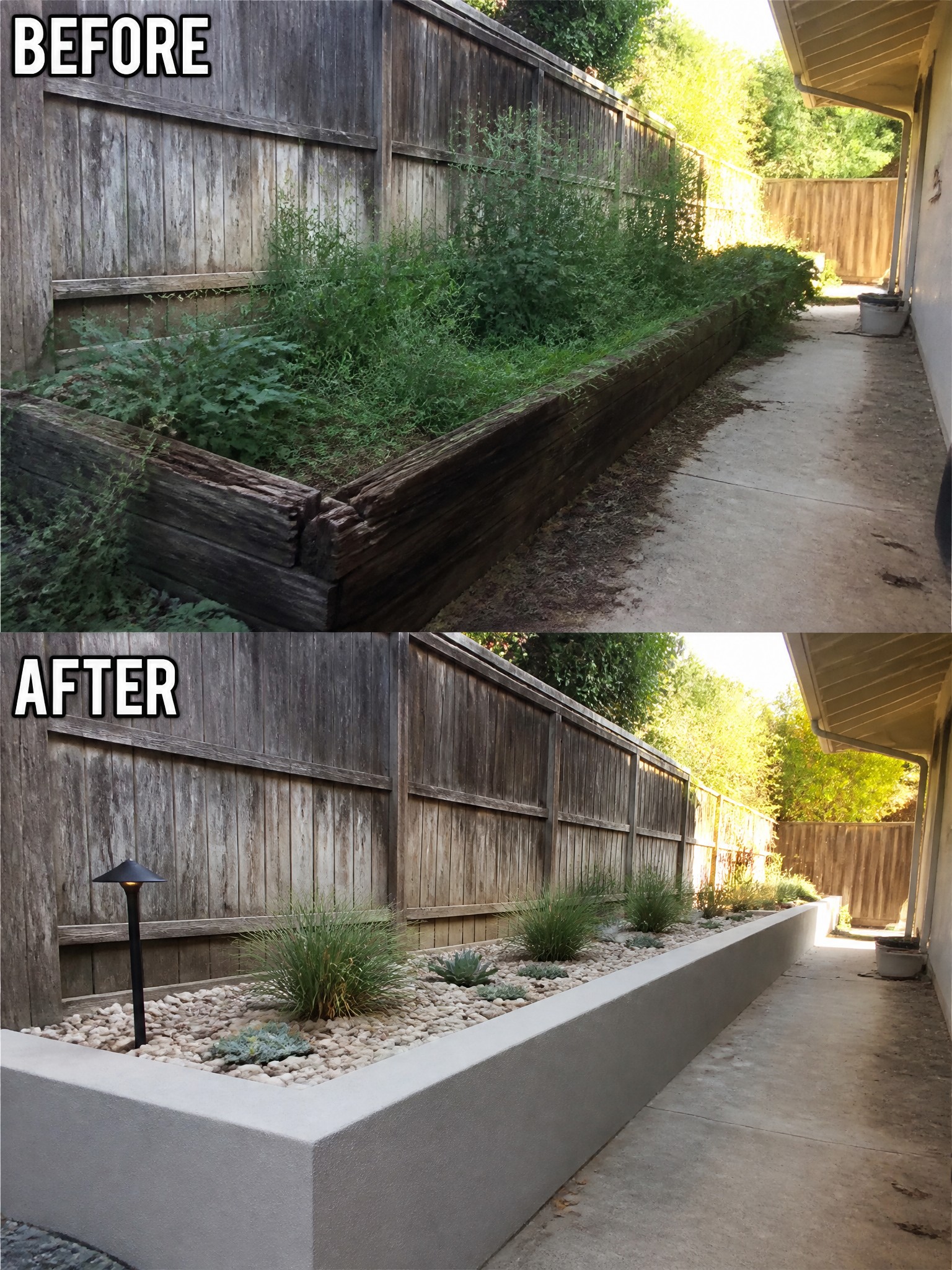
An old wooden raised bed often ends up looking messy once the wood starts to rot and weeds take over. Switching to a concrete version with a gravel base gives the bed a solid edge that stays in place and keeps the planting area looking intentional instead of neglected.
This approach works well along fences or narrow side yards where you want low maintenance. Remove the old wood first, then set the new bed slightly higher so water drains properly and the gravel stays contained.
Add Raised Beds Along The Curb For Better Structure
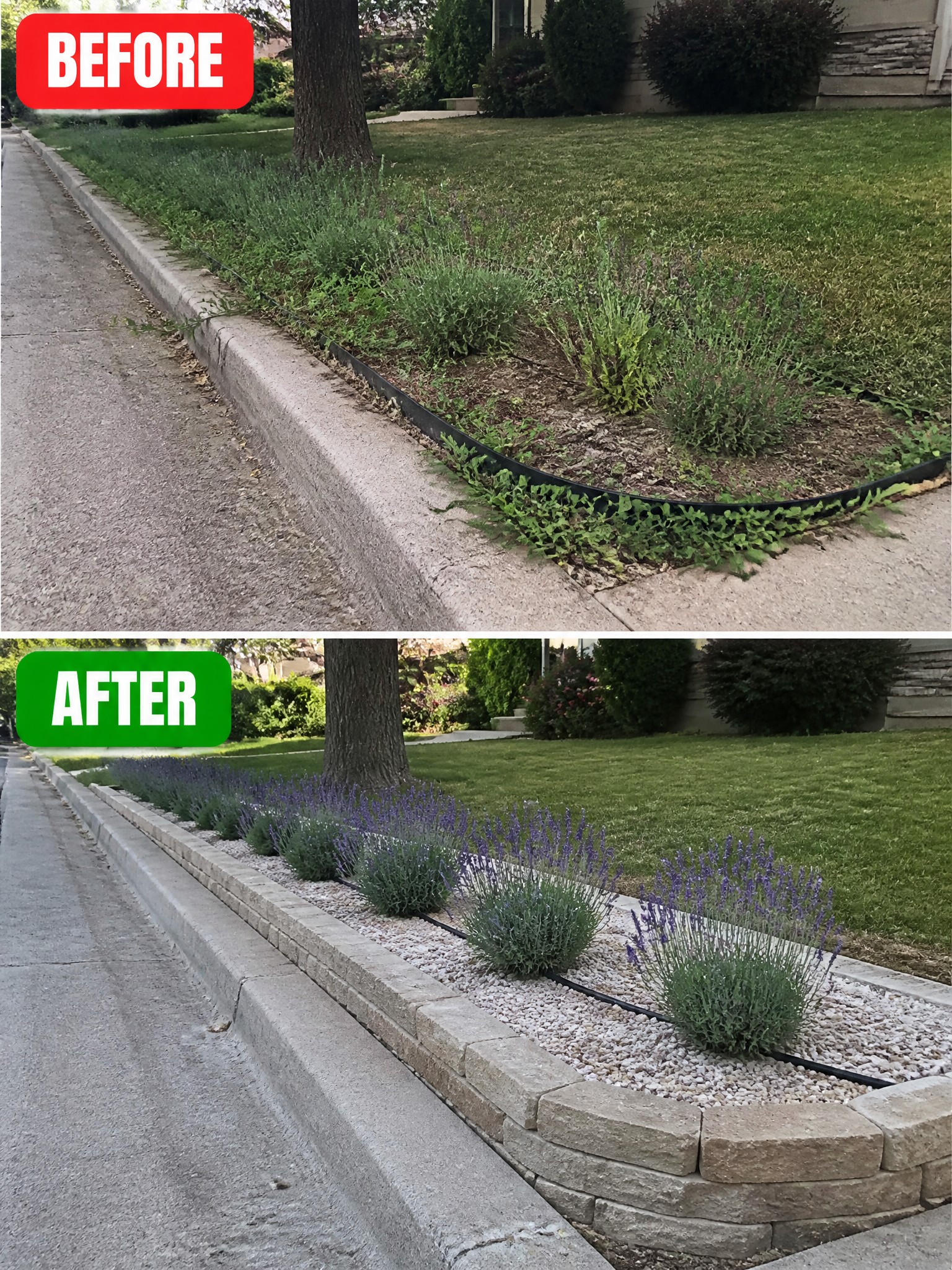
The before photo shows a messy strip of weeds and uneven plants pushing against the sidewalk with no clear edge. The after shows a low stone wall that lifts the bed, adds gravel, and holds a row of lavender in place. That one change turns a neglected border into something that looks planned and stays contained.
Raised beds work best along streets or driveways where grass or weeds tend to creep in. Keep the wall low so it does not block views, and use gravel inside to reduce weeding. This approach suits homes with straight curbs and gives you a simple way to add structure without a full yard overhaul.
Add A Raised Bed To Structure A Narrow Planting Strip
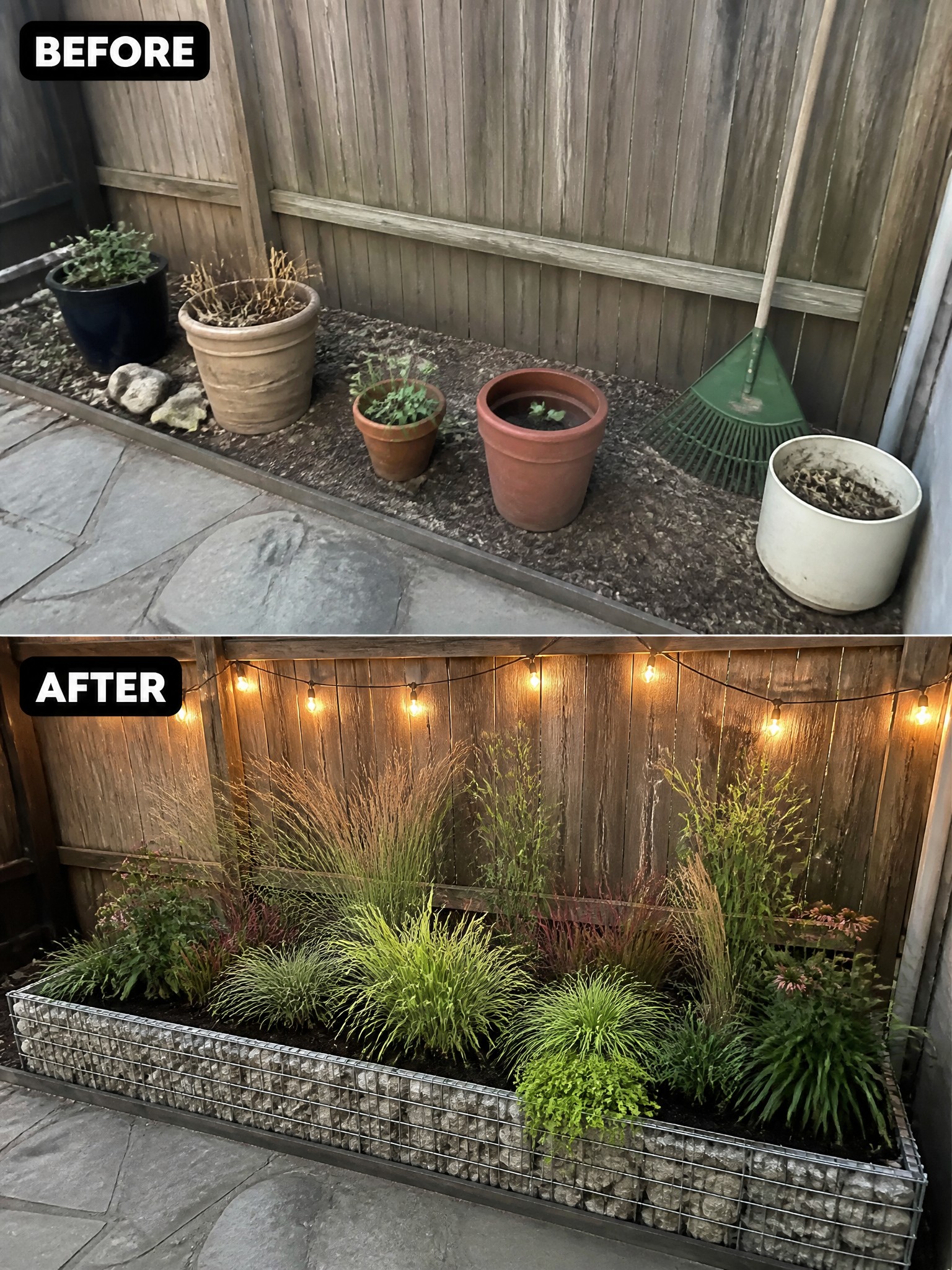
A row of loose pots and bare soil along a fence rarely feels intentional. Replacing them with one long raised bed gives the space clear edges and makes the plants look like they belong together instead of sitting in random containers.
This approach works well in side yards or tight borders where space is limited. Choose a simple material like wire and stone for the sides, fill it with good soil, and keep the planting simple so the bed stays easy to maintain over time.
Add Structure To A Neglected Flower Bed
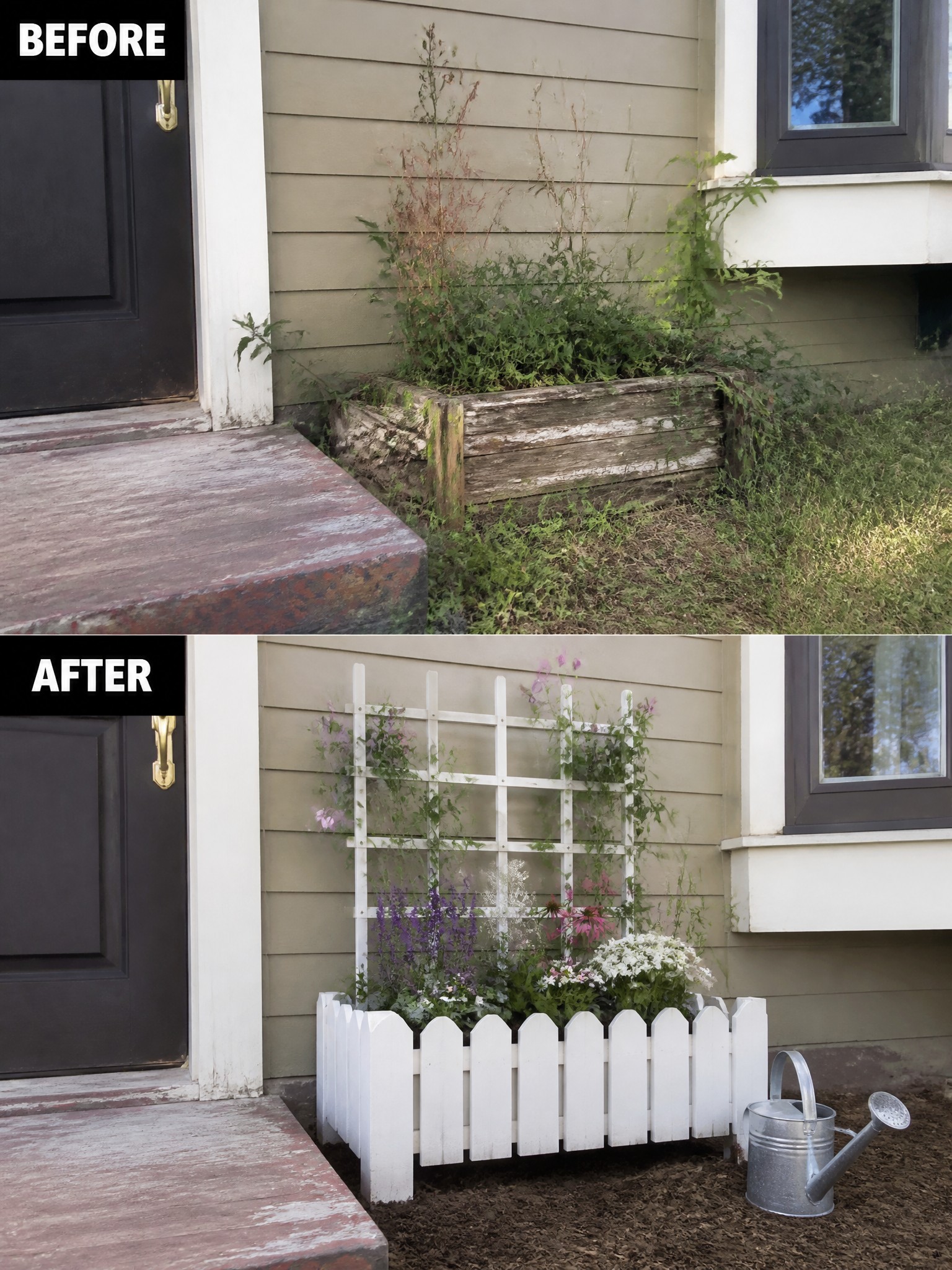
A rotting wooden box full of wild growth can make an entry feel messy. Replacing it with a white picket planter and a simple trellis gives the bed a clean shape, supports climbing plants, and keeps everything contained right next to the door.
This idea works well in narrow spaces where you want height without taking up much ground. Start with a sturdy frame that matches your house style, then add the trellis for vertical interest. Mulch the soil afterward so the bed looks finished and stays easier to maintain.
Use Raised Beds In Different Sizes For Better Structure
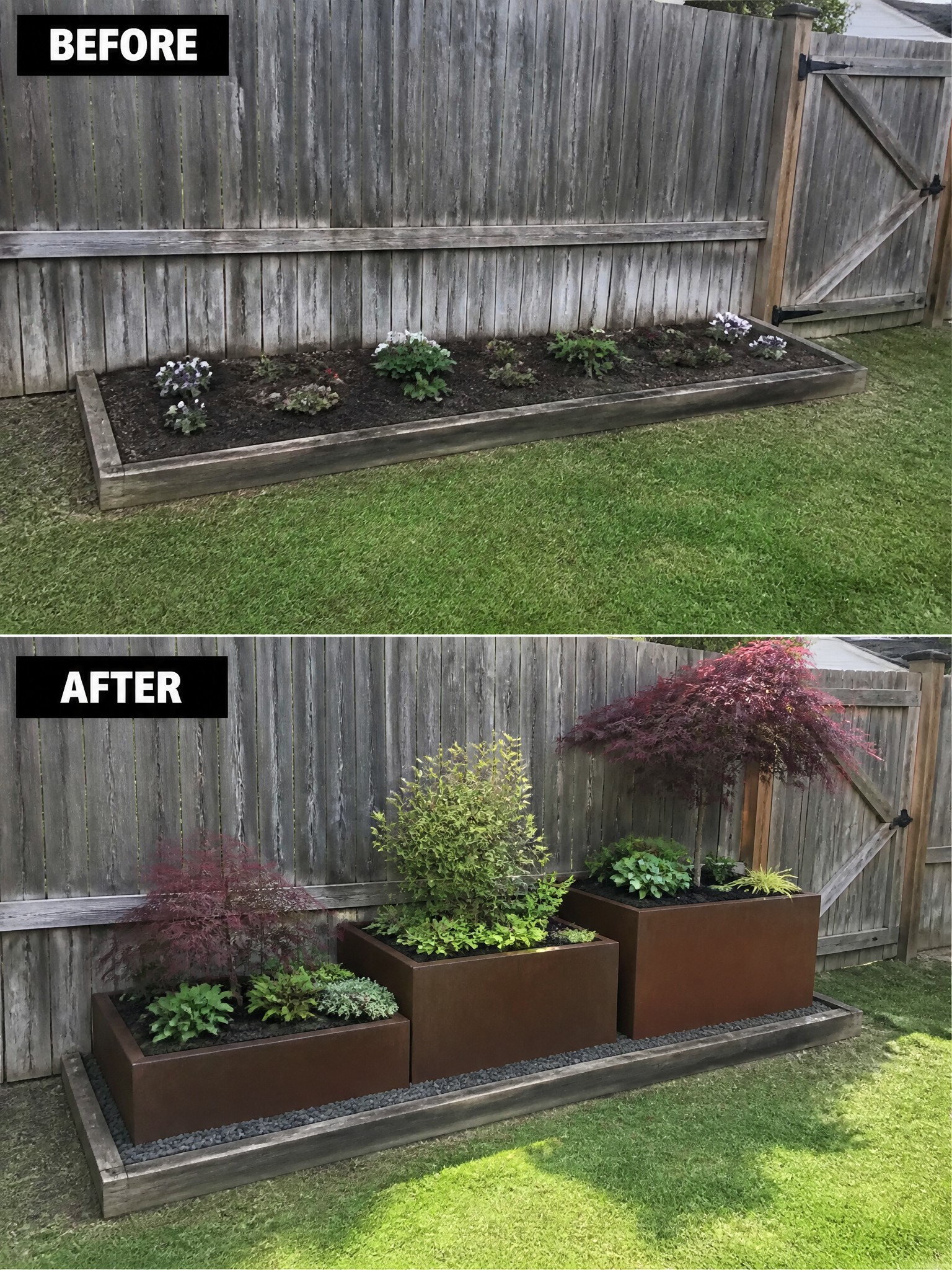
Switching from one long, low bed to several raised planters of different sizes gives the whole area clearer lines and more presence. The metal boxes sit at varying heights and angles, which breaks up the straight fence line and makes the planting feel more intentional.
This idea works especially well along fences or property edges where a single bed can look flat. Group the planters so the largest one anchors the space, then step the smaller ones forward or back to create depth without adding too many plants.
Add Raised Beds To Define Poolside Space
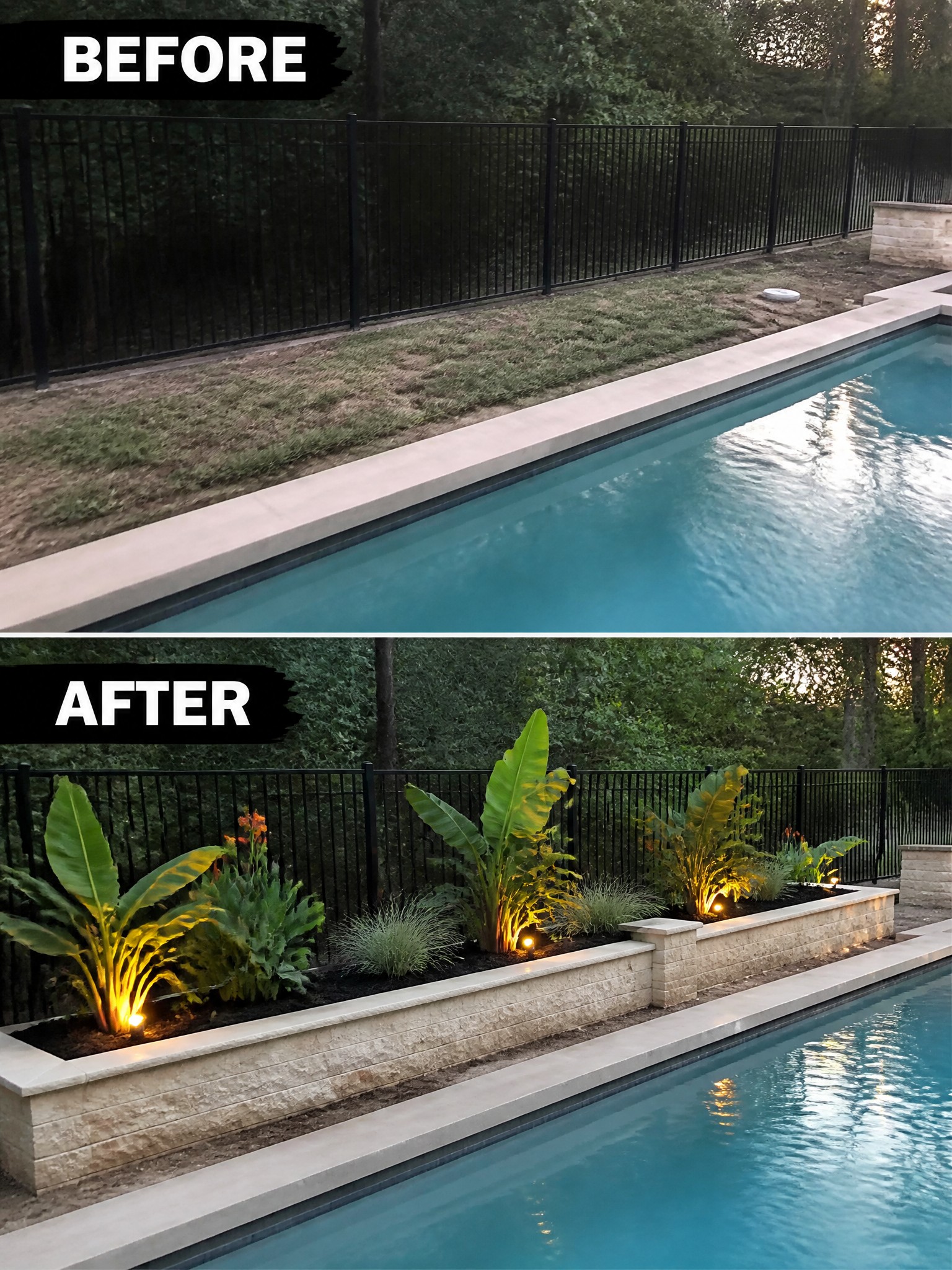
A simple raised bed can turn an open strip of grass or dirt next to a pool into a more finished area. The before photo shows how the space felt loose without any clear edge, while the after adds a low stone planter that creates a clean line and holds the planting in one spot.
This idea works well when you want structure without blocking the view or narrowing the walkway. Use stone or concrete that matches the pool deck, keep the bed fairly narrow, and plant a few taller pieces mixed with lower greenery so the bed adds shape rather than clutter.
Frame Front Steps With Raised Flower Beds
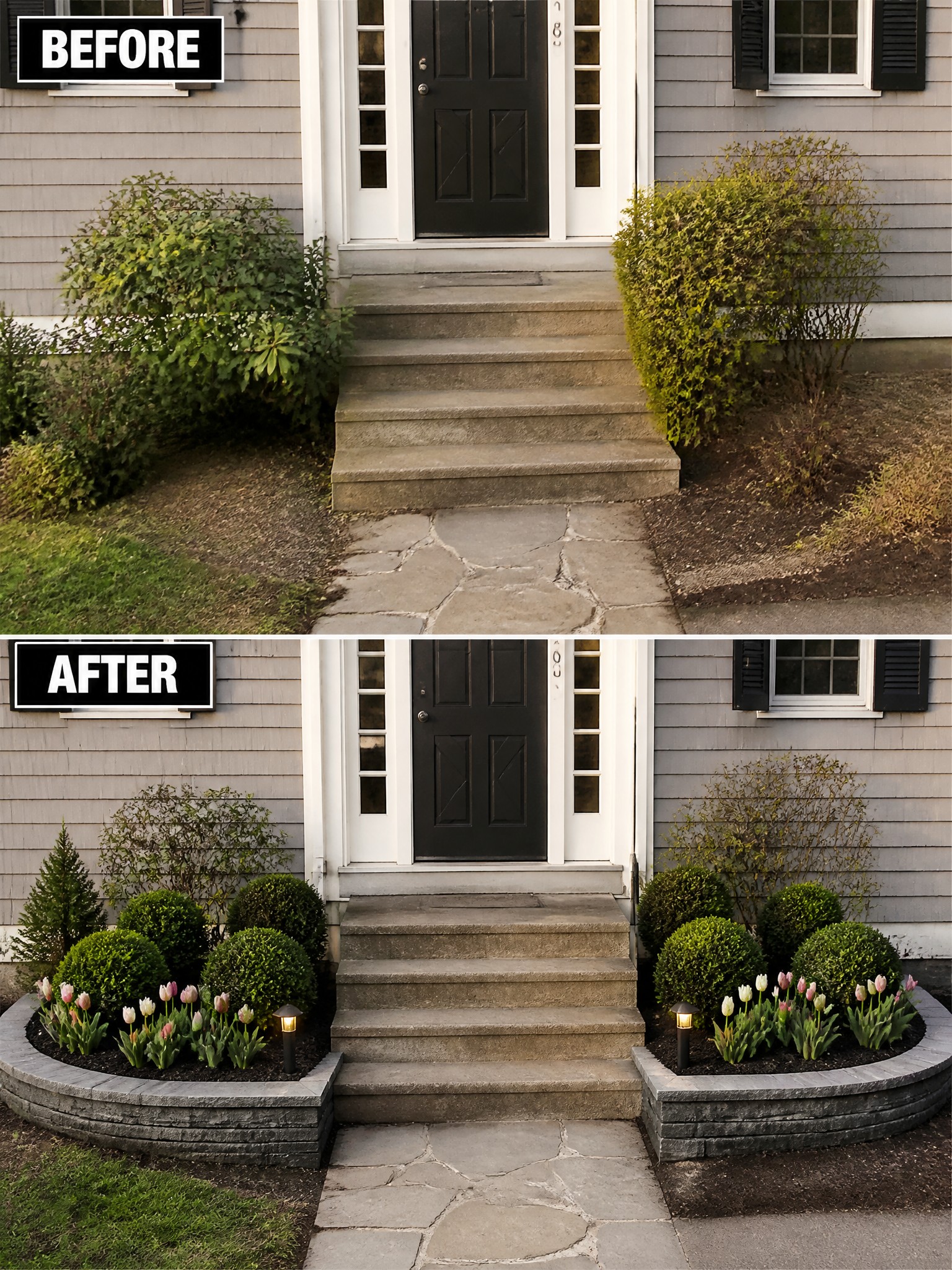
The main change here is the addition of low curved stone beds on both sides of the steps. This replaces loose shrubs and bare dirt with a clear border that keeps the planting neat and contained.
Raised beds work especially well along a front entry because they add structure without taking up much space. They suit homes with basic concrete steps where you want the planting to look intentional rather than scattered. Start with a simple material like stacked stone, keep the curves gentle, and fill with a mix of shrubs and seasonal flowers so the beds stay full year-round.
Add Structure To An Overgrown Side Yard
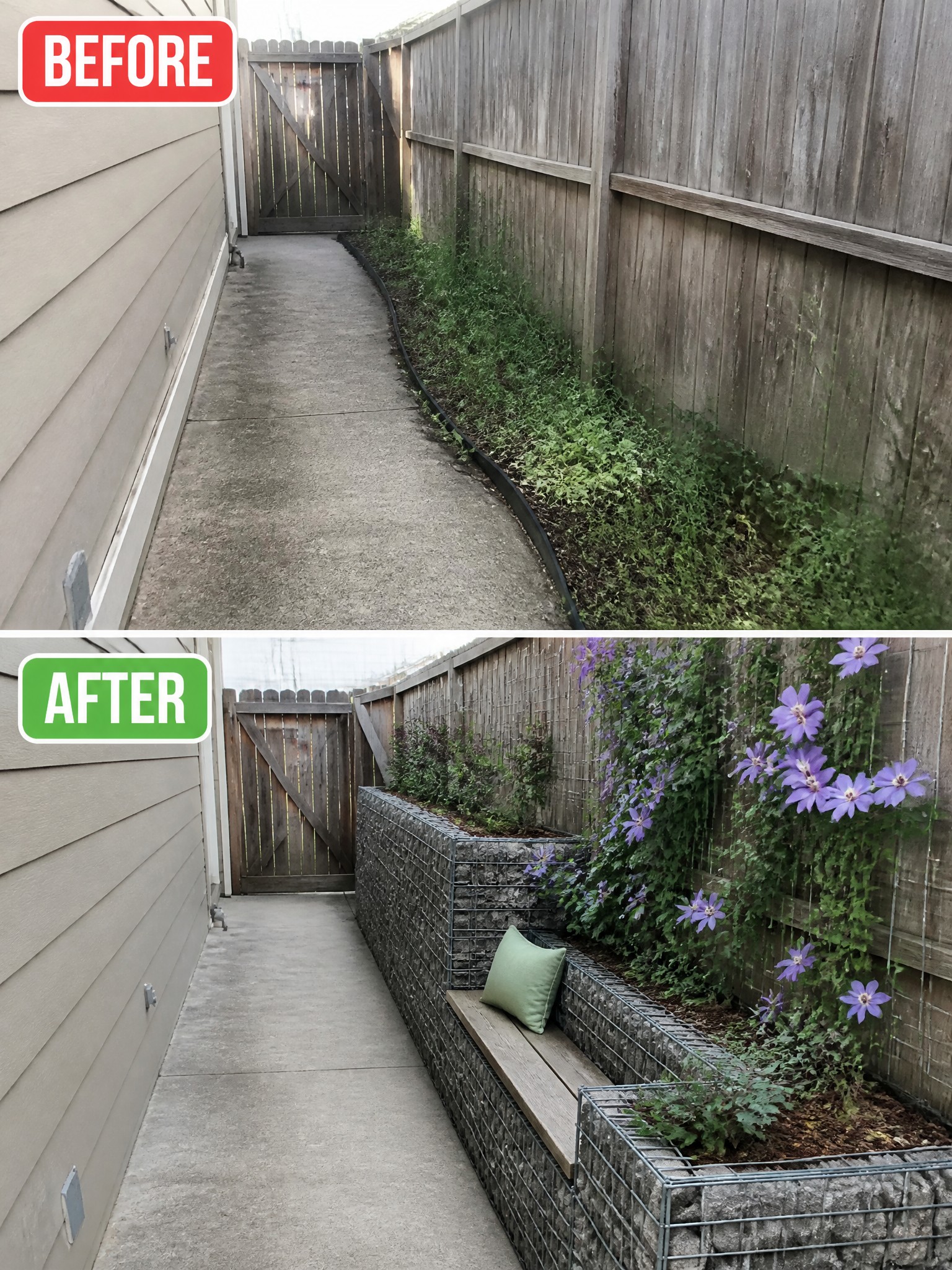
A narrow side path often turns into a weedy strip because there is no clear edge or planting plan. Building low gabion walls creates defined raised beds that keep soil in place and give vines something to climb. The simple addition of a bench along one section turns the space into something you can actually use instead of just walking past.
This approach works best on long, tight areas where regular garden beds would take up too much room. Start with the walls and basic soil, then add a few climbing plants and a simple seat. The structure does most of the work, so the planting can stay modest without looking messy.
Clean Up An Overgrown Raised Bed
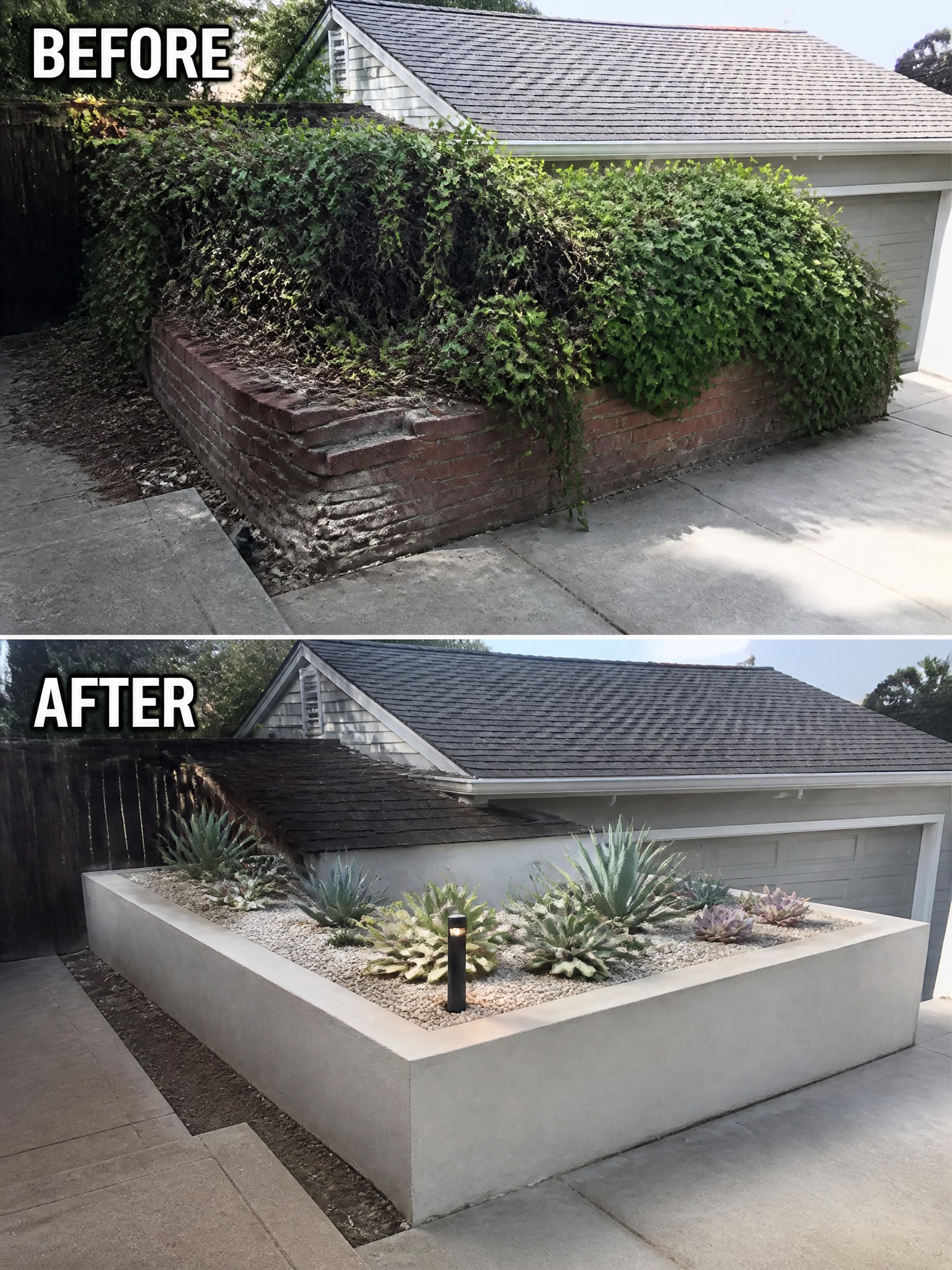
An old brick planter buried in ivy quickly starts to look neglected and pulls attention away from the house. Switching to a solid concrete border with gravel and a few succulents gives the same space a much cleaner outline while cutting back the constant trimming.
This kind of update works best along driveways or side yards where you want something low-maintenance. Remove the old growth first, then choose a border material that fits the house and fill it with plants that stay compact without needing frequent water.
Add Structure To A Large Lawn With A Raised Bed
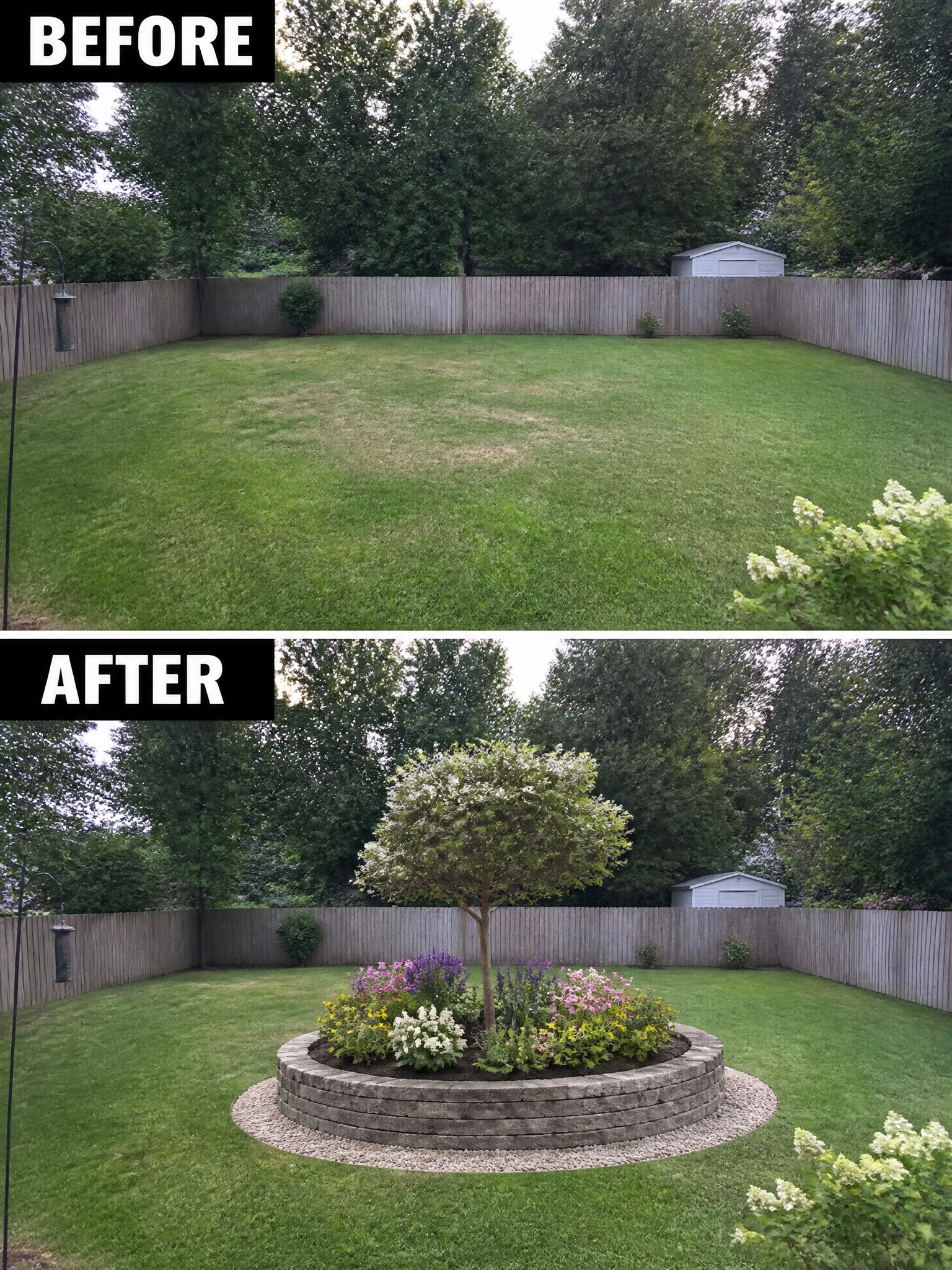
A big open lawn can start to feel blank after a while. Placing one raised circular bed with a small tree and flowers in the middle gives the space a clear center without crowding the rest of the yard.
This approach works best in yards that have room to spare but lack any real focal point. Keep the bed size in scale with the lawn, use simple stacked blocks for the edging, and choose plants that can handle the sun exposure in that spot.
Add Concrete Edging To Give Flower Beds Clear Shape
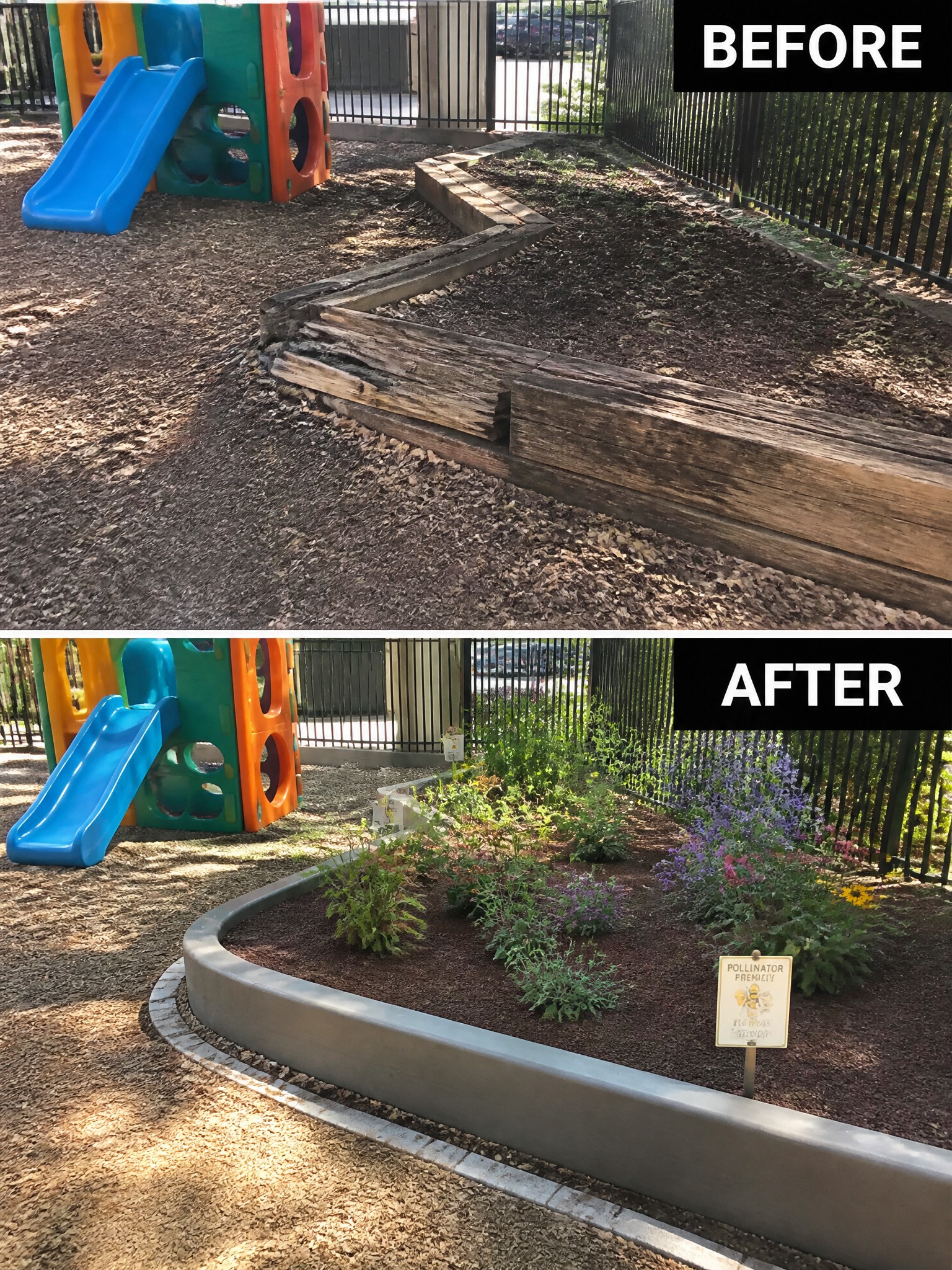
Old wooden borders often rot and shift over time, leaving garden beds looking messy. Switching to a low concrete border creates a clean, lasting edge that holds the soil in place and gives the whole area a finished look. The curved shape also softens the space while still keeping mulch and plants contained.
This approach works well in yards where wood fails quickly or near play areas that need sturdy separation. Start by deciding the final shape and height you need, then pour or install the concrete before adding plants. It keeps the bed easy to maintain and stops mulch from spilling onto paths or grass.
Add Raised Beds To Create Clear Structure
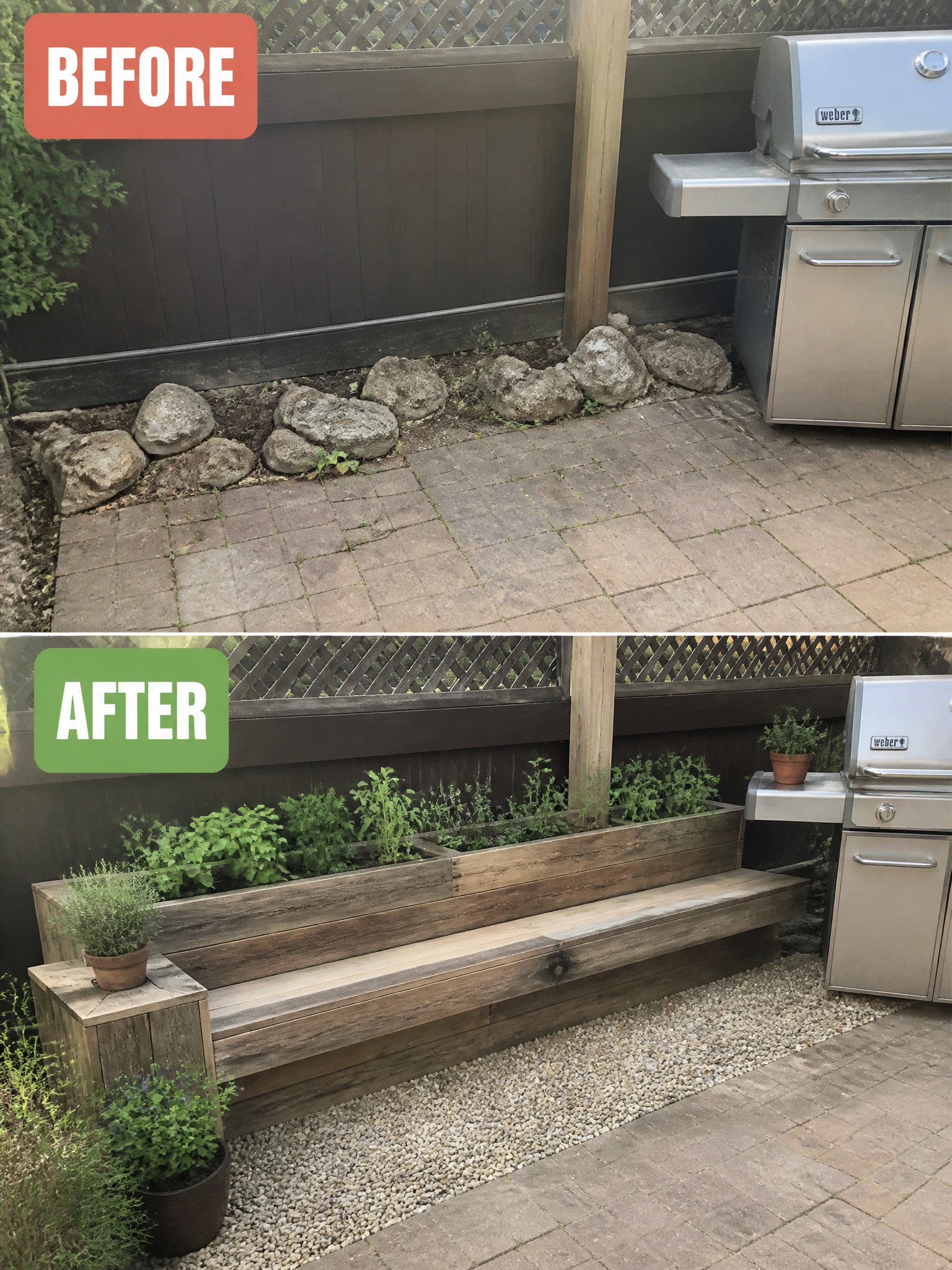
A plain strip of ground next to a fence often looks unfinished even when the patio itself is neat. Building a set of long raised beds with an attached bench turns that loose edge into a defined planting zone and a place to sit, which keeps the whole area from feeling scattered.
This approach works best along a fence or wall where you want planting without losing floor space. Use sturdy wood that can handle weather, keep the bench height comfortable, and plant a mix of herbs and smaller shrubs so the beds stay useful year after year.
Add Structure With Simple Edging Along A Driveway
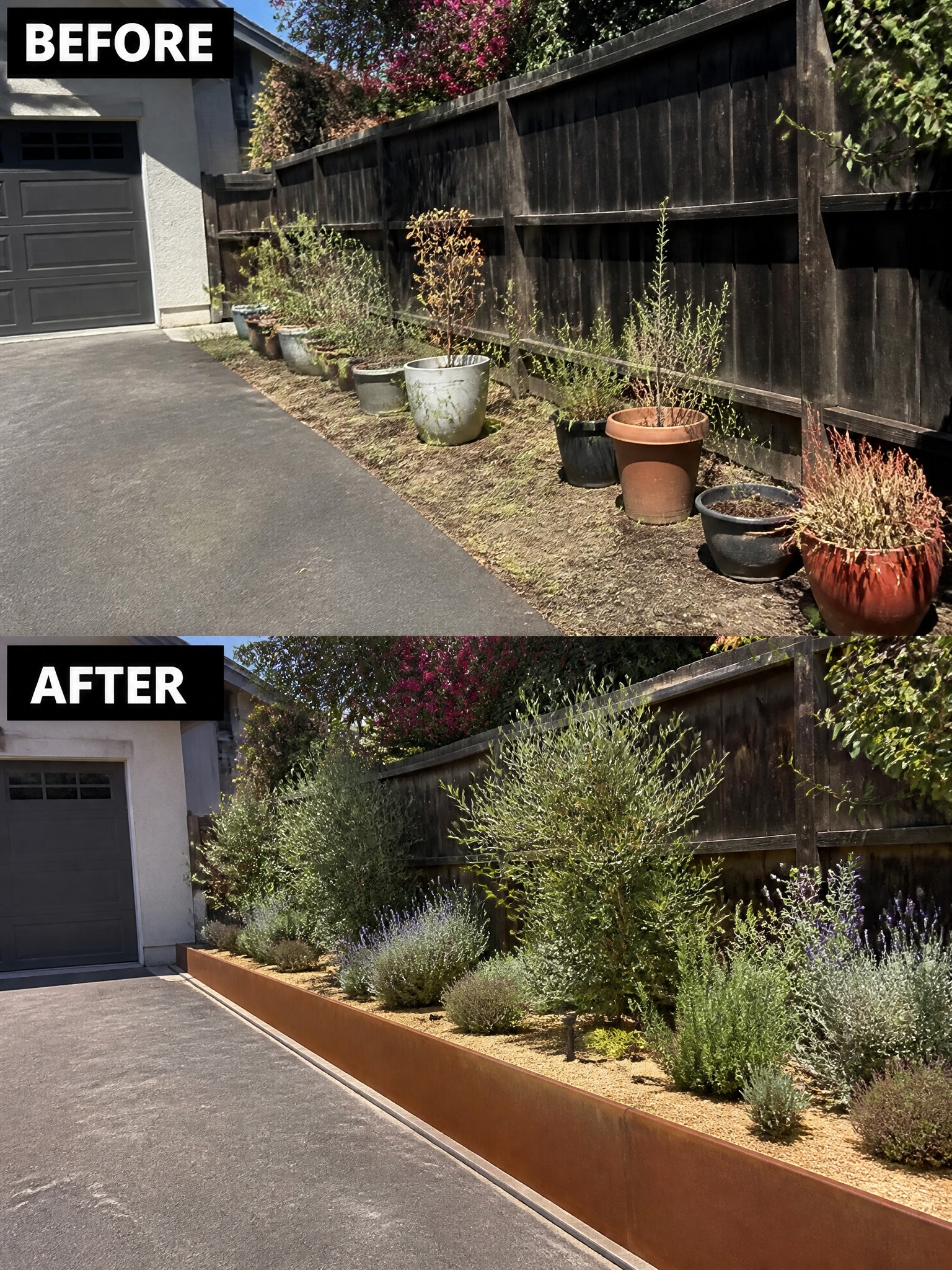
A narrow strip next to a driveway often collects random pots and weeds because there is no clear edge to work with. Installing a raised metal border turns the loose dirt into a contained bed, which makes the whole area look intentional instead of scattered.
This idea works best on long, thin spaces where you need to keep mulch and plants from spilling onto the pavement. Put the edging in first, then repeat a few shrubs and ground covers inside it. The result stays neat with far less ongoing cleanup.
Add Raised Brick Beds To Shape The Front Entry
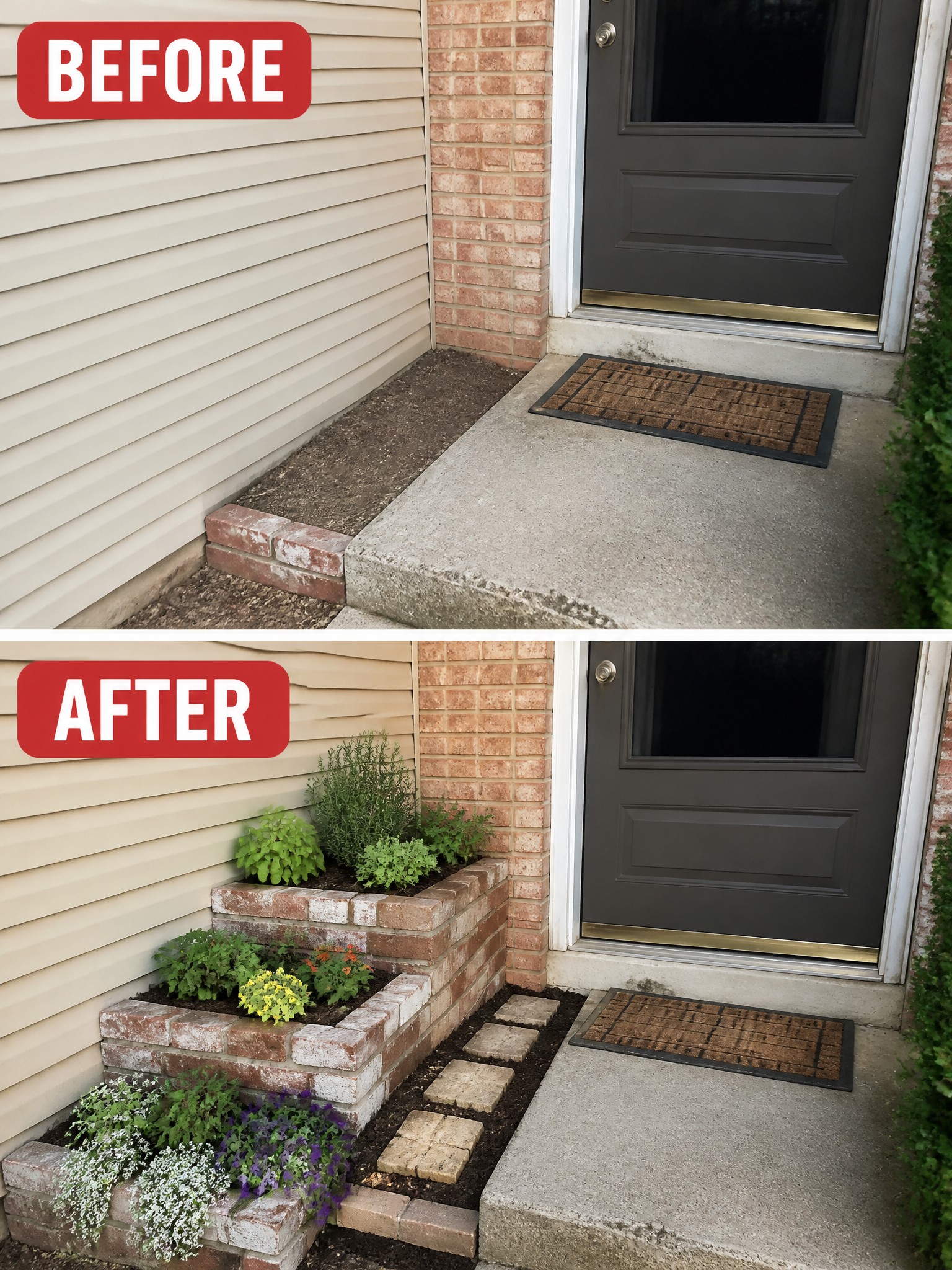
The before shows a bare strip of dirt sitting right next to the porch with no real purpose. The after adds tiered brick planters that step up from the ground and hold a mix of flowers and shrubs. This single change turns an empty corner into a planted area that feels intentional.
Raised brick beds work best when you want planting near the house but still need a clear path to the door. They suit homes that already have some brickwork and give you room to change plants with the seasons. Keep the beds low enough that they do not block windows or make the walkway feel cramped.
Add Structure With A Raised Garden Bed
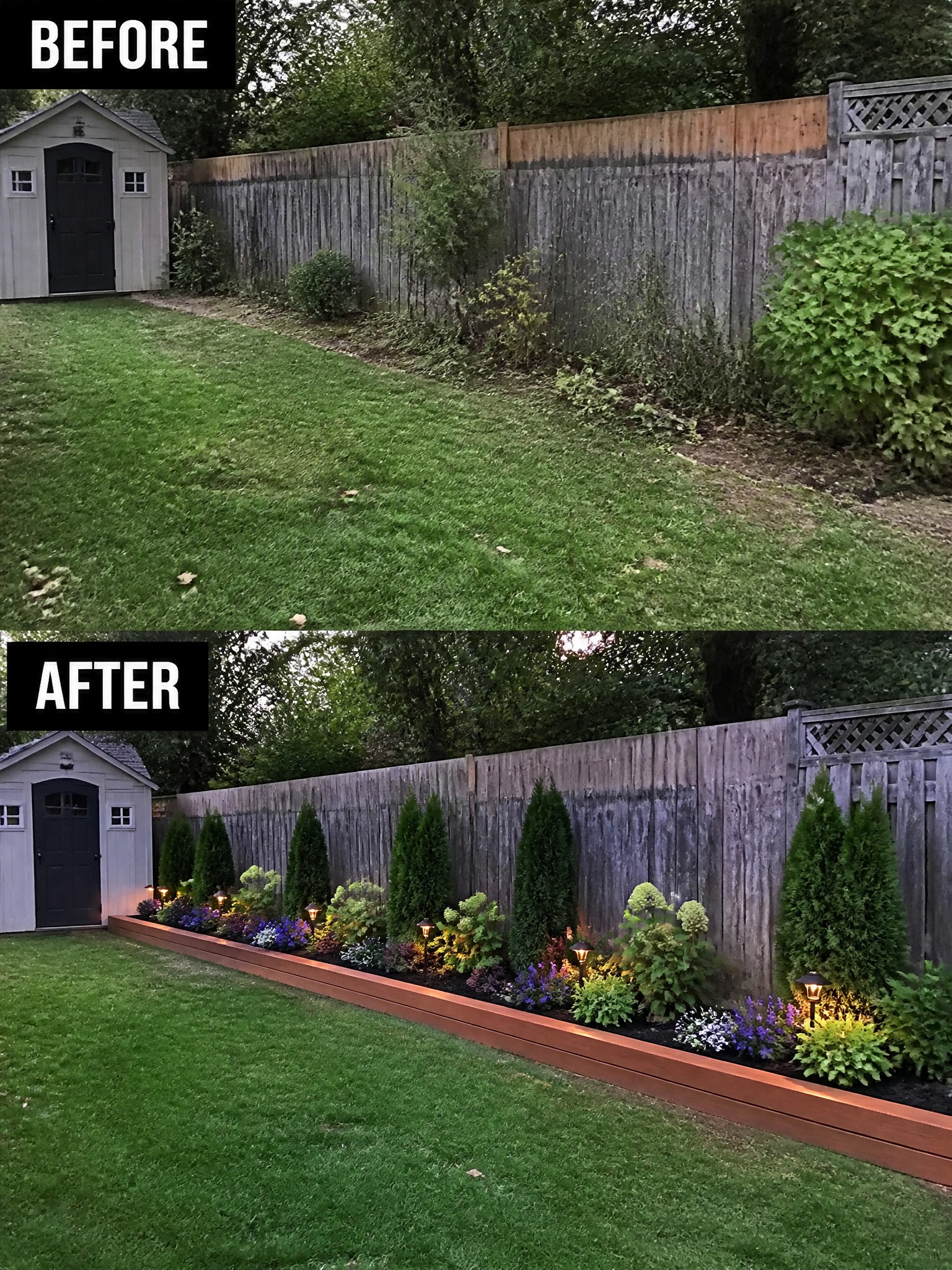
Building a raised bed along the fence line turns a weedy, uneven strip into a clean planted border. The before photo shows grass and scattered growth running right up to the fence with no clear edge, while the after shows how a simple wood frame and fresh soil create a straight, defined space that makes the whole side of the yard feel planned.
This idea works best in backyards where the fence has become a catch-all for random growth. Keep the bed width reasonable so it does not eat into the lawn, and start with evergreens for year-round shape before adding seasonal flowers. The raised edge also makes weeding and watering easier over time.
Frequently Asked Questions
Q: What is the easiest way to reinforce the corners so they stay square?
A: Screw in some metal brackets on the inside at each corner. This holds everything tight without much extra work. Check them once a year and tighten if needed.
Q: My beds hold too much water after rain. How can I fix the structure for better drainage?
A: Add a layer of gravel at the bottom before you fill with soil. Raise the whole frame on blocks if it sits flat on the ground. That lets water escape from the sides too.
Q: Can I stack another layer on top of my current beds?
A: Yes but attach the new boards with long screws into the old ones. Make sure the base can handle the extra weight. Test it by pressing down hard before you plant.
Q: Should I dig out the ground inside before building up?
A: Skip the digging and just build the frame right on top. Line the bottom with cardboard to block weeds. The soil will settle naturally over time.
