

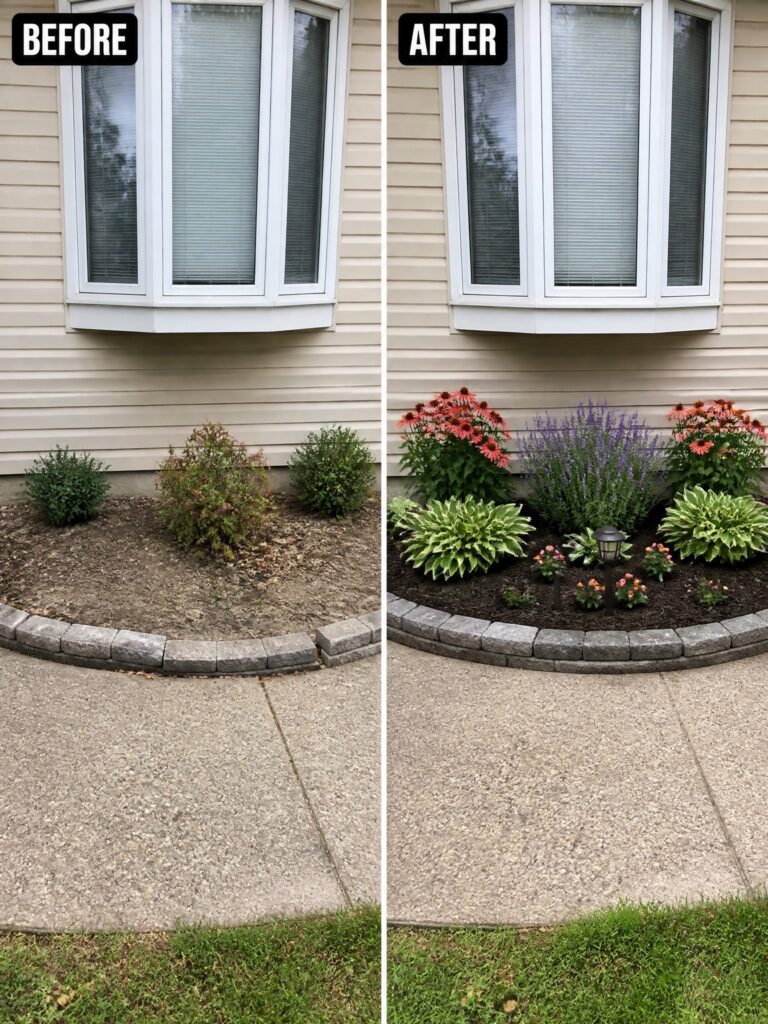
I often notice how a yard can start to look a bit scattered when the flower beds have no real edges or planting structure to hold them together.
One thing I like to test first in my own space is adding some basic borders and grouping plants by height and color, since those steps usually give the area more definition right away.
Over time the layers of growth fill in and turn what felt bare into something that draws the eye without a lot of extra work.
It is satisfying to watch the difference settle in.
Trying a few of these ideas has helped me see which ones actually hold up through the seasons in my yard.
Clean Up An Overgrown Flower Bed First
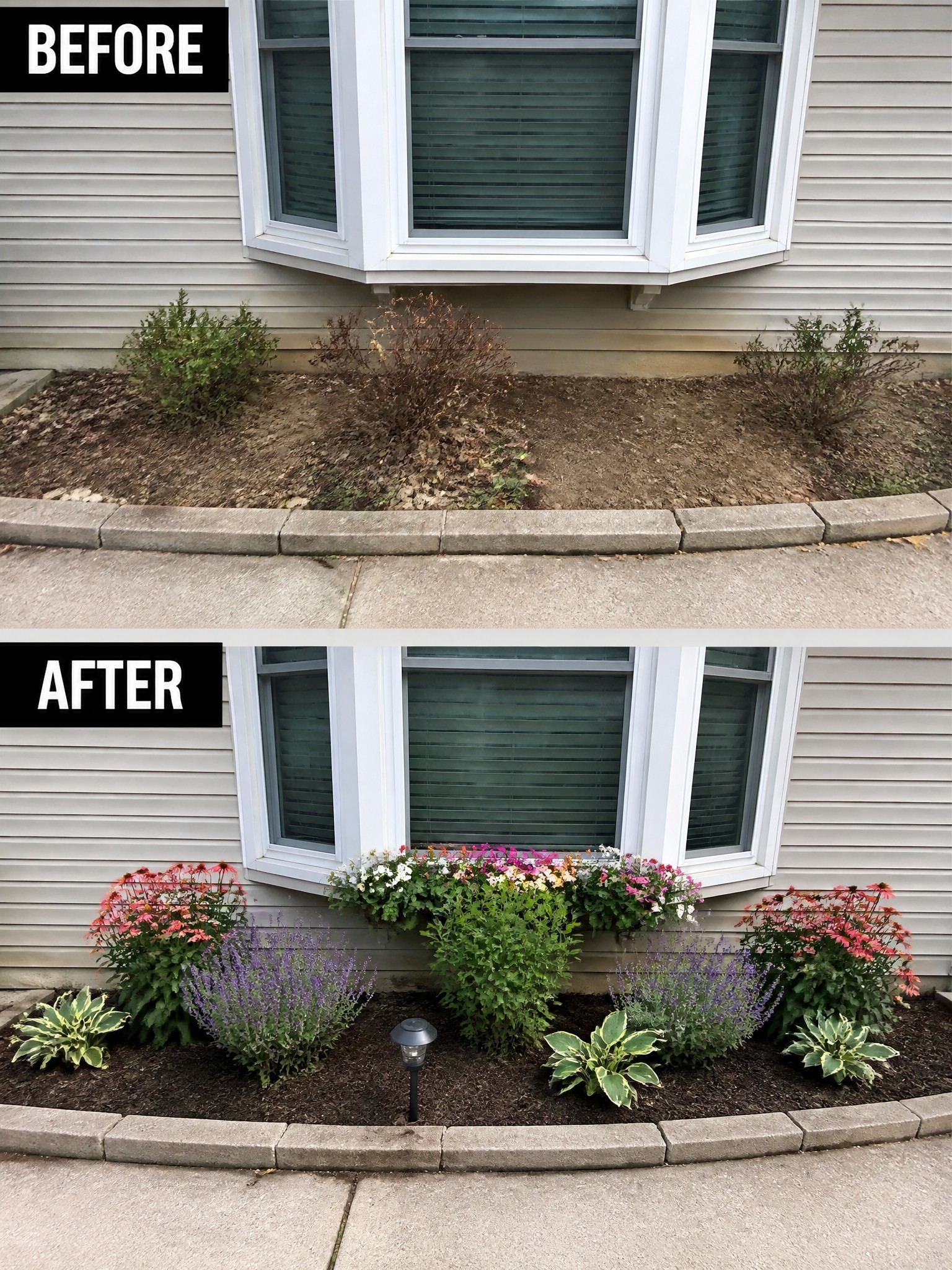
Starting with a full cleanup makes the biggest difference in a flower bed. The before photo shows weeds, dead growth, and bare dirt that made the whole area look neglected. Once those were cleared, fresh mulch and a simple planting plan with repeated colors and heights turned the space into something neat and full.
This approach works best along the front of a house where the bed is visible every day. Keep the plant choices simple and repeat a few varieties instead of mixing too many. A small light or two can add evening interest without crowding the space.
Add Structure To An Overgrown Backyard
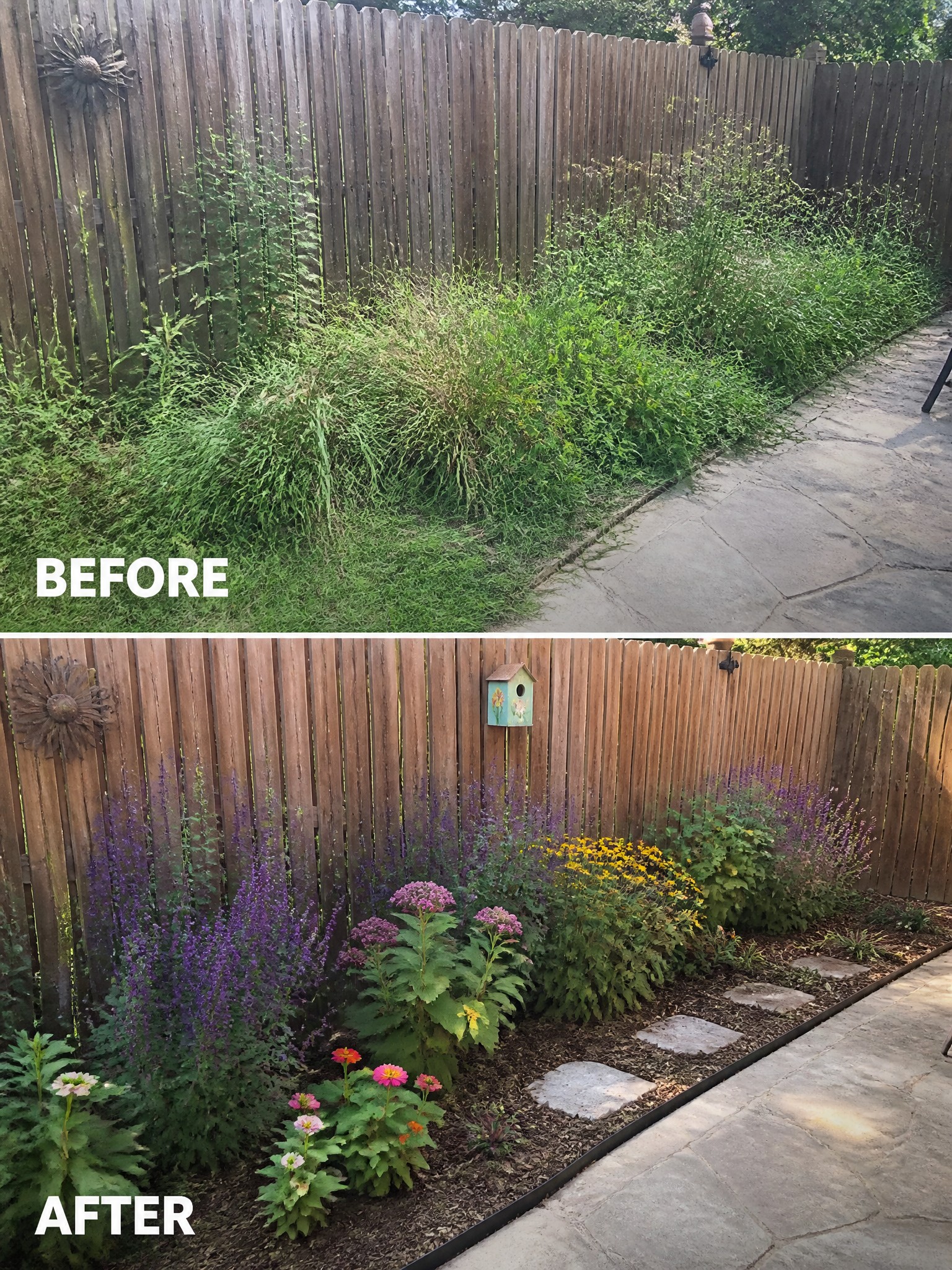
Many backyards end up with a messy strip of weeds along the fence because regular mowing never quite reaches it. Clearing that growth first and then laying down mulch with grouped plantings turns the same narrow space into something that looks planned and cared for.
This idea works best along property lines where you want color and some height without crowding the whole yard. Remove the existing weeds thoroughly, add mulch to keep new growth down, and use a few stepping stones so you can reach the plants without compacting the soil. A simple layout like this keeps maintenance low once everything fills in.
Fill A Bare Border With Layered Planting
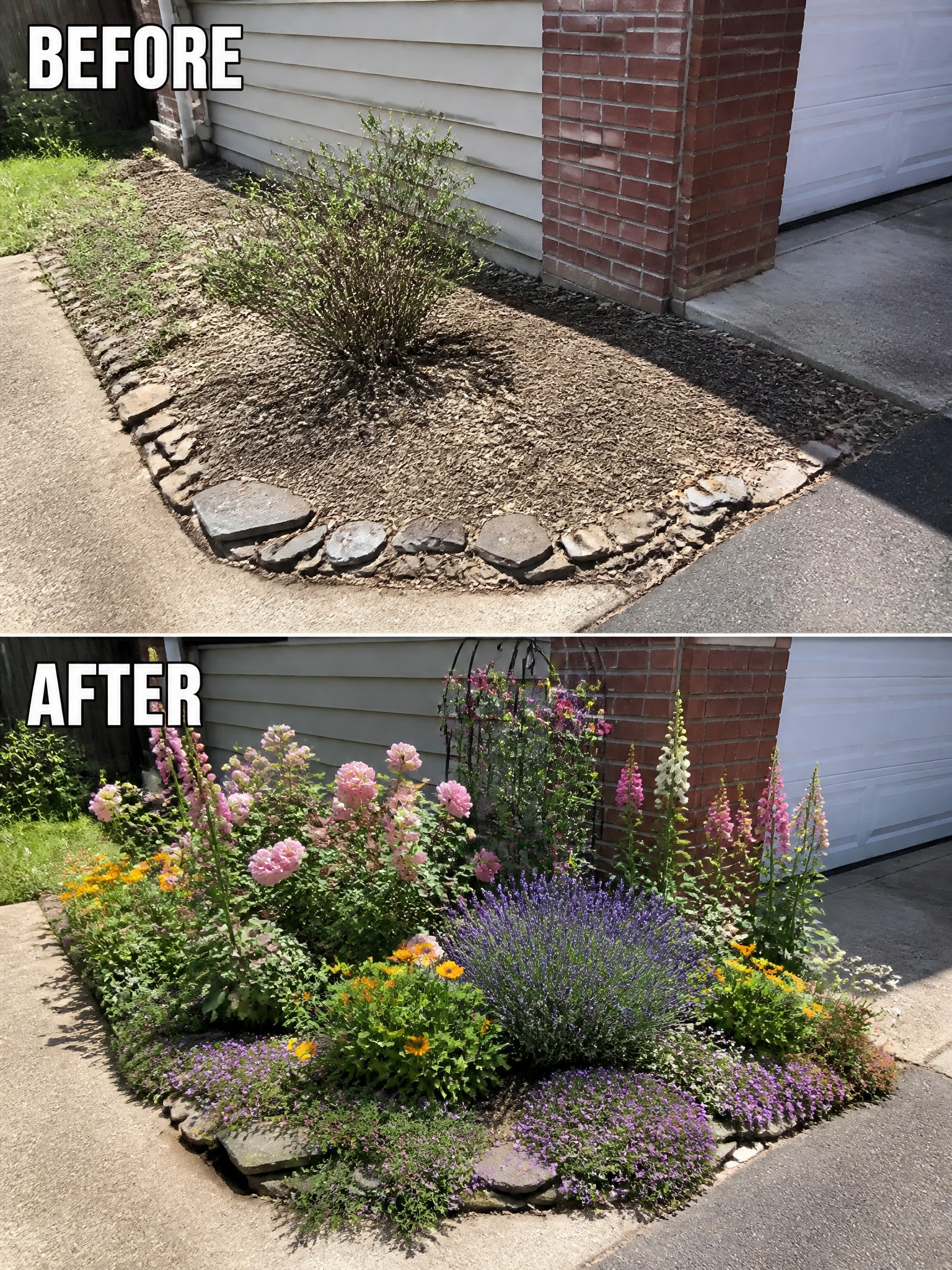
A bare strip of mulch next to the house can look unfinished even when it is tidy. Adding layers of flowers in different heights turns the same space into a full garden bed. The lower plants along the edge give it a clean shape while taller flowers fill the middle and back.
This works well along driveways or foundation walls where you want color without blocking windows. Start with taller plants toward the house and work down to shorter ones at the front so everything stays visible. Use a simple stone or brick edge if the bed needs more definition.
Define The Foundation With A Simple Edged Bed
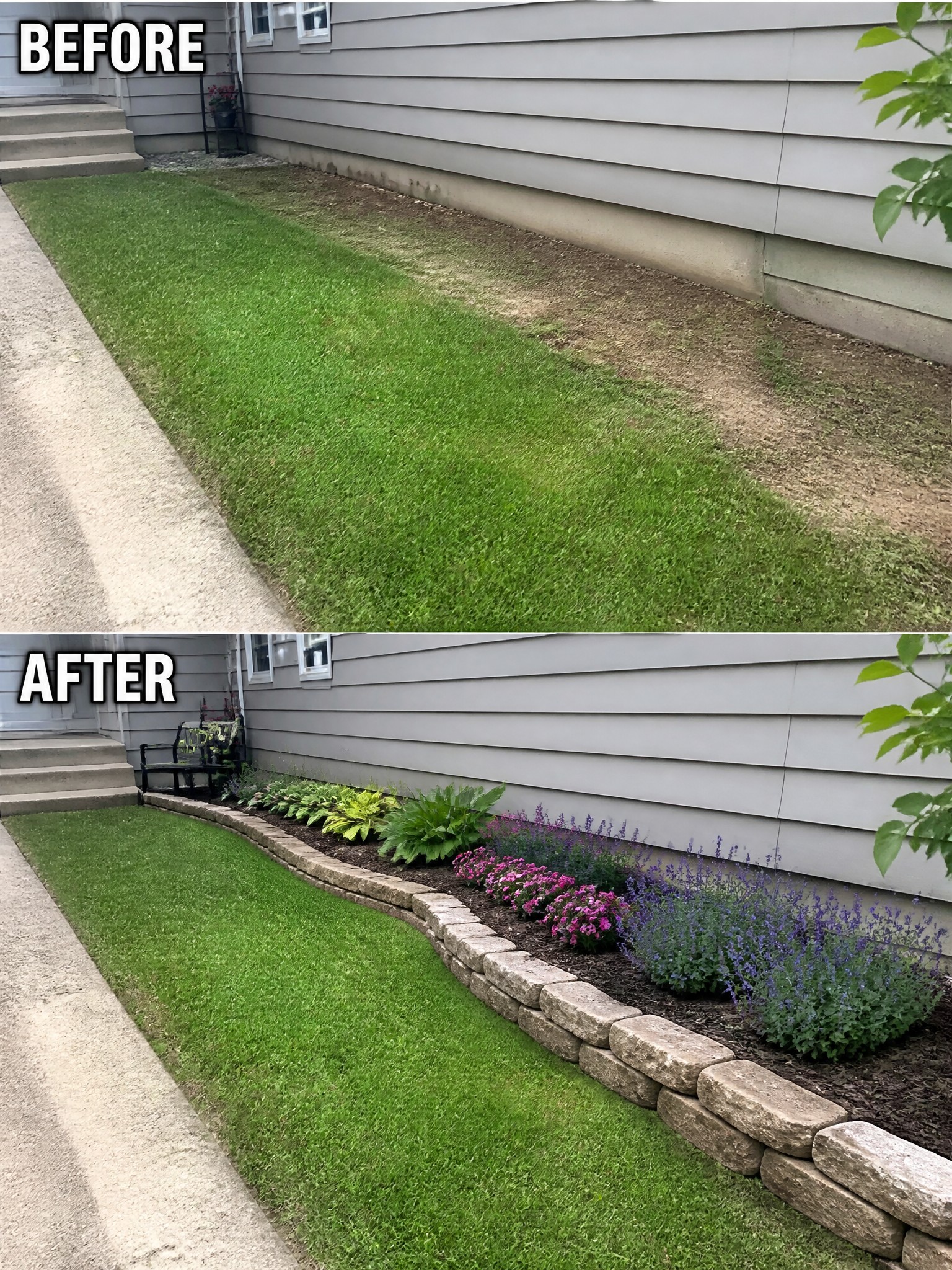
A long strip of grass or bare dirt right against the house often ends up looking patchy and unkempt. Adding a low stone border creates a clear line that keeps the lawn tidy and gives the foundation area its own purpose as a planted bed.
This idea works on any side of the house where the siding meets the grass. Keep the bed narrow enough to reach easily for weeding, use mulch to hold down weeds, and pick plants that match the light and soil in that spot.
Define A Narrow Side Yard With A Path And Planting
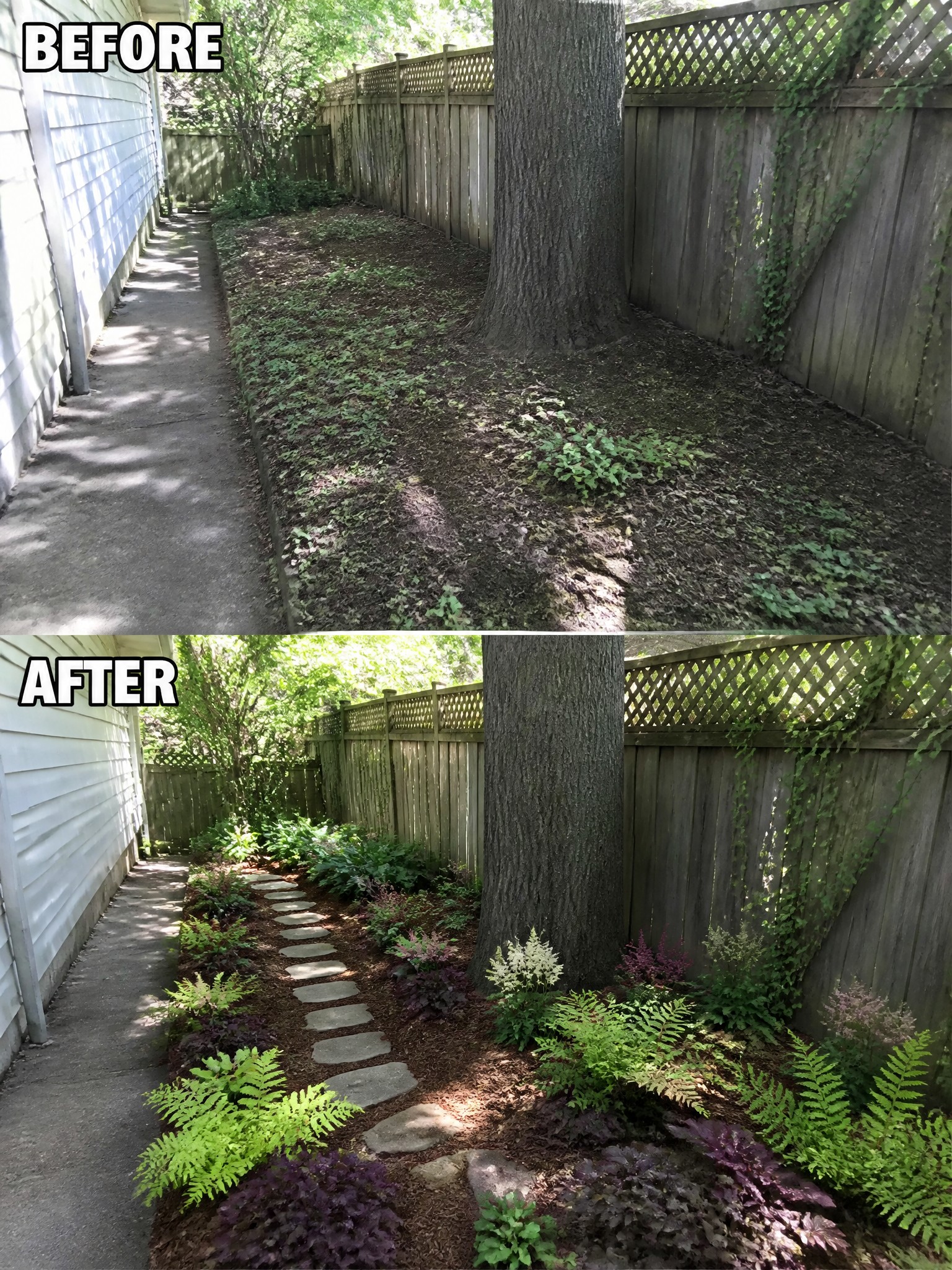
A narrow strip between the house and fence often ends up as a forgotten patch of dirt and scattered weeds. Adding a simple stepping stone path through fresh mulch and layered plants turns the space into a purposeful border that feels intentional instead of neglected. The main change here is the clear path combined with defined beds that keep everything contained and easy to maintain.
This approach works well in tight side yards where you need to create access without crowding the area. Start by clearing the ground, lay down a path wide enough to walk comfortably, then fill the beds with shade-tolerant plants and mulch to hold it all together. It keeps the space looking neat year after year without requiring constant work.
Add Defined Flower Beds To The Front Yard

A simple curved flower bed with mulch and a mix of flowering plants can make a big difference in how the front of a house feels. The before photo shows a flat lawn with only a couple of small shrubs, while the after adds clear edging, dark mulch, and layered plants that give the porch area a finished border.
This approach works best on homes where the lawn runs right up to the foundation and feels a bit empty. Start by marking out a gentle curve, add edging to keep the grass from creeping in, then fill with a few shrubs for height and seasonal flowers for color. Keep the bed a reasonable width so mowing stays easy and the plants do not crowd the walkway.
Define A Narrow Border With Gravel And Rocks

A thin strip next to a path often turns into patchy grass that is difficult to keep neat. Switching to gravel with a few larger rocks creates clean edges and gives the whole area a settled look without needing constant mowing.
This idea suits side yards or fence lines where space is limited. Keep the bed narrow, use a few bigger rocks for weight, and pick plants that need little water so the border stays tidy with minimal effort.
Add Terracing To Handle A Steep Slope

A bare, washed-out slope is tough to mow and even harder to plant. Low stone retaining walls turned the hill into a series of flat beds that hold soil in place and give plants room to grow without sliding downhill.
This idea suits any yard with a noticeable grade where grass struggles. Mark level lines across the slope first, then stack blocks or stones to create the terraces. Once the beds are built, mulch and plant them, and the whole area stays neat with far less upkeep.
Create Defined Beds In Narrow Roadside Strips
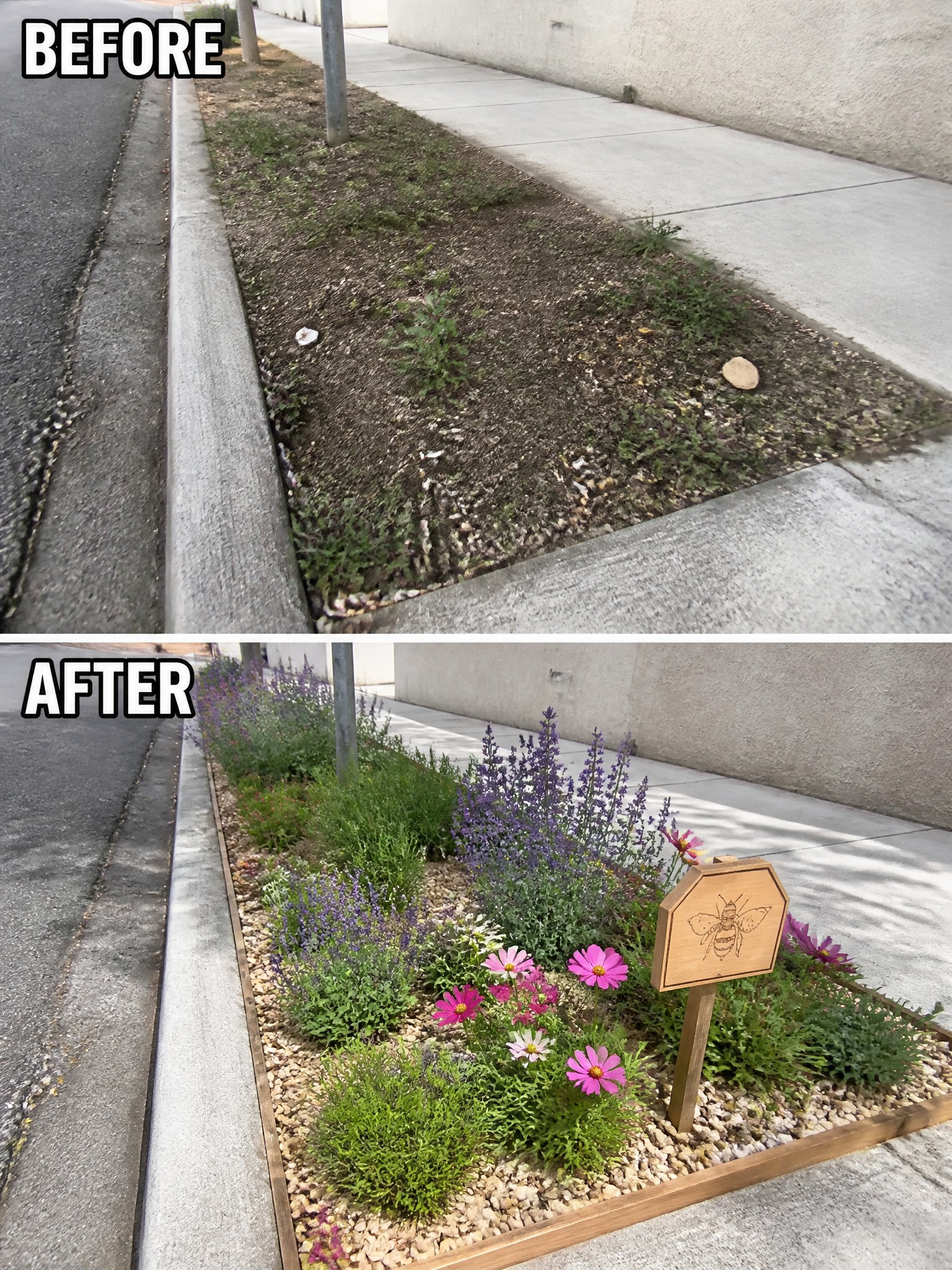
A weedy dirt strip next to the sidewalk rarely looks intentional. Adding a simple wooden edge, a layer of gravel, and a few groups of plants turns the same narrow space into something that feels planned instead of leftover. The border keeps the bed from spilling onto the path while the gravel gives it a finished surface that stays neat with very little work.
This approach works best in tight urban strips where grass is hard to maintain. Start with the edging so the shape stays clear, then choose low plants that can handle reflected heat from pavement. Keep the planting simple rather than crowded so the bed still reads as tidy from the street.
Add Defined Planting Beds Along The Front Walk

The main change here is replacing a plain concrete path with pavers while adding clear, symmetrical beds on both sides. The beds now hold layered shrubs, purple spikes, and white flowers instead of loose, uneven plantings. This gives the whole front a much more organized look and makes the walk feel intentional rather than just a strip of concrete cutting through mulch.
This approach works well on any front yard where the path feels too bare or the beds lack shape. Start by cleaning up the edges first, then plant in repeating groups so the beds look balanced from the street. Keep the tallest plants toward the back and use lower flowers near the path so nothing blocks the walk.
Add A Defined Planting Bed Along The House

A bare dirt strip next to the siding often makes the whole side of a house look unfinished. Adding a simple mulched bed with a mix of shrubs and flowers gives the foundation a clear edge and makes the yard feel more intentional without needing a full redesign.
This approach works well on long, plain walls where the ground meets the house. Start by laying down edging and a few inches of mulch, then fill in with a few shrubs for height and lower flowers for color. Keep the bed narrow enough that it does not crowd walkways or windows.
Create Defined Garden Beds In A Basic Yard
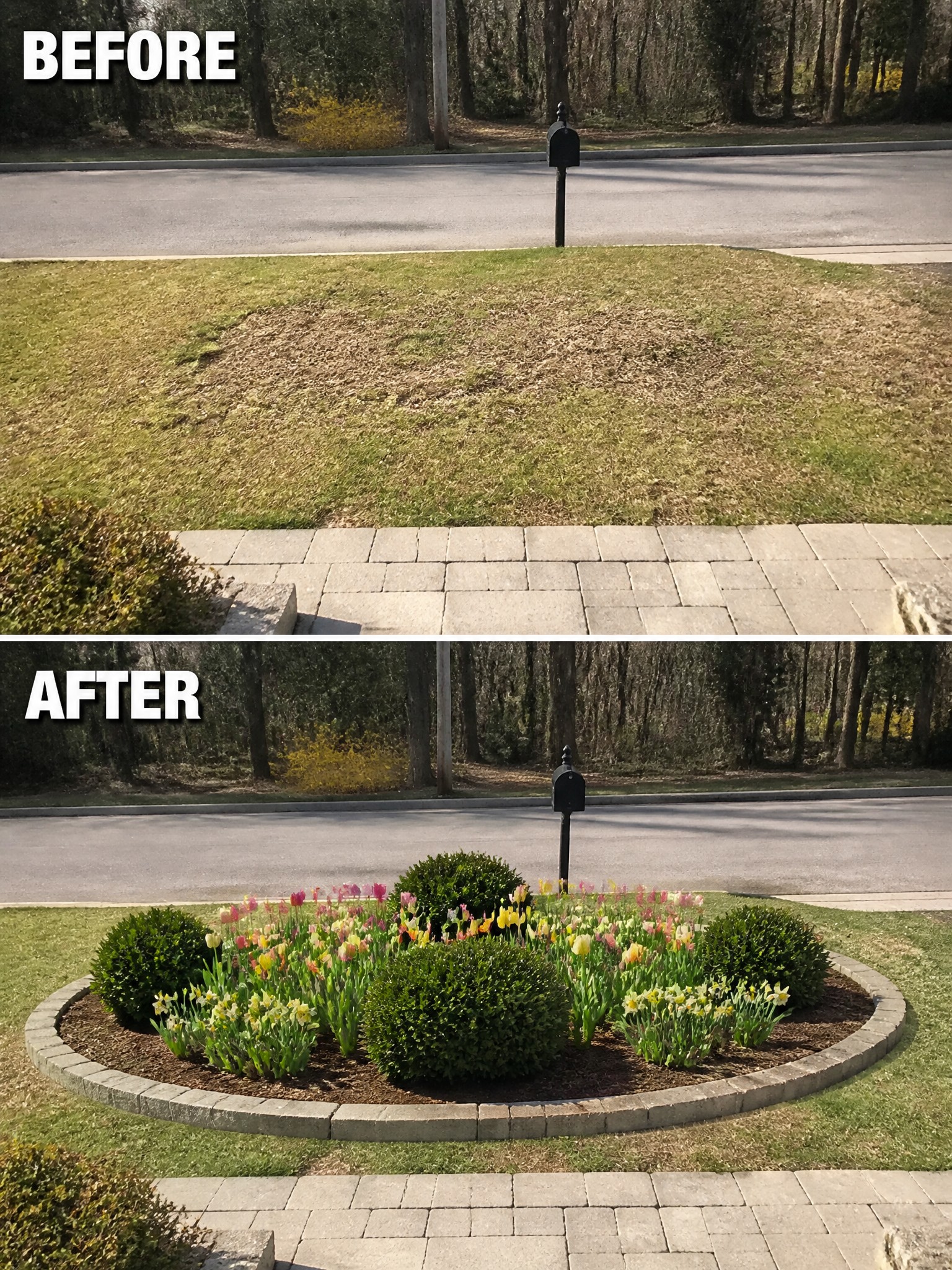
A flat stretch of patchy grass can feel unfinished next to the road. Adding a low stone border and filling the inside with shrubs and flowers gives the space a clear purpose and makes the whole front look more intentional.
This approach works well along a driveway or near the mailbox where the lawn meets the street. Start with simple edging to hold the shape, then choose a few repeating plants that can handle sun and traffic. Keep the rest of the lawn open so the bed stays the main feature instead of crowding the area.
Create A Defined Flower Bed Along The House
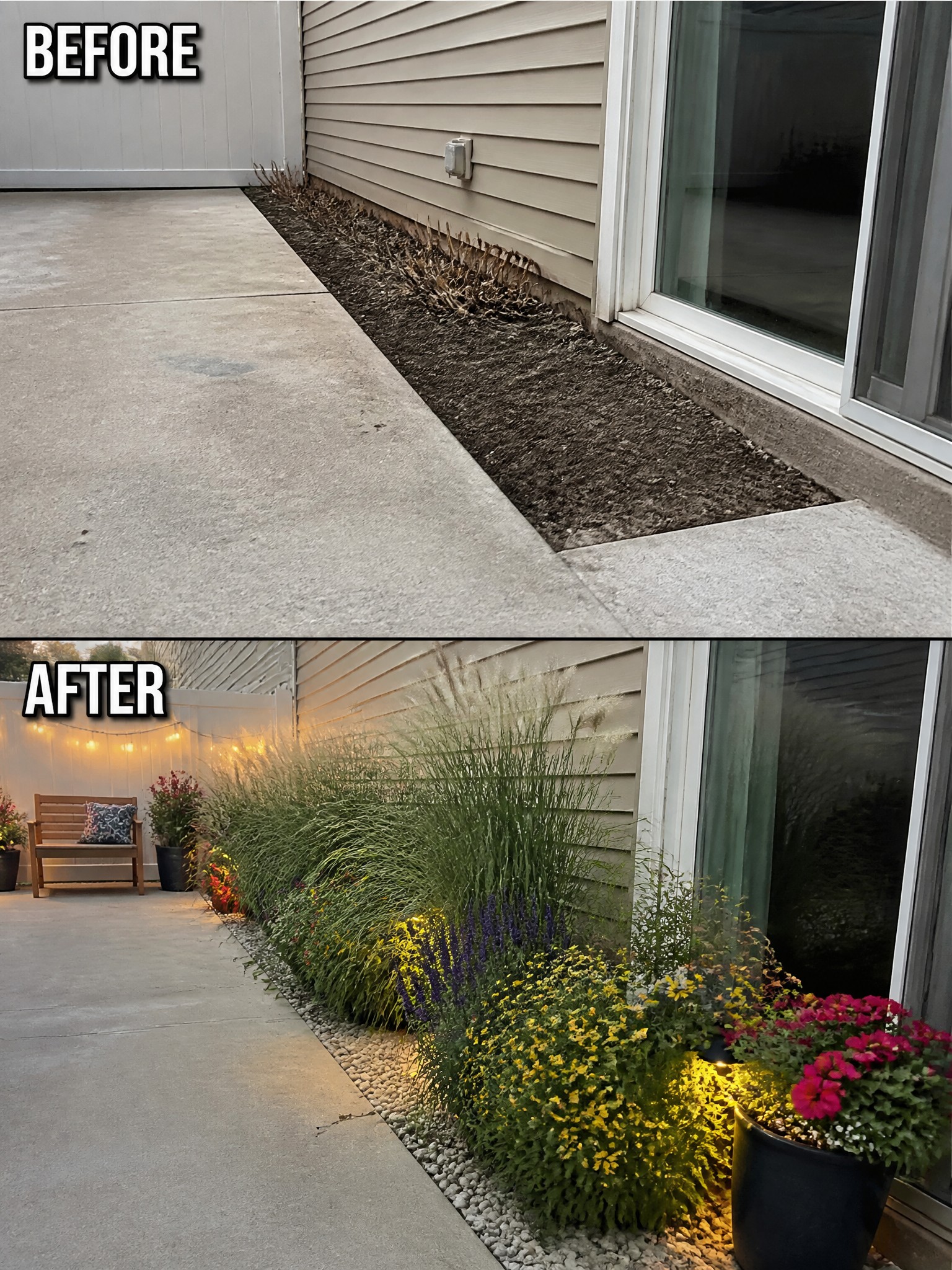
A bare strip of dirt next to the concrete and siding always looks unfinished. Filling that narrow space with layered grasses, flowers, and a clean gravel edge turns the whole side of the yard into something that feels intentional instead of forgotten.
This works best on long, skinny areas where you do not have room for big features. Start by edging the bed, add a few taller grasses for height, then fill in with lower blooming plants. The gravel keeps things tidy and helps with drainage right against the foundation.
Refresh Front Beds With Layered Color And Lighting
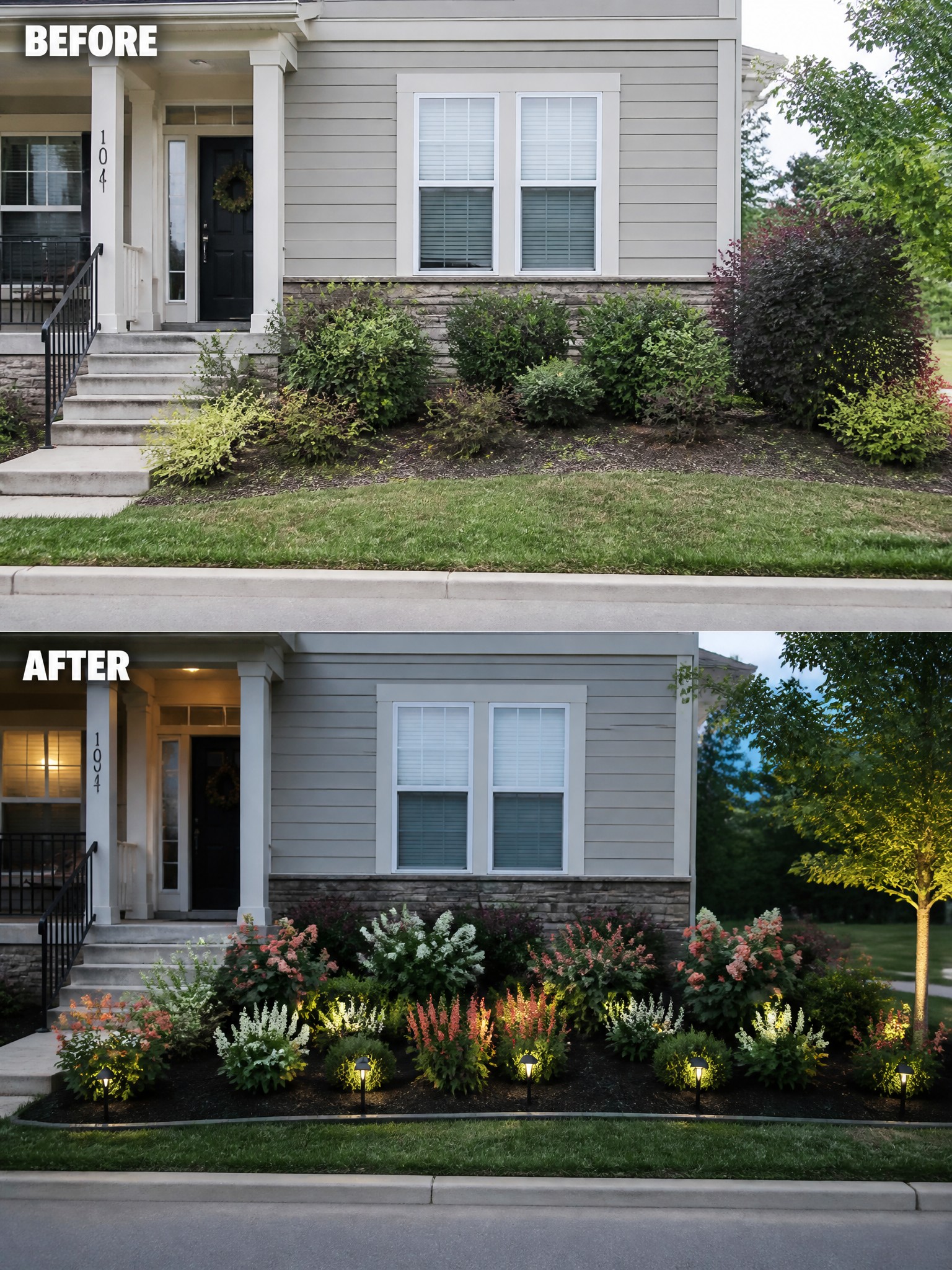
The original beds sat flat with just a row of green shrubs that blended into the house. The update brings in repeated clusters of pink, white, and orange flowers plus small lights tucked along the front edge so the planting reads clearly even after dark.
This approach works best on houses where the foundation planting is the main view from the street. Start by clearing older shrubs to make room, then repeat two or three flower colors in groups rather than scattering singles. Keep the lights low and evenly spaced so they mark the bed without overpowering the plants.
Create Defined Garden Beds Along The Foundation
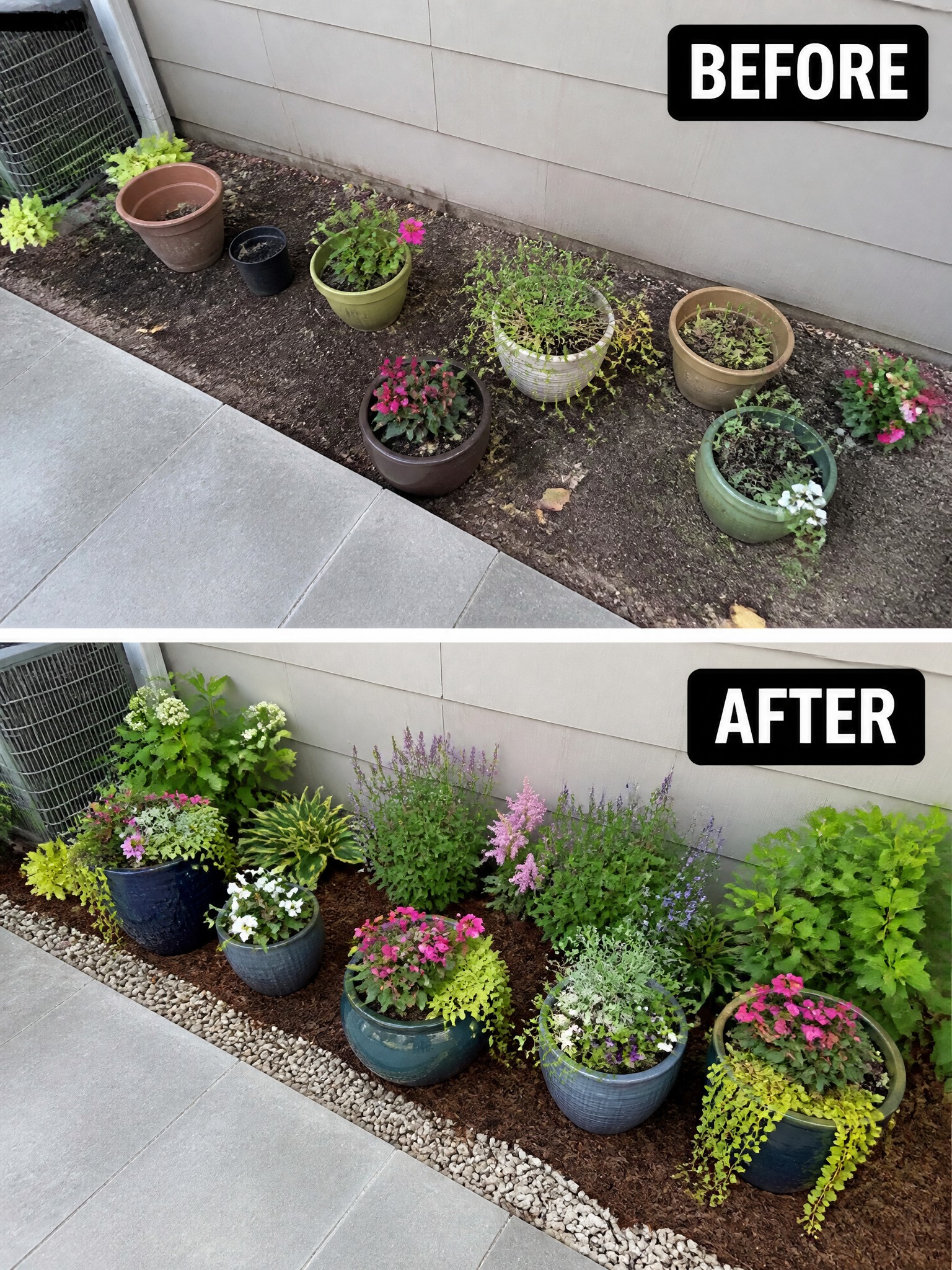
Scattered pots sitting on bare dirt always look temporary. In this case the fix was simple. A layer of mulch, a gravel border, and a tighter grouping of larger planters turned the same narrow strip into something that looks intentional and finished.
This approach works well on any narrow bed that runs along a house or walkway. Start with the edging and mulch first, then bring in fewer but fuller pots in similar colors. The result stays low-maintenance and keeps the soil looking neat even when the plants are still filling in.
Turn An Overgrown Slope Into A Structured Flower Bed

Replacing moss and bare dirt with gravel and grouped flowers gives the slope a clear purpose. The rock border stays, but the planting now fills the space in a way that looks intentional instead of neglected.
This approach works well on sloped borders or areas where grass will not grow. Clear the overgrowth first, add gravel to keep the bed tidy, then use low plants in repeating colors so the bed reads as one unit instead of scattered spots.
Add Structure To An Overgrown Flower Bed

A messy bed often stays messy because there is no clear plan for where plants should go. Clearing the weeds first and then laying down mulch creates clean edges that make the whole area feel intentional. The addition of a small focal point like a simple wooden structure also gives the eye somewhere to land instead of wandering over scattered growth.
This approach works best in narrow side yards or corner beds where space is limited. Start by removing everything that does not belong, then plant in groups rather than single stems so the bed fills in faster. Mulch helps control weeds and gives a finished look while the plants mature.
Define Overgrown Strips With Mulched Planting Beds
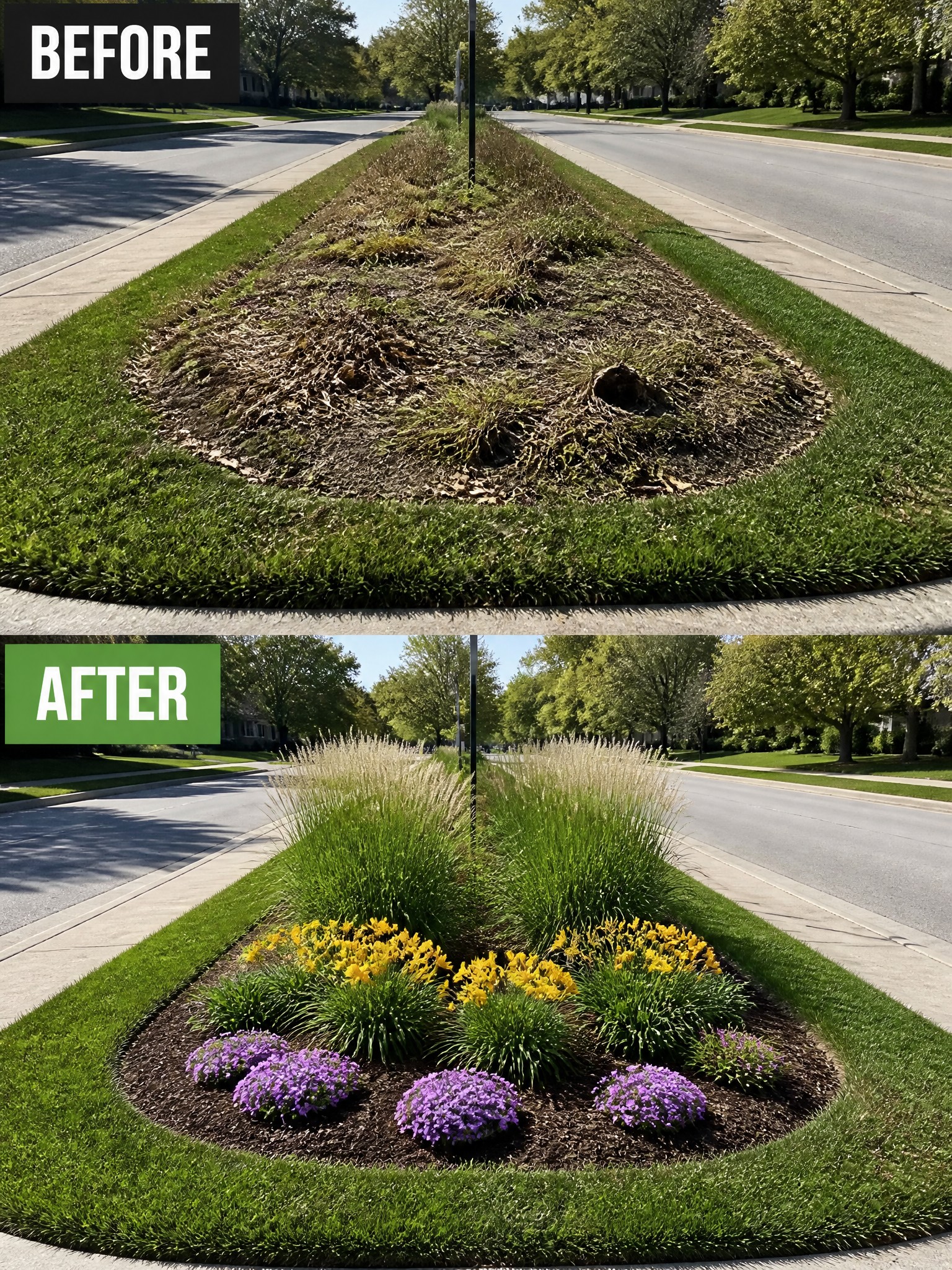
A long neglected strip between the road and sidewalk often ends up full of weeds and dead growth because there is no clear edge or soil prep. Adding a simple mulched bed with a few groups of plants gives the area structure right away and keeps the grass from creeping back in.
This approach works best along streets or driveways where you want low maintenance but still want some color. Start by clearing everything down to bare soil, lay down a good layer of mulch, and plant in clusters rather than scattering single plants. The same idea applies to any narrow strip that gets ignored.
Create A Planted Border Along A Narrow Path
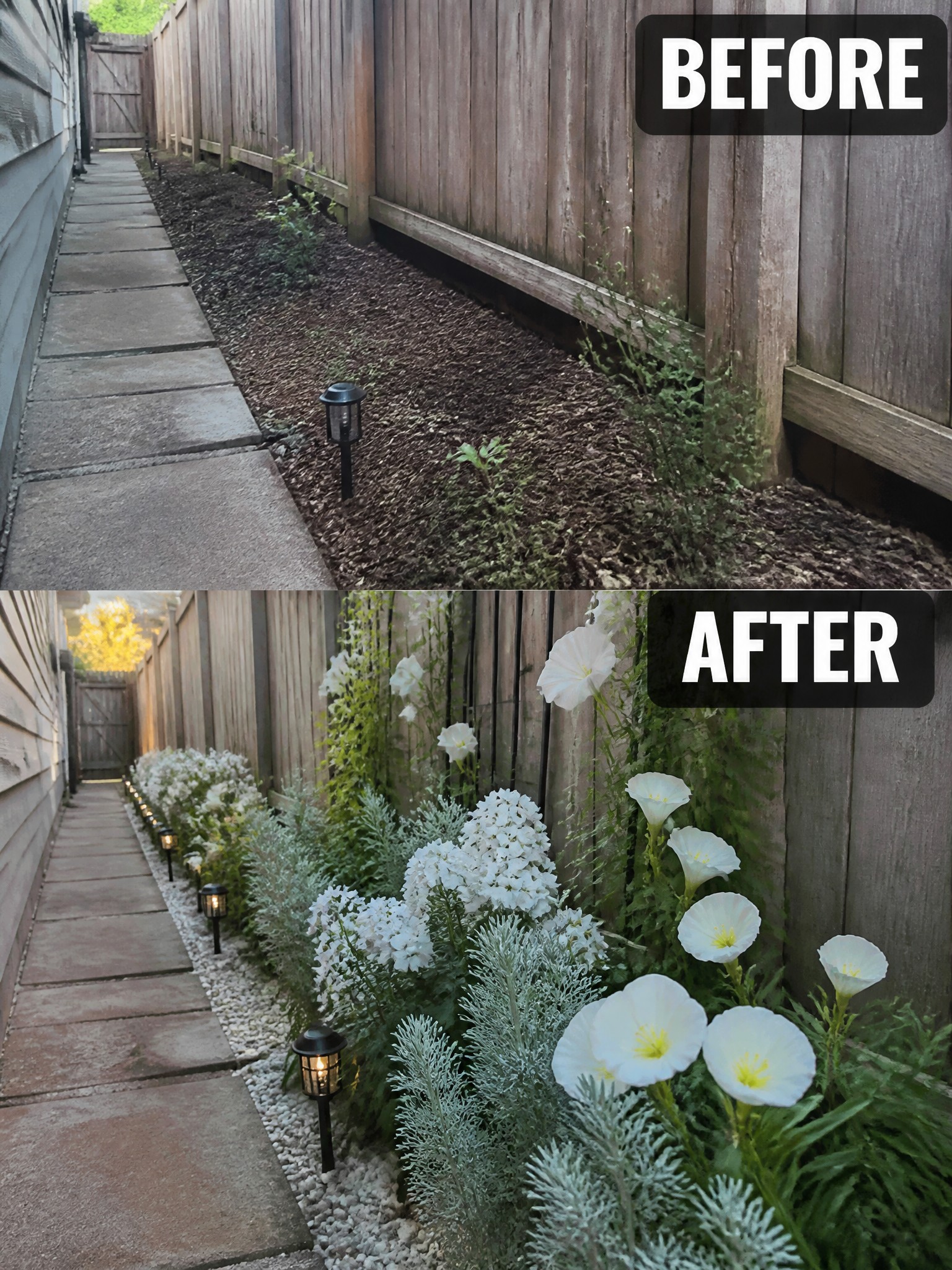
A narrow side yard often ends up as just a strip of mulch that gets weedy and forgotten. Adding a simple border of plants and a few low lights turns it into something that feels intentional instead of leftover space. The change here came from clearing the bare ground and putting in layered white flowers with silver foliage, then adding small path lights that mark the edge without cluttering the walkway.
This idea works best in tight areas where you want the garden to feel connected rather than chopped up. Start with a clean edge and a few repeating plants that can handle the light conditions, then add lights only where they help people see the path at night. Keep the planting low enough that it does not crowd the walkway.
Define A Bare Spot With Layered Garden Planting

A bare dirt patch next to the house and driveway can look unfinished and hard to maintain. Adding a few small trees for height along with clusters of shrubs and flowers fills the space and gives it clear shape. The mulch helps keep everything neat while the plants add color that lasts through the seasons.
This works well along driveways or house foundations where the lawn edge needs something more than grass. Start with one or two trees or tall shrubs, then fill around them with lower plants in groups of three or five. Keep the bed a consistent width so it feels planned rather than scattered.
Add Structure To An Overgrown Flower Bed

A scattered planting often ends up looking messy because nothing holds the space together. Here the change comes from adding low boxwood hedges that create clear shapes and keep the flowers organized inside them instead of letting plants wander across bare soil.
This works best along the front of a house where you want the bed to look neat from the street. Outline the beds first with edging or small shrubs, then fill the sections with repeating colors and a simple path material like gravel. The result stays tidy even after the flowers fade.
Add Window Boxes And A Foundation Bed
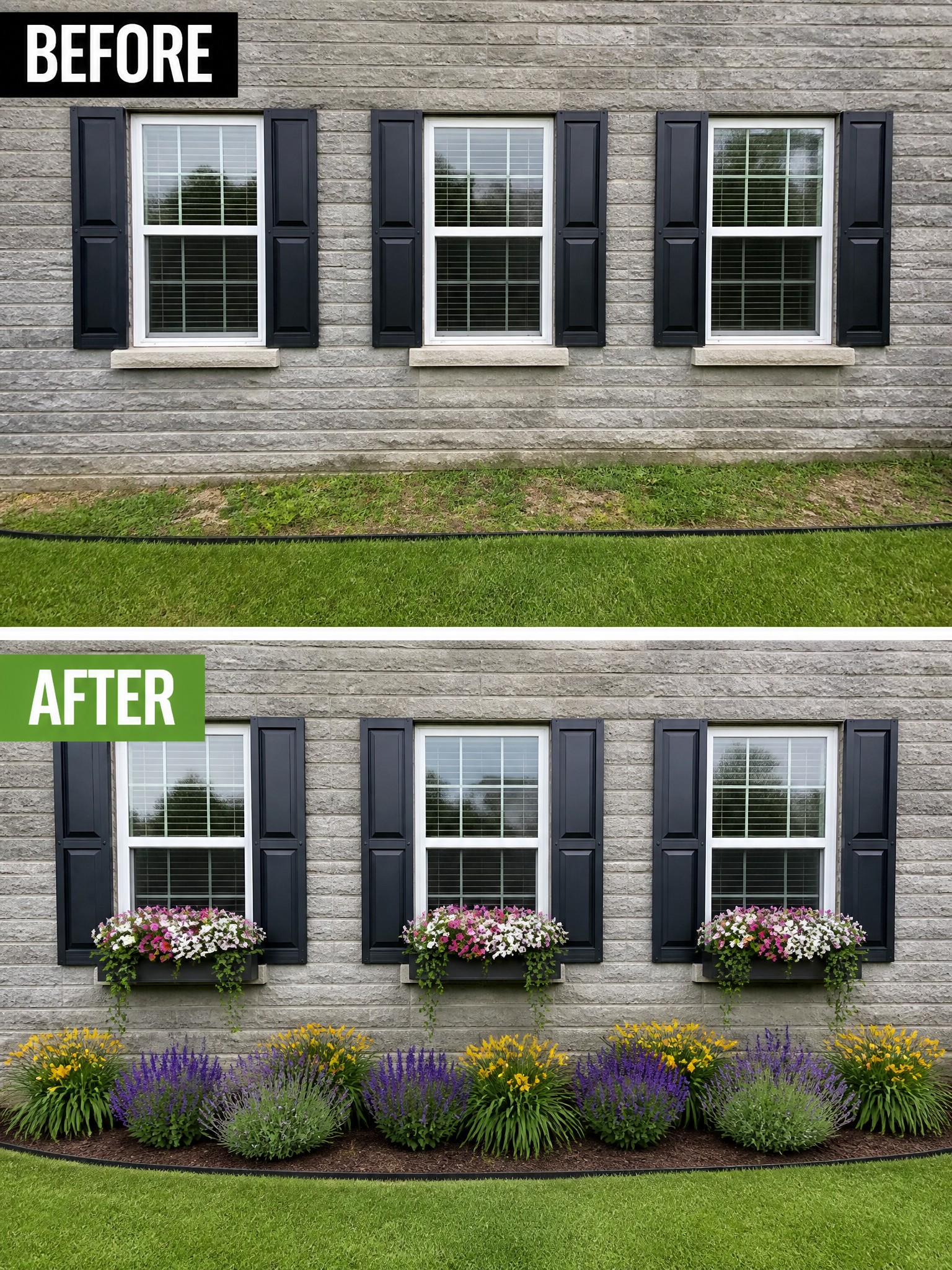
Placing flower boxes under the windows and adding a curved planting bed along the base of the house gives the front a more finished look. The before photo shows just a strip of grass and bare ground, while the after shows how the boxes and the mulched bed pull the windows and the yard together without any major construction.
This idea works best on houses where the windows sit at a similar height and the foundation is fairly flat. Start with the boxes first if you want a quick change, then shape the bed to follow the line of the house. Keep the planting simple with a mix of taller flowers in the back and lower ones near the edge so the bed stays easy to maintain.
Add Structure To Overgrown Flower Beds

Many older flower beds end up filled with weeds and patchy growth after a few seasons. Clearing everything out first lets you reshape the bed with fresh soil, mulch, and a simple planting plan that follows the existing curve.
This idea works best along the front of a house where the bed is visible from the street. Use a mix of heights with taller plants toward the back and lower ones near the edge so the bed looks full without blocking windows or walkways.
Frequently Asked Questions
Q: How do I choose flowers that survive dry spells? A: Go for drought tolerant picks like yarrow or coneflowers. They handle less water once roots take hold. Spread mulch around them to lock in moisture.
Q: What helps if shade covers most of my yard? A: Try shade lovers such as hostas and ferns. They fill the space with lush leaves even without direct sun. Add a few brighter blooms for pops of color.
Q: Do these changes cost much to start? A: Start small with seeds or divisions from friends. Many ideas use easy to grow annuals that fill in fast.
Q: How do I stop the beds from looking overgrown later? A: Deadhead flowers often to push new blooms. Keep paths clear so the design stays visible.
