

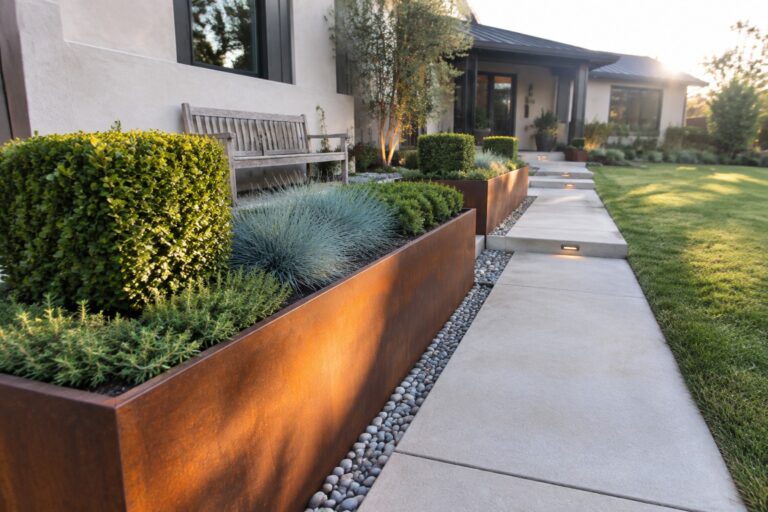
I often start by looking at the ground lines when planning any garden area.
Repeated planting has a way of tying everything together without needing extra features.
In my experience the beds that hold up best are the ones kept simple in shape and plant choice.
Linear layouts make pathways feel more deliberate.
I would try scaling a few of these patterns to my side yard first to see how they settle in over a season.
Linear Beds With Repeated Plantings
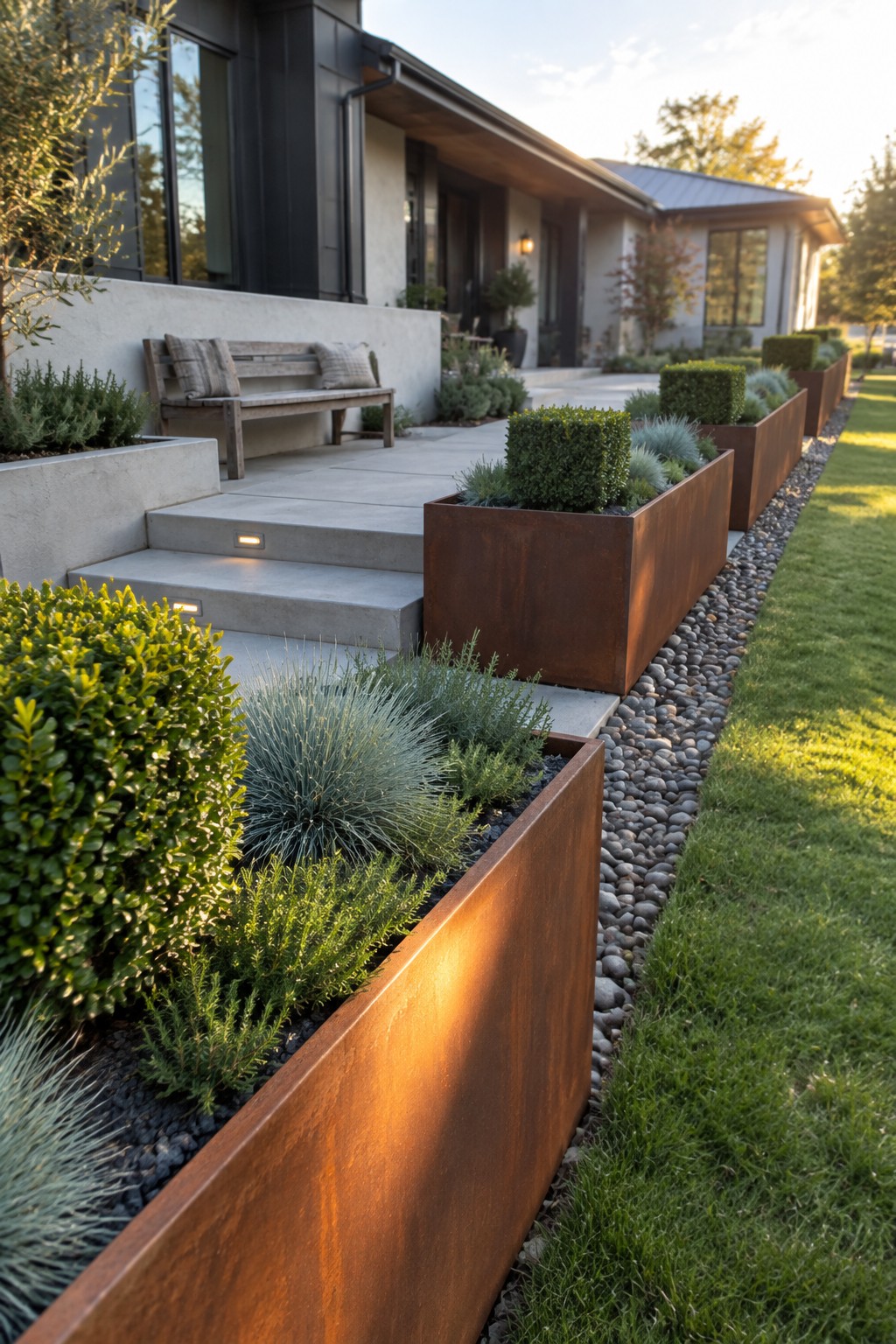
Long, narrow beds lined up in a row give the garden a steady rhythm that feels calm and easy to follow. The same plants show up again and again, so nothing fights for attention and the whole edge stays simple.
This works best along a lawn or walkway on a modern house where you want a clean border without a lot of fuss. Stick with tough shrubs and grasses that repeat well, and use matching metal edges to hold the shape through the seasons.
Linear Beds With Repeated Plantings Along Narrow Side Yards
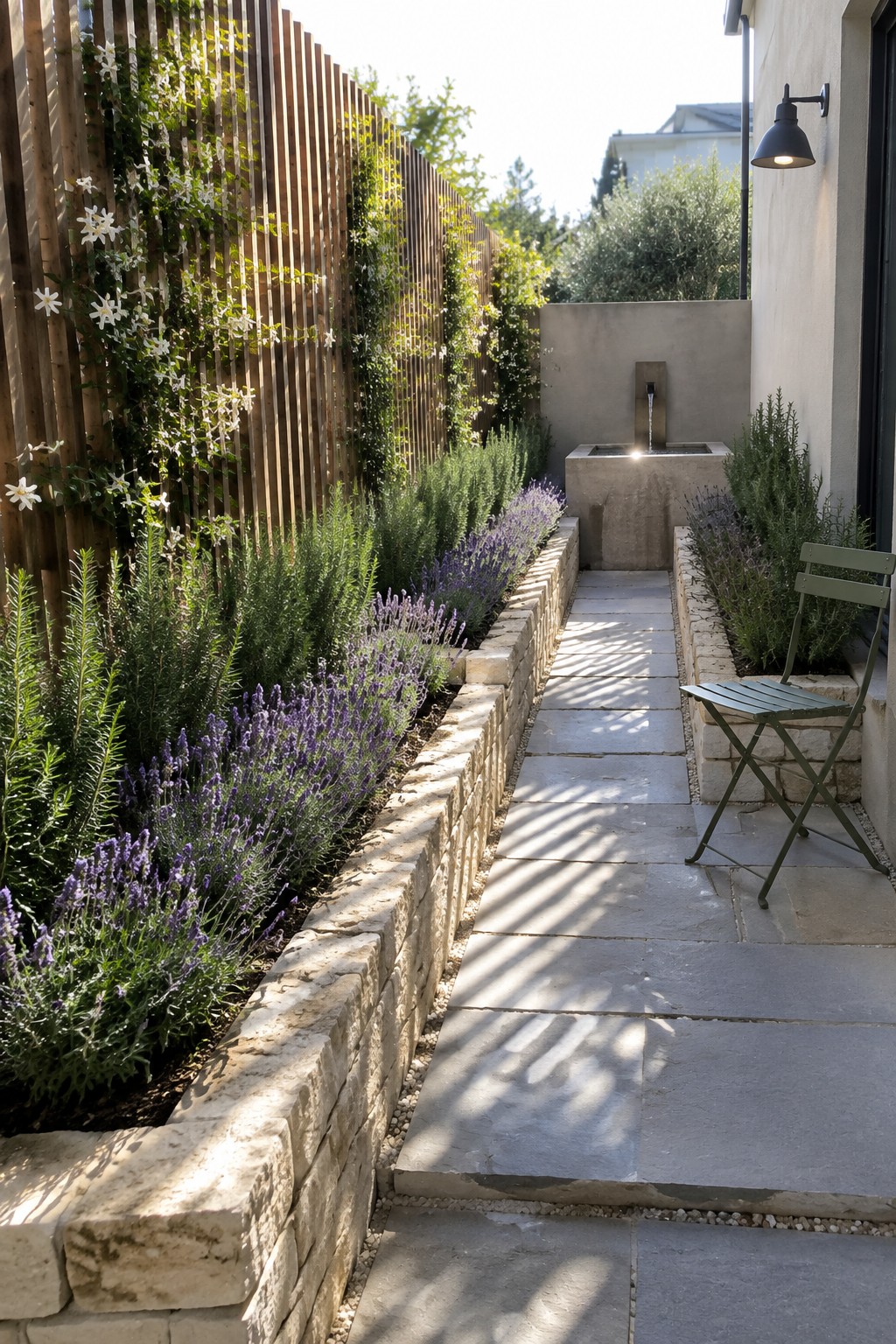
Linear beds bring a simple order to garden paths that most other layouts miss. When you repeat the same plants like lavender along the full length, the space feels calm and pulled together instead of scattered. The stone edging keeps everything neat while the repeated planting gives the eye something steady to follow.
This works especially well in narrow side yards or between a fence and the house. Stick to two or three plant types at most so the repeat stays strong, and make sure the bed stays narrow enough that you can reach everything from the path.
Balanced Linear Beds With Matching Grasses and Shrubs
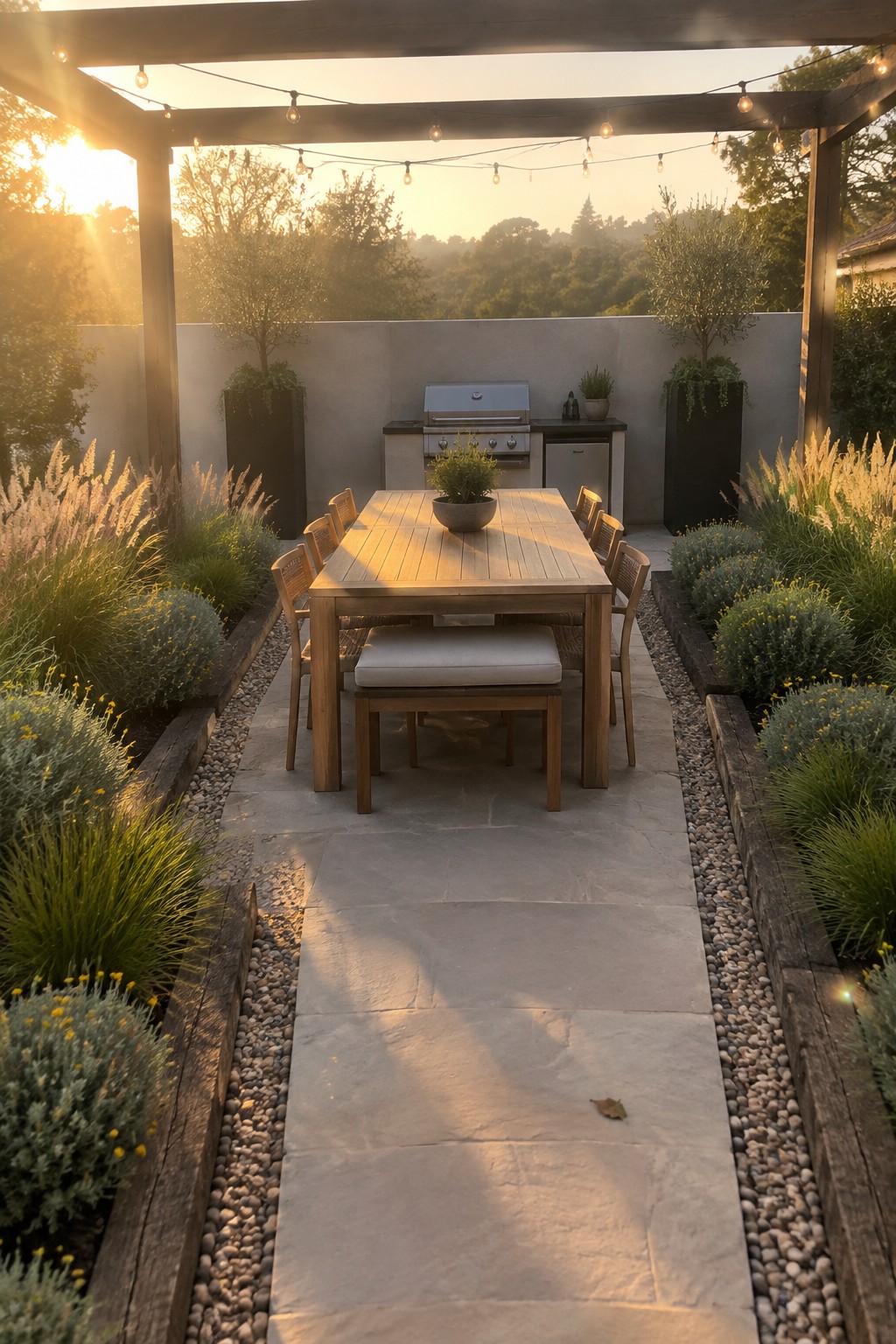
Linear beds give a garden a strong sense of order even when the planting stays fairly simple. Placing the same mix of grasses and shrubs along both sides of a central path creates rhythm and keeps the space from feeling scattered.
This layout works best in long narrow gardens or modern yards where clean lines matter more than variety. Keep the beds narrow, use matching plants on each side, and choose edging that lasts so the shape stays clear year after year.
Straight Raised Beds With Repeated Hedges
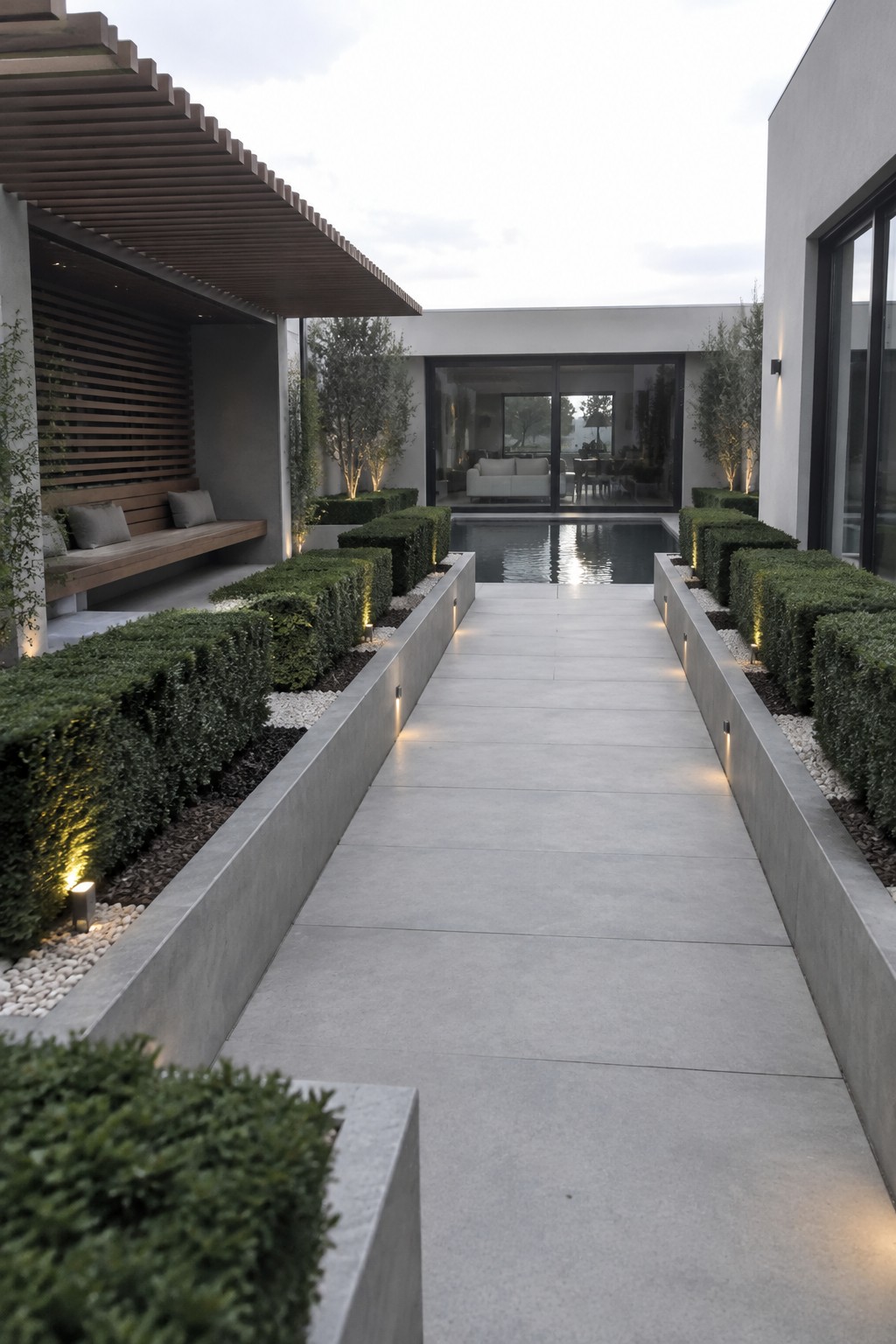
Straight raised beds filled with the same hedge create a clear path and keep the whole garden feeling organized. The repetition makes the space look calm and intentional even when the rest of the yard stays fairly simple.
This layout works best in modern homes with limited outdoor space or along the side of a house where you need structure without crowding. Use the same plant variety in matching beds and keep the edging low so the path stays open and easy to walk.
Linear Beds With Repeated Plants Along Paths and Driveways
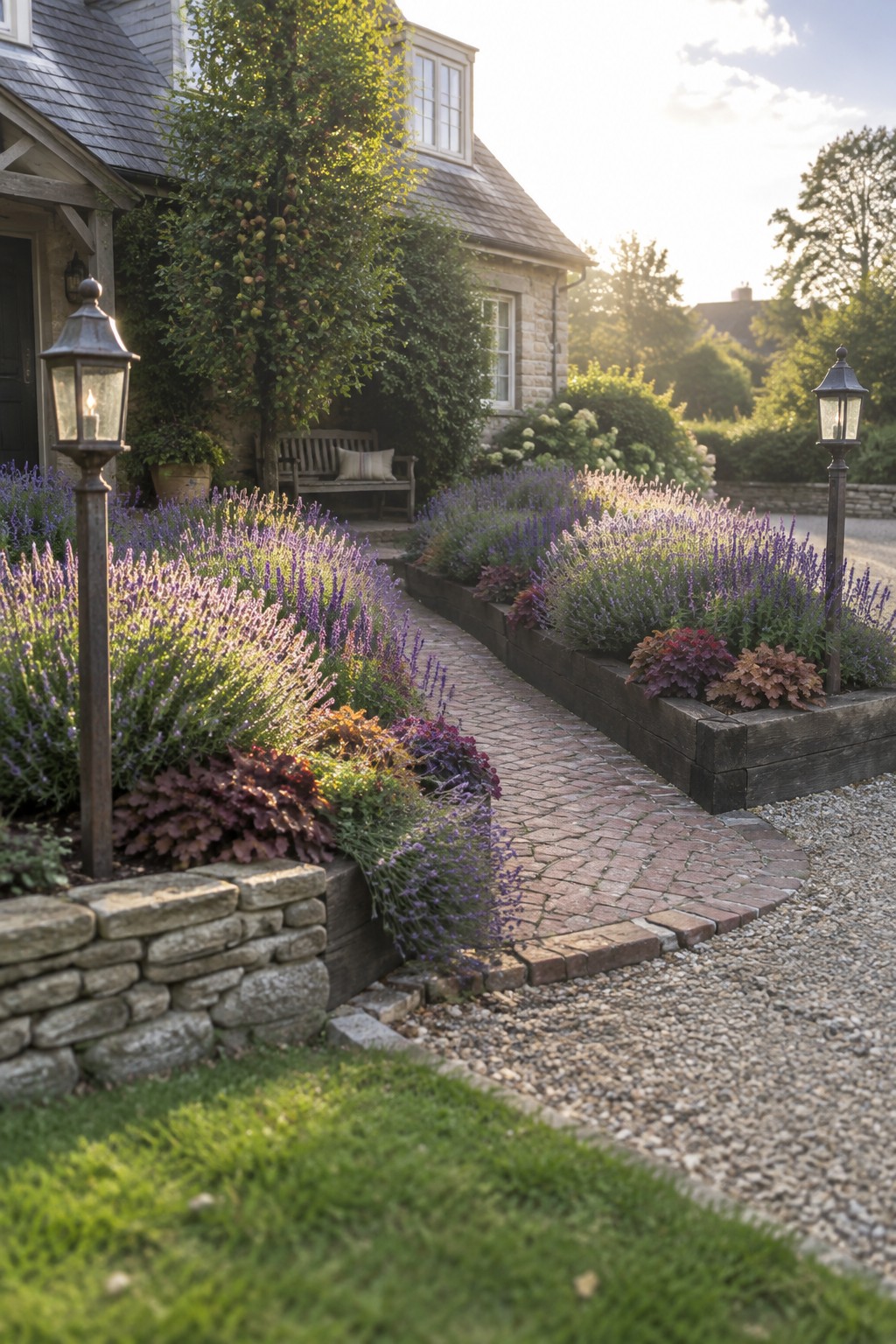
Linear beds give a garden a steady rhythm that feels easy to follow. When the same plants run along the full length of each bed, the eye moves smoothly from one end to the other without any single spot pulling too much attention. Raised wooden edges keep the shape clean and make the repeated planting look intentional rather than scattered.
This layout works best along paths or driveways where you want a simple border that still feels full. It suits older homes with stone or brick hardscaping because the straight lines balance the softer plant texture. Stick to one or two main plants so the pattern stays clear and does not need constant tweaking.
Linear Beds With Repeated Grasses Around Pool Areas

Running the same tall grasses and leafy plants in straight beds along the pool gives the space a steady, orderly look. The repetition keeps the eye moving down the length without any single spot pulling too much attention.
This works best on long, narrow outdoor areas where you want structure without a lot of fuss. Keep the beds the same width and stick to just two or three plant types so the line stays clean.
Linear Beds Framing Gravel Garden Paths
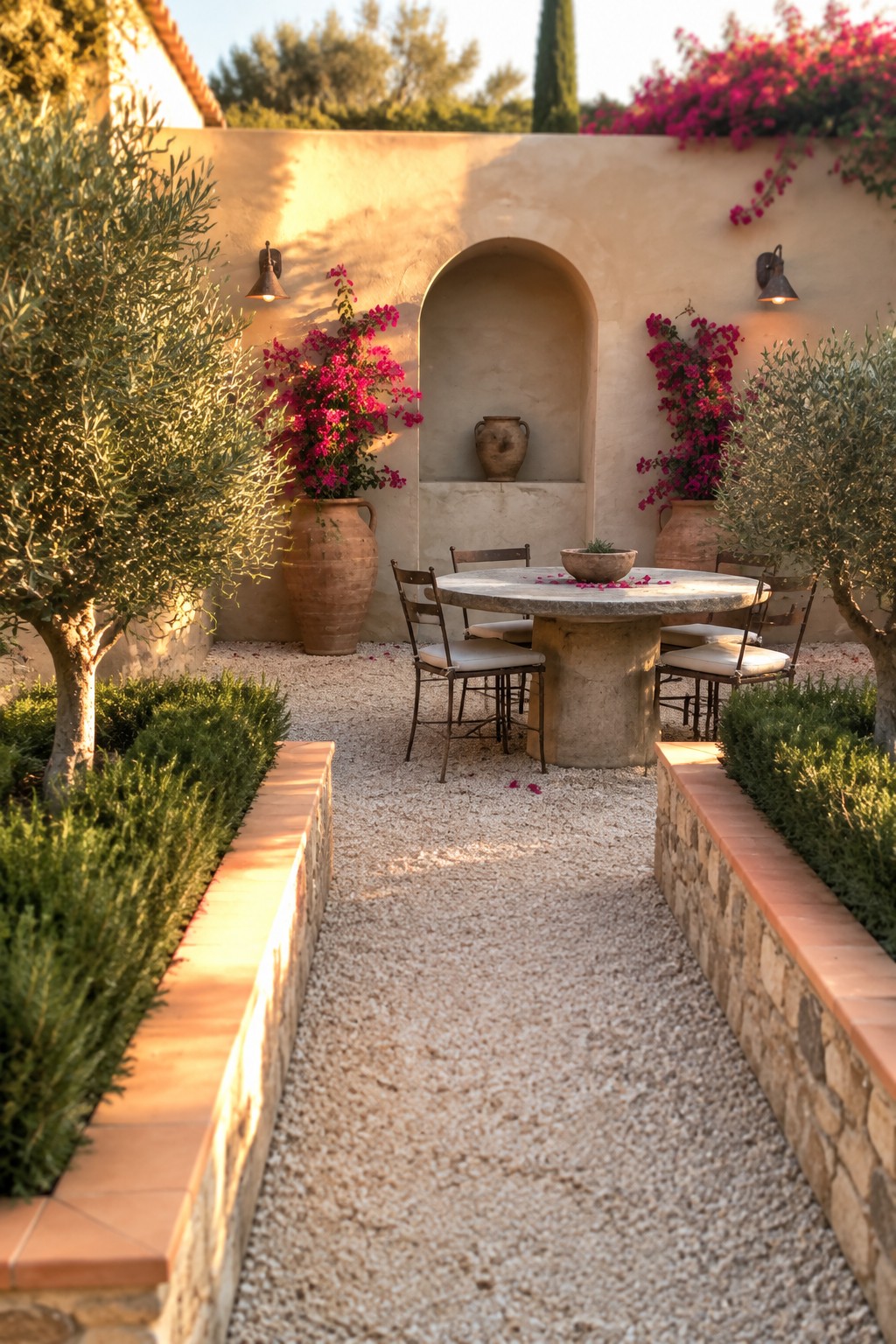
Linear beds running along both sides of a gravel path give the garden a clear, steady structure. The repetition of the same trees and shrubs on each side makes the space feel balanced and easy to follow, even in a small courtyard.
This layout works best in sunny climates where olive trees and tough shrubs can handle the exposure. Keep the beds the same width and depth on both sides so the repetition reads as intentional rather than random.
Linear Planters With Repeated Plants for Balcony Edges
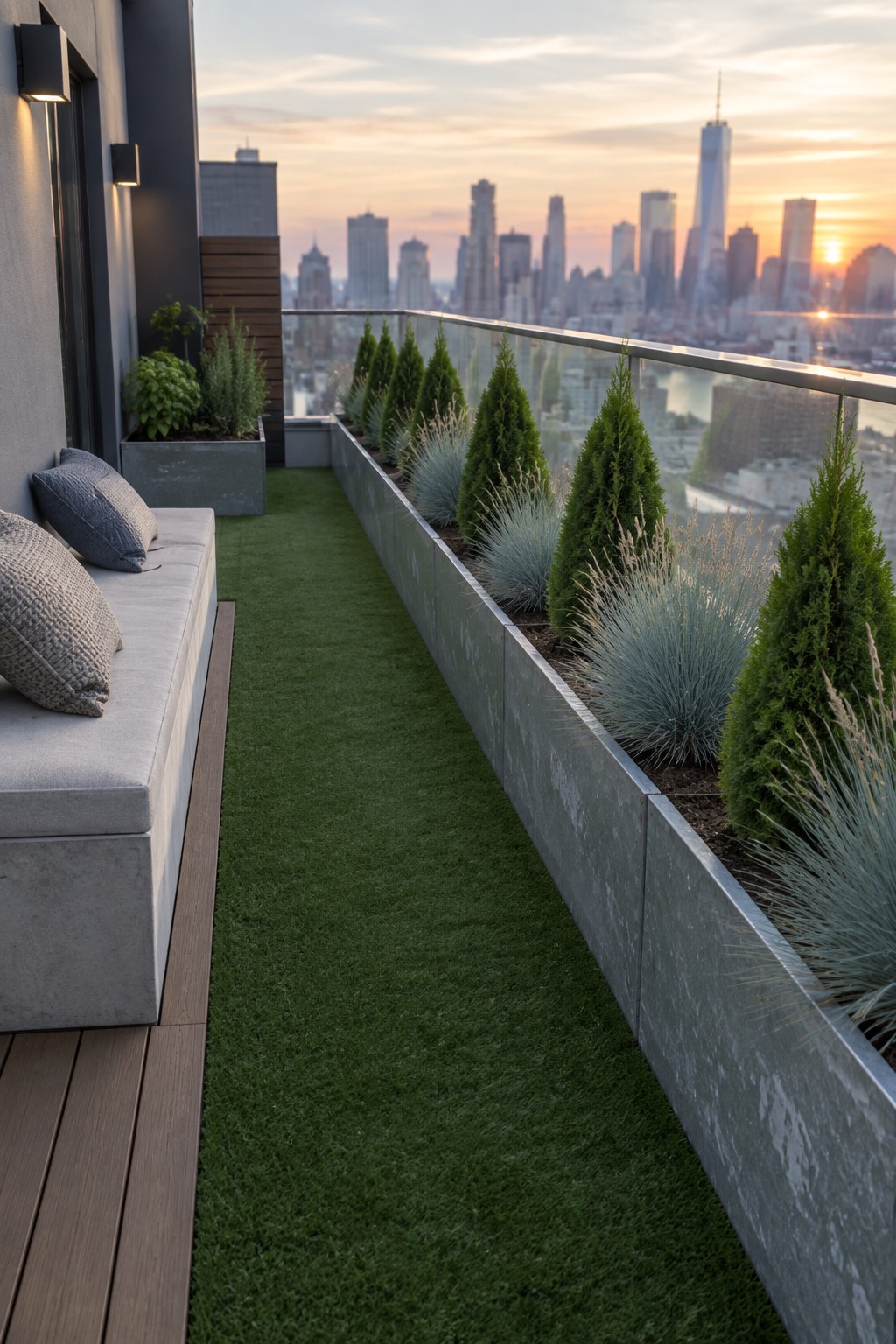
A long, narrow planter running the length of an outdoor space gives the area a clear edge and keeps the planting simple. Repeating the same evergreens and grasses avoids a scattered look and makes the whole terrace feel more put together.
This works especially well on balconies and rooftops where space is tight and you want low maintenance. Stick to two or three plant types that stay roughly the same height, and let the straight line of the bed do the main job.
Linear Raised Beds With Repeated Herb and Lettuce Rows
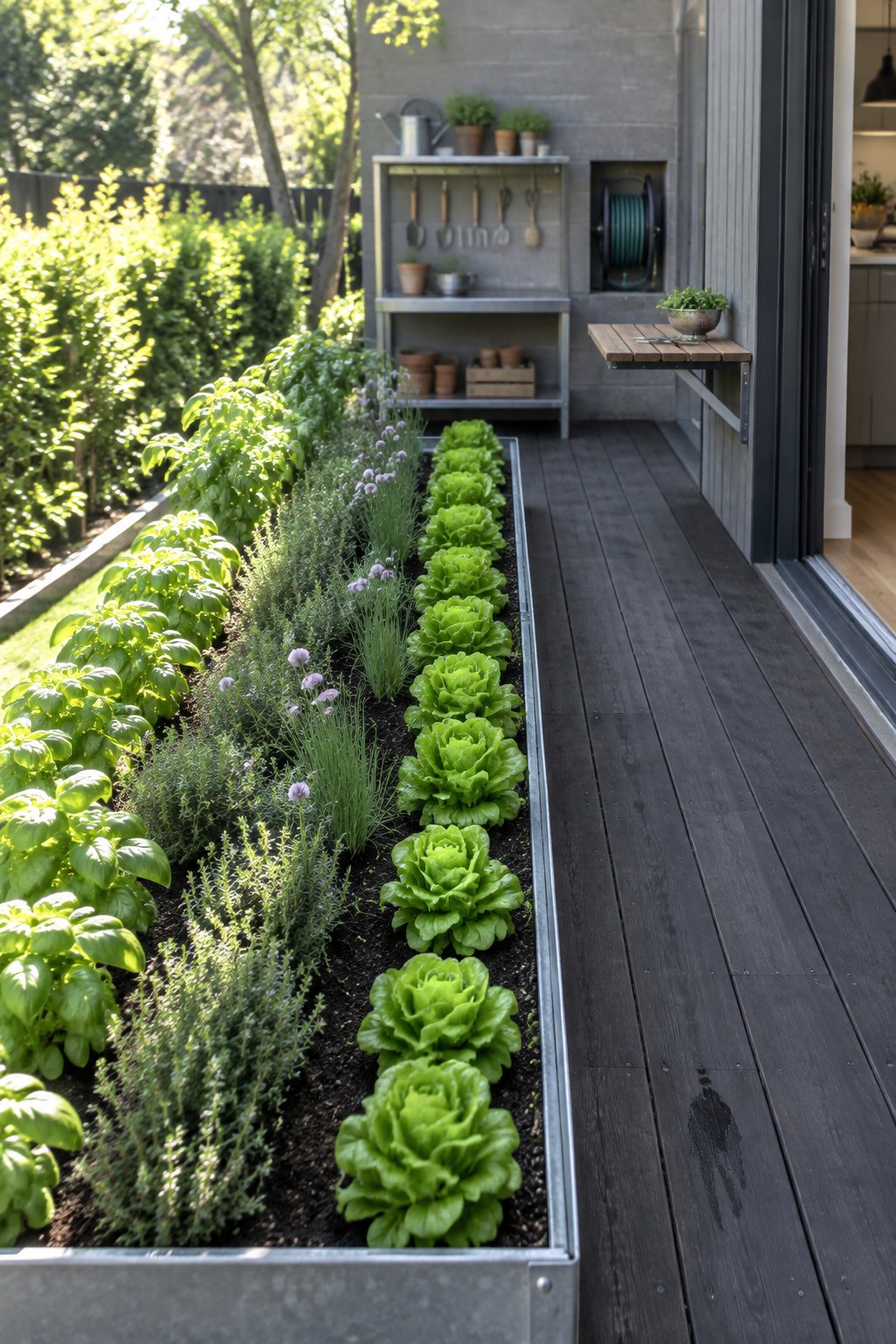
A long straight bed with the same plants lined up in order keeps the garden looking tidy and easy to manage. The metal edges hold everything in place while the repeated lettuce and herb rows create a simple pattern that does not need much extra styling.
This works best along a deck or patio edge where space is narrow. It suits homes that want a productive garden without a lot of fuss, and it stays practical as long as the rows get enough sun and the bed stays narrow enough to reach across.
Linear Beds With Repeated Plants Along Walkways
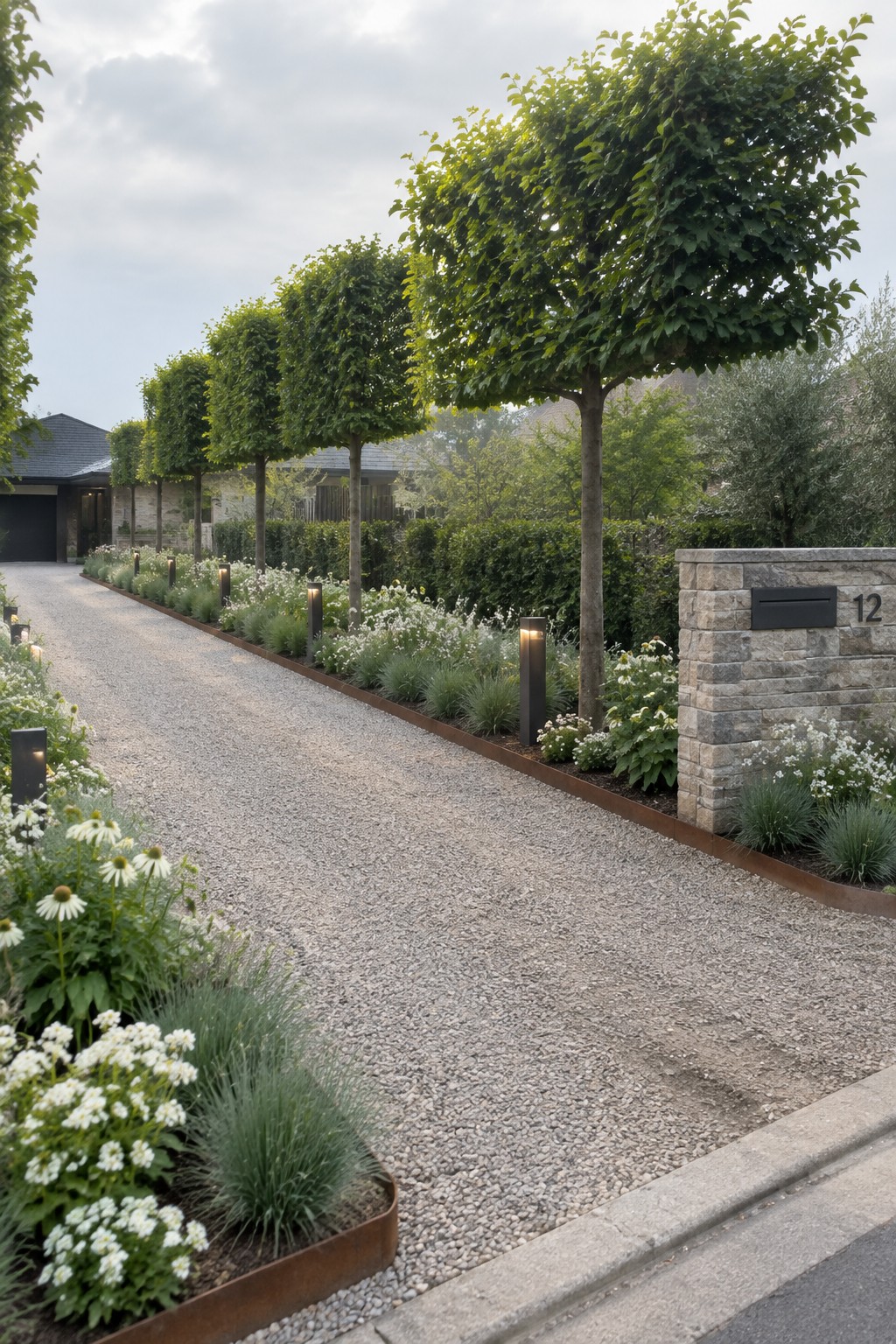
Straight beds planted with the same trees and flowers in a steady rhythm give a long driveway a calm, orderly look. The repetition ties everything together and keeps the eye moving forward instead of stopping at random clumps of plants.
This approach works well on properties where the drive is visible from the street. Use one or two low perennials and a repeating tree like the ones shown here, then keep the edging simple so the pattern stays clear. It suits homes with gravel or paved drives that need structure without extra maintenance.
Repeat Rounded Shrubs In Linear Beds
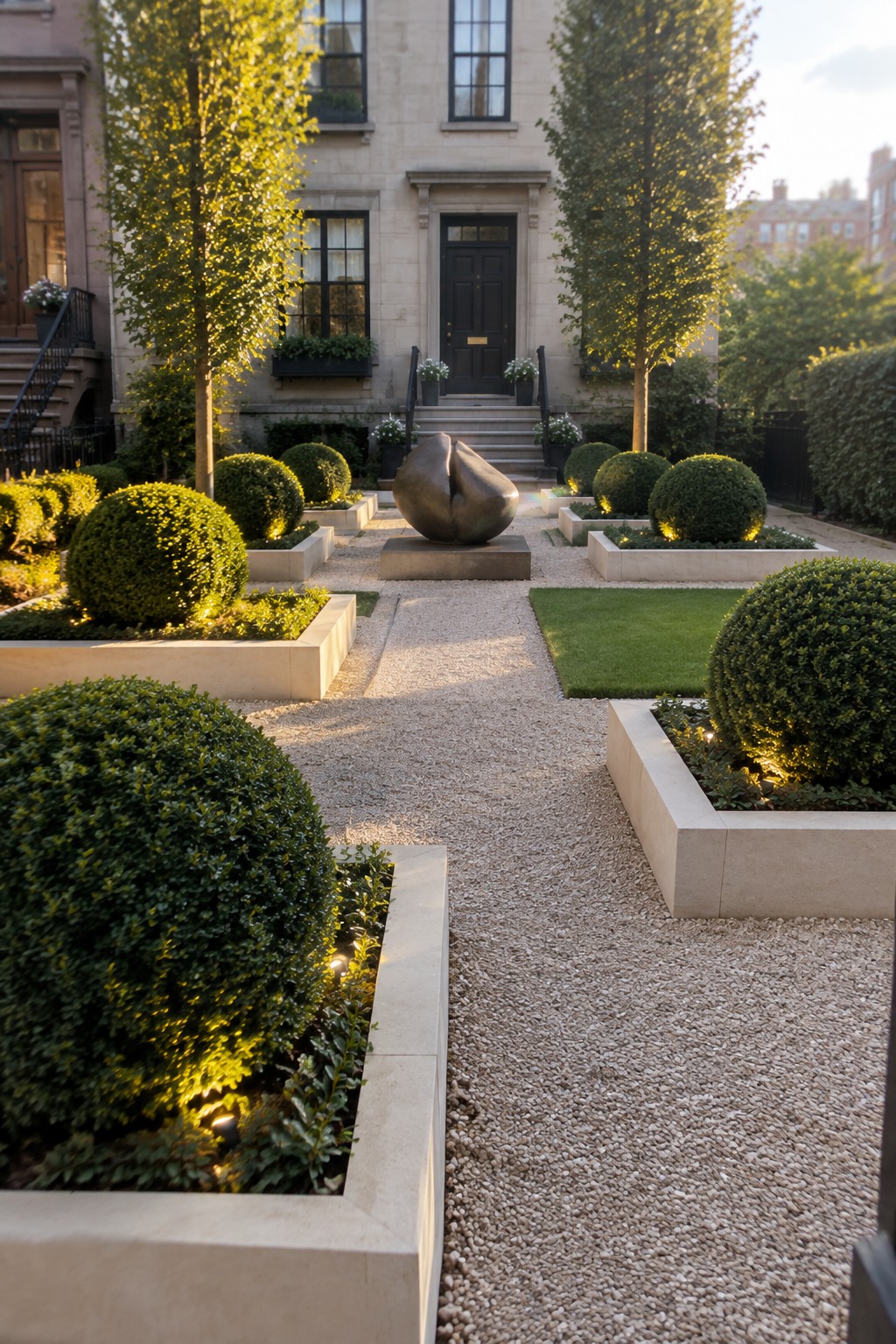
Repeating the same rounded shrub in straight raised beds gives a garden clear structure without much fuss. The even spacing and matching forms create a steady rhythm that feels calm and organized, even when the rest of the yard has more going on. This approach works especially well along paths or in front of a house where you want order without looking stiff.
It suits homes with simple architecture and works best when the beds stay narrow and the gravel or paving between them stays light in tone. Keep the shrubs clipped to the same size and skip mixing in too many other plants if you want the repetition to read clearly.
Linear Beds With Repeated Grasses Along Stone Paths
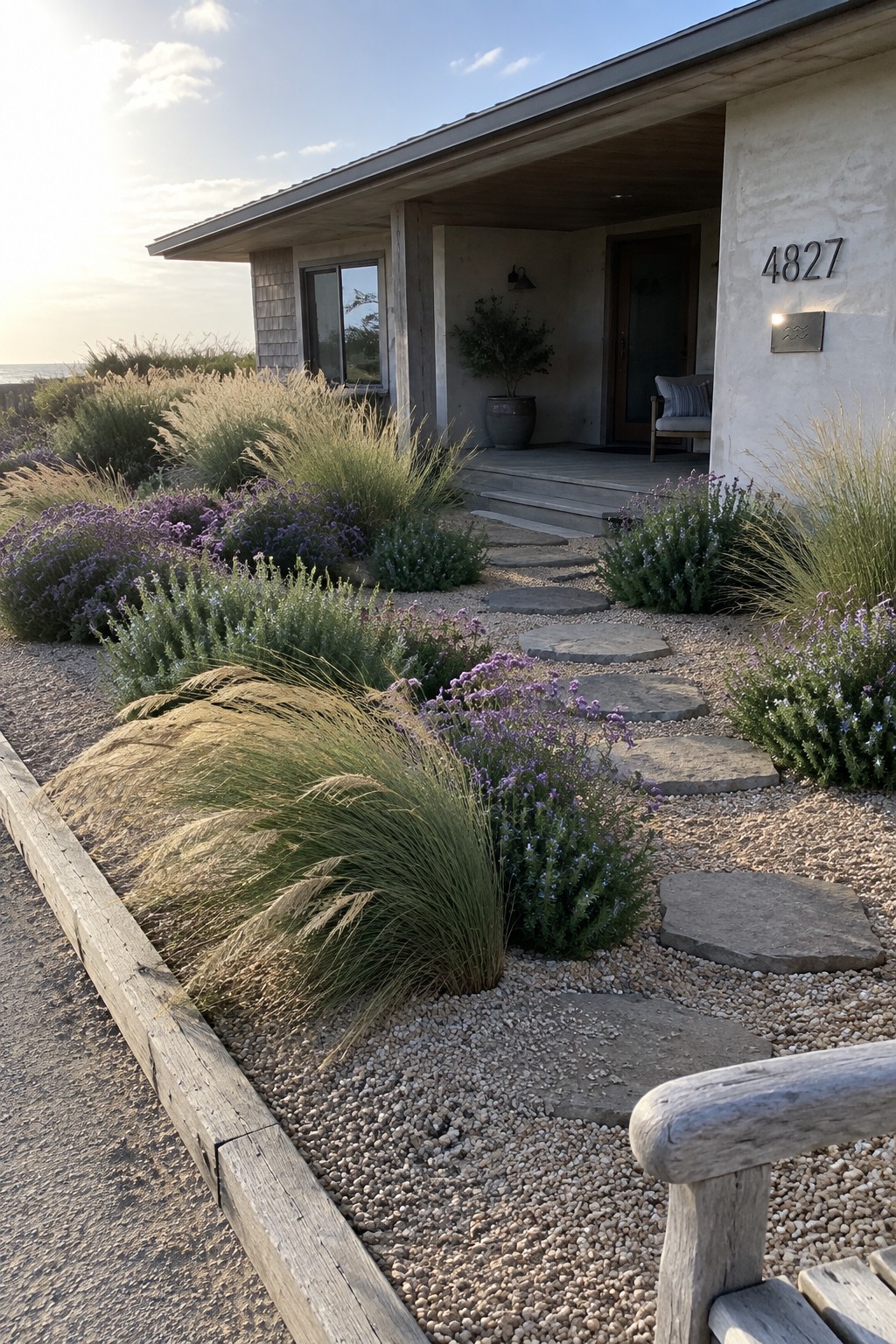
This setup uses the same grasses and flowering shrubs in long, narrow beds that run alongside a simple stone path. The repetition keeps the garden looking orderly and calm even when the beds sit right next to the house.
It suits modern homes that already have clean lines. Lay the beds in gravel, space the same plants at regular intervals, and let the path cut straight through. The main thing to watch is keeping the plant list short so the pattern stays clear.
Linear Beds With Repeated Plants Along Walkways
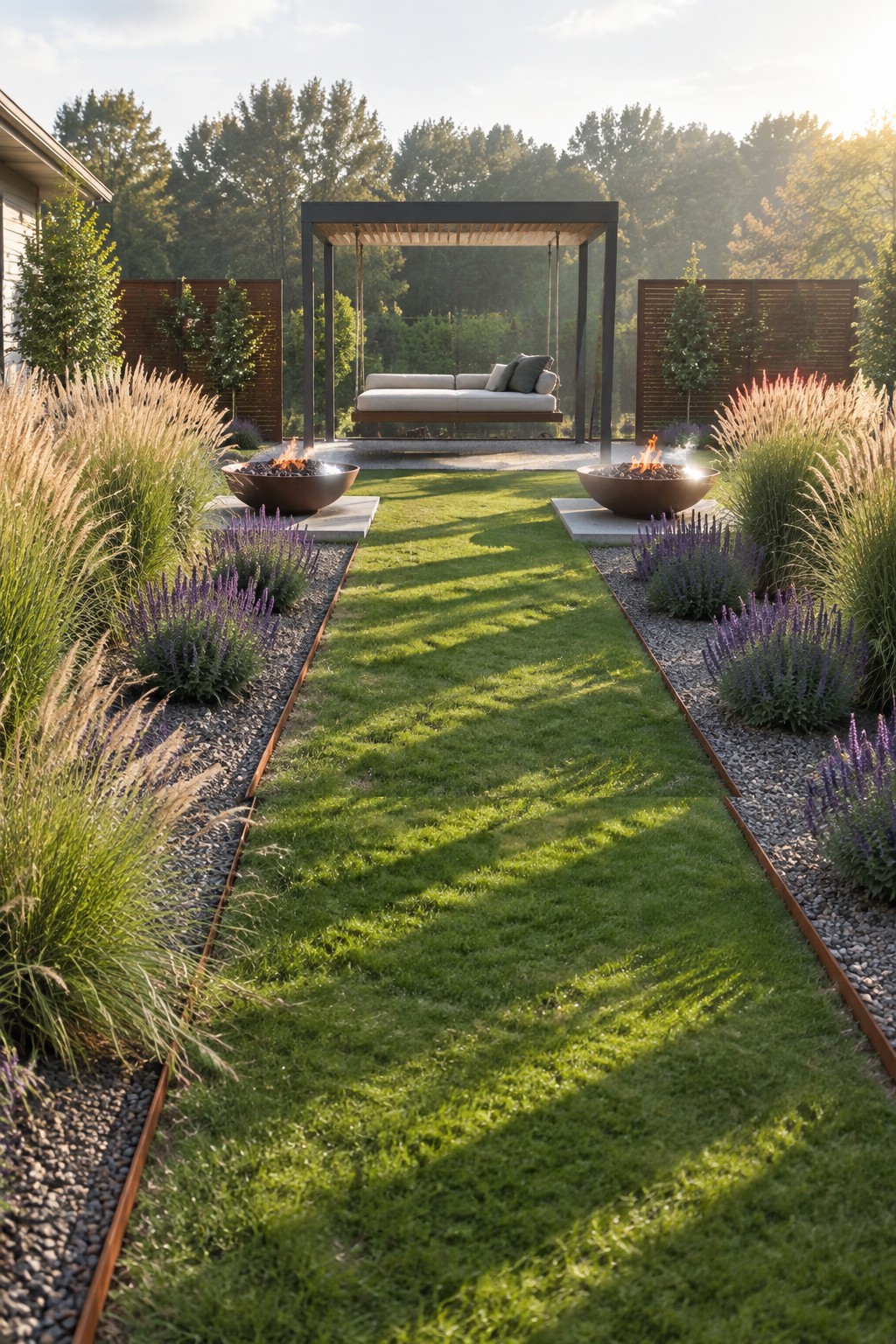
Linear beds give a garden a steady, orderly look that feels calm rather than busy. When the same plants repeat along both sides of a path, the eye moves forward easily and the whole space feels more structured.
This works best in smaller yards or along a walkway where you want clear lines without a lot of maintenance. Keep the plant choices simple, use gravel or metal edging to hold the shape, and repeat the same groupings so the pattern stays strong through the seasons.
Linear Beds With Repeating Plant Groups in Narrow Side Yards
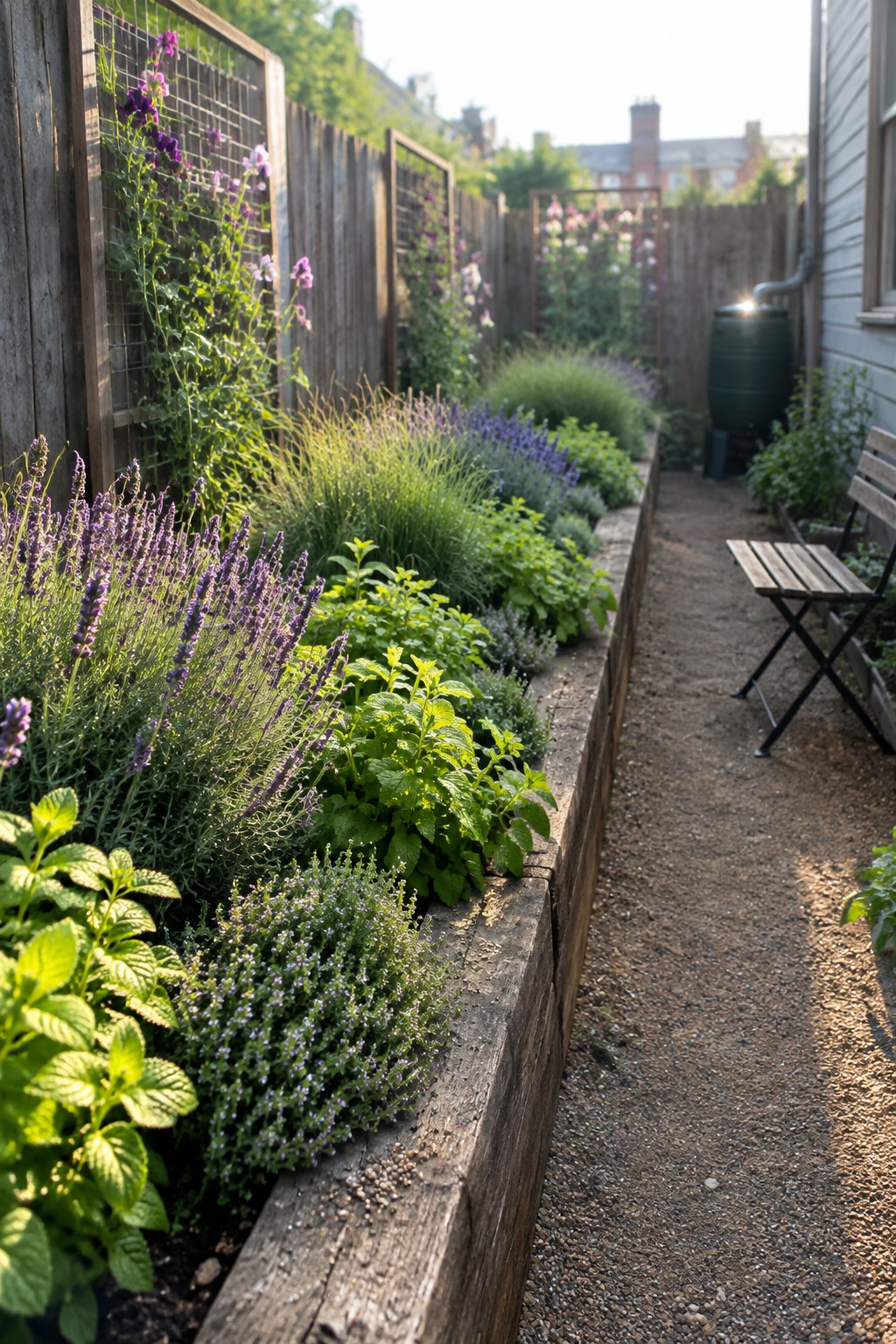
Linear beds give a garden a steady, orderly look that feels easy to manage. The repeating groups of plants along the length create rhythm without needing a big space or complicated layout. Wood edging keeps everything tidy and defines the beds clearly against a gravel path.
This works best in narrow side yards or along fences where you want structure but still room to walk. Choose two or three plants that repeat, like lavender and mint, and keep the bed width consistent so the pattern stays simple to maintain.
Linear Beds With Repeated Succulents
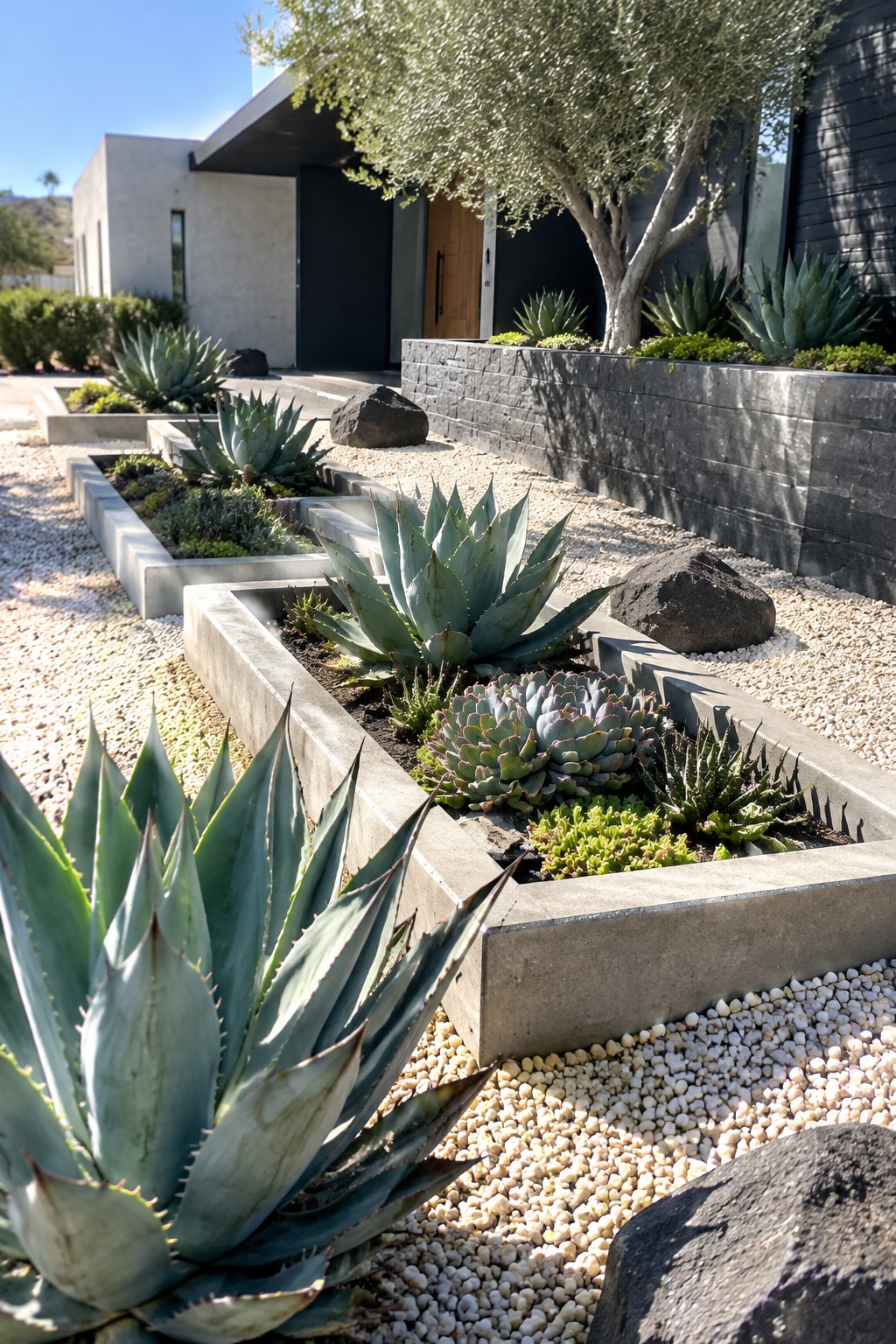
Straight raised beds give a garden an orderly frame that is easy to keep up. When the same plants are used in each bed the whole area feels calmer and more put together instead of busy.
This approach works best in front yards or side gardens next to modern houses. Concrete beds like the ones shown hold groups of agave and smaller succulents in the same pattern, while the surrounding gravel keeps the look simple and helps with drainage. It suits dry climates and homes that already have clean lines.
Linear Poolside Beds With Repeated Grasses and Shrubs
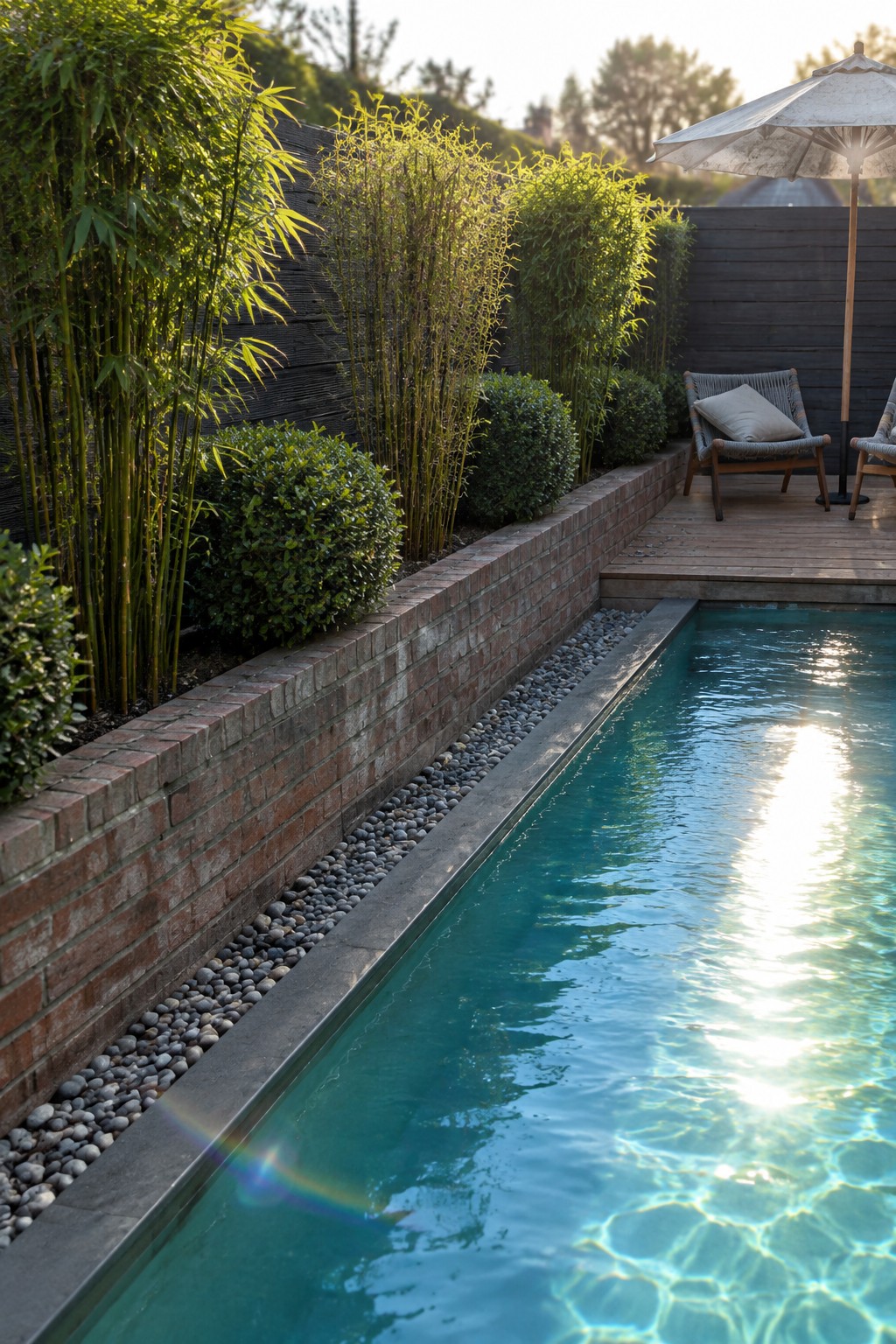
A straight planting bed running along the edge of a pool gives the whole area a calm, organized feel. The repeated mix of tall grasses and lower shrubs creates a steady rhythm that softens the hard lines of the water without crowding the space.
This setup works best in smaller or modern yards where you want a simple boundary between the pool and the rest of the garden. Keep the bed narrow, use the same plant grouping all the way down, and edge it with a low wall or gravel strip so it stays easy to maintain.
Linear Raised Beds Simplify Repeated Planting
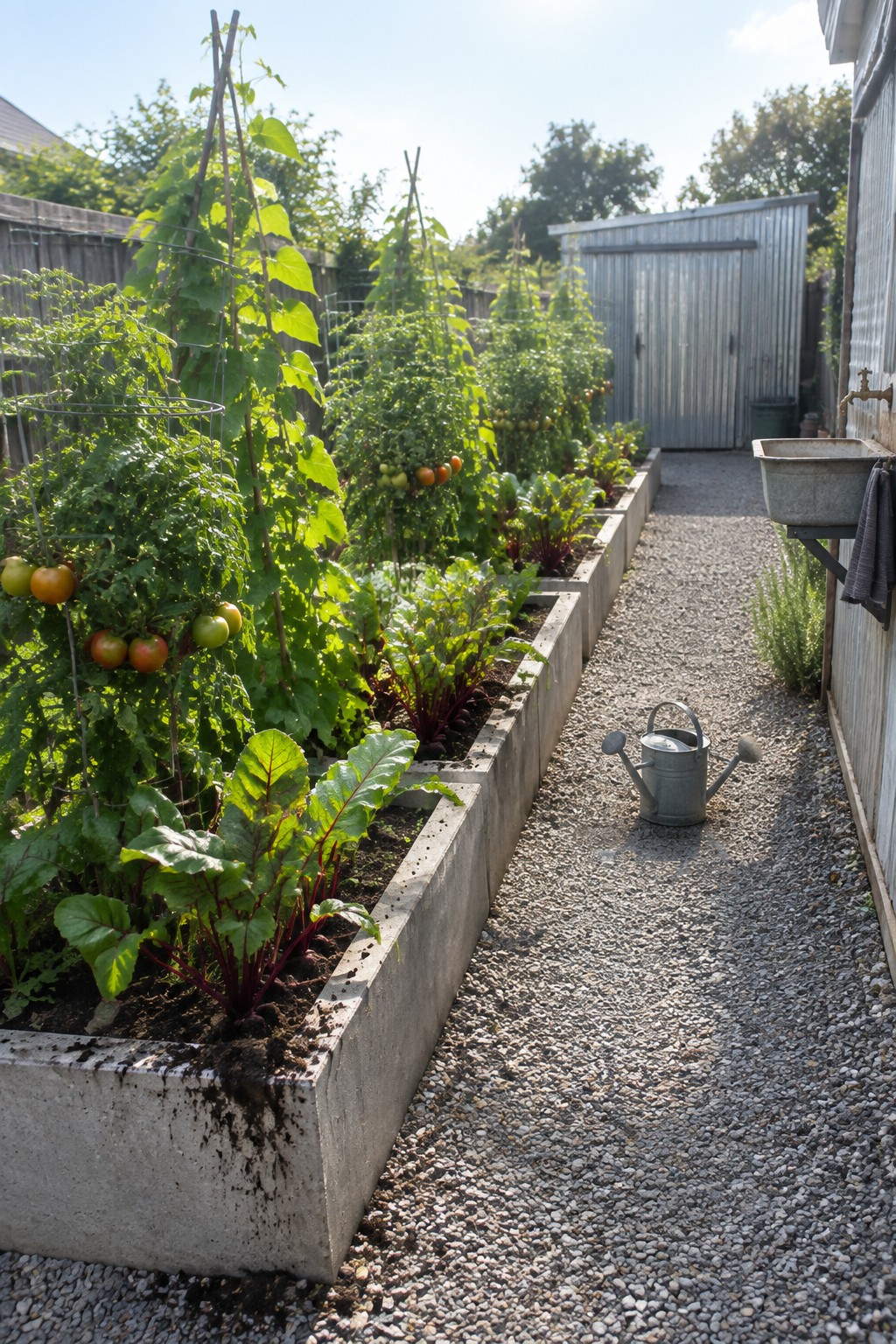
Linear raised beds give a garden clear structure that makes repeated planting straightforward. The straight lines keep crops like tomatoes and greens organized in rows, so you can tend and harvest without stepping into the soil.
This approach works best in narrow side yards or along a path where space needs to stay open. Use simple edging like concrete and keep the beds at a consistent width so the pattern stays easy to maintain over time.
Linear Beds With Gabion Edging
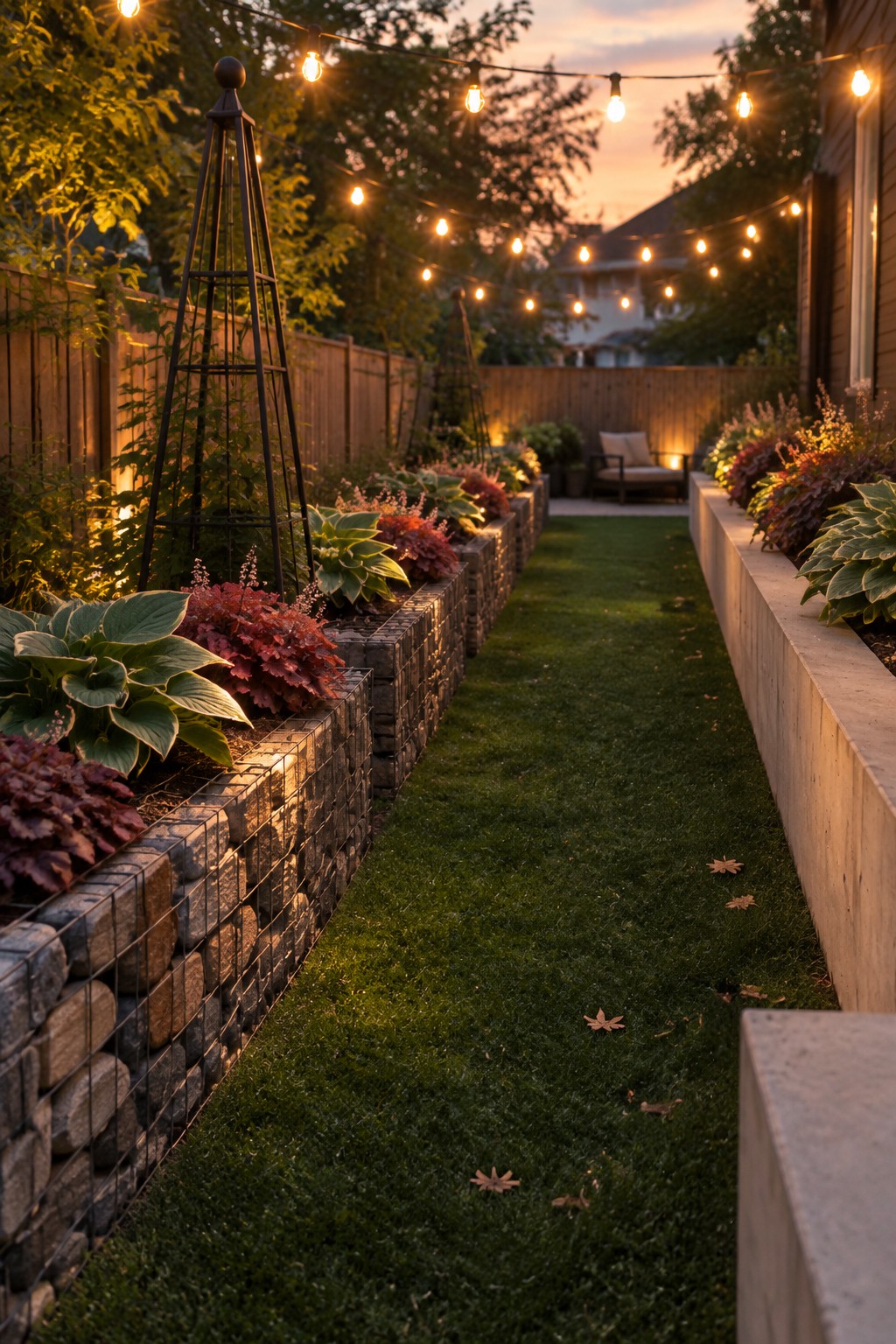
Linear beds give a narrow garden a clear shape that is easy to maintain. The straight lines and repeated plants keep the space from looking scattered, especially when the beds run the full length of a side yard or path.
Gabion walls make a solid edge that holds the soil and adds texture without extra materials. This setup works best in tight spaces between a house and fence, where you want structure but still need room to walk through.
Linear Beds With Repeated Plants for Balconies and Terraces
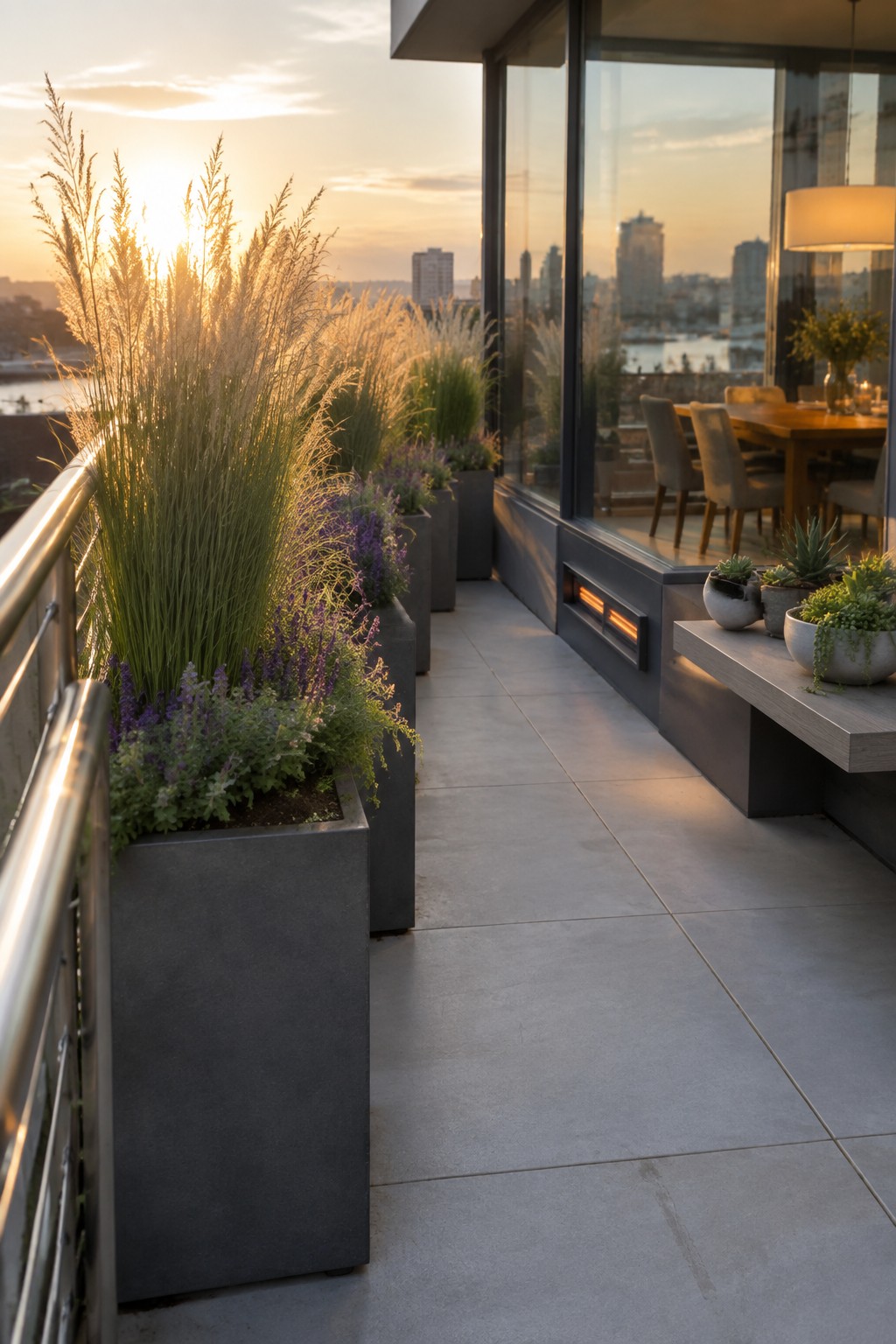
Linear beds give an outdoor space a steady rhythm that feels calm rather than busy. When the same grasses and flowering plants repeat in a straight row, the eye moves easily along the line and the whole area looks more put together.
This setup works best on balconies or narrow terraces where you want structure without crowding the floor. Keep the plant list short, use matching containers, and let the repeated pattern carry the look. Too many different varieties will break the clean line you are trying to create.
Linear Beds With Repeated Plant Groupings
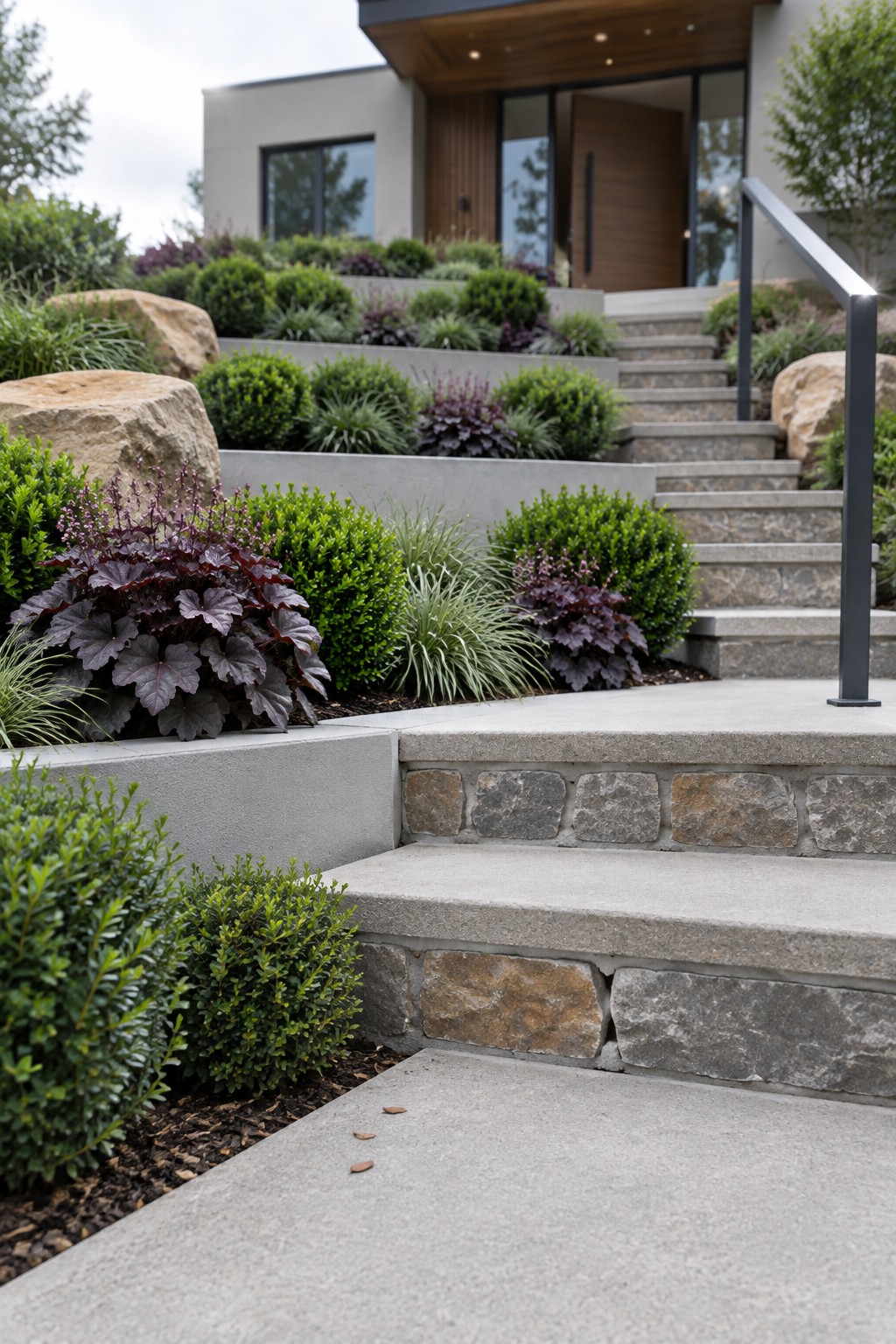
Linear beds work well when you repeat the same plants in clear groups instead of mixing too many varieties. This approach gives the garden a calm structure that still feels full, and it keeps maintenance simpler because you only need to care for a few types of plants along the whole run.
The style suits homes with steps or slopes where you want the planting to follow the lines of the hardscape rather than fight them. Place the tallest shrubs toward the back of each bed and let the same low growers repeat in front so the pattern stays easy to read from the walkway.
Linear Raised Beds Along Deck Edges
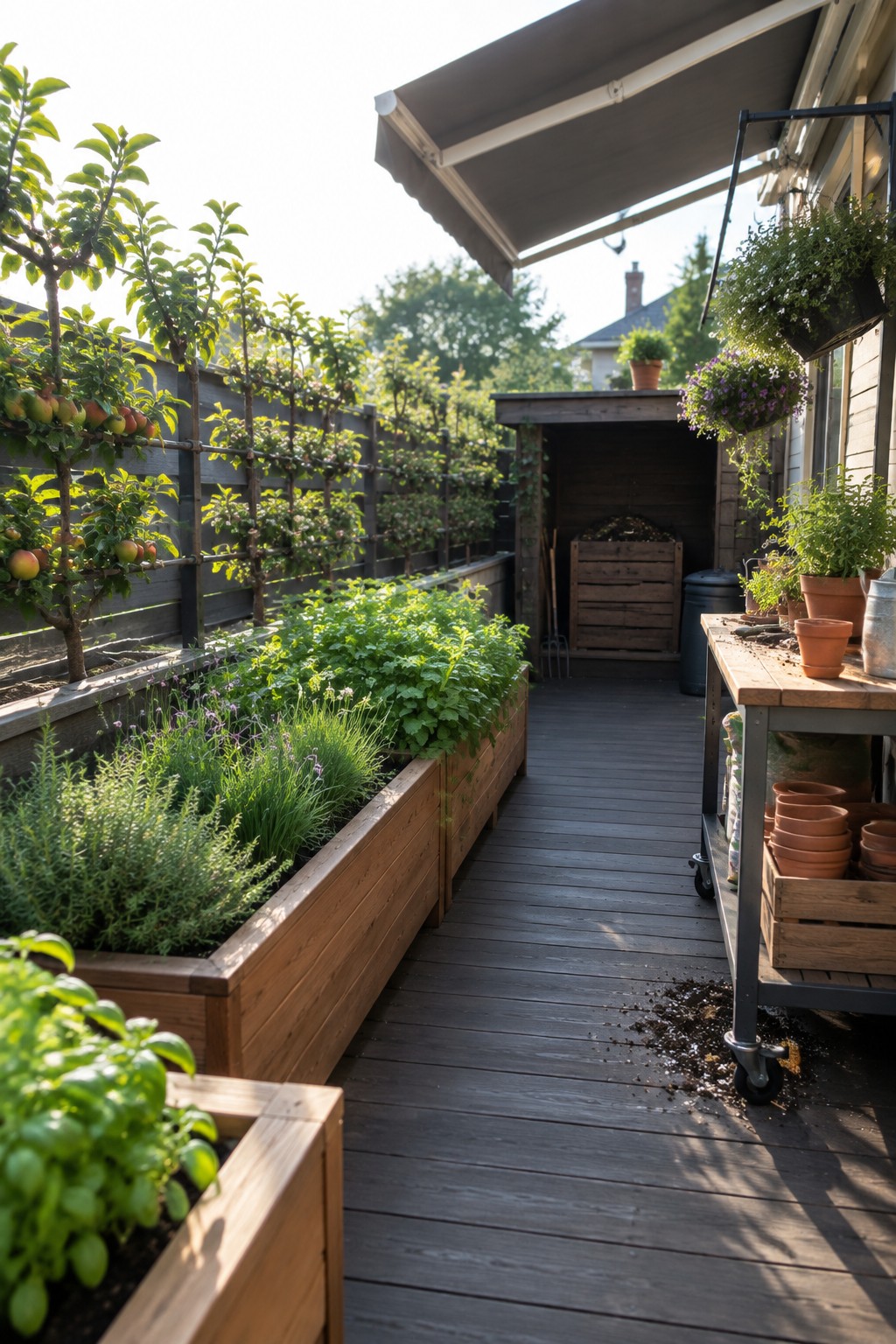
Linear raised beds turn a narrow deck edge into useful growing space without crowding the walkway. The long wooden planters hold repeated rows of herbs and smaller plants while the trellis behind supports trained fruit trees in a straight line. This keeps the layout clean and makes maintenance simpler because everything stays within easy reach.
The approach works best on decks or side yards where space runs long but stays tight in width. Stick to the same plant groups along the full length so the beds read as one calm feature instead of a scattered mix.
Frequently Asked Questions
Q: How far apart should I space the same plants in a straight bed?
A: Measure the mature width of your plant and add a few inches so the foliage just touches. This keeps the line looking full without crowding the roots. Check the spacing again after the first season and adjust any gaps that opened up.
Q: What happens if one or two plants in the row die?
A: Pull the dead ones out right away and pop in matching replacements from the nursery. Keep a few extras in pots over winter so you always have backups ready. The repeated pattern stays strong when you fill gaps quickly.
Q: Do I need to water the whole bed the same amount?
A: Walk the length of the bed and check soil moisture at both ends and the middle. Water longer in spots that dry out faster, such as near a wall or in sandy patches. This simple check keeps every repeat plant growing at the same rate.
