

I’ve noticed that cottage gardens hold together best when the flower borders are planned in actual layers instead of just filling space with whatever looks pretty at the nursery.
The way taller stems rise behind midsize clumps and then drop down to low edging plants gives the whole area a sense of depth that changes with the seasons.
Layering takes time to show.
In my yard the paths and the way plants meet the lawn edges matter more than the colors themselves because they decide how the space actually feels to walk through.
A few of these ideas look like they could be added one border at a time so the garden settles without needing a full overhaul.
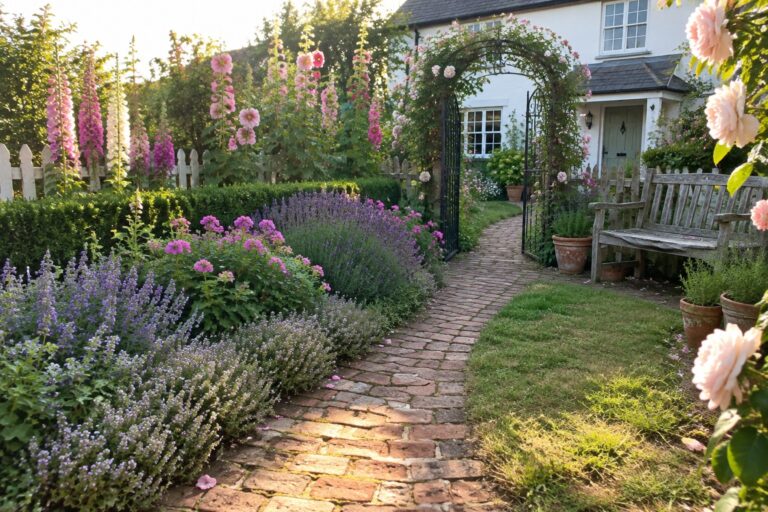
Layer Plants by Height Along Garden Paths

One simple way to make cottage borders feel full and lively is to layer plants by height. Tall spiky flowers sit at the back, midsize clumps fill the middle, and low spreading ones line the front edge. This setup gives the border depth so it reads as a single rich planting rather than a row of separate flowers.
It works best along a path where people pass close by, since the layers stay visible as you walk. Use it on narrow beds or longer runs where you want the planting to feel structured without looking stiff. Keep the tallest plants to about a third of the bed width so the lower layers do not get lost.
Layer Plants By Height For Depth
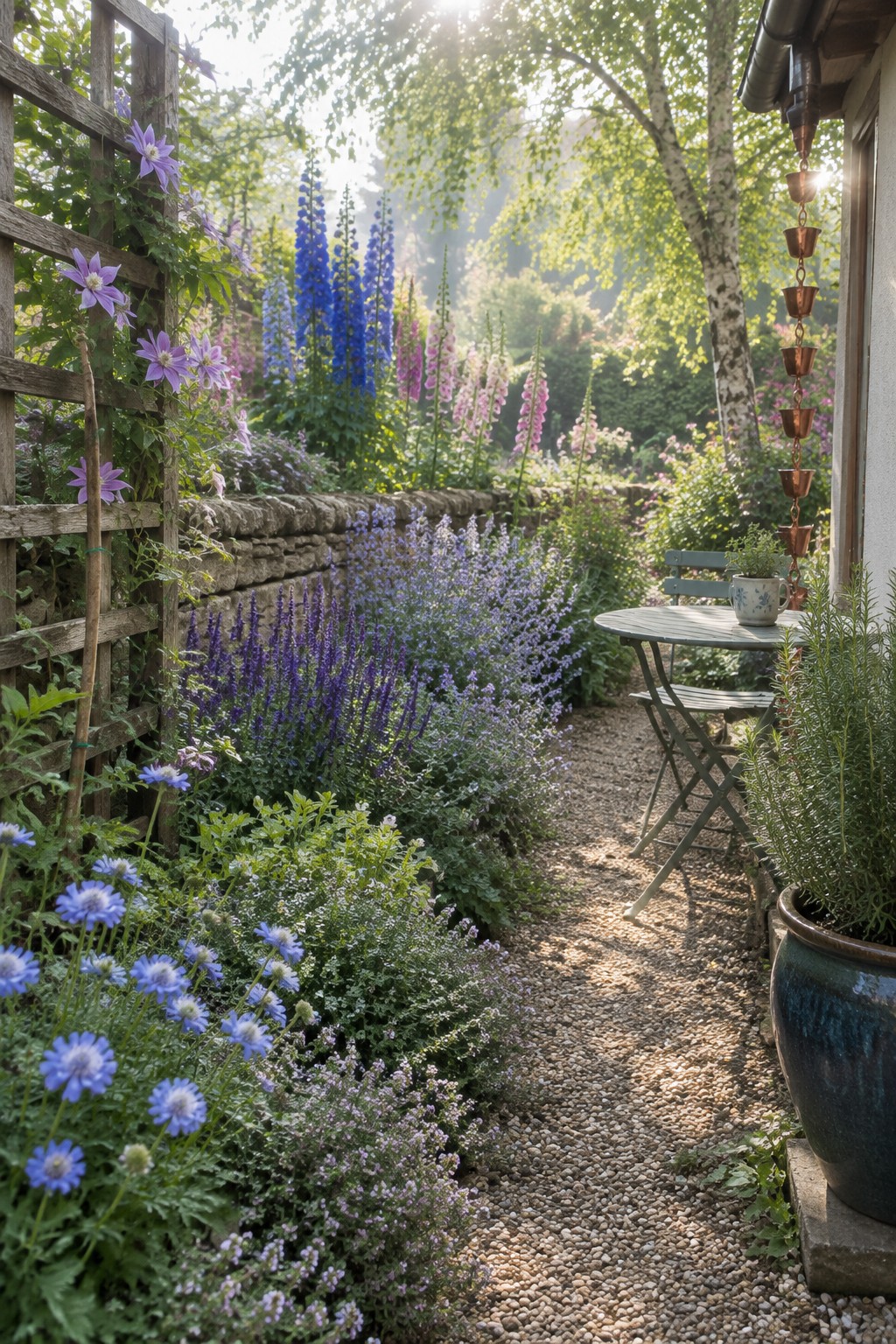
Layering plants by height gives cottage borders that full, overflowing look without crowding. Tall spires like delphiniums sit at the back against the wall, mid-level salvia and catmint fill the middle, and shorter blooms edge the path. This simple stacking makes even a narrow strip feel generous.
It works best along gravel paths or low stone walls where the slope of the bed is visible. Keep the front layer low and the back layer at least twice as tall so the colors stay easy to read from the walkway.
Layer Plants by Height Along Paths
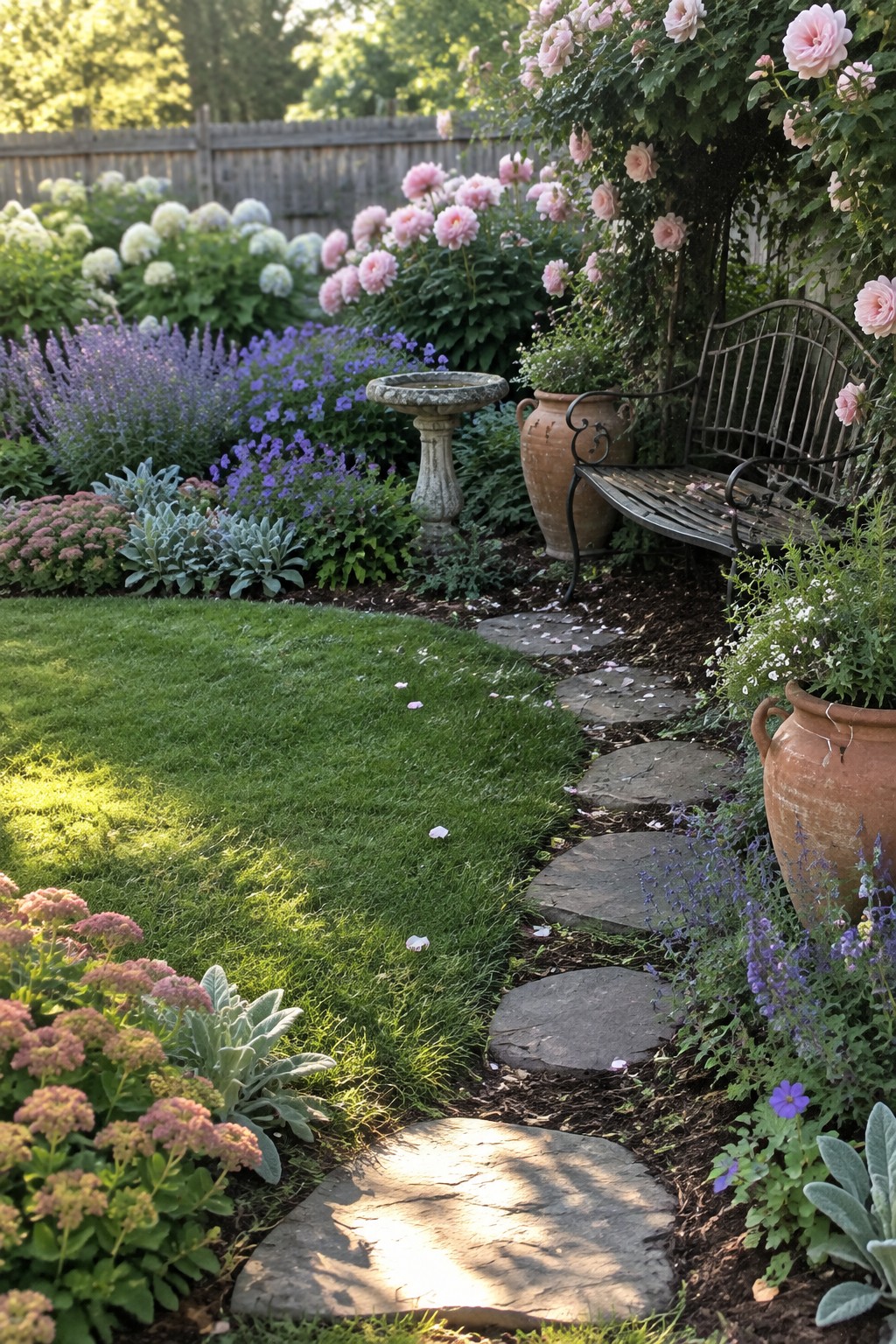
Layering plants by height gives cottage borders that full, settled look without feeling crowded. Taller shrubs and climbers sit at the back while mid-size flowers fill the middle and lower growers spill forward. This simple step adds depth and keeps the path feeling open even when the planting gets dense.
Try the same approach along any walkway or edge of lawn. Start with the tallest plants against a fence or wall, then work forward in stages. It suits smaller gardens especially well because the layers make the space feel bigger and more interesting as you walk through.
Layered Borders Along A Garden Path
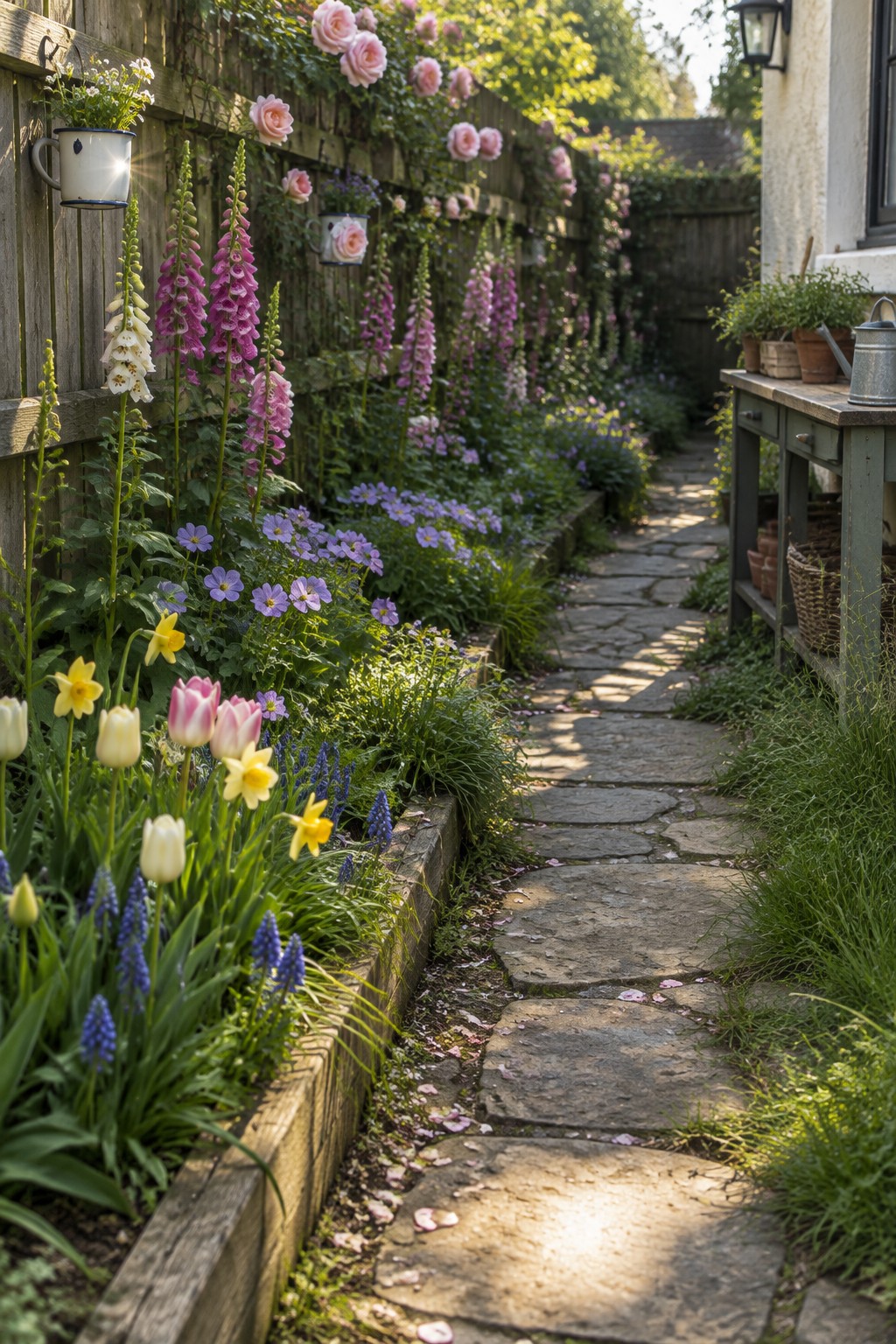
Layered flower borders give a path that soft, overflowing cottage look without crowding the walkway. Tall plants like foxgloves stand at the back while shorter blooms fill in lower down, so the whole strip feels full and colorful from spring through summer.
This works best in narrow side yards or along a fence where space is tight. Plant the tallest varieties toward the back, then step down in height toward the path edge. It keeps the stones clear for walking and still gives plenty of color and texture.
Layered Borders With Brick Edging
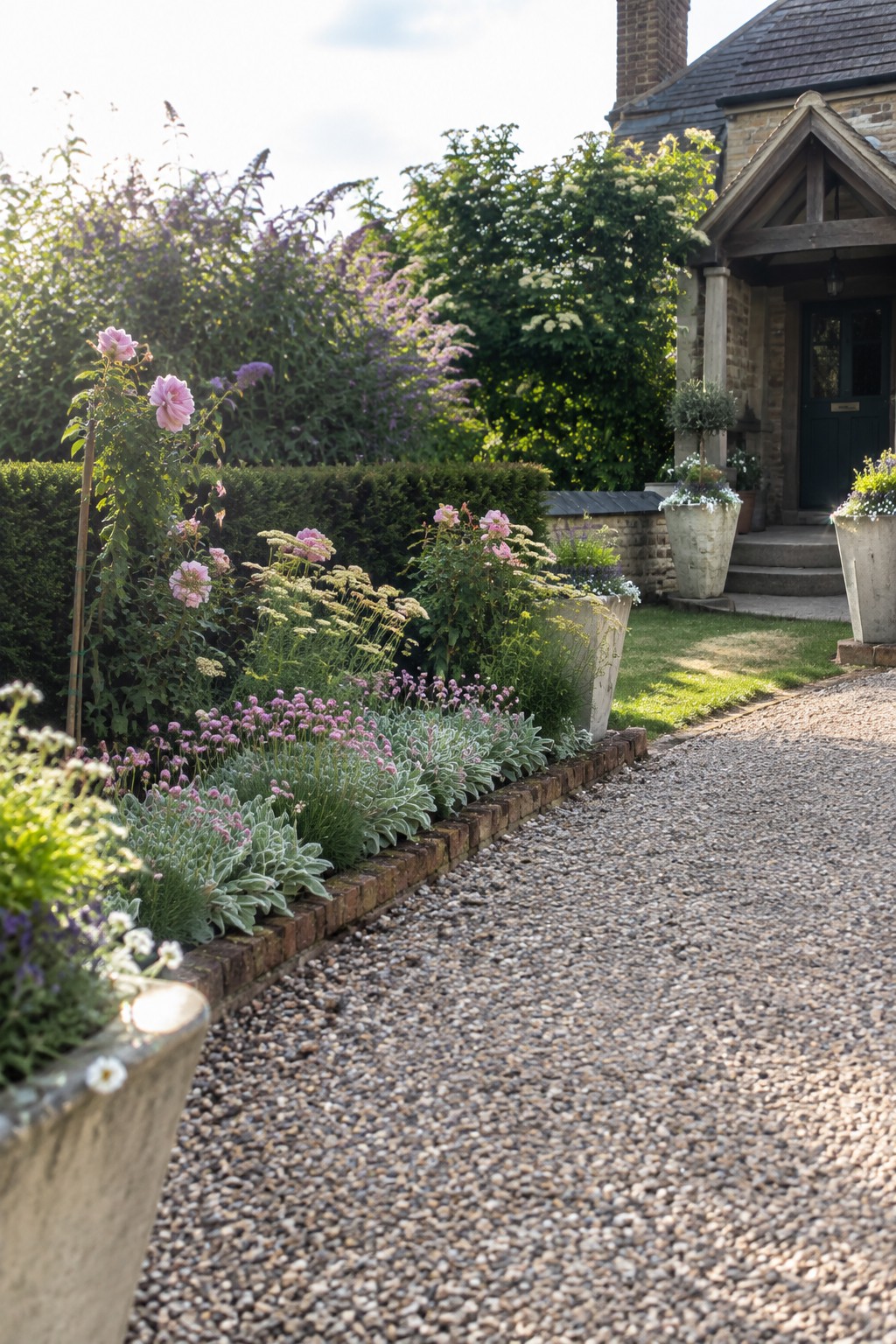
Layered flower borders give a cottage garden that full, settled look while still keeping things under control. Low plants along the front edge lead into taller stems behind them, and the whole bed feels softer because of the mix in heights and textures.
This works best along gravel paths or driveways where you want clear lines without a hard wall. Brick edging holds the soil in place and gives the border a finished edge that suits older homes. Start with compact plants at the front, add mid height flowers next, and let a few taller stems rise toward the back.
Layer Plants by Height for Fuller Borders
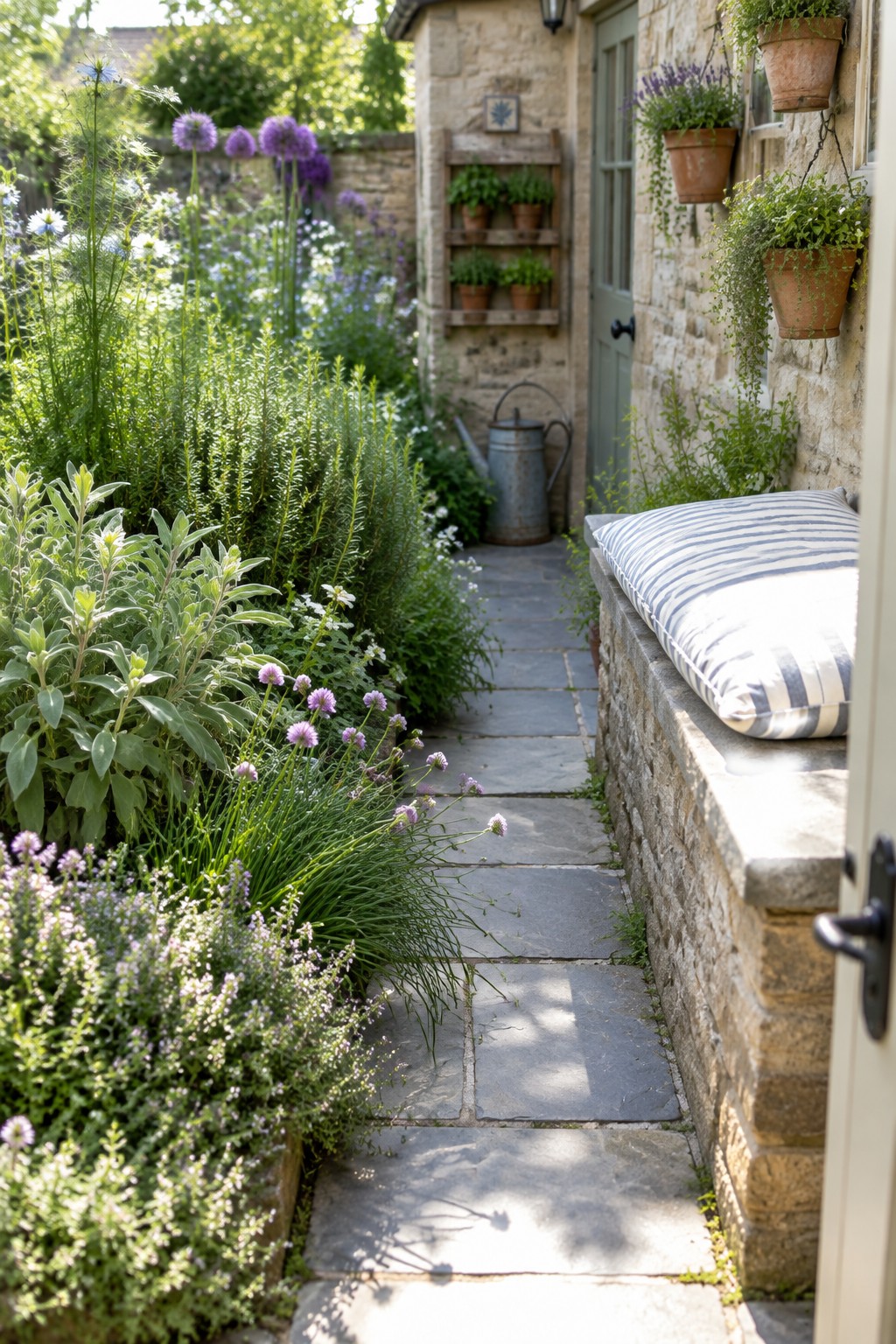
Layering plants by height is one of the simplest ways to make a border look full and natural. Taller stems stand at the back while shorter flowers and foliage fill in closer to the path, so nothing looks sparse or flat.
This approach works best in smaller gardens where space is tight. Keep the tallest plants toward the wall or fence and let lower mounds spill over the front edge. It softens the hard lines of a path without blocking the walkway.
Layer Flower Borders for Depth
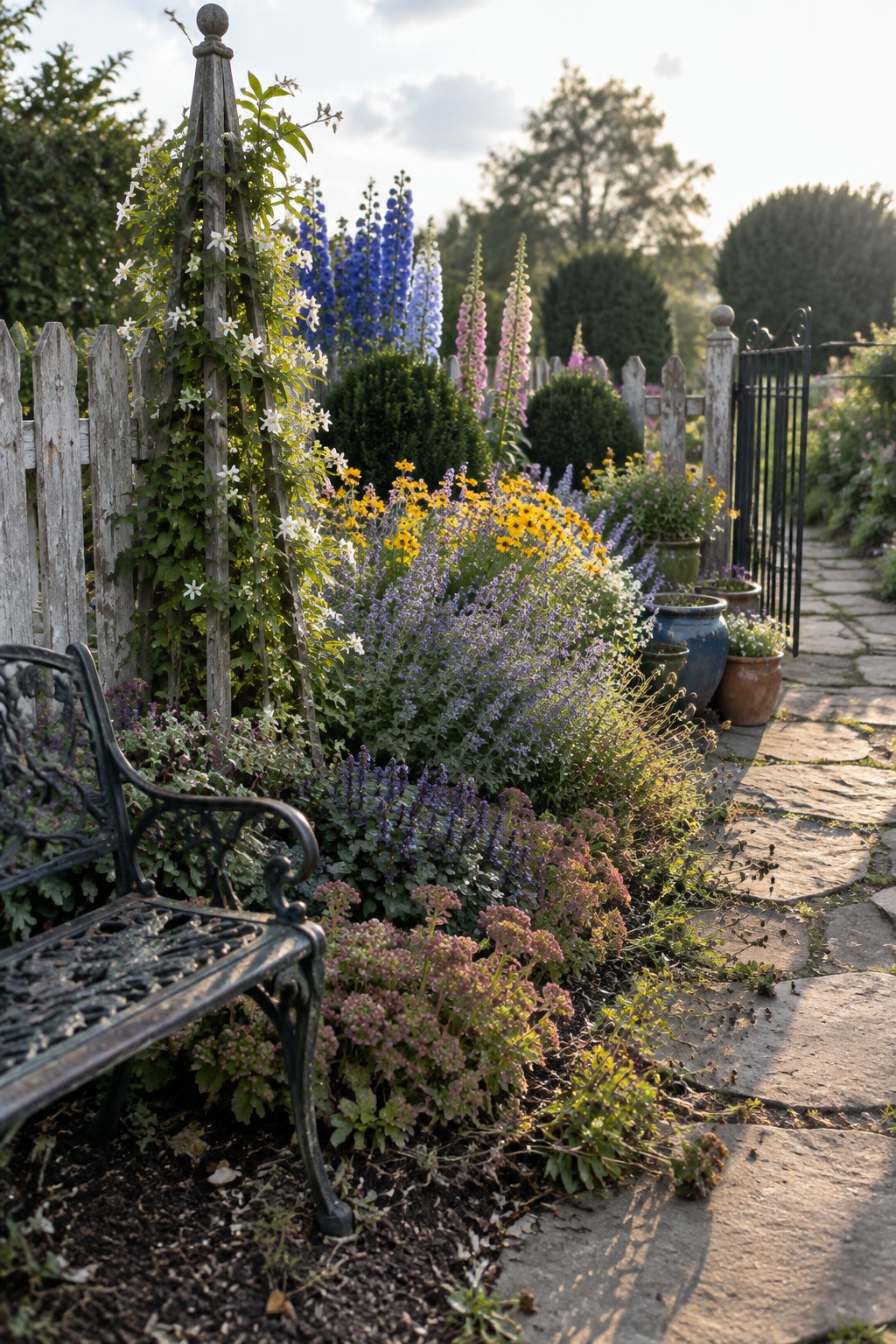
Layering plants by height gives cottage borders that full, overflowing look without much extra effort. Tall spikes at the back, mid-size mounds in the middle, and low growers along the edge create natural rhythm and keep the view interesting as you walk past.
This approach works especially well along paths or fences where you want the planting to feel generous from every angle. Mix a few repeat colors and let the lower plants spill forward a bit so the bed looks established rather than planned.
Layered Flower Borders Along Stone Steps

Layered borders give a path real depth without making it feel narrow. Low plants hug the edges while taller blooms rise behind them in urns and beds, so the walk feels full and welcoming instead of flat.
This works best on homes that already have stone or gravel walkways. Keep the lowest flowers right against the steps, then add mid-height plants and a few taller accents in containers farther back so the layers stay easy to maintain.
Layer Flower Borders by Height
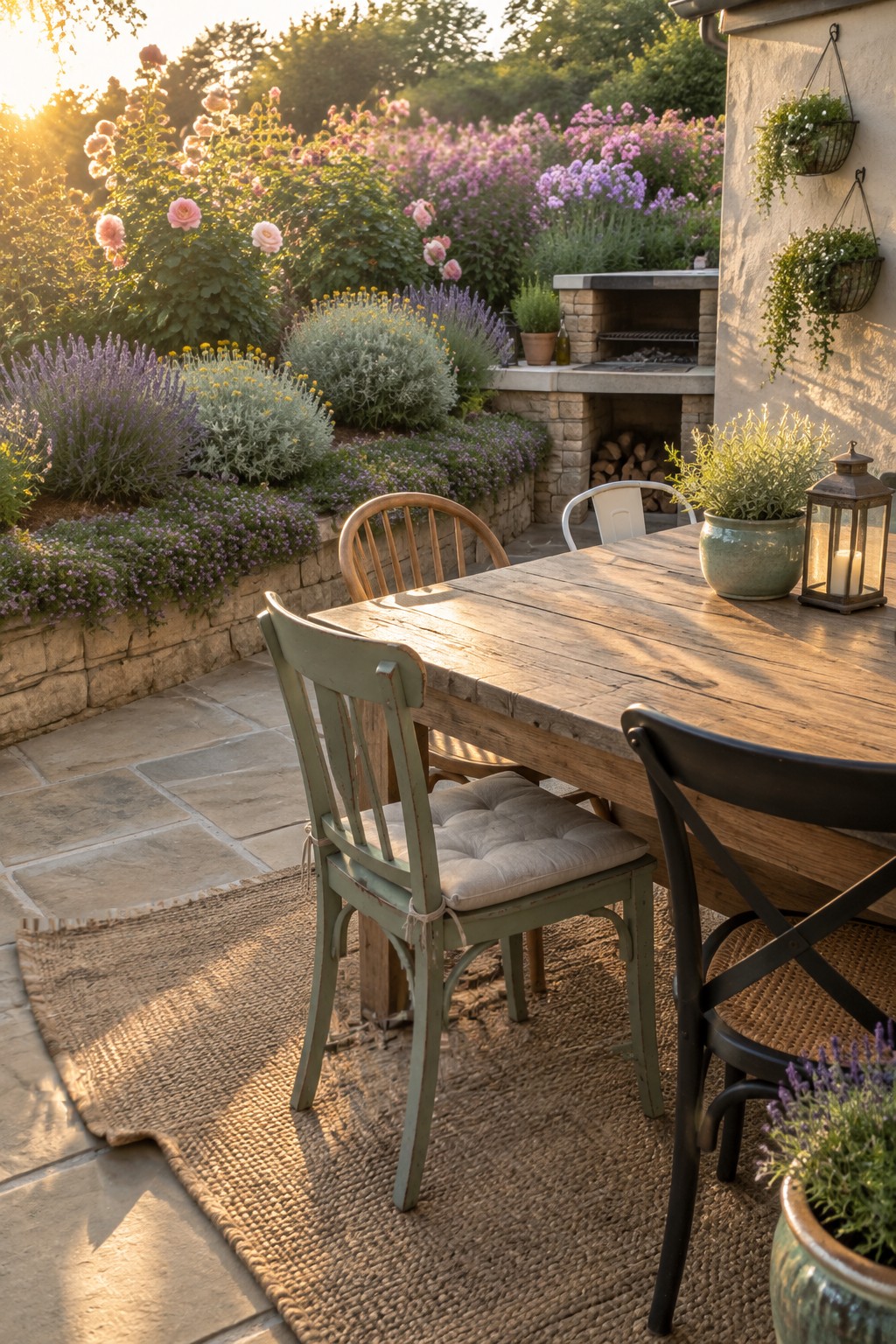
Layering plants in different heights gives borders that full, settled cottage look even in a small yard. The taller flowers in the back add structure while the shorter ones spill forward, making the whole edge feel richer without crowding the space.
This approach works especially well around a patio or outdoor table where you want the garden to feel close but still keep the seating open. Use a retaining wall or low edge as your planting line, then choose one or two tall varieties behind a mix of midsize and low growers so the layers stay easy to maintain.
Layer Plants by Height for Richer Borders
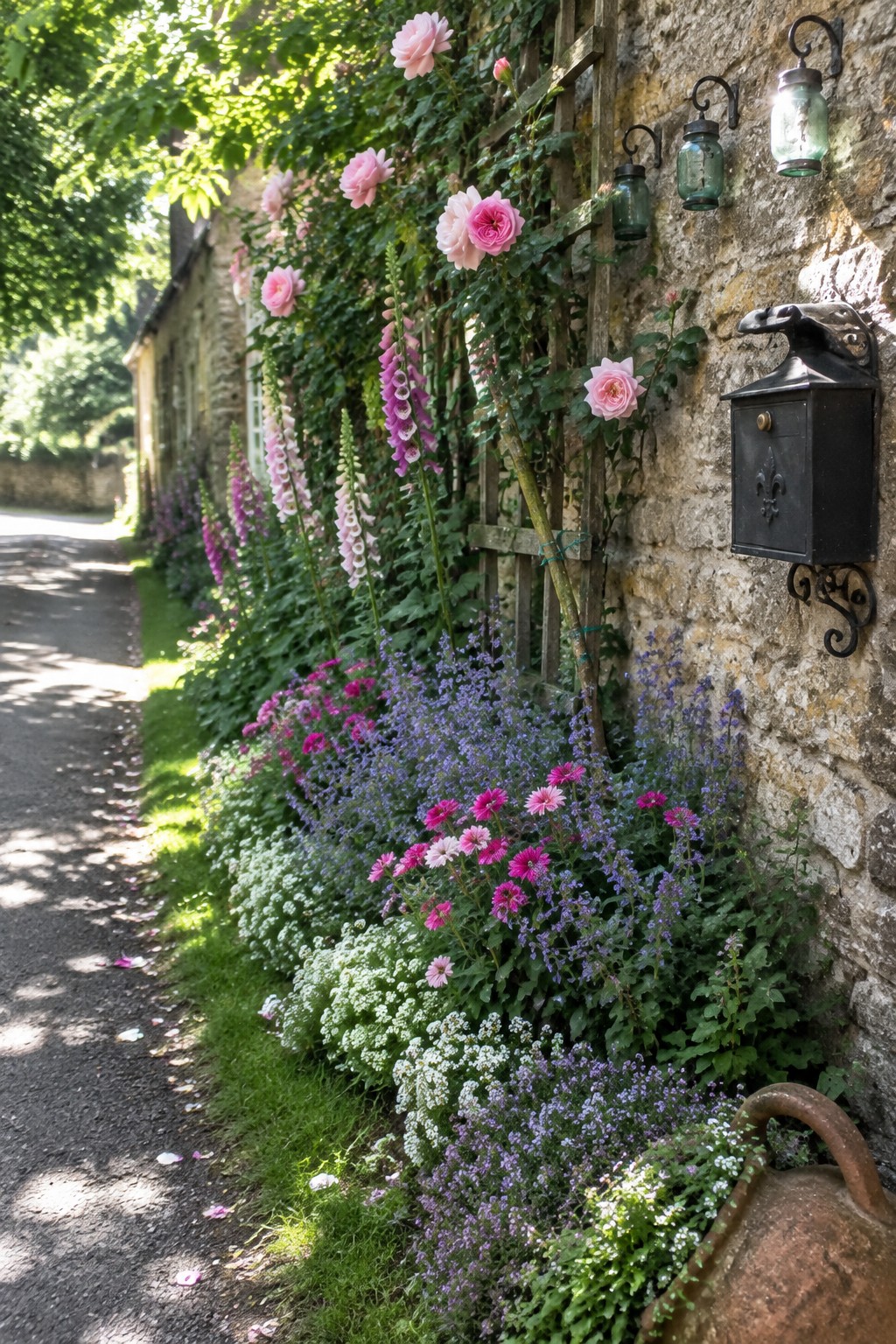
Layering plants by height gives cottage borders that full, overflowing look without much extra work. Tall flowers at the back, mid-size blooms in the middle, and low ground cover in front create depth and keep the planting from looking flat or sparse.
This approach works especially well along paths or walls where you have room to build the layers. Choose plants that flower around the same time if you want steady color, and leave enough space between the tallest ones so they do not shade out everything below.
Layer Your Flower Borders by Height
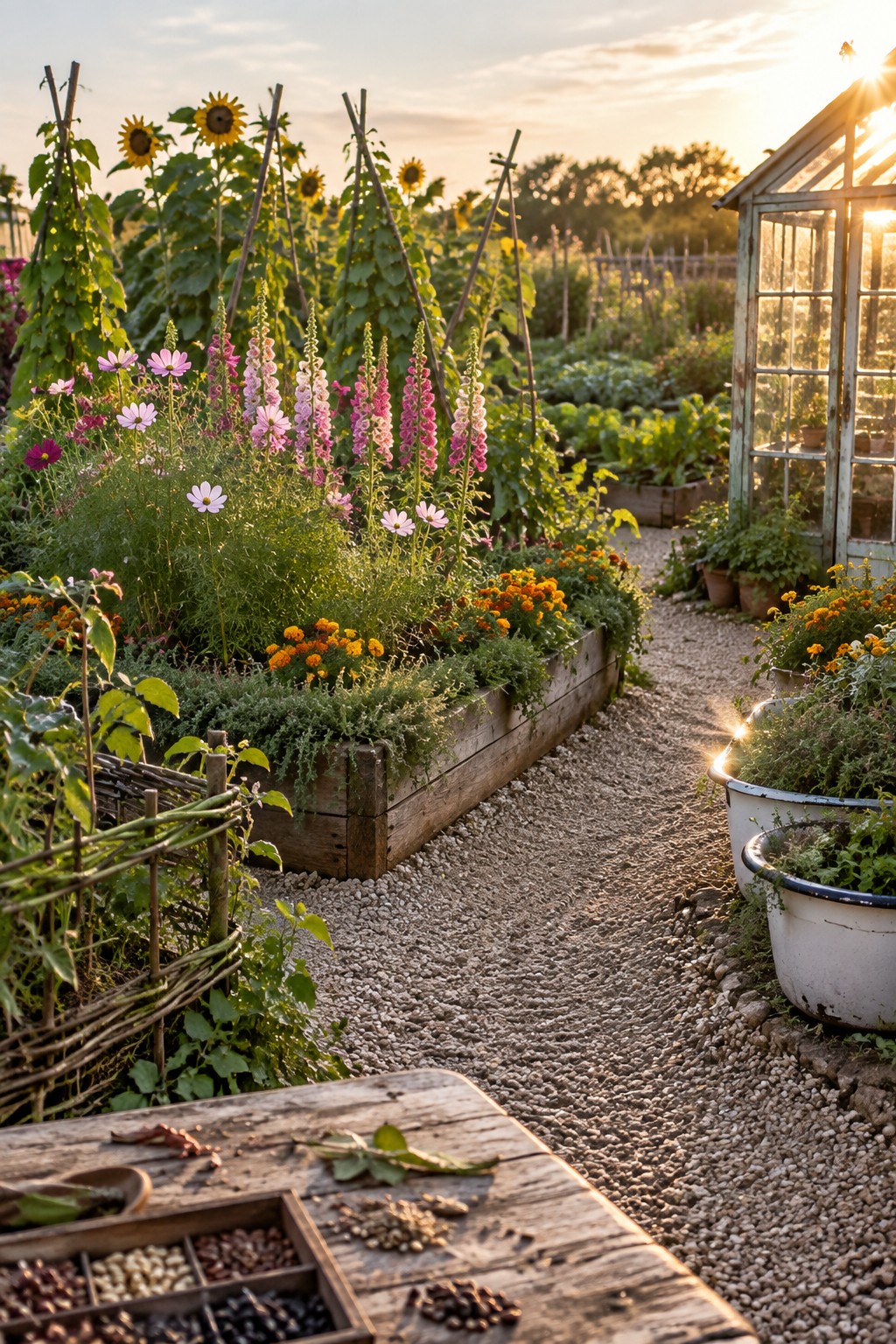
Layering plants by height gives cottage borders that full, settled look without needing a huge space. Tall flowers at the back, mid-size blooms in the middle, and shorter ones spilling forward create depth along a path and keep the garden interesting from every angle. Raised beds make this easy to manage and help control the spread.
Start with sturdy back-row plants like sunflowers or hollyhocks, then fill the middle with cosmos and similar midsize flowers, and finish with low growers at the front. This approach suits narrow paths and small plots especially well. Just leave enough room between layers so each plant can reach its natural size.
Layer Your Borders for a Fuller Look
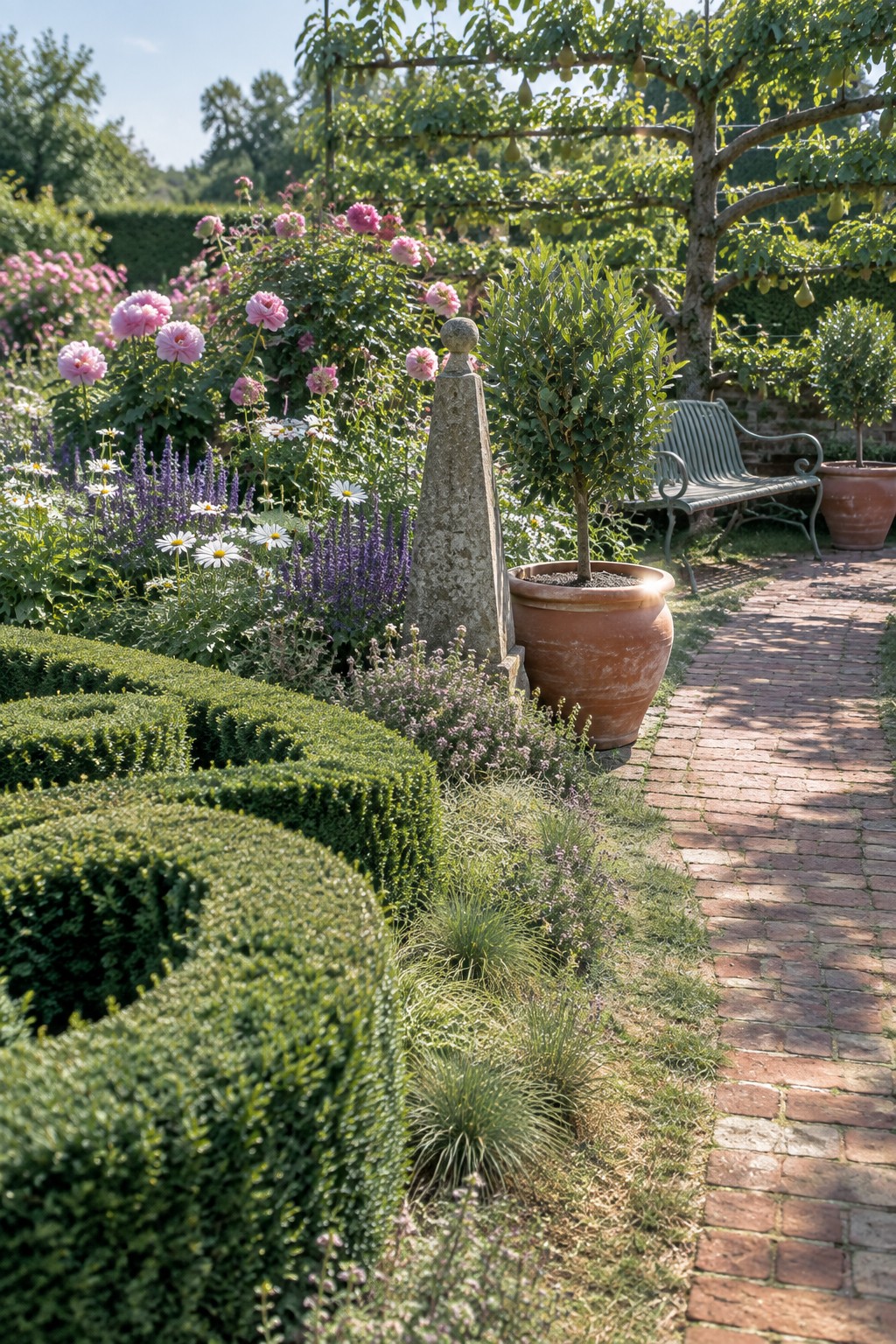
Layering plants by height gives cottage borders that soft, overflowing feel without looking messy. Low hedges or ground covers sit in front, mid-size flowers fill the middle, and taller stems rise toward the back. This simple stacking makes the whole bed look deeper and more established even in a smaller space.
It works especially well along paths where people walk close by. Keep the front layer neat so the path stays clear, then let the taller plants mix freely behind it. The result feels casual but still holds its shape through the seasons.
Layer Plants by Height for Fuller Borders

Layering plants by height gives a cottage border that instant fullness even in a small space. Tall climbers and shrubs sit at the back while mid-size flowers fill the middle and low spillers tumble forward, creating depth without crowding the walkway.
This approach works especially well along porch steps or narrow beds where you want coverage from ground to eye level. Start with one or two taller anchors, add a middle layer of bushy blooms, and finish with low edging plants that soften the stone or wood. It suits older homes and compact lots where every inch needs to count.
Mix Plant Heights in Your Borders

Layering plants by height gives cottage borders that full, lived-in look without much extra effort. Tall grasses and shrubs at the back set a soft backdrop, while mid-level flowers like lavender fill the middle and lower spreading plants cover the ground in front.
This approach works best along paths or beside seating areas where you can see the full layers. Keep the tallest plants toward the wall or fence and step everything down toward the edge so nothing gets lost from view.
Layer Plants In Different Heights For Cottage Borders

Layering plants by height gives borders that soft, full look people love in cottage gardens. Taller flowers sit behind mid-size shrubs while low growers spill along the front, so the edge feels natural instead of flat. This approach adds depth without needing lots of hard structure.
It works especially well along gravel paths or fence lines where you want movement and color from spring into fall. Choose plants that stay in scale with each other and repeat a few colors so the layers read as one loose border instead of separate rows.
Layer Plants By Height For Depth

Layering different heights in a border gives the garden a settled, full look without needing a lot of extra plants. Taller flowers at the back, medium ones in the middle, and low growers along the edge create natural depth that changes as you walk through the space.
This approach works especially well in cottage gardens where paths curve between beds. Try placing roses or similar tall bloomers behind lavender and low shrubs, then keep the front edge neat with smaller perennials or edging plants. It helps the beds feel generous even in smaller yards.
Layered Flower Borders Along The Edge

Layered planting works well when you want a cottage garden to feel full without looking messy. The idea is simple. Put taller plants in the back, medium ones in the middle, and low growers right along the front. This creates a soft, gradual look that hides the hard edge of a path or pool.
It suits homes with straight lines that need softening. Keep the front layer low so it does not block the view of the water or walkway. The back layers can be a bit taller and a little loose. Just make sure nothing crowds the front row.
Layer Plants By Height In Cottage Borders

Layering plants of different heights along a path gives a border that full, settled look without needing a huge space. Taller shrubs and flowers at the back, medium growers in the middle, and low edging plants in front create depth that changes through the seasons. The mix keeps the eye moving and stops the planting from feeling thin or one-note.
This approach works well in smaller front gardens or along side paths where you want cottage character without high maintenance. Stick to a few reliable perennials and one or two shrubs that return each year, and let them fill in naturally. A simple brick path helps contain the layers and makes the planting feel intentional rather than overgrown.
Layered Flower Borders Along Fences
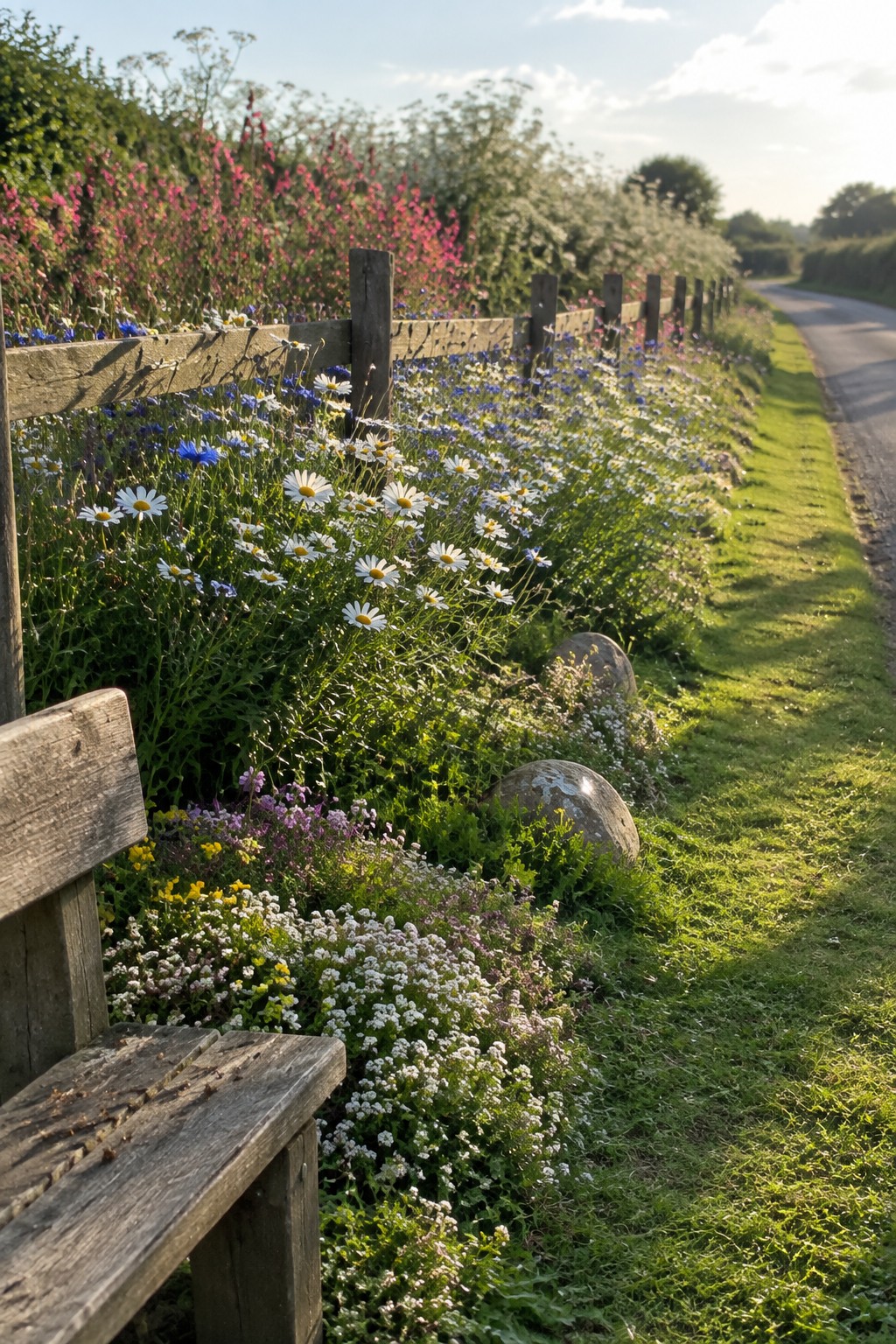
Layered flower borders bring a soft, full look to garden edges by mixing low plants in front with taller ones behind. The result feels natural and changes with the seasons, which is why many cottage gardens rely on this simple structure rather than single-row planting.
This works best along straight fence lines or path edges where you need width without losing access. Place low spreading plants at the front, medium flowers through the middle, and a few taller stems at the back so the border stays interesting from both the path and the house side.
Frequently Asked Questions
Q: How do I keep taller plants from shading out the shorter ones right in front of them? A: Place the mid layer plants just behind the front row so their leaves sit at different heights. Trim back any stems that start to lean forward during the season. This keeps the lower flowers getting light without constant rearranging.
Q: What if my border already has some plants in it, how do I add layers without digging everything up? A: Tuck new shorter plants into any open spots along the front edge first. Then slide a few mid height ones into gaps further back where they can fill around existing stems. Water the new additions well for the first month so they settle in.
Q: Do I need to divide perennials often to maintain the layered look? A: Split clumps every two or three years when they start to crowd their neighbors. This gives the shorter plants room to show their blooms again. Work in small sections so the border never looks bare.
