

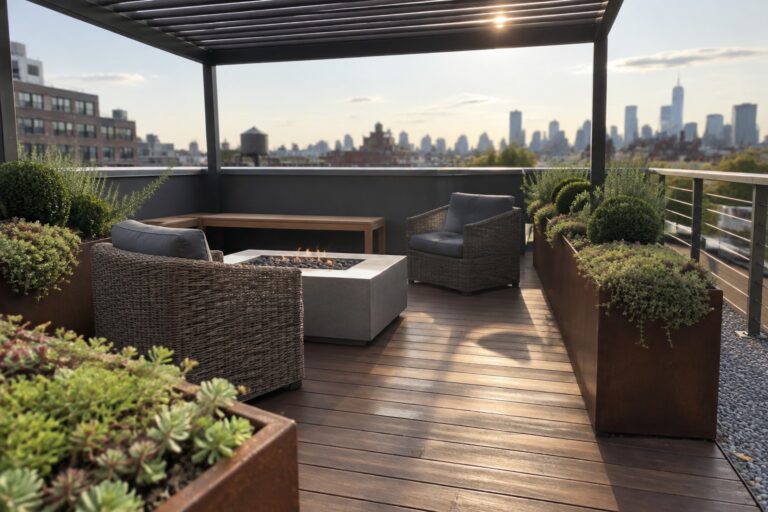
Roof gardens have always struck me as a smart way to use space that often sits empty, especially when they do not demand constant attention.
In my experience the setups that last are the ones where the containers and plants are chosen to handle sun, wind, and dry spells without extra work.
That choice changes how often you actually step outside to enjoy the space.
Hardy varieties in sturdy pots seem to keep things looking decent even when life gets busy and maintenance slips.
I keep thinking about testing a couple of these approaches on the small roof area behind my place to see what really sticks.
Use Metal Planters For Simple Roof Edges
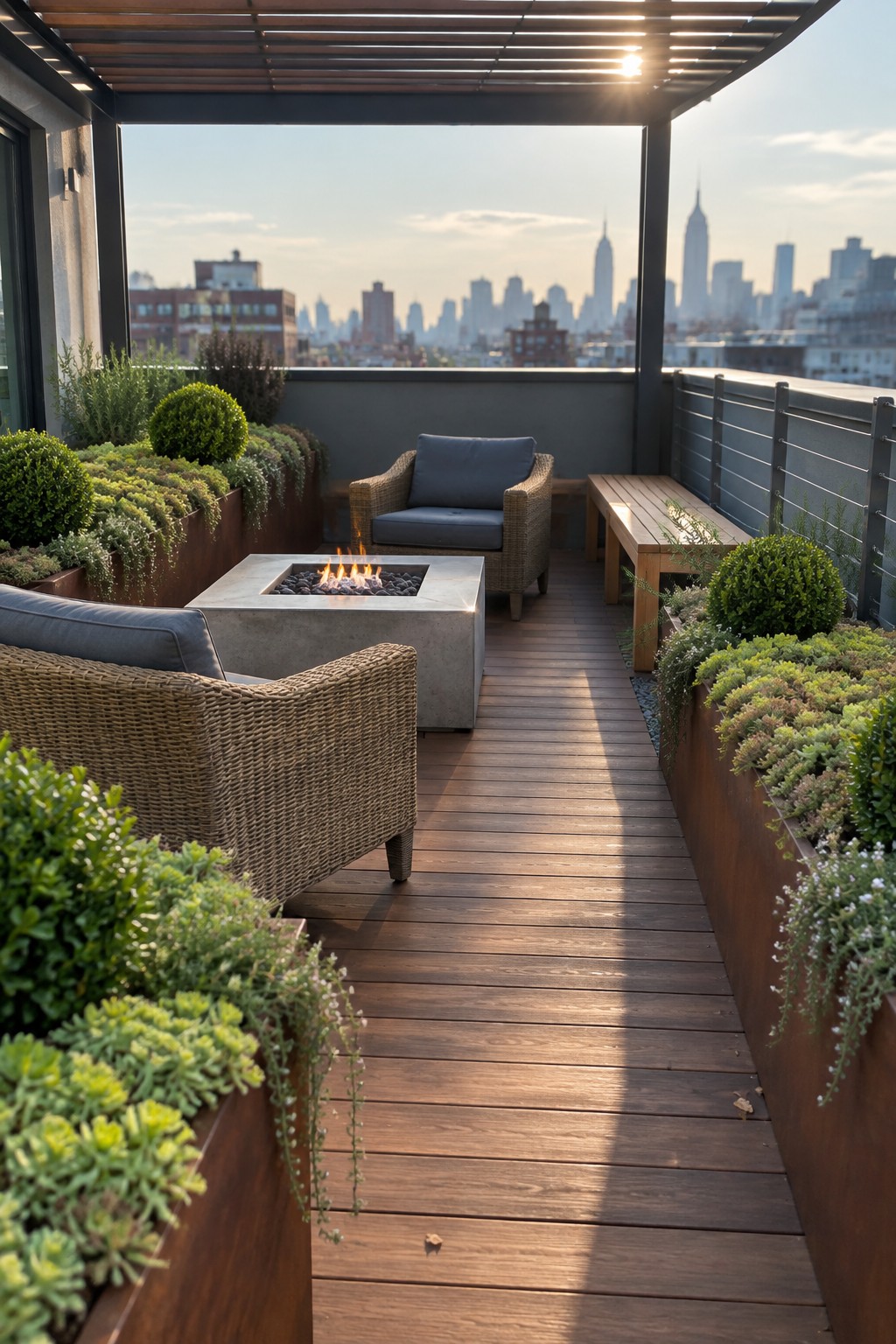
Metal planters make roof gardens easier because they stand up to wind and sun without rotting or needing constant care. Filling them with hardy succulents and low-water shrubs keeps the look green while cutting down on watering and trimming. The long trough style also creates a natural border that separates the seating area from the edge without extra fencing.
This setup works best on flat rooftops or terraces where you want structure but still need drainage and weight control. Place the planters along the perimeter first, then choose plants that handle heat and occasional neglect. Check that your roof can support the filled weight before you start.
Large Clay Pots For Simple Roof Terraces
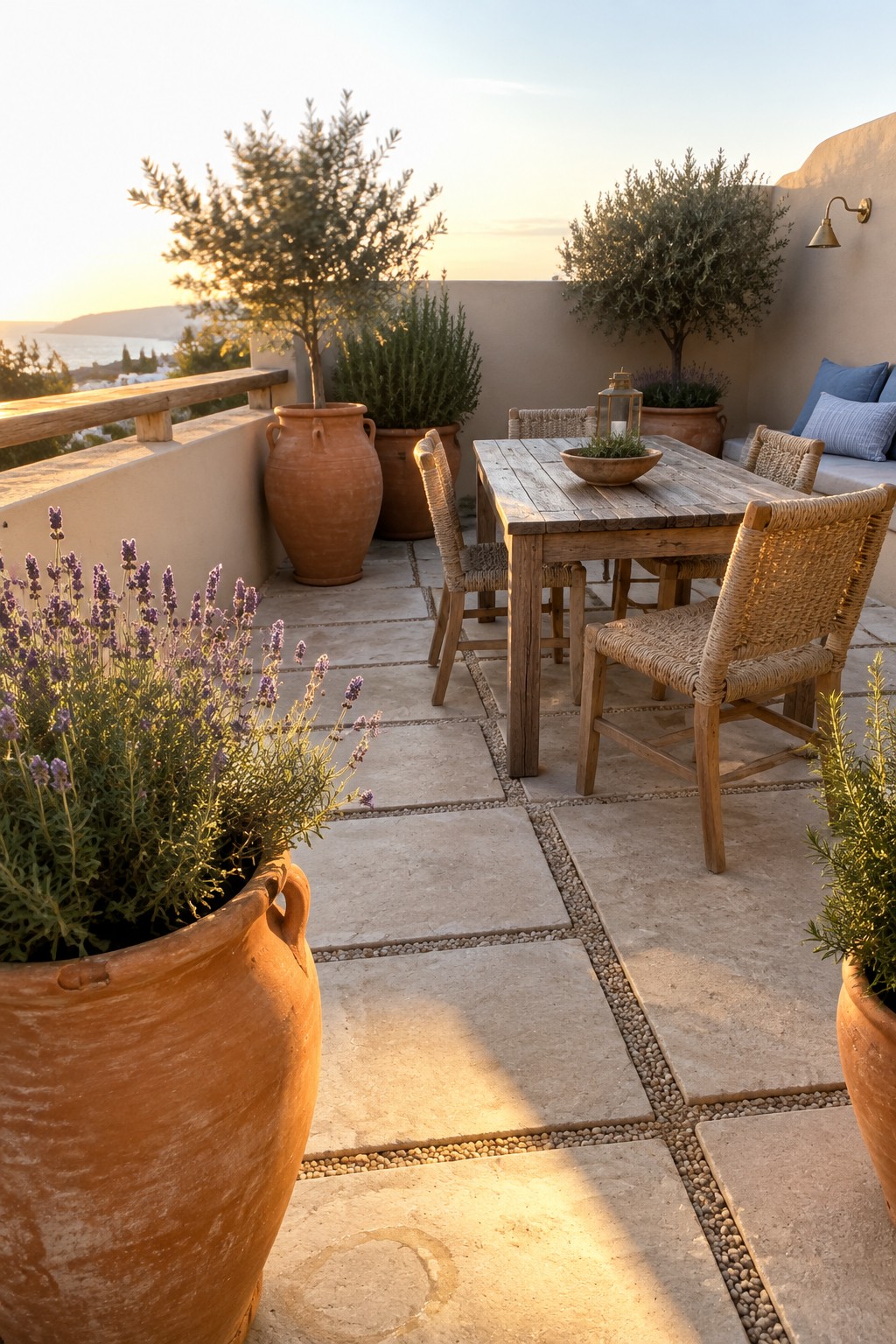
Large terracotta pots filled with hardy plants like olive trees and lavender give a roof garden an easy structure without needing much upkeep. The containers hold up well in sun and wind, and the plants stay healthy with only occasional watering once they settle in.
Group three or four big pots around a dining area to mark the space and keep the floor clear. This works best on flat rooftops or paved terraces where you cannot plant directly in the ground.
Raised Wooden Planters For Roof Gardens
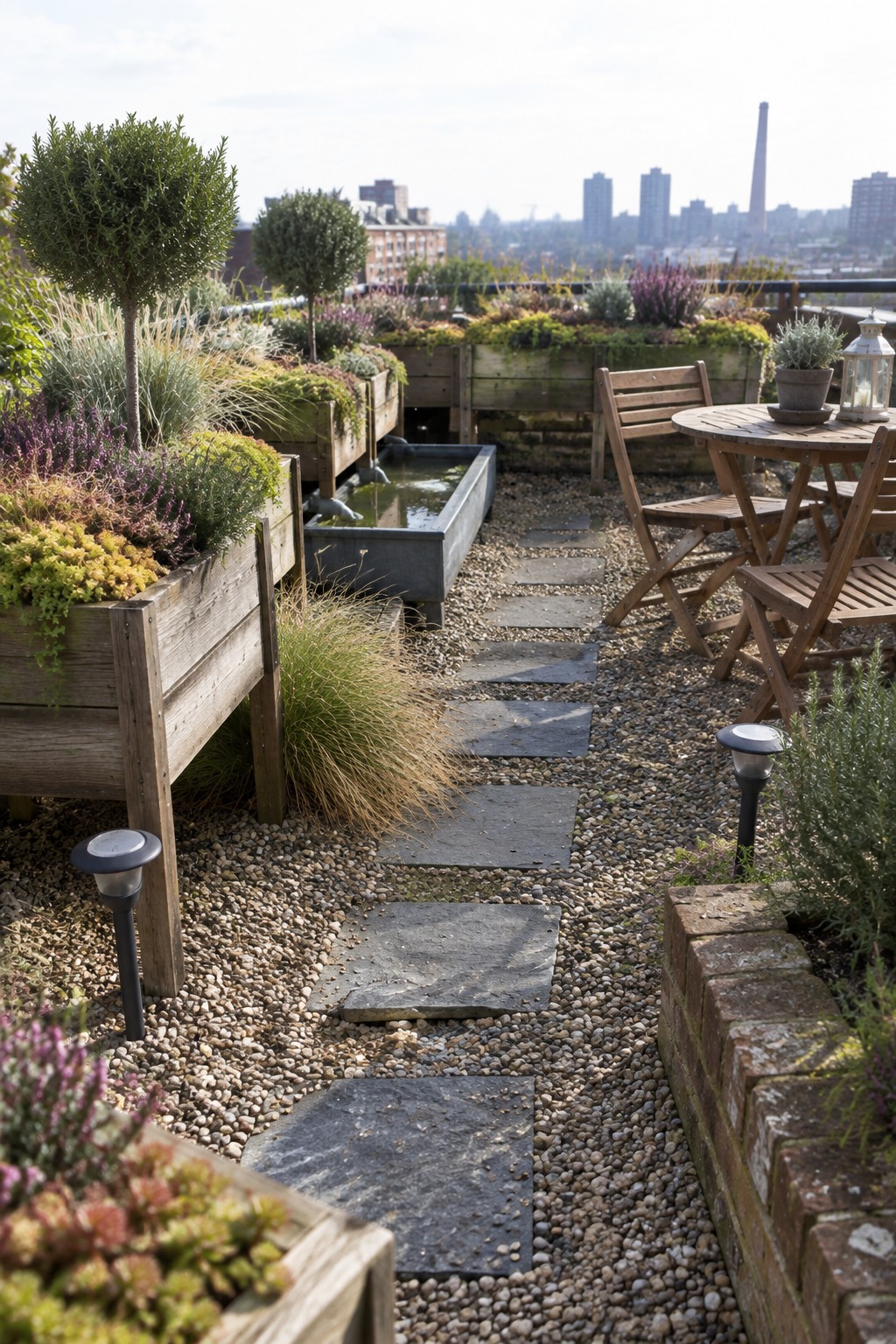
Raised wooden planters give you a simple way to grow plants on a roof without worrying about soil depth or drainage issues. They keep everything contained, which cuts down on maintenance and makes it easier to swap plants when needed.
These work well on flat rooftops or terraces where weight and water runoff matter. Fill the boxes with hardy perennials and succulents, then leave space for a gravel path so you can reach everything without compacting the soil.
Group Hardy Plants In Large Containers
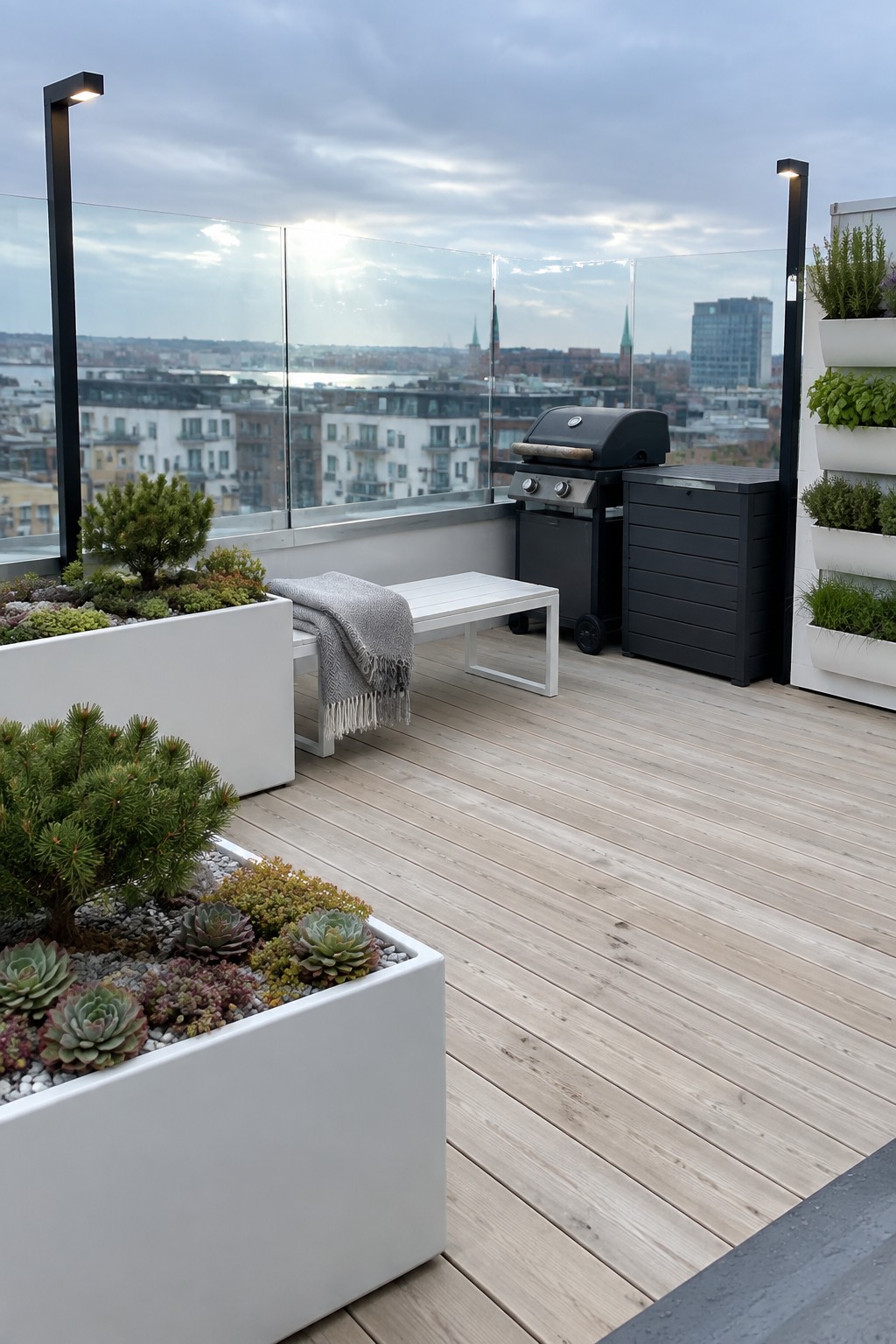
Large containers make roof gardens much easier to manage because they let you use tough plants that handle wind, sun, and limited watering. The white planters in this setup hold succulents and small evergreens that stay looking good with very little attention once they are settled in.
This works best on rooftops or decks where you cannot dig beds. Choose a few matching containers, fill them with hardy varieties like sedums and pines, and keep the planting simple so the space stays neat without constant upkeep.
Use Hardy Pots To Green A Roof Terrace
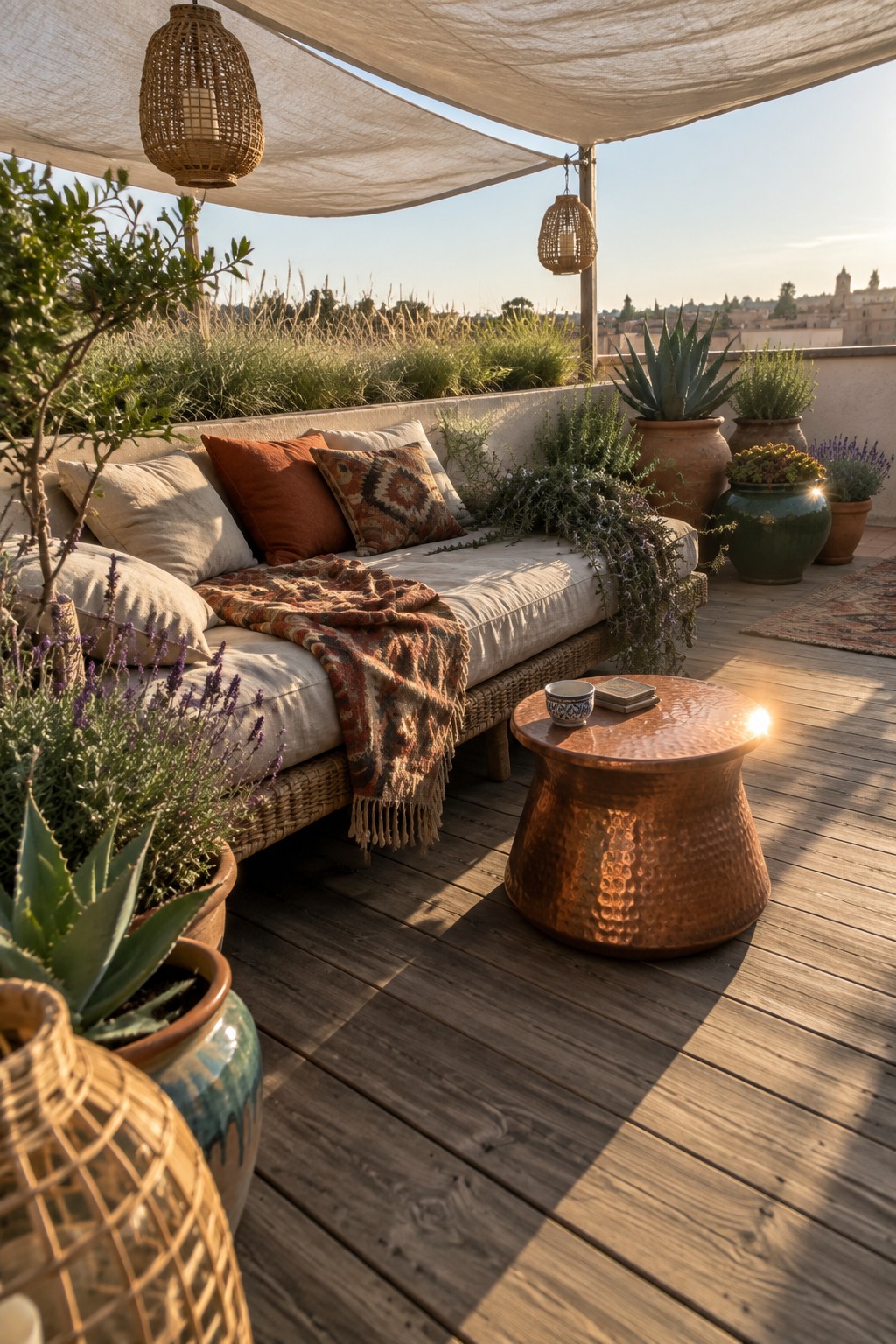
Many people turn roof spaces into relaxing spots by grouping tough plants in containers around the seating. This approach keeps maintenance low because the pots let you pick sun loving varieties that need little water or fuss once established.
It suits flat roofs and decks especially well since there is no ground to plant in. Stick with agaves, lavender, and similar hardy types in a few terracotta or ceramic pots so the area feels green without daily care.
Group Hardy Containers in Gravel Beds
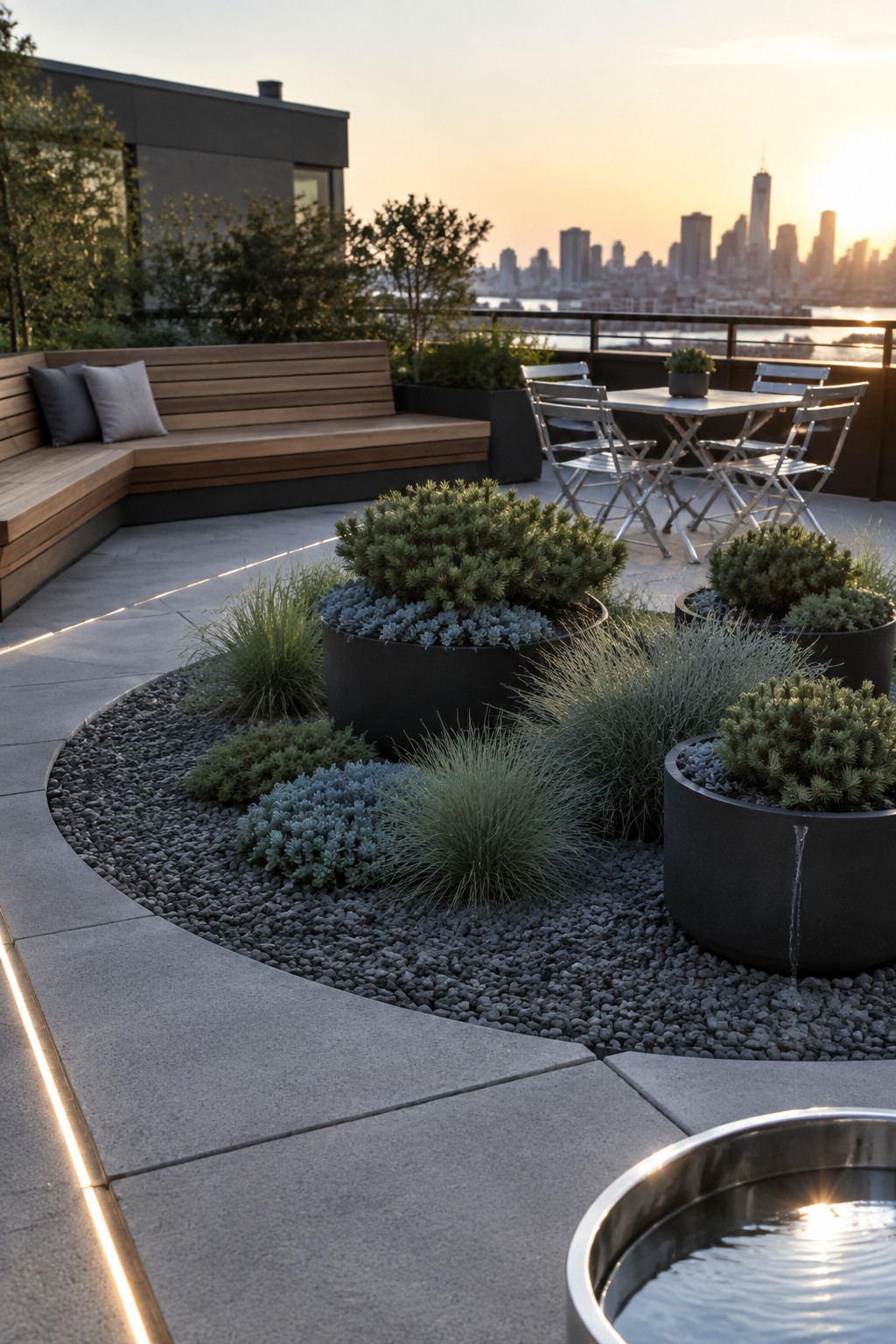
One simple way to handle a roof garden is to set several large containers into a gravel area. The gravel helps with drainage and keeps weeds down, so the plants need less care overall.
This works best on rooftops or terraces where you want low maintenance but still need some greenery. Pick tough shrubs and grasses that handle wind and sun, and make sure the pots are sturdy enough to stay in place.
Group Hardy Pots Around a Small Table
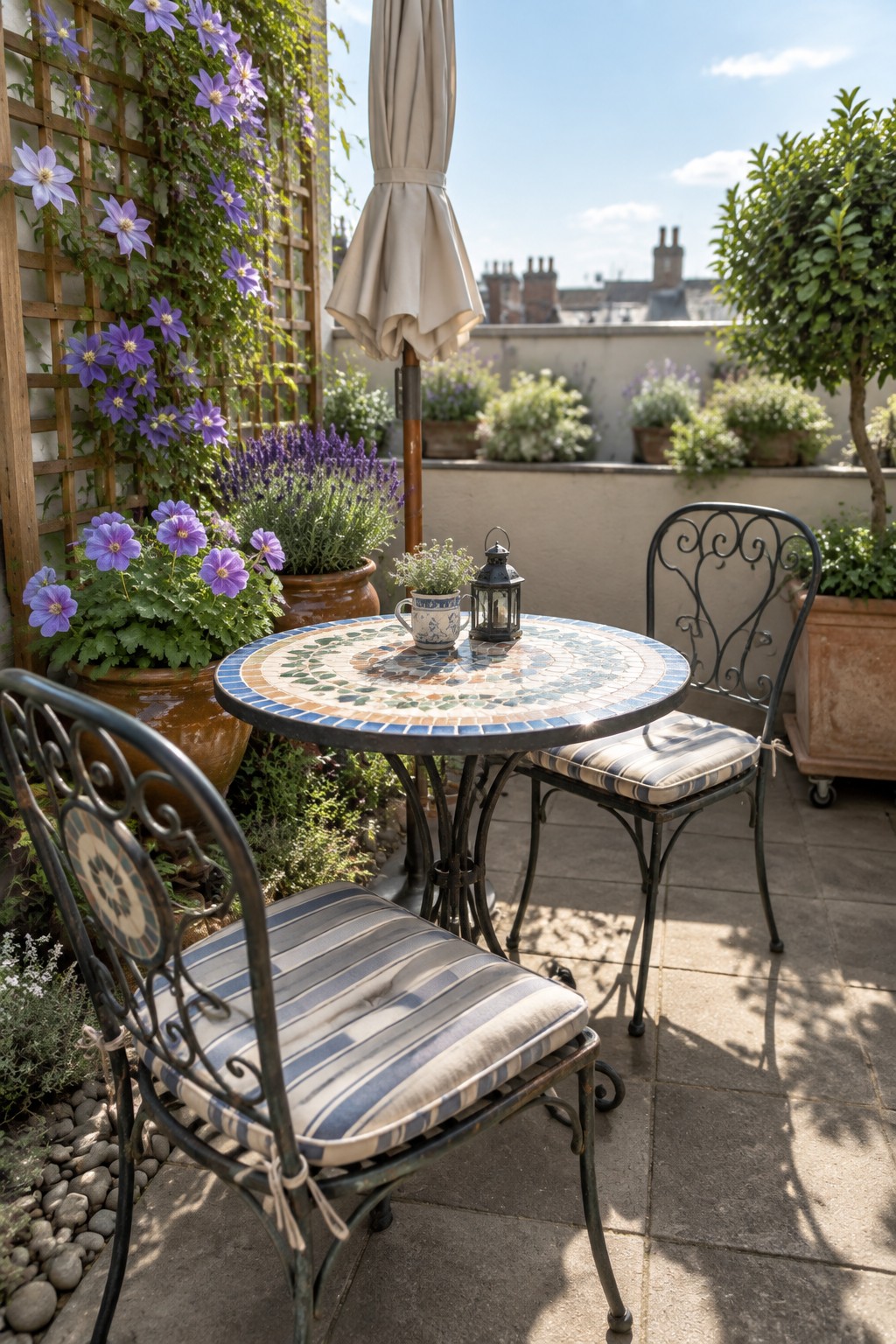
Many roof terraces feel empty without a lot of work. Placing a few tough plants in pots right around a table and chairs gives the space a finished look and keeps maintenance low since everything stays movable and easy to water.
This approach suits small city roofs or balconies where digging is not an option. Stick with reliable varieties that handle wind and sun, and keep the table simple so the plants stay the main feature.
Large Stone Planters For Trees On Patios
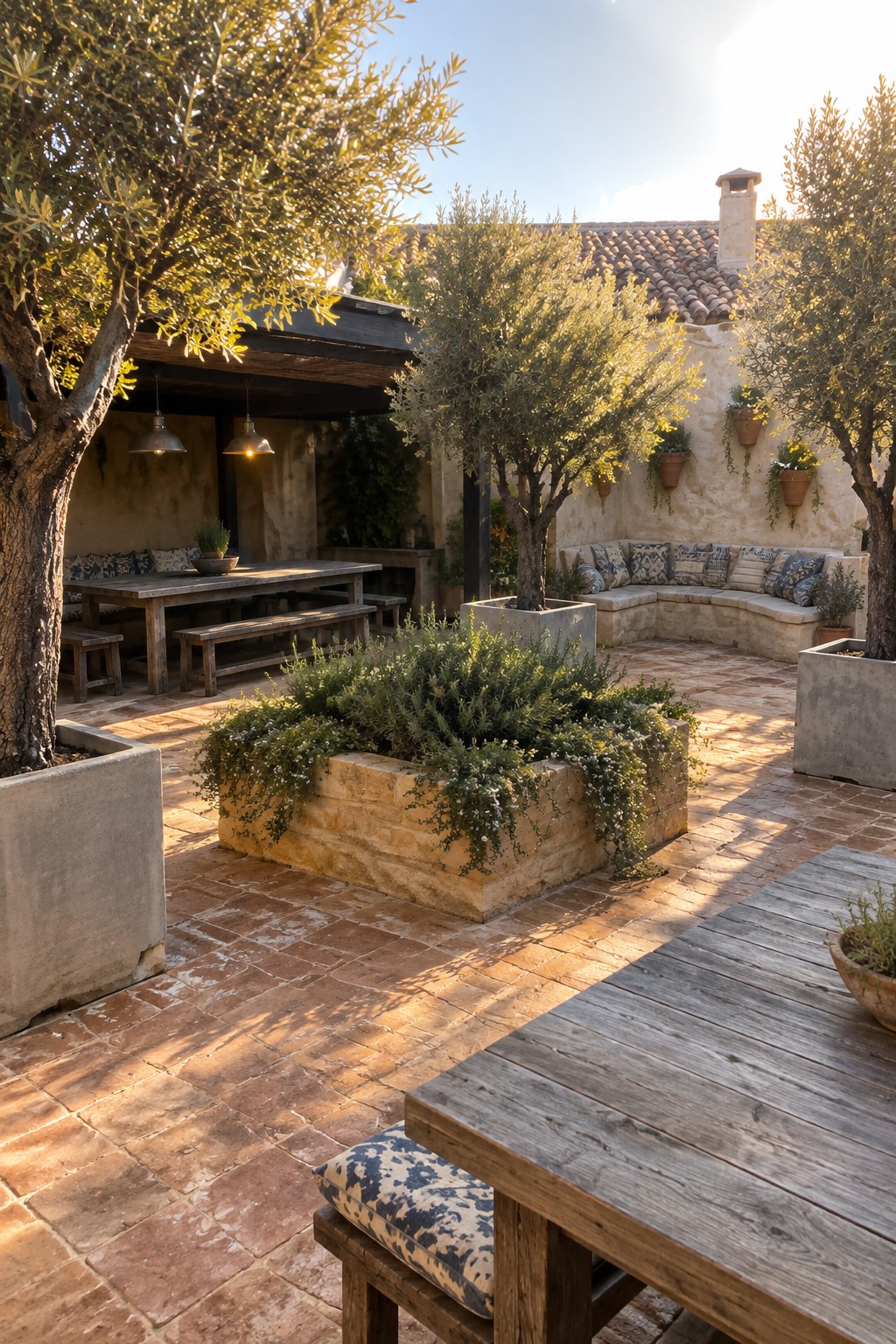
Large containers give you a simple way to add trees and shrubs to any paved space without digging. Stone or concrete planters hold up well outdoors and keep the plants stable even in wind or on rooftops.
Place them where you need height or shade and choose hardy varieties that tolerate dry spells. This setup works on flat roofs, terraces, or courtyards where soil beds are not an option.
Use Hardy Container Plants On Your Roof Garden
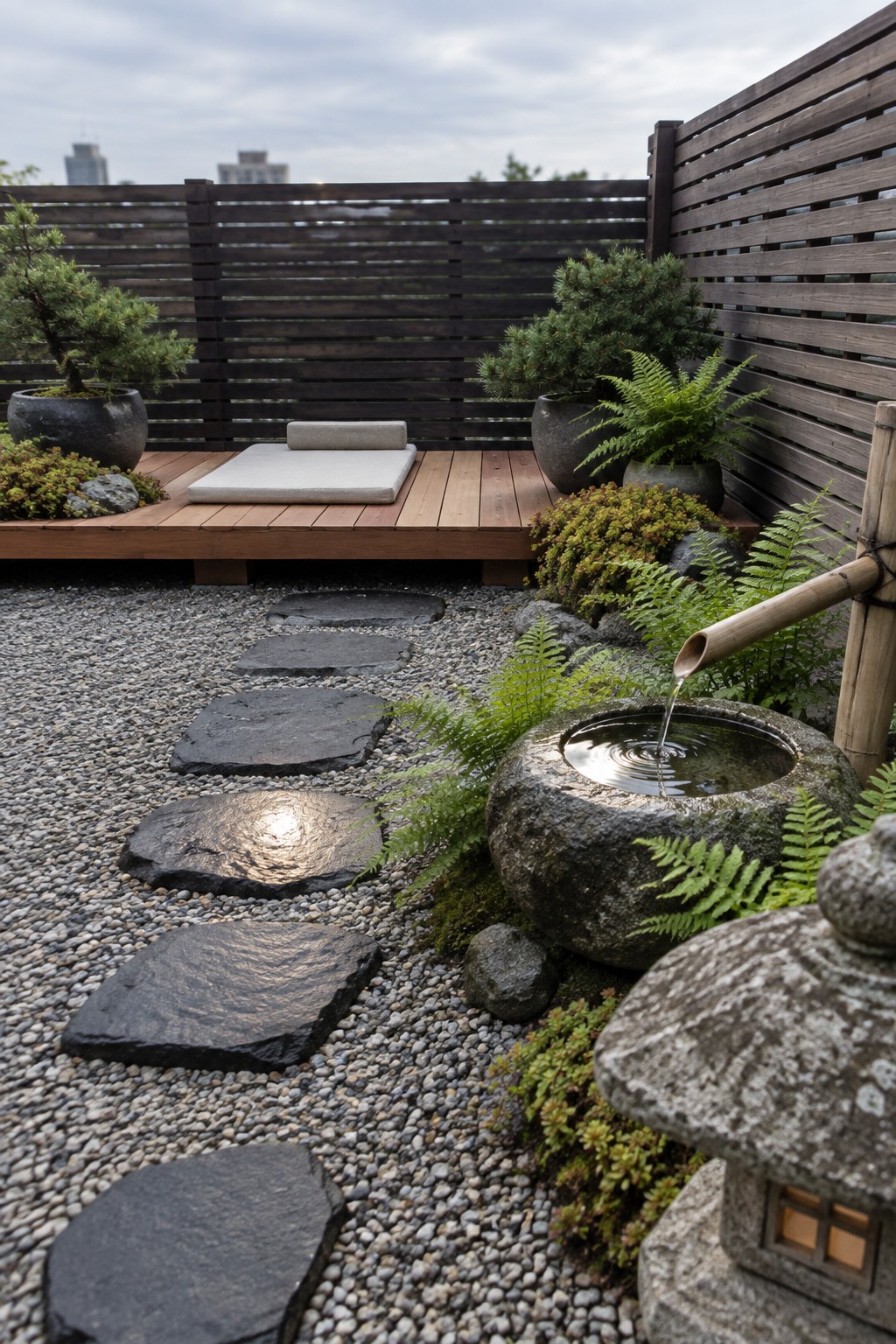
Container plants make roof gardens much simpler because you control the soil mix and can move things if needed. Large pots with tough evergreens and ferns handle wind and dry spells better than plants set straight into a roof bed.
This works well on flat roofs or terraces where weight and drainage matter. Place the biggest pots first to set the main lines, then fill in with smaller ones along a simple gravel path so the space stays open and easy to walk through.
Wheeled Planters Make Roof Gardens Easier To Manage
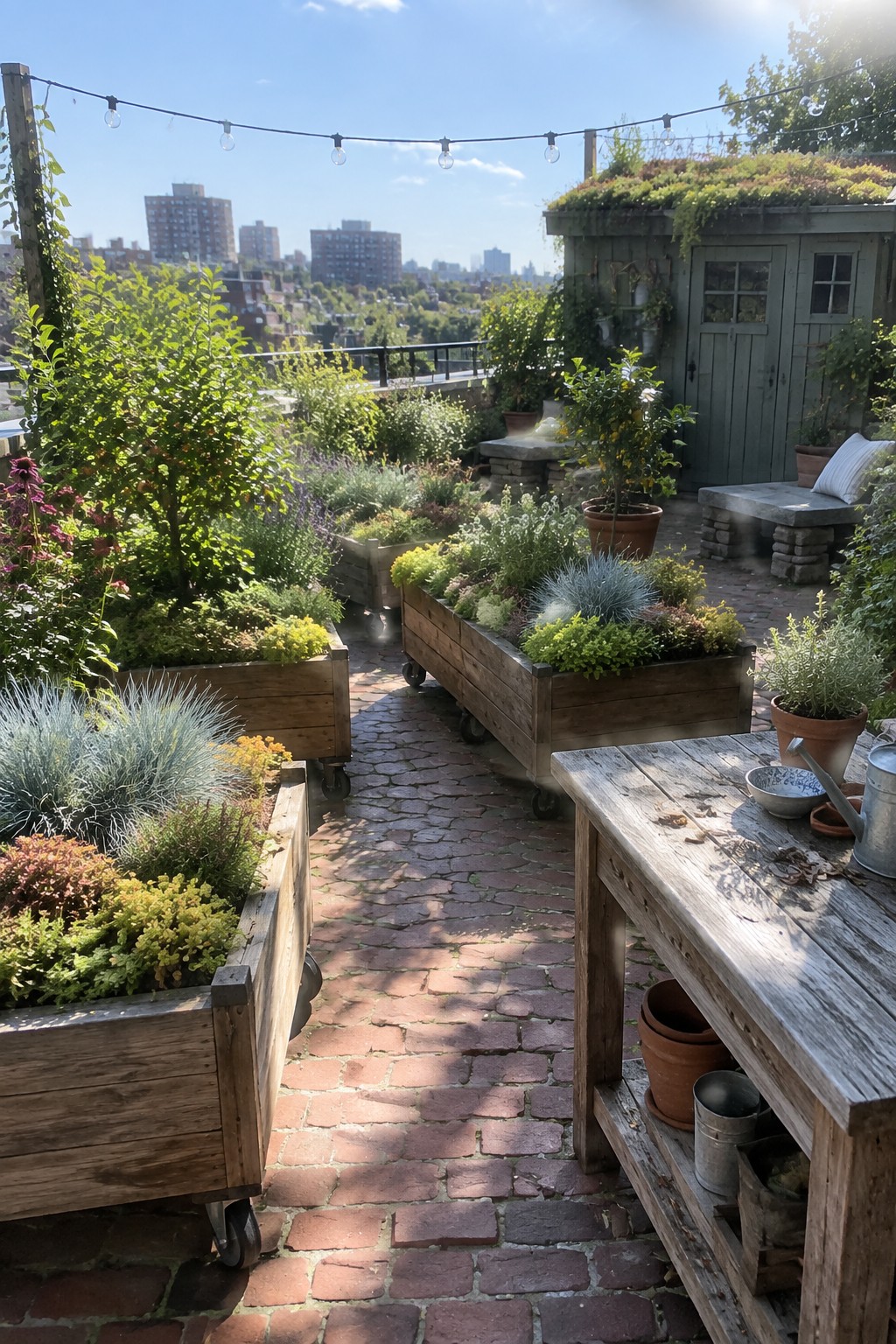
Wooden boxes on wheels give you a simple way to move plants around on a roof without much effort. This setup works well when you need to shift things for sunlight, cleaning, or seasonal changes, and it keeps the whole space from feeling fixed in place.
These planters suit flat roof terraces best, especially in city homes where weight and access can be tricky. Choose hardy plants that handle wind and sun, and check that the wheels can support the load once the boxes are filled.
Large Pots Of Hardy Plants On A Rooftop Deck
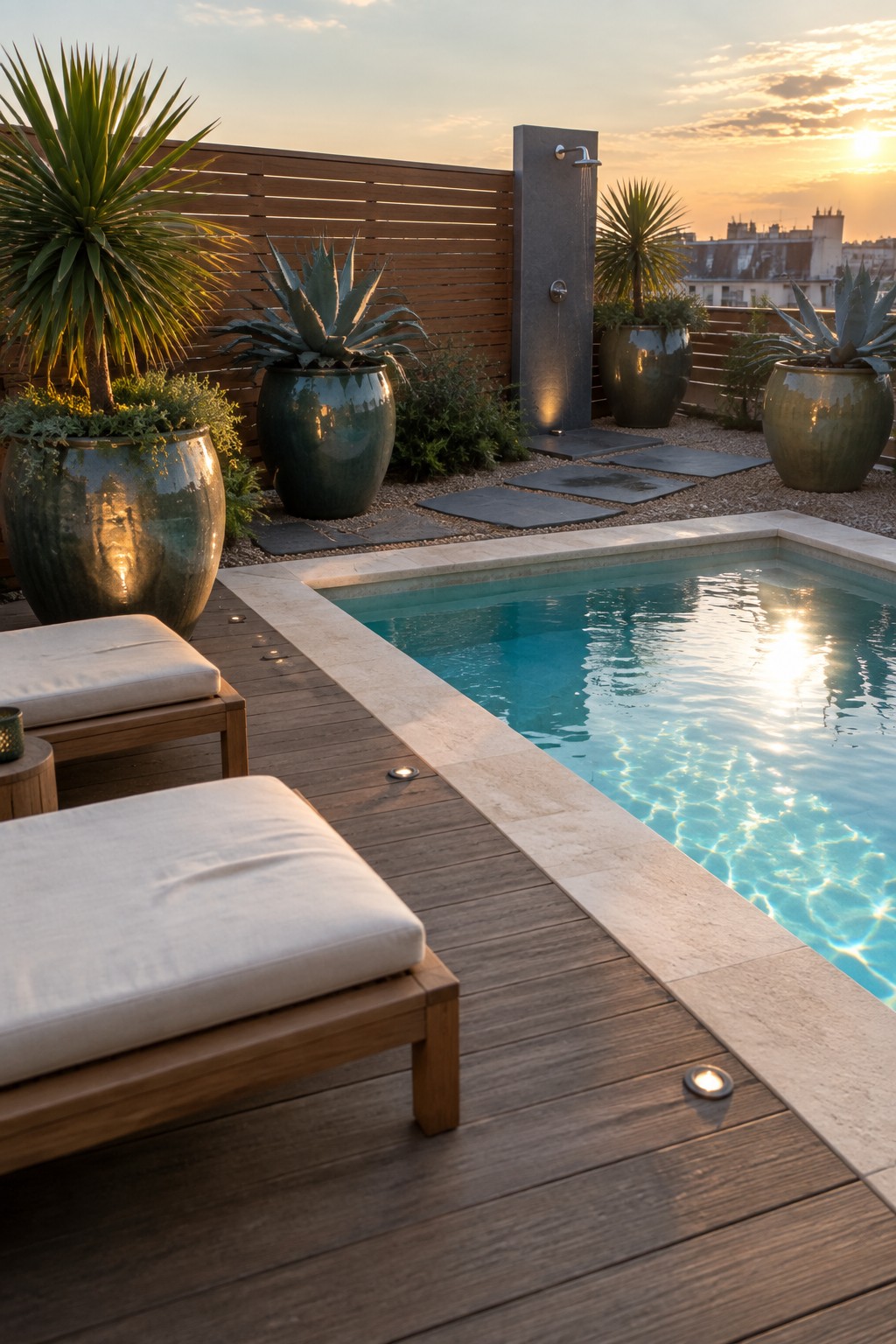
Big containers make it simple to bring greenery to a roof space without dealing with soil beds or constant upkeep. The plants stay contained, so you can move them around as needed and focus on varieties that handle wind and sun on their own.
This works well on decks or terraces where weight and drainage matter most. Stick with tough choices like agave or yucca in glazed pots, and keep the number of containers modest so the space stays open and easy to clean.
Line the Edges With Hardy Containers
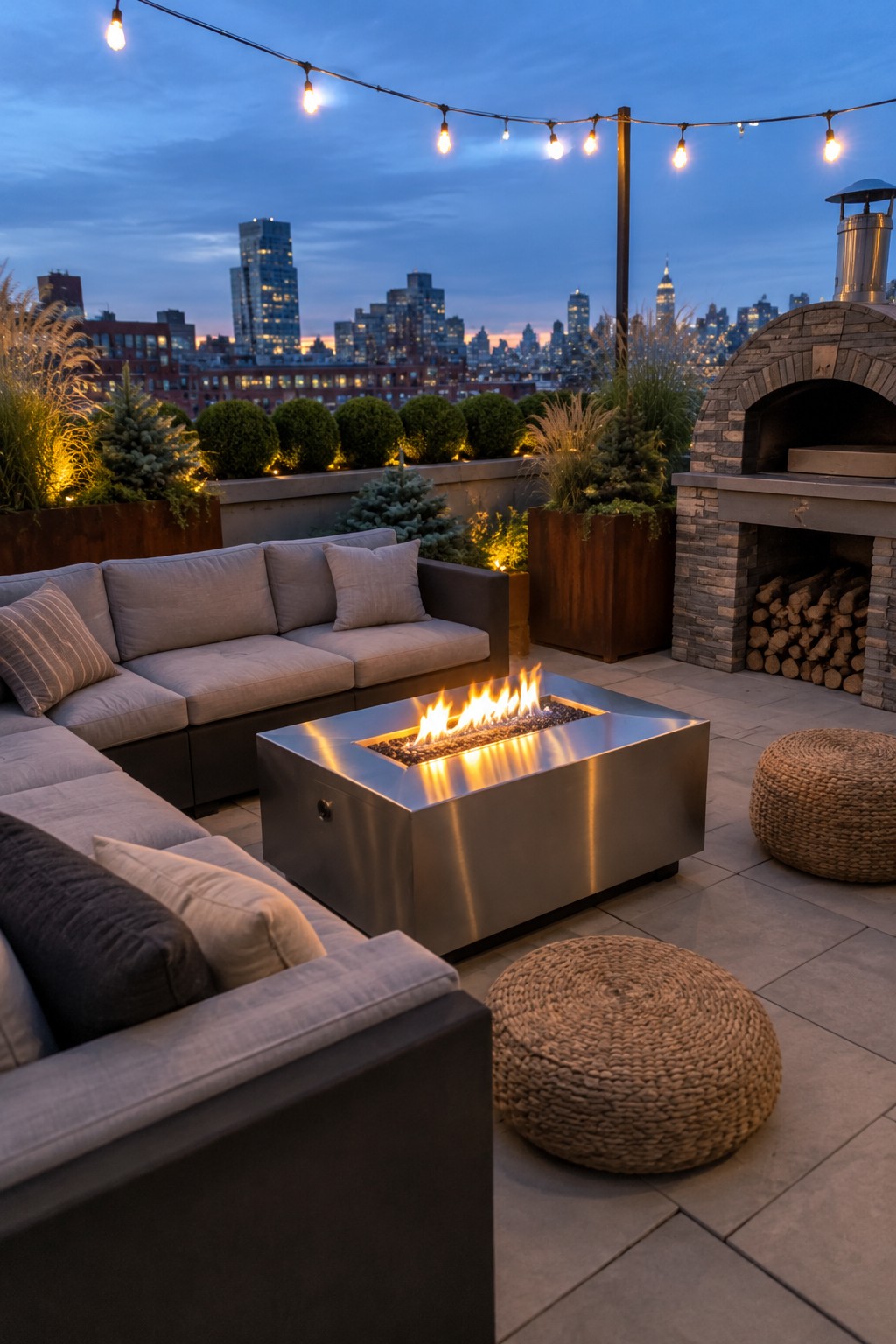
Putting hardy plants in big containers around the edges of a roof terrace gives you greenery without a lot of work. The plants stay contained so they do not need constant weeding or soil care, and you can move them if the weather turns rough. It works well on rooftops where digging is not an option.
Place the containers along the outer walls or railing to soften the space and give a bit of privacy. Choose tough evergreens and grasses that handle wind and sun, and water them only when the soil feels dry. This setup suits city rooftops or any flat outdoor area where you want low upkeep.
Raised Beds Pair Well With Containers
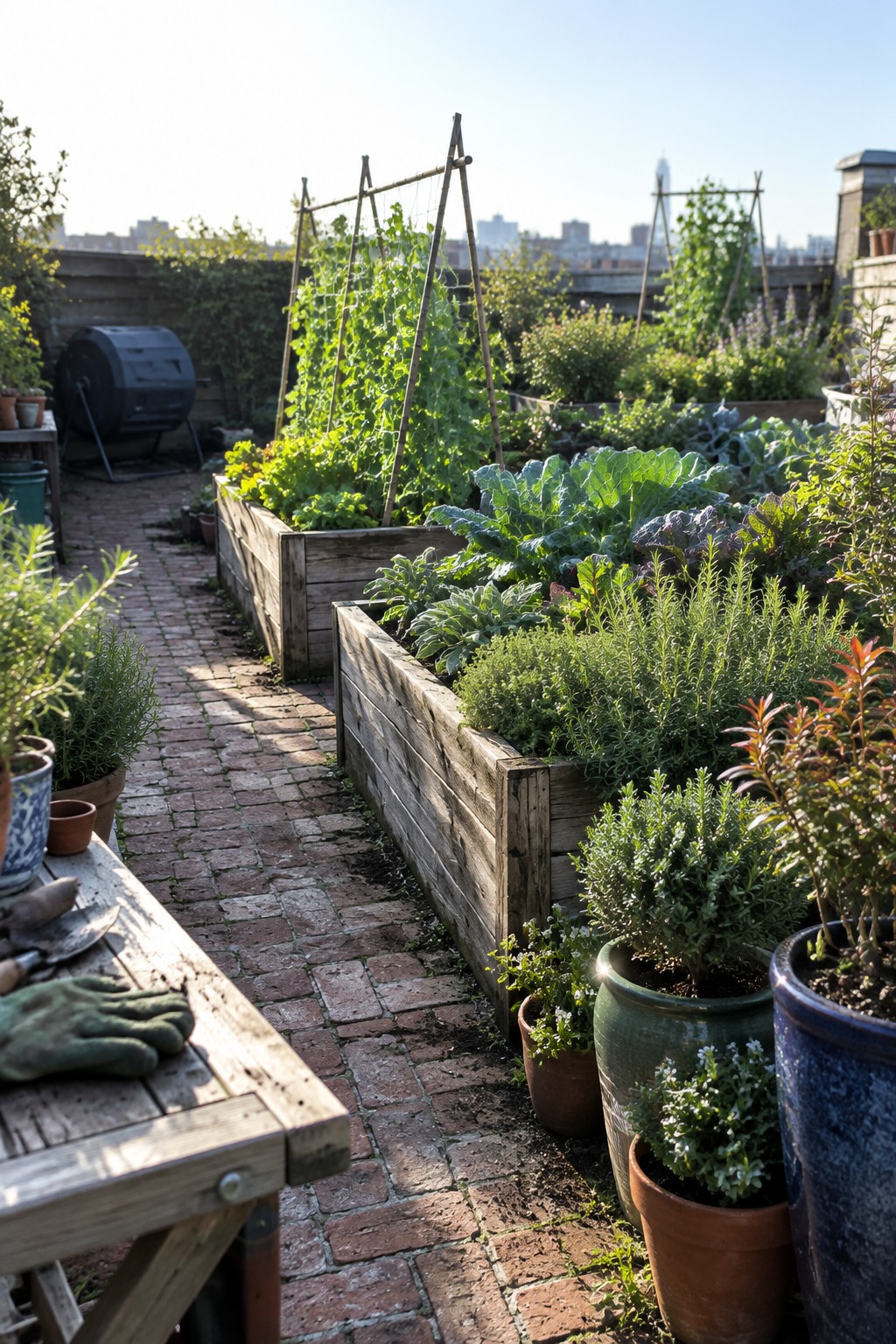
Raised beds give a roof garden clear structure without much extra work. They hold soil in place, improve drainage, and make weeding and harvesting simpler, especially when space is tight and wind can be strong. Adding containers around the beds lets you shift plants easily or fill gaps without digging.
This setup works best on flat rooftops or terraces where weight and drainage matter. Use sturdy wood for the beds and group hardy herbs or greens in both the beds and pots so everything stays manageable through the seasons.
Large Containers Keep Roof Gardens Simple
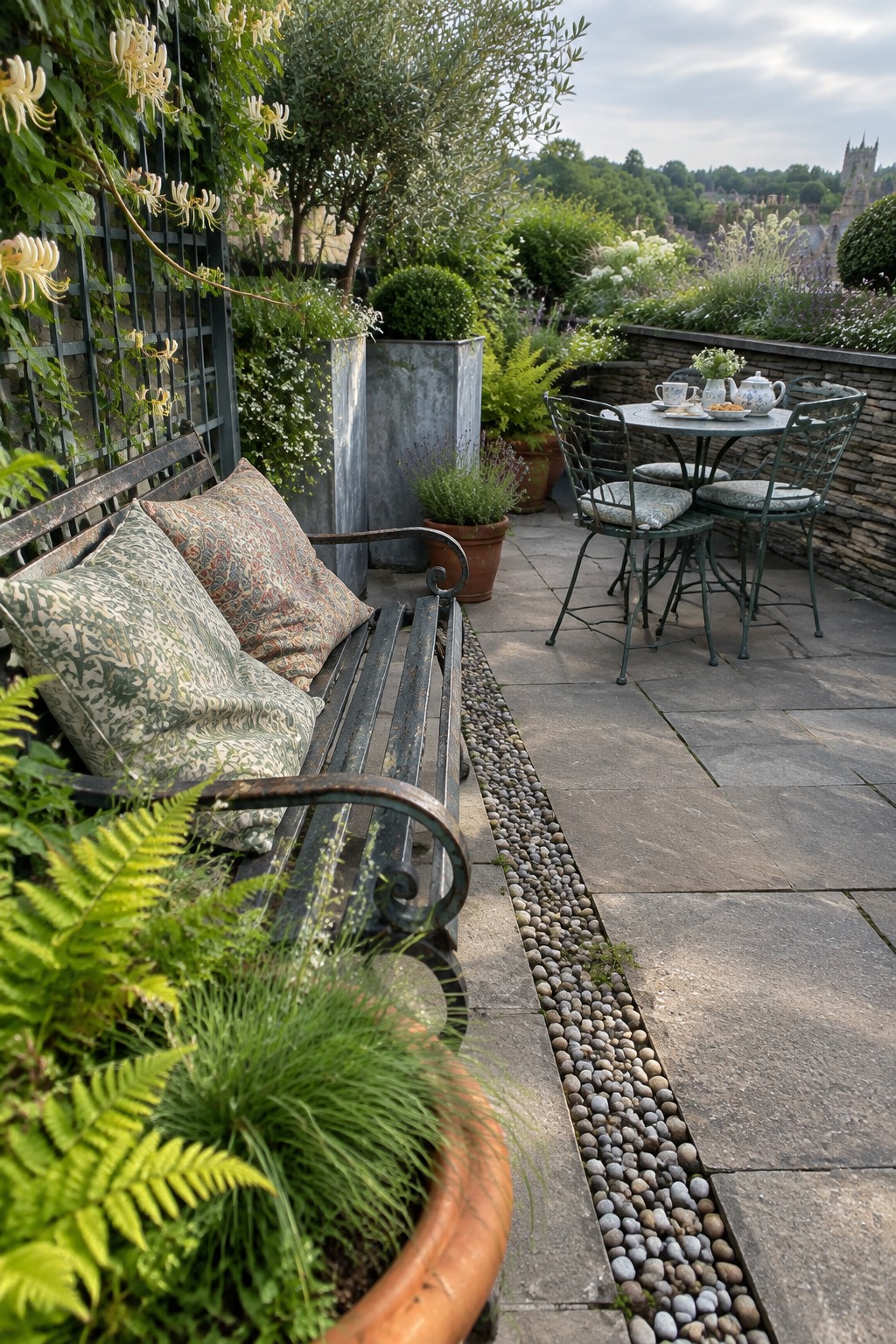
Large containers are one of the easiest ways to bring planting onto a roof terrace. They let you add greenery without digging beds or worrying about poor soil, and they work especially well in exposed spots where wind and sun can be strong.
Choose tough plants that need little watering once settled, and group pots of different sizes along the edges or near seating. This setup makes it simple to rearrange things when you want a change or need to move plants for better light.
Large Metal Containers For Roof Gardens
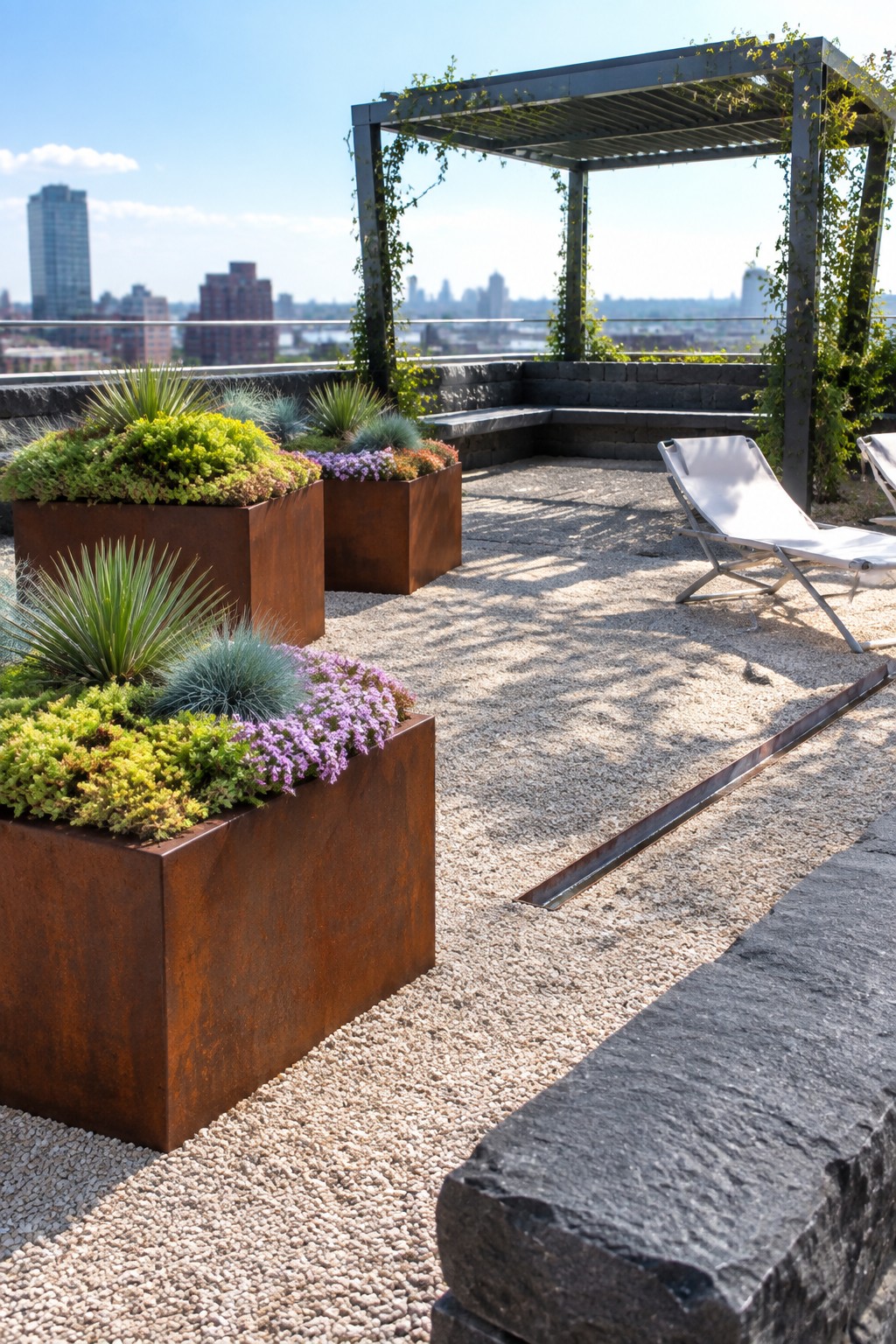
Large metal containers give a roof garden structure without much fuss. They stand up to weather, hold plenty of soil for hardy plants, and keep everything contained so maintenance stays low. The gravel base also helps with drainage and keeps the surface practical underfoot.
Try grouping several of these planters together on a flat rooftop to create zones for seating or walking paths. They work especially well in urban settings where weight and wind matter, and the metal finish ages nicely without extra care.
Large Containers Simplify Roof Garden Care
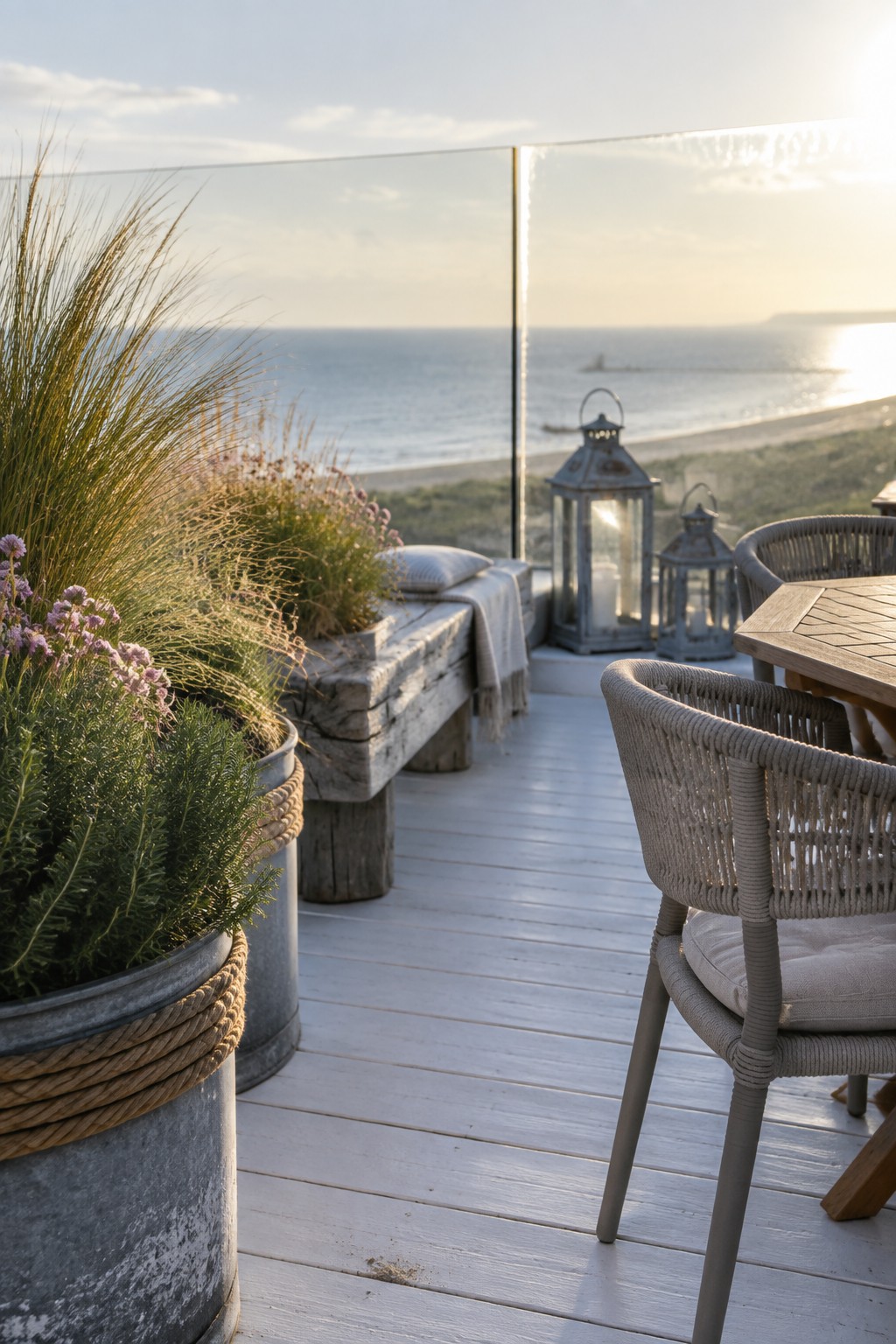
Large pots give hardy plants enough root space to handle wind and sun on a roof terrace. This setup cuts down on daily watering because the soil stays cooler and holds moisture longer than in small planters.
Group a few oversized containers along the edge of the deck to form a simple screen. Metal or heavy-duty pots stand up well to coastal weather and need little beyond occasional feeding.
Grow Hardy Plants In Long Troughs
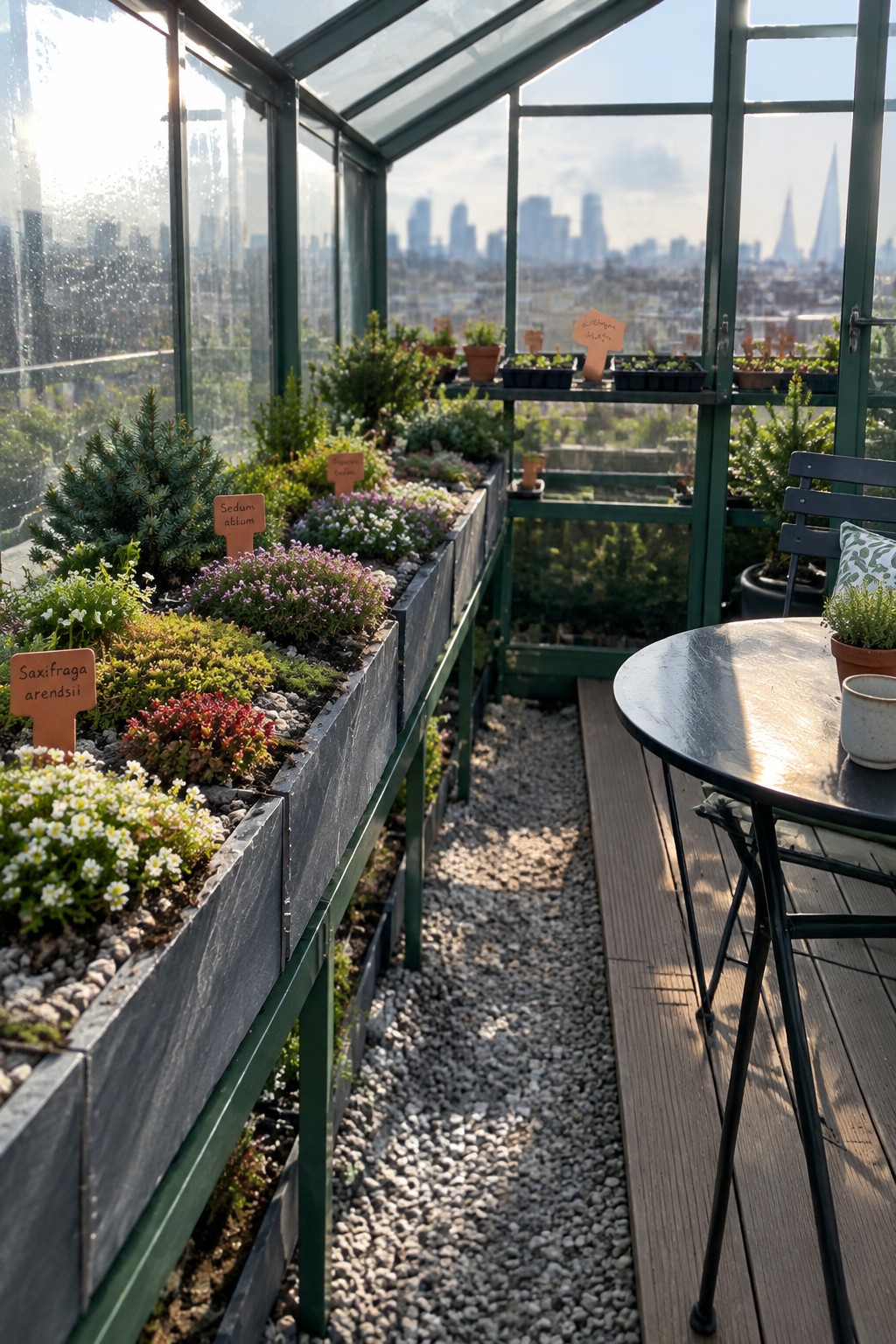
Long trough planters make roof gardening simpler because they hold a good amount of soil while keeping everything contained and easy to reach. The stone style troughs shown here let you mix several hardy plants like sedum and saxifraga in one spot without needing lots of separate pots.
They work well on rooftops or terraces where weight and drainage matter. Place them along a railing or wall where they get steady sun, and choose plants that handle wind and dry spells. Gravel under the troughs helps with runoff and keeps the area tidy.
Border Roof Seating With Oversized Planters
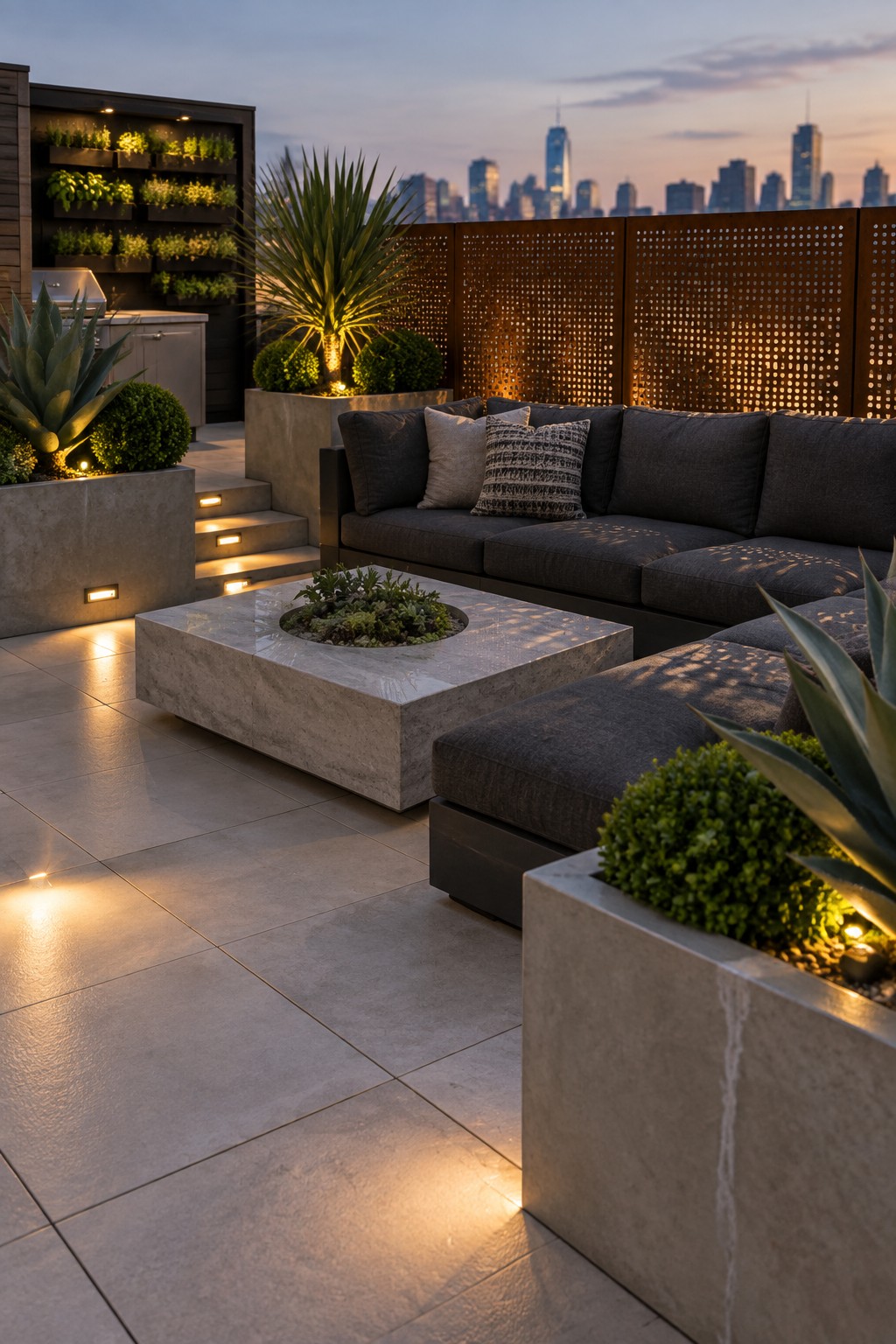
Large concrete planters filled with hardy plants can help mark the edges of a roof seating area without a lot of extra work. They add some greenery and structure while staying simple to keep up over time.
This setup suits rooftops where space and exposure matter most. Pick deep containers and tough plants that can handle wind and sun, then group them around the seating to create a clear zone without permanent construction.
Add Raised Beds Along the Edges
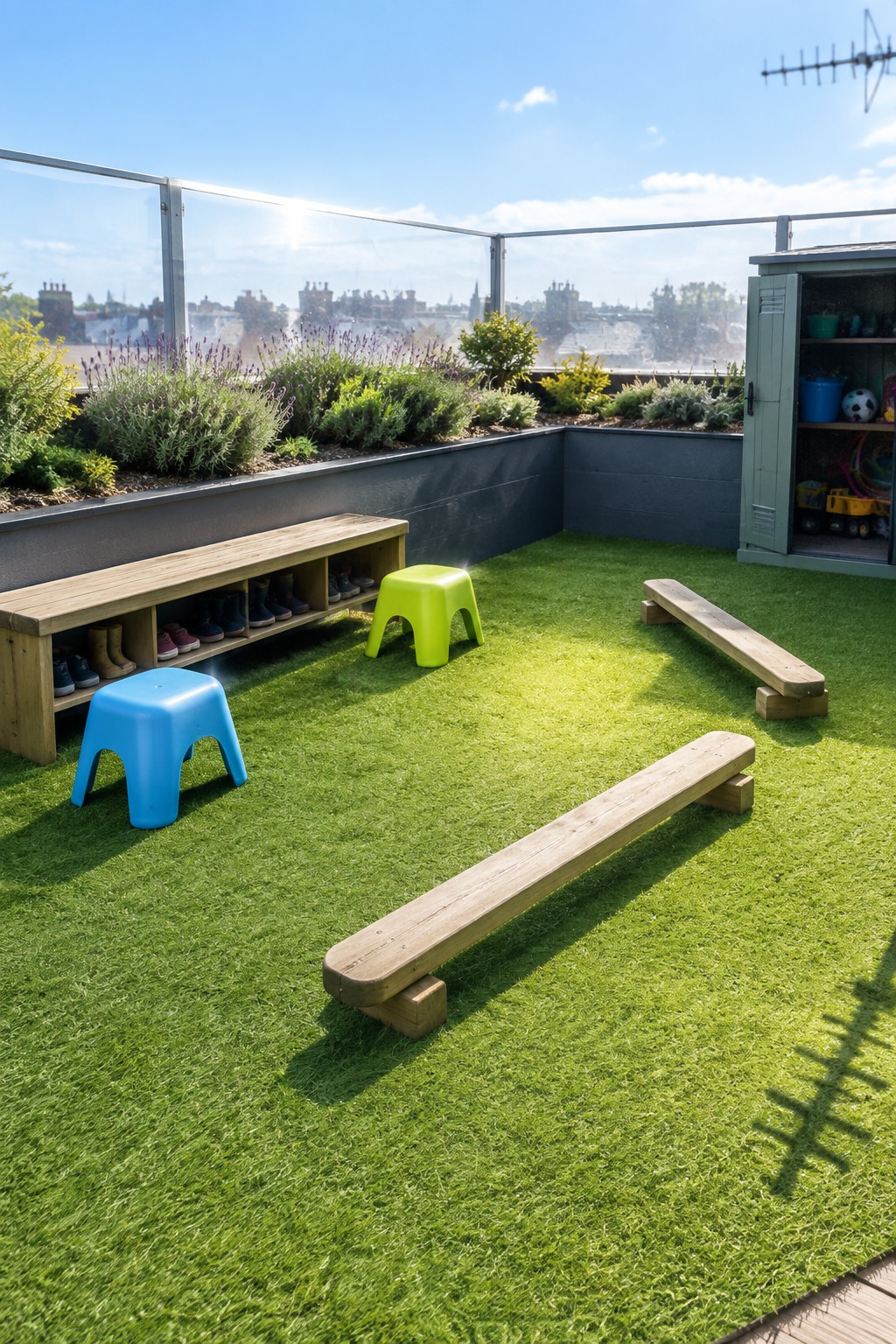
Raised beds make a roof garden feel more established without adding a lot of work. They hold soil well, keep plants contained, and let you choose hardy shrubs that handle wind and sun exposure on top of a building. The wooden benches in the photo show how seating can sit right beside the planting without crowding the space.
This setup works best on rooftops or terraces where you want some greenery but still need an open area in the middle. Stick to tough evergreens or low-water perennials in the beds so they stay looking good with little watering or pruning. Just make sure the structure can handle the extra weight before you build them in.
Use Container Plants to Green a Roof Terrace
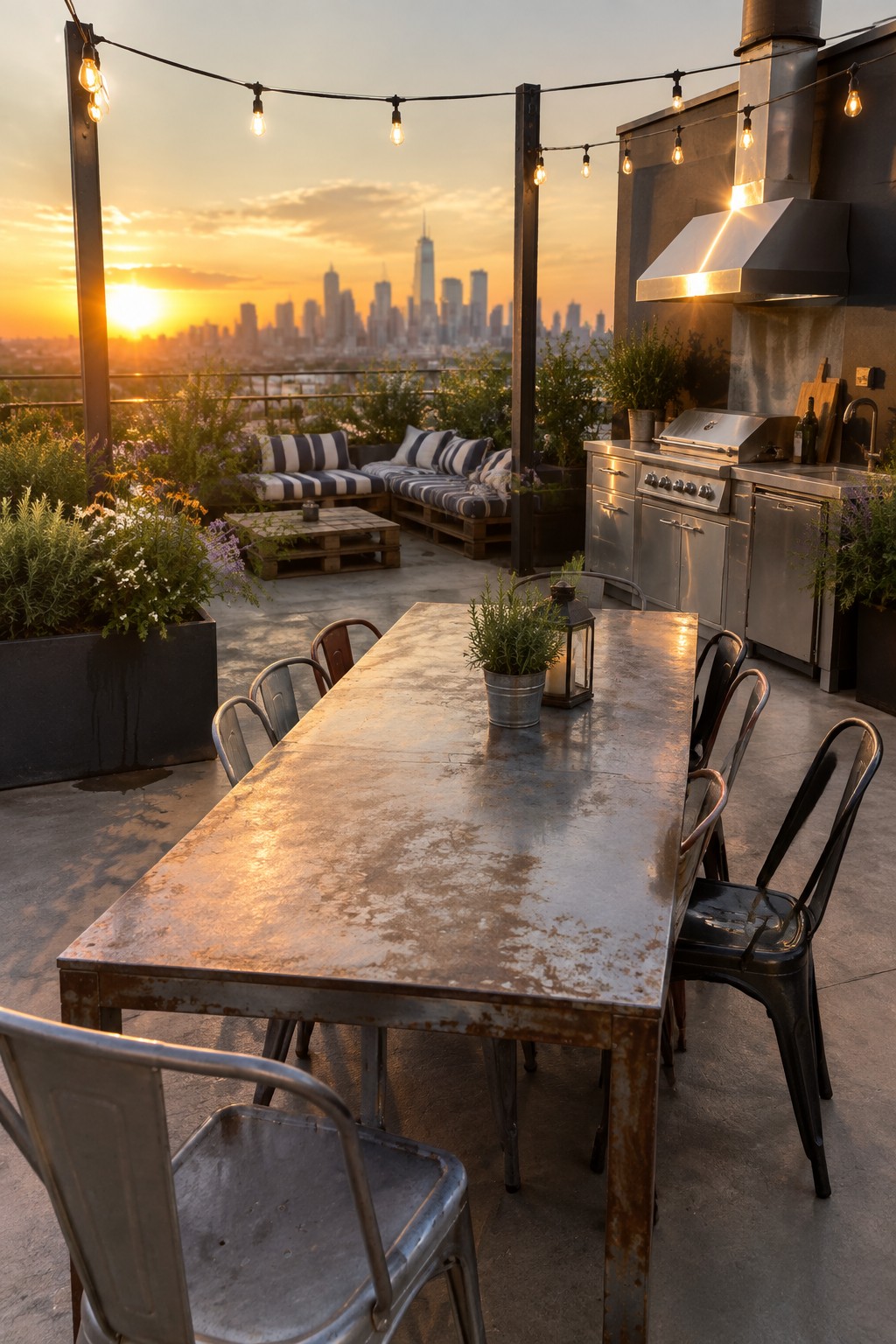
Container plants work well on rooftops because they need no digging and stay easy to manage in any season. They let you bring in greenery without changing the structure of the space, and hardy varieties hold up to wind and sun without constant care.
Place larger pots along the edges to soften the open feel, then add a few smaller ones near the table for detail. This setup suits city rooftops or any exposed deck where built-in beds are not an option.
Frequently Asked Questions
Q: How often do I need to water these plants after planting them? A: Check the soil with your finger and water only when the top inch feels dry. Big containers hold moisture longer so most of these hardy picks can wait a full week between drinks once they root in.
Q: What about wind blowing the pots around on an exposed roof? A: Pick heavier pots or set a few bricks at the bottom before you fill them. Tuck the containers close to a wall or railing so gusts have less room to tip them over.
Q: Can I just leave everything outside through winter? A: Choose plants rated for your coldest temps and they will stay put without extra fuss. A quick check for cracked pots after a freeze is usually all you need.
