

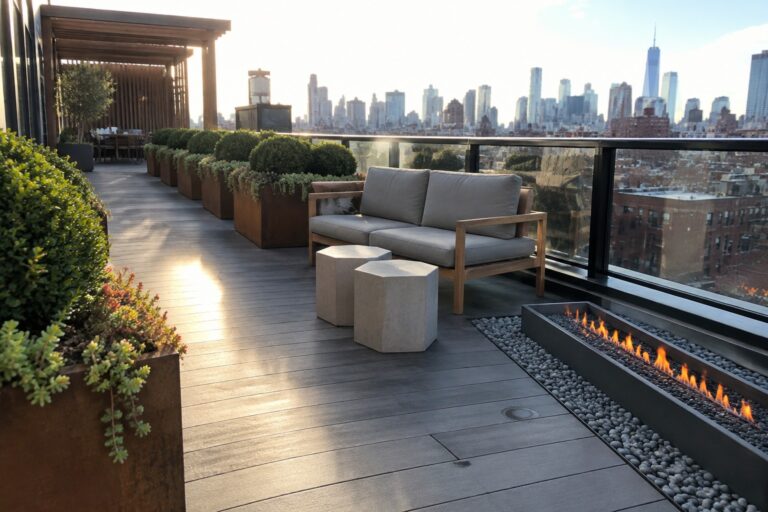
I have always found that roof gardens end up getting more use when the layout keeps walking paths clear and leaves space for a couple of chairs without crowding the edges.
The planters often end up doing the heavy work of shaping the area, and I notice they work better when they sit low enough not to block the view but still give some privacy from neighboring buildings.
Furniture that stays simple tends to hold up better out there because anything with too many cushions or joints starts to look worn after a season or two.
Some designs end up feeling more like display areas than places to spend time.
I would try adding just two or three geometric planters first to see how they change the way the whole space reads from the doorway.
Using Geometric Accents with Simple Seating
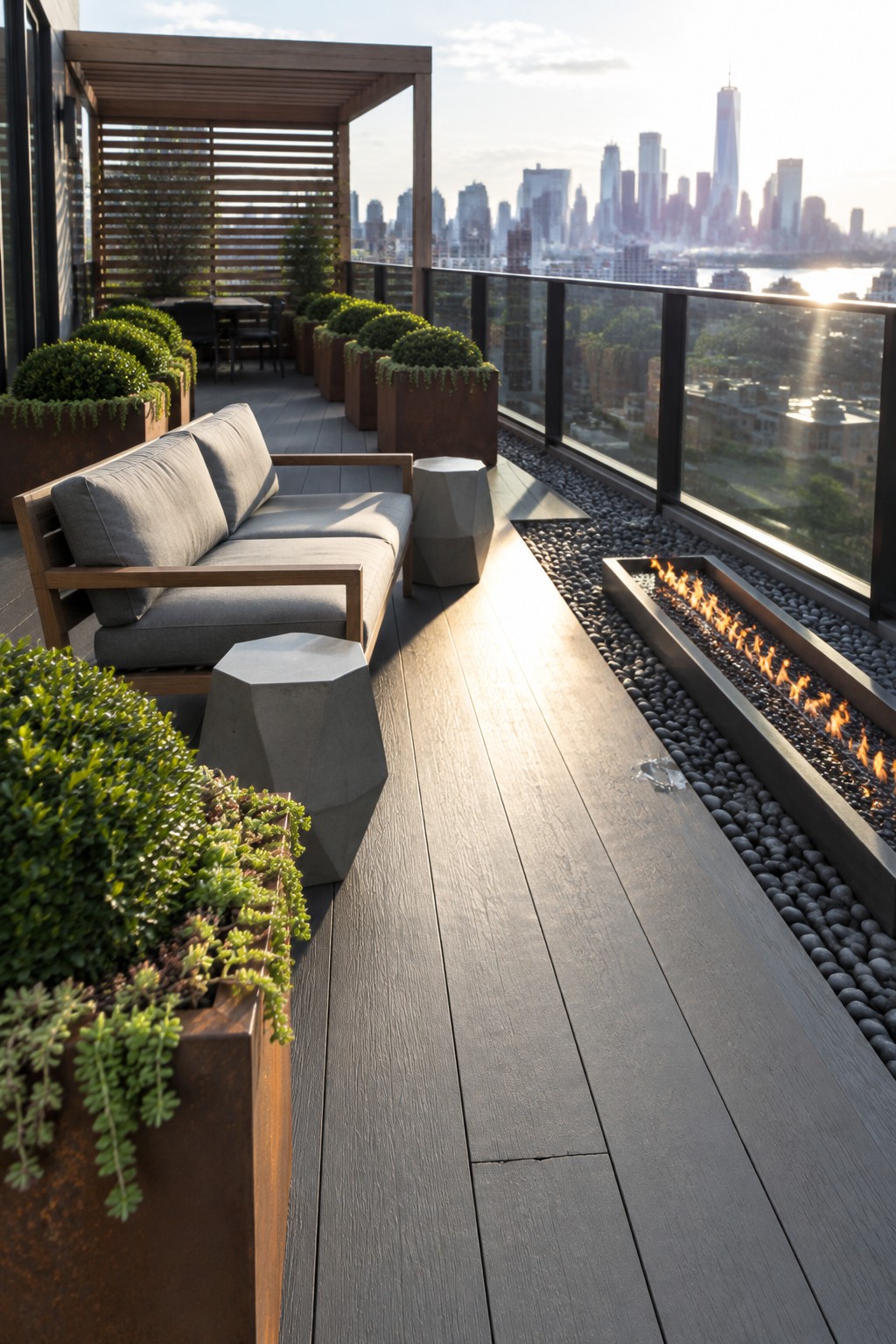
A roof terrace works better when the furniture stays simple and the accents carry the modern feel. Low wooden seating paired with angular concrete stools keeps the look clean while the geometric planters add structure without crowding the space. This mix avoids clutter and still feels intentional.
It suits rooftops or decks where you want the view to stay open. Stick to a few repeating shapes in the planters and stools, then let the decking run long and uninterrupted. Watch the scale so the concrete pieces do not overpower the seating.
Planters for Zoning a Roof Terrace
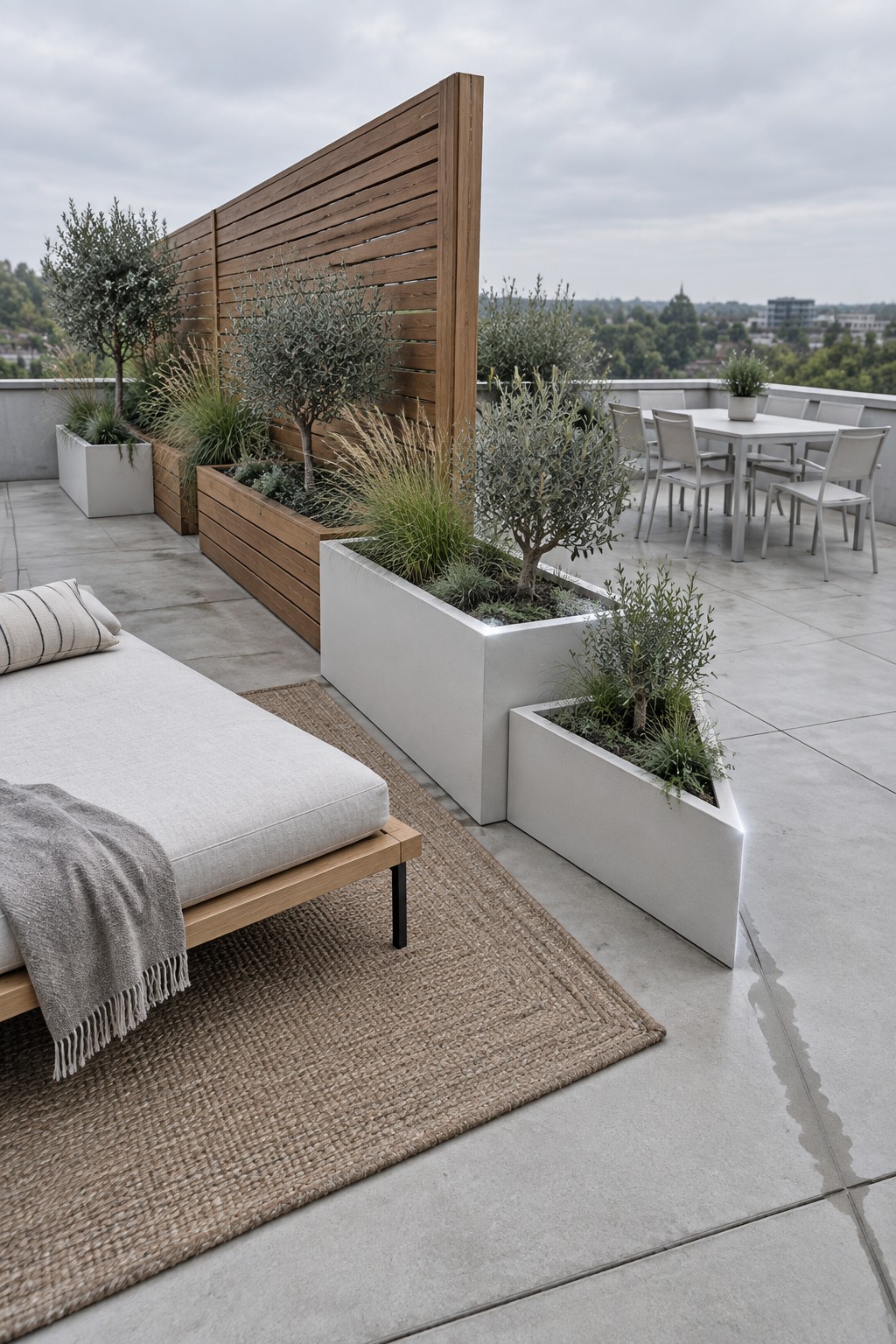
Large planters can do more than hold plants on a roof terrace. They mark off different areas for lounging and dining while keeping the whole space open and connected.
Set a few angular concrete ones between the seating zones. This gives each area its own feel without blocking views or adding heavy structures. The approach works best on flat rooftops where you want simple divisions that still feel light.
Concrete Tables Suit Roof Gardens
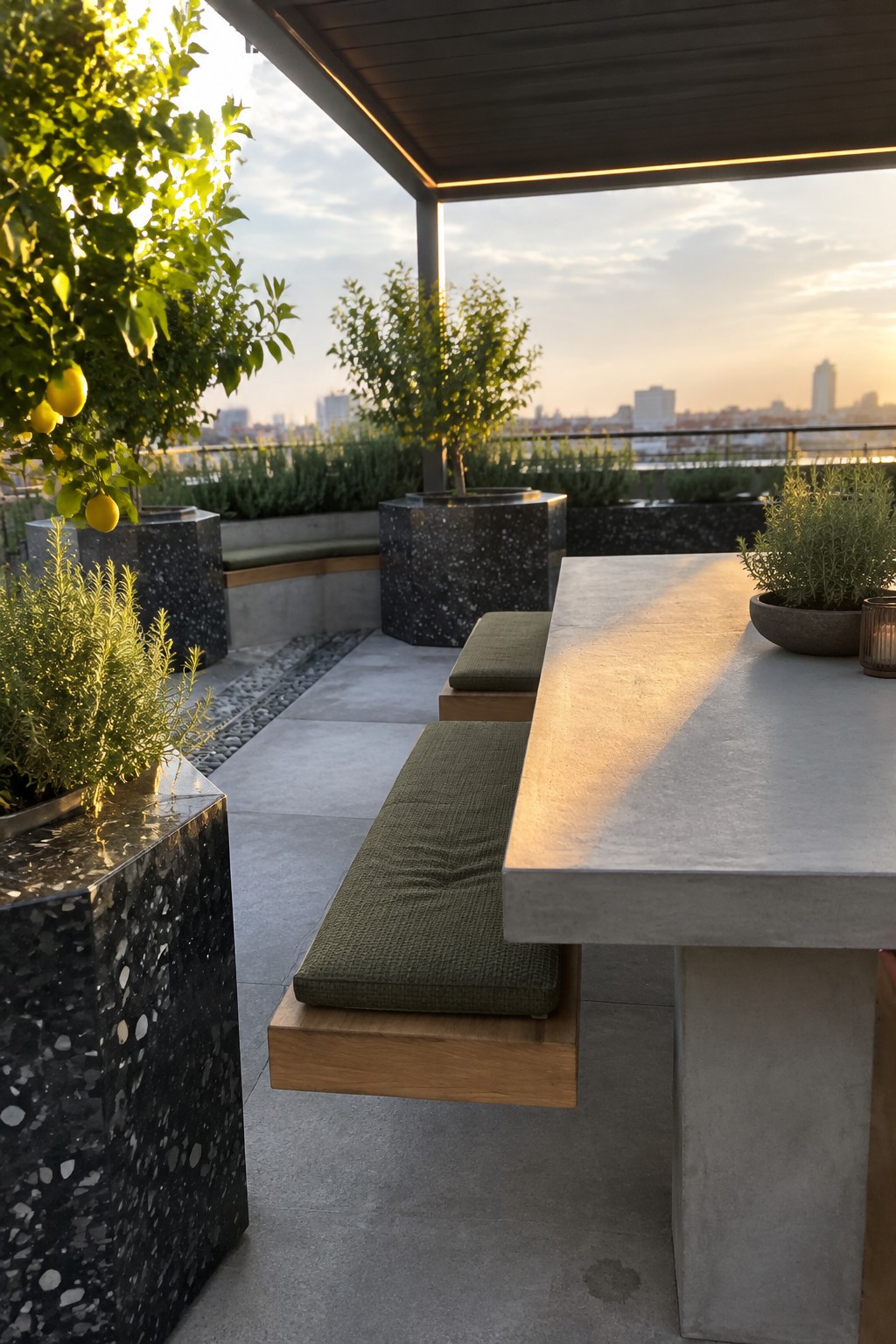
A heavy concrete table gives a roof terrace a solid, grounded feel that holds up against wind and weather. It pairs naturally with simple wooden benches and large planters, keeping the whole setup low and open without needing lots of extra furniture.
This approach works best on flat rooftops or terraces where weight is not an issue. It suits homes that want a clean dining area without clutter, though you should check the structure can support the load first.
Keep Outdoor Furniture Simple
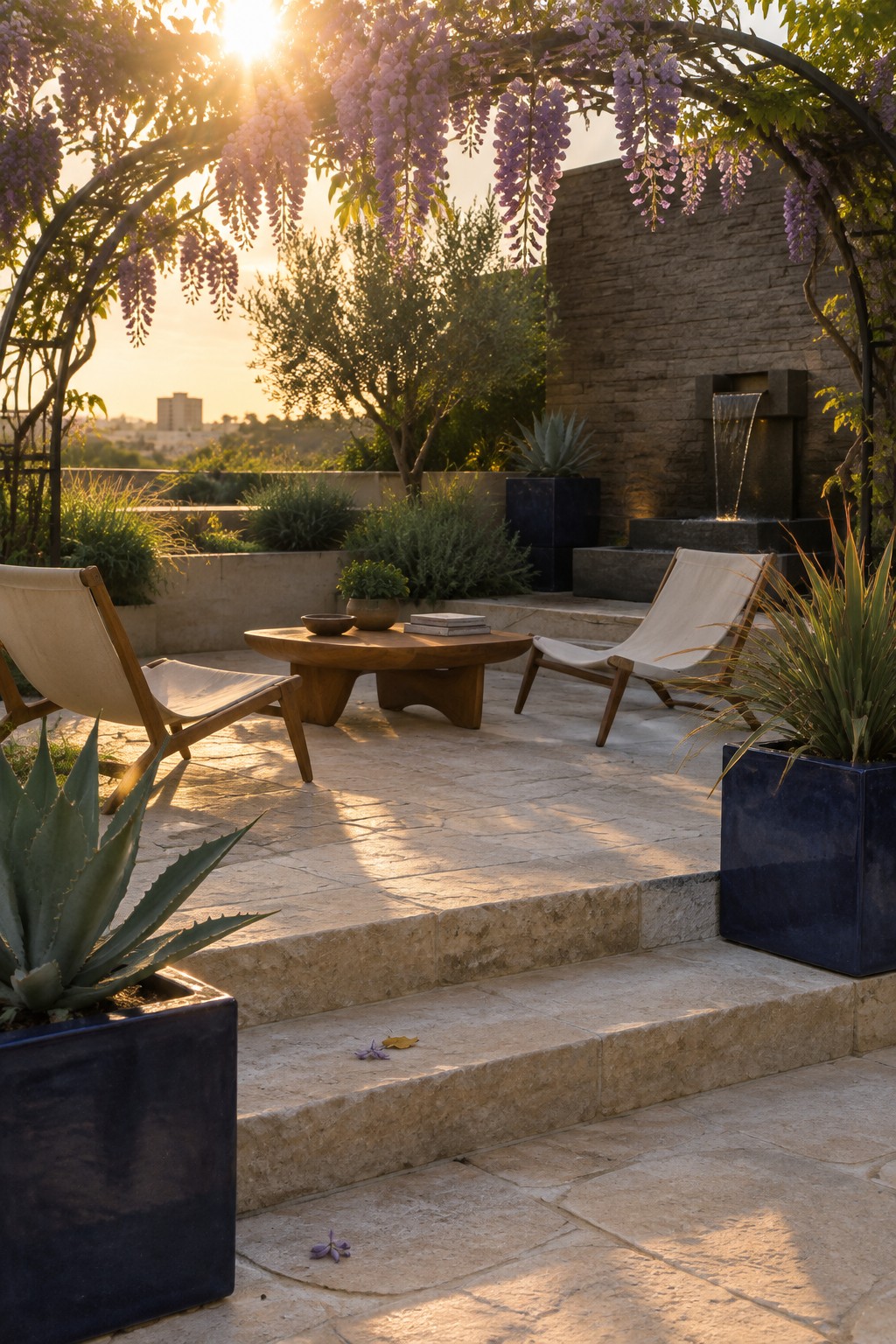
Many roof gardens feel more open when the seating stays basic. Low chairs with clean lines and a single low table leave plenty of room for the planters to define the space without adding clutter.
This works especially well on terraces where you want the garden elements to lead. Stick to neutral fabrics and avoid extra pieces so the geometric pots can stand out on their own.
Gravel Edges For Neat Garden Paths
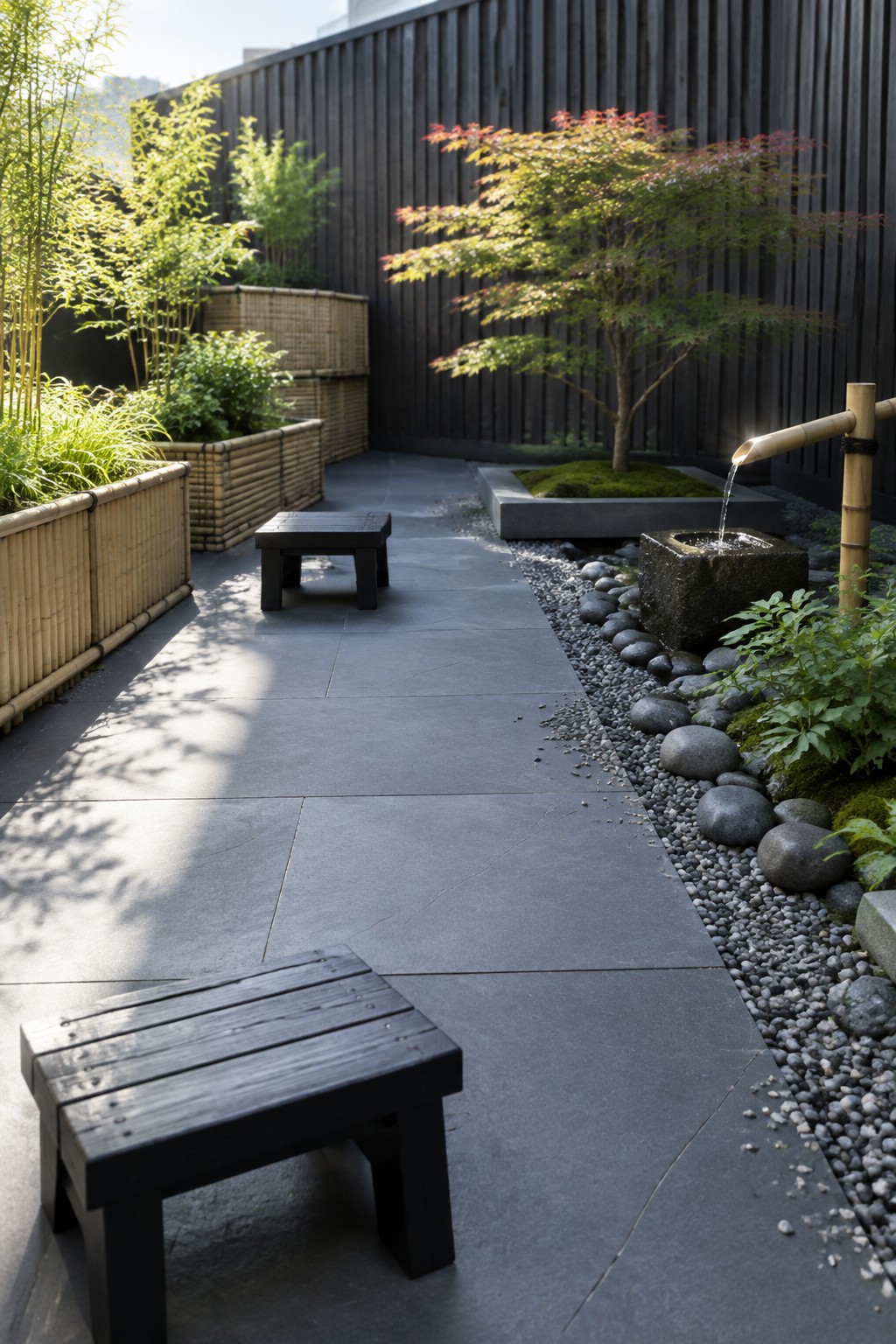
One easy way to give a garden path structure is to border the main pavers with a strip of gravel and larger stones. This creates a clear division between the walking surface and the planted areas while keeping the overall look simple and low maintenance.
It works best in compact spaces where you want the path to feel intentional without adding walls or raised beds. Just keep the gravel layer shallow enough that it stays in place and does not creep onto the stone slabs.
Using Geometric Planters to Define Outdoor Spaces
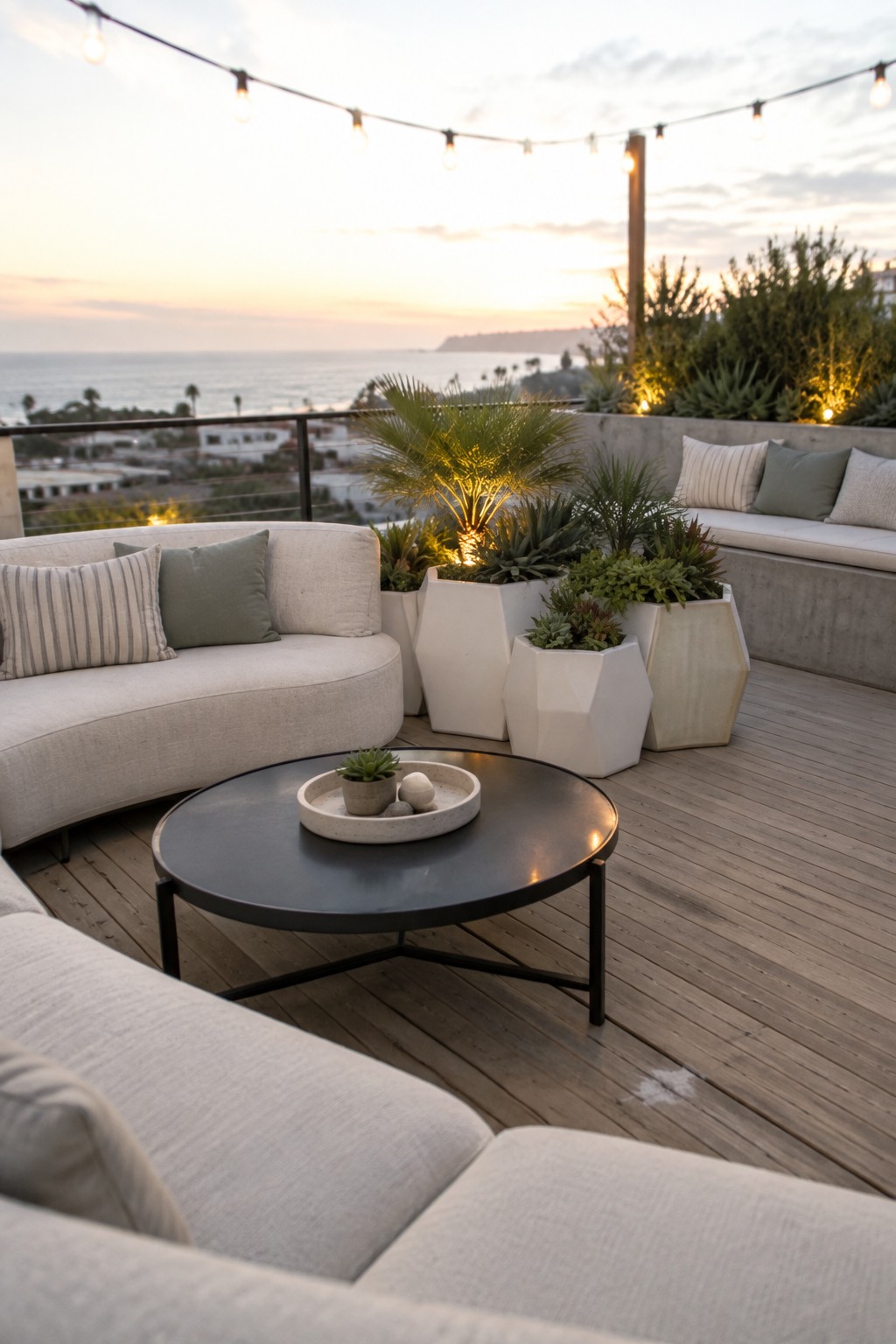
Geometric planters work well when you want to give an outdoor seating area some shape without adding walls or screens. The angled forms stand out against simpler furniture and help mark the edges of the lounge zone while still leaving the view open.
They suit roof decks and terraces best because they bring height and texture without taking up much floor space. Try grouping a few different sizes together near the seating rather than spreading them out evenly. This keeps the layout feeling natural and easy to move around.
Raked Gravel Beds in Modern Roof Gardens
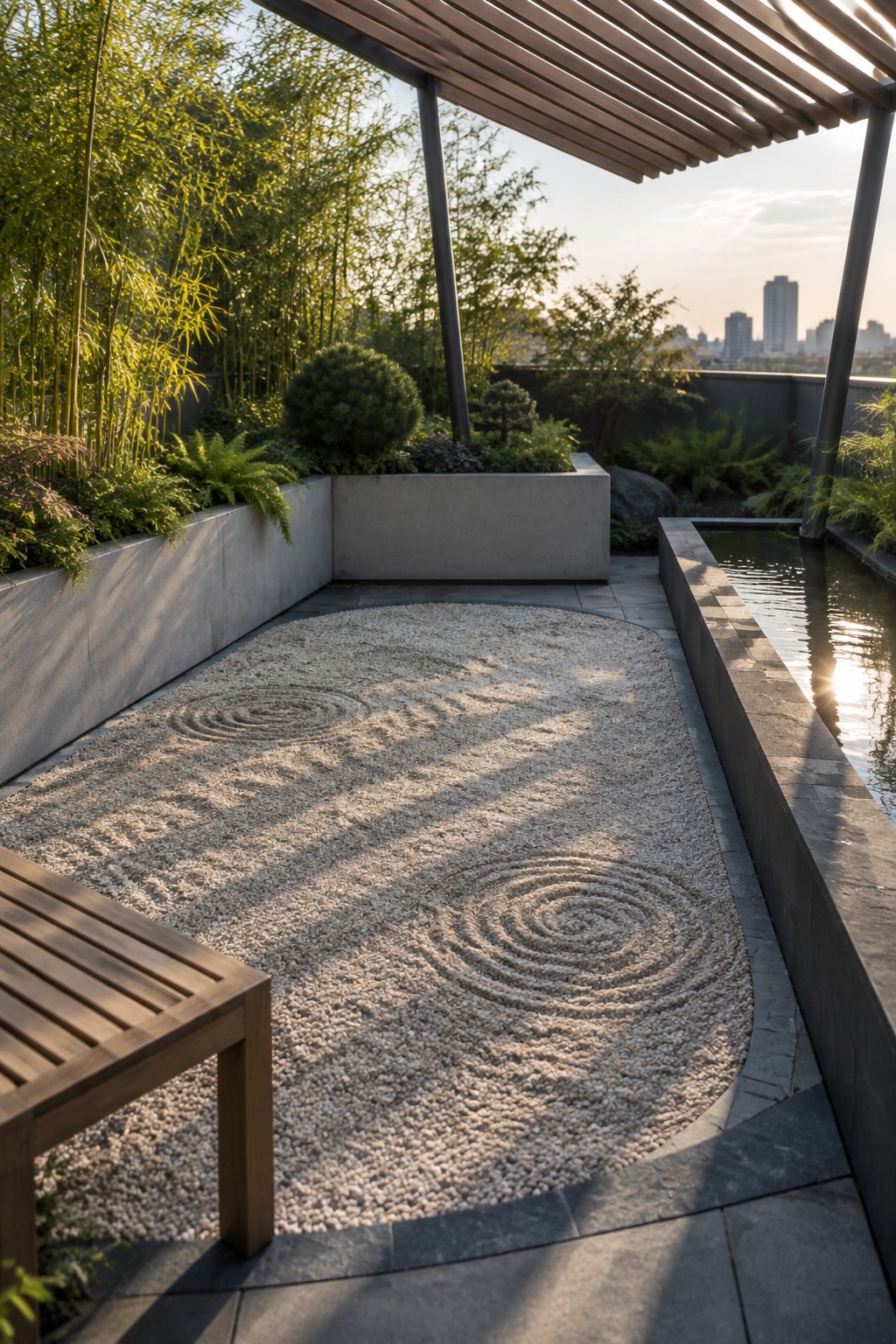
Raked gravel works well in roof gardens because it gives a clean surface that stays looking tidy with very little effort. The patterns add quiet interest without adding height or clutter that could block views or feel heavy on an upper level.
It suits flat rooftops with solid drainage and pairs best with simple concrete planters and one or two low pieces of furniture. Keep the patterns simple so they do not compete with the surrounding city skyline.
Geometric Planters Add Structure to Roof Gardens
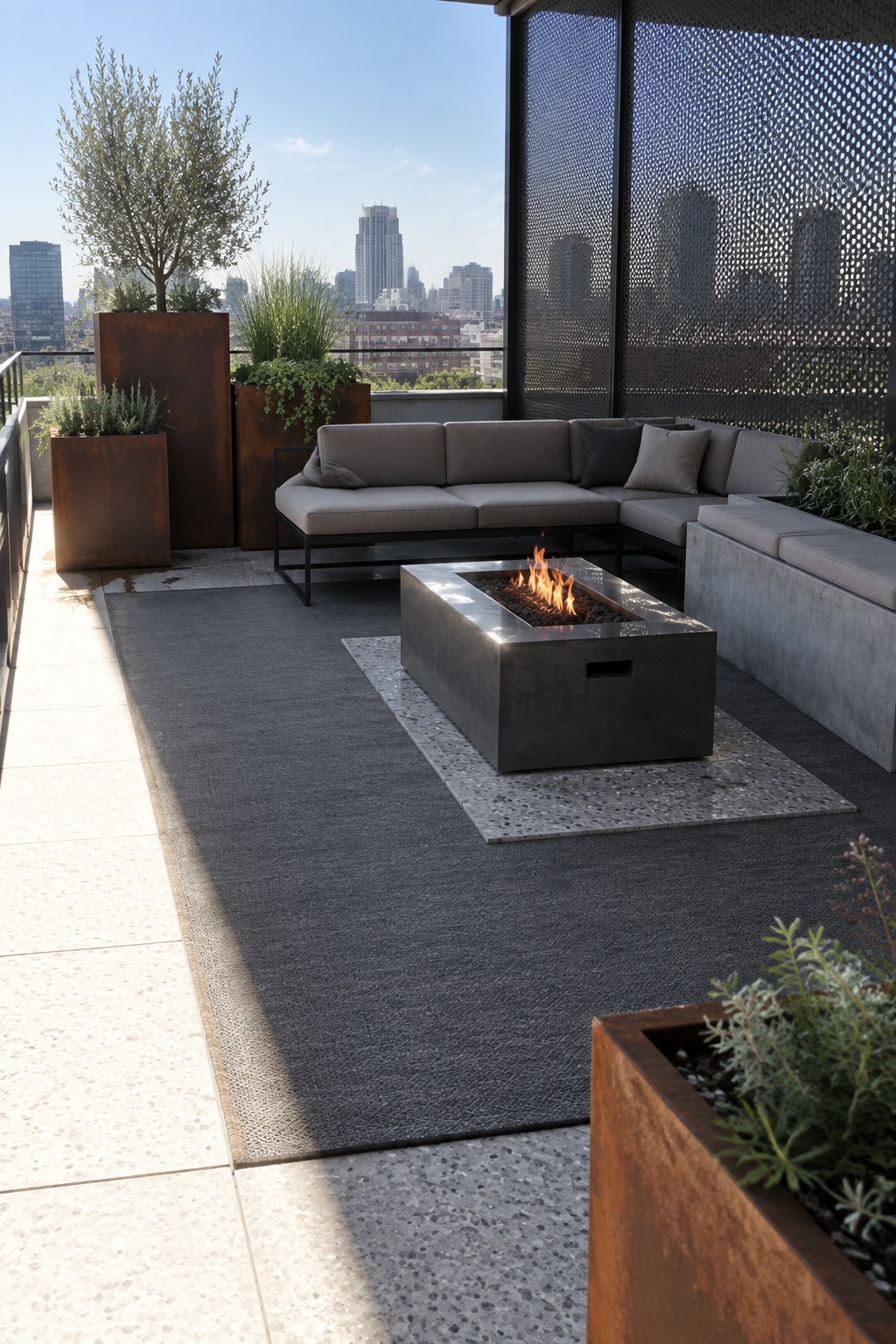
Large metal planters in simple shapes help turn an open roof terrace into a more defined outdoor room. They create edges and visual weight without needing walls or heavy furniture, which keeps the space feeling open while still giving it shape. The mix of greenery and clean lines works especially well when the rest of the setup stays minimal.
This approach suits flat roof spaces where you want low maintenance and a modern look. Place the planters along the perimeter or at key corners to guide traffic and soften the edges of seating areas. Just make sure they are sturdy enough to handle wind and that the plants can handle full sun exposure.
Built-In Planters For Compact Balconies

Many small balconies end up with just a couple of chairs and little else because there is no room for proper planting. Stacking wooden boxes along the wall changes that by turning the vertical space into growing room while the floor stays clear for a table and seats.
This works well on city apartments where you want real greenery without blocking movement. Keep the furniture light and simple so the plants do the main job, and choose boxes that are deep enough for the herbs or flowers you actually want to keep.
Large Planters Shape the Outdoor Room

Large dark planters work well for marking out a seating zone on a roof terrace without adding walls or railings that would block the view. They give the space a clear shape while leaving plenty of open floor for walking around.
Set them in a line or at the corners of the seating area and keep the furniture low and simple. This approach works best on flat rooftops in urban settings where you want structure but still need the space to feel open and easy to maintain.
Geometric Planters Define the Seating Area
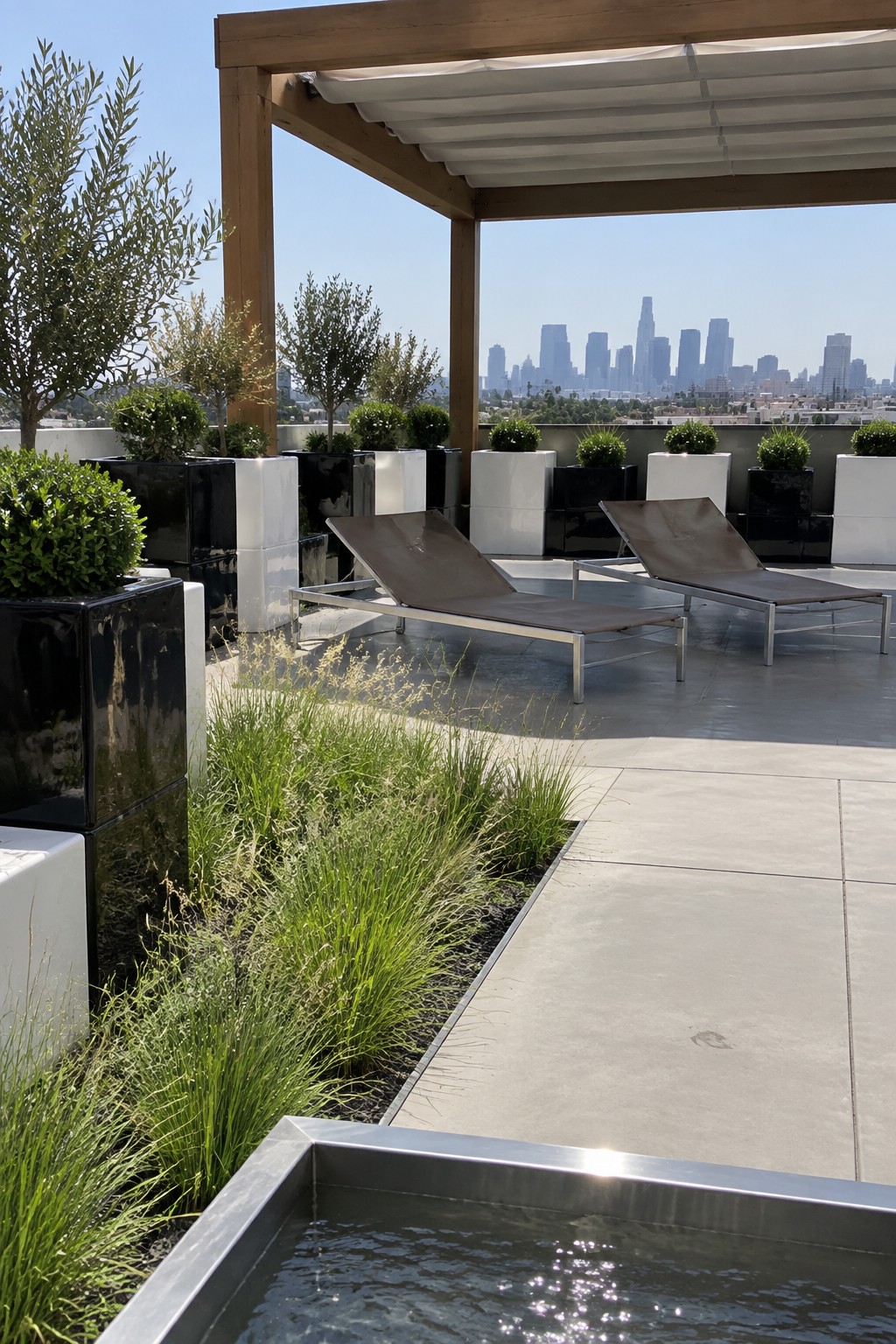
Geometric planters work well for marking off a lounge zone on a roof without adding walls or screens. The square shapes give clear edges that keep the space feeling organized while still open to the surroundings.
This setup suits modern homes with flat roof terraces or large patios. Place the planters to create a loose border around lounge chairs, and keep the plant choices simple so the overall look stays uncluttered.
Modular Seating Keeps Rooftop Spaces Open
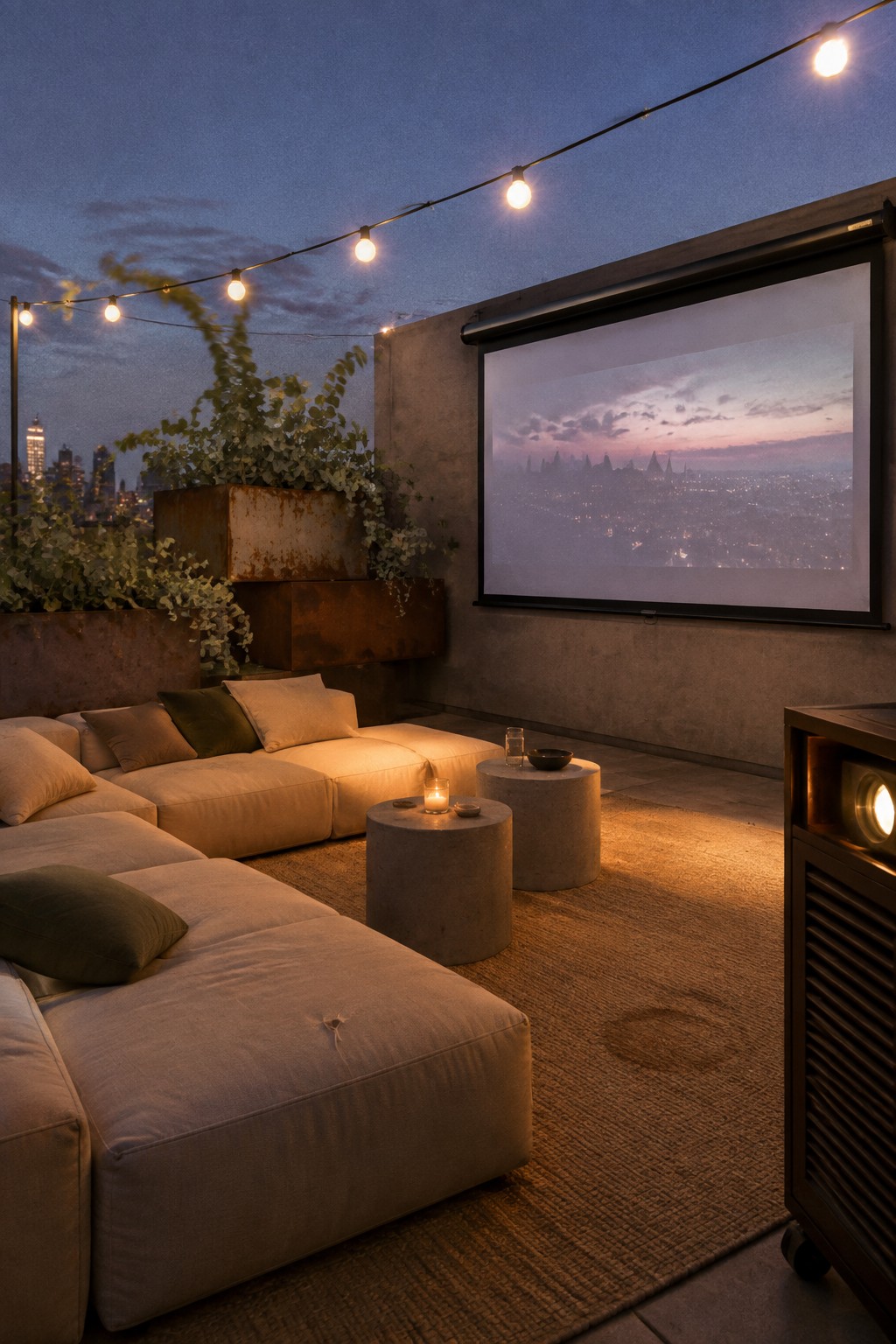
Low modular seating works well on rooftops because it stays out of the way of the view and lets you rearrange the layout when needed. The pieces sit close to the floor, so the space still feels open even with a large screen and a few planters around the edges. Neutral fabrics help everything blend into the surroundings without adding visual weight.
This setup suits flat roof terraces or urban decks where you want room for both lounging and occasional gatherings. Place the sections in an L or U shape around a couple of simple side tables, and keep the number of pillows low so the area does not feel crowded. Watch the scale though. Oversized pieces can quickly make a smaller roof feel tight.
Using Planters to Frame a Deck Area
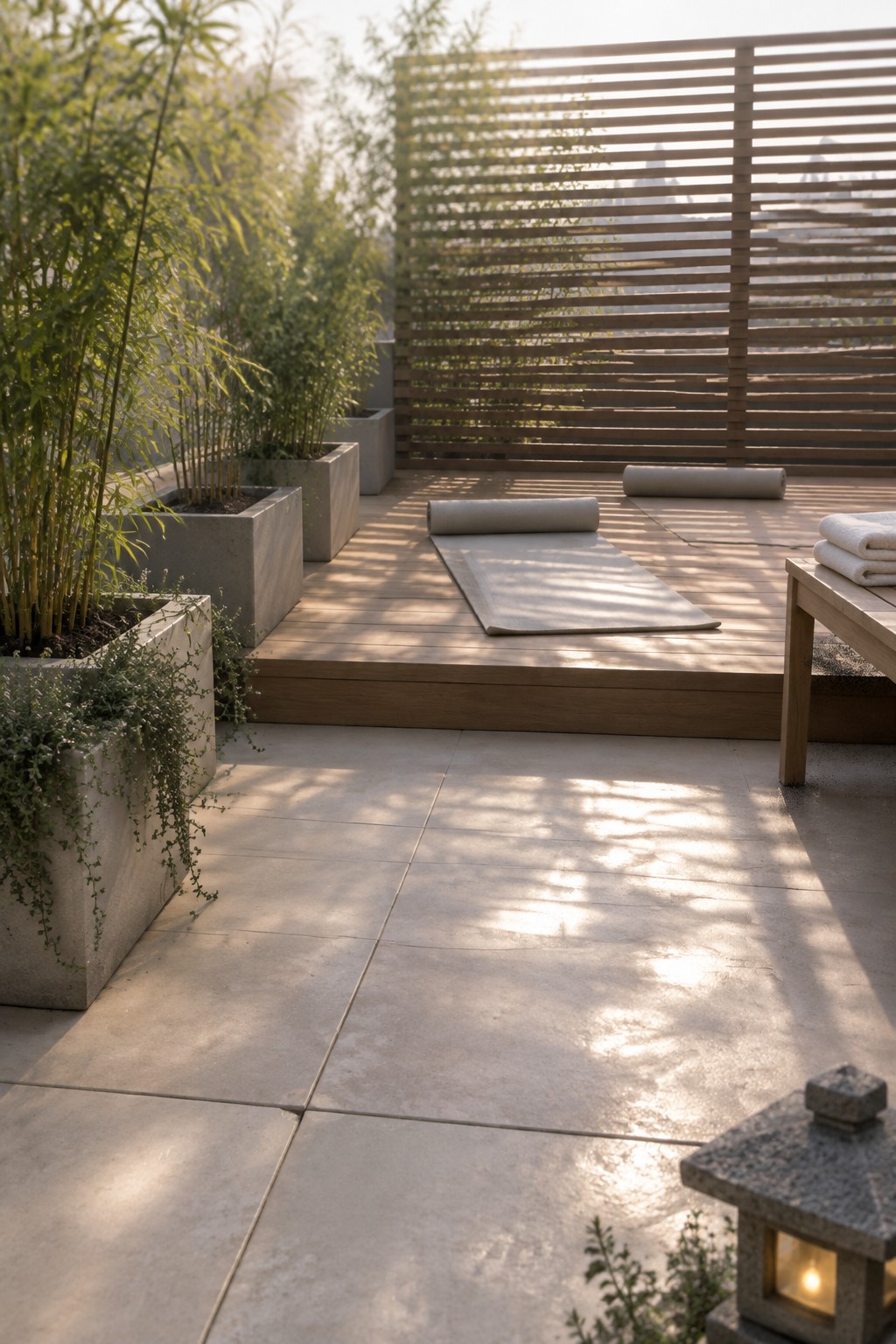
Large concrete planters work well here because they give the space clear edges without needing walls or railings everywhere. They hold tall plants that soften the view while still letting the wooden deck feel open and usable for yoga or quiet sitting.
This setup works best on flat roof terraces or balconies where you want greenery without losing floor space. Keep the planters in simple shapes and line them along one or two sides so the rest of the area stays open for furniture or mats.
Lining Up Matching Planters on a Terrace
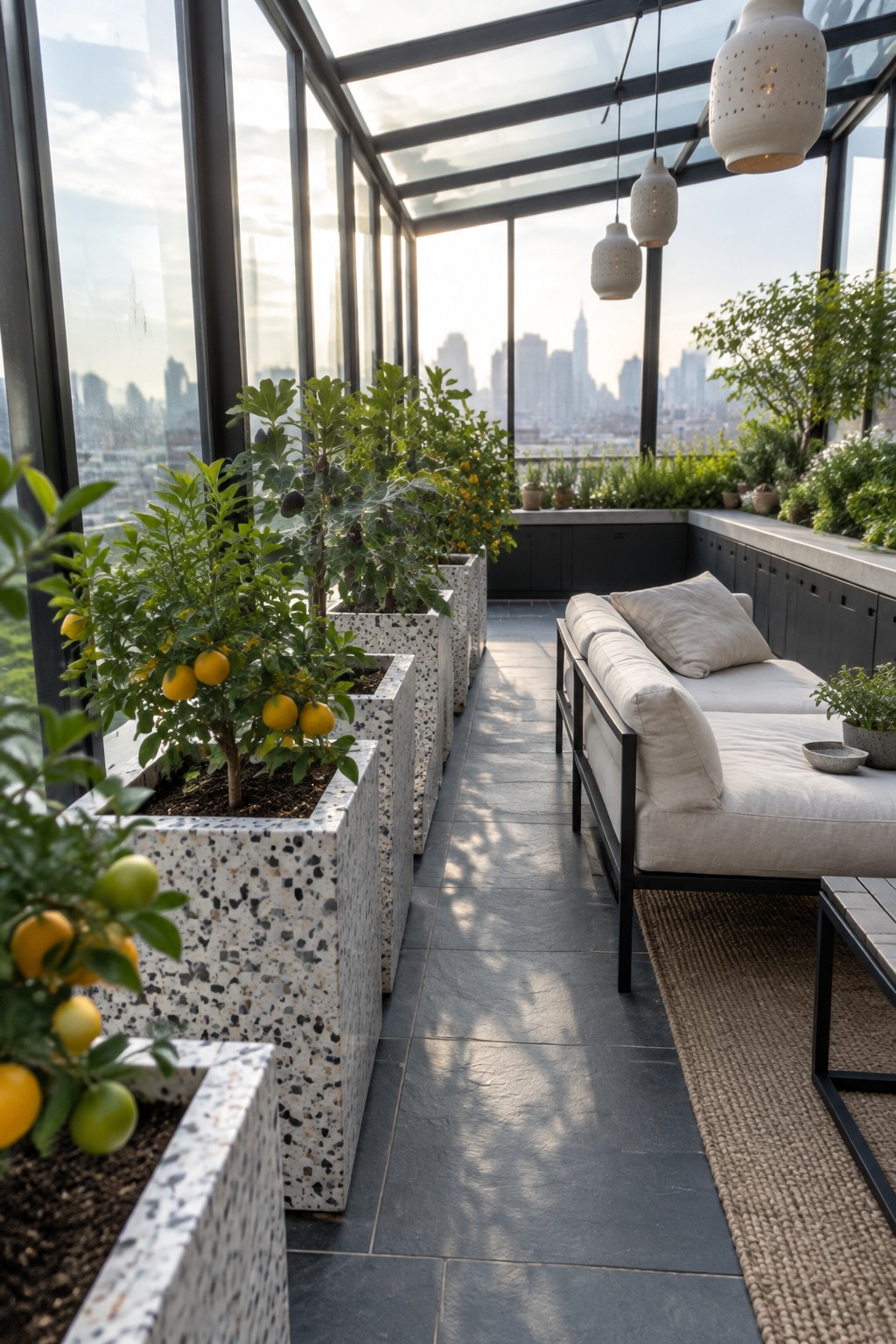
A straight row of identical planters can give a rooftop terrace some order without making it feel crowded. The matching shapes create a clean edge that guides the eye down the length of the space and keeps the planting from looking scattered.
This works best on narrow or long terraces where you want greenery but still need room to walk and sit. Stick with one planter style and repeat it so the look stays simple. Avoid mixing too many sizes or colors if the goal is a calm, modern feel.
Stone Planters Shape the Outdoor Layout
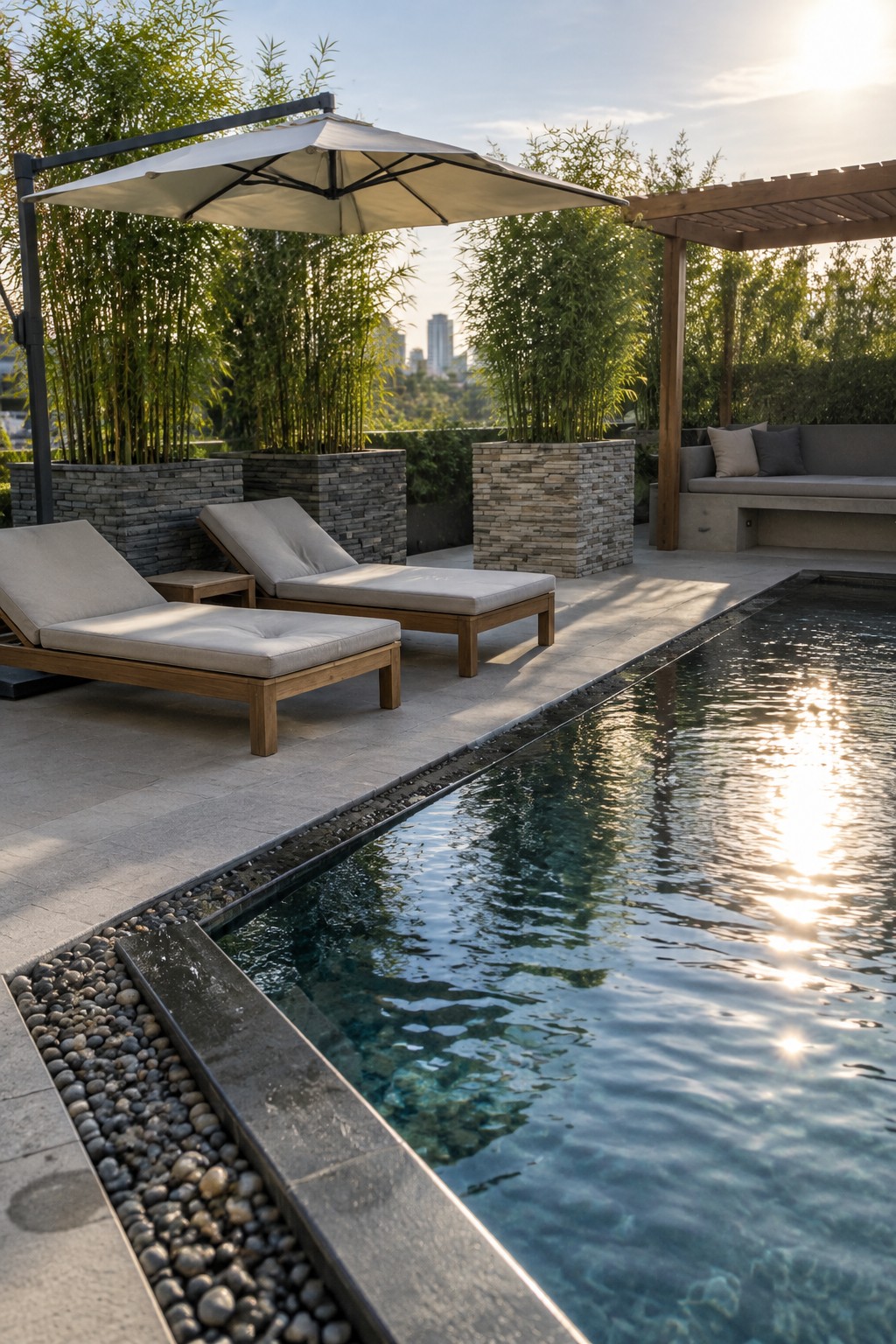
Many roof gardens end up looking a bit scattered without something to mark where one area ends and another begins. Geometric stone planters give that structure in a simple way. They create low walls that separate lounging spots from the pool edge while still letting the whole space feel open.
Use them in straight lines or right angles to frame seating and walkways. This works best on flat rooftops or terraces where you want clean edges without building actual walls. Keep the planting simple so the planters stay the main feature.
Modular Seating For Roof Terraces
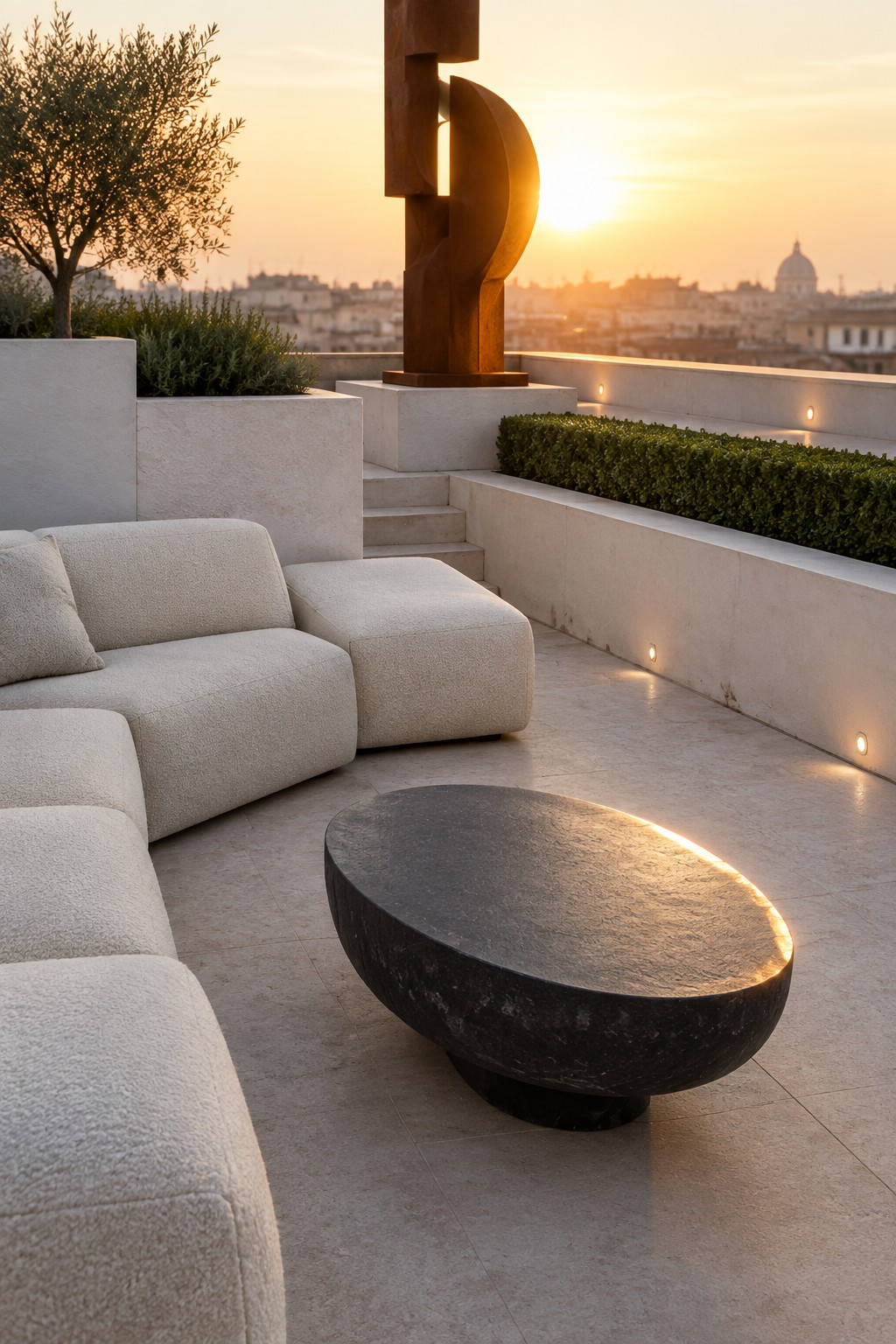
Modular seating works well on roof terraces because the pieces can be arranged to fit the space without crowding it. Low profiles keep the area feeling open, and the neutral fabric lets the surrounding planters and views stay in focus.
This layout suits homes with flat roof space that gets used for relaxing or small gatherings. Place the sections in a loose curve around a simple table, and keep the edges clear so movement stays easy.
Geometric Planters Bring Order To Roof Gardens
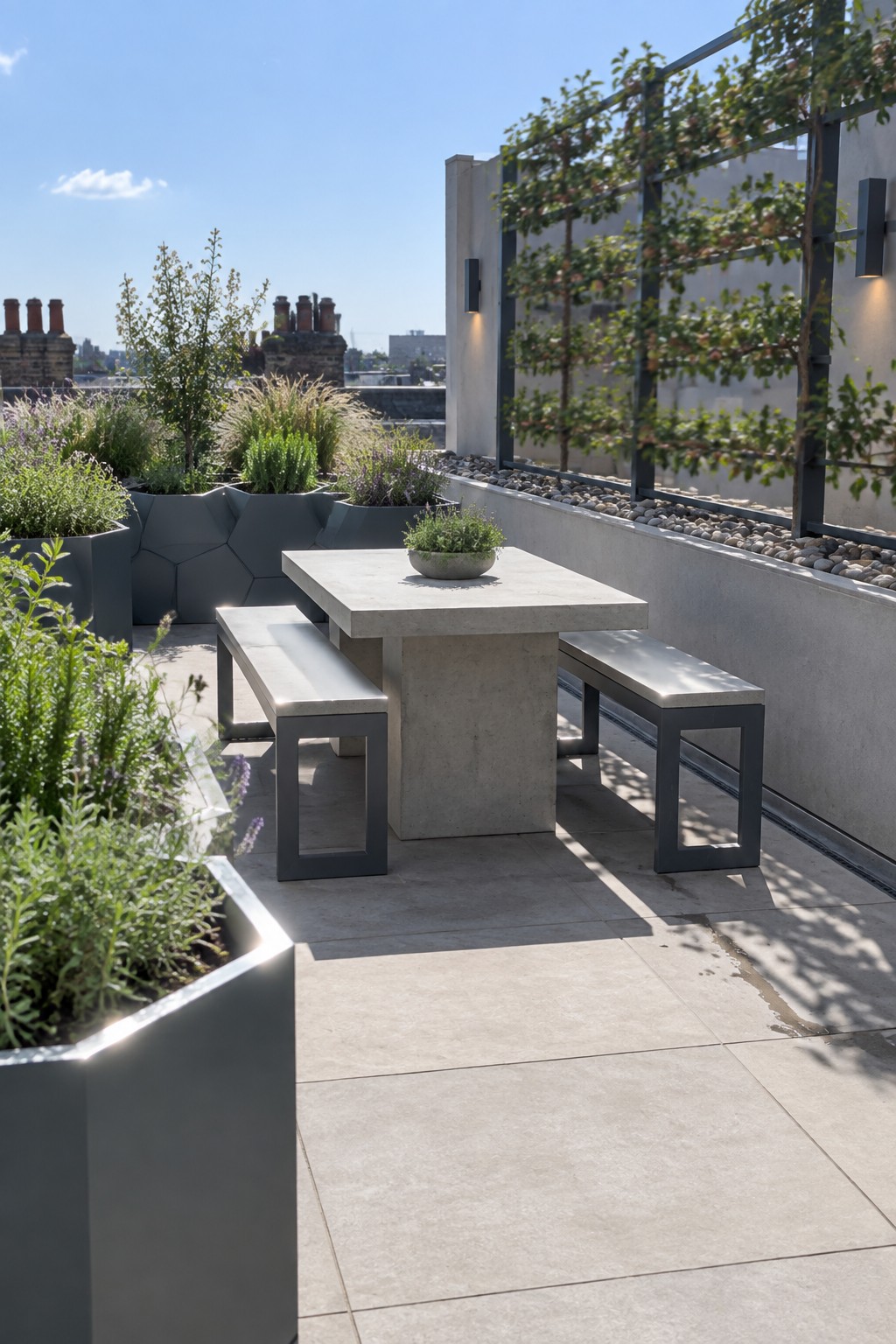
Many roof gardens get messy fast because there is so much flat space and not enough natural structure. Geometric planters fix that by giving the area clear edges and zones while still leaving plenty of open floor for movement.
They pair especially well with plain concrete furniture since the sharp lines keep everything looking consistent. This setup works best on flat modern roofs where you want real greenery without crowding the space or blocking views.
Geometric Planters Shape Rooftop Seating Areas

Large square planters work well for marking out a seating zone on a roof terrace. They add greenery and a bit of edge without needing built-in beds or extra walls.
Place them around a simple table and chairs to keep the space open while giving plants room to grow. This setup suits flat roofs where you want structure but still need clear walking paths.
Gravel Works Well for Roof Garden Paths

A gravel surface keeps a roof garden practical. It drains well after rain, handles foot traffic without much wear, and lets you move between planted areas without tracking mud everywhere. The raised wooden boxes sit right along the edge, so the plants stay contained and the path stays clear.
This setup suits rooftops or terraces where weight and maintenance matter. Lay a solid base first, then add the gravel in a generous width so the space feels open rather than cramped. It pairs easily with simple seating or a work counter if you want a spot to prep or eat without adding heavy decking.
Mixing Turf and Decking on a Roof Terrace
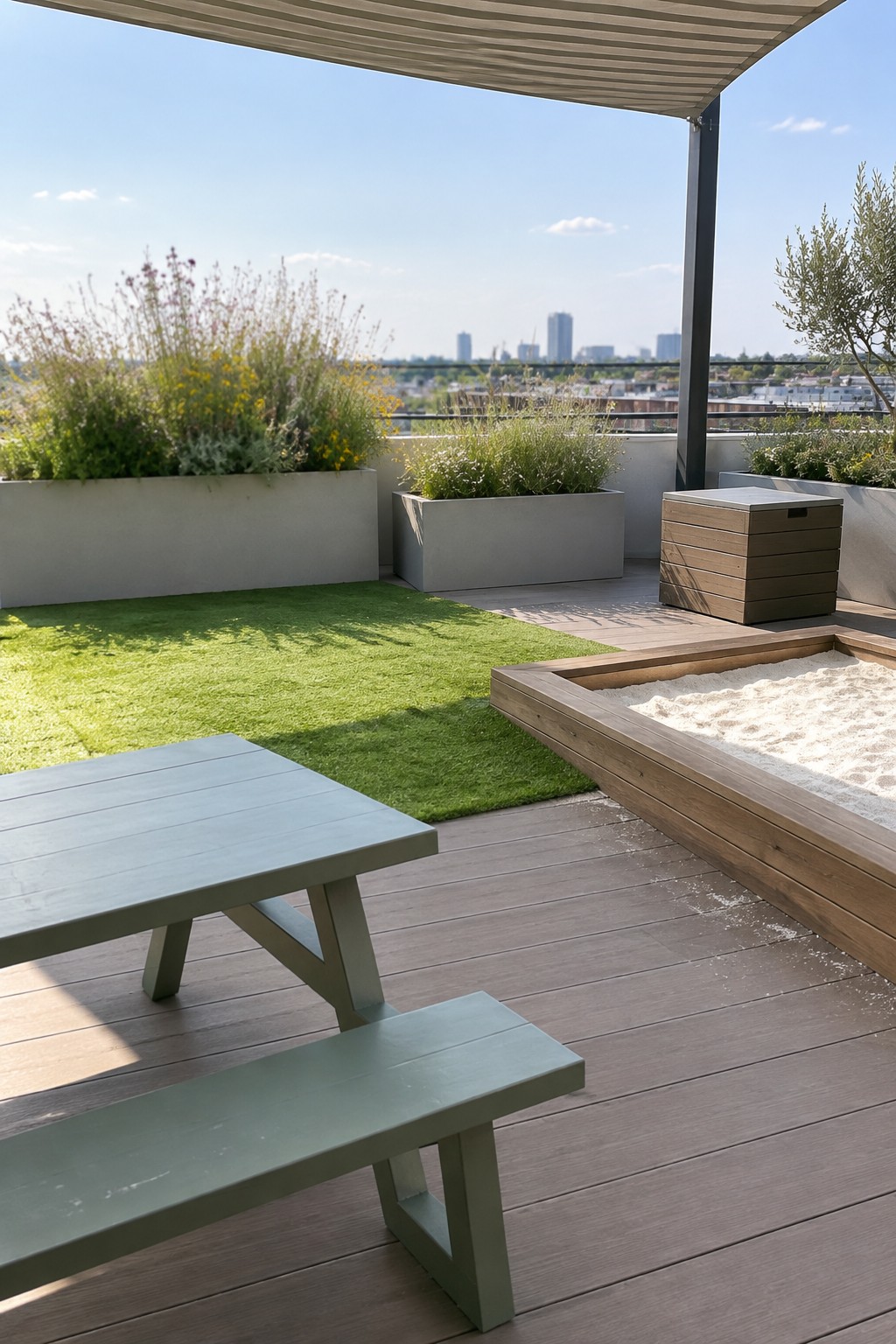
Splitting a roof terrace into zones with different floor surfaces makes the space feel more usable. Artificial turf gives a soft area for play or lounging while the decking handles heavier furniture and foot traffic without wear.
This setup suits homes with kids or pets since the turf stays low maintenance and the deck stays practical. Place simple seating like a basic picnic table on the deck side and keep the turf section open for flexibility.
Large Planters Help Zone an Open Terrace
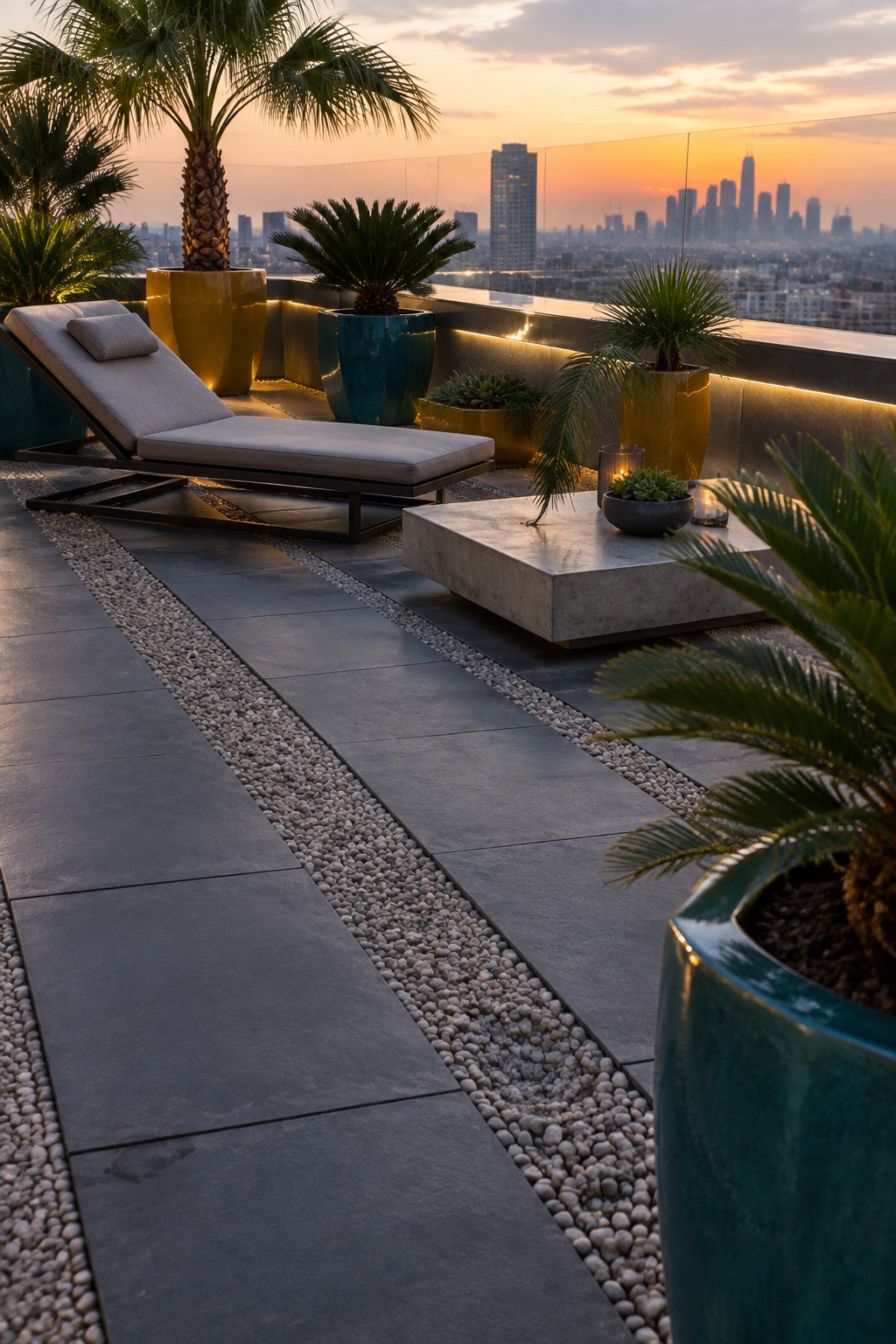
Big ceramic planters work well on rooftops because they let you add plants without building permanent beds. Their simple shapes and strong colors mark off a lounge area from the walkway while keeping the overall look clean.
This approach suits flat roof spaces where you want some greenery but still need room to move around. Use two or three colors at most and pair them with low seating so the pots remain the main feature.
Raised Planters Define Zones on a Rooftop Terrace

Large rectangular planters do more than hold plants on a roof garden. They create clear boundaries that separate seating from open edges and give the space a settled layout without any solid walls. The wood tones also warm up the hard terrace surface.
This setup suits rooftops that need wind protection or a bit of privacy while still feeling open. Keep the planters in straight lines or gentle groupings behind sofas and tables. Choose sturdy boxes that can handle weather and fill them with taller grasses or ferns for the best effect.
Frequently Asked Questions
Q: How do I pick plants that fit those sharp geometric planters without spilling over? A: Stick with compact evergreens or succulents that grow straight up. They keep the clean edges intact and cut down on daily trimming.
Q: What if my roof feels too exposed for soft minimalist chairs? A: Anchor a low bench or two against a solid wall first. Add a single side table nearby so the space feels grounded without crowding the open floor.
Q: How often should I water everything up there in summer heat? A: Check the soil every few days and water only when it dries out an inch down. This keeps roots healthy and prevents rot in the contained planters.
Q: Can I move the furniture around once winter hits? A: Stack lightweight pieces against the wall and cover them with a simple tarp. It protects the frames from ice while leaving the planters in place for any hardy greens.
