


Roof gardens often fail when the planting areas do not account for how water moves across the surface during heavy rain.
Native plants make more sense here because they handle the exposed conditions without needing constant care or extra resources.
The water part changes everything.
When I plan changes like this I always start by checking how the roof already sheds water before adding any new elements.
A few simple adjustments to the layout can turn a basic roof into a space that supports itself year after year.
Raised Planting Beds For Native Roof Gardens

Raised beds give roof gardens a clear structure that helps keep plants healthy and contained. They also make it easier to manage soil depth and drainage, which matters a lot when you are working on top of a building. The long bed in this example shows how a simple straight layout can hold a mix of taller flowers and lower ground covers without looking messy.
This setup works best on flat rooftops where you need to control weight and water flow. Use native perennials that handle wind and sun well, and keep the beds narrow enough for easy reach during weeding or watering. Adding a gravel edge beside the beds can help with runoff if you are also collecting rainwater.
Native Plants Around an Outdoor Dining Table

Many roof gardens work best when the dining area sits right among the plants instead of off to the side. Native perennials in raised beds and large pots bring color and support pollinators while keeping maintenance low.
This setup suits flat roof spaces with room for both seating and planting. Keep the table simple so the flowers stay the main feature, and add a watering can nearby if you collect rainwater for the beds.
Add a Small Water Feature for Rainwater Collection

A simple concrete channel with a low waterfall works well in roof gardens because it catches and recirculates rainwater instead of sending it straight into the drains. Native grasses planted right along the edge help filter the water and keep the whole setup looking natural without extra work.
This approach suits flat rooftops on urban homes where space is limited but you still want something that feels alive. Keep the basin shallow, choose tough local plants that handle both sun and occasional flooding, and check that the pump can run on a small solar panel if you want it fully off-grid.
Raised Planters For Native Plants

Raised metal planters work well on rooftops because they let you grow native plants without needing deep soil or major structural changes. They keep everything contained, improve drainage, and make it simpler to manage water from rain collection systems.
Place them along the perimeter to soften the edges of the space while supporting local pollinators. This setup suits flat roofs on homes or apartment buildings where you want low-maintenance greenery that fits the climate.
Add Stepping Stone Paths To Your Roof Garden

Stepping stones set into gravel give a roof garden a clear way to walk without adding too much weight or blocking drainage. The stones create firm footing while the gravel lets water move through and keeps the surface from feeling too hard underfoot.
This layout works well on rooftops where you need to reach seating areas or check on plants. Keep the stones level and space them for a natural stride. Native plants in raised beds or containers on either side help tie the path into the rest of the garden.
Catch Rainwater With A Simple Wall Spout

A wall spout makes rainwater collection feel straightforward instead of complicated. It sends water right where the plants need it, and the setup works especially well on a roof garden where space is limited and every drop counts. Native ferns and other hardy plants can handle the extra moisture without extra work from you.
This approach suits rooftops or small terraces with a solid back wall. Mount the spout high enough so water flows into a planted bed or gravel area below, and keep the plants low maintenance so the system stays useful year after year. Avoid heavy runoff spots that could flood the seating area.
Add a Rain Chain for Easy Rainwater Collection

A rain chain is a simple way to handle runoff from a roof while adding a gentle visual detail to an outdoor seating area. It directs water down in a controlled stream instead of letting it splash everywhere, which helps keep the patio drier and makes collection easier if you want to save the water for the garden beds nearby.
This works best on covered patios or terraces where the roof edge is easy to reach. Pair it with native grasses and shrubs in the surrounding beds so the whole space stays low maintenance and suited to the local climate. Just make sure the chain leads into a barrel or bed that can handle the flow without flooding the paving.
Hide Rain Barrels Under Built-In Benches
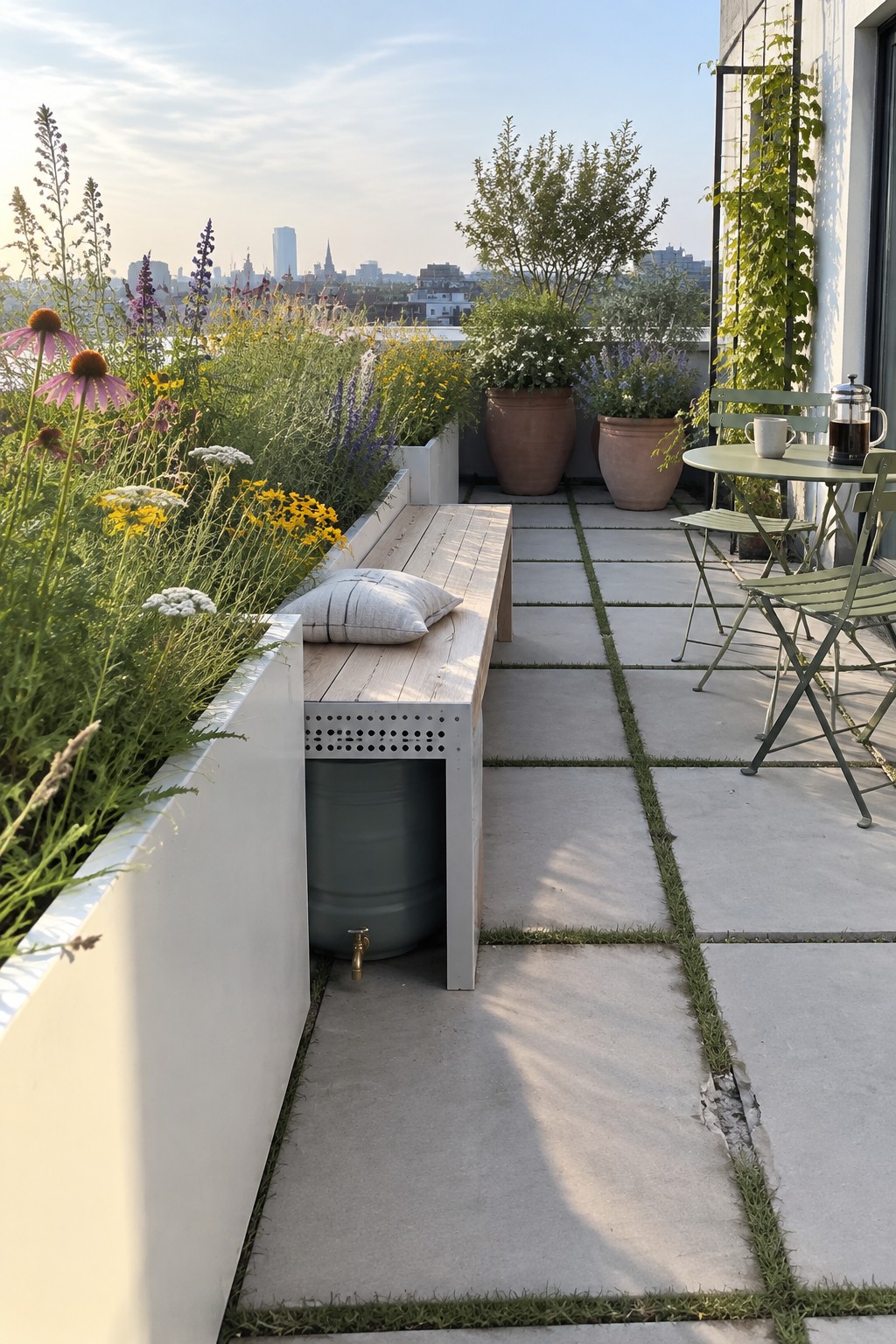
One simple way to keep a roof garden practical is to tuck the rainwater barrel out of sight but still easy to reach. A bench built right over the top gives you extra seating without losing space for the barrel and its tap. This keeps the area looking clean while still letting you collect water for the plants.
It works best on smaller terraces or rooftops where every square foot counts. Set the bench along a planted edge so the barrel sits in the shade and stays cooler. Just make sure the seat is sturdy enough to handle regular use and that the tap stays accessible for watering.
Add a Working Sink to Your Rooftop Garden
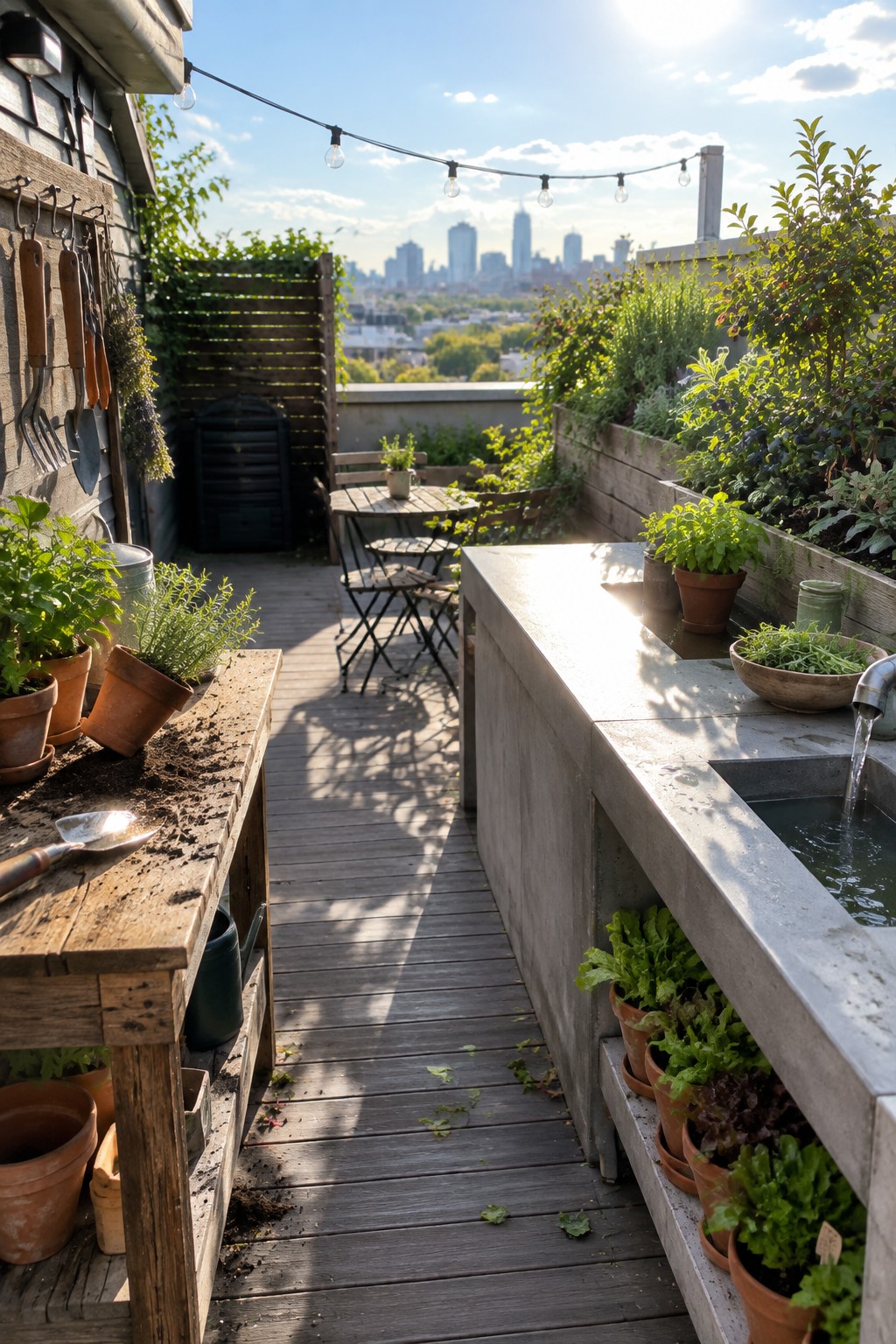
A sink built right into the garden counter makes daily tasks simpler. You can rinse tools, water small pots, or clean produce without running back inside. The running water shown here comes from a collection system, which cuts down on tap use and fits the low-impact goal of a roof garden.
This setup works best on flat rooftops or large terraces where you already have raised beds and a solid surface. Keep the counter height comfortable for standing work and route the supply line from your rainwater barrel or tank. Just check that the drain leads to a safe spot so excess water does not pool on the deck.
Metal Edging For Roof Garden Beds

Metal edging gives roof gardens a simple way to keep soil and plants where they belong. The curved steel borders hold everything in place while still letting water move across the surface for collection. This setup works especially well with native perennials that like to spread a bit.
It suits flat urban roofs best because the edging creates clear zones without adding much weight. Try pairing it with gravel paths so people can walk through without compacting the beds. Just make sure the metal is sealed properly to handle constant exposure to weather.
Add a Linear Pond for Rainwater Collection

A long narrow water channel works well on a roof because it catches runoff from nearby surfaces and keeps the water moving without needing much extra equipment. Native grasses and flowering plants along the edges help filter the water naturally while keeping the whole setup low maintenance.
This layout suits flat urban roofs where space is limited but you still want a clear water element. Direct downspouts into one end of the pond and choose tough native species that handle both wet and dry periods.
Add Rainwater Collection Near Your Seating Area
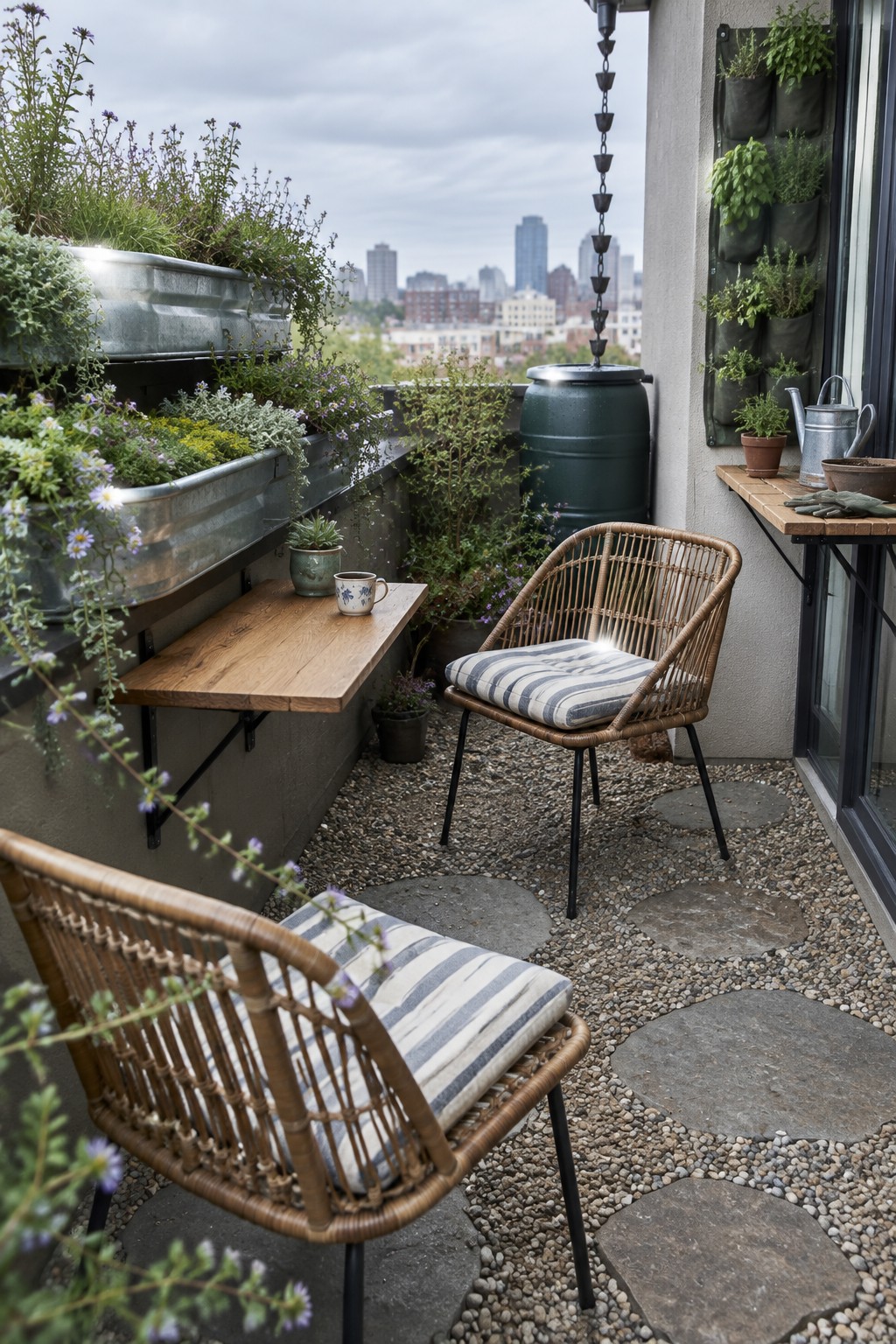
A rain barrel tucked right beside the chairs turns a simple roof garden spot into something more practical. It keeps water handy for the containers without needing to haul a hose up every time, and it fits the space without taking over the seating area.
This setup works best on balconies or small terraces where every spot has to pull double duty. Just place the barrel on a stable base near the edge so overflow can drain away cleanly, and choose one that matches the scale of your seating so it does not feel like an afterthought.
Linear Channels For Rainwater Collection

A long narrow channel lined with pebbles gives rainwater a clear path to move through a roof garden without needing big basins or complicated pipes. It keeps the water visible and slows it down naturally, which helps with collection while still looking simple next to the plants.
This setup works best on flat roof spaces where you already have a deck or bench running alongside the planting beds. Keep the channel shallow and use a pump to recirculate when rain is light, but make sure it slopes enough to drain well during storms.
Frequently Asked Questions
Q: Which native plants work best on a roof that gets lots of wind? A: Go with tough local grasses and low wildflowers that already handle dry spells in your region. They root firmly without needing constant water once established. Plant them in clusters to help each other stay put.
Q: How do I add rainwater collection to a roof garden without running new pipes? A: Set a barrel right under an existing downspout and let gravity feed a soaker hose into the beds. Empty it into a watering can for spots the hose misses. This keeps things simple and uses what you already have.
Q: Will the extra soil and barrels overload my roof? A: Spread everything in shallow layers across the whole surface instead of stacking in one area. Check with a contractor first if your roof is older or flat. Start small in one corner to see how it feels before adding more.
