

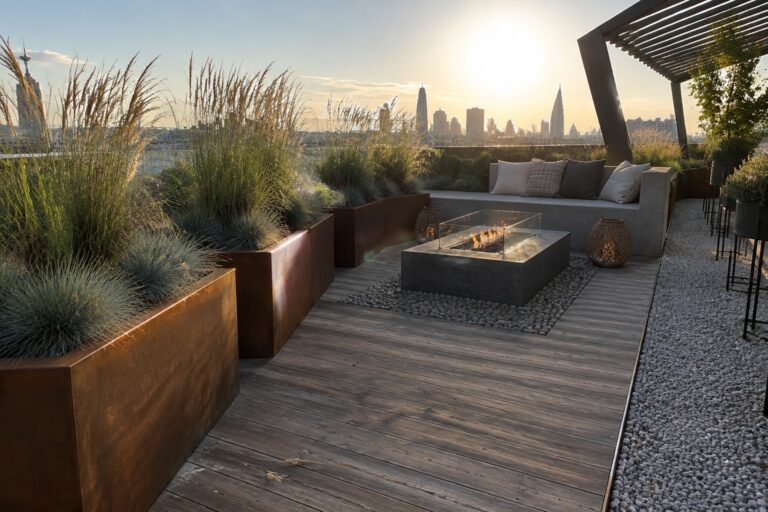
When planning a roof garden the layout of raised beds shapes how the whole space holds together through wind and weather. Ornamental grasses bring height and movement that change with the light and seasons in ways flat plantings rarely do. I would test the taller varieties first.
Raised beds also make it easier to control soil depth and drainage so the plants stay healthy without extra supports. Over time these choices show which grasses settle in well and which ones need moving around to keep the beds looking balanced.
Ornamental Grasses In Raised Beds
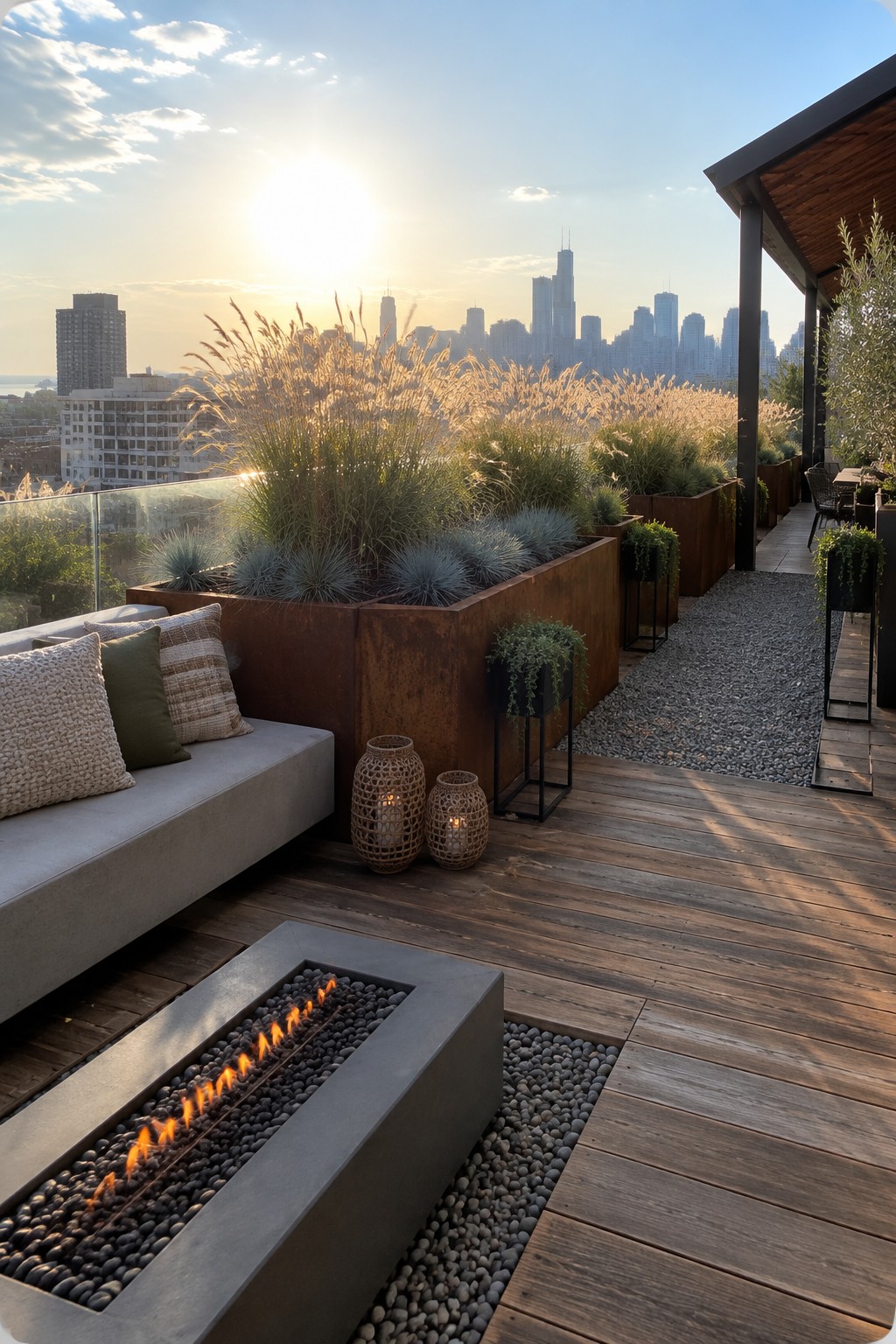
Raised beds give you a clean way to grow ornamental grasses on a roof without worrying about soil depth or drainage issues. The tall varieties add movement and softness that flat planting rarely achieves, especially when the beds sit against the edge of the deck.
Metal beds work well here because they stand up to weather and let you arrange different grass heights in one area. They suit most rooftops and urban terraces where you want some planting but still need to keep the surface usable for seating and walking.
Raised Beds With Ornamental Grasses
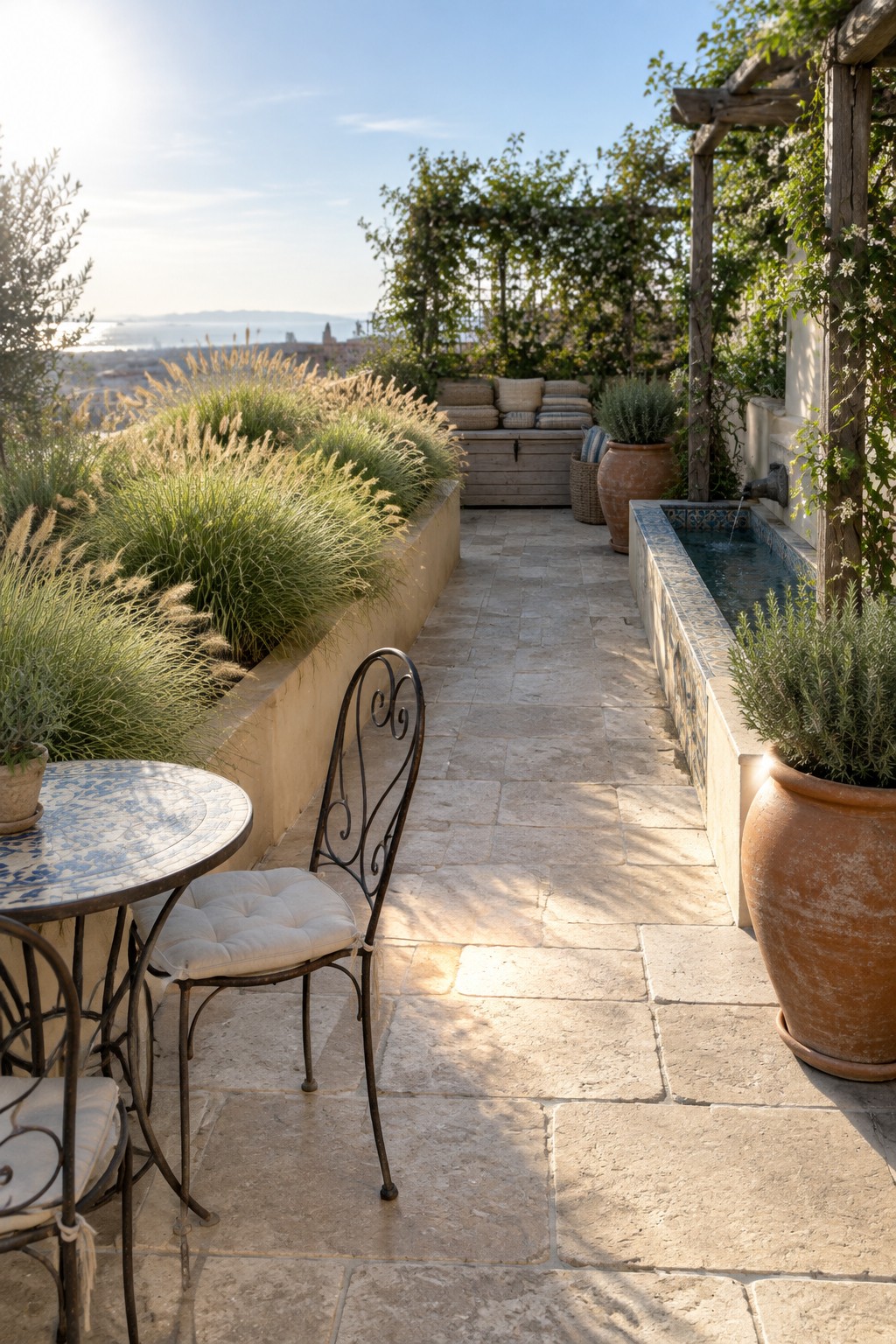
Raised beds give ornamental grasses a solid structure on a roof garden. They keep the planting contained, add height, and let the grasses move in the wind without spilling onto the walkway.
This setup works best on terraces or flat roofs where you need clear paths but still want soft texture. Keep the beds low enough for easy maintenance and choose grasses that stay upright rather than flopping over the edges.
Wooden Raised Beds for Ornamental Grasses
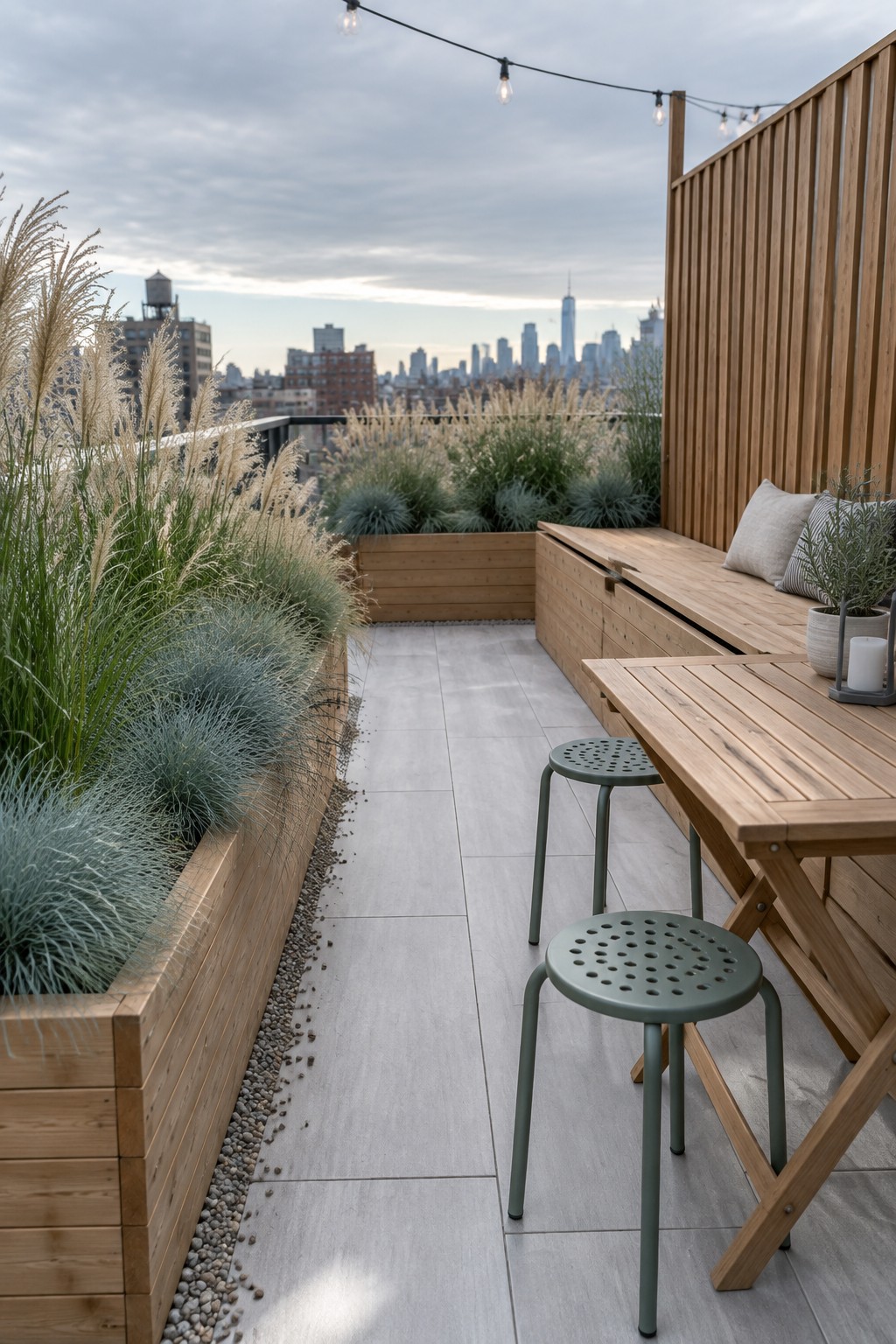
Raised beds make it simple to grow ornamental grasses on a roof without dealing with thin soil or poor drainage. They keep the plants contained while giving the space clear edges that feel intentional rather than scattered.
Wood works well for the boxes because it holds up outdoors and can match nearby seating or decking. This setup suits rooftops best when you want low-maintenance greenery that still adds height and movement without taking over the floor area.
Light-Colored Wood Raised Beds for Rooftop Grasses
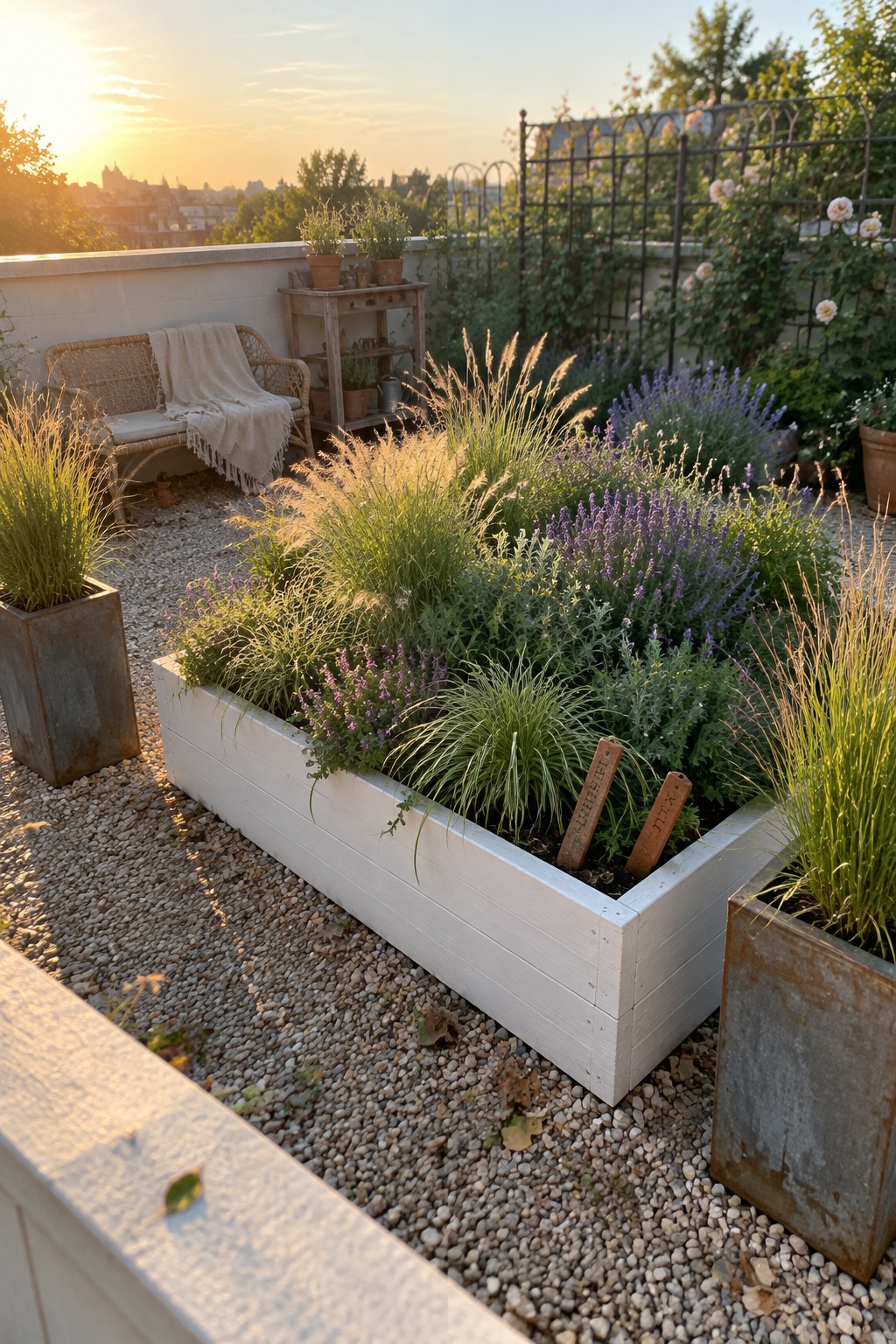
One simple way to handle a roof garden is to plant ornamental grasses inside raised beds. The beds keep the roots contained, give the grasses height, and let them move with the wind without taking over the whole space.
This setup works best on flat rooftops where you need good drainage and easy access for watering. Stick with a light-colored wood for the sides so the beds do not get too hot in full sun, and mix in a few lower perennials if you want a bit of color among the grasses.
Concrete Raised Beds for Ornamental Grasses
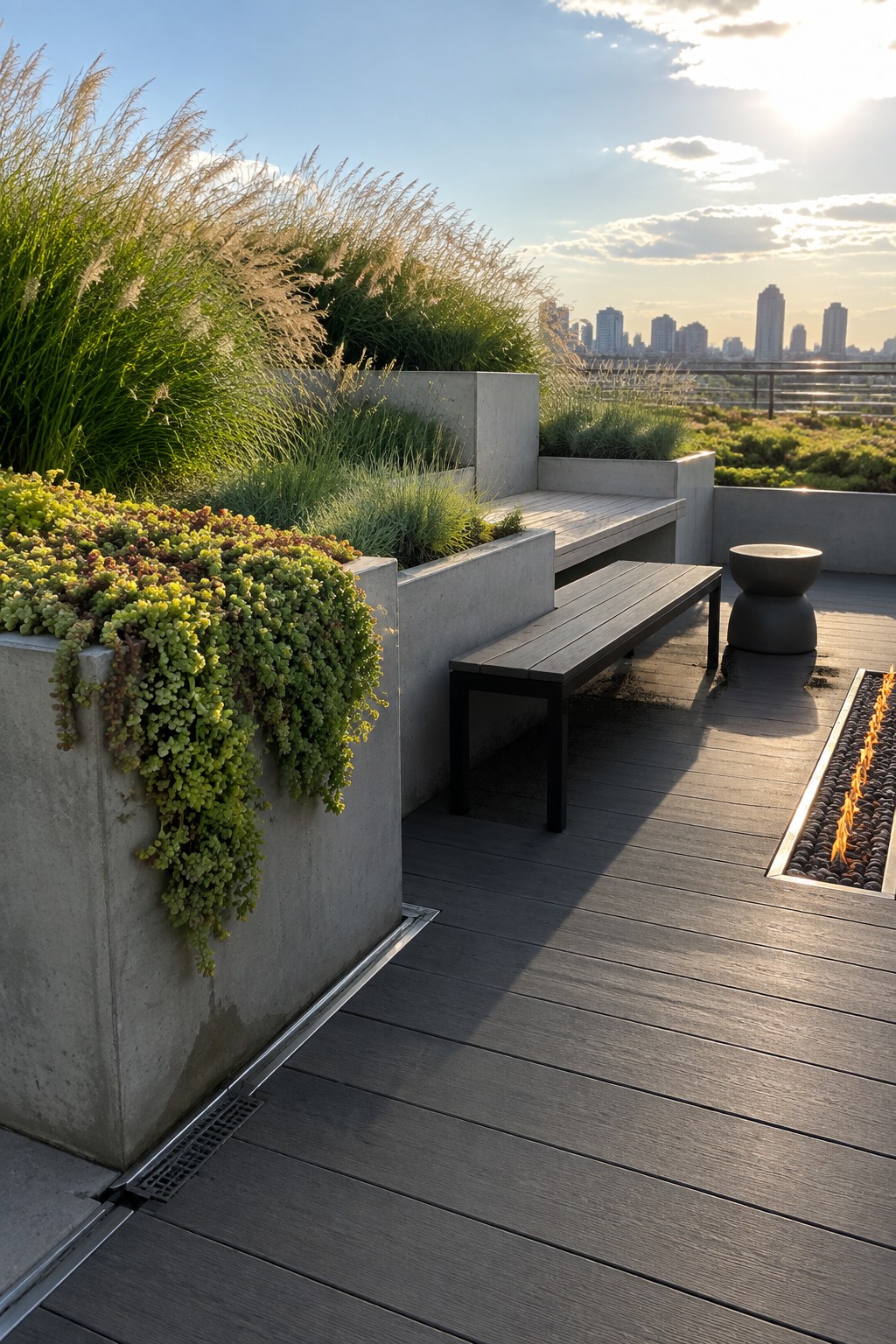
Raised beds give you a simple way to grow ornamental grasses on a roof without worrying about soil depth or drainage issues. The concrete edges keep the plants contained while letting the grasses reach a good height and move with the wind.
This approach works best on terraces or rooftops where you want some greenery but need to control weight and water flow. Pick grasses that handle sun and wind, and combine them with lower plants along the edges so the beds stay full without looking crowded.
Raised Brick Beds With Ornamental Grasses

Raised brick beds give structure to a roof garden while letting the grasses do most of the softening. The low walls keep the planting contained, stop soil from spilling onto the floor, and create a clear edge that still feels natural. On a terrace this approach turns an open paved area into something that reads as a garden instead of just furniture on a roof.
This works best on flat roof spaces or wide terraces where you want planting without digging into the surface. Keep the beds low so they do not block views, and choose grasses that stay upright rather than flop over the edge. Brick holds up well outdoors and matches many older buildings, but make sure the structure is properly waterproofed underneath before you plant.
Metal Raised Beds for Rooftop Ornamental Grasses

Raised beds make it easier to grow ornamental grasses on a roof where soil depth and drainage can be tricky. The grasses add height and movement while keeping the planting neat and contained in one area.
This works especially well on urban rooftops because the beds protect the plants from wind and let you mix different grass textures in one spot. Metal beds hold up to weather and give the grasses a clean edge against wood decking.
Raised Beds With Grasses Edge Roof Seating
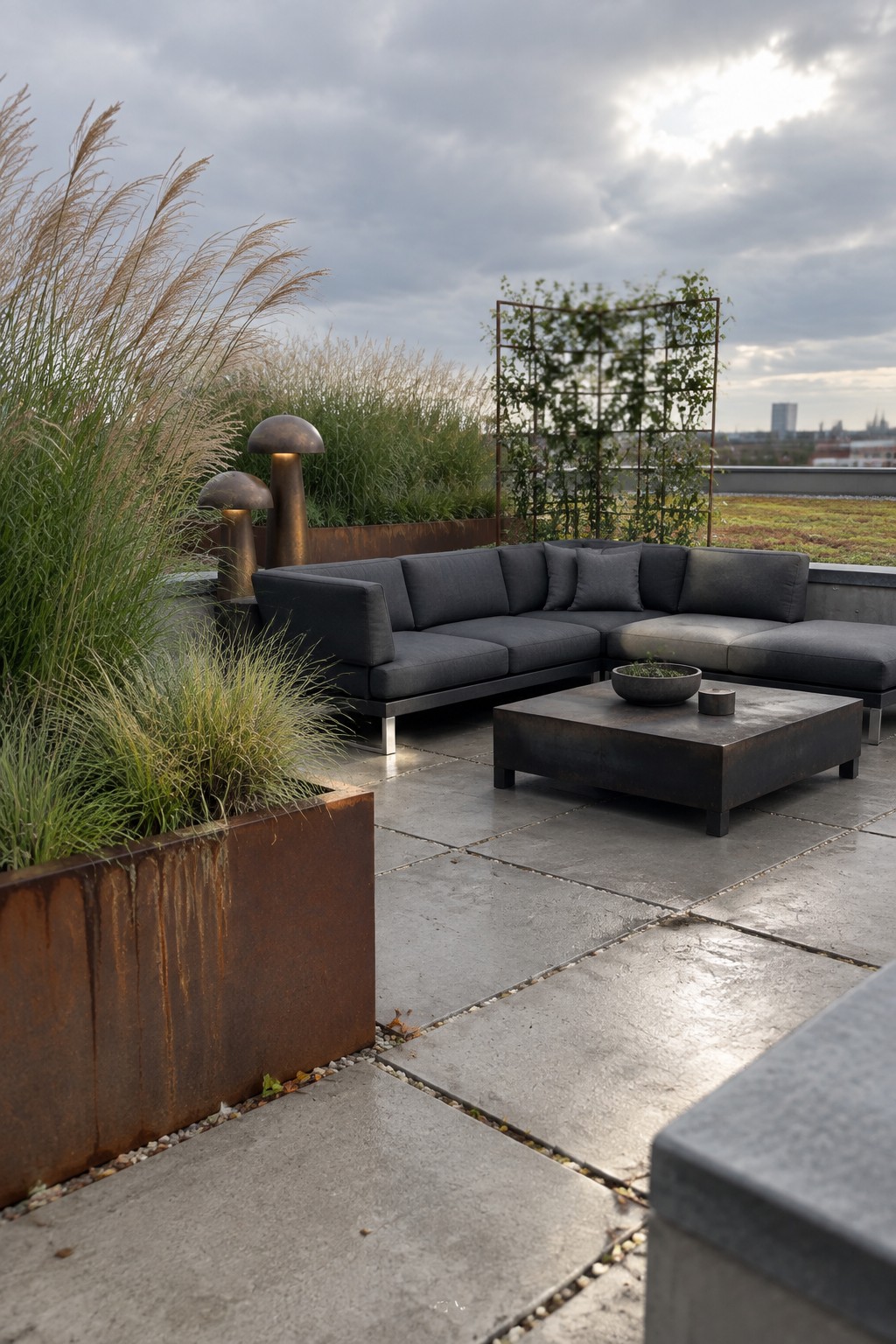
Tall grasses planted in raised beds work well for marking the edge of a seating area without blocking the view or feeling too enclosed. The height adds texture and movement, and the beds keep the planting contained on a flat roof surface where soil depth is limited.
This setup suits urban terraces or rooftops where you want some separation between the lounge zone and the rest of the space. Metal beds hold up to weather and give a clean line, while the grasses soften the hard surroundings. Just leave enough room for foot traffic and check that the bed height matches your seating scale so the plants do not overwhelm the area.
Raised Beds With Grasses Edge A Deck
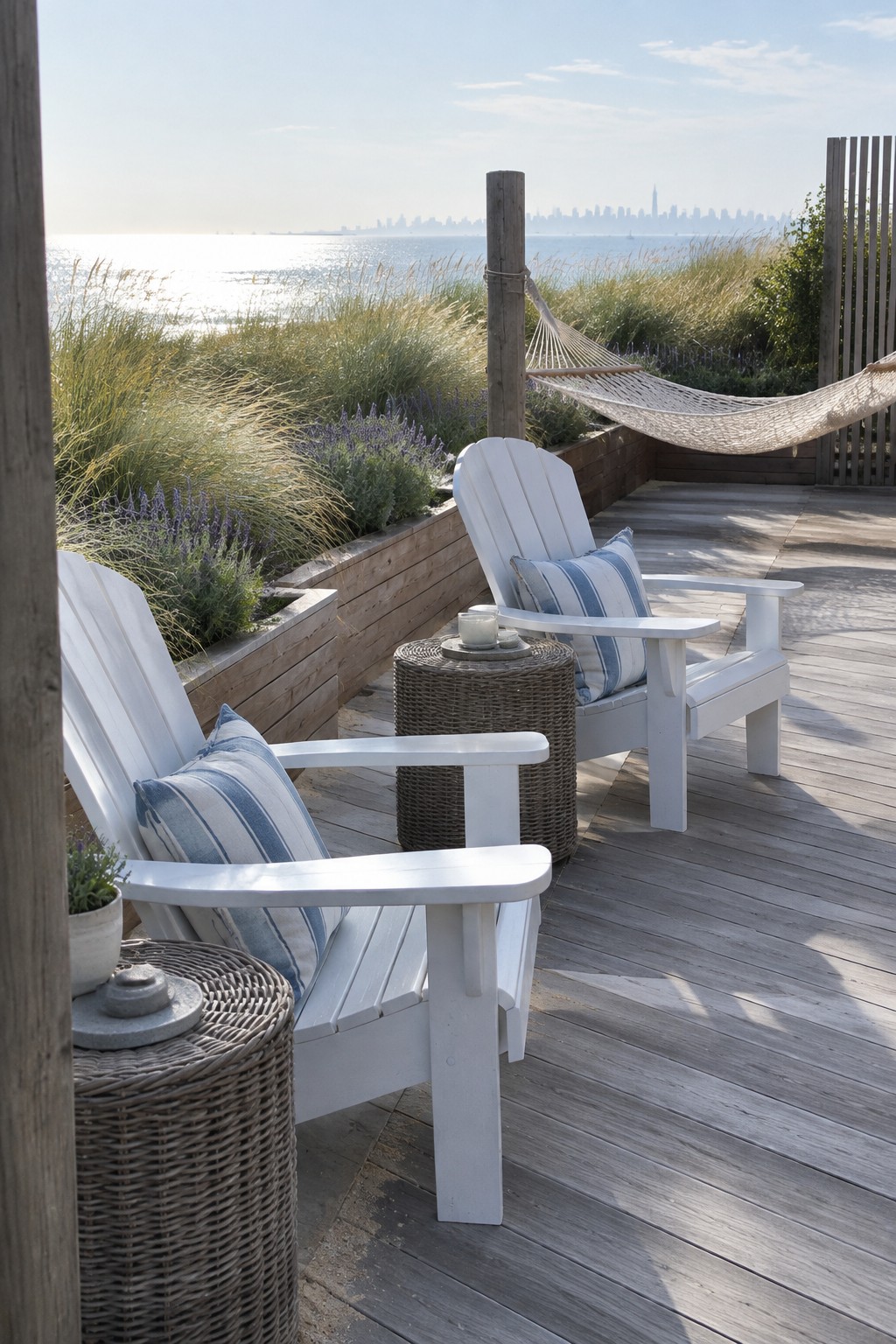
Raised beds planted with tall ornamental grasses give a deck a finished border without making the space feel closed in. The grasses add height and movement while still letting the view stay open, which works especially well on elevated outdoor areas like roof gardens.
This setup suits decks that need a bit of separation from the surroundings. Use simple wood construction for the beds so they blend with the decking, and pick grasses that hold up in wind and sun.
Raised Beds With Ornamental Grasses for Rooftop Seating Areas

Raised beds give ornamental grasses a clean edge and keep them from spreading where they are not wanted. On a roof terrace this setup creates a soft border without blocking the view or adding too much weight. The grasses bring movement and texture while the bed itself doubles as a low wall that separates the seating area from the walkway.
This works best on flat rooftops where you want some greenery but still need open floor space. Choose grasses that stay upright and do not need constant watering. Make the beds at least twelve inches deep so the roots have room, and keep the back edge of the bed low enough that it does not feel like a barrier when you are sitting at the table.
Wooden Raised Beds for Ornamental Grasses Around a Rooftop Pool
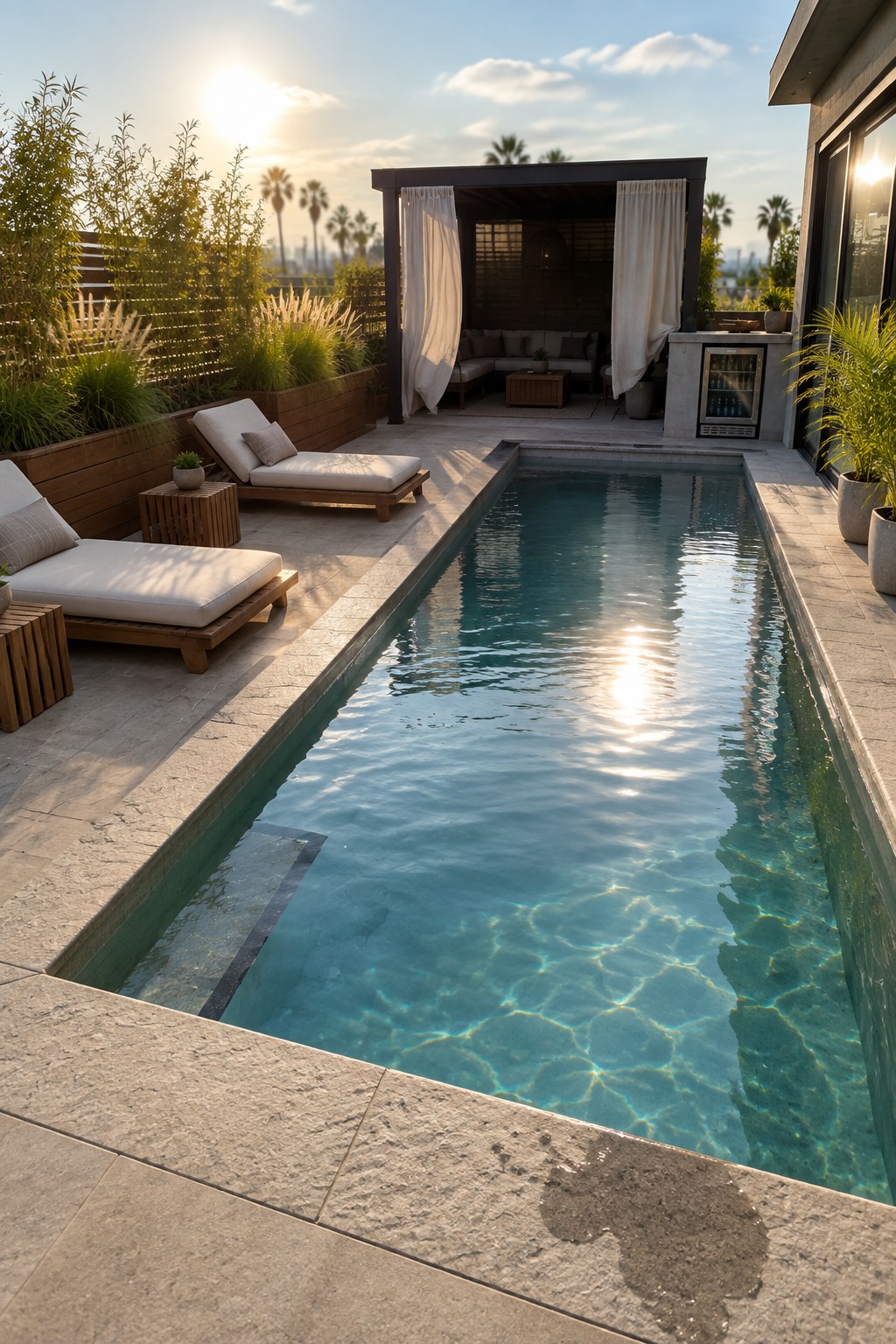
Raised beds make it easier to grow tall grasses on a roof without worrying about soil depth or drainage issues. The wooden planters keep everything contained and add a bit of structure that pairs well with the hard surfaces around a pool.
This setup works best on rooftops that already have good weight support and sun exposure. Keep the beds at a comfortable height so the grasses can soften the edges without blocking views or taking up deck space.
Raised Beds With Ornamental Grasses Along Rooftop Walkways
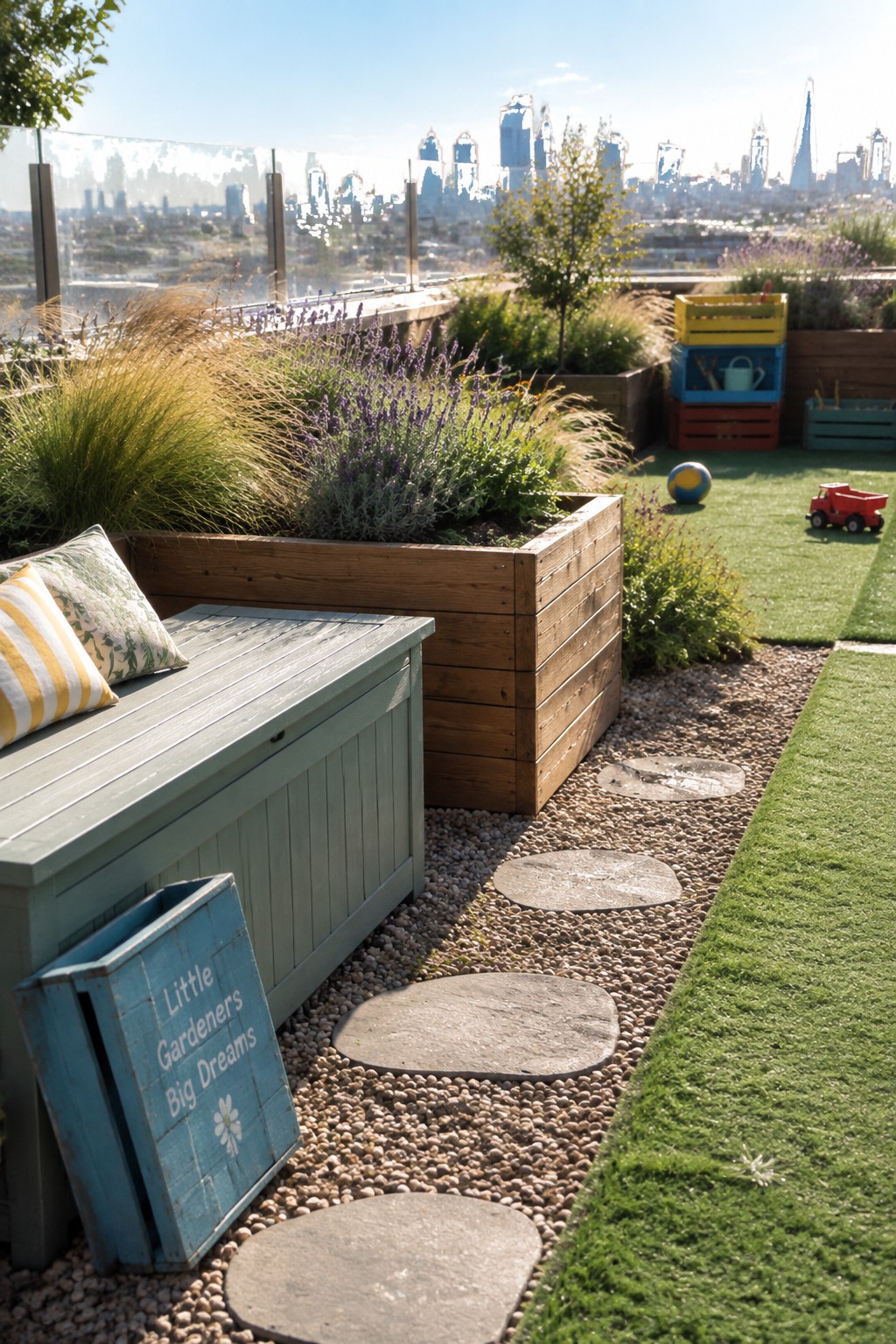
Raised beds make it easier to grow ornamental grasses on a roof because they give the plants enough soil depth while keeping everything contained. The grasses bring height and soft movement that works well against the flat surfaces and railings common in these spaces.
This setup suits urban rooftops or terraces where you want some planting without covering the whole area in soil. Place the beds along one edge and add a few stepping stones through gravel so the space stays easy to walk through and maintain.
Stone Raised Beds With Ornamental Grasses for Seating Privacy
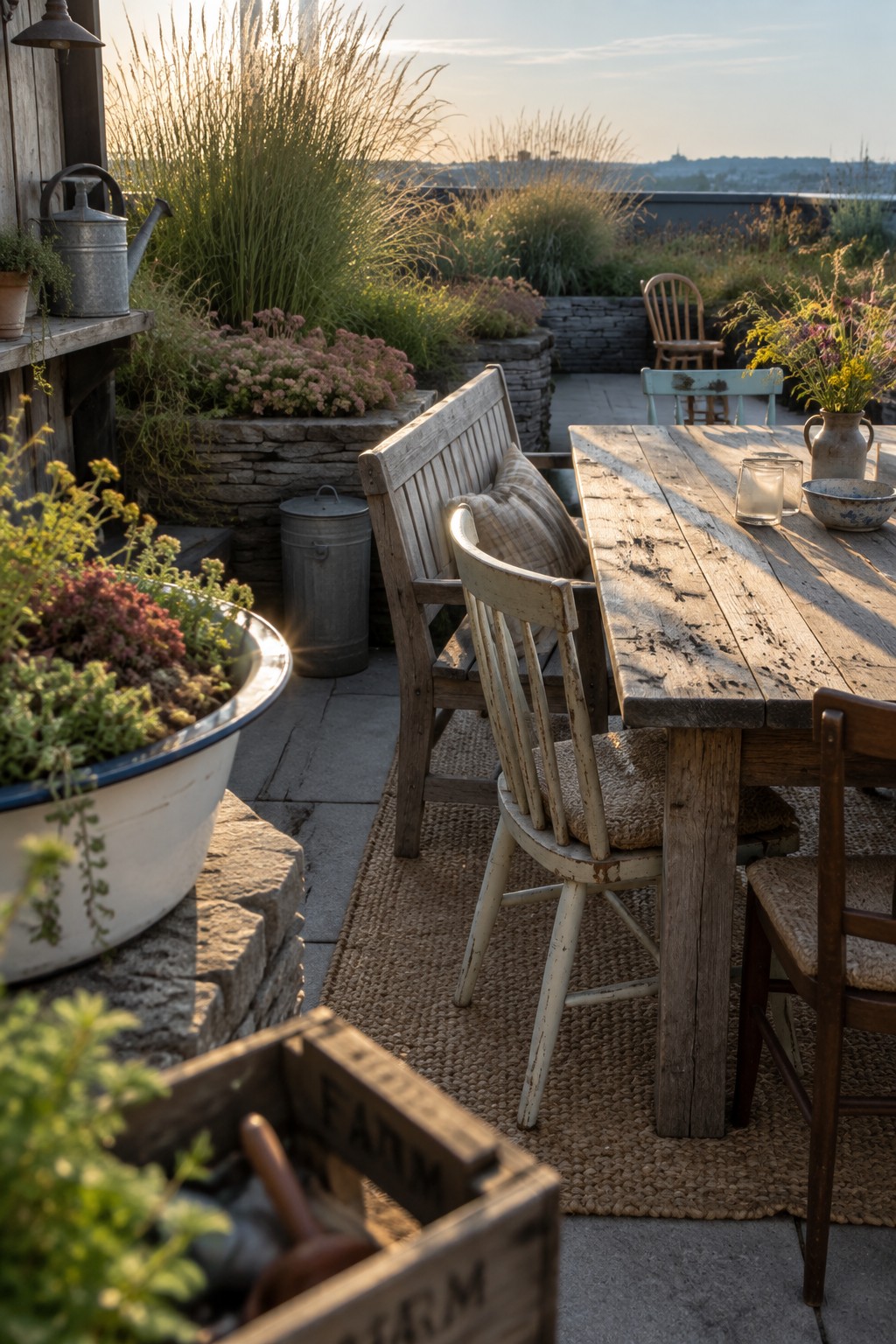
Raised beds give you a simple way to grow tall ornamental grasses on a roof without worrying about soil depth or drainage. The stone sides hold everything in place and let the grasses sway above lower plants, which adds movement and a bit of privacy around a seating area.
This setup works best on flat rooftops or terraces where you need structure but still want a soft look. Keep the beds narrow enough to reach across and mix one or two grass varieties with shorter flowers so the planting stays balanced and easy to care for.
Concrete Raised Beds With Low-Maintenance Ornamental Grasses
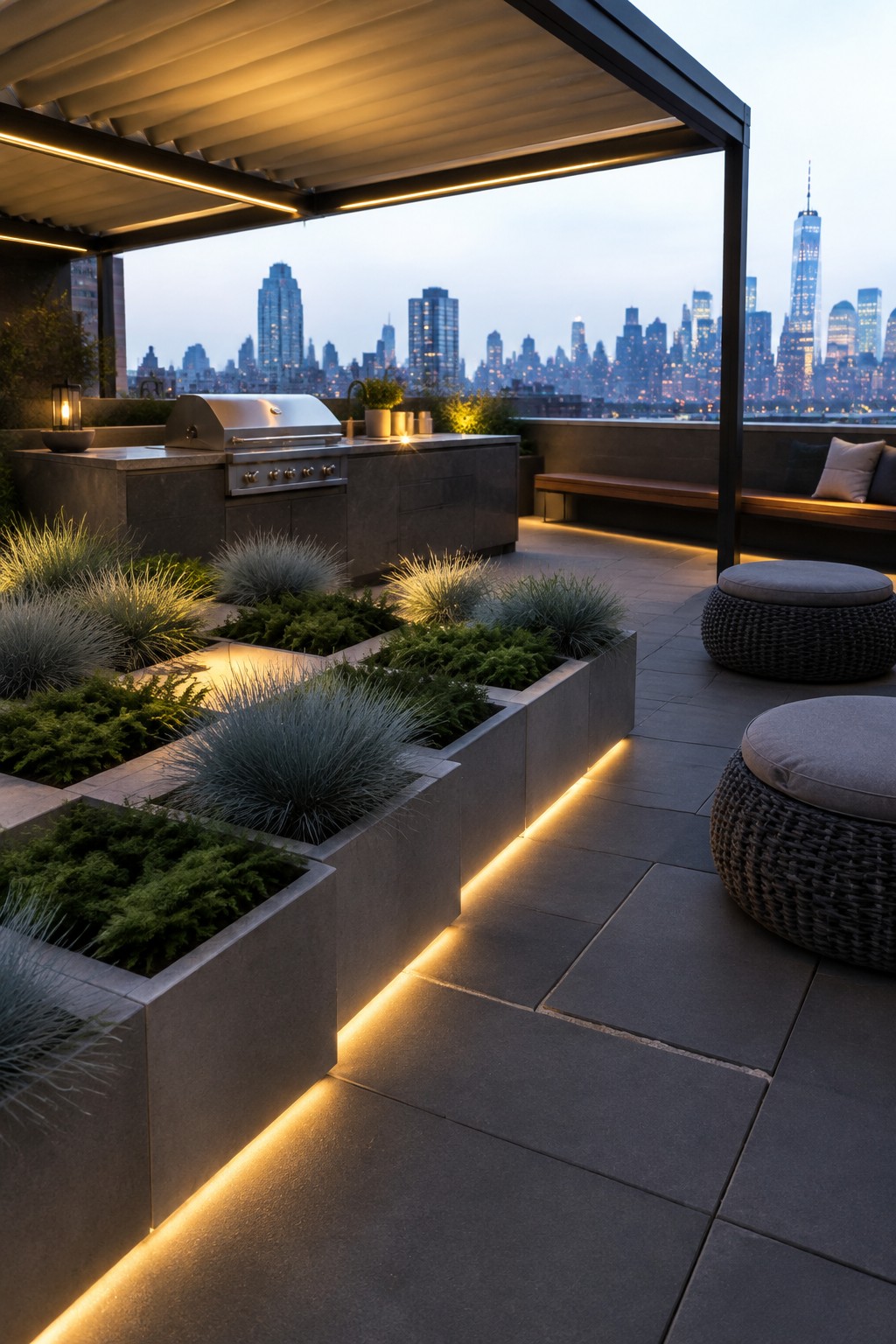
Raised beds give ornamental grasses a clean edge and keep them from spreading where they should not. On a roof garden the beds add height and structure while still letting the grasses sway and catch the breeze.
They work best in tight outdoor spaces where soil depth is limited. Concrete beds stand up to weather and the grasses stay low maintenance once they are in place.
Raised Beds Along A Path
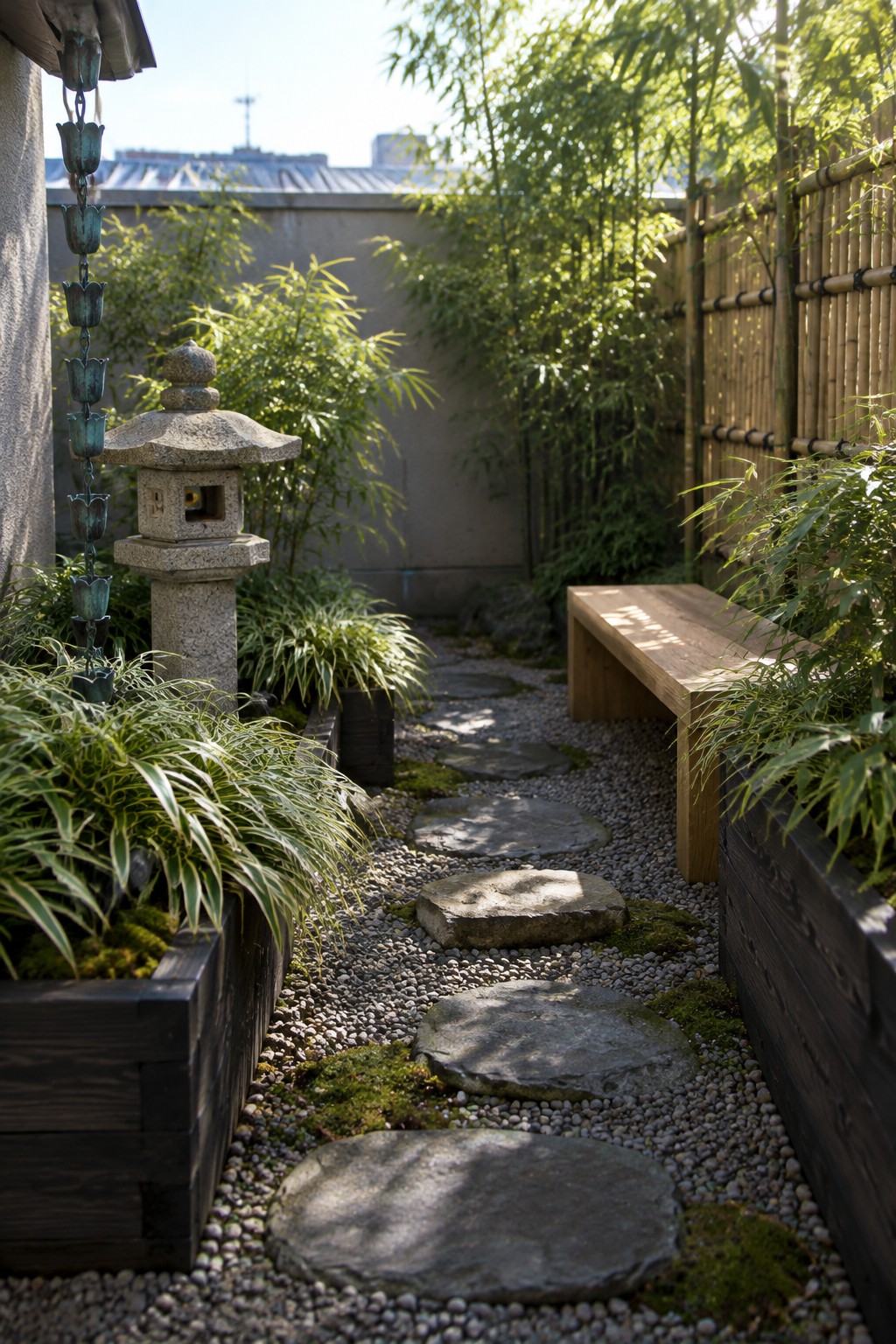
Raised beds give you a simple way to add structure when space is tight. They keep ornamental grasses contained so the path stays clear and the planting feels intentional rather than scattered.
This works especially well on roof gardens or narrow side yards where you want easy walking and low upkeep. Build the beds from basic wood, fill them with a mix of grasses, and use gravel and stepping stones between them to handle drainage and foot traffic.
Raised Beds With Grasses Soften Rooftop Edges
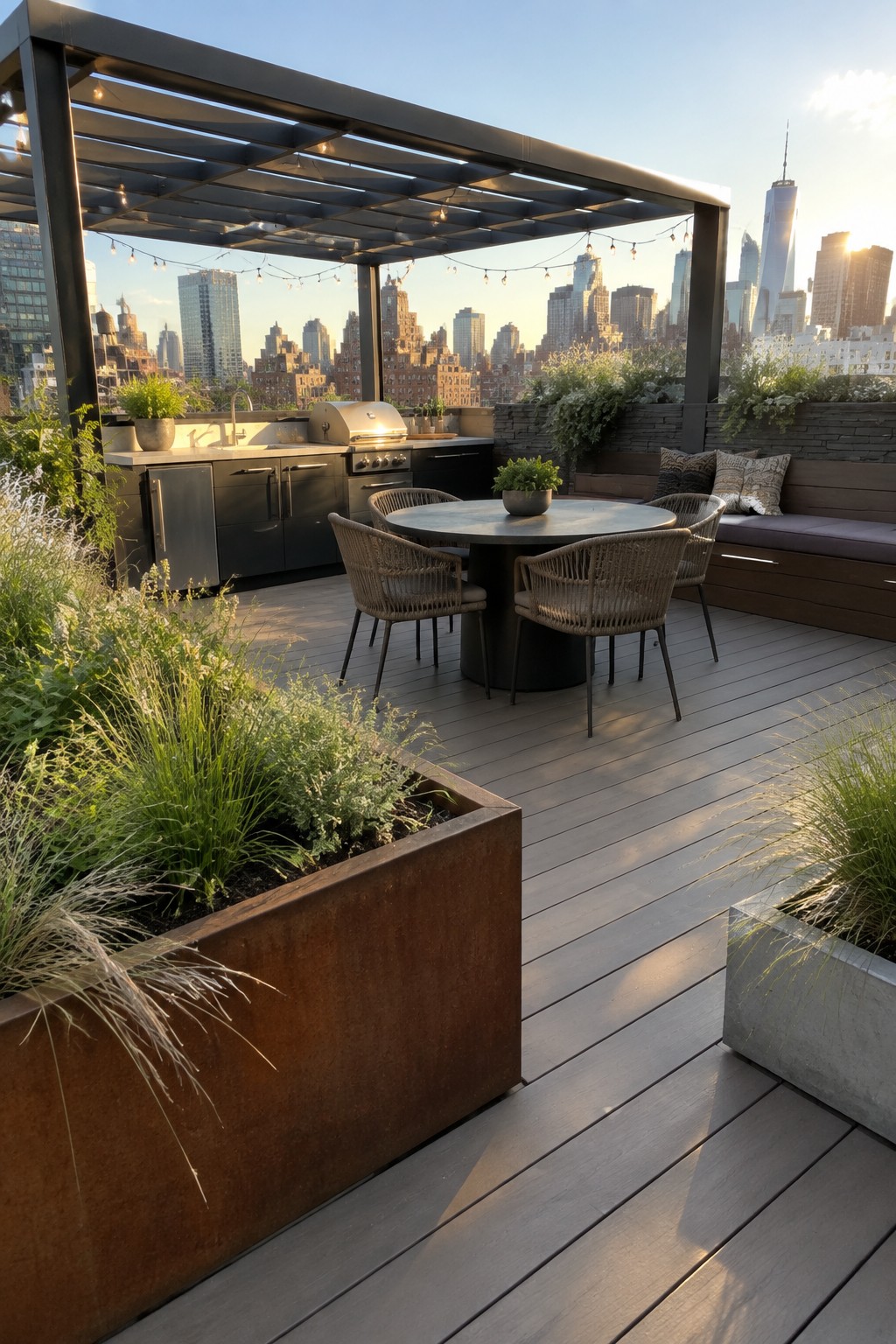
Raised beds filled with ornamental grasses give a rooftop deck a softer edge without closing it in. The grasses add movement and texture that wood or stone alone cannot provide, and they help separate the dining area from the open deck space in a natural way.
This works best on urban rooftops where you want some definition but still need to keep the views open. Place the beds along the perimeter or beside seating zones, and choose grasses that stay upright so they do not spill onto walking paths.
Frequently Asked Questions
Q: Should I worry about the weight of the raised beds on my roof? A: Start with lightweight soil mixes made for rooftops. Most grasses do fine in shallower beds too. Check with a pro if your roof can handle the load before building anything heavy.
Q: How often do I need to water the grasses once they are planted? A: Check the soil every few days at first. These grasses need less water after they settle in but roof sun and wind dry the beds faster than ground level. Soak them when the top inch feels dry.
Q: When should I divide the grasses in the raised beds? A: Wait until spring to split the clumps. Dig out the whole plant and pull the roots apart by hand. Replant the sections right away in fresh soil.
