


Roof gardens often end up as afterthoughts unless the privacy elements are planned from the start.
I learned this the hard way after trying a few open setups that never felt comfortable for sitting outside.
Slatted screens paired with tall evergreens create that needed separation while still letting in air and light.
The key is choosing evergreens that hold their shape without constant trimming.
In practice I would start by mapping the sight lines from neighboring buildings before picking any materials.
Slatted Screens With Tall Evergreens For Roof Privacy
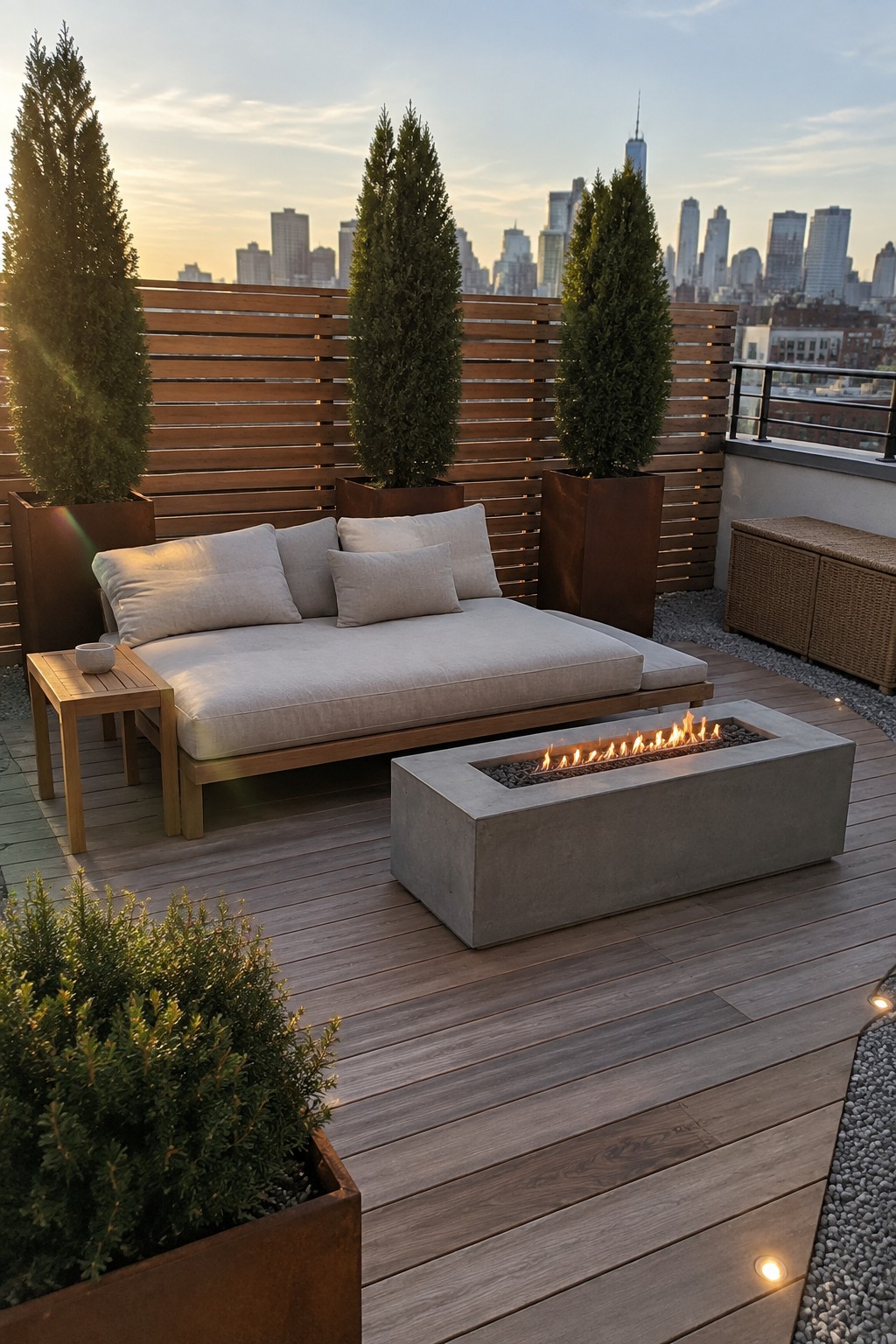
A slatted screen gives a roof garden the privacy it often needs without making the space feel boxed in. The gaps let light and air move through while the wood itself creates a clear boundary. Tall evergreens planted right in front of the screen add height and soften the look at the same time.
This setup works best on city rooftops where neighboring buildings sit close by. Use large planters to hold the trees so they stay stable in wind, and keep the screen along the back edge of the deck. The plants and screen together block views but still leave room for seating and a fire pit in front.
Slatted Screens and Tall Evergreens for Roof Privacy
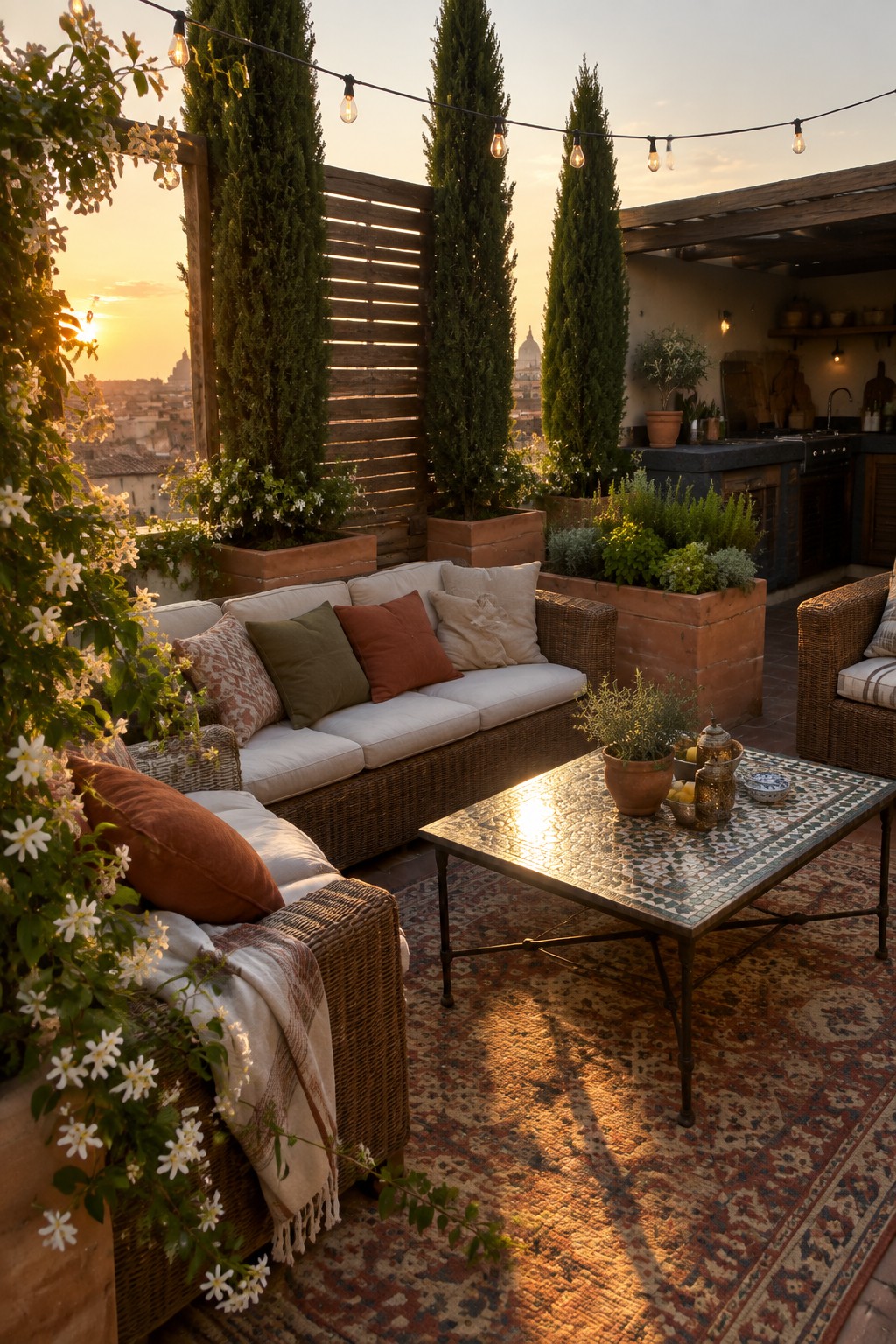
Tall evergreens planted in large boxes work well with a simple slatted screen to block sight lines on a roof terrace. The plants add height and softness while the wood keeps the setup feeling structured and contained. This combination turns an open space into something that feels more enclosed without building full walls.
Place the screen as a backdrop and set the planters right in front so the trees grow up and fill the gaps. It suits city rooftops where neighbors or nearby buildings sit close by. Use evergreens that stay full year round and keep the screen simple so the planting stays the main focus.
Slatted Screens With Evergreen Planters For Roof Privacy
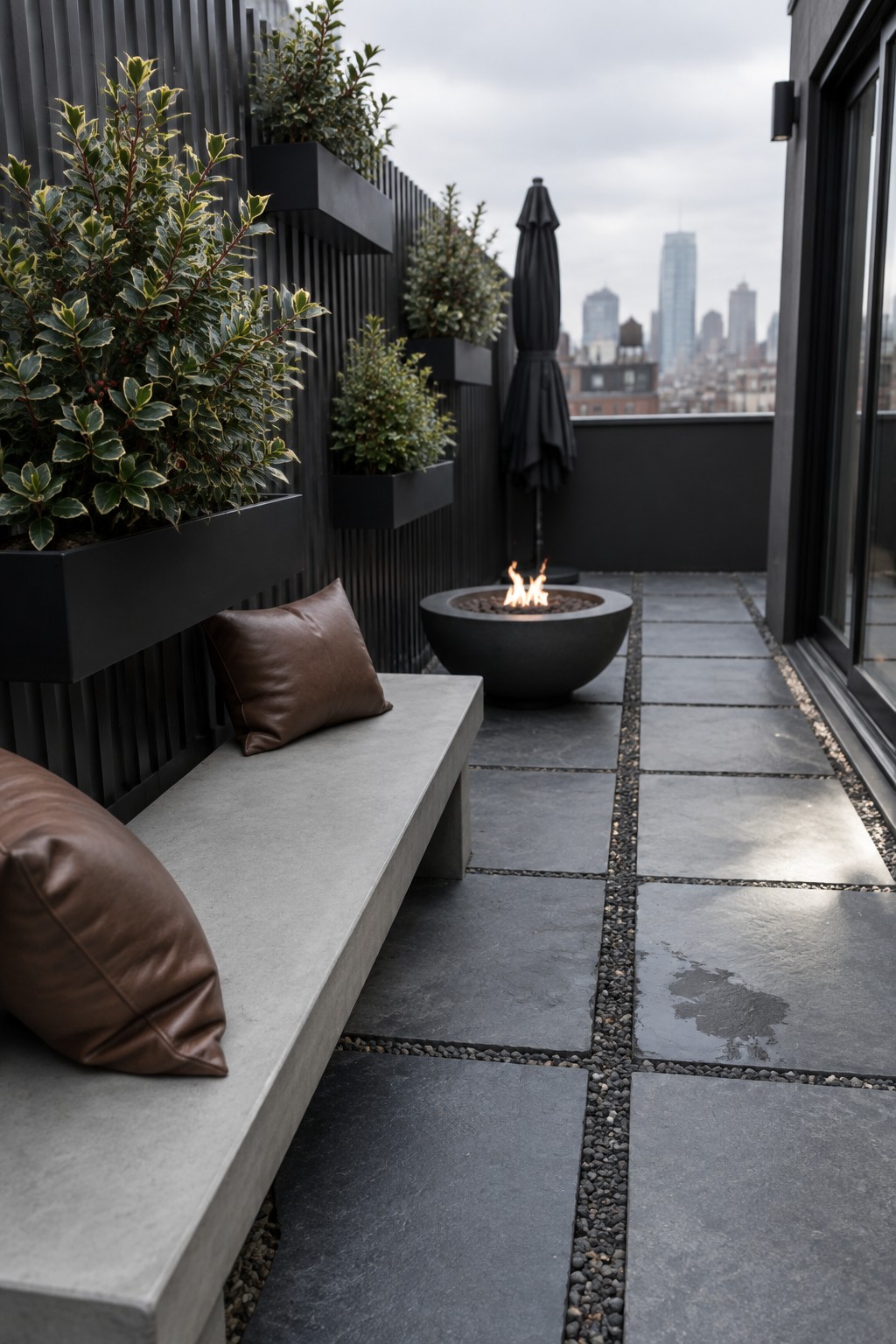
Many rooftop spaces feel too open because there is nothing to block the view from nearby buildings. Running a slatted screen along the edge and fixing planters straight onto it gives you a clean vertical line while the plants fill in the gaps. The dark screen adds structure and the evergreens bring softness and height without taking up floor space.
This works best on flat roof terraces where you want privacy but still need the area to feel open. Choose deep planters so the plants can root well and stay full through the seasons. Keep the screen color dark so the greenery stands out and the whole setup feels like part of the architecture rather than an add-on.
Slatted Screens With Tall Evergreens
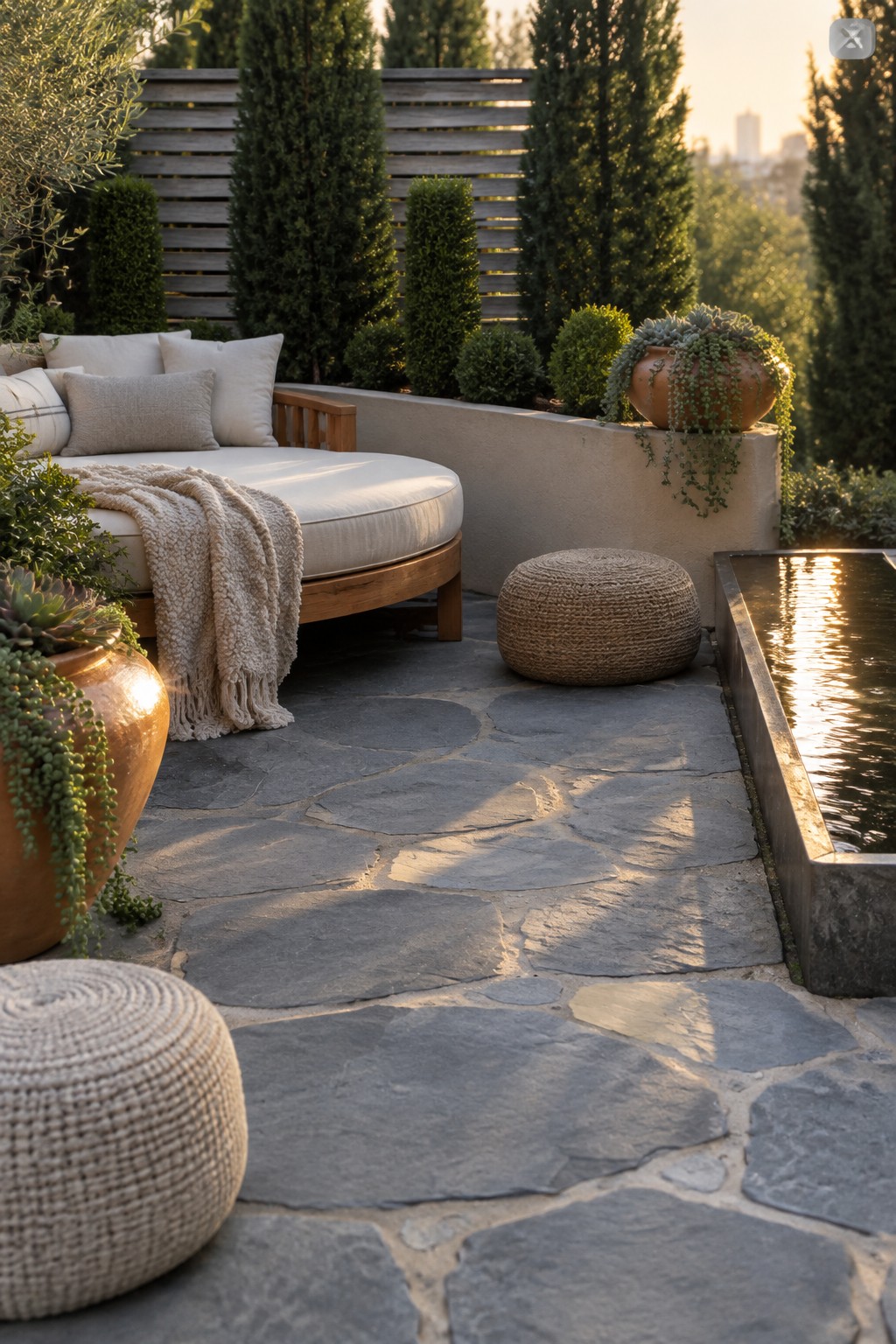
This combination gives a roof garden real privacy without making the space feel closed in. The screen creates a solid vertical line while the tall evergreens in front of it soften the look and block sightlines from neighboring buildings.
It works best on flat roof terraces or upper-level patios where you need quick screening. Set the screen along the back edge and plant the evergreens right in front so they grow together over time. Keep the screen a neutral wood tone so it fades behind the green.
Tall Evergreens Against Slatted Screens
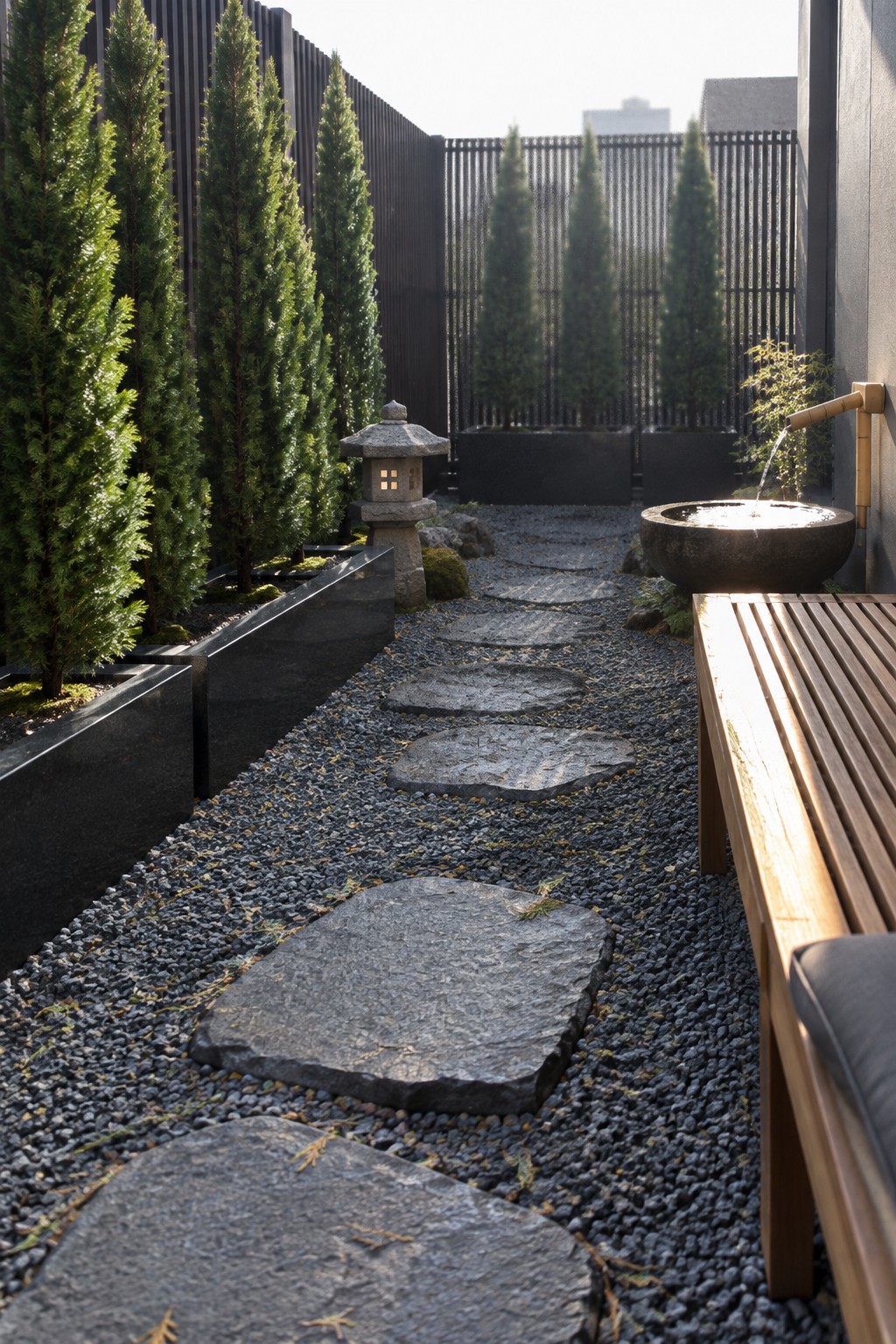
Many roof gardens stay open to neighboring views because they sit above street level. A simple row of tall evergreens planted right in front of a slatted screen blocks those sight lines while still letting some light through the gaps.
This approach works best on rooftops or small terraces where space is tight. Keep the trees in narrow raised beds along the edge so the path or seating area stays open, and choose varieties that stay narrow rather than spreading wide.
Tall Evergreen Screening Along Slatted Roof Garden Edges
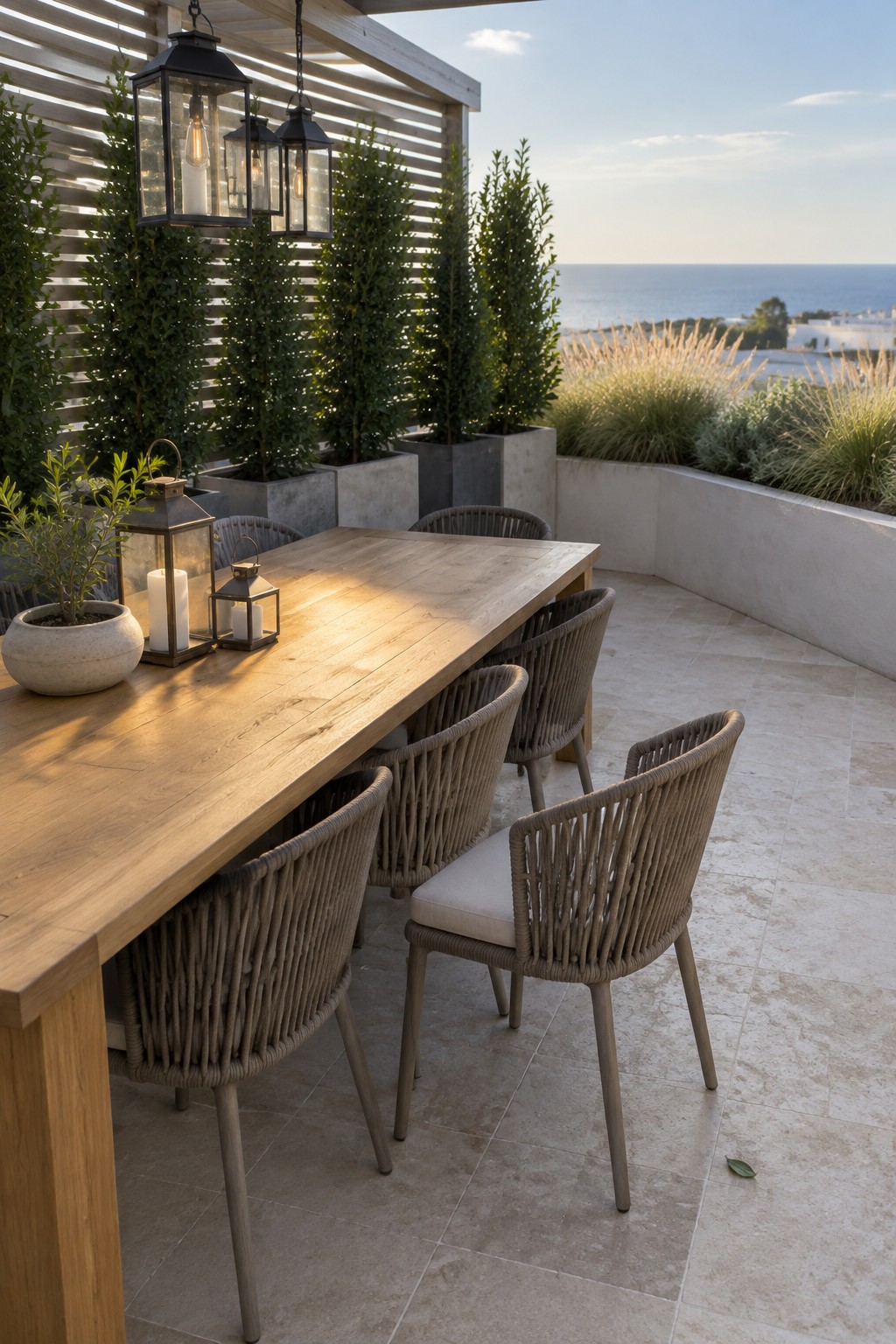
Roof gardens often feel too open because there is no natural backdrop. A simple slatted screen paired with a row of tall evergreen plants in large pots gives you a quick way to block sight lines while still letting in air and some light.
This works best on flat rooftops or terraces that sit above neighboring buildings. Place the screen along the side that faces the most exposure, set the pots right in front of it, and choose evergreens that hold their shape in wind. The combination feels solid without making the space feel closed in.
Slatted Screens With Tall Evergreens For Privacy
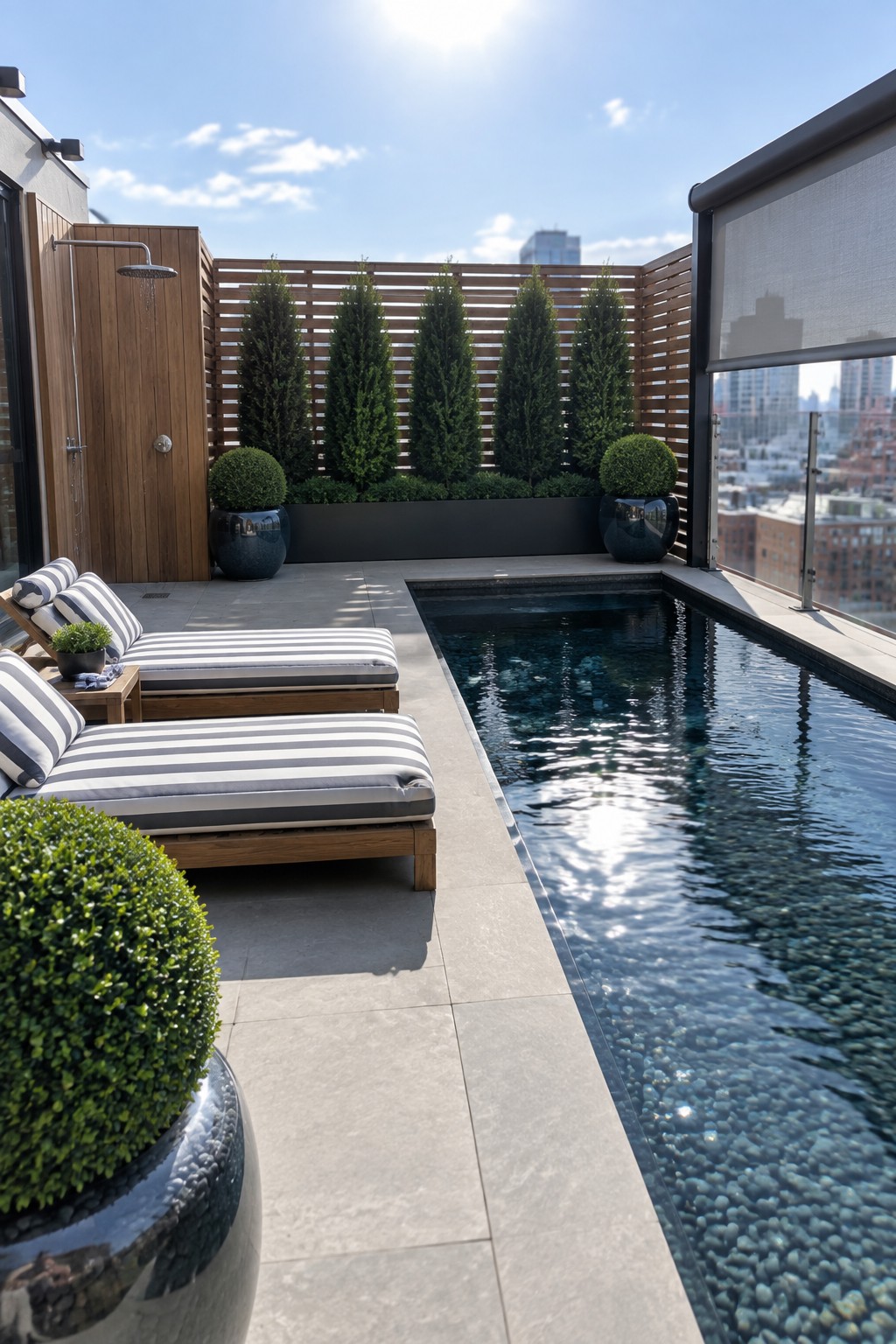
A slatted screen paired with a row of tall narrow evergreens gives a roof garden solid privacy without making the space feel closed in. The wood slats let some light through while the dense planting behind them blocks the view from neighboring buildings. This setup works especially well on rooftops where you need a quick vertical barrier that still feels natural.
It suits urban homes or any rooftop with exposure on one or more sides. Place the screen along the edge you want to shield and plant the evergreens right behind it so they grow together into one layer. The combination stays low maintenance once the plants are established and needs little extra structure.
Urban Roof Privacy With Slatted Screens and Evergreen Planting
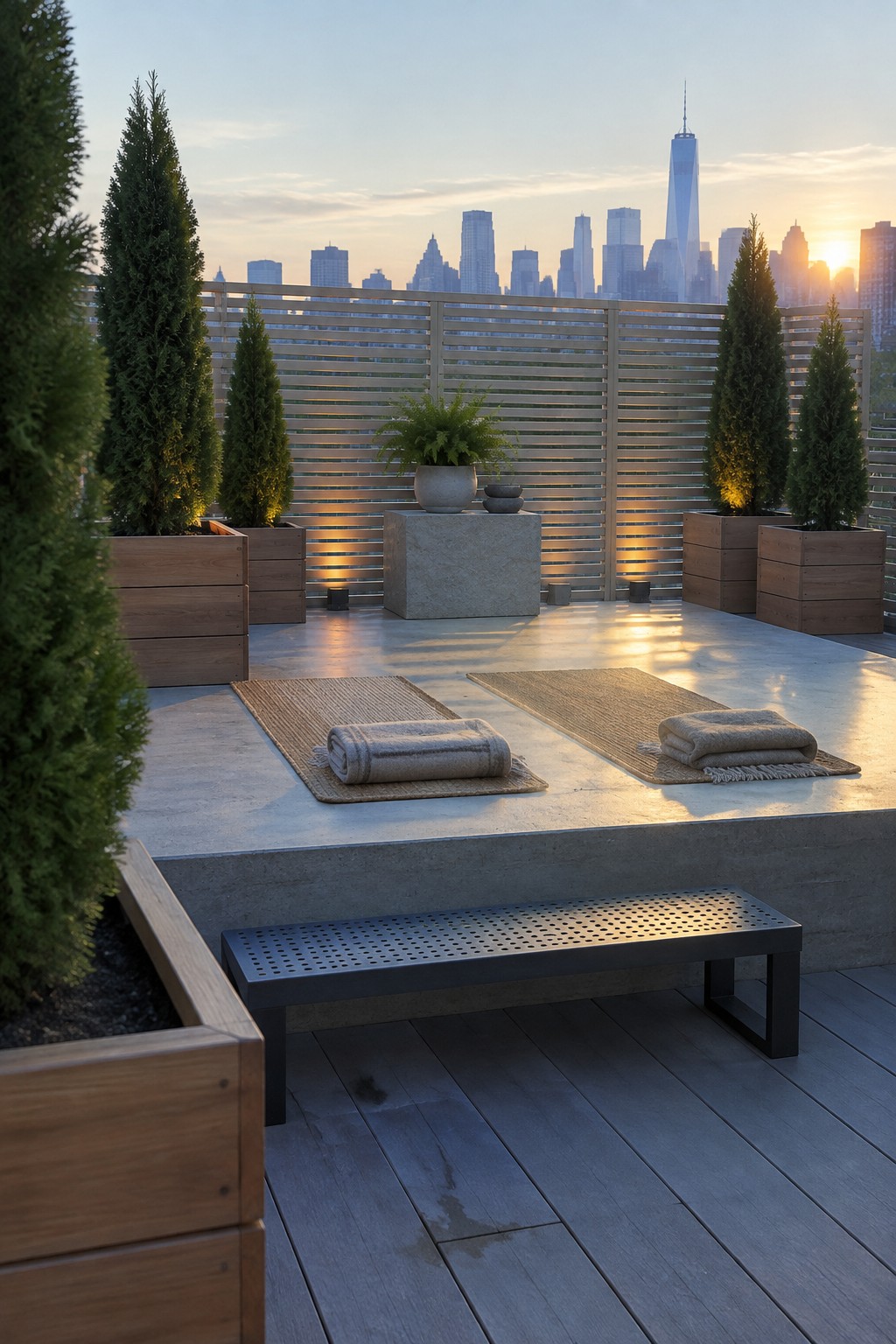
Many roof gardens sit right out in the open, so finding a simple way to cut down on sight lines from other buildings makes a big difference. Slatted screens set behind rows of tall evergreens give just enough cover while still letting some light and air through.
This setup works best on flat urban rooftops where you can run the screens along the back edge and place the planters right in front of them. It suits smaller city spaces that need privacy without adding heavy walls or losing the open sky feeling.
Tall Evergreens Against A Slatted Fence
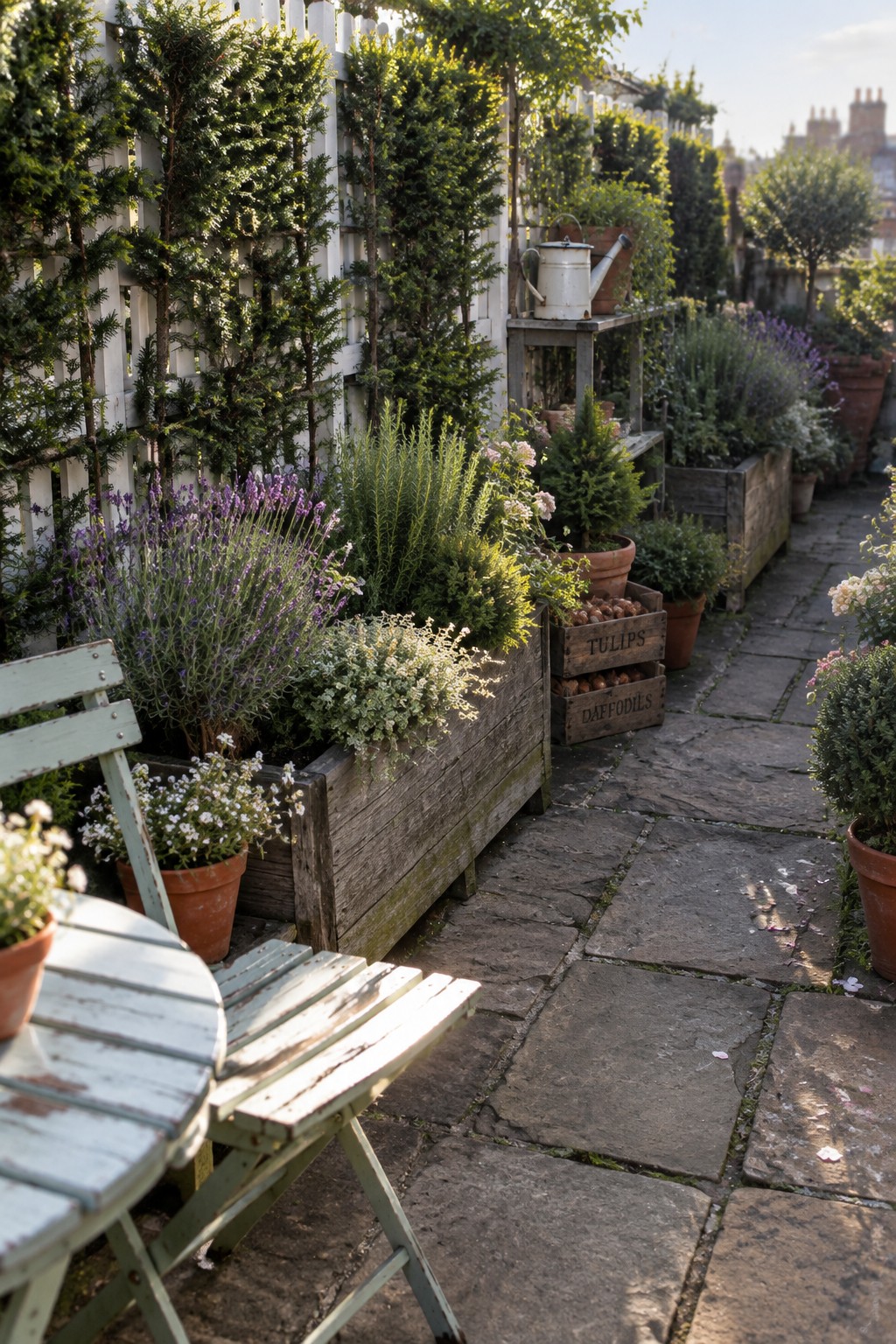
Tall evergreens planted right up against a slatted fence give a roof garden quick privacy without making the space feel closed in. The plants hide the fence lines over time while still letting some air move through, which helps on a rooftop where wind can be an issue.
This setup works best in narrow beds or large wooden planters placed along the edge. Pick varieties that stay fairly narrow so they do not crowd the path or seating area. Keep the soil deep enough and water regularly since roof conditions dry out faster than ground level gardens.
Evergreen Planting Behind Slatted Screens for Rooftop Privacy
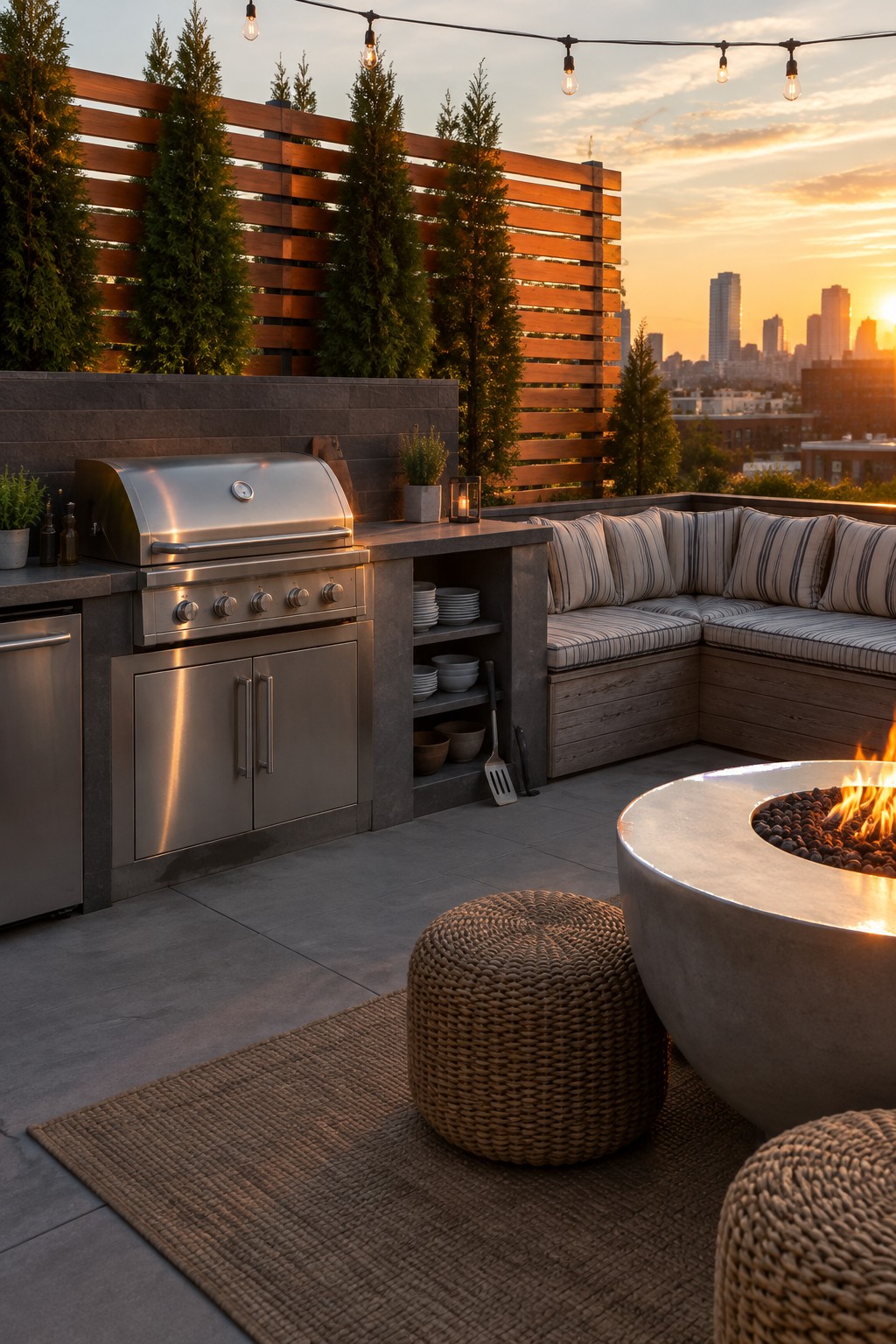
Slatted screens combined with tall evergreens give roof gardens a simple way to block views from nearby buildings. The open gaps in the wood keep air moving and light coming through, while the trees add a solid layer of green that feels natural instead of boxed in.
This works best on urban rooftops where space is tight and neighbors sit close by. Place the evergreens in big pots right behind the screen so they grow up and fill the gaps over a season or two. It suits most roof setups as long as the plants get enough sun.
Screens And Tall Evergreens For Privacy
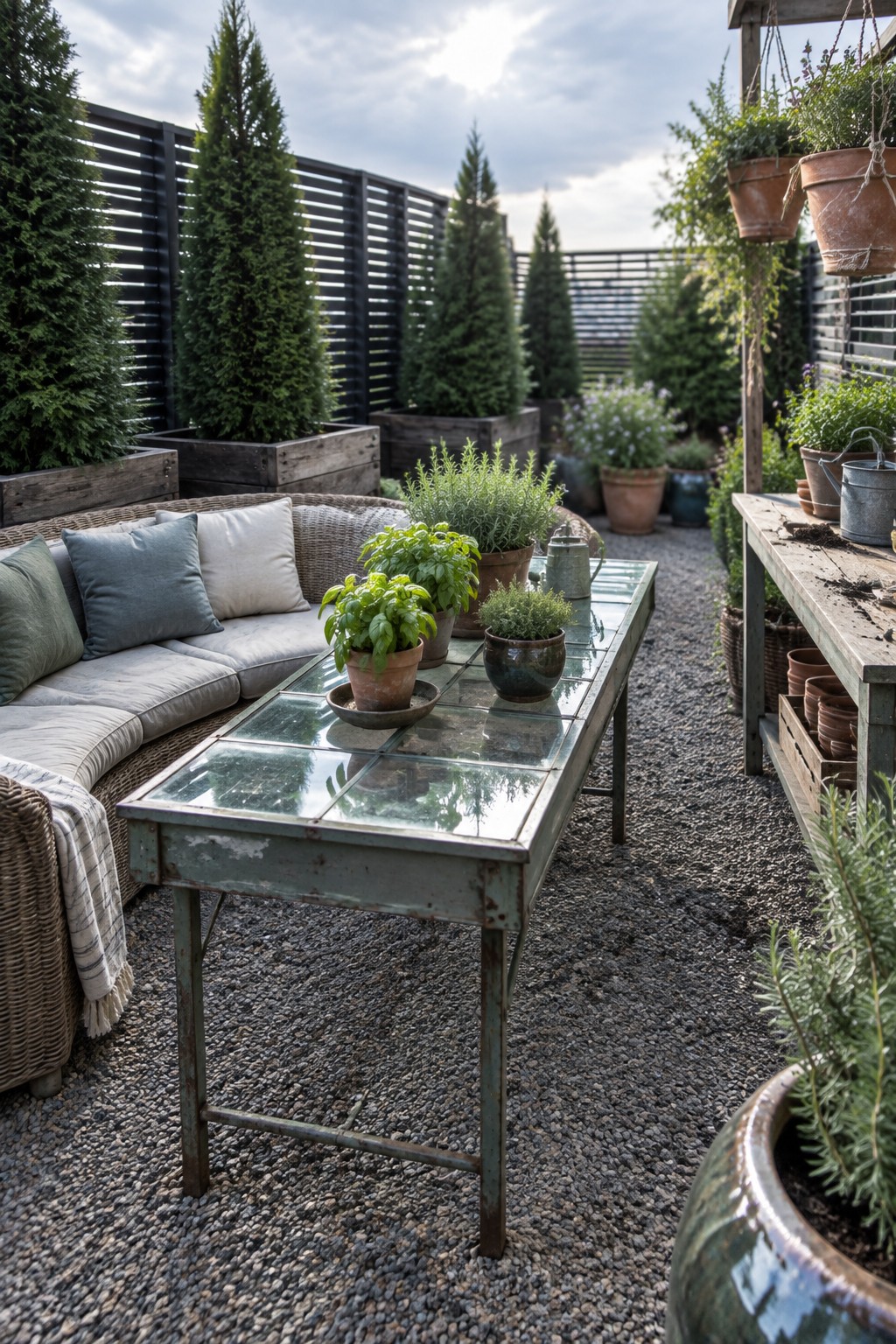
Roof gardens often feel too open because there is nothing around them to block the view. A simple slatted screen combined with tall evergreens planted right behind it creates a living wall that feels natural while still giving real privacy.
This setup works best along the edges of a flat roof or terrace where wind can be an issue. Use narrow evergreens so they do not crowd the space, and make sure both the screen and the planters are fixed down well. The dark slats in the photo show how the screen lets some light through while the trees fill the gaps.
Slatted Screens And Tall Evergreens
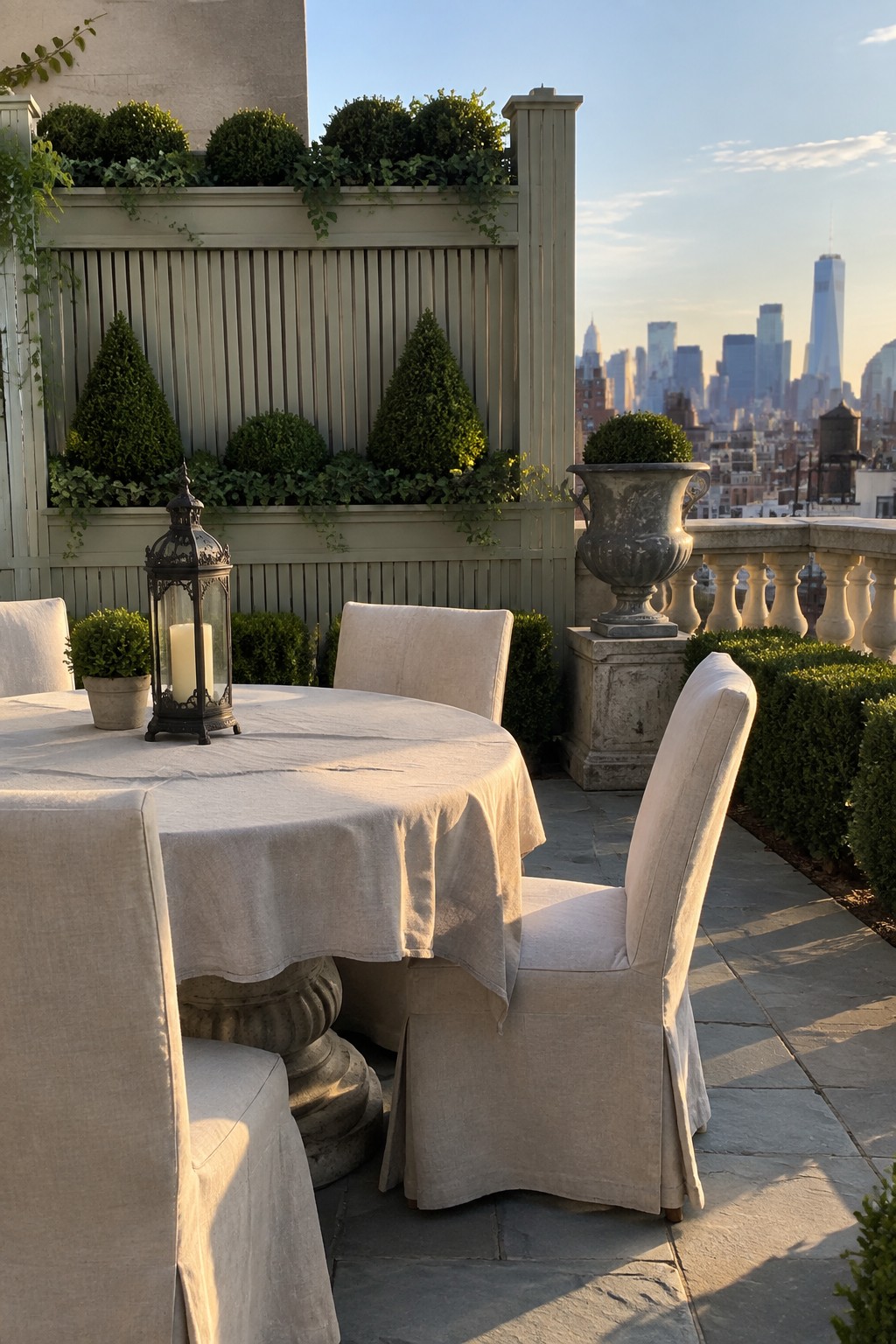
A slatted screen along the back of a roof terrace gives privacy without closing the space in completely. The gaps let air move through and keep the area from feeling boxed off while the vertical lines add some structure.
Place taller evergreens in front of the screen in matching planters so the planting fills the gaps over time. This setup works especially well on city rooftops where neighbors sit higher up and you want a simple green wall that stays neat year round.
Year-Round Roof Privacy With Slatted Screens and Evergreens
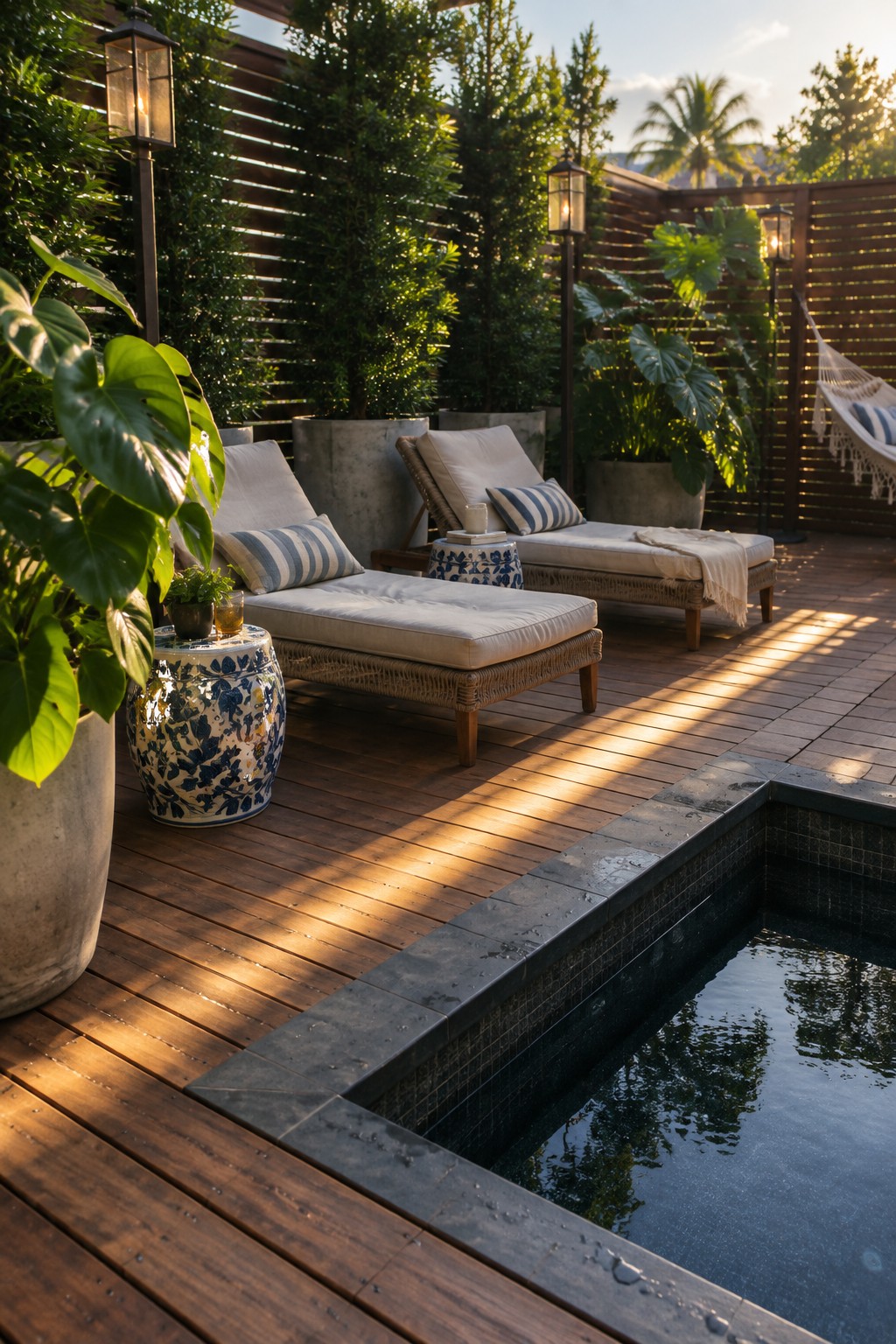
Slatted screens paired with tall evergreen planting give an outdoor space privacy without making it feel boxed in. The gaps in the wood let some light and air through while the plants behind them block the view from outside. This setup works especially well on roof gardens and upper level decks where neighbors or nearby buildings sit higher up.
Place the screens along the edges where you need the most cover and set the plants in large pots right behind them. Evergreen varieties keep their height and density all year. The combination feels natural and holds up in different weather.
Use Slatted Screens And Tall Evergreens For Privacy
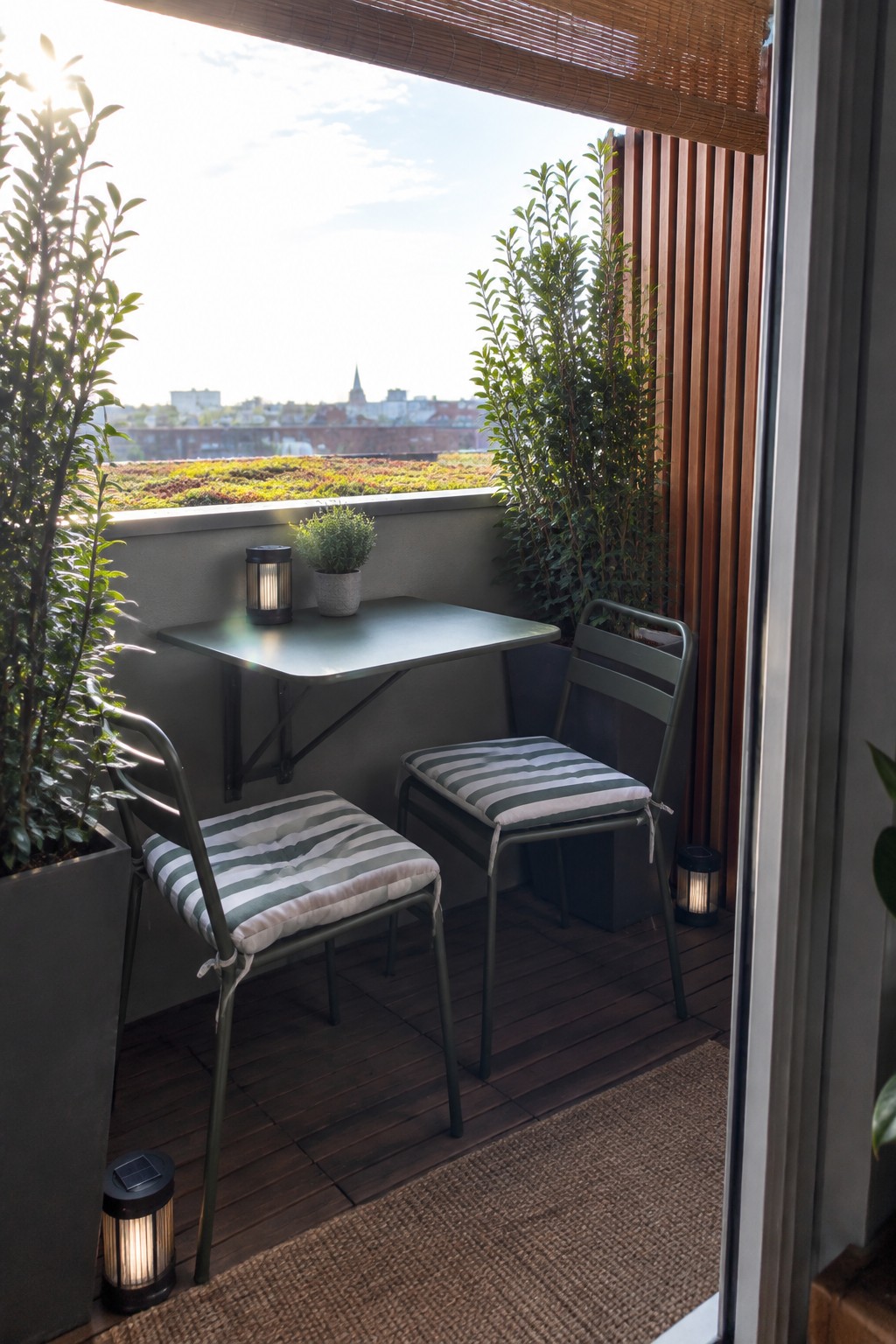
Small roof terraces often feel too open to neighboring buildings. A simple slatted screen on one side combined with tall potted evergreens in front of it blocks the view without making the space feel closed in.
This approach works best on balconies or roof gardens where you want a bit of seclusion but still need light and air to pass through. Place the screen where the main sight lines come from and choose evergreens that stay full through the seasons so the privacy lasts year round.
Tall Evergreens Behind Slatted Screens

Tall evergreens set behind a slatted fence give a roof terrace real privacy without boxing it in. The plants add height and block sightlines from nearby buildings while the wood lets some air and light through.
This works best on flat rooftops where you need quick coverage. Set the trees in big planters along the edge so they grow into a green wall over a season or two. It suits city homes that want a natural screen without heavy construction.
Compact Evergreen Screening for Exposed Roof Terraces
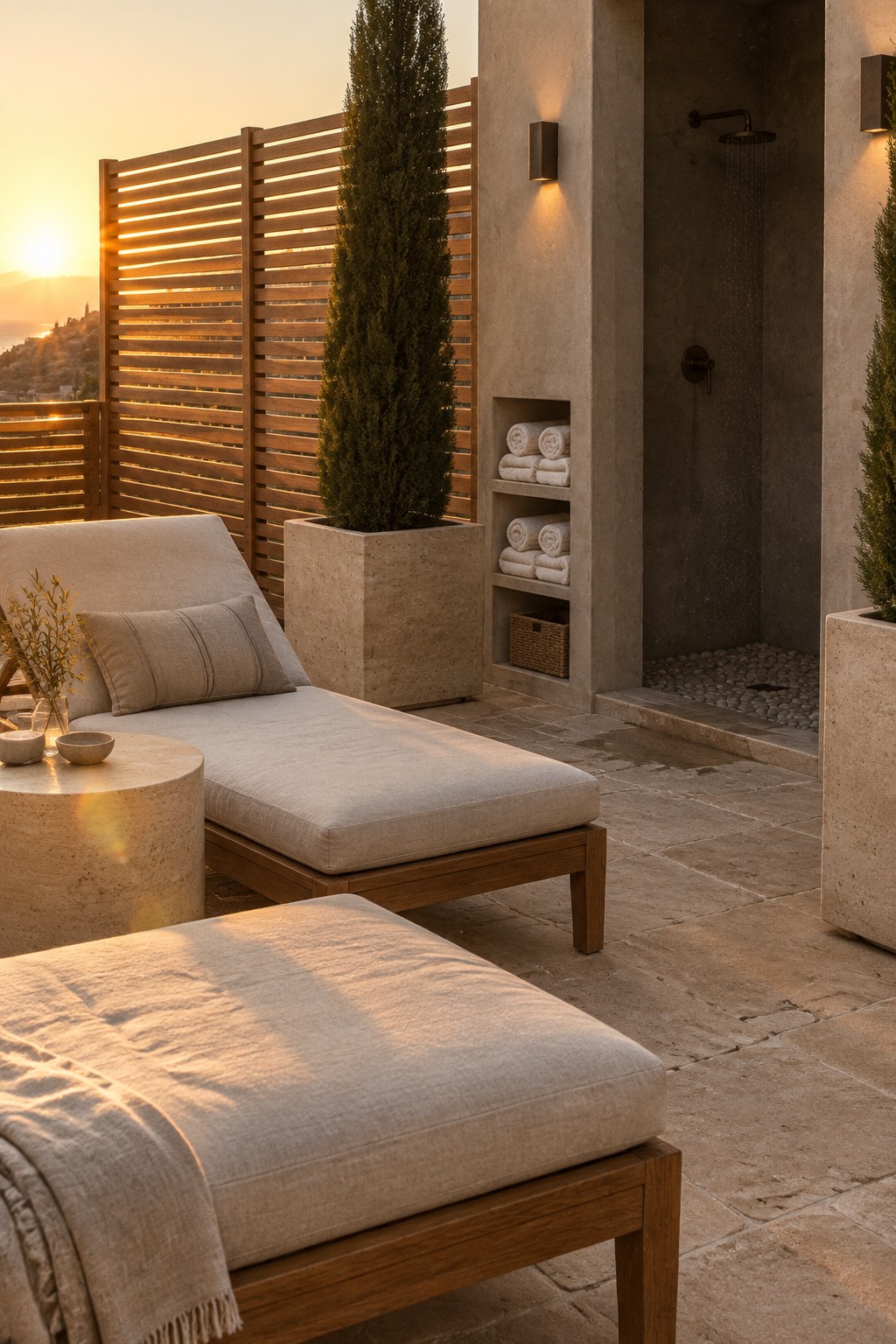
A simple wood screen paired with a tall evergreen does a lot of work on a roof terrace. It blocks the view from neighboring buildings without making the space feel closed in, and the tree adds height that the screen alone cannot provide.
This approach works well on flat rooftops or upper balconies where you need screening but still want some openness. Place the screen where sight lines are most direct and set the planter right behind it so the tree grows up through the slats. Choose a narrow evergreen that stays compact and a screen with even gaps so light still passes through.
Creating Privacy With Tall Evergreens And Slatted Screens
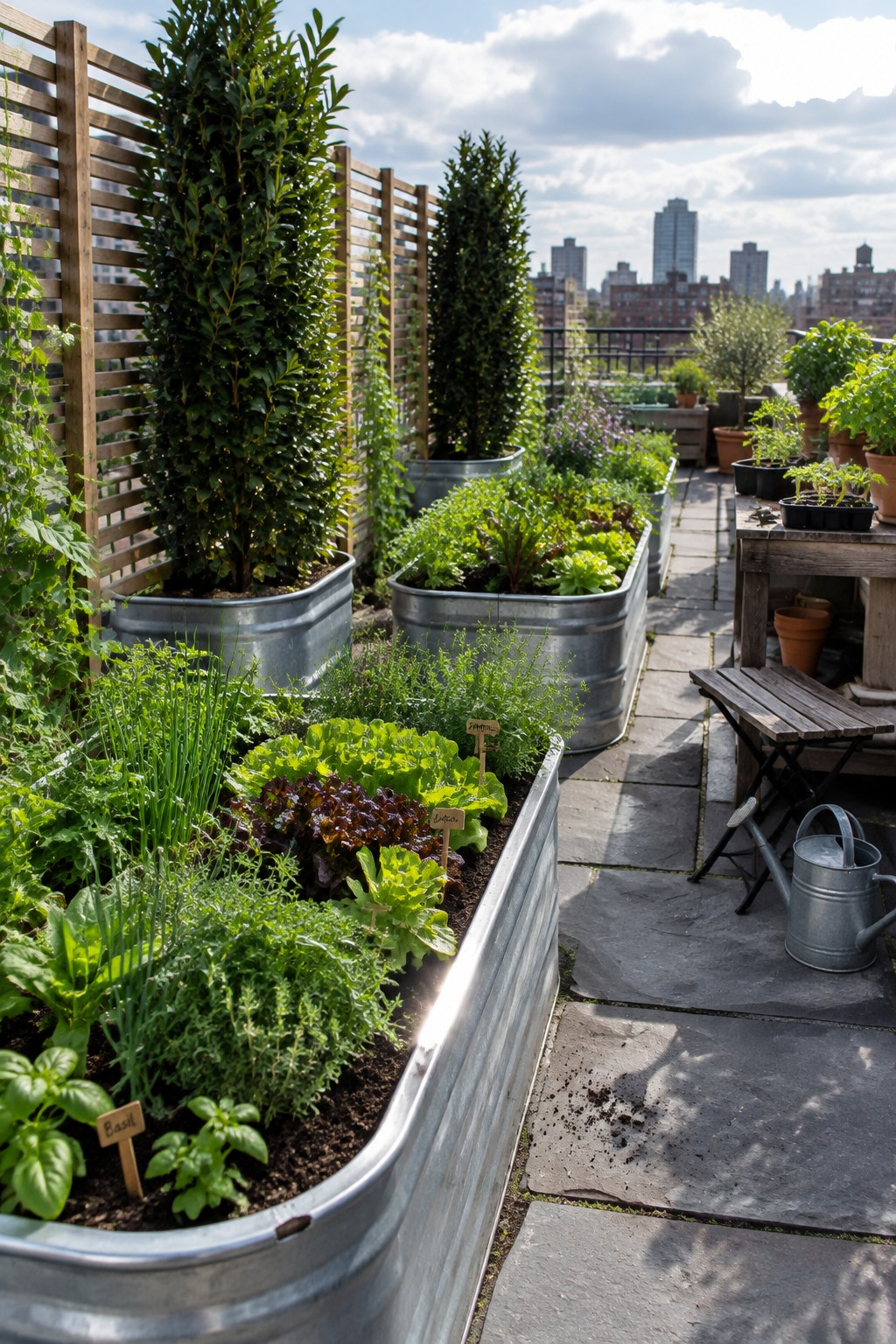
Tall evergreens placed right behind a slatted wooden screen give a roof garden real seclusion without making the space feel closed in. The height of the plants blocks views from nearby buildings while the gaps in the wood let some light and air through, so the area still feels open.
This approach works well on rooftops or upper terraces where neighbors or city views are close. Use sturdy planters for the evergreens so they stay stable in wind, and keep the screen simple so the plants remain the main feature.
Slatted Screens And Tall Planting For Better Privacy
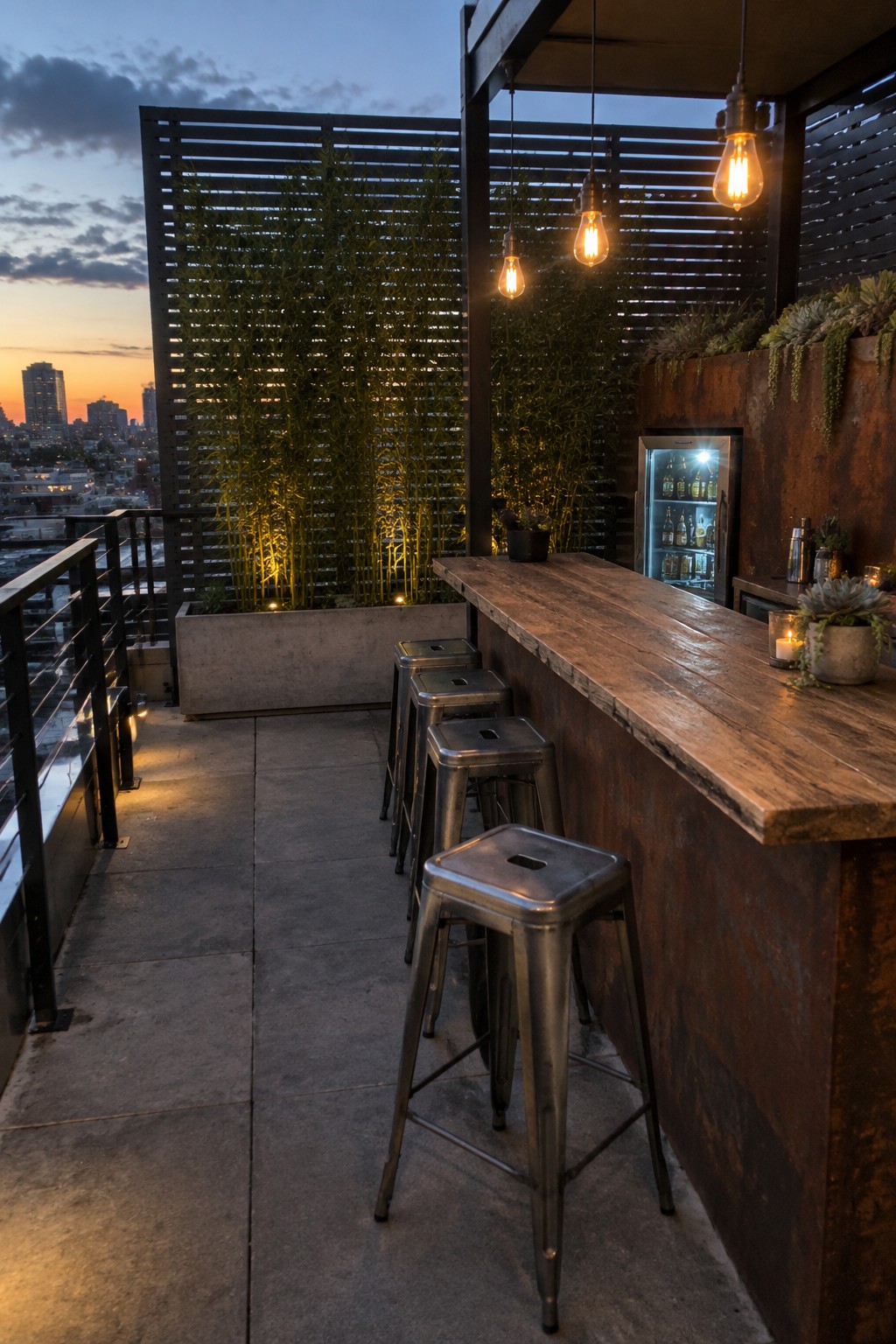
Slatted screens work well on roof gardens because they block sight lines without making the space feel closed in. When you place tall evergreens right behind the slats, the plants fill the gaps over time and give a softer, greener look that changes with the seasons.
This setup suits urban rooftops where neighbors or nearby buildings sit close by. Keep the screen material simple and let the plants do most of the screening once they grow in.
Add Privacy With Slatted Screens And Evergreen Planting
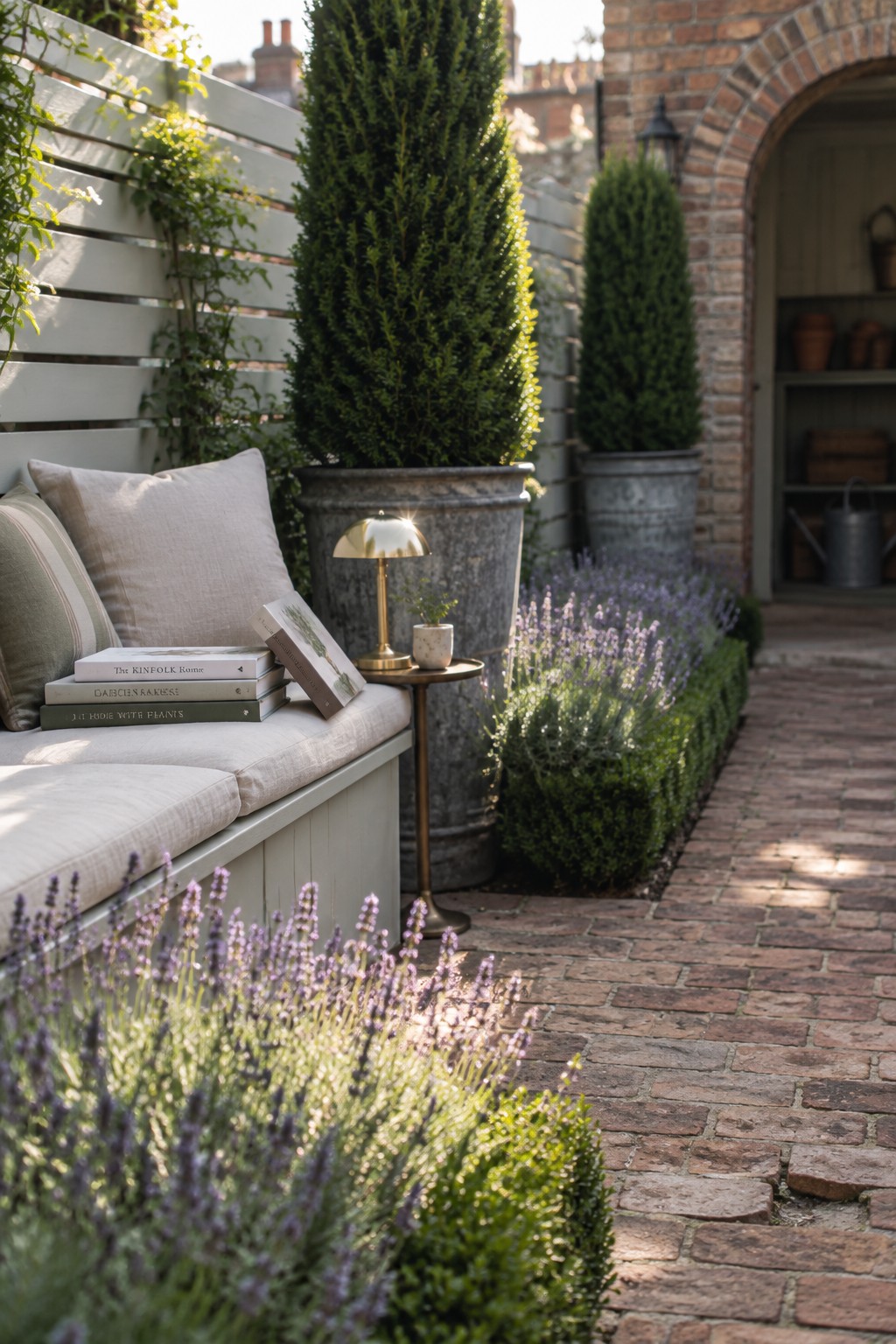
Tall evergreens set in large pots pair easily with a slatted screen to block the view from outside while still letting light and air through. The combination keeps the space from feeling boxed in and gives a natural sense of enclosure that works on a roof or small patio.
This approach suits homes where the outdoor area sits close to other buildings or overlooks a street. Place the pots in a line along the screen and keep the planting simple so the screen remains the main structure.
Privacy With Slatted Screens And Tall Evergreens
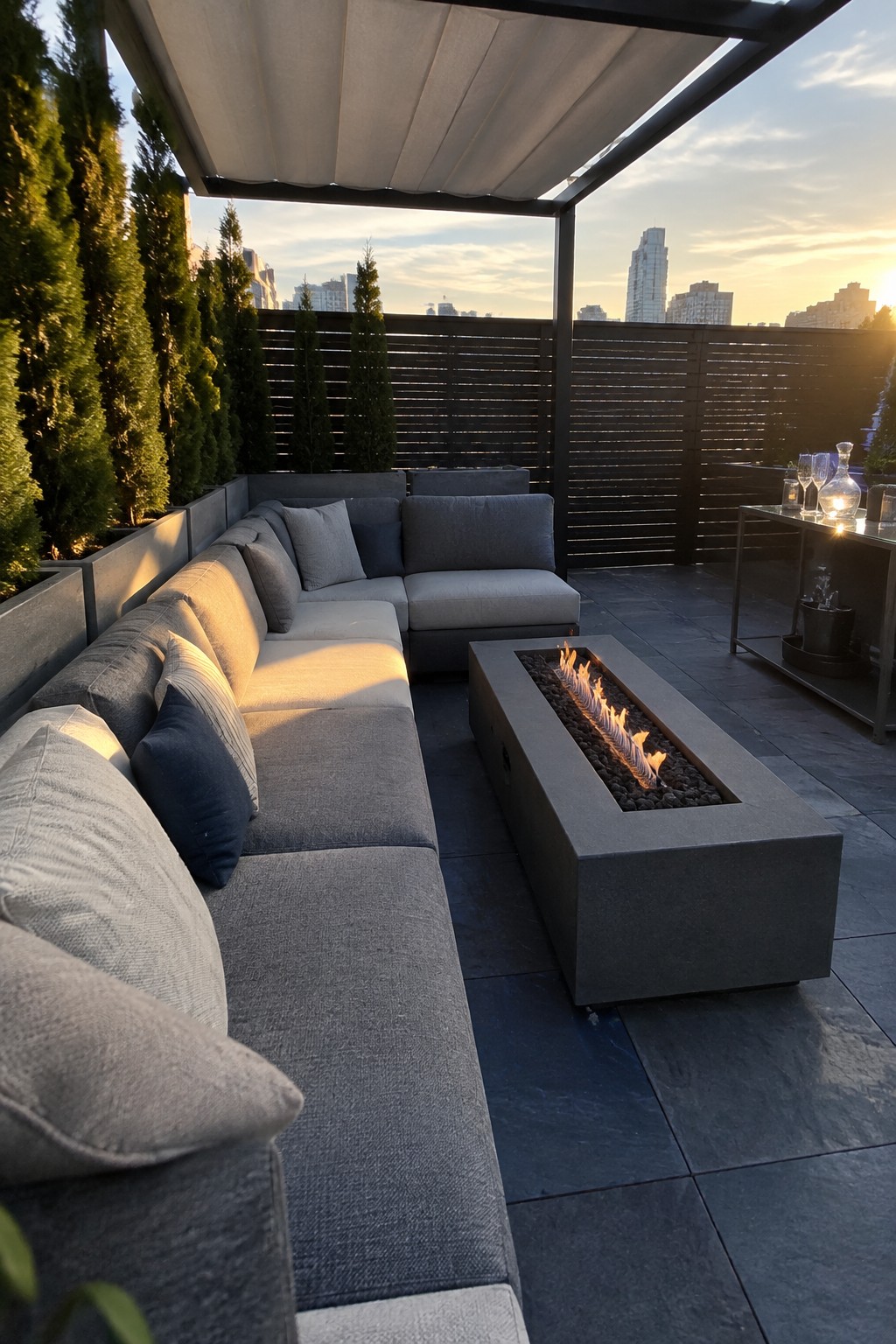
The combination of a dark slatted fence and a row of tall evergreens creates a solid privacy barrier without making the space feel boxed in. On a roof garden this matters because open sides often leave seating areas exposed to nearby buildings.
This approach works best in urban settings where you need screening but still want some airflow and light. Keep the fence simple and match the planters to it so the planting feels like part of the structure rather than an afterthought.
Pair Slatted Screens With Tall Evergreens
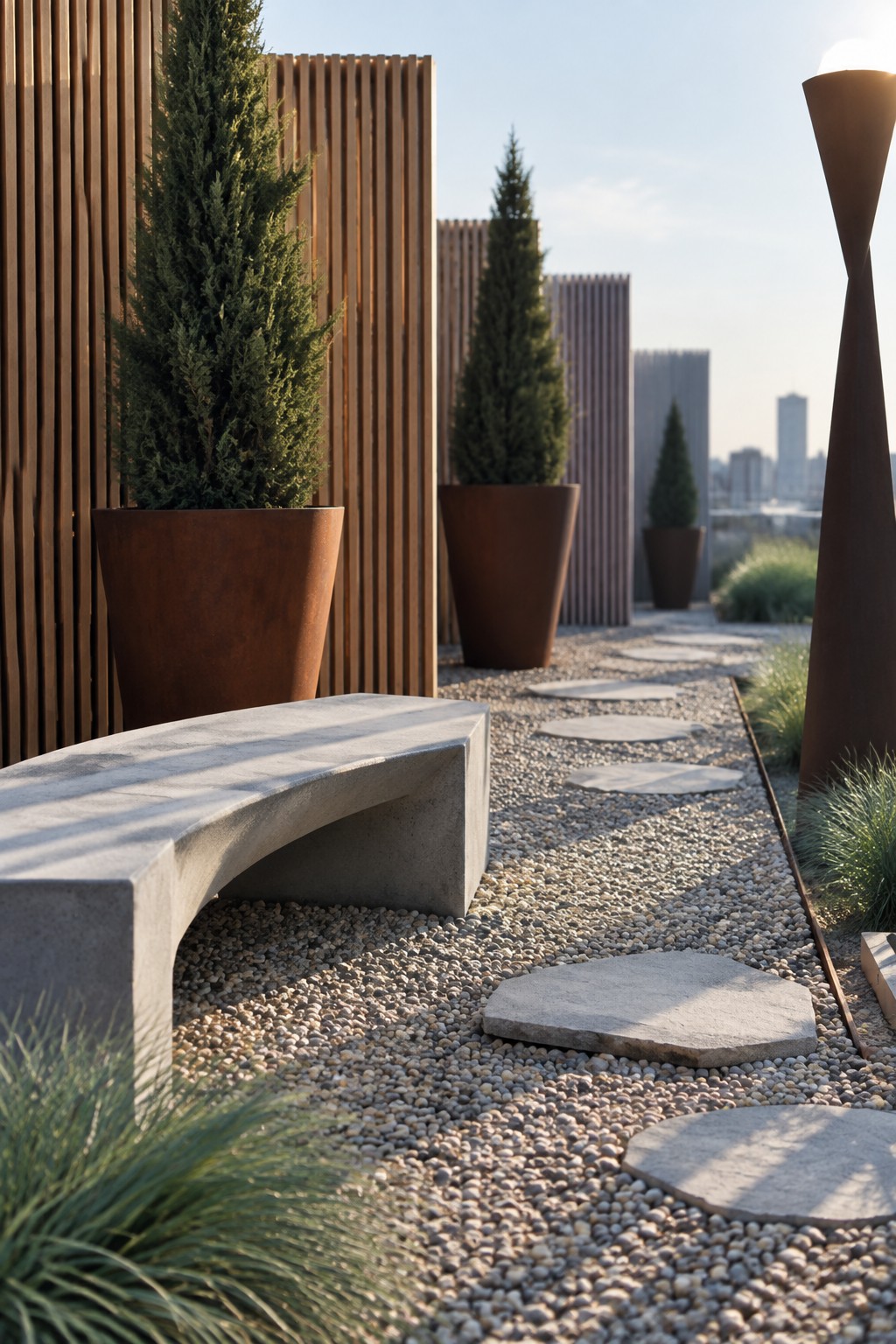
Tall evergreens planted in big containers work well when set right in front of slatted screens. The wood gives a clean vertical line while the plants soften the edge and fill any gaps. On a roof this setup blocks views from neighboring buildings without feeling heavy.
Place the pots close to the screen so the trees grow into the pattern over time. Narrow evergreens like Italian cypress or upright juniper fit best since they stay slim and do not crowd the space. This works on most flat rooftops where you need quick privacy without building full walls.
Slatted Screens With Evergreen Planting For Roof Privacy
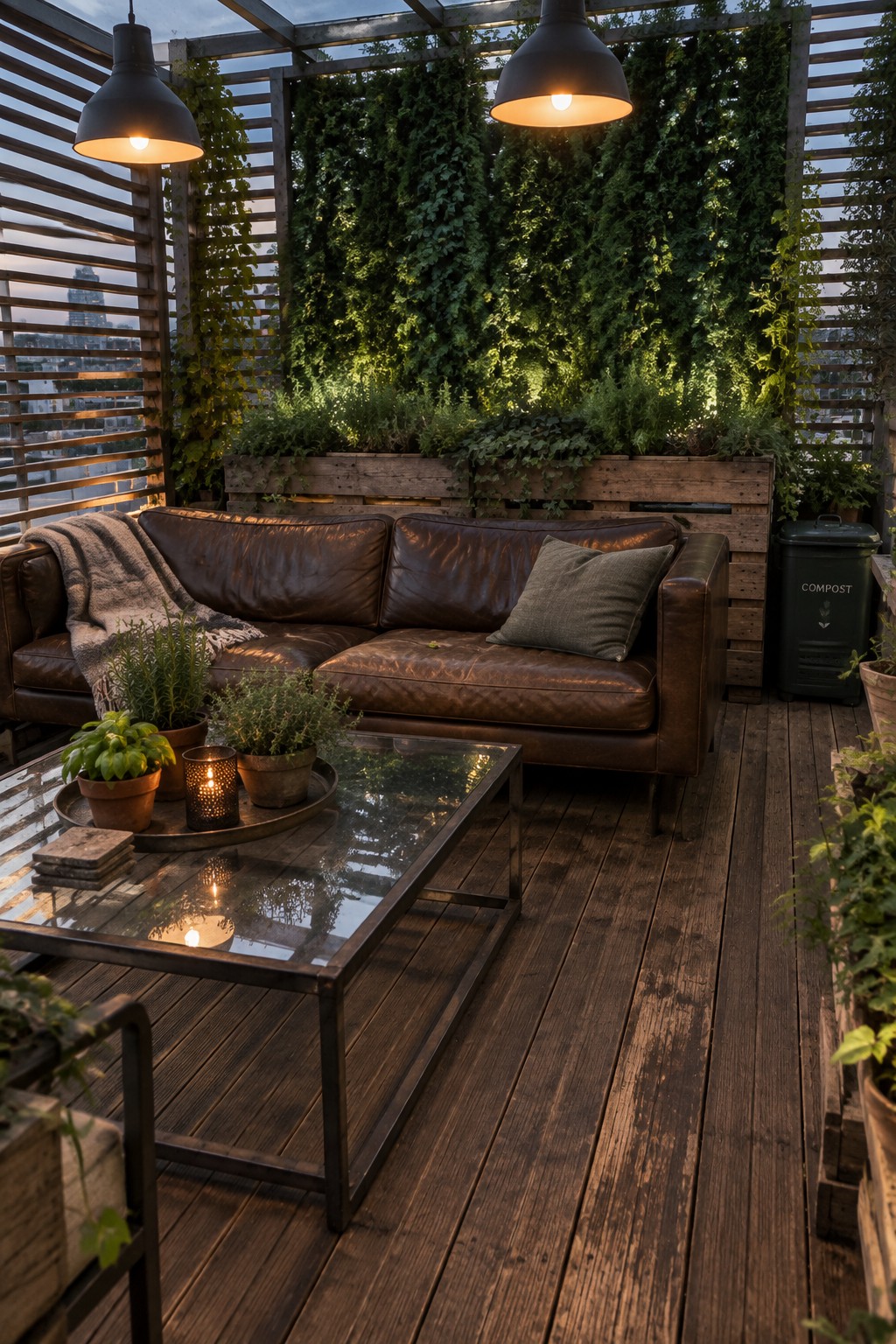
Slatted screens paired with tall evergreen planting give a roof garden real privacy without making it feel boxed in. The gaps in the wood let air and light through while the plants grow up and fill the space, creating a natural screen that blocks views from nearby buildings.
This setup suits urban rooftops or any deck where neighbors sit close by. Use sturdy wooden slats as the base and choose vines or shrubs that reach the top of the screen so the planting softens the structure over time.
Pair Slatted Screens with Tall Evergreen Planters
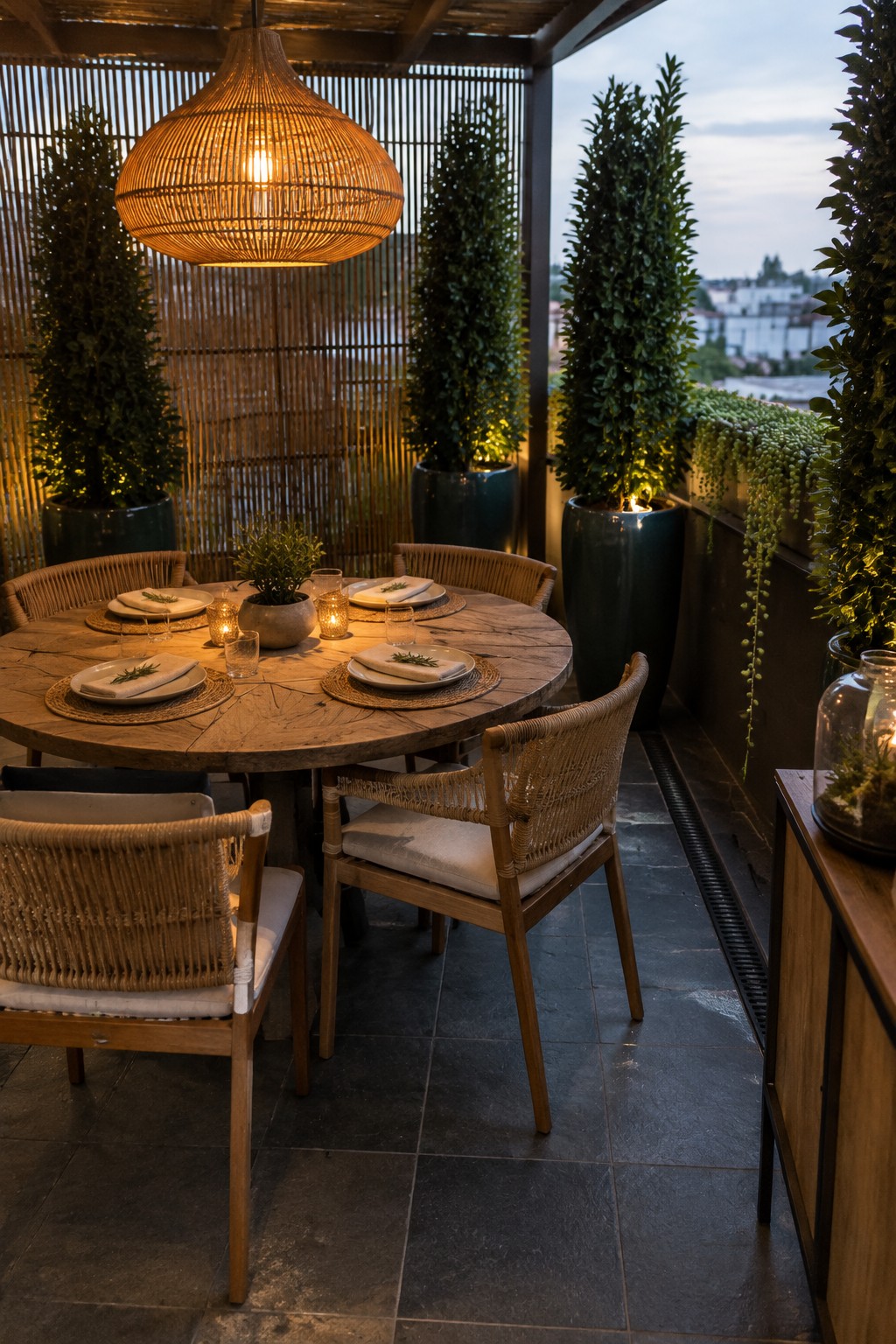
One simple way to gain privacy on a roof garden is to run a slatted screen along the edge and place tall evergreens in large pots right in front of it. The screen gives a solid backdrop while the plants soften the look and add height without blocking too much light or air.
This setup works best on terraces that sit close to other buildings. It creates a quiet corner for dining or sitting while keeping the space from feeling boxed in. Use planters that are sturdy enough for wind and choose evergreens that stay full through the seasons.
Frequently Asked Questions
Q: How deep should the pots be for those tall evergreens? A: You want at least two feet of soil depth so the roots can spread out properly. This keeps the plants stable when the wind picks up on the roof. Check the drainage holes before you fill them up.
Q: Can the slatted screens be made from wood or do they need to be metal? A: Wood works fine if you treat it for outdoor use first. It gives a warmer look that pairs well with the green plants. Metal lasts longer but might feel colder next to the evergreens.
Q: What if the neighbors can still see through the gaps at the start? A: The evergreens fill in those spaces fast once they grow a bit. Plant them right behind the screens to block the view quicker. You get more privacy each season as they mature.
