

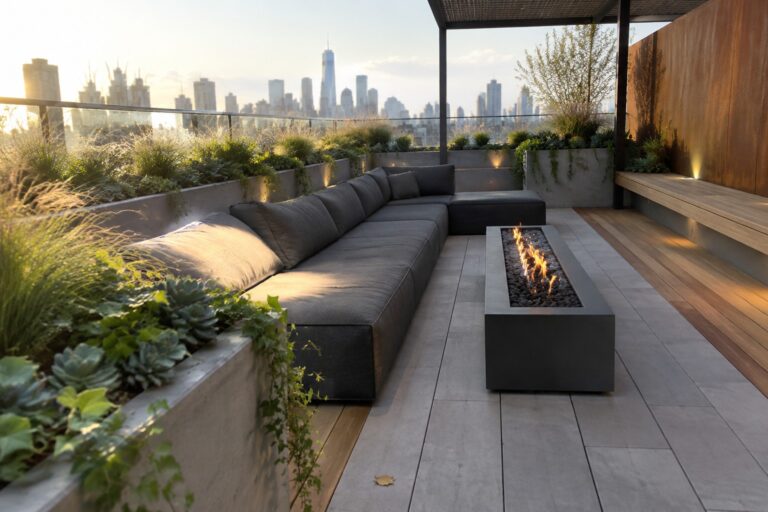
When I picture using a roof terrace day after day, the first thing that stands out is whether the space actually invites you to sit down or just looks nice from the street below.
Built-in planters help by keeping plants contained without adding freestanding pots that crowd the walking area or block views.
I have noticed that the setups that hold up best are the ones where the planter edges line up with the roof parapet so the whole thing reads as one surface instead of separate pieces.
Over time those straight lines also make it easier to add lighting or a small table without the planting beds feeling like an afterthought.
Clean lines keep the roof usable.
Built-In Planters That Shape A Roof Terrace

Built-in planters work well on rooftops because they give the space clear edges without adding extra furniture or clutter. The concrete boxes sit low and run along the sides, holding plants that spill over just enough to soften the hard surfaces.
This setup suits city terraces where floor space stays open for seating and walking. Keep the lines simple and match the planter material to any nearby hardscape so the whole area feels connected rather than pieced together.
Built-In Planters Keep the Center Open
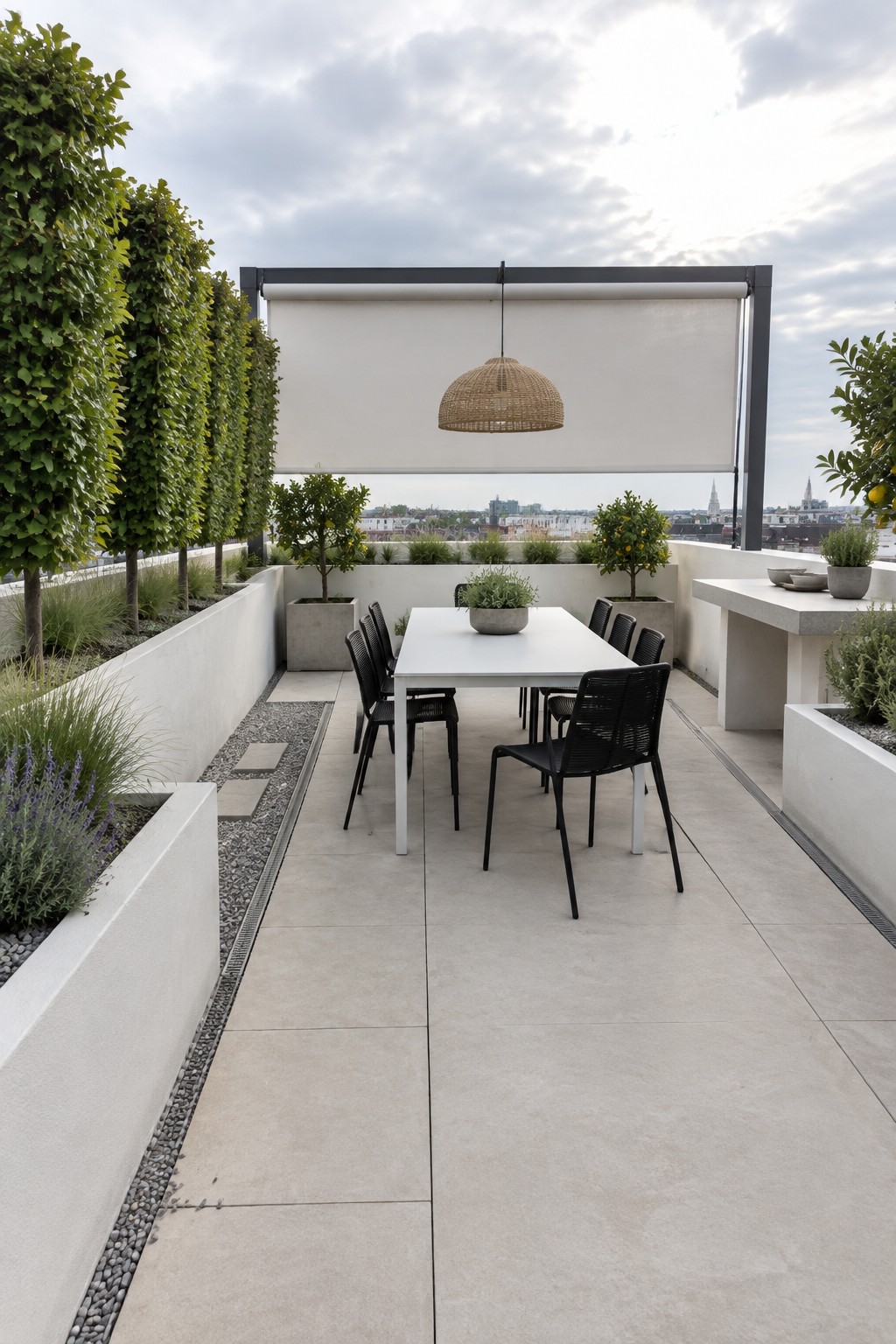
Built-in planters work well on a roof terrace because they add height and greenery without crowding the floor. The long rectangular boxes sit right along the edges and hold trees that give some privacy while leaving the middle area wide open for a table and chairs.
This setup suits flat roof spaces that need to feel usable rather than packed with pots. Keep the planters low and simple in shape so the focus stays on the open floor and the plants stay contained along the sides.
Built-In Planters That Shape The Deck
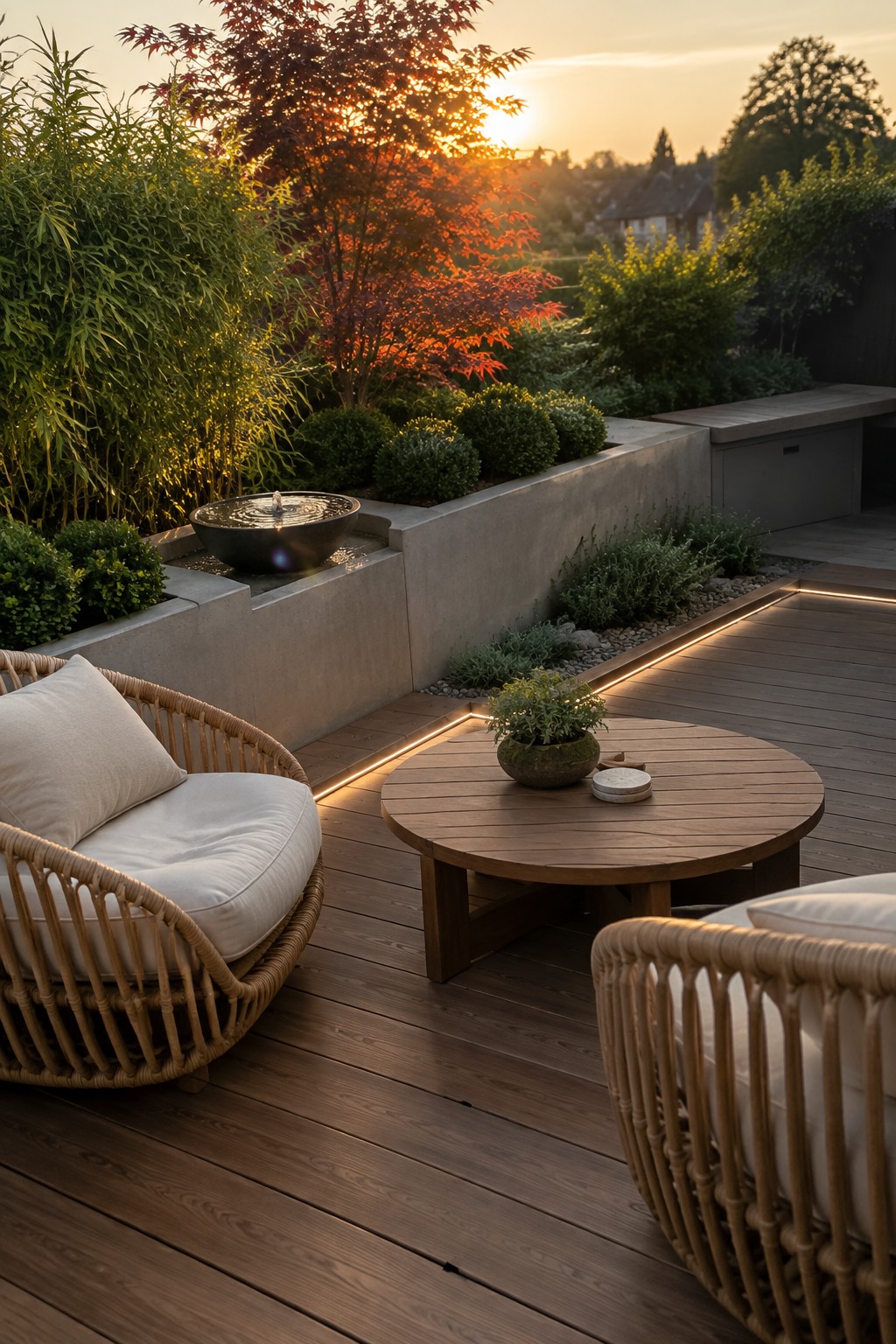
Built-in concrete planters work well on roof gardens because they turn the edge of the deck into a planting area without adding extra furniture or pots. The straight lines keep everything looking simple and keep the open feel of the space intact.
They suit flat roof terraces or balconies where you want greenery close to the seating but still need room to walk around. Place them to mark off one side of the deck and run low voltage lighting along the base so the area stays usable after dark.
Built-In Planters Define The Edge Of A Roof Garden
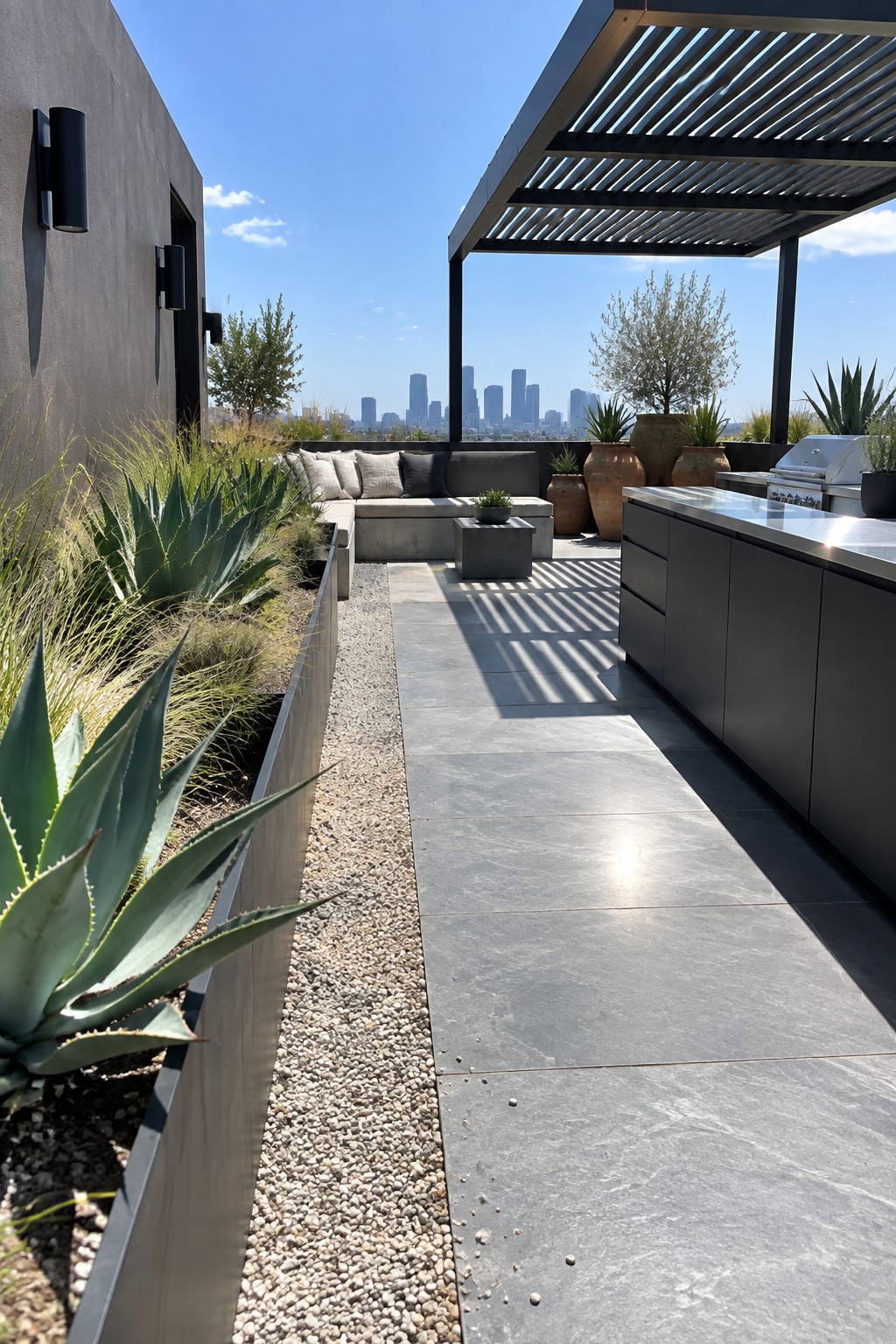
Built-in planters work well on rooftops because they give the space a finished border without adding clutter from loose pots. The long, straight lines keep the planting contained and make the whole terrace feel more organized, especially when the rest of the area stays open for seating and walking.
They suit flat roof setups where you want greenery right along the sides but still need room to move through the middle. Make sure the boxes sit level and have good drainage so the plants stay healthy over time.
Built-In Planters To Edge A Roof Deck

One way to make a roof garden feel more settled is to run long built-in planters along the outer edge. The dark concrete boxes in this setup sit at just the right height to hold a thick mix of leaves that screen the space without blocking the view completely. It turns the deck into a defined room while keeping the planting part of the structure itself.
This approach suits flat-roof homes in warm climates where you want greenery close to the seating. Use the same material for the planters and the deck walls so everything reads as one clean build. Make sure the boxes are deep enough for the plants to stay healthy through the seasons.
Built-In Planters Define The Seating Area
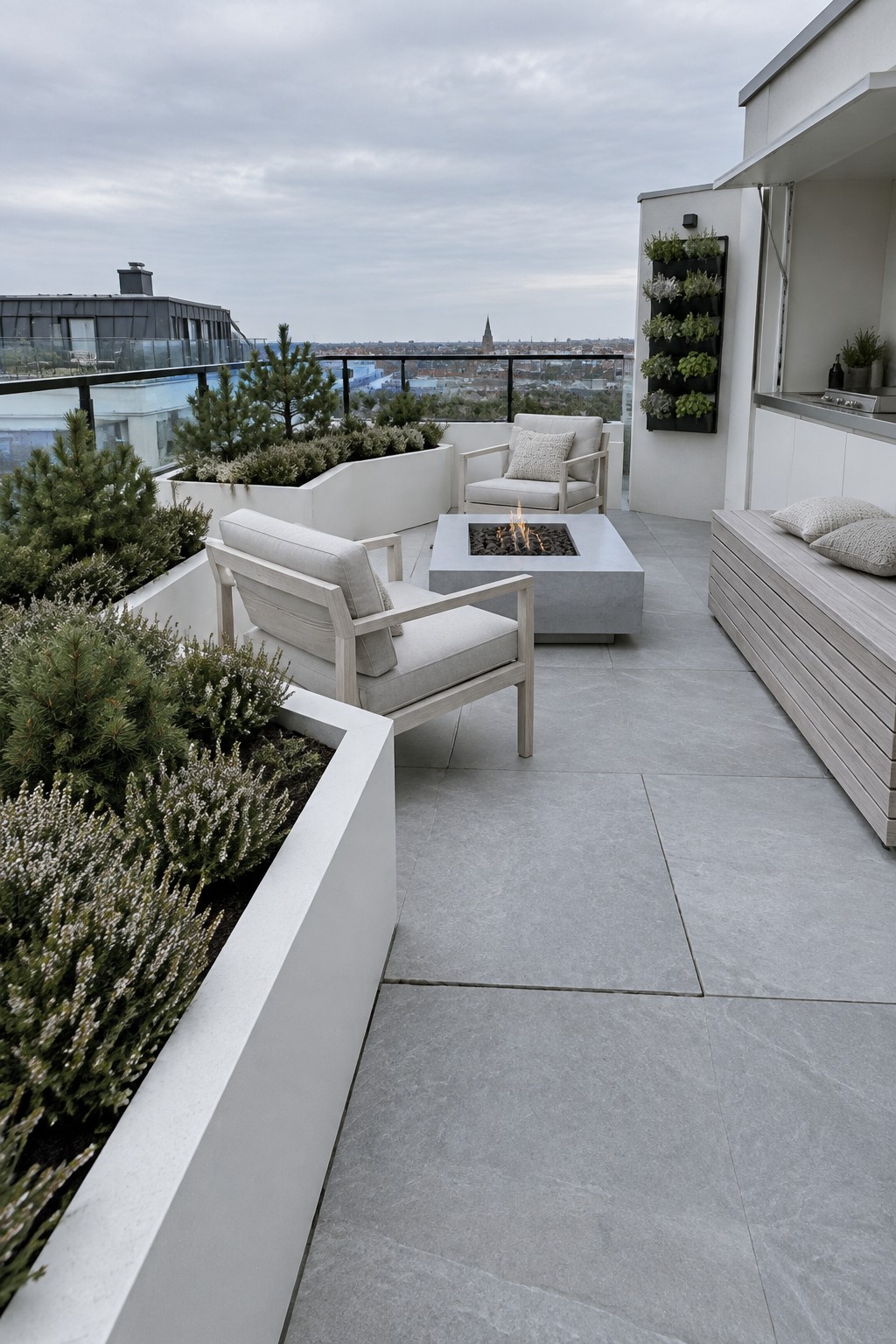
Built-in planters give a roof garden a clear shape without extra walls or screens. The low white boxes here sit right next to the chairs and fire pit, so the lounge zone feels set apart from the open deck while still staying open to the view.
This approach works best on flat rooftops where you want seating that feels contained but not closed in. Match the planter height to the furniture and stick to simple evergreens so the lines stay straight and the space does not look crowded.
Built-In Planters Along Terrace Edges
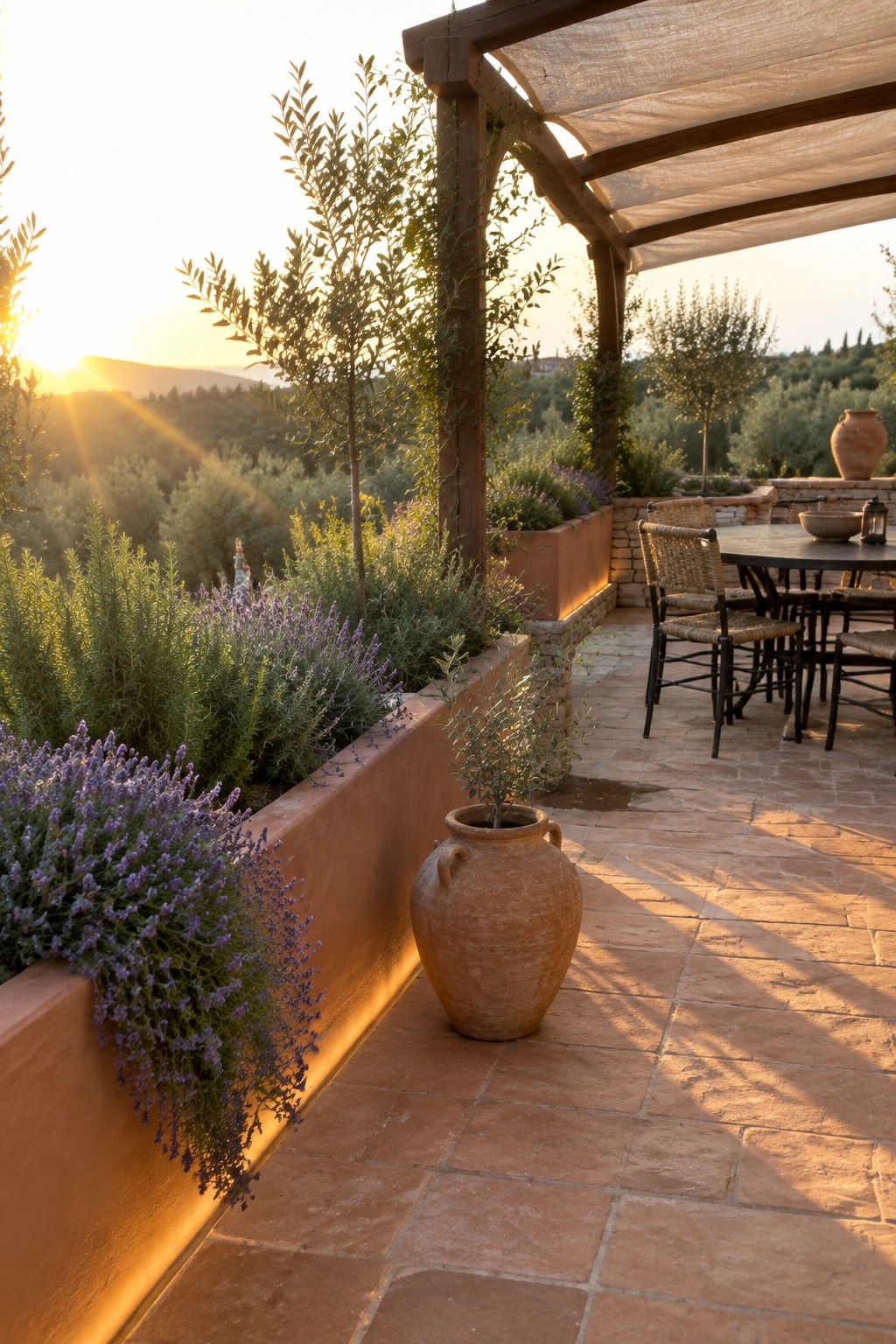
Built-in planters keep the planting low and integrated so the terrace stays open for seating and movement. They create a simple border that feels permanent rather than added on later.
This works best on roof terraces or patios where you want the same material underfoot and along the edge. Choose a finish that matches the flooring and keep the height low enough that the plants can spill forward without blocking the view.
Built-In Planters Along Outdoor Counters
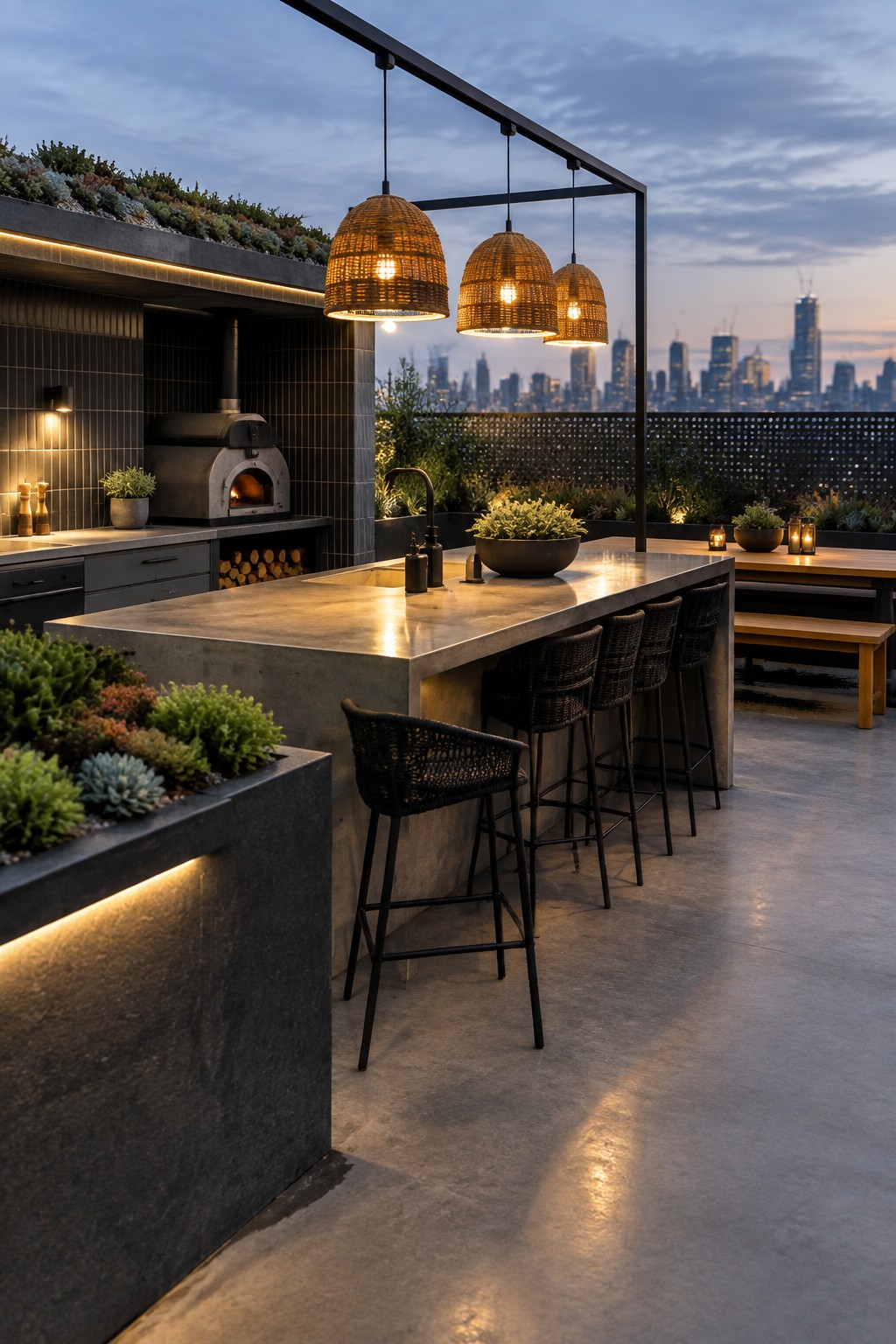
One simple way to add greenery to a roof deck is to build planters straight into the concrete edges of the kitchen island. The low profile keeps plants visible without taking up floor space or breaking the clean lines of the seating area.
This approach works best on rooftops where every inch counts. It lets you grow herbs or succulents right where you cook and gather, and the built-in structure stays neat even when the rest of the deck gets used hard.
Built-In Planters Along The Deck Edge
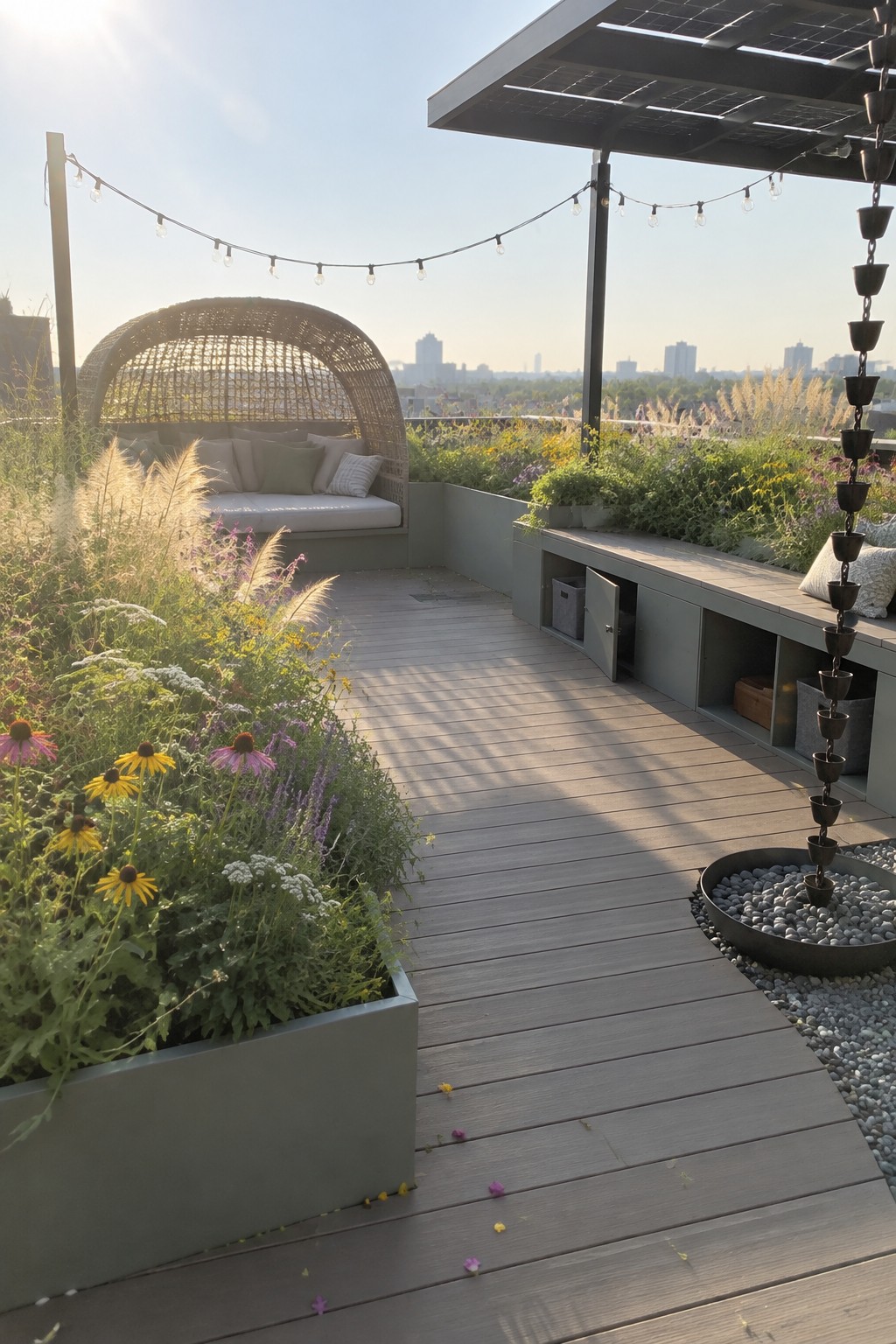
Built-in planters work well on roof decks because they keep the planting areas contained and give the whole space a settled look. Instead of moving pots around each season, the garden stays in place and the deck stays open for walking and sitting.
They suit homes with flat roof space or wide terraces where you can tie the planters into the flooring or benchwork. Match the material and height to the rest of the built-ins so the planters feel like part of the structure rather than added later.
Built-In Planters For A Clean Roof Look
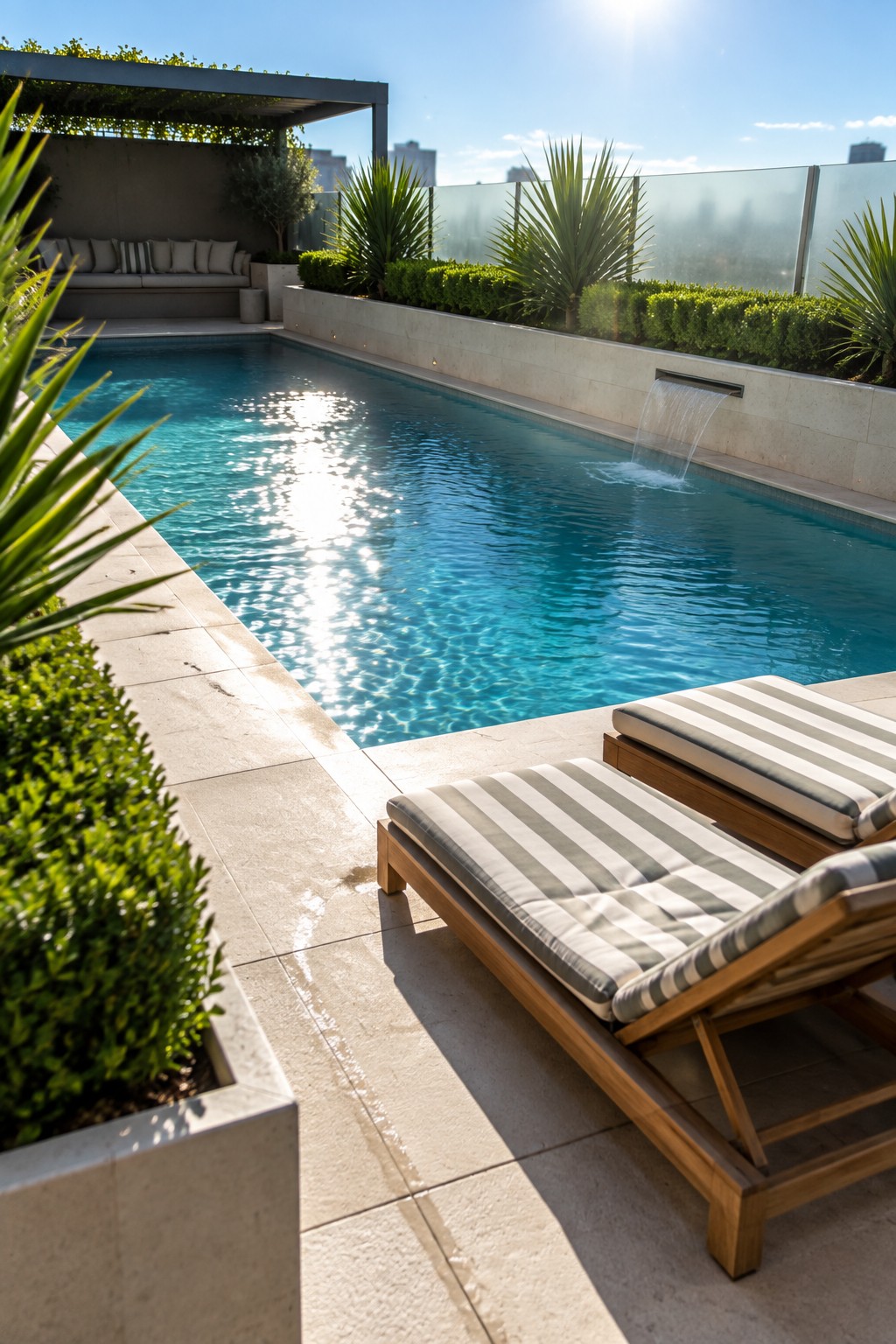
Built-in planters work well on roof terraces because they keep the planting low and contained instead of adding loose pots that can feel scattered. In this setup the long concrete edge along the pool creates a clear boundary while still leaving plenty of open deck space for chairs and walking.
This works best on flat modern roofs where you want greenery without visual clutter. Match the planter material to the flooring and keep the planting simple so the lines stay sharp and the area feels open rather than crowded.
Built-In Planters That Shape the Terrace
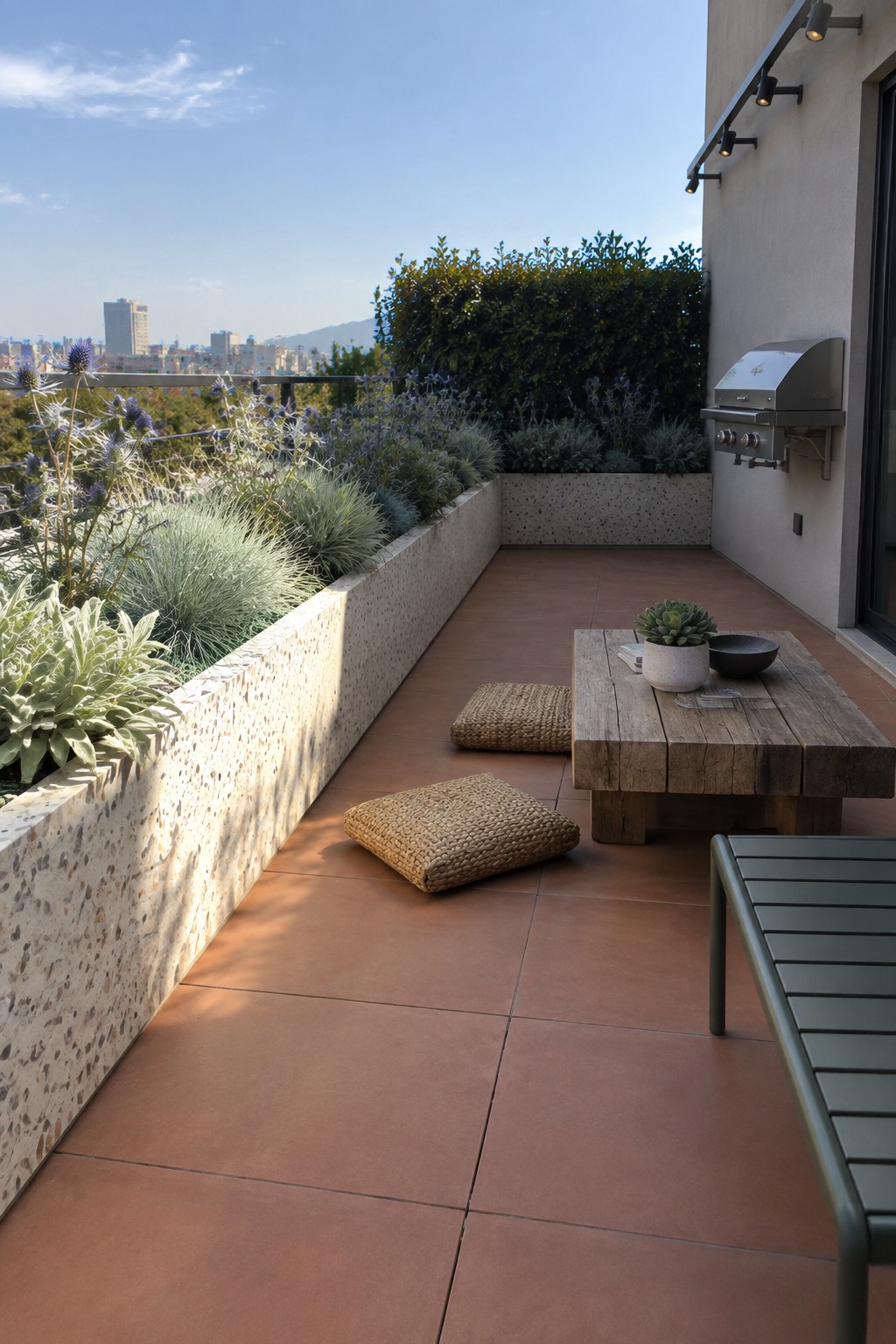
These long concrete planters run along the edge and give the roof garden a clear shape without extra borders or loose pots. The clean lines keep the planting from looking scattered while still leaving plenty of open floor space for seating and a table.
This approach works best on flat roof terraces where you want the plants to feel built into the structure. Keep the planters at a consistent height and width so the whole area stays simple and easy to maintain.
Built-In Planters That Define The Terrace
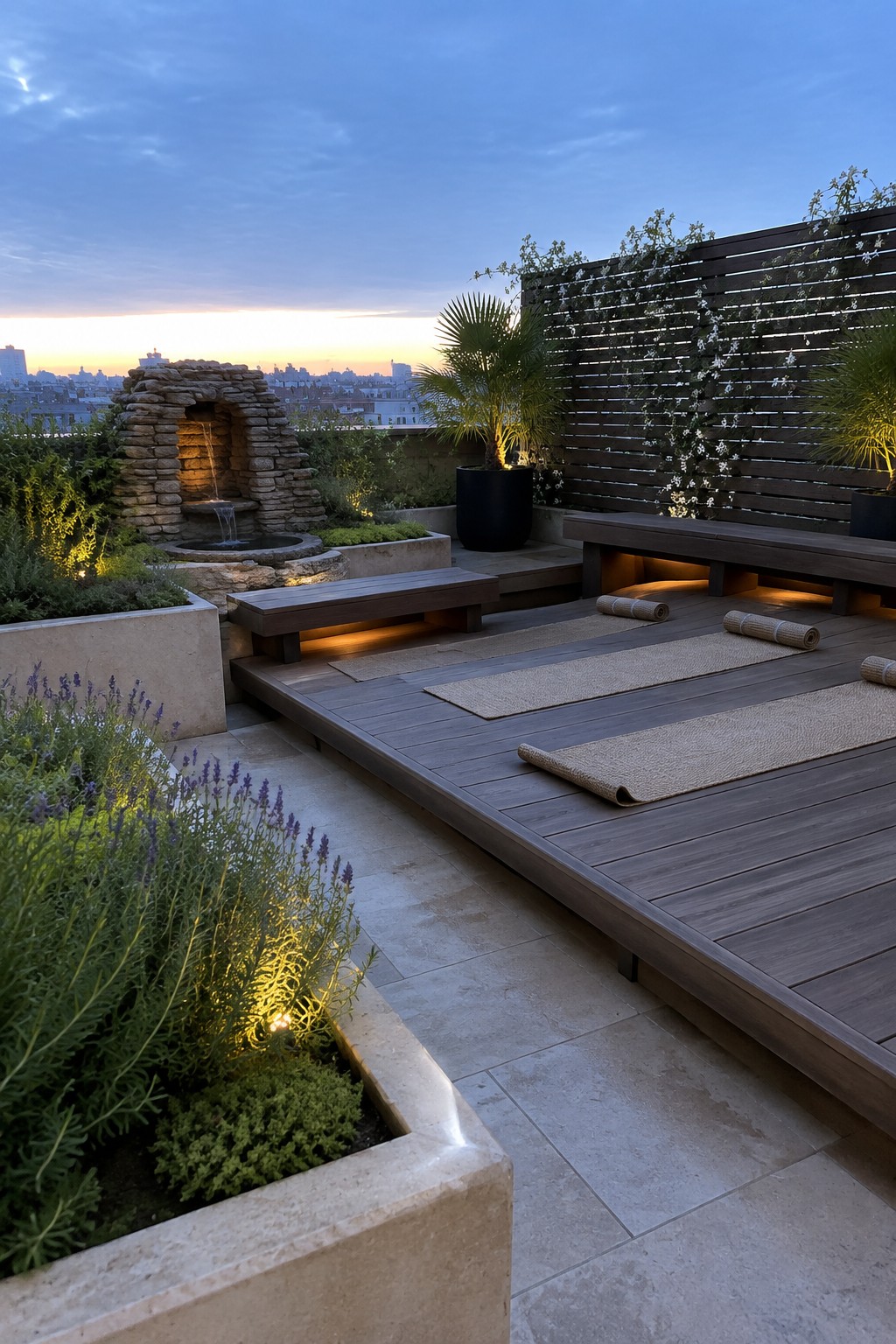
Built-in planters work well on a roof garden because they give the space clear edges without needing extra furniture or loose pots. The large concrete boxes in this setup sit right against the deck and hold bigger plants that stay put through the seasons. This keeps the floor open for seating or mats while still bringing in plenty of greenery.
They suit flat roof terraces on modern homes where you want low maintenance and a tidy look. Place them along the outer edges or around seating areas so the plants create a natural screen. Just make sure the planters have good drainage and match the deck height so everything feels connected.
Built-In Planters Shape The Space
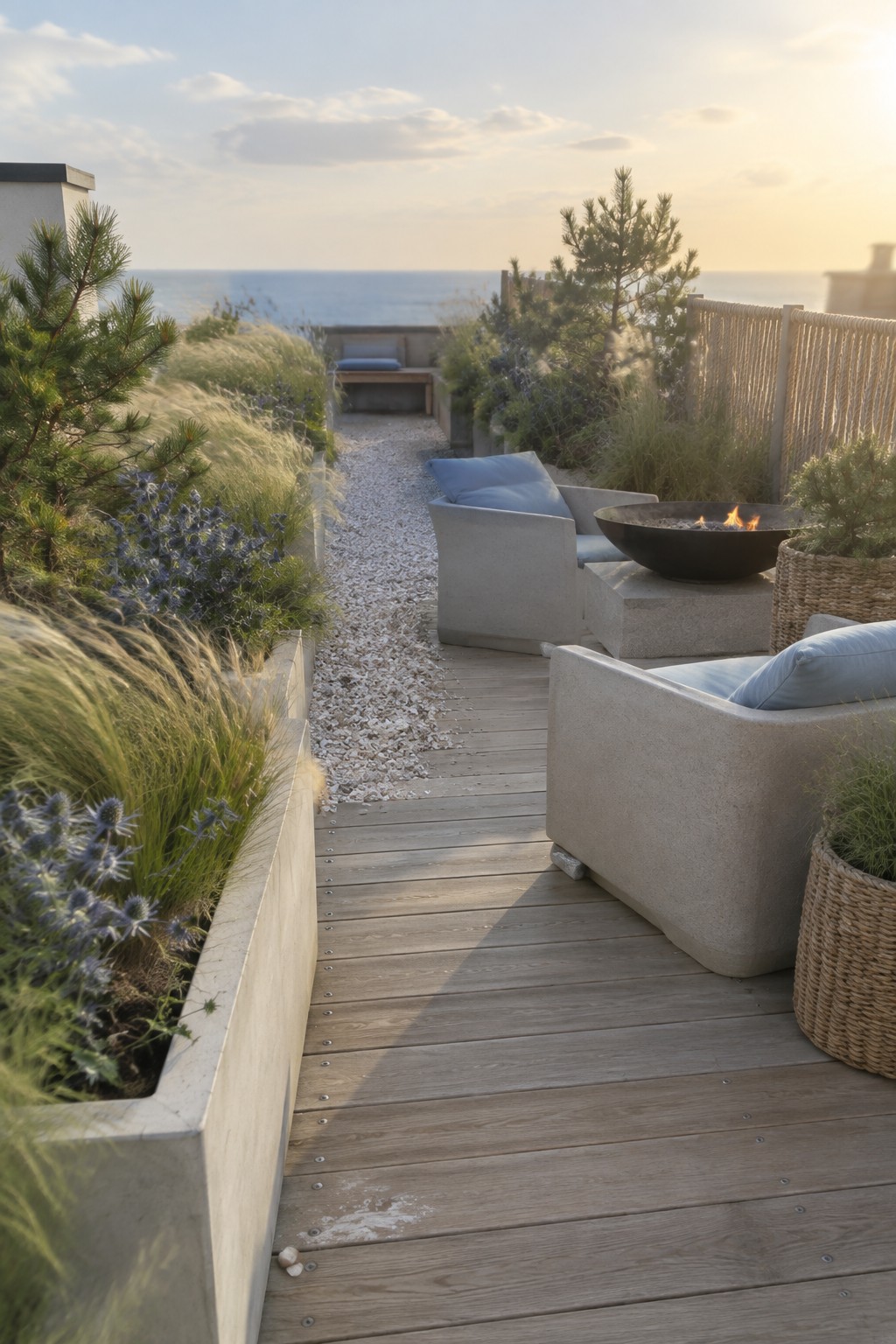
Built-in planters help a roof garden stay organized instead of turning into a collection of loose pots. The long concrete boxes run along the sides here and keep the planting contained while still leaving room for a clear path and seating.
This layout works best on flat roofs where the planters can be built into the structure from the start. Match the material to any low walls or seating so the space feels consistent, and make sure drainage is sorted before the plants go in.
Built-In Planters For A Compact Roof Terrace

Built-in planters work well on small roof terraces because they keep the greenery contained without eating into the usable floor space. The boxes sit along the edges and create a living border that feels intentional rather than scattered.
This setup suits city balconies where you want plants but still need room for a table and chairs. Choose simple rectangular boxes in a dark finish so the focus stays on the foliage rather than the structure itself.
Built-In Planters To Shape A Rooftop Dining Space
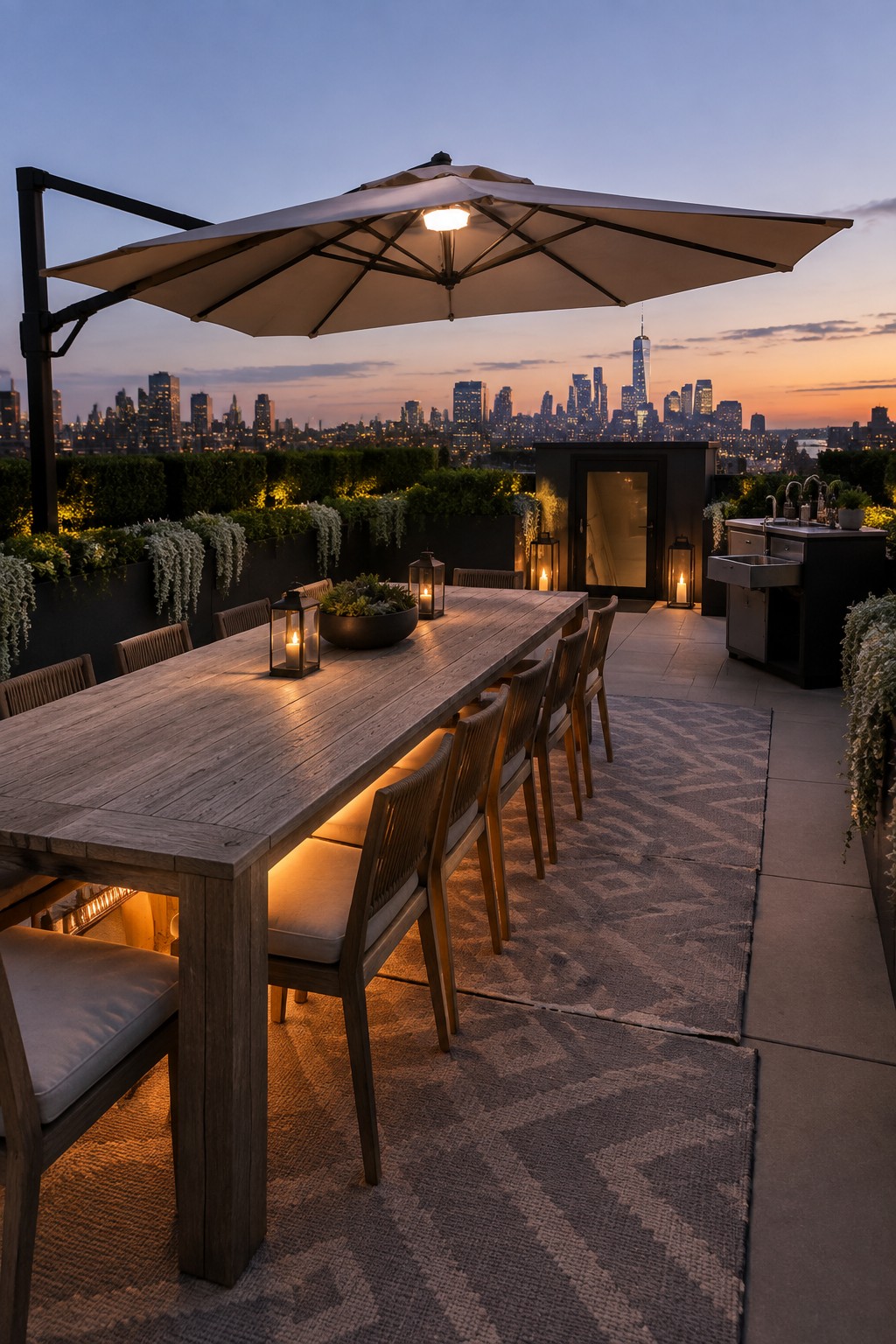
Built-in planters work especially well when you want to turn a flat roof into a real outdoor room. They give the space clear edges and let you bring in plants without adding separate pots or screens that might crowd the area.
This approach fits homes with open roof decks where you still want room for a big table and chairs. Keep the planter lines simple and match them to any nearby structures so the whole setup stays uncluttered and easy to maintain.
Built-In Planters Keep A Roof Garden Tidy

Built-in planters give a roof garden clear edges and keep everything looking organized. They work especially well when you want a simple layout that does not rely on lots of loose pots or scattered beds. The dark wood boxes hold the plants in place and let the gravel and stepping stones stay open for walking.
These planters suit flat roof spaces best because they sit low and blend right into the floor level. Use them along the sides or in corners to hold larger shrubs and trees while leaving room for a path down the middle. Just watch the weight and drainage before you build them in.
Built-In Planters To Shape A Modern Roof Garden

Built-in planters give a roof terrace a settled look because they stay fixed in place and create steady edges around the seating and walking areas. The straight lines keep the space from feeling scattered even when you add several different plants.
This setup works best on flat roofs where you want greenery without crowding the floor with pots. Use the same material for the planters and any low walls so everything reads as one clean structure rather than a collection of separate pieces.
Frequently Asked Questions
Q: How do I keep water from pooling and leaking through the roof with built-in planters? A: Start with a waterproof liner inside each planter and route the outlets to carry runoff straight to the drains. Slope the base slightly during installation so water moves out instead of sitting. Check the flow once a season to catch any clogs before they turn into problems.
Q: What plants stay looking sharp in clean-lined roof planters without constant trimming? A: Pick compact evergreens and ornamental grasses that grow in tidy shapes. These hold their form through wind and sun while filling the linear planters evenly. Water them deeply but less often so roots stay strong without extra bulk.
Q: Do these planters add too much weight for most rooftops? A: They add load, so run the design by a structural engineer before building. Lightweight soil blends and shallower depths keep the total down while still giving plants room to root. Many setups work fine once that check is done.
Q: How often do I really need to water a roof garden? A: Check the soil every few days since roofs dry out fast. A basic soaker hose on a timer handles most days without daily effort from you.
