

Narrow rooftops often end up underused because it is easy to overlook how the narrow width affects both planting depth and daily movement.
I learned this the hard way when an early attempt at my own place left the middle area too tight for comfortable use once the pots were filled in.
Paying attention to how the beds run along the edges and how a simple path connects them changes the whole feel of the space.
Vertical planting and modular containers turn out to be reliable ways to add greenery without crowding the floor area.
The ones that balance structure with access are the ones I keep coming back to.
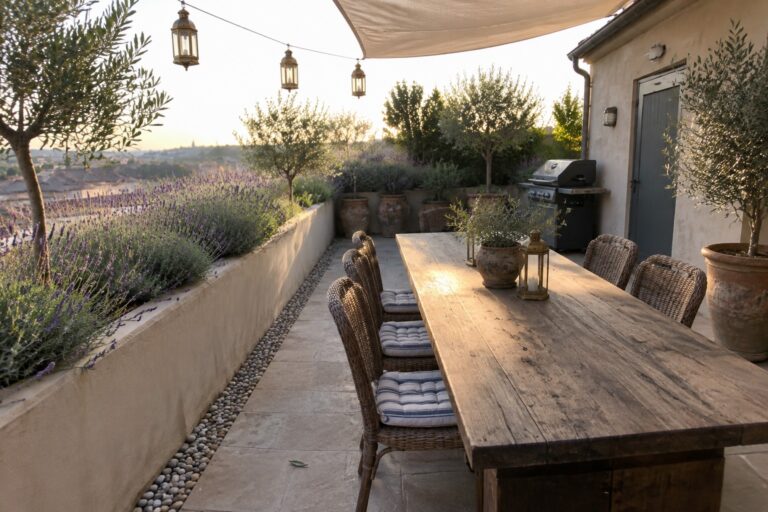
Run a Long Table Down the Length
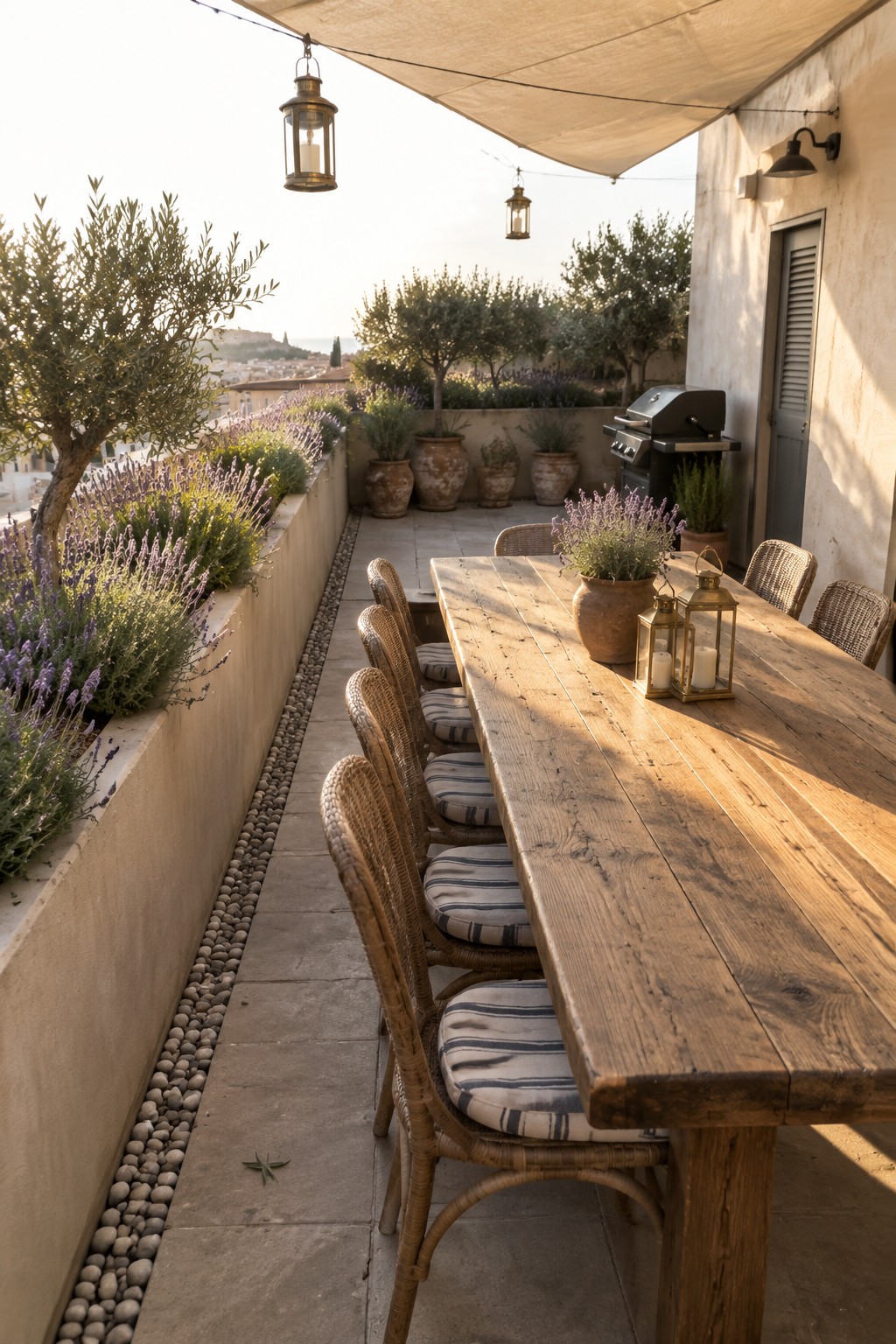
A long table makes good use of a narrow rooftop because it follows the shape of the space instead of fighting it. You get plenty of seating without eating up the limited width, and the setup still leaves room for plants along one side.
This works best on rooftops that are long and tight. Keep the table centered or slightly off to one side, add a raised planter with lavender or herbs right against the edge, and use simple chairs that tuck in close. It keeps the area open for walking while giving you a place to sit and eat.
Line One Edge with a Gravel Planting Strip
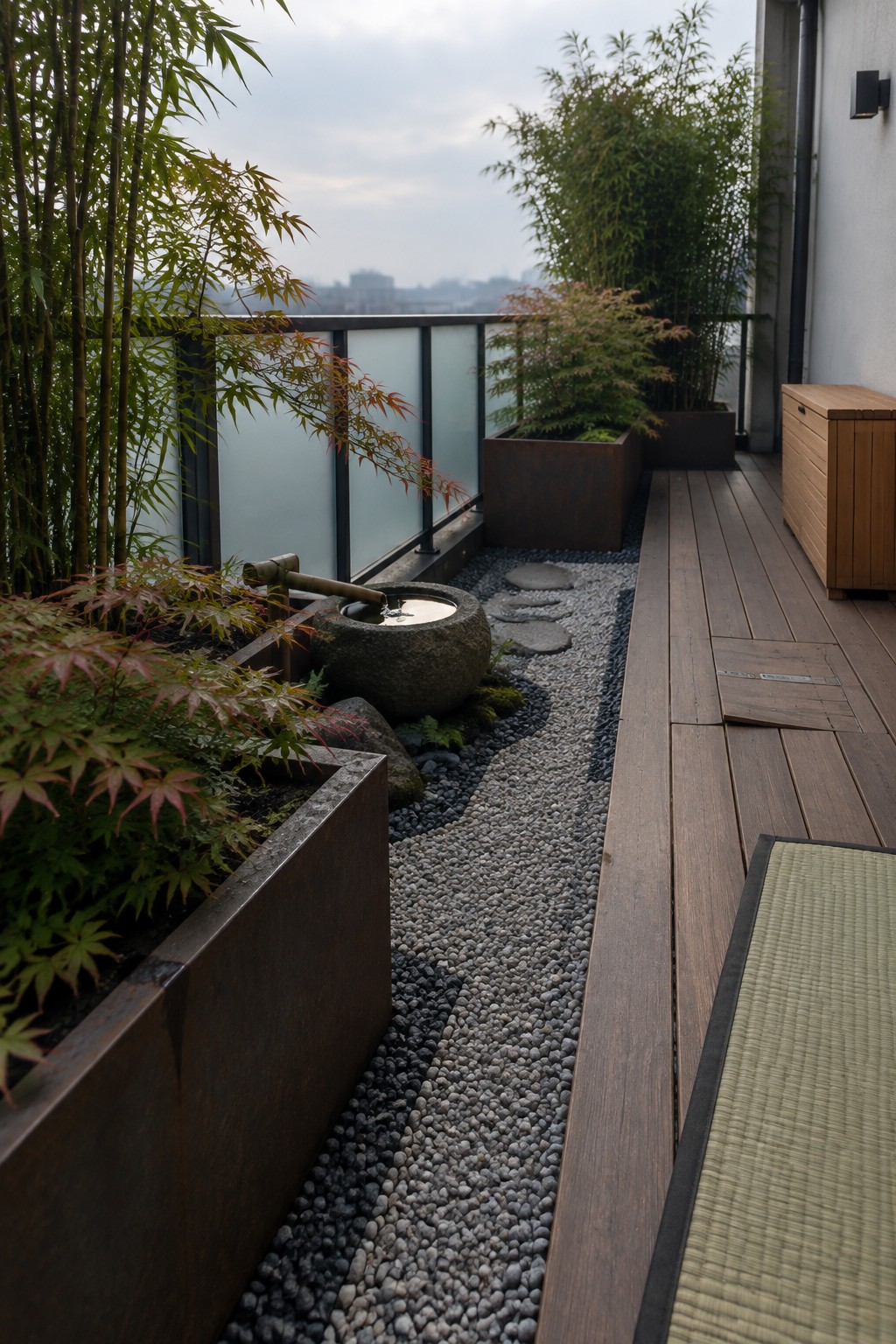
A narrow rooftop often feels cramped when you try to squeeze in both a deck and real planting. Running a gravel strip along one side gives you room for plants and a simple water feature without eating into the walking space. The gravel keeps things neat and drains well, while the low border keeps the deck clean.
This setup works best on long, skinny rooftops where you need a clear path. Keep the gravel bed about two to three feet wide, add a few stepping stones, and tuck in a stone basin if you want the sound of water. It suits city homes that already have decking but need more greenery without major construction.
Built-In Bench Seating Along One Side
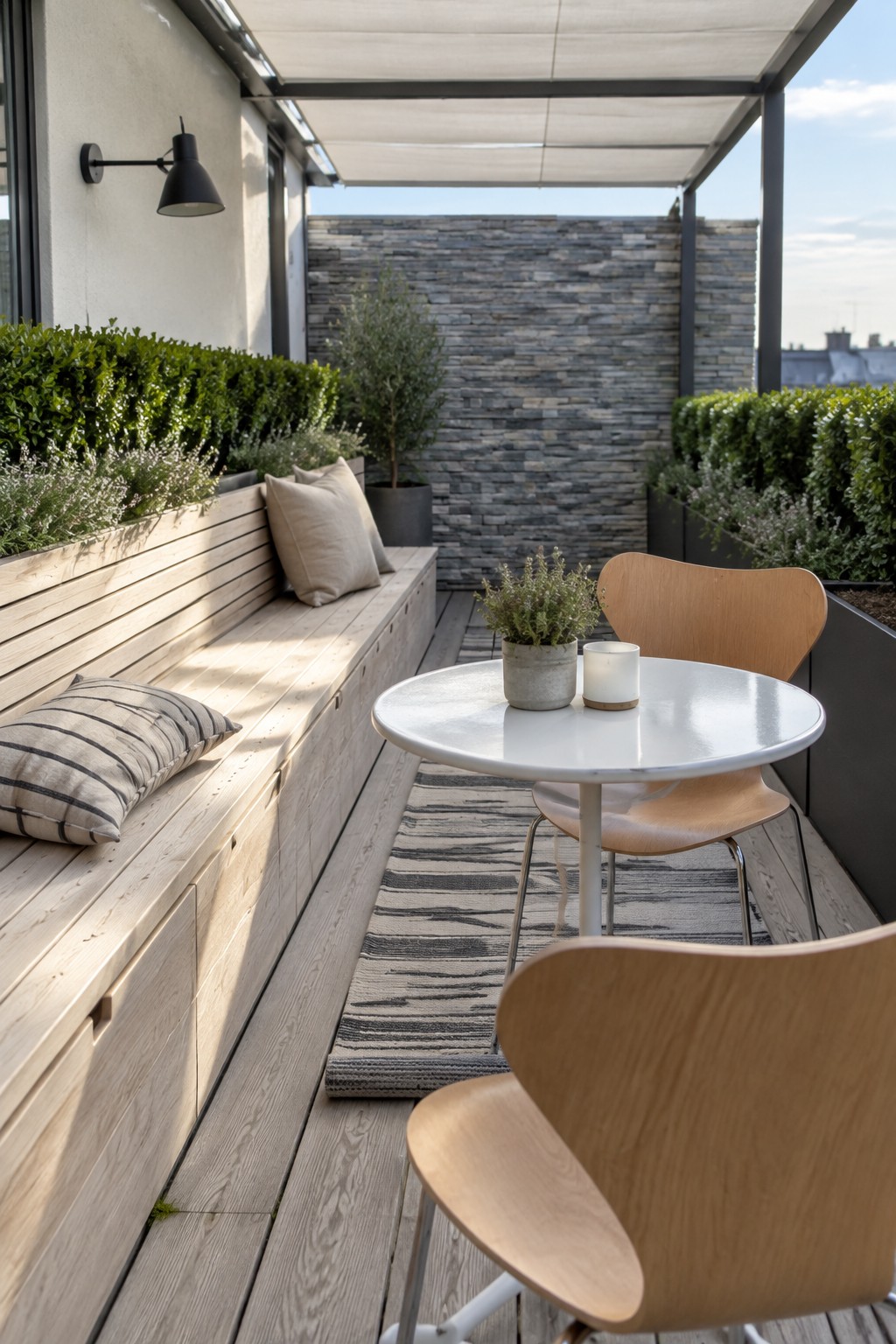
A built-in bench works well on narrow rooftops because it lines up against one wall and leaves the middle open for movement. It gives you steady seating without crowding the space with extra chairs or bulky furniture.
This layout suits long, tight rooftops where you need room to walk through. Choose a bench with a lift-up seat so you can store cushions and small items inside, and keep the top clear for plants or trays. The simple wood finish blends in without drawing attention.
Line the Sides with Raised Planters

Placing long planters along the edges works well on narrow rooftops because it packs in plenty of plants without eating up the middle space. The central path stays open for walking, and the greenery feels full rather than scattered. This layout turns a tight strip into something that actually feels like a garden instead of just a few pots pushed against a wall.
It suits urban rooftops where width is limited but length is available. Focus on sturdy containers that can handle soil weight and good drainage, and keep the path clear enough for easy movement. The side placement also helps with privacy and shade as the plants grow.
Raised Beds With A Stepping Stone Path
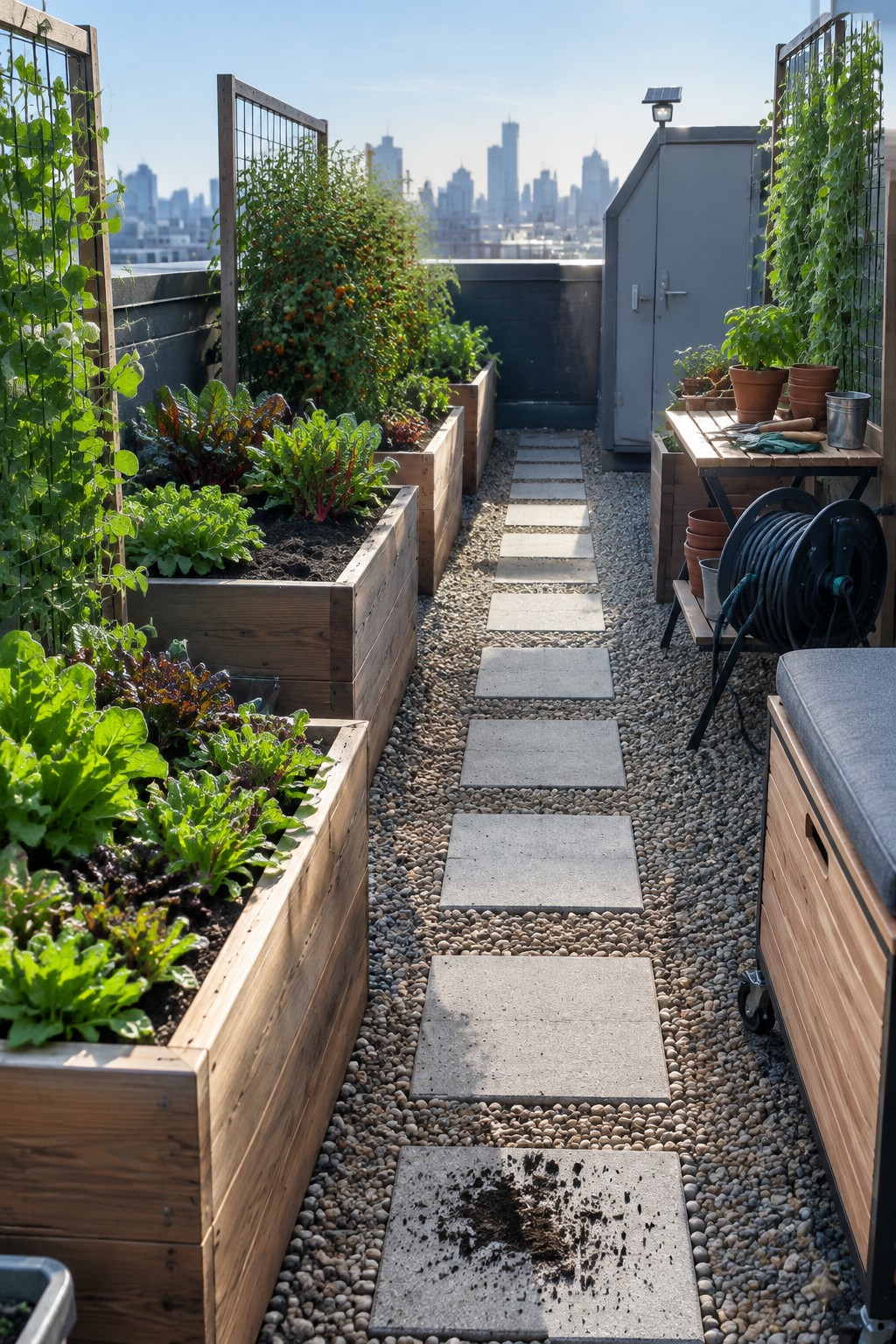
One practical way to use a narrow rooftop is to run raised beds along both sides and keep a simple path down the center. This setup gives you room to grow without crowding the walkway, and the gravel base helps water drain away from the building.
The layout works best on long, skinny rooftops where space is tight. Make the path wide enough to walk comfortably and reach both beds, and use durable materials that can handle foot traffic and weather.
Run a Water Channel Along One Side

A narrow rooftop often feels cramped when everything competes for the same floor space. Running a long, shallow water channel down one edge gives the area a clear boundary and adds a quiet sense of movement without eating into the walking path.
This layout works best when the opposite side holds simple seating and the center stays open. The water stays contained in a narrow trough, so it does not widen the overall footprint or create extra maintenance. Keep the channel shallow and line it with dark stone so it reads as part of the structure rather than an added feature.
Run Seating Along One Side
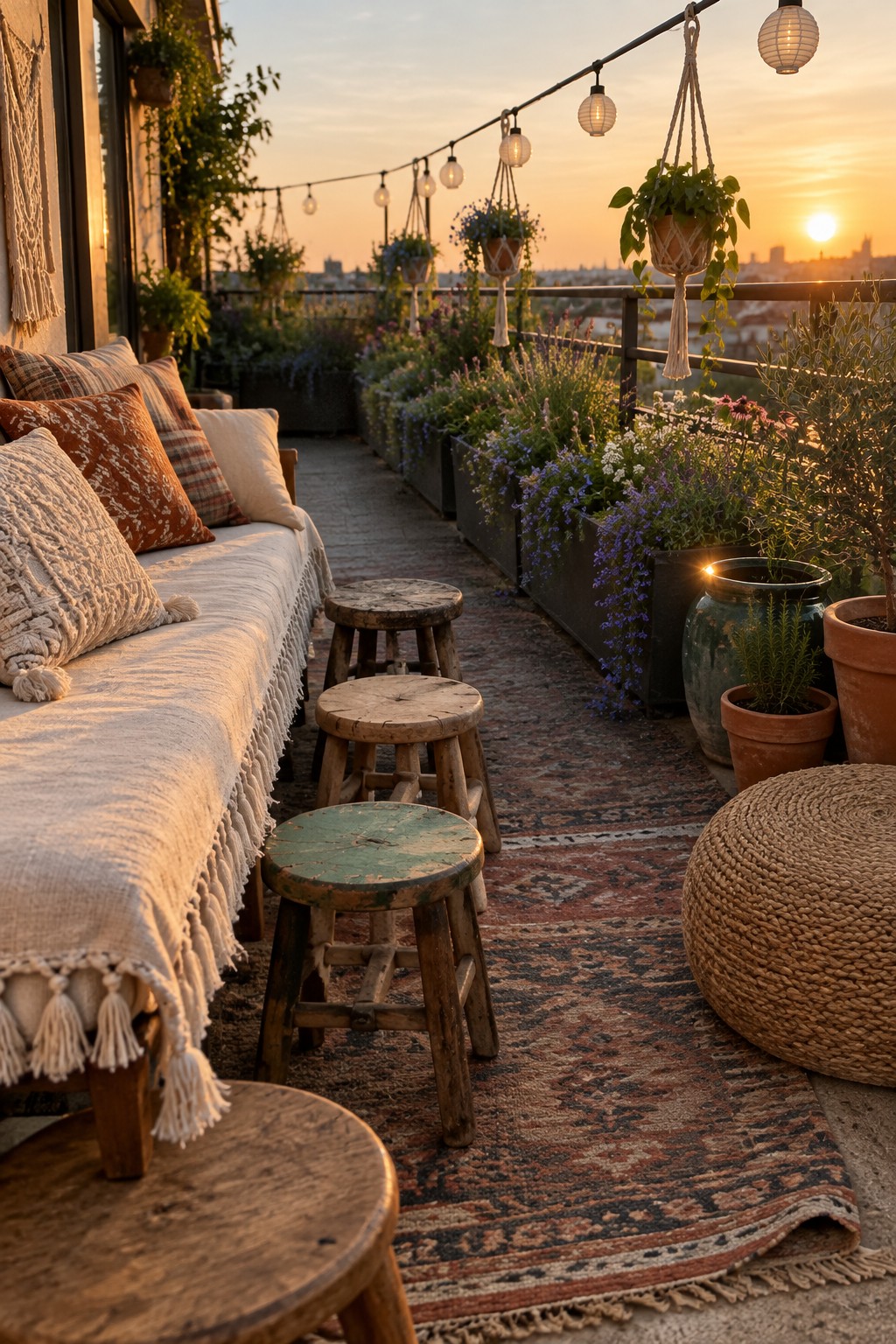
A long bench against the wall works well on narrow rooftops because it keeps the middle open and still gives people a place to sit. Low stools can be pulled in when needed and tucked back when they are not, so the space does not feel crowded.
This setup suits rooftops that are long and tight because everything stays close to the edge. Use a simple bench with a few cushions and add stools of different heights so the seating feels relaxed rather than fixed in place.
Built-In Seating Along One Side
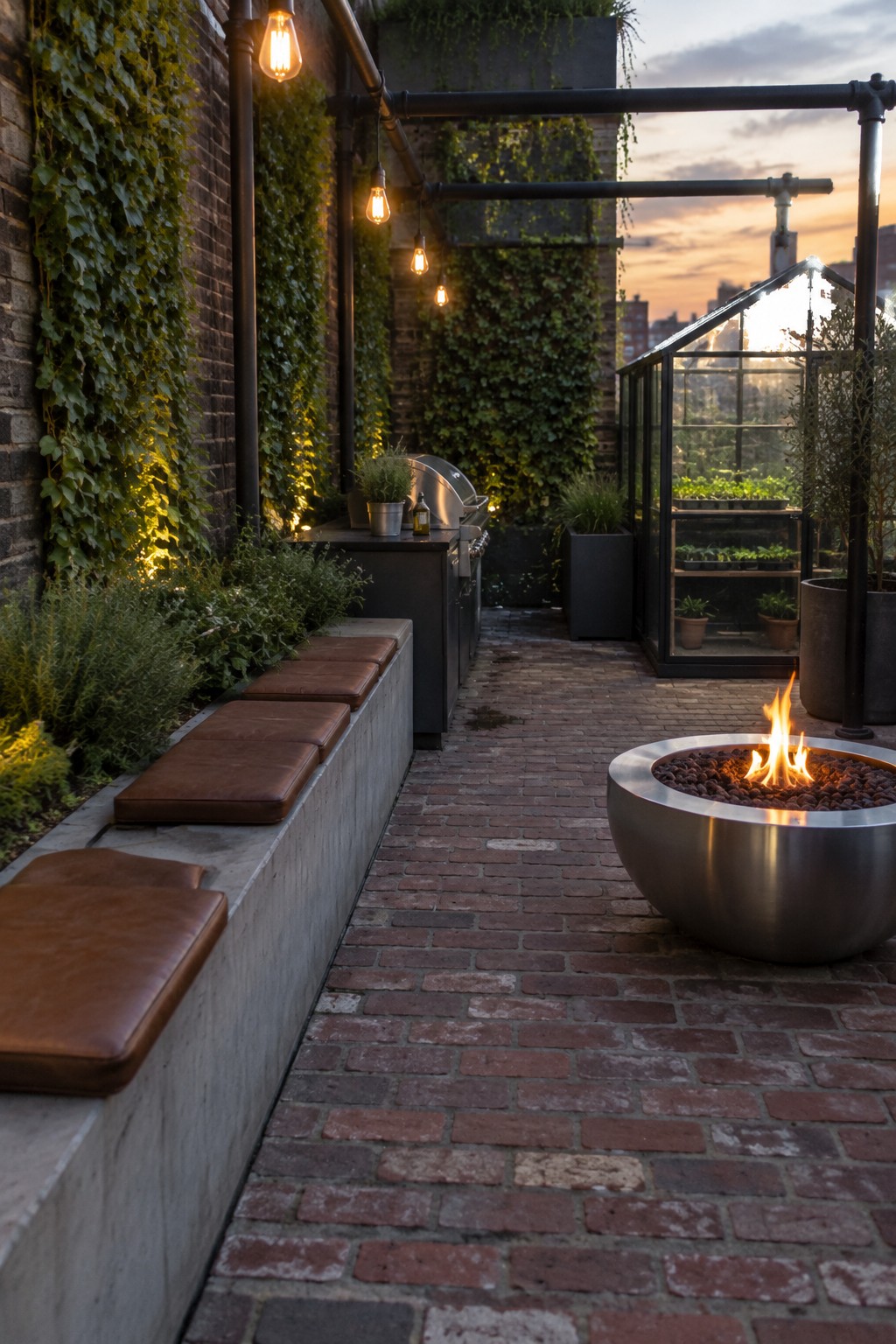
Running a built-in bench along one long wall helps keep a narrow rooftop usable instead of cramped. It turns the edge into seating without adding loose chairs that would block the path, and it leaves the center open for walking or placing a grill and fire pit.
This setup works best on rooftops that are long but tight in width. Use the same material for the bench and any planters so everything reads as one piece, and choose cushions that can handle weather if you want to leave them out year-round.
Built-In Benches Along Narrow Edges

Built-in benches make narrow rooftops feel more usable without crowding the floor space. They turn the edges into seating while keeping the middle open for movement. In this setup the benches also hold the planters, so the garden stays contained and the seating stays comfortable.
This approach works well on long, skinny decks where freestanding furniture would feel cramped. Keep the bench height low and the cushions simple so the view stays open. Make sure the planters have good drainage if you want low-maintenance plants year after year.
Line a Bench Along One Edge
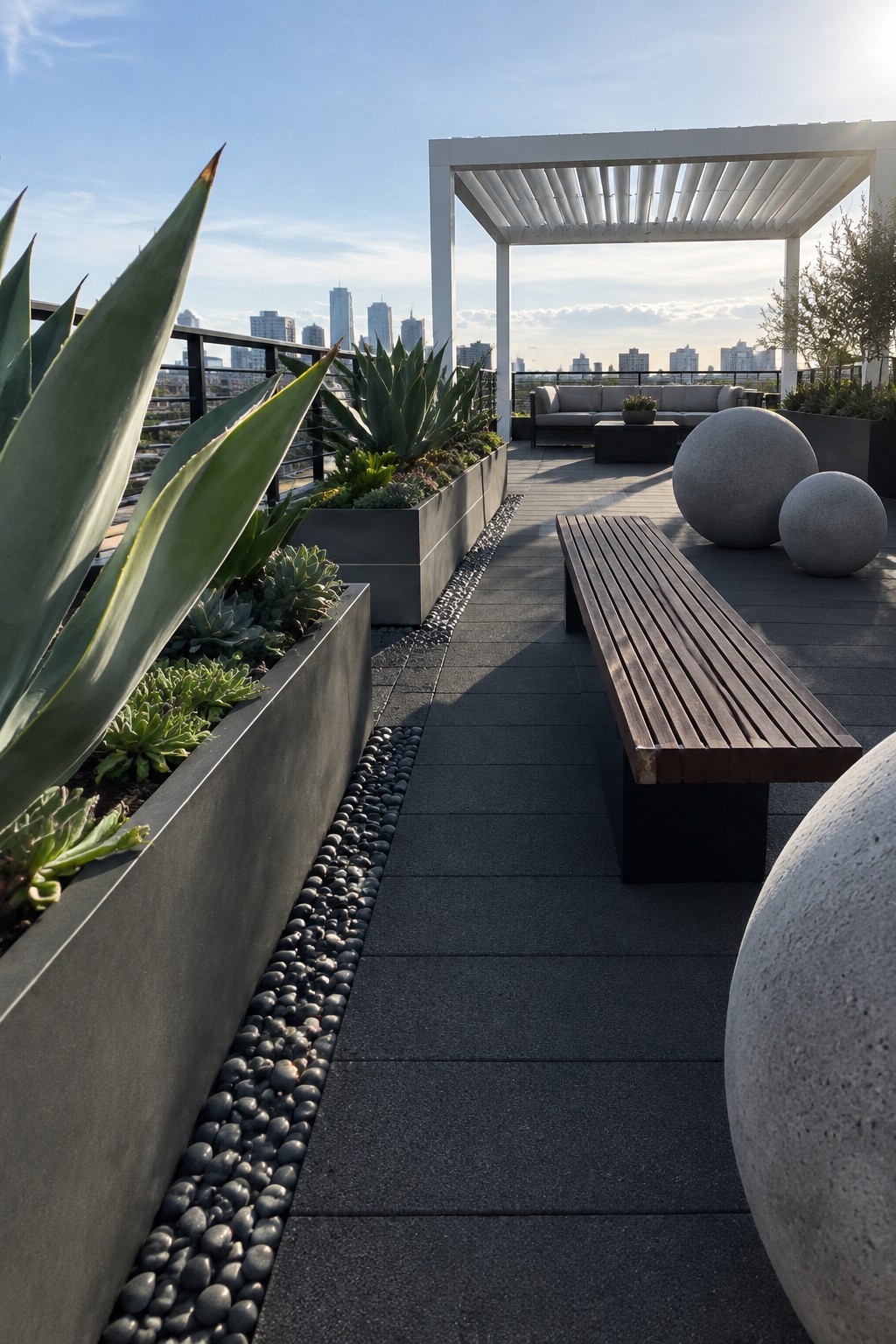
A long bench placed next to the planters keeps the middle of a narrow rooftop open for walking. It gives you plenty of seating while using only a small strip of space along one side.
This layout works best on rooftops that run long but stay tight in width. Keep the bench low and simple so it does not crowd the path or block the view.
Run the Pool Along One Edge

On a narrow rooftop, placing the pool tight against one side leaves a clear deck path beside it. This keeps the space from feeling chopped up and gives you room to walk or sit without stepping over anything.
The layout works best on long, skinny terraces where width is the main limit. Use simple wood decking next to the pool and add just a couple of loungers where the paving widens slightly. Make sure the edge between water and deck drains well so the wood stays dry.
Use Wall Pockets Above A Raised Bed
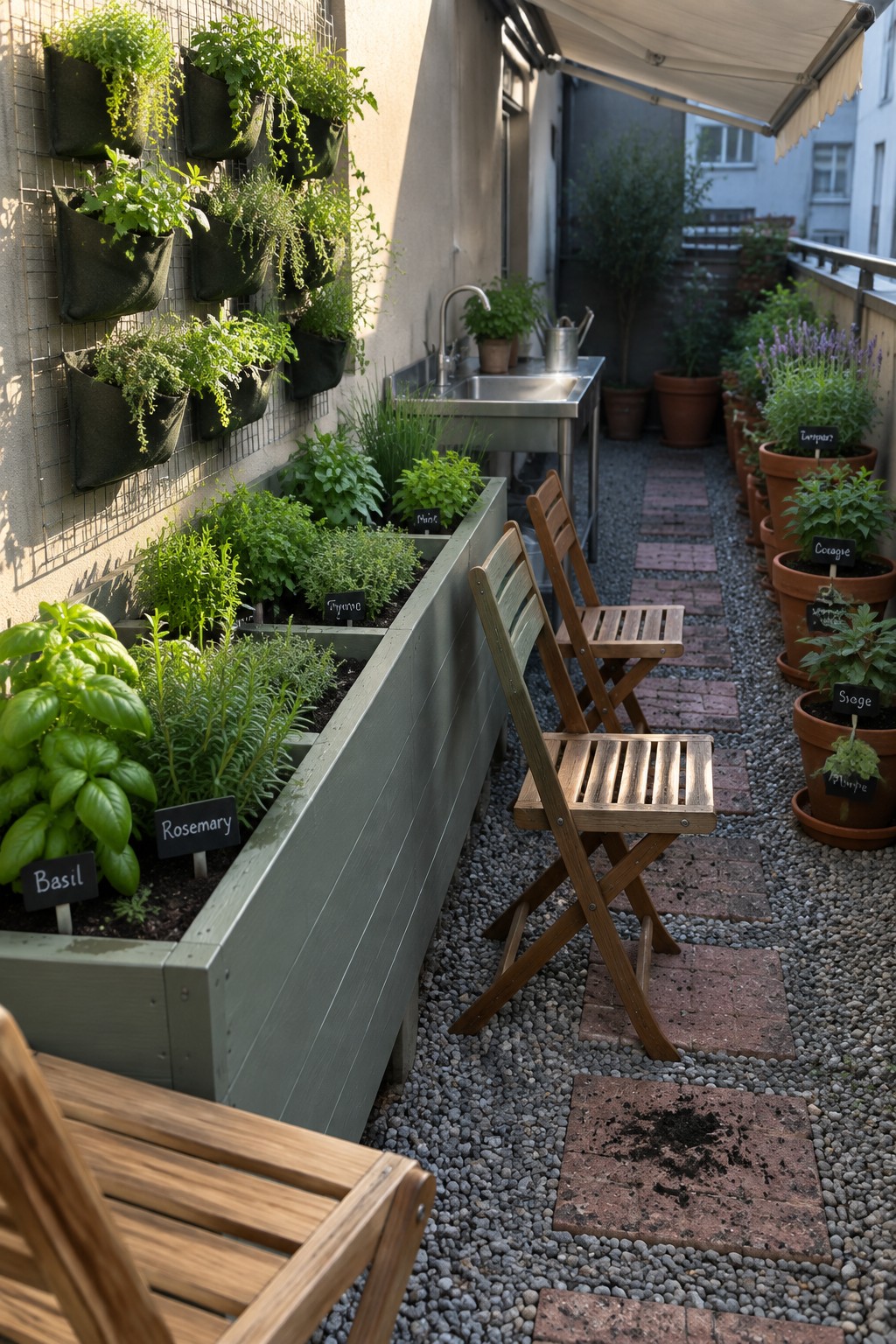
A wall grid with fabric pockets lets you grow more in a narrow rooftop without crowding the floor. The raised bed below handles larger plants while the pockets above take herbs and smaller greens that would otherwise need extra ground space.
This setup works well on rooftops that run long and thin. Keep the bed about two feet deep so you still have room to walk and place a couple of chairs or a small sink along the opposite side.
Create a Winding Path in a Narrow Roof Garden
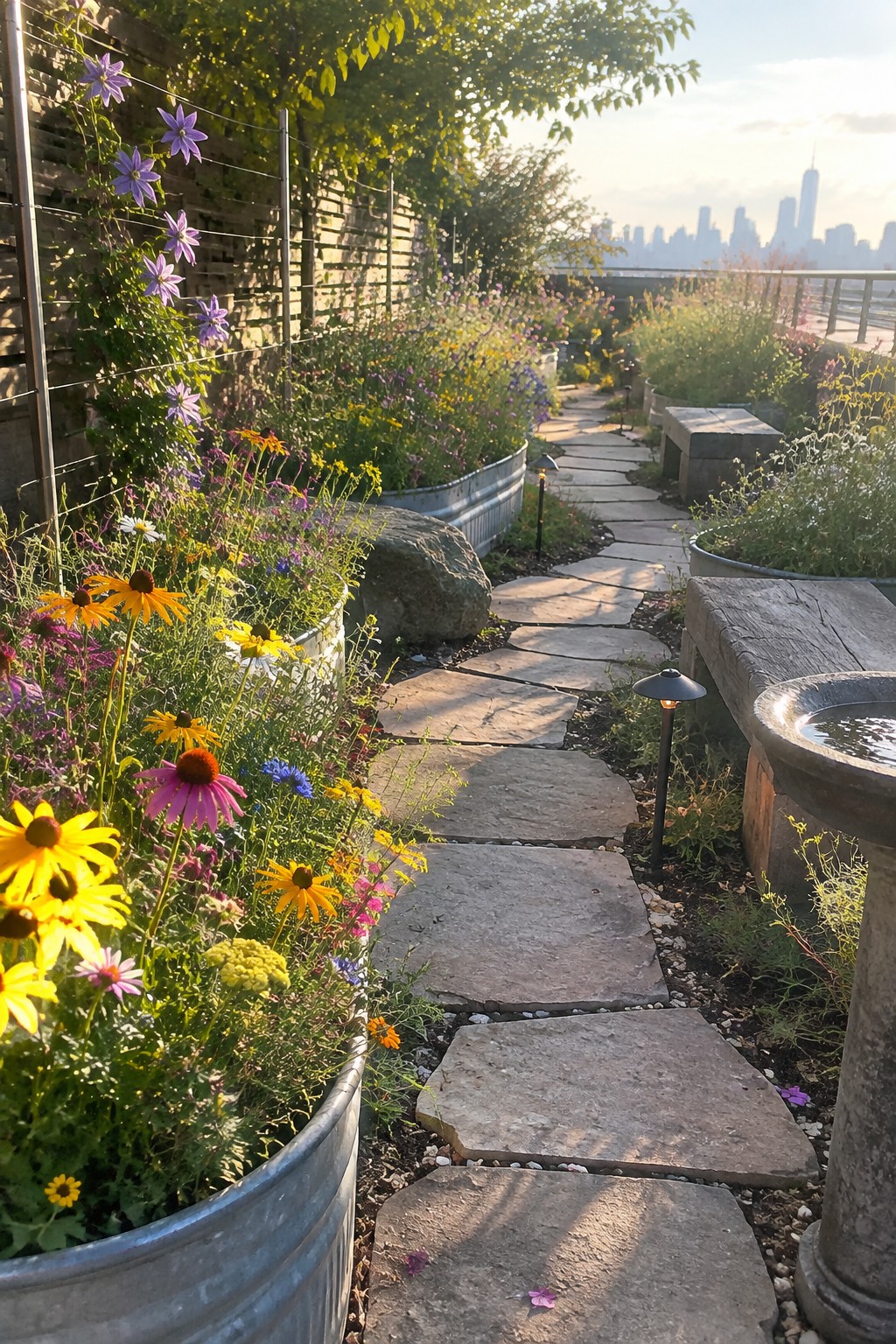
A stone path gives a small rooftop garden a clear sense of direction. It breaks up the space without crowding it and lets plants sit close on both sides.
This layout works well on narrow rooftops because the path can curve gently between containers and beds. Stick to simple flat stones and keep the planting loose so the walkway stays easy to follow.
Train Fruit Trees on a Wall Trellis
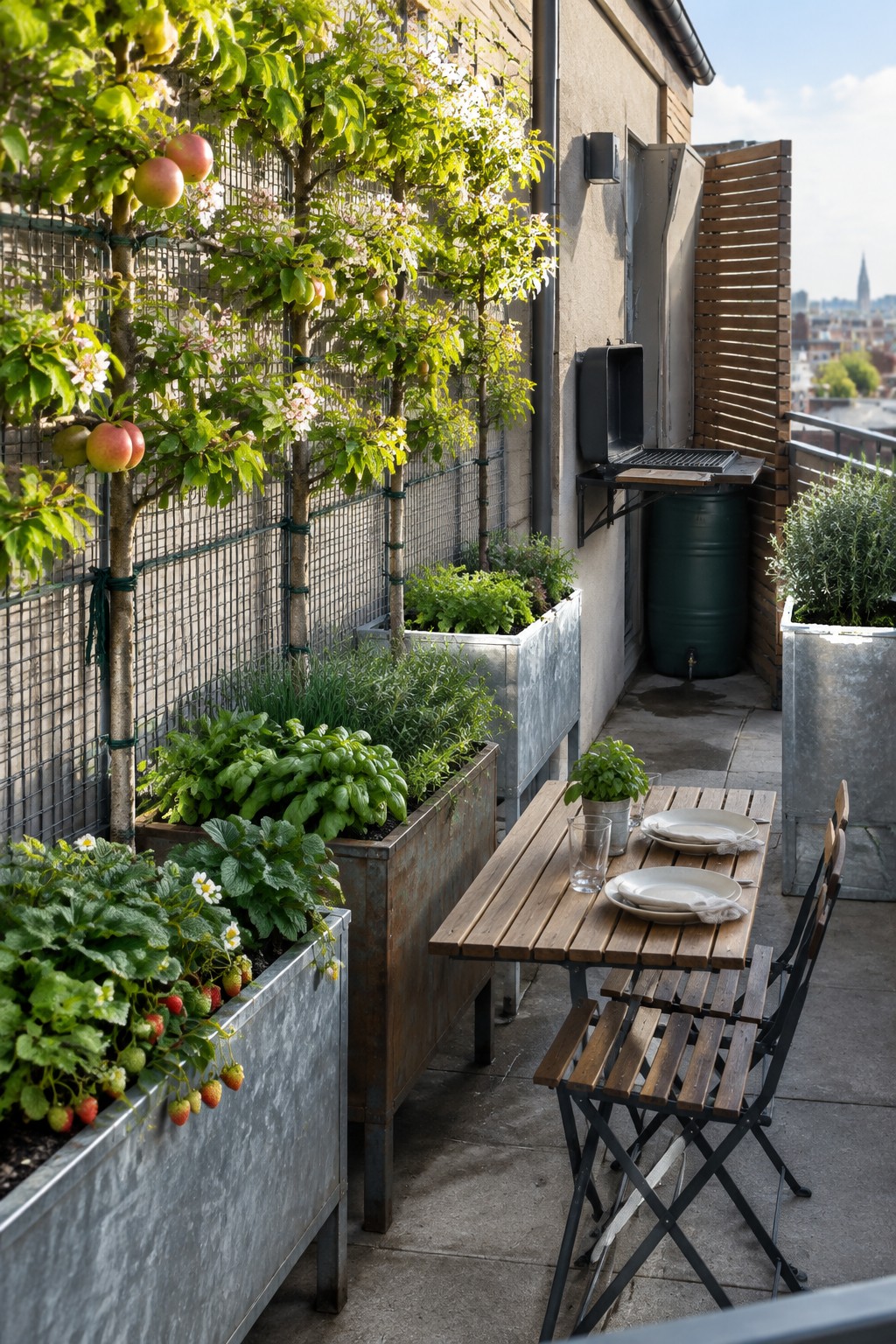
Narrow rooftops often feel cramped once you add seating, so training trees flat against the wall helps a lot. It brings in height and some fruit without eating up floor space that you need for walking or dining.
This setup works best when you keep the planters low and sturdy along the edge. Tie the branches early so they stay flat, and leave the center clear for a table. It suits small city roofs where you still want real plants but cannot spread out.
Alternate Wood And Grass For The Walkway
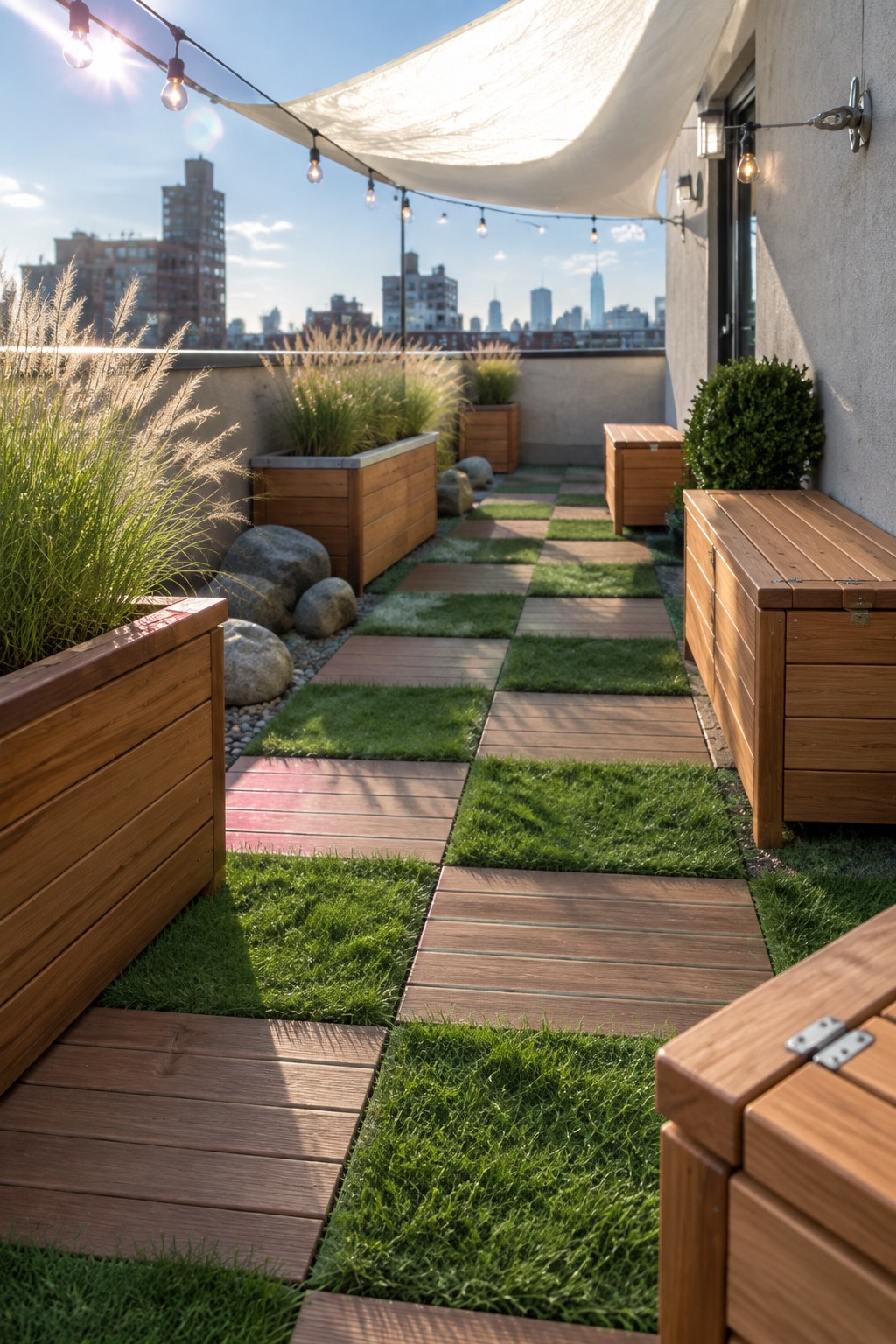
A simple alternating path works well on narrow rooftops because it keeps the center open while still adding texture underfoot. The mix of wood planks and grass panels breaks up the length without needing extra width or complex patterns. It also helps with drainage and makes the space feel more like a real garden instead of just a deck.
This layout suits rooftops that are long and tight, where you need room to walk and still fit planters or seating on the sides. Keep the path straight and about three to four feet wide so it stays practical. Use weather-treated materials so the sections hold up over time.
Run Rugs Lengthwise to Guide Movement

Placing rugs end to end along a narrow rooftop helps turn a tight strip of decking into something that feels like a real walkway. The rugs break up the long wood surface and give people a clear sense of where to step and where to pause without crowding the edges.
This works best on rooftops that are only a few meters wide. Keep the rugs the same width or slightly narrower than the open floor space, and leave room on both sides for planters or low seating. It keeps the layout simple and makes the area feel longer rather than chopped up.
Built-In Planters Along Narrow Edges

One simple way to make a narrow rooftop feel more usable is to build planters straight into the seating. This keeps the floor clear for walking while still giving you room for plants and a place to sit without adding extra furniture.
It suits tight urban rooftops especially well. Use the same wood for the planters and the bench frames so everything reads as one piece, and pick plants that stay fairly upright so they do not crowd the path.
Frequently Asked Questions
Q: Will adding seating make my narrow rooftop feel cramped with all the plants? A: Tuck a narrow bench against the wall and leave the center open for pots. This keeps paths clear so you can reach everything easily. You still get a spot to sit without turning the whole area into an obstacle course.
Q: How do I keep pots from tipping in strong rooftop winds? A: Set heavier containers along the edges and cluster lighter ones behind them. The group shields each other and stays put better than scattered singles. Skip tall stands that catch the breeze.
Q: What if the soil dries out fast under all that sun? A: Water in the early morning so roots soak it up before the heat hits. Add a thin layer of mulch on top to hold moisture longer. Check the pots every couple days instead of following a fixed schedule.
