

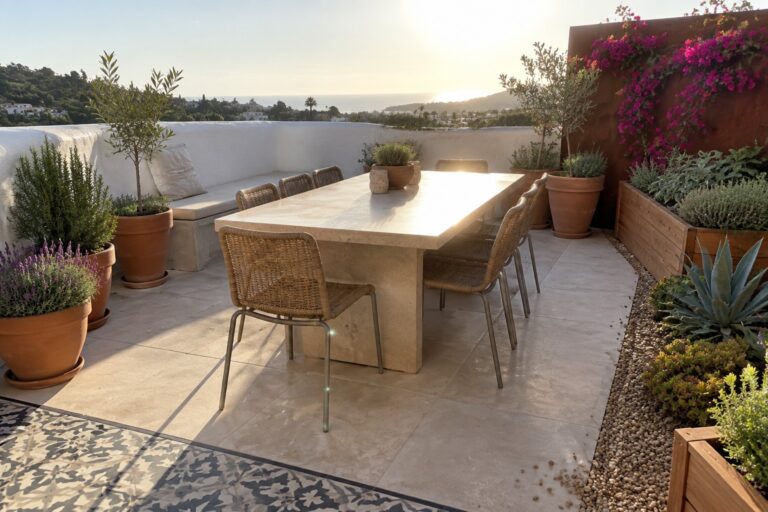
Rooftop gardens always seemed tricky to me because the heat can turn even a promising setup into something no one wants to use after a few hours.
I have seen plenty of terraces that started out looking promising but ended up baking under direct sun without enough tough plants to hold their own.
Choosing heat-tolerant varieties changes how the space holds up over time.
That single choice often determines whether the area stays comfortable or becomes something you avoid.
Over the years I have learned to focus first on plants that can handle the exposure before worrying about layout details.
Combine Raised Beds and Pots on Sunny Rooftops
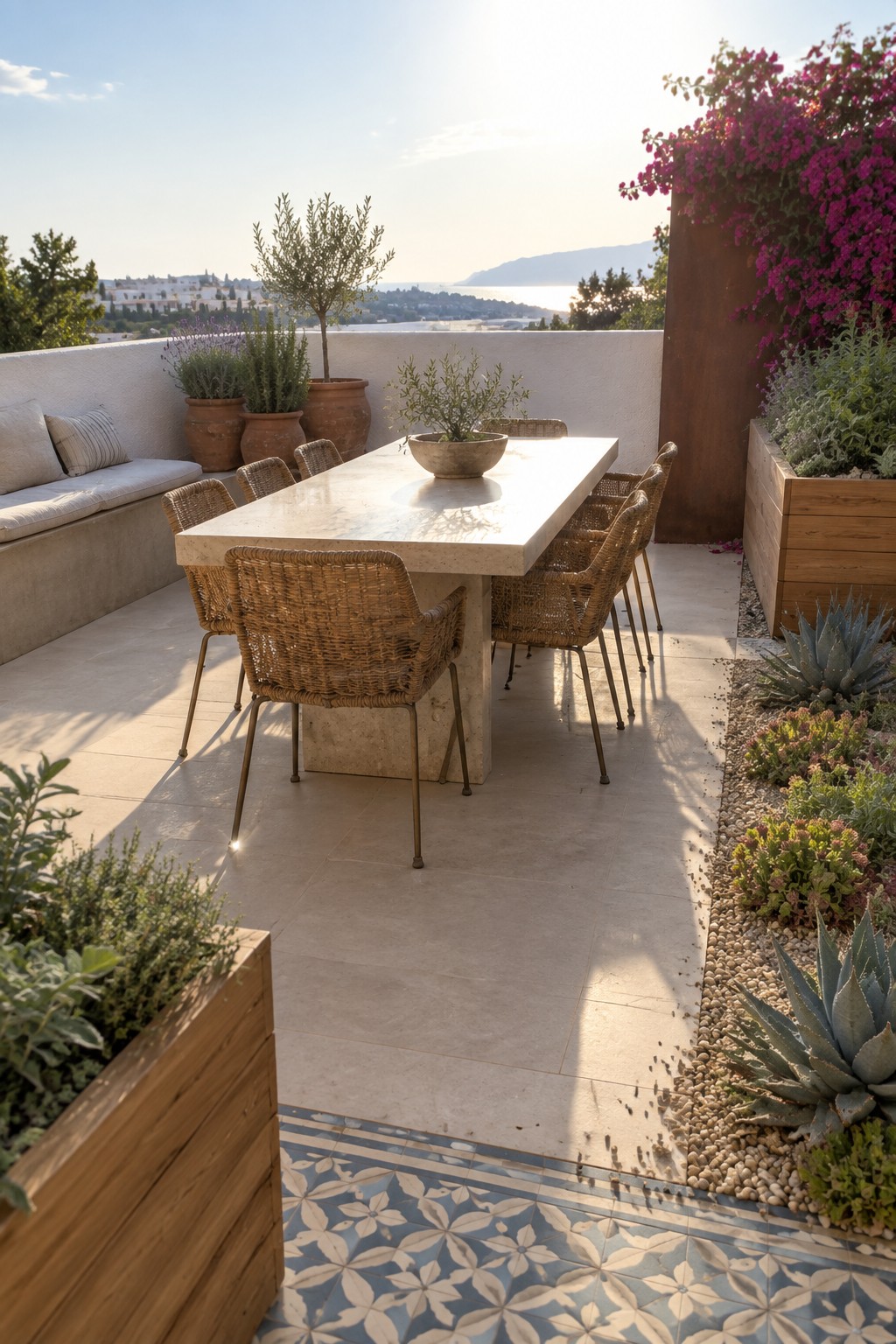
Raised beds and large pots work well together on a full-sun rooftop because they let you add plenty of plants without covering every inch of floor space. The beds give you room for bigger shrubs and succulents while the pots can be moved around as needed, which keeps the setup flexible when the sun shifts or when you want to rearrange seating.
This approach suits rooftops that already have a hard surface since the beds can sit on top and the pots need little soil depth. Choose heat-tolerant plants like agaves, lavender, and olive trees so they stay healthy with less watering. Just make sure the beds have good drainage and the pots are not too small for the sun exposure.
Run a Narrow Water Channel Down the Deck
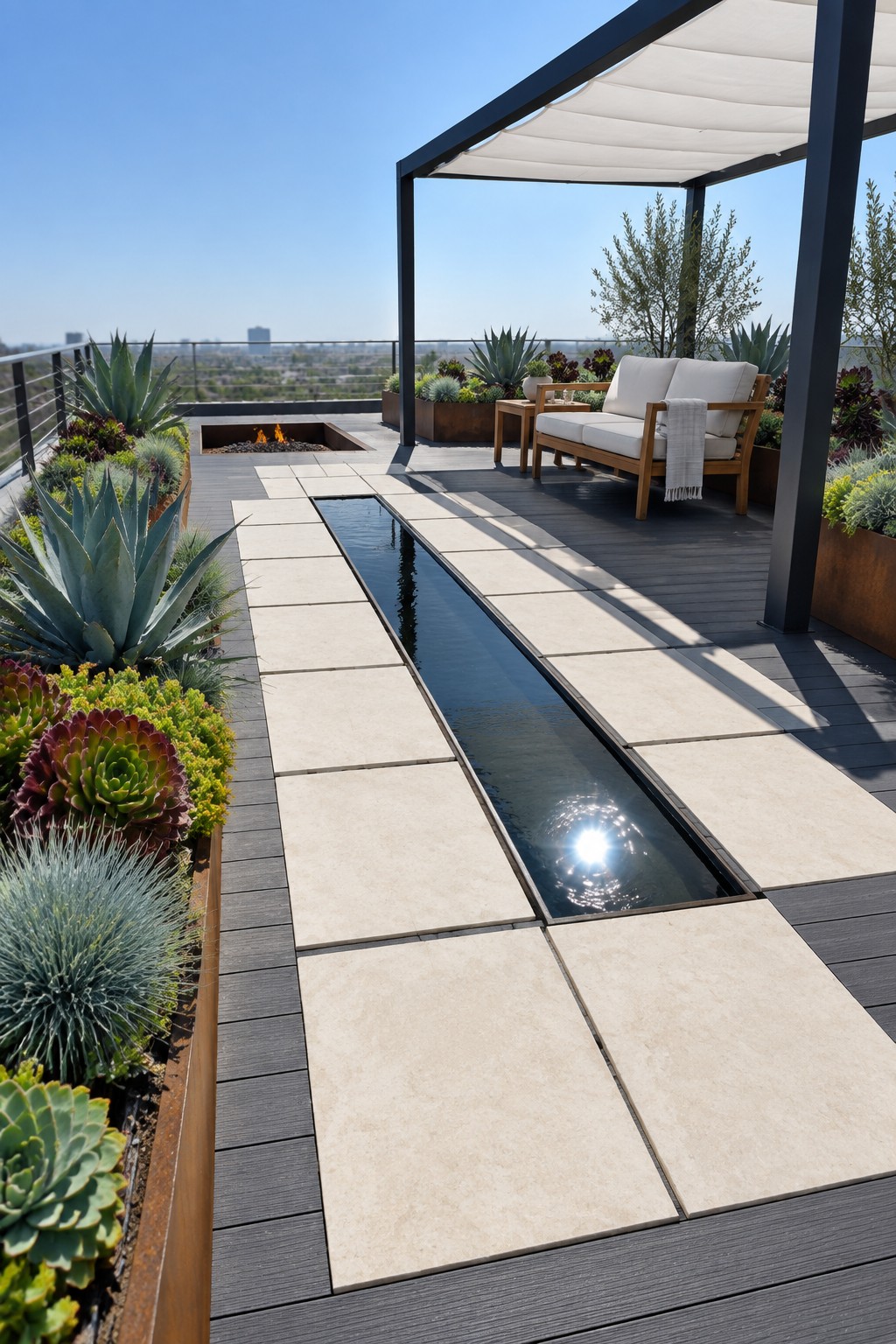
A long, slim water feature can break up a large rooftop deck and give the eye something cool to follow on hot days. It works especially well when the rest of the surface stays simple, so the water stands out without crowding the space. The straight lines also help keep the whole area feeling organized even when you add plenty of plants around the edges.
This layout suits flat roofs that get full sun and need a bit of relief from the heat. Keep the channel narrow so it does not eat up walking room, and use the same decking material on both sides for a clean look. Metal planters filled with succulents and agaves hold up well beside it and add the greenery without extra irrigation demands.
Surround a Daybed with Potted Plants
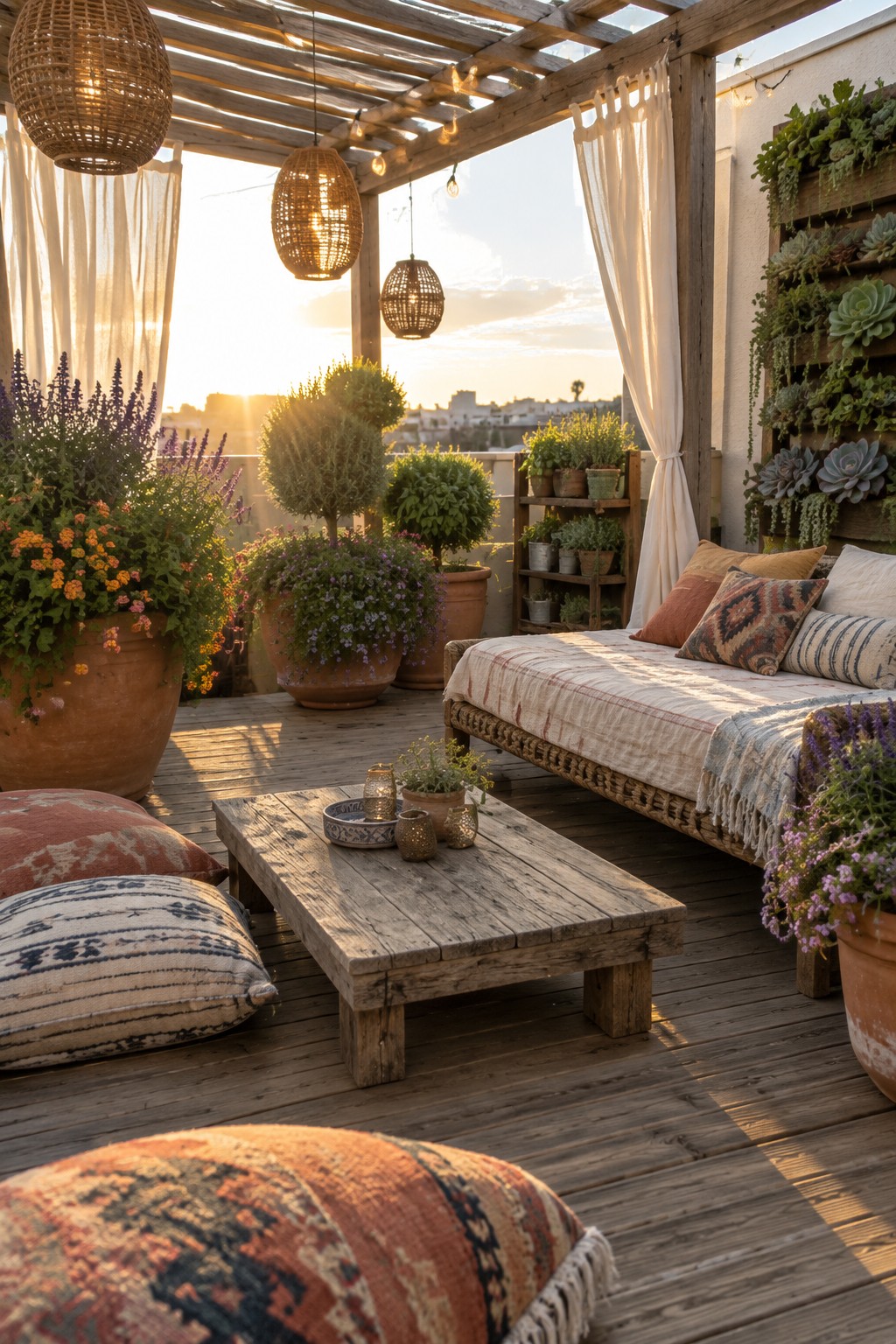
A daybed tucked among large pots turns an empty rooftop into a place you actually want to spend time. The plants give a bit of privacy and soften all the hard surfaces, while the low seating keeps everything feeling relaxed instead of formal. Terracotta pots work especially well here because they handle heat and look at home with wood decking.
This setup suits rooftops that get full sun all day, since you can choose heat-tolerant plants like succulents, lavender, and marigolds that thrive in containers. Keep the daybed simple and low so it does not block views or take up too much space. Make sure the pots are large enough to hold moisture through hot afternoons.
Stepping Stone Paths Through Gravel
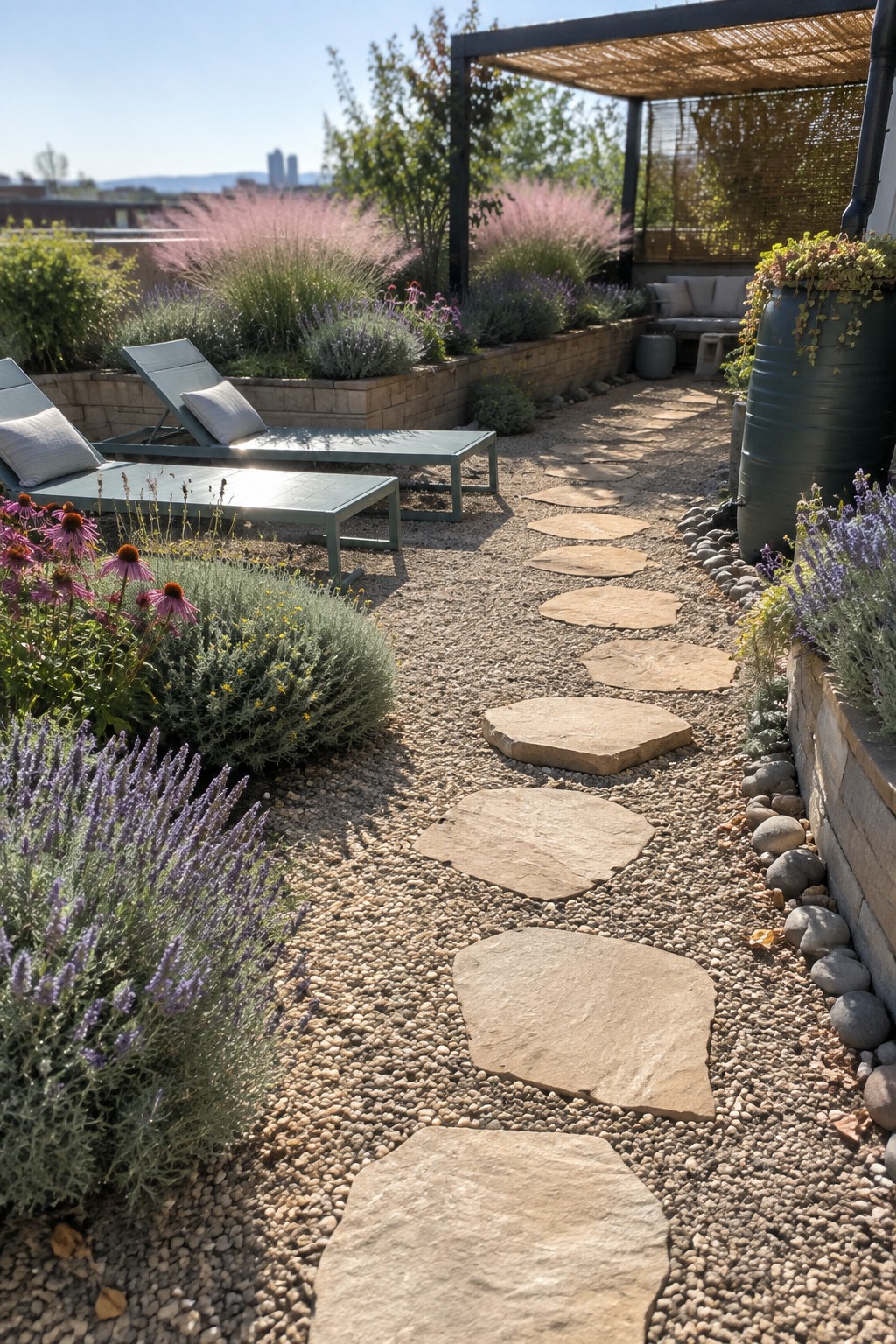
A path of flat stones set into gravel makes it easy to walk through a roof garden without stepping on the plants. This setup works well when you want to keep the ground loose and well drained, which matters on rooftops where soil dries out quickly in full sun.
You can use this layout on any sunny terrace. Place the stones at a comfortable stride and let heat-tolerant perennials and grasses grow along the edges. The gravel helps with runoff and keeps the beds from looking too formal.
Use Raised Planters to Define Rooftop Zones
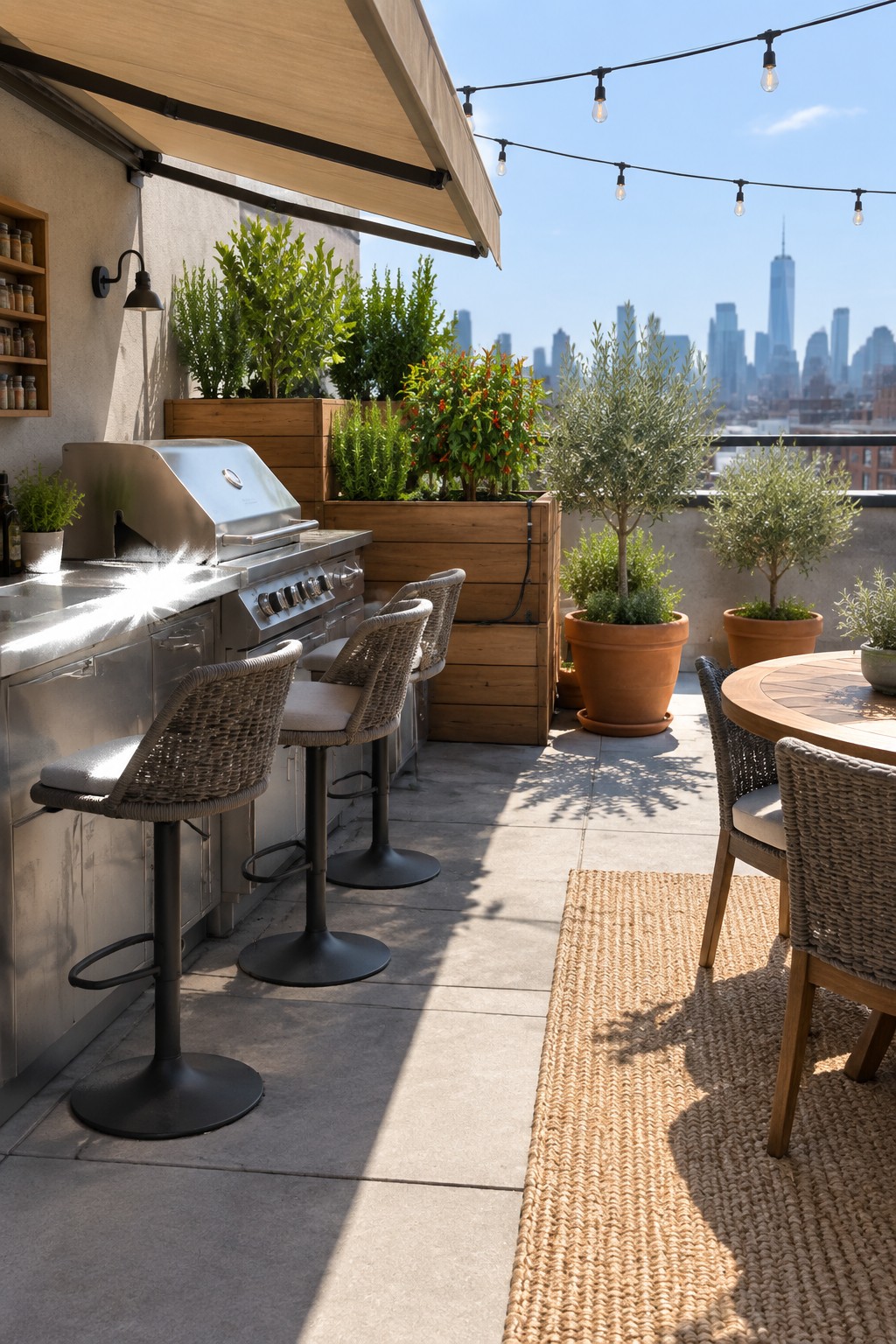
Raised planters make a big difference on a full-sun roof because they keep soil in place and let you grow taller plants without losing floor space. They also create a natural edge that separates cooking and dining areas from open walking paths.
This approach suits city rooftops that get strong afternoon heat. Fill the boxes with heat-tolerant shrubs and small trees, then add a few extra pots nearby for flexibility. The wood helps the plants stay cooler than metal containers would.
Large Pots Keep Roof Gardens Flexible
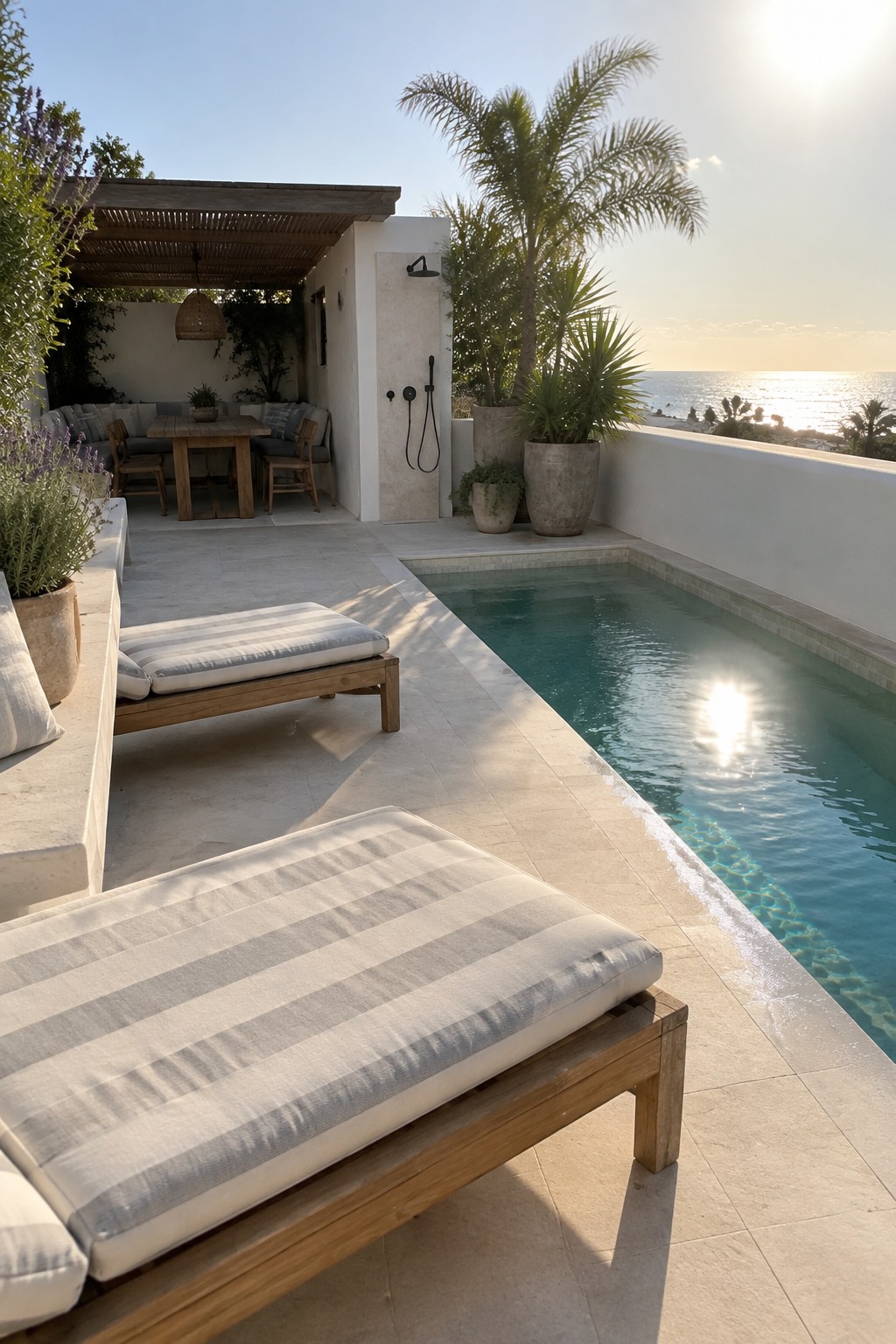
Large containers filled with palms and heat tolerant shrubs let you add real greenery to a sunny rooftop without installing permanent beds. They also make it easy to rearrange the space when you want more shade near the seating or a clearer path around the pool.
This setup works best on rooftops that get full sun all day because you can pick tough plants and move the pots if one spot gets too hot. Use heavy pots so they stay put in wind and choose light colored ones to help keep roots cooler.
Raised Beds Keep Rooftop Gardens Organized And Practical
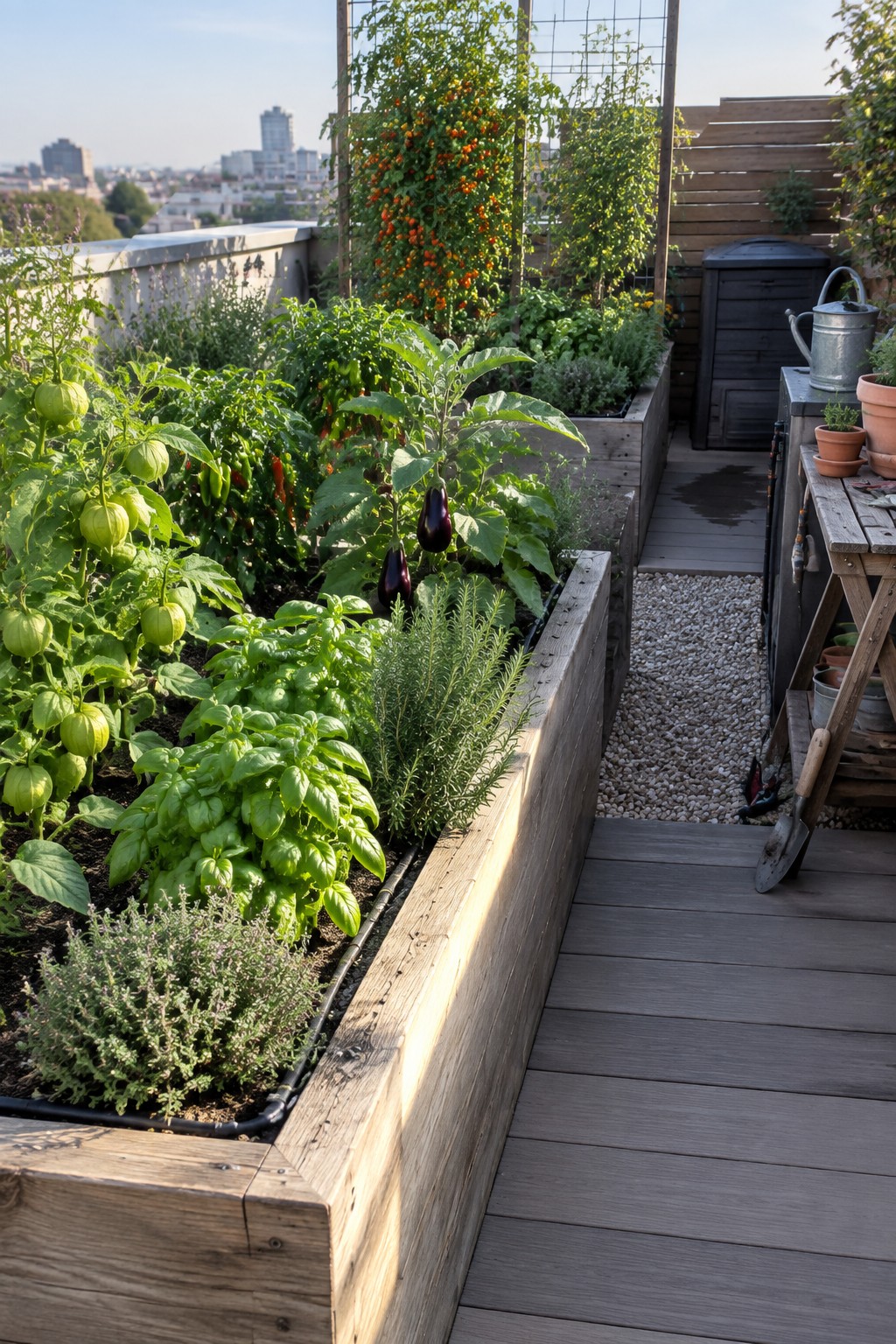
Raised beds give you full control over the soil on a roof where drainage and heat can be tricky. They also make it simple to group heat-tolerant plants like tomatoes, eggplants, and herbs in one spot without spreading soil across the deck.
You can build them from basic lumber and place them along the edge or in rows to leave walking space. This approach works best on flat rooftops that get strong sun and suits anyone who wants to grow food without altering the roof surface itself.
Use Oversized Pots For Heat Tolerant Trees And Vines
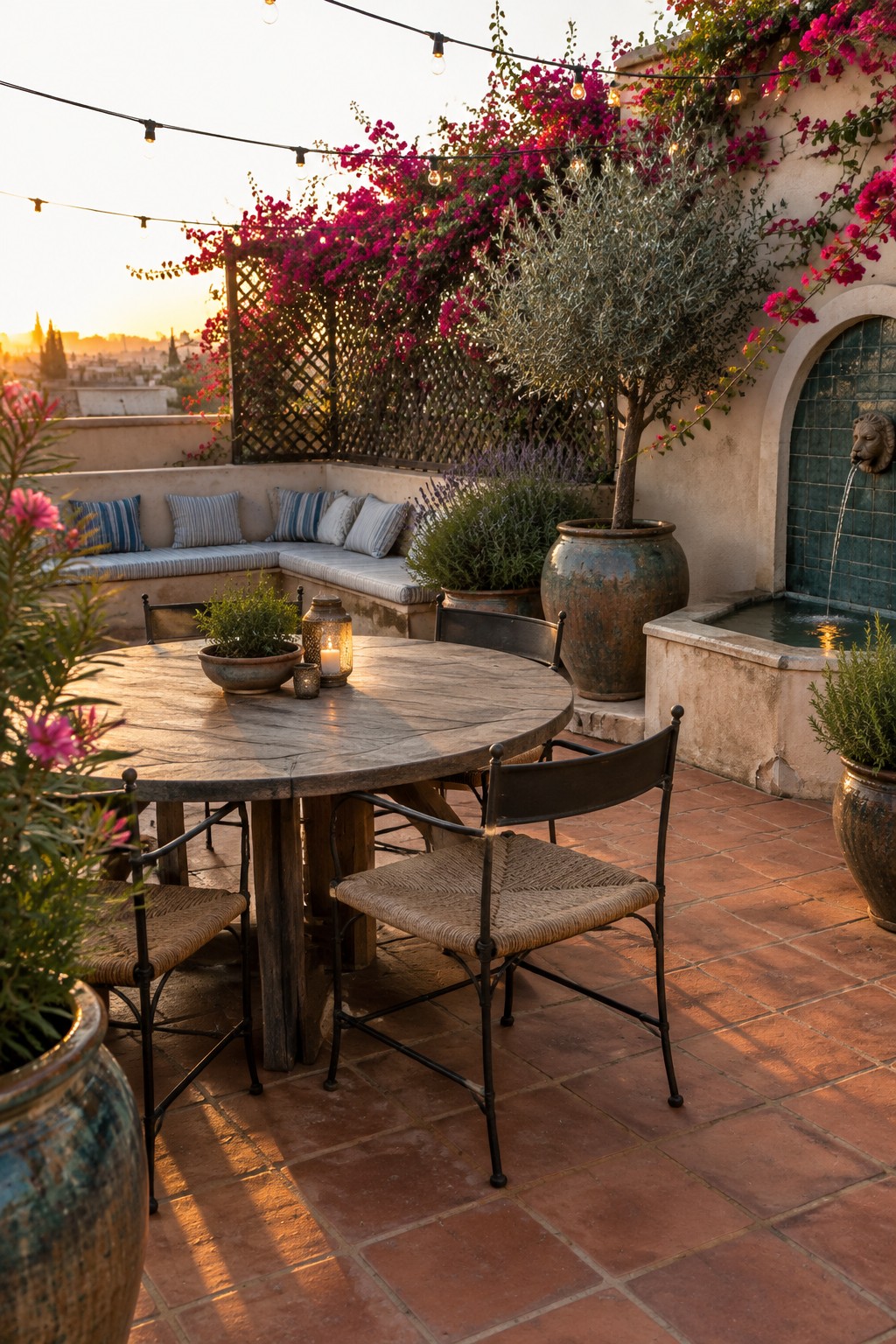
Large containers let you grow bigger plants on a roof without building permanent beds. They give olive trees and bougainvillea enough root room while keeping the setup movable if you need to shift things around for sun or weight reasons.
Put the biggest pots near seating or along the edges so the plants create a bit of shade and color. This works on most rooftops because you can pick drought tolerant varieties that handle full sun and do not need daily watering once they settle in.
Raised Planters Along the Edges
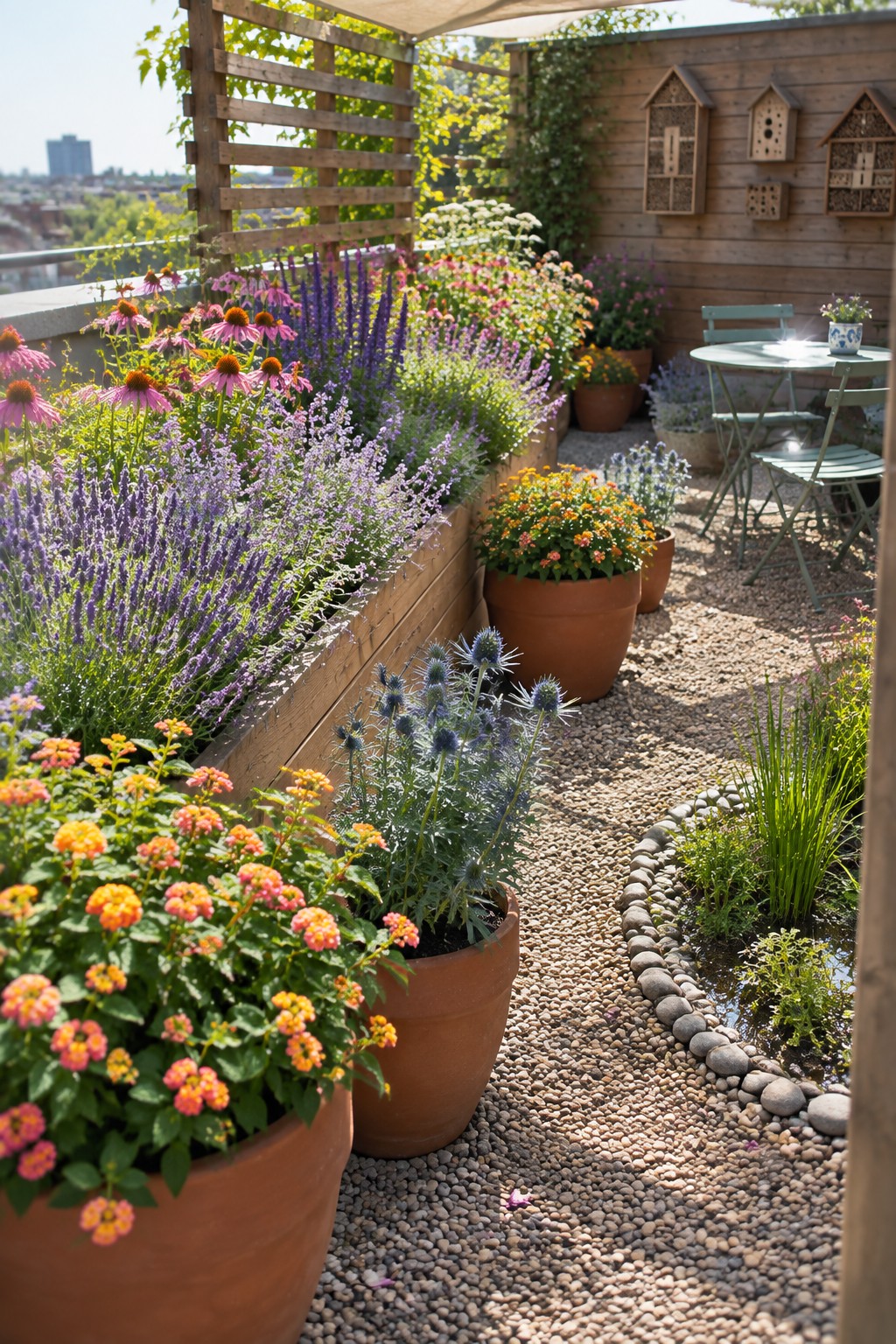
Raised wooden planters give a rooftop garden clear structure without making the space feel crowded. They hold enough soil for bigger plants to thrive in full sun while keeping everything contained so the rest of the terrace stays open for walking and sitting.
Fill them with heat-tolerant flowers like coneflowers and lavender, then run a simple gravel path alongside. This setup works on most flat roofs and makes watering and weeding much easier over time.
Use Large Pots for Heat-Tolerant Plants
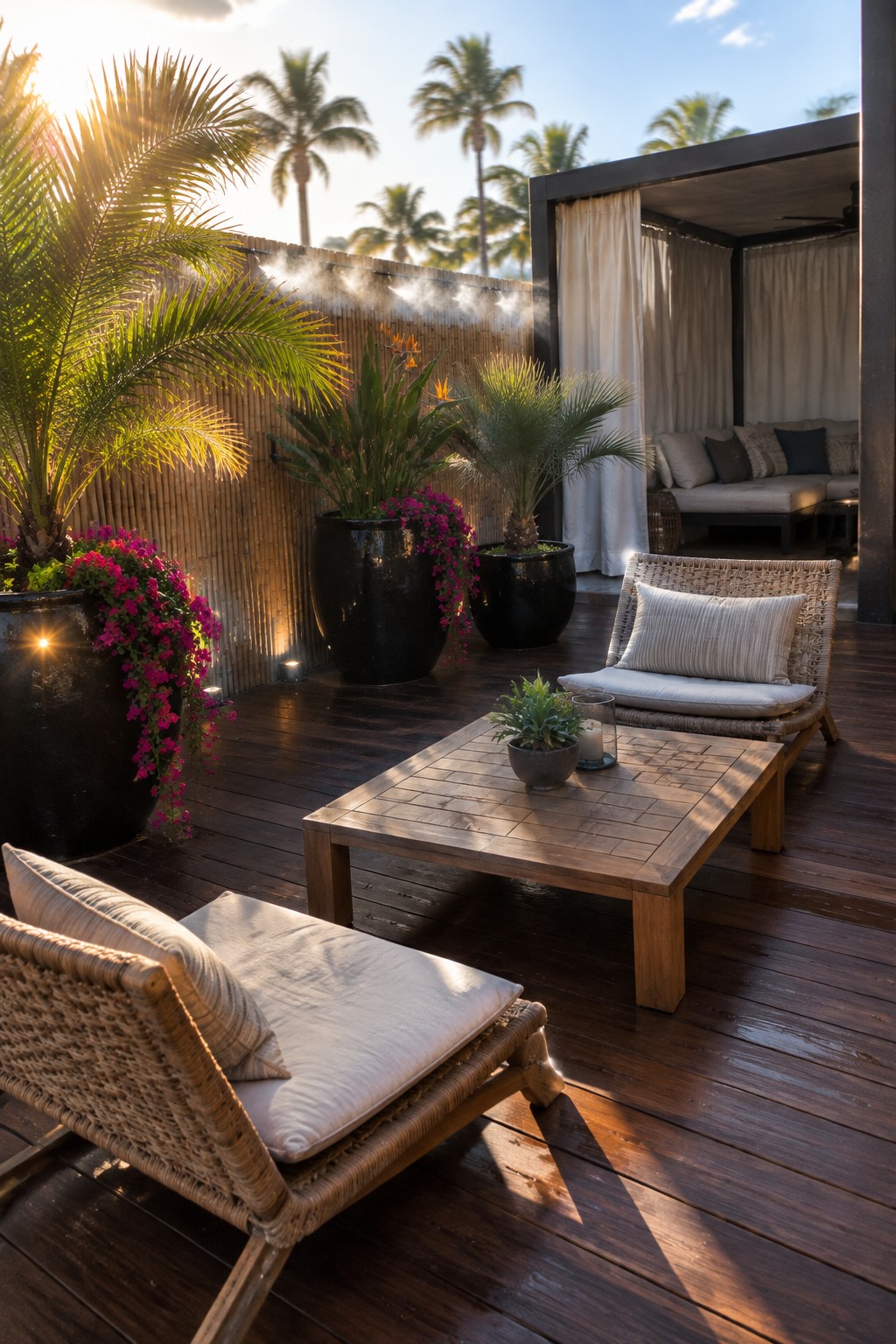
Large containers make it easy to add real height and greenery on a roof deck without digging into the surface. They also let you move things around as the sun shifts or the seasons change, which helps keep the space comfortable in full sun.
Group a few tall palms and flowering plants near seating to break the glare and add some softness. Stick with varieties that handle heat and wind, and choose dark, heavy pots that stay stable on the deck.
Large Metal Planters Help Define Rooftop Seating
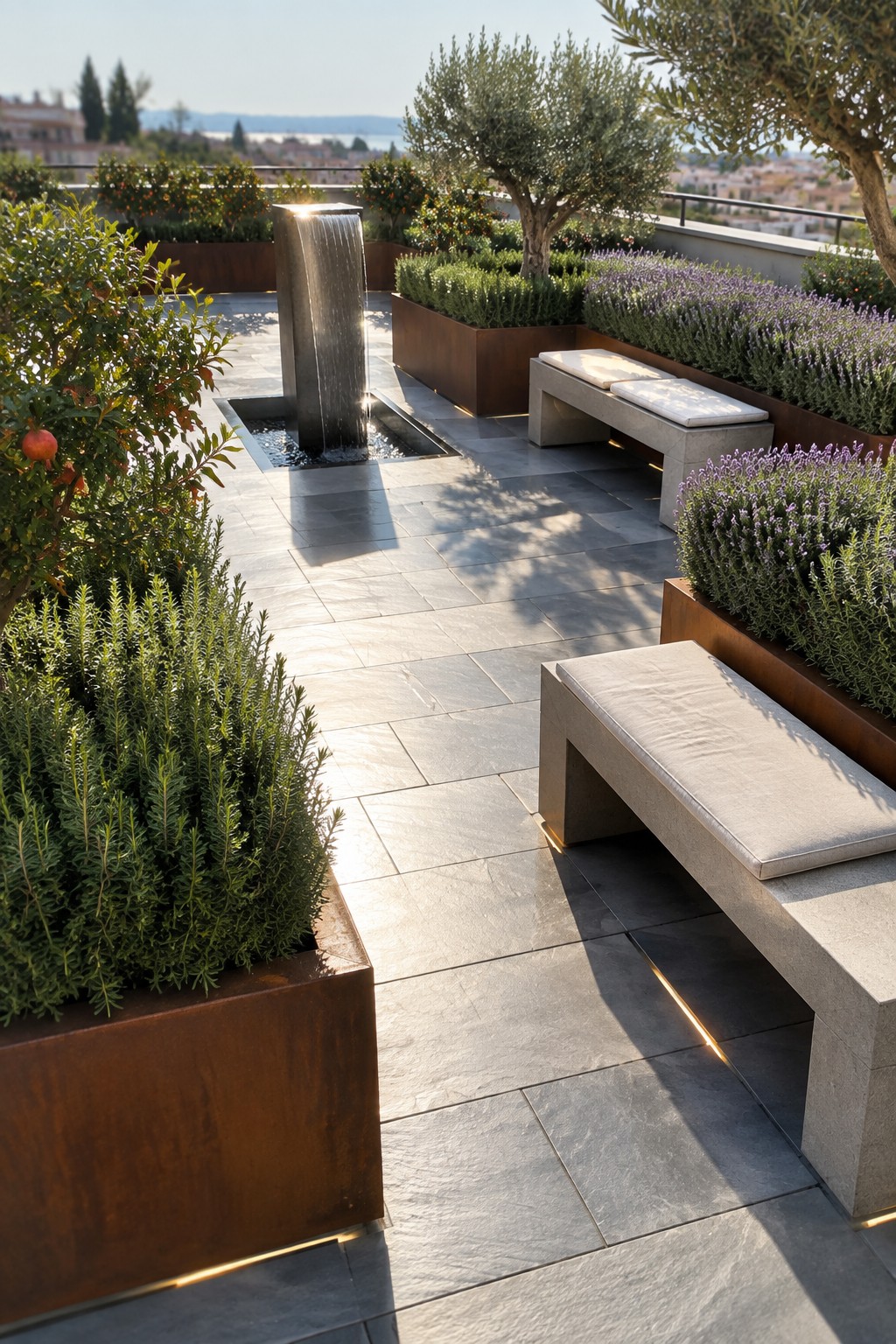
Large metal planters give a roof garden clear shape without needing built walls or extra structures. They hold enough soil for bigger plants to stay healthy in full sun and create natural edges around seating so the space feels divided into usable spots.
Place them along the sides or in rows to frame benches and walkways. Heat-tolerant choices like lavender and olive trees do well in these containers because the metal holds warmth but still lets you control watering and drainage on an exposed rooftop.
Built-In Planters Along the Walls
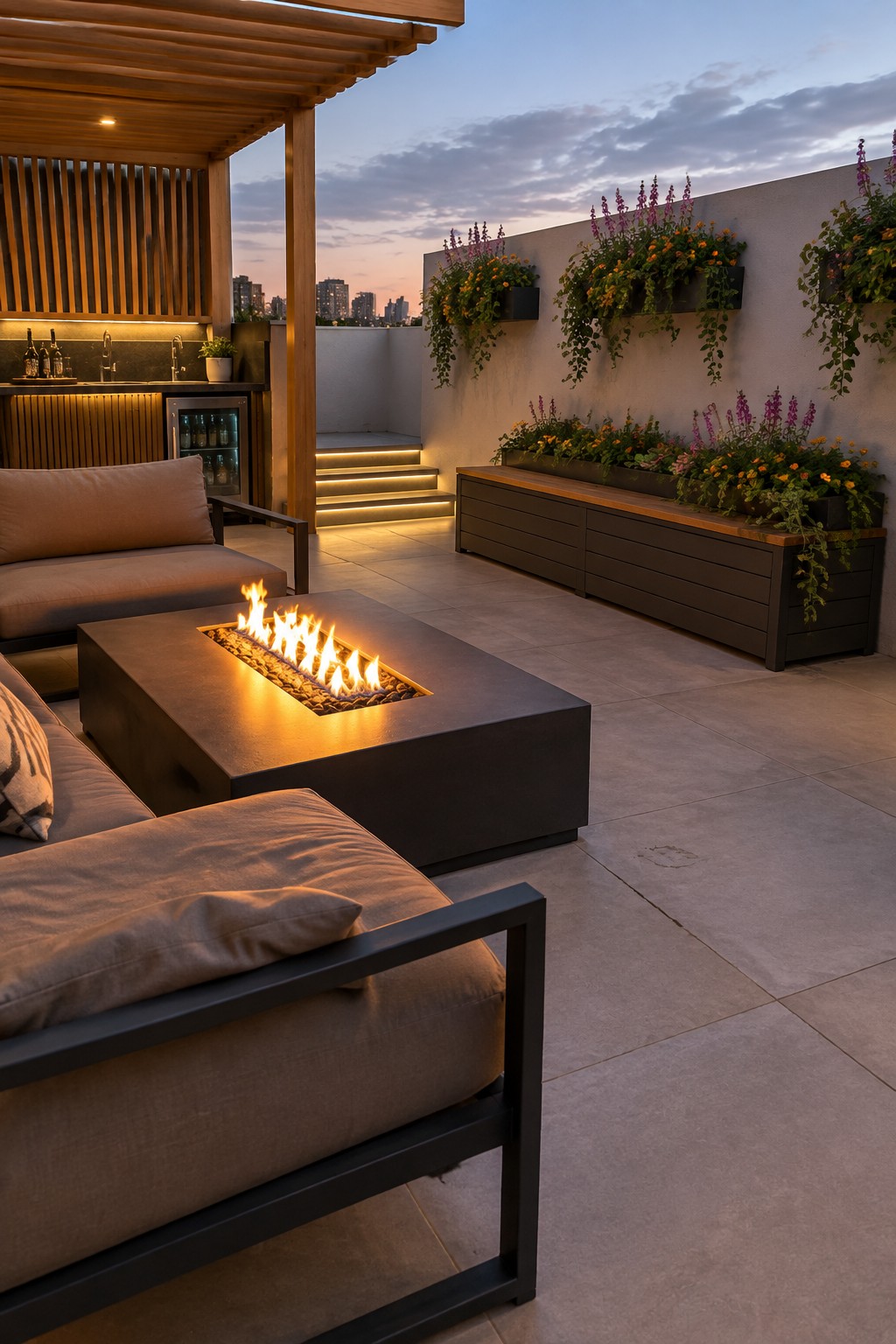
Built-in planters give a rooftop garden structure without eating up floor space for seating or walking areas. They turn blank walls into useful growing spots and help keep the plants at a workable height for watering and care. This setup works especially well on full-sun rooftops where heat-tolerant flowers can thrive in contained soil.
Place the planters along the perimeter or behind seating zones so the plants soften the edges while leaving the center open. Choose deep boxes that hold enough soil to protect roots from quick drying, and pick varieties that handle strong afternoon sun without constant attention.
Group Plants in Large Pots Around Seating
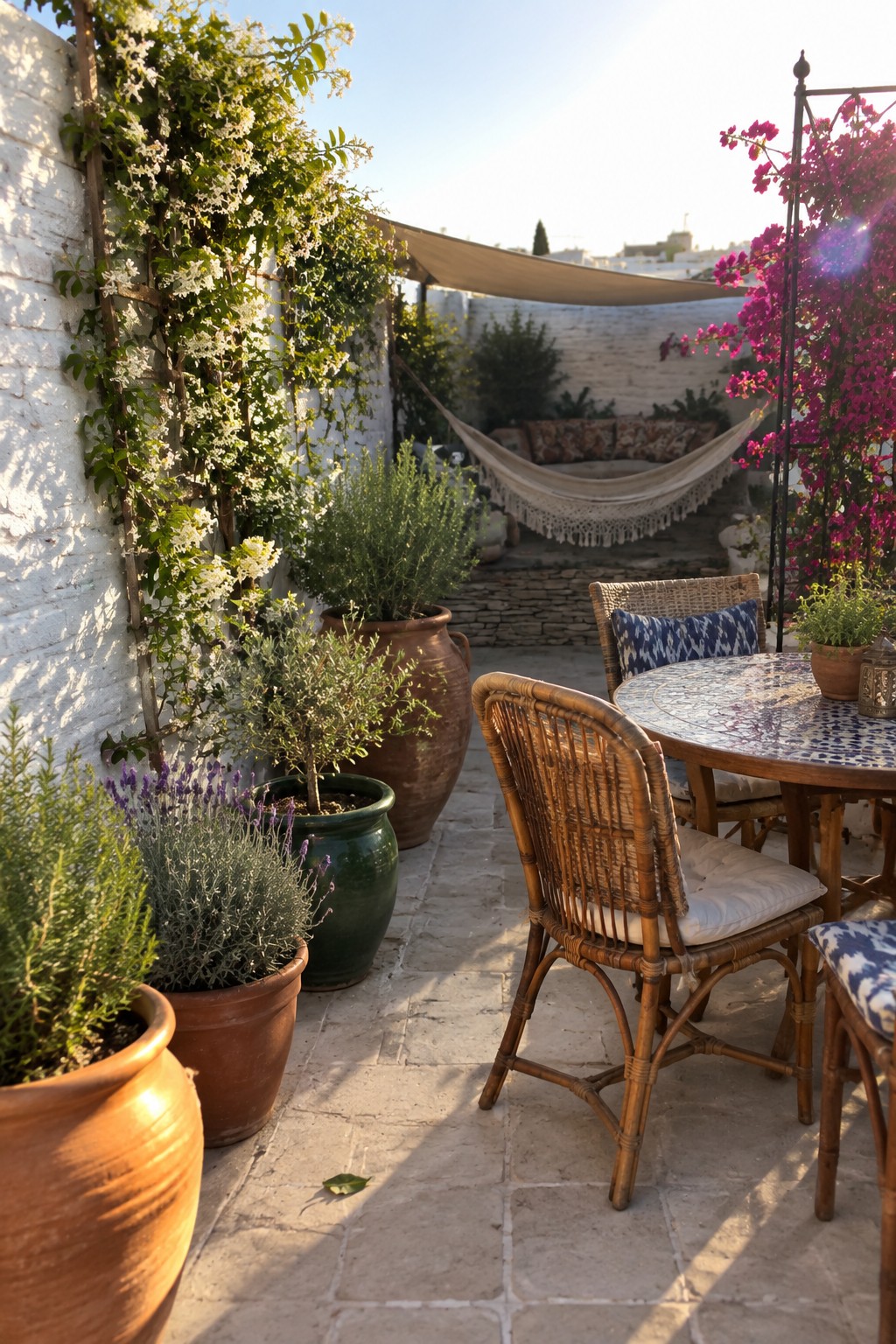
Large pots make it easy to add greenery to a full-sun rooftop without building permanent beds. They hold enough soil to keep roots cool during hot days, and you can group them to frame a seating area while still leaving room to walk around.
This works best on terraces or rooftops where the surface is already paved. Pick deep terracotta or ceramic containers, choose heat-tolerant plants like lavender or bougainvillea, and arrange the pots to create a loose border around chairs or a table.
Large Metal Planters Simplify Rooftop Planting
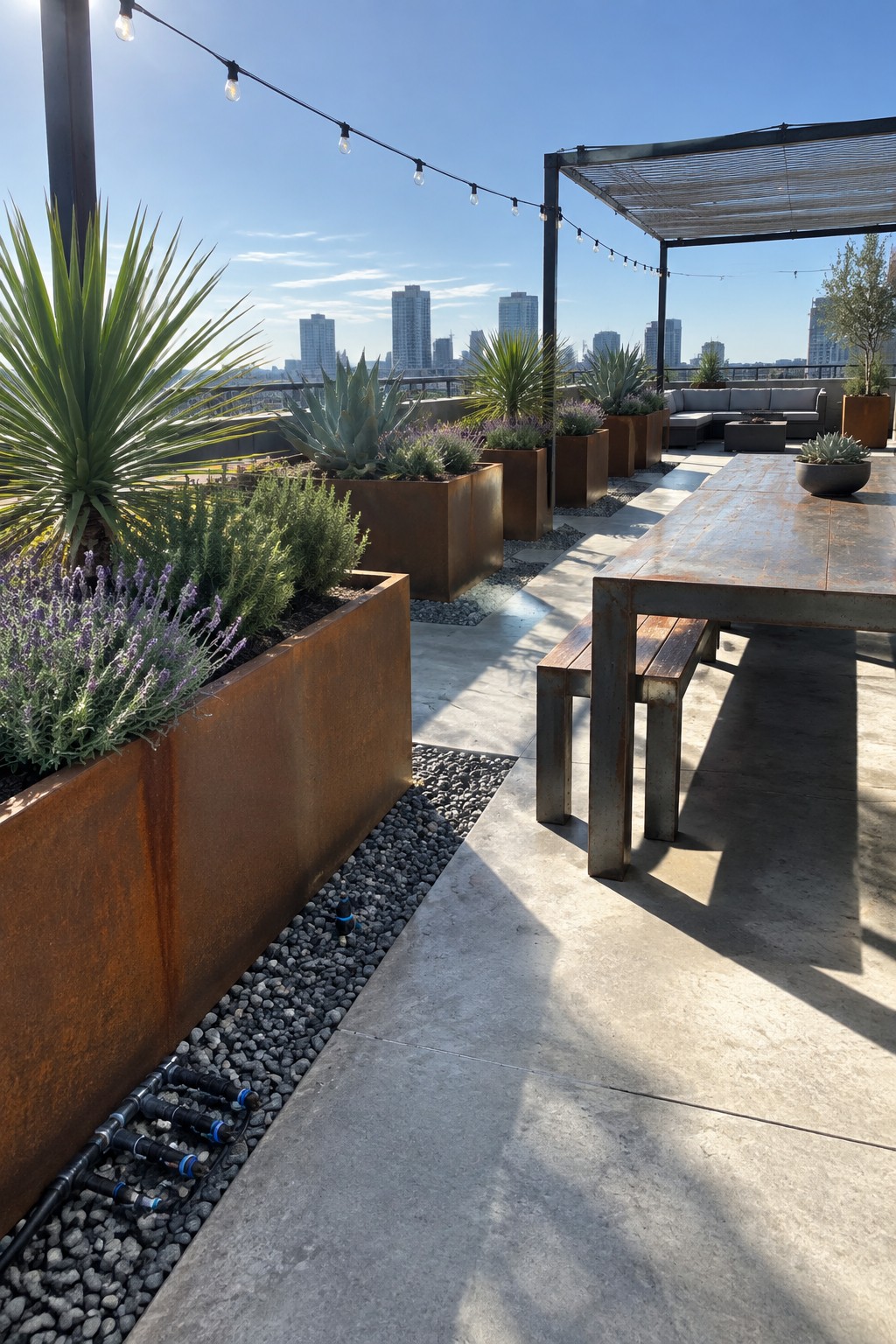
Large metal planters give you a practical way to add structure and greenery to a full-sun rooftop without building permanent beds. They hold heat-tolerant plants like agave and lavender well, and the gravel base helps with drainage so water does not pool on the surface.
Place them along the edges to create a clear planting zone while leaving the center open for seating. This setup works best on flat rooftops where weight and drainage matter most. Just check that the planters sit on a solid base and include simple irrigation if you want less daily watering.
Built-In Seating Handles Full Sun Without Extra Upkeep
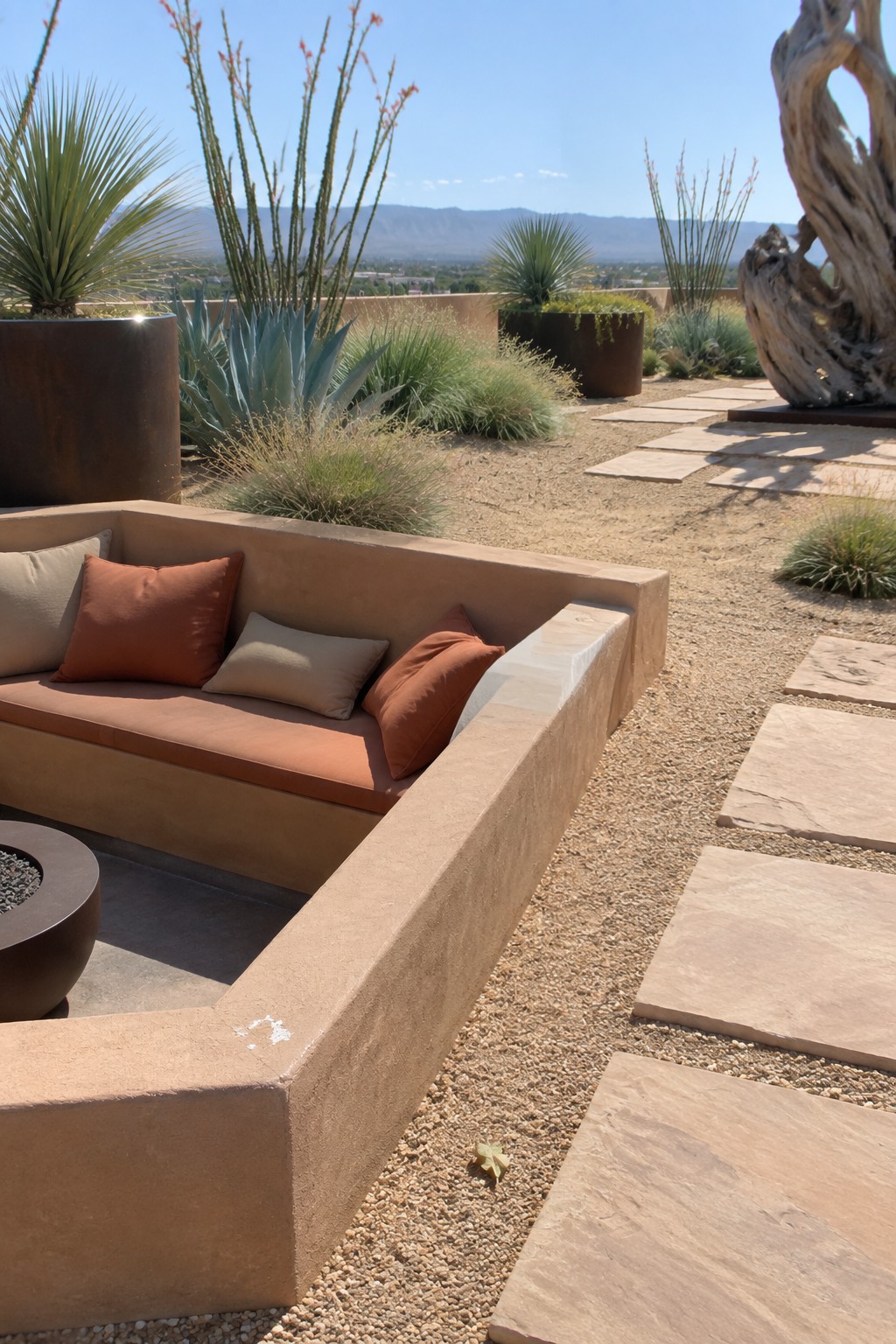
Many roof gardens struggle with furniture that shifts in wind or fades fast under constant sun. A built-in bench made from concrete or stucco solves that by staying fixed in place and needing little more than an occasional wipe down.
This approach suits flat rooftops in hot, dry areas where loose pieces often fail. Place cushions in fade-resistant fabrics and add a few large pots with heat-tolerant plants right beside the bench so the whole area stays simple to care for year after year.
Use Clusters of Pots to Define Seating Areas
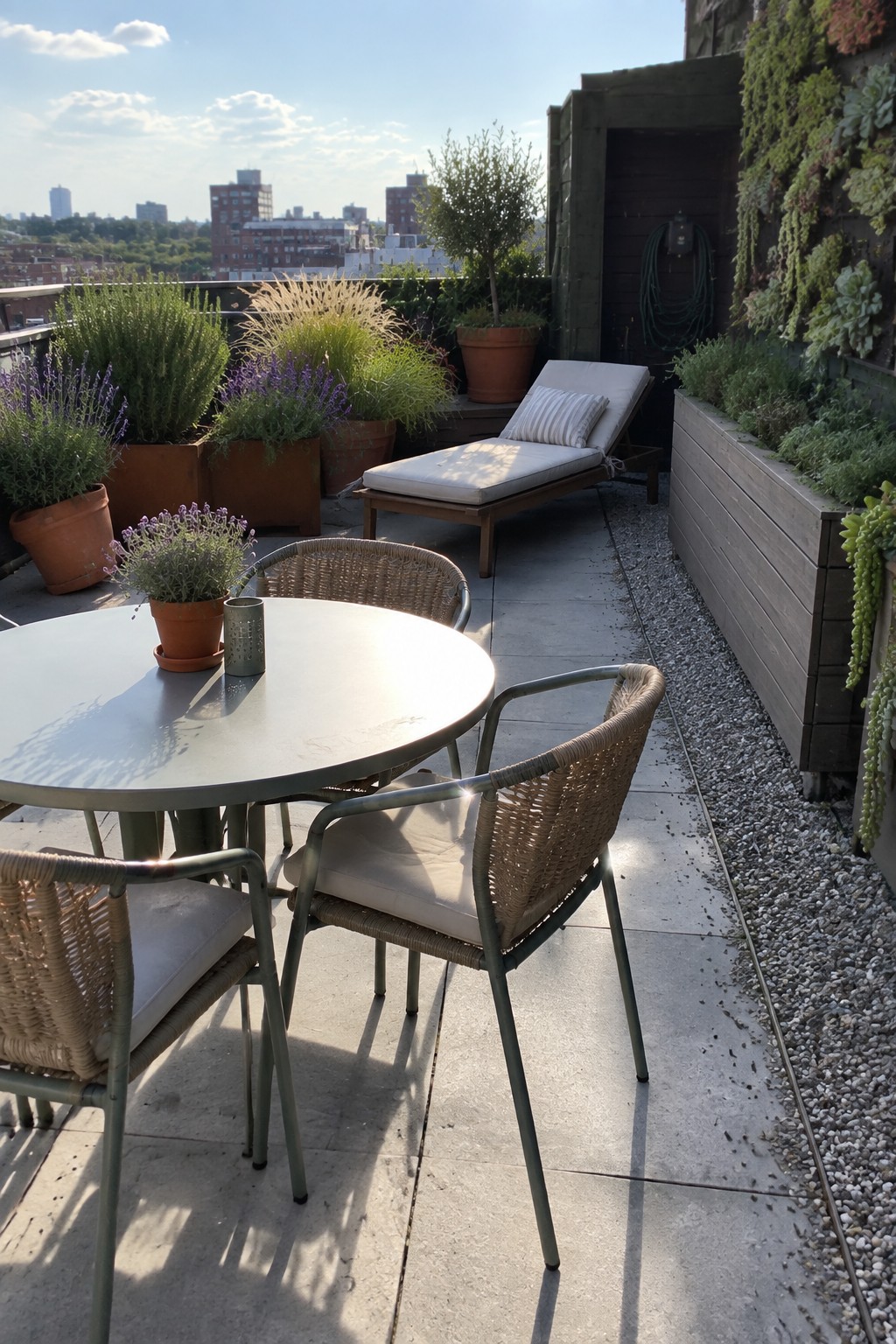
Placing groups of pots around a rooftop terrace helps break up the open space into smaller, more usable spots. The containers act like soft walls that keep the dining table separate from the lounge chair without blocking views or airflow. Heat-tolerant plants in terracotta hold up well in full sun and add greenery right where you need it most.
This approach works on most flat roofs because the pots can be moved if drainage or weight becomes an issue. Stick with similar pot sizes and colors so the arrangement feels intentional rather than scattered. Leave enough room between clusters for people to walk through comfortably.
Frequently Asked Questions
Q: How often should I water the plants in full sun? A: Check the soil every morning and water deeply when the top inch feels dry. This keeps roots strong without wasting water. Most heat-tolerant plants like a good soak then time to dry a bit.
Q: Will the containers blow away in rooftop winds? A: Pick heavy pots or anchor them with weights at the base. Group plants together to block some wind too. Choose varieties with sturdy stems that hold up better.
Q: What is the easiest way to start with just a few ideas from the list? A: Begin with three or four large pots of succulents or grasses. They need little care once established.
