

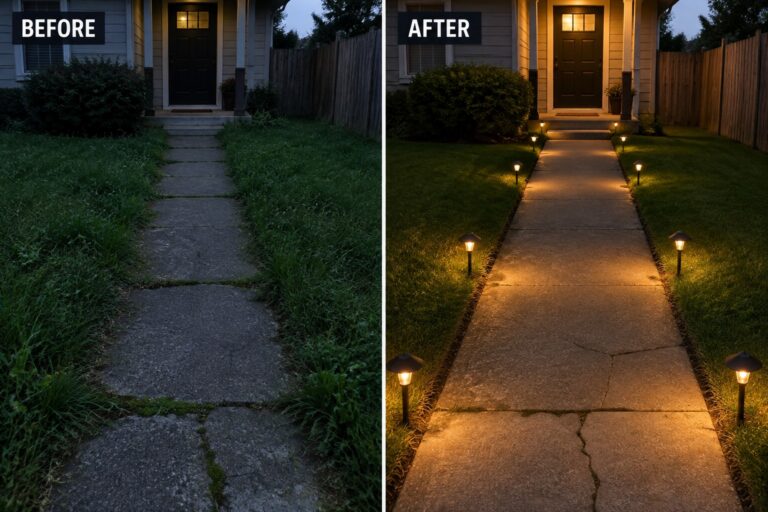
I often find that garden paths become harder to use once the sun goes down, especially if the edges are uneven or overgrown.
Adding some targeted lighting helps keep those routes clear and safe without needing to redo the whole layout.
I usually start with the spots where I trip most often.
Over time the layers of low fixtures and subtle uplights make the space feel more intentional while still letting the plants take center stage.
Small adjustments like these tend to get used every evening once they are in place.
Add Path Lights To Make Walkways Safer At Night
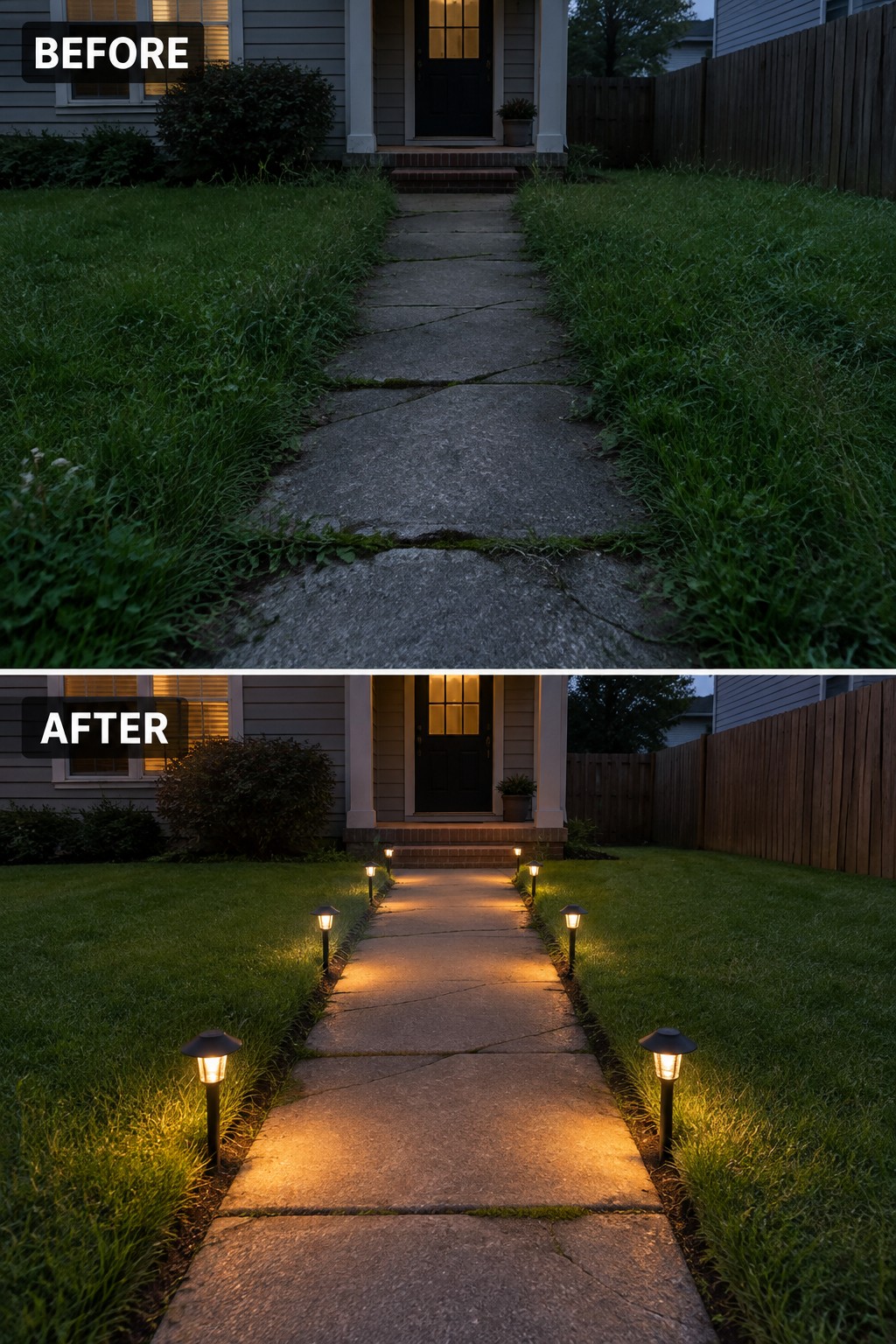
The concrete path to the front door was almost invisible once the sun went down, with uneven edges and no clear way to see where you were stepping. A simple row of low lights placed along both sides changed that by creating a steady line of light that follows the path all the way to the steps.
This idea works on any house with a straight or gently curving walkway that gets used after dark. Use solar path lights so there is no wiring to run, keep the fixtures low to the ground, and space them evenly so the light stays on the walking surface instead of spilling into the yard or house windows.
Add Path Lights To Keep Garden Walkways Safe
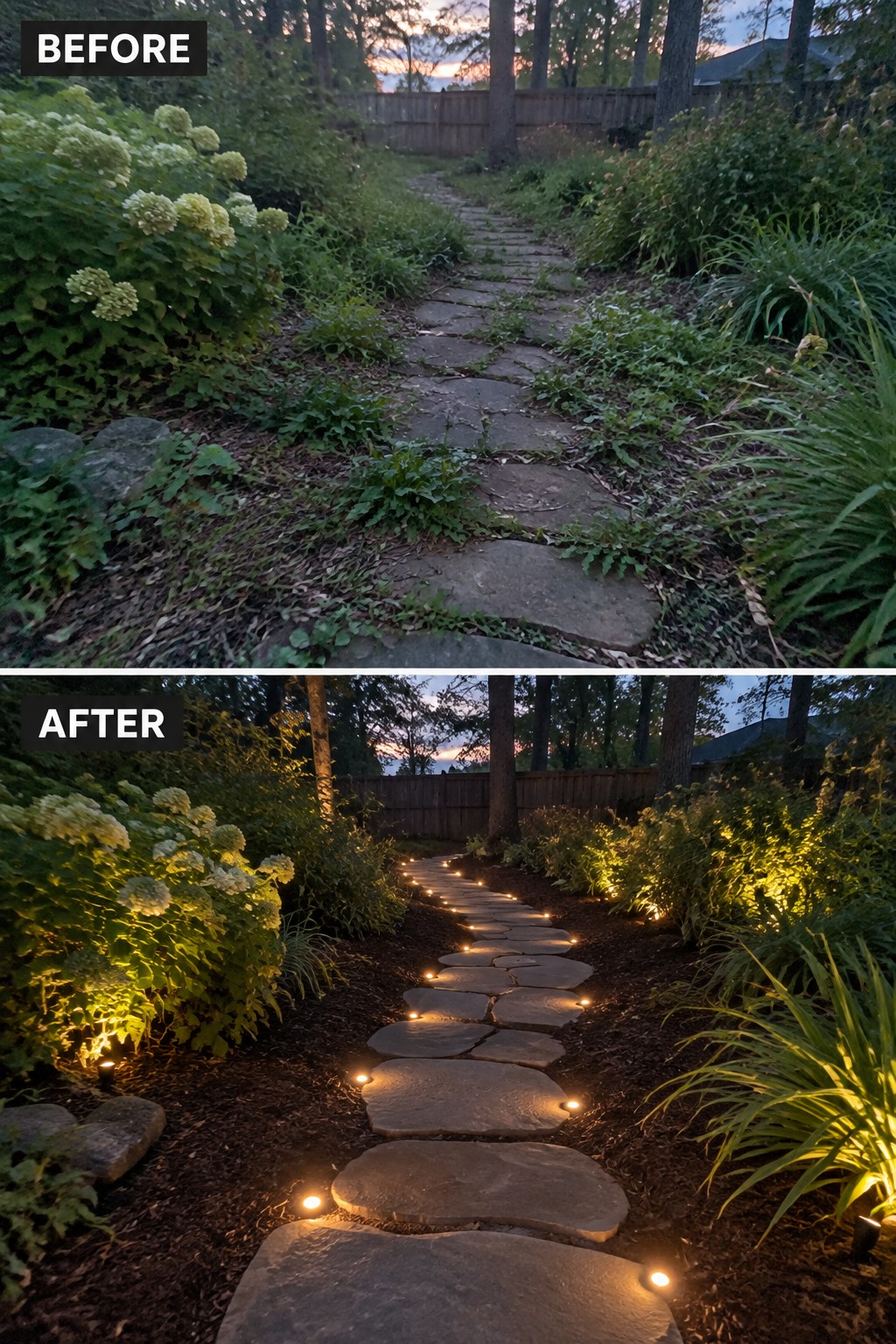
Adding low lights along a stone path makes a big difference once it gets dark. The before view shows how the walkway fades into the background with no clear edges or guidance. Small fixtures placed at ground level now mark each step and reduce the chance of tripping on uneven stones.
This works best on existing paths that already have decent hardscaping. Use solar or low-voltage lights spaced evenly so the beam stays on the surface rather than shining into your eyes. It suits homes with winding garden routes or any walkway that leads to a back door or seating spot.
Add Path Lights To Make Gravel Walkways Safer At Night
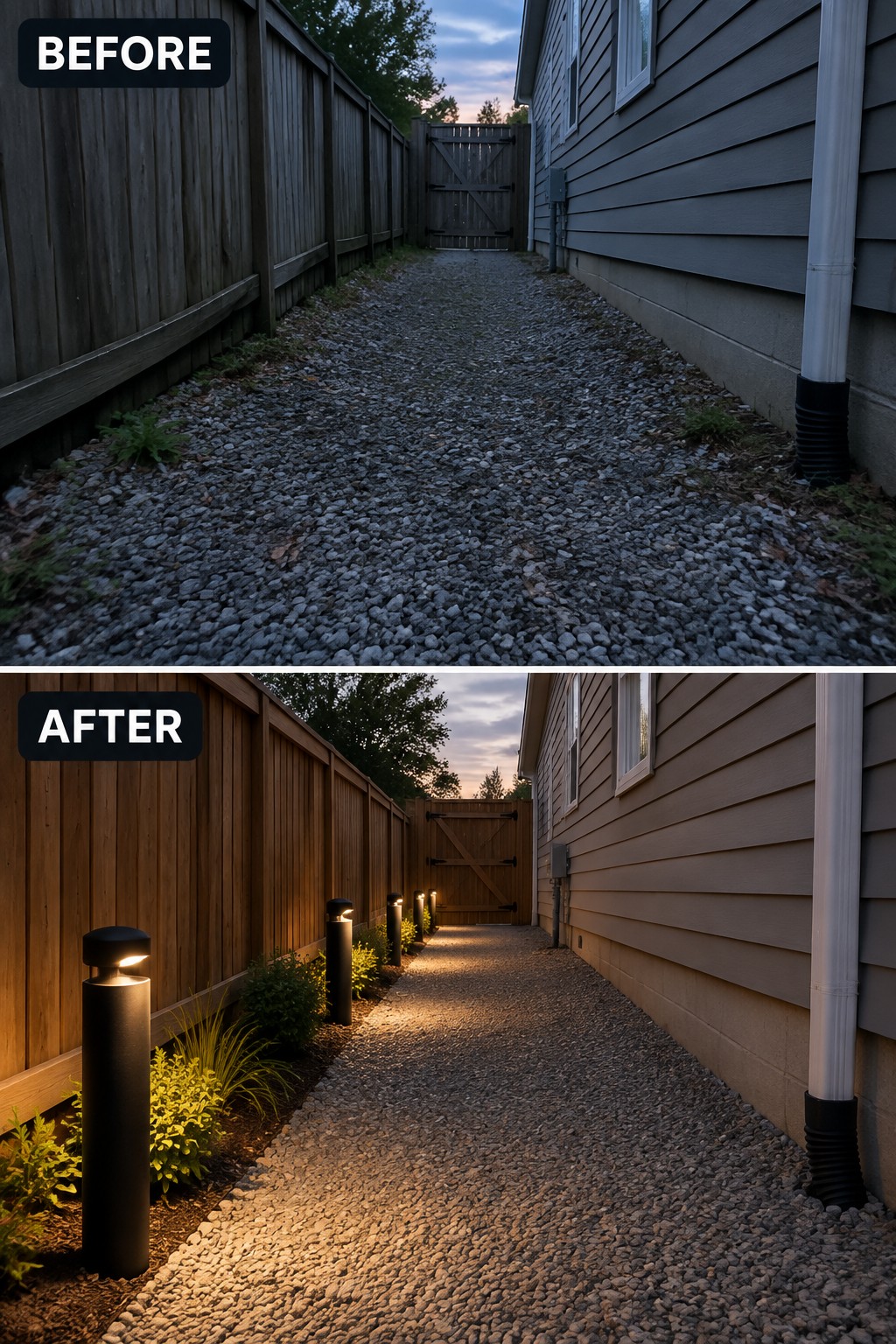
The dark gravel path was difficult to navigate once daylight faded, especially along the narrow side of the house. A simple line of low bollard lights changed that by creating a clear, evenly lit route that guides people safely from one end to the other.
This idea works best on side yards or back paths where you need functional light without filling the space with fixtures. Space the lights a few feet apart on the planting side of the path, keep them under two feet tall, and choose warm bulbs so the light stays gentle on the surrounding plants and house.
Add Path Lights Along Stepping Stone Paths
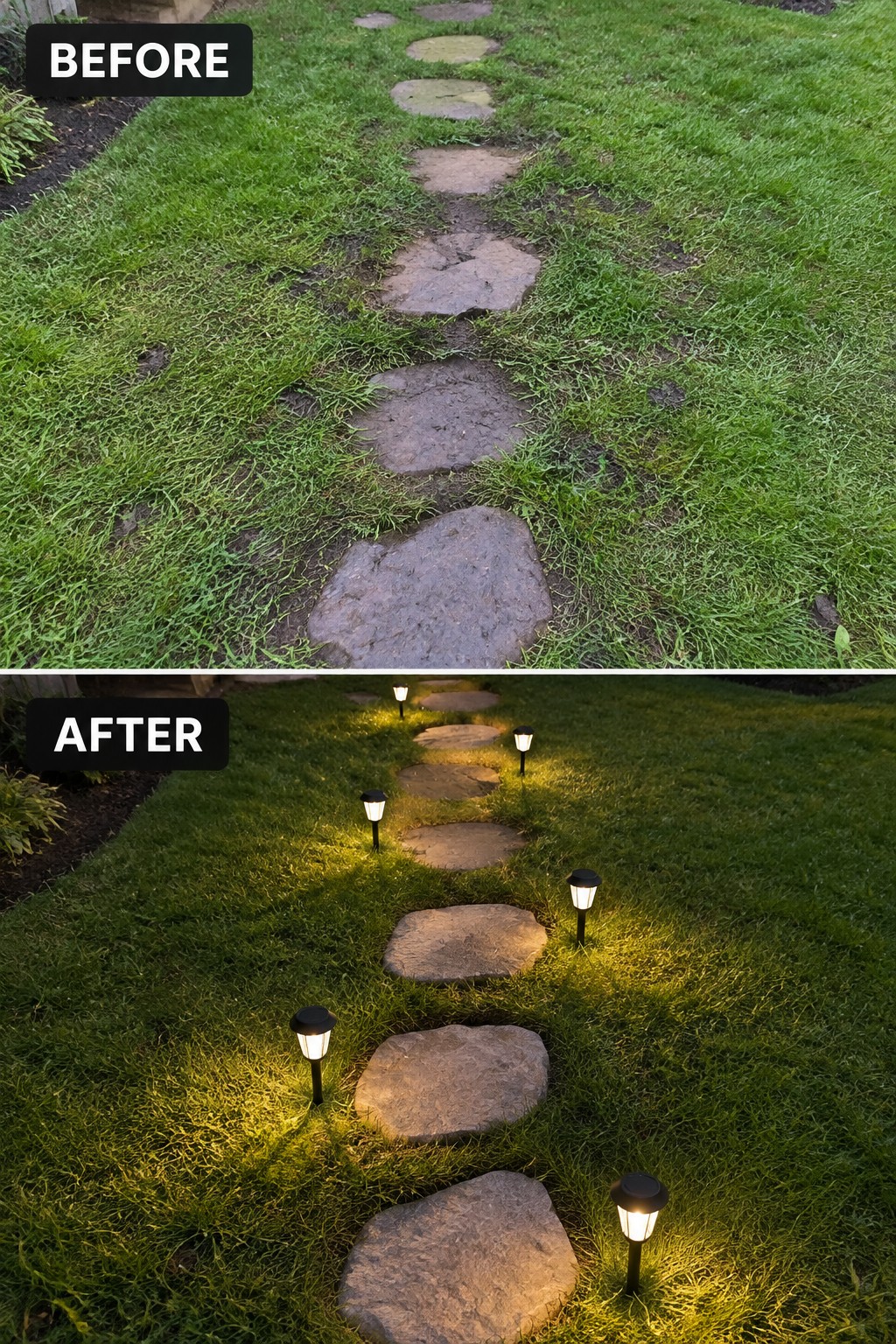
Stepping stone paths often look fine during the day but turn into a hazard once it gets dark. Adding a row of small path lights beside the stones gives just enough light to see the edges without flooding the whole lawn.
This works best on side paths or routes that lead to a shed, seating spot, or back gate. Space the lights evenly on both sides so they mark the way clearly, and choose solar versions to avoid running wires. Keep the fixtures low so they guide feet without creating glare.
Add Step Lights To Deck Stairs For Safer Night Use
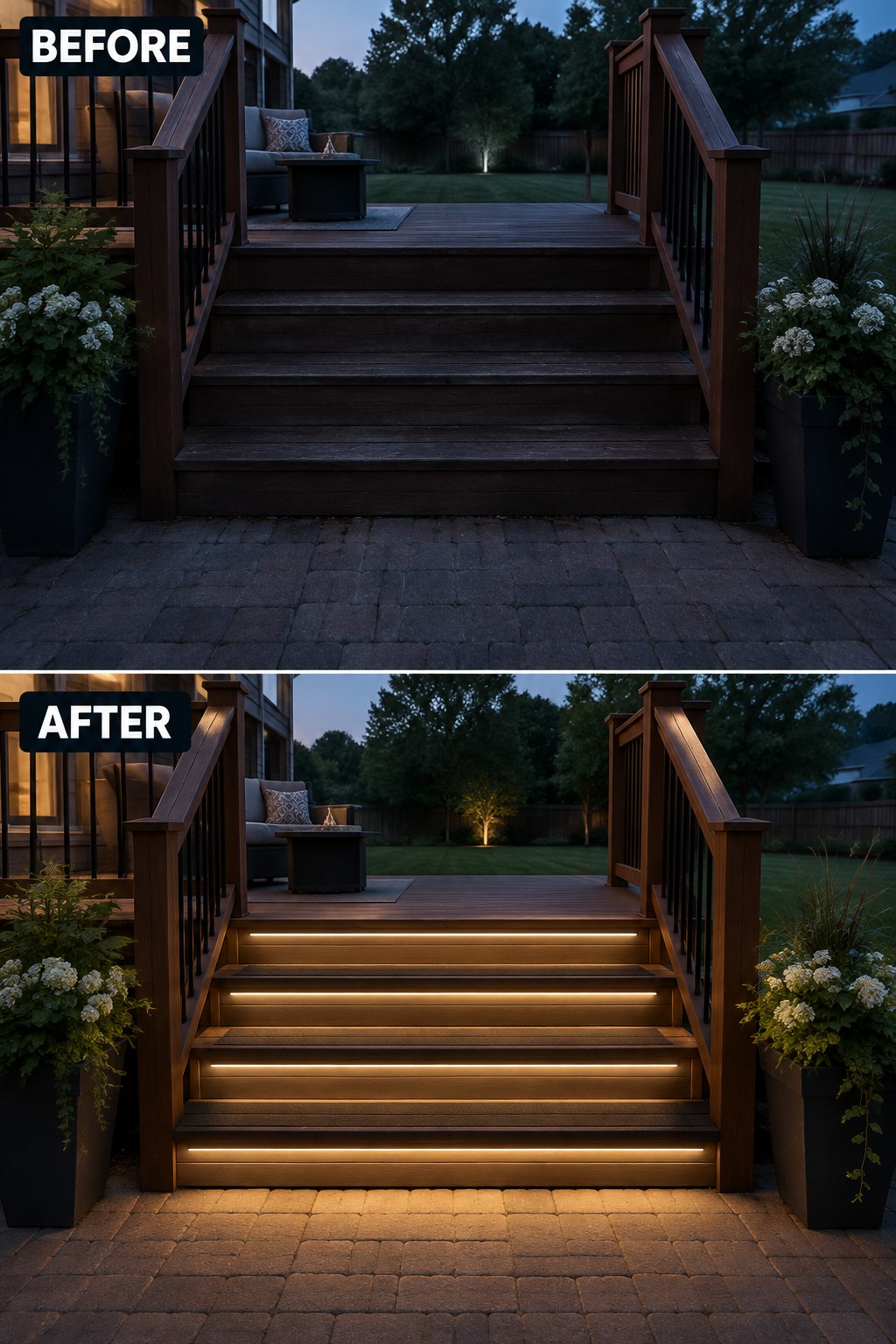
Many decks have stairs that turn into a hazard once the light fades. Adding a thin LED strip along the front of each tread gives just enough light to show the edge without flooding the whole area.
This works best on wooden or composite decks where you can run low-voltage wiring along the stringers. Keep the light warm and close to the step so it stays useful rather than decorative, and make sure the strips sit slightly recessed so they do not catch on shoes or get damaged by weather.
Add Wall Sconces To Light Narrow Walkways
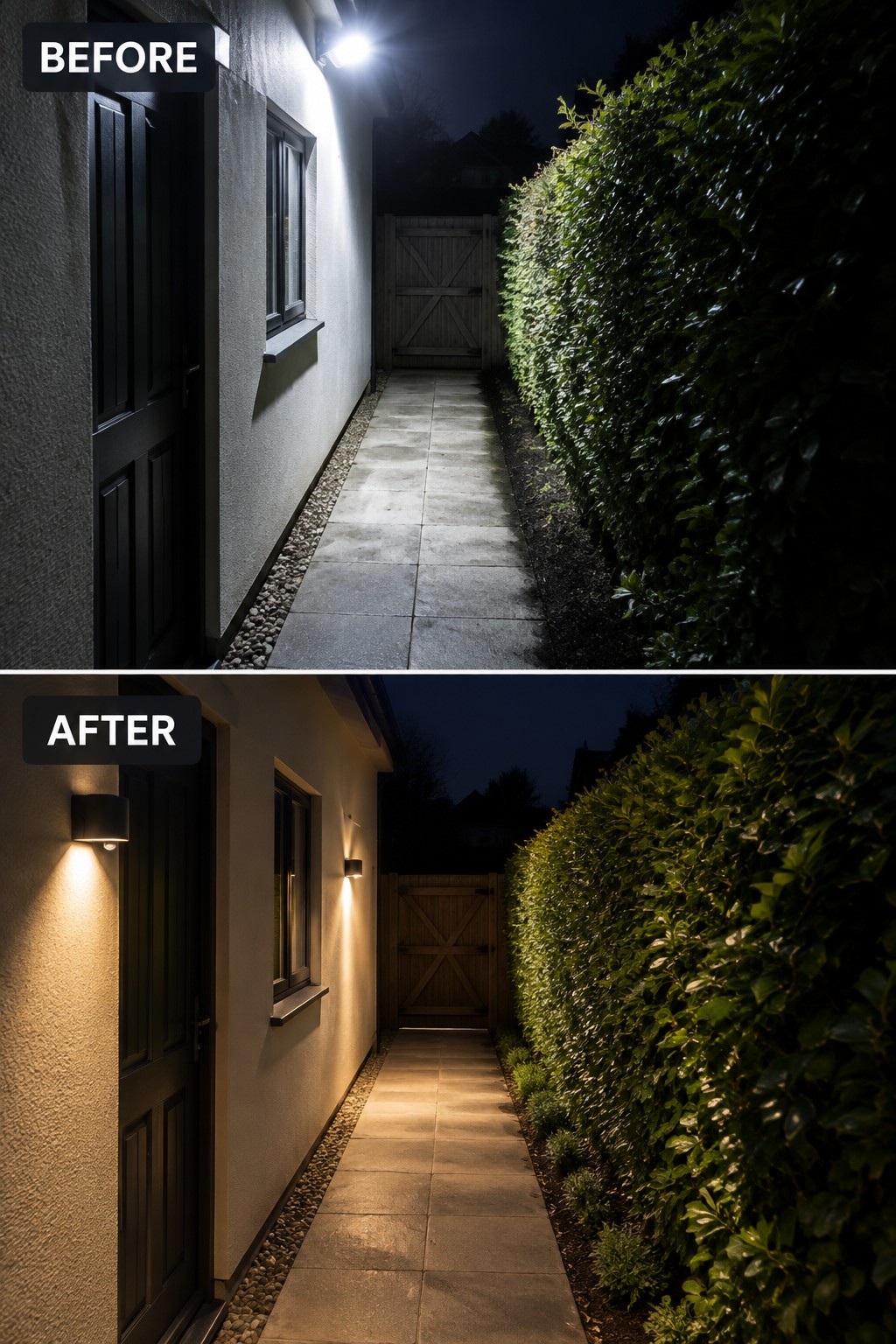
A single bright overhead light often creates glare and leaves dark patches along a side path, which makes walking at night less safe. Switching to wall sconces mounted lower on the house spreads the light more evenly across the ground without shining directly into your eyes.
This approach works well on narrow passages where space is tight. Place the lights at a consistent height, use warm bulbs, and keep the fixtures simple so they do not stick out far from the wall. The result is a clearer path that feels more comfortable to use after dark.
Add Edge Lighting To Brick Walkways
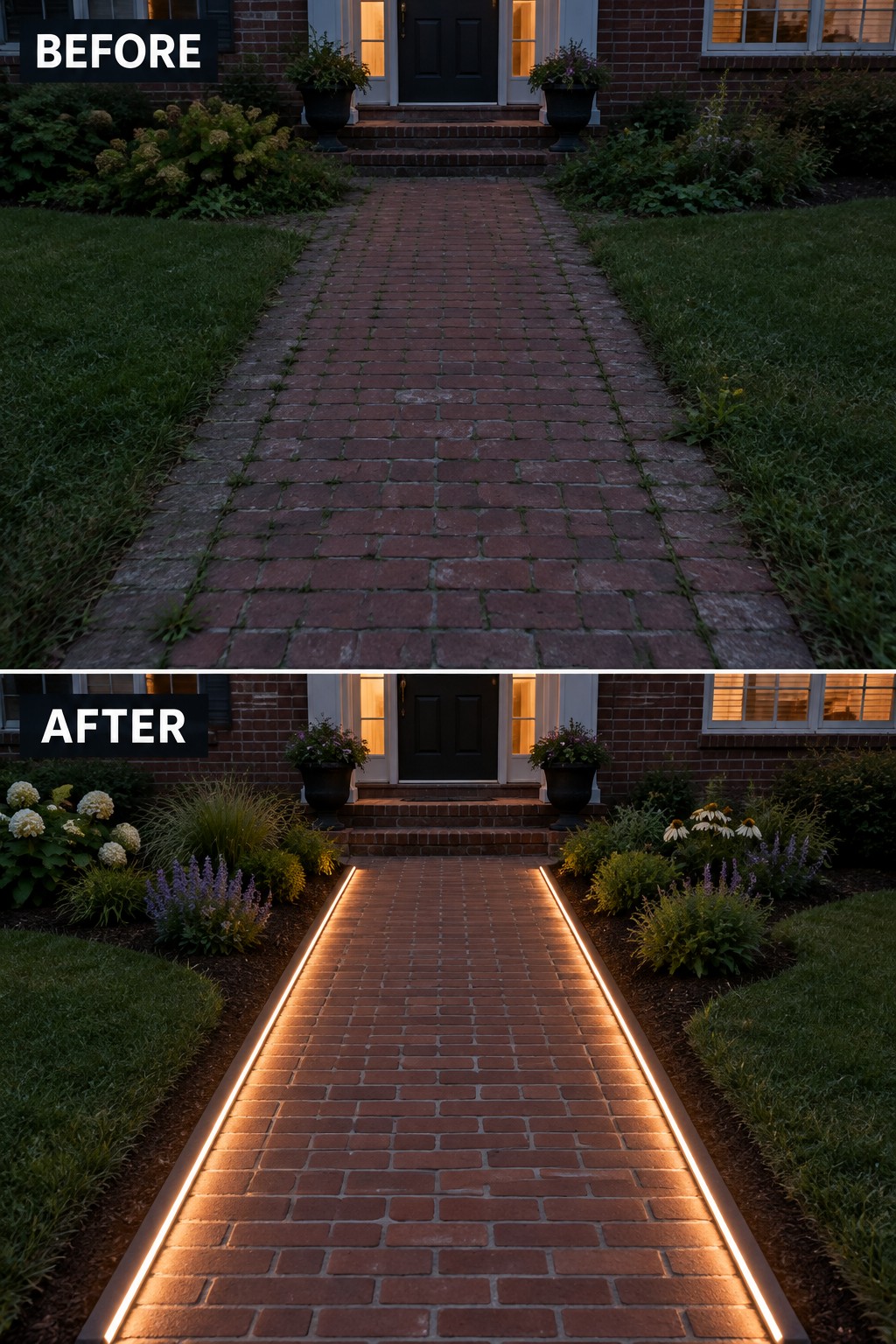
Running lights along the edges of a brick path turns a dark, hard-to-follow walkway into a clear route at night. The before photo shows the path disappearing into the shadows, while the after version uses simple linear fixtures tucked along both sides to guide the way without adding tall fixtures or clutter.
This idea suits homes that already have solid paving but need better visibility after dark. Keep the lights low and warm so they highlight the path itself instead of washing out the garden beds on either side. It is an easy upgrade that improves safety first and adds a finished look second.
Add Low Path Lights To Improve Walkway Safety

The main change here is the addition of small lights along the edges of the mulch path. This turns a dark walkway into one that is much easier to follow at night while also highlighting the trees without overwhelming the space.
This idea works well in most yards that already have established paths or garden beds. Place the lights a few feet apart along both sides and choose warm bulbs so the light stays soft. It is a practical first step before adding more features, since clear walkways matter more than extra decor.
Add Path Lighting For Safer Nighttime Entries
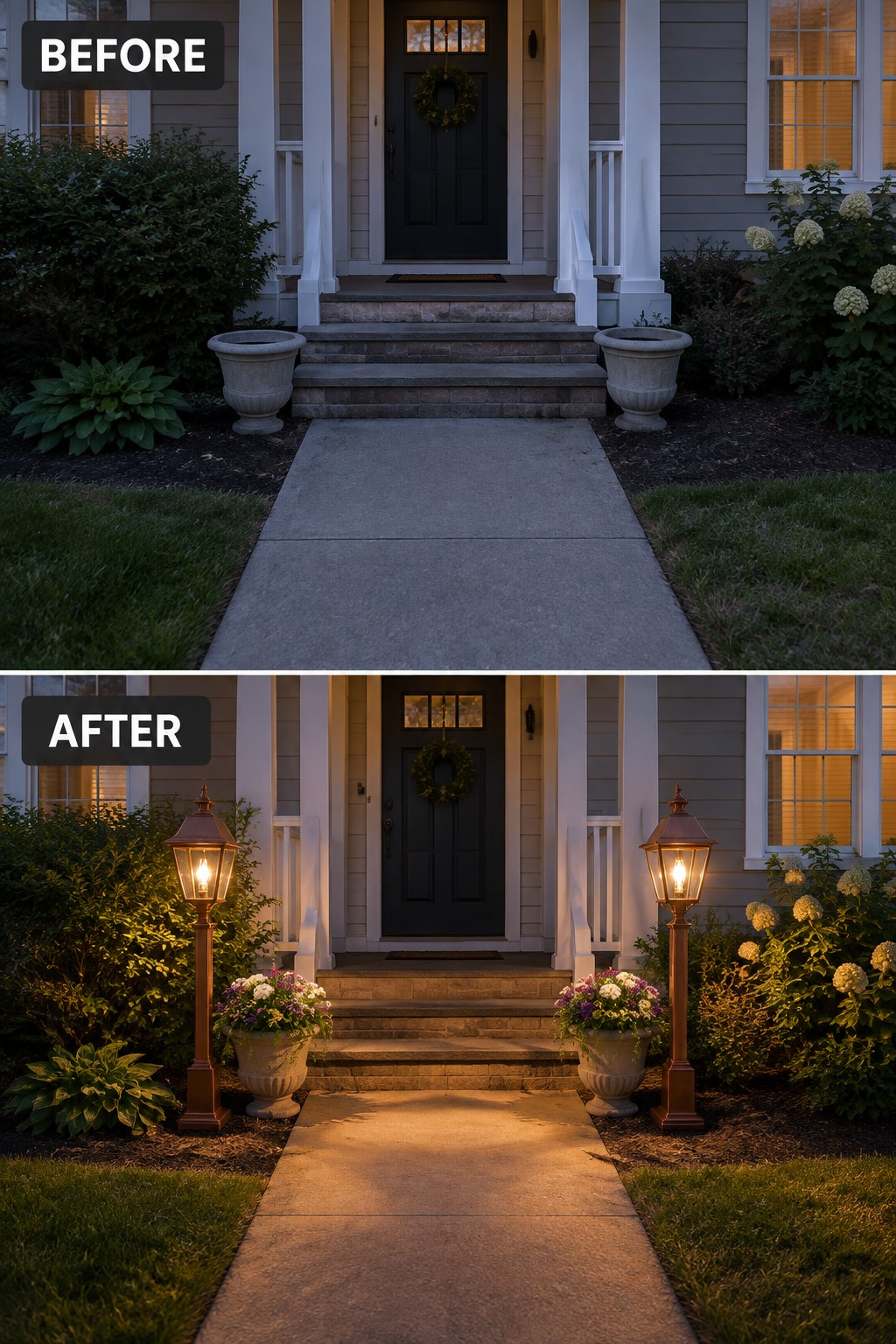
Adding a pair of lantern lights along the front walkway makes the whole entry feel more secure once the sun goes down. The before photo shows a plain concrete path that disappears into shadow, while the after version places matching lanterns on either side of the steps so people can see where they are walking.
This works well on any house where the front path gets used after dark. Keep the fixtures low enough to light the ground without glare, and add a simple planter at the base of each post if you want a bit of color without crowding the walkway.
Add Path Lighting To Make Garden Walkways Safer

A gravel path can look fine in daylight but turns into a hazard once the sun goes down. The after photo shows how a row of small lights set right into the gravel edges gives enough glow to follow the curve without lighting up the whole yard.
This idea fits homes where the main walkway already exists and just needs better visibility at night. Place the lights along both sides at even intervals, keep them low so they do not glare into windows, and choose warm bulbs that blend with the surrounding plants.
Add String Lights To Light A Covered Walkway
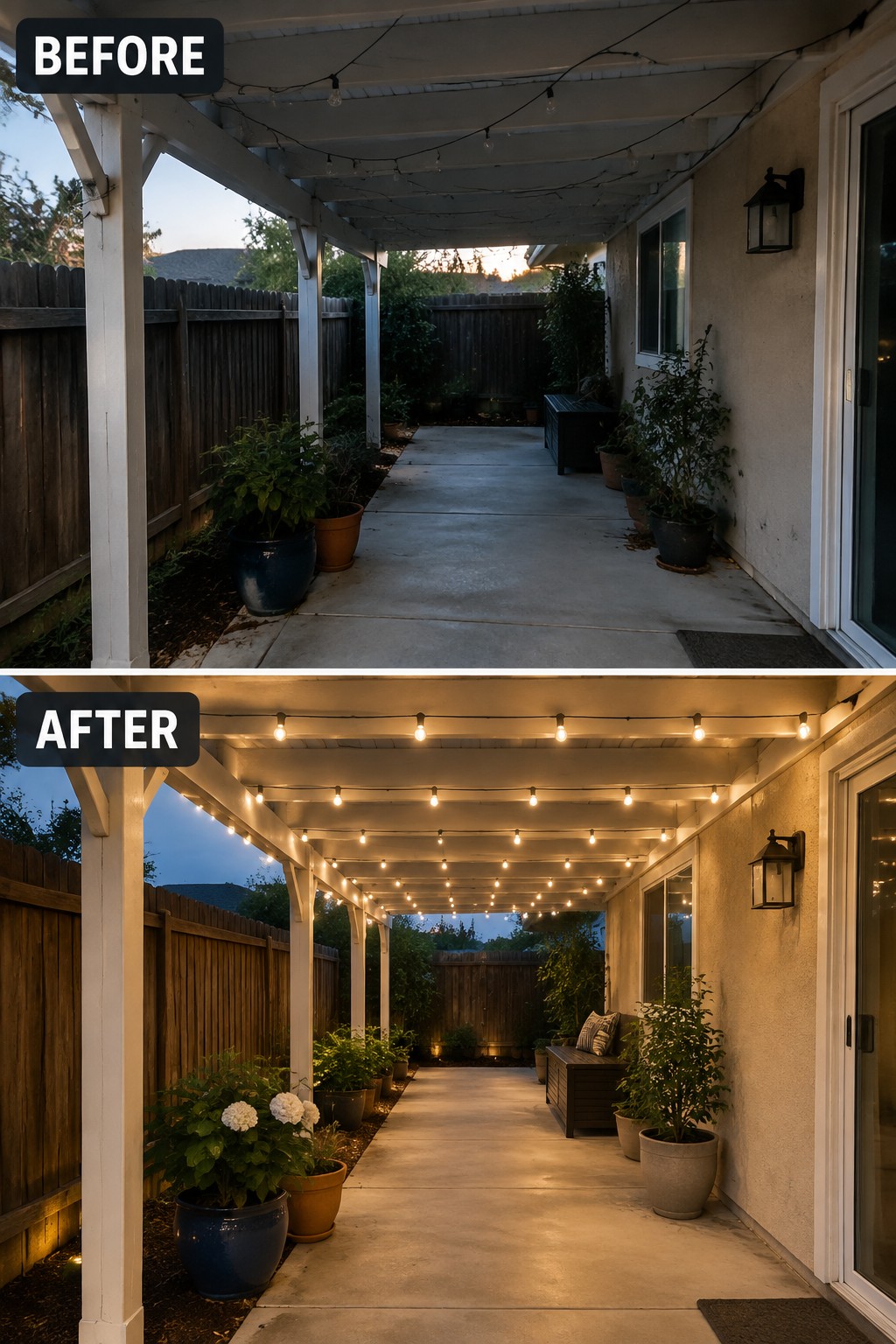
String lights make the biggest difference in this space. The before photo shows a plain covered path that felt dark and a little neglected once the sun went down. Running several strands of warm bulbs along the ceiling beams turns the walkway into something you actually want to use after dark and makes it much easier to see where you are stepping.
This approach suits any covered side path or porch that gets foot traffic at night. Use outdoor-rated lights and space them evenly so the glow reaches the ground without leaving dark spots. Keep the rest of the area simple with a few pots so the lights stay the main feature and the path stays clear to walk through.
Choose Path Lights That Direct Light Downward
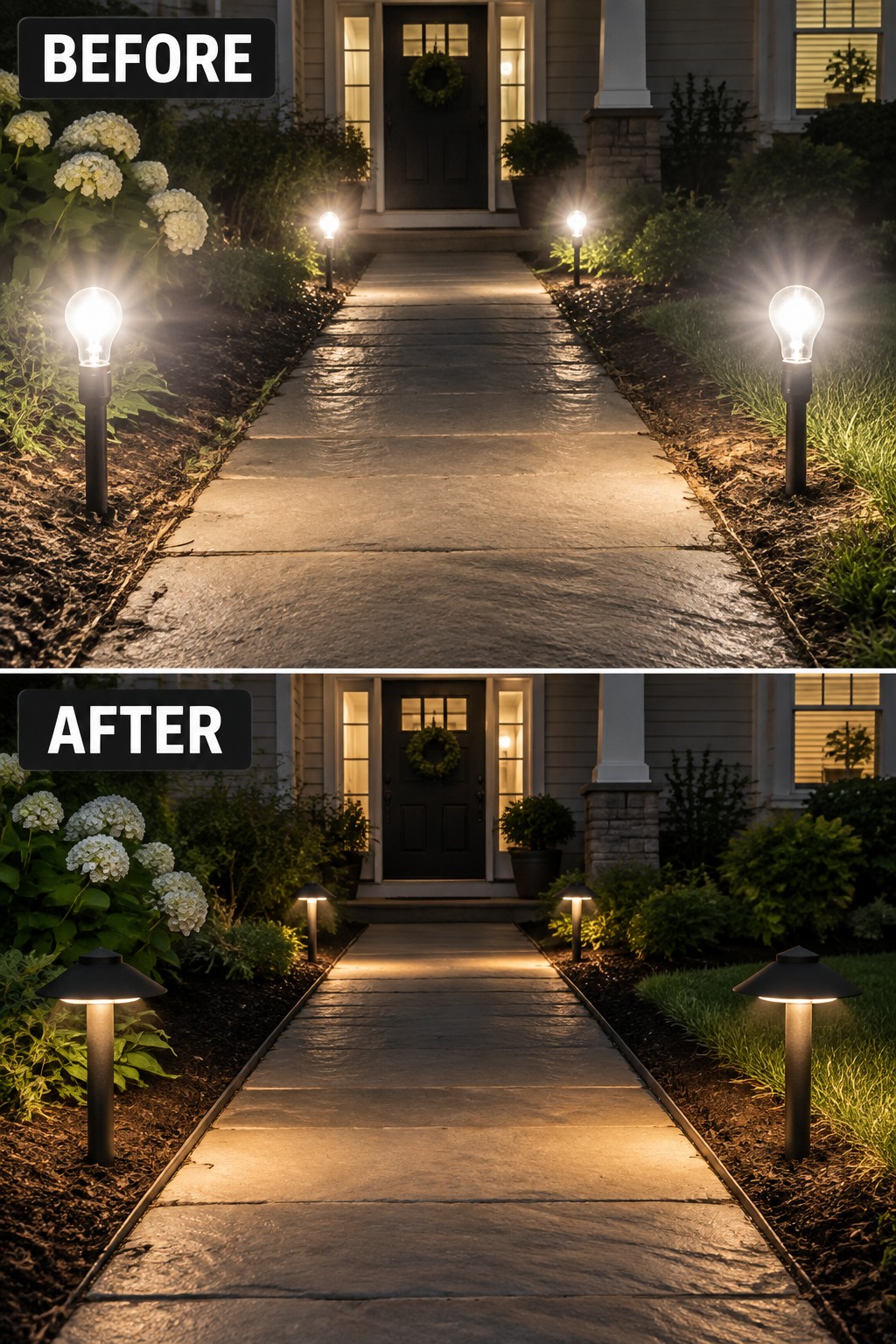
The main change here is swapping tall exposed bulbs for shorter hooded fixtures. The old lights threw glare straight into the eyes and left the path edges in shadow. The new ones keep the glow low and aimed at the stones, which makes the whole walk easier to see at night.
This idea works on any front path or side walkway where people move after dark. Pick fixtures with a shield or cap so the bulb stays hidden from view. Place them close enough to the edge that the light overlaps slightly, and test the spacing before you install the final set.
Add Lighting To Railings For Safer Walkways

Adding a simple strip of lighting along the handrails turns a plain concrete path into something much easier to use after dark. The before photo shows standard metal railings with no help for visibility, while the after shows how the same railings now cast a steady glow right onto the steps and walking surface.
This approach works well on any set of outdoor stairs or a long walkway where people come and go at night. Focus on weatherproof LED strips that follow the curve of the railing, and keep the light directed downward so it stays useful without shining into neighboring windows or plants.
Add Lighting To Garden Arches For Safer Paths

Many garden paths become difficult to follow once daylight fades. Wrapping string lights along an arch and adding a couple of low step lights makes the route visible without installing a full lighting system.
This works best on gravel or stone paths that see regular evening use. Focus the lights on the structure itself and the ground right beneath it so people can see where they step. Keep the brightness low enough to avoid glare while still marking the way clearly.
Add Path Lights To Make Garden Walkways Safer

A dark path through grass or dunes is easy to overlook until someone trips on it. Placing small lights right along the edges turns the same walkway into a clear route that stays usable after sunset. The lights sit low so they mark the edges without shining into anyone’s eyes.
This approach works on any path that sees regular foot traffic at night. Space the lights evenly and keep the fixtures simple so they do not compete with the surroundings. It is one of the quickest ways to improve safety without changing the rest of the yard.
Add Wall Lights To Make Narrow Walkways Safer
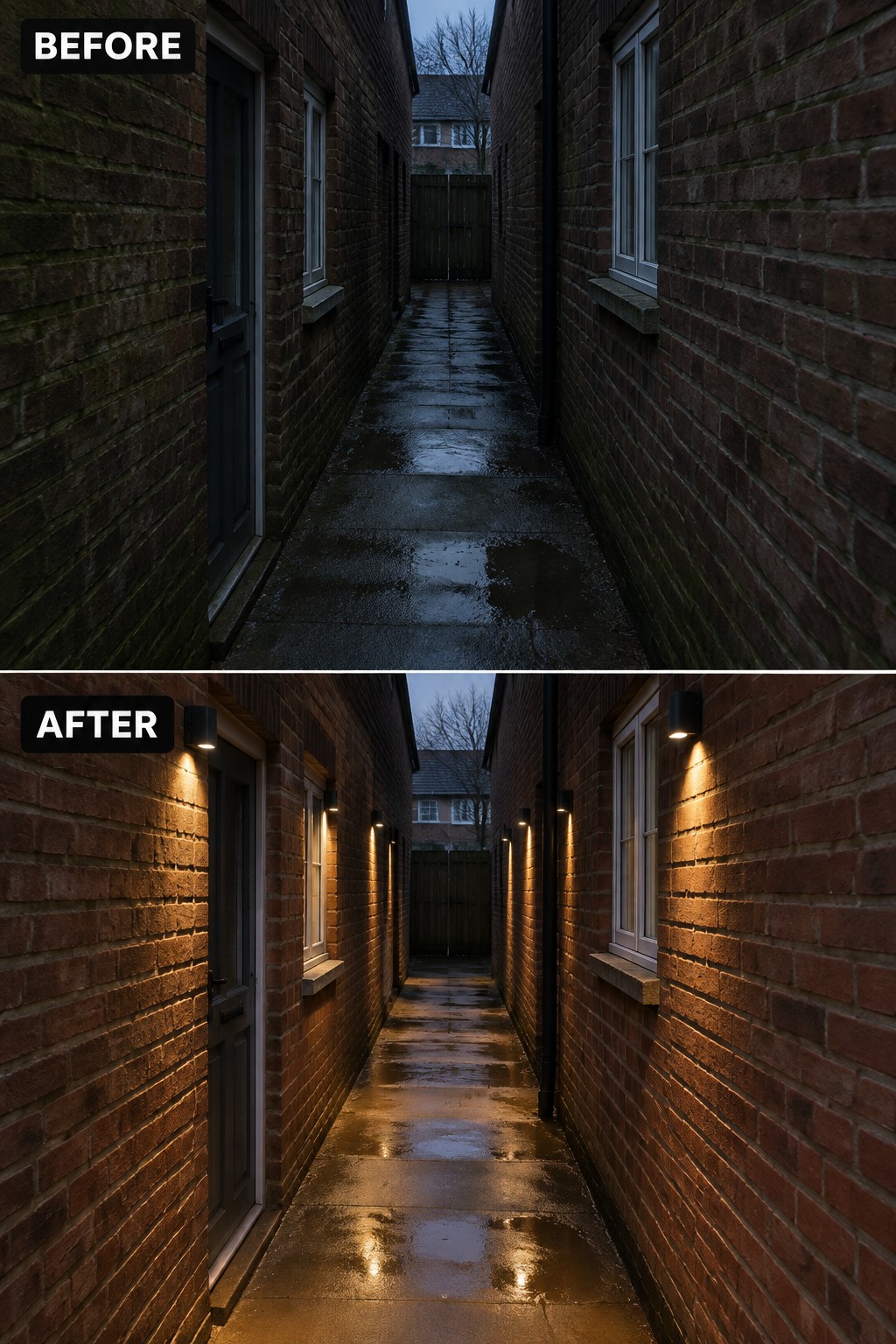
A dark path between buildings is hard to use at night and can feel unsafe when the ground is wet. Adding wall lights along both sides changes that quickly. The lights bounce off the brick and spread across the path, making the surface visible without any floor fixtures that could block the way.
This idea suits tight side passages or garden access routes where there is no room for posts or bollards. Space the lights evenly and aim them downward so they light the walking surface rather than the sky. Weatherproof sconces keep the setup simple and low maintenance.
Add Lighting Along A Walkway With Planters

One easy way to make a front path safer at night is to add low lighting right along the edges. The change from empty black planters to wooden ones holding flowers and small lanterns turns a flat concrete strip into a clearly marked route without needing separate fixtures in the ground.
This idea works best on straight walkways that lead straight to the door. Keep the planters matched on both sides, use lights that are made for outdoor use, and choose plants that stay low enough not to block the glow. It adds just enough light to see the surface while keeping the look simple and tidy.
Add Step Lighting Along Walkways For Nighttime Safety
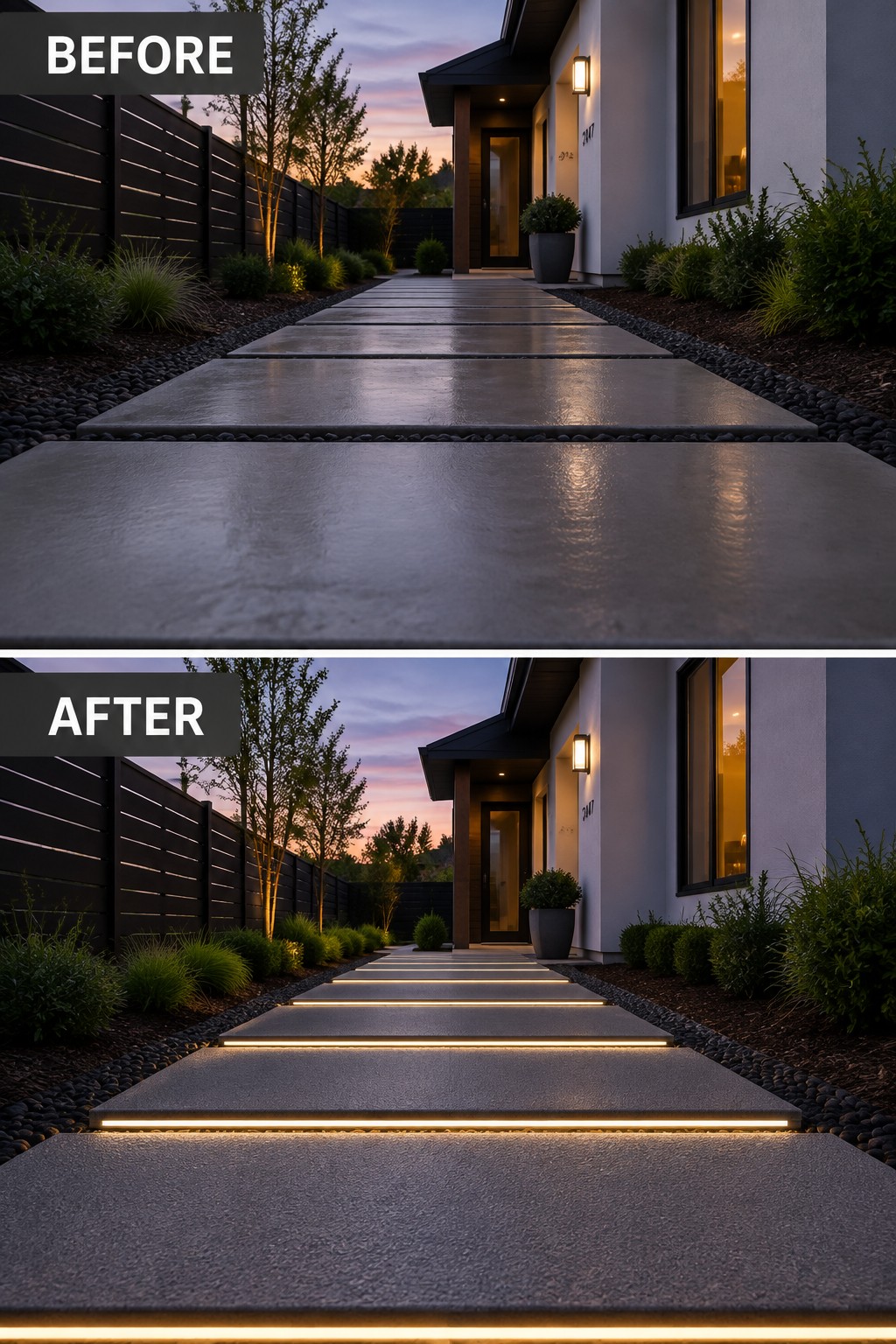
Many homes have concrete paths that work fine during the day but turn into a hazard once the sun goes down. In this case the before photo shows a plain, unlit walkway leading to the front door. The after photo shows simple LED strips set into the front edge of each step, which makes the entire path easy to see without needing tall fixtures or bright overhead lights.
This approach works well on any sloped entry or long garden path where people walk after dark. Use low-voltage, weatherproof strips that match the width of the steps, and keep the light warm rather than cool white so it does not feel harsh. Test the placement at night before you commit, and make sure the wiring stays hidden under the edging or in the gravel border.
Add Pathway Lighting To Garden Stairs
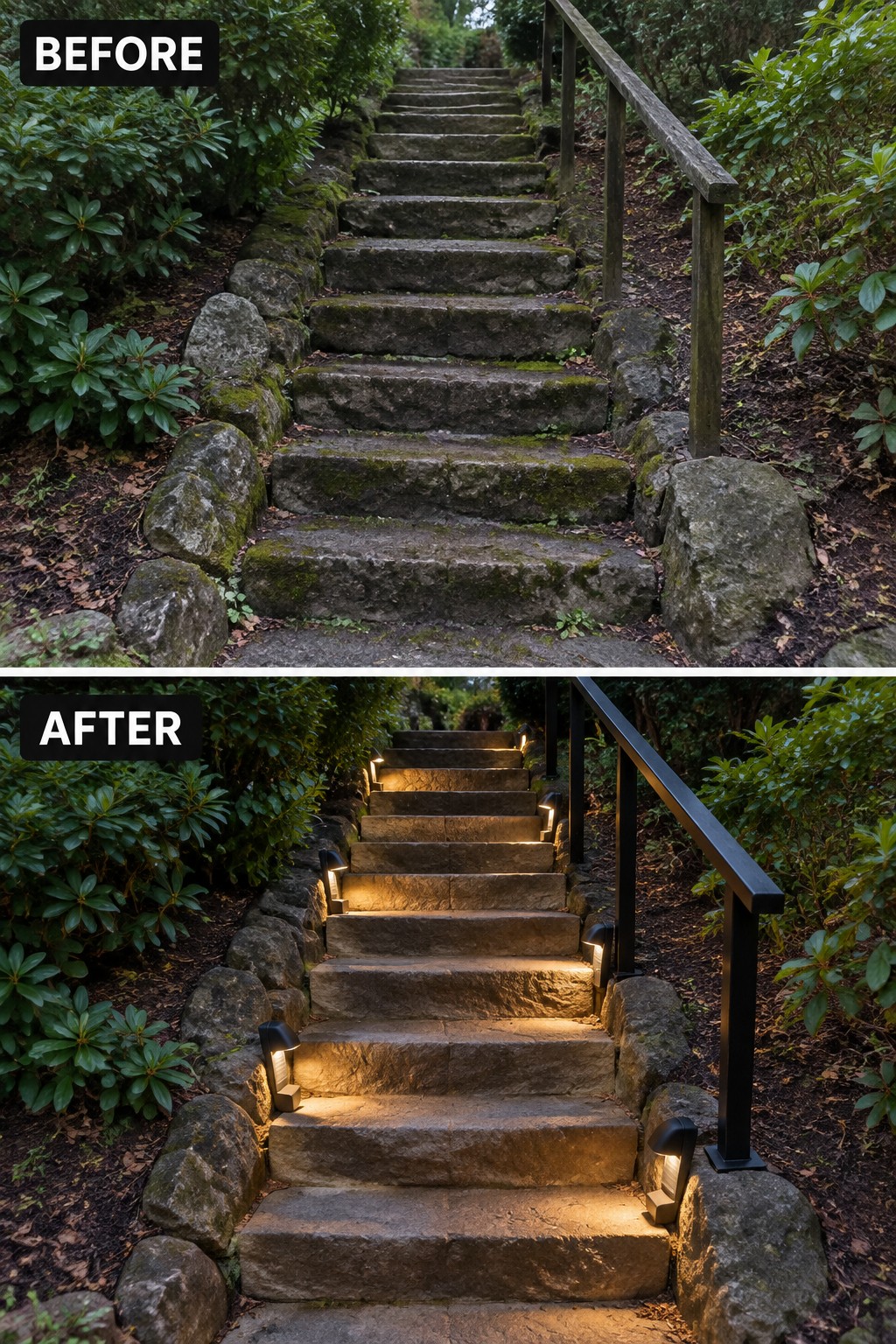
Garden stairs often get overlooked until someone trips on them after dark. The simple addition of low lights along the edges turns a dark, mossy flight of steps into a clear, usable path without flooding the whole area with bright light.
This approach works best on stone or concrete stairs that sit in shade most of the day. Keep the fixtures small, aim them at the treads, and space them evenly so each step stays visible. It is a practical first step before adding more features to the surrounding beds.
Add Path Lights To Make Walkways Safer At Night
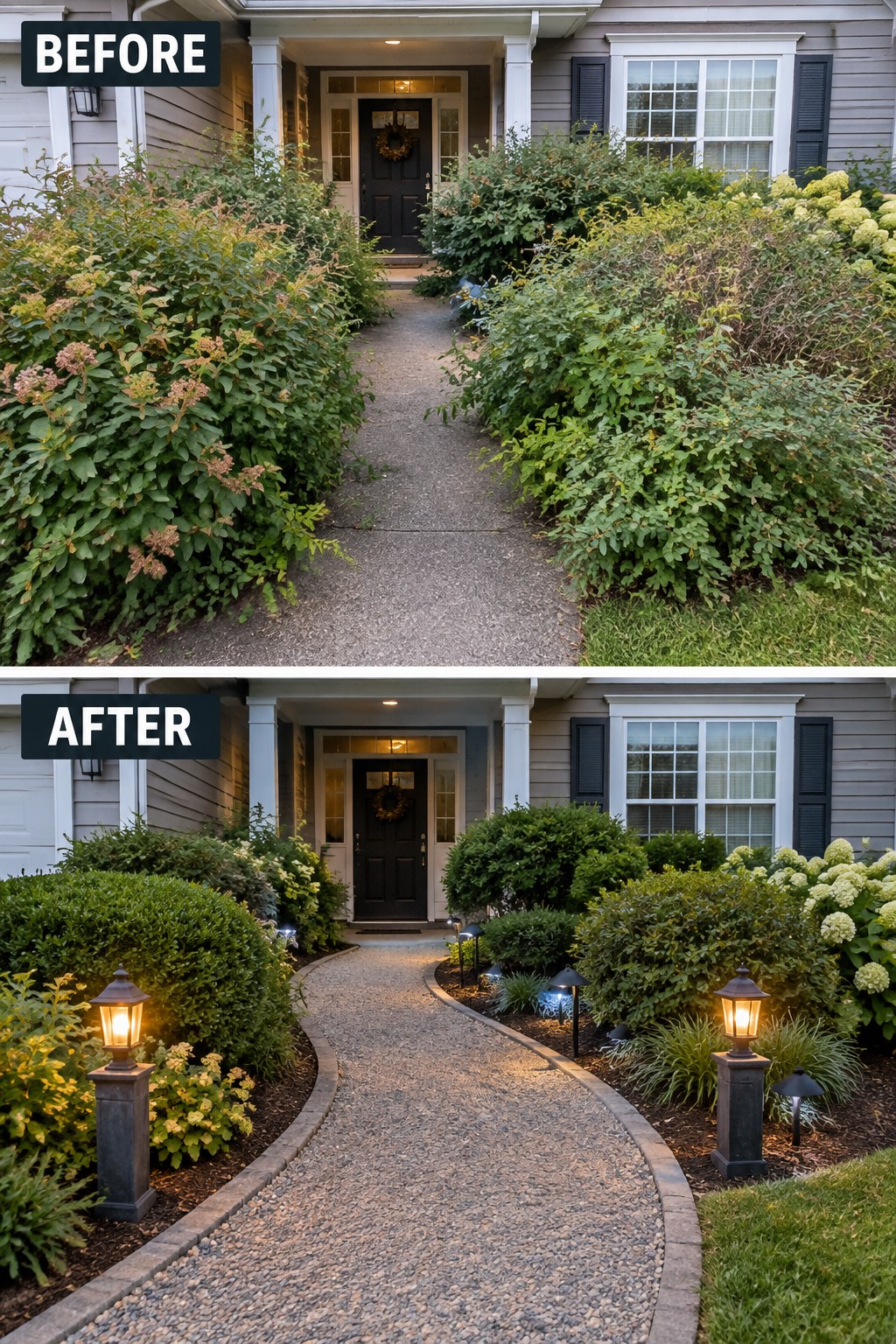
Clearing back the overgrown shrubs that were spilling onto the path made room for a simple lighting plan. A pair of post lanterns and a few low ground lights now mark the curve, so the walkway stays visible after dark without needing bright overhead fixtures.
This idea suits any front path or side entrance where people walk after sunset. Trim plants first so the lights can shine through, then space the fixtures low and close to the edges so they guide feet without creating glare.
Add Low Lighting Along Retaining Walls To Guide Nighttime Paths

A narrow side path often feels forgotten once the light fades. The before image shows a plain concrete wall and gravel that disappear into shadow. The after adds a simple strip of warm light along the base of the wall, which lifts the whole walkway without any extra fixtures or tall posts.
This approach suits homes with existing raised beds or retaining walls that run beside a path. Run a weatherproof LED strip along the lower edge so the light stays low and directed downward. It improves footing on gravel or pavers while keeping the glow from reaching windows or washing out nearby plants.
Add Recessed Lighting To Garden Paths For Better Safety
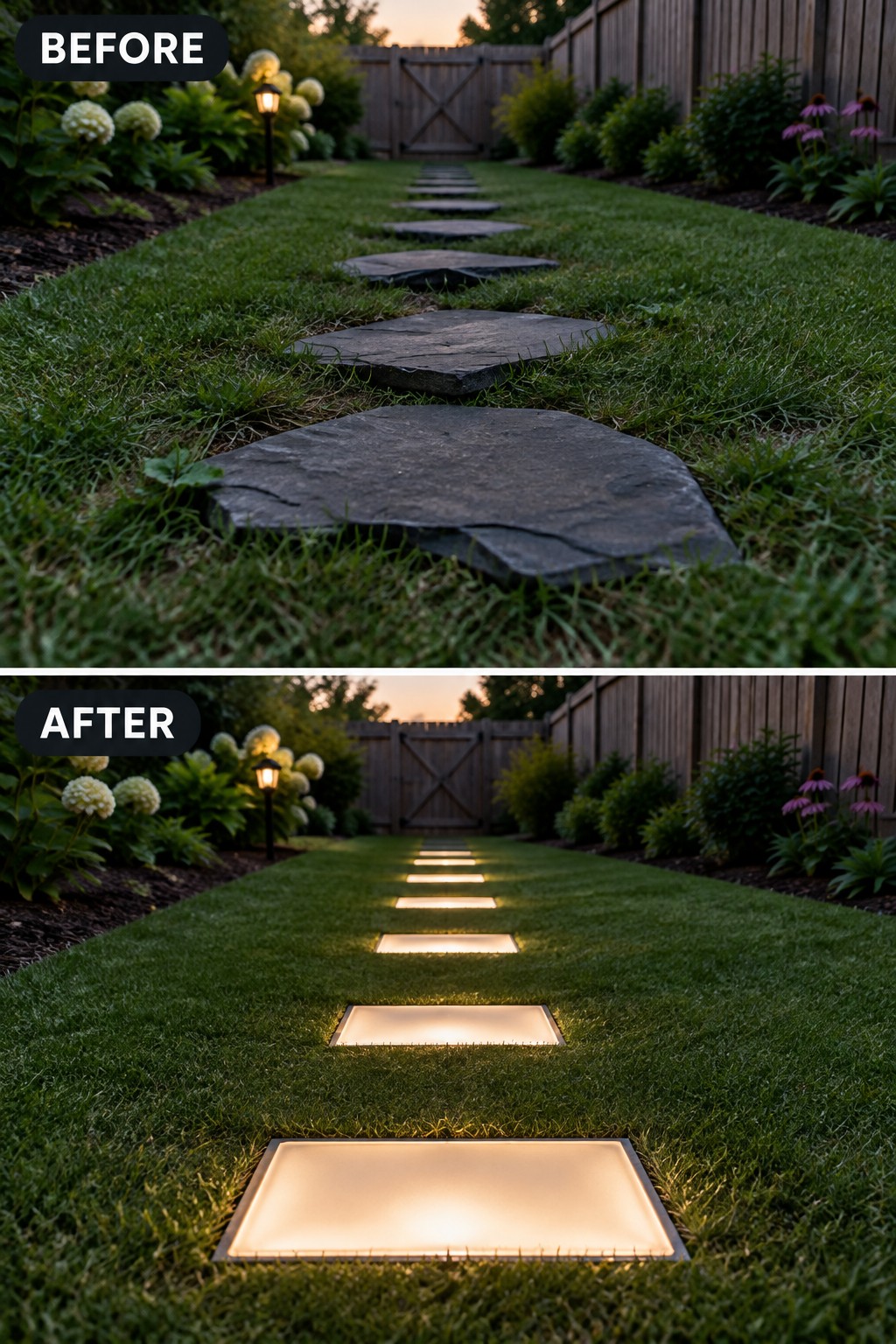
Many garden paths rely on dark stepping stones that disappear into the grass after dark. Replacing them with low, recessed lights set into the lawn creates a steady line of light that shows exactly where to step.
This idea works best on long, narrow walkways that connect different parts of the yard. Keep the fixtures flush with the ground so they do not interfere with mowing, and choose models made for outdoor use. The result is a path that feels safer without adding tall lamps or extra clutter.
Add Path Lights To Make Walkways Safer
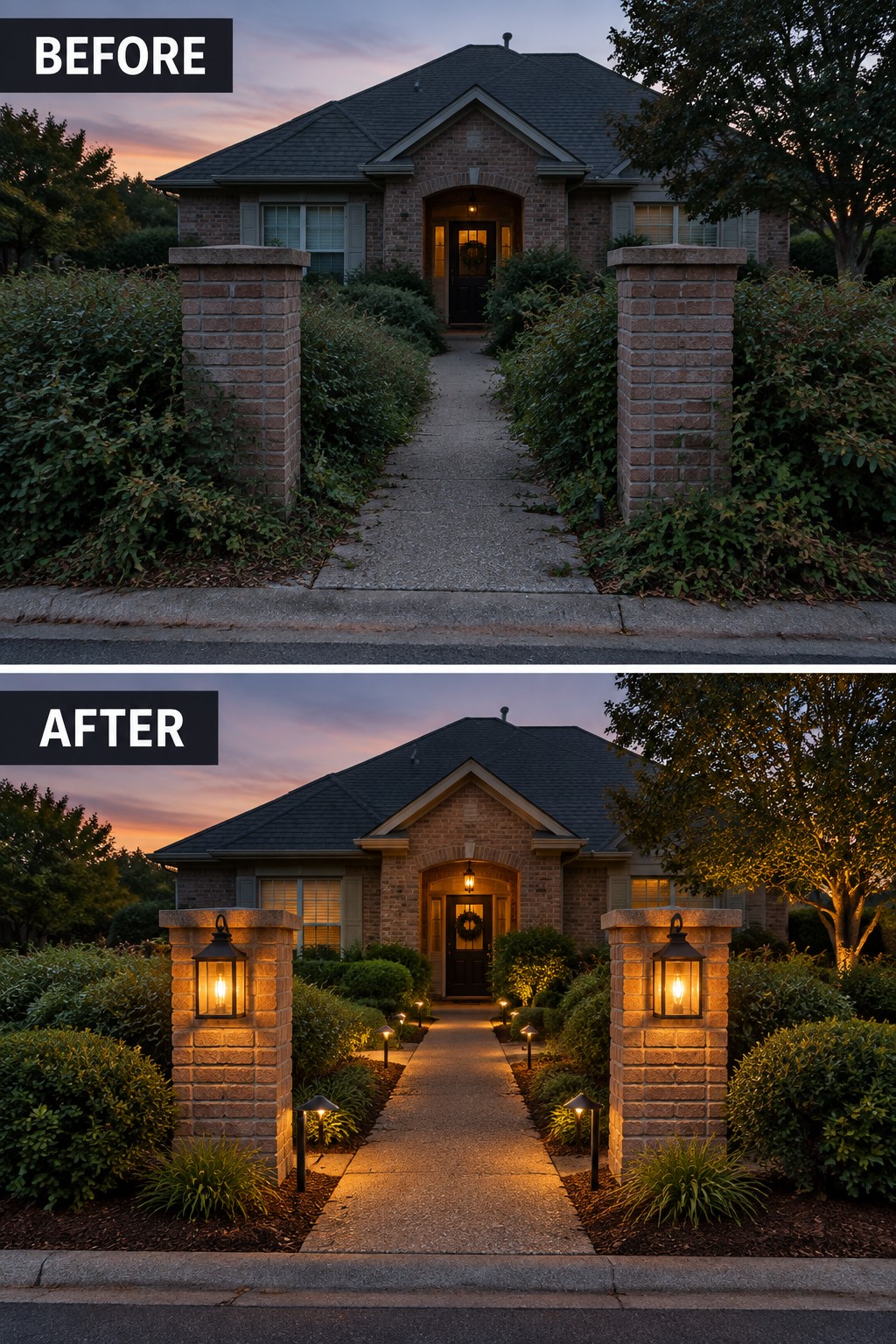
The before photo shows a front path with no lighting at all, which makes it hard to see at night. In the after version, lanterns sit on the brick pillars and small path lights run along both sides of the walkway. This change turns a dark route into one that feels much easier to use after sunset.
This idea works best on homes with a clear path from the street or driveway to the door. Use low voltage or solar lights so you do not need to run new wiring, and place them close enough to the ground to light the surface without creating glare. If you already have pillars or posts, adding lanterns to them gives extra height and spreads the light farther down the path.
Frequently Asked Questions
Q: How far apart should the lights go along a straight path?
A: Space them every six to eight feet. This distance keeps the ground lit evenly so you can see the edges without extra fixtures that just add glare.
Q: What helps most with steps or turns in the walkway?
A: Set a low light at the start and end of each step or curve. Angle it to catch the edge so your feet find solid ground instead of guessing in the dark.
Q: Do the wires have to go underground?
A: Bury them a few inches deep with a simple cover. That protects them from mowers and feet while keeping the setup tidy and safe.
