

I have noticed that backyard paths tend to disappear into the dark once the sun goes down, which makes the whole yard feel less finished.
Simple solar lights along those routes can define the space and make it easier to use after dusk without any electrical work.
It adds up faster than I expected.
I usually try a few placements before settling on the final spots because the light spread varies with each model.
Over time these small additions build up and help the landscape feel more intentional rather than just a patch of grass and dirt.
Add Solar Path Lights Along A Front Walkway
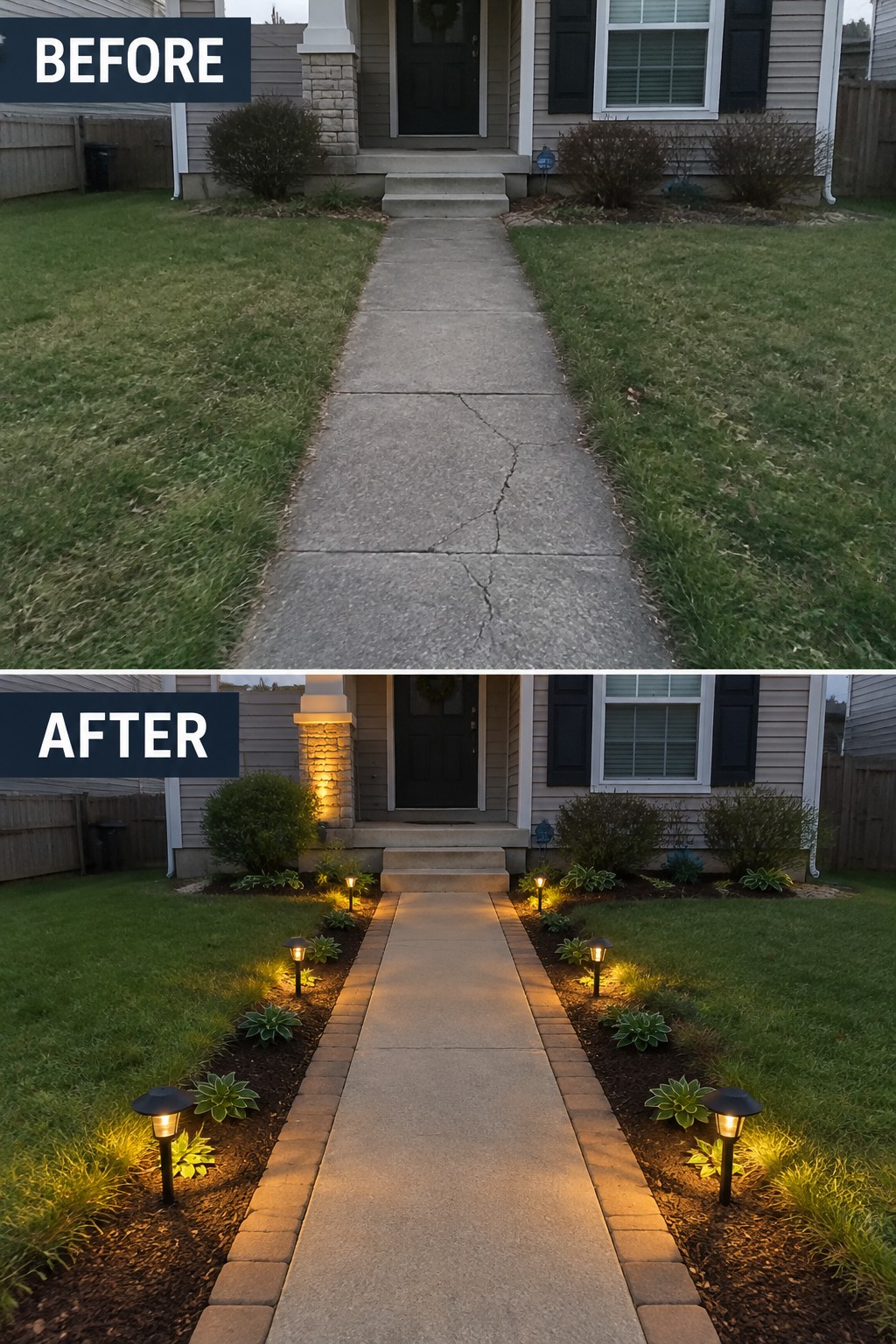
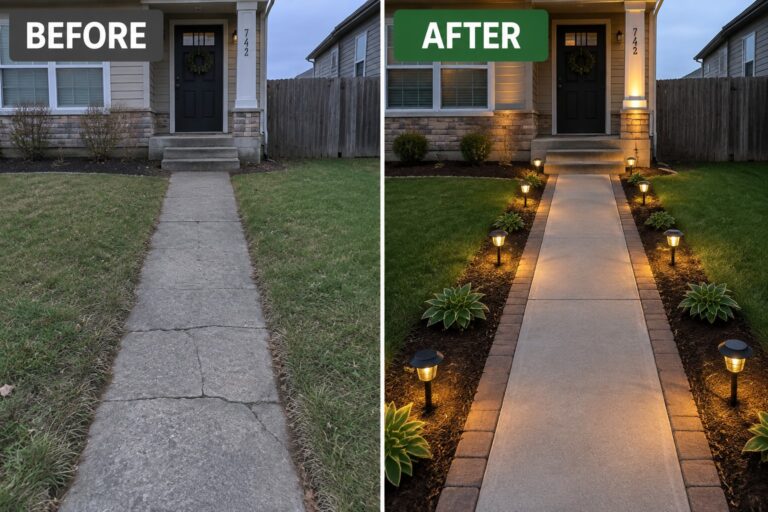
Adding solar path lights is one of the simplest ways to improve a plain front walkway. The before photo shows a basic cracked concrete path with nothing to mark the edges or guide people at night. In the after version, low solar lights run along both sides and create a clear, welcoming line from the street to the door.
This approach works on most homes with a straight path to the entry. Place the lights a few feet apart so they do not crowd the walkway, and keep the number modest so the look stays simple rather than cluttered. It is an easy project that needs no wiring and helps visitors see the path after dark.
Add Solar Path Lights To Define A Garden Path
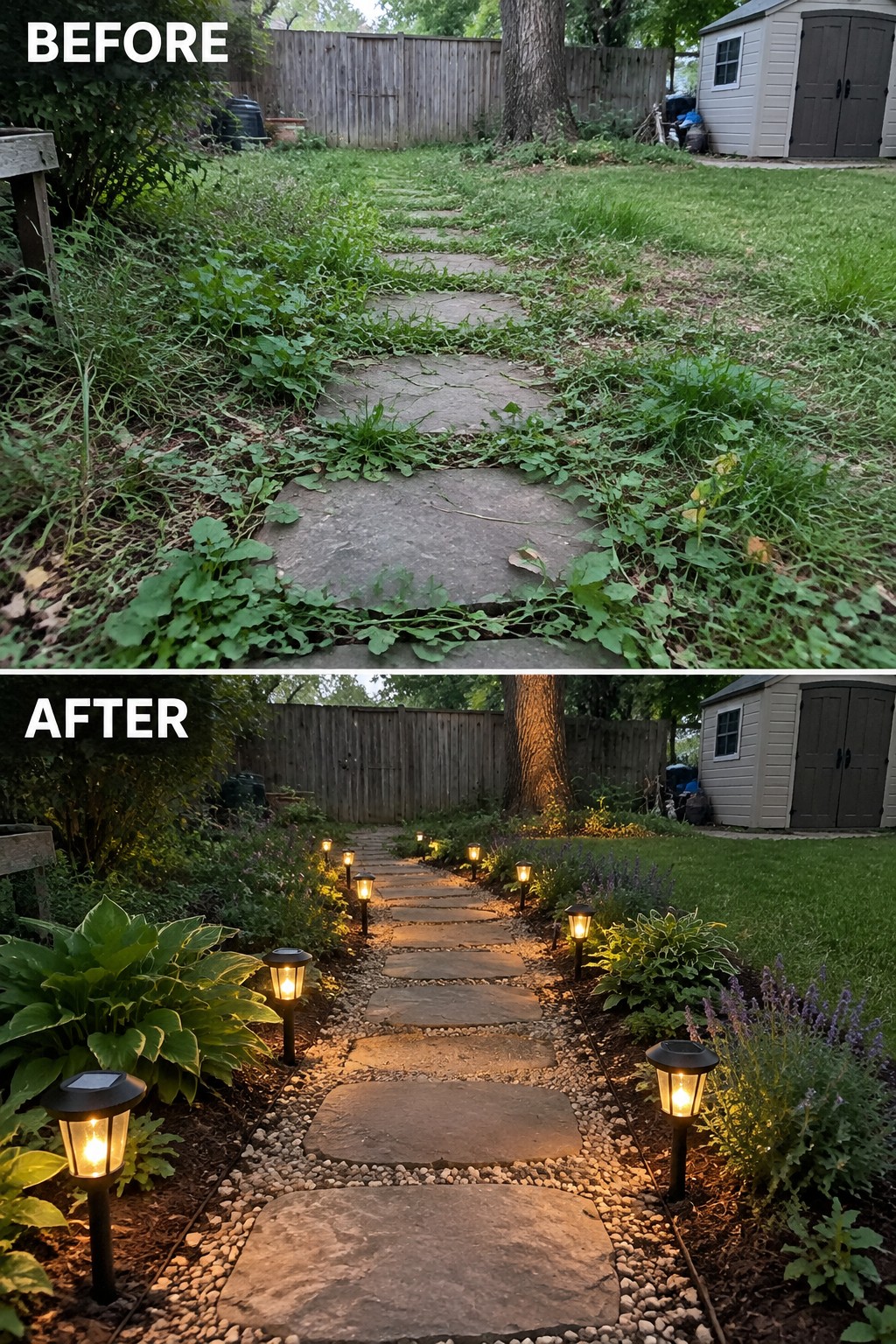
A stone path that disappears under weeds feels more like an afterthought than a real walkway. Adding solar path lights along the edges gives the path a clear shape and makes it usable once the sun goes down. The lights turn a simple cleanup job into something that feels intentional.
This approach works best on existing paths where you want to add structure without major digging. Keep the spacing even and choose lights that sit low enough to highlight the stones rather than the surrounding plants. It is one of the easiest ways to make a backyard path feel finished on a budget.
Define Your Lawn Edge With Solar Path Lights
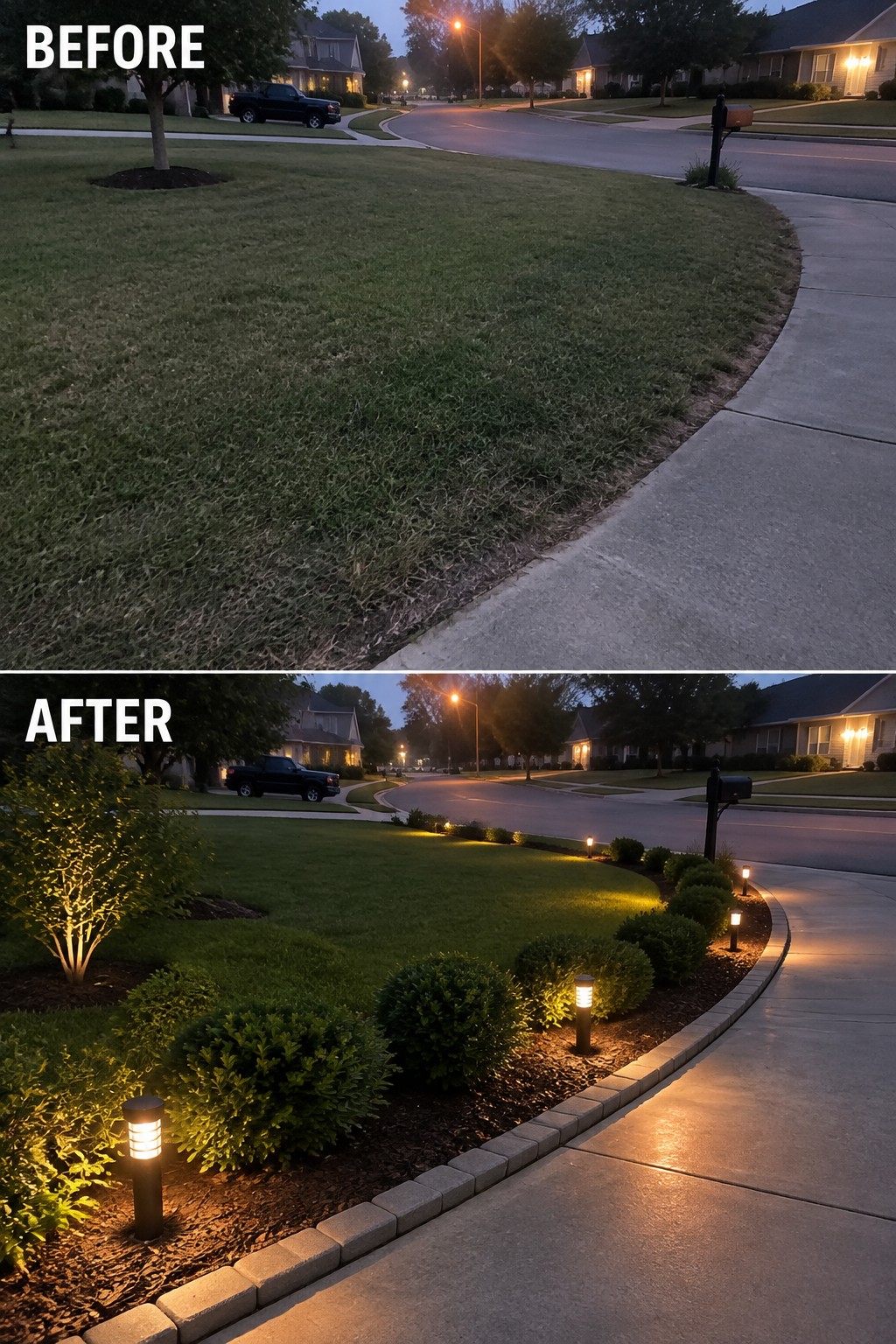
One simple way to give a yard more shape is to run solar path lights along the place where the grass meets the sidewalk. The open lawn had no clear border, so the edge just faded into the concrete. Adding a narrow mulched bed with a few shrubs and placing lights along the curve created a clean line that shows up both day and night.
This works well on any home where the front or side lawn runs straight into a walkway. Clean the edge first, lay down mulch or a low border, then space the lights so they follow the natural curve. The result looks planned without needing a big budget or constant upkeep.
Use Solar Path Lights To Make A Patio Usable After Dark
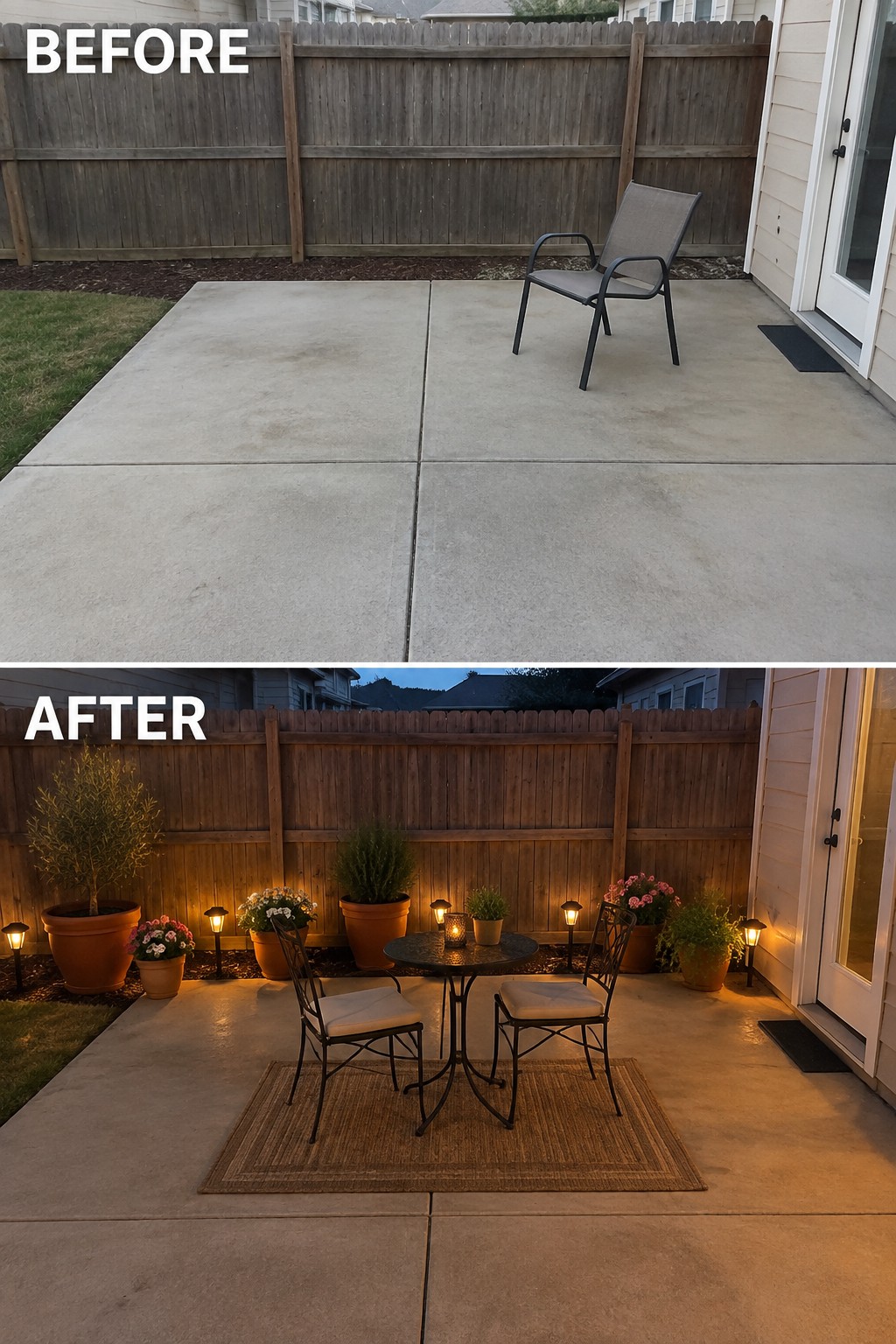
A bare concrete patio often sits empty once the sun goes down because there is no clear reason to stay outside. Adding a few solar path lights along the edges gives the space a gentle boundary and a soft glow that makes the area feel intentional rather than forgotten.
This approach works on any flat outdoor surface that needs evening use. Set the lights around the seating zone rather than spreading them out too far, and keep the rest of the setup simple so the lights remain the main feature at night. The result is a low-cost way to gain an extra living area without running wires or doing major work.
Use Solar Path Lights To Brighten Deck Stairs
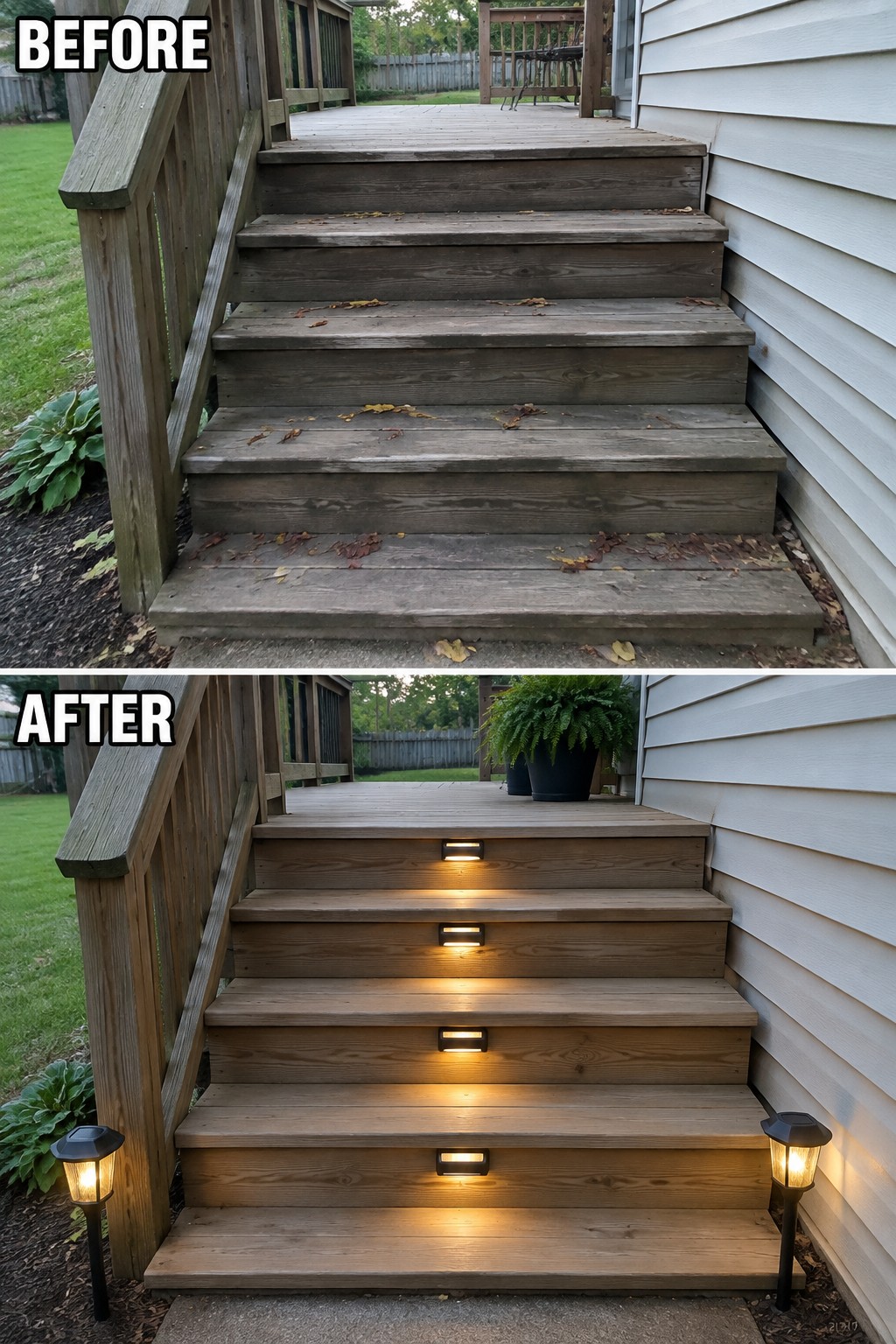
Stairs on a deck often become hard to see once it gets dark. Adding a few solar path lights along the sides gives enough light to walk up and down safely without any wiring or electrical work.
This approach works well on most wooden decks where the ground beside the stairs can hold a couple of stake lights. Keep the number of lights modest so the steps stay easy to navigate and the glow stays soft rather than overly bright.
Add Solar Path Lights Along A Stone Walkway
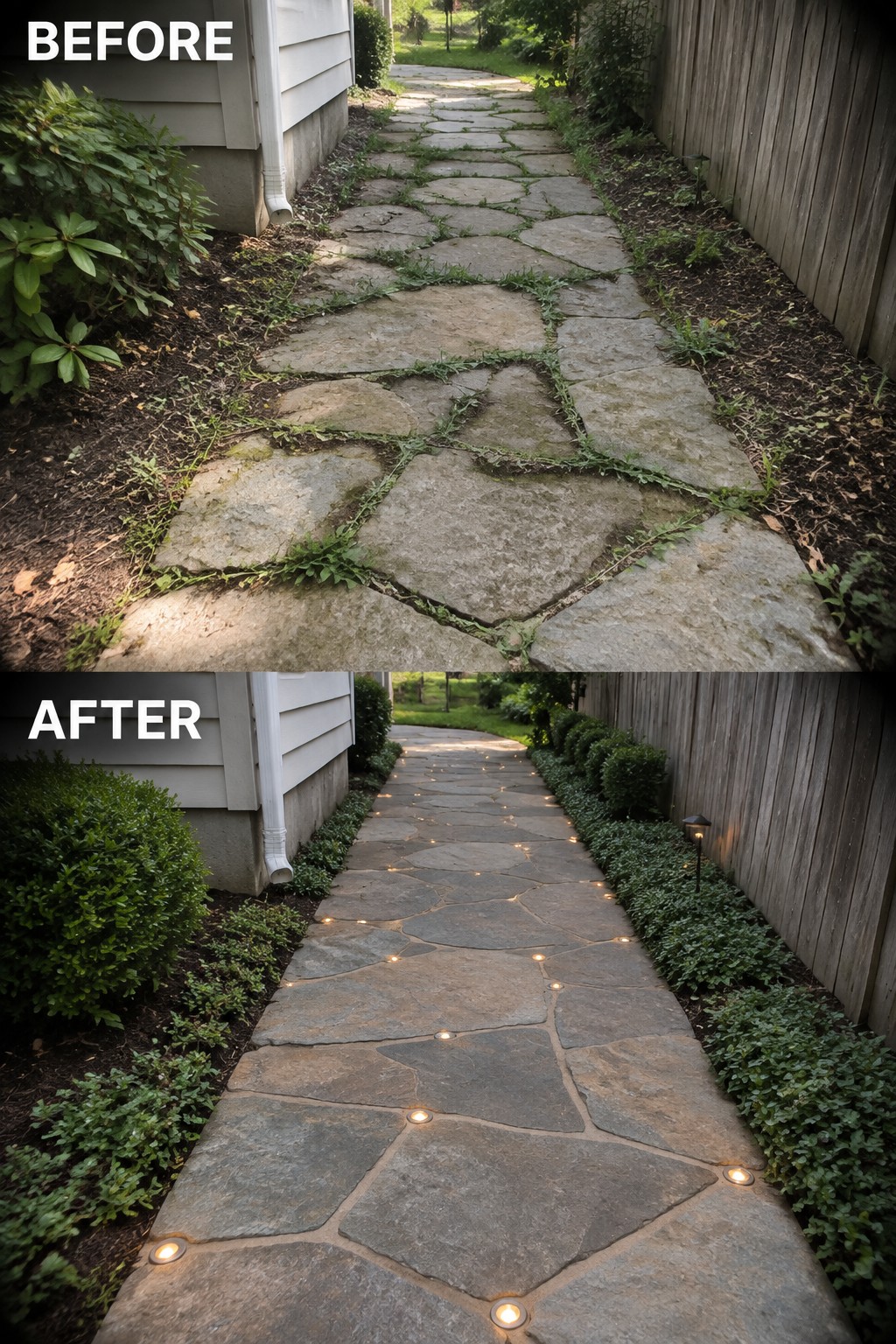
A stone path that had weeds growing between the pavers felt neglected and hard to use after dark. Placing solar lights along both edges cleaned up the look and made the walkway much easier to follow at night.
This approach works best on side paths or garden routes that already have a solid surface. Clear out the overgrowth first, then space the lights evenly so they mark the edges without crowding the stones. It suits homes where the path leads to a back door or seating area and keeps the focus on function rather than decoration.
Add Solar Lights Along A Fence To Brighten A Side Path
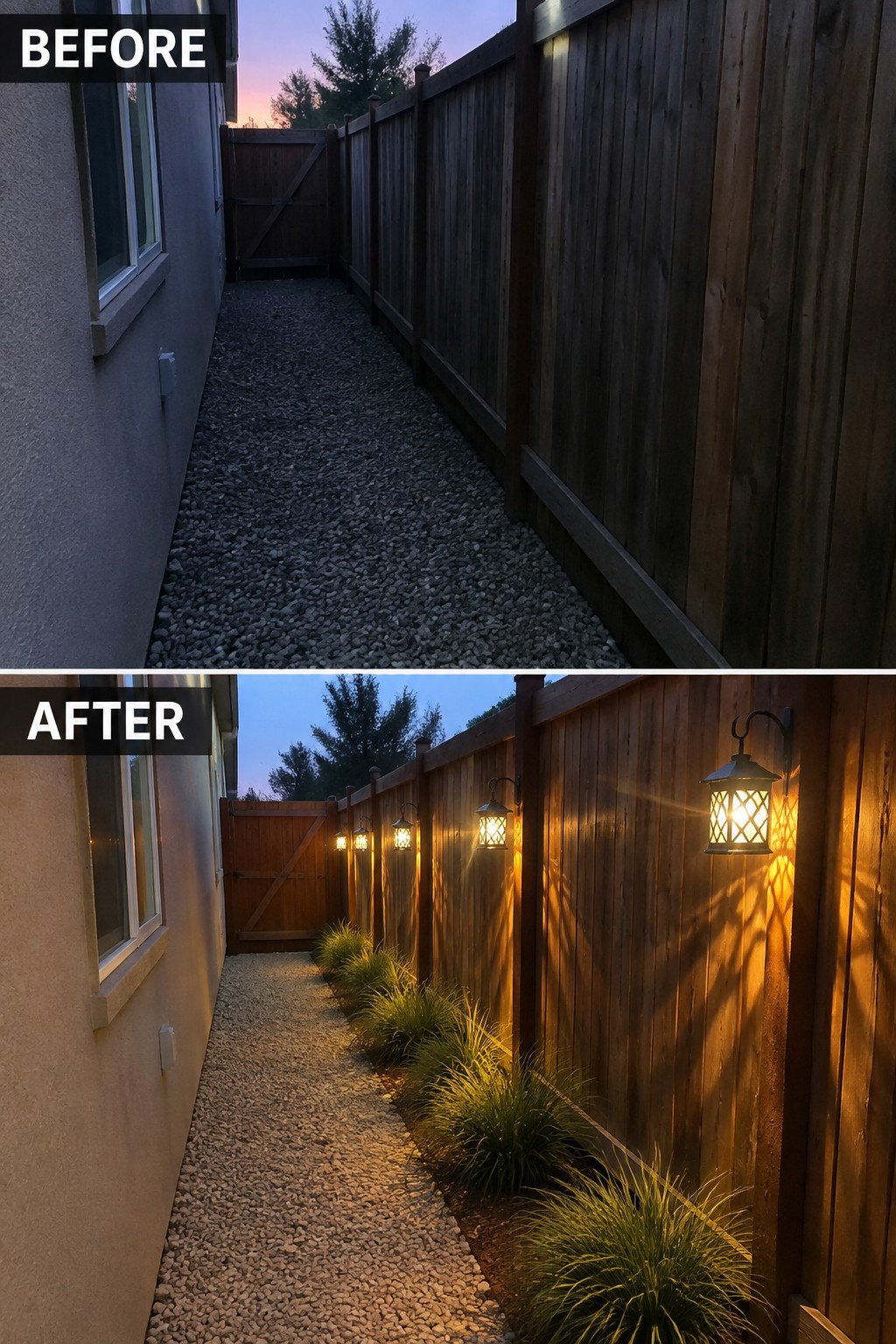
A narrow gravel path next to a tall fence often stays dark and uninviting at night. Mounting a few solar lights on the fence posts changes that quickly. The lights cast a warm glow across the ground and create soft patterns on the wood, which makes the whole space feel safer and more finished without any wiring.
This idea works well on side yards, back gates, or any long fence where you need basic light for walking. Start with the darkest stretch of path and space the lights evenly so the beam overlaps slightly. Add a simple row of low plants at the base if you want to soften the look, but keep the focus on the lights themselves since they do most of the work.
Line Your Front Beds With Solar Path Lights
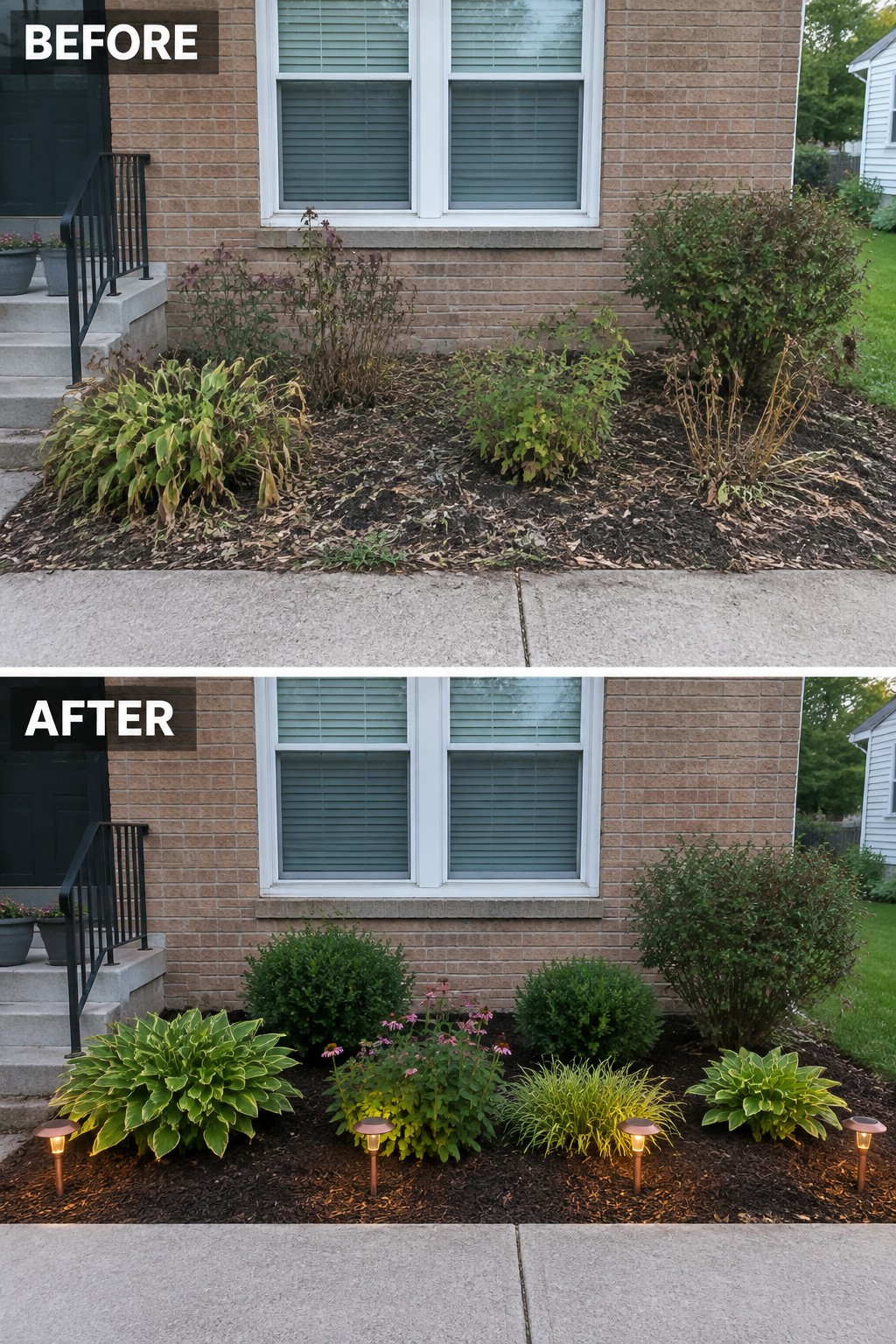
A messy front bed full of half-dead plants and uneven mulch can make the whole house look neglected. Once the bed was cleared and replanted with a simple mix of hostas, small shrubs, and grasses, a row of low solar path lights turned the same strip into a clear, finished feature that leads the eye along the house.
This approach works best on a narrow foundation bed where you want low, even light without tall fixtures. Place the lights about two feet apart right at the front edge of the mulch so they outline the planting at night and stay out of the way during the day. The solar panels need full sun, so keep taller plants behind the line of lights.
Use Solar Path Lights To Make A Pool Patio Usable At Night

The plain pool deck looked empty once the sun went down. Adding a line of solar path lights along the coping gave the space clear edges and a soft glow that made it feel finished and ready for evening use.
This idea works best on hardscaped areas around pools or patios where you want light without running wires. Space the lights evenly along the border so they guide movement and highlight the water without creating glare. Keep the rest of the area simple with a few pots so the lighting stays the main feature.
Add Solar Path Lights Along The Front Walk
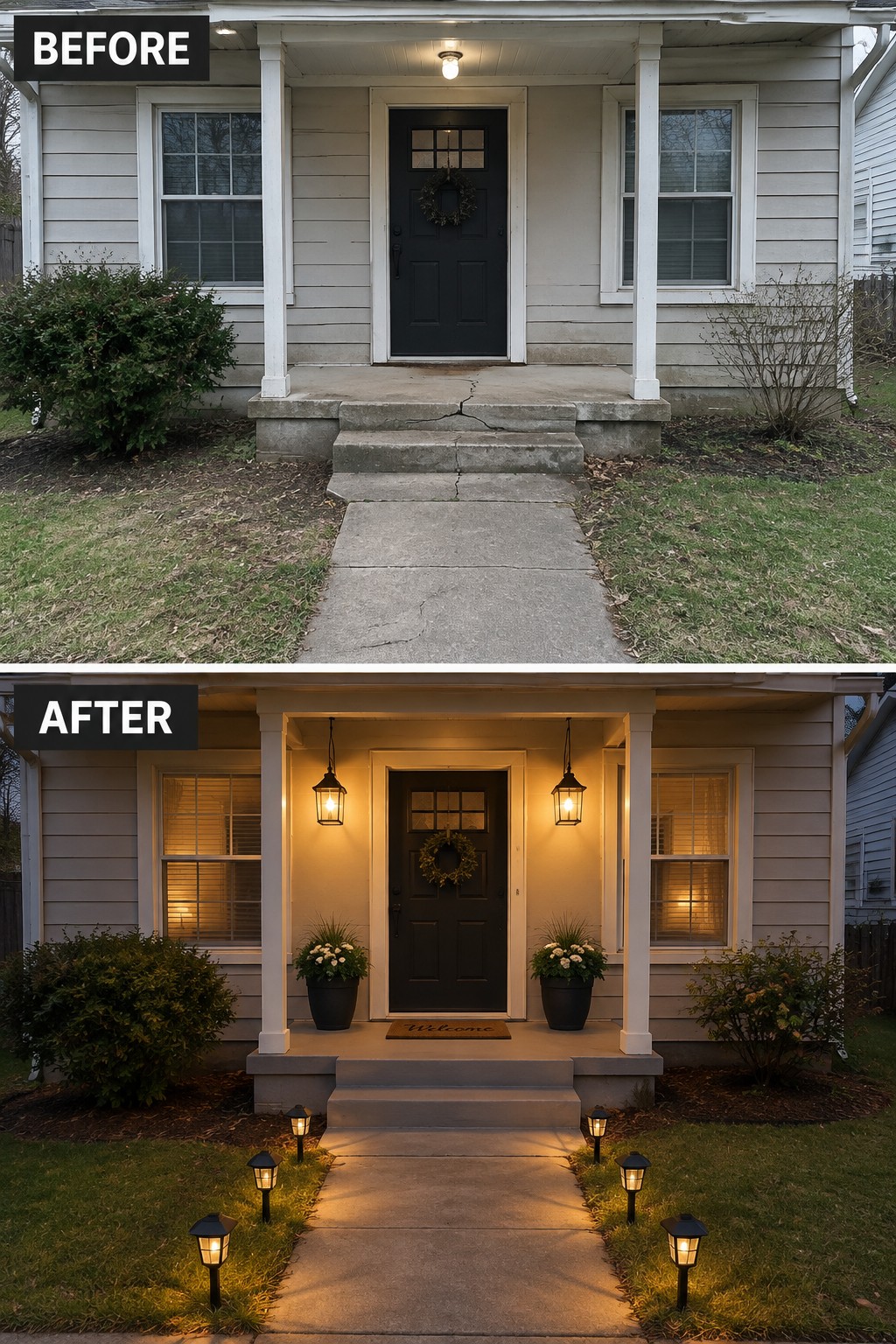
The biggest shift here comes from adding a row of small solar lights on both sides of the walkway. What looked like a plain, cracked concrete path now feels like a clear route to the door, especially once the sun goes down. The porch lights help too, but the path lights do most of the work to make the entry feel finished and easy to follow at night.
This idea works well on any house where the walk from the street or driveway feels a little lost after dark. Start with four to six lights on each side, space them evenly, and keep the path clear so people can still walk comfortably. It stays simple, costs little, and makes the whole front of the house look more cared for without any wiring.
Add Solar Path Lights Along A Gravel Path
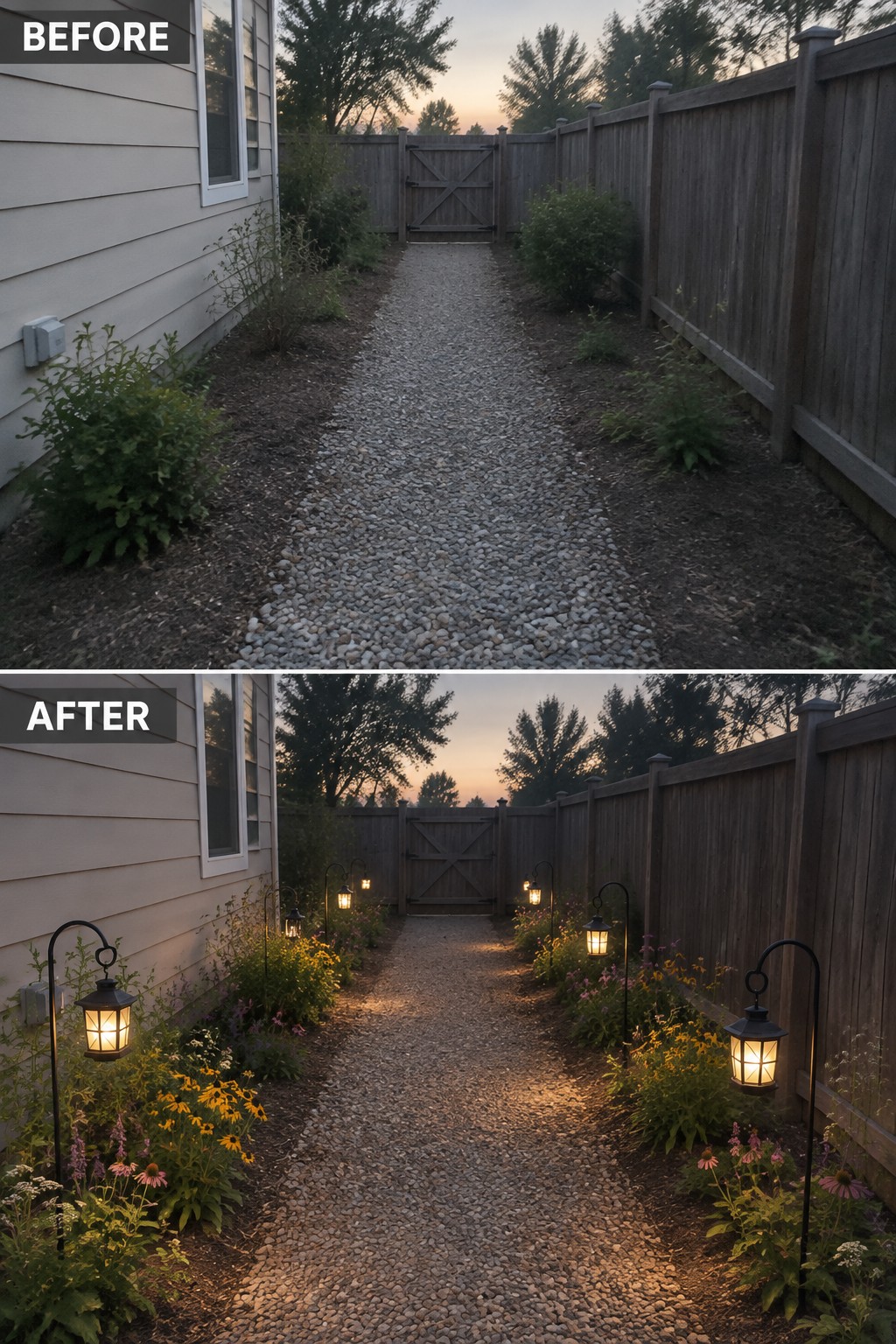
A plain gravel path can feel a bit lost once the sun goes down. Placing solar lanterns at regular intervals on both sides gives the walkway clear edges and a gentle glow that makes it easier to use at night. The lights also draw attention to the planting along the borders, so the whole area feels more put together without needing any wiring.
This works especially well on side yards or narrow passages where you want some light but do not need a full lighting system. Start with a simple path cleanup, then space the lights evenly so the glow stays consistent. Keep the planting low near the lights so they stay visible and do not get buried by taller growth later in the season.
Add Solar Path Lights Along A Garden Border
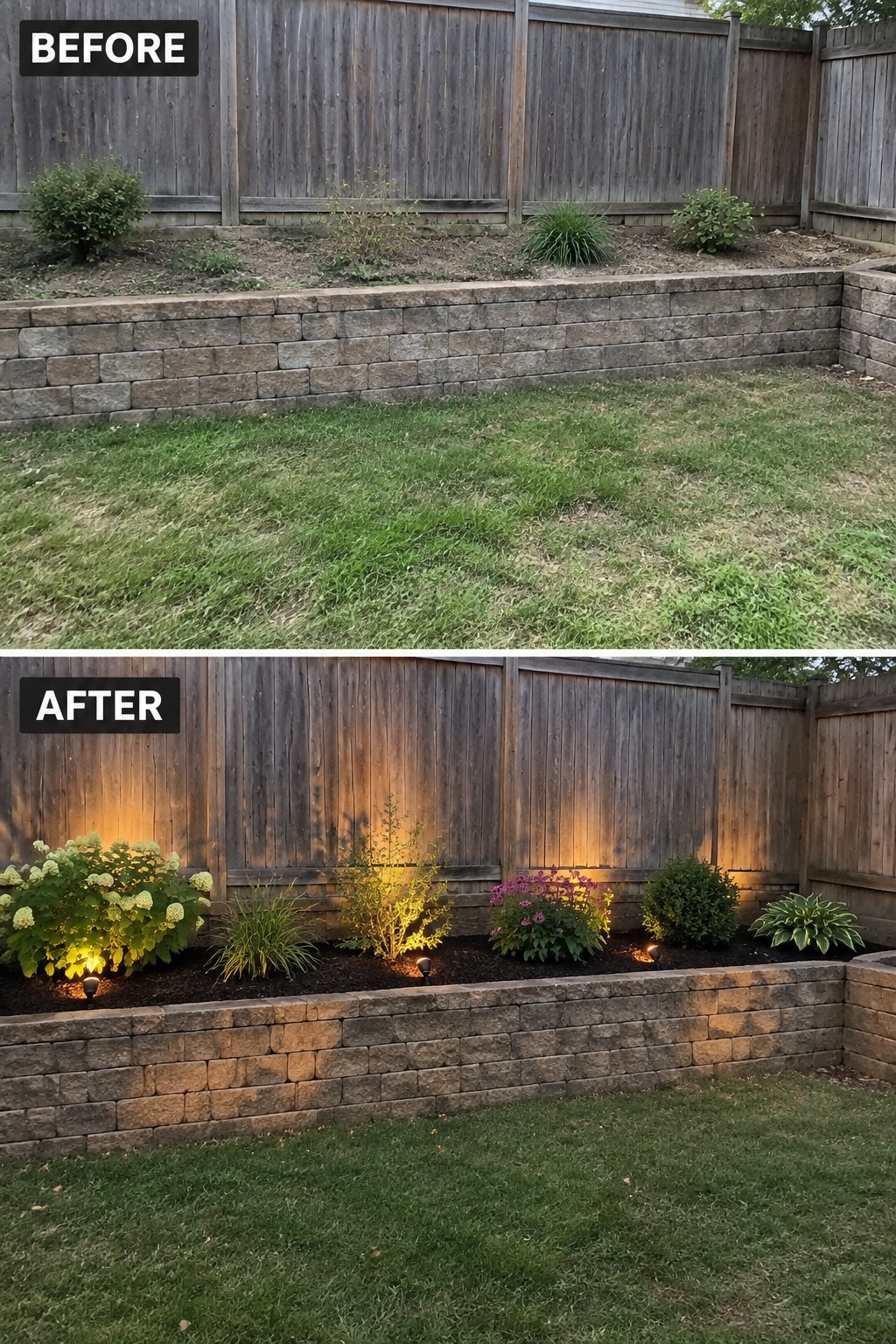
The main change here is simple. A plain dirt bed along the fence and retaining wall gets a layer of mulch, a few new plants, and a row of small solar path lights tucked at the front edge. At night the lights lift the whole area, casting a soft glow on the fence and making the plants stand out instead of disappearing into the dark.
This works well in any yard where the border runs along a fence or wall. Place the lights a foot or two apart so the glow overlaps a bit, and keep the number low so it stays budget friendly. The same approach works along a driveway edge or the back of a flower bed where you want a little definition without running wires.
Line Your Front Walkway With Solar Path Lights
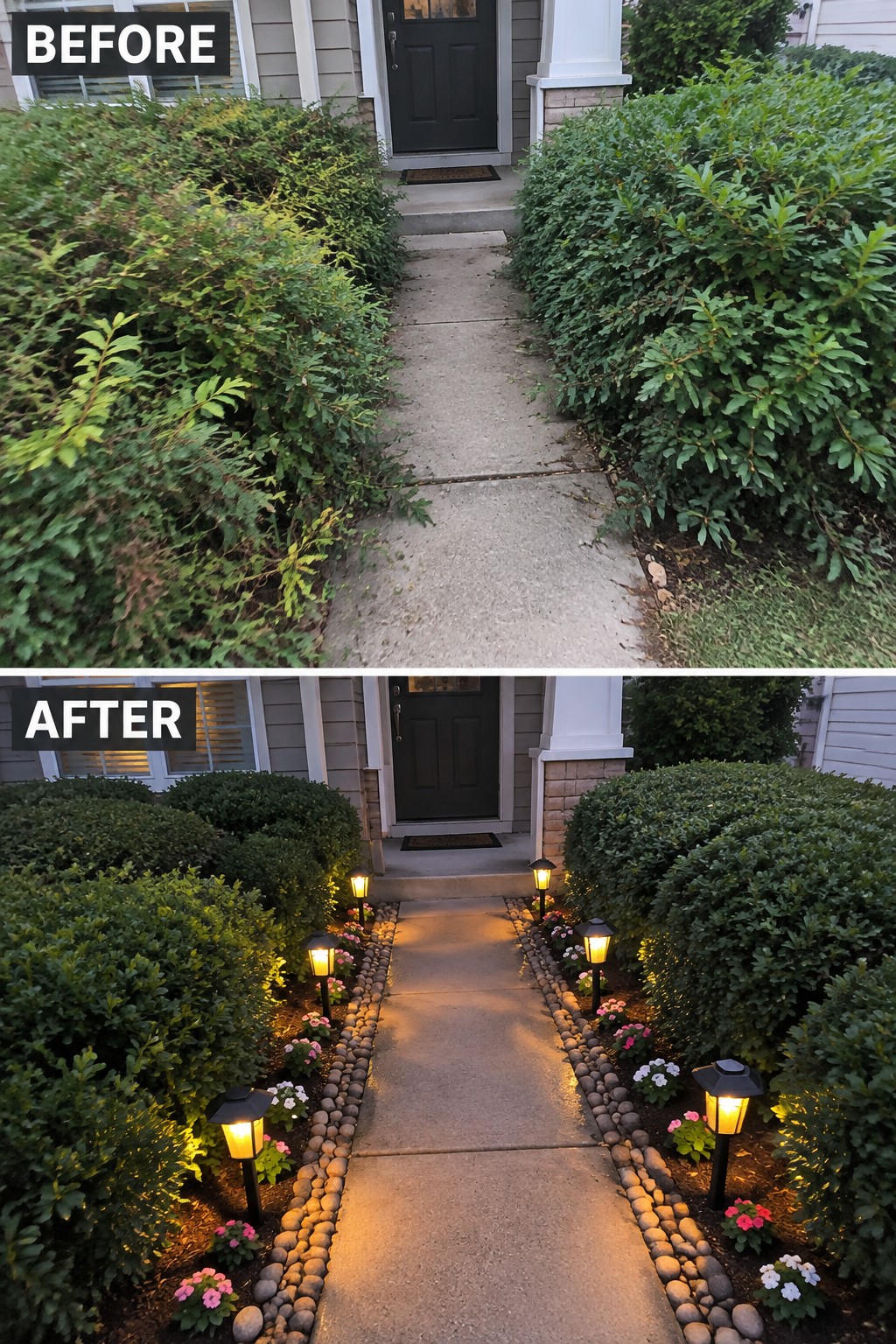
A plain concrete path next to overgrown shrubs often feels dark and narrow at night. Adding solar path lights along both edges gives the walkway clear shape and gentle light without any wiring.
This approach works on most straight entry paths. Trim back plants first so the lights sit evenly, then space them about a foot apart and add a simple pebble border to hold the line. The result feels finished and safer to walk after dark.
Use Solar Path Lights To Outline Planting Beds
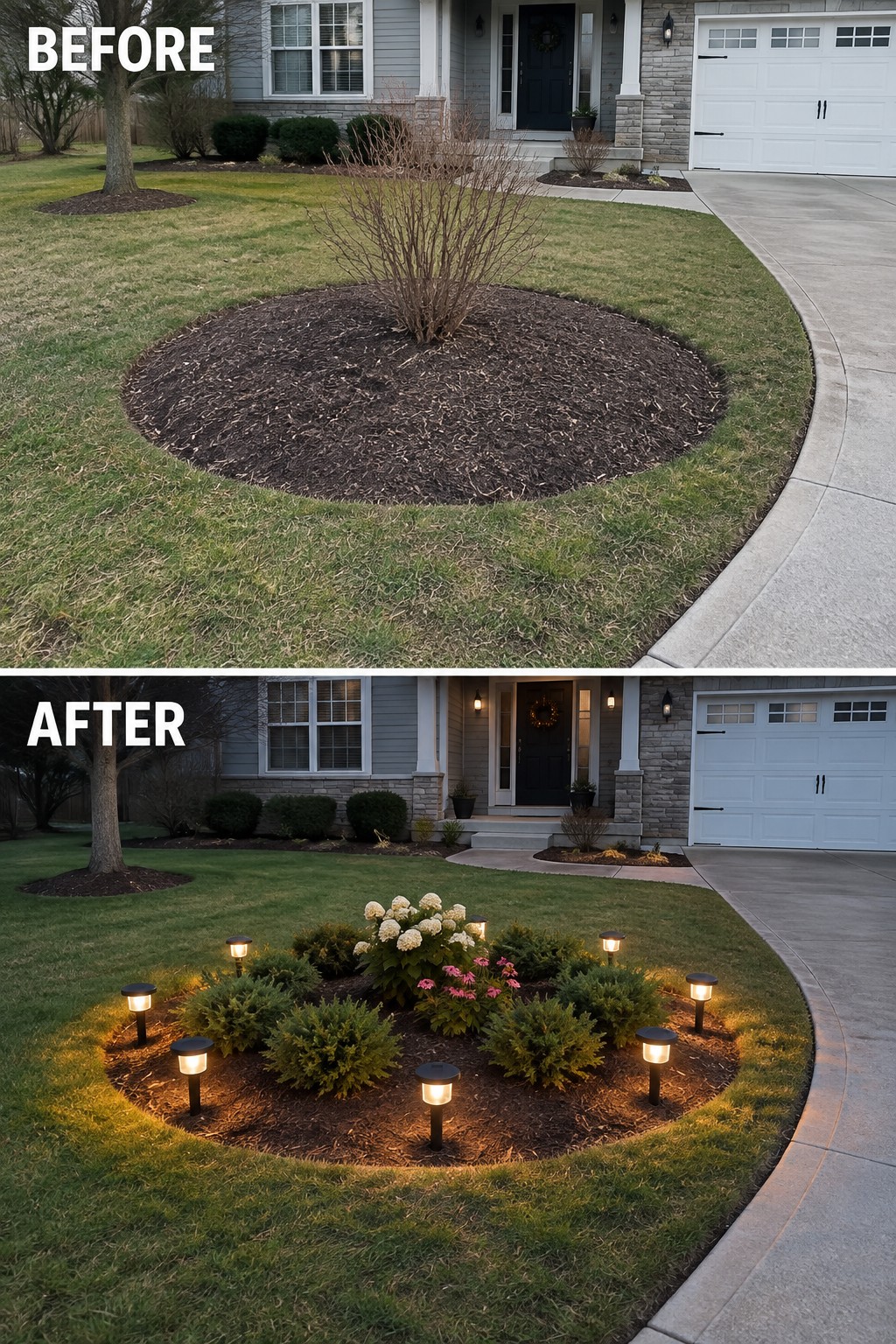
A bare circle of mulch around one shrub looked unfinished once the sun went down. Adding a ring of solar path lights gave the bed a clear edge and turned the empty space into something that felt intentional at night.
This works best along a driveway or front walk where you want low, even light without running wires. Place the lights first to mark the shape, then fill the inside with shrubs and flowers so the glow lands on the plants instead of sitting on open mulch.
Line A Garden Path With Solar Path Lights
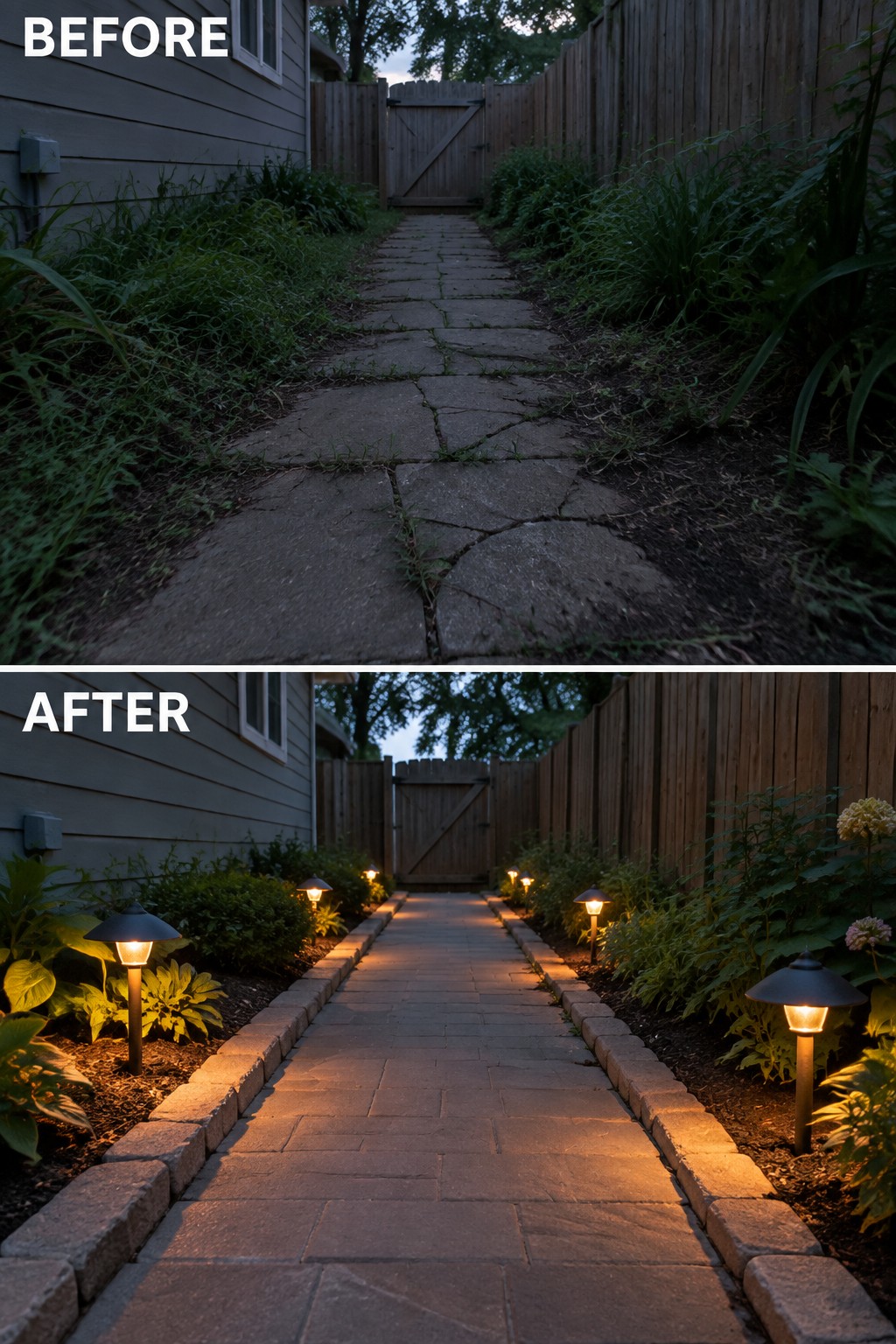
A dark walkway lined with weeds feels neglected and hard to use once the sun goes down. Placing solar path lights along both edges of the path gives it clear borders, improves safety, and turns the same stretch of stone into something that feels finished.
This idea works best on straight or gently curving paths that connect the house to a gate, shed, or seating spot. Keep the lights low and evenly spaced so they guide feet without creating glare, and let the solar panels do the work once you set them in the ground.
Add Solar Path Lights Around A Fire Pit
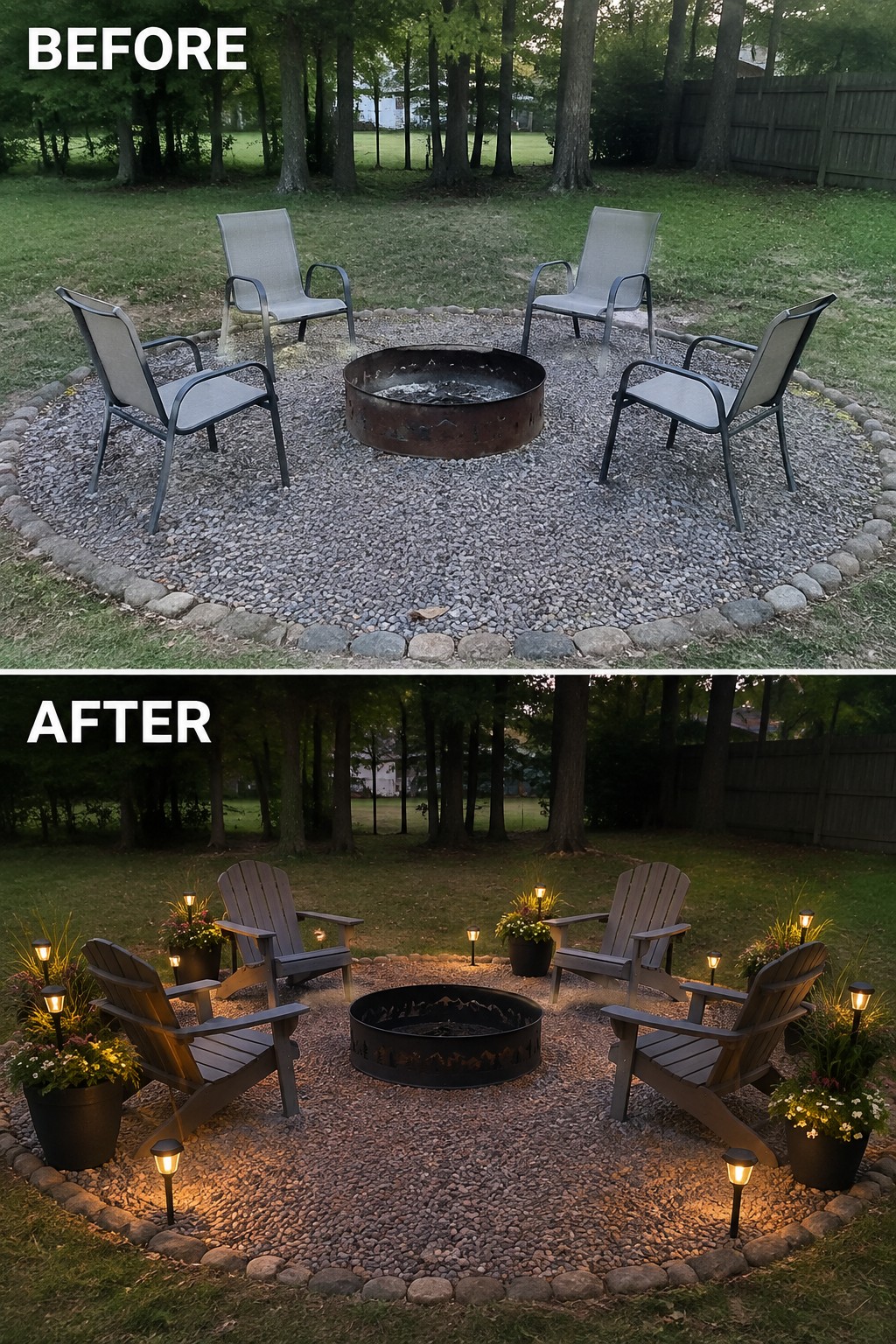
A simple gravel fire pit can feel unfinished once the sun goes down. The before photo shows a basic setup with four folding chairs that left the circle looking empty and a bit cold at dusk. Adding a ring of solar path lights gives the space clear edges and a soft glow that makes the whole area feel ready for evening use.
This works best on any gravel or dirt fire pit zone where you already have seating. Place the lights about a foot inside the border so they highlight the sitting area without blocking foot traffic. The lights also help tie in a few potted plants or upgraded chairs if you want to refresh the look without a big budget.
Define A Driveway Border With Path Lights
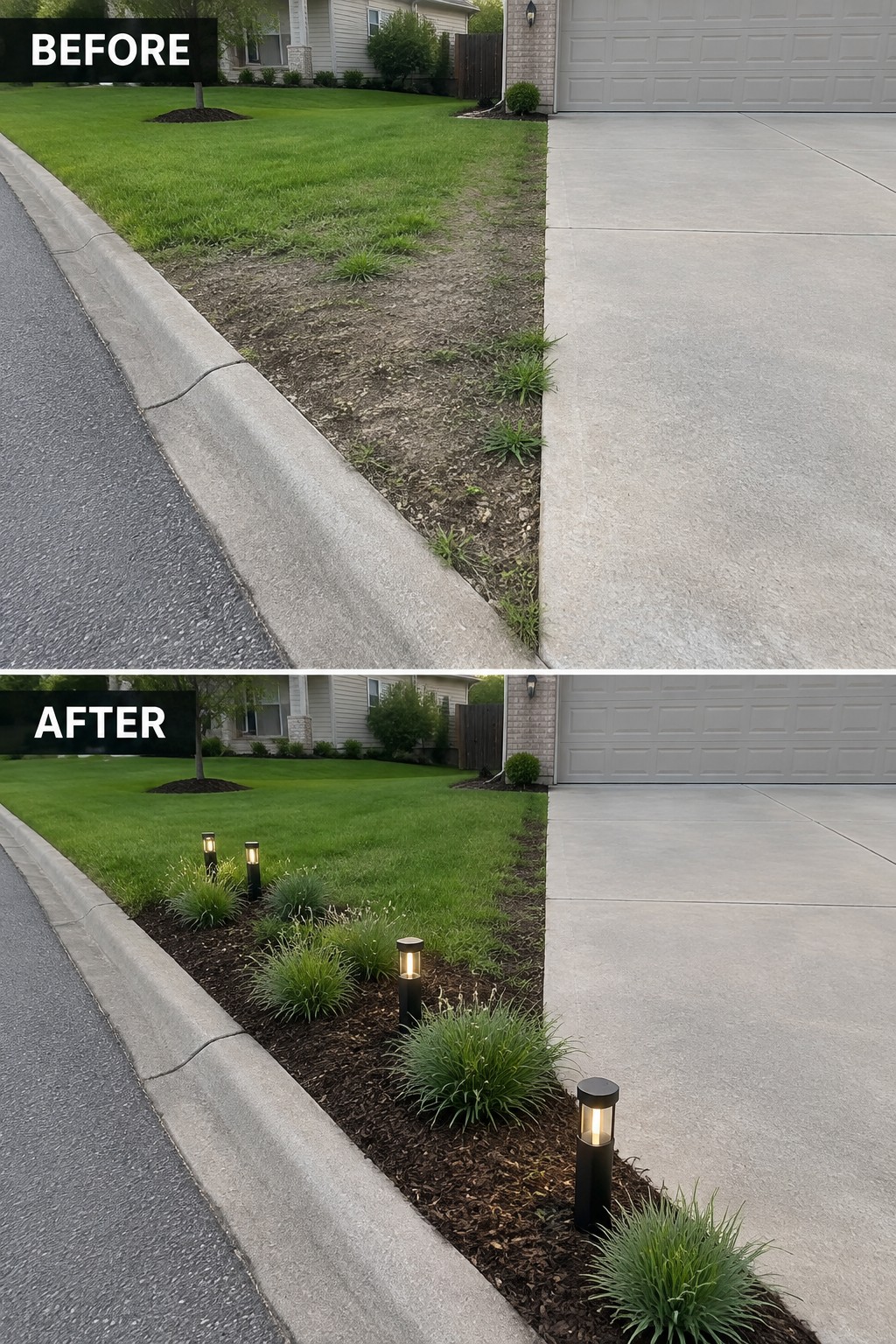
A bare strip of dirt next to a driveway often ends up weedy and overlooked. Adding a simple mulched bed with a few clumps of grass and solar path lights turns that same narrow space into something that looks intentional instead of neglected. The lights mark the edge clearly at night while the planting keeps the daytime view tidy.
This approach works well on any home where the driveway runs close to the lawn. Start by clearing the weeds and laying down mulch, then space the lights a few feet apart so they guide people toward the house. Keep the planting low and simple so it does not block the sidewalk or get in the way of snow removal.
Define A Garden Path With Solar Path Lights
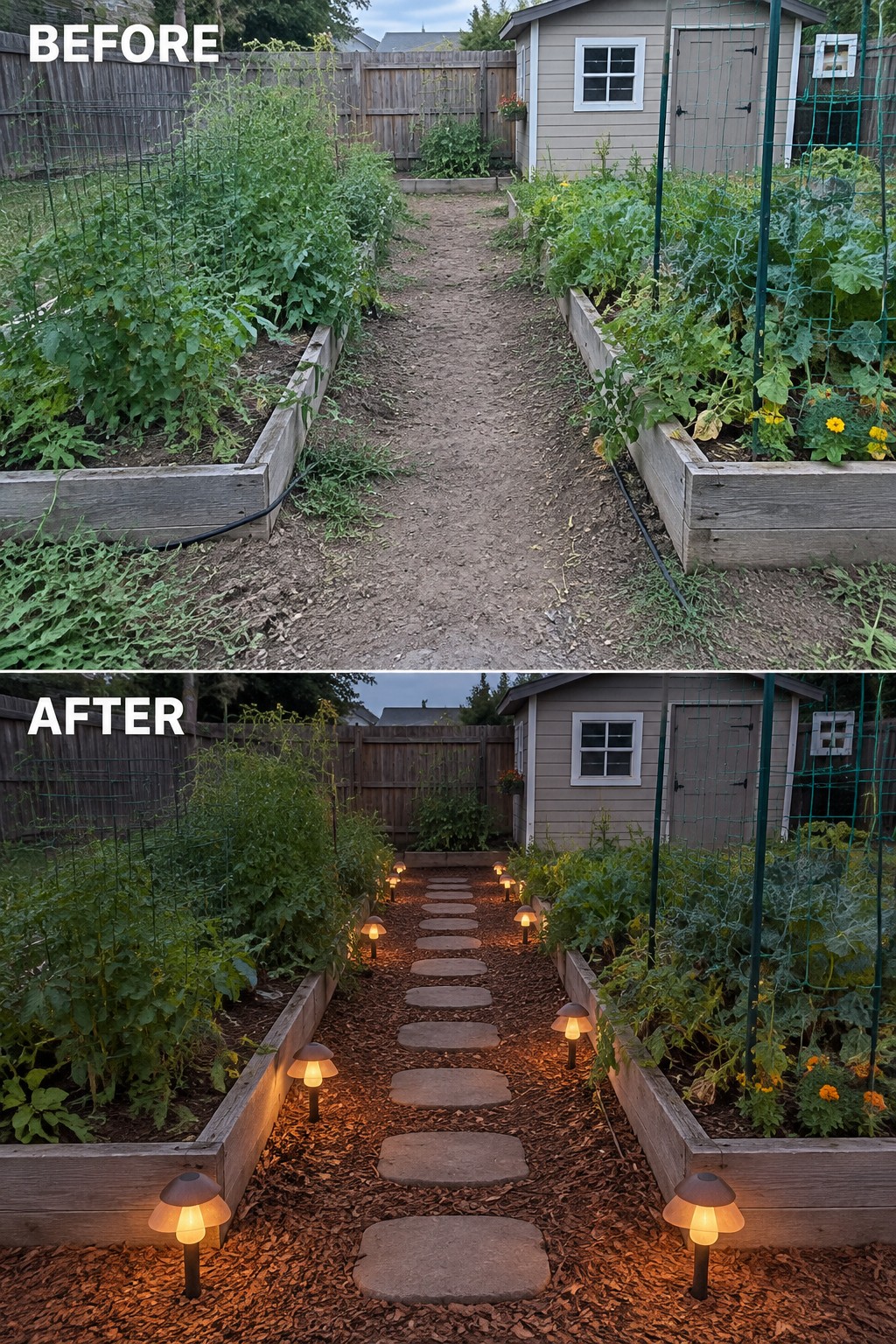
A bare dirt path between garden beds often feels unfinished and easy to overlook once the sun goes down. Adding solar path lights along the edges gives the walkway clear shape while casting a soft glow on the plants.
This approach works well in narrow garden spaces where you want light without running cables. Space the lights evenly so they guide foot traffic and keep the beds looking tended, even in a simple vegetable or mixed garden setup.
Frequently Asked Questions
Q: How far apart do I space these solar path lights? A: Try placing them every two to three feet along the edges. This creates a steady line of light without gaps that could trip someone. Adjust based on how bright each one shines once installed.
Q: Will shade from trees kill their power? A: Move them to spots that get at least four hours of sun each day. Trim low branches if needed to open up the light. Full sun keeps them glowing longer into the night.
Q: How do I stop them from falling over in the ground? A: Push the stakes deeper on a slight angle. That holds them firm even in soft soil.
