

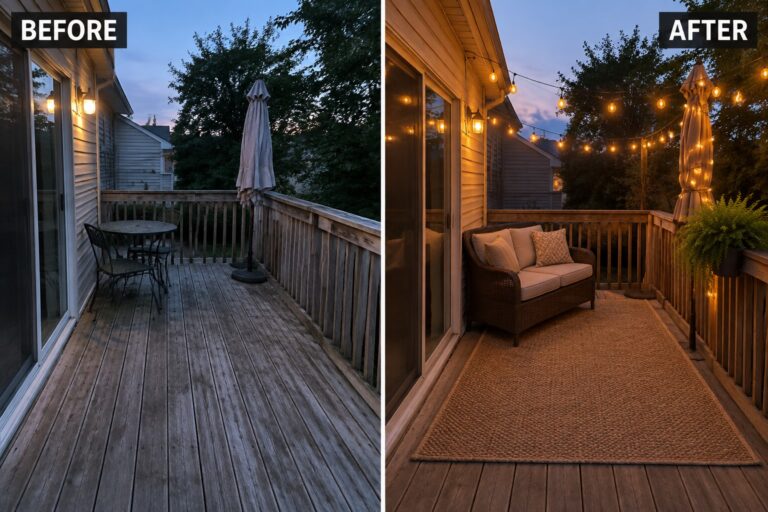
Patios often end up ignored once daylight fades because there is no clear reason to step outside.
I have found that adding string lights gives the area a gentle structure that encourages sitting out longer.
The change feels practical rather than purely decorative since the space becomes usable in the evening.
Some arrangements suit my own habits better than others.
Trying one or two ideas at a time helps figure out what actually works in daily life.
Create a Cozy Deck With Simple String Lights

The deck felt bare and unused once it got dark. Running string lights along the house and railing gave the space a clear purpose and made it comfortable to sit outside at night.
This idea works best on decks or patios that already have a basic seating spot. Keep the lights simple and focused over the main area, add just enough furniture to make the space usable, and choose bulbs that can stay up year round.
Light Up a Pergola for a Warm Outdoor Retreat
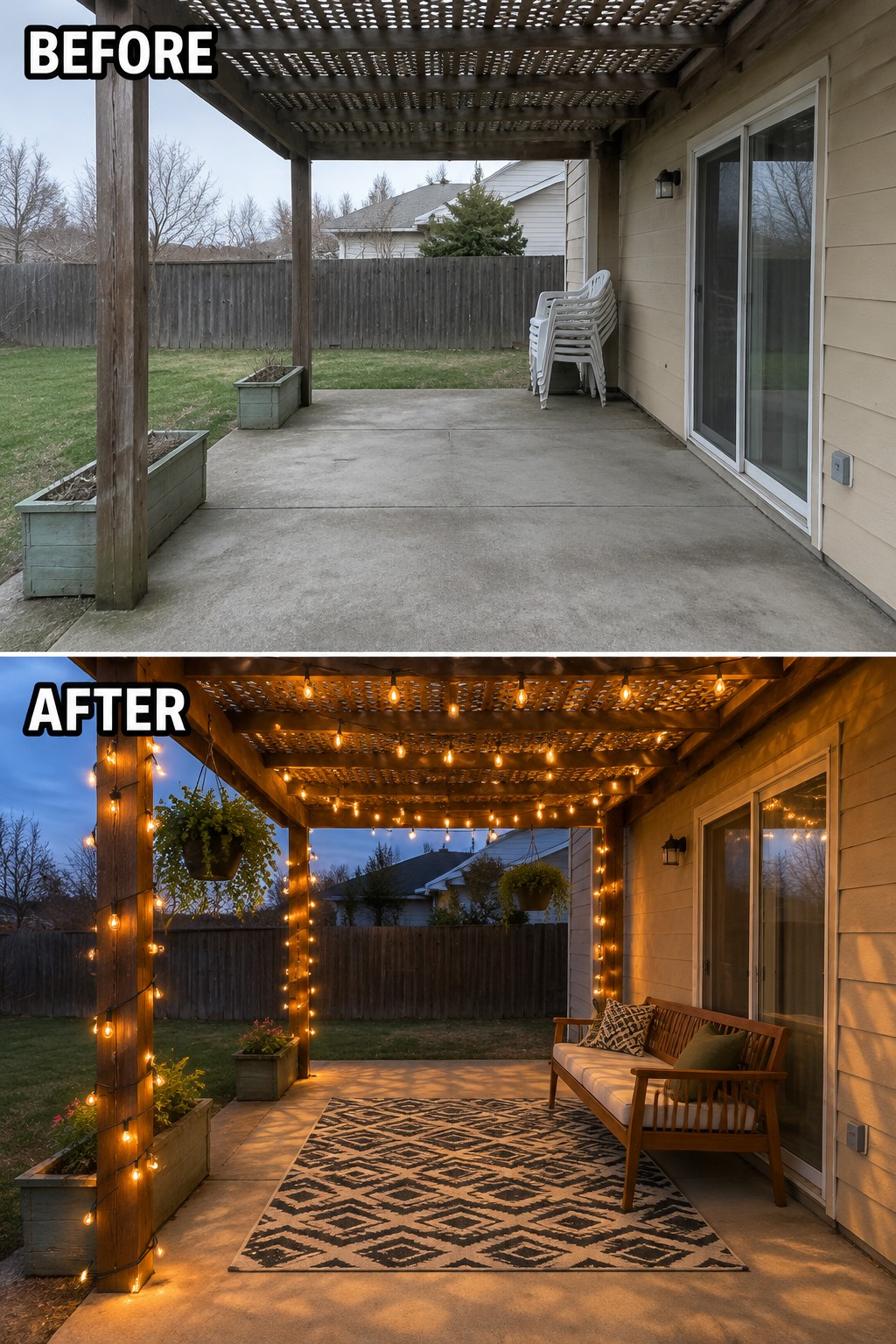
A bare patio under a pergola often stays empty because it lacks any sense of warmth or purpose once the sun goes down. Adding string lights along the beams and posts brings the space to life and makes it feel like a real room outdoors.
This approach works best on covered patios or decks where you already have a solid structure. Keep the rest simple with one rug and a bench or chairs so the lights stay the main feature rather than competing with too much furniture.
Use String Lights Behind Curtains To Warm Up A Bare Patio
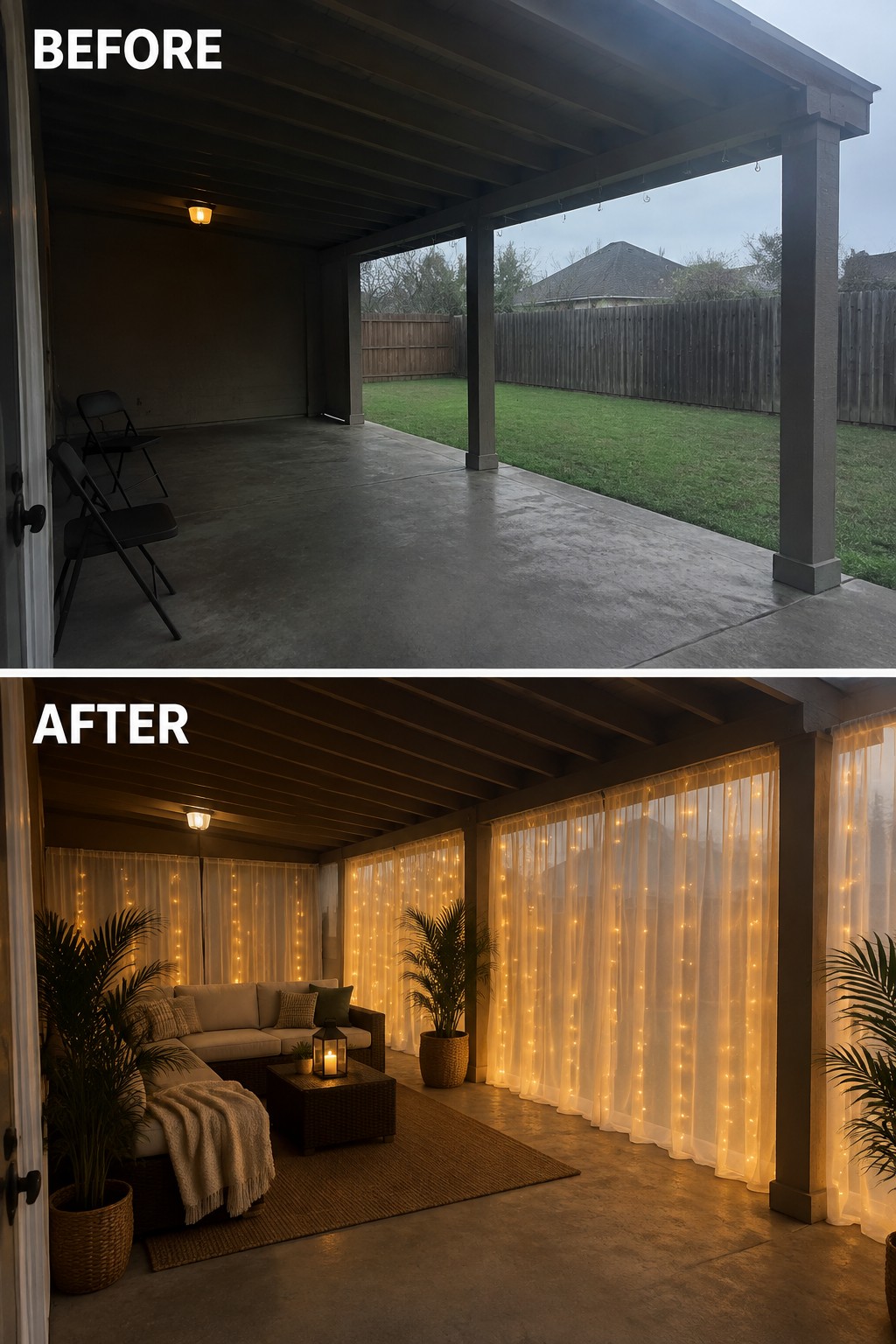
An empty concrete patio with nothing but a couple of folding chairs feels cold and unfinished. Adding string lights behind sheer white curtains instantly softens the space and makes it feel like an actual room you want to sit in after dark.
This idea works best on covered patios or porches that get used in the evening. Hang the lights first so they create the main glow, then layer the curtains for privacy and texture. Keep the furniture simple and add one rug to mark the seating zone so the area stays open rather than crowded.
Brighten a Brick-Walled Patio With Overhead Lights
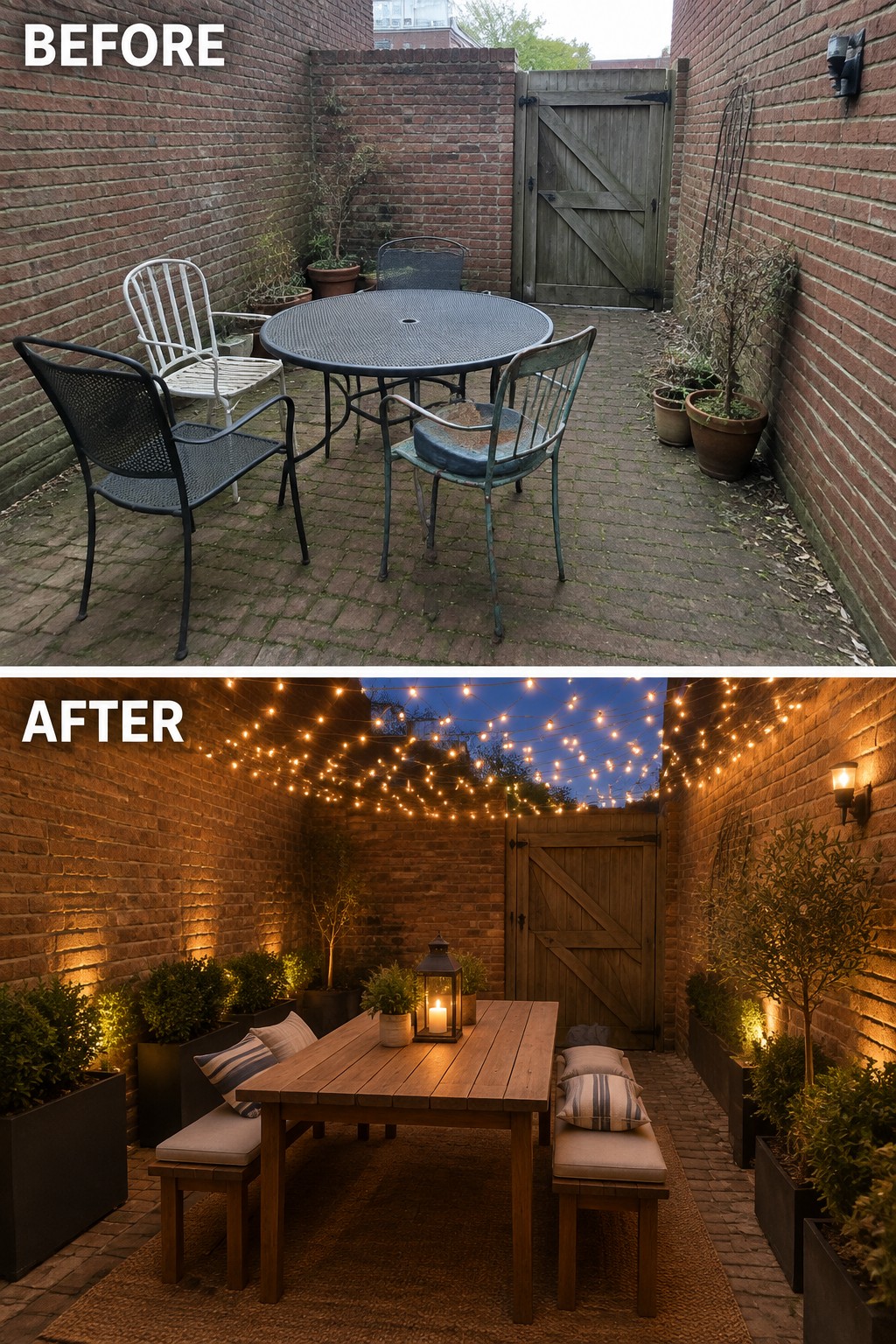
String lights make the biggest difference in this space. They stretch across the top of the brick walls and turn a basic daytime patio into one that feels ready for evening use. The before photo shows a functional setup with mismatched chairs, but the lights add a layer of warmth that pulls everything together without major construction.
This works best on small patios or courtyards with solid walls or fences already in place. Hang the lights high enough to avoid glare at seated height, and keep other elements like furniture and plants simple so the glow stays the focus. It suits homes where you want to extend outdoor time after dark without adding a full roof or large fixtures.
Add Warmth to a Poolside Patio With String Lights
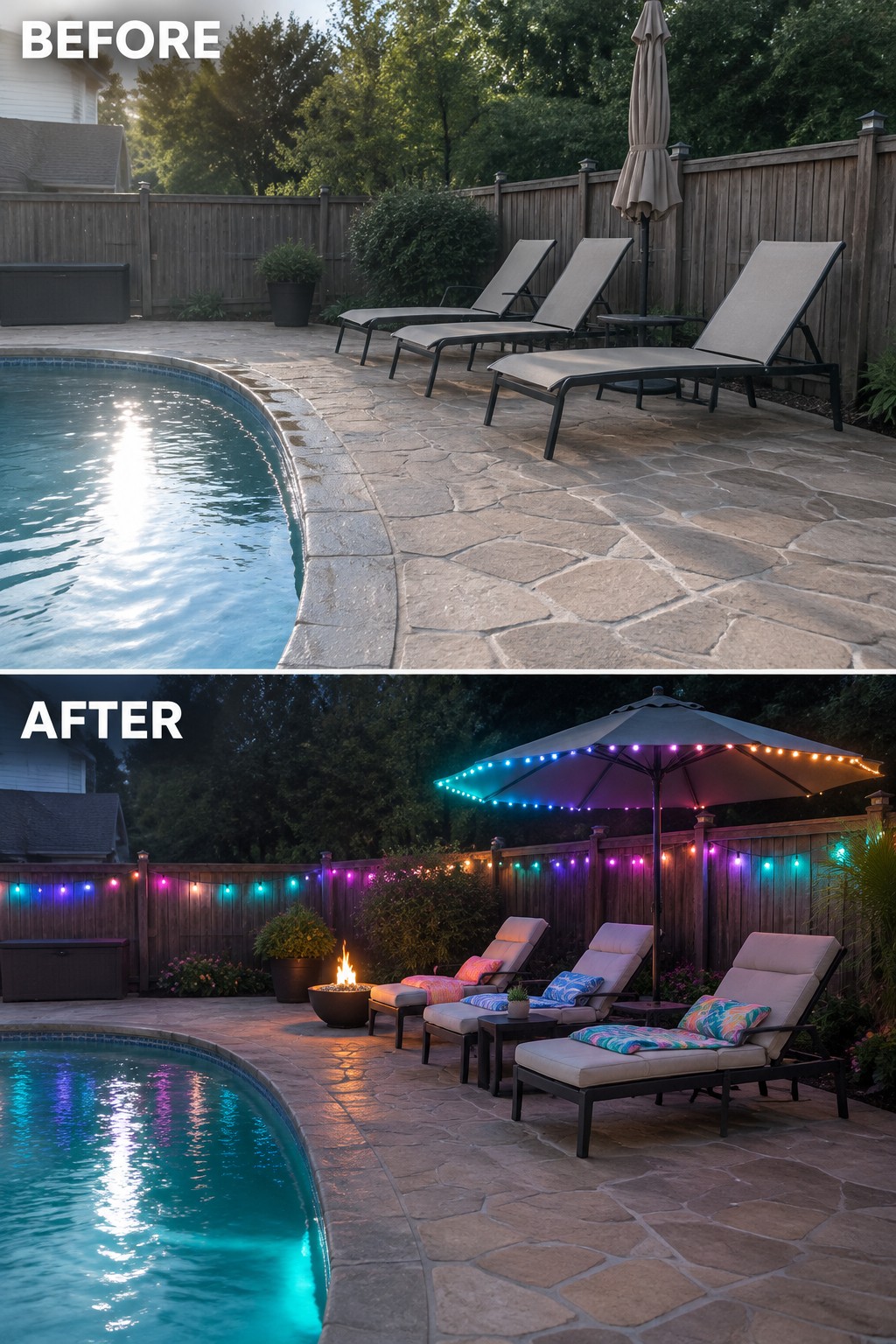
String lights can turn a basic patio into a space that feels ready for evening use. The before photo shows a functional poolside area with lounge chairs and a closed umbrella. After the lights were added along the fence and around the umbrella, the same spot looks warmer and more inviting without needing new furniture or major changes.
This approach works best on patios that already have seating but sit empty once the sun goes down. Start by running lights along the perimeter, then add a strand or two around an umbrella or central feature like a fire pit. Choose outdoor-rated lights and keep the layout simple so the space still feels open and easy to move around in.
Hang String Lights To Make A Bare Balcony Usable
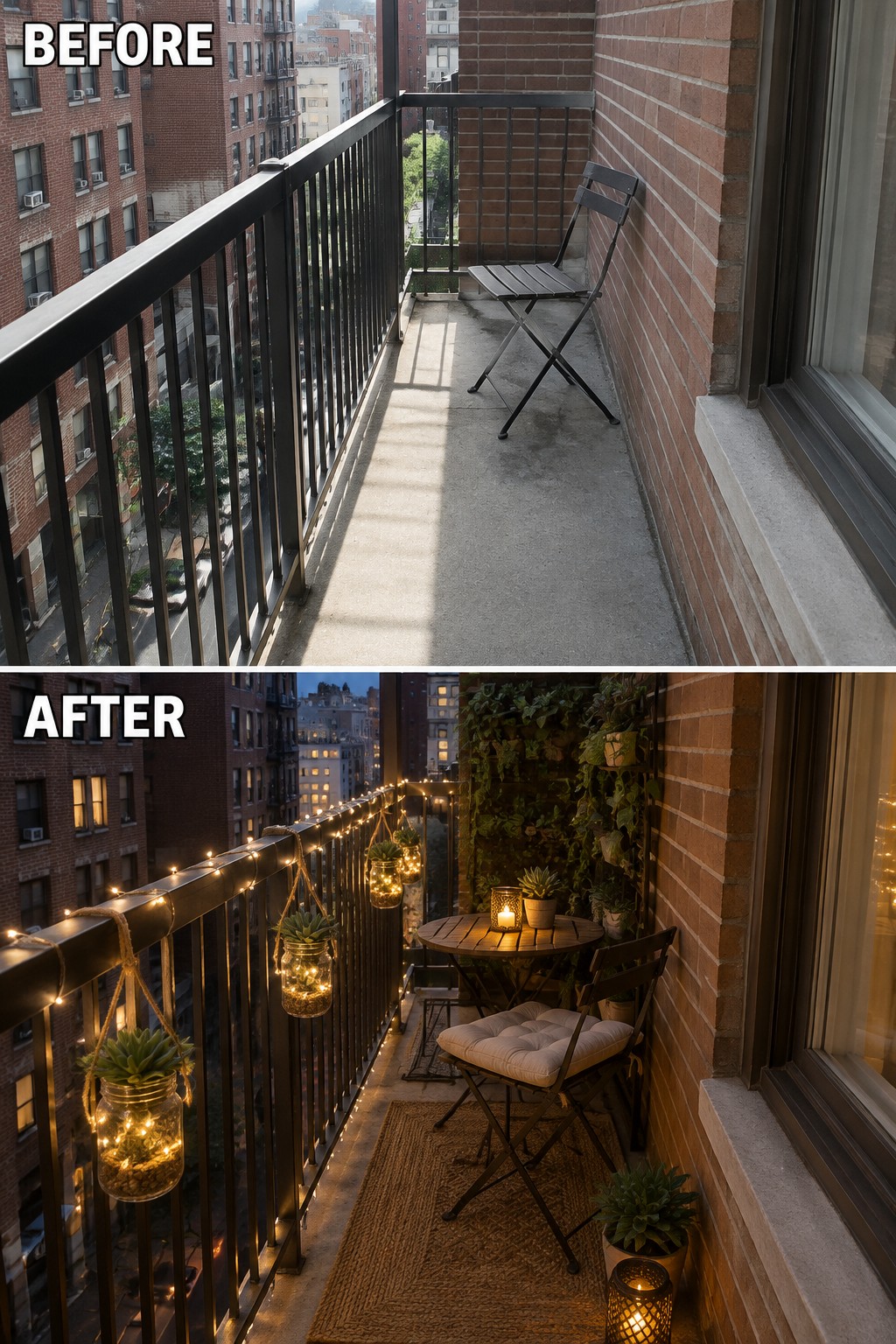
A balcony with nothing but a single chair often stays empty because it feels cold and unfinished. String lights along the railing change that quickly by adding a soft glow that makes the space feel warmer and more like a real seating area once a small table and chairs are added.
This idea works best on narrow urban balconies where evenings are the main time you want to be outside. Keep the lights at railing height, choose durable outdoor bulbs, and limit extra pieces so there is still room to move around.
Transform a Covered Deck With Overhead String Lights
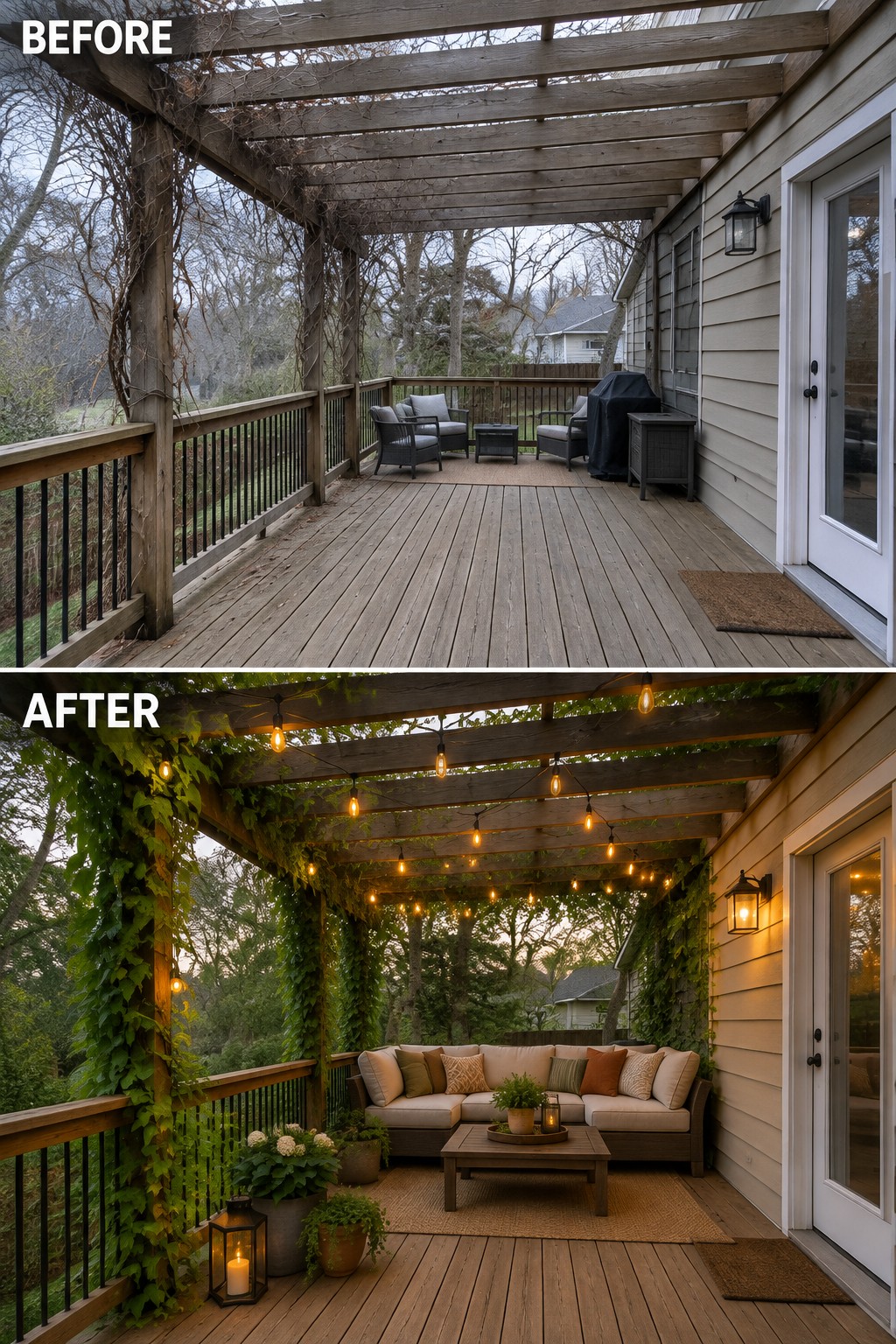
A bare deck with only a couple of chairs feels empty once the sun goes down. Adding string lights across the overhead beams and letting vines grow up the posts turns the same space into a place that invites people to stay after dark.
This idea works best on covered patios or pergolas where you can run the lights from beam to beam without extra poles. Keep the rest of the setup simple so the lights remain the main feature, and choose warm bulbs that match any lanterns or sconces already on the house.
Use String Lights To Define An Outdoor Seating Area
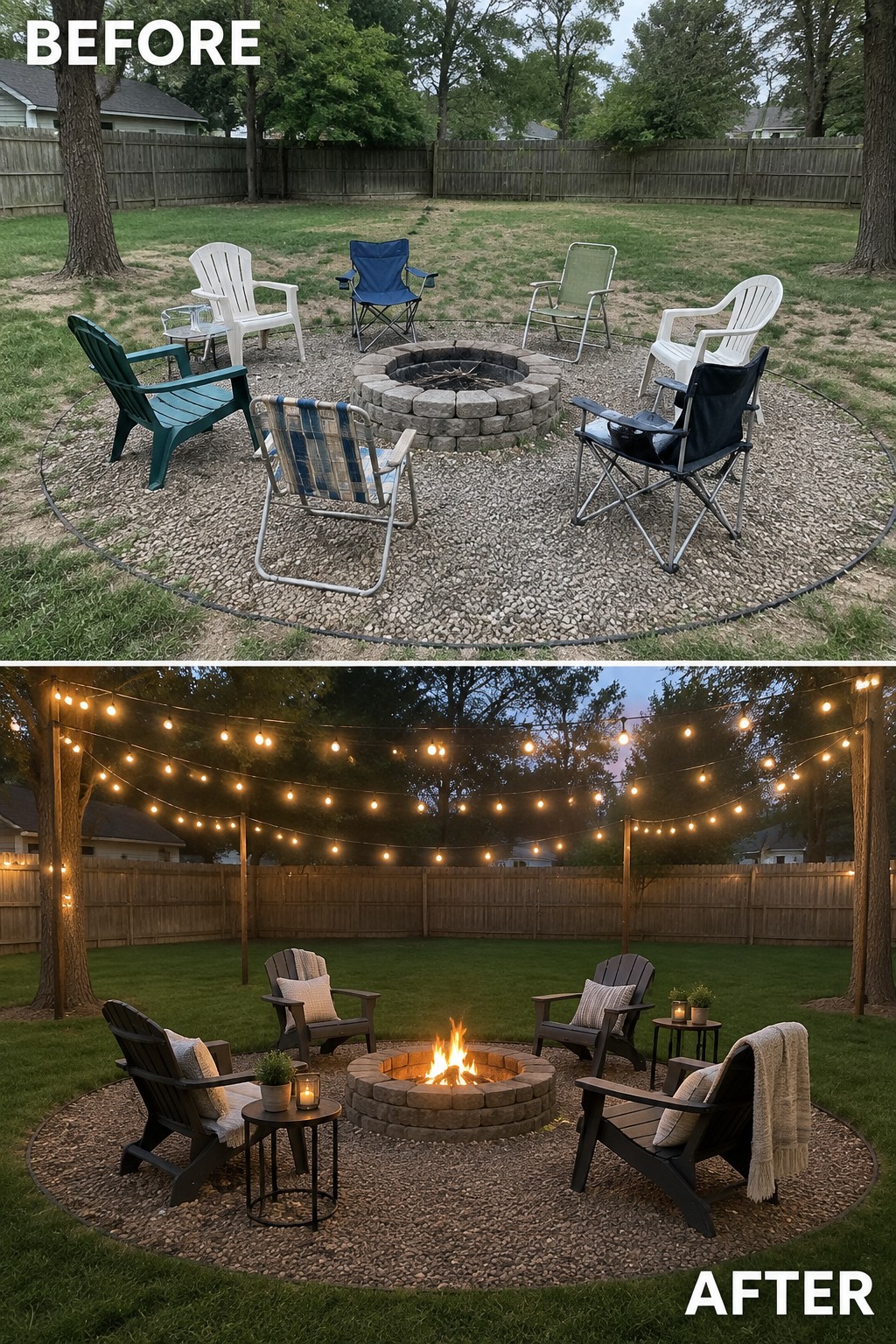
The main shift in this backyard came from running string lights above the fire pit zone. Before the update the chairs sat on gravel with no real sense of enclosure, so the space felt scattered once the sun went down. Adding the lights created a simple overhead layer that pulled the seating together and made the circle feel like a finished room.
This approach works best in yards where the seating already exists but lacks evening use. Run the strands between trees or posts at a comfortable height, choose warm bulbs, and keep the layout open enough for people to move around the fire pit. It is an easy first step that makes a basic gravel patch feel purposeful without major construction.
Use String Lights To Turn A Bare Patio Into A Seating Area
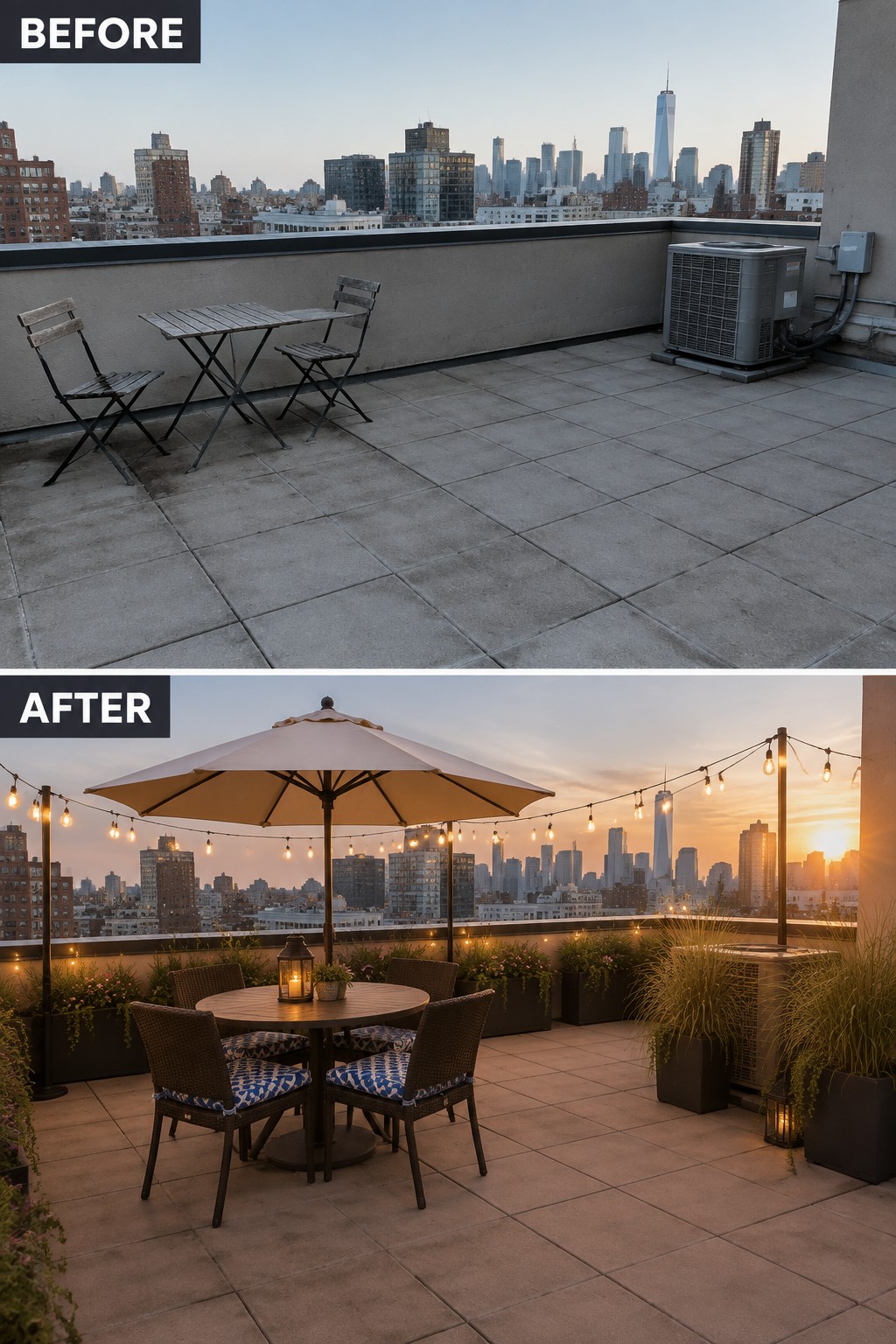
A plain concrete rooftop with nothing but a small table feels cold and unused once the sun drops. Running a few strands of string lights across the space and adding a simple dining setup changes that quickly. The lights create a clear boundary and make the area feel intentional instead of leftover.
This works best on flat outdoor surfaces like rooftops, decks, or concrete pads where you already have a rail or posts to hang from. Keep the lights warm in tone, space them evenly, and pair them with weatherproof furniture that stays in place. The goal is to define a usable zone rather than fill every corner.
Use String Lights To Warm Up A Plain Porch
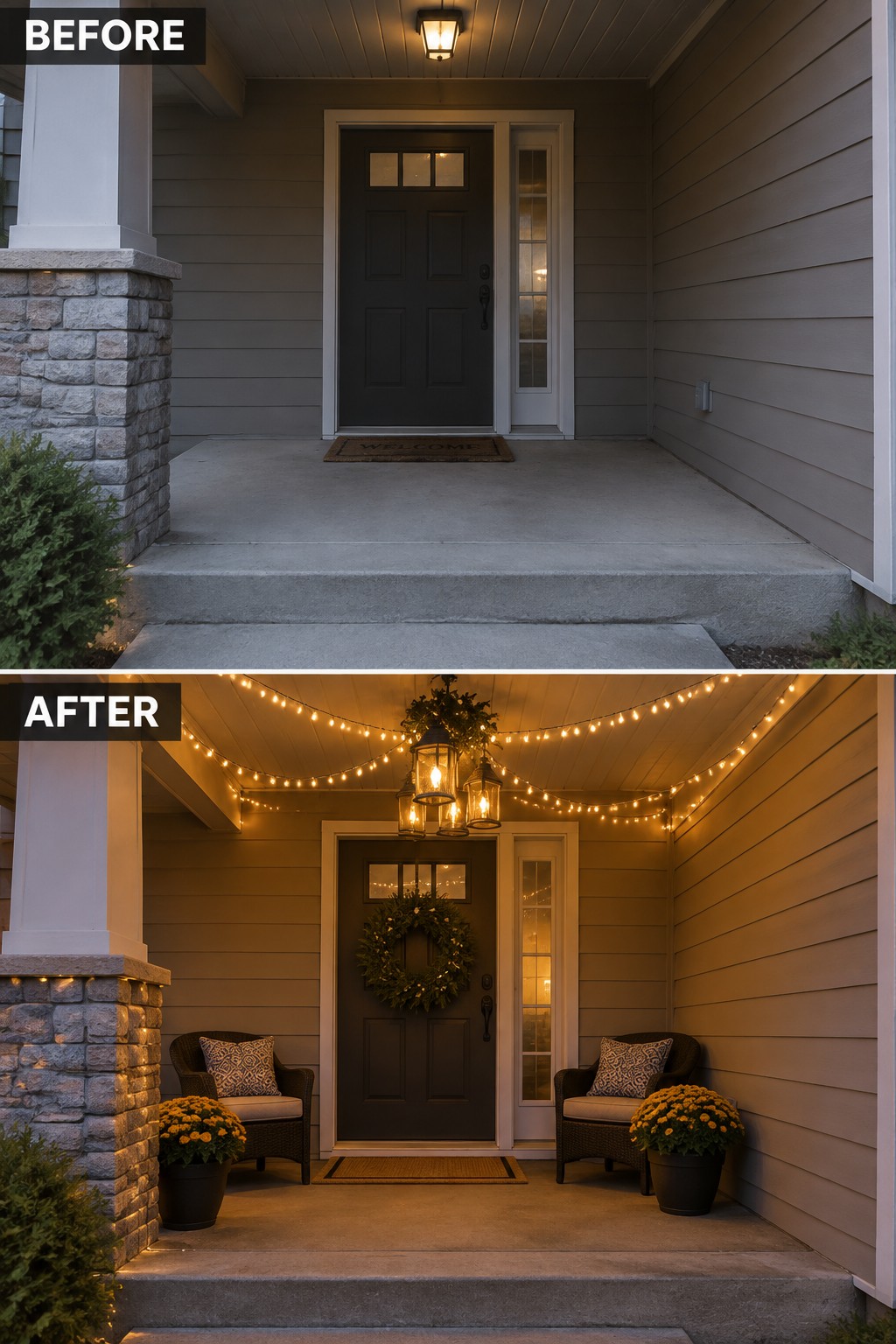
A bare concrete porch often feels empty and uninviting once the sun goes down. Running string lights along the ceiling and adding two simple chairs makes the same space feel like an outdoor room. The lights give a gentle overhead glow that draws people in without needing much else.
This idea works best on front or side porches where you want a small seating spot. Hang the lights first so they define the area, then add a couple of weatherproof chairs and a few pots. Keep the furniture scale modest so there is still room to walk through.
Create a Softly Lit Fence-Side Patio
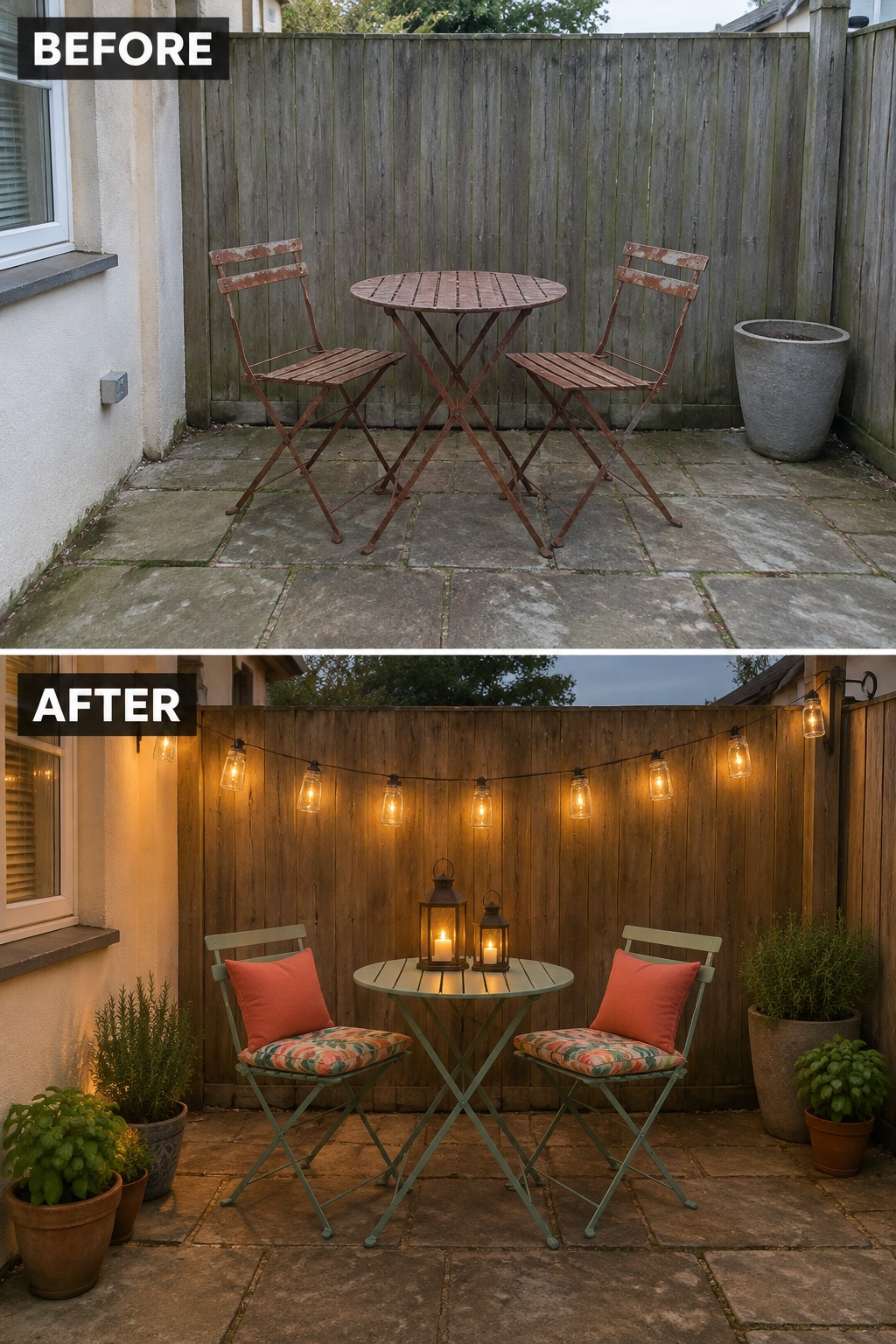
String lights can turn an ordinary patio into a space people actually want to sit in after dark. Here the fence was the obvious place to run them, and adding a couple of lanterns on the table gave the center a soft focal point without needing much else.
This works best on small patios or decks where you want evening use without a big renovation. Run the lights along one or two walls at a steady height, choose warm bulbs, and keep the furniture simple so the glow stays the main feature rather than competing with too many extras.
Warm Up a Covered Concrete Porch With String Lights
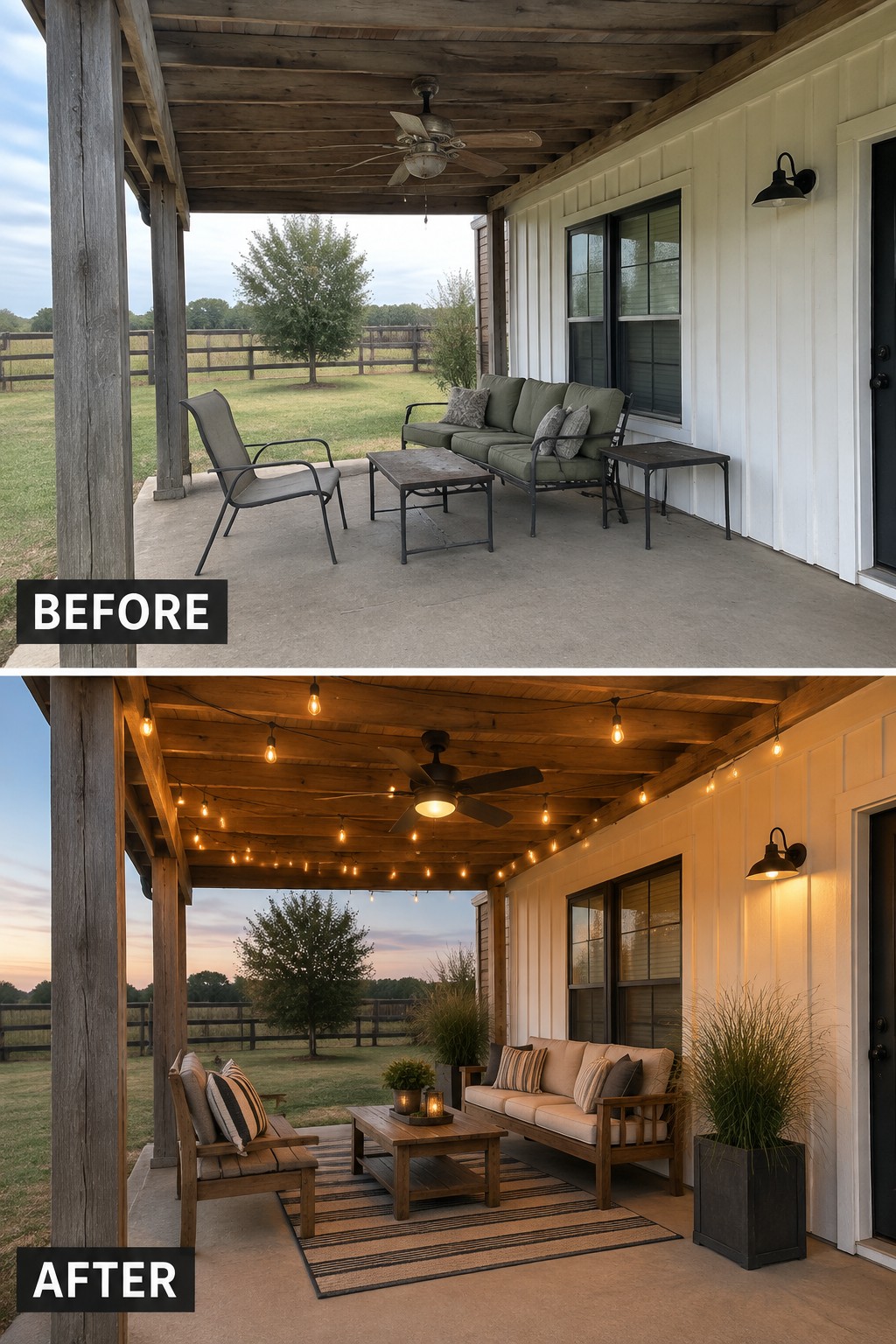
A plain concrete porch with basic furniture often sits unused once the sun goes down. Running string lights along the ceiling beams adds a simple layer of warmth that makes the same space feel inviting after dark. The lights turn the overhead area into the main feature without requiring major changes to the structure or furniture.
This approach works best on covered patios or porches where you already have seating in place. Hang the lights in even rows, choose warm bulbs, and keep the rest of the setup simple so the glow stays the focus. It is an easy first step if you want the space to feel finished for evening use.
String Lights Turn A Bare Walkway Into A Cozy Seating Area
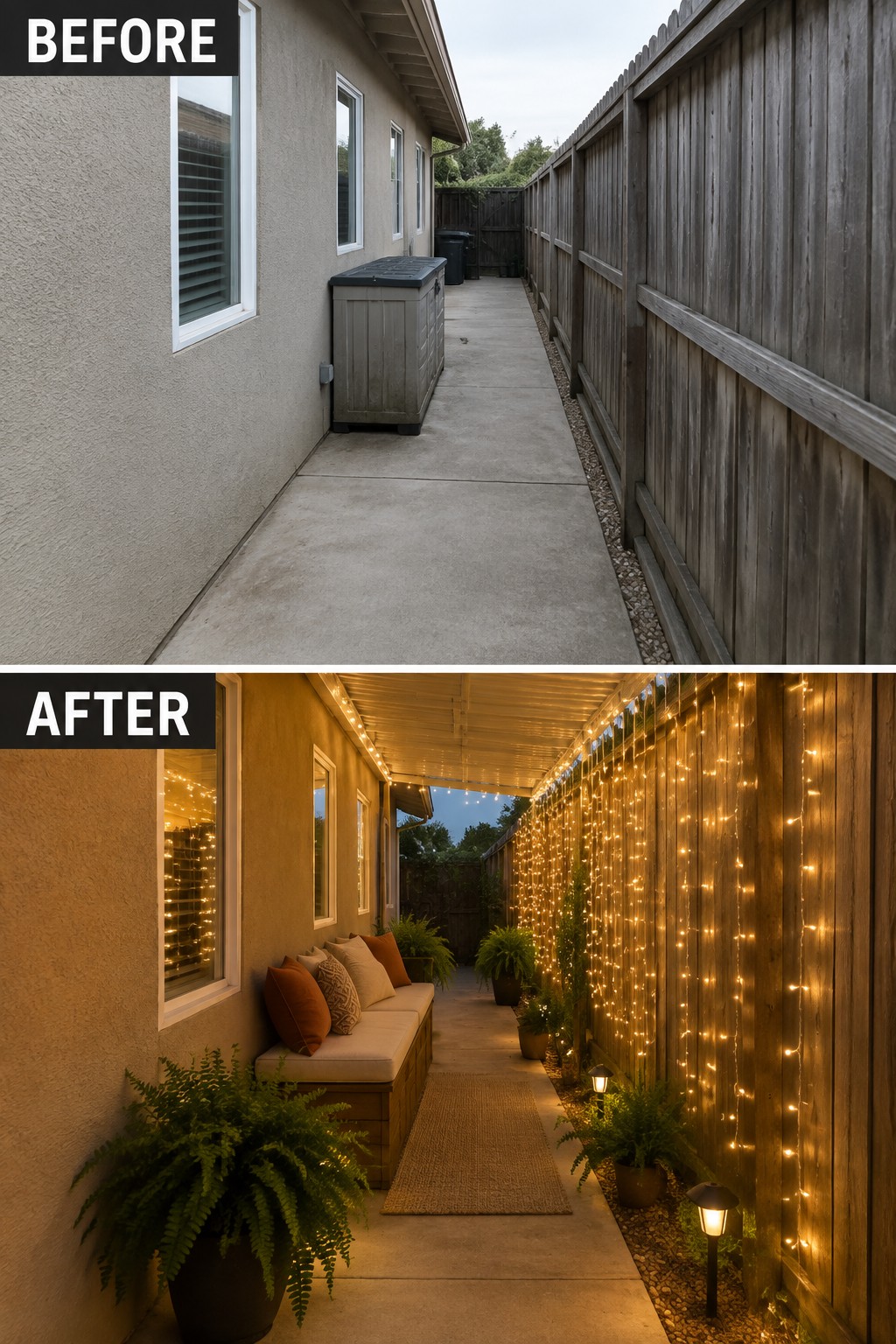
A plain concrete side yard with just a storage box and fence can feel like wasted space. String lights change that fast. Running them along both the house wall and the fence creates a soft overhead layer that makes the area feel enclosed and inviting instead of empty. Adding a simple bench, a rug, and a few potted plants then turns the walkway into a place where people actually want to sit.
This works best on narrow side yards or long concrete runs that already have some shelter from the house. Start with the lights first so you can see how the space feels at night, then add seating that fits the width without blocking the path. Keep the planting simple and stick to one or two rug sizes so the area still feels open during the day.
Make a Basic Deck More Inviting After Dark
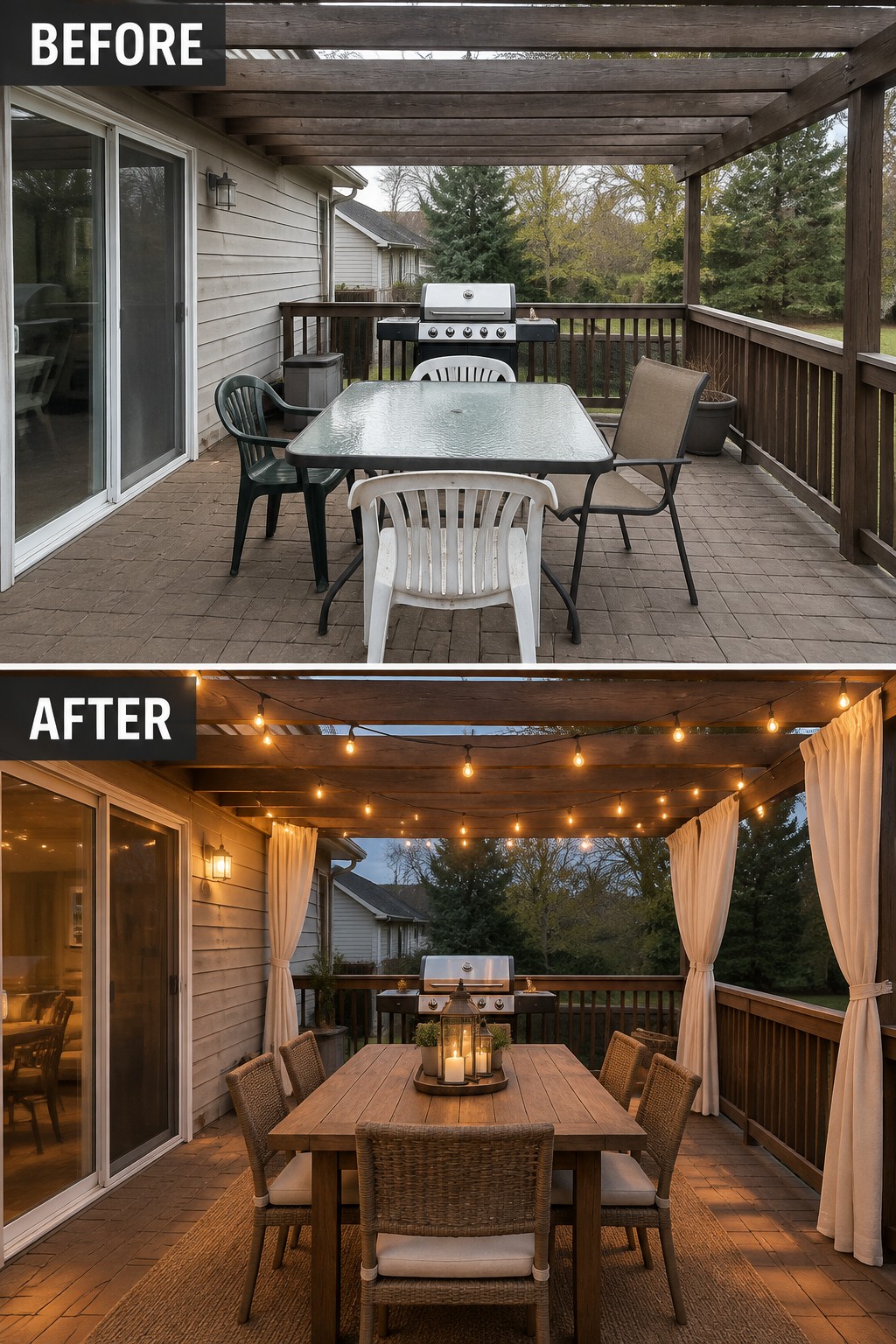
A basic deck with mismatched chairs and no real evening presence can feel finished once you add string lights overhead. In this case the lights run across the beams and instantly turn the space into somewhere people actually want to sit after dark.
This idea works best on covered patios or decks with an existing roof or pergola. Run the lights in straight rows, pick warm bulbs, and keep the rest of the setup simple so the lighting does the main job. It suits homes that already have a table and chairs but need one easy step to make the area usable at night.
Use String Lights To Turn A Bare Patio Into A Seating Area
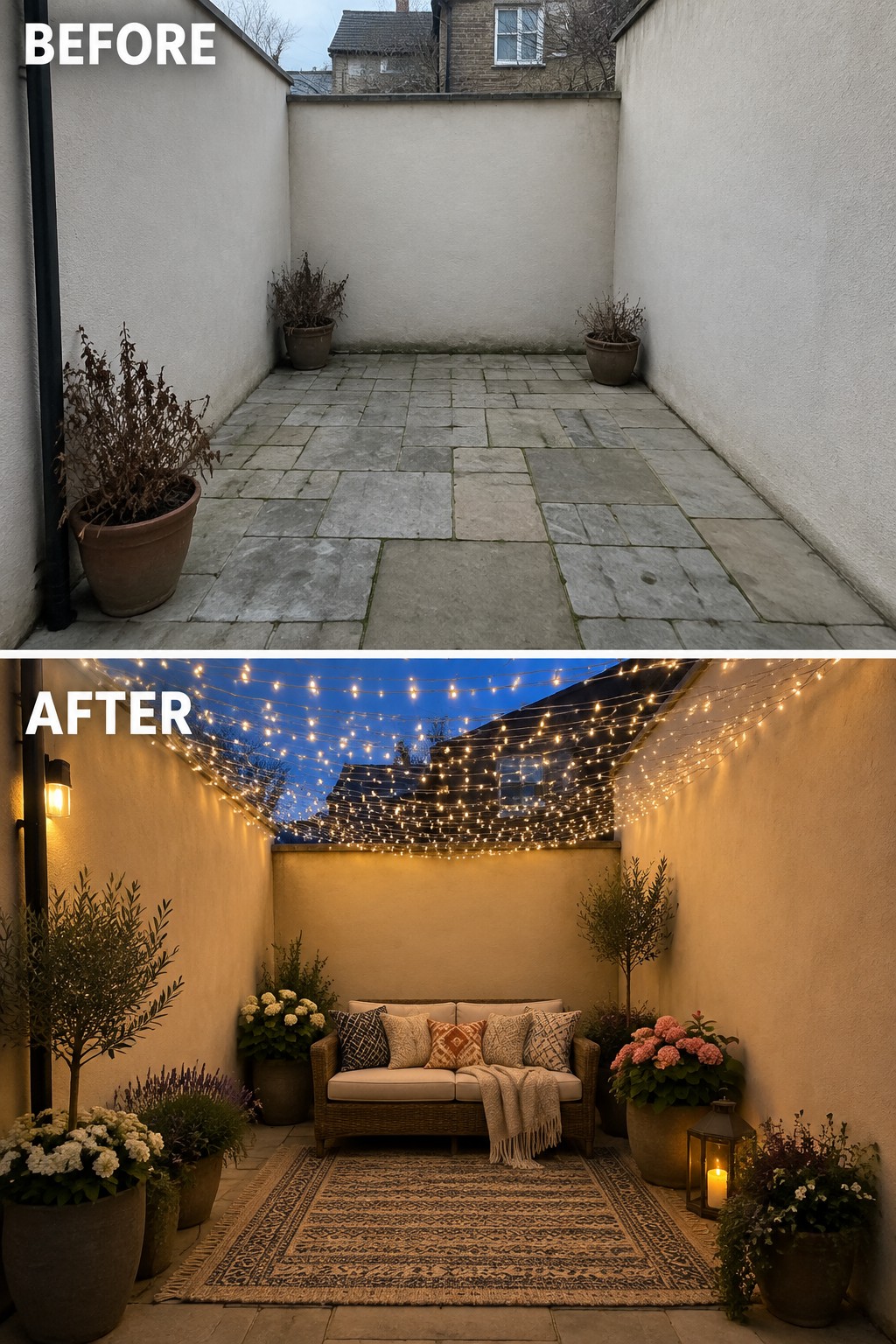
A plain paved courtyard often feels unused because there is nothing to draw people outside or mark a spot to sit. String lights hung overhead change that quickly by adding a ceiling and a sense of enclosure, while a simple sofa and rug below turn the same stone surface into a defined living spot.
This idea works best on small or narrow outdoor areas where you want one clear place to relax without adding walls or large structures. Hang the lights first so they set the scale, then choose seating that fits the space and leave enough room to walk around the edges.
Create a Softly Lit Pergola for Evening Relaxation
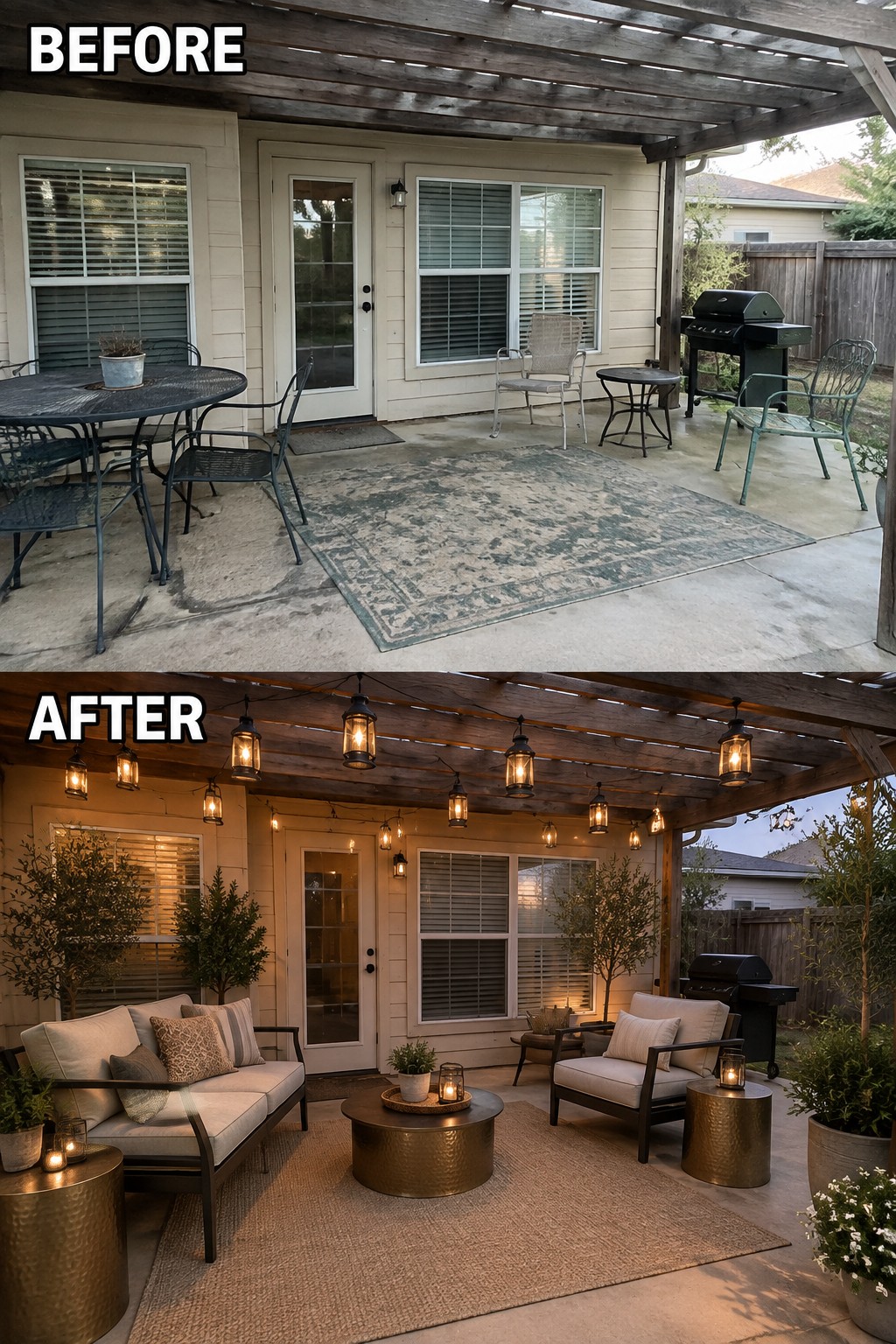
Many patios sit unused once the sun drops because they lack any real light. Running string lights along the pergola beams and adding a few lanterns around the seating area gives the space a soft glow that makes it comfortable to sit outside at night.
This approach works best on covered patios where you can hang lights from the structure without extra poles. Keep the strands simple and use warm bulbs so the light feels inviting rather than harsh. It is a low-cost change that turns a daytime space into one you can enjoy after dark.
Use String Lights To Define Garden Borders

Overgrown shrubs can make a walkway feel closed in and dark once the sun goes down. In this case the fix was simple. The thick bushes were cut back into clean rows and then wrapped with string lights so the path stays visible and welcoming at night.
This works well on any yard where you already have a brick or gravel path leading to a patio or seating area. Start by trimming the plants into low, even shapes, then run warm lights along the inside edge of each border. Keep the spacing even and plug them into an outdoor timer so the lights come on automatically. The goal is to mark the route without adding extra fixtures or furniture.
Add Overhead Glow and Planters to a Concrete Patio
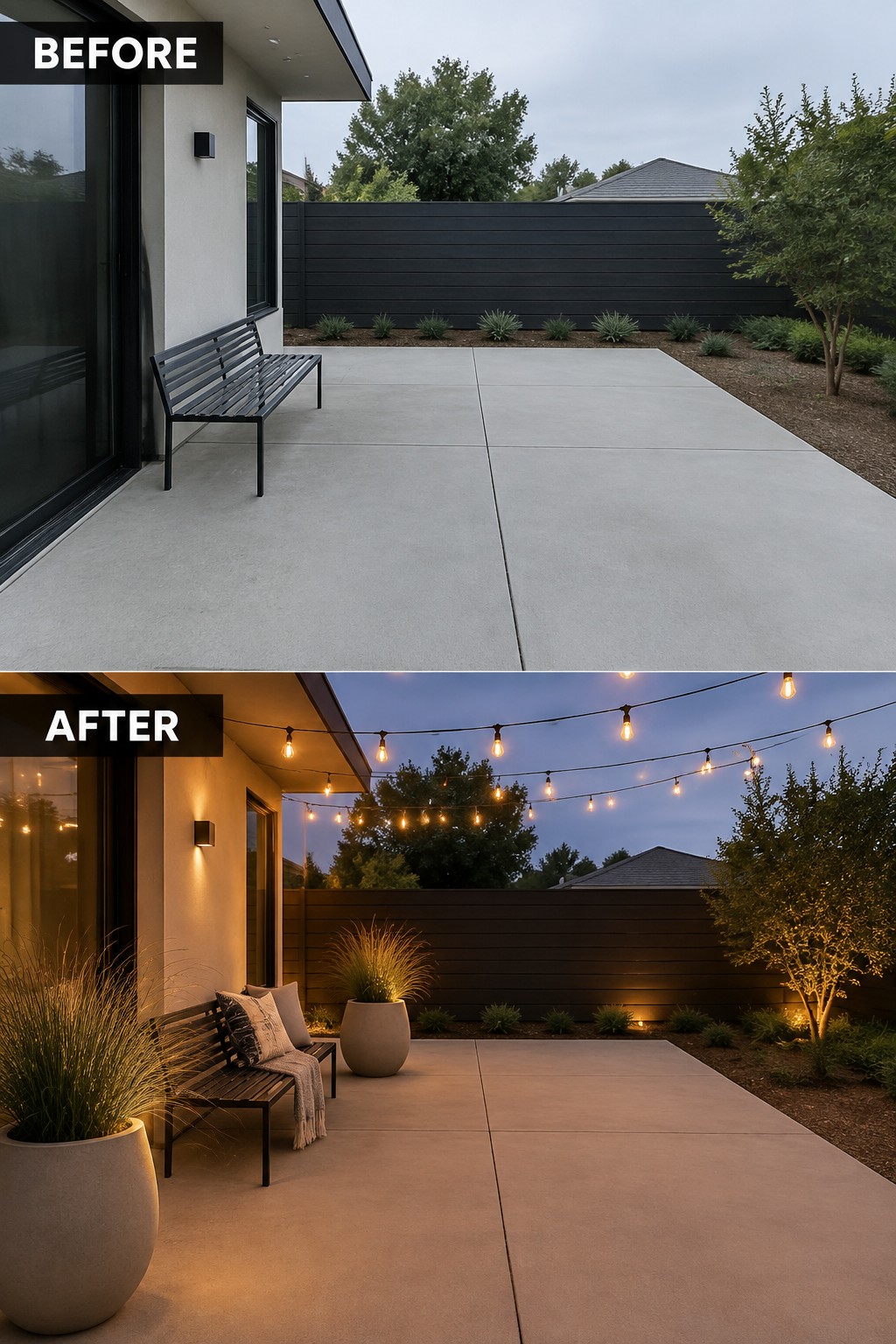
String lights can turn a plain concrete patio into a space that feels usable after sunset. The before version had just a bench and empty floor. Running lights overhead and adding a few large pots with seating cushions made the same area feel finished and welcoming without major construction.
This works best on patios that already have a solid surface and some seating. Hang the lights from the house eaves or simple posts so they sit above the main sitting spot. Add one or two big planters and a couple of weatherproof cushions rather than filling the whole space. Keep the rest open so people can still move around easily.
Add String Lights Behind Curtains To Cozy Up A Patio
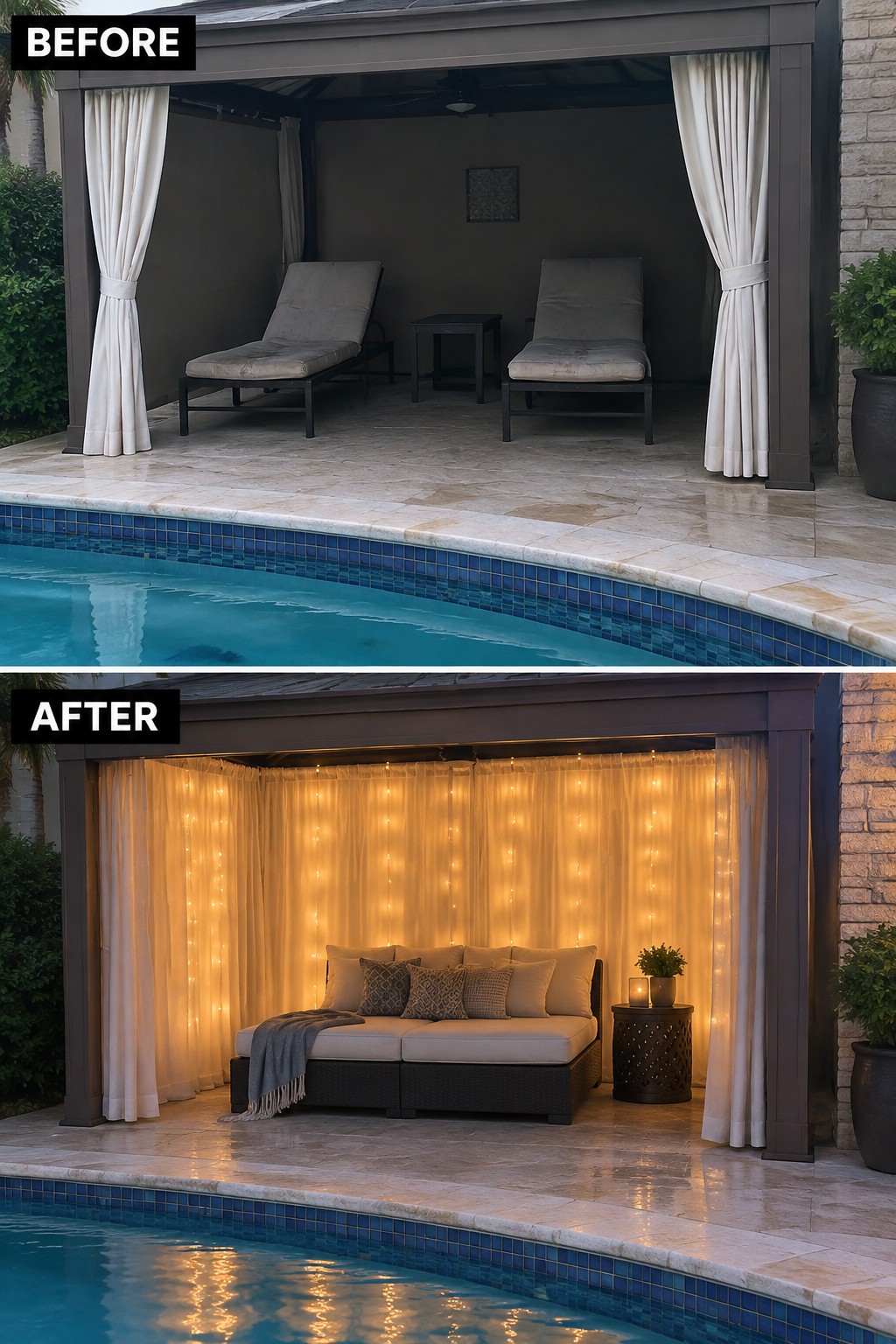
The before photo shows a basic covered patio with two lounge chairs and curtains pulled to the sides. In the after photo, string lights were hung behind the sheer curtains, a sofa was added, and the whole space feels much warmer and more usable once the sun goes down.
This approach works best on covered patios or pergolas that already have a roof and some side structure. Hang warm white string lights in a simple grid or vertical lines, then let light-filtering curtains hang in front of them. The combination softens the edges of the space and gives enough light to sit comfortably without needing overhead fixtures. Keep the seating low and simple so the lights remain the main feature.
Use String Lights To Turn A Bare Patio Into A Seating Area
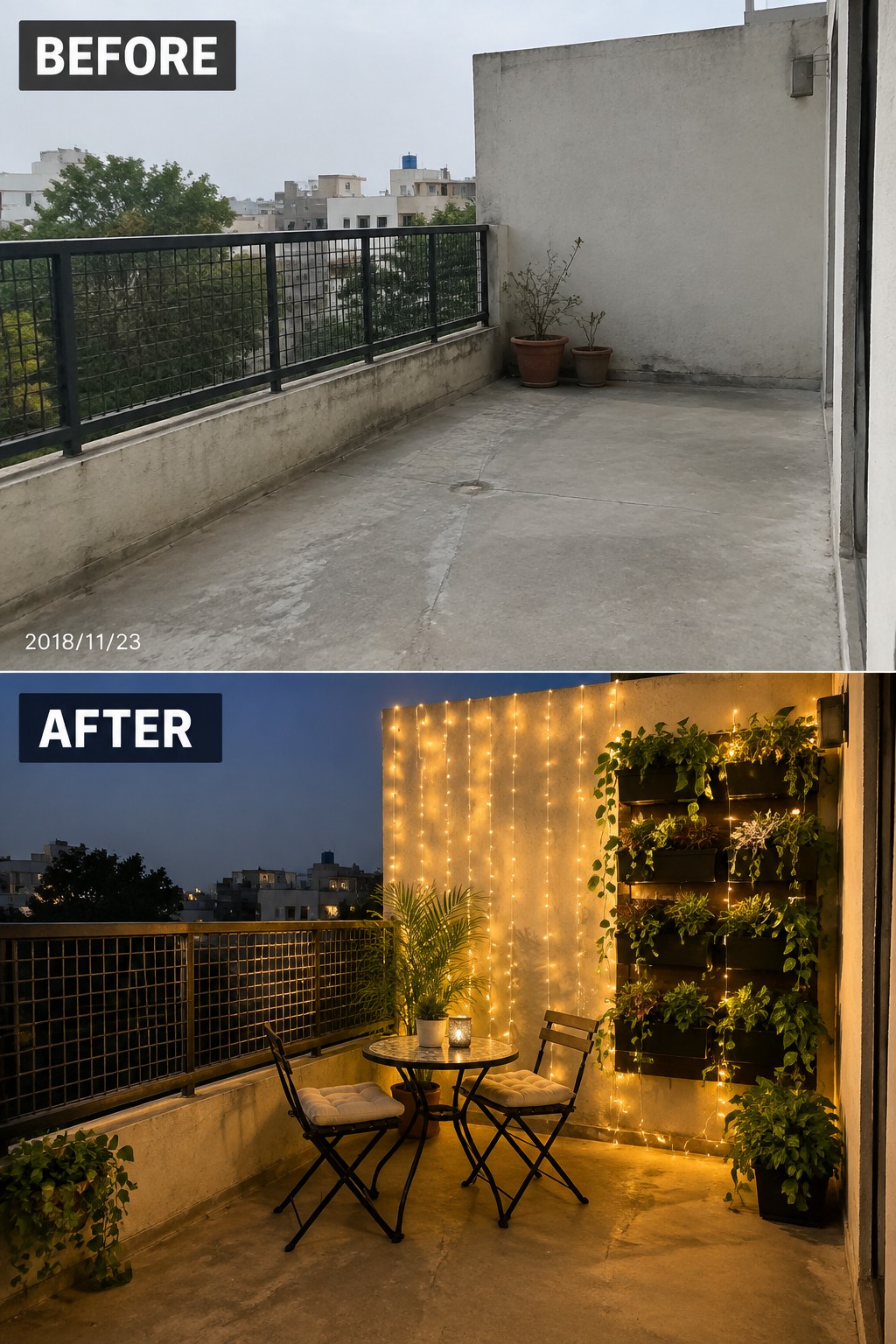
A bare concrete patio often feels empty and uninviting once the sun goes down. String lights change that quickly by adding a soft overhead glow that defines the space and makes it feel like an outdoor room rather than just leftover floor area.
This approach works especially well on small balconies or terraces where you want warmth without adding much furniture. Hang the lights along one or two walls, keep the seating scale modest, and let the lighting do the main work of making the area usable at night.
Use String Lights To Make A Porch Feel Cozy
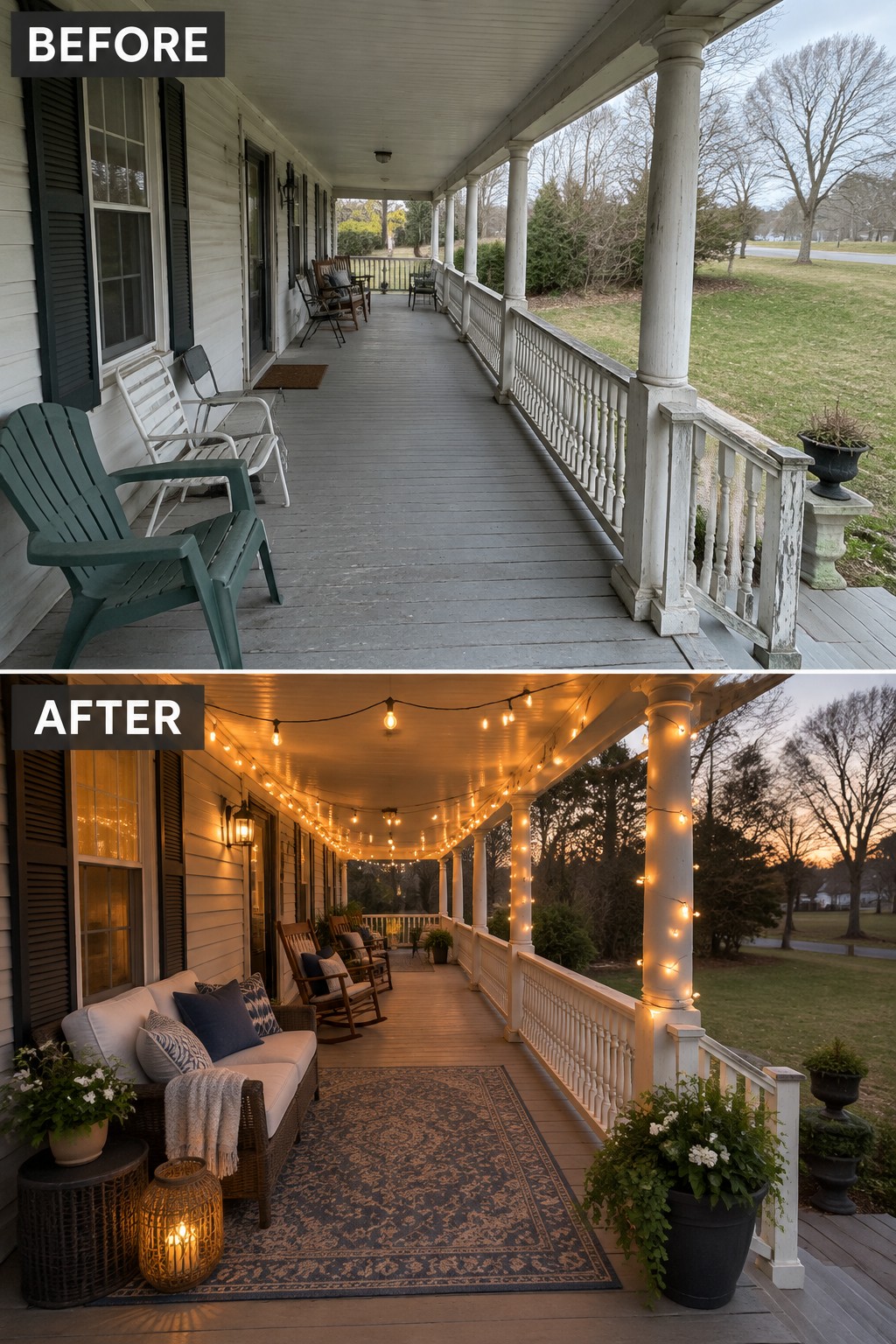
A bare porch with a few scattered chairs often feels like a pass-through rather than a place to linger. Adding string lights overhead instantly changes that by creating a soft overhead glow that defines the space and makes it feel inviting after dark.
This approach works best on covered porches or patios where you already have seating but want to extend the hours you actually use them. Hang the lights along the ceiling beams first, then layer in a rug and weatherproof seating so the area reads as an outdoor room instead of an empty walkway.
Warm Up a Pergola Dining Area With String Lights
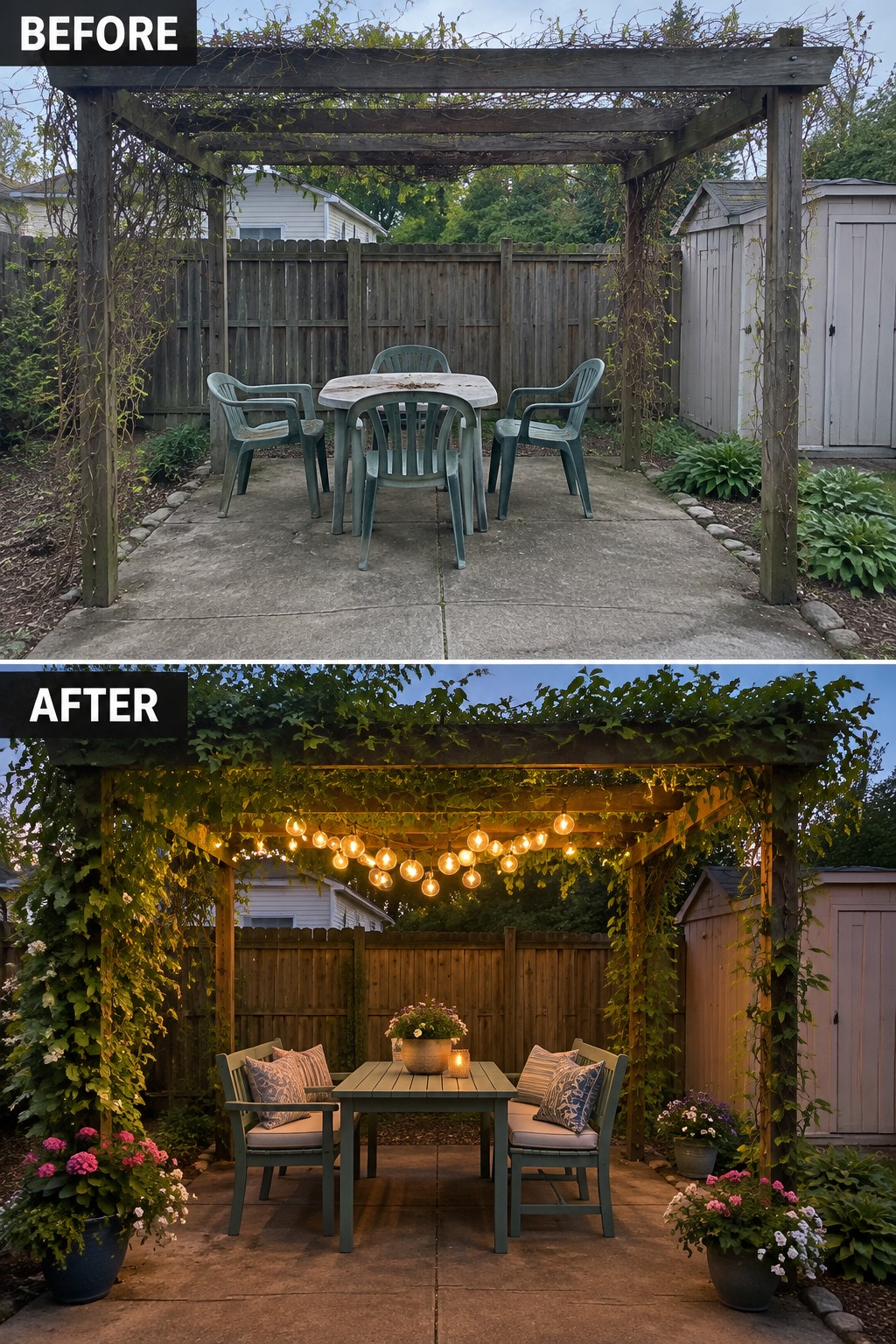
String lights can turn a plain concrete patio into a space that feels ready for evening use. In the before photo the area looks bare and functional, but the after version shows how a simple strand of lights overhead warms up the whole spot without needing major changes.
This works best on patios that already have a pergola or roof structure. Hang the lights so they sit above the seating zone, keep the furniture modest, and let the glow do most of the work. It suits homes with outdoor dining areas that get used after dark and does not require a large budget or complicated wiring.
Use String Lights To Turn A Bare Patio Into A Seating Area
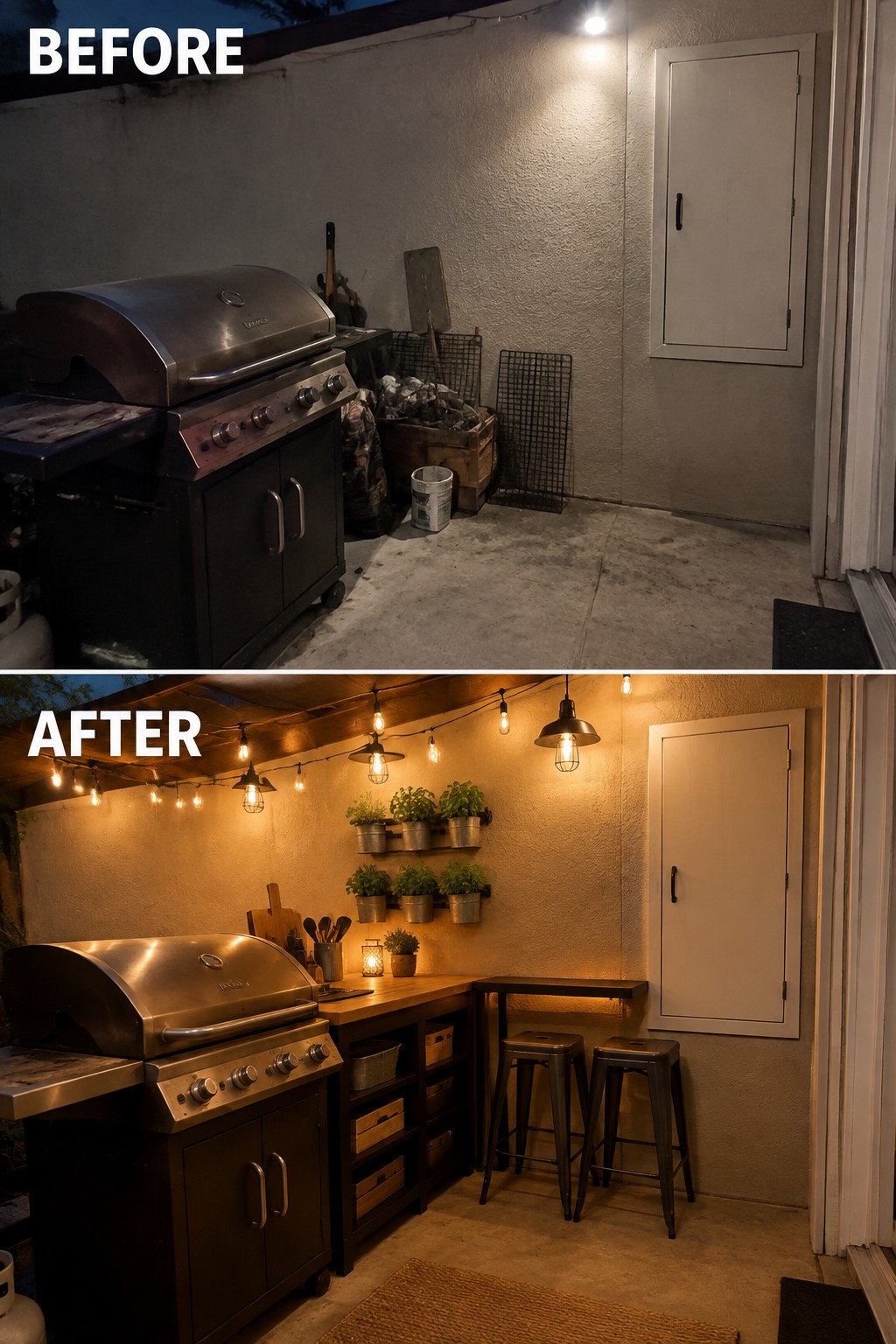
A plain concrete slab with just a grill can feel unfinished and unused after dark. Adding string lights overhead along with a few pendant fixtures creates a warm layer of light that defines the space and makes it comfortable to sit and cook at night. The addition of a simple counter and stools turns the area into a spot where people actually want to gather instead of just passing through.
This approach works well on any small patio or side yard that already has a grill or basic surface. Start with the lights first so you can see how the space feels after sunset, then add seating and storage that fits the scale of the area. Keep the number of fixtures modest so the lighting stays even rather than overly bright.
Use String Lights To Make A Fountain Glow At Night
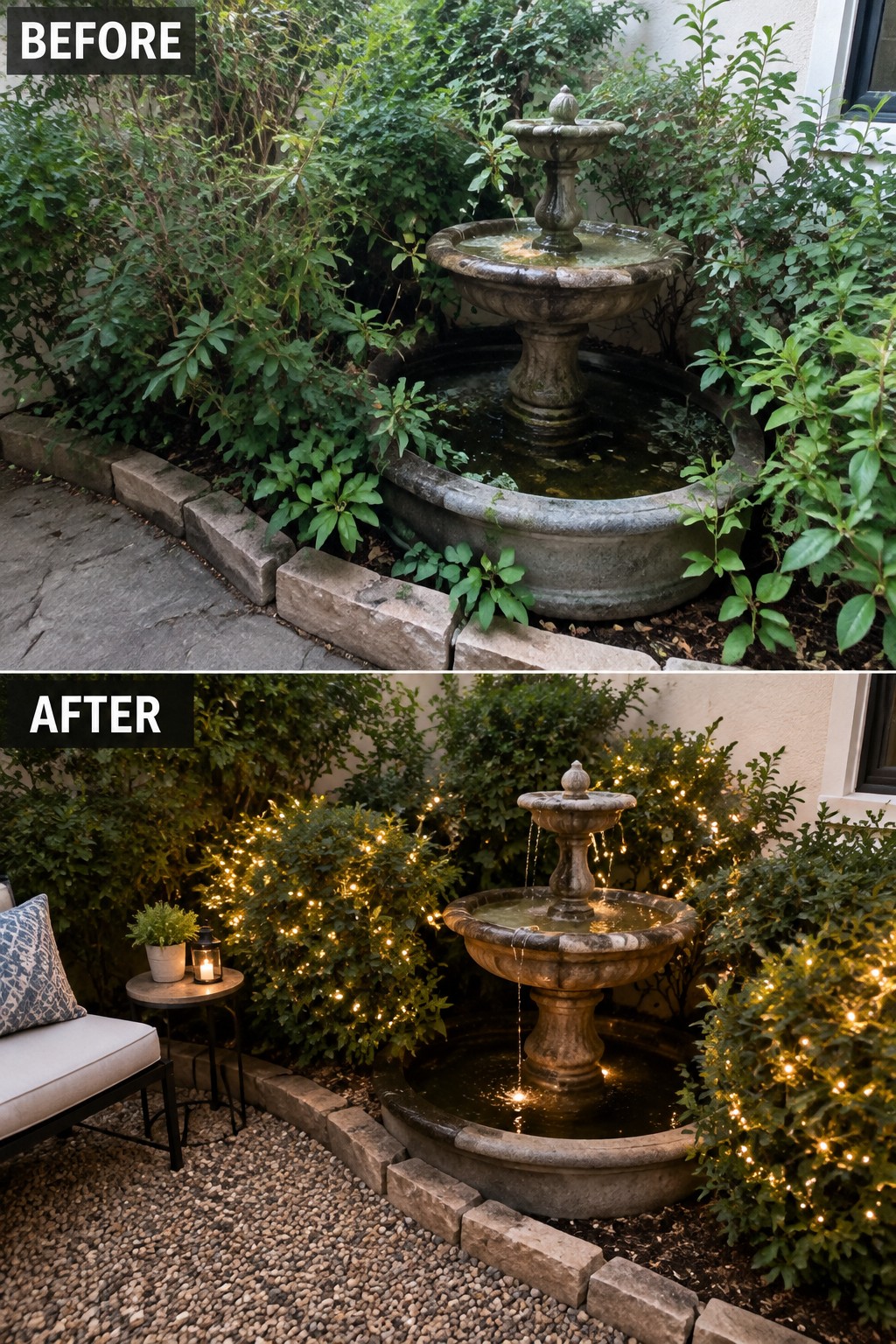
String lights tucked into the bushes around a fountain can turn a daytime garden corner into a place you actually want to sit after dark. The before photo shows the fountain mostly lost among the greenery during the day. Once the lights are added, the water feature becomes the soft center of the space and the whole area feels finished.
This idea works best in small courtyards or side yards where you already have a water feature but nothing drawing you outside at night. Run warm white lights through the shrubs on both sides of the fountain, then add one small table and chair so the seating stays simple. Use a timer so the lights come on automatically and keep the rest of the planting trimmed so the glow stays focused on the water.
Use String Lights To Make A Deck Feel Cozy
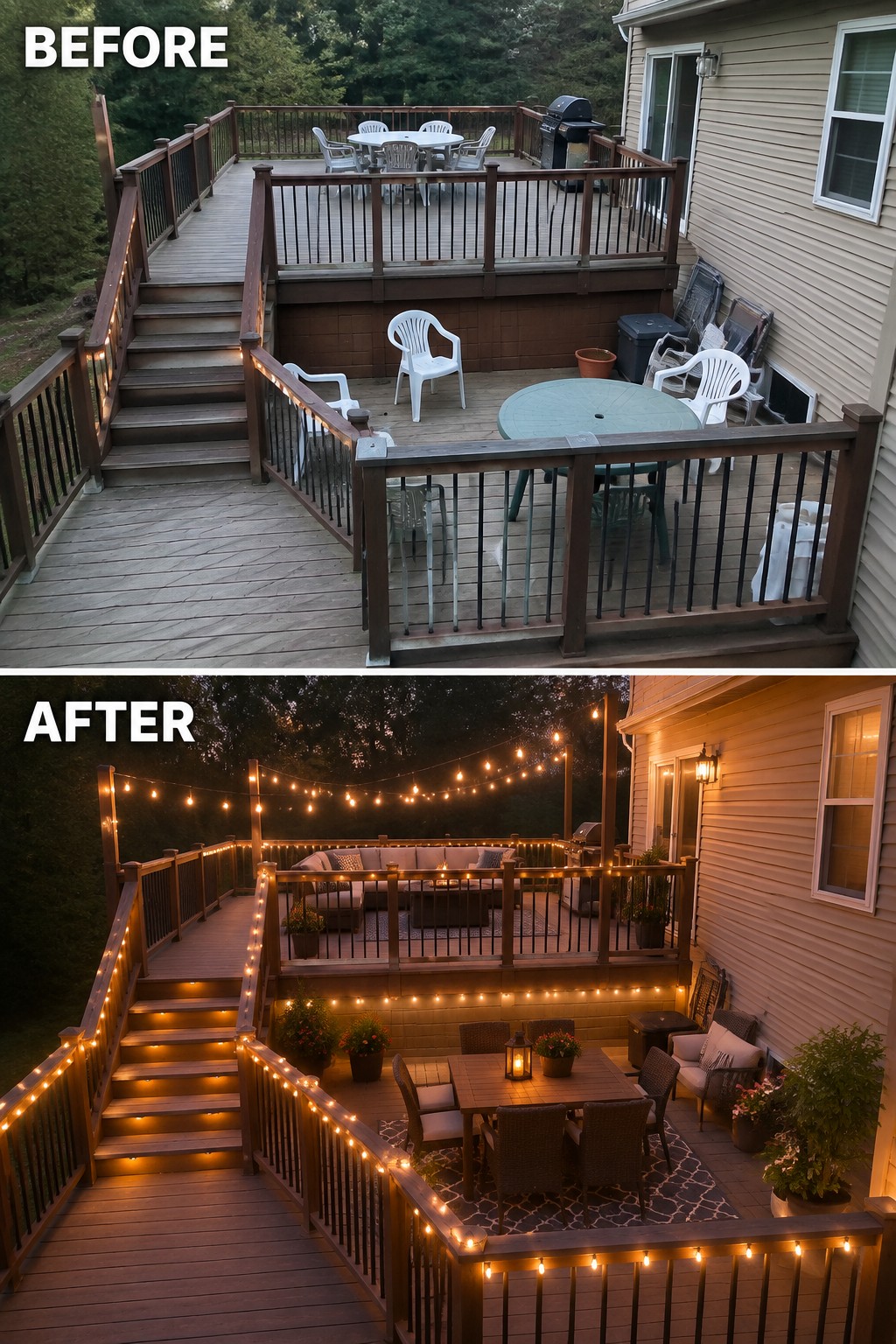
Adding string lights along the railings and stairs turns a basic deck into a space people actually want to use after dark. The before photo shows a functional but flat setup with scattered furniture, while the after version uses the lights to create a soft, layered glow that makes the whole area feel finished and welcoming.
This works best on decks that already have decent structure but lack warmth at night. Run the lights along the edges first so the space feels safe to walk through, then add a few strands higher up if you want more atmosphere. It suits most wooden decks and does not require major furniture changes to start looking good.
Frequently Asked Questions
Q: How can I hang string lights if my patio lacks trees or posts nearby?
A: Use freestanding poles anchored in heavy planters. Space them evenly around the area. Then run the lights between the poles to create a cozy overhead glow.
Q: Will regular extension cords work for powering these lights outside?
A: Grab cords made for outdoor use with thick insulation. They resist moisture and wear from weather. Plug them into a GFCI outlet for extra safety.
Q: How do I stop the lights from coming down during a storm?
A: Secure the strings with zip ties or clips at each attachment point. Check the tension after hanging so nothing flaps loose. This holds them steady even in gusts.
