

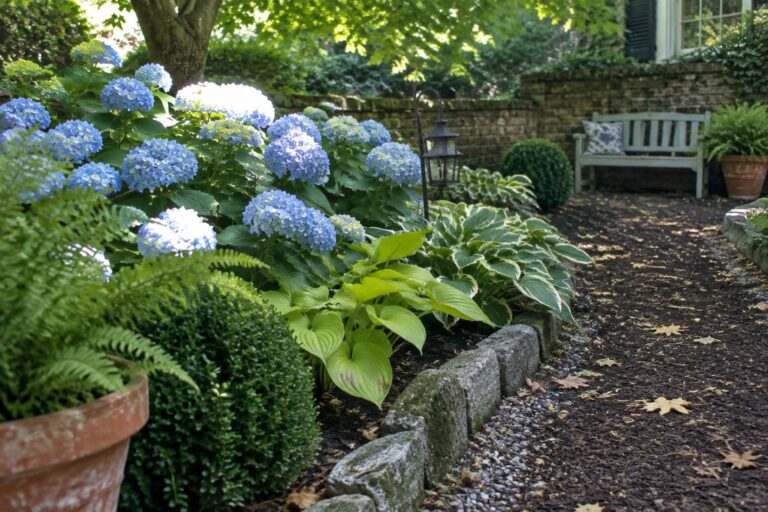
Shady garden beds can look flat when the planting has no clear layers, even if every plant is healthy.
I find that the contrast between broad hosta leaves and rounded hydrangea blooms gives a bed structure without making it feel crowded.
The first things I notice are how the plants frame a path or foundation and whether their heights leave room to see each other.
These designs show ways to use color, spacing, and edging so the garden feels balanced as it fills in over time.
I’d start with the layouts that suit the light and space I actually have, then adapt the details as the plants grow.
Layer Hostas and Hydrangeas Along a Garden Path
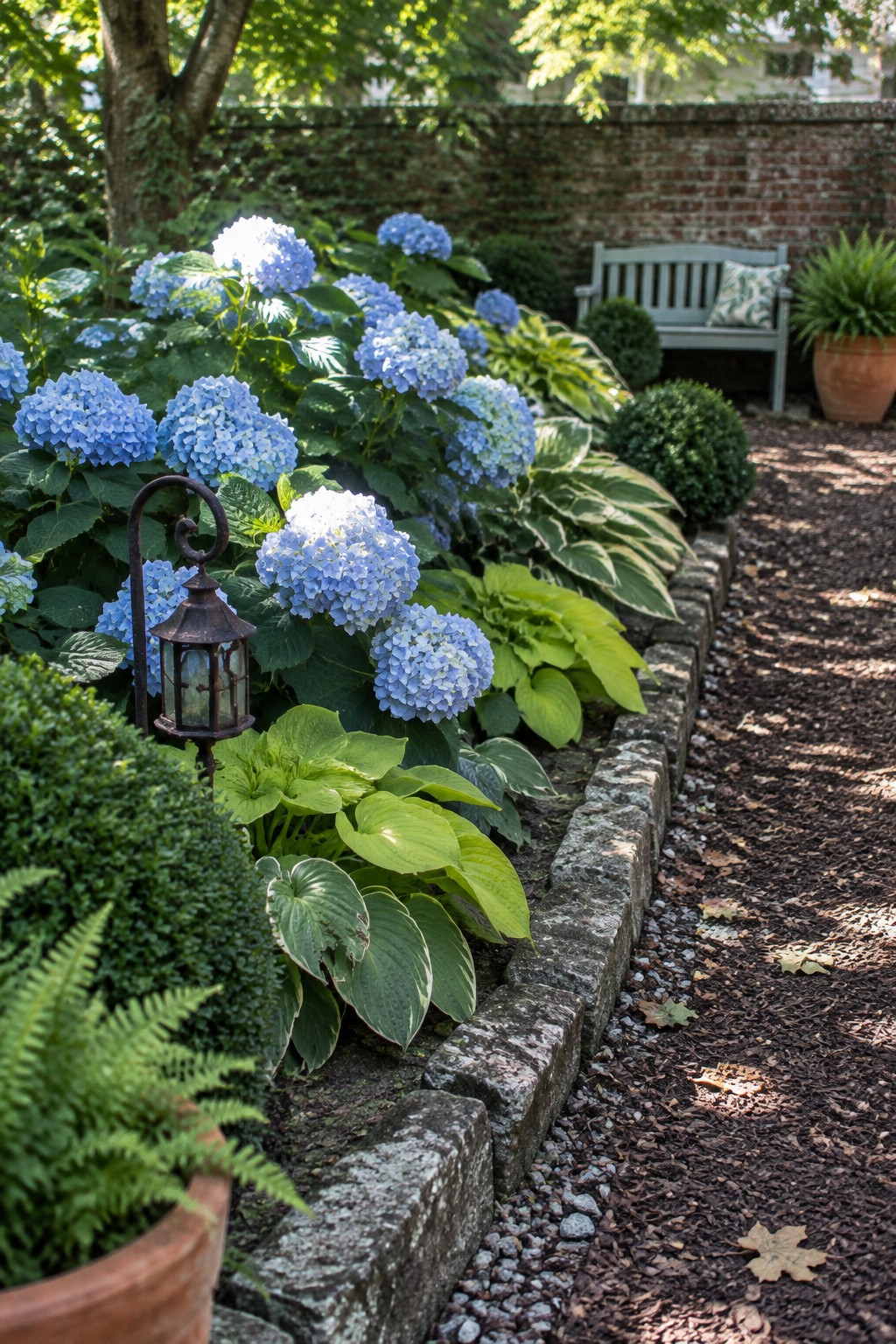
A clear edge between a planting bed and a path helps a shady garden feel tidy without making it too formal. Here, a low stone border keeps leafy hostas and blue hydrangeas in their own bed, while the path stays easy to follow.
This approach works well beside a brick wall or along a narrow side garden. Use a simple, durable edging material and leave enough room for plants to spread, especially hostas, so they do not crowd the walkway.
Use Stepping Stones to Guide a Shady Garden Path

A stepping-stone path makes a narrow garden bed easier to walk through and gives the planting a clear shape. Here, broad stone slabs wind between hostas and hydrangeas, so the path feels like part of the garden rather than a strip of bare ground.
For a similar look, leave enough room between stones for a comfortable stride and let low groundcover fill some of the gaps. This works well along a fence or beside a house, where a full-width paved path might take up too much space.
Use Stone Stepping Stones To Guide The Garden Path
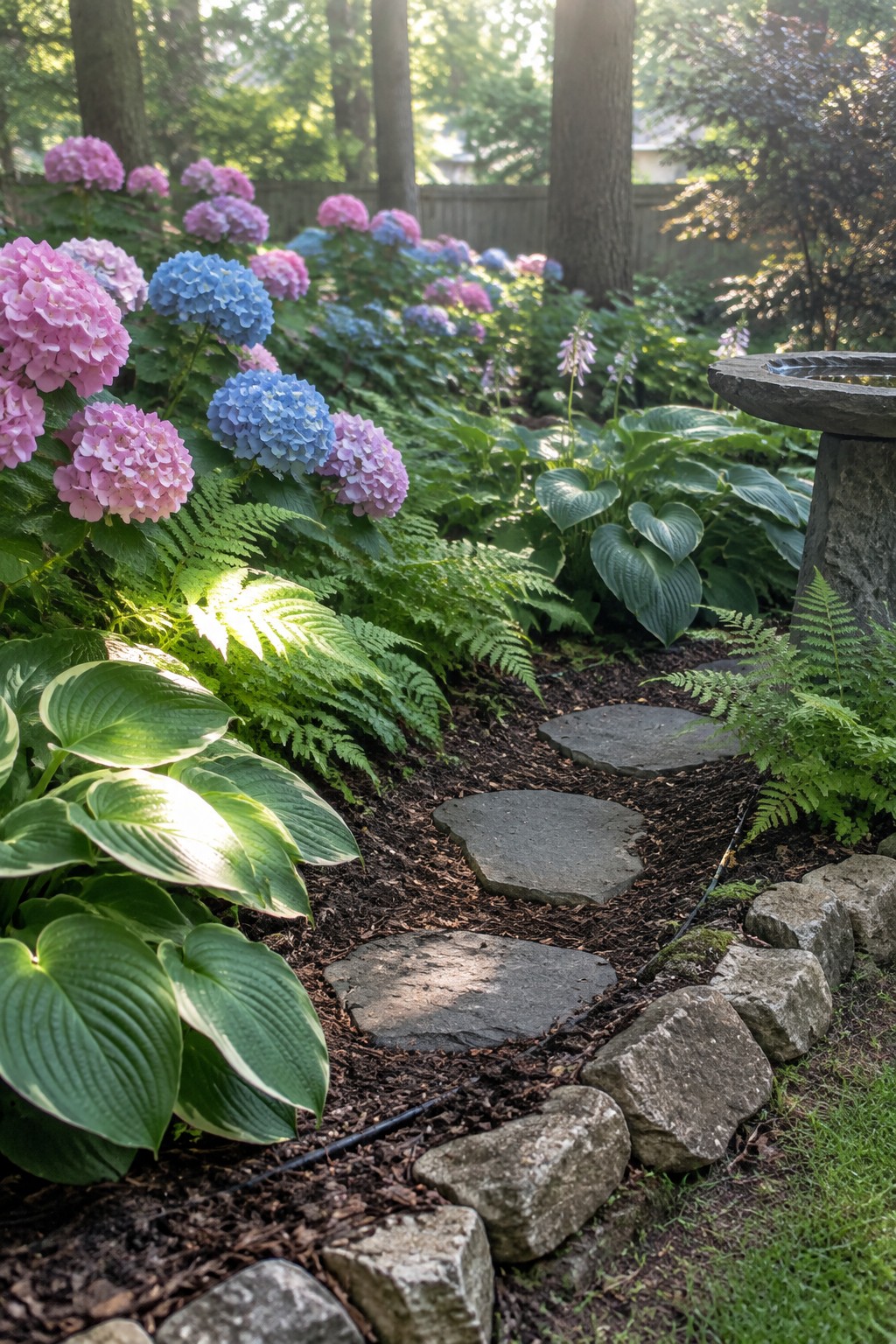
A simple stepping-stone path makes a shady garden easier to walk through without taking space away from the planting. The irregular stones suit a natural garden bed, while the path gives the eye a clear route through the hostas and hydrangeas.
Place stones where people naturally need to walk, and leave enough room between them for a comfortable stride. A mulch path can fill the gaps, but keep the stones level and stable so they do not shift underfoot.
Use a Curving Path To Shape a Shady Garden Bed

A stone path can give a long planting bed a clear edge and make it easier to move alongside the house. Here, the gentle curve keeps the walkway from feeling like a straight strip, while the shrubs and hydrangeas fill the space beside it.
For a similar look, let the path follow the bed rather than forcing the plants into a rigid line. Hydrangeas add broad patches of color, and a low border of compact shrubs helps define the edge. Leave enough room for the plants to spread without crowding the walkway.
Use a Stone Path to Add Shape to a Shady Garden
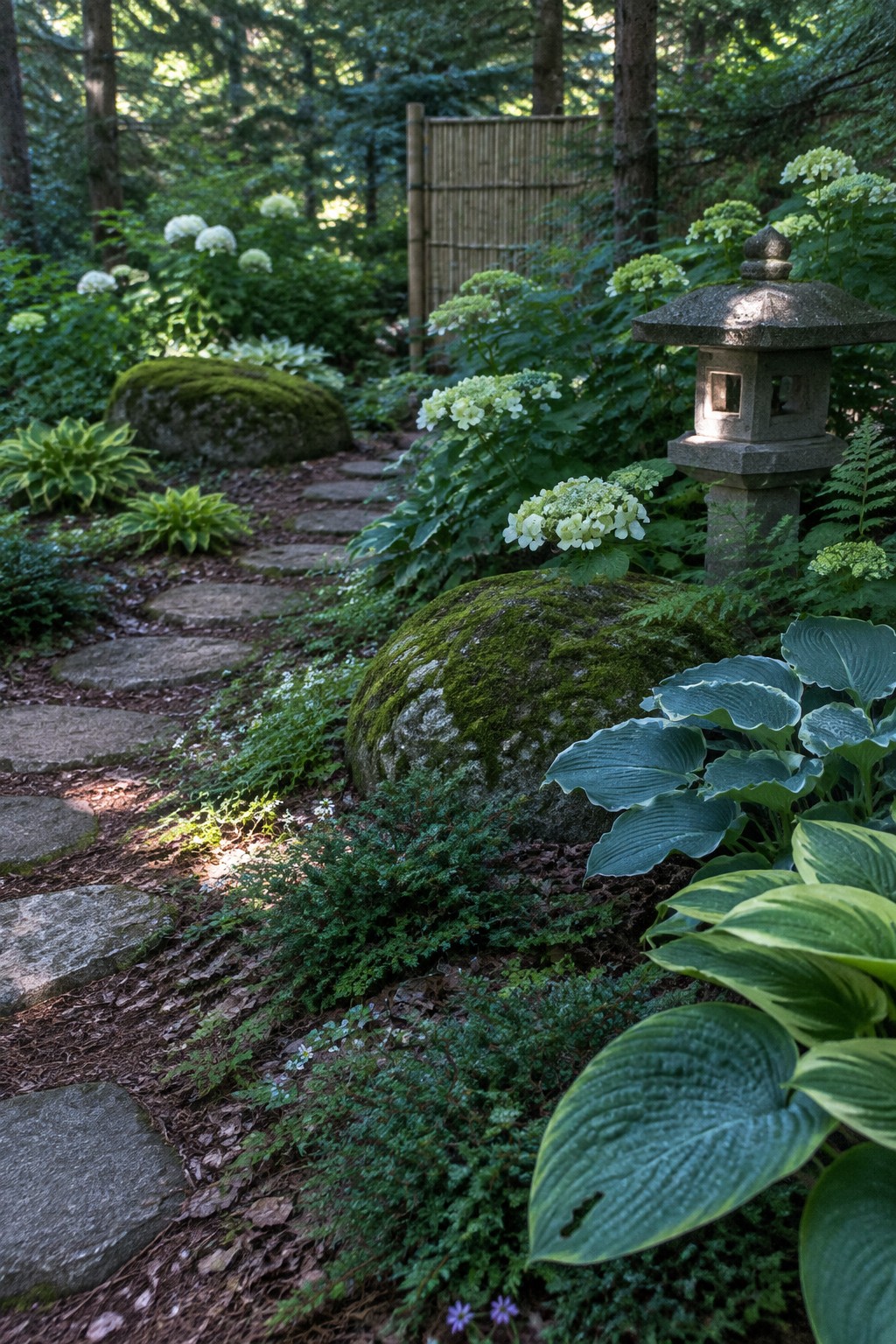
A simple stone path gives a shady garden some structure without taking attention away from the planting. The irregular stepping stones make the route feel relaxed, while hostas and hydrangeas help it sit naturally among the greenery.
This approach works well in a woodland-style bed or anywhere grass struggles to grow. Set the stones firmly and leave enough room for comfortable steps. A gentle curve can make a short path feel more natural.
Use a Bench to Make a Shady Garden Bed More Usable

A simple bench gives a planted garden bed a practical place to pause. It works especially well in a shady spot, where hostas and hydrangeas can grow around a small resting area without needing a large patio.
Set the bench on a firm, level base and leave enough room to reach the plants for watering and pruning. A built-in wooden seat can suit a narrow side garden, but keep it clear of the hydrangeas so their branches have room to spread.
Use a Low Stone Wall to Shape the Garden Bed

A low stone wall gives a shady planting bed a clear edge and a little structure. It also makes a gentle change in height, so hydrangeas and hostas can fill the bed without spreading into the lawn.
This approach works well beside a path or along a sloped yard. Keep the wall low enough that it does not block the plants, and leave room behind it for mature growth.
Use a Raised Bed to Organize Shady Plantings

A raised bed gives a shady garden a clear edge and makes it easier to keep larger plants in order. Here, broad hosta leaves fill the front while white hydrangeas add height behind them.
This approach works well along a walkway or beside a porch, especially where the ground needs a more defined planting area. Choose a bed size that leaves enough room for the plants to spread without crowding the path.
Plant Hydrangeas in Layers Along a Shady Bed
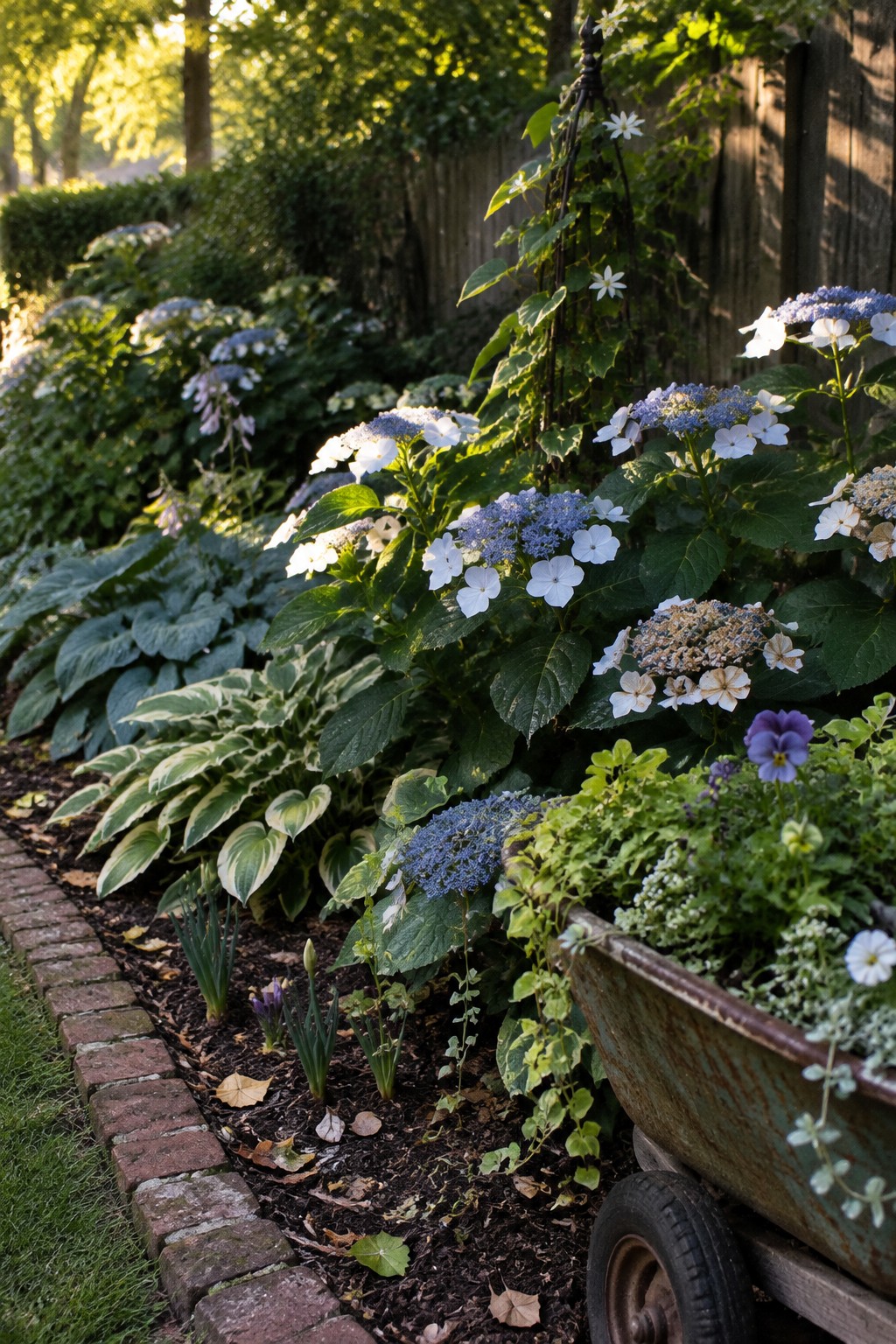
Layering hydrangeas at different heights gives a shady garden bed a fuller look without making it feel crowded. The broad-leafed plants fill the lower space, while clusters of white and blue blooms bring color through the bed.
Use taller hydrangeas toward the back and shorter plants near the edge, leaving room for each to spread. This approach works well along a fence or narrow path, but avoid packing the plants too closely or they may compete for light and airflow.
Use Groundcover to Edge a Shady Garden Path

A narrow strip of low groundcover can help define a stepping-stone path without making the garden feel too formal. Here, small plants fill the gaps between the stones and nearby foliage, while hostas and hydrangeas give the beds a fuller look.
This approach works well in a shady garden where grass may struggle. Choose groundcover that suits your soil and stays low enough not to spill over the walking surface, and leave the stones stable and easy to step on.
Shape the Bed With Repeating Shrubs
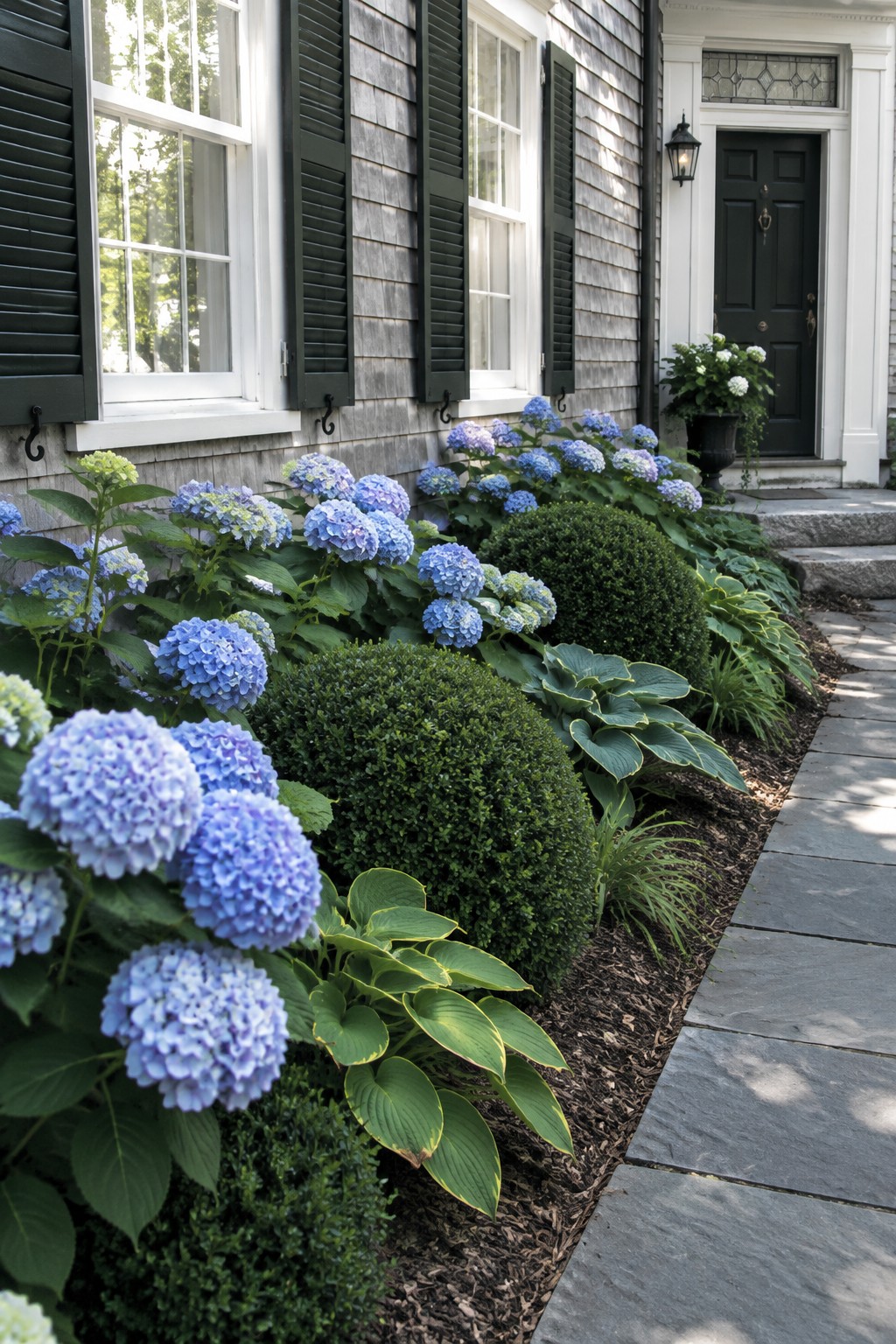
Rounded evergreen shrubs give a shady garden bed a clear structure, even as hostas and hydrangeas fill in around them. The repeated shapes make the planting feel orderly without taking attention away from the flowers.
Use compact shrubs along the edge of a deep bed, leaving enough room for hostas to spread and hydrangeas to bloom. This approach suits a front walk or foundation bed, but check mature plant sizes so the shrubs do not crowd the path.
Use a Raised Bed to Organize Shady Plantings
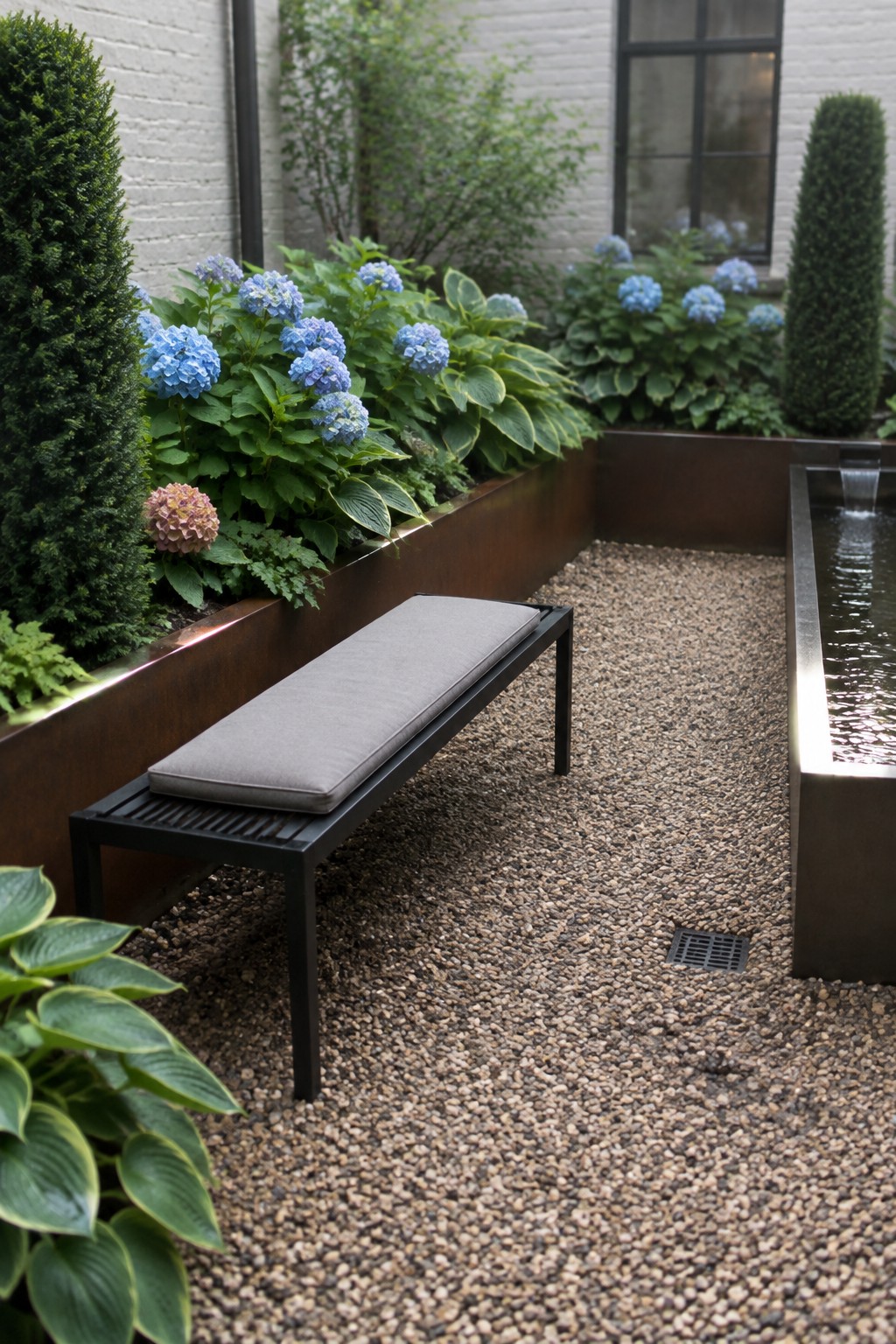
A raised bed can give a shady garden a clear edge while keeping its plants grouped together. Here, the rust-colored metal border holds a lush mix of hostas and blue hydrangeas, so the planting feels orderly without looking sparse.
This approach works well in a small courtyard or beside a wall where garden space is limited. Choose a border material that suits the home, and leave enough room for plants to spread without spilling over the edge.
Let Stepping Stones Wind Through Shady Plantings

A stepping-stone path makes a shady garden bed easier to walk through without carving out a wide strip of bare ground. Set among hostas and ferns, the stones feel like part of the planting rather than a separate walkway.
Leave enough room between stones for comfortable steps, and keep their surfaces level so they are safe in damp weather. This approach works well in a narrow or sloped garden, where a broad paved path might take up too much space.
Create a Shady Garden Seating Nook
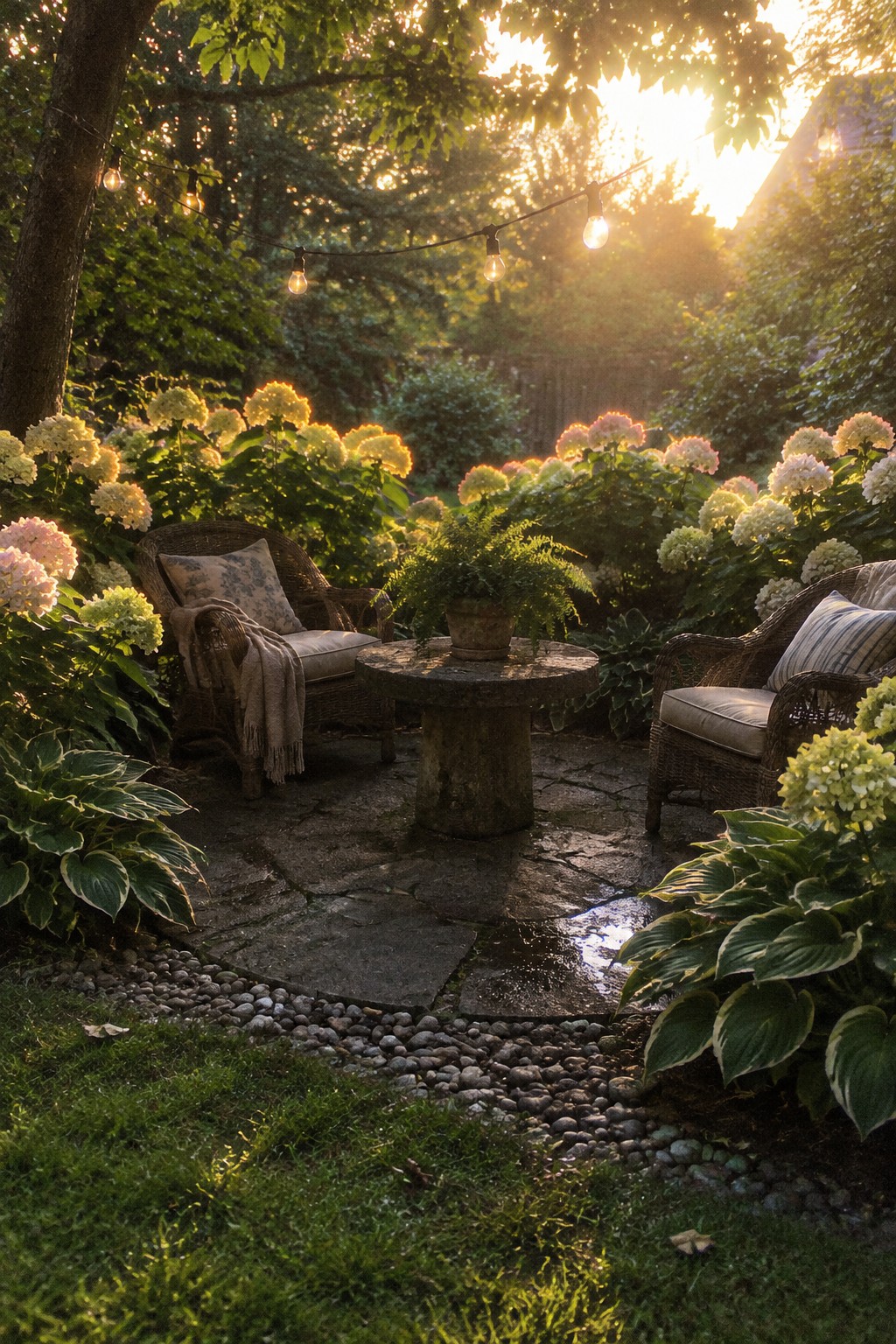
A small seating area can make a shady garden bed more useful, not just something to look at from indoors. Tuck a pair of chairs into the planting and let hydrangeas and leafy hostas surround the spot without crowding it.
This works best where there’s enough room for a simple stone surface and a clear way in and out. Keep plants low near the chairs, and leave a little space to tend them without stepping through the bed.
Use Low Edging to Keep a Garden Path Neat
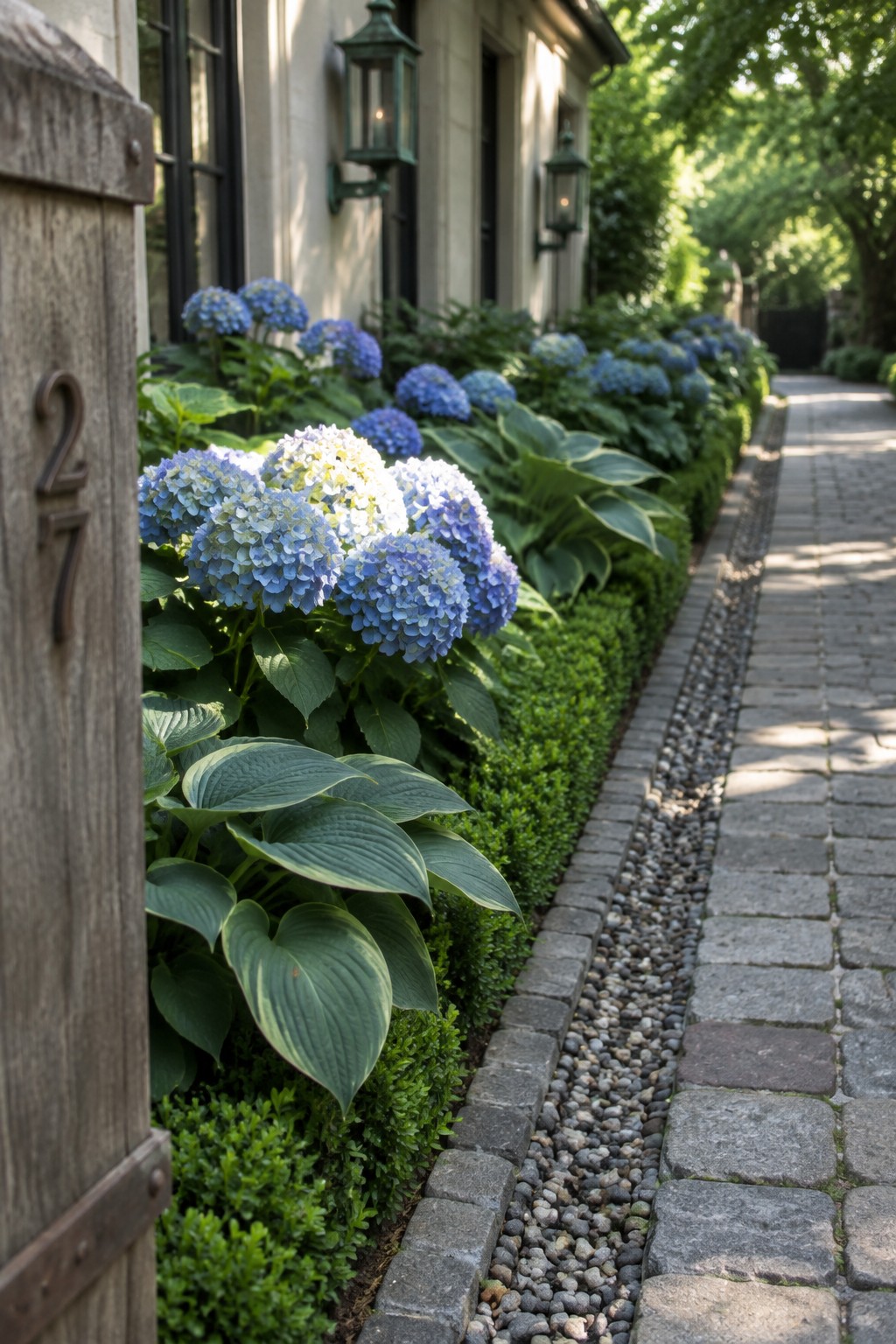
A narrow stone border gives a garden path a clear edge and keeps the planting bed from spreading into the walkway. It also helps the small stones beside the paving look intentional rather than like leftover space.
This approach works well in a shady side yard where the path runs close to hydrangeas and hostas. Choose edging that suits the paving, and leave enough room for plants to grow without leaning into the walking space.
Build Seating Into a Shady Garden Wall

A low stone wall can do more than hold back a sloped garden bed. When its shape includes a built-in seat, it makes a shady planting area easier to use without taking up extra room for separate furniture.
This works well in a narrow yard or along the edge of a garden path. Leave enough depth for a comfortable seat, and choose cushions that can be stored away when the weather turns. Hostas and hydrangeas can fill the bed behind it.
Plant Hydrangeas Along a Gravel Path
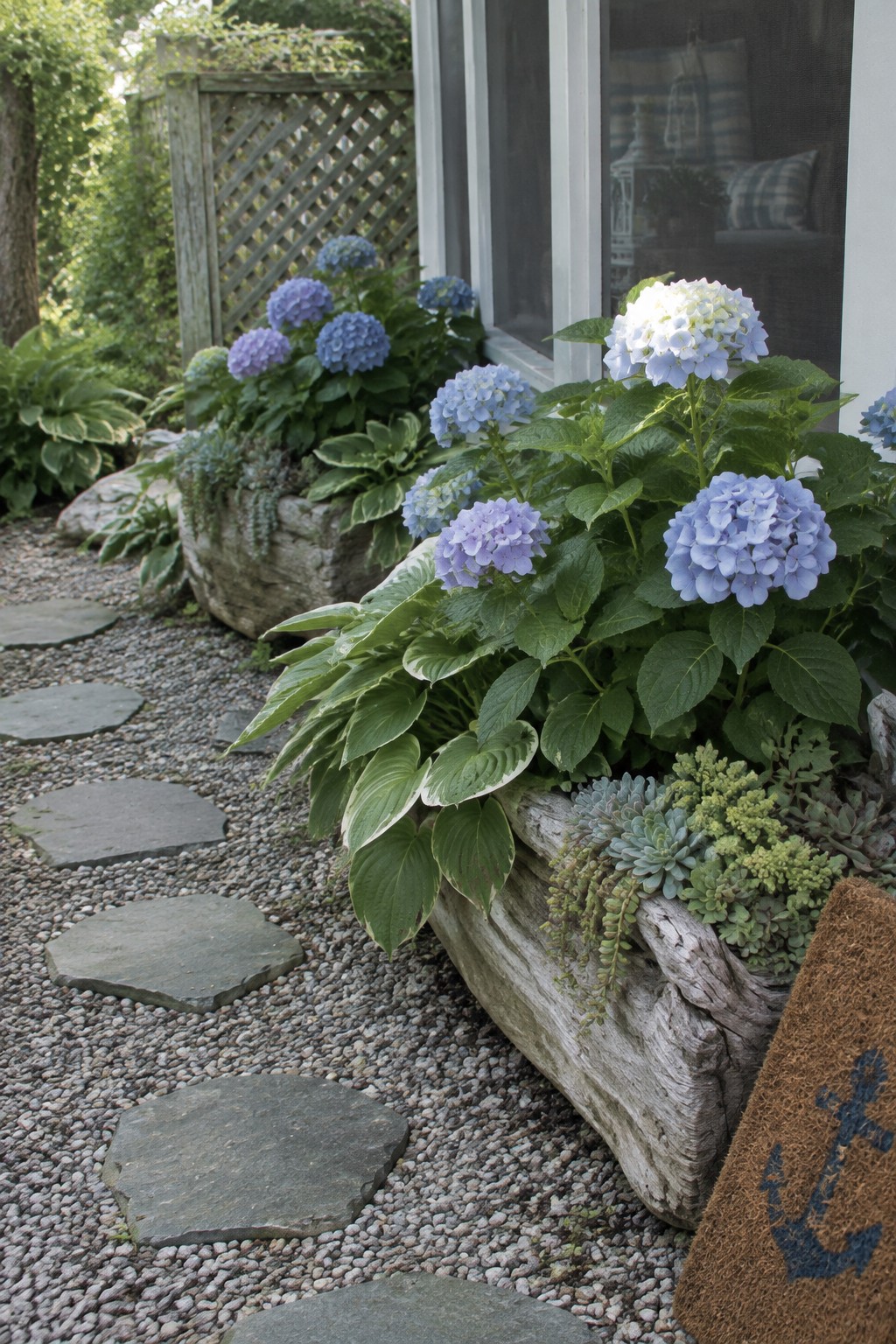
Hydrangeas and hostas can make a shady path feel like part of the garden rather than a way through it. Here, the broad leaves and blue blooms sit close to the stepping stones, while the gravel keeps the route simple and easy to follow.
Use this approach beside a house or along a narrow side yard where a full lawn is not practical. Leave enough room for the plants to spread without spilling over the stones, and choose gravel that drains well.
Use Garden Lighting to Highlight Shady Plantings

Low garden lights can make a shady bed easier to enjoy after dark without changing its layout. Here, small path lights pick out the broad hosta leaves and hydrangea blooms, while the planting still feels full and natural.
Place lights along the edge of a path or tuck them between plants, aiming them toward foliage rather than directly into someone’s eyes. Keep the fixtures spaced out, and choose warm, low-level lighting so the flowers remain the focus.
Plant Hydrangeas Along a Poolside Garden Bed
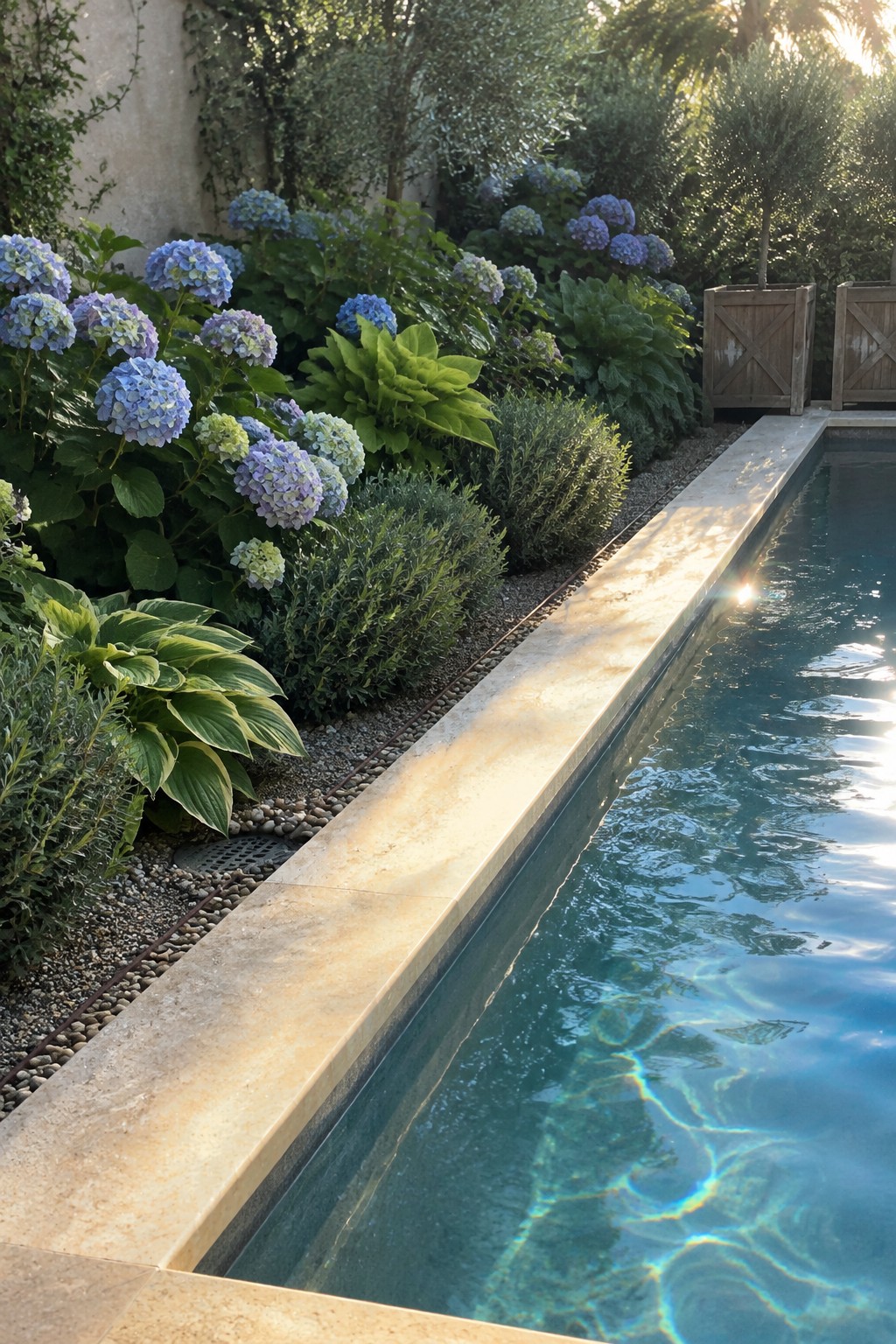
Hydrangeas can make a narrow garden bed feel lush without taking up space on the pool deck. Their rounded flower clusters bring color to the edge, while leafy plants in front help the bed look full from the water.
Leave enough room for mature shrubs so they do not crowd the pool or make maintenance difficult. Hostas work well near the front of a shady bed, where their broad leaves can cover the soil and complement the hydrangeas.
Plant Herbs Along a Shady Garden Path

A narrow brick path can make a shady garden bed easier to move through and give the planting a clear shape. Herbs planted along its edge bring a practical touch to a space that is otherwise filled with leafy hostas and hydrangeas.
Keep herbs in small, defined patches so they do not spill onto the walkway. Choose varieties suited to the amount of sun the path receives, and leave enough room for plants to spread without making the route hard to use.
Layer Hostas Along the Garden Bed
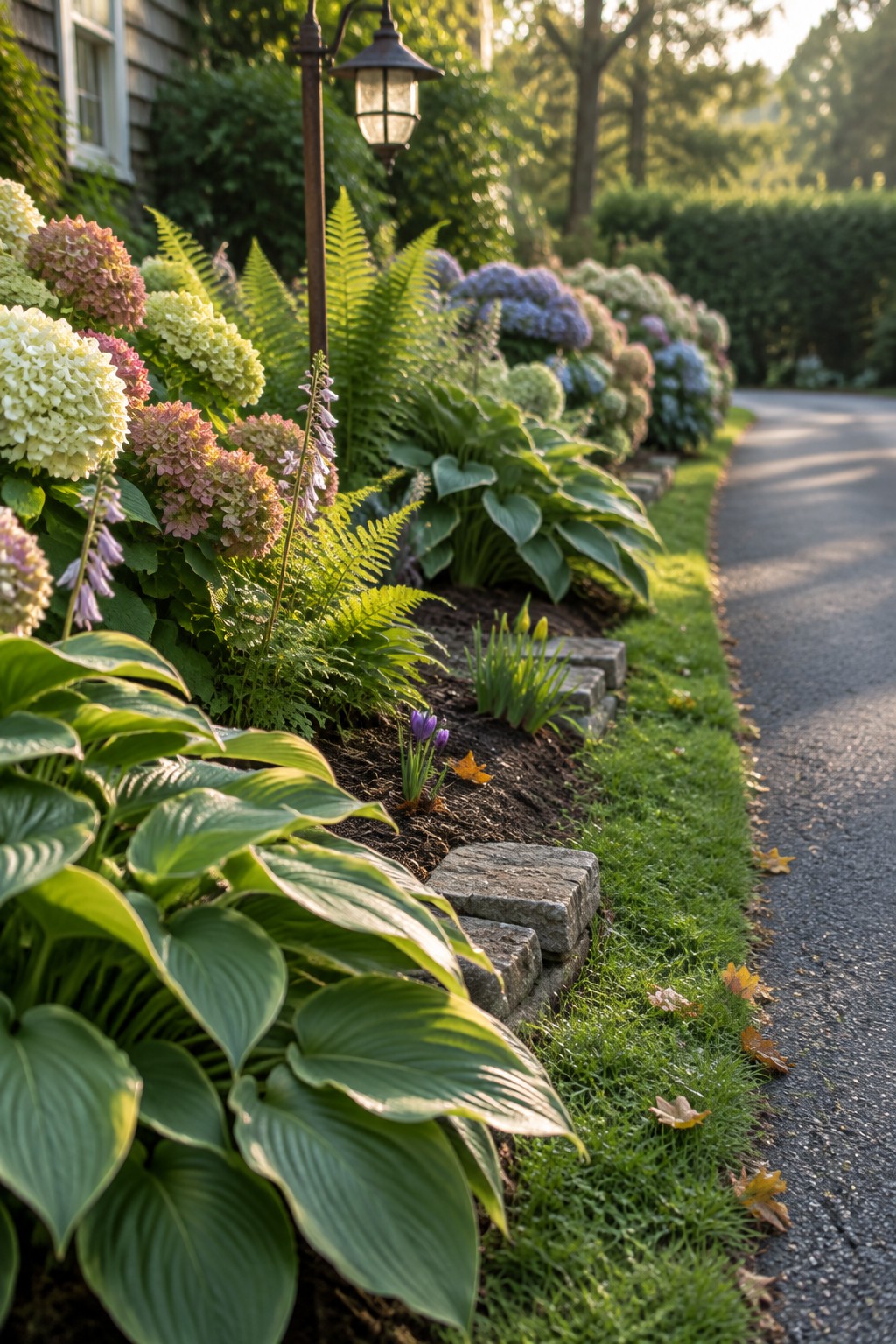
Hostas make a useful front layer in a shady garden bed, where their broad leaves can cover the soil and give the planting a clear edge. Hydrangeas behind them add height and summer color without crowding the path.
For a similar effect, plant hostas in small groups along the front of the bed and leave enough room for them to spread. This arrangement suits a shaded walkway, but keep the path edge tidy so leaves do not spill too far onto it.
Layer Hostas Beneath Shady Garden Flowers

Hostas make a useful leafy layer beneath hydrangeas, filling the space around their stems with broad foliage. The mix works especially well in a shady bed, where the hydrangea blooms bring color and the hosta leaves keep the planting full after flowers fade.
Place hostas toward the front of the bed and let taller hydrangeas sit behind them. Variegated leaves can brighten a dim corner, but leave room between plants so both have space to grow.
Frequently Asked Questions
Q: Can hostas and hydrangeas grow together in full shade?
A: They can share a shady bed, but hydrangeas usually bloom more reliably with a little morning sun or bright, filtered light. In deep shade, expect lush foliage and fewer flowers.
Q: How far apart should I plant hostas and hydrangeas?
A: Leave enough room for both plants to reach their mature size, and check the plant tags before spacing them. Give the hydrangea breathing room so air can move around it, and tuck smaller hostas near the edges of the bed.
Q: What should I plant around them to cover bare soil?
A: Mulch helps keep the soil moist while the plants fill in. For living ground cover, try a shade-loving plant such as sweet woodruff, but leave space around the hydrangea’s base.
Q: Why are my hydrangea leaves wilting while the hostas look fine?
A: Hydrangeas often droop when the soil dries out, even when nearby hostas still look perky. Check the soil a few inches down and water deeply if it feels dry.
