


I like how irises can bring color to a front garden without making it feel crowded, especially when their height and shape have room to stand out.
The first things I notice are usually the path to the door and the way the planting edges frame it, so flower placement matters as much as the blooms themselves.
A few well-spaced clumps can add structure through the seasons, while a mix of heights and colors helps the garden feel connected to the house.
I’d start with ideas that suit the amount of sun and the space around the entry, since irises look best when their growing needs fit the layout.
Some of these designs are easy to adapt, whether you’re shaping a narrow border or giving a wider front yard a clearer planting pattern.
Use A Stone Path To Shape The Iris Bed
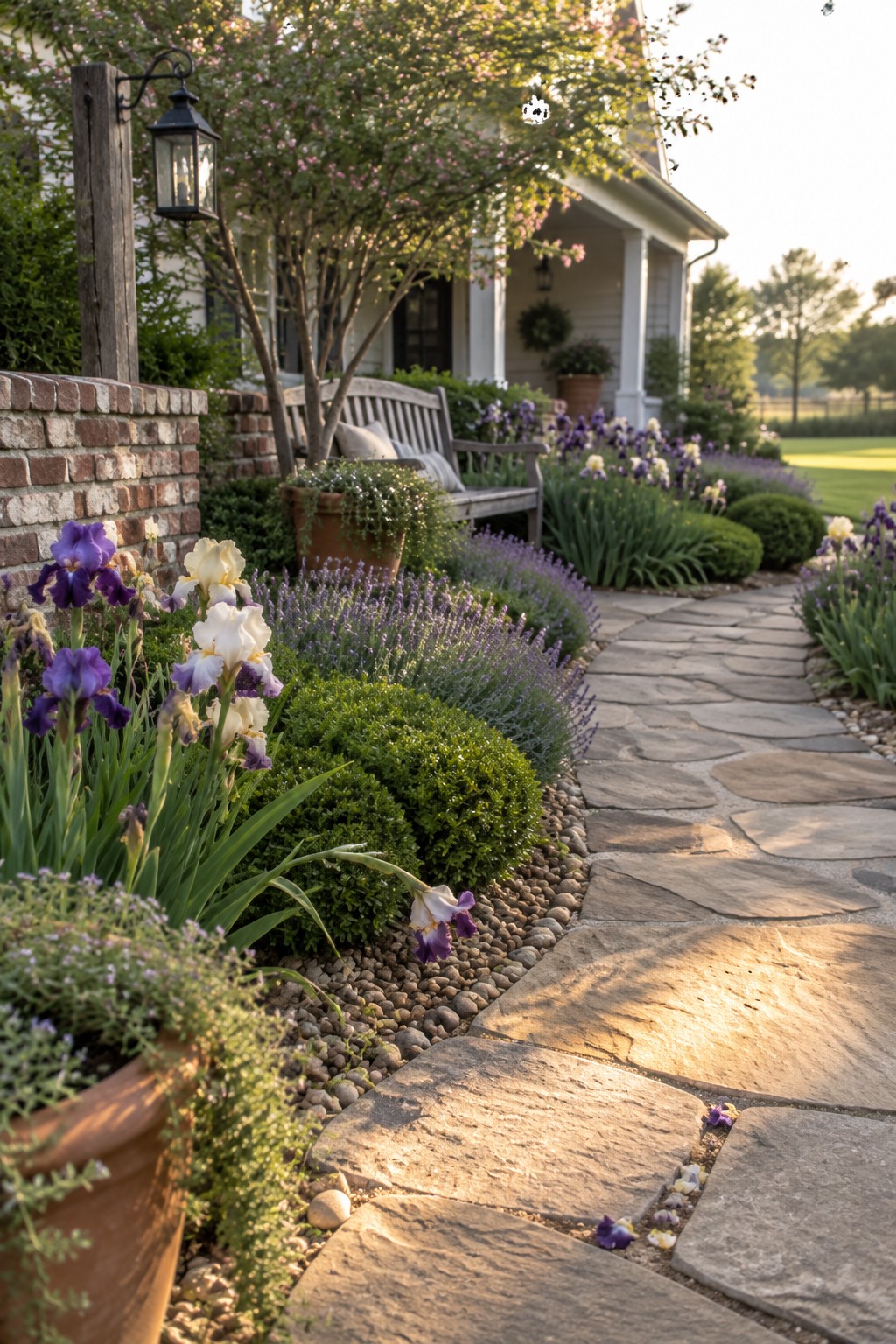
A gently curving stone path gives an iris bed a clear edge and makes the garden easier to walk through. The hard surface also gives the purple and white flowers room to stand out without making the planting feel crowded.
For a similar look, set broad pavers through a front garden and let irises spill along one side. Leave enough space between the path and flower clumps for easy weeding and care, especially where the walkway meets lawn or a foundation.
Plant Irises Along a Straight Front Walk
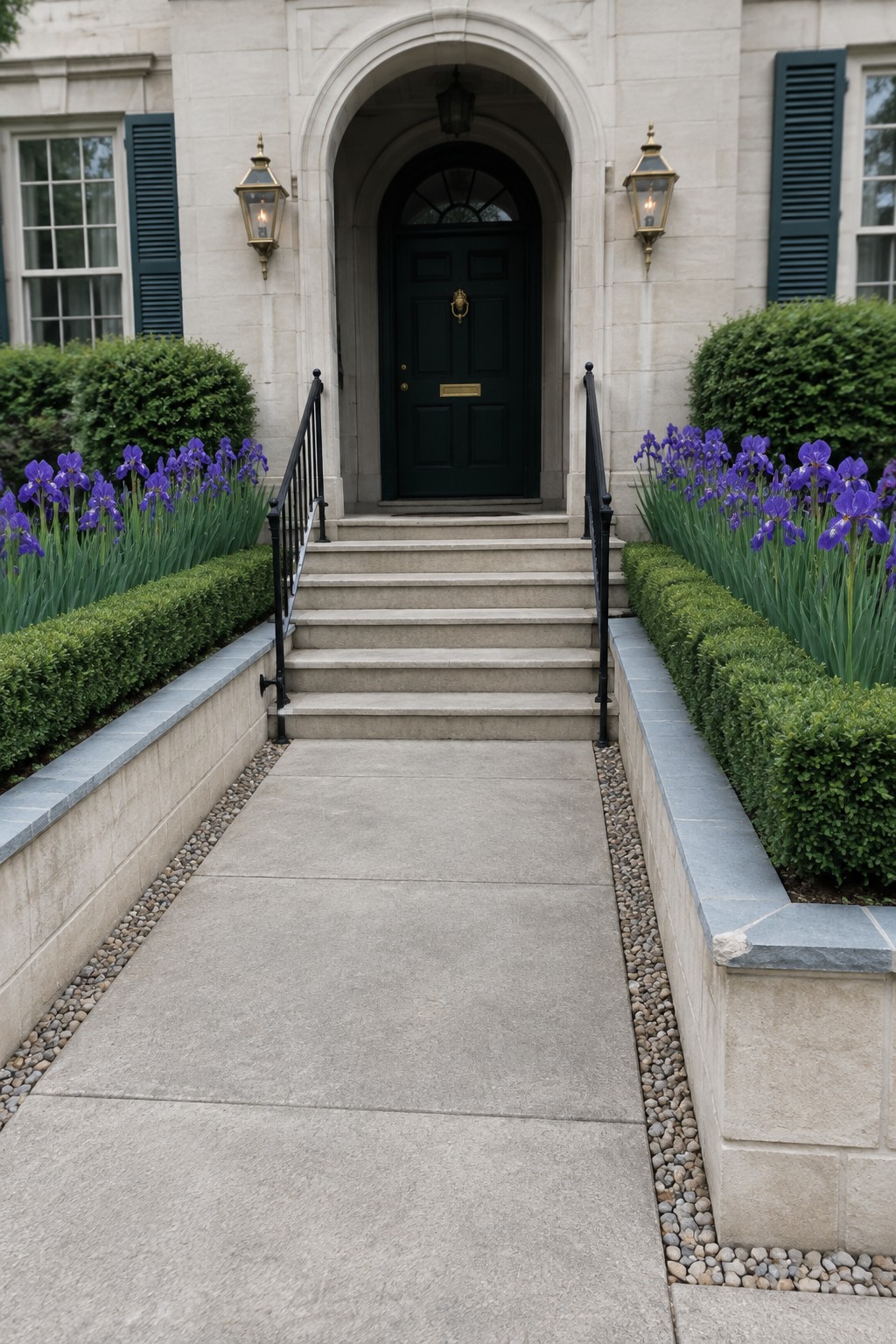
A straight walkway can make a front garden feel orderly, while iris beds along its edges bring in color without crowding the route to the door. The repeated rows of purple blooms give the path a clear shape and make the entry feel considered.
Use this layout where the walk has enough width for planting on both sides. Keep the irises set back from the paving so their leaves and flowers do not spill into the path, and trim the low edging plants as they grow.
Use Irises to Add Height to a Front Garden
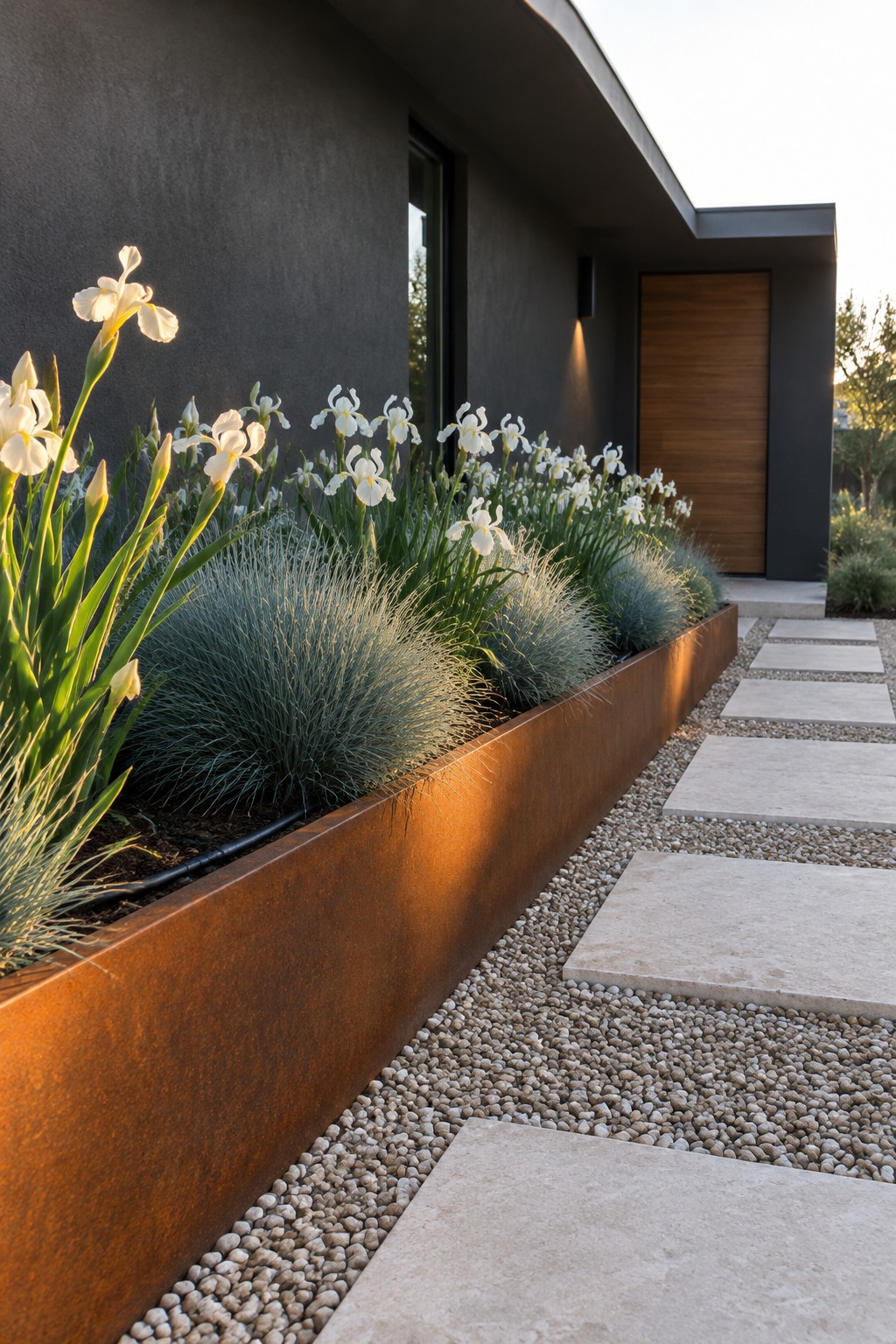
Irises bring a clear vertical rhythm to a front garden without needing a large bed. Their upright leaves and tall flowers stand out among lower, rounded grasses, so the planting feels varied but still orderly.
Plant them in groups along a path or beside the front entry, with enough room for their leaves to spread. A raised metal bed can keep the edge neat, but avoid crowding the irises if you want them to flower well.
Use Iris Beds Along a Garden Path
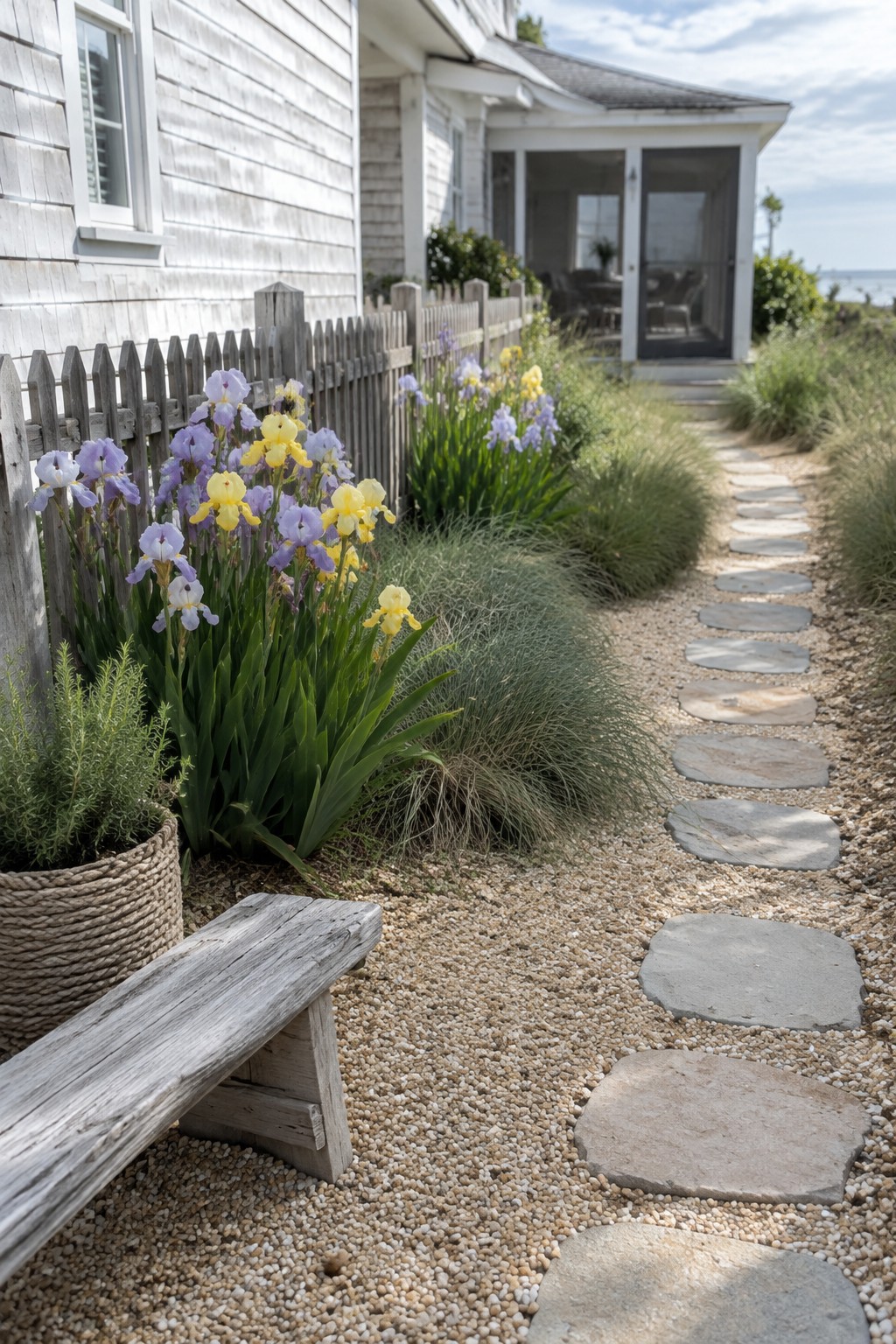
Iris beds can make a simple gravel path feel more like part of the garden. Their upright leaves and colorful blooms give the path a clear edge without needing a formal border.
Plant irises in groups beside a walkway, leaving enough room for the leaves to spread. A few low grasses nearby can fill gaps, but keep the path wide enough for easy walking and garden maintenance.
Use Stone Steps to Connect a Layered Iris Garden

Stone steps can make a sloped front garden easier to use while giving the planting a clear structure. Irises stand out along the route, and lower herbs and flowers help fill the beds beside the steps.
For a similar look, choose sturdy, uneven stone that suits the home, then plant irises in groups along the edges rather than scattering them everywhere. Leave enough room for the plants to spread without narrowing the steps.
Use a Gravel Path to Define the Garden Bed
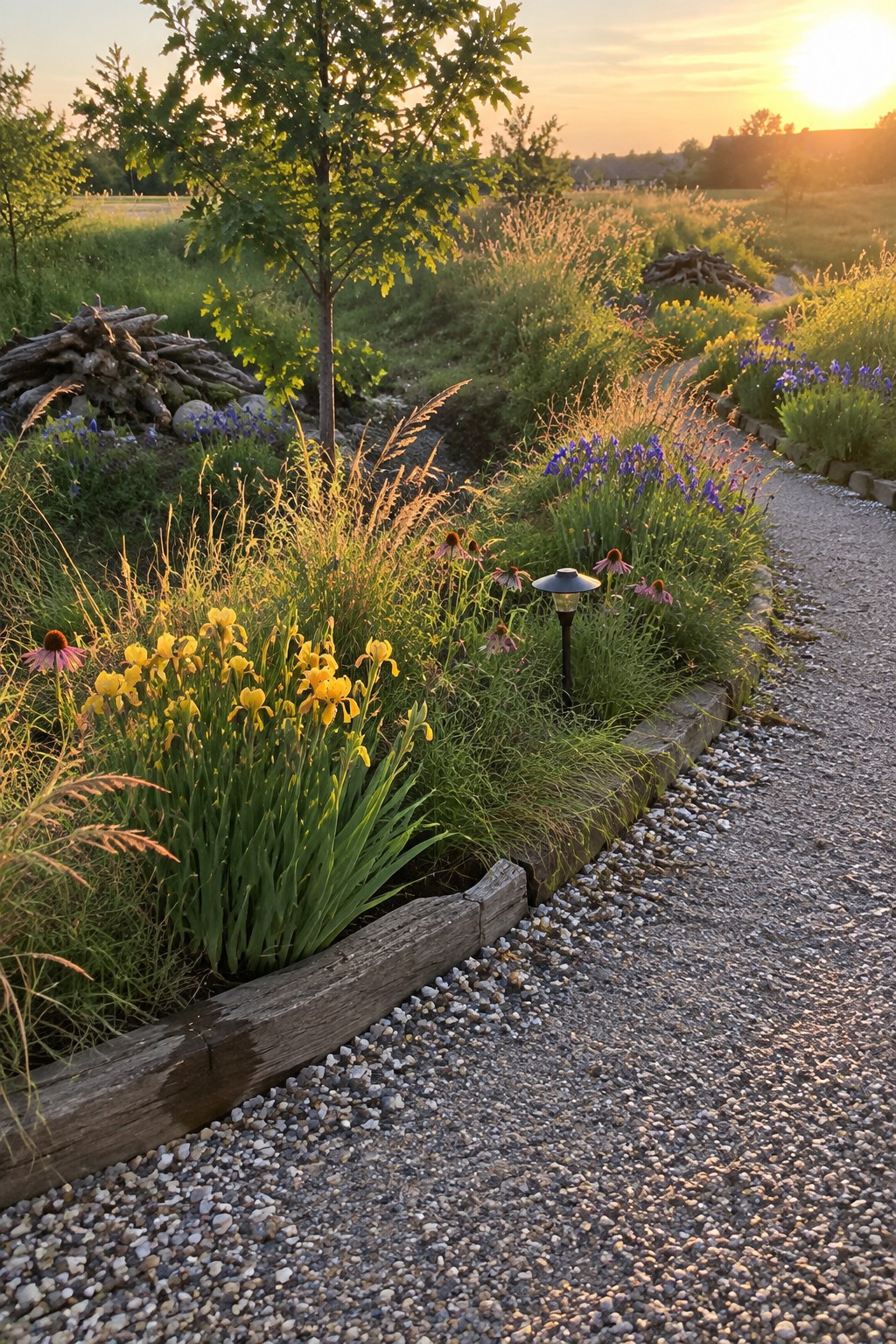
A gravel path gives an iris bed a clear edge and makes it easier to move through the front garden. The contrast between the loose stone and dense planting keeps the layout easy to read without needing a formal border.
This approach works well in a country-style or informal garden. Set the path wide enough for comfortable walking, and use edging to keep gravel from spilling into the flowers.
Create a Mossy Stepping-Stone Path Through the Iris Bed
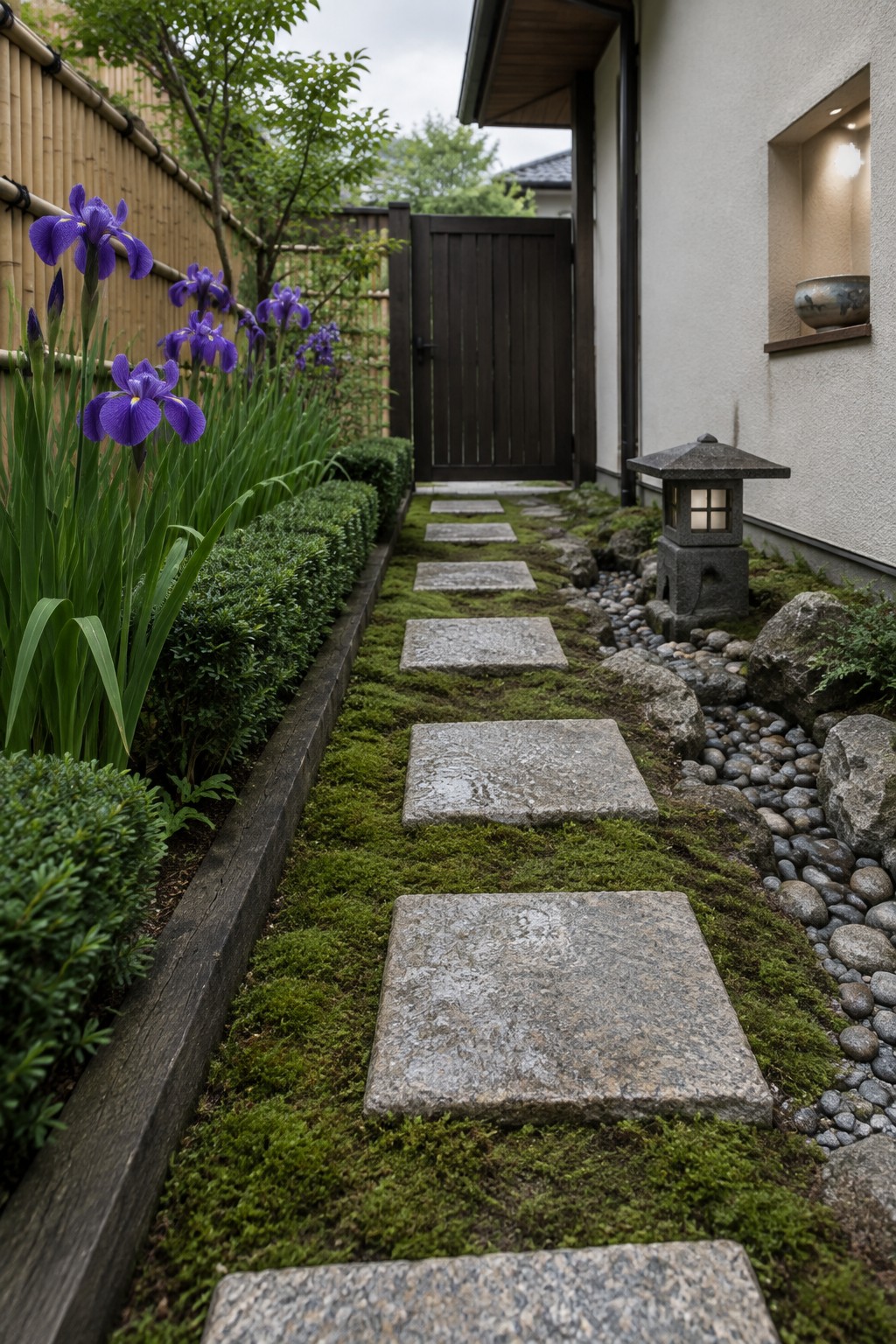
A stepping-stone path gives a narrow front garden a clear route without taking up much planting space. Set into moss, the stones feel less formal than a solid paved walkway, and the irises along the edge bring color close to the path.
This approach works well in a slim side yard or entry garden where a full-width path would crowd the plants. Leave comfortable, even gaps between stones, and make sure the surface stays stable and safe to walk on.
Plant Irises in Large Entry Beds
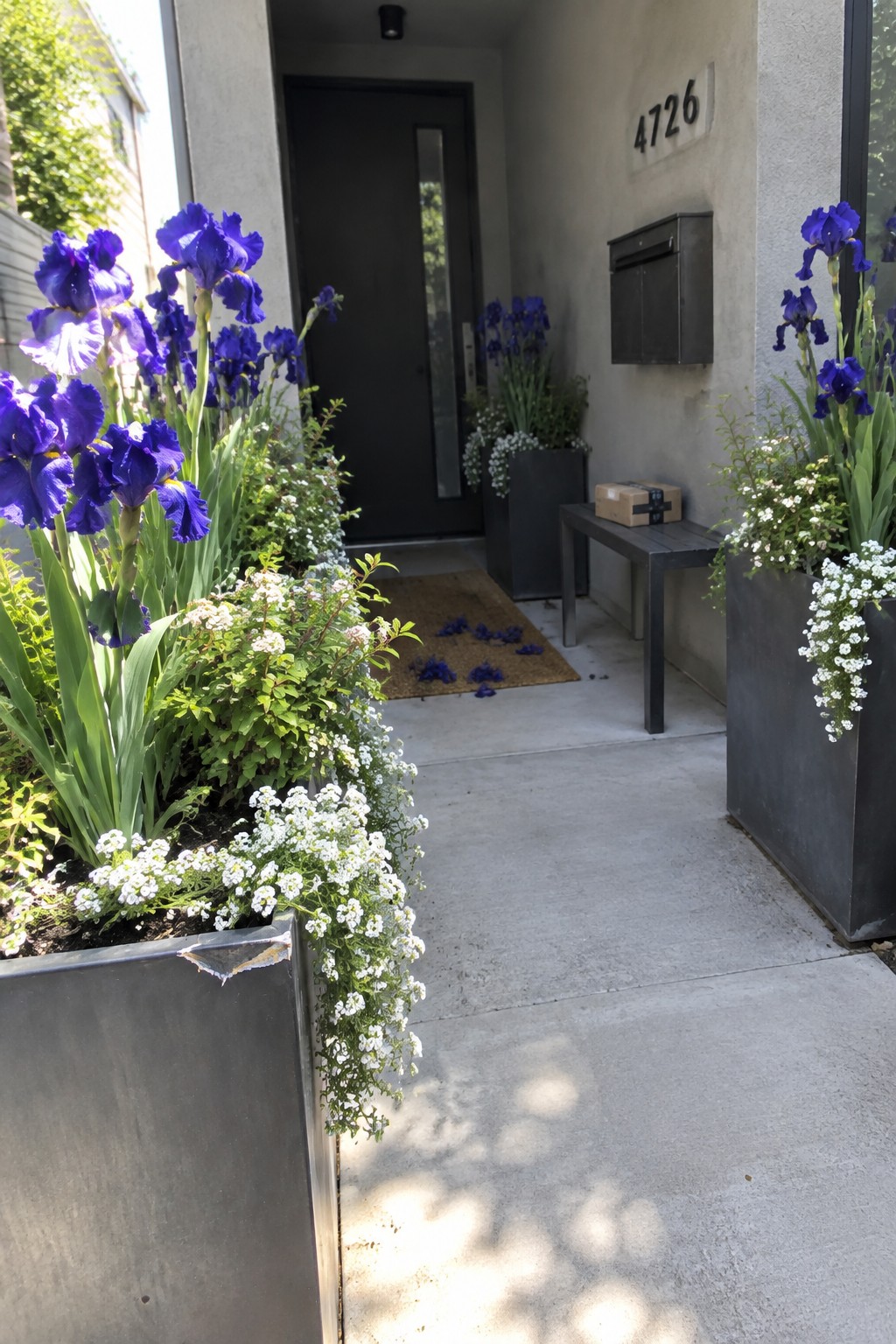
Large planting beds beside the front walk give irises room to grow in generous clumps, where their upright leaves and tall blooms can mark the way to the door. This works especially well at an entry with a fairly simple walkway, since the flowers provide color without taking up the walking space.
Use sturdy raised planters or in-ground beds with enough depth for the iris roots, and leave a clear route to the door. A few smaller flowers along the edge can help fill the space, but avoid crowding the irises so they have room to spread.
Build a Front Garden With Terraced Iris Beds

Terraced beds make a sloped front garden easier to organize and give irises room to stand out at different heights. Stone retaining walls hold the soil in place while keeping each planting area clear.
This approach works well where a flat lawn is difficult to maintain. Choose sturdy stone that suits the house, and leave enough space between tiers to reach the plants for weeding and trimming.
Use White Irises to Edge a Front Walk
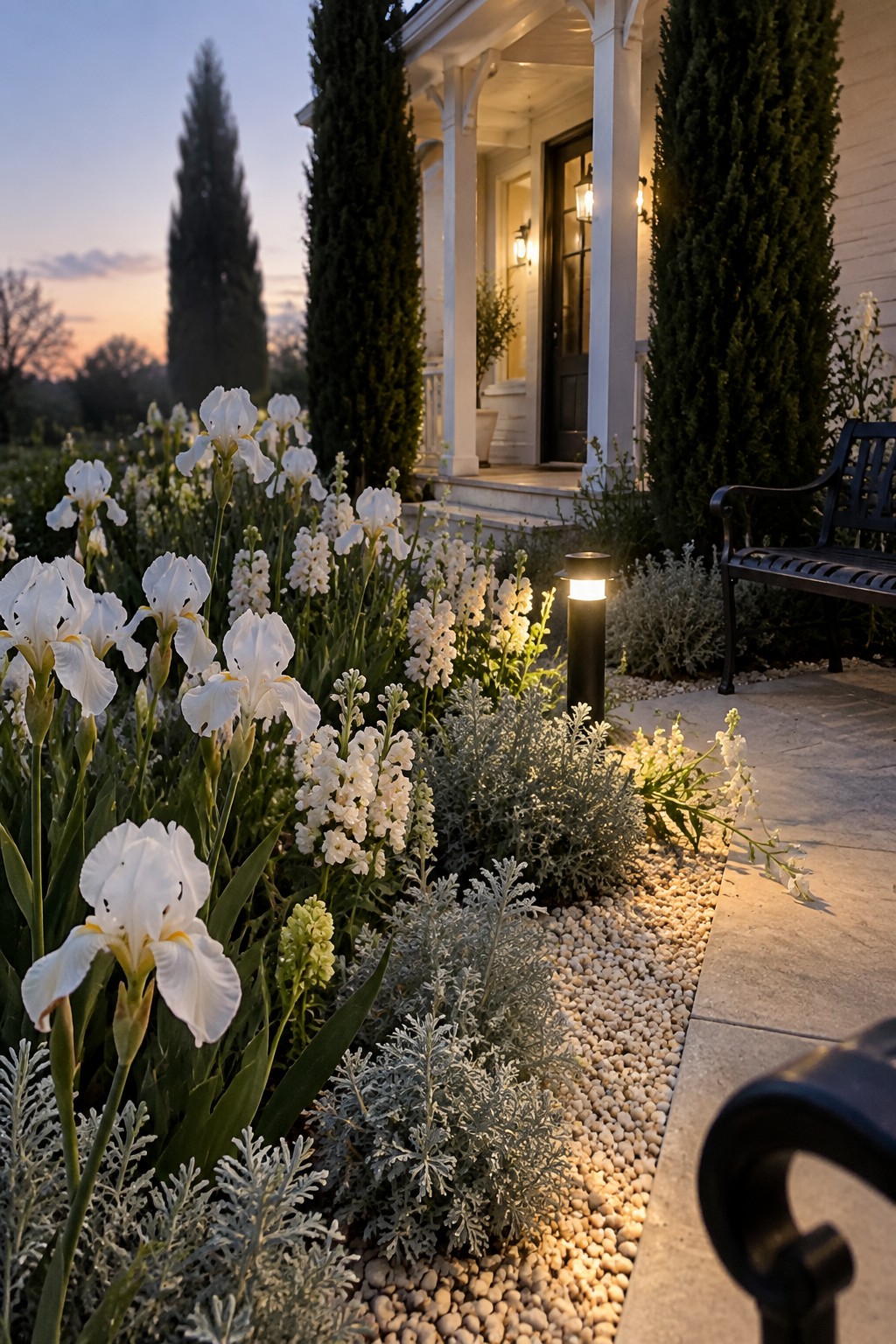
White irises make a front path feel like part of the garden rather than just a way to reach the door. Planting them in a defined bed gives the walkway a clear edge, while their upright leaves and blooms bring a little height near the ground.
This idea suits a cottage-style entry or a home with a simple stone walk. Leave enough room for the irises to spread, and keep them back from the paving so the path stays easy to use.
Use Rounded Beds to Organize Front Yard Irises

A curved flower bed gives irises a clear place in the front yard without making the garden feel too formal. Here, the rounded edge keeps the planting together, while clipped shrubs break up the flowers and give the bed some structure.
This shape works well in an open lawn near the front entrance. Use a simple stone border to keep grass from creeping in, and leave enough room between iris clumps so they can spread and be divided later.
Use a Raised Metal Bed for Front Yard Irises
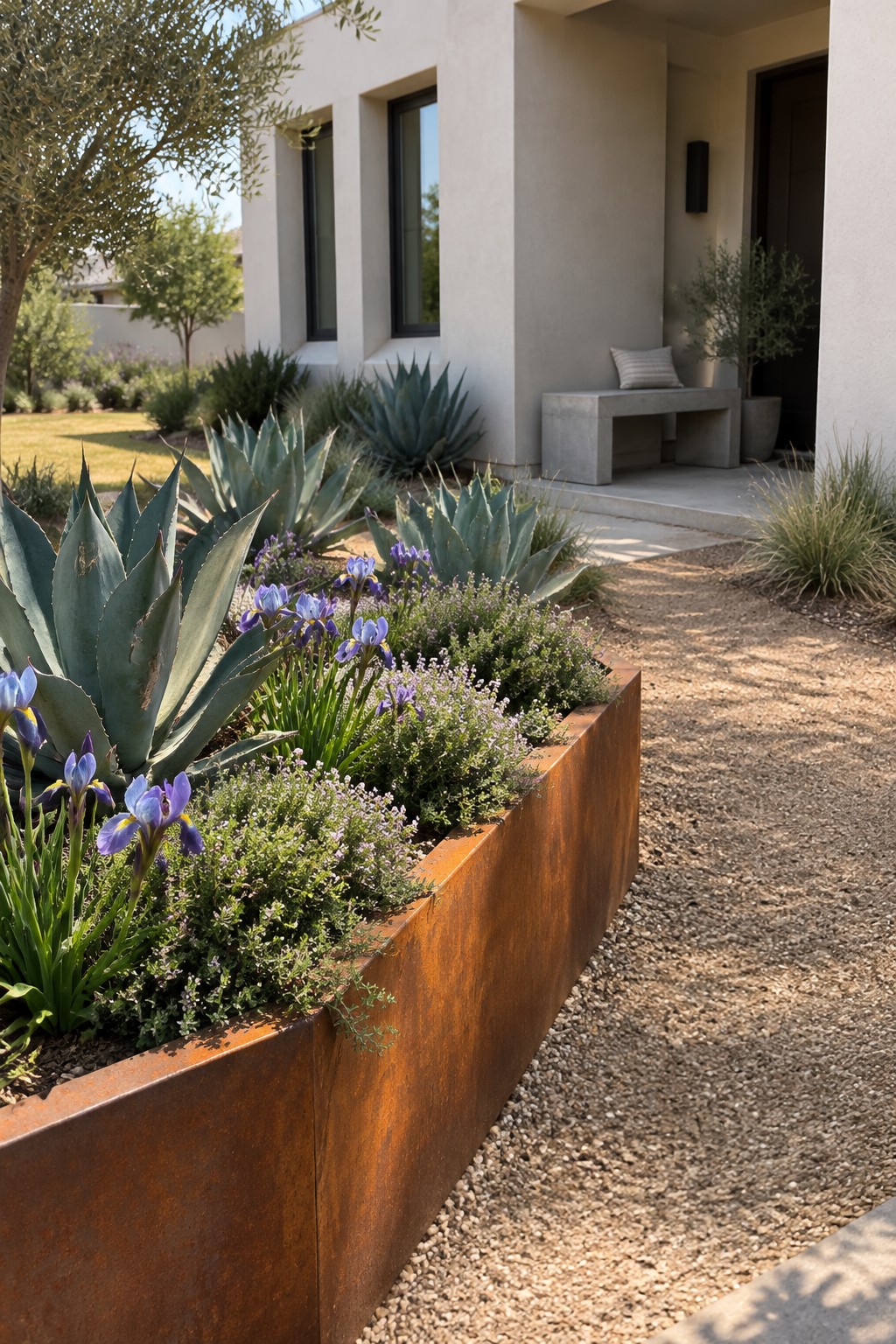
A raised metal bed gives irises a clear place in the front yard and keeps the planting neatly contained. Here, the long rust-colored edge follows the path, making the bed feel like part of the garden layout rather than a separate cluster of flowers.
This approach works well beside a modern home, especially where a gravel path needs a defined edge. Plant irises in groups and leave enough room for them to spread, while checking that the bed drains well.
Use a Low Brick Wall to Shape the Iris Bed

A low brick retaining wall gives a front-yard iris bed a clear edge and helps it sit neatly beside the walkway. The raised planting area also lets the flowers stand out without needing a large or formal garden.
This approach works well where a path runs alongside a sloped or uneven bed. Keep the wall low enough that it does not block the flowers, and leave room for irises to spread over time.
Use Iris Beds to Lead to the Front Door
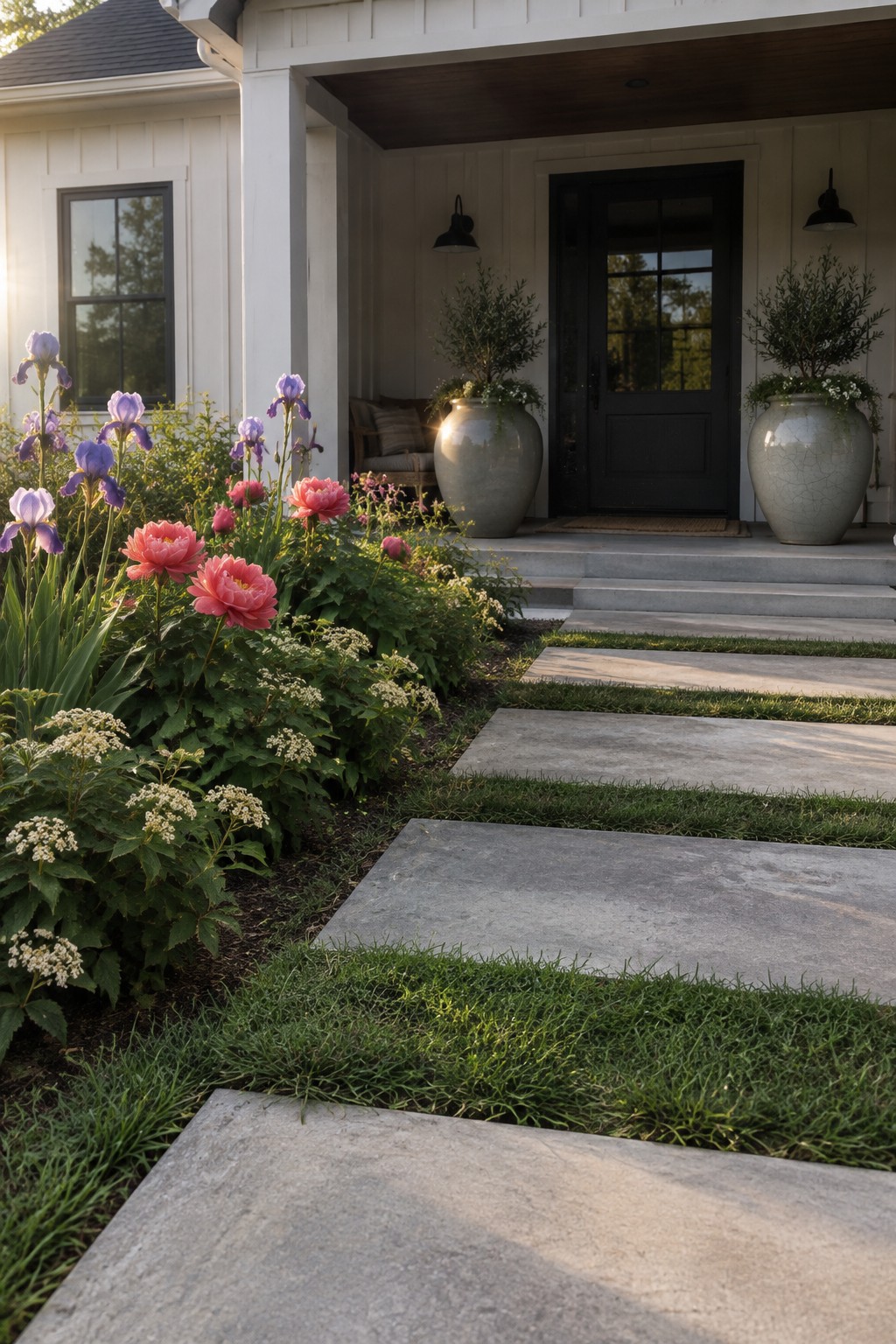
A front garden bed can make the approach to a house feel more considered. Irises add upright color along the edge of a stepping-stone path, while lower flowers fill in around them.
This works well when the path is simple and the planting has room to spread without narrowing the route. Leave enough space between the bed and each stone so people can walk comfortably and the flowers do not crowd the entry.
Use a Stone Feature as the Garden’s Center
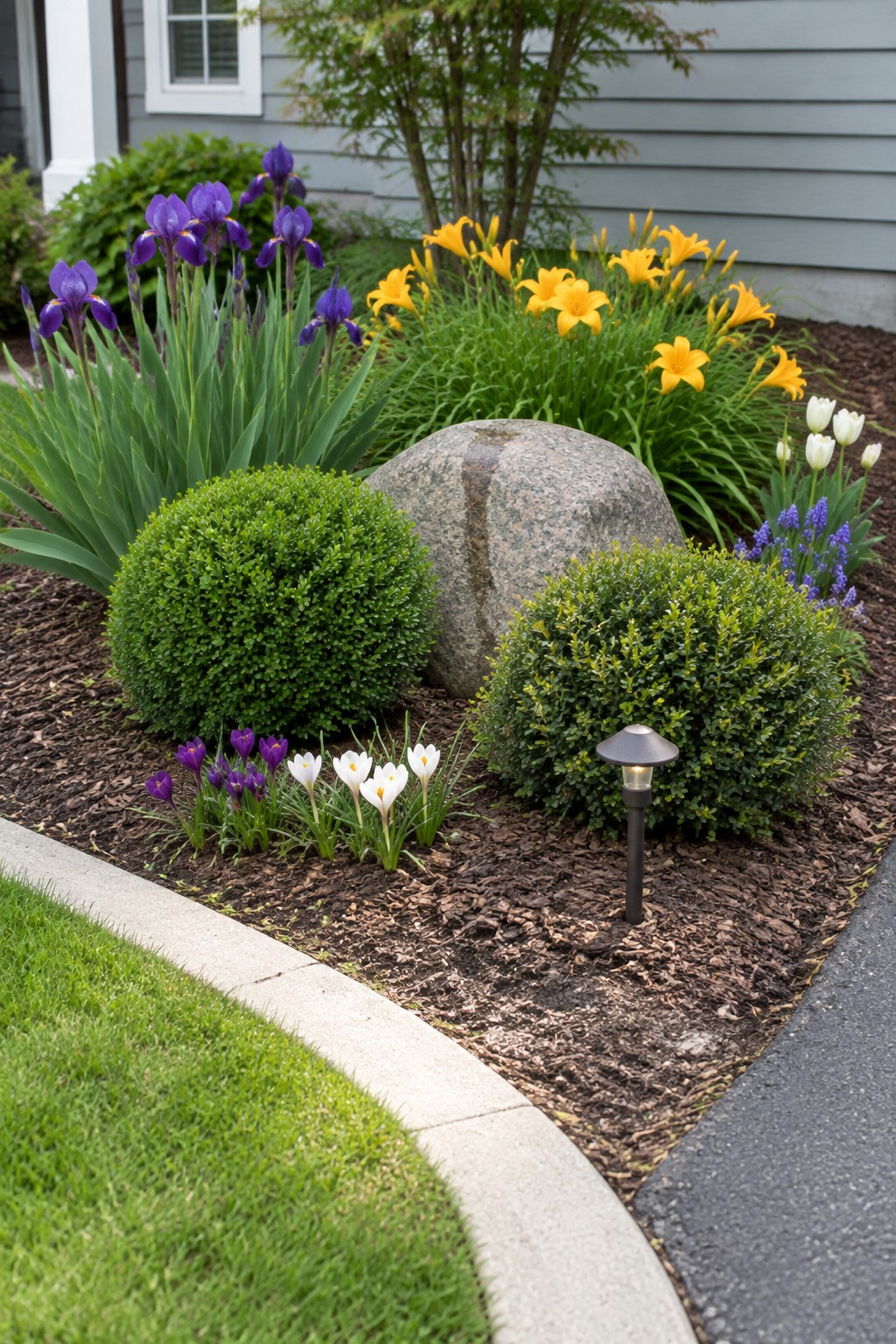
A large natural stone can give a front flower bed a clear center without taking attention away from the plants. Irises and daylilies make a relaxed planting around it, while clipped shrubs keep the bed looking orderly.
Choose a stone that suits the scale of the bed, then leave enough room around it for plants to grow and for mulch to be refreshed. This approach works well in a curved foundation bed, especially when a few repeating plant shapes help the arrangement feel settled.
Add Irises to a Front Entry Planter
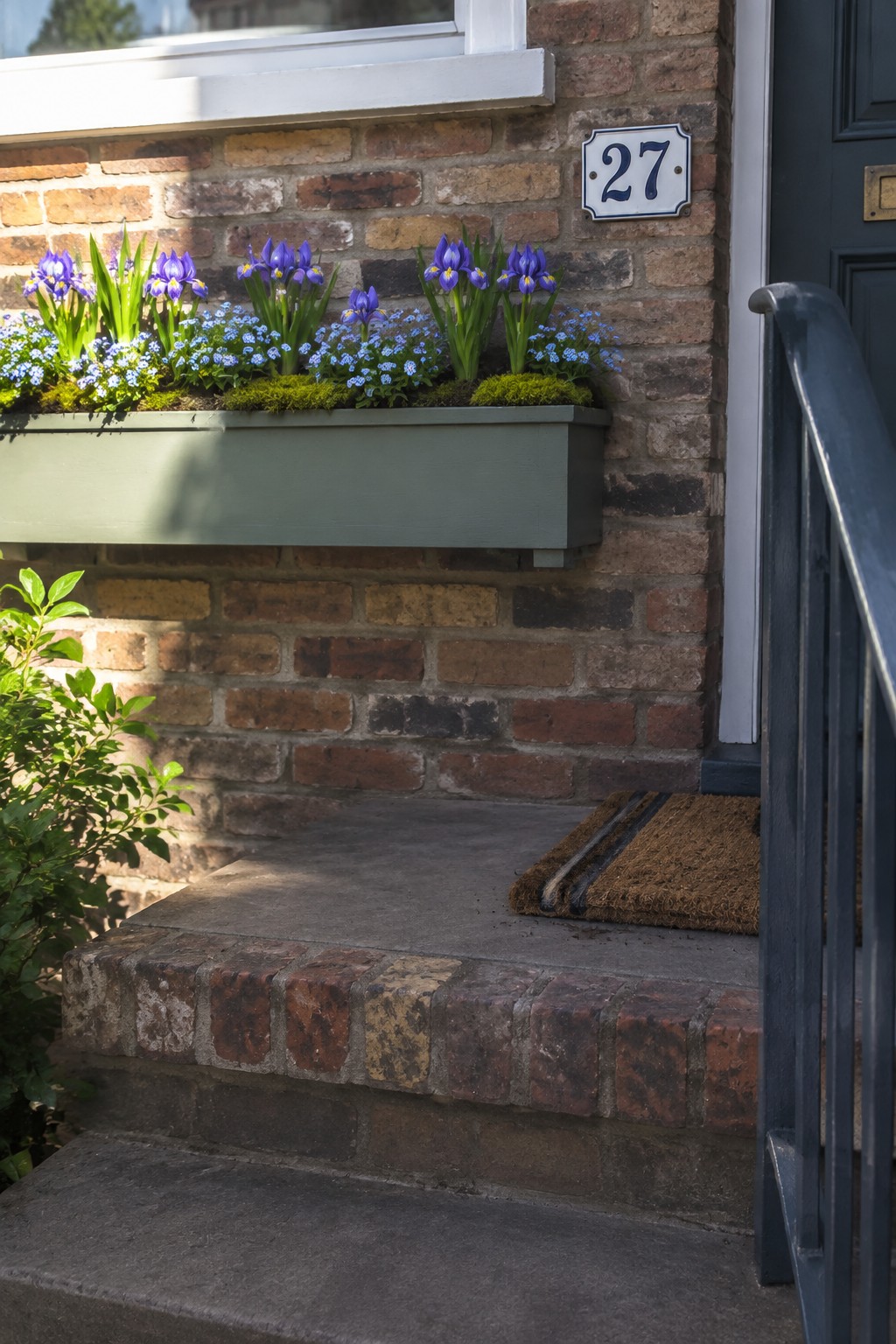
A window box can bring irises right up to the front door without taking up space in the yard. Their upright leaves and purple blooms give a small entry planting a clear focal point, while low flowers around them fill in the gaps.
Use a deep, sturdy planter mounted securely beneath a window or beside a front step. Choose compact iris varieties and check their mature height so the blooms do not block the view or crowd the entry.
Use Concrete Planters to Layer Irises
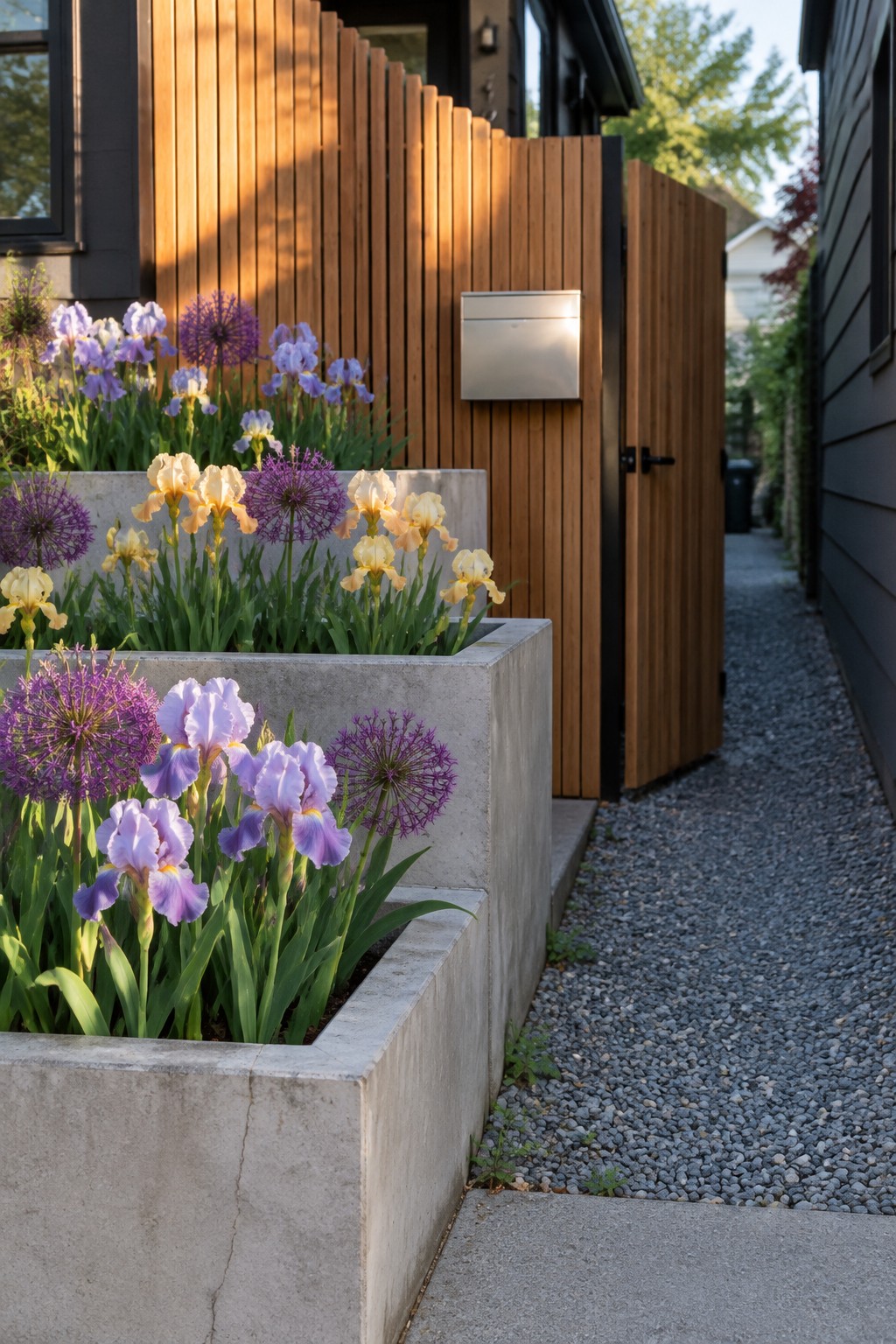
Raised concrete planters give a front garden a clear shape and let irises grow in tiers instead of spreading across one flat bed. The change in height helps the flowers stand out while keeping the planting contained.
This approach works well beside a narrow entry path or where the front yard has limited planting space. Choose planters deep enough for iris roots, and leave room between them for easy access and maintenance.
Use a Narrow Water Feature Beside the Iris Bed
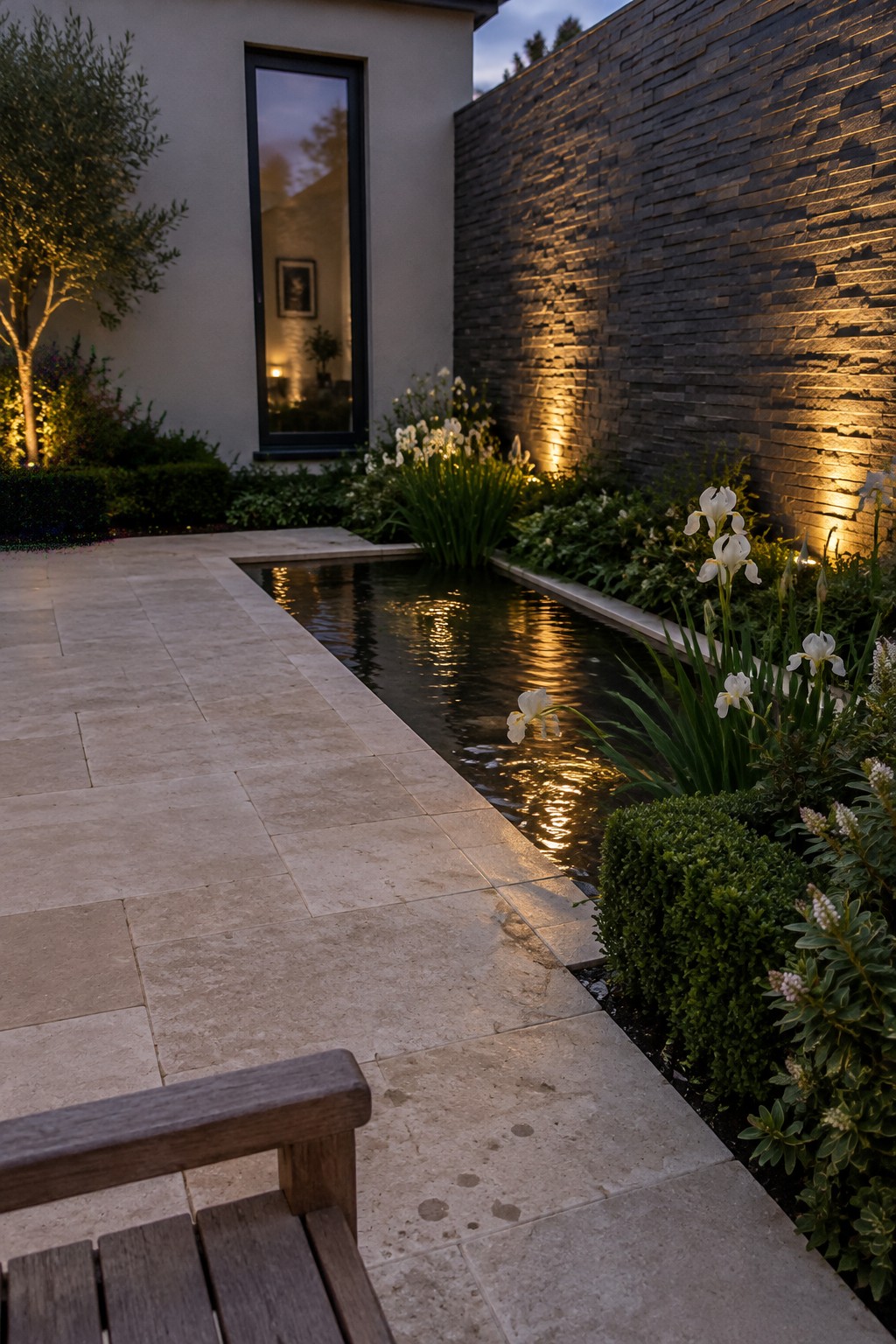
A slim water feature can give a front garden a clear line without taking up much room. Irises suit the edge well, where their upright leaves and flowers can add height along the water.
This idea works best in a compact entry garden with a simple path nearby. Choose irises that tolerate the site’s moisture, and leave enough space to reach the water feature for cleaning and upkeep.
Curve the Iris Bed Along the Walkway
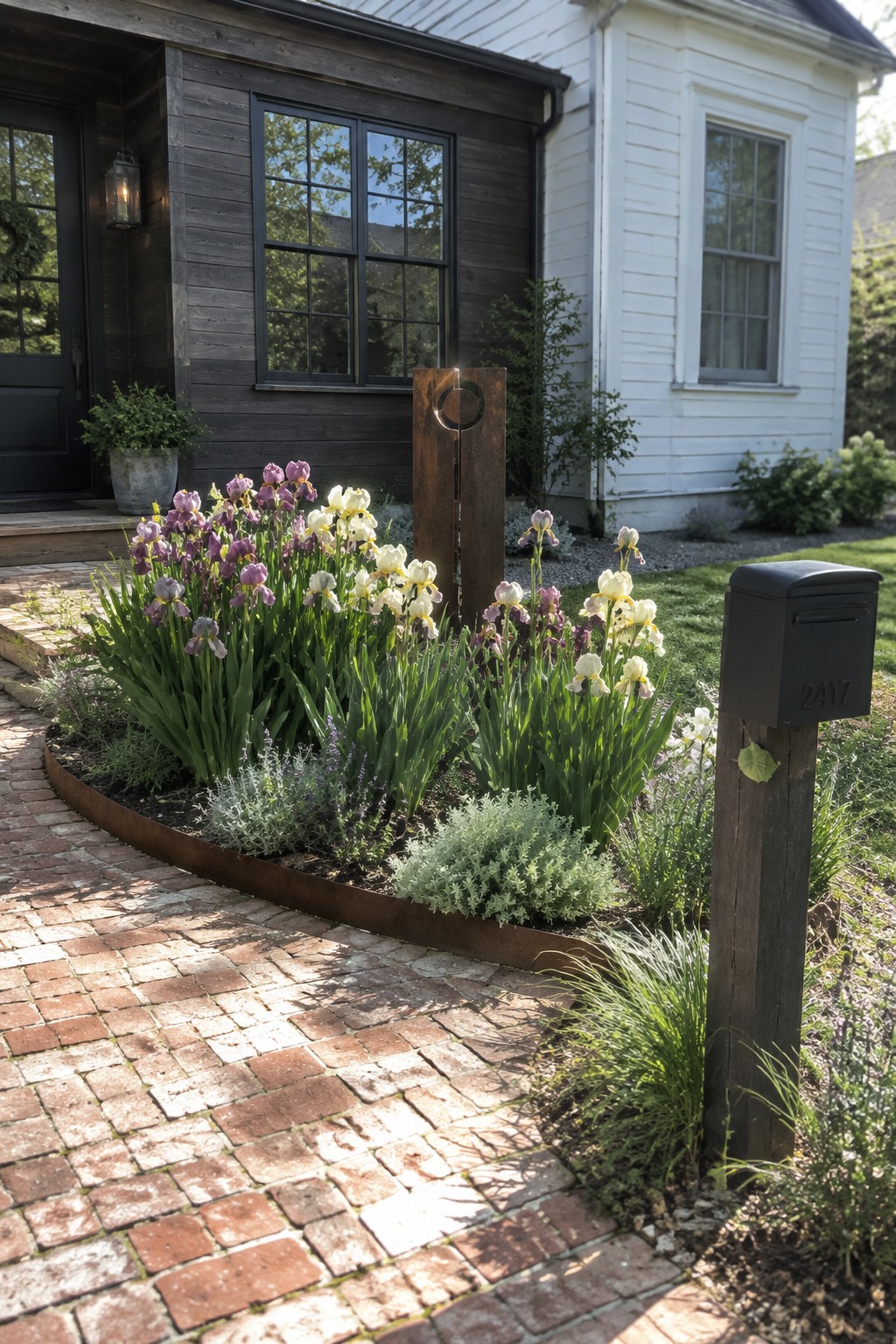
A curved bed gives a front garden a softer shape than a straight planting strip, and it lets the irises follow the route toward the entrance. The metal edging keeps the bed tidy while making its outline easy to see.
This approach works well beside a brick walk, especially when the path bends toward the house. Leave enough room for the iris leaves to spread, and keep the edge low so it defines the bed without blocking the flowers.
Frequently Asked Questions
Q: How much sun do irises need in a front-yard bed?
A: Most irises bloom best with at least six hours of direct sun a day. If your entry gets some afternoon shade, try Siberian irises, which can handle a little less sun.
Q: What should I plant around irises so the bed doesn’t look bare after they bloom?
A: Pair them with low-growing ground cover or perennials that fill in later, such as catmint or salvia. Leave space around the iris clumps so air can move through and the rhizomes don’t stay damp.
Q: Can I grow irises in a small space beside the front steps?
A: Yes. Choose compact varieties and plant them in a narrow border or a roomy container with drainage holes. Just keep the rhizomes near the soil surface, not buried deep.
Q: Why aren’t my irises flowering?
A: Crowded clumps and too much shade are common culprits. Divide the clumps after flowering if they’ve grown thick, and move them to a sunnier spot if needed.
