

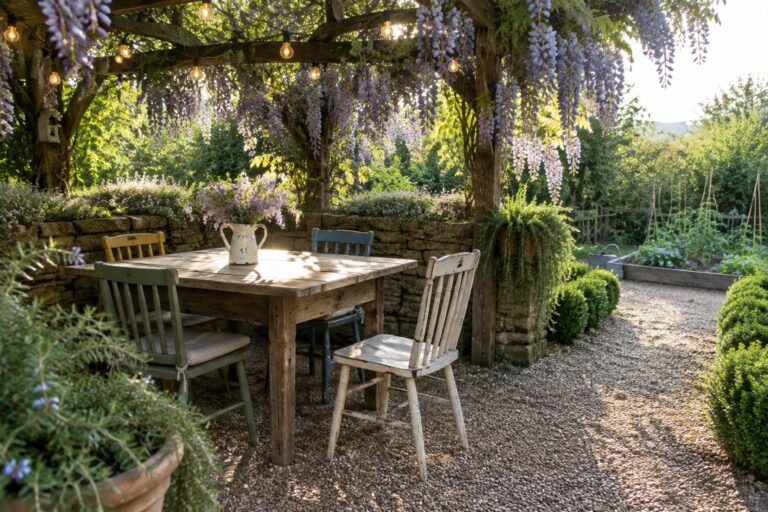
Wisteria can bring a cottage garden to life, but it needs room and a clear structure to look its best.
I find that the first thing people notice is often the shape of the vine as it frames a path, doorway, or stretch of fence.
Thoughtful supports and nearby plants help keep its generous growth from crowding the garden over time.
Some approaches feel charming on paper but can make paths harder to use, so I would start with ideas that suit the space and are easy to maintain.
These examples offer practical ways to work wisteria into a garden while letting its flowers and form stand out.
Create a Wisteria-Covered Dining Spot
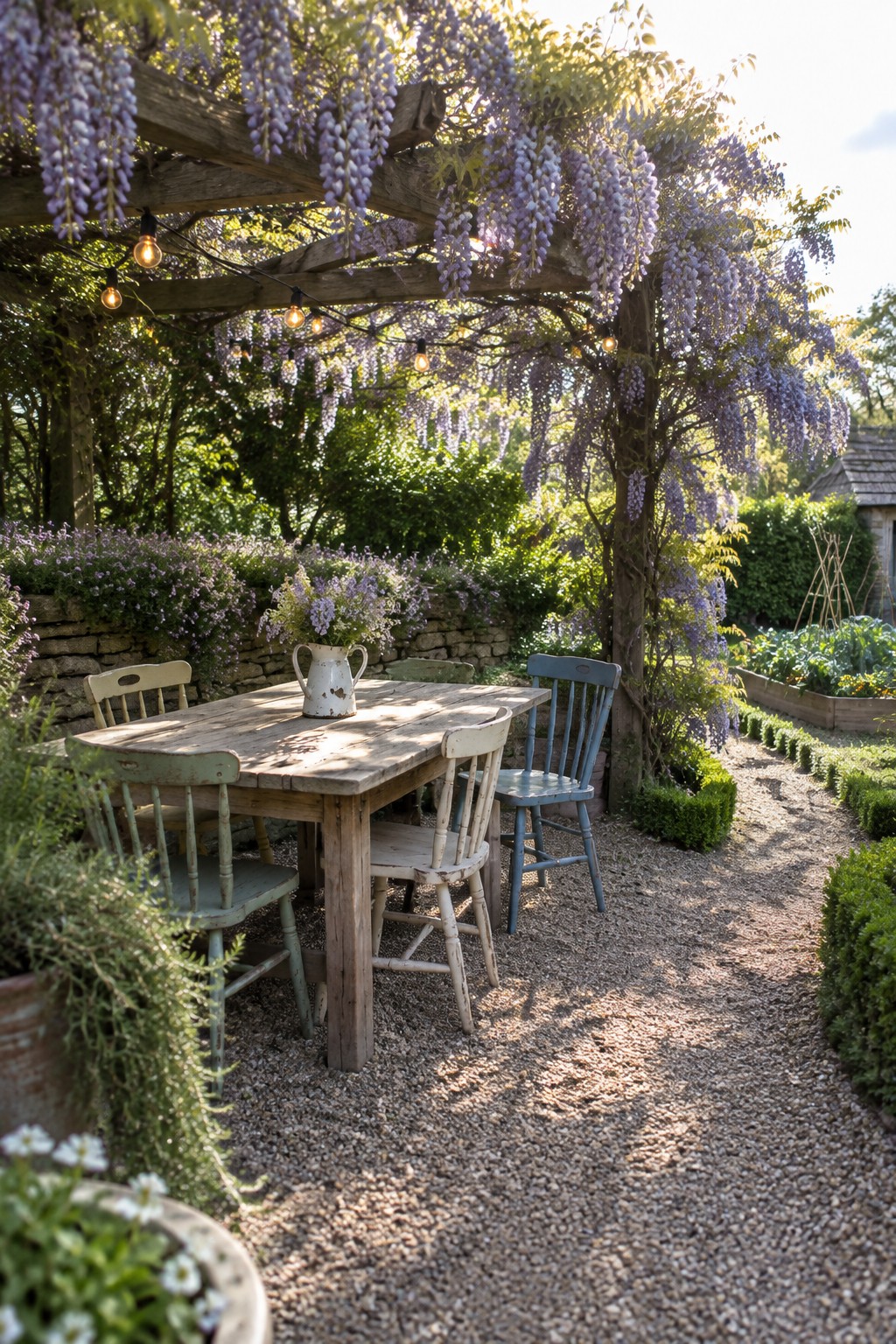
Wisteria can turn a simple garden table into a useful outdoor dining area. Growing it over a pergola gives the seating a bit of shelter and makes the structure feel like part of the garden.
This idea works well in a cottage garden with room for a sturdy pergola. Train the vine along the beams, and leave enough space beneath it for chairs to move comfortably. Wisteria grows vigorously, so plan to prune it regularly and keep it away from gutters and nearby structures.
Let Wisteria Cover A Garden Path
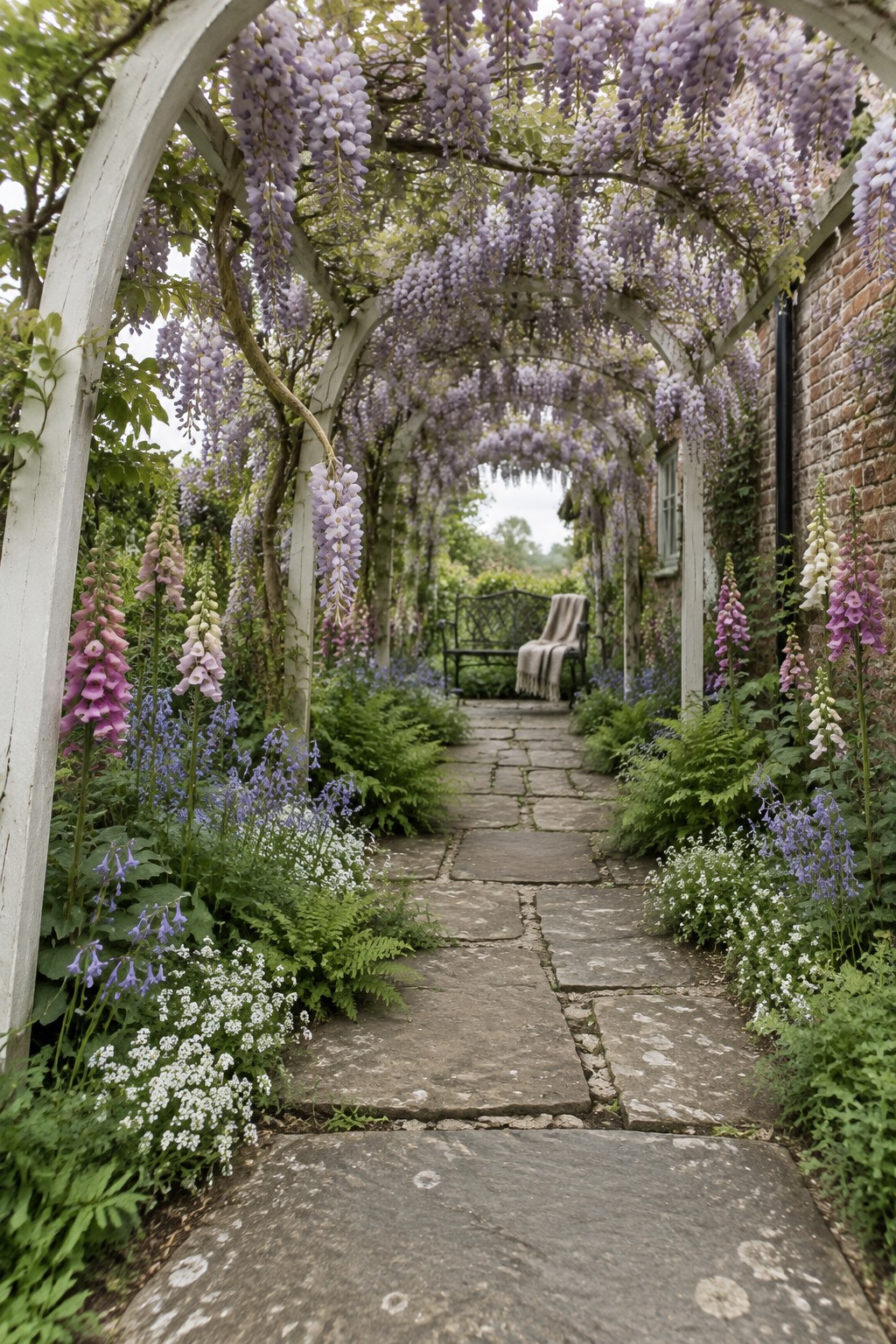
A wisteria-covered archway gives a cottage garden path a clear shape and makes the walk through the garden feel special. The overhead flowers are the main feature, while the stone paving keeps the route practical.
Use sturdy supports and give wisteria room to grow, since mature vines can become heavy. This approach works well along a walkway beside a house, but keep the path wide enough to pass comfortably and prune the vine regularly.
Train Wisteria Along a Garden Path
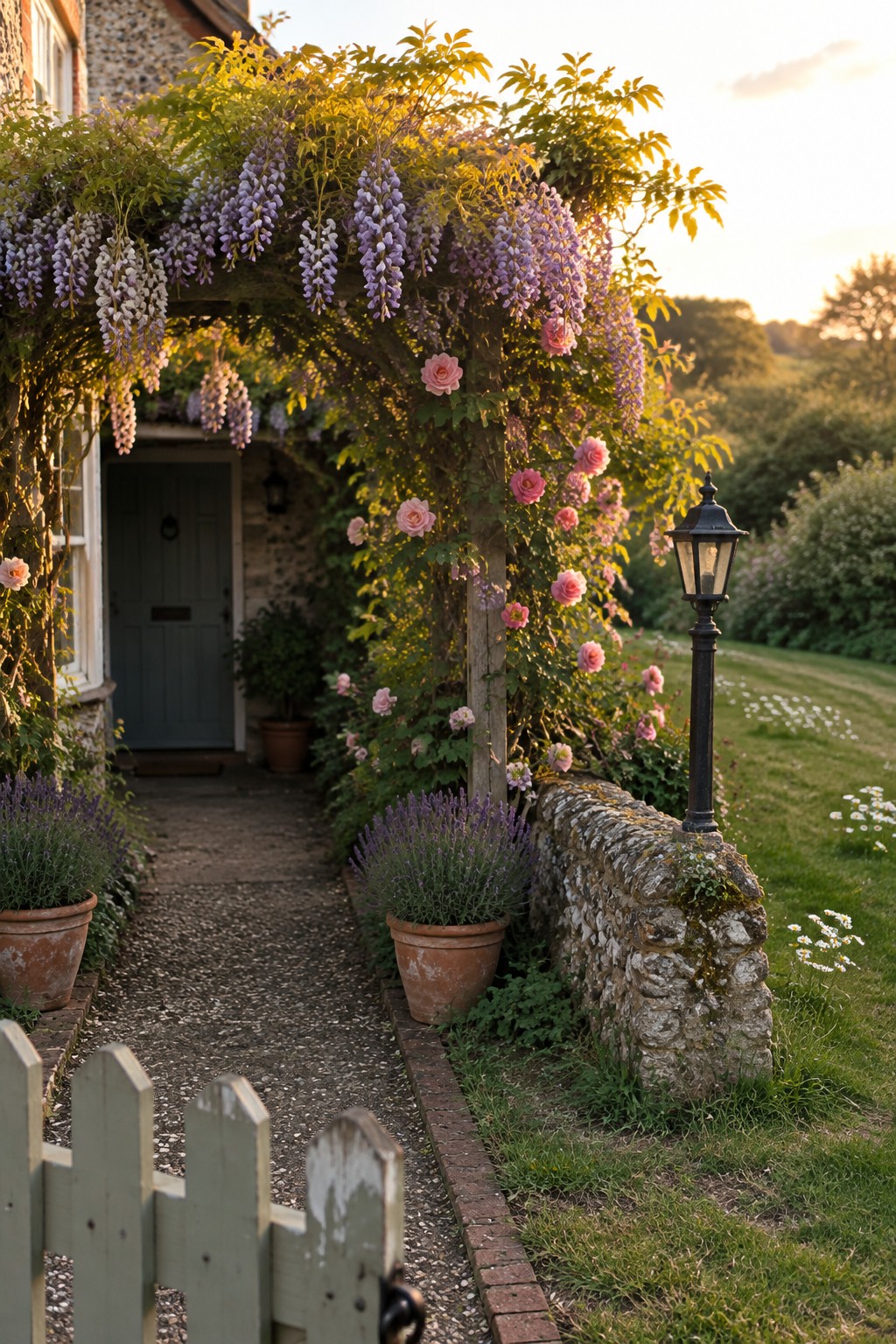
Wisteria can turn a simple walkway into a garden feature when it grows over a sturdy arch or pergola. The hanging flowers make the path feel tucked away, while still keeping it open and easy to use.
Choose a strong support and give the vine room to grow, since mature wisteria can become heavy and needs regular pruning. It works especially well along a cottage garden path, where roses or other smaller plants can fill in below without crowding the walkway.
Let Wisteria Climb Along the Cottage Wall
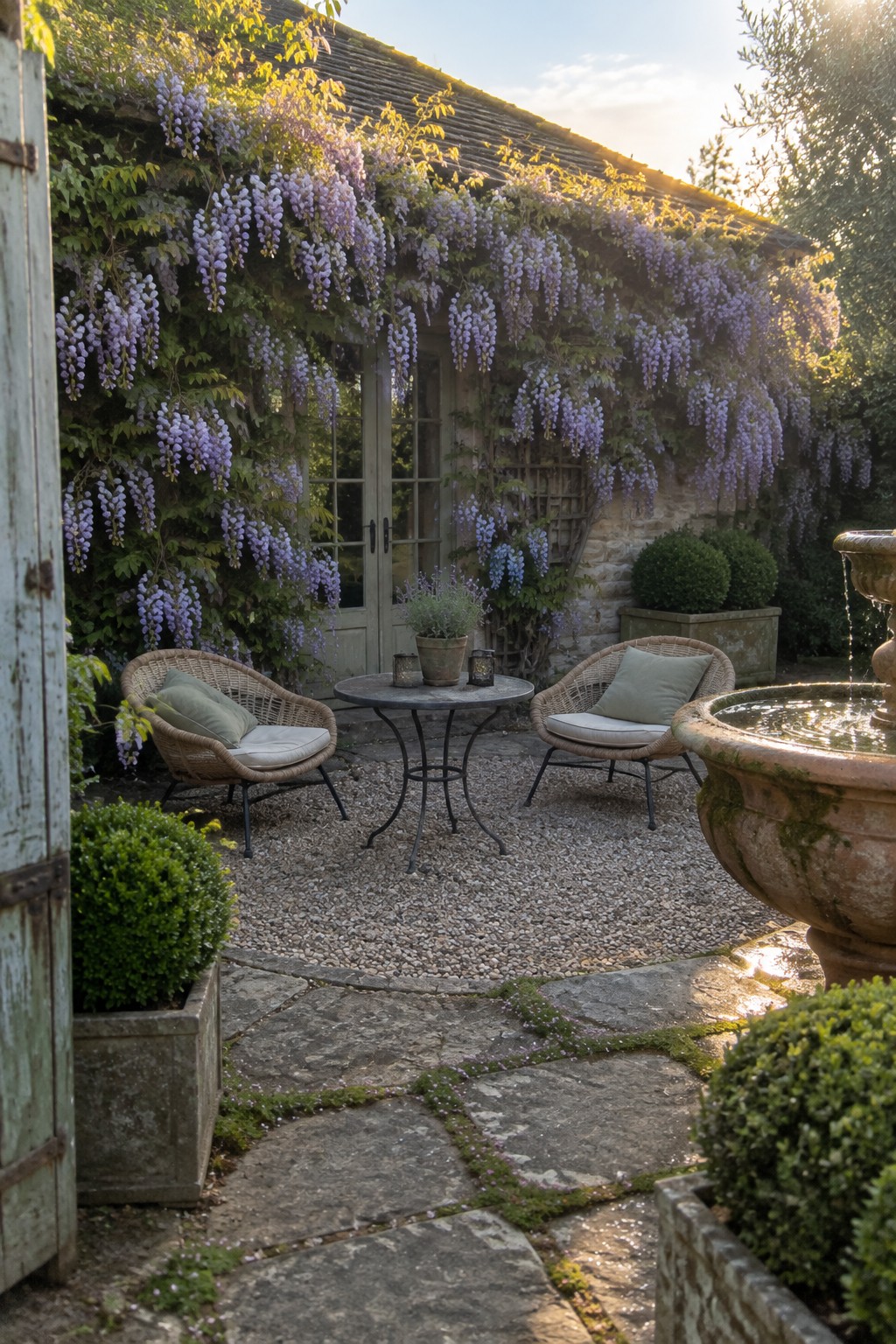
Training wisteria along a cottage wall is a simple way to make the garden feel connected to the house. The long flower clusters bring color to the facade, while the leafy growth can soften a plain stretch of masonry.
Give the vine sturdy support and room to spread, and keep it trimmed back from windows and doors. This approach suits older homes especially well, but it needs regular pruning to keep the growth under control.
Use Wisteria to Mark a Garden Walk
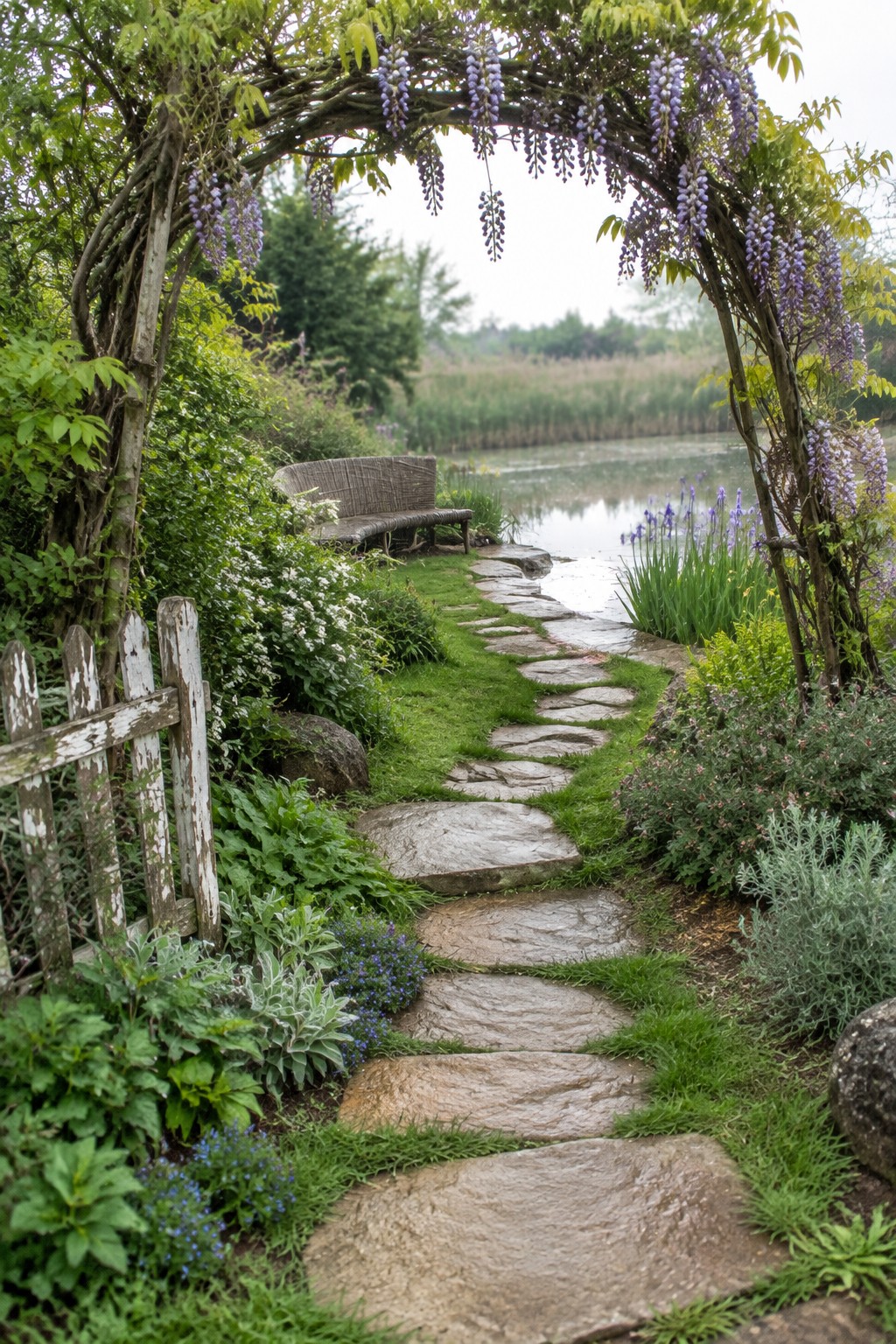
A wisteria-covered arch can give a garden path a clear beginning and make a simple walk feel like part of the garden. The overhanging blooms add a bit of color without taking up space along the path itself.
Place the arch where you want people to enter or pause, and leave enough room for the wisteria to grow without blocking the way. A stone path works well beneath it, especially when the planting beside the path stays low and easy to trim.
Use Wisteria to Shade a Garden Bench
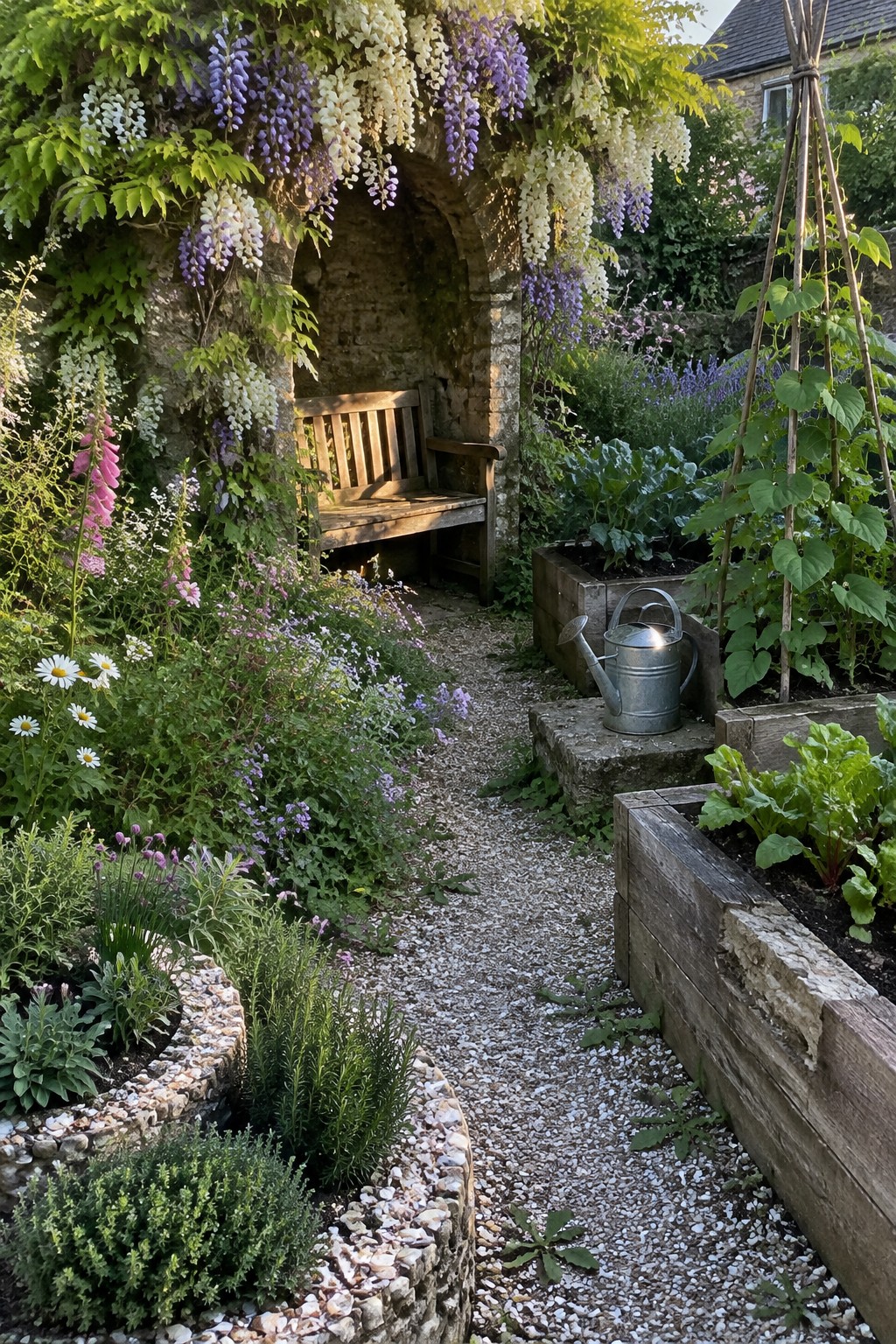
Wisteria can turn a simple garden bench into a quiet place to sit, especially when the vine grows over an existing stone arch. The hanging flowers provide natural shade and make the seating feel tucked away without needing a separate pergola.
Train the vine along a sturdy support, and prune it regularly to keep the bench clear and protect nearby stonework. This works well in a cottage garden with room for a permanent climbing plant.
Grow Wisteria Along a Garden Fence
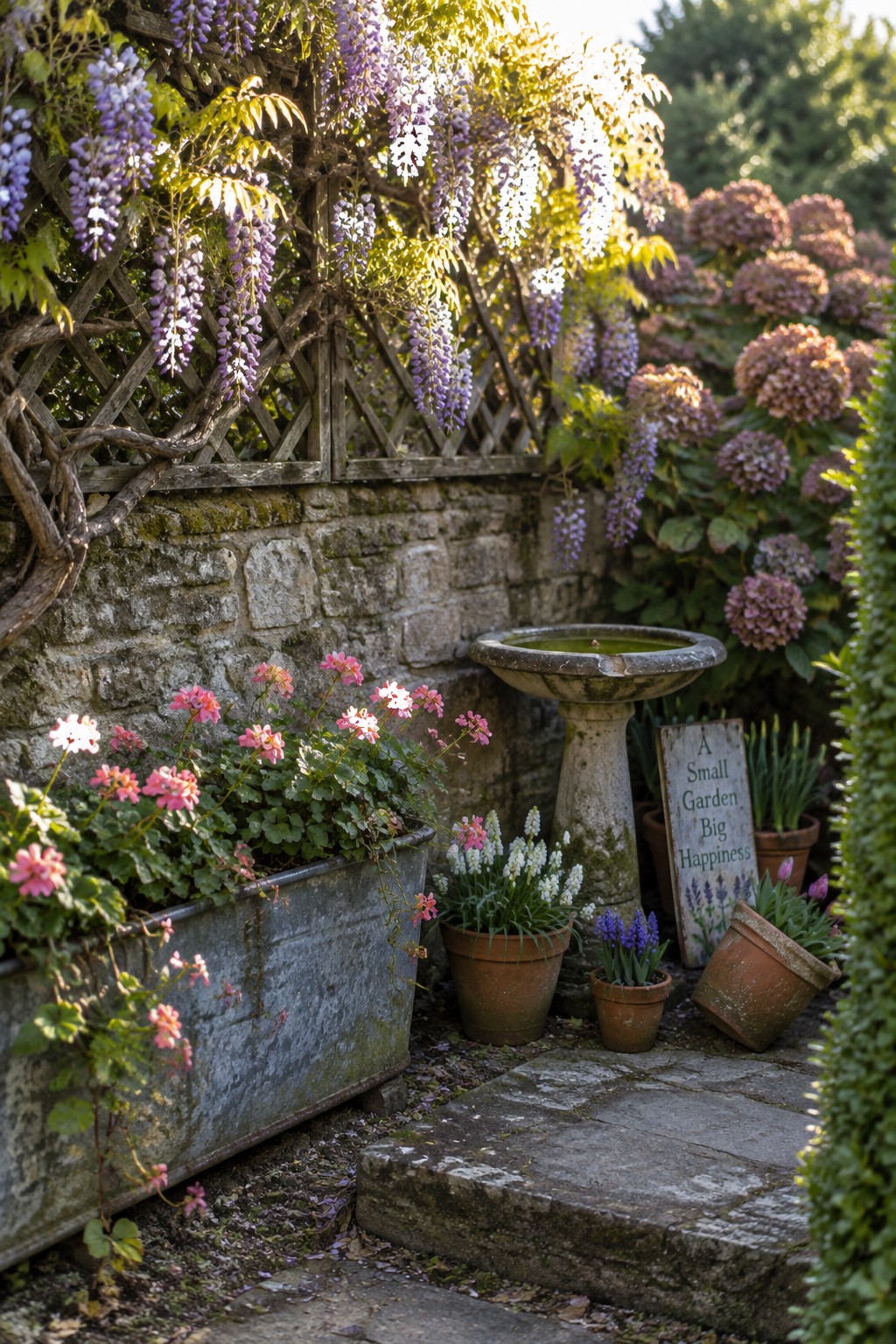
A sturdy fence or trellis gives wisteria a place to climb and helps bring a cottage garden together. The hanging flower clusters make a lovely display, while the structure keeps the vine from spreading across nearby plants.
Choose a strong support that can handle the weight of mature growth, and leave room to prune the vine regularly. This approach works well along a garden boundary, especially when you want a green backdrop behind lower flowers.
Use Wisteria To Mark A Garden Entrance
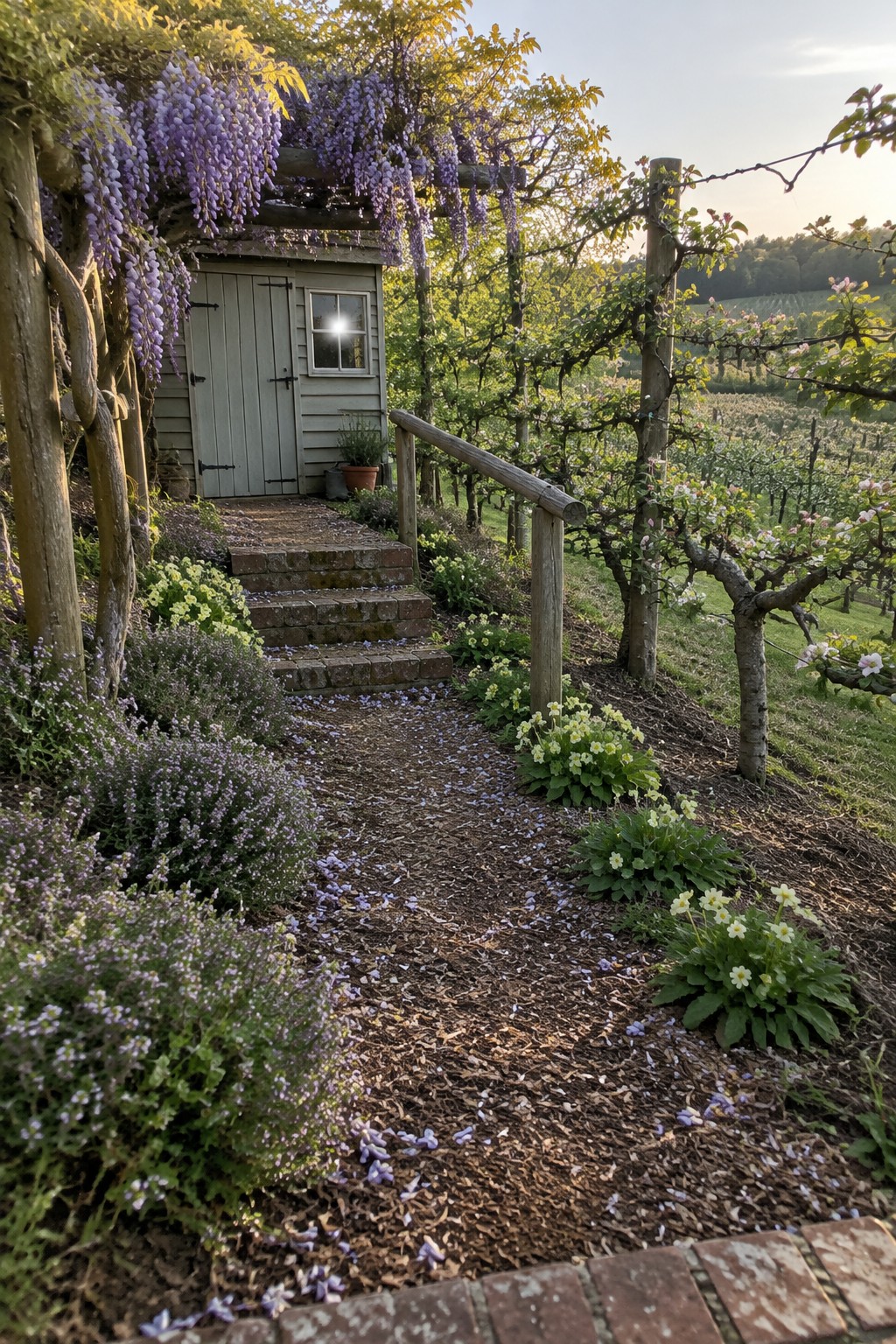
Wisteria can make a simple garden entrance feel like a natural part of the planting. Letting it grow over a sturdy pergola above a small shed gives the spot character without needing an elaborate structure.
Choose a strong support and prune the vine regularly so it does not crowd doors, windows, or nearby plants. This approach suits a cottage garden where you want a practical outbuilding to feel connected to the landscape.
Make a Wisteria-Covered Patio Nook
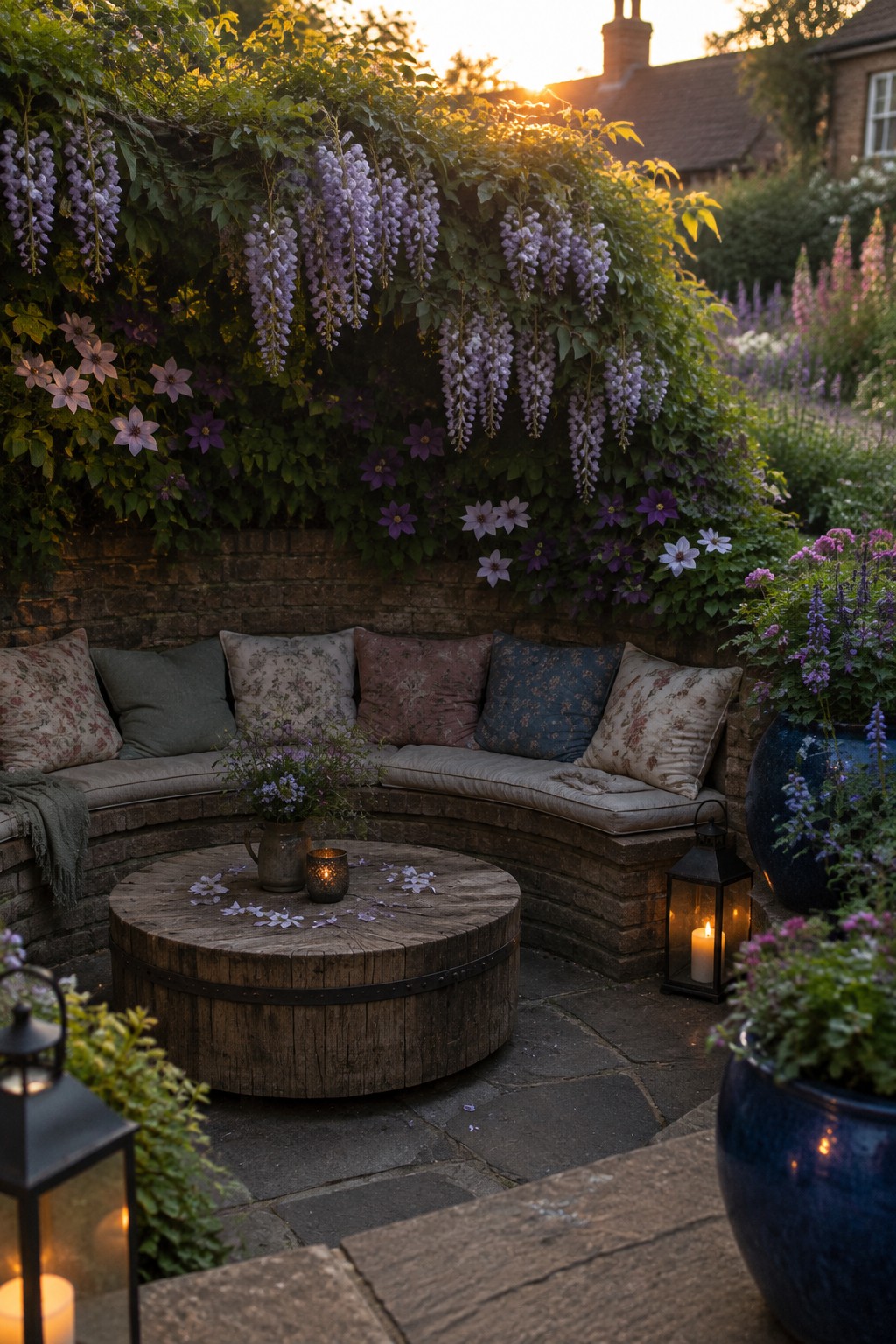
A curved built-in bench can make a small patio feel like a proper place to sit, and wisteria trained overhead gives the seating a leafy canopy. The layout feels tucked away without needing a separate garden structure.
This works well beside a cottage wall or along a garden boundary. Leave enough room for the wisteria to grow and prune it regularly, since mature vines can become heavy and need sturdy support.
Layer Wisteria Along a Cottage Garden Border
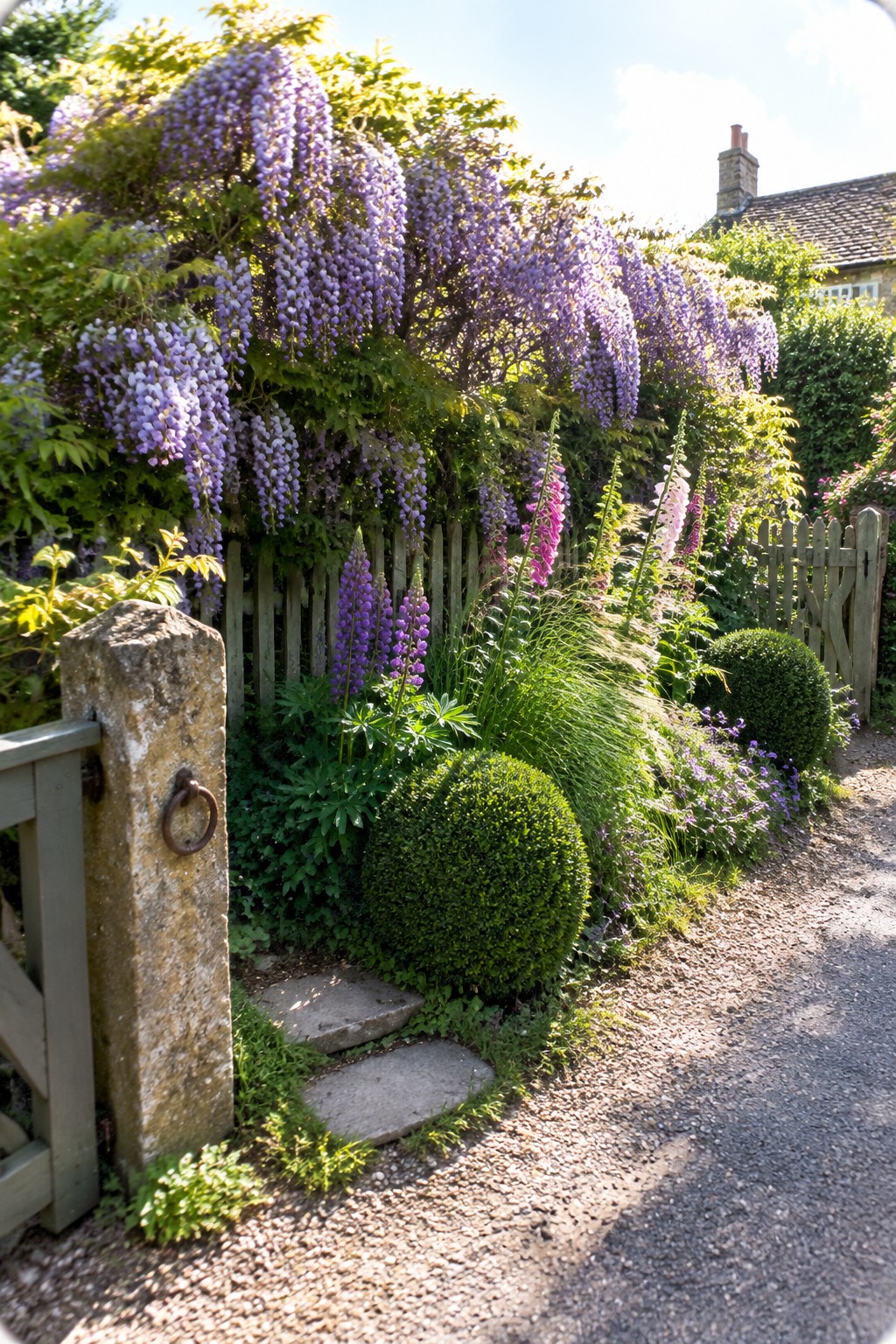
Wisteria looks especially at home when it forms a leafy canopy over a garden border. Its hanging purple blooms give the planting a clear sense of height, while lower flowers and clipped shrubs keep the bed from feeling too overgrown.
Use a sturdy support where the vine can spread without blocking a path or gate. Keep it pruned back from walkways, and give it room to grow since mature wisteria can become heavy.
Create a Wisteria-Covered Potting Area
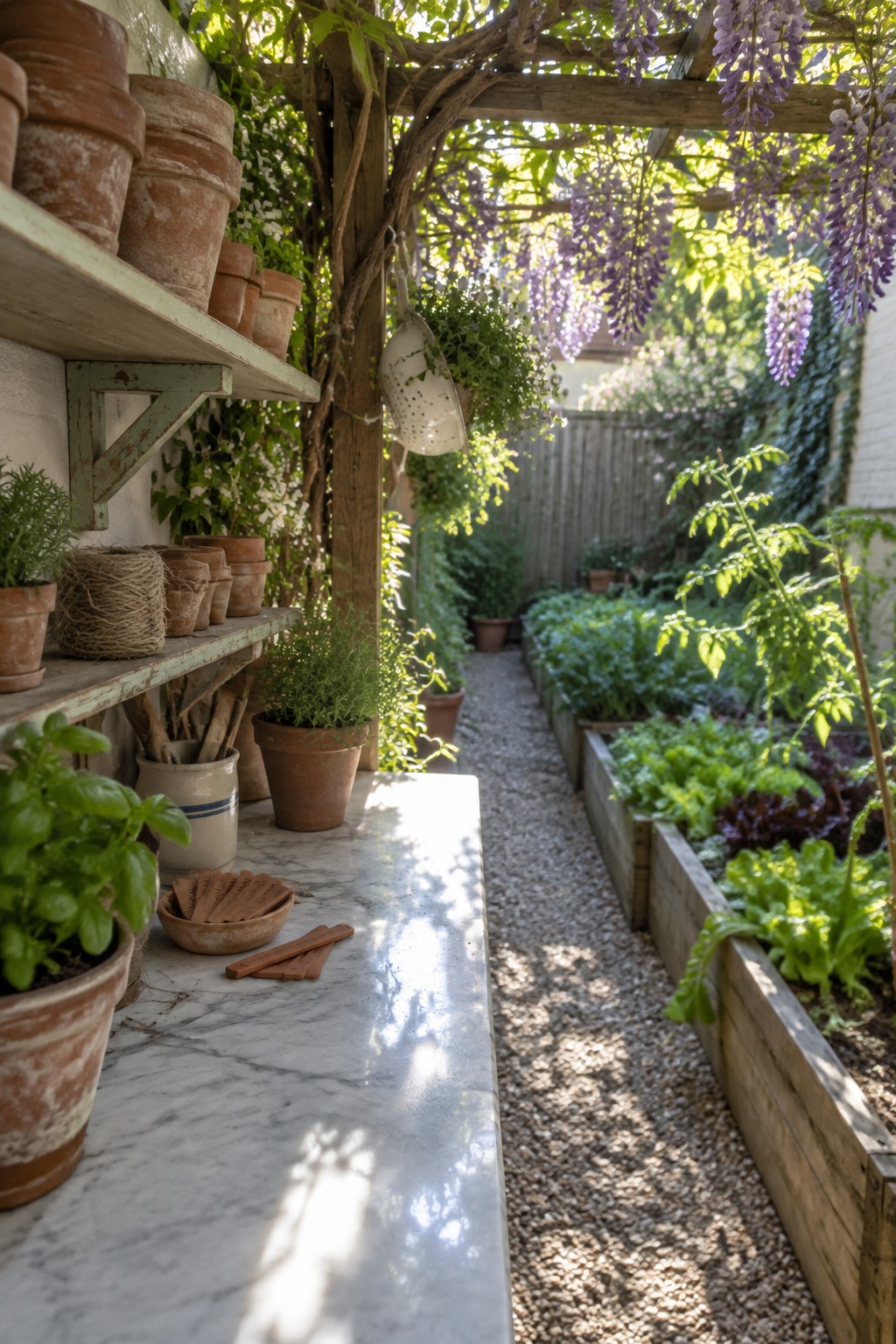
A potting spot beneath a wisteria-covered pergola makes garden work feel like part of the garden, rather than a chore tucked away out of sight. The overhead vine provides shade, while the sturdy frame gives wisteria room to grow.
This setup suits a cottage garden with space for a narrow work surface beside a path or raised bed. Train the vine along the beams, and keep its growth trimmed back from the work area so there’s still room to move.
Layer Wisteria Along A Stone Garden Bed
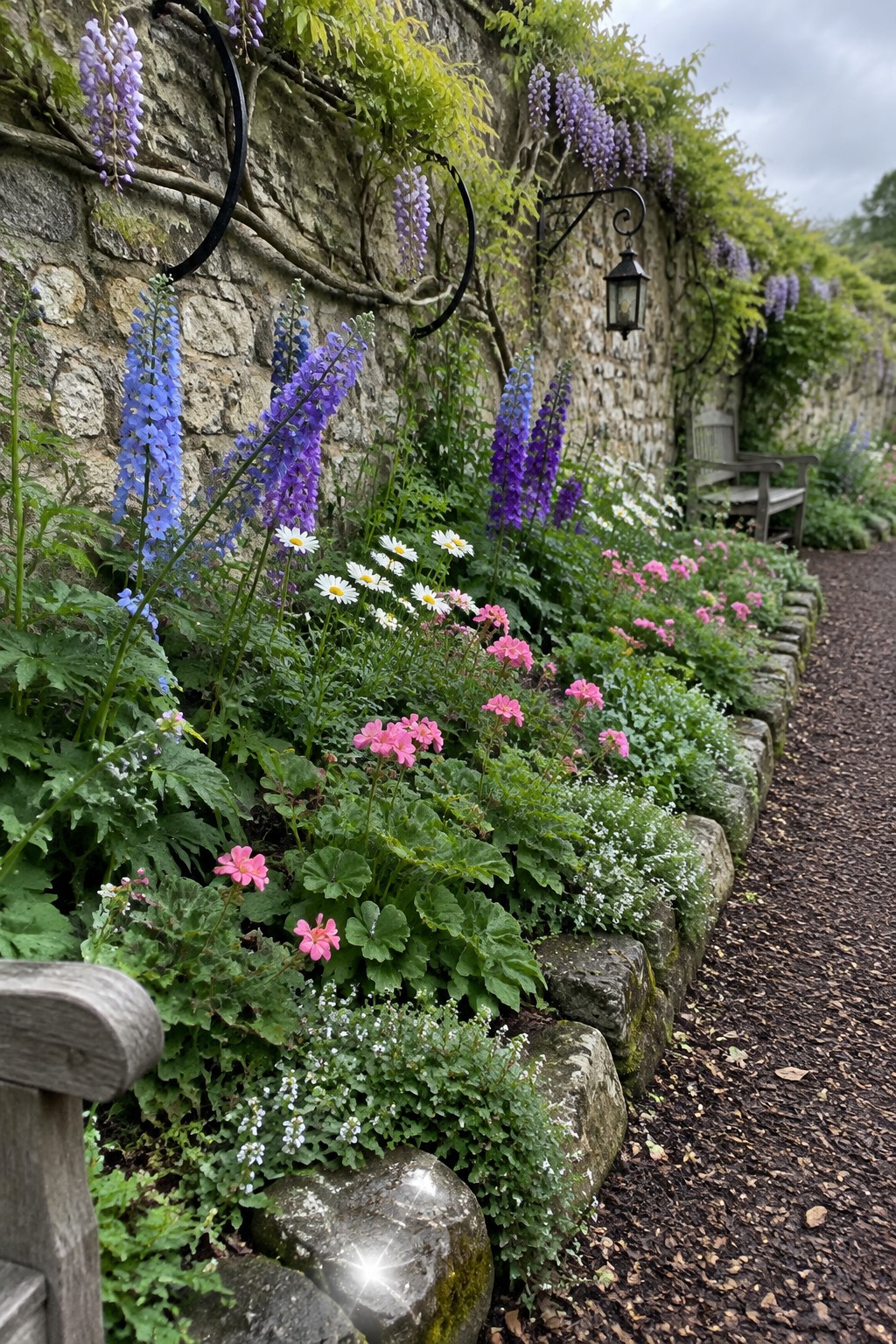
Training wisteria along a stone garden wall lets its flowers become part of the planting, rather than hiding the wall completely. The mix of climbing vines and a low flower bed suits cottage gardens, where planting can look full but still have a clear edge.
Use sturdy supports fixed securely to the wall, and prune the vine so it does not overwhelm nearby flowers. A stone border can help keep the bed tidy beside a path.
Add a Wisteria Trellis Beside Garden Seating
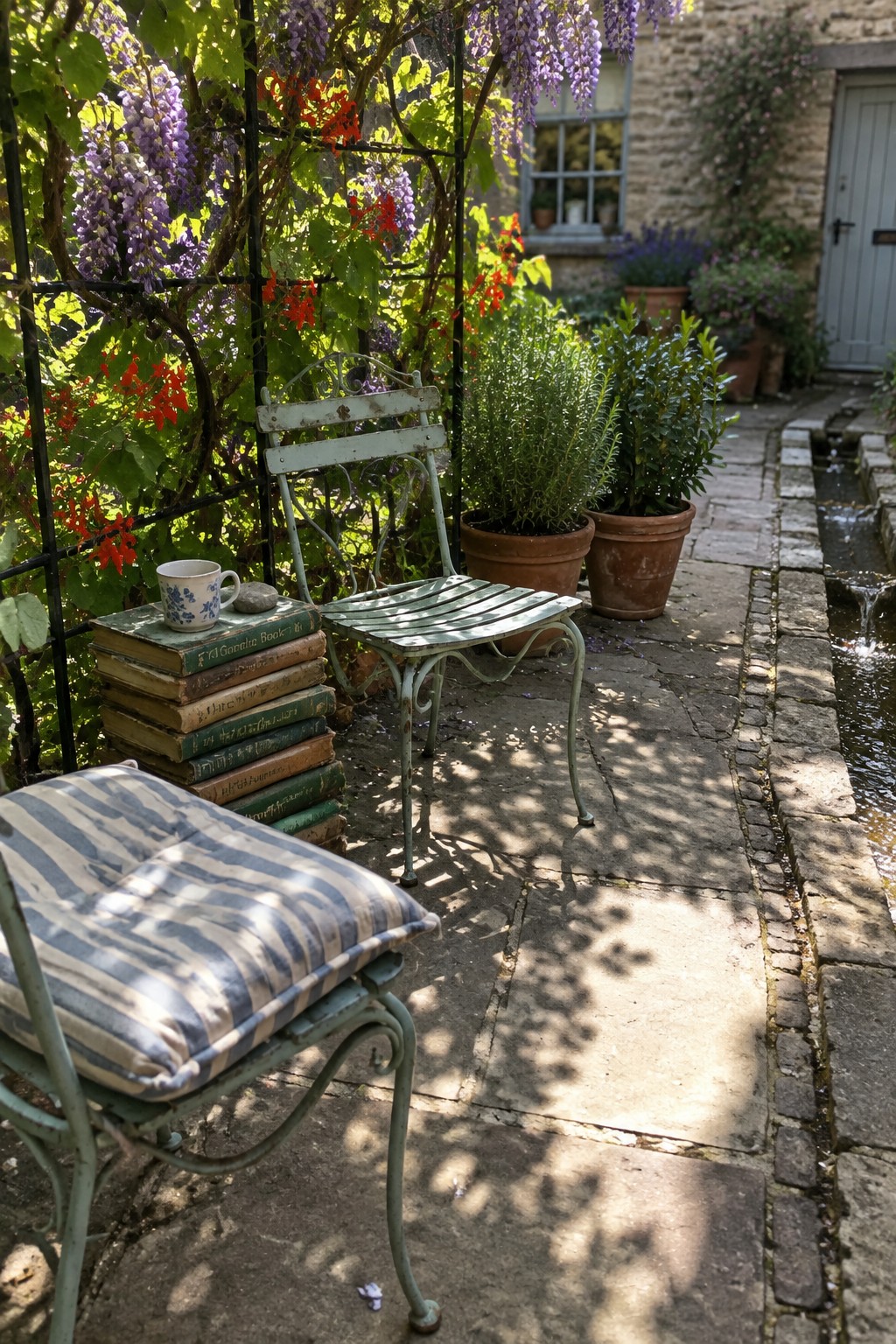
A trellis covered in wisteria can give a small cottage garden a leafy backdrop and a little shade for sitting. The climbing flowers bring color overhead, while the open structure still lets light and air through.
Place a bench or café chair nearby, leaving enough room for the vine to grow without crowding the path. Wisteria gets heavy as it matures, so use a sturdy trellis and keep up with pruning.
Grow Wisteria Over a Greenhouse
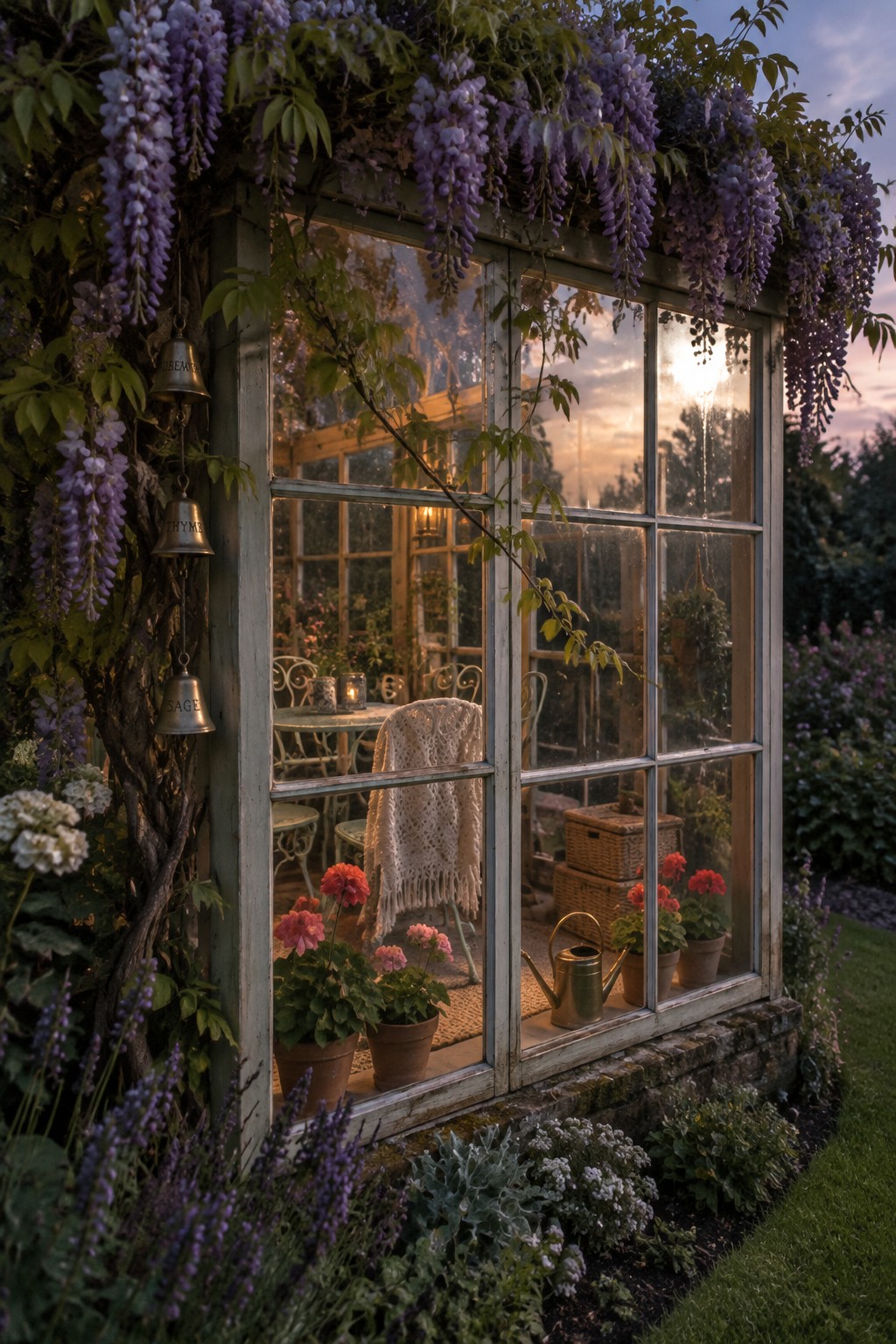
Training wisteria across a greenhouse roof gives the structure a place in the garden rather than leaving it as a plain glass building. The flowering vines add a soft, cottage-garden look, while the greenhouse remains useful for growing plants.
Use a sturdy frame that can support mature vines, and keep growth clear of windows and doors. This works best where the wisteria has room to spread, since established plants need regular pruning to keep them in check.
Make a Shady Wisteria Seating Area
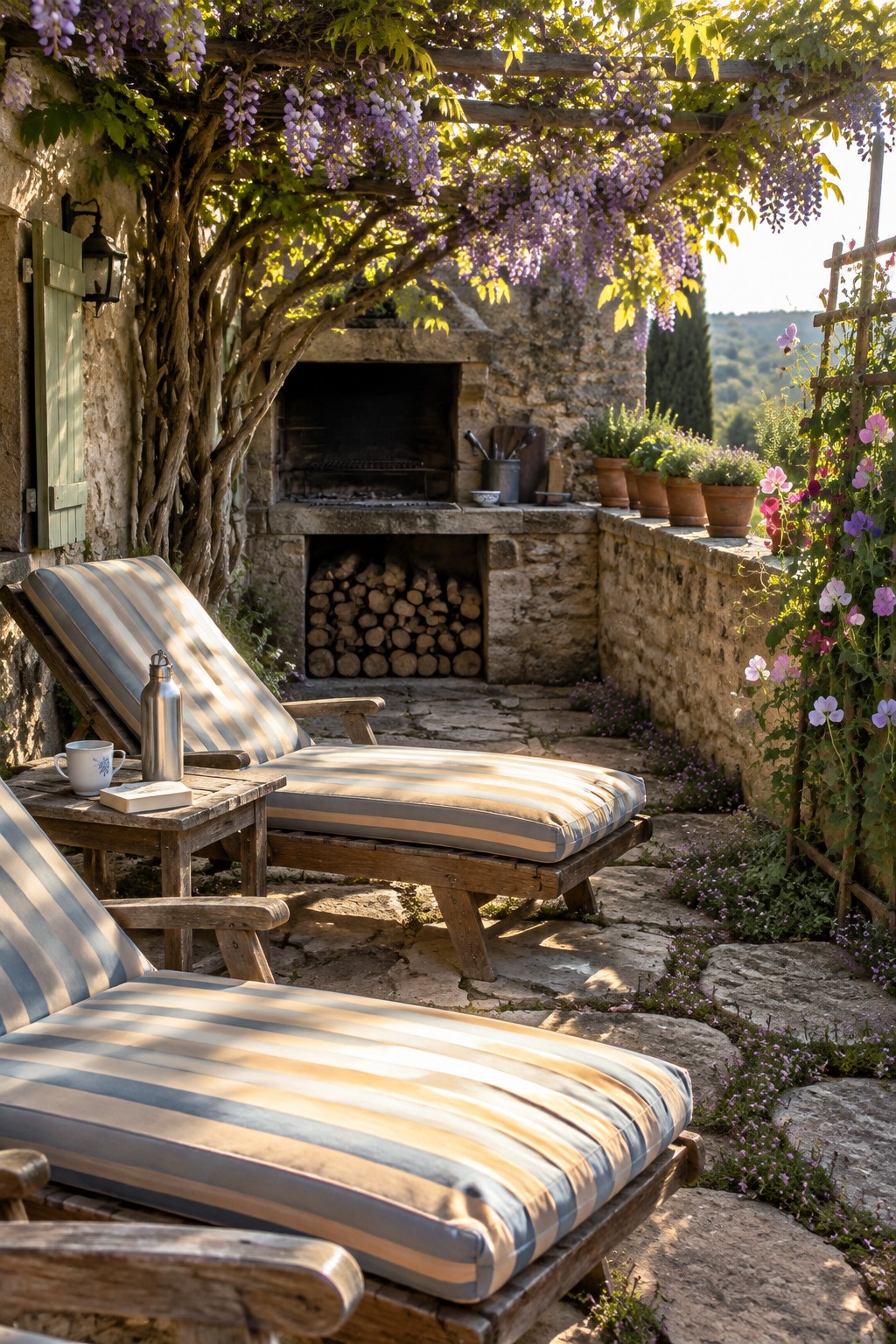
Wisteria can turn a simple patio into a comfortable place to sit by growing it over a sturdy pergola. The leafy canopy provides welcome shade, while the hanging blooms make the seating area feel connected to the garden.
Set the pergola over a stone terrace or another level spot, and leave enough room for chairs to move easily. Wisteria grows vigorously, so use a strong support and prune it regularly to keep it clear of the seating.
Let Wisteria Climb Along a Garden Fence
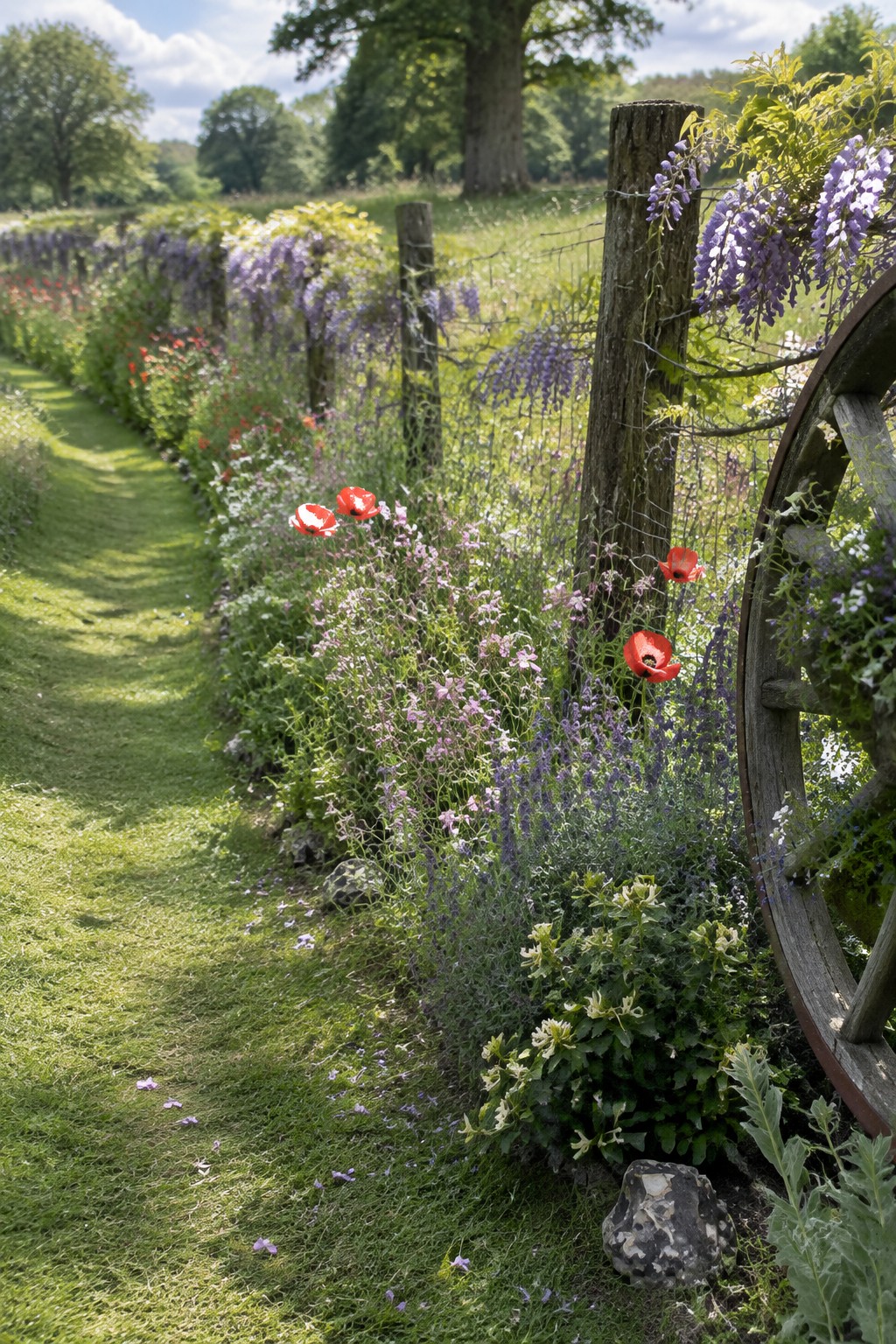
A fence can do more than mark the edge of a cottage garden. Training wisteria along it brings flowers up to eye level and gives a long boundary a softer, more established look. The sturdy posts and wire in this garden provide support without blocking the view beyond.
Use a strong, well-built fence, since mature wisteria gets heavy. Guide the main stems along the fence and prune side growth regularly to keep the plant in bounds and leave room for smaller flowers beneath it.
Use Wisteria to Cover a Garden Alcove
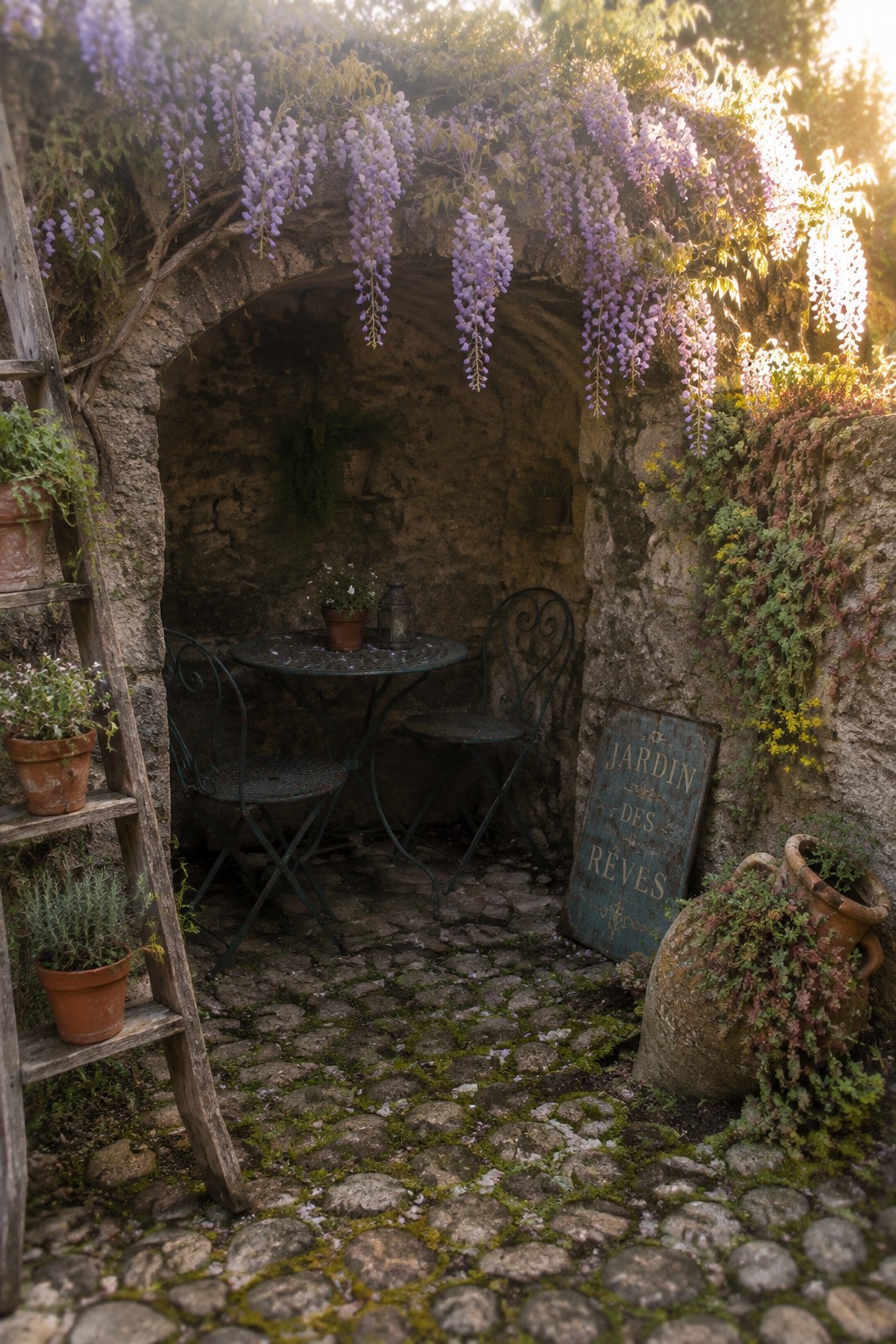
A wisteria-covered stone alcove can turn a tucked-away corner into a small place to sit. The overhead flowers give the spot a sheltered feel, while the old stone keeps it suited to a cottage garden.
Train the vine along a sturdy support above the opening, and keep its growth trimmed so it does not crowd the seating area. This idea works best where the structure can bear the vine’s weight and there is room for regular pruning.
Grow Wisteria Over a Garden Bench
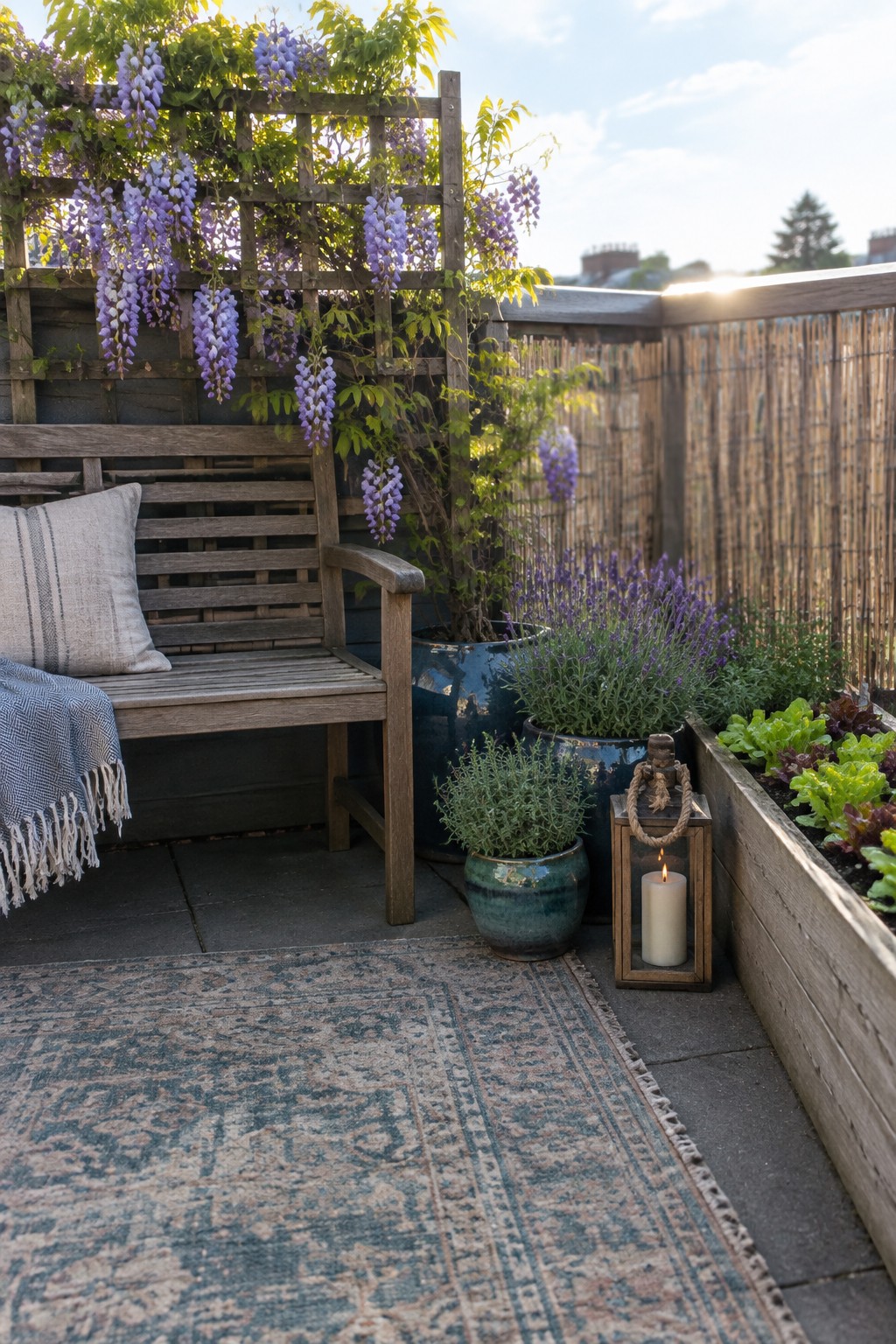
Training wisteria over a bench makes a small seating area feel tucked into the garden. The vine gives the spot a leafy backdrop, while its hanging blooms bring color close to where you sit.
Use a sturdy trellis behind or above the bench, and keep the vine pruned so it does not crowd the seat. This works well in a courtyard or cottage garden where a little shade and privacy are welcome.
Frequently Asked Questions
Q: Will wisteria damage a cottage or garden wall?
A: It can. Wisteria grows heavy and vigorous, so avoid letting it climb over gutters, roof edges, or weak masonry. Train it on a sturdy, freestanding support set a little away from the wall.
Q: Can I grow wisteria in a small cottage garden?
A: Yes, if you give it a strong support and prune it regularly. A compact pergola or arch can keep the plant’s spread in check while still giving you those lovely hanging blooms.
Q: Why isn’t my wisteria flowering?
A: Young plants can take several years to bloom, and too much shade or heavy pruning at the wrong time can delay flowers. Give it a sunny spot, and prune the long summer shoots back in late summer.
Q: Is wisteria safe to plant near pets or children?
A: No part of wisteria should be eaten, especially its seeds and pods. Plant it where curious kids and pets are less likely to reach fallen pods.
