


I’ve found that a pond garden feels most settled when flowers soften the water’s edge without hiding its shape.
Irises are useful for this because their upright leaves and bright blooms add structure while still letting the pond remain the focus.
The planting works best when I leave room for changes in water level, clear paths for maintenance, and give each clump space to grow.
Color matters, but the way the plants repeat along the bank often makes the whole layout feel more connected.
Some of these arrangements are worth adapting to a small backyard pond, while others may suit a broader water feature.
Plant Irises Along a Pond’s Edge

Irises are a good choice for marking the edge of a pond. Their upright leaves and colorful blooms make the water’s outline easier to see, while the plants look at home beside the natural stone edging.
Plant them in small groups where they can enjoy moist soil, but leave room between clumps so the pond edge does not become crowded. A few different iris colors can add interest without taking attention away from the water.
Plant Iris Along the Pond Edge
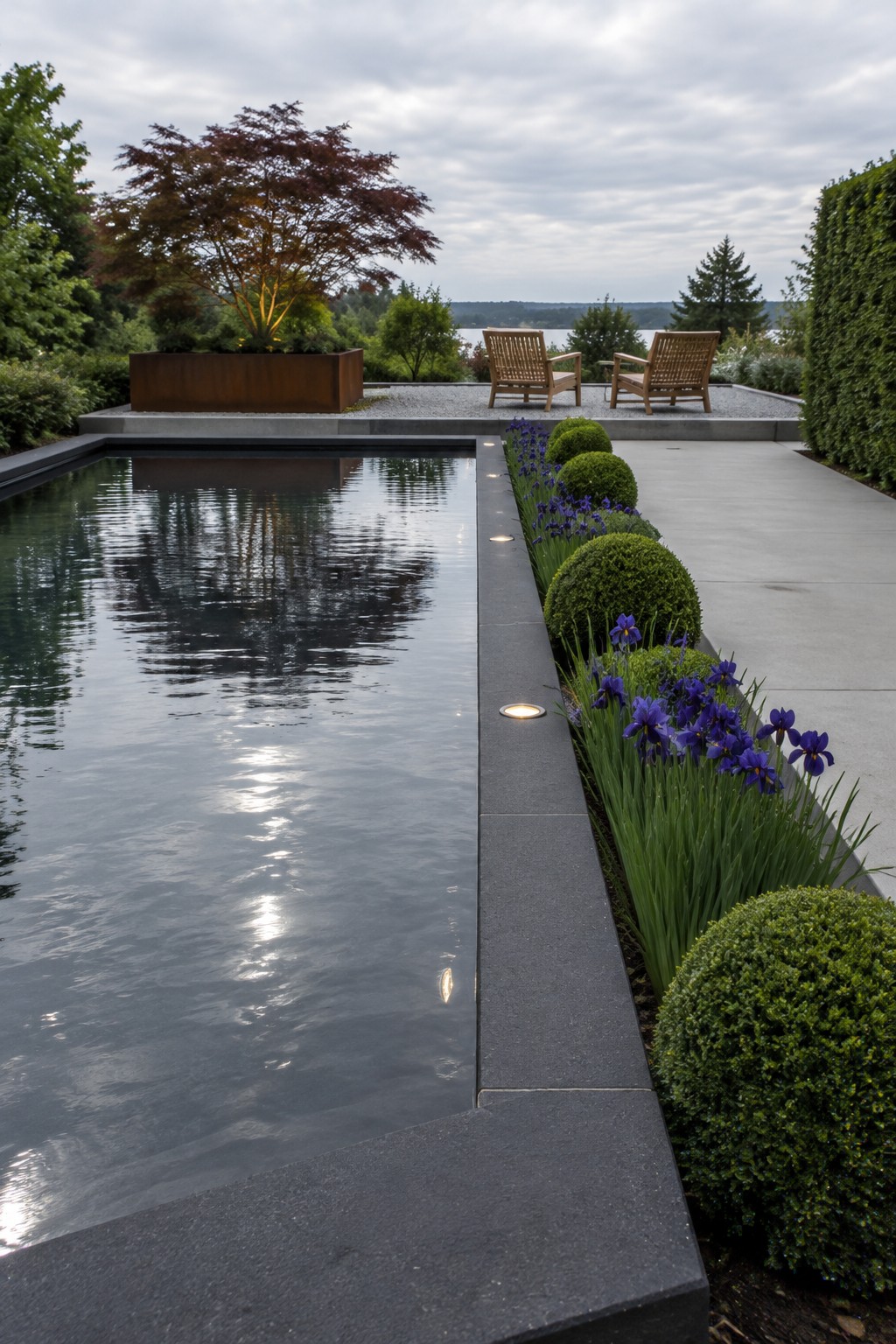
Iris can give a pond edge a clear band of color without hiding the water. Planting them in a narrow bed beside the coping keeps the flowers close to the pond and makes the border feel planned.
Use iris where their roots can stay moist, but check the variety’s growing needs before planting. Leave enough room between clumps so they can spread without crowding the path or covering the pond edge.
Plant Irises Along the Pond’s Edge
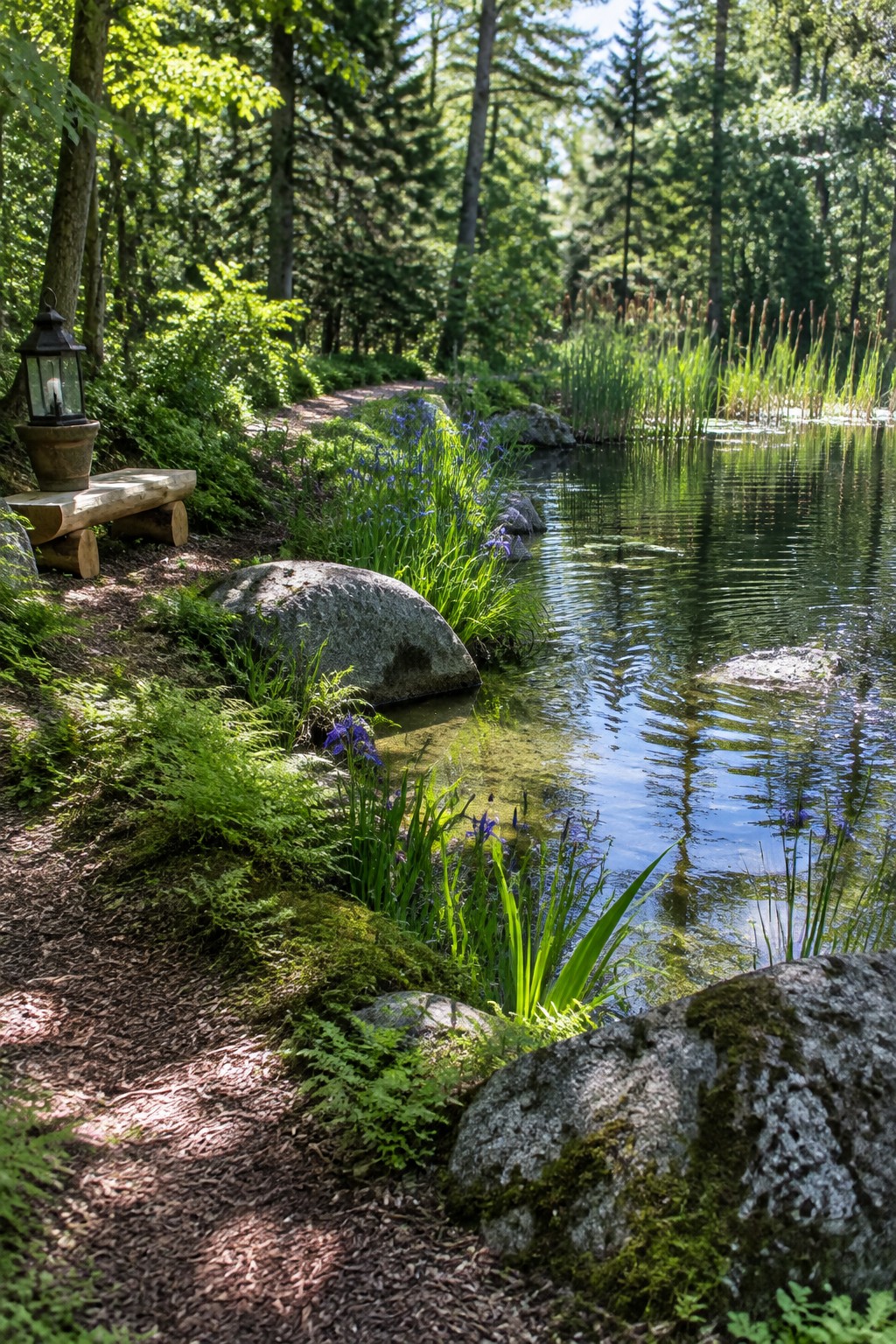
Planting irises along a pond creates a clear, colorful border while letting the water remain part of the garden. Their upright leaves and purple blooms stand out beside the rocks without needing a wide flower bed.
Set irises near the water’s edge, where the soil stays moist, and leave room between clumps so they can spread. A curving path beside the pond makes this planting easier to enjoy and maintain.
Plant Irises Along the Pond’s Edge
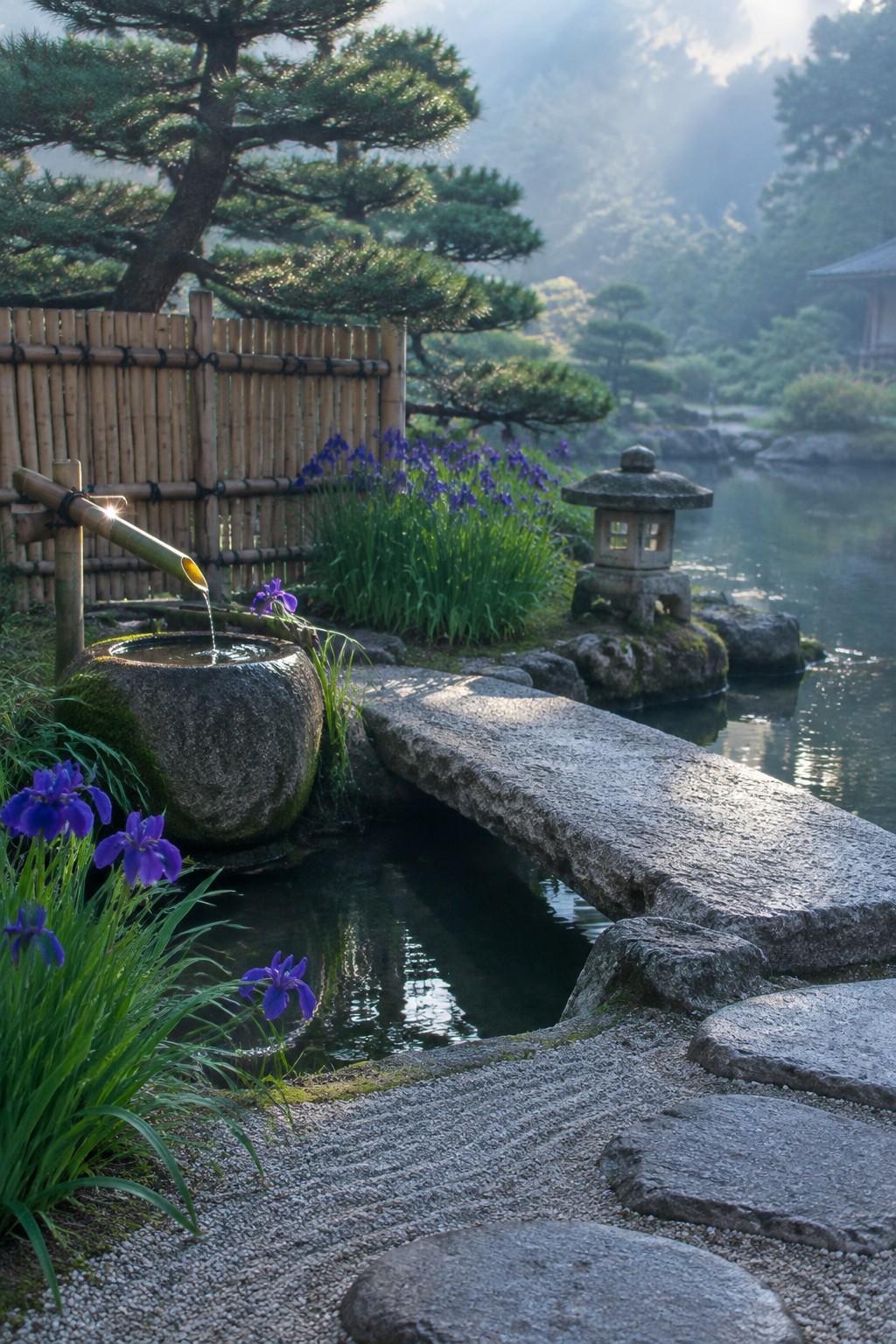
Irises are a good choice for the edge of a pond because their upright leaves and colorful flowers make the water feel like part of the garden. Planting them in a generous clump gives the border a clear shape without hiding the pond.
Set irises near the water, where the soil stays moist, and leave room for them to spread. They suit natural-looking ponds and small water features alike. Avoid packing them too tightly against paths or stones, so the flowers remain easy to see and the edge is still accessible.
Add a Stepping-Stone Path Through Pondside Irises
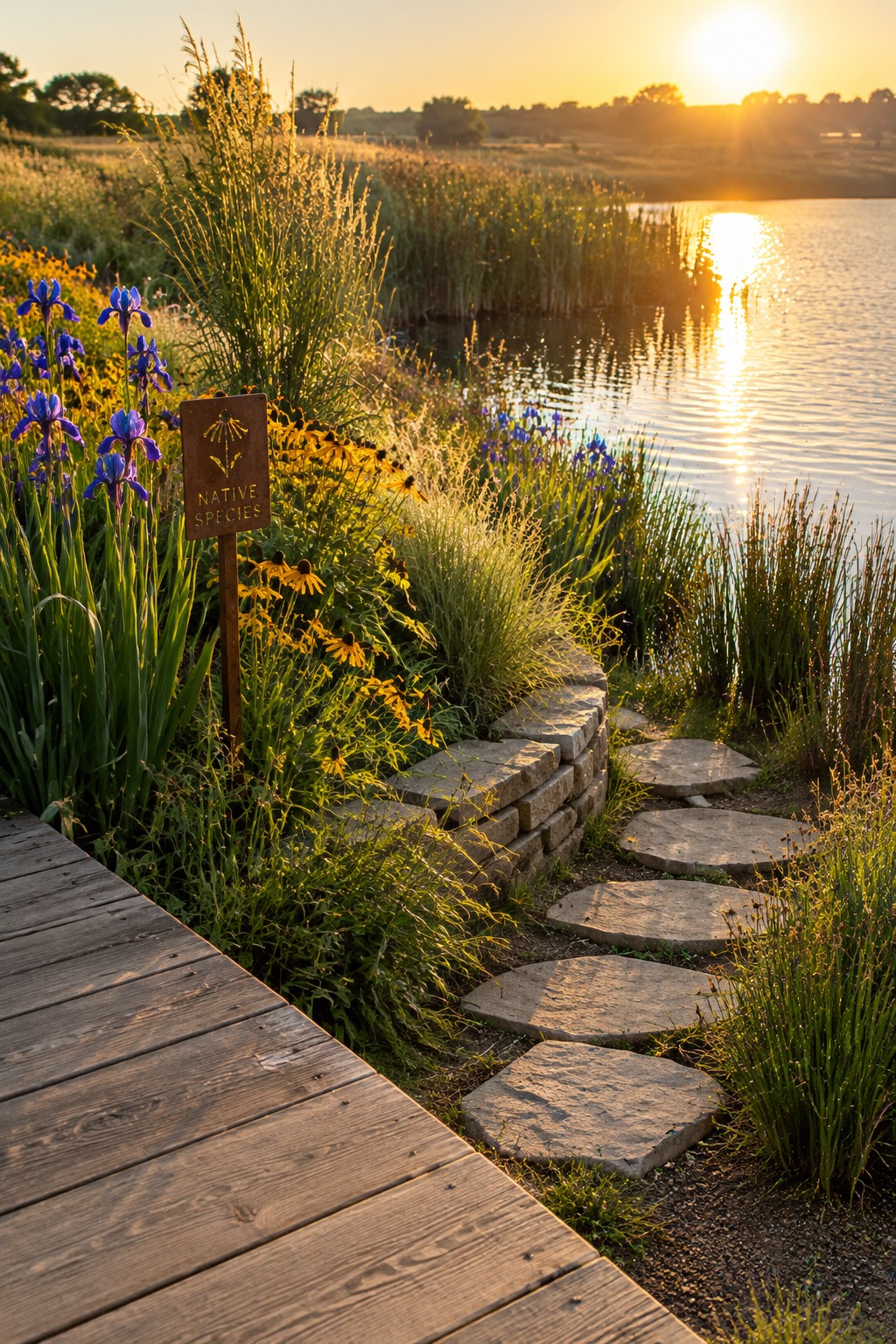
A stepping-stone path makes a planted pond edge easier to enjoy without cutting through the flowers. Here, the stones lead between dense iris beds and the water, giving the garden a clear route while leaving plenty of room for plants to grow.
Use broad, stable stones and space them for a comfortable stride. This works well in a natural-style pond garden, but keep the path firm and level, especially where the ground stays damp.
Use Iris Beds To Define a Formal Pond

Iris beds can give a pond a clear shape and make the water feel like part of the garden layout. Here, the flowers run along clipped hedges beside a long rectangular pool, creating tidy, repeating borders.
For a similar look, plant iris in bands along the water’s edge and keep the bed wide enough for the flowers to grow without crowding the path. This works especially well in a formal garden, where straight lines and neat edging are already part of the design.
Make a Stone Path Through Pondside Planting
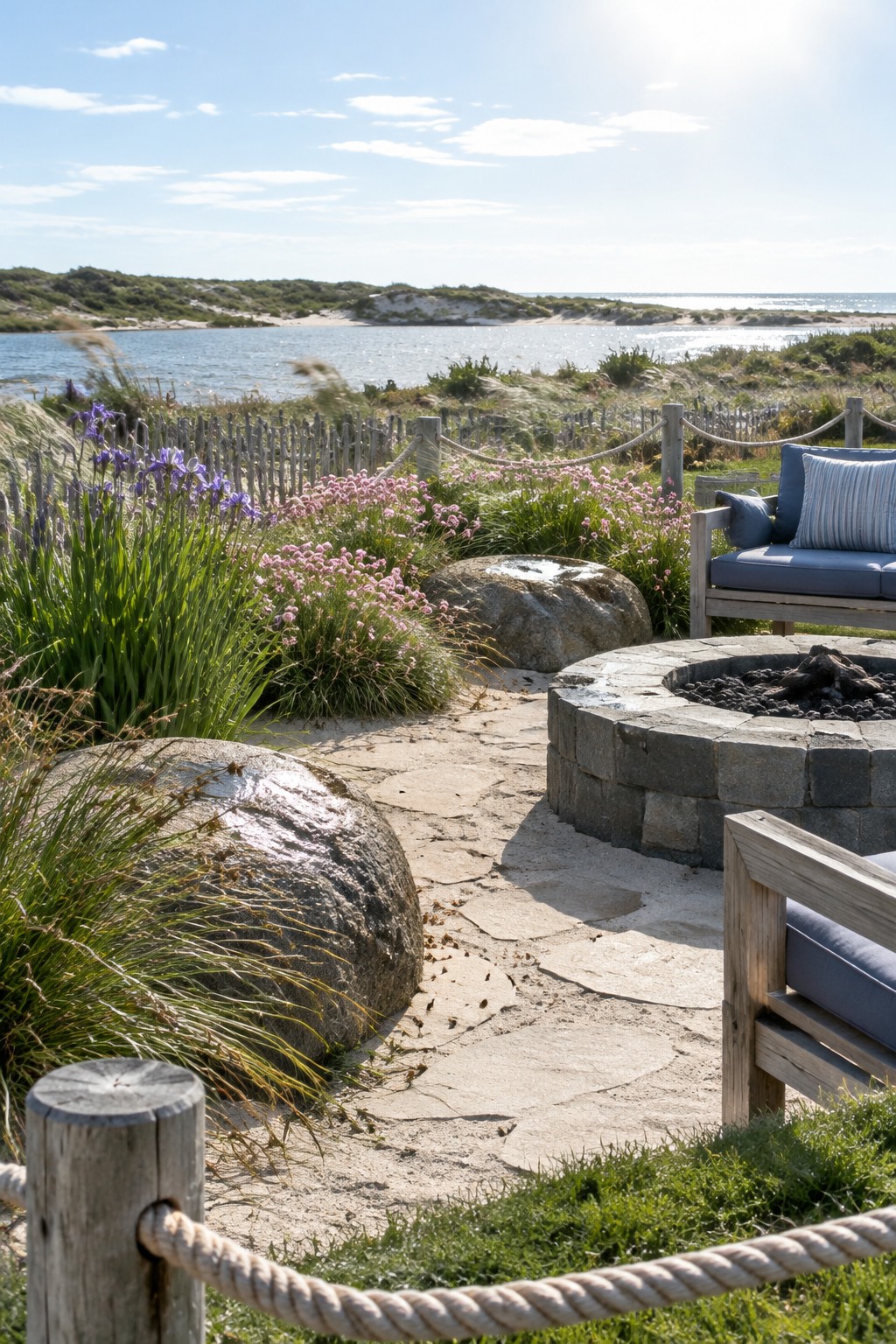
A simple stone path makes a pond garden easier to enjoy without taking over the planting. Irises and other waterside flowers can grow along its edges, while the path gives you a clear place to walk and pause.
Use irregular paving stones for a relaxed garden feel, and leave enough room between them for easy footing. This approach works well near a seating area, but keep the path clear of plants that may spread across the stones.
Use Irises to Link a Pond With the Garden
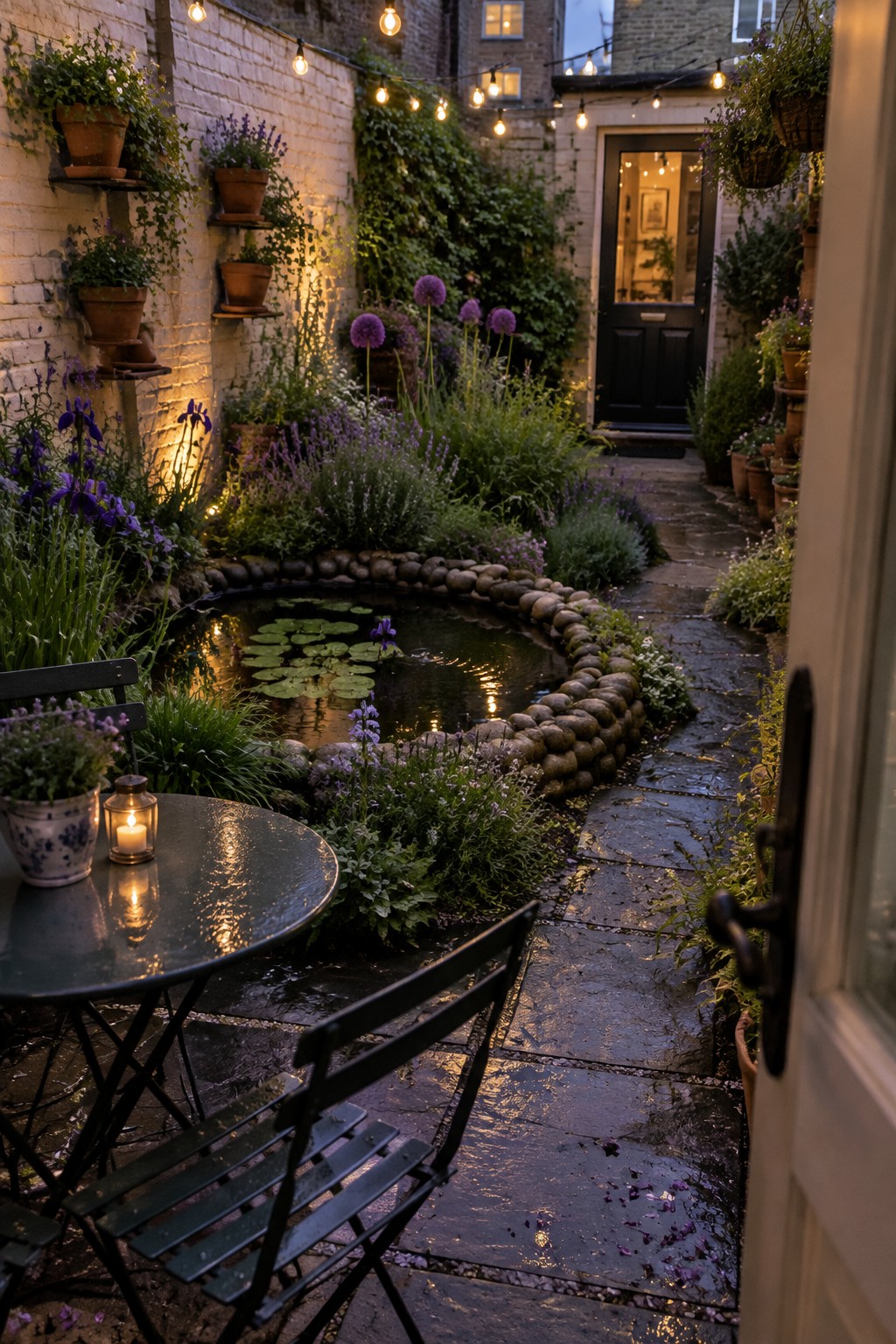
Irises can help a pond feel like part of the surrounding garden rather than a separate feature. Their upright leaves and flowers give the water’s edge a clear planting structure, while rounded stones keep the border neat.
Plant irises in small groups along a pond edge, leaving some open stretches so the water remains visible. Choose varieties suited to the moisture in your site, and avoid planting them where roots could crowd a narrow path.
Use Potted Irises to Edge a Small Pond
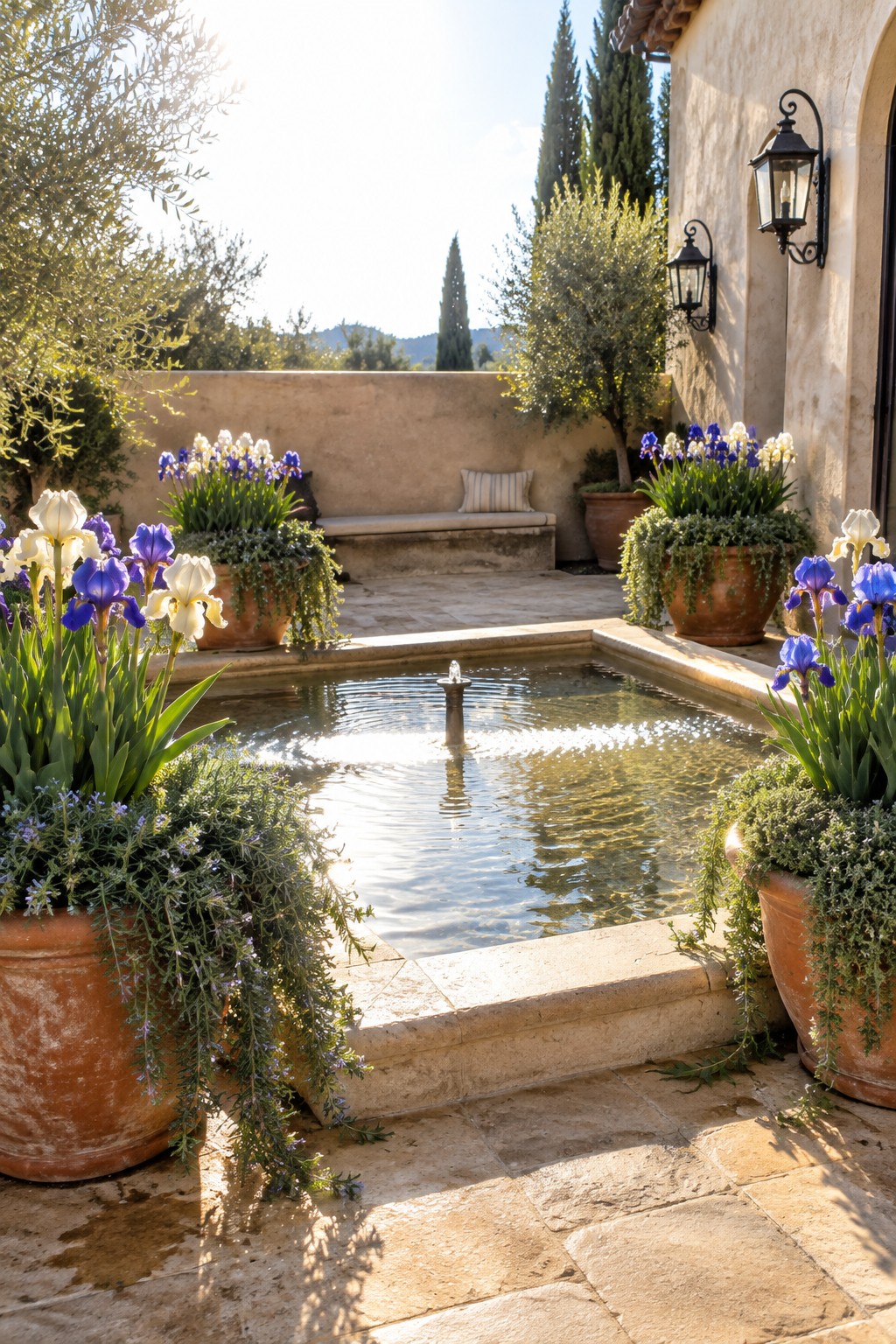
Potted irises can mark the edge of a small pond without planting directly into the water. Their upright leaves and flowers give the pond a clear garden border, while the pots make it easier to manage where the plants grow.
Place containers along the pond’s corners or one side, leaving enough open edge to reach the water for cleaning. In this garden, terracotta pots hold purple and white irises near the stone basin. Choose containers with drainage, and check that the iris variety suits your climate.
Add a Waterfall to a Pondside Iris Garden

A narrow waterfall can make a pond feel like part of the garden rather than a separate feature. Here, water spills from a raised metal channel beside purple irises, giving the planting a clear edge and a steady source of movement.
For a similar setup, build the waterfall into a raised pond wall and plant irises where they can enjoy moist soil without sitting in deep water. Keep the channel and pump easy to reach for cleaning and seasonal maintenance.
Use Irises to Edge a Curved Pond
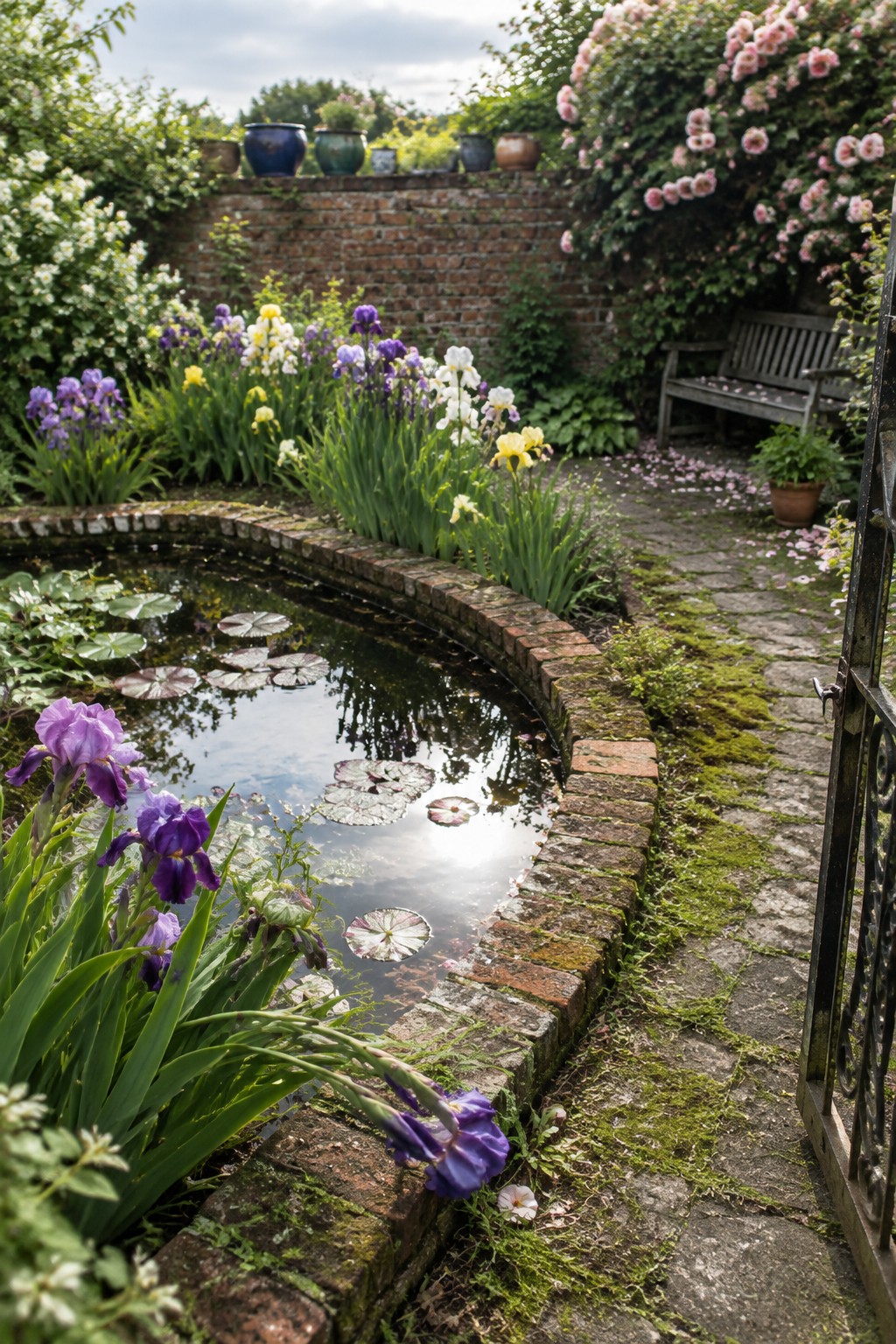
A curved brick edge gives a pond a clear shape while leaving room for irises to grow in generous groups nearby. Their upright leaves and purple, yellow, and white blooms make the water feel connected to the rest of the garden.
This approach suits a small pond tucked into an established garden. Keep the plants in loose bands along the curve, and leave a clear section of edging for access and maintenance.
Use Irises to Edge a Narrow Pond

A narrow planting bed can give a pond a tidy, finished edge without hiding the water. Here, purple irises rise among lower silvery plants, creating a clear border along the wall and pond.
Use this layout where you want a defined pondside bed that still leaves room to see the water. Give irises enough space to spread, and choose plants that suit the soil and moisture conditions along your pond.
Use Irises Along a Stepped Watercourse

Irises work well beside a stepped pond because their upright leaves and purple blooms bring color to the water’s edges. Planting them in loose groups helps the separate pools feel connected without hiding the stonework.
Leave space for the water to flow freely over each ledge, and keep iris clumps where they can be reached for trimming and division. This approach suits a sloped garden, though the stone edges need to be stable and secure.
Use Iris Beds to Shape a Garden Pond
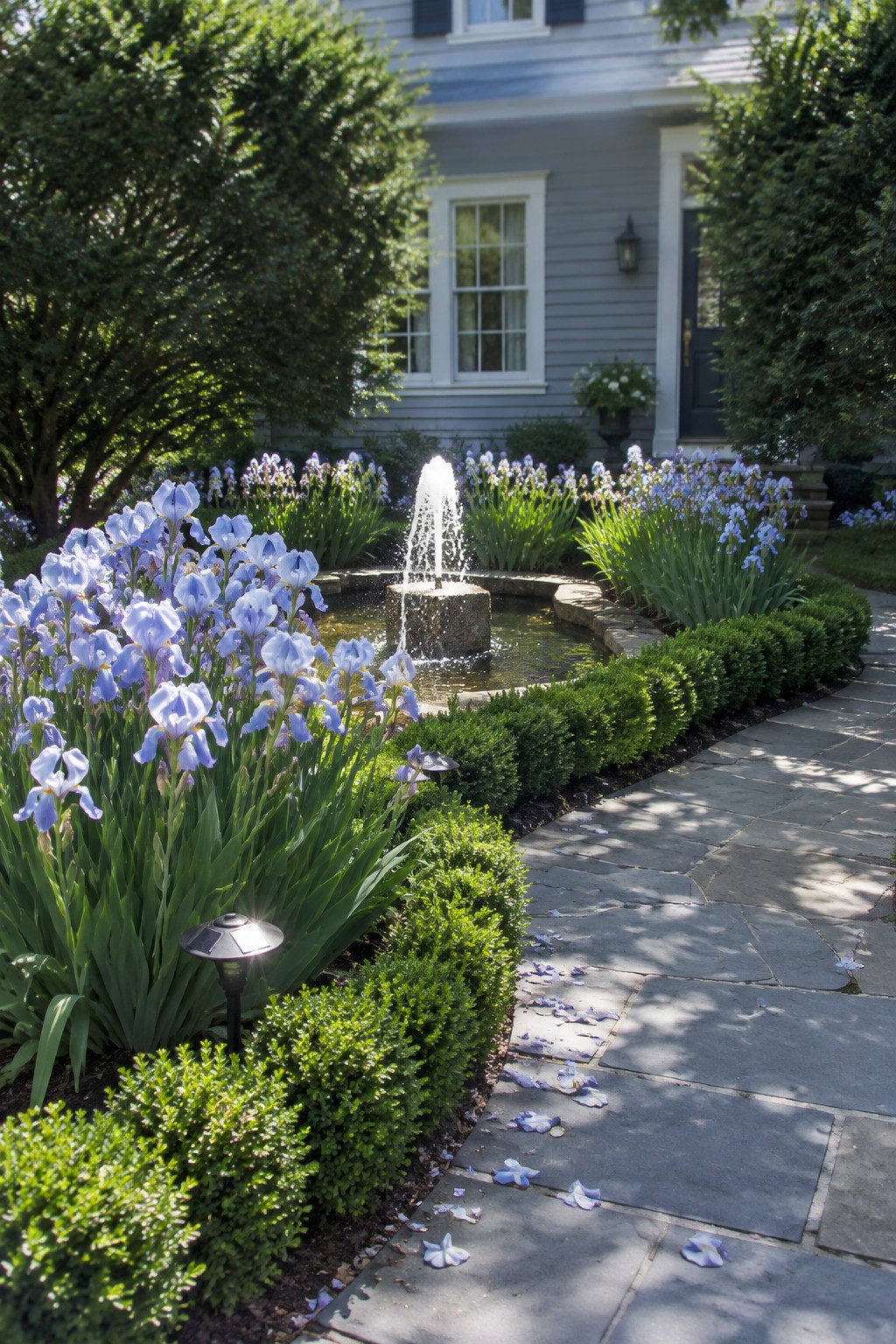
Iris beds can give a pond a clear edge while keeping the water connected to the rest of the garden. Here, clusters of pale purple irises sit between the pond and a low hedge, making the planting feel ordered without hiding the water.
Use this approach around a small pond where you want defined planting rather than a loose, overgrown border. Leave enough open space for pond access, and choose irises suited to the moisture level of each part of the bed.
Use a Rain Chain to Feed a Pondside Garden

A rain chain can direct roof runoff into a small pond, making the water feature part of the garden’s drainage plan. Here, the chain hangs beside a narrow pond, and iris clumps grow along the water’s edge.
This idea works best where a downspout can drain into a pond or a shallow gravel basin that leads to one. Check that the pond can handle extra runoff, and keep the chain clear so water flows freely.
Add Iris Planting Around a Rooftop Pond
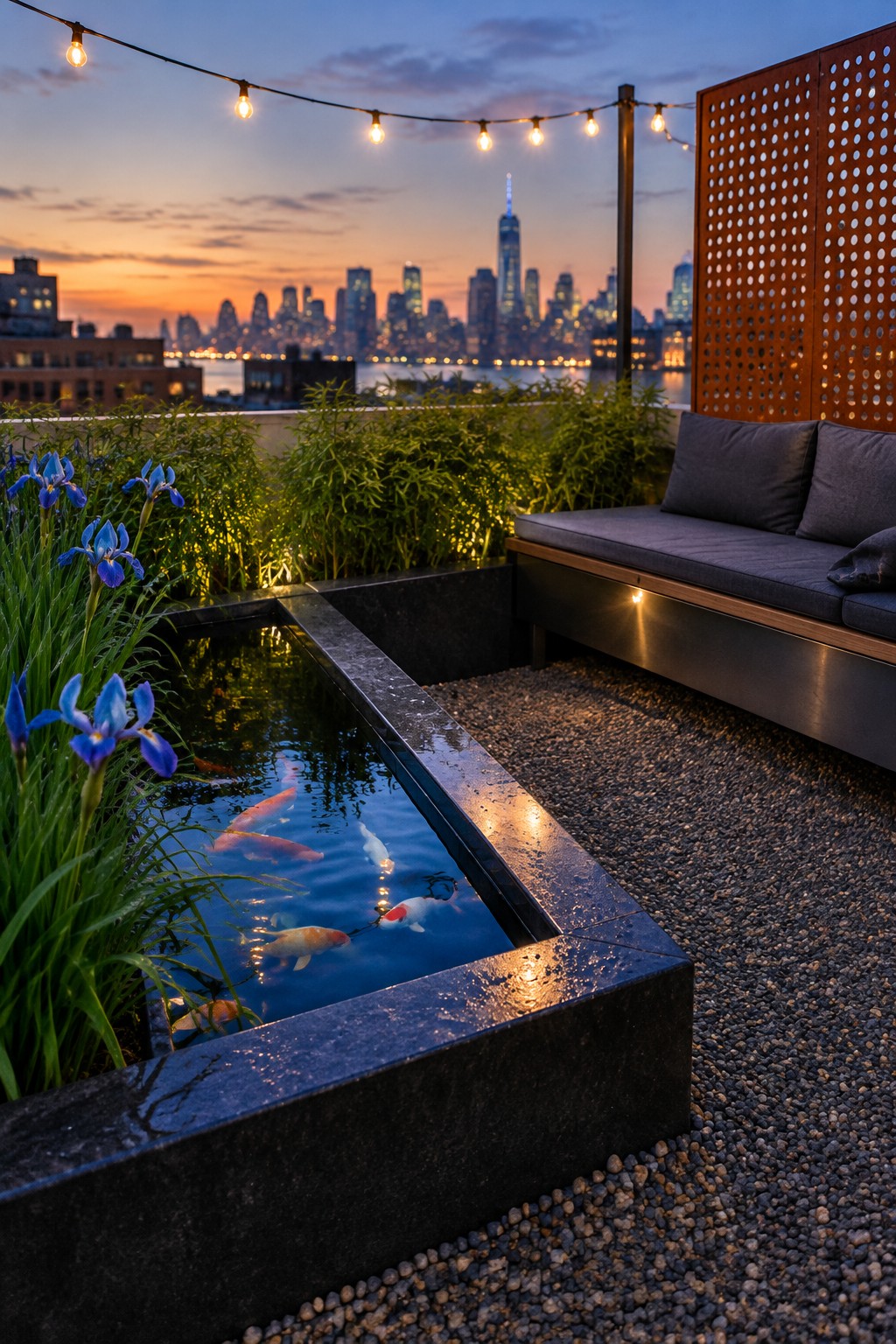
A small pond can feel like part of the garden when iris beds grow close to its edge. Their upright leaves bring a little structure beside the water, while the flowers add color without taking over the whole planting.
This approach suits a terrace or compact courtyard where a large flower bed is not practical. Leave enough room to reach the pond for cleaning, and choose irises that can handle the amount of sun the spot receives.
Use Irises to Build a Pondside Garden Bed
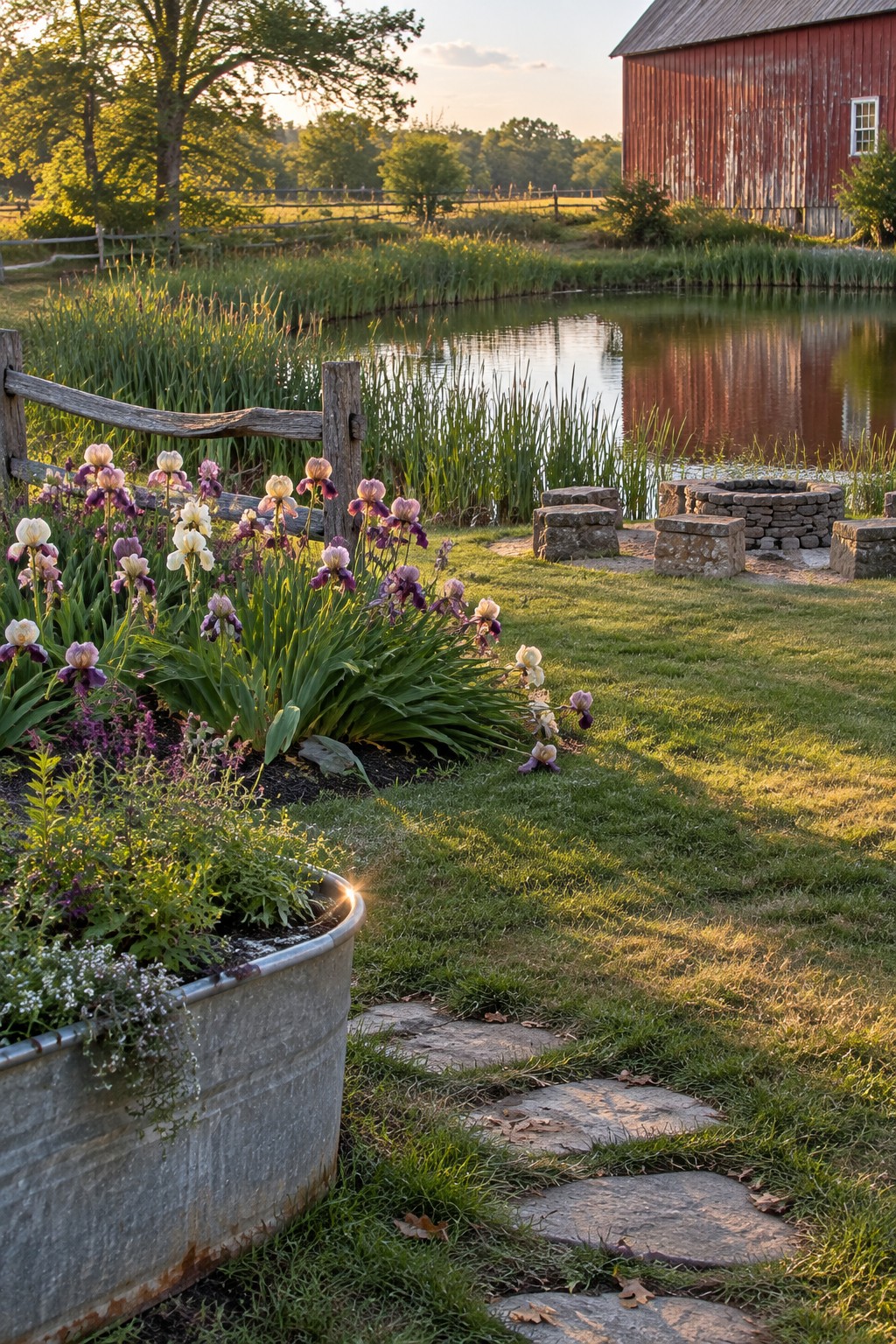
A broad iris bed can make the edge of a pond feel like part of the garden rather than a separate border. The mix of purple and pale blooms gives the planting a relaxed, cottage-garden look.
Plant irises in generous clumps along the water, leaving enough open space to reach the pond for maintenance. A rustic fence nearby can help mark the garden edge, but keep the planting clear of paths and seating areas.
Use Iris Beds to Set Off a Reflecting Pond

Iris beds can give a pond a clear, planted edge without hiding the water. Their upright leaves and blue flowers bring color right to the border, while a simple rectangular pond keeps the planting looking orderly.
For a similar effect, plant irises in generous groups along the water’s edge and leave room for the pond’s outline to show. A dark metal or stone rim can help define the boundary, but check that the plants suit the site’s moisture and sun conditions.
Use a Small Bridge to Connect Pondside Planting
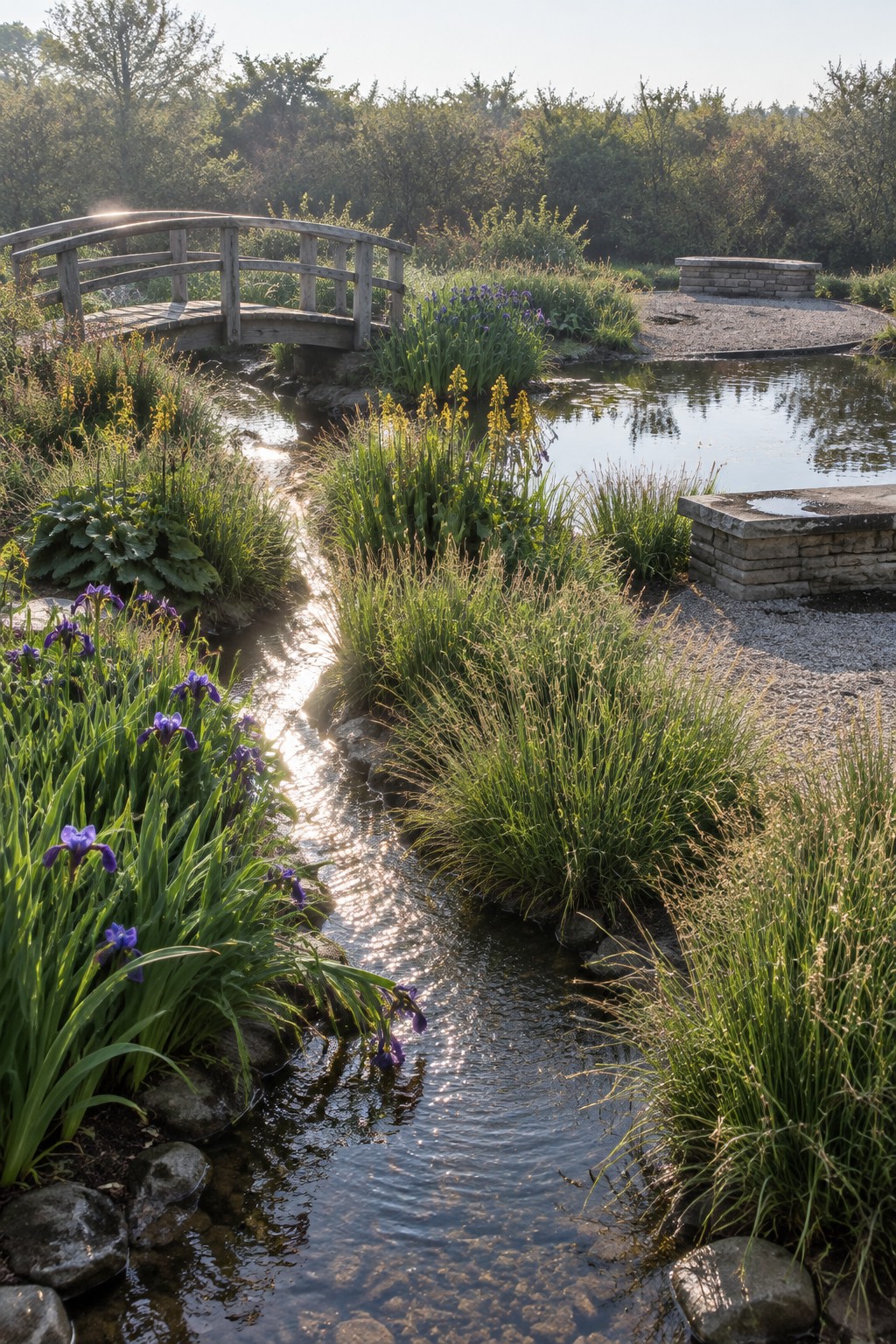
A simple footbridge can make a pond garden easier to move through while giving the planting a clear focal point. Here, the curved wooden bridge crosses the water beside clumps of purple irises, making the pond feel like part of the garden path rather than a separate feature.
Place a bridge where it links two useful parts of the yard, and leave enough room around it for plants to grow without blocking the approach. A modest design suits a naturalistic pond best, especially when the crossing is short and the structure does not overwhelm the water.
Use Iris Beds Beside a Reflecting Pool
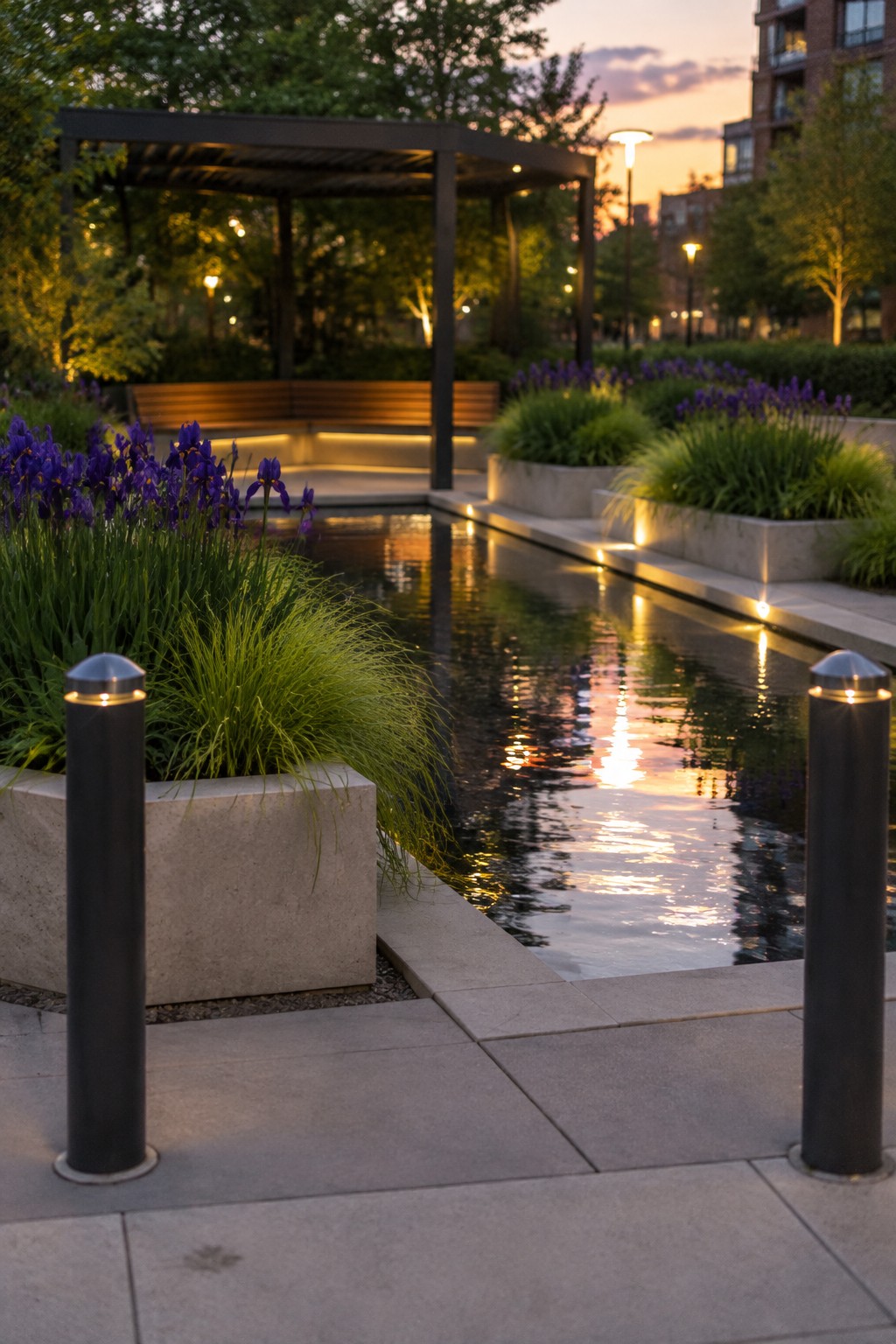
Irises can bring color to a pond while keeping the water’s edge looking orderly. Here, purple flowers sit beside a narrow pool and pale stone planters, so the planting feels connected to the hardscape rather than scattered around it.
For a similar look, plant irises in a defined bed along one side of a pond, leaving enough open edge to see the water and reach it for maintenance. This works especially well in a small courtyard where a clear planting line helps the garden feel tidy.
Frequently Asked Questions
Q: Can I plant irises right in the pond water?
A: Most irises look best in damp soil along the edge, not fully underwater. Set them where their roots stay moist but the crowns sit above the waterline.
Q: Which irises are a good choice for a pond edge?
A: Siberian and Japanese irises both suit moist spots, while Louisiana irises can handle wetter soil. Check the plant label before buying, since some types prefer soil that drains between waterings.
Q: How do I stop iris leaves from taking over the view?
A: Give each clump room and trim away dead leaves as they appear. If the plants spread too far, divide the clumps after flowering and replant only the healthiest sections.
Q: Will irises bloom in a shady spot beside my pond?
A: They’ll grow in light shade, but most bloom more reliably with several hours of sun. If the spot stays deeply shaded, try moving the irises to a brighter edge.
