

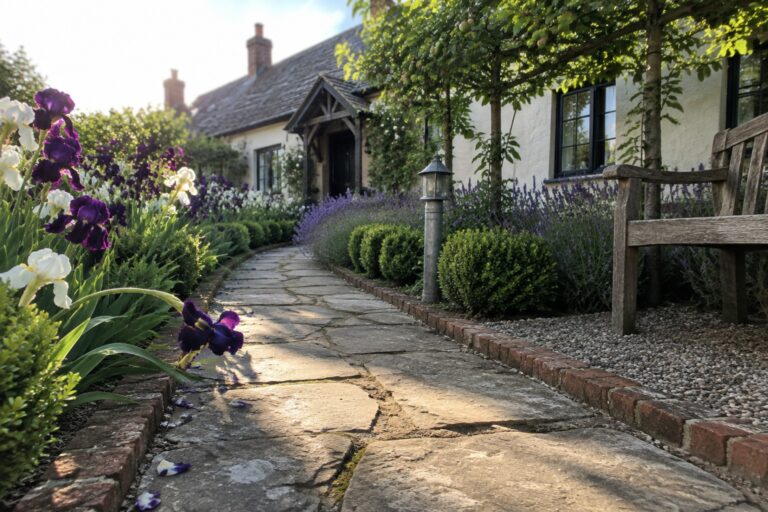
I like the way irises can bring color and a clear sense of rhythm to a walkway without making the path feel crowded.
The planting works best when the blooms have room to spread and the path still feels easy to follow.
I’d pay attention to how the iris height, spacing, and nearby edging relate to the width of the walk, since small choices can make the whole garden feel more settled.
Some layouts keep the flowers in neat borders, while others let them soften the edges and blend with lower plants.
The ideas ahead offer practical ways to shape a walkway planting, and several could be worth adapting to the light and space in your own yard.
Use Stone Slabs To Shape An Iris Walkway
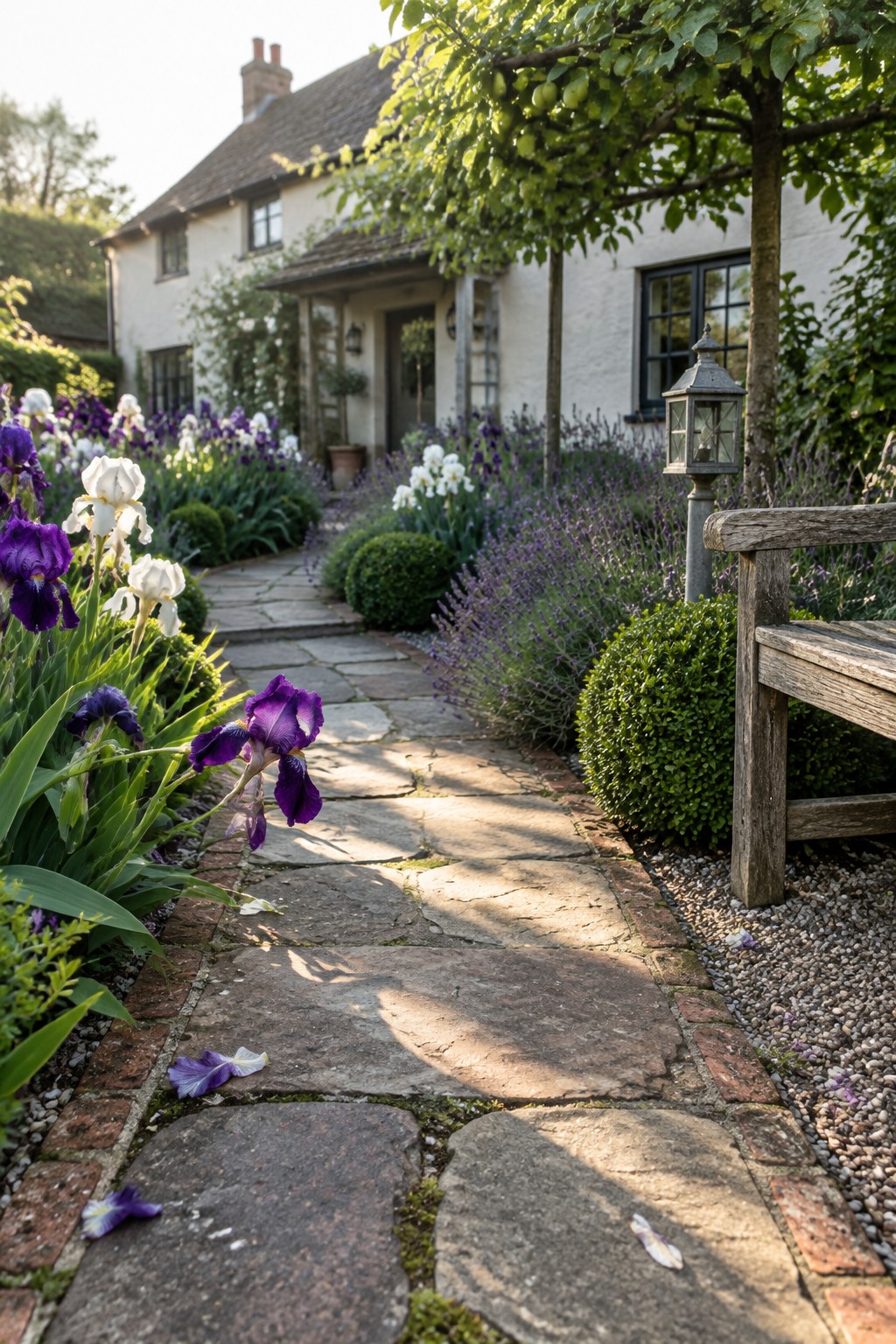
A stone path gives an iris border a clear line to follow. The irregular slabs feel at home in a cottage garden, and the flowers can spill close to the edges without making the route hard to read.
Leave enough room between plantings for people to walk comfortably, and keep the surface as even as you can. This approach suits informal gardens, though it may need occasional weeding where moss and plants settle between the stones.
Use Iris to Mark the Walkway
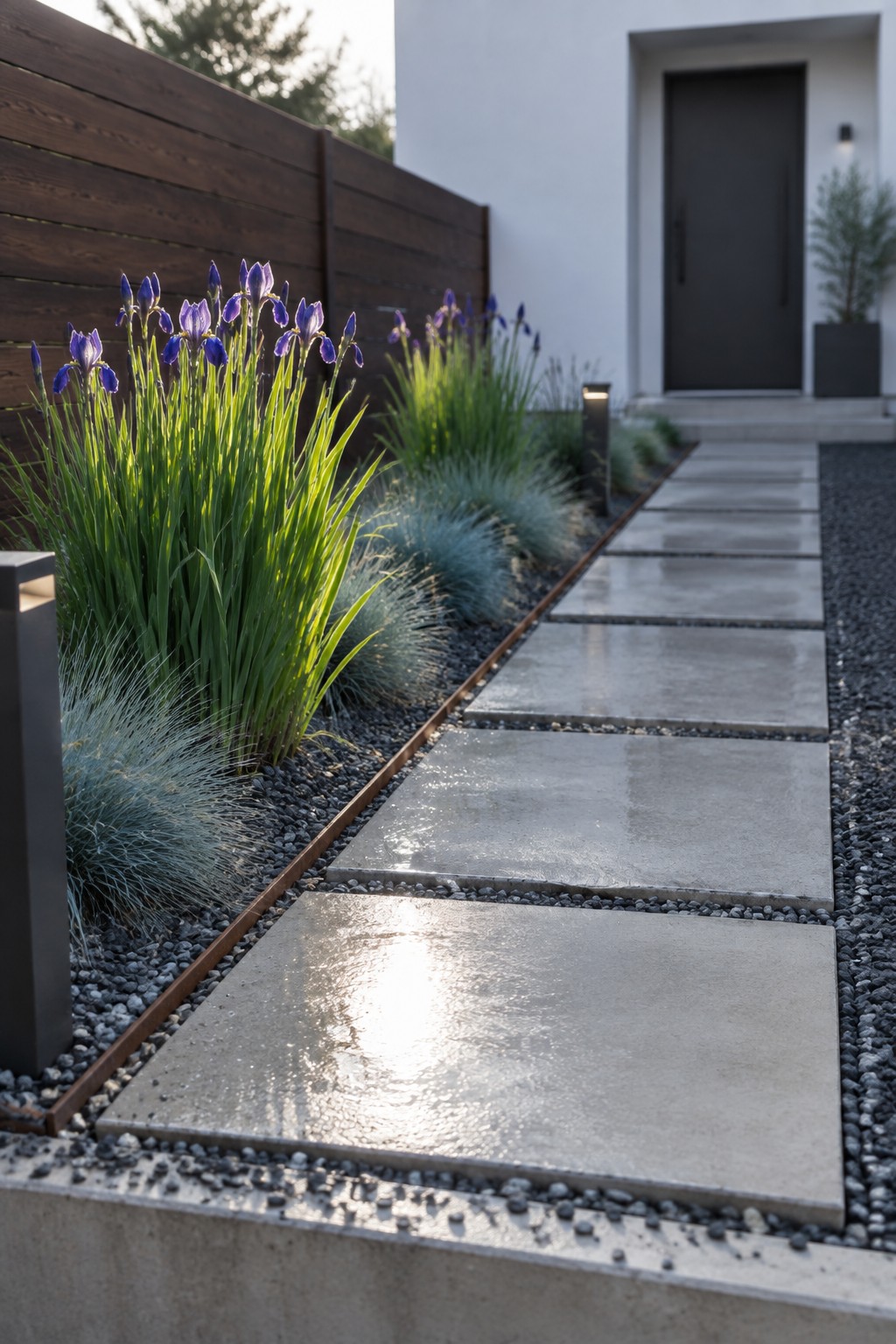
A narrow planting bed can make a front walk feel more considered without taking space away from the path. Iris adds upright leaves and seasonal blooms, so it brings a clear line of color alongside the paving.
Plant iris in groups along one edge, leaving enough room for the leaves to spread without leaning over the stones. Gravel and a simple metal border help keep the bed tidy, and they suit a modern entry where a neat, low-fuss layout works well.
Use a Narrow Water Channel Along The Walkway

A slim water channel can give a garden path a clear edge while adding a gentle sense of movement. Here, the brick path runs beside a narrow channel, with irises planted along the other side.
This idea works best where there’s room to keep the water feature simple and easy to maintain. For a smaller yard, a shallow channel or dry gravel strip can create a similar border without as much upkeep.
Add Irises Along a Garden Path
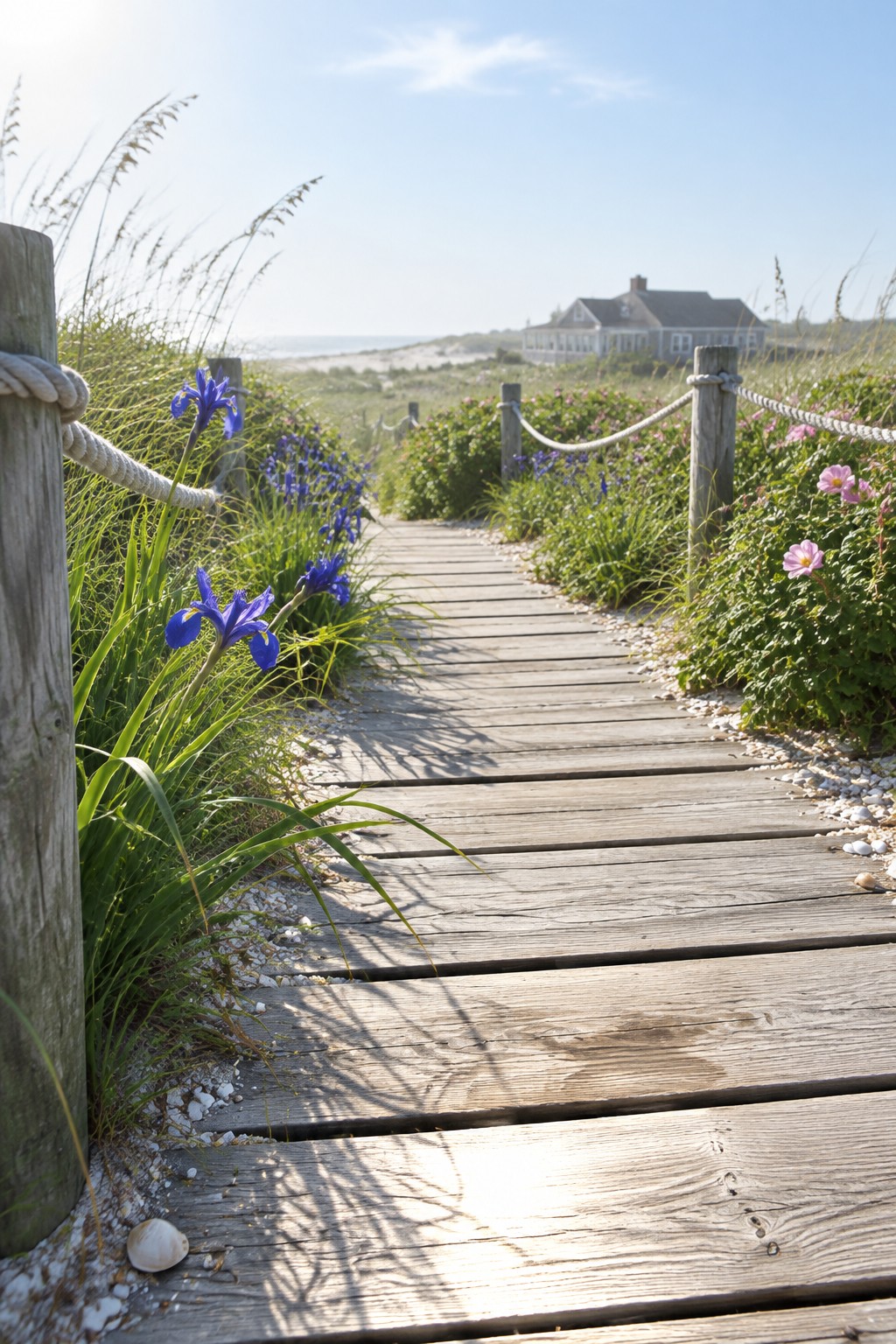
A narrow planting bed can make a walkway feel like part of the garden rather than just a route through it. Blue irises bring color close to the boards, while grasses fill in around them without hiding the path.
Use irises along the edges of a boardwalk or garden path, leaving enough room for leaves to grow without spilling across the walking surface. They suit sunny, well-drained spots, and a few repeating groups usually look more natural than a continuous row.
Line a Brick Walkway With Iris Beds

Irises planted along both sides of a walkway give the path a clear, colorful edge. The repeated flowers make the route feel connected to the garden without narrowing the walking space.
Leave enough room between the path and the iris clumps so leaves do not spill across the bricks. This approach works well on a straight or gently curving entry path, especially when the beds are kept tidy.
Use Stepping Stones To Guide an Iris Walkway

Large stepping stones set into gravel make a garden path easy to follow without taking over the planting. Irises along the edge give the route a clear shape and bring color close to the path.
Leave enough space between stones for a comfortable stride, and keep the surface stable underfoot. This approach works well in a leafy garden where a narrow path can wind between established plants.
Add a Gravel Path Through Iris Beds
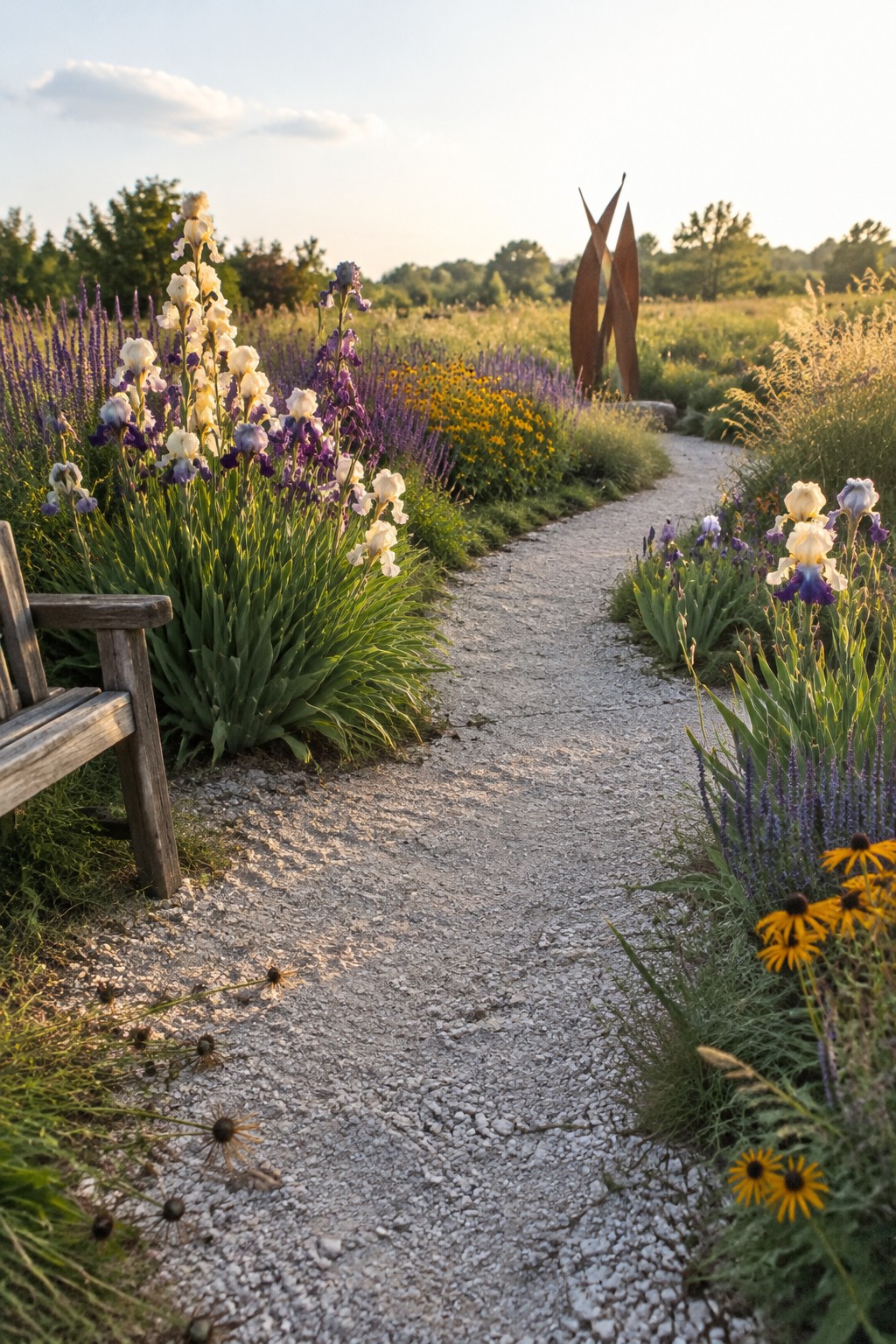
A gravel path gives irises a clear place in the garden while letting the flower beds stay full and informal. The simple surface is easy to shape around planting, and it makes a garden path feel established without needing a formal paving pattern.
Use this idea where you want visitors to walk close to the flowers without stepping into the beds. Leave enough width for comfortable passing, and choose compactable gravel so the path stays manageable as plants grow along its edges.
Use Brick Paving To Set The Walkway

Brick paving gives a garden path a softer, more settled look than a solid strip of concrete. Here, large stone slabs break up the brick and make a clear walking route, while irises planted along the side bring color close to the path.
This approach works well in a narrow courtyard or beside a wall, where a defined path helps keep planting areas tidy. Leave enough room between slabs for comfortable steps, and choose brick with a surface that is not too slippery when wet.
Use Stone Edging Along an Iris Walkway
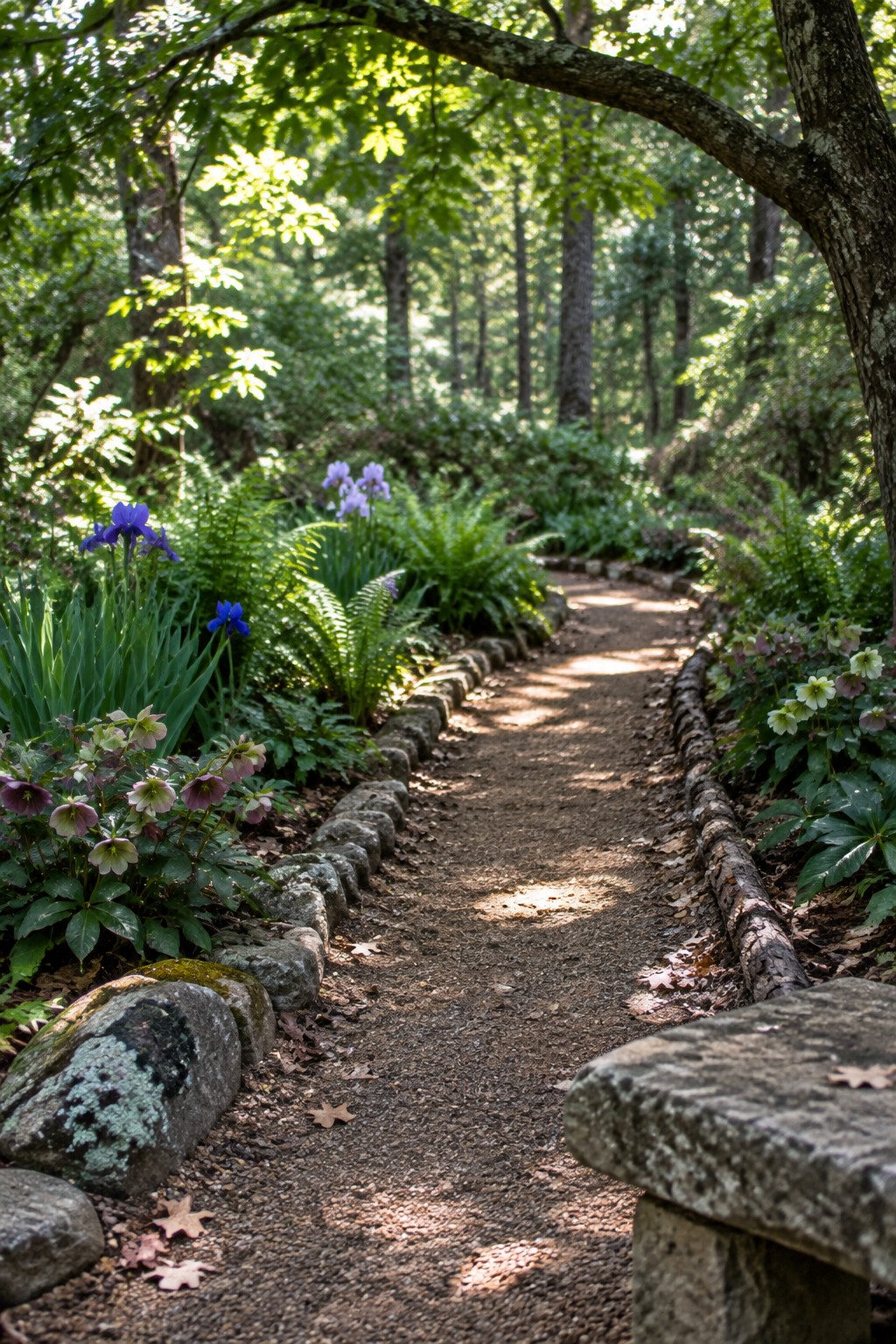
Stone edging gives a garden path a clear shape and helps keep soil and plants from creeping onto the walking surface. Irises planted along one side add a strong band of color without hiding the path.
Use stones that sit securely and follow the path’s curves rather than forcing a straight line. This approach works well on informal woodland paths, where irises and other low plantings can fill the beds beside the edging.
Use Large Stone Slabs For an Iris Walkway
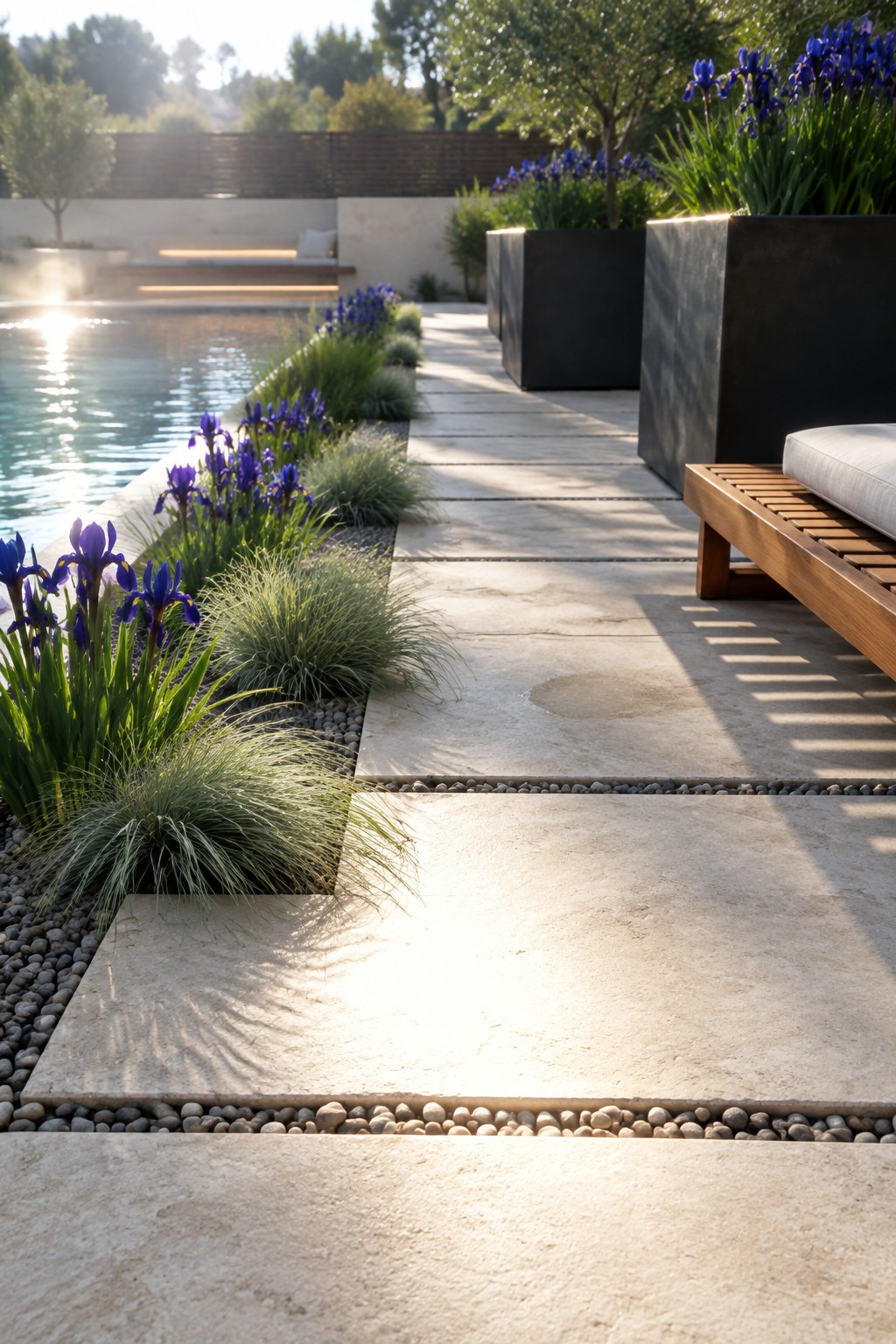
Large stone slabs make a garden path feel clear and easy to follow while leaving room for planting along the edges. Irises bring strong color beside the pale paving, and the loose gaps between slabs keep the path from looking too formal.
For a similar look, set broad stones in a steady line and plant irises in grouped bands along one side or both. Leave enough space for the flowers to grow without spilling across the walking surface.
Plant Irises Along a Stone-Edged Path

Irises can make a simple garden path feel more established when they grow in a generous bed beside it. Their upright leaves and colorful blooms bring a clear border to the walkway without needing a formal hedge.
A low stone edge helps keep the planting in place and gives the path a tidy finish. Leave enough room for iris leaves to spread, and choose a sunny spot with soil that drains well.
Use Low Stone Edging Along an Iris Walkway
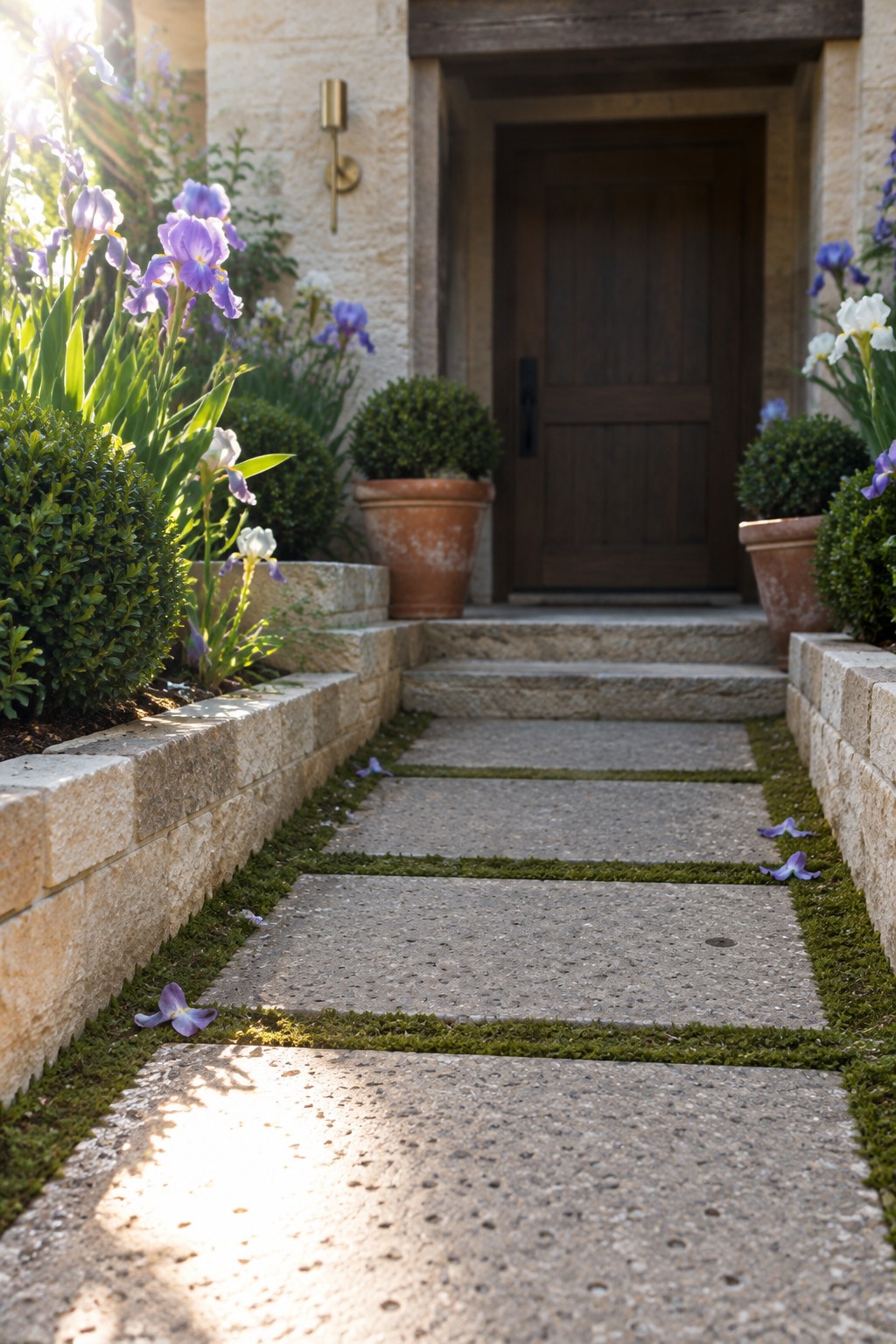
Low stone borders keep a garden path neat while giving irises a clear place to grow. The edging also helps separate planting beds from the walking surface, so the path feels defined without needing a tall wall.
This approach works well beside an entry or through a narrow garden. Use durable stone that suits the home, and leave enough room for iris leaves and flowers to spread without crowding the path.
Add Low Lighting Along an Iris Walkway

Small landscape lights can make an iris path easier to follow after dark. Placing them low along the edge lights the route without taking attention away from the flowers.
Use a few well-spaced fixtures near curves or changes in the path, rather than lining every stone. Aim the light toward the ground, and keep it out of the direct view of people walking through the garden.
Line a Brick Walkway With Iris Beds
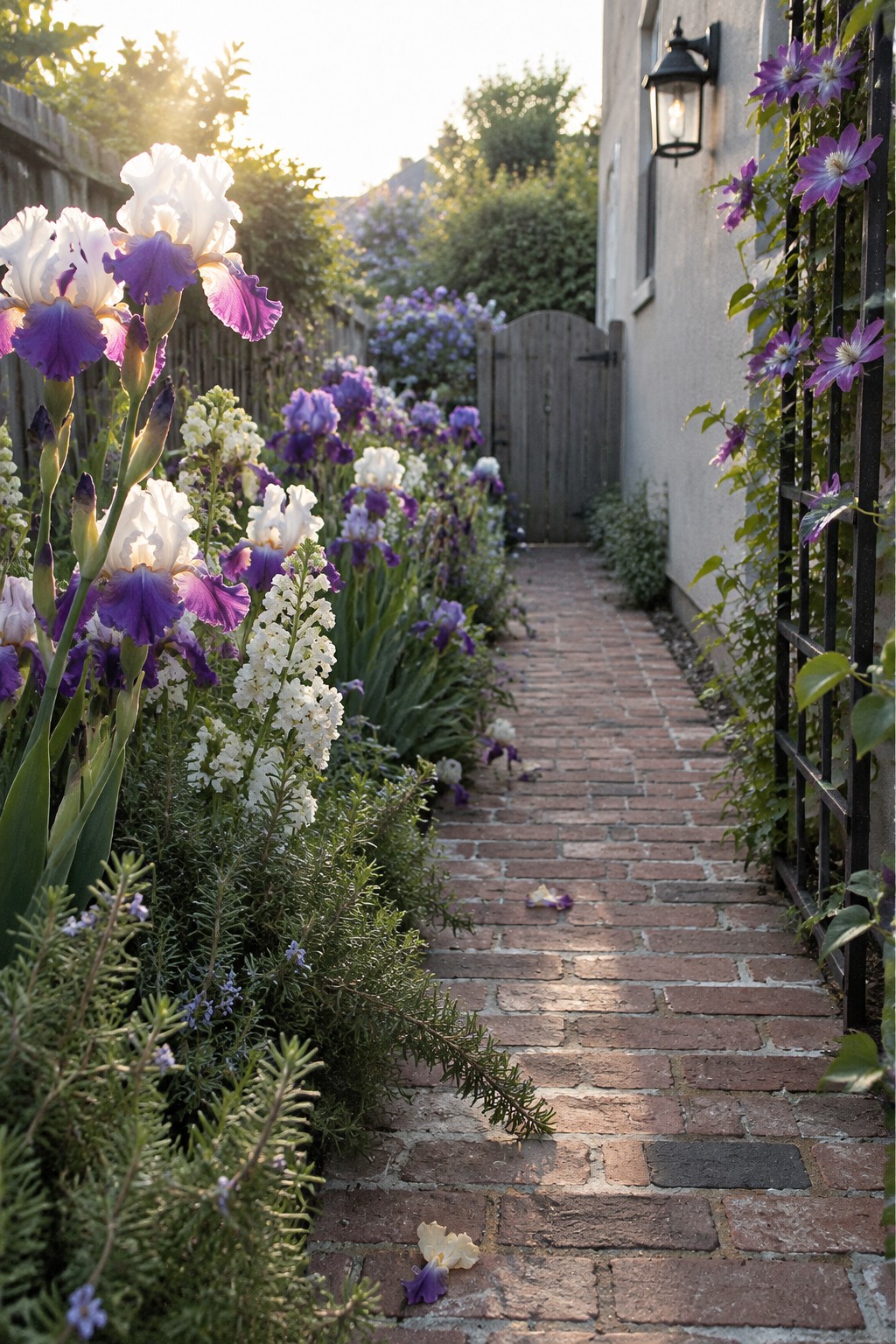
A brick path can feel settled and welcoming when irises grow along its edge. The blooms bring color close to the route, while the firm paving keeps the walkway practical to use.
Leave enough room between the bricks and the plants so leaves do not spill across the walking surface. This approach suits a narrow garden path, especially where a simple brick route needs a more planted edge.
Use Stone Steps to Handle a Sloped Iris Garden

Stone steps make a hillside garden easier to walk through while giving iris beds a clear path to follow. The broad, solid treads feel practical here, and the flowers can grow along the edges without taking over the route.
For a similar slope, set the steps into the hillside and leave enough room beside them for planting. Irises suit sunny edges, but keep their leaves clear of the walking surface so the path stays easy to use.
Use Grass Gaps Between Walkway Slabs
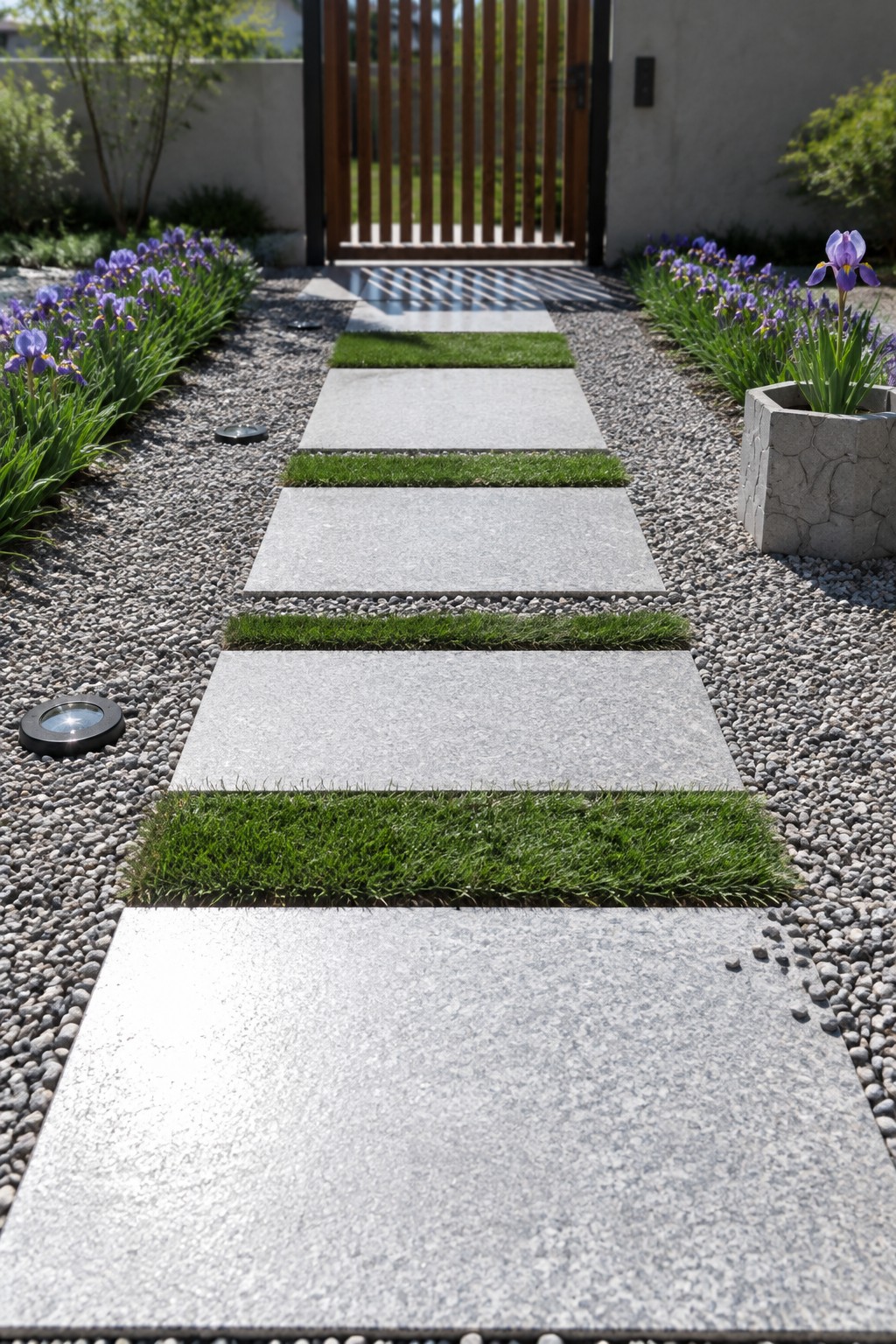
Large stone slabs set into gravel make a clear path to the entrance, while narrow strips of grass break up the hard surface. This layout gives a front walk a tidy look without paving the entire area.
For a similar effect, keep the slabs wide enough for comfortable steps and leave consistent spaces for grass. It suits a simple entry garden, though the gaps may need trimming and care to stay neat.
Let Irises Fill the Edges of a Stone Path

Irises can make a simple stone walkway feel like part of the garden rather than a route through it. Planting them along one side gives the path a clear edge while leaving the stones easy to use.
This approach works well along a narrow garden path, especially where a wall or fence already limits planting space. Leave room for the iris leaves to spread, and keep the path edge open enough that plants do not crowd the stones.
Add a Linear Fire Feature Beside an Iris Walkway
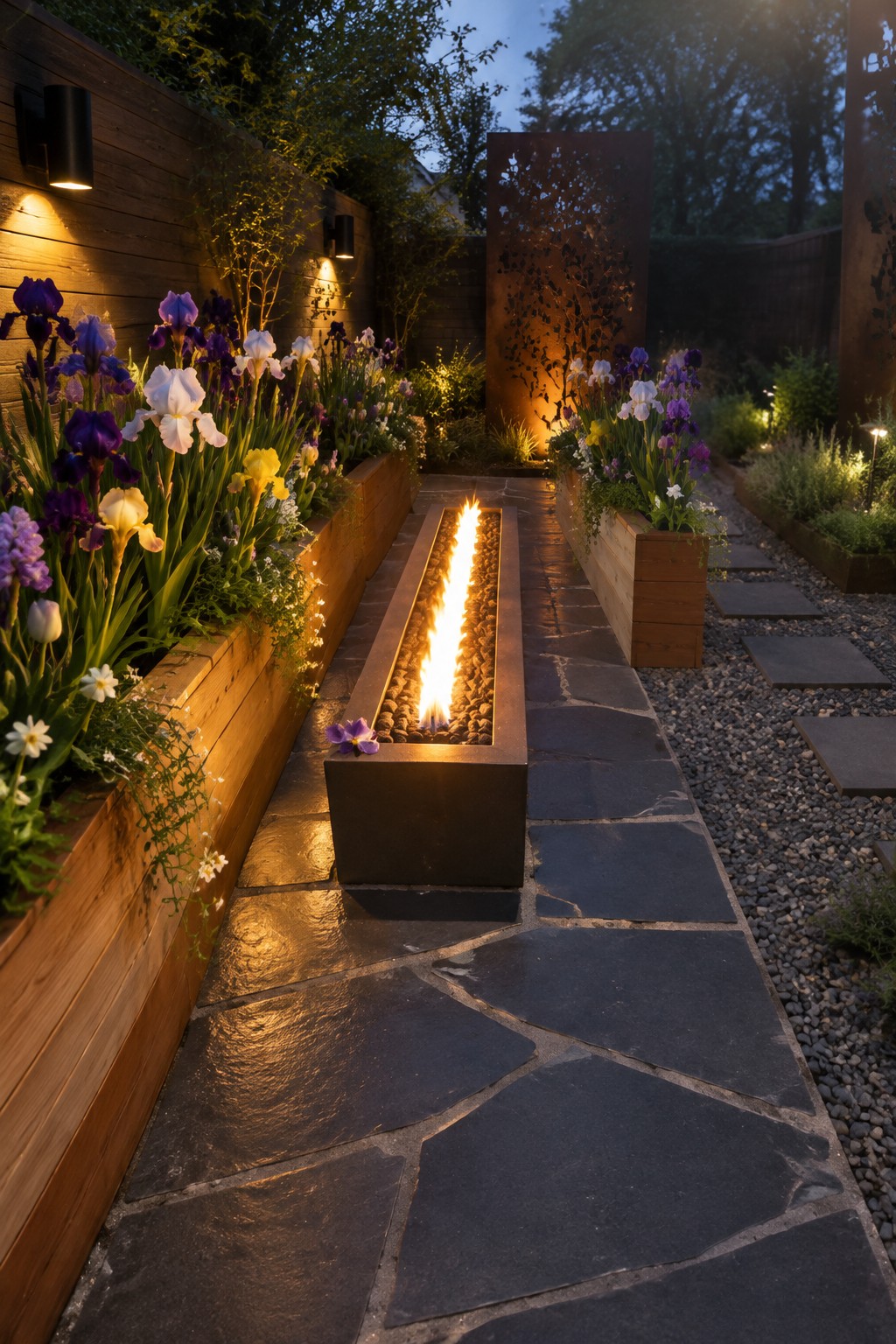
A long, narrow fire feature can give an iris walkway a clear focal point without taking over the path. Here, its straight shape follows the paving and sits beside raised iris beds, so the planting remains the main feature.
This works best where the path is wide enough to leave comfortable room around the fire. Keep the burner and its fuel system safely separated from flowers and timber planters, and follow local fire-safety rules.
Frequently Asked Questions
Q: How much space should I leave between irises along a walkway?
A: Check the spacing needs of your iris variety, since some spread wider than others. Give each plant enough room for air to move around the leaves, and keep it from crowding the path as it grows.
Q: Will irises grow well beside a shady walkway?
A: Most bearded irises bloom best with plenty of sun, so a deeply shaded path may not give you many flowers. For a shadier spot, look for an iris variety suited to lower light and make sure the soil drains well.
Q: How do I keep iris leaves from flopping onto the path?
A: Plant clumps a little back from the walkway and remove dead leaves as they appear. If the foliage still leans into the path, divide crowded clumps after flowering.
Q: Can I plant other flowers between walkway irises?
A: Yes, as long as their roots and leaves won’t crowd the irises. Low-growing plants work well along the edge, while leaving open space around each iris helps keep the planting tidy.
