


I find that an iris and daylily bed works best when its shape feels intentional, with taller blooms placed where they won’t crowd paths or hide shorter plants.
Their flowers bring color at different points in the season, while the leaves can give a border structure even between blooms.
I’d pay attention to how the planting looks from the house and along the garden edge, since those everyday views often reveal whether the layout feels balanced.
Repeating a few colors or plant groupings can help the bed feel connected, while varied heights keep it from looking too rigid.
Some of these approaches are easy to test in a small border and adjust as the plants fill in over time.
Use a Curved Path to Shape the Flower Beds
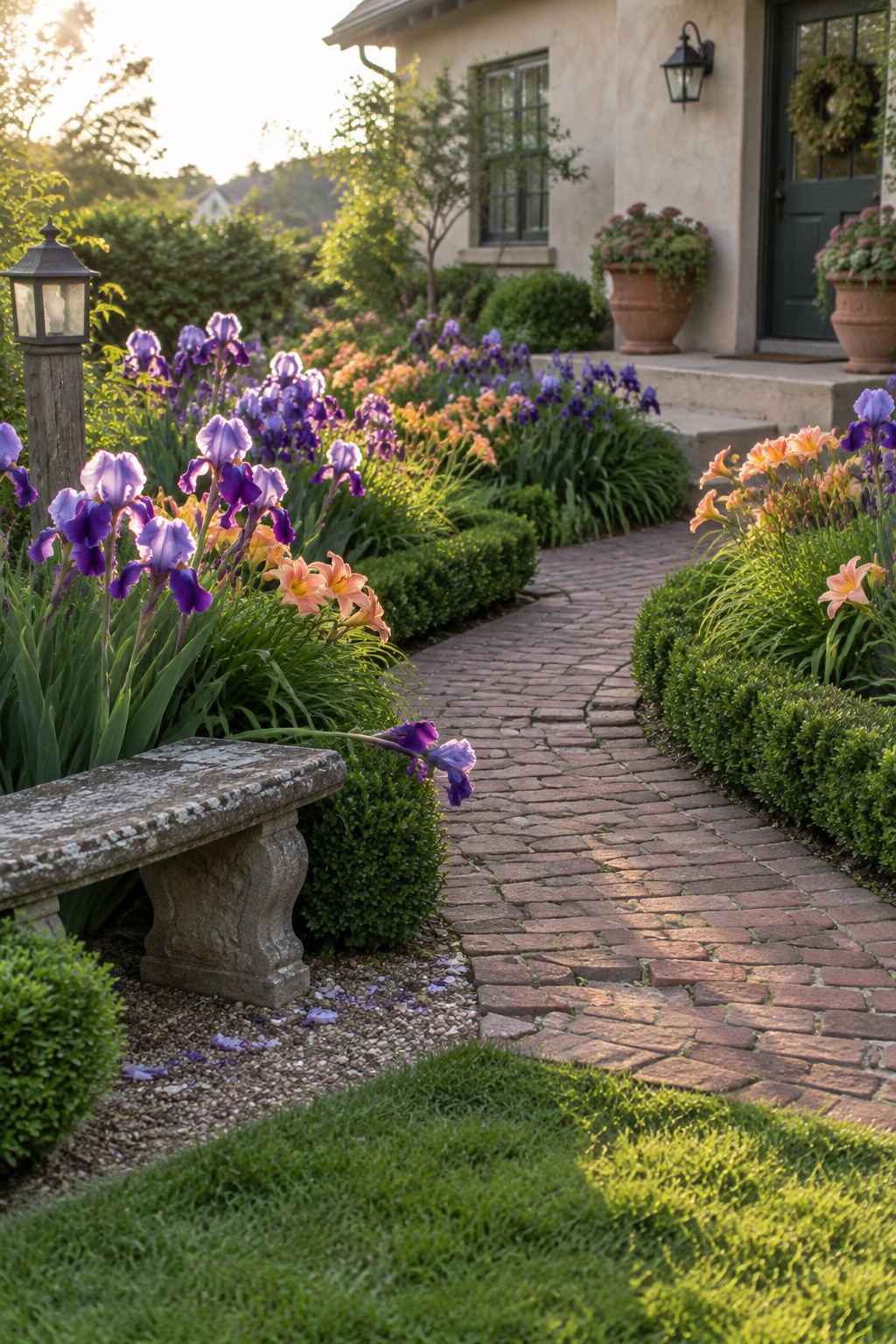
A gently curving path gives an iris and daylily garden a clear route without making the planting feel rigid. The flowers can spill along its edges, while low clipped shrubs help keep the walkway defined.
This layout works well in a front garden where a path leads to the entrance. Leave enough room for people to pass comfortably, and keep taller plants from leaning across the paving.
Use a Narrow Border Bed for Lasting Color
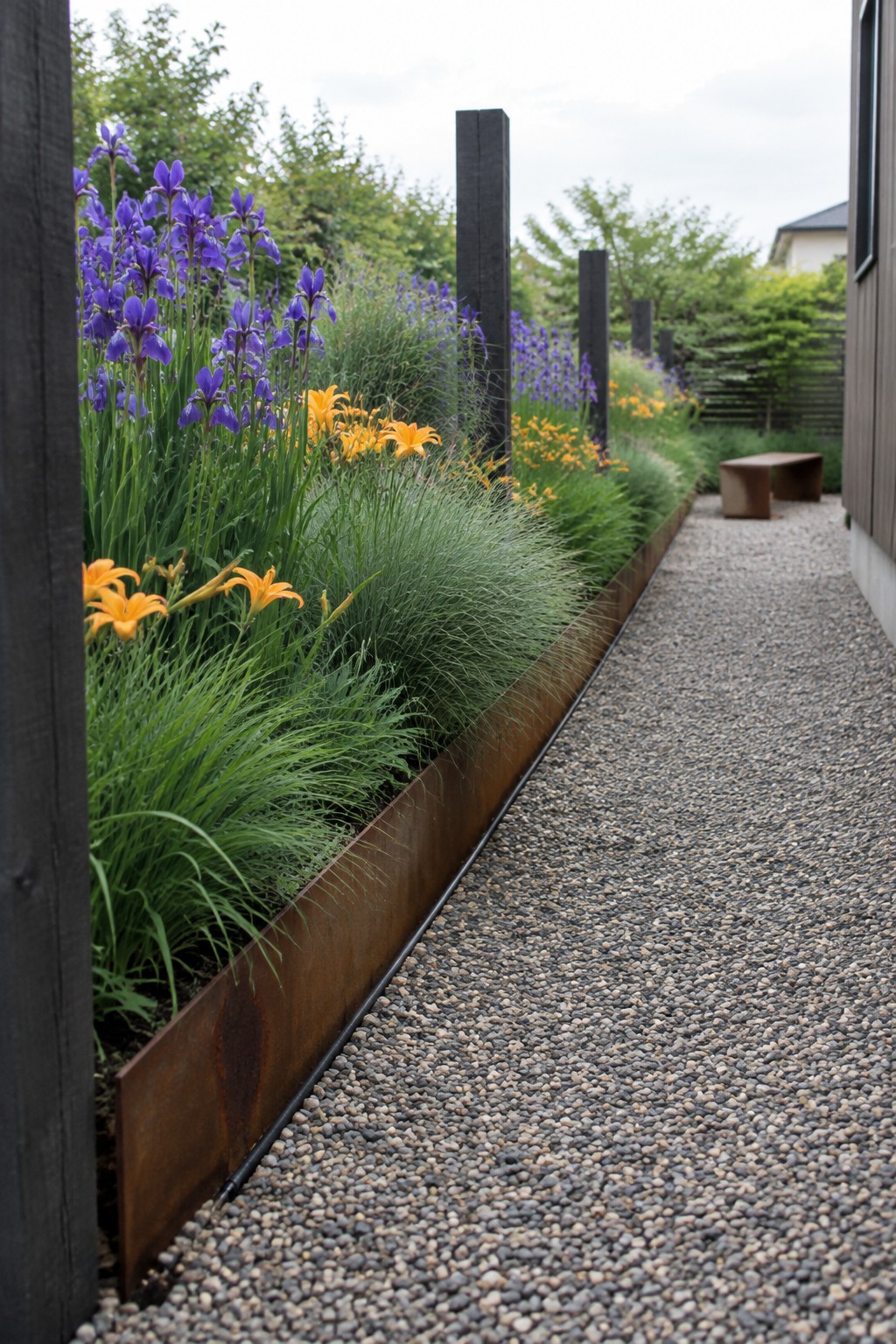
A long, narrow flower bed can bring iris and daylilies into a garden without taking over the yard. The flowers add color, while ornamental grasses fill the spaces between them and keep the planting looking full after individual blooms fade.
This layout works well beside a path or along a side yard. Set taller irises toward the back and daylilies where they have room to spread, then leave enough space to reach plants for dividing and cleanup. A metal bed edge helps keep the planting tidy.
Use A Clear Path Through The Flower Beds

A simple tiled path gives a flower garden a practical shape. It makes the beds easier to reach and lets the blooms sit close to the walkway without taking over the route.
For a similar look, keep the path wide enough to walk comfortably and edge it with a low border. Irises and daylilies can grow along the sides, where their leaves and flowers bring color without blocking the way.
Use A Stone Path To Organize Flower Beds
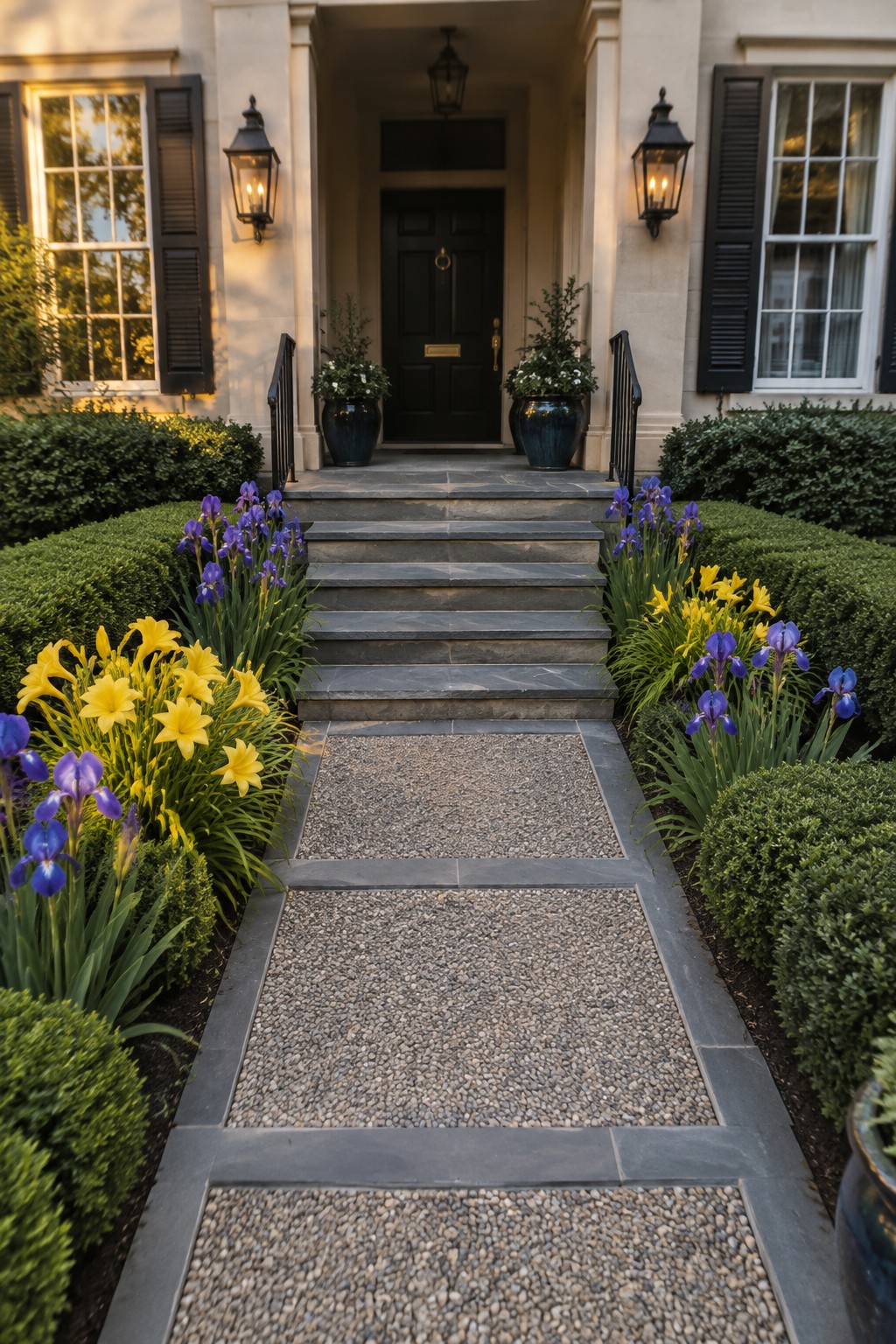
A stone path gives a flower garden a clear route to the front door while keeping blooms in defined beds on either side. Here, the repeated stone sections lead the eye toward the entry, and the irises and daylilies add color along the way.
This approach works well in a front garden where you want an easy-to-follow walkway and room for seasonal flowers. Keep the path wide enough for comfortable use, and leave space around the plants so they can grow without spilling across the walking surface.
Layer Irises and Daylilies in a Garden Bed
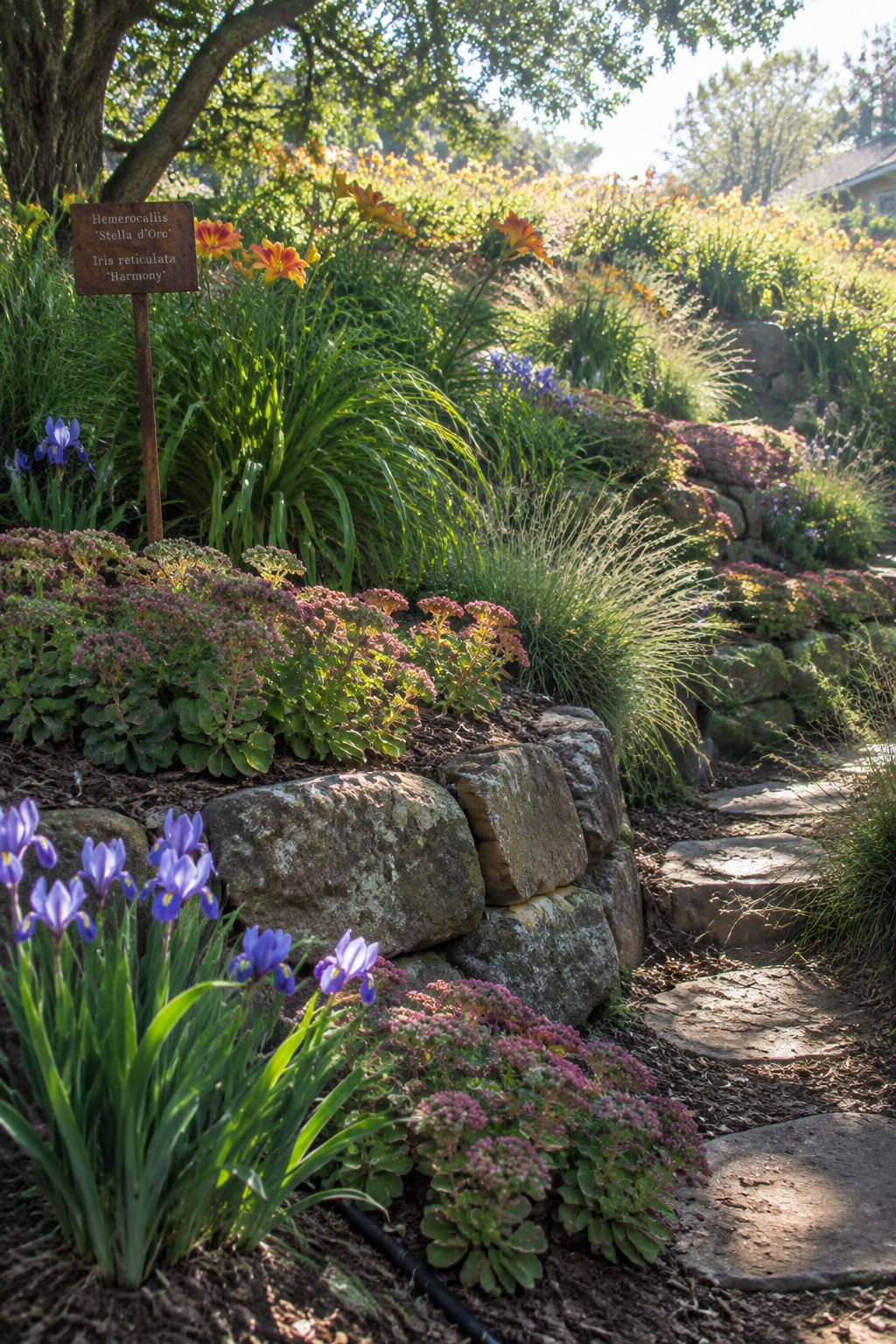
Layering flowers among grasses and low-growing plants gives an established garden bed color at different heights and through more of the season. Here, orange daylilies rise above the leafy groundcover, while purple irises add a lower burst of color near the stone edging.
Plant daylilies toward the back or middle of a bed, then tuck irises and compact groundcovers along the front. This approach suits a sloped border or a garden beside a path, where the different layers are easy to see. Leave enough room for each plant to spread without crowding the walkway.
Use a Boardwalk to Guide the Garden
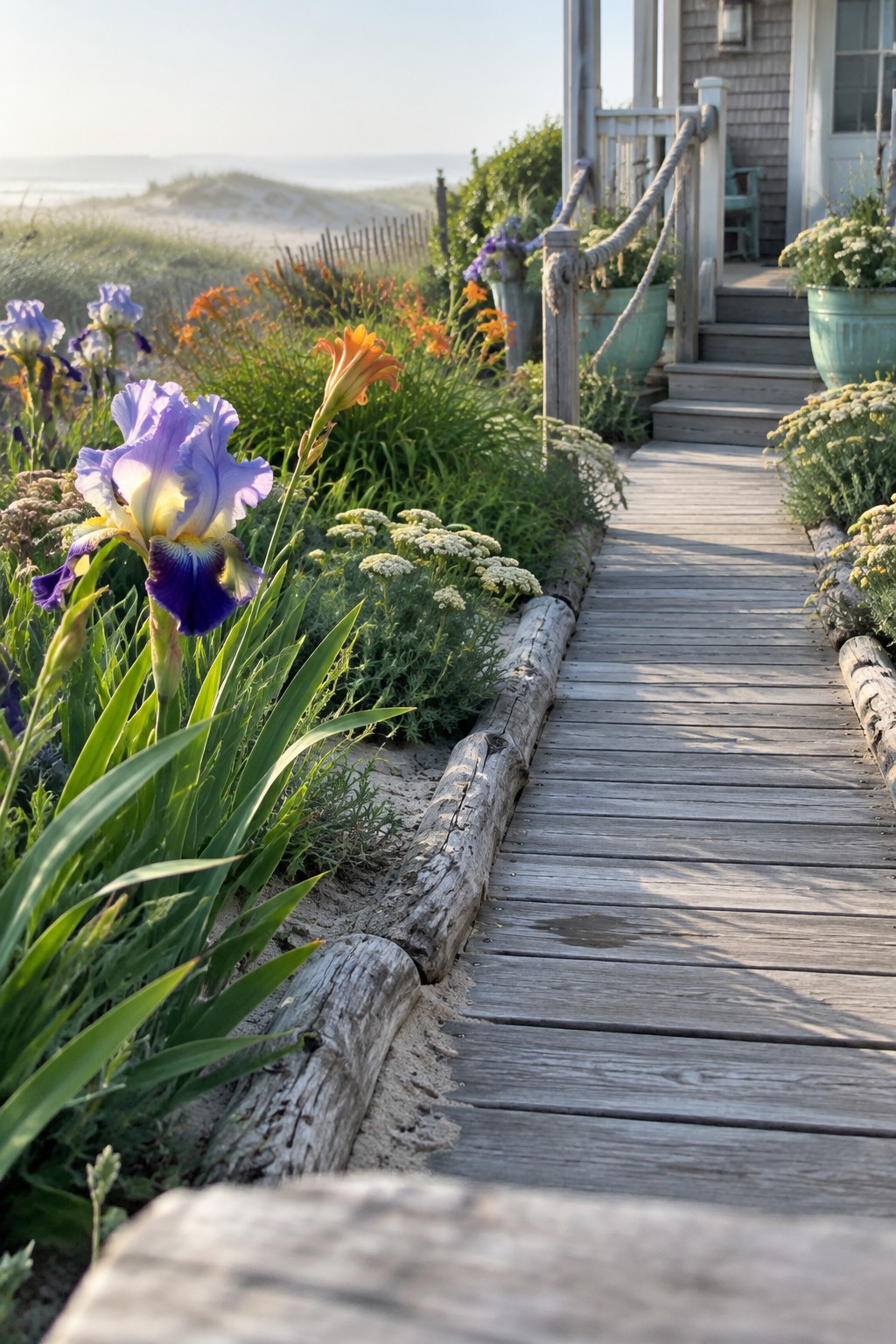
A simple boardwalk gives a flower garden a clear route without taking space away from the planting beds. It also makes it easier to reach blooms for weeding and other care, which is useful in a garden that might otherwise be hard to walk through.
Try this approach in a coastal garden or any narrow space where a path needs to pass through established flowers. Keep the boards wide enough for comfortable walking, and choose a durable, slip-resistant finish for damp conditions.
Layer Irises and Daylilies for Lasting Color
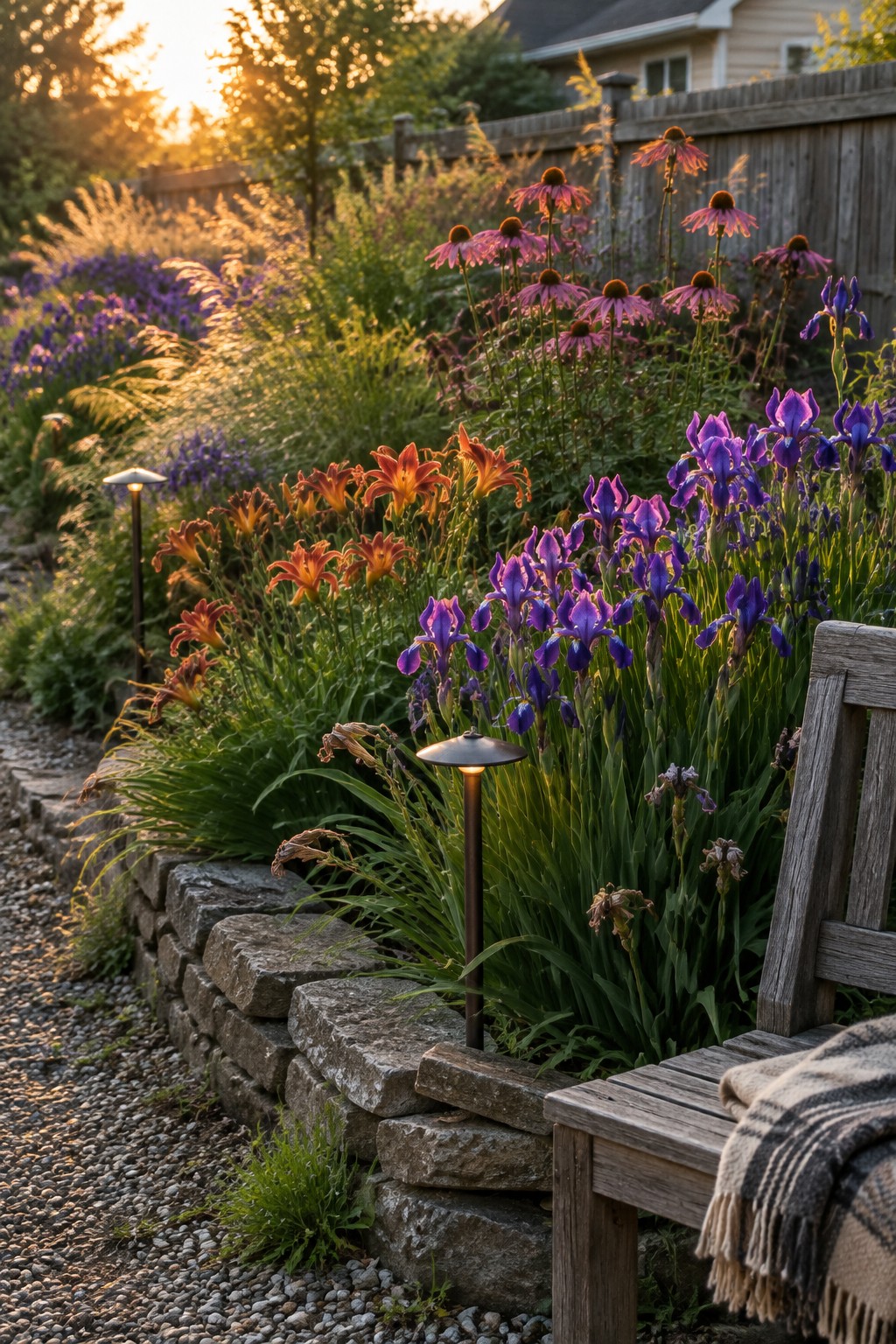
Layering irises and daylilies in the same garden bed keeps the planting interesting as different flowers come into bloom. The tall, upright iris leaves also give the fuller daylily clumps a bit of structure.
Use this approach along a retaining wall or fence, placing taller plants toward the back and daylilies closer to the edge. Check the varieties’ sunlight and spacing needs before planting so the bed doesn’t become crowded.
Plant Irises Along a Stone Garden Path
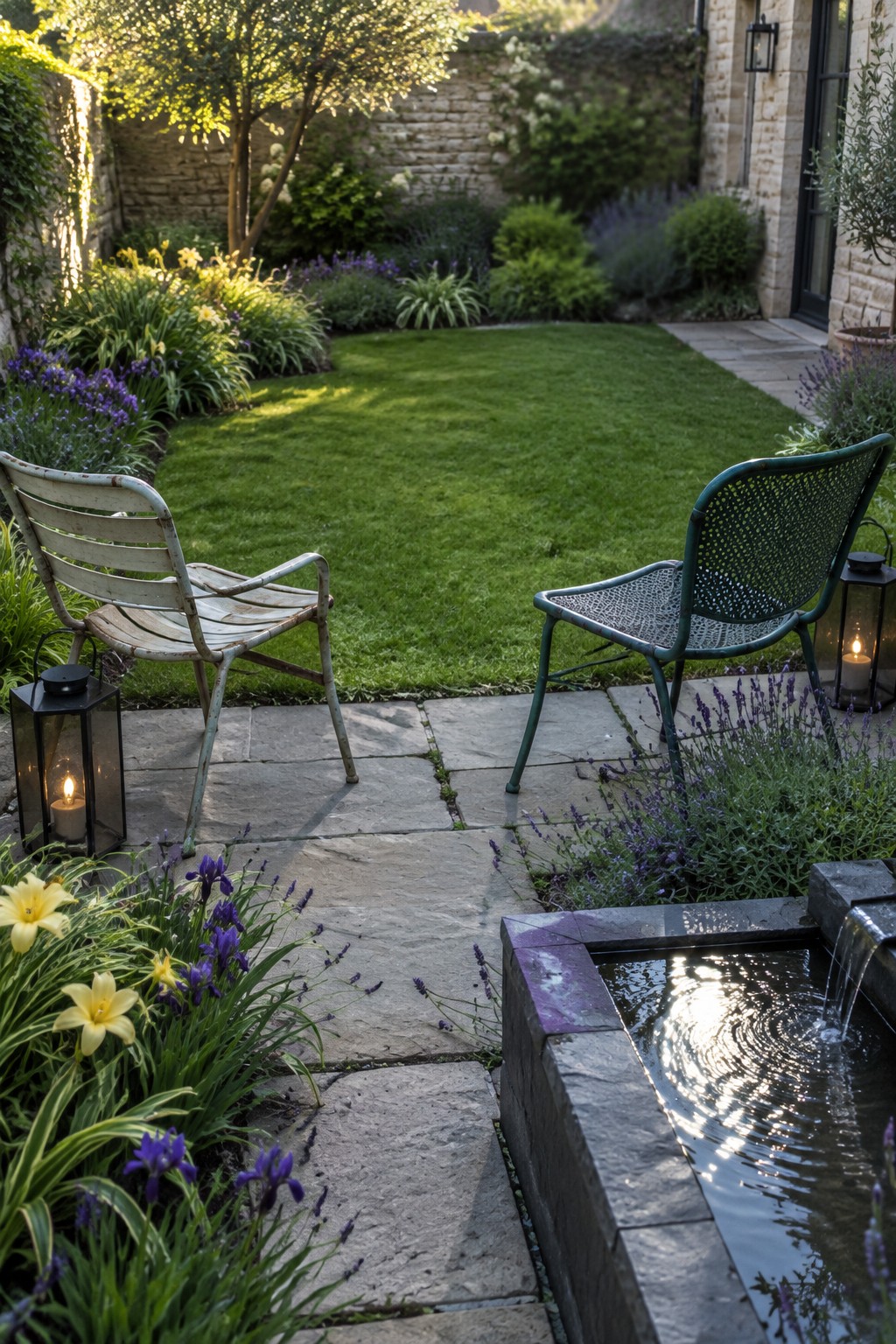
A stone path gives a flower bed a clear edge and makes it easier to enjoy the planting up close. Irises can add strong color along the route, while daylilies fill in around them for a longer season of blooms.
Use this idea in a small garden where a walkway passes through or beside a planted border. Leave enough room for the flowers to grow without spilling onto the stones, and keep the path wide enough to walk comfortably.
Use Garden Steps to Connect Raised Flower Beds
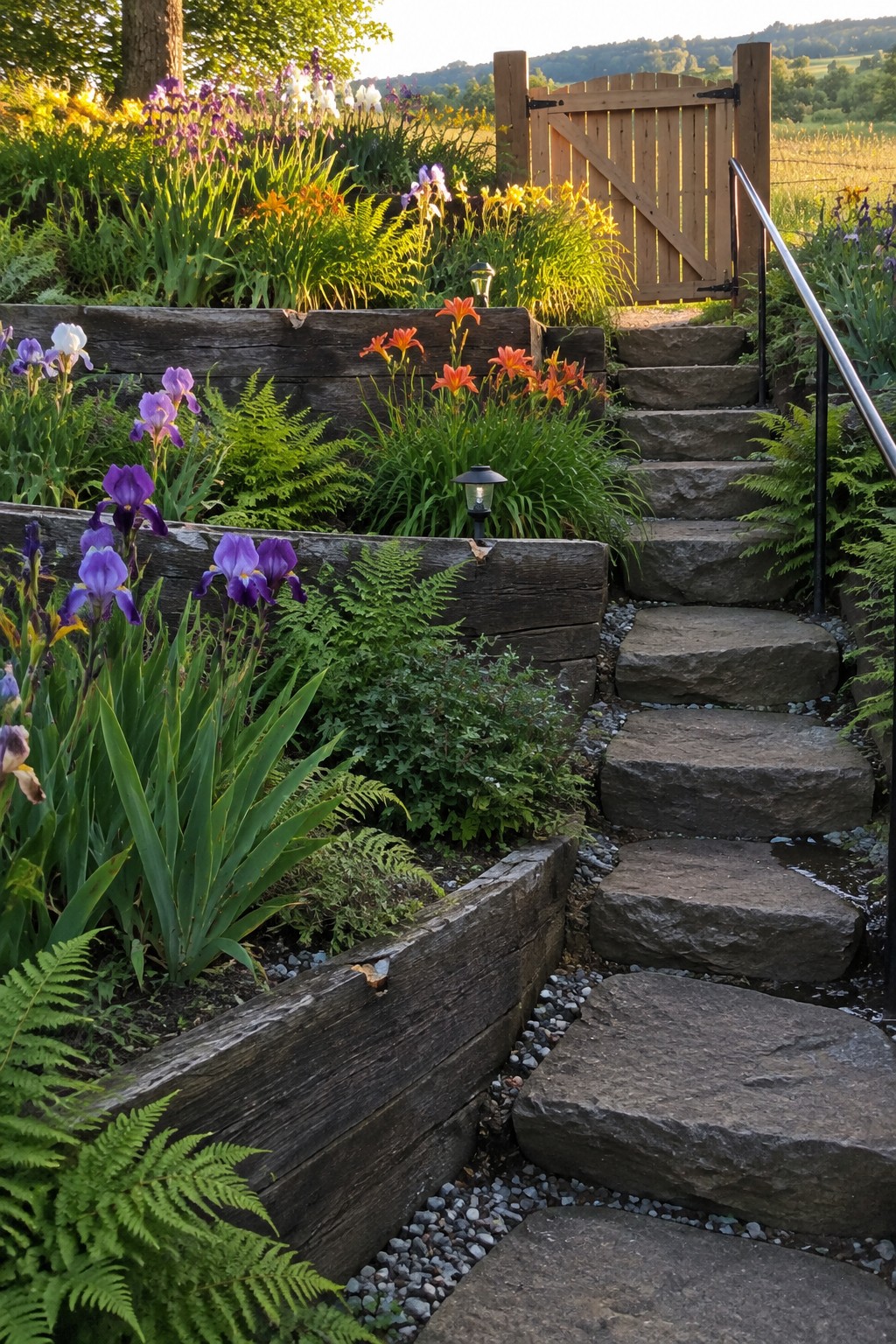
A short stone stairway can make a sloped flower garden easier to use while giving the planting beds a clear structure. Irises and daylilies look at home in this kind of layout, where their blooms can spill along the edges of the steps.
For a similar garden, keep the steps broad enough to walk comfortably and leave room for flowers without crowding the path. Timber retaining walls can hold the beds in place, but sturdy materials and good drainage matter on a slope.
Edge a Garden Path With a Colorful Flower Bed
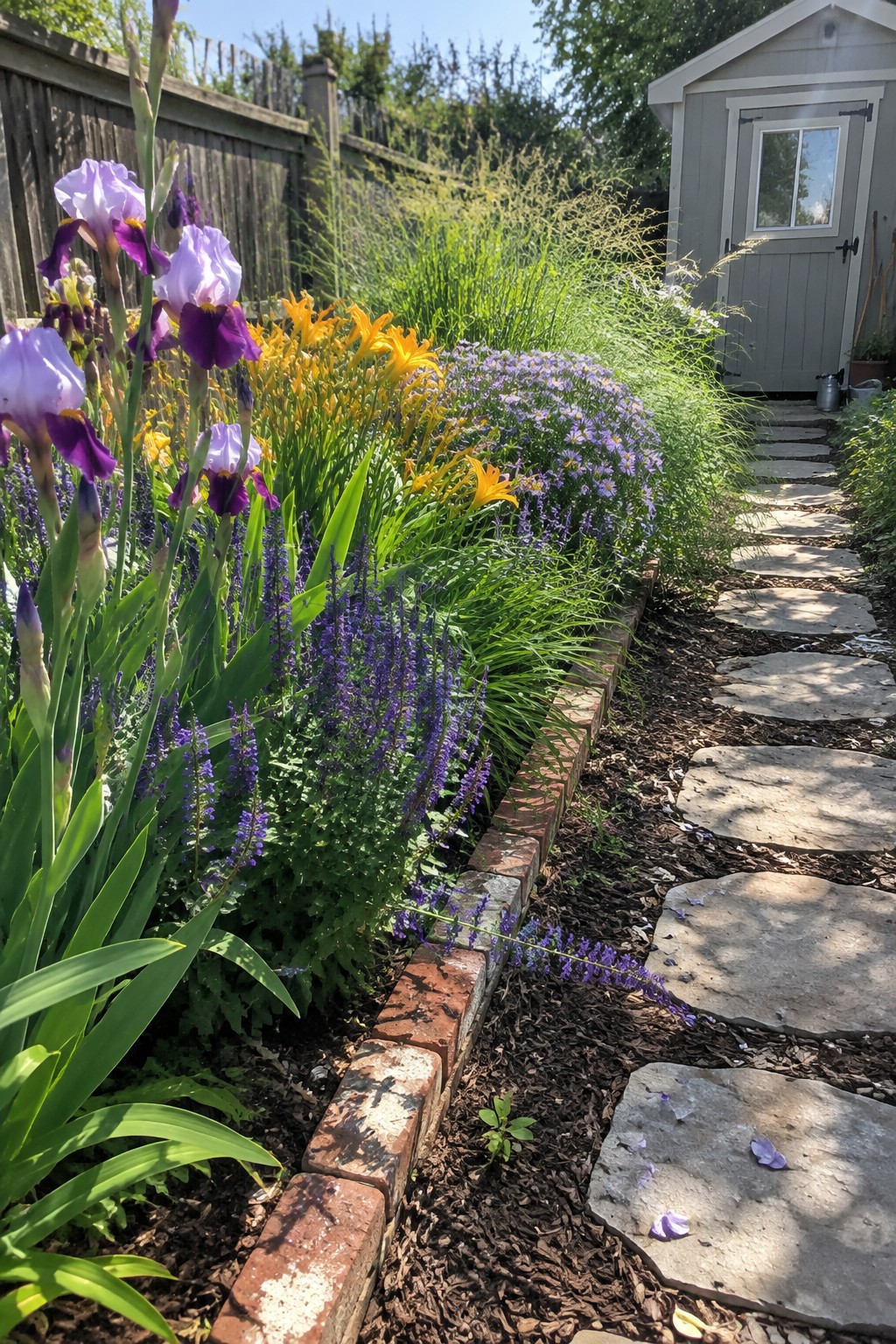
A narrow brick edge gives a garden path a clear boundary while keeping the flower bed close by. Irises and daylilies bring long-lasting color along the route, and the edging helps keep mulch and plants from spreading onto the stones.
This approach works well beside a fence or shed, especially where a path runs through a tight yard. Leave enough room for plants to grow without leaning into the walking space, and choose edging that is easy to maintain.
Plant Irises Along the Pool Edge
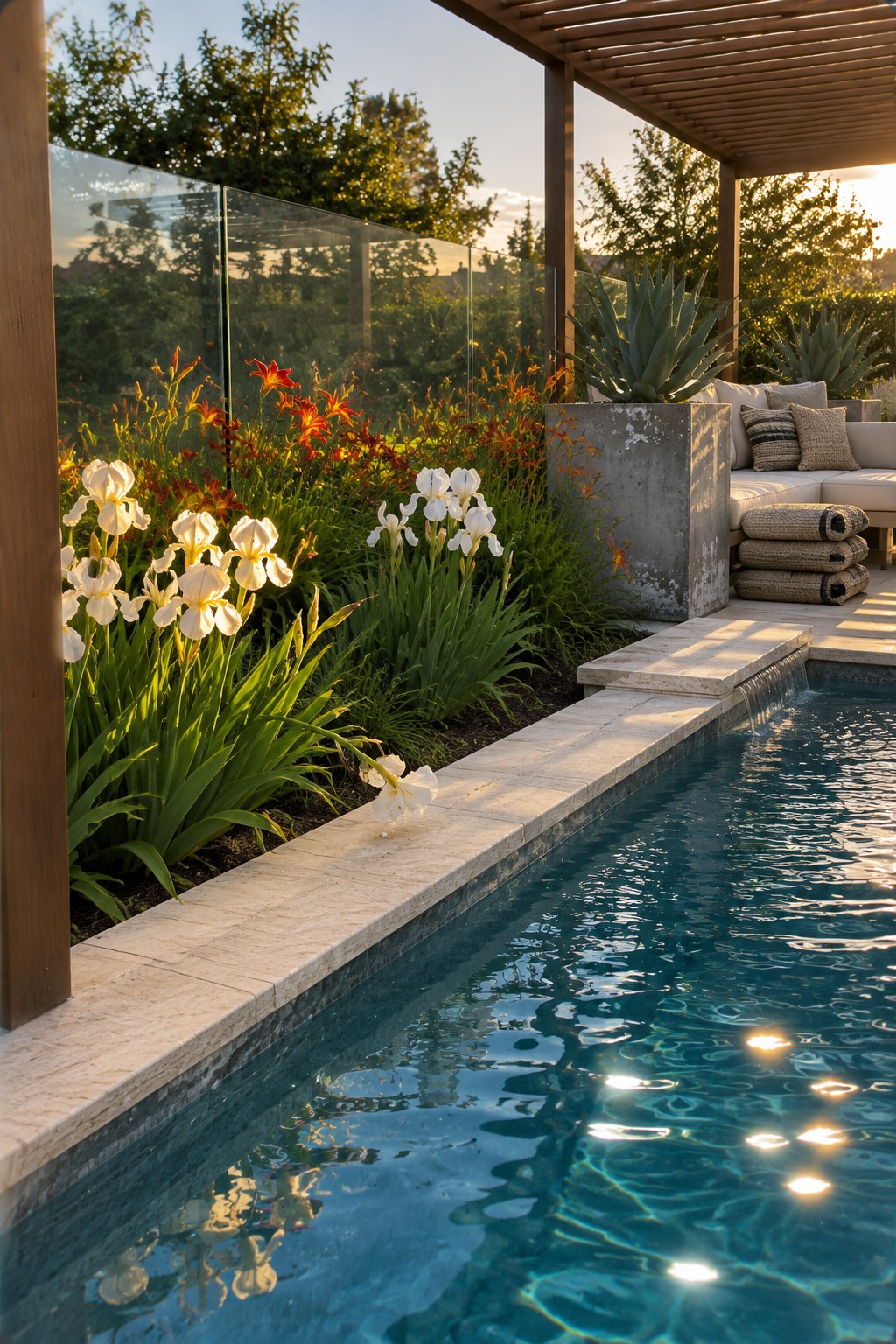
A narrow flower bed beside a pool is a practical way to bring lasting color close to an outdoor seating area. White irises and orange daylilies make the border easy to notice without taking over the space.
Keep the planting just beyond the pool coping, where the flowers have room to grow without leaning into the water. A glass fence can keep the bed separate from the seating area while still letting the flowers show through.
Use Dark Stone to Set Off Garden Color
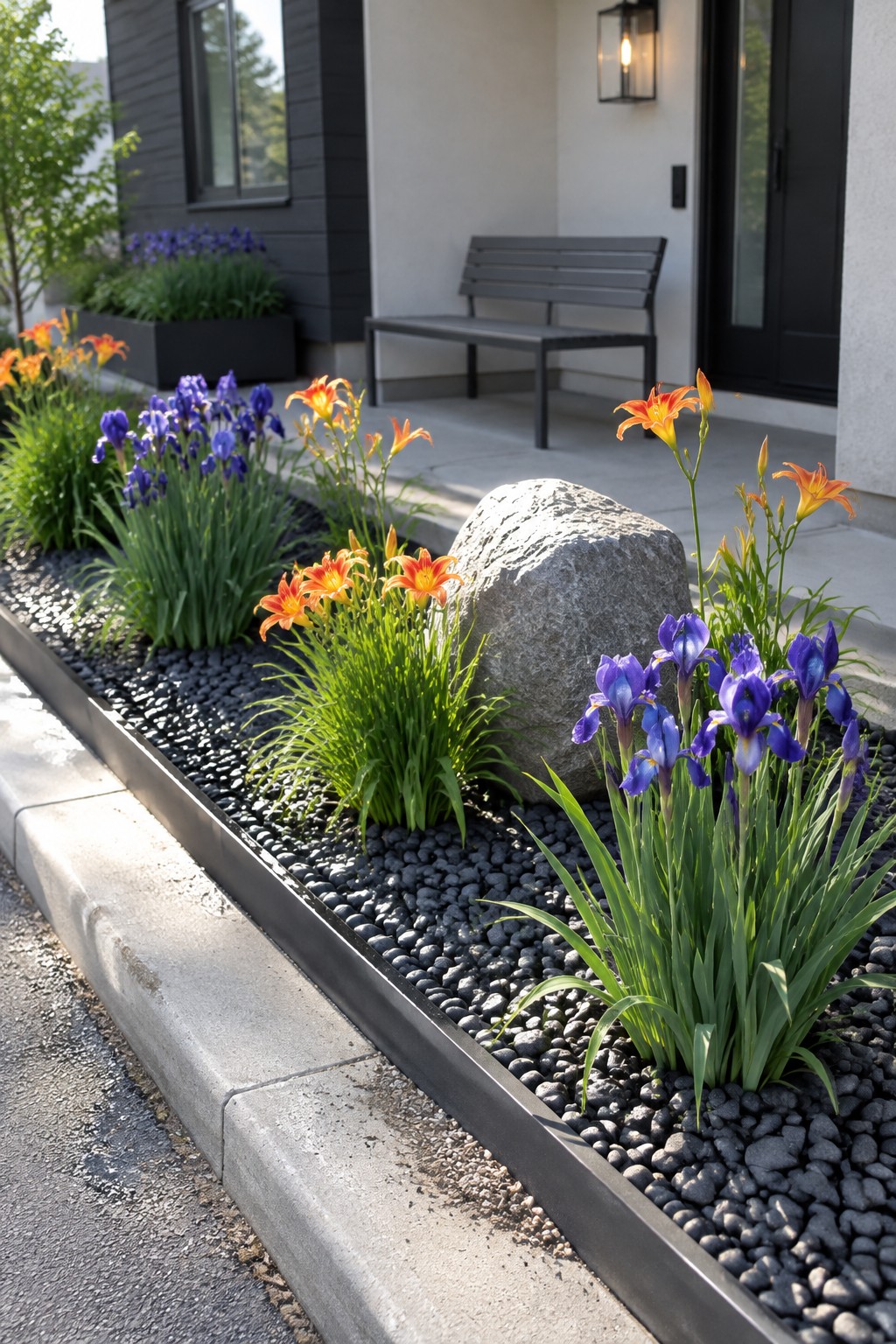
A dark stone mulch gives an iris and daylily bed a tidy, finished look while letting the flowers stand out. It also makes a clear contrast with the bright blooms, so the bed stays colorful even when some plants are between flowering.
Use this approach in a narrow front-yard bed or along a walkway, with a simple metal edge to keep the stones in place. Leave enough room around each plant for its leaves to grow, and check that the stone layer does not hold too much heat near the roots.
Use Stone Pavers to Guide a Flower Garden
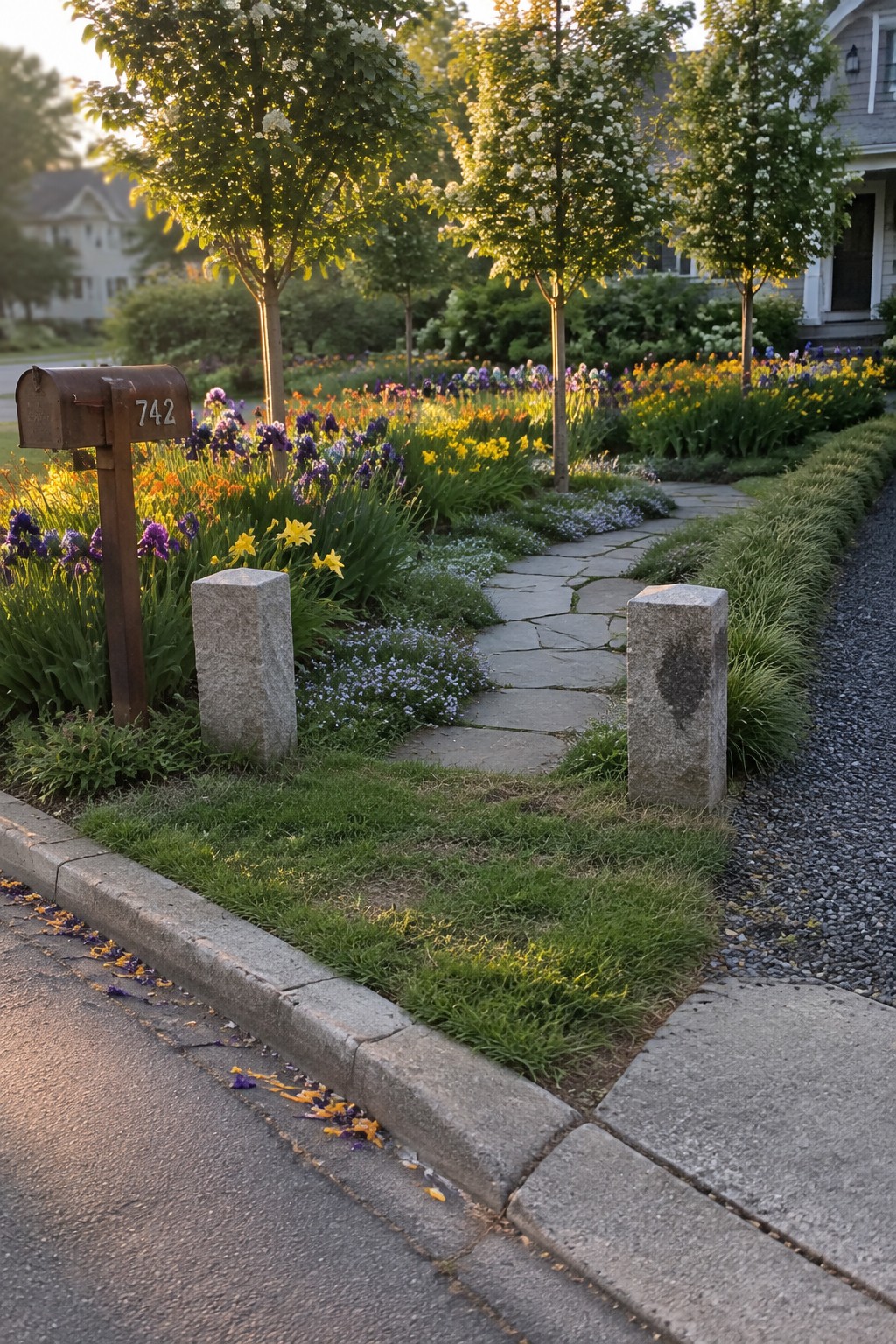
A simple stone path gives a flower bed a clear route through the yard, so it’s easier to enjoy the planting without stepping on it. Irises and daylilies work well along the edges, where their blooms can spill toward the walkway without blocking it.
Leave enough room between plants and the stones for leaves to spread, and keep the path wide enough for comfortable walking. This approach suits a front garden where you want a practical way to reach the entry as well as a place to enjoy the flowers.
Use Raised Beds to Organize Garden Color
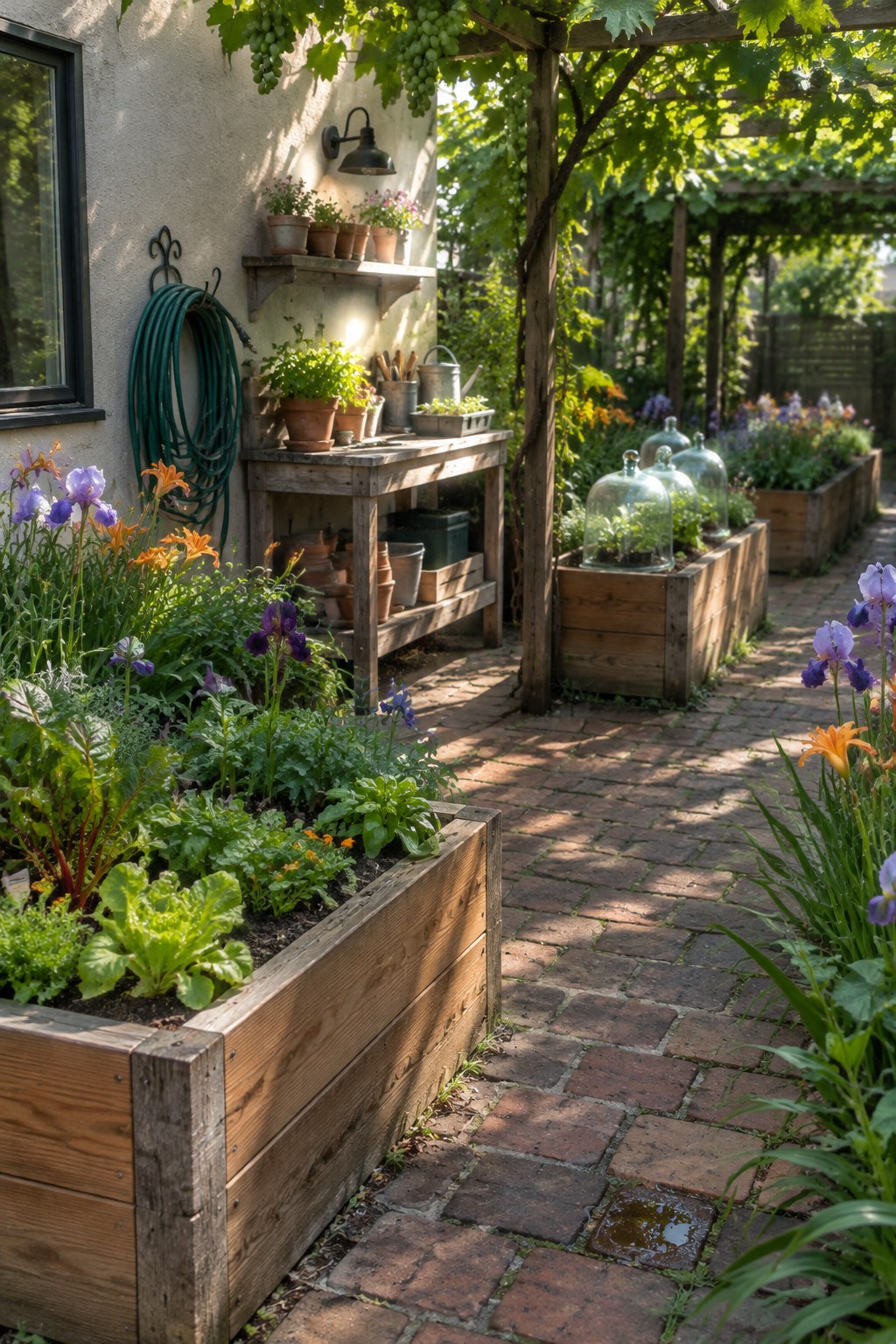
Raised beds make it easier to give irises and daylilies a clear place in the garden. They also keep flower plantings distinct from the path, so the colors read as a planted border rather than a tangle of growth.
Use this approach where soil needs improving or where a defined bed would make a narrow garden easier to maintain. Leave enough room between beds for comfortable access, and choose sturdy materials that can handle damp soil over time.
Use a Stone Patio Beside the Flower Beds
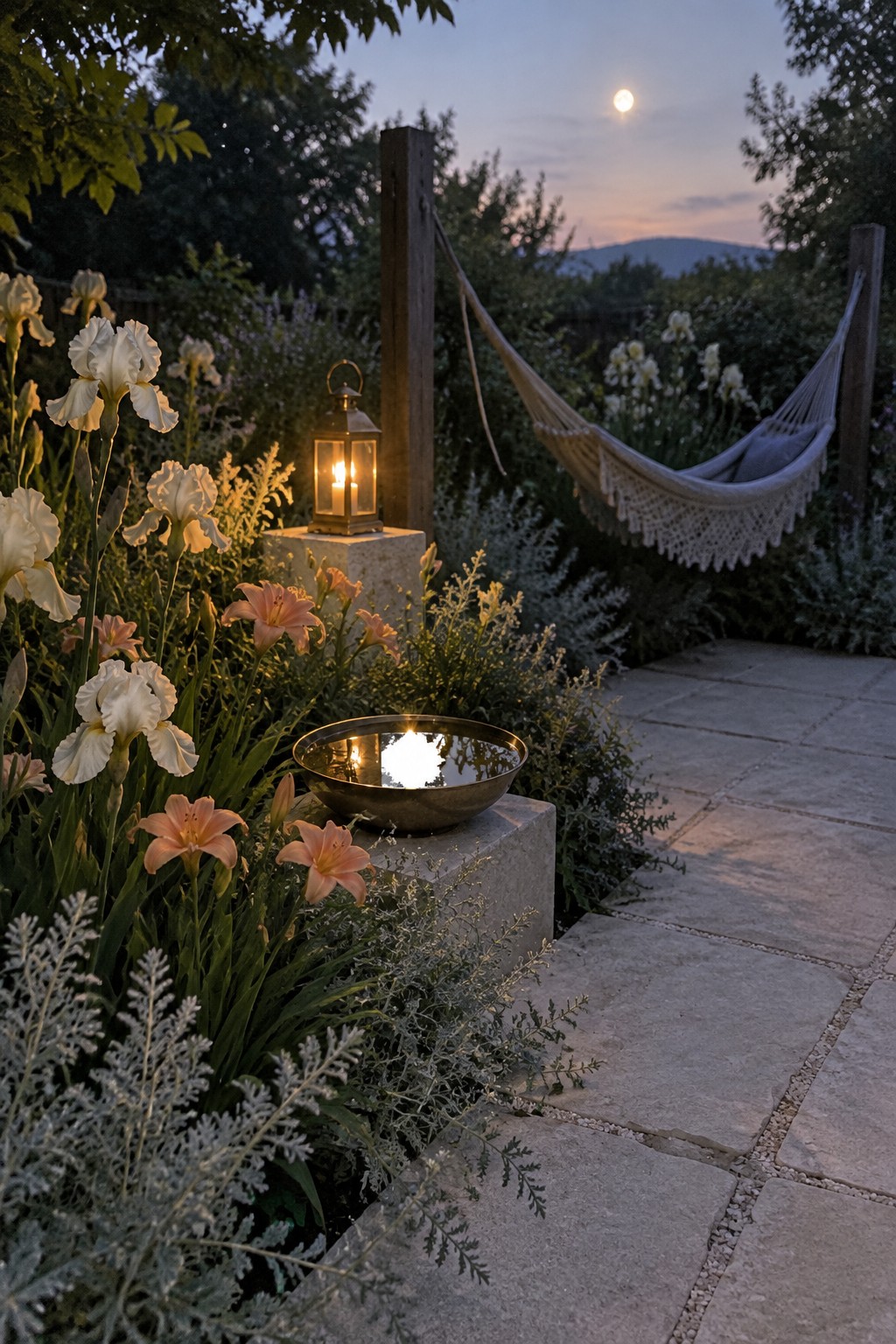
A simple stone patio gives a flower garden a place to pause and enjoy the planting. Here, the paved area sits right beside the bed, so the irises and daylilies remain close without taking over the walking space.
This layout suits a small garden or a quiet corner of a larger yard. Leave enough room for comfortable movement, and keep plants trimmed back from the stones so the path stays easy to use.
Grow Irises in Balcony Planters
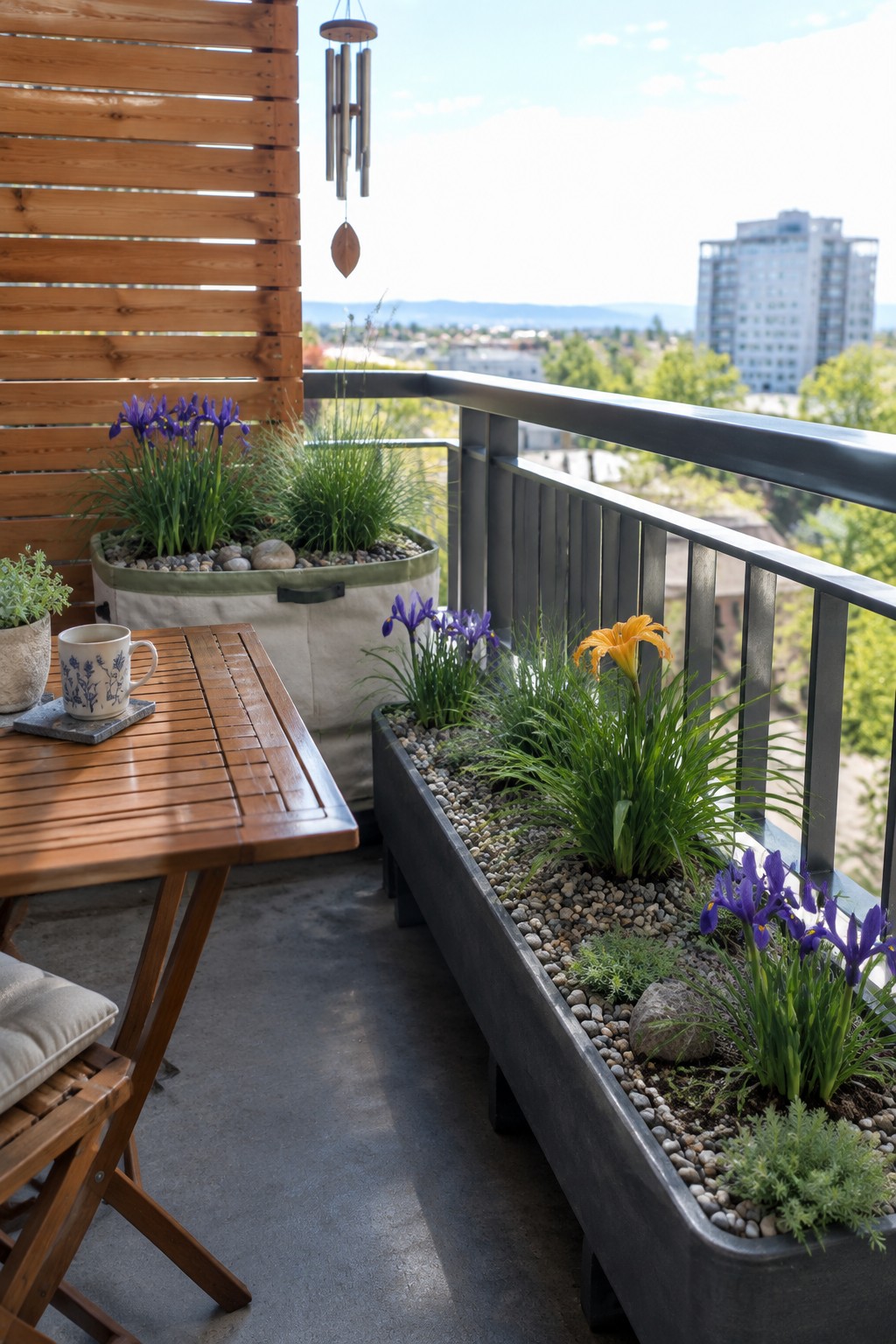
Long planters can bring a small flower garden to a balcony without taking up much floor space. Irises and daylilies give the planting height and color, while a layer of gravel keeps the soil surface tidy.
Choose sturdy containers with drainage holes, and leave enough room for the plants to spread. This approach works well along a railing, but check the planter’s weight limit before filling it with soil.
Use Stone Steps to Lead Through a Flower Garden
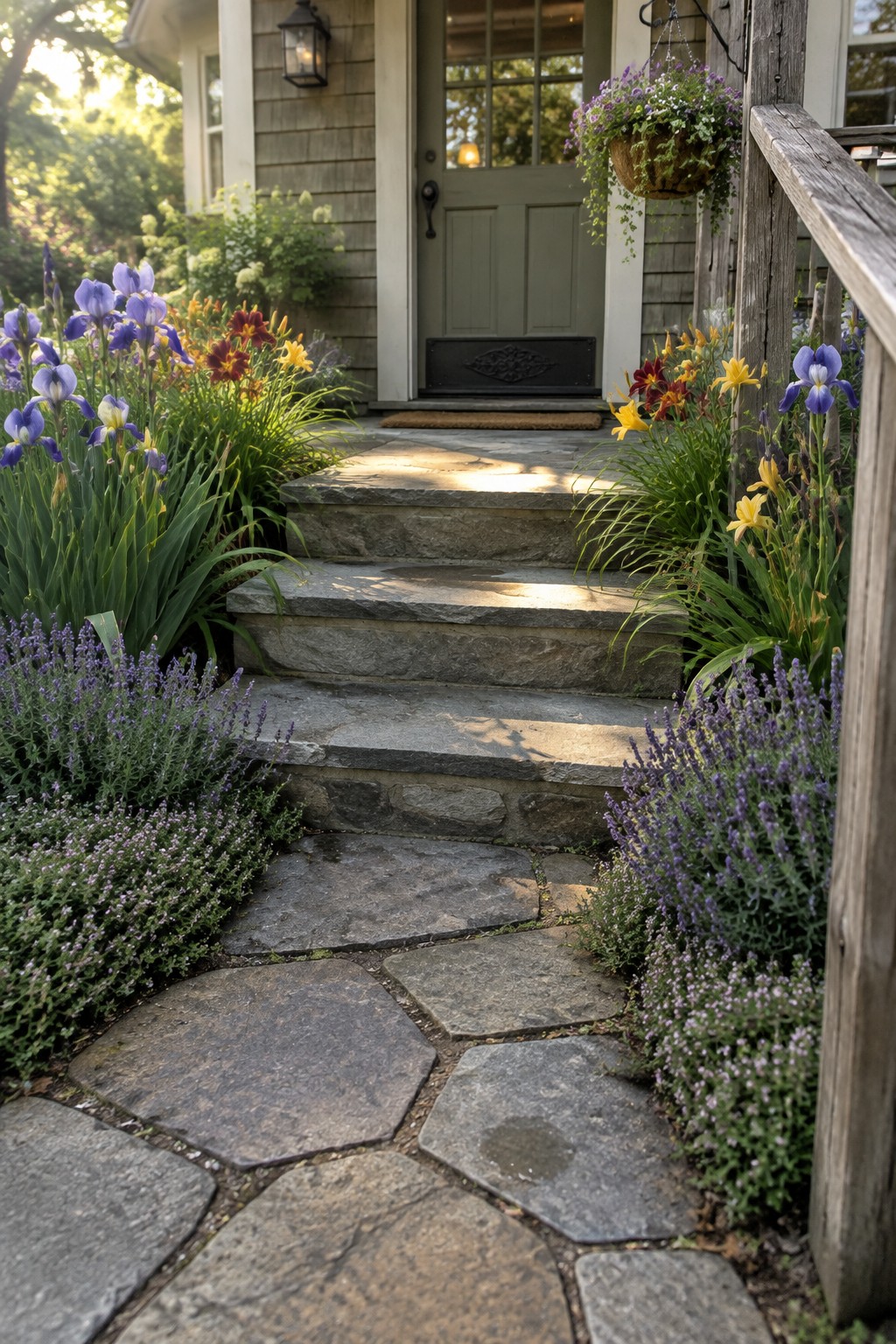
Stone steps make a sloped entry easier to walk and give the flower beds a clear structure. Irises and daylilies suit this kind of path because their upright leaves and blooms bring color close to the route without taking over the steps.
Use broad, stable treads and leave enough room for plants to grow along the edges. This works well at a cottage-style entrance, but keep foliage trimmed back so the path stays easy to use.
Frequently Asked Questions
Q: Can I plant irises and daylilies together in the same bed?
A: Yes. Give them a sunny spot with well-drained soil, and leave enough room for air to move between clumps. Irises like their rhizomes near the soil surface, while daylilies can be planted a little deeper.
Q: How can I keep the bed colorful after the irises finish blooming?
A: Choose daylilies that bloom later, so their flowers take over as the irises fade. Planting varieties with different bloom times can stretch the color through more of the season.
Q: Why aren’t my irises blooming well?
A: Crowded clumps are a common reason. Divide them after flowering, trim away damaged leaves, and replant the rhizomes where they’ll get plenty of sun.
Q: Do these flowers need a lot of watering?
A: Water newly planted flowers regularly while they settle in. Once established, both usually manage with less frequent watering, though daylilies may need a drink during long dry spells.
