


Delphiniums bring height and rich color to a cottage garden, but they work best when their tall stems have a clear place in the planting plan.
I find they look more settled when planted in loose groups rather than dotted evenly through a bed.
Their vertical shape can add a backdrop for lower flowers, mark the edge of a path, or draw the eye toward a gate or seating area.
It also helps to consider supports and spacing early, since heavy blooms can lean and crowded plants may be harder to care for.
I’d save the ideas that suit your garden’s light and layout, then adapt the combinations to bloom well alongside the plants you already have.
Plant Delphiniums in Layers

Delphiniums stand out when they rise above lower, fuller planting. Their tall blue flower spikes bring height and color to a cottage garden without leaving the front of the bed bare.
Place them toward the back or middle of a deep border, then use shorter flowers along the edge. A low stone wall can help define the bed, but leave enough room for the tall stems and give them support in a breezy spot.
Use Delphiniums To Add Height Along A Garden Path

Delphiniums bring tall color to a cottage garden without taking up much ground space. Planting them beside a path lets their flower spires rise above lower plants, giving the bed a clear, layered shape.
They work well along a narrow walkway or beside a greenhouse, where there is room for the stems to grow upward. Give them sturdy support and enough space for air to move between plants, especially in a sheltered garden bed.
Use Delphiniums To Mark The Front Entry
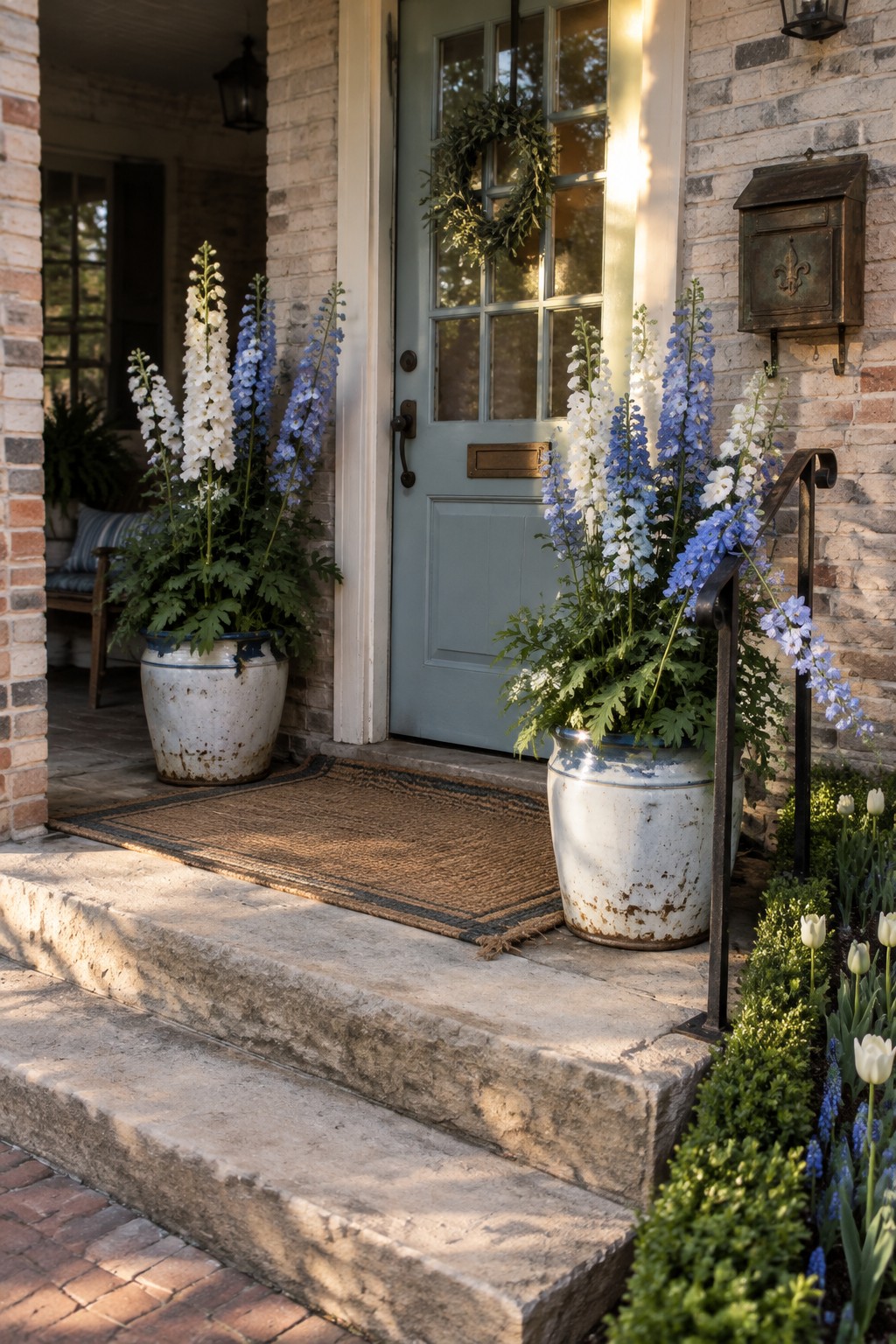
Tall delphiniums can give a cottage garden a clear focal point right where visitors arrive. Their upright flower spikes bring color close to the door, while the surrounding foliage helps the planting feel full rather than scattered.
Try planting them in large containers beside an entry or in a nearby garden bed. Give the tall stems room and support, especially in a breezy spot, and mix in shorter flowers so the display still looks balanced as the delphiniums fade.
Use Delphiniums To Add Height Along A Patio Garden

Delphiniums can bring a strong vertical line to a patio garden without taking up much ground space. Set them toward the back of a flower bed, where their tall blue flower spikes can rise above lower blooms and make the planting feel more layered.
This approach works well beside a seating area or along a stone-paved patio, where a narrow bed can add color without crowding the path. Give the plants room and stake them if the site is exposed to wind.
Plant Delphiniums Along The Cottage Wall

Tall delphiniums work well beside a cottage because they bring color up to the height of the house without taking over the whole garden. Here, purple flower spikes stand behind lower roses and white flowers, giving the bed a clear front-to-back arrangement.
Use a row of delphiniums along a wall or fence, with shorter plants near the path. They suit informal cottage gardens, but leave enough room for airflow and support the tall stems if your spot gets strong wind.
Plant Delphiniums in a Raised Bed

A raised bed is a useful way to give tall delphiniums a clear place in a small garden. Their upright flower spikes stand out against lower, rounded shrubs, so the planting has height without feeling crowded.
Use a sturdy, fairly deep bed and leave room for the delphiniums to spread. A mix of blue and white flowers works well with clipped evergreens, but make sure the bed gets plenty of sun and the tall stems have support.
Use Delphiniums To Add Height Along A Cottage Fence
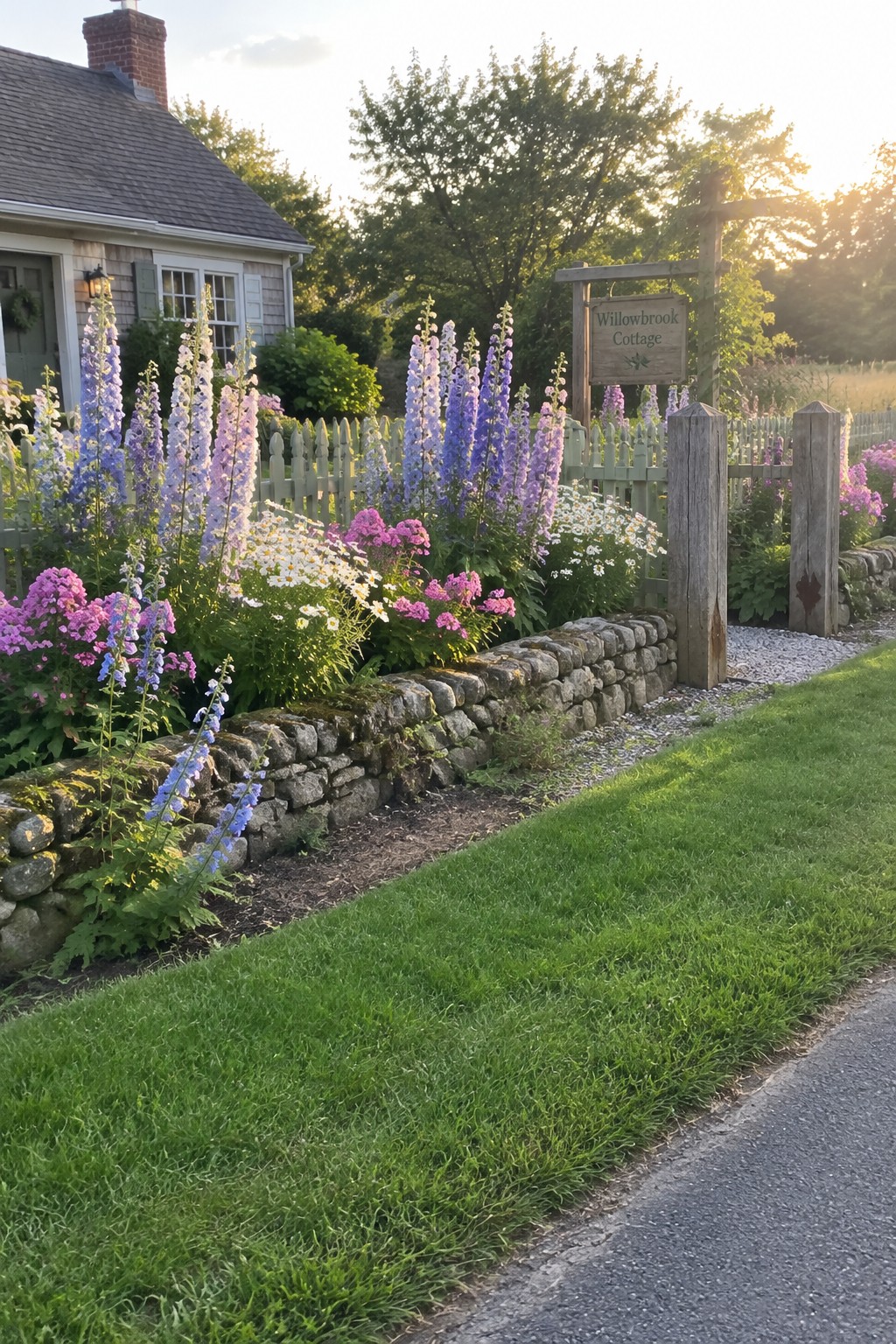
Tall delphiniums give a cottage garden a clear vertical rhythm, especially when planted in a long bed beside a low fence. Their flower spikes stand above shorter blooms, so the planting feels full without needing a lot of different plants.
Use them toward the back of a border where they can rise without blocking a path or gate. They suit cottage-style homes well, but leave enough room between plants for air to move through and make staking easier.
Add A Garden Arch Along The Path
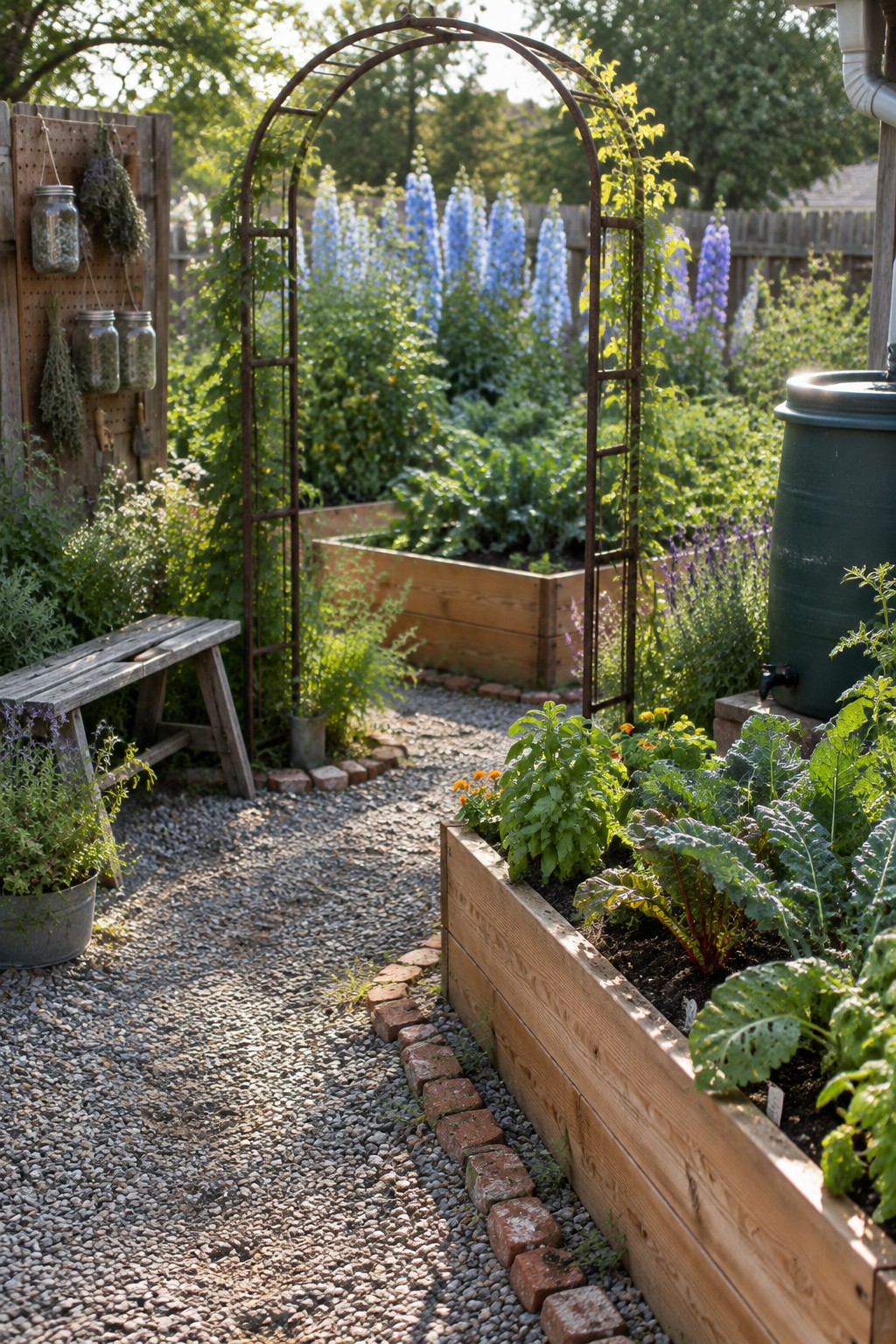
A garden arch gives a gravel path a clear destination and makes the walk through a planting bed feel more defined. Here, tall delphiniums beyond the arch add a strong vertical accent without crowding the route.
Use an arch where a path leads between garden areas or toward a focal bed. Keep the path wide enough to pass through comfortably, and leave room around the supports so nearby plants do not become difficult to manage.
Plant Delphiniums Along a Garden Path

Tall delphiniums can line a narrow garden path and give it a clear sense of direction. Their height brings color up to eye level, while the open space down the middle keeps the walkway usable.
Plant them in generous groups along one or both edges, leaving enough room for mature stems and easy passage. A stone path suits a cottage garden, but avoid placing the flowers so close that they lean into the walking space.
Add Delphiniums Around Garden Steps
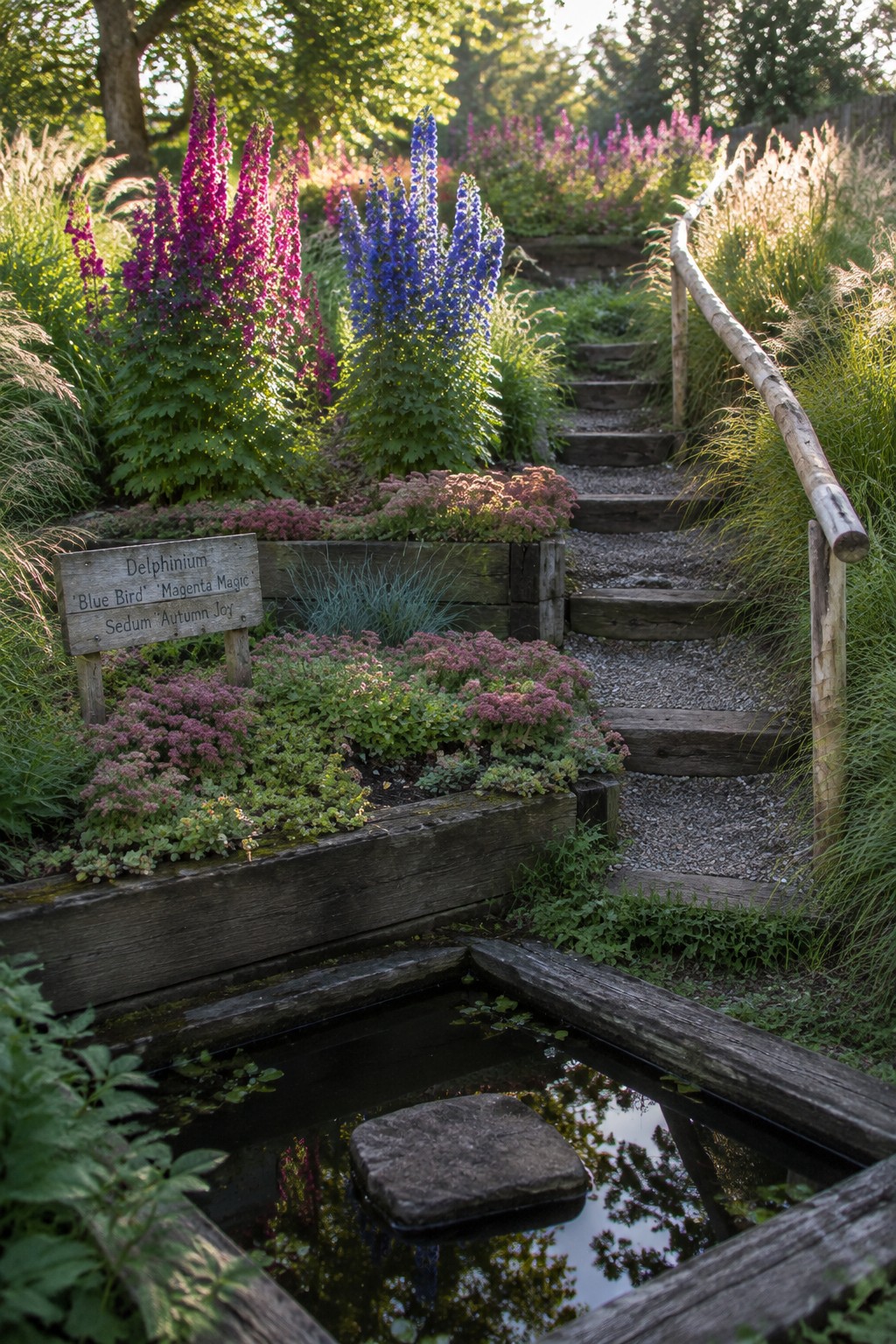
Delphiniums can make a set of garden steps feel like part of the planting rather than just a way through it. Their tall flower spikes bring color up to eye level, while lower plants along the edges keep the bed from looking bare.
Plant them in generous groups beside a path or steps, leaving enough room for people to pass and for the flowers to be supported. This approach suits a cottage garden, but avoid placing tall stems where they block a narrow walkway.
Add Delphiniums To A Shady Garden Path

A narrow garden path can feel tucked into the planting rather than cut off from it. Tall delphiniums planted along one side bring cottage-garden color up to eye level, while the path still gives visitors a clear way through.
This approach suits a shady, established garden with room for flowers to grow beside the walkway. Leave enough space for mature stems, and keep the path edge open so foliage does not spill across the stepping stones.
Use Delphiniums To Brighten A Front Garden Wall

Delphiniums planted along a low front wall bring tall color right up to the house. Their upright blooms stand out against the brick and make a narrow entry garden feel full without taking over the path.
Plant them toward the back of a sunny bed, with lower flowers near the wall’s edge. Delphiniums can need staking in exposed spots, so give them room and support before the flower spikes get tall.
Plant Delphiniums Along A Garden Wall

Tall delphiniums can bring color to the edge of a cottage garden without taking up much of the walking space. Planted in a loose row beside a low wall, their upright flower spikes add height while leaving the path open.
Give them enough room to grow and use sturdy supports if the spot is exposed to wind. This approach suits a gravel path or patio edge, especially where the wall helps define the planting area.
Use Delphiniums To Fill Out A Cottage Fence
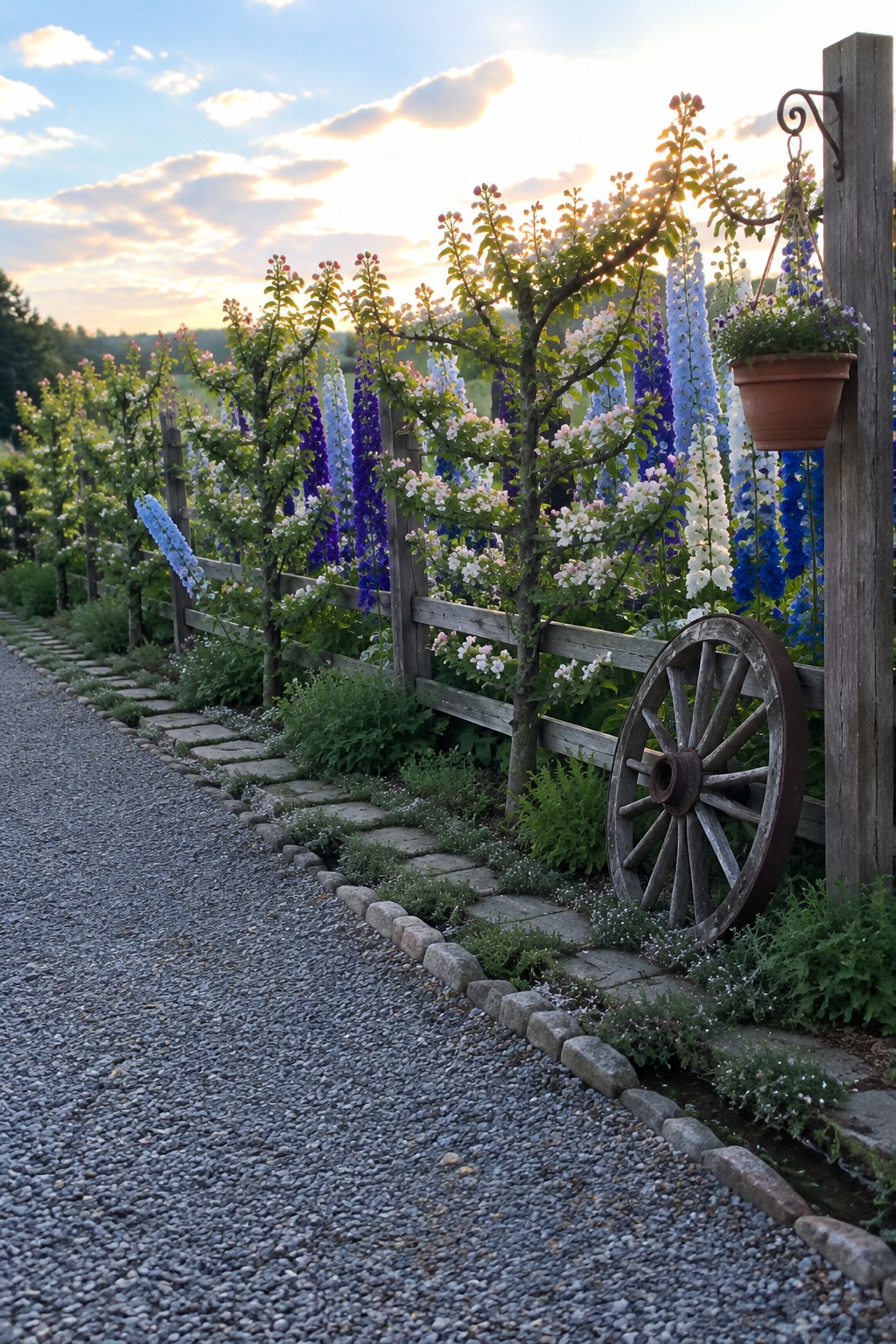
Planting tall delphiniums along a fence gives a cottage garden a steady line of color without hiding the fence completely. Their upright flower spikes stand out among softer, spreading plants, so the border feels full but still varied.
Leave enough room between plants for air to move through and for the flowers to grow without crowding. This approach works well beside a garden path or gravel walk, where the fence can guide the route and the flowers make the edge more colorful.
Use Delphiniums To Add Color Beside Garden Seating

Tall delphiniums can bring cottage-garden color right up to an outdoor seating area. Their upright blue flower spikes make a strong backdrop, while lower plants at the front help the bed feel connected to the path.
Plant them behind a low stone edge or along the back of a small patio bed, leaving enough room for people to sit and move around. They suit compact gardens especially well, where a narrow, layered border can make the seating spot feel tucked into the garden.
Let A Stone Path Wind Through The Flower Beds

A gently winding stone path gives a cottage garden an easy route through dense planting. Tall blue delphiniums make a strong backdrop, while the curves keep the walkway from feeling like a straight cut through the flowers.
Use broad, stable stones and leave enough room to walk comfortably as plants fill out in summer. This layout suits an informal garden, but keep the edges trimmed so foliage does not crowd the path.
Frequently Asked Questions
Q: How much sun do delphiniums need to flower well?
A: Give them a spot with at least six hours of sun, especially in cooler climates. In hot areas, a little afternoon shade can help keep the plants from wilting.
Q: What can I plant in front of tall delphiniums?
A: Try low-growing flowers such as catmint, cranesbill geranium, or lady’s mantle to soften their stems without hiding the blooms. Leave a little space between plants so air can move through.
Q: Do delphiniums need staking?
A: Tall varieties often do, especially in windy gardens or after heavy rain. Put supports in place early, while the stems are still short, so you won’t damage the roots later.
Q: How do I keep delphiniums blooming after the first flush?
A: Cut the spent flower spikes back to a leafy side shoot and keep the soil evenly moist. Some varieties may produce another, smaller round of blooms later in the season.
